Home Blog Page 7470

Albert Pujols’ 10th-inning hit carries Dodgers past Rockies

ALBERT Pujols had a pinch-hit RBI single in the 10th inning, and the Los Angeles Dodgers beat the Colorado Rockies (5-4) on Tuesday night in Denver.

Trea Turner and Gavin Lux had two hits apiece for the Dodgers (97-54), who have won three straight and nine of 10. Kenley Jansen (3-4) pitched one scoreless inning, and Alex Vesia got the final out for the first save of his career.

Los Angeles began the night one game behind the first-place San Francisco Giants in the National League West.

C.J. Cron had three hits and two RBIs for the Rockies (70-80).

Lux started the 10th on second base, and after Jhoulys Chacin (3-2) struck out Luke Raley, Pujols singled up the middle to put the Dodgers in front.

Neither team had a baserunner until the fourth inning. Colorado got its first hit when Garrett Hampson led off the bottom of the fourth with a single, and he went to second on a groundout. Hampson scored on Charlie Blackmon’s two-out double to right-center.

Cron followed with a double down the right field line to drive in Blackmon and give the Rockies a 2-0 lead.

The Dodgers came right back in the fifth. Antonio Senzatela struck out the first two batters in the inning, but Lux and Raley singled to put runners on the corners. Pitcher Julio Urias drove in Los Angeles’ first run with a single, and then Mookie Betts’ infield single brought home Raley with the tying run.

Los Angeles rallied again in the sixth. Trea Turner led off with a single and scored from first on a double by Max Muncy. Justin Turner flied out to right to advance Muncy to third, and Muncy scored on Will Smith’s sacrifice fly to make it 4-2.

Colorado answered in the bottom of the inning. Brendan Rodgers led off with a single, went to second on a groundout and scored on Cron’s two-out double. Elias Diaz hit a short fly to left that Lux couldn’t get, driving in Cron to tie it again.

Senzatela and Urias both allowed four runs on seven hits and no walks in six innings. — Reuters

Team Europe highlights rarity of Ryder Cup experience

KOHLER, Wisconsin — The European Ryder Cup squad facing the United States this week at Whistling Straits were given a reminder of the select company they are in by way of an inspirational video shown to them.

The video shared on social media points out that 164 men have represented Team Europe in Ryder Cup play while 5,780 people have climbed Mount Everest, 570 have been to space, 445 have won the soccer World Cup and 225 have claimed golf majors.

“I’ve always known that being a part of the Ryder Cup team is very difficult, but I didn’t know that only that little amount of players have made it,” Sergio Garcia told reporters on Tuesday at Whistling Straits.

“So that showed you how difficult it really is. That’s why every time I’m a part of a team or the rest of our teammates, that’s why we give it the respect that it deserves, because it’s so difficult to be a part of it.”

The opening line of the video states “In life, the joy of numbers is that they always amount to something” and goes on to include several former players reciting the number of where they fit in Team Europe’s historical timeline.

“It’s a small collection of people that have played for Europe in the Ryder Cup,” said Northern Irishman Rory McIlroy, who made his Ryder Cup debut in 2010.

“That’s what brings us very close together and that’s been one of our sort of big focus points this week — just being here is very special and being part of a European team. Very few people can call themselves a European Ryder Cup player.”

The video was shown to the 12-member European team on Monday by captain Padraig Harrington in a bid to put in context the rarity of taking part in the event.

Stitched on the golf bags belonging to the European players competing this week is a number unique to them that signifies where they fit on the historical timeline.

“You have a far greater chance of going into space or climbing Mount Everest than you have (of) representing Europe in the Ryder Cup,” said Lee Westwood, who will tie Nick Faldo’s Team Europe record when he makes his 11th Ryder Cup start.

“We’ve all got numbers. Mine is the smallest number (on this team), obviously, 118. But yeah, it’s something to be very proud of, being able to pull on the clothing with the European team crest on it,” added the Englishman. — Reuters

DraftKings courts British betting firm Entain with $22.4-billion offer

BRITISH gambling firm Entain said on Tuesday that US fantasy sports betting company DraftKings had made a takeover proposal that valued it at $22.4 billion.

Under its current proposal, DraftKings plans to offer £28 per Entain share, representing a premium of 46.2% to the UK firm’s Monday close. Entain said it had earlier rejected a proposal from DraftKings to buy the company for £25 ($34.15) per share.

Entain’s shares closed up 18% as the companies confirmed the approach, which would give the US firm access to the Ladbrokes Poker and bwin online betting brands. Shares of DraftKings were down 0.6% in extended trading after closing 7.4% lower at $52.77.

DraftKings’ takeover proposal comes after Entain had rejected an $11-billion offer from US-based MGM Resorts International in January, saying it undervalued the company, but analysts expect MGM to return with a new bid as it has since accumulated more cash.

Entain and MGM already have a joint venture called BetMGM, an online sportsbook for betting on National Football League (NFL) and National Basketball Association (NBA) games that controls about 21% of the market versus DraftKings’ 17%, according to RBC Capital Markets.

Any deal in which Entain would own a competing business in the United States would require MGM’s consent, MGM said on Tuesday in response to DraftKings’ approach.

The deal frenzy in the online gambling space comes at a time when regional operators are looking to expand and capture opportunities in states across the United States opening up to sports betting. — Reuters

Man City and Liverpool through, but Everton out of League Cup

MANCHESTER, England — Manchester City’s Riyad Mahrez scored twice as the holders moved into the League Cup fourth round with a 6-1 home win over League One (third tier) Wycombe Wanderers on Tuesday.

Liverpool also progressed without trouble by winning 3-0 at Norwich City in their all-Premier League tie with Japanese forward Takumi Minamino on target twice and Divock Origi also scoring.

But with most top flight teams making several changes from the first-choice lineups, there were Premier League casualties with Everton and Watford knocked out by lower league opponents.

Brandon Hanlan gave Wycombe a shock lead at Manchester City’s Etihad Stadium in the 22nd minute, but the hosts took a 3-1 lead by half time with goals from Kevin De Bruyne, Mahrez and Phil Foden before running away with the game in the second half.

City’s rout was completed when 19-year-old Cole Palmer scored their sixth, his first goal for the club on a night when manager Pep Guardiola gave debuts to five young products of the club’s academy.

Top flight Brentford’s Finnish forward Marcus Forss scored four as they crushed League Two (fourth tier) bottom side Oldham Athletic (7-0) in their third round tie.

Burnley’s Jay Rodriguez also claimed four goals in his Premier League team’s 4-1 victory over League Two Rochdale at Turf Moor.

Everton lost 8-7 in a penalty shootout at Queens Park Rangers after their game ended 2-2 following 90 minutes. — Reuters

On September 21st, there’s a lot to reexamine

RACOOL_STUDIO-FREEPIK

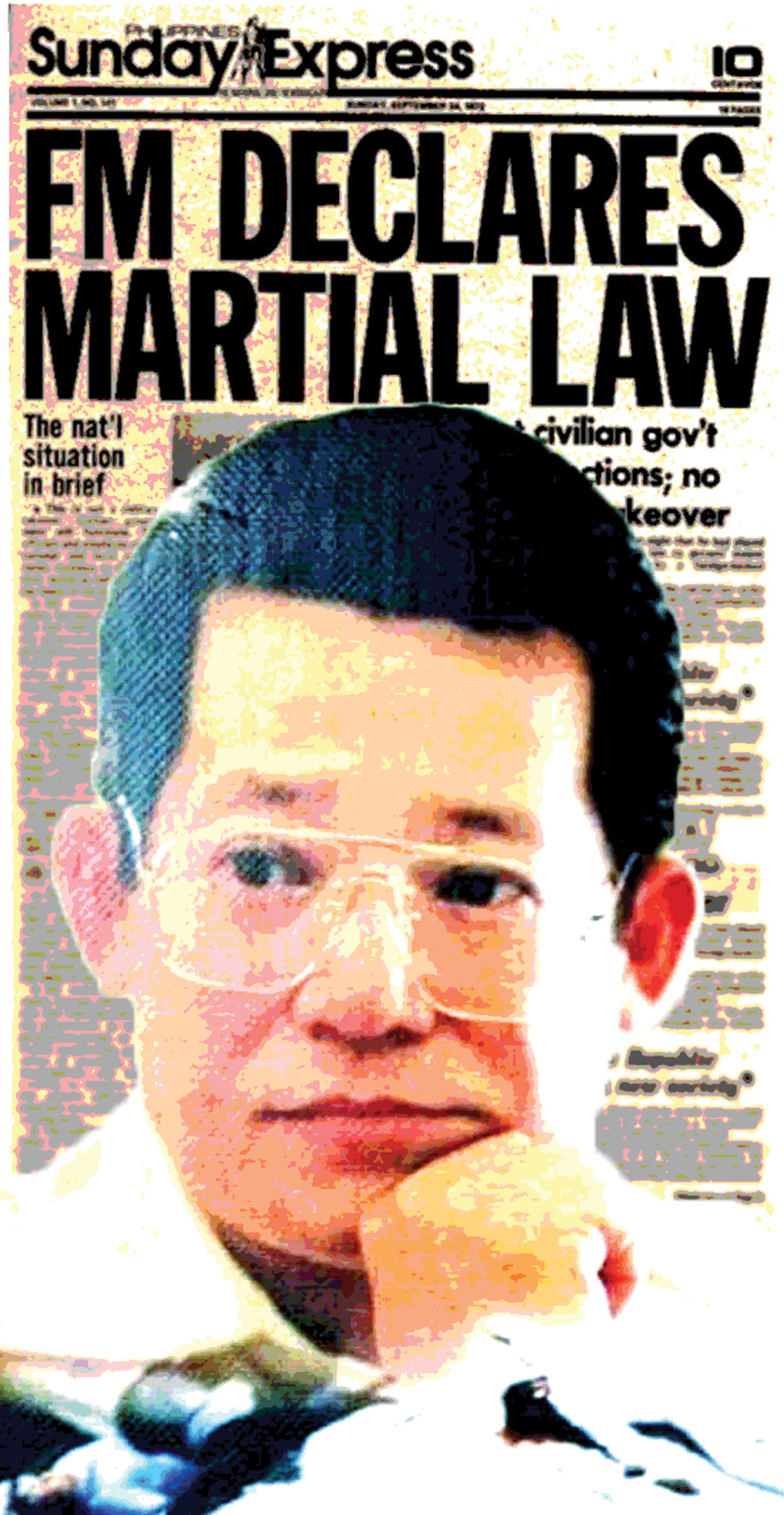
Though this article is slated for publication on Thursday, Sept. 23, I am reflecting on the day that I am writing this, September 21st, a day where we extend rethinking the capital markets towards re-examining major issues in our country and in the world in general. Today marks what is a dark day in the history of the Philippines, the anniversary of the declaration of Martial Law by Dictator Ferdinand Marcos in the year 1972. It is also the World Zero Emissions Day, which, while a great initiative, is yet another stark reminder of darker times to come with climate change. And it is also declared by the United Nations as The International Day of Peace. And while these three things do not seem connected on the outset, we all know that they are, and we need to attempt to understand our roles as economic actors in observing these three specific events. Today we rethink our economic situation vis-à-vis the situation during Martial Law.

While historians and political analysts are best placed to comment on the grave ills of Martial Law, suffice it to say that the economic impact of those two decades of plunder and violence are still being felt to this day. There are many who are recalling the Never Again and Never Forget hashtags to take stands in the upcoming elections, but many forget the economic problems faced then that seem to be not only haunting us today but threaten to be replicated.

On this same day last year, Ruben Almendras wrote in The Freeman that the economic justification for Martial Law was to promote faster economic progress. He said that prior to Marcos’ presidential election, GDP growth “ranged from 3.55% to 7.06%.” The Philippines was the 2nd economy to Japan in Asia. This continued towards the first and second terms of Marcos — until Martial Law was declared, which led to erratic economic growth rates, jumping up and down each year, from a high of 8.8% then progressively decreasing to -7.3% in 1984 and 1985, marking two full years of recession. This is not unlike what we are experiencing today. Though many things were external like oil prices, Almendras says that political pressure on economic decision makers and technocrats of the Marcos regime took away from sensible economic policies. Massive inflation (at one point hitting 62.8% in September 1984), excessive spending, and, of course, massive corruption ensued, and government investments were mismanaged. The final whammy was the heightened political risk which ultimately dampened the foreign investment climate. Infrastructure spending plunged to the lowest levels as the government was unable to pay its debts.

As decisions in the political arena have a direct impact on the economy, it is not enough to denounce Marcos’ scions or cronies out of mere conscience, although this is an excellent first step; but truly a better and quite clear way forward is to select a leader that will not burden the people with mismanaged amounts of debt. For we must keep in mind that the story of the Marcoses is not simply one of extravagance in buying shoes and art and smuggling cash in Swiss Bank accounts, it is much more sophisticated and complex that that; it is a master class on how the mismanagement of foreign investments, the dwindling reputation of political leaders, the threat to press freedom, and violence can cripple an economy almost instantly.

What then is our role as economic actors, as financial market movers, as investors, entrepreneurs? It is to understand and better educate the public on the impact of economic decision making, from the tax increases in tobacco and oil, the transport hikes, the imports of pork, the flight of the POGOs, the retail trade liberalization act, the lowering of corporate taxes — vis-à-vis, the impact on the bottom-line of firms, the impact on the competitiveness of the Philippines versus our Asian peers, the sustainability of operations from an environmental, social, and governance perspective — and how this bottom-line affects: the unemployment rate of the country, the brain drain from the flight of the OFWs, the poverty levels.

And it gets even more specific in the times of COVID, for our role is to explain the impact of the health spending and dwindling fiscal aid or ayuda on the productivity of the labor force, on the ability to maintain the economy open and running; The impact of keeping classes closed on the earnings of graduates in the future and how this severely limits their prospects. The impact of lockdown policies on the ease of doing business in the Philippines and attractiveness to foreign investors. The impact of infrastructure spending and the slow pace of construction on ballooning debt. And the idea of banking on short-term gains, remittances, BPOs, to save us instead of sound government policies.

These are all issues that can be brought to light and better addressed in this period, this is an opportunity to debate, to compare the difficulties economically then with now, and this is the time to take courage to learn from the past, from the dark past, but also from the highly avoidable pains of a rough economic past.


Daniela “Danie” Luz Laurel is a business journalist and anchor-producer of BusinessWorld Live on One News, formerly Bloomberg TV Philippines. Prior to this, she was a permanent professor of Finance at IÉSEG School of Management in Paris and maintains teaching affiliations at IÉSEG and the Ateneo School of Government. She has also worked as an investment banker in The Netherlands. Ms. Laurel holds a Ph.D. in Management Engineering with concentrations in Finance and Accounting from the Politecnico di Milano in Italy and an MBA from the Universidad Carlos III de Madrid.

Mixed signals on retirement

VCECTORJUICE-FREEPIK

Determining the official retirement age for government workers should be seen more as a pension issue rather than a labor supply issue. In a country where national and local governments are among the biggest employers, and where a young population provides an abundant supply of workers, legislators should tread carefully in deciding on how best to adjust retirement policies for the bureaucracy.

To date, I am getting mixed signals from the House and the Senate, and I am uncertain whether decisions are being made on the basis of quality and irrefutable empirical data and metrics, or more on the basis of political interests. After all, in about eight months we are holding the May 2022 elections, and many of our lawmakers are seeking reelection.

At present, the optional retirement age for government workers is 60, and the compulsory retirement age is 65. Under consideration now are bills proposing to lower the optional retirement age of government employees to 56; and, for public school teachers to 55. However, there are also a pending bill raising the retirement age, particularly for the military and the police, which is 56. The Senate proposal is to raise the retirement age of officers to 60 and the Chief of Staff to 65. But the retirement age of enlisted personnel will remain at 56.

We have no set optional or mandatory retirement ages for presidents, vice-presidents, senators, congressmen, and Cabinet members, or appointed heads of agencies. But in the judiciary, the mandatory retirement age for judges is 70. Incidentally, at the US Supreme Court, and all other US federal courts, there is no mandatory retirement age for judges. However, of those who decide to retire voluntarily, available online data indicate an average age of 78.

Perhaps legislators should strive for consistency, and that retirement ages should not be a matter simply of age but physical and mental and intellectual ability. But more than this, there should be a major consideration of fiscal implications, particularly the ability of pensions systems and future generations to shoulder the cost of benefits of retirees. Moreover, why allow military officers to stay on longer than enlisted personnel? For all members of uniformed services, shouldn’t retirement age be the same?

Mandatory and optional retirement ages will ultimately depend on the type and volume of work required from an individual. In this line, recent studies and research should be reviewed to help set a baseline as well as a standard that can be applied to different types of government work. Benchmarking will help in this regard. The starting point perhaps should be the present standard of 60 for optional and 65 for mandatory, for all government workers. Nothing lower.

For the Philippine military and police services, the mandatory retirement age is currently 56, or 35 years of service. A Senate bill proposes to jack this up to 60, but for officers only, and to 65 for the Chief of Staff. I don’t see any compelling reason for this difference. In the US, the Army has raised the retirement age for active personnel to 62 from 55, and the age limit for enlistment to 39 from 34. Why not apply the 60-65 metric to all uniformed personnel as well?

I believe the state-run Government Service Insurance System (GSIS) should be heard on this issue. Personally, I see no reason to lower either the optional and mandatory retirement ages from the present 60/65. If at all, it should be raised instead or lowered. Provided, however, that after the age of 55, annual assessments are made whether one continues to retain the physical, mental, and intellectual capabilities deemed needed to do the job.

As the GSIS itself said in an explanatory note on its website, “any change in the [retirement] benefit package has a corresponding fund liability that would be hard to sustain, given the present poor investment environment and successive increments in government employees’ monthly salary.” Lowering the retirement age shortens the contribution period of GSIS members. The GSIS will also pay pensions much earlier than originally planned.

“GSIS is gravely concerned that the untimely receipt of benefit resulting from early retirement will continuously shorten the actuarial life. To address this, it may resort to two options — increase the contribution of those who are still in service or reduce benefits of the present and next generation of pensioners,” it said.

“The actuarial life of SIF [Social Insurance Fund] is 26 years. This means that it will last until 2045 from 2019. Based on GSIS’s studies, if any of the bills [to lower retirement age] would be implemented, the actuarial life will drop from four to 14 years. Thus, instead of until 2045, the fund life would will be 2041 only, or much worse, until 2031,” it added.

On whether the GSIS can still pay pensions of retirees if the retirement age is lowered, the pension system replied, “We are unsure of the future. GSIS might be too conservative with its projections. Only time will tell.” But it concedes that the GSIS will have a “weakened capacity to pay its SIF liabilities” unless premium contributions are raised significantly and benefits are adjusted.

The GSIS added that legislators should consider the aging population resulting from longer life expectancy and lower fertility rates. It said that life expectancy was expected to rise to 72.7 years in years 2045-2050 (from 67.5 years in 2005-2010), while the number of people aged 60 and above would increase in the year 2030.

It noted that in Australia, the retirement age was even slightly raised to 67 in 2017 and may be implemented until 2023. In Malaysia, the retirement age was raised to 60 in 2012 from 55, with plans to further increase it to 65. Thailand also did the same — to age 60 from 55. Vietnam is also considering increasing the retirement age of males to 62 from 60, and that of females to 60 from 55, the GSIS said. South Korea is studying raising its retirement age to 65 from 60.

In Belgium, the retirement age is also to be increased gradually to 67 by 2030. In France, the minimal retirement age has gradually increased from 60 to 62, and the full retirement age is to be increased gradually to 67 by 2023. In Germany, the retirement age is to be increased gradually to 67 by 2029. In Denmark, the retirement age will be increased gradually to 67 by 2022. And from 2030 onwards, it will be increased a maximum of one year every five years, depending on increases in average lifespan. In Ireland, Taiwan, and Japan, the retirement age is to be increased gradually to 68 years.

European civil servants retire at the age of 66 since 2014. And in the United States, retirees are eligible to receive reduced Social Security payments by 62, while people 65 and over are eligible to receive some free Medicare benefits if they paid Medicare taxes for at least 10 years. The full retirement age is to be increased gradually by 2023 and will be 67 for everyone born in 1960 or later. While everybody is considering going up, why are we looking at going down?


Marvin Tort is a former managing editor of BusinessWorld, and a former chairman of the Philippine Press Council

matort@yahoo.com

Martial Law and Ninoy Aquino

Almost 50 years after Ferdinand Marcos declared Martial Law, those of us who were around at that time continue to denounce it as part of a grand design to extend the Marcos rule indefinitely.

The official reason behind Marcos’s Proclamation 1081 was “to save the Republic and form a New Society.”

Marcos, who was known to have a fetish for numbers with the digit seven or numbers divisible by seven, officially declared Martial Law on Thursday, Sept. 21, 1972. The Proclamation was, however, carried out late Friday evening, Sept. 22, with most of Marcos’s political opponents in military custody hauled off to Camp Crame by Marcos military acolytes like then Colonel Romeo Gatan of the Philippine Constabulary (PC), the forerunner of the Philippine National Police.

Gatan led a team of PC operatives who carried out the arrest of Benigno Aquino, Jr., then a sitting senator performing an official function of a congress still in session, at the then Hilton Hotel at Isaac Peral (later renamed UN or United Nations Avenue) late Friday, Sept. 22 or early Saturday morning, Sept. 23, 1972. Gatan, later promoted to General, would prove to be a player in any major move against the Aquinos. But that is another story.

All these dates and hours assume some significance as I narrate the last few hours I spent with Ninoy Aquino before his arrest.

I had earlier interviewed Ninoy in June-July 1971 for a Marketing paper on “Image Management in a Senatorial Campaign” that I was writing as a student at De La Salle. I later expanded it into a Management Research Report (MRR) at the Asian Institute of Management (AIM).

A few days before Aug. 21, 1971, Ninoy told me he was running for President of the Philippines in 1973 and he wanted me to join his campaign. He however said that in order for me to learn the ropes of a national campaign, I should join the senatorial runs of the “young candidates like Monching Mitra and John ‘Sonny’ Osmena.” The miting de avance of the Liberal Party (LP) was on Aug. 21, 1972 and was to be held at the Plaza Miranda, the common man’s plaza for free speech and public gatherings.

The LP had lost the 1969 presidential and local elections to the Nacionalista Party (NP) headed by Ferdinand Marcos. Marcos was the first incumbent president to be reelected for another four-year term.

Ninoy, himself a former NP, had become LP Secretary General and had captured second place in the 1967 senatorial elections dominated by the NP. Together with the other LP leaders like Gerry Roxas, Jovito Salonga, Soc Rodrigo, Mitra, and Osmeña, Ninoy formed a fighting team called KIMMPOSS (Eva Estrada-Kalaw, Eddie Ilarde, Mitra, Gene Magsaysay, Salipada Pendatun, Osmena, Salonga, and Melanio Singson) to do battle with an equally powerful but more financially endowed NP ticket.

Because of a conflict in schedule, I was not able to attend the rally. I was with a lady, Margie Penson, whom I married a year later. Margie and I were on our way to her home that evening as we passed in front of the vacant lot which is now SM Megamall. I was monitoring the rally on radio and after a few minutes, we heard several loud explosions. We could hear people screaming and could imagine the terror-stricken faces of people in the chaos that ensued.

Shortly after the Plaza Miranda bombing, Marcos activated the first in several steps leading to the declaration of martial law. He suspended the writ of habeas corpus thus removing the protection of a citizen from arbitrary arrest and prolonged detention. He had succeeded in heating up the climate of fear and was unmistakably and irreversibly headed toward uncharted territory. Political observers and commentators speculated about the very real possibility of Martial Law given Marcos’ options and his consistent pattern of strong-arm politics.

Despite or perhaps, because of this explosive political environment, I soldiered on with my political marketing study on Ninoy. Part of the study involved inviting him to a convocation at the AIM. The invitation was for Friday, Sept. 22 at 3 p.m.

Ninoy arrived at AIM around 2:30 p.m. and spent some time at the faculty lounge with some AIM professors. I had spent around 40 to 50 hours interviewing Ninoy by the time he accepted my invitation to speak before AIM students, faculty, and other invited guests. In all those hours, Ninoy was always ebullient and confident of himself. This time, it was different. I noticed it the moment he stepped out of his black Toyota sedan accompanied by his most trusted close-in security, Ross Cawigan. The dispirited and weary demeanor.

While inside the lounge, I heard Ninoy for the first time speak of the dim prospects in the battle against the anti-democratic moves of Marcos and what definitely were orchestrated bombings of public facilities. Ninoy exclaimed, “Marcos is following a script. It seems there is a check list of events that need to happen to justify the declaration of Martial Law. There is now no legitimate organized opposition to Marcos. Even the Church, which is supposed to oppose these dictatorial moves on moral grounds is silent. The only opposition, illegal at that, is the New People’s Army and the National Democratic Front.”

Ninoy went on to speak before a crowd which had by then packed itself into the auditorium. Ninoy spoke for about 30 minutes and entertained questions for about an hour. In front of the graduate school of business students, Ninoy spoke of government deals favoring Marcos’ partisans and friends. As I later told Ninoy a few hours after his speech, the crowd was mesmerized by his revelations on the business deals, the bombings, and the attempts of Marcos to influence the ongoing 1971 Constitutional convention to adopt the parliamentary system of government to allow him or his wife to become Prime Minister thus skirting the term limitation in the 1935 constitution.

A key figure in that attempt was former Ambassador Eduardo Quintero, ironically from Leyte, Imelda’s home province. During a press briefing, Quintero brandished envelopes of peso bills given to him to vote for the parliamentary system. Marcos had Plan A: for the Philippines to adopt the parliamentary form of government. A subsidiary plan was for Imelda to run for President. The most preferred and realistic plan, no matter the permanent damage it would inflict on political institutions, was to declare Martial Law.

After Ninoy’s speech, he left for Channel 5 in Pasong Tamo, Makati. I was to proceed to Channel 5 and meet him there, as previously agreed, to continue our conversations and the tutorial on Political Marketing and Campaigning. He was to tape his TV program, Insights, which aired on Sundays.

Ninoy’s plans changed however. He sent word to me that he had to leave for the Hilton Hotel to meet with a bi-partisan group of senators and congressmen to discuss ways to raise new revenues “because Marcos emptied the National Treasury.” He suggested to meet the next day, Saturday, Sept. 23, at 10 a.m. at Channel 5.

The meeting did not materialize. He and thousands of others had been arrested that night. I had to change my dissertation topic on the advice of AIM faculty and military friends. My other resource persons had also been incarcerated: Bren Guiao, Ben Aniceto of ABS-CBN, Max Soliven, Senator Jose Diokno, Jose Mari Velez, Nap Rama, Genie Lopez and Ross Cawigan, among many others. Cawigan had been tortured to provide information on Ninoy.

In November 1973, Marcos continued his in-your-face treatment of the Filipino people: he declared Sept. 21 as National Thanksgiving Day.

I spoke to Ninoy several times when he was allowed to go on home furlough while in the custody of his military and civilian jailors. In one conversation, he spoke of the first time he met Marcos since his incarceration. He was brought to Malacañang one evening and the two political giants, fraternity brothers in Upsilon, called each other “brod” as if there was no ongoing conflict between them. Marcos said, “I envy you brod. You’re able to commune with history’s greatest intellectuals. I understand you read about three books a day. I can’t get that kind of thinking here. I’m surrounded by clowns.” Two Marcos cabinet members who were with the two political protagonists, squirmed in their seats. During the same encounter, Marcos said, “Ninoy, why don’t you just admit the charges against you. I’ll pardon you and you and Cory can live in the US. Your own close-in bodyguard admitted to so many of your misdeeds.” Ninoy replied, “Brod, of course he’ll admit to anything while being tortured. Don’t you think these two Ministers of yours will do the same thing if they were being tortured?”

It was clear Ninoy was still the same witty person he was before all the physical and mental humiliation he and his family had undergone, especially at Laur, Nueva Ecija.

Although one of those cabinet ministers would later say, in a characteristic moment of envy and pique, that Ninoy’s assassin “did the nation a favor,” Ninoy still remains a hero in the eyes of many.


Philip Ella Juico’s areas of interest include the protection and promotion of democracy, free markets, sustainable development, social responsibility and sports as a tool for social development. He obtained his doctorate in business at De La Salle University. Dr. Juico served as Secretary of Agrarian Reform during the Corazon C. Aquino administration.


Digitally speaking

RAWPIXEL.COM-FREEPIK

MESSAGING via SMS or online chat has become the normal form of communication, even for masked couples physically in the same place — “When I am dead, my dearest, sing no sad songs for me.” This can be met with an emoticon of surprise.

With billions of messages a day sent just in this country, the numbers surging even higher with free online apps, do people still have regular conversations outside the home? Is there a decline in verbal exchanges with turn-taking, arguments, and interaction where one can display erudition by mentioning that Da Vinci’s Last Supper was his only mural and discussing the impact of the pandemic on local art auctions? (Do people still talk like this?)

Is digital dialogue a real conversation?

Messages are abbreviated and with word prediction algorithm can end up being cryptic. (About that supper, did you mean Da Vinci or Denny’s?) There can also be a lag time in the response. (I was in a Zoom meeting.) The absence of clues like inflection of voice or raised eyebrows removes emotional context, like enthusiasm or dismay.

When she replies to a possibly seductive wink (How’s the rose garden?) with an exclamation point, was she puzzled or offended? When the reply is delayed, did she just pause to get a glass of water or was she turned off?

Virtual communications do not provide body language clues. Words are delivered without inflection. There is no meditative pause or a hesitation where the body tenses before an emphatic phrase is delivered. The glow of joy at an uttered endearment is replaced by an emoticon, an ovoid creature with puckered lips.

Face-to-face conversation, even with masks, is digitally framed too. It’s called an eyeball meeting (or in-person) as opposed to winking from home (WFH). Even when a couple is physically together, they may be absorbed by their digital toys: playing games, sharing political posts, or texting other people.

Digital conversations tend to stick to a single topic at a time and rarely jump outside the thread. Otherwise, there is a mystified head-scratching when a new and unrelated topic pops up. Virtual meetings even have an agenda and the need to raise a digital hand to be given permission to ask a question, or interrupt the speaker — do you see my charts?

Real conversation meanders. It flows like a river, twisting around rocks and driftwood, deep in some parts, shallow in others, moving fast one moment and then slowing down over an alligator’s back. It requires intimacy and the license to be irrelevant — why are you bringing that up now?

Conversation used to be a form of direct social intercourse requiring no digital intermediary or energy source (I have to charge my phone). Homes would feature some found object as a “conversation piece.” This can be a discarded and un-tuned piano retrieved from a dump site and tuned and buffed like new. The serendipitous discovery of such a treasure sparks comment and elicits delight in discussing the importance of music in the home and the discovery of some hidden talent — have you composed a sonata yet?

The digital culture may have gotten us closer to a paperless office using e-mails and SMS instead of memos and physical meetings. And the pandemic, with its various (and variable) statuses, has only accelerated the digital alternative. In real conversations, spoken words cannot be retrieved or deleted after some deep breathing. They’re already out there irretrievable in their impact. Wait, that is an inappropriate word: I meant morose, not moron. Sorry, you cannot delete.

At the height of the ’60s (age alert) soirees (literally, evening gatherings) were a form of mass dating for college students, usually from two non-coed schools. In the soiree, a “good conversationalist” can be a prized person who probably can’t dance or have flat abs. He may have very thick eyebrows that form a single line. But he can discuss the migration pattern of the monitor lizard and the impact on local governance of the Spanish colonization.

The aim of the tea party was to secure a phone number or two. In that era of the fixed line, a call had to go through the one picking up — Hey Sis, it’s that moron you are trying to avoid.

Digitally speaking, confirming appointments, and getting agreements on decisions are efficiently accomplished. As for appreciating a person and the quality of her shampoo, only a face-to-face meeting can delight… as well as disappoint.


Tony Samson is Chairman and CEO of TOUCH xda

ar.samson@yahoo.com

Climate, COVID-19 dominate UN as Biden and Xi up their promises

REUTERS
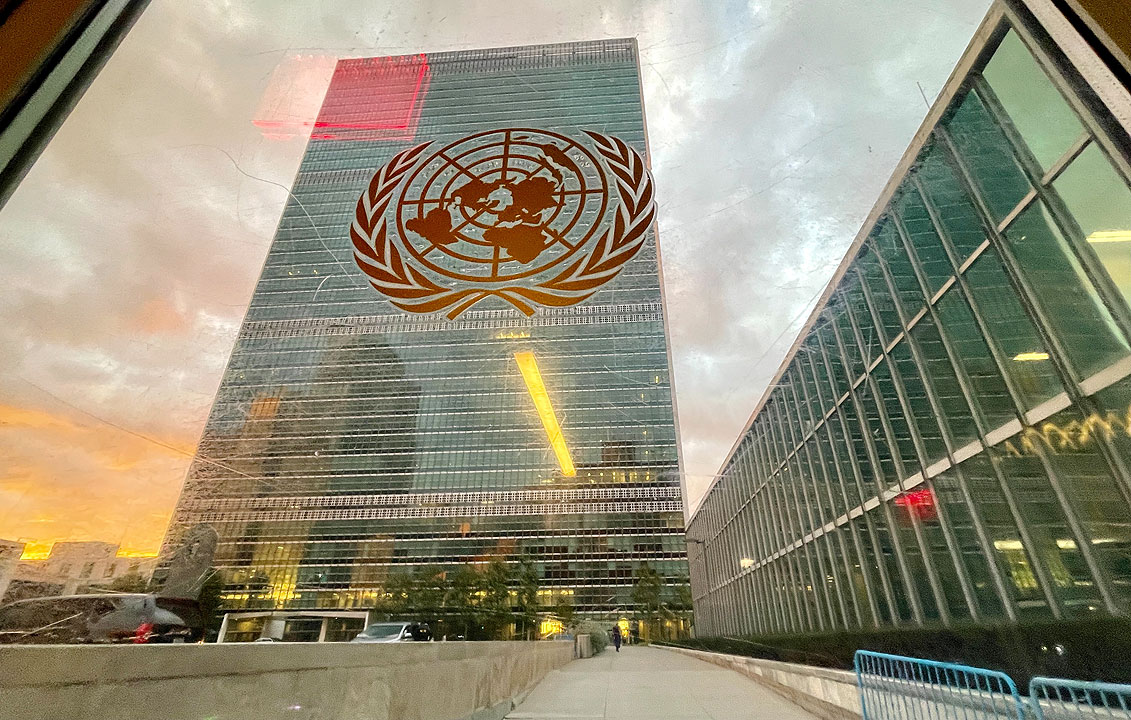
The United Nations headquarters building is seen from inside the General Assembly hall in New York City, Sept. 21, 2021. — REUTERS/EDUARDO MUNOZ/POOL

JOSEPH R. BIDEN and Xi Jinping boosted their efforts to help other nations address climate change as fears over the global environment and the COVID-19 (coronavirus disease 2019) pandemic dominated the first day of world leaders addressing the annual United Nations General Assembly.

President Biden said in his speech Tuesday morning that the US would double funding to aid developing countries cope with climate change, helping bring the world closer to a $100-billion annual target sought ahead of a climate conference in Scotland next month.

“Making these ambitious investments isn’t just good climate policy, it’s a chance for each of our countries to invest in ourselves and our own future,” Mr. Biden said.

China’s President Xi, speaking hours later in a prerecorded video, said his country will stop financial support for the construction of coal-fired power plants abroad, a move long sought by climate activists.

“China will step up support for other developing countries in developing green and low-carbon energy and will not build new coal-fired power projects abroad,” Mr. Xi said.

The moves by leaders of the world’s two biggest economies signaled the importance placed on climate change as governments globally face mounting costs from extreme weather events.

Continuing the focus on climate, Turkish President Recep Tayyip Erdogan said he’ll submit the Paris climate accord to his nation’s parliament for approval, while the president of the Maldives, Ibrahim Mohamed Solih, said rising global temperatures would be a “death sentence” for his island nation.

UN Secretary-General Antonio Guterres praised the announcements by Mr. Biden and Mr. Xi Tuesday but said in a statement that “we still have a long way to go” to ensure the conference next month “marks a turning point in our collective efforts to address the climate crisis.” 

Sounding a bleak tone for the gathering, Mr. Guterres warned in remarks earlier Tuesday that the world is hurtling toward ecological destruction and that the “climate alarm bells” are “ringing at fever pitch.” Calling current global efforts insufficient, he forecast a “hellscape of temperature rises” if emissions aren’t cut more than currently planned.

“We are weeks away from the UN Climate Conference in Glasgow, but seemingly light-years away from reaching our targets,” Mr. Guterres said. “We must get serious. And we must act fast.”

Global leaders are in New York this week against the backdrop of a world that’s increasingly fracturing into polarized camps. 

Repeating vows to work more collaboratively with allies and global institutions, Mr. Biden urged the world to turn from conflict toward cooperation. While that message is meant to contrast with former President Donald Trump’s “America First” approach to the world, Mr. Biden found himself trying to assuage frayed nerves among key allies.

Some foreign leaders were upset over the hasty withdrawal of American troops from Afghanistan. French officials also remain outraged over a new defense alliance that calls for the US and UK to provide nuclear-powered submarines to Australia.

The deal cost Paris a $66-billion contract to build Australia a diesel-powered submarine fleet. In response, France last week recalled its ambassador from Washington for the first time.

“It’s not so much about breaking a contract,” French Foreign Minister Jean-Yves Le Drian told reporters at the French mission in New York on Monday. “It’s about unilateralism and unpredictability, the absence of consultations between allies.”

VACCINE INEQUITY
Even UK Prime Minister Boris Johnson appeared caught by surprise by positive news: The US decision to ease travel restrictions on foreigners who can show proof of vaccination. European nations had long called for US travel barriers to be eased.

With the UNGA taking place in a hybrid mode — many leaders stayed home and delegations in New York were kept smaller than normal — the global COVID-19 pandemic continued to be a key issue.

Mr. Guterres decried the vaccine inequity that has left rich countries with surplus doses and considering booster shots as developing nations have barely started vaccinating their populations.

“Perhaps one image tells the tale of our times: The picture we have seen from some parts of the world of Covid-19 vaccines in the garbage, expired and unused,” he said. “It is an obscenity.”

Reviewing the mistrust and lack of unity he says have undermined global efforts to address Covid and climate, Mr. Guterres said, “Instead of the path of solidarity, we are on a dead end to destruction.” While millions go hungry, Mr. Guterres said, they see “billionaires joyriding to space.”

Brazil President Jair Bolsonaro  — who was bashed by Mayor Bill de Blasio for coming to New York without being vaccinated, though he had previously contracted COVID-19 — sought to strike a moderate tone in a bid to improve his nation’s image abroad.

In a speech that kicked off the day’s addresses by leaders, the conservative president highlighted efforts to open the Brazilian economy to foreign investment, defending his environmental policies and his track record during the pandemic. The South American nation suffered the world’s largest COVID-19 death toll after the US and faces broad condemnation over lax policies to protect the Amazon.

WOMEN’S RIGHTS
And while the UN, like many institutions, has placed renewed emphasis on gender equity, the difficulty of doing that at a national level was highlighted by the opening day’s agenda, which featured just one female head of government.

Slovakia’s President Zuzana Caputova sent a video speech to the General Assembly in which she urged the international community to stand up in particular for girls and women in Afghanistan, where the Taliban-led government that has taken power was condemned in the 1990s for its harsh human rights record.

“Over the past two decades, girls and women in Afghanistan could exercise their legitimate rights,” she said. “These must not be taken away.”  Bloomberg

Australia rocked by one of its biggest quakes on record

UNSPLASH

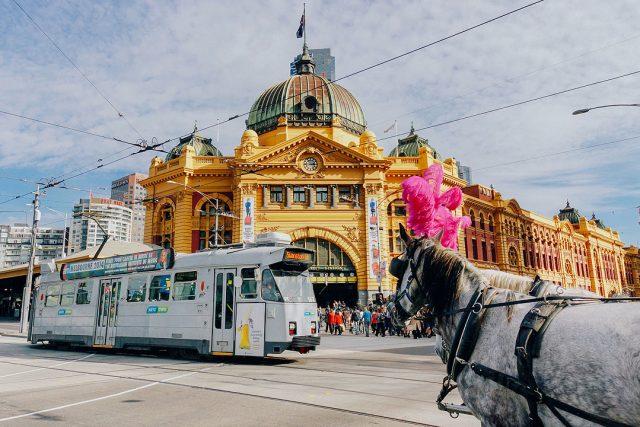
SYDNEY/MELBOURNE — A magnitude 6.0 earthquake struck near Melbourne on Wednesday, Geoscience Australia said, one of the country’s biggest quakes on record, causing damage to buildings in the country’s second-largest city and sending tremors throughout neighboring states.

The quake’s epicenter was near the rural town of Mansfield in the state of Victoria, about 200 kms (124 miles) northeast of Melbourne, and was at a depth of 10 kms (six miles). An aftershock was rated 4.0.

Images and video footage circulating on social media showed rubble blocking one of Melbourne’s main streets, while people in northern parts of the city said on social media they had lost power and others said they were evacuated from buildings.

The quake was felt as far away as the city of Adelaide, 800 kms (500 miles) to the west in the state of South Australia, and Sydney, 900 kms (600 miles) to the north in New South Wales state, although there were no reports of damage outside Melbourne and no reports of injuries.

More than half of Australia’s 25 million population lives in the southeast of the country from Adelaide to Melbourne to Sydney.

“We have had no reports of serious injuries, or worse, and that is very good news and we hope that good news will continue,” Prime Minister Scott Morrison told reporters in Washington.

“It can be a very disturbing event, an earthquake of this nature. They are very rare events in Australia and as a result, I am sure people would have been quite distressed and disturbed.”

Quakes are relatively unusual in Australia’s populated east due to its position in the middle of the Indo-Australian Tectonic Plate, according to Geoscience Australia. The quake on Wednesday measured higher than the country’s deadliest tremor, a 5.6 in Newcastle in 1989, which resulted in 13 deaths.

The mayor of Mansfield, Mark Holcombe, said he was in his home office on his farm when the quake struck and ran outside for safety.

“I have been in earthquakes overseas before and it seemed to go on longer than I have experienced before,” Holcombe told the ABC. “The other thing that surprised me was how noisy it was. It was a real rumbling like a big truck going past.”

He knew of no serious damage near the quake epicenter, although some residents reported problems with telecommunications.

No tsunami threat was issued to the Australian mainland, islands or territories, the country’s Bureau of Meteorology said in a statement.

The quake presented a potential disruption for anti-lockdown protests expected in Melbourne on Wednesday, which would be the third day of unrest that has reached increasing levels of violence and police response. — Reuters

Pandemic threatens Asia-Pacific’s progress  on global development goals

PHILSTAR

MANILA — The coronavirus pandemic may have pushed as many as 80 million people in developing Asia into extreme poverty last year, threatening to derail progress on global goals to tackle poverty and hunger by 2030, the Asian Development Bank (ADB) said on Tuesday.

Developing Asia’s extreme poverty rate — or the proportion of its people living on less than $1.90 a day — would have fallen to 2.6% in 2020 from 5.2% in 2017 without coronavirus disease 2019 (COVID-19), but the crisis likely pushed last year’s projected rate higher by about 2 percentage points, ADB simulations showed.

The figure could even be higher considering the inequalities in areas like health, education and work disruptions that have deepened as the COVID-19 crisis disrupted mobility and stalled economic activity, the ADB said in a flagship report on the region.

“As the socioeconomic impacts of responses to the virus continue to unfold, people already struggling to make ends meet are at risk of tipping over into a life of poverty,” the Manila-based lender said.

Among reporting economies in Asia and the Pacific, which refers to the 46 developing and three developed ADB member economies, only about one in four posted economic growth last year, it said.

As unemployment rates increased the region also lost about 8% of work hours, affecting poorer households and workers in the informal sector.

The economic damage brought about by the pandemic had further intensified the challenge of meeting global development goals adopted by the United Nations in 2015.

U.N. members unanimously passed 17 Sustainable Development Goals, known as SDGs, in 2015, creating a blueprint of ambitious tasks from ending hunger and gender inequality to expanding access to education and health care.

The goals had a deadline of 2030.

“Asia and the Pacific has made impressive strides, but COVID-19 has revealed social and economic fault lines that may weaken the region’s sustainable and inclusive development,” ADB Chief Economist Yasuyuki Sawada said in a separate statement. — Reuters

BDO Foundation receives Enterprise Asia award for 5th straight year

For the fifth consecutive year, BDO Foundation was recognized by Enterprise Asia at the prestigious Asia Responsible Enterprise Awards.

BDO Foundation’s corporate citizenship initiatives were recognized once again as among the most outstanding in Asia. For its efforts to help control the spread of the coronavirus, support frontliners and aid underserved sectors of society vulnerable to the effects of the pandemic, the corporate social responsibility arm of BDO Unibank was recently awarded by international non-governmental organization Enterprise Asia.

The award was officially conferred at the Asia Responsible Enterprise Awards (AREA) 2021, a virtual event witnessed by audiences across the continent. BDO Foundation has received recognition from Enterprise Asia for five consecutive years now.

Out of the more than 200 nominees Enterprise Asia received from 16 countries this year, BDO Foundation’s entry was among 69 honored at AREA. The foundation was one of only five Philippine organizations awarded as other winners were based in Cambodia, India, Indonesia, Malaysia, Singapore, Taiwan, Thailand and Vietnam.

The award-giving body acknowledged the foundation for its pooled testing program, relief assistance forfamilies affected by the health crisis and COVID-19 initiatives designed to support health workers.
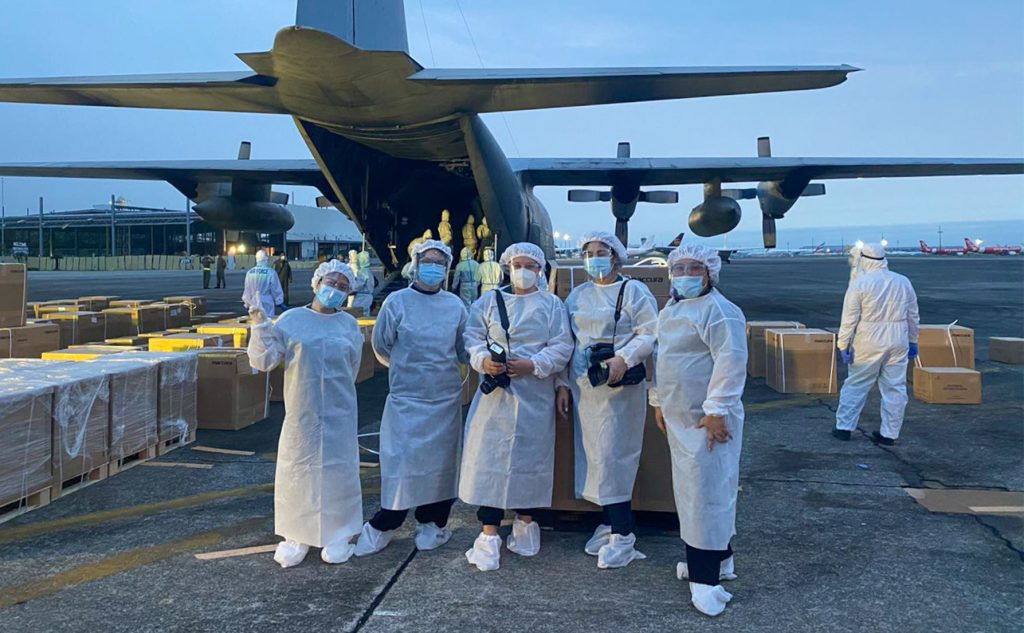
As part of its COVID-19 response, BDO Foundation funded the pilot implementation of pooled testing in the Philippines. The mass testing intervention—considered a game-changer in efforts to curb the transmission of the virus—was carried out in Makati, Cebu and Mandaluyong for 18,000 market vendors, public utility drivers and medical frontliners.

The foundation also embarked on a donation drive, donated 10,000 test kits to 10 hospitals, distributed 8,000 food packs in disadvantaged communities on lockdown and supported the donation of 1,900 hygiene kits to repatriated overseas Filipino workers. It supported the government’s efforts to facilitate the movement of frontliners during quarantine and to accelerate the distribution of financial assistance to beneficiaries of the Social Amelioration Program. Further, the foundation facilitated the donation of 200,000 doses of AstraZeneca vaccines to the government.

“Guided by BDO Unibank’s ‘We find ways’ philosophy, BDO Foundation has made significant strides to promote the health and well-being of Filipinos,” BDO Foundation president Mario A. Deriquito said as he accepted the prestigious award. “Moving forward, we will continue to help underserved sectors of society grappling with the pandemic. We will find ways to help communities recover from COVID-19, mindful of our commitment to sustainable development and nation-building.”

Now on its tenth year, AREA honors corporations in Asia that promote sustainable and socially responsible business practices. The awards program is organized by Enterprise Asia, an NGO that recognizes responsible entrepreneurship in the areas of green leadership, investment in people, health promotion, social empowerment, corporate governance, circular economy leadership and responsible business leadership.


Spotlight is BusinessWorld’s sponsored section that allows advertisers to amplify their brand and connect with BusinessWorld’s audience by enabling them to publish their stories directly on the BusinessWorld Web site. For more information, send an email to online@bworldonline.com.

Join us on Viber to get more updates from BusinessWorld: https://bit.ly/3hv6bLA

ADVERTISEMENT
ADVERTISEMENT