Home Blog Page 7468

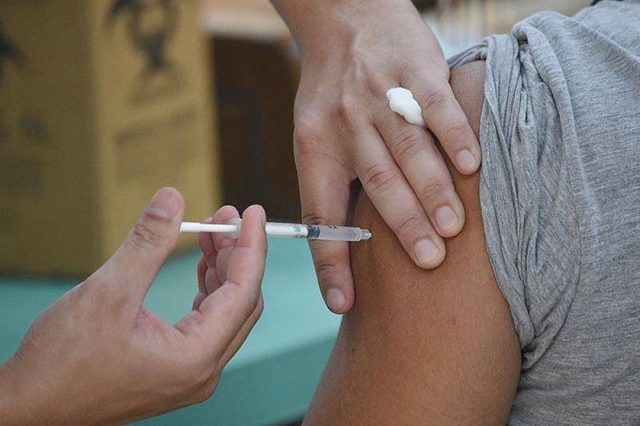
House bill seeks to force Pinoys to get COVID-19 vaccines

PHILSTAR FILE PHOTO

A BILL that seeks to force Filipinos to get vaccinated against the coronavirus has been filed at the House of Representatives.

San Jose Del Monte City Rep. Florida P. Robes filed House Bill 10249, which imposes a 30-day jail term and a P10,000 fine on people who refuse to get vaccinated against COVID-19 (coronavirus disease 2019).

The measure exempts Filipinos with conflicting religious beliefs or a medical condition that can get worse if they get inoculated.

It also discourages discrimination against those who would refuse vaccination such as loss of employment or enrollment.

The Department of Health along with local governments and civil society groups should continue to educate Filipinos about the benefits of coronavirus vaccines, according to the bill.

Ms. Robes said the mandatory vaccination programs is not uncommon, noting that there are laws requiring immunization against diseases such as Hepatitis-B.

More than 42 million coronavirus vaccines had been given out as of Sept. 21, with 19.02 million Filipinos having been fully vaccinated against COVID-19, according to data from an inter-agency task force. — Russell Louis C. Ku

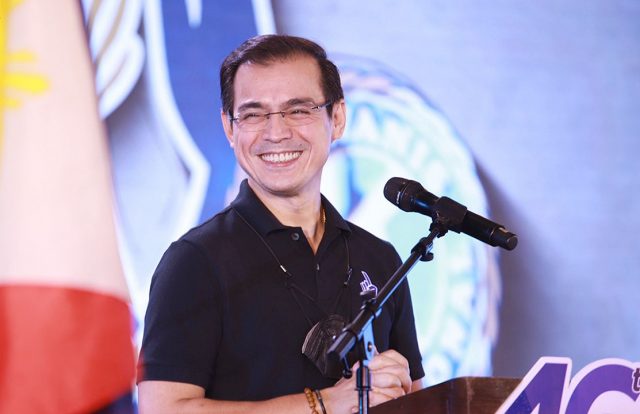
Manila chief to hire millennials if he becomes President

ISKO MORENO DOMAGOSO FB PAGE

MANILA Mayor Francisco “Isko” M. Domagoso on Wednesday said he would hire millennials if he becomes president, as he vowed to form a government “with the best and brightest” people.

At the launch of his presidential bid in the Philippine capital, the former matinee idol said he would appoint officials who are competent and not because they are his friends. He also vowed to fire corrupt officials.

“Leaders should not only think outside of the box, they must also choose people outside their circle,” Mr. Domagoso, 46, said. “A leader who does not inspire the best among us to serve in government ends up surrounded by the least among us who are ruining the government instead of running it well.”

He cited the need for “constant innovation.” “I may not give you perfect government but together we can make it better,” said Mr. Domagaso, whose vice-presidential running mate will be Willie T. Ong, a cardiologist who lost in the senatorial race in 2019.

He said he would enforce an open governance policy, which he started in Manila by allowing residents to send suggestions on how to improve government service straight to his office.

“I will welcome criticism because the value in listening to complaints is they lead to better policies and improve services,” he added.

Mr. Domagoso slammed the government’s pandemic response and the leadership style of President Rodrigo R. Duterte.

“We’ve been under quarantine for 557 days, but instead of flattening the curve, we have flattened our economy,” he said. “Many people continue flatlining in hospitals.”

Mr. Domagoso said he would avoid senseless speeches late at night, alluding to Mr. Duterte’s televised speeches in which he has attacked political opponents including the Manila mayor.

The President has said Mr. Domagoso does not deserve to become president given his past as a sexy actor.

The Manila chief, who ran and lost in the 2016 senatorial race, said leaders who flip-flop on their political ambitions could not be trusted.

Months before the May 2016 elections, Mr. Duterte said he would not run for President, only to change his mind by becoming a substitute candidate. The tough-talking leader has said he would abandon his vice-presidential ambition for 2022 if his daughter Davao City Mayor Sara Duterte-Carpio runs for President.

Mr. Domagoso used to be a scavenger and pedicab driver in a Manila slum before he was discovered by a talent scout.

“While poverty dehumanizes, it must not take the humanity out of you,” he said. “Yes, I grew up poor but I have never been disrespectful,” he added in Filipino. — Kyle Aristophere T. Atienza


Gov’t developing more cruise routes amid pandemic

THE TOURISM department on Wednesday said it was developing domestic cruise routes to help the industry recover from a coronavirus pandemic.

“We are exploring the development of the Western Visayas domestic cruise tourism circuit,” Gina Marie Liberty N. Esmaña, head of Cruise Team at Tourism department told an online symposium.

The routes may include Bohol-Siquijor-Dumaguete-Bohol, Iloilo-Sicogon-Boracay-Iloilo and Cebu-Boracay-Puerto Princesa-Cebu, she said.

“This is in coordination with our private sector stakeholders and partners and maritime experts,” Ms. Esmaña said.

The Tourism department is also developing a domestic tourism product called the Soul Circuit: Manila, Bataan, Corregidor — three adjacent destinations that form part of Mega Manila.

Ferries will be used to transport tourists from one area to another, she said. Accommodation won’t be part of the package because it will be land-based, Ms. Esmaña said. The program may be launched as early as next month.

The agency sees Metro Manila as the main source of tourism arrivals under the new normal.

Ms. Esmaña said the country lost 203,000 passengers from January to November last year as 109 cruise calls got canceled amid the global health crisis.

The Philippines had 72 cruise arrivals in 2016, 130 in 2017, 178 in 2018 and 102 in 2019, or before the pandemic.

Cruise passengers to the Philippines hit 72,350 in 2016, 68,075 in 2017, 181,350 in 2018 and 128,252 in 2019.

The government seeks to develop domestic tourism routes, enhance existing tourism products and lobby for the resumption of domestic travel to help the sector during the pandemic, Ms. Esmaña said.

The Tourism department had tried to strengthen cruise tourism so it becomes a driver of foreign visitor arrivals. As an archipelago with more than 7,000 islands, and with one of the world’s longest coastlines, the Philippines should be a natural market for the industry.

But the country has historically been overlooked as a destination because of its underdeveloped facilities and a lack of promotion. The Southeast Asian cruise map has been dominated by Singapore, Malaysia and Thailand, as well as by Hong Kong, China and Taiwan. — Arjay L. Balinbin

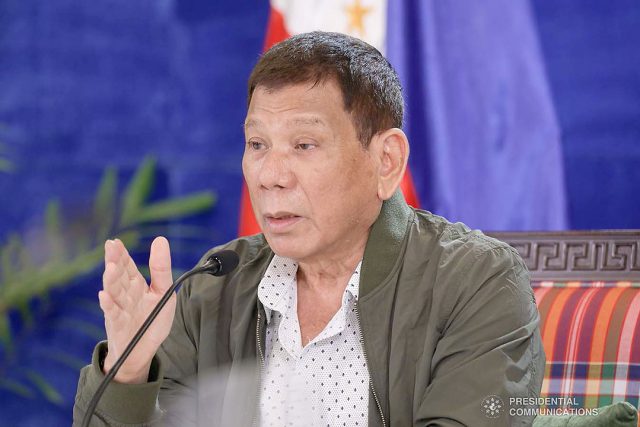
Duterte chides UN for meddling

PRESIDENT Rodrigo R. Duterte on Tuesday said anyone found to have “acted beyond bounds” in his campaign against illegal drugs would be held accountable, while appearing to brush off an International Criminal Court (ICC) investigation.

In a video address to the UN General Assembly on Tuesday, the tough-talking leader said he had ordered a review of the conduct of the campaign, and the Justice department was looking at the files of drug dealers.

Mr. Duterte’s speech to the UN General Assembly comes just days after the ICC allowed an investigation into alleged “crimes against humanity” in connection with his war on drugs that has killed thousands.

He said his government was working with the UN Human Rights Council to look into the cases.

Mr. Duterte’s speech was “a clear directive to pursue with greater vigor the ongoing review of drug death cases and to commence legal actions if found warranted,” Justice Secretary Menardo I. Guevarra told reporters in a Viber group message on Wednesday.

He said they had submitted two reports to Mr. Duterte, adding that it would first discuss these with police before releasing these to the public. “We’re not doing things in secret.” — Bianca Angelica D. Añago

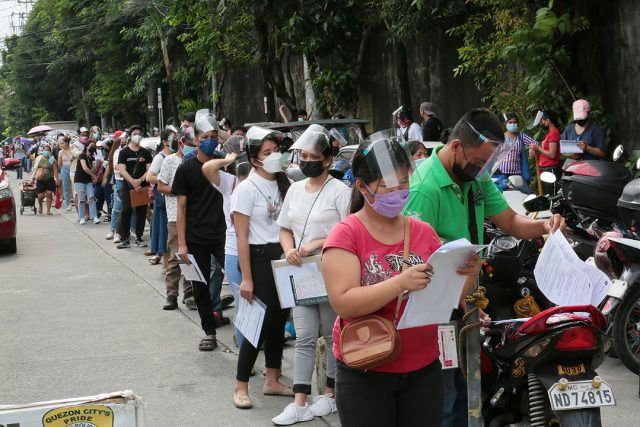
Bill extending voter registration OK’d

PHILIPPINE STAR/ MICHAEL VARCAS
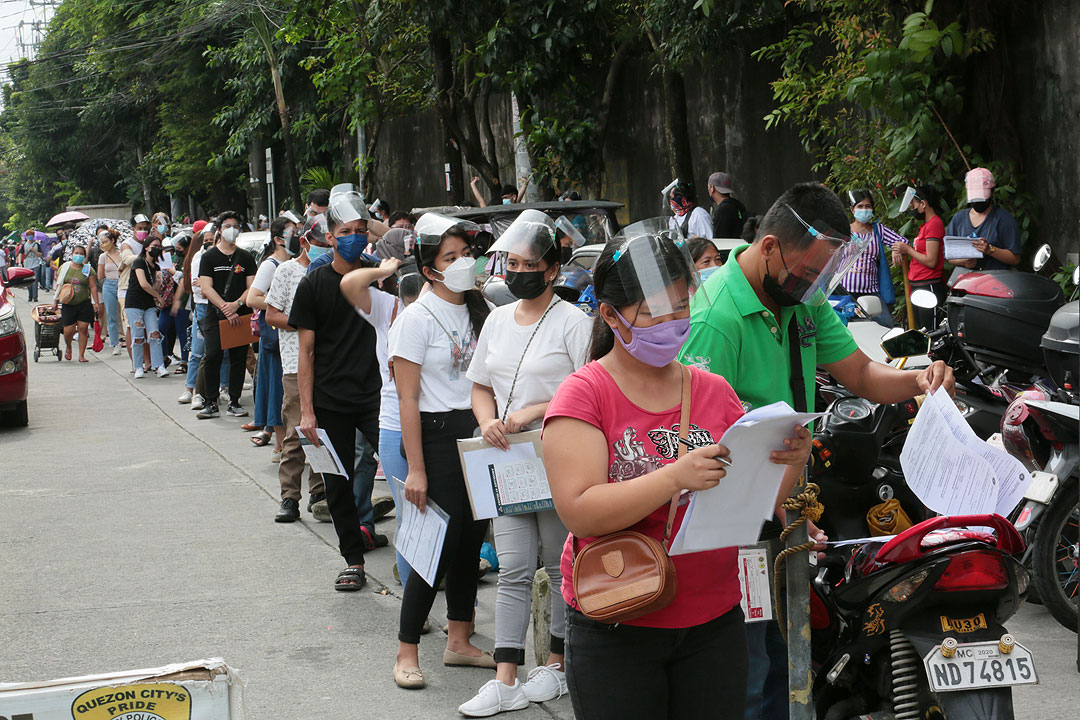
VOTERS seeking to register lined up inside the Quezon City Science High School on Sept. 20 as they waited to be called by election officers. — PHILIPPINE STAR/MICHAEL VARCAS

THE SENATE on Wednesday passed on second reading a bill that seeks to extend voter registration for the 2022 elections until Oct. 31 amid a coronavirus pandemic.

Senators approved Senate Bill 2408 after the Commission on Elections rejected a call to extend the registration period.

About 12 million voters have yet to register, Senator Francis “Kiko” N. Pangilinan has said, citing the Commission on Elections and the Philippine Statistics Authority.

Meanwhile, Speaker Lord Allan Jay Q. Velasco, Leyte Rep. Ferdinand Martin G. Romualdez, and Party-list Rep. Joseph Stephen S. Paduano on Tuesday filed a similar bill to “avoid massive voter disenfranchisement.”

“We are living under extraordinary circumstances,” according to a copy of the bill’s explanatory note. “The public health crisis has been prolonged and many prospective voters have been forced to delay their registration this year and in 2020.”

Both chambers earlier adopted separate resolutions urging the election body to extend the registration period. Unlike a bill, a resolution does not have the force of law once approved. — Alyssa Nicole O. Tan and Russell Louis C. Ku

House bill seeks to abolish PITC

A BILL that seeks to abolish the Philippine International Trading Corp. (PITC), which state auditors have flagged for unused funds transferred by various government agencies, has been filed at the House of Representatives.

Cagayan de Oro City Rep. Rufus B. Rodriguez filed House Bill 10221, which will transfer the functions of the state company such as trade-related government-to-government transactions to the Department of Trade and Industry (DTI).

The PITC is an attached corporation of the DTI that engages in exports, trade services and special trading agreements and ensures efficient procurement services for the National Government.

Under the bill, unused funds transferred or advanced by agencies to the PITC will go back to the national Treasury. Its workers will also get separation and retirement benefits.

Mr. Rodriguez said that the PITC mandate had become “redundant and irrelevant” after the passage of the Government Procurement Reform Act. Under the law, government agencies must create a procurement board and form their own bids and awards committees. — Russell Louis C. Ku

Groups cite scant pandemic funds

CIVIC groups on Wednesday hit the government for inadequate funds against the coronavirus pandemic under next year’s national budget.

“Anyone who looks at the 2022 budget will immediately see that it does not respond enough to the country’s most urgent issues of COVID-19 and poverty alleviation,” Liza Maza, spokesperson of the Council for People’s Development and Governance, said in a statement.

The Coalition for People’s Right to Health compared the P13-billion allocation for health infrastructure to the total infrastructure budget worth P1.2 trillion.

“We are almost two years into the world’s longest lockdown, yet the administration is still desperately failing to see where its priorities should lie,” group convenor Joshua San Pedro said in the statement.

IBON Foundation earlier said the disproportionate allotment for infrastructure, military and police, and debt servicing should be used to address health and economic concerns. — Alyssa Nicole O. Tan

House bill bars troops from UP

SEAN DUNCAN S. REYES

CONGRESSMEN on Tuesday approved a bill that seeks to institutionalize the agreement between the University of the Philippines (UP) and Department of National Defense (DND) banning state troops from the state university’s campuses nationwide.

House Bill 10171 will include the 1989 deal between UP and the Defense department in the UP charter of 2008.

It will ban police, soldiers and other law enforcement authorities from UP premises, except in cases of hot pursuit or emergencies.

It will also require state forces to notify the university president, campus chancellor or dean of a regional unit before conducting any activities at any UP campus nationwide.

The bill will prohibit state forces from interfering with peaceful protest actions by people within the UP campus. — Russell Louis C. Ku

5,000 workers get aid 

ABOUT 5,000 informal sector workers in the National Capital Region received livelihood grants, bicycles, mobile phones with load cards, and cash-for-work wages worth P59.18 million from the Labor department on Tuesday, the agency said in a statement.

Bicycles and mobile phones worth P21.18 million were given to beneficiaries from 16 cities and a municipality to help them start a food delivery business.

Labor Secretary Silvestre H. Bello III said the beneficiaries were workers under the A4 category who have completed their vaccine shots. “This is one incentive to encourage our workers to get vaccinated and to help in the country’s fight against this pandemic,” he said in an e-mailed statement.

The agency said 3,551 informal sector workers from Marikina, Pateros, Mandaluyong, San Juan, Pasig, and Manila City were also given temporary jobs and wages worth P35.44 million under its cash-for-work program.

Livelihood grants worth P2.57 million were also awarded to 330 beneficiaries in the capital. — Bianca Angelica D. Añago

Deadline for petroleum reserve feasibility study set at 18 months

REUTERS

THE DEPARTMENT of Energy (DoE) said Wednesday that it has allotted 18 months for a feasibility study on the proposed Strategic Petroleum Reserve (SPR).

In a statement, the DoE said it issued a department circular on Sept. 16 detailing the steps for setting up the SPR.

The circular, which has yet to be published on the DoE website, has identified the DoE and Philippine National Oil Co. (PNOC) as the lead agencies for setting up a government-owned reserve of crude oil, finished petroleum products and biofuels, which will insulate the Philippines from volatile fuel prices and supply disruptions.

Apart from the feasibility study, the lead agencies’ other deliverables include the creation of standards for signing supply deals for the reserves; maintaining the storage facilities, and managing the inventory, according to Energy Undersecretary Felix William B. Fuentebella.

“This circular (establishing the national SPR) will help bring the country closer to attaining energy security by decreasing our dependence on the importation of crude oil and finished petroleum products to meet our fuel requirements,” Secretary Alfonso G. Cusi said.

In March, the PNOC announced the revision of the terms of reference for engaging the project advisor, which will be preparing the detailed feasibility study. 

The PNOC’s other task was to prepare to operate a mobile distribution system for the reserves if warranted by an emergency. — Angelica Y. Yang

PHL, Vietnam could be among top RCEP beneficiaries — PIDS

THE PHILIPPINES and Vietnam could be the top gainers in terms of real gross domestic product (GDP) growth under a new 15-country Asia-Pacific trade deal, mainly due to lower trade costs, according to a preliminary analysis from the Philippine Institute for Development Studies (PIDS).

The benefit to both countries was quantified as a 2.14% gain in real GDP for Vietnam and a 2.02% gain for the Philippines, according to a presentation delivered by PIDS Senior Research Fellow Francis Mark A. Quimba.

The two countries were identified as among those with the greatest potential to benefit from lower trade costs. Mr. Quimba’s presentation singled out Singapore and South Korea as the top gainers from lower trade costs, followed by Vietnam and the Philippines.

He was speaking at a virtual event organized by the Trade department on Wednesday.

The Regional Comprehensive Economic Partnership (RCEP) signed last year is a trade pact among China, Australia, New Zealand, Japan, South Korea and all 10 member countries of the Association of Southeast Asian Nations (ASEAN), accounting for about a third of the world’s trade and economy.

Mr. Quimba said his modelling indicates that Philippine producers will be able to realize higher factory gate prices under the new set-up, which will flow on to higher real GDP.

“The success of any trade agreement depends on utilization,” he said. “The companies will need to internalize the reduction in trade and increase factory gate prices.”

George N. Manzano, University of Asia and the Pacific economist and former tariff commissioner, said the RCEP can be key to improving trade among member countries.

“We hope that RCEP can increase the resilience of global value chains by making it more established and providing a more secure framework with rules-based approach to the global value chains crisscrossing Asia and the Pacific region,” he said.

“To the extent that RCEP can lower trade costs, it allows member economies to participate more fully and plug in more securely in the global value chain.”

But RCEP could also cause trade vulnerabilities.

The Philippines already benefits from lower tariffs when it exports to Japan, South Korea, and China. But the mega-trade deal will also allow the three economies to have preferential access to each other’s markets.

“There’s always the threat that our preference might be eroded. And this is at the moment something that we need to consider moving forward. We don’t know yet how significant it is,” Mr. Manzano said.

Mr. Quimba also noted concerns surrounding the RCEP centering on the widening of the development gap among members, with more potential benefits flowing to South Korea and Japan. — Jenina P. Ibañez

Legislator says taxing golf courses, subdivisions preferable to wealth tax

A SENIOR LEGISLATOR proposed Wednesday to tax the inefficient use of land, including golf courses and low-density subdivisions.

Albay Rep. Jose Maria Clemente S. Salceda, chairman of the House Ways and Means Committee, was responding to a proposal for a wealth tax on individuals with taxable assets exceeding P1 billion.

“The best way to tax wealth is to tax the inefficient and dysfunctional use of land in this country. The easiest and fairest way to do that is to tax low-density use of land in very high-density areas,” Mr. Salceda said.

He said subdivisions and golf courses leave the working class with relatively little living space, introducing inefficiencies to their working and living arrangements.

“Imagine, in the world’s densest Metropolis, we have golf courses. They create traffic, are an inefficient use of land and water, and prevent a lot of fair development such as socialized housing from having space in the city,” Mr. Salceda said.

He also said that taxing net worth could harm the economy as wealthy individuals can easily transfer assets to friendlier tax jurisdictions.

Legislators from the minority Makabayan bloc filed House Bill 10253 or the proposed Super-Rich Tax Act of 2021 that will impose a tax of 1-3%, depending on the extent the assets exceed P1 billion.

As drafted, the bill proposes a 1% rate on taxable assets exceeding P1 billion; a 2% rate on assets above P2 billion; and a 3% rate on assets above P3 billion.

The bill proposes an effectivity date for the tax of Jan. 1, 2022, if passed.

Revenue from the tax is to be used for medical assistance and investment in education, employment, social protection, and housing for poor families.

Makabayan legislators said that the proposed tax could raise P236.7 billion in government revenue a year from just the top 50 richest Filipinos.

However, Finance Secretary Carlos G. Dominguez III told reporters that the proposed tax will drive capital out of the Philippines. — Russell Louis C. Ku

ADVERTISEMENT
ADVERTISEMENT