Home Blog Page 7457

D&L plans more products as Batangas facility boosts R&D

LISTED D&L Industries, Inc. said it is ramping up its investments on research and development (R&D) to launch more products following its successful maiden bond offering, which will fund the expansion of its facility in Batangas.

“With our new facility coming online, they can expect more innovative businesses solutions and product offerings from us,” D&L President and Chief Executive Officer Alvin D. Lao said in an e-mailed statement over the weekend.

The company said it has one of the “most extensive R&D investments in the country.” D&L said its customers view it as an R&D extension of their respective businesses.

D&L completed its maiden P5-billion bond offering this month, which saw total bids exceed its base of P3 billion by 4.6 times.

Proceeds from the bond issuance will be used for the expansion of its Batangas expansion. The facility is expected to partially start operations by May next year. The facility is “envisioned to be a world-class manufacturing plant which boasts of its cutting-edge R&D and innovation capabilities.”

“At the peak of the lockdown in 2020, the company was able to realign its resources to manufacture essential food and chemical products that were badly needed during those times,” the company said.

D&L developed surface disinfectant in aerosol format Solbac Surface Disinfectant via its Aero-pack Industries, Inc. unit in less than three months.

Meanwhile, its subsidiary Chemrez Technologies, Inc. manufactured and exported food and health supplement Laurin CocoMCT oil.

The company also developed Biorez and Biomate, proprietary lines of plastic materials and additives of plastic materials which help plastics become compostable and biodegradable.

“While times have changed especially with the pandemic, our company remains rooted in its core mission of dedicating itself to better lives with R&D and innovation as its main tool,” Mr. Lao said.

Shares of D&L at the stock market closed unchanged for the third consecutive day on Friday at P7.80 apiece. — Keren Concepcion G. Valmonte

Hog raisers say industry can’t withstand pork import surge

PHILSTAR

HOG RAISERS said the industry cannot withstand the volume of pork imports due to arrive based on the volume of approved import clearances.

Pork Producers Federation of the Philippines, Inc. President Rolando E. Tambago said the volume of future imports, as indicated by the approved sanitary and phytosanitary import clearances (SPSICs) in the eight months to August, are “too much for the hog industry to take.”  

According to the Bureau of Animal Industry, pork imports with approved SPSICs amounted to 837,955.34 metric tons (MT) as of Aug. 31, from 276,424.23 MT a year earlier.

Overall meat imports with approved SPSICs as of end-August hit 1.72 million MT, up 107% from a year earlier.

“The whole industry is worried about the huge amount of approved SPSICs. Imported pork will flood local markets and will put an additional burden on hog farmers,” Mr. Tambago said via mobile phone.

Mr. Tambago projected a surplus of pork, as per capita consumption in 2021 is 14.17 kilograms, based on an estimated population of 110 million.

He said domestic pork production for 2021 is expected at 1.32 million MT. When combined with the 837,955.34 MT approved pork imports, the surplus will be 603,260 MT due to weaker demand caused by the coronavirus disease 2019 (COVID-19) pandemic.  

“To put into perspective, our total demand or consumption for the whole year is estimated only at 1.56 million MT,” Mr. Tambago said. 

“Philippine pork per capita consumption for this year is expected to be much lower versus previous years due to the economic impact of the COVID-19 pandemic. Market demand is also shrinking,” he added.

As a result, Mr. Tambago urged the Department of Agriculture (DA) to pay attention to the hog industry’s needs.

“Only 30% of hog production was lost (due to African Swine Fever). But why are there so many imports? I understand that the government wants to tame inflation. But their efforts should be focused on improving local production. The DA should indemnify farmers for all culled pigs affected by ASF, subsidize feed inputs to reduce production costs, and help with postharvest operations up to the marketing of produce,” Mr. Tambago said.

To address the tightening pork supply in the wake of ASF, President Rodrigo R. Duterte issued two executive orders on May that raised the minimum access volume allocation for pork imports by 200,000 MT; and decreased the tariff rates of in-quota and out-of-quota pork imports. — Revin Mikhael D. Ochave

Peso expected to appreciate on likely manufacturing boost

THE PESO could strengthen versus the greenback this week due to likely improvement in manufacturing data.

The local unit closed at P50.65 per dollar on Friday, weaker by 31 centavos from its P50.34 finish on Thursday, based on data from the Bankers Association of the Philippines.

It also shed 70 centavos versus its close of P49.95 per dollar a week earlier.

The peso’s Friday finish was its weakest in nearly 16 months or since May 28, 2020 when it closed at P50.69 a dollar.

The peso depreciated versus the greenback after the central bank further raised its inflation forecast for the year, UnionBank of the Philippines, Inc. Chief Economist Ruben Carlo O. Asuncion said in an e-mail.

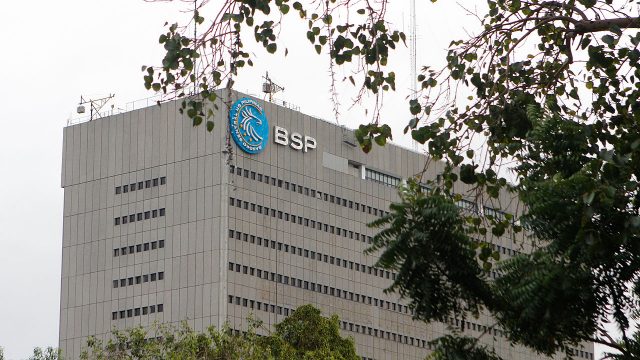
The Bangko Sentral ng Pilipinas (BSP) on Thursday kept rates steady to support recovery but warned that inflation will likely remain elevated this year due to low supply caused by the African Swine Fever outbreak and the impact of weather disruptions.

The central bank now expects 2021 inflation to quicken further beyond its 2-4% target at 4.4% from 4.1% previously. It said September inflation could reach around 5% before going back to within target by November.

In August, headline inflation rose to 4.9% from 4% in July, marking its fastest pace since the 5.1% in December 2018. This brought average inflation for the first eight months of 2021 to 4.4%.

Concerns over the debt situation of China’s Evergrande Group was also a major factor that affected the peso-dollar trading during the week, Rizal Commercial Banking Corp. Chief Economist Michael L. Ricafort said in a text message.

Evergrande, China’s second-biggest developer and a key player in the country’s housing boom, is facing liabilities worth more than $300 billion. This is equivalent to 2% of China’s gross domestic product.

The developer left several of its projects unfinished amid cash crunch, causing homebuyers to worry regarding their properties. The firm’s main unit on Wednesday said it would make a coupon payment on its domestic bonds on Sept. 23, providing some relief to market concerns.

The BSP on Thursday said local banks only have minimal exposure to China, citing claims from counterparties based in the country and its Special Administrative Regions is only 0.86% of the total banking system’s assets.

This week, Mr. Ricafort said the peso-dollar trading will be affected by market sentiment on upcoming manufacturing data.

IHS Markit will release the country’s September Manufacturing Purchasing Managers’ Index (PMI) on Oct. 1.

The PMI reading dropped to 46.4 in August from 50.4 in July, indicating factory activity was below the 50 mark that separates expansion from contraction. This was blamed on the two-week lockdown last month which temporarily shut factory operations.

Meanwhile, Mr. Asuncion said the market will continue to monitor developments related to Evergrande and its implications to China and other economies, which could then affect foreign exchange trading.

Finance Secretary Carlos G. Dominguez III last week said his department was assessing whether any of the Chinese contractors involved in the government’s infrastructure program will be negatively affected by the Evergrande situation.

For this week, Mr. Asuncion gave a forecast range of P50.00 to P50.50, while Mr. Ricafort expects the local unit to move within P50.25 to P50.75 per dollar. — Luz Wendy T. Noble

Overcoming pandemic difficulties, Robinsons opens mall in La Union

THE 53RD ROBINSONS MALL was opened on Sept. 24, setting up shop in the resort town and surfing capital of La Union.

The locale’s influences are reflected in Robinsons Place La Union’s decor, as shown in an online press conference on Sept. 22. Murals depicting ocean and surfing lifestyle themes dot the mall, which, with 34,906 square meters of space spread across four levels, is the province’s biggest mall so far.

This is the group’s third shopping complex in the Ilocos region, joining Robinsons Place Ilocos in San Nicolas and Robinsons Place Pangasinan in Calasiao. The mall operator’s other locations in the northern regions of the country include Robinsons Place Santiago and in Tuguegarao.

“All of those malls have been doing very well, and that’s why we are confident that Robinsons Place La Union will also be a successful mall,” said Arlene Magtibay, SVP and Robinsons Malls BUGM.
The location itself is an ace up their sleeves. More than its reputation as a seaside resort, La Union’s San Fernando —  the provincial capital where the mall is located —  happens to be the regional center of Region I (which includes the provinces of Ilocos Norte, Ilocos Sur, La Union, and Pangasinan). “San Fernando is easily the center of trade and commerce of the province. All of the businesses are practically located here,” said Ms. Magtibay.

RISING DURING THE PANDEMIC
The mall, which began general construction in March 2019, also suffered unavoidable setbacks due to the pandemic. “This mall is probably the most challenging that we’ve had to build,” said Ms. Magtibay. Remembering when the mall first began construction, “At that time, we were very confident that we would be able to open the mall in 2020.”
But then, she said, their deadlines kept getting pushed further because of pandemic-related restrictions, the difficulties of getting materials to La Union; not to mention the risk of the COVID-19 virus itself.

“On the tenant’s side, it was also difficult for our leasing department to bring the tenants to La Union,” she said. While distance was a factor, she added, “More than that, there were restrictions on travel, and people were really very wary about going anywhere far.
“We’re just really grateful that despite the hardships that we face, we are now at this point where we are ready to open Robinsons Place La Union,” she said.
As such, amenities and protocols that have been set throughout Robinsons Malls across the country because of the pandemic also apply in La Union, including wearing face shields and masks, signs reminding people of health protocols, having sanitation teams, and roving safety marshals.

On the bright side, Robinsons Place La Union is the pilot mall for the mall group’s first kids’ bathroom. Other amenities include a baby care room, a PWD-friendly layout with ramps and special parking, and a bike parking and repair station. The mall includes four cinemas, a 344-seater Eat Street food hall, and an outdoor Sky Deck.
Meanwhile, environmental concerns are also put to the fore with a partnership with the La Union City Environment and Natural Resources Office (CENRO), where recyclables are collected and turned over to the Eco Waste Association, a local group which upcycles plastics and converts them to plastic plant boxes. A sewage treatment plant aims to recycle water, while the mall uses LED lighting for energy efficiency.

LOCAL ENTREPRENEURS
Another highlight of Robinsons Place La Union are the local entrepreneurs that will occupy its space. Ms. Magtibay estimates that about 70% of their tenants will be micro, small to medium enterprises (MSMEs). When the mall is fully operational, it will have about 135 stores.

Local entrepreneurs on their list include Taco Tito’s, Gem’s Empanada Ilocandia, Sagat Crust Food House, Pasarabo, Seashack, Lorma Life Check Clinic, Dr. Brows, and Luxe Derm Skin Care Clinic, among others.

“All of the malls that we’ve opened, we really try our best to involve the local entrepreneurs. We believe that we should be all-inclusive. It’s not just about bringing in the national brands and the international chains. Wherever we put up a mall, we have to make sure that we include the local community,” said Ms. Magtibay. “It’s also because a lot of them are actually very good.”
“We really would want to help these MSMEs because as we all know, that’s really the backbone of our economy,” she said. “It’s been a very symbiotic relationship. Even as we support them, the mall ends up being more interesting.” — Joseph L. Garcia

LNG as transition fuel offers opportunities, lower costs

Energy World Corp. Pagbilao LNG Hub Terminal Jetty. This jetty is capable of unloading / loading from small LNG Carriers up to Q-max size.

By Keren Concepcion G. Valmonte, Reporter

COMPANIES are supporting the Energy department’s initiative of looking into liquefied natural gas (LNG) terminal projects as one of the opportunities to source power for the country. 

The country’s Energy department estimated that the Malampaya gas-to-power project, the country’s sole provider of natural gas to power around 20% of the country’s needs and 40% of Luzon’s, will be depleted by 2027.

The department is now exploring other options for sourcing energy, which include importing LNG. In a statement made in August, Energy Secretary Alfonso G. Cusi set a goal to transform the Philippines into a “leading LNG hub in Asia.”

Despite the coronavirus disease 2019 (COVID-19) pandemic, companies with LNG terminal projects said construction of their plants remains on track even with the stop-and-go lockdown restrictions in the country.

There are currently six LNG terminal projects in the country, down from seven after Batangas Clean Energy, Inc. (BCE) failed to secure financing for its project as it was not able to sign up an off-taker for the facility’s output.

The Shell Group, Excelerate L.P., First Gen Corp.’s unit, Atlantic Gulf & Pacific Co. of Manila, Inc. (AG&P), and A Brown Co.’s Vires Energy Corp. are building their projects in Batangas where the country’s gas-fired power plants are located. 

Energy World Gas Operations Philippines, Inc., on the other hand, is building its plant in Pagbilao, Quezon.

First Gen’s FGEN LNG Corp.’s interim offshore terminal project started construction in June. The company aims to complete it as early as the third quarter of next year.

“In order to enable the introduction of LNG as early as possible at lower cost, First Gen, together with Tokyo Gas [Co. Ltd.], has pivoted to develop an interim offshore LNG Terminal, by modifying its existing jetty to become a multi-purpose jetty that can accommodate a floating storage and regasification unit (FSRU) and building an adjunct onshore gas receiving facility,” Jonathan C. Russell, First Gen’s executive vice-president and chief commercial officer, said in an e-mailed response to BusinessWorld’s query.

The offshore terminal will allow FGEN LNG to serve the natural gas requirements of existing and upcoming gas-fired power plants of its affiliates as well as those of third parties by 2022’s third quarter.

The target date is roughly the same time AG&P looks to complete its own import terminal in Batangas bay. AG&P’s Philippines LNG (PLNG) import terminal may be the first commissioned LNG terminal in the country.

“The project is progressing as planned. All engineering and procurement-related works are fully completed,” Karthik Sathyamoorthy, president of AG&P Terminals & Logistics, said via e-mail. 

“Construction has started offsite using modular approach for on-track commissioning and the start of commercial operations of PLNG in the third quarter of 2022,” Mr. Sathyamoorthy added.

Energy World started to look into developing an LNG project in the Philippines in 2007. However, its project in Pagbilao, Quezon has paused due to the delay in connecting the power station to the national grid.

Energy World’s LNG terminal is around 80% complete, the company claims, while its 650-megawatt (MW) power station project’s first two 200-MW gas turbine units were said to be 75% to 80% complete each. Both are located in Pagbilao.

“Although we were able to obtain a connection agreement with NGCP (National Grid Corp. of the Philippines) way back in about 2016 or 2017, the designated connection point for our power plant is at the new Pagbilao substation, which is being built by the NGCP at the moment,” Graham Stewart Elliot, chairman and chief executive of Energy World, said in an online video call.

“That was originally scheduled for completion in about 2017 or 2018 when we first made the agreement with NGCP, however, it’s not yet complete. They have started construction, but until it’s completed, we don’t have an outlet for electricity,” he added.

Energy World said the project is under a “care and maintenance status” during the pandemic.

“We’re just waiting to get some clarity and finality on the completion of that substation and we will make sure we will come online in parallel with that,” Mr. Elliot said.

Meanwhile, Vires Energy’s project is undergoing pre-front end engineering design, A Brown Vice-President Paul Francis B. Juat told BusinessWorld in a phone call.

“I think LNG will be a very stable part of the energy mix and we’ve seen even modern countries transition using LNG first before they go full-on renewables,” Mr. Juat said.

Meanwhile, First Gen’s Mr. Russell said the introduction of LNG in the country “will encourage new power plant developments, as well as industrial and transport industries, to consider it as a replacement to more costly and polluting fuels.”

FGEN LNG also plans to introduce small-scale LNG, or ssLNG — an LNG-related facility but of “lower magnitude than conventional LNG infrastructure.”

“We believe that gas should continue to play an important role in the energy mix of the Philippines, providing a competitive, low carbon, secure and flexible complement to the increased use of intermittent renewable energy sources,” Mr. Russell said.

“The entry of LNG should thus play a vital role in decarbonizing the power sector of the country,” he added.

In late August, Kohlberg Kravis Roberts & Co. (KKR) unit Philippines Clean Energy Holding, Inc. offered to acquire up to 3% to 5.7% of the total listed and outstanding shares of First Gen.

KKR has deployed around $5 billion of total equity into renewable assets since 2011. It said it saw “potential” in the Philippines to develop more renewable and clean energy sources.

“We agree that the Philippines has huge potential to develop more renewable and clean energy sources, and we hope that KKR can continue to invest significant capital into this sector and the country overall,” KKR Asia Pacific Infrastructure Team Managing Director Michael de Guzman said in an e-mail to BusinessWorld.

Energy World’s Mr. Elliott said the Philippines “has the availability to grow into a major LNG demand center.”

“As countries move away from coal, unlike renewable energy, the increase in [the] gas energy mix will resolve power grid instability,” AG&P’s Mr. Sathyamoorthy said.

“In the long run, as the country improves its ability to access global LNG supply market, we expect access to this competitive fuel should support competitive power prices,” he added.


What happens without PAL’s ultra-long-haul flights?

REUTERS

By Arjay L. Balinbin, Senior Reporter

AS PART of its revised business plan, Philippine Airlines, Inc. (PAL) anticipates cancelation of certain unprofitable ultra-long-haul flights.

PAL’s longest routes are to London, New York, and Toronto.

“The traffic that PAL carried on these [ultra-long-haul] routes will shift to Delta, Japan Airlines, Cathay Pacific, Singapore Air, Korean Air and China Airlines,” Avelino D.L. Zapanta, former PAL president and chief operating officer, told BusinessWorld via e-mail last week.

This would necessarily mean longer travel time as well.

“The Filipinos traveling between Manila and these destinations nonstop with PAL will suffer the inconvenience of having to connect in Tokyo via Delta and Japan Airlines, or in Hong Kong via Cathay Pacific, or in Singapore via Singapore Air, or Taipei via China Airlines both ways,” Mr. Zapanta said.

But fares will not necessarily increase for the Filipino traffic.

“Sixth freedom traffic is usually filler traffic for these airlines which is enticed by the sixth freedom operators with lower air fares,” Mr. Zapanta noted.

PAL, which is majority owned by billionaire Lucio C. Tan, has filed for Chapter 11 creditor protection in the United States.

PAL Chief Financial Officer Nilo Thaddeus P. Rodriguez said in his declaration in support of the company’s “First Day” motions that the airline’s “ultra-long-haul routes (East Coast and London Heathrow) have structural issues impacting profitability.”

Singapore-based aviation analyst and consultant Brendan Sobie said that the London, New York and Toronto routes are “unprofitable for PAL and suffering from intense one-stop competition.”

“There will continue to be intense competition on these three routes in the post-pandemic environment,” Mr. Sobie said in an e-mailed reply to questions last week.

“Sustaining these services is simply not feasible for PAL and even without COVID-19 (coronavirus disease 2019), dropping them would have made good business sense,” he noted.

Mr. Sobie also said that it is now time for PAL to focus on what is viable. “In terms of its long-haul network, that would be Los Angeles, San Francisco, and Vancouver.”

“This trio are core longstanding markets for PAL, which have been profitable previously and can potentially return to profitability following the restructuring,” he added.

PAL’s Mr. Rodriguez said that the airline will exit unprofitable markets and continue to fly only those routes that are, or can be made, profitable, while reintroducing capacity in line with evolving demands.

The airline announced last week that it was planning to increase flights to San Francisco, Hong Kong, Los Angeles, Guam, Singapore, Dubai, Doha, Nagoya and Fukuoka “by late October” while continuing special flights to Auckland, Vietnam and points in Australia.

It said more flights to Honolulu and Taipei would come online by the last week of November.

“The airline’s winter season schedule also includes regular flights to New York, Seoul, Saudi Arabia, Vancouver, Toronto and other Asian destinations,” PAL added.

DoST evaluating hybrid abaca, community weavers for face mask production

PHILSTAR

THE DEPARTMENT of Science and Technology (DoST) said it has launched a project tapping hybrid abaca and other fibers as well as community weavers to produce face masks and other protective apparel.

The DoST’s Philippine Council for Agriculture, Aquatic and Natural Resources Research and Development (PCAARRD) said its project is known as the Community-Level Textile Raw Material Integration towards Self-sufficient Philippine Textiles Manufacturing of Protective Re-engineered Occupational Technical Textiles against COVID-19 program.  

“(The project) targets to manufacture a water-repellent, antiviral, and re-wearable textile fabric for face masks and protective apparel in response to the new normal,” PCAARRD said in a statement over the weekend.

It said the DoST’s Philippine Textile Research Institute will partner with weavers and fiber-producing communities in Apayao, Cavite, and Surigao del Sur.

Fibers to be used in the project include an abaca hybrid called Backcross Abaca with Native and Desirable Accessions to Lift Up the Abaca Industry (BANDALA), bamboo, and pineapple leaf.

BANDALA was developed late last year by the University of the Philippines Los Baños Institute of Plant Breeding. The hybrid is resistant to the abaca bunchy top virus and tolerates drought.

“The final product is also expected to comply with Republic Act No. 9242 or the Philippine Tropical Fabric Law which requires the use of local tropical fibers for government wear,” it said.  

Abaca output in the seven months to July hit 38,460.04 metric tons (MT), up 10.2% from a year earlier, according to the Philippine Fiber Industry Development Authority.

Catanduanes was the top abaca producer with 10,638.81 MT. — Revin Mikhael D. Ochave

Of soil and pineapples, sleeves and work: a look at 19th century clothing

DR. STEPHANIE Coo showing a sample of piña from Negros which was embroidered with human hair, during her talk “Ubiquity, Uniqueness, and the Theatricality of 19th-century Philippine Clothing.”

ONCE upon a time, piña – the local fabric best known for its translucence and stiffness – was as soft and flowy as lace, a product. And that was somehow related to the soil the pineapple plant is grown on.

This and other equally surprising bits of information were discussed in a talk by Dr. Stephanie Coo, called “Ubiquity, Uniqueness, and the Theatricality of 19th-century Philippine Clothing,” presented on Sept. 24 on the Facebook page of Gabii sa Kabilin, a heritage initiative by the Ramon Aboitiz Foundation, Inc. Ms. Coo is the author of Clothing the Colony, 19th Century Philippine Sartorial Culture, 1820-1896, which won at the IIAS-ICAS International book Prize 2021, being named Best Book in Humanities- English Edition.
“What’s unique about Filipino clothing are the materials,” she said, pointing out the ubiquitous formalwear Filipino fabric piña, made out of fibers of the crown of leaves from the Spanish Red variety of pineapple. “The material itself is quite itchy,” she said, as well as translucent. The nature of the material paved the way for such innovations related to protection: of the body itself but also from the gaze, hence, clothing worn underneath (usually of cotton), provided comfort, as well as protection from prying eyes.
She also noted the difference between the piña fabric now and the piña fabric in the 1800s. Comparing samples from then and now, she concluded, “Now it’s more stiff.” Apparently, piña then felt like lace. “It flows,” she said.

Further inquiry yielded that the soil on which piña is supposed to grow has changed. “The pH level has changed,” she said, noting that one of the more prosperous regions for piña production then was in the island of Panay. She also reported that efforts to produce piña in India were started, but, “The soil, again, was different.”
“What was different about the soil of Panay?,” she asked.

SLEEVES AND CLASS
She also made a case for the evolution of sleeves.

She presented images of earlier fashions which showed narrow sleeves, related to the fashions in Europe at that time. Gradually, they became wider for varied reasons. Of course, the hot climate in the Philippines came into play, but also, she showed illustrations of 19th-century domestic helpers in the Philippines. “Women started to do things.” Shorter and wider sleeves allowed for more comfort at work, while for the upper classes, sleeves became a space for leisurely needlework, which showed off a young woman’s skill in embroidery.
With class coming into play, Ms. Coo delved into the tapis, an early overskirt. Upper-class women sometimes did not wear it, it sometimes being a marker of a life of work: it either reminded one of aprons, or wipes where vendors wiped their hands.

Still, the tapis slipped in and out of fashion, as shown in illustrations where some women of means wore an overskirt, while many mestizas (mixed race women of European and Filipino descent) went without it, being a nod towards worldliness.

“When you cannot modify your facial features —  for example, to look more mestiza —  what people did to show status was to manipulate their external appearance through clothing,” said Ms. Coo.
“Clothing are markers of race, class, gender —  and what is interesting is in an emerging field,” she said about memory studies. “How are clothes remembered? How is clothing discussed? We remember people —  the wearers —  of memorable clothing.
“When we’re talking about clothes, we’re really talking about people.” — Joseph L. Garcia

BSP backs measure to regulate financial accounts to boost guard against scammers

THE BANGKO SENTRAL ng Pilipinas (BSP) is supporting a measure that looks to protect the public from fraudsters that target bank accounts and e-wallets.

The central bank said it backs the immediate passage of Senate Bill 2380 or the Bank Account, E-wallet, and Other Financial Accounts Regulation Act.

“Amid the rise in online transactions during the pandemic, the bill is also expected to strengthen confidence in use of electronic payments and promote the country’s financial stability,” the BSP said in a statement on Saturday.

The proposed measure prohibits the usage of bank accounts and e-wallets as money mules for suspicious activities.

It likewise identifies social engineer schemes as illicit activities. Deception in order to manipulate individuals into sharing their sensitive information could in turn be used to access their financial accounts, whether or not such schemes result in monetary loss on the part of the victim.

The measure also identifies economic sabotage as a major offense. Illicit activities carried out by a syndicate or through a large scale scheme will be classified under this offense.

“The legislative measure will strengthen the country’s legal framework for financial consumer welfare and foster greater public awareness on cybersecurity,” the central bank said.

Under the bill, persons found guilty of using accounts as money mules will be penalized with fines of P100,000 to P200,000, or face prision correccional (six months and one day to six years), or both.

Meanwhile, suspects found guilty of social engineering schemes will face penalties of P200,000 to P500,000, imprisonment of prision mayor (six years and one day to 12 years), or both. 

Finally, it slaps life imprisonment and a fine of P1 million to P5 million on persons found guilty of economic sabotage.

“By strictly penalizing money mules and social engineering schemes, this measure seeks to ensure that the hard-earned money of the public is kept safe, and that public trust and confidence in our current financial system are maintained as it continues to innovate and traverse through cyberspace,” Senator Grace S. Poe-Llamanzares said in the introductory note for the bill.

The bill was filed on Sept. 6.

House Bill 9615, which is a counterpart measure of the Senate bill, was filed on June 14. It remains pending with the Committee on Banks and Financial Intermediaries since July 28.

Last year, the BSP received about 20,000 financial consumer complaints, most of which were about fraud and unauthorized financial transactions. — Luz Wendy T. Noble

Be more proactive in energy security, gov’t told

By Angelica Y. Yang, Reporter

THE GOVERNMENT must play a more proactive role in ensuring energy security and take on its social responsibility of assuring sufficient power, according to energy industry stakeholders.

“The DoE (Department of Energy) is the lead agency, and in short, what I see that is lacking or missing in DoE is their sense of urgency and strong leadership,” said University of the Philippines (UP) Diliman Energy Engineering Professor Nicanor S. Villaseñor III. “They should be more proactive, rather than reactive.”

He said the Energy department should have started exploration activities as early as when it found out that the offshore Malampaya gas field’s reserves were dwindling. In this case, authorities were just reacting to the situation at hand, he added.

Energy Undersecretary and Spokesperson Felix William B. Fuentebella previously said that the agency expected compliance from those in the energy sector, citing “grave” economic and political consequences if industry players continue to defy government policies on maintaining sufficient reserves and plant outage schedules.

He said the department does not have the power to penalize industry members, but complaints can be brought up to Congress in the form of franchise revocation.

Although Republic Act No. 9136 or the Electric Power Industry Act of 2001 has fostered a deregulated environment, the government bears the social responsibility to ensure sufficient power supply, according to Senator Sherwin T. Gatchalian, who chairs his chamber’s energy committee.

“I don’t believe that energy security should be left in the hands of the private sector. That motivation is [the] government’s motivation. To some extent, yes, it’s the private sector because energy security generates profits [for] them. But it’s a social responsibility of government to make sure that we have constant supply of fuel and electricity,” he said.

For Developers of Renewable Energy for AdvanceMent, Inc. (DREAM) President Jose M. Layug, Jr., the government should adopt a pro-clean energy stance instead of a technology-neutral one, which Energy Secretary Alfonso G. Cusi has been pursuing.

“At the end of the day, government needs to declare that we prefer renewables…Renewables are now cheaper than coal and natural gas, and they’re faster to build. You can build a solar plant for nine months. You can build a wind plant for 18 months. You can build a biomass plant for two years, so it’s much easier to build these RE (renewable energy) plants than your conventional plants,” he said.

Data from the DoE Electric Power Industry Management Bureau show that the country’s installed capacity for RE, natural gas, oil-based and coal facilities increased by over 4,800 megawatts (MW) from 2016 to 2020.

Of the number, renewables accounted for around 750 MW while 3,525 MW came from coal plants.

“Have we been able to build more capacities as we should? Unfortunately, no. The supply of electricity unfortunately did not grow as much as demand,” Mr. Layug said, adding that developers faced several problems in setting up power facilities.

“When you build a power plant, ask me how many permits do they need to get? Minimum 200. Do we really want them to build, or we just want to create barriers to power plants? Number two, [they have to put up with] the flip-flopping policy of government. Is this government really supportive of renewables or not?”

He added that although the government is not allowed to build a power plant, its role is to make it easy for the private sector to build such facilities.

Meanwhile, local think-tank Center for Energy, Ecology, and Development (CEED) said the government should not create plans based on the existing grid, which depends on baseload power.

“We need to develop a grid that is capable of absorbing intermittency. Once we don’t develop this, the Philippines’ potential in harnessing RE will go to waste. You have the existing policies, but there are bottlenecks around it. The government’s plans are always based on the grid we have right now,” said CEED Executive Director Gerry C. Arances.

He said that it is imperative to introduce more RE plants which can supply baseload power while developing a “smart grid” or a grid that uses digital technology to quickly respond to consumers’ electricity demands.

NEED FOR ‘FORWARD-LOOKING’ POLICIES
While Mr. Gatchalian described coal as a “sunset” technology, he said it will likely remain a significant power source for seven years or more, even as there is pressure from the financing and environment sectors to phase out the fuel source.

Citing recent data, he said that around 65% to 75% of the country’s energy mix comes from imported sources — and this is what makes the Philippines susceptible to global fluctuations.

One way to address this is to keep diversifying energy sources, and not just relying on a single source country.

“For example, Saudi Arabia is a big supplier of crude oil, we should not just get from them. We should also get from other sources [and] look for other suppliers,” he said.

The lawmaker added the country should also keep looking for oil and gas through exploration activities and keep pushing for legacy and variable RE technologies.

Meanwhile, for UP’s Mr. Villaseñor, the government should consider implementing policies which are more forward-looking.

“Our energy situation is predominantly market driven [in terms of] policies. Given the situation where we are right now, we need to do more. We have to be more forward looking…[Our] energy policies should be able to address energy infrastructure by building in and readying capacities in generation, transmission and distribution. They should be removing barriers so that you will be able to undertake this build-up and upgrading,” he said.

Although the DoE regularly comes out with the Philippine Energy Plan (PEP), it also should look at creating an energy transition roadmap which should provide a specific timeline, targets and key performance indicators relating to the shift to other power sources other than conventional ones, he added.

At present, the department has yet to come out with the latest PEP covering the years 2020 to 2040, and the updated National Renewable Energy Plan, which details the roadmap in achieving a 35% RE share in the generation mix by 2030.

Delivery app Pick-A-Roo now carries more than 1,000 brands

LIFESTYLE delivery app Pick.A.Roo now has over 1,000 brands and over 150,000 products from different stores and categories.

Pick.A.Roo is under Agile Digital Ventures, Inc., a subsidiary of Megaworld Corp.

“We have been carefully curating and selecting our merchant partners to provide only the best offerings to our customers,” Agile Digital Ventures President Kevin Andrew L. Tan said in an e-mailed statement on Friday.

The app allows customers to order groceries from supermarkets such as The Marketplace, Shopwise, S&R, Landmark, AllDay, Robinsons Supermarket, MerryMart, and UltraMega Grocery.

Customers may also order from restaurants and food groups like Foodee Global Concepts’ Tim Ho Wan and Mesa; The Moment Group’s 8Cuts Burgers and Din Tai Fung; the Max’s Group’s Max’s and Dencio’s; Italianni’s, TGIF, and Denny’s of The Bistro Group; and The UCC Group’s Mos Burger and Coco Ichibanya.

Quick service restaurants McDonald’s, S&R Pizza, and Shakey’s Pizza may also be accessed via the Pick.A.Roo app, as well as food from hotels in Manila like Shangri-la Hotel’s Shangri-la at Home, and fine dining restaurants such as The Test Kitchen by Josh Boutwood, among others.

“Latest data from the company show that 75% of Pick.A.Roo’s transactions are through the use of credit cards, and customers use the app at an average of at least once a week for groceries and up to thrice a week for food,” the company said.

Aside from food and groceries, the app also carries pharmaceutical stores such as South Star Drug, Medexpress, and MerryMartOTC. It also has homeware brands, gadget shops such as PowerMac and Digital Walker, and appliances.

Pick.A.Roo allows users to shop from different stores at the same time and check-out in one go.

Customers may also schedule the delivery of their items, although food delivery services may be completed within 25 minutes and at least an hour for the delivery of groceries and medicines.

“Part of our vision is to constantly challenge ourselves to provide the best service to our discerning customers. It is always our goal to decrease the waiting time for delivery,” Mr. Tan said. — Keren Concepcion G. Valmonte

All mu: 2nd-generation Isuzu mu-X launched

PHOTO FROM ISUZU PHILIPPINES CORPORATION

Isuzu is raring to rumble anew in the midsize SUV segment

THE FIRST time I ever saw the Isuzu mu-X model was back in 2013 — also the first time I had attended the much-celebrated Tokyo Motor Show. I was there as part of Isuzu’s official press contingent, and I remember being quite impressed with what was then presented as the evolution of the long-running Isuzu Alterra. Needless to say, although not sold in Japan, the mu-X quickly became a hit in its Southeast Asian markets.

Fast-forward to 2021, and Isuzu has officially debuted its latest rendition of its popular seven-seater in the Philippine market. This second-generation model of the mu-X flaunts being more robust and exclusive in character and build; and describes its latest design as now more emotional and solid.

The new mu-X has a relatively smaller, leather-wrapped steering wheel (reduced to 375mm from the previous 382mm) and it comes with convenient, 20mm telescopic adjustment capability. The driver’s instruments are classier in design and the inner door trims and console armrest are made with soft-touch materials. A 10.1-inch full touchscreen display that is both Apple CarPlay and Android Auto compatible decorates the center dash. The truck now comes with an eight-speaker system with JVC Kenwood tweeters mounted on the rear doors. Moreover, as a practical feature, more power outlets can now be found built into the center console to provide passengers in the rear with access to a dedicated 220V socket and two 2.4A USB charging ports.

The second and third rows are now wider, have larger headrests (with higher height adjustment levels) and larger seat cushions. The B-pillars have been moved slightly forward (by 25mm) in order to offer additional legroom for the second-row passengers. The folding armrest here features a clever sliding tray, while the third row is appointed with a dedicated arm rest. Delightfully, there are 12 cup holders located in and around the cabin, with the ones by the door pockets able to fit in 1.5-liter sized bottles, for no compromises.

Unfolding the seatback in the mu-X is now easier, thanks to the smart changes made to the lift strap position (and to the elimination of the lever lock). And while the truck’s luggage space remains cavernous, this latest model boasts of increased load capacity — from 60 kgs to 100 kgs. Wider side steps are also excellent for accommodating senior passengers.

The new mu-X also inherits a few features which were a hit among the D-Max pickup’s customer base. It now also carries the Passive Entry and Start System (PESS), which displays a welcome light when it senses that the driver approaches the vehicle, and then the interior light switches when within two meters. Conversely, the vehicle also has a Walk Away Lock which works when the driver walks away from the vehicle as he or she carries the smart key with him or her. It activates once the driver is at a distance of three meters.

Powering the latest Isuzu mu-X is its new 4JJ3-TCX turbo engine mated to a six-speed automatic transmission. This spits out 190ps of power and 450Nm of torque — enough to efficiently transport or even tow heavy loads. Furthermore, the truck’s front and back suspension have been redesigned to offer a more comfortable ride and less body roll when taking corners. It is equipped with steel underbody protection for different terrain applications, and claims a water wading depth of 800mm.

The mu-X comes with a convenient Terrain Command Select Dial which allows its driver to easily switch between 2WD High and 4WD High even while speeding at 100kph. Of course, it also gives the driver the flexibility to drive in 4WD Low when necessary, and offers its Rough Terrain Mode as a drive option at the flick of a switch.

The new Isuzu mu-X also flaunts a five-star ASEAN NCAP (New Car Assessment Program) rating, with its active and passive safety features highlighted by Isuzu’s Advanced Driver Assist System (ADAS). This technology is also carried over from the latest Isuzu D-Max, which was launched in the country earlier this year.

“The all-new Isuzu mu-X is the result of years of research and paying attention to our customers’ feedback, so that ultimately, we can introduce to you the best version of your favorite SUV,” shared IPC President Hajime Koso.

The all-new Isuzu mu-X is available in both 4×4 and 4×2 variants, with pricing as follows: mu-X 3.0L 4×4 LS-E AT (P2.45 million), mu-X 3.0L 4×2 LS-E AT (P2.1 million), mu-X 3.0L 4×2 LS-A AT (P1.9 million), mu-X RZ4E 4×2 LS-A MT (P1.77 million), and mu-X RZ4E 4×2 LS AT (P1.59 million).

ADVERTISEMENT
ADVERTISEMENT