Home Blog Page 7382

Filinvest REIT obtains safety seal for most buildings

THE real estate investment trust (REIT) of Filinvest Land, Inc. has obtained the Department of Labor and Employment (DOLE) safety seal certificate for most of the buildings included in its initial portfolio.

Filinvest REIT Corp. (FILRT) is confident that the demand for its office spaces will improve as coronavirus disease 2019 (COVID-19) cases continue to decline while the country goes on with its vaccination program.

“Multinational firms will not risk disrupting their business operations by shifting to an entirely [work-from-home] setup, so we are confident that demand for office space will continue to grow,” FILRT President and Chief Executive Officer Maricel Brion-Lirio said in an e-mailed statement on Sunday.

FILRT said it expects more information technology and business process outsourcing firms to operate onsite or in their office spaces.

“Majority of the multinational locators said prolonged lack of face-to-face interaction, social isolation, and reduced camaraderie among employees pose a threat to mental health,” Ms. Brion-Lirio said.

FILRT has 16 office buildings in Northgate Cyberzone in Filinvest City in Alabang, which are said to be equipped with 100% backup power, security, and the fiber optic cable system.

The company said, “nearly all FILRT buildings” have obtained the DoLE safety seal certificate, meaning the establishment was deemed compliant with the minimum public health standards following an inspection from the government on top of having the required business permits. Its buildings also use the StaySafe.ph app as its contact tracing log.

On Friday, shares of FILRT at the stock market went up by 0.69% or five centavos to close at P7.30 apiece. — Keren Concepcion G. Valmonte

It’s time for T

PHOTO FROM MG PHILIPPINES

MG PHL presents the turbocharged ZS crossover

IT’S BUT APROPOS for MG Philippines to provide more choices for the model that catapulted it into the imagination and consideration set of many on the hunt for an affordable, value-for-money vehicle. The China-headquartered brand with a decidedly British heritage made a splash via the ZS which “to this day… remains a perennial crowd favorite (and is) currently at the top of the five-seater SUV-B segment in the Philippines,” according to a company release.

“When we launched the MG brand in 2018, our goal was clear: To be part of the exciting and growing Philippine automotive market, and to provide Filipinos with stylish, modern, and safe vehicles — but at very attainable price points,” said MG Philippines President and CEO Atty. Alberto B. Arcilla. “The local market’s reception has been very encouraging, indeed. In just three years, more Filipinos have chosen MG, and there are now over 10,000 MGs on our roads, with (many) of those being the ever-popular ZS crossover SUV.”

And so, MG Philippines wisely revisits its popular crossover nameplate and gives it a veritable shot in the arm through an additional (and more exciting) trim. The MG ZS T (for Trophy) comes with a new, three-cylinder 1.3-liter engine. Now before you go ballistic with the mention of three cylinders and an almost paltry-sounding 1.3, bear in mind that this power plant is turbocharged. Yes, “T” might as well stand for “turbocharged” as well — allowing the ZS to neigh with the power of 160 horses and 230Nm of torque. This power plant is mated with a new six-speed automatic transmission with manual sport mode.

Even as it takes its place at the very top of the ZS totem pole (above the Core MT, Style AT, and Alpha AT) in terms of power and accoutrements, the ZS T is priced at a still-reasonable P1,158,888. Now available at all 39 MG dealers, the variant also assumes the “updated global design language.”

On the outside, the ZS T receives the new, good-looking Obsidian Matrix Grille, flanked by full-LED projector headlamps. Lending a premium look are daytime running lamps, and 17-inch two-tone Tomahawk design alloy wheels upon which wide, low-profile tires are affixed.

Red brake calipers heighten the sporty appearance, as do gloss-black exterior door panel accents, a widened front air dam, and new body lines. “With these, among other features, the ZS T conveys a presence that is both striking and impressive; but still very approachable, and youthful in spirit,” the car maker said.

Perhaps most obvious among the updates within the cabin is the so-called Goggles Visual Instrument Cluster — a fully digital information center for the driver — that brings the ZS into the company of vehicles in more expensive price points.

The ZS T also boasts “carefully placed soft touch surfaces on the steering wheel, dashboard, center console, door panels, and other high-contact areas.” MG stitches red thread on the seats and other areas, and affixes embroidered MG monograms on the driver and front passenger headrests. Along with multiple storage compartments is a thoughtful dedicated USB port behind the rearview mirror for quicker and neater dashcam installation.

The T’s infotainment system is platformed on a 10.1-inch non-reflective high-definition touchscreen, featuring Apple CarPlay and Android Auto connectivity. Hooked up are six speakers. Rear occupants get their own A/C vents.

A slew of safety features include front, side, and curtain air bags; rear cross-traffic assist; lane change assist; cornering lamps (built into the fog lamps); hill hold control; cornering brake control; traction control; vehicle dynamic control; and more. A blind spot information system works with the ZS T’s 360-degree vehicle view.

The ZS T comes with a five-year/100,000-km (whichever comes first) warranty, and one-year free periodic maintenance service. The company adds, “MG owners can also download the My MG mobile app which allows them to easily schedule vehicle servicing appointments from the convenience of their smartphones. They can also use the app to book a visit from a Mobile Garage service caravan that provides MG owners with vehicle home service for major technical issues. MG HERO Services, on the other hand, provides 24/7 roadside support through the MG Philippines hotline (+632 5328-4664.)”

And, oh, word from The Covenant Car Company, Inc. (TCCCI) — the company that oversees both MG and Chevrolet here — has it that MG is not quite done yet. TCCCI Executive Vice-President and Director for Marketing and Customer Services Lyn Manalansang-Buena exclusively told “Velocity” that the company intends to roll out one more model before 2021 is done and dusted.

From cars to ‘ARMY bombs’: Chip crunch creeps into K-pop world

TWICE Candy Bong — PHOTO FROM KPOPLIGHTSTICK.JIMDOFREE.COM/

AS TOP K-pop bands get ready to go back on stage or live stream new shows after being sidelined by the pandemic, their fans discover the global chip crisis has also caught up with the world of catchy tunes, glitzy outfits, and elaborate dance routines.

Light sticks, a must-have accessory for hard-core enthusiasts of South Korean pop, have become pricier and harder to get due to the shortage that has hit production of anything from smartphones to cars.

The glowing wands fans wave during concerts and virtual events are fitted with so-called microcontrollers for power management and to pair with a phone to change colors, and highlight how far the squeeze has rippled through various industries and aspects of everyday life.

The price of light sticks, used by “ARMY” or fans of mega-band BTS and referred to as “ARMY bombs,” has increased by $2 to $59 from Oct. 1, Hybe entertainment-owned Weverse Shop said, blaming the “persistent global semiconductor shortage.”

“I sure hope prices won’t get too high since a lot of ARMY and other fans too cannot afford such prices,” said Pervushina Elizaveta, an entertainment company employee and a BTS fan from Estepona, Spain.

Fans of South Korean boy band SEVENTEEN will have to cough up $3 more for their light sticks, while supporters of acts such as EXO, SHINee, Girls’ Generation and YG Entertainment’s BlackPink are entirely out of luck. SM Entertainment’s 041510.KQ global shop said EXO, SHINee, and Girls’ Generation’s fanlights were sold out, while those of BlackPink were out of stock on the band’s official website.

Hybe, SM Entertainment, and other top Korean entertainment companies did not respond to requests for comment.

While the Grammy-nominated BTS plans to perform live in Los Angeles in November and December for the first time since the pandemic, other South Korean acts are scheduling online shows. Still, fans are looking forward to make the most of those, with light sticks on and sharing messages in chatrooms.

“It’s a fun way to feel connected to other fans all around the world so when you do get to enjoy a concert even from home you can somehow feel part of something amazing!” said Starla Stafford, a fan from Chattanooga, Tennessee.

LONG WAIT
Compounding the pain, semiconductors in light sticks are manufactured using older technologies and such low-end chips face the biggest shortage right now, said Jim Handy, an analyst with semiconductor market research firm Objective Analysis.

Wait times for semiconductor deliveries have now stretched to up to six months, compared with the usual about two months, manufacturers said.

“I bulk ordered microcontroller chips in advance, hoping live events will be back next year, because the delivery time is long,” said Ashton Jungmin Choi, a co-founder of FANLIGHT, a Seoul-based company that makes light sticks for bands such as BTS, EXO, and SuperM. He said shipping charges have gone up three times, and chips cost 30% more compared with a year ago.

“It is very difficult to get any light stick. They are always in demand and it has been impossible to get the BTS Army Bombs,” said Mette Kidal, owner of All In Kpop, a Denmark-based K-pop merchandise retailer that opened a new store in the country this month to cater to surging demand.

Fanlights of TWICE sold out faster than usual, Kidal said, after the girl group teased an upcoming tour in the final scenes of their newly released all-English single “The Feels.” — Reuters

Farm group seeks more frontline inspection of agriculture imports

PHILSTAR

By Revin Mikhael D. Ochave, Reporter

A FARMERS’ organization said a serious plan to curb smuggling of farm produce would require the stationing of Agriculture department personnel at ports of entry in order to deter misdeclared shipments.

Raul Q. Montemayor, Federation of Free Farmers national manager, told BusinessWorld via mobile phone that the new measures agreed upon by the Department of Agriculture (DA) and Bureau of Customs (BoC) are “just for show.”

“To control misdeclaration and undervaluation, the DA should put people in the ports to determine the exact grade and tariff lines for incoming imports so that they can be matched against the proper reference prices of BoC,” he said.

Mr. Montemayor was referring to the recent agreement between Agriculture Secretary William D. Dar and Customs Commissioner Rey Leonardo B. Guerrero to improve “second border” inspections and to form a technical working group that will review guidelines on the handling of imported food.  

In a statement over the weekend, Agriculture Secretary William D. Dar said all fresh and frozen agri-fishery shipments will still undergo an “open-close” examination at the port of entry, but will be subject to 100% inspection upon arrival at the “second border” or designated warehouses.

The DA added that it will work with the BoC to implement a stricter “second border” inspection and control procedures to ensure food safety, which will include an investigation into whether goods are properly declared.

“This measure will only be temporary pending the completion of the first border facilities that will be constructed by the DA at major ports, starting in Subic, to be known as a Commodity Examination Facility for Agriculture (CEFA),” Mr. Dar said.

The CEFA aims to conduct a “full and thorough inspection of containerized agricultural commodities through risk assessment, together with x-ray screening by the BoC, subjecting all agricultural and food imports to 100% sampling and laboratory testing.”

In July, the DA announced that it is set to establish the first CEFA at the Subic Bay Freeport Zone. This is a change to the DA’s initial plan to construct such a facility at the Manila International Container Port, where the department’s building plans have faced delays. 

Jayson H. Cainglet, Samahang Industriya ng Agrikultura (SINAG) executive director, said in a mobile phone message that the concept of a “second border” is unusual and not addressed by Republic Act No. 10611 or the Food Safety Act.

 “In the parlance of international trade and global markets, there is no such thing as a ‘second border’ because it is a gateway to smuggling and unsafe food and tainted agricultural products,” Mr. Cainglet said.

On Sunday, SINAG wrote to Senator Cynthia A. Villar to seek the assistance of her Senate Committee on Agriculture regarding the inspection regime for produce amid rampant vegetable smuggling.  

“We are again appealing to investigate and take to task these officials that are wanting in their duties to protect the agriculture sector, safeguard us against the entry of unsafe food and shield the country from possible public health concerns in the light of the current pandemic,” SINAG said in the letter.

“Without first border inspection, there is no way for the government to curb smuggling and makes the country more vulnerable to health pandemics, including coronavirus disease 2019 (COVID-19),” it added.

Vegetable farmers have complained about the proliferation of cheap smuggled vegetables such as carrots and cabbage in Metro Manila public markets.

LYKA to apply for operator of payment system license

BW FILE PHOTO

SOCIAL MEDIA platform LYKA/Things I Like Co. Ltd. (TIL) will apply for an operator of payment system (OPS) license after the Bangko Sentral ng Pilipinas (BSP) last week said its marketing arm cannot be given the license on its behalf.

“Instead of challenging the BSP’s decision before a judicial forum, LYKA has determined that the fastest resolution to the matter is to simply commence the registration of its own Philippine entity as an OPS, including setting up its own Philippine operations and equipping it with the best talent possible,” LYKA said in a letter to its partner merchants.

It assured that it will continue to honor all obligations and commitments made by its marketing arm, Digital Spring, to its partner merchants. It added that their accreditation as partners will also be honored.

LYKA said it has started to scout for a country head and a support team for its Philippine operations.

It added it will continue to cooperate with the BSP and other regulators.

The central bank on Friday said it upheld the cease-and-desist order it issued against Digital Spring in July, saying LYKA itself should register for an OPS license.

“Digital Spring applying for registration, instead of LYKA/TIL itself, is like saying the airline ticketing office can apply for a flying license on behalf of the pilot. It is the pilot who must apply for the license,” BSP Deputy Governor Mamerto E. Tangonan said in a statement on Friday.

Through the Gift cards in Electronic Mode or GEMS on its platform, LYKA allows users to purchase, exchange, and pay for goods and services with selected merchants.

The BSP said having these services make LYKA an OPS, which means it needs to secure a regulatory license to continue operating.

The central bank earlier told the public to only engage with registered OPS. Its database posted on its website showed it has granted OPS licenses to 164 entities, while nine companies have provisional certificates of registration as of Oct. 1. — LWTN

No fees charged on agri machinery, farmers warned

PHILSTAR FILE PHOTO

THE Philippine Center for Postharvest Development and Mechanization (PhilMech) warned farmers against persons attempting to collect fees on equipment being distributed through the government’s farm mechanization program.

PhilMech Director Baldwin G. Jallorina said in a recent virtual briefing that he has received reports of persons asking for processing fees from farm cooperatives and associations (FCAs) to facilitate the delivery of farm machinery. 

Mr. Jallorina added that facilitation fees are also being sought from the suppliers of the machinery who have been awarded supply contracts.

“We at PhilMech would like to emphasize that we never authorize nor tolerate the collection of both the processing and facilitation fees,” Mr. Jallorina said.

“FCAs that are interested to become beneficiaries under the Rice Competitiveness Enhancement Fund (RCEF)-Mechanization Program need not pay any fees to become recipients of free machinery under the program, and to avail of the training related to the program, both hands-on and online,” he added.

According to Mr. Jallorina, attempts to collect fees have been reported in Pampanga, Bulacan, and Pangasinan.

“We are still verifying the allegations. The reports we received came from the suppliers themselves and some potential beneficiaries of the program. We opted to be discreet but the issue became worse when the machinery suppliers themselves called us to verify the collection of fees,” Mr. Jallorina said.  

“We received reports as early as 2020. We are conducting an investigation and have asked the help of our staff in the field and respective local government units (LGUs),” he added.

As of Sept. 28, Mr. Jallorina said PhilMech has distributed 14,368 units of various farm machinery such as four-wheel tractors, hand tractors, and floating tillers.

RCEF has an annual allocation of P10 billion from 2019 to 2024 to help farmers become more competitive against imported rice following the passage of Republic Act No. 11203 or the Rice Tariffication Law.  

The machinery program is to receive 50% of the RCEF allocation. — Revin Mikhael D. Ochave

The loan and short of car buying

Based on data, Ford vehicles consistently emerge as among the preferred vehicles of BPI customers. — PHOTO FROM FORD

BPI, Ford team up for flexible auto loans

WOULD YOU believe me if I said that, despite the uncertainties due to this ongoing pandemic, the demand for automobiles has continued to rise in this country? Well, it has. That is according to BPI’s Retail Lending Group Head Dennis Fronda, who revealed that the monthly applications on the company’s website tripled from the start of 2020 to the end of that same year. Additionally, the total online loan applications over the first seven months of 2021 even grew by a further 37% compared to the same period last year. This strong demand may not immediately seem instinctive, but it appears that Filipinos put a high premium on personal safety by securing their own private means of transportation.

My second interesting bit of information is that, based on data, Ford vehicles consistently emerge as among the preferred vehicles of BPI customers. Having said that, you must have already guessed that the two large brands thought of forging a partnership that would help their clients more easily purchase their long-desired vehicles. And this is where the special, new “Ford x BPI” flexible auto loans come into play.

“BPI is one of the biggest and most trusted banks in the Philippines, and this partnership will allow us to tap into its large, stable customer base and nationwide presence. This partnership will give our customers a new banking partner that will extend exclusive offers, competitive rates, and flexible financing programs under a well-established auto loan program,” remarked Ford Philippines Managing Director Mike Breen.

Basically, interested buyers of Ford vehicles such as the Ford Ranger, Ford Territory, and Ford Everest may avail of any of BPI’s special new auto loans which can provide up to P230,000 in discounts for BPI Family Bank clients. Customers may choose the affordable payment solution that fits their specific needs; in the process they can benefit from low down payments, low interest rates or low monthly amortizations.

“With this partnership, we also see the opportunity to work even more closely with the Ford dealer network nationwide, so we can better service their customers in the dealerships. We see opportunities to add value to each of our institutions and grow sustainably in spite of the pandemic,” shared Mr. Fronda.

Born out of this partnership is a Step Up Payplan program which offers a lower monthly amortization during the first two years of the loan. Then it slowly steps up every year, moving forward. There is also the Auto Loan Multi-year Protect, which already has the car insurance premium embedded within the monthly payments. This eliminates the hassle of having to deal with annual insurance renewals.

Moreover, there is also the Zero Cash Out program, which offers the first year of the car’s comprehensive insurance for free, plus a waived chattel mortgage fee. The first month of the auto loan installment will also be subsidized. This effectively allows the client to “drive now and pay later,” for as long as he has cash in his BPI bank account which the bank can hold as down payment for the said purchase.

They’re quite encouraging payment solutions brought to us by one of the oldest banks in the Philippines in cooperation with one of the oldest car manufacturers in the world.

Finally, Mr. Fronda also wishes to point out that beyond Ford being one of the preferred car brands of their depositors, he is also happy to share that the loan delinquency rate of Ford customers is also one of the lowest in the market. So, effectively, it’s a win-win!

ePLDT rolls out cloud-based service for businesses

EPLDT, Inc., the information and communications technology firm of the PLDT group, launched a cloud-based phone service for businesses in partnership with Microsoft and AudioCodes.

“With ePLDT Calling for Microsoft Teams, we will enable businesses to have maximum productivity and a seamless collaboration among employees,” said Jovy Hernandez, president and chief executive officer of ePLDT, and senior vice-president and head for PLDT and Smart Enterprise Business Groups, said in a statement on Friday.

The company said the service was launched in response to operational inefficiencies as organizations implement work-from-home arrangements, where employees are forced to deal with multiple applications for work.

“Traditional telephony solutions provided limited capabilities at a high cost and effort,” said Nico Alcoseba, vice-president and head of ICT Business for PLDT Enterprise.

“ePLDT Calling for Microsoft Teams is the perfect solution for effective internal and external communication,” he added.

The ePLDT Calling for Microsoft Teams aims to connect all the communication needs of an organization through one application.

Calls via the platform, which include videoconferencing, are said to be protected via Microsoft 365’s security system. Organizations may also get real-time quality of calls insights.

Hastings Holdings, Inc., a unit of PLDT Beneficial Trust Fund subsidiary MediaQuest Holdings, Inc., has a stake in BusinessWorld through the Philippine Star Group, which it controls. — Keren Concepcion G. Valmonte

New washing machine targets allergens

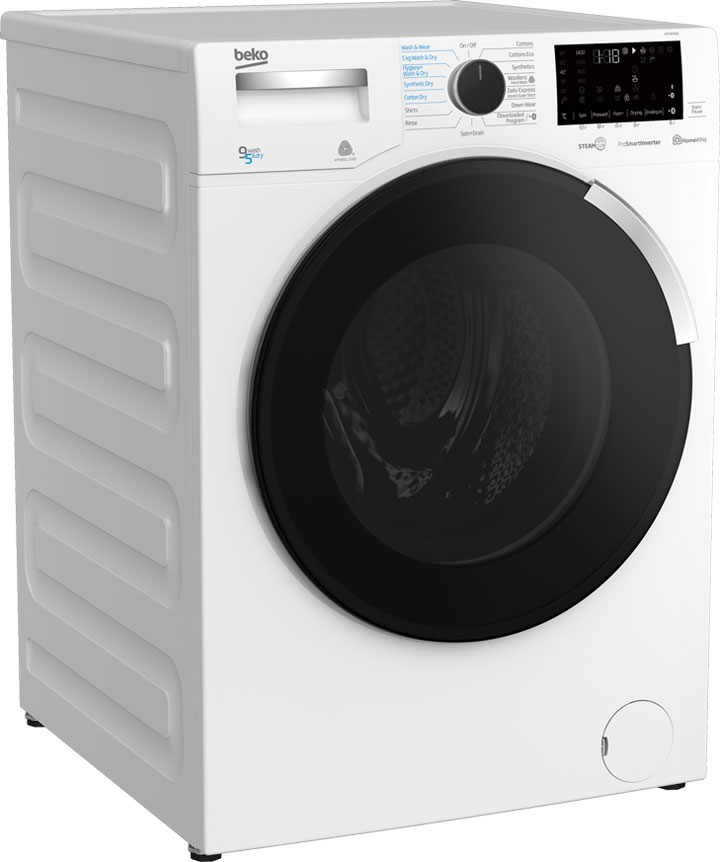
TURKISH appliance brand Beko has launched a new washing machine that has gotten a stamp of approval from Allergy UK, a British medical charity dedicated to helping children and adults with allergies.

The new washing machine, which uses steam as an extra step in getting clothes clean, was launched online on Oct. 7.  “Beko continues to be a partner of the Filipino family in staying healthy as we provide them with the tools to clean their homes and keep and cook,” said Gurhan Gunal, Country Manager of Beko Pilipinas Corp. during the online press launch. “We are proud that in the short time we have been present in the Philippine market, Filipino consumers trust us for their appliance needs because Beko’s products are efficient and affordable,” he said.

The washing machine’s SteamCure Hygiene+ technology removes stains on clothing by releasing steam from the bottom of the drum before washing. The steam acts as a pre-treatment which helps loosen stains and dirt in garments.

The washing machine’s technology also reduces allergens that are carried by air dust, dirt, and other elements, said Cecil Placia, Beko Pilipinas’ Product Marketing Head.

“Hygiene+ is a washing program that blends sensitive temperature control. This temperature ranges from 20 degrees Celsius, up to 90 degrees Celsius with additional rains and cycles to make sure these micro-organisms are removed, and allergens are reduced,” Ms. Placia said.

The washing machine releases more steam after a wash cycle to help smoothen the garments and ease ironing.

Ms. Placia ensured that the appliances can last more than five years.

“The products that we launched have been performing well, and we do receive good feedback from the people who use the product and have bought the product,” she said.

The brand is currently available in select All Home, Anson’s, Savers, Gidi Distribution stores, and at Asian Home Appliance Center in Cebu, and in e-commerce partners Lazada, Household Appliances Trading hat.com.ph. For more information, visit www.facebook.com/bekoph. MAPS

Yields edge up on hawkish Fed

YIELDS ON government securities (GS) climbed last week following the result of the Treasury bond reissuance, the slower-than-expected September inflation data and the hawkish tilt of US Federal Reserve.

Bond yields, which move opposite to prices, rose by 8.10 basis points (bps) on average week on week, based on PHP Bloomberg Valuation Service Reference Rates as of Oct. 8 published on the Philippine Dealing System’s website.

On Friday, local yields on the short end of the curve were mixed as 91- and 182-day Treasury bills rose by 4.21 bps and 3.59 bps, respectively, to 1.1722% and 1.4286%, while one-year papers dipped by 3.86 bps to 1.6242%.

Yields at the belly of the curve increased as two-, three-, four-, five-, and seven-year by 2.44 bps (to 2.1407%), 6.17 bps (to 2.5944%), 11.65 bps (to 3.0366%), 18.21 bps (to 3.4707%), and 27.81 bps (to 4.1770%), respectively.

Meanwhile, the long end of the curve ended mixed as 10-year papers went up 22.34 bps to 4.7326%, while the 20- and 25-year debt fell by 1.82 bps and 1.63 bps to fetch 4.9935% and 4.9737%, respectively.

“GS yields moved higher following relatively disappointing auction results from the Bureau of the Treasury (BTr) weekly bond auction in spite of the slightly lower-than-expected [consumer price index] figure from September,” Philippine Bank of Communications Senior Trader Justin Robert G. Ladaban said in an e-mail interview on Friday. “The rise in US Treasury yields also contributed to the overall defensiveness of the market.”

A bond trader said local yields moved in line with the hawkish sentiment from the US Federal Reserve as well as the lower-than-expected September inflation print.

“The inflation story is definitely back in the picture despite the fact that the recent inflation print is lower than expected,” the bond trader said in a phone interview.

September inflation eased to 4.8% from almost three-year peak of 4.9% in August after food and transport prices slowed, the Philippine Statistics Authority reported on Tuesday.

September’s inflation print hit the lower end of the Bangko Sentral ng Pilipinas’ 4.8%-5.6% forecast range that month.

Average inflation for the first nine months reached 4.5%, above the central bank’s 2-4% target and 4.4% forecast this year.

The inflation data pushed rates higher during the auction later that day, prompting the Bureau of the Treasury to partially award the reissued seven-year papers worth P15.58 billion — less than half P35-billion program — despite attracting P52.79 billion in total bids.

The reissued seven-year papers, which have a remaining life of six years and 10 months, fetched an average rate of 4.207%, 38.1 bps higher than the 3.826% quoted when the series was last offered on Sept. 21.

Had the Treasury made a full award of its offer, the reissued bonds would have fetched an average rate of 4.276%.

Meanwhile, US Treasury yields increased on Thursday, with the 10-year note increasing by 4.7 bps to 1.5712% ahead of the September jobs report, which could pave the way for the tapering of the Fed’s $120-billion monthly bond buying program, Reuters reported.

Mr. Ladaban expects the same type of defensiveness to continue this week ahead of the Treasury’s offer of P35 billion in reissued five-year papers with a remaining life of four years and five months on Oct. 12.

The bond trader, meanwhile, expects local bond yields to continue trading with upward bias this week, especially if rates of US Treasuries climb further.

“At this point, there could be some resistance at the 1.6% handle in the US 10-year note, but it could easily be broken given the momentum of the sell-off in the US bond rates,” the trader said. “But there is bias for local bonds to move higher also — specifically in the shorter-end, which is a little expensive compared to the long-end which has steepen quite a lot.” — Ana Olivia A. Tirona

From bratwurst to jamon: EU pork sector crown shifts to Spain

REUTERS

MADRID/HAMBURG — When he was a child in Avila province, Albert Pascual’s father bought 100 pigs, but the company he now leads has more than 9,000 — part of a major expansion that has put Spain on track to take over as the European Union’s (EU) top pork producer this year.

“My father sold pigs at a time, in the 1990s, when this sector practically did not exist. Now we (Spain) are a world power, we have grown a lot and our company has grown in parallel to the development and growth of this sector,” Pascual said.

Germany has long topped the table of EU pork producers, but an outbreak of African Swine Fever (ASF) in September 2020 among wild boars meant it lost access to the lucrative Chinese market.

That has accelerated a shift in EU production towards ASF-free Spain that was already underway, helped by its less onerous regulations in areas such as planning and use of manure.

China is by far the largest export market for EU pig products, accounting for about 56% of sales so far in 2021, according to European Commission data.

The country’s appetite for imported pork has soared following its own ASF outbreak which has ravaged its vast hog herd, the world’s largest.

“The fact that in recent years it (China) has been affected by African Swine Fever has caused demand to skyrocket,” said Ramon Soler Ciurana, export manager of Faccsa-Prolongo, a pork producer in Malaga in the south of Spain which is expanding its pork packaging and freezing facilities.

EU shipments of pig products to China totaled 3.34 million tons last year, up more than 60% from 2.31 million in 2019 and almost triple the 1.28 million in 2018.

Exports have remained high this year and totaled 1.86 million from January to July, down just 0.1% from a strong 2020, EU data shows.

“It is taken for granted in the industry that China, no matter how hard it runs or tries to find alternatives, will not be able to get back to normality within four years,” Soler said.

GERMAN WOES
Germany’s export woes, however, have only accelerated a trend that has been developing for years.

Spain’s pigmeat production totaled 2.60 million tons during the first six months of 2021, up 4.1% from the same period last year, according to European Commission data, and is track for an eighth consecutive annual rise.

In contrast, Germany’s pigmeat production fell by 1.3% to 2.52 million tons and is heading for a fifth consecutive annual fall.

German market consultancy AMI says there were 24.6 million pigs on German farms in May 2021, down 3.5% from 25.5 million in May 2020, continuing a downward trend from 28.1 million in 2014.

The impact of ASF has been particularly severe in east Germany near the border with Poland where the disease has been found in wild boars and more recently domestic pigs. Measures such as a ban on breeding piglets have been imposed and some slaughterhouses have been reluctant to buy pigs from the region.

TOUGH RULES
Tougher animal welfare and environmental rules in Germany have contributed to the decline in pig farming along with falling domestic demand for the meat, linked partly to more health-conscious eating with avoidance of red meat and moves among young people to vegetarianism.

Germany has strict planning rules which has made it difficult for the industry to adapt to animal welfare legislation related to issues such as the use of sow stalls.

“Even if German farmers want to invest in new pig stalls, they often cannot get planning approval from local authorities,” said Andre Vielstaedte, a spokesperson for Toennies, Germany’s largest slaughterhouse and meat packing group.

In part of Germany, restrictions have also been imposed on the use of manure, linked to concerns about high ammonia concentration in the air.

Spanish pig farmers, in contrast, benefit from strong demand for slurry, a natural fertilizer made from manure and water, as soils in much of the country have become depleted and lack sufficient organic matter.

INVESTMENT IN SPAIN
Toennies is among those investing in Spain.

The company, based in Rheda-Wiedenbrück in the west of Germany, is building a meat packing and slaughterhouse plant in Calamocha in Spain, costing about €75 million ($87 million).

Operations will start in 2023 and the plant will slaughter 2.4 million animals a year, with up to 1,000 jobs created.

“The pork market in Spain is looking attractive and the political framework is positive,” said Toennies’ Vielstaedte.

“Our new Spanish plant will be aimed exclusively at exports to markets including pork ribs to North America, bellies to Japan and other products such as pigs’ feet and ears to China and elsewhere in Asia.”

Vielstaedte said Germany remained the company’s “core market,” but ASF was just one factor making it less attractive for pig farming and the international marketing of pork.

“We have a one sided regulatory burden … as animal welfare and protecting the environment create extra costs and need new investment, but which are often not faced by farmers in other countries,” he said.

CHALLENGES AHEAD
China has continued to report outbreaks of ASF this year, including in three of the top fiçve pork producing areas, Henan, Sichuan and Shandong, with imports set to remain high in 2022.

The US Department of Agriculture’s Foreign Agricultural Service forecast earlier this year China’s pork production would fall 14% in 2022, reflecting a smaller hog herd and low profits for domestic producers.

It projected imports would total 5.1 million tons in 2022, just shy of 2020’s record 5.28 million.

Prior to its own ASF outbreak, however, China was only importing 1.5-2.0 million tons of pork a year and industry sources expect imports to eventually slow as its herd is rebuilt.

“This is one of the great challenges we face,” Soler said.

“Obviously the Chinese market will return to normal sooner or later and we will return to pre-crisis figures. The objective of maintaining the level of production will depend on our capacity to open new markets.” — Reuters


Growth prospects drive interest in Globe stock

By Abigail Marie P. Yraola 

AYALA-LED Globe Telecom, Inc. was among the actively traded stocks last week with analysts attributing the firm’s latest price stock movements to developments in building up its fifth-generation (5G) footprint.

Data from the Philippine Stock Exchange (PSE) showed a total of 753,265 Globe shares worth P2.42 billion traded from Oct. 4 to 8, making it the fourth most actively traded in the local bourse during the week.

Globe shares finished at P3,088 apiece on Friday, up by 1.25% from a week ago.

Year to date, the stock’s price has climbed 53.02%.

“Globe’s recent developments with its 5G technology has most likely put it in the radar of foreign and local funds alike. The potential growth for this particular service has likely affected Globe’s valuation…,” Regina Capital Development Corp. Head of Sales Luis A. Limlingan said in an e-mail interview.

“The market has been steadily buying into telco stocks on the back of the sustained demand for data-related services amid the pandemic the past few months. This still has not changed despite the high share price volatility observed this week,” Mr. Limlingan added.

Globalinks Securities and Stocks, Inc. Head of Sales Trading Toby Allan C. Arce shared a similar assessment: “Globe’s price movement could have been attributed to the company saying that it is accelerating its 5G initiatives to increase adoption rates in the Philippines…,” Mr. Arce said in a separate e-mail.

“5G connectivity is seen as the great equalizer since it will make businesses, big and small, more efficient. It also allows Filipinos to access information, do transactions, learn and enrich their digital lifestyle at faster speeds.”

In a statement last Monday, Globe said it was focused on expanding the 5G adoption in the Philippines to increase its competitiveness among its regional peers. With around 860,000 of its customers on 5G devices as of July, the firm expects “sustained double-digit growth in the next few years.”

Earlier, Globe said it would soon be bringing its standalone 5G technology to its customers. The technology is seen to become the standard for connectivity across a wide range of industry sectors.

Last week’s trading session started with Globe’s closing share price down by 1.64% from its Oct. 1 close before posting day-to-day gains of 3.8% and 9.51% on Tuesday and Wednesday, respectively. The rest of the week saw market players take profit in the stock as its share price dipped by 4.99% and 4.69% on Thursday and Friday.

Latest financial data show Globe’s second-quarter attributable net income increased by 16% to P5.68 billion from P4.9 billion in the same period last year due to sustained growth in its home broadband business.

This brought the firm’s first-half net income to P12.98 billion, 13% higher than the P11.48 billion posted a year ago.

“Earnings will likely grow by the high single-digits this year, commensurate to the healthy growth in service revenues,” Regina Capital’s Mr. Limlingan said.

For Globalinks’ Mr. Arce: “Globe’s [third-quarter] revenues and net income are expected to reach P42.19 billion and P6.25 billion, respectively,” he said.

“For 2021, net income is projected to reach P23.56 billion, driven by mobile and home broadband data owing to the increase of digital activities among Filipinos. For 2022, however, net income is estimated to reach P22.86 billion, as revenues are forecast to grow slower in the next 3 years,” he added.

Mr. Arce pegged the stock’s primary and secondary support price levels at P2,950 and P2,900, respectively, while its primary and secondary resistance price levels at P3,100 and P3,200.

Meanwhile, Mr. Limlingan placed the support and resistance levels at P2,740 and P3,500, respectively.