Home Blog Page 738

Inflation may pick up again in coming months

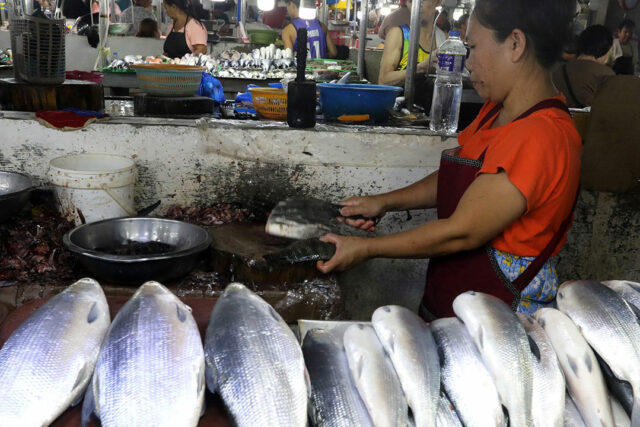
A vendor prepares fish for sale at a market. Headline inflation sharply eased to a near six-year low 0.9% in July from 1.4% in June and 4.4% a year ago, the Philippine Statistics Authority (PSA) reported on Tuesday. — PHILIPPINE STAR/EDD GUMBAN

HEADLINE INFLATION could pick up again in the remaining months after hitting a near six-year low in July but still remain within target, which would still give way to further policy easing by the Bangko Sentral ng Pilipinas (BSP).

“Looking ahead, we think July inflation is the floor of the Philippines’ inflation outlook,” HSBC Global Research economist for ASEAN Aris D. Dacanay said in a report.

“Headline inflation is likely to accelerate in the months ahead as the base effects of the rice tariff rate cut in 2024 fade,” he added.

Nomura Global Markets Research analysts Euben Paracuelles and Nabila Amani said that inflation could rise close to 2% in the coming months.

“We maintain our forecast for CPI (consumer price index) inflation to average 1.8% in 2025, penciling in a gradual climb towards 2% by yearend, in part due to low base effects and the impact of weather disruptions that are still likely to materialize in the near term,” they said in a report.

Headline inflation sharply eased to a near six-year low of 0.9% in July from 1.4% in June and 4.4% a year ago, the Philippine Statistics Authority (PSA) reported on Tuesday.

It also marked the fifth straight month that inflation settled below the central bank’s 2-4% target range.

“Still, our full-year forecast remains below BSP’s 2-4% target, reflecting a combination of factors, including a still-negative output gap and an economy facing downside risks,” Nomura said.

For the first seven months of the year, inflation averaged 1.7%. This was a tad higher than the central bank’s 1.6% forecast for 2025.

“This implies pass-through effects from easing supply-side drivers are likely to accentuate the impact; we still see low crude oil prices and the government maintaining supply-side measures to keep food prices, particularly rice prices, low,” Nomura said.

Meanwhile, Mr. Dacanay flagged risks to watch out for, including proposed changes to rice policies. 

President Ferdinand R. Marcos, Jr. announced on Wednesday a 60-day suspension of rice imports, effective Sept. 1, to protect local farmers amid declining farmgate prices. The government is also still discussing the possibility of raising tariffs on rice imports.

“We have written previously that curbing the supply of rice risks stoking inflation by 1.2 to 1.4 percentage points (ppts),” Mr. Dacanay said.

Despite the likelihood of inflation picking up in the months to come, the BSP can still continue its rate-cutting cycle.

“Will this derail the BSP’s easing cycle? We do not think so since we expect inflation to peak at around 2.9% year on year in the second quarter of 2026. This implies that inflation will still be well within the BSP’s 2-4% target range,” Mr. Dacanay said.

BSP Governor Eli M. Remolona, Jr. told Bloomberg on Tuesday that they can deliver two more 25-basis-point (bp) cuts this year and potentially continue its easing cycle until next year.

The central bank has lowered borrowing costs by a total of 125 bps since it began easing in August last year, bringing the policy rate to 5.25% when it last reduced rates in June.

“Nonetheless, the soft inflation numbers will likely give the central bank more confidence that it can proceed with its easing cycle with or without the Fed,” Mr. Dacanay said.

“Our baseline scenario is for the BSP to pause its easing cycle during the August rate-setting meeting, but the soft inflation outlook increases the risk of a rate cut,” he said.

Second-quarter gross domestic product (GDP) data, scheduled to be released today (Aug. 7), will also support further rate cuts.

“Any soft GDP figure will likely strengthen the conviction of the BSP of loosening the monetary reins without the Fed or deepening its monetary easing cycle throughout the year,” Mr. Dacanay added.

A BusinessWorld poll of 17 analysts showed that the Philippine economy likely grew 5.5% in the second quarter, slower than 6.5% a year ago.

For its part, HSBC expects the benchmark to end at 5% by yearend.

“But since the US tariff rate on the Philippines was less favorable than expected, the risk of a deeper easing cycle by the BSP is increasing,” Mr. Dacanay said.

Meanwhile, Nomura projects the Monetary Board to deliver a 25-bp cut at the Aug. 28 meeting, followed by another 25 bps in October.

“This would take the policy rate to 4.75%, which we think puts BSP’s monetary stance slightly below its estimate of neutral. BSP continues to emphasize its assessment of the inflation outlook as the main driver of policy decisions,” it added. — Luisa Maria Jacinta C. Jocson

PSA keeps Q1 GDP growth unchanged

Shoppers visit Divisoria Market in Manila. — PHILIPPINE STAR/RYAN BALDEMOR

THE Philippine Statistics Authority (PSA) said on Wednesday it had kept the country’s gross domestic product (GDP) growth rate at 5.4% for the first quarter.

The gross national income — the sum of the nation’s GDP and net primary income from the rest of the world — for the first three months was revised downwards to 7.2% from the 7.5% initially reported.

Similarly, net primary income from the rest of the world for the first quarter was lowered to 22% from 24.6%.

The statistics agency also noted some changes in some components of the national accounts, particularly on the supply side.

“Downward revisions were noted in electricity, steam, water and waste management (2.7% from 3.8% initially reported), financial and insurance activities, (6.9% from 7.2%) and information and communication (4.7% from 5.6%),” the PSA said in a report.

Meanwhile, the following sectors saw upward revisions: manufacturing (4.3% from 4.1%), real estate and ownership of dwellings (3.7% from 3.3%) and professional and business services (5.2% from 5%).

On the demand side, gross capital formation growth — the investment component of the economy — was raised to 4.8% from the 4% initially reported.

Growth in exports of goods and services was revised upward to 7.1% from 6.2%, while growth in imports was raised to 10.3% from 9.9%.

Private consumption (5.3%) and state spending (18.7%) were unchanged for the January-to-March period from initial estimates.

The revision came ahead of the second-quarter GDP data that will be released on Aug. 7.

A BusinessWorld poll of 17 economists late last week showed a median estimate of 5.5% GDP growth in the April-to-June period, which would be slower than the 6.5% expansion in the same period last year.

National account revisions are based on approved revision policy, which is consistent with international standard practices, the PSA said. — Abigail Marie P. Yraola

Ayala Land sees ‘busy’ second half with P57-B project launches

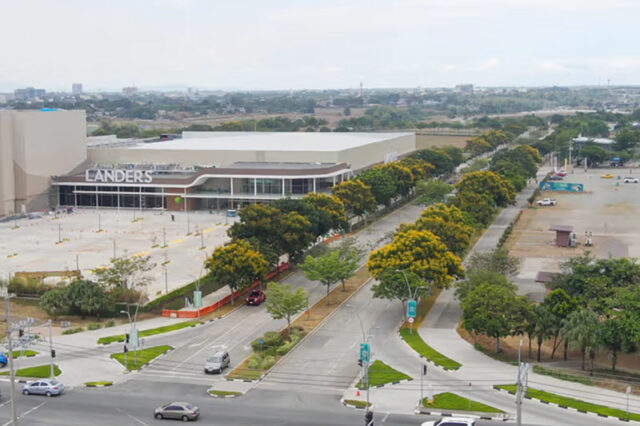
Landers Vermosa, which opened in April, is now the largest Landers branch in the Philippines and the first in Cavite.— AYALALAND.COM

AYALA LAND, INC. (ALI) said it plans to launch P57 billion worth of property development projects in the second half of the year, including the completion of upgrades to its malls and hotels.

“Our sales momentum is improving, and we are preparing for a busy second half with P57 billion in new property development launches, and the completion of reinvention works of malls and hotels,” ALI President and Chief Executive Officer Anna Ma. Margarita Bautista-Dy said in a regulatory filing on Wednesday.

“These initiatives will support our growth aspirations for 2025 and beyond,” she added.

ALI launched P42.9 billion worth of property development projects in the first half, led by Laurean Residences in the Makati Central Business District, commercial lots in Areza in Lipa City, Batangas, and industrial lots for sale in Cavite Technopark.

The target comes as ALI posted an 8% increase in first-half net income to P14.2 billion.

Consolidated revenue fell by 1% to P83.1 billion.

Property development revenue improved by 1% to P52.3 billion on the back of strong commercial and industrial lot sales, as well as resilient bookings in the premium residential segment, the company said.

Residential revenue declined by 5% to P41.3 billion, as growth in the premium segment was offset by lower core bookings.

Commercial and industrial lot revenue rose by 42% to P9.1 billion, driven by sales of lots in Arca South in Taguig City, Circuit Makati, and Arillo in Batangas.

Total sales reservations reached P73.7 billion, equivalent to P12.3 billion in average monthly sales during the first six months.

This was a 4% increase from the average monthly sales of P11.8 billion for the full year of 2024.

The premium residential segment accounted for the highest share of sales, at P40.6 billion, while sales of commercial and industrial lots increased by 7% to P8 billion.

The core residential business generated P25.1 billion in first-half sales.

ALI said revenue from its leasing and hospitality group rose by 5% to P23.2 billion.

Shopping center revenue increased by 5% to P11.6 billion, led by rising contributions from core and new malls.

Office leasing revenue grew by 5% to P5.9 billion, supported by a solid single-digit vacancy rate across the portfolio.

Hospitality revenue reached P4.9 billion on the back of healthy occupancy, while industrial real estate revenue rose by 60% to P762 million due to incremental income from new facilities.

ALI said capital expenditure for the first semester reached P40.2 billion.

Of the total, 42% was spent on the build-out of residential projects, 25% on the completion of leasing and hospitality assets, 23% on the priming and development of mixed-use estates, and 10% on continuing payments for land acquisition commitments.

ALI shares fell by 2.60% or 70 centavos to P26.20 apiece on Wednesday. — Revin Mikhael D. Ochave

CEB Q2 profit soars to P8.51B on passenger gains

CEBUPACIFICAIR.COM

CEBU AIR, INC. (CEB), the operator of budget carrier Cebu Pacific, saw its second-quarter (Q2) attributable net income surge to P8.51 billion, rising nearly sevenfold, driven by higher passenger revenue during the period.

“These results for the second quarter and first half of 2025 reflect the returns from our strategic investments in fleet and network expansion along with the sustained demand for air travel,” Cebu Air Chief Executive Officer Michael B. Szucs said in a statement on Wednesday.

The budget airline recorded second-quarter revenue of P32.91 billion, rising by 25.9% from the P26.14 billion generated in the same period last year.

Broken down, passenger revenue rose by 29.24% to P23.07 billion from P17.85 billion last year; revenues from the cargo business went up by 31.88% to P1.82 billion from P1.38 billion; and ancillary revenues grew by 16.23% to P8.02 billion from P6.9 billion previously.

“With the Philippines’ growing economy, favorable demographics and expanding tourism sector, we remain well positioned to drive long term growth in low-cost travel,” Mr. Szucs said.

For the April-to-June period, Cebu Pacific carried seven million passengers, marking a 16% increase from last year, driven by both its domestic and international networks.

The budget airline’s domestic traffic climbed 14% to more than five million, while its international traffic rose by 23% to 1.8 million, Cebu Pacific said, noting that its passenger growth was driven by the holiday season in recent months.

For the January-to-June period, Cebu Air’s attributable net income more than doubled to P8.97 billion from P3.55 billion in the comparable period in 2024.

The company’s gross revenue for the first half increased by 23.11% to P63.33 billion from P51.44 billion a year ago. Over the six months ended June, passenger revenues accounted for the majority of its topline at P44.23 billion, while cargo revenues and ancillary revenues generated P3.51 billion and P15.59 billion, respectively.

Cebu Pacific attributed its earnings growth to the increase in flights and available seats, driven by its shift to a sustainable-fuel and higher-capacity fleet.

Currently, Cebu Pacific operates more than 3,300 flights weekly across 124 routes with a fleet of 99 aircraft. In 2024, Cebu Pacific finalized a P1.4-trillion ($24 billion) order with Airbus SE for up to 152 aircraft.

Cebu Pacific expects seven more deliveries this year, after receiving its first aircraft for 2025 in March. The carrier is projected to operate a fleet of 100 aircraft by yearend.

At the stock exchange, shares in Cebu Air gained P1.30, or 3.55%, to close at P37.90 each. — Ashley Erika O. Jose

Sustainable indulgence

SEAFOOD DAMPA

As much as possible, the Hilton makes its own or grows its own

WHILE DINERS were taken around Hilton Manila for a grand banquet on July 24, it was nice to know that every bite came with a touch of care for the people and the planet.

The Hilton is launching its “Dining Reimagined” campaign, featuring new items in its menu, but also a stronger sustainability campaign under their Executive Chef, Lord Bayaban.

That evening, guests were taken to the Madison Lounge and Port for drinks and snacks, but the highlights were Hua Yuan Brasserie Chinoise and Kusina Sea Kitchens, the hotel’s all-day dining restaurant. Executive Chinese Chef Kevin Xu presented a Shanghainese menu, reflecting luxury and the cosmopolitan nature of the city. These dishes include his Eight-Flavored Shanghai Xiao Long Bao, Braised Lion’s Head Meatball with Baby Abalone, and his Signature Peking Duck — the duck alone is worth the trip. To these, he added Cantonese-style Steamed Grouper with Aged Wine and Blue Crab in Spicy Sichuan Broth.

Meanwhile, at Kusina, Mr. Bayaban presented Japanese, Indian, Western (now called The Smokehaus), and Filipino stations, among others. The sashimi was excellent, and we found it charming that the rice balls actually were shaped into balls, reflecting careful preparation. The Indian station, riffing off classics from Northern India, was impressive (we loved the lamb biryani). The lechon at the Filipino section, meanwhile, was actually flavorful (the roast pig surrounded by bringhe, a native rice dish akin to paella), and not just big.

The Seafood Dampa makes a welcome return, and diners can now choose from a display of sustainably sourced seafood during dinner, paired with signature sauces such as Alavar, Palapa, garlic butter, and cheese. Kusina also introduces a dedicated Indo-Malay section, featuring Malaysian and Indonesian dishes with a kick of heat and spice.

“We’re now doing good, but we want to be great,” said Mr. Bayaban in an interview.

Perhaps doing something good does help in making a better dish: Mr. Bayaban highlighted the sustainability measures they enforce in the kitchens. For example, he pointed to the tuna and salmon in the Japanese station: these fish are completely traceable through a QR code on the boxes in which they arrive. “That will tell you where they’ve been caught.”

Meanwhile, all the vegetables at the Filipino station come directly from farmers from Atok and Mangayan in Benguet. “We’re trying to help local farmers. Because if no one will, we’ll try to help them out,” he said in a speech. Sourcing locally also helps reduce their carbon footprint. The hotel also grows its own herbs via an on-property hydroponic vertical herb garden.

The meat and sausages, as well as the lechon, are all made in-house. The meats in the Smokehaus are smoked for 18 hours with santol (a local wood), because he said it tenderized the meat and made it tasty (aside from helping with his sustainability goals).

He said, “It’s much more safe if we create our own, here,” he said of keeping as much as possible in-house.

There’s a deeper reason for Mr. Bayaban to serve sustainable dishes, than just ticking off boxes. “Thirty to 40 years from now, we won’t be here. Death is inevitable. What you will leave behind will identify your legacy,” he said in an interview.

“I want my son to still experience fresh produce, and local vegetables grown and harvested in this country.”

The weekend lunch buffet at Kusina is available for P2,800++ (noon to 2:30 p.m.), while the daily dinner buffet is offered at P3,000++ (5:30 to 9:30 p.m.).

For inquiries, contact 7239-7788 or e-mail MNLPH_F&Binquiries@hilton.com. — Joseph L. Garcia

SMIC: Outlook positive for remainder of 2025 despite uncertainties

SMSUPERMALLS.COM

SY-LED conglomerate SM Investments Corp. (SMIC) said it expects steady performance across its core businesses in the coming months, citing resilient consumer spending, strong bank lending, and improving macroeconomic indicators.

“We continue to see steady growth across our core businesses, supported by favorable macroeconomic conditions in the Philippines. Bank lending remains strong, and consumer spending in our malls and retail stores continues to rise,” SMIC President and Chief Executive Officer Frederic C. DyBuncio said in a regulatory filing on Wednesday.

“The Philippine economy was steady at 5.4% growth in the first quarter, while inflation has eased to its lowest level since 2019, creating a more supportive environment for both corporates and consumers. Despite global trade uncertainties, overall sentiment remains positive, and we share that optimism for the remainder of the year,” he added.

Mr. DyBuncio said this as SMIC recorded a 6% increase in its consolidated net income for the first half to P42.6 billion from P40.2 billion last year, driven by steady growth across its core segments.

Among its business units, banking accounted for 50% of reported net earnings, followed by property at 28%, retail at 15%, and portfolio investments at 7%.

Consolidated revenue for the first six months rose by 6% to P319.2 billion from P301.4 billion a year ago.

In the retail business, SM Retail grew its net income by 10% to P8.4 billion as revenue increased by 8% to P211.8 billion.

Department store revenue rose by 11%, led by the shift in the school opening to the second quarter.

Specialty retail revenue went up by 5%, driven by spending on stationery or back-to-school items, fashion, and health and beauty categories.

Food retail revenue improved by 8% to P127.1 billion due to store expansion and volume growth.

In the banking segment, BDO Unibank, Inc. posted a 3% growth in net income to P40.6 billion, supported by strong performance in its core businesses.

Net interest income increased by 7% as gross customer loans rose by 14% to P3.4 trillion. Deposits also grew by 8%, breaching P4 trillion.

China Banking Corp. recorded a 14% growth in net income to P13 billion. Net interest income rose by 15% to P34.9 billion on higher asset yields and loan volume.

Gross loans reached P964.7 billion. Deposits increased by 5% to P1.3 trillion, led by 10% growth in checking and savings accounts.

In the property business, SM Prime Holdings, Inc. posted an 11% increase in income to P24.5 billion. Consolidated revenue rose by 5% to P68 billion.

Rental income from malls, offices, hospitality, and MICE (meetings, incentives, conferences, and exhibitions) activities accounted for 60% of total revenue, followed by real estate sales at 29%, and cinema ticket sales, food and beverage, amusement, and related offerings at 11%.

Meanwhile, SMIC said the performance of its portfolio investments was led by Philippine Geothermal Production Co., which contributed 35% of total portfolio income, followed by NEO at 30%, and 2GO Group, Inc. at 16%.

Total assets increased by 2% to P1.7 trillion.

SMIC shares dropped by 0.3%, or P2.50, to P825 per share on Wednesday. — Revin Mikhael D. Ochave

Five Top Tables: Where to eat in New York City this summer

A DISH from Locanda Verde — LOCANDAVERDENYC.COM

By Kate Krader

FINDING a good place to eat in New York at the time and place of your choosing is not for the faint of heart. Popular restaurants are invariably packed — and the top ones are literally impossible to get into. The food at non-jammed places isn’t always worth the easy table. Here, then, is a monthly guide offering five superb dining options, in and around New York City, that speak to the questions we get asked all the time: What’s a great new restaurant? Where should I go to celebrate (a deal or an anniversary)? Where can I get in tonight? And, especially, where can I get a great meal that won’t cost a fortune?

We’d also like to introduce you to the Bloomberg Index, where you’ll find what’s ranking high on the Bloomberg Terminal’s DINE guide among all the movers and shakers there.

NEW: LE CHÊNE, WEST VILLAGE
If you’re looking for a way to transport yourself back to the heady 1990s evoked in Graydon Carter’s recent memoir, When the Going Was Good, book a table at the fabulous Le Chêne. The crowd is very West Village: Within the compact, cream-colored space, guests whose haircuts cost more than many people’s outfits are seated next to a table of personal trainers. The place is loud and oh, so fun — you will see a diner dancing in their seat to a Hall & Oates classic before the end of the night.

Chef Alexia Duchêne’s classic yet fanciful French dishes include a tartlet filled with bright shrimp and crème fraîche, dosed with maple syrup and topped with a shiso leaf ($12) and a plate of rugged-looking sweet corn beignets ($18). Le Chêne’s signature, social-media-conquering dish is the pithiviers terre & mer. It’s a golden, articulated pastry dome stuffed with layers of juicy pork sausage, potato gratin, smoked eel and cabbage; it’s $79, feeds two and is a party in and of itself. If you can stand more pastry, the flaky vanilla and caramel mille-feuille drips with chocolate sauce ($22).

The 40-page wine list is heavy on Champagne and premium vintages. (Bring your big wallet; more selections are over $1,000 than under $100.) Enjoy the scene as yet another pithivier floats by your table. 76 Carmine St.; lechenenyc.com

BUSINESS MEAL: MANHATTA, FINANCIAL DISTRICT
Get in an elevator and travel 60 floors up to the polished, quietly elegant Manhatta. (Diners in a rush, don’t worry; it’s a speedy ride.) It’s an even shorter commute for employees from companies housed in the building, including Allianz, AIG and the London Stock Exchange Group who frequent the place.

New executive chef Michele Brogioni has created dishes including hamachi crudo with seasonal radishes and fresh corn and pecorino tortellini to sit alongside the dry-aged burger with koji onions, a bestseller at lunch.

Besides being popular with the business crowd — and an afterwork drink destination — Manhatta, operated by Union Square Hospitality Group, is a good all-around celebration spot and a place to take out-of-town visitors. It’s hard to turn down a panoramic view of New York City from a landmarked building. 28 Liberty St. 60th Floor; manhattarestaurant.com

NO RESERVATIONS: LOCANDA VERDE, HUDSON YARDS
Chef Andrew Carmellini and his Noho Hospitality Group have a penchant for opening hard-to-get-into places. The original Tribeca Locanda Verde is perennially packed, and the Paris-evoking Lafayette brings in crowds to people-watch in Noho. But at the bilevel Locanda in the $6-billion BlackRock headquarters building, there’s room for walk-ins. You may even have your pick of a table, seats at the bar, or on the outdoor terrace.

The menu at the clubby, wood-paneled and chandelier-outfitted spot highlights the fancy grandmother food Carmellini is famous for: green Caesar salad with anchovy crumble ($22); chitarra nero with hot buttered crab ($38); sea scallop arribbiat with fennel pepper relish ($51).

It’s also a handy destination if you’re walking the Highline on the weekend — brunch runs the gamut from pressed juices and lemon ricotta pancakes ($24) to AC’s fire-roasted garlic chicken ($39) and tiramisu bomboloni ($9). 50 Hudson Yards; locandaverdenyc.com/location/hudson-yards

CHEAP EATS: POCHA 32, KOREATOWN
The entrance to Pocha 32 on 32nd Street is marked with a flag. Up a flight of stairs on the second floor is a festive Korean pub lit by strings of lights, decorated with spools of ribbon, and animated by countless soju-filled watermelons.

Prices have stayed modest at the 11-year-old spot even as surrounding Koreatown restaurants have gotten more expensive and upscale. On the übercomfort menu is a bowl of spicy, steamy kimchi stew, with tuna or pork, for $19, and beef bibimbap, a mix of rice and sweet marinated beef slices, vegetables and gochujang sauce that is a meal in itself, for $18 (the tofu version is $17).

Another thing to recommend Pocha 32: It’s open past midnight. 15 West 32nd St., 2nd Floor; pocha32.com/home

BLOOMBERG INDEX/DINE: LOS TACOS NO. 1, MIDTOWN EAST
Conveniently for the Grand Central commuter, this outpost of one of New York’s best taco spots has a legion of fans on the Bloomberg terminal. Among the offerings on the no-nonsense menu are carne asada in tacos and tostadas for $5.95 ($7.25 if you’re getting a quesadilla). The breakfast burritos, with options like chorizo with egg and cheese, have a limit of 15 per customer.

“Literally can change your whole day around — it’s that good,” says one DINE supporter, in a long post. “Prefer to get the three-four tacos rather than the quesadilla (better value for money). Just say ‘todo’ when they ask for toppings and you’re set. Note that there are mostly standing tables and no baño (this isn’t Taco Bell, so just a small nitpick). They also have this HUGE chunk of meat that spins around in the kitchen adding to aroma.” 125 Park Ave.; lostacos1.com/ Bloomberg

From classroom to sustainable practice: Arthaland’s Masterclass bridges education and industry

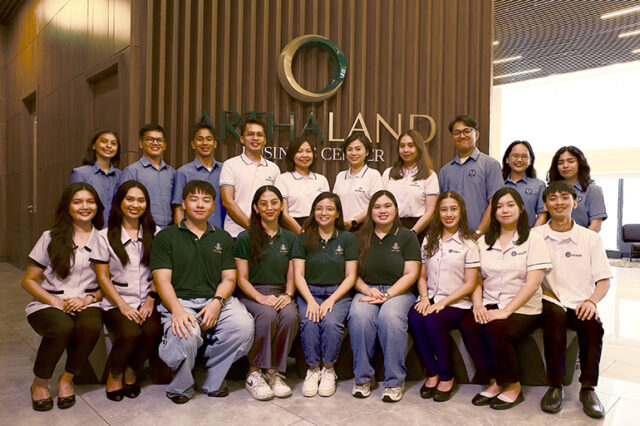
Top left to bottom right: Students from NU — Irish Monique D. Vigil, Cyrus Iverson P. Rodil, Keith Cyrel L. Palles; Green building experts from Arthaland — Engr. Francis August R. Rarugal, Ar. Arianne Rose DC. Lictawa, Ar. Kristina Samantha S. Pobre, Ar. Sandra DL. Dionisio; Students from NU — Anthony L. Ignacio, Edalaine Therese L. Llada, Vhernie D. Lopez; Students from TIP — Love Angel P. Silvania, Dianne C. De Leon; Students from FEU — John Marco A. Tunay, Kyle Bernadeth A. Noche, Ana Maria Z. Miranda, Angelie Jince S. Roque; Students from ADU — Aubrey Ame M. Molinyawe, Jaina Denise I. Tanap, and Austin Paul P. Dela Merced

ARTHALAND, the country’s only real estate developer with a 100% certified sustainable portfolio, recently concluded the third run of its Masterclass, an intensive six-week program designed to equip architecture students with the skills to integrate sustainability into their projects and future practice. By bridging theory and real-world application, the program equips participants with the skills and mindset to deliver measurable, performance-based, and sustainability-focused designs.

Bridging Education and Industry

Launched in 2023 with five students from National University Manila (NU), the program has since grown to include three additional academic institutions: Far Eastern University Manila (FEU), Technological Institute of the Philippines QC (TIP), and Adamson University (ADU). This year, 15 students participated, bringing the total to 30 students over the three-year period. The program demonstrates how industry initiatives can complement higher education efforts to develop future-ready professionals in sustainable architecture and design.

The Arthaland Masterclass has grown deliberately, focusing on meaningful engagement and practical industry exposure rather than rapid expansion. The Masterclass is grounded in sustainability principles across building design, construction, and operations, guided by international standards such as LEED, BERDE, EDGE, and WELL standards. Lessons are designed to align with climate realities and market expectations, ensuring that participants are not only academically prepared but also attuned to the skills increasingly sought in the green building industry.

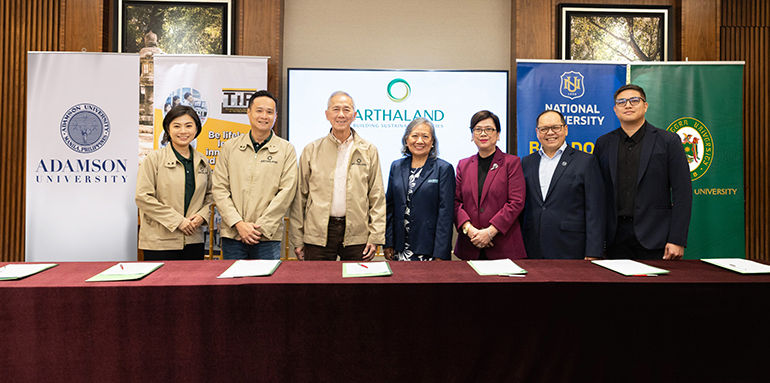
Left to right: From Arthaland, Head of Sustainability Ar. Kristina Samantha S. Pobre, Senior Vice-President Oliver L. Chan, Vice-Chairman & President Jaime C. González; ADU Vice-President for Academic Affairs Dr. Rosula S.J. Reyes, TIP Senior Vice-President for Academic Affairs and Services Dr. Rosalinda P. Valedepeñas, NU President Renato Carlos H. Ermita, Jr., and FEU Dean of the Institute of Architecture and Fine Arts Ar. Isaiah Israel D. Susi

The program culminates in a capstone project where participants reimagine developments through a sustainability lens, supported by mentorship from the company’s sustainability experts. This hands-on approach provides participants with experience that connects classroom learning to the demands of professional practice.

Supporting Academic and Career Pathways

To further prepare participants for a future in green building, Arthaland awards two types of scholarships: one covering a student’s final year of college and another funding a professional EDGE credential. A total of 15 scholarships have been granted since the program began. Notably, 63% of this year’s cohort are women, reflecting the program’s deliberate effort to foster inclusive growth and ensure that the future of sustainable architecture represents diverse voices and perspectives.

“The Arthaland Masterclass was a turning point for me. As a fresh graduate, it bridged the gap between what I learned in school and what sustainability means in practice. It shaped my decision to pursue a career in green building and gave me the confidence to step into the profession with purpose,” said Andrea Nicole Ramos, a former Masterclass scholar who now practices as a green building professional.

Top left to bottom right: Arthaland Head of Sustainability Ar. Kristina Samantha S. Pobre, Senior Vice-President Oliver L. Chan; Arthaland Masterclass scholars Keith Cyrel L. Palles, John Marco A. Tunay, Kyle Bernadeth A. Noche, Love Angel P. Silvania; Arthaland Vice-Chairman & President Jaime C. González; Masterclass scholars Cyrus Iverson P. Rodil, Dianne C. De Leon, Aubrey Ame M. Molinyawe, Vhernie D. Lopez, Ana Maria Z. Miranda and Jaina Denise I. Tanap

Scaling with Purpose, Deepening Its Impact

Now in its third year, the Masterclass has become a model for how industry can collaborate with academia to accelerate the transition to a low-carbon future. By opening its doors and sharing its expertise, Arthaland is helping prepare a generation of architects who are not only knowledgeable but also equipped with the practical experience, values, and vision to thrive in a sustainable and evolving industry.

From a single-university pilot to a multi-institutional program, the Arthaland Masterclass continues to scale with purpose, broadening its reach, deepening its impact, and paving pathways for the country’s next generation of green building professionals.


Spotlight is BusinessWorld’s sponsored section that allows advertisers to amplify their brand and connect with BusinessWorld’s audience by publishing their stories on the BusinessWorld Web site. For more information, send an email to online@bworldonline.com.

Join us on Viber at https://bit.ly/3hv6bLA to get more updates and subscribe to BusinessWorld’s titles and get exclusive content through www.bworld-x.com.

Proving Toyota HEV reliability through real-world use

Toyota units tried, tested, and trusted in PNP Tacloban

As the world shifts into clean and sustainable business practices as the only way forward, the future of mobility follows suit.

Hybrid electric vehicles (HEVs) offer the best of both worlds between conventional engines and full electrification. Compared to traditional internal combustion engine (ICE) vehicles, hybrids offer significantly better fuel efficiency and lower emissions by using an electric motor to assist the engine and recover energy during braking.

Hybrids don’t rely on charging infrastructure, making them ideal for countries like the Philippines where public chargers are still limited. Drivers get the environmental and cost-saving benefits of electrification without the range anxiety or charging delays.

This is why Toyota invested in achieving a perfectly balanced hybrid model to deliver lower carbon emissions, better fuel economy, and proven durability for the benefit of all drivers.

Switching from an ICE vehicle to a Toyota HEV is seamless. It drives and feels just like a regular car, with no noticeable difference for most users in terms of handling or performance.

The key distinction lies in fuel efficiency. Thanks to Toyota’s advanced hybrid technology, its HEVs deliver significantly better fuel economy, making them a smart, practical choice for daily driving.

While the transition to hybrids is easy, some drivers may still have concerns — particularly around topics like battery life, maintenance, and long-term durability. Toyota’s 30-year track record in hybrid development proves there’s little cause for worry. Its hybrid systems are tried, tested, and built to last even under demanding, real-world conditions.

What better way to demonstrate this than by highlighting use cases in some of the most demanding situations to be found in modern society: police use.

Toyota Motor Philippines (TMP) visited the Police Regional Office (PRO) 8 in Tacloban, Leyte on June 18 for a special Goyokiki activity. Derived from a Japanese term, Goyokiki refers to the practice of visiting and speaking directly with customers to better understand their experiences and needs.

Back in 2017, 49 Toyota Prius units were provided to the Philippine National Police (PNP) Tacloban by Government of Japan. These vehicles have been in active service for eight years, primarily used as patrol units operating 24/7.

The Goyokiki activity was led by Marvin Gardiner, TMP’s Vice President for the CSO Service Planning and Administration Department, together with Dave Fenis, Service Manager of Toyota Tacloban. Officers from PNP Tacloban also participated in the discussions.

As part of the engagement, the TMP team paid a courtesy call to Police Brigadier General PBGEN JAY R CUMIGAD before conducting interviews with PRO 8’s designated Toyota Hybrid Prius drivers. They also conducted a comprehensive safety inspection and maintenance training to further equip PRO 8 personnel with the knowledge and skills needed for the proper care and operation of hybrid vehicles.
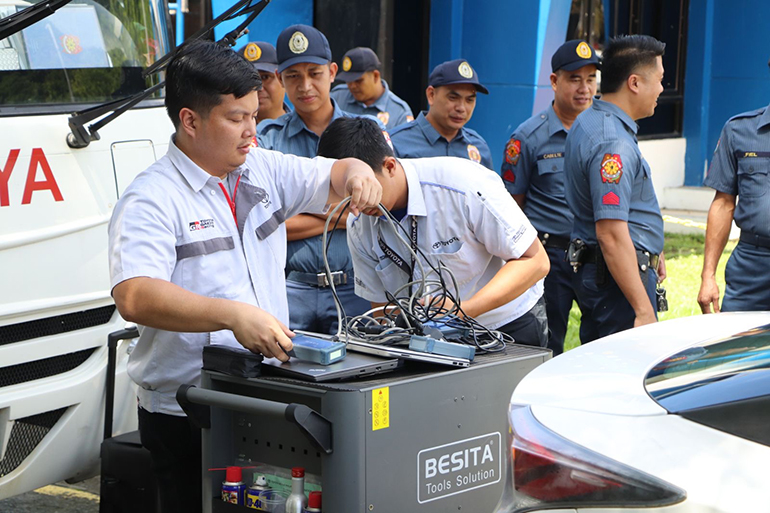
During the visit, 26 of the 49 Prius units were inspected, showing an average mileage of 193,000 kilometers (km) per unit, with the highest at over 300,000 km. These vehicles are equipped with Toyota’s 4th generation hybrid technology and have been subjected to daily driving of up to 300 km in tough conditions.

Despite the high mileage and constant operation, the Prius units remain in strong working condition. Engines, drivetrains, and hybrid batteries continue to perform reliably. A hybrid battery health check revealed an average internal resistance of just 0.020 Ohms across the 26 units, which is a low value indicating excellent power delivery and overall battery health. Minor issues in the underchassis were attributed to road conditions, not defects in the vehicles themselves.

Interviews with PNP officers, who are the vehicles’ actual drivers, revealed very positive results. They reported quick throttle response in Power Mode, performance with no delay compared to traditional gasoline cars, and smooth, reliable operation. They also praised the low cost of ownership, noting that the hybrid batteries and transmissions were still in excellent condition after eight years of use. Maintenance has also been easy, with no issues reported in securing service schedules through Toyota dealers.



“We sincerely thank TMP for going the extra mile to visit Tacloban and support our personnel. Toyota has never neglected us and continues to provide dependable after-sales service,” PLTCOL RODERICK P CONDAG, Acting Chief, RLRDD of PNP, Police Regional Office 8. said in expressing his appreciation to TMP.

As Toyota empowers customers across various sectors to make The Toyota Choice, this activity testifies to the brand’s commitment to legendary Quality, Durability, and Reliability (QDR). Even in the most demanding environments, Toyota Hybrid Electric Vehicles continue to prove themselves as efficient, durable, and cost-effective solutions for real-world use.


Spotlight is BusinessWorld’s sponsored section that allows advertisers to amplify their brand and connect with BusinessWorld’s audience by publishing their stories on the BusinessWorld Web site. For more information, send an email to online@bworldonline.com.

Join us on Viber at https://bit.ly/3hv6bLA to get more updates and subscribe to BusinessWorld’s titles and get exclusive content through www.bworld-x.com.

EPI eyes powering up solar projects through 2026

NICKELASIA.COM

EMERGING POWER, INC. (EPI), the renewable energy (RE) subsidiary of listed mining firm Nickel Asia Corp. (NAC), is progressing toward its 1-gigawatt (GW) RE target by 2030 through the ongoing development of its pipeline projects.

Among EPI’s projects is the development of a 145-megawatt-peak (MWp) solar power project in Zambales.

In a stock exchange disclosure on Wednesday, NAC said its board of directors approved the advancement of P710 million to Northern Palawan Power Generation Corp. (NPPGC), a subsidiary of EPI and the developer of the Cawag solar project.

The project is targeted to be energized in the latter part of 2026.

NPPGC is primarily engaged in the renewable energy business and in the production and generation of electricity, as well as in the processing of alternative fuels for power generation.

NAC said EPI has also commenced pre-development activities for a 50-MWp solar project in Nazareno, Bataan, with construction expected to begin before yearend.

Greenlight Renewables Holdings, Inc. (GRHI), EPI’s joint venture with Shell Overseas Investments B.V., is set to complete Phase 1 of its San Isidro solar power project in Leyte.

Energization is targeted to take place by the fourth quarter of this year, delivering 120 MWp of electricity.

GRHI is also gearing up to begin construction of Phase 1 of the Botocan solar project in Zambales by the fourth quarter of the year. Commercial operations are scheduled in the second half of 2026, with an initial capacity of 45 MWp.

EPI aims to achieve a 1-GW renewable energy capacity by 2028. By year-end, the company expects its total installed capacity to reach approximately 300 MWp.

For the first six months of the year, NAC saw its attributable net income rise by 88% year on year to P2.1 billion, due to higher export prices for saprolite ore.

From January to June, revenues from saprolite and limonite ore increased by 36% to P10.59 billion.

Operating mines sold a combined 7.85 million wet metric tons (WMT) of nickel ore, a 4% decline due to unfavorable weather conditions.

The weighted average ore price rose 44% to $23.87 per WMT. Operating mines realized P56.47 per dollar from ore sales, 2% lower compared to last year.

Exports of saprolite and limonite ore totaled 3.92 million WMT at an average price of $38.31 per WMT, a 75% increase compared to the 4.23 million WMT at $21.95 per WMT last year.

Deliveries of limonite ore to the Coral Bay and Taganito high-pressure acid leach plants amounted to 3.93 million WMT at an average realized price of $6.96 per pound of payable nickel, equivalent to $9.43 per WMT. This compares to last year’s prices of $7.94 per pound and $10.84 per WMT, respectively.

“We expect the recovery in nickel ore prices to continue, supported by tight supply and steady demand from Indonesia, and the ongoing implementation of mining policies in the country,” said NAC President and Chief Executive Officer Martin Antonio G. Zamora.

“With improving weather conditions at our mine sites and the ramp-up of shipments from Manicani, we are well positioned to deliver strong results in the second half of the year.”

Mr. Zamora expects an uplift in the mining firm’s performance this year, supported by the upward trend in nickel exports, the momentum in operations at Manicani, and the nearing completion of the Leyte solar project. — Sheldeen Joy Talavera

2026 gov’t borrowing plan, mix likely steady

BW FILE PHOTO

NEXT YEAR’S government borrowing program could be “more or less” steady from this year and will likely have an 80:20 mix in favor of domestic sources, National Treasurer Sharon P. Almanza said.

“[It will be] more or less the same as this year. If there’s a little increase… [we could add] P100 billion,” Ms. Almanza told reporters on the sidelines of an event on Tuesday.

She added that the National Government (NG) will also keep next year’s financing mix at a 80:20 ratio in favor of domestic sources to minimize foreign currency risks.

“We will aim for 80:20 because we want to continue to minimize our foreign currency exposure. So, part of our debt management strategy really is to reduce our…foreign currency risk… One way to achieve that is [by taking] advantage of domestic liquidity because it’s still very liquid. We can still raise a substantial amount of our requirements onshore,” Ms. Almanza said.

The government’s borrowing program for this year was set at P2.55 trillion under the Budget of Expenditures and Sources of Financing 2025, with P2.04 trillion coming from the domestic market and P507.41 billion from external sources.

However, this was increased to P2.6 trillion after the government updated its fiscal program in June to reflect a wider deficit ceiling of P1.561 trillion or 5.5% of gross domestic product for this year from 5.3% previously. The additional financing requirements will be sourced domestically, Finance Secretary Ralph G. Recto earlier said.

Ms. Almanza said borrowing requirements for the remainder of the year are at under P800 billion.

“The plan to maintain or even increase NG borrowing program in 2026 despite already elevated debt levels signals a continued need for financing amid slower fiscal consolidation,” Philippine Institute for Development Studies Senior Research Fellow John Paolo R. Rivera said in a Viber message.

He added a higher borrowing program for 2026 could result in higher market rates, “especially if market liquidity tightens or inflation expectations rise.”

“Over the medium term, investors may demand higher yields to account for the increased supply and fiscal risks. NG should ensure transparent debt management and credible fiscal signals to avoid crowding out private investment,” he added.

Meanwhile, Rizal Commercial Banking Corp. Chief Economist Michael L. Ricafort said in a Viber message that the government may need more borrowings to fund its budget deficit.

“More borrowings to increase government securities supply and could lead to higher yields than otherwise,” he added.

The NG’s gross borrowings went up by 1.33% year on year to P1.59 trillion in the first six months, latest Bureau of the Treasury (BTr) data showed.

External borrowings rose by 50.46% to P402.35 billion, while domestic debt issuances declined 8.75% to P1.19 trillion.

In January, the NG raised $3.29 billion from its sale of US dollar and euro bonds, almost filling its $3.5-billion commercial borrowing program for this year. 

Meanwhile, in April, the BTr sold P300 billion in new 10-year fixed-rate Treasury notes that were offered under a new issuance format meant to establish a new benchmark bond and targeting institutional investors like corporates, cooperatives, trust funds, retirement funds, and provident funds.

On Tuesday, the government raised an initial P210 billion via its offering of five-year retail Treasury bonds (RTB).

As part of the retail bond offer, the BTr is also conducting a bond exchange program for holders of eligible three-, seven- and 10-year T-bonds set to mature from September this year to February next year.

The latest tranche of RTBs is the first to be made available via an electronic wallet as the government partnered with GCash and Philippine Digital Asset Exchange, Inc. to allow retail investors to buy the notes via its in-app GBonds platform.

GBonds had more than 88,000 users and P41 million in transactions as of Aug. 5, Ms. Almanza said.

She said the government is hoping to team up with more financial institutions, especially those with online platforms, in the future to make government securities more accessible to the public.

“We really want to expand it (government securities) to all. For example, if we can partner with other banks with online platforms, because it’s easier if it’s online.” — Aaron Michael C. Sy

With bated breath

PHILIPPINE STAR/RYAN BALDEMOR

Hmmm, I said to myself, as a news brief caught my eye one rainy July morning.

A Supreme Court division had ordered two store managers jailed for six months for simple theft: they failed in June-October 2009 to give employees their share of service charge payments totaling less than P10,000.

Wouldn’t it be a sight to see top-ranking/influential crooks similarly get what they deserve for stealing millions to billions of pesos of our tax money?

Unlike many of our neighbors, however — including Vietnam which has been pulling away from us in nearly all competitiveness counts — we have yet to convict and jail any “big fish.”

Those of us who have been inured to the spectacle of such crooks laughing all the way to the bank may sneer at such wishful thinking. We have long held the dubious distinction of being one of the most corrupt countries in Asia, with deteriorating annual corruption perception metrics confirming anecdotes among individual entrepreneurs and big businessmen that this problem has been worsening by the year. Understandably, corruption has figured among the top five business concerns in this country for many years now.

JADED
And so, it was with mixed feelings that I listened to President Ferdinand “Bongbong” R. Marcos, Jr. punctuate his July 28 mid-term State of the Nation Address (SONA) with anti-graft/-corruption measures, e.g., providing school laptops that are not overpriced, putting long-idle trains to use, launching a crackdown on erring flood control contractors, and ensuring that national budget realignments do not stray from state priorities spelled out in the National Expenditure Program, etc.

On the one hand, it’s about time that Mr. Marcos finally included corruption in his SONA (an issue absent in his previous speeches, if I recall correctly). But the sporadic loud applause and exaggerated cheers in the audience immediately ruined the moment for many listeners (judging from social media comments and some officials’ reactions afterwards).

Senator Panfilo M. Lacson, Sr. and Baguio Mayor Benjamin B. Magalong would later verbalize what some of us felt as we beheld that spectacle, with Mr. Lacson remarking that “others who applauded were simply shameless hypocrites” who were otherwise involved in flood-control project irregularities, and Mr. Magalong estimating that corrupt politicians get kickbacks amounting to 35-40% of flood control and other infrastructure project costs.

On Tuesday, Senators Paolo Benigno “Bam” A. Aquino IV and Juan Miguel F. Zubiri dragged classroom construction out into the limelight, asking why these projects cost half of official government estimates when spearheaded by private outfits.

Some observers have criticized the latest SONA for failing to lay down the road map for Mr. Marcos’s remaining three years in office and, instead, focusing on improving public and social services. But let’s not forget that his senatorial slate suffered a severe drubbing in the last elections and that it has only been a few days since the administration finally saw some improvement in its public trust ratings. Hence, the need for measures that the masses would feel immediately. Perhaps the public outcry amid the latest floods could no longer be ignored. Perhaps this is an opportunity to go after opponents (just saw yesterday a socmed post claiming that the father of a stalwart of an opposing side is himself a contractor). Perhaps it’s all three.

Mr. Marcos followed up his SONA with a podcast interview in which he expounded on next steps on this matter, saying that:

• the government has “some names” of those responsible for the flood-control mess;

• names of contractors “whose poor work is very obvious” will go on a blacklist of those who “will no longer be allowed to enter into government contracts”;

• contractors “will have to account for the expenditures they made”;

• the government “will have to take the next step” regarding those who “can’t give a proper explanation”;

• some of the worst cases involve foreign-assisted projects (“That’s debt. We’re borrowing money just so these people can steal from it.”)

“They know who they are. Some of them are truly notorious. They’ve been doing this kind of thing for a long time,” Mr. Marcos said, adding that “allies” are not exempt from the upcoming review of projects.

“Someone must be held accountable for the hardships our fellow citizens are going through.”

And, all of a sudden, we see a couple of local governments saying that they are looking at terminating delayed drainage projects.

But that’s just it, Mr. President: it will be difficult to believe that this anti-corruption drive is genuine unless we see at least one prominent high-ranking/influential suspect —  especially if allied with your administration and not just because he/she is a critic — charged, tried, convicted, and thrown in jail… not just some glorified gofer who will stand in as a convenient scapegoat.

PAVING THE ROAD AHEAD
To be fair, leaders of both chambers of Congress promptly moved to open to public and civil society scrutiny opaque legislative procedures that tweak the annual national budget submitted by the Executive. This initiative will focus on (well, hopefully) scrapping the ad hoc “small committee” (composed of only four lawmakers) that works on post-second reading approval insertions (that could drastically change the second-reading version without the knowledge of many lawmakers before they vote on third and final reading) and the bicameral conference committee that is designed only to harmonize conflicting details of versions of the Senate and the House of Representatives but which, in practice, acts virtually as a third chamber that could introduce new provisions absent from either version.

But what else?

Any major reform can always be reversed on a whim of those in power if it is not institutionalized in a law. Let’s pick just a handful from past priority lists of Malacañang and of business chambers that — perhaps due to legislative inaction across Congresses — have disappeared from their latest targets.

1.) Enact a freedom of information (FoI) law.

Such a law would be an indispensable tool of any move to exact accountability of government officials, since it crowd-sources efforts in this drive.

Thus, I still recall how hopeful those in media, civil society, and business felt when former President Rodrigo R. Duterte issued as his second executive order an FoI program covering the Executive branch. But that signal was diluted as Malacañang later added exceptions and the Office of the Ombudsman at that time restricted access to officials’ annual statements of assets, liabilities and net worth (SALNs). Not to mention that journalists had complained of cumbersome processes apparently meant to thwart their inquiries.

In a July 14 statement1 signed by some framers of the 1987 Constitution, civil society groups, journalists, and members of the academe, and issued in time for the latest SONA, the Right to Know, Right Now! Coalition (R2KRN) — which has pushed FoI legislation for the last 25 years across six presidencies and nine Congresses (11th to 19th) — noted that while Mr. Marcos has never included FoI in his SONAs (including the latest one), two draft bills have been circulating since April from the Department of Budget and Management (the lead agency of the Philippine Open Government Partnership) and from the Presidential Communications Office’s Freedom of Information-Program Management Office.2

ML Party-list Rep. Leila M. De Lima notes that it has been 30 years since the first FoI bill was filed. An FoI bill came close to becoming law in the 14th Congress during the presidency of Gloria M. Arroyo (now Pampanga 2nd district representative) when both chambers approved it on final reading, but the House failed to ratify it due to a lack of quorum on the last session day.3

R2KRN said that any FoI law should clarify and limit exceptions; emphasize pro-active disclosure of public officials as a duty; institutionalize permanent, effective oversight; and exclude riders or amendments that could stymie freedom of expression or non-retaliatory use of information by the public.

This just-opened Congress has seen new FoI bills filed, namely: House Bill No. 2897, authored by Reps. De Lima, Edgar R. Erice (Caloocan City, 2nd District), Adrian Michael A. Amatong (Zamboanga del Norte, 3rd District), Arlene J. Bag-ao (Dinagat Islands, Lone District), Jaime D. Fresnedi (Muntinlupa City, Lone District), Cielo Krisel B. Lagman (Albay, 1st District) and Alfonso V. Umali, Jr. (Oriental Mindoro, 2nd District), and Senate Bill No. 720, filed by Sen. Francis N. Pangilinan.

HB 2897, among others, stresses the obligation of government agencies and public officials to disclose and allow scrutiny of information on official acts, transactions, decisions, and research data for policies; would require them to provide a clear process for submitting FoI requests and a status dashboard; and provides a clear timetable for action.

SB 720 — which will cover the Executive, Legislative, and Judicial branches, constitutional commissions and constitutionally mandated bodies, local governments, chartered institutions, government-owned or -controlled corporations (GOCCs), as well as state universities and colleges — provides a legal presumption in favor of access to information,” with the burden of proof that the information requested is exempted from disclosure falling on state offices subjected to the request. Documents covered include SALNs of the President, Vice-President, members of the Cabinet, members of Congress, Supreme Court justices, members of Constitutional Commissions and other constitutional offices, and Armed Forces generals. Government agencies must also regularly upload on their websites information like their annual budgets, itemized monthly collections and disbursements, summaries of income and expenditures, Internal Revenue Allotment use, annual procurement plans and lists, updated plantilla of positions, loans, bids, and contracts, etc.4

2) Relax bank secrecy

Both chambers have also seen bills filed to relax restrictions on access to bank accounts under Republic Act No. 1405, or the Law on Secrecy of Bank Deposits, that was enacted in 1955. Authors have noted that while the law was originally meant to encourage the public to invest their money in government securities and open and maintain bank deposits, it is now used by criminals to hide proof of financial crimes like money laundering, tax evasion, and corruption.

There are two other relevant laws, namely: RA 6426, or the Foreign Currency Deposits Act of the Philippines (1972), and RA 8367, or the Revised Non-Stock Savings and Loan Associations Act of 1997, but these 20th Congress bills did not touch them.

In a 2024 primer, the Bangko Sentral ng Pilipinas (BSP) said that the International Monetary Fund had noted that “the existing secrecy of bank deposits laws of the Philippines restrict the ability of the Bangko Sentral to undertake effective supervision.” The BSP added that “[t]he language of existing laws on bank secrecy makes the Philippines the only country to still have restrictive bank secrecy policy, making it hard for the government to go after tax evaders and money launderers. This, notwithstanding the global trend to shift from secrecy to transparency.”5

HB 7 — filed by Speaker Ferdinand Martin G. Romualdez, as well as Tingong Party-list Reps. Jude A. Acidre and Andrew Julian K. Romualdez — will allow the BSP to examine bank deposits (including foreign currency accounts) under strict conditions when there is “reasonable suspicion of unlawful activity.”6 This bill allows the BSP to examine deposits when the Monetary Board finds reasonable ground to suspect fraud or financial misconduct involving bank officials, stockholders, employees, or those connected to entities under BSP supervision. It also covers investigations of closed banks and includes foreign currency accounts, except those in member-based thrift associations. In order to prevent abuse, the same bill provides that the BSP can share any findings only with the Anti-Money Laundering Council, the Securities and Exchange Commission, the Philippine Deposit Insurance Corp., the Justice department, or the courts, and only when legally necessary. Moreover, no bank officer or employee can be held liable for good-faith compliance, and unauthorized disclosure of any information will be met with stiff penalties.

SB 150, filed by Mr. Zubiri, seeks to exclude government officials (whether elected or appointed, including those in GOCCs and the uniformed services) and employees from the prohibition against disclosure of or inquiry into bank deposits. Exclusion from bank secrecy will include foreign currency deposits in Philippine banks operating in the Philippines as well as foreign banks operating in the Philippines and deposit substitutes.7

3.) Finally, of course, how can we forget a long-desired law that would operationalize the Constitution’s ban on political dynasties?

Such a law has remained elusive for the longest time, but remember that rules for elections in both the Bangsamoro Autonomous Region in Muslim Mindanao and the Sangguniang Kabataan contain anti-dynasty provisions, so maybe there is some hope for such a ban for the entire country.

Mr. Pangilinan has filed a Senate bill (unnumbered as of July 18) that seeks to ban individuals related within the second degree of consanguinity or affinity from holding or running for public office simultaneously at the national and local levels, down to barangay captain.8 In the House, Reps. Antonio L. Tinio (ACT Teachers Party-list) and Renee Louise M. Co (Kabataan Party-list) have filed HB 209, which would bar those within up to the fourth degree of consanguinity or affinity (hence, including first cousins, great aunts and uncles, grandnieces and nephews, and in-laws) from running for or from holding public office simultaneously.9

But while we await any action on these bills, Senate President Francis G. Escudero has provided an alternative in SB 783 that will ban public officials and their relatives up to the fourth degree of consanguinity or affinity from entering into government contracts. These individuals must also cease acting as contractors or suppliers, particularly in flood control and other infrastructure projects. SB 783 builds on RA 12009, or the New Government Procurement Act, as it aims to spare from undue influence “transactions involving supplies, infrastructure, joint ventures, and public-private partnerships, except those deemed highly technical, proprietary, or confidential.”10

Those measures are what come immediately to mind if we are to make sure that any anti-graft and -corruption drive can be sustained, i.e., that Mr. Marcos’s pronouncements on this matter are not a mere shot across the bow. I am sure readers will have their own lists.

And in order to ensure that Malacañang and Congress are on the same page when it comes to priority reforms, let’s resume regular, i.e., quarterly at least, meetings of the Legislative Executive Development Advisory Council that, in the past, have always helped prompt the enactment of such measures needed by the economy as we slug it out in an increasingly competitive regional and global environment (not to mention to make sure that economic expansion lifts many more Filipinos out of poverty).

Coz as things stand, I am sure that ordinary citizens are watching this issue with a dose of skepticism.

So surprise us. Prove us wrong.

1 https://tinyurl.com/249cxvmp

2 https://tinyurl.com/23aqf2d2

3 https://tinyurl.com/2ygtdmca

4 https://tinyurl.com/27r3e8zq

5 IMF Country Report No. 20/296, Financial Sector Assessment Program, Philippines, October 2020, as cited in https://www.bsp.gov.ph/Media_and_Research/Primers%20Faqs/Primer_on_Bank_Secrecy.pdf

6 https://tinyurl.com/23p2oy97

7 https://web.senate.gov.ph/lisdata/4662742631!.pdf

8 https://tinyurl.com/28gn8yjs

https://web.senate.gov.ph/lisdata/4662742631!.pdf

9 https://tinyurl.com/2adoo9z5

10 https://tinyurl.com/288hzn9k


Wilfredo G. Reyes was editor-in-chief of BusinessWorld from 2020 through 2023.