Home Blog Page 737

Singapore upgrades 2025 GDP growth forecast after Q2 tops initial estimates
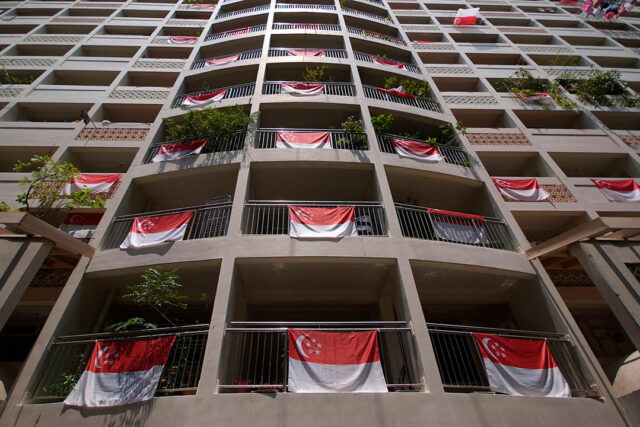
Singapore’s national flags are displayed from an apartment block during National Day in central Singapore. — REUTERS

SINGAPORE — Singapore’s economy grew slightly faster than initially estimated, prompting the government to upgrade the city state’s growth forecast for this year even as it warned of downside risks.

Gross domestic product (GDP) rose by 4.4% year-on-year in the April-June quarter, government data showed on Tuesday, just ahead of an advance estimate of a 4.3% gain released last month.

The trade ministry raised its GDP growth forecast for 2025 to 1.5% to 2.5% from 0.0% to 2.0%, saying it largely reflected a better-than-expected first half performance. In April, the ministry had cut its forecast from 1.0% to 3.0% after the United States announced its plans for global tariffs.

“However, the economic outlook for the rest of the year remains clouded by uncertainty, with the risks tilted to the downside,” it said in a statement.

On a quarter-on-quarter, seasonally-adjusted basis, GDP rose by 1.4% in the April-June period, in line with the advance estimate and following a 0.5% contraction in the first quarter.

Bank of America economists said that the lower end of the GDP growth forecast of 1.5% looks highly improbable and implies a very sharp technical recession from July to December, amounting to a 1.5% contraction in each quarter.

They added in a note that the upper end of the forecast of 2.5% implies a growth slowdown of about 0.4% between the second quarter and the fourth quarter of this year.

“The 2% to 2.5% range thus seems most probable, and we likewise see upside risk to our forecast (of 1.8%),” they said.

At a press briefing on Tuesday, Monetary Authority of Singapore Chief Economist Edward Robinson said the central bank’s monetary policy stance remains appropriate after accounting for factors that affect Singapore’s domestic growth and inflation outcomes.

“I would also add that a gradualist approach under conditions of uncertainty is useful as we update our assessment in a timely manner at our quarterly reviews,” he said.

In a separate statement, Enterprise Singapore said it was keeping its forecast for non-oil exports at growth of 1% to 3% this year, saying it expected some weakness in the second half after a stronger-than-expected start to 2025.

“In general, as frontloading activities taper and reciprocal tariffs resume from 7 August 2025, these could weigh on global economic activity and trade,” it said in a statement.

Despite having a free-trade agreement and running a trade deficit with the US, the wealthy financial hub has still been slapped with a 10% tariff rate by Washington.

President Donald J. Trump has also said he would impose a tariff of about 100% on imports of semiconductors, with an exemption for companies that are manufacturing in the US or have committed to do so, and a tariff on pharmaceutical imports that would rise to 150% within 18 months and eventually to 250%.

Figures from a central bank report show pharmaceuticals made up 12.3% of the city-state’s exports to the US in 2024, while semiconductors accounted for 1.6% of shipments and other electronics and semiconductor equipment made up 15.0% of exports to the United States.

There will also be indirect impacts on Singapore, a global shipping hub where trade is three times the size of its GDP, if the US tariffs constrict global trade.

Imports from other Southeast Asian countries have been slapped with much higher tariffs of between 19% and 40%. — Reuters
Trump takes over DC police in extraordinary move, deploys National Guard in the capital

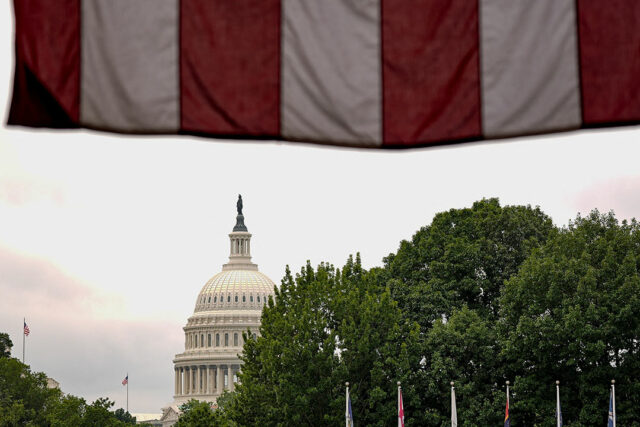
A US flag is draped at Union Station with the US Capitol dome in the background on Capitol Hill in Washington, DC, June 28, 2025. — REUTERS/KEN CEDENO

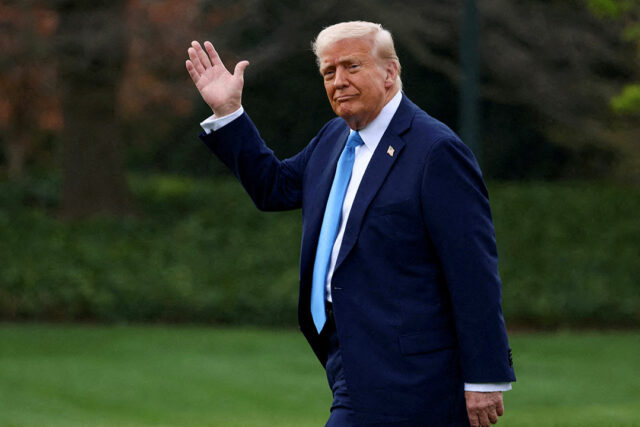
WASHINGTON — US President Donald J. Trump said on Monday he was deploying 800 National Guard troops to Washington and temporarily taking over the city’s police department, an extraordinary assertion of presidential power in the nation’s capital.

Mr. Trump’s move, which bypassed the city’s elected leaders, was emblematic of his second-term approach, which has seen him wield executive authority in ways with little precedent in modern US history and in defiance of political norms.

The President cast his actions as necessary to “rescue” Washington from a purported wave of lawlessness. Statistics show that violent crime shot up in 2023 but has been rapidly declining since.

“Our capital city has been overtaken by violent gangs and bloodthirsty criminals,” Mr. Trump told a news conference at the White House.

It is the second time this summer that the Republican president has deployed troops to a Democratically governed city. A federal trial began on Monday in San Francisco on whether Mr. Trump violated US law by deploying National Guard troops to Los Angeles (LA) in June without the approval of California Governor Gavin Newsom.

And Mr. Trump signaled that other major US cities with Democratic leadership could be next, including Chicago, a city that has long been beset by violent crime, although it was down significantly in the first half of the year.

“If we need to, we’re going to do the same thing in Chicago, which is a disaster,” Mr. Trump said at the White House, adding, “Hopefully LA is watching.”

During Mr. Trump’s election campaign his law and order platform often had racial undertones. He singled out majority Democratic cities like Baltimore, Chicago and Washington — all cities with large Black populations — when he spoke about rampant crime in urban areas.

Hundreds of officers and agents from more than a dozen federal agencies have fanned out across Washington in recent days. Attorney General Pam Bondi will oversee the police force, Mr. Trump said.

The US Army said the National Guard troops would carry out a number of tasks, including “administrative, logistics and physical presence in support of law enforcement.” Between 100 and 200 of the troops would be supporting law enforcement at any given time.

The Democratic mayor of Washington, Muriel Bowser, has pushed back on Mr. Trump’s claims of unchecked violence, noting that violent crime hit its lowest level in more than three decades last year.

Violent crime, including murders, soared in 2023, turning Washington into one of the nation’s deadliest cities. However, violent crime dropped 35% in 2024, according to federal data, and it has fallen an additional 26% in the first seven months of 2025, according to city police.

Ms. Bowser struck a diplomatic tone at a news conference, saying she and other members of her administration would work with the federal government, even as she again rejected Mr. Trump’s claim of widespread crime.

While Ms. Bowser said the law appeared to give the President broad power to take temporary control of the police force, the city’s attorney general, Brian Schwalb, earlier called Mr. Trump’s actions “unlawful” and said his office was “considering all of our options.”

TRUMP RAMPS UP RHETORIC
Over the past week, Mr. Trump has intensified his messaging, suggesting he might attempt to strip the city of its local autonomy and implement a full federal takeover.

The District of Columbia (DC) operates under the Home Rule Act, which gives Congress ultimate authority but allows residents to elect a mayor and city council.

Mr. Trump on Monday invoked a section of the act that allows the President to take over the police force for 30 days when “emergency” conditions exist. Trump said he was declaring a “public safety emergency” in the city.

Mr. Trump’s own Federal Emergency Management Agency is cutting security funding for the National Capital Region, an area that includes DC and parts of Maryland and Virginia. The region will receive $20 million less this year from the federal urban security fund, amounting to a 44% year-on-year cut.

Mr. Trump also vowed to remove homeless encampments, without providing details on how or where homeless people would be moved.

The federal government owns much of Washington’s parkland, so the Trump administration has legal authority to clear homeless encampments in those areas, as President Joseph R. Biden did while in office. But the federal government cannot force people to move out of the city because they lack shelter, advocates for the homeless said.

The President has broad authority over the 2,700 members of the DC National Guard, unlike in states where governors typically hold the power to activate troops.

Guard troops have been dispatched to Washington many times, including in response to the Jan. 6, 2021, attack on the US Capitol by Trump supporters, and during 2020 protests over police brutality. — Reuters

Taking SME brands to the road

RevAds, the Philippines’ first app-based motorcycle ad platform, is helping startups and small and medium enterprises (SMEs) gain visibility in high-traffic areas.

The Pasig-based company, founded in October 2024, aims to level the playing field for smaller businesses by offering out-of-home advertising through motorcycles that travel through high-foot-traffic areas, particularly along the Metro Manila’s busiest roads.

“If you look around for burger brands, for example on the road, I bet you’ll just find McDonald’s, Jollibee — the bigger ones, right?” Lance Arthur S. Martinez, RevAds founder and chief executive officer, said.

“Now, we’re opening it up for smaller businesses to compete in an area where there are real impressions. Smaller businesses normally have no access,” he said in an interview.

Related article: https://www.bworldonline.com/bw-launchpad/2025/05/21/673746/revads-platform-boosts-sme-visibility-with-motorcycle-ads/

Interview by Edg Adrian Eva
Video editing by Jayson Mariñas

#AdTech
#MobileAds
#SMEGrowth
#PhilippineSMEs
#BusinessWorldPH

BPI Capital earns global recognition for investment banking excellence

Francis Jardeleza (left), BPI Capital director, COO, and treasurer receives the award for Best Equity House in the Philippines from Alpha Southeast Asia.

The Bank of the Philippine Islands (BPI), through its investment banking arm BPI Capital Corp. (BPI Capital), further strengthens its position as an institutional banking leader with recent industry accolades that highlight its commitment to sustainability, innovation, and delivering transformative financial solutions.

The Bank bagged the following industry awards for its leadership and expertise in executing several landmark and high-profile transactions:

1. Asian Banking & Finance Corporate and Investment Banking Awards

  • Mergers and Acquisition Deal of the Year for I Square Capital’s successful acquisition of Philippine Coastal Storage and Pipeline Corporation
  • Blue Bond of the Year for Maynilad’s PHP15-billion blue bond issuance
  • Sustainability-Linked Bond of the Year for Ayala Land’s sustainability-linked bonds

2. Asian Banking & Finance Wholesale Banking Awards

  • Philippine Domestic ESG Program of the Year for BanKo’s Agri-NegosyoKo Loan Program

3. Alpha Southeast Asia’s 19th Best Financial Institution Awards

  • Best Equity House in the Philippines

4. FinanceAsia Awards

  • Best Investment Bank in the Philippines
  • Best ECM House in the Philippines

“These recognitions inspire us to continue our thrust to always deliver innovative structures and execute landmark capital markets transactions for our clients in any given market environment,” said Lester Ong, president of BPI Capital.

In photo (L-R): BPI Capital’s Atty. Juan Paolo Santos, Legal Officer; Cynthia Anne Napo, Distribution Officer; Bernice Janine Santos, ECM Associate; Jennifer Ho, Head of Debt Products; Valerie Marie Ann Ablan, Strategic Advisory Associate; and Lester Ong, President

BPI Capital also played a pivotal role in advancing sustainable finance in the country. In 2024, it led five of the seven sustainable public issuances, including notable deals such as Maynilad’s Blue Bonds, ALI’s Sustainability-Linked Bonds, and ACEN’s Sustainability-Linked Loan, emphasizing its position at the forefront of green and sustainable finance.

On the advisory front, the investment house posted a 67% year-on-year increase in deal count and secured 10 mandated advisory engagements, reflecting both growth and strong market confidence in its capabilities.

Moreover, it successfully executed numerous award-winning deals across equity, debt, and M&A transactions, further setting new benchmarks for excellence in Philippine investment banking.

“While the path to growth has become more complex and uncertain, our commitment to serving our clients and the country remains stronger than ever. By delivering expert financial advice and world-class deal execution, we are well-positioned to navigate evolving market conditions and turn challenges into opportunities,” added Mr. Ong.

As of June 2025, BPI Capital has served as lead arranger or bookrunner in over P102 billion worth of capital markets transactions, reinforcing its role as a trusted partner in achieving national progress.


Spotlight is BusinessWorld’s sponsored section that allows advertisers to amplify their brand and connect with BusinessWorld’s audience by publishing their stories on the BusinessWorld Web site. For more information, send an email to online@bworldonline.com.

Join us on Viber at https://bit.ly/3hv6bLA to get more updates and subscribe to BusinessWorld’s titles and get exclusive content through www.bworld-x.com.

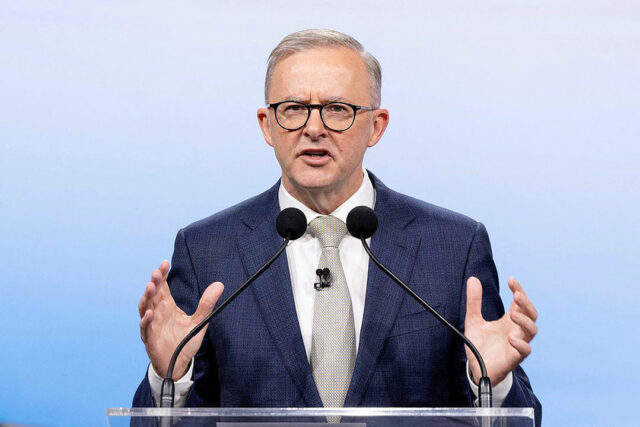
Australia’s Albanese says Netanyahu ‘in denial’ over suffering in Gaza

REUTERS

 – Australia Prime Minister Anthony Albanese said on Tuesday his Israeli counterpart Benjamin Netanyahu was “in denial” about the humanitarian situation in Gaza, a day after announcing Australia would recognize a Palestinian state for the first time.

Australia will recognize a Palestinian state at next month’s United Nations General Assembly, Mr. Albanese said on Monday, a move that adds to international pressure on Israel after similar announcements from France, Britain and Canada.

Mr. Albanese said on Tuesday the Netanyahu government’s reluctance to listen to its allies contributed to Australia’s decision to recognize a Palestinian state.

“He again reiterated to me what he has said publicly as well, which is to be in denial about the consequences that are occurring for innocent people,” Mr. Albanese said in an interview with state broadcaster ABC, recounting a Thursday phone call with Mr. Netanyahu discussing the issue.

Australia’s decision to recognize a Palestinian state is conditional on commitments received from the Palestinian Authority, including that Islamist militant group Hamas would have no involvement in any future state.

Mr. Albanese said last month he would not be drawn on a timeline for recognition of a Palestinian state, and has previously been wary of dividing public opinion in Australia, which has significant Jewish and Muslim minorities.

But the public mood has shifted sharply after Israel said it planned to take military control of Gaza, amid increasing reports of hunger and malnutrition amongst its people.

Tens of thousands of demonstrators marched across Sydney’s Harbour Bridge this month calling for aid deliveries in Gaza as the humanitarian crisis worsened.

“This decision is driven by popular sentiment in Australia which has shifted in recent months, with a majority of Australians wanting to see an imminent end to the humanitarian crisis in Gaza,” said Jessica Genauer, a senior lecturer in international relations at Flinders University.

Neighboring New Zealand has said it is still considering whether to recognize a Palestinian state, a decision that drew sharp criticism from former prime minister Helen Clark on Tuesday.

“This is a catastrophic situation, and here we are in New Zealand somehow arguing some fine point about whether we should recognize we need to be adding our voice to the need for this catastrophe to stop,” she said in an interview with state broadcaster RNZ.

“This is not the New Zealand I’ve known.” – Reuters

US, China extend tariff truce by 90 days, staving off surge in duties

STOCK PHOTO | Image by kjpargeter from Freepik

 – The United States and China on Monday extended a tariff truce for another 90 days, staving off triple-digit duties on each other’s goods as U.S. retailers get ready to ramp up inventories ahead of the critical end-of-year holiday season.

U.S. President Donald Trump announced on his Truth Social platform that he had signed an executive order suspending the imposition of higher tariffs until 12:01 a.m. EST (0501 GMT) on November 10, with all other elements of the truce to remain in place.

China’s Commerce Ministry issued a parallel pause on extra tariffs early on Tuesdayalso postponing for 90 days the addition of U.S. firms it had targeted in April to trade and investment restriction lists.

“The United States continues to have discussions with the PRC to address the lack of trade reciprocity in our economic relationship and our resulting national and economic security concerns,” Trump’s executive order stated, using the acronym for the People’s Republic of China. “Through these discussions, the PRC continues to take significant steps toward remedying non-reciprocal trade arrangements and addressing the concerns of the United States relating to economic and national security matters.”

The tariff truce between Beijing and Washington had been due to expire on Tuesday at 12:01 a.m. EDT (0401 GMT). The extension until early November buys crucial time for the seasonal autumn surge of imports for the Christmas season, including electronics, apparel and toys at lower tariff rates.

The new order prevents U.S. tariffs on Chinese goods from shooting up to 145%, while Chinese tariffs on U.S. goods were set to hit 125% – rates that would have resulted in a virtual trade embargo between the two countries. It locks in place – at least for now – a 30% tariff on Chinese imports, with Chinese duties on U.S. imports at 10%.

“We’ll see what happens,” Mr. Trump told a news conference earlier on Monday, highlighting what he called his good relationship with Chinese President Xi Jinping.

China said the extension was “a measure to further implement the important consensus reached by the two heads of state during their June 5 call,” and would provide stability to the global economy.

Mr. Trump told CNBC last week that the U.S. and China were getting very close to a trade agreement and he would meet with Xi before the end of the year if a deal was struck.

“It’s positive news,” said Wendy Cutler, a former senior U.S. trade official who is now a vice president at the Asia Society Policy Institute“Combined with some of the de-escalatory steps both the United States and China have taken in recent weeks, it demonstrated that both sides are trying to see if they can reach some kind of a deal that would lay the groundwork for a Xi-Trump meeting this fall.”


TRADE ‘DETENTE’ CONTINUED

The two sides in May announced a truce in their trade dispute after talks in Geneva, Switzerland, agreeing to a 90-day period to allow further talks. They met again in Stockholm, Sweden, in late July, and U.S. negotiators returned to Washington with a recommendation that Mr. Trump extend the deadline.

Treasury Secretary Scott Bessent has said repeatedly that the triple-digit import duties both sides slapped on each other’s goods in the spring were untenable and had essentially imposed a trade embargo between the world’s two largest economies.

“It wouldn’t be a Trump-style negotiation if it didn’t go right down to the wire,” said Kelly Ann Shaw, a senior White House trade official during Trump’s first term and now with law firm Akin Gump Strauss Hauer & Feld.

She said Mr. Trump had likely pressed China for further concessions before agreeing to the extension. Mr. Trump pushed for additional concessions on Sunday, urging China to quadruple its soybean purchases, although analysts questioned the feasibility of any such deal. Mr. Trump did not repeat the demand on Monday.

“The whole reason for the 90-day pause in the first place was to lay the groundwork for broader negotiations and there’s been a lot of noise about everything from soybeans to export controls to excess capacity over the weekend,” Shaw said.

Ryan Majerus, a former U.S. trade official now with the King & Spalding law firm, said the news would give both sides more time to work through longstanding trade concerns.

“This will undoubtedly lower anxiety on both sides as talks continue, and as the U.S. and China work toward a framework deal in the fall,” he said.

Imports from China early this year had surged to beat Trump’s tariffs, but dropped steeply in June, Commerce Department data showed last week. The U.S. trade deficit with China tumbled by roughly a third in June to $9.5 billion, its narrowest since February 2004. Over five consecutive months of declines, the U.S. trade gap with China has narrowed by $22.2 billion – a 70% reduction from a year earlier.

Washington has also been pressing Beijing to stop buying Russian oil to pressure Moscow over its war in Ukraine, with Trump threatening to impose secondary tariffs on China. – Reuters

P1 billion in loan releases and a billion reasons to celebrate

By Jhoza Celestra

What a moment to remember!

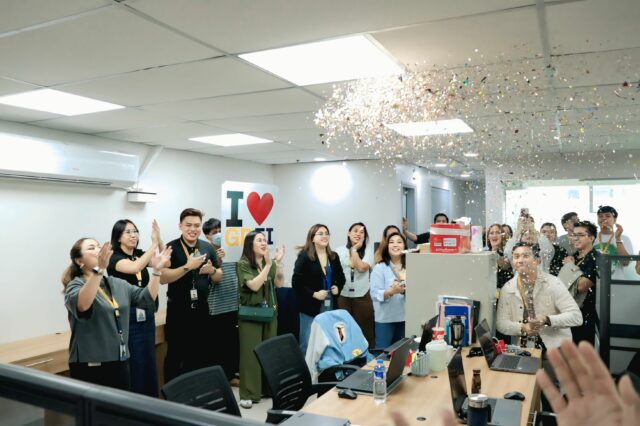
Global Dominion has once again proven that with hard work, heart, and trust, great things truly happen. This July 2025, we’ve reached a major milestone, over P1.054 billion in loan releases.

But this achievement is more than just a number. It reflects thousands of real stories, dreams financed, families supported, and businesses powered forward. Each loan release is a chapter in someone’s journey, and we’re proud to be part of it.

This incredible feat came from a total of 2,503 accounts, including 531 returning borrowers who chose to partner with us again. That number alone speaks volumes. Trust is not given easily, but we’ve earned it, and we continue to nurture it. Even more impressive, P165 million worth of loans were renewed by our existing clients, showing not only loyalty, but confidence in our commitment to serve.

The celebration was nothing short of inspiring. The office came alive with cheers and laughter as teams joyfully celebrated the achievement together with our Global Dominion leaders, a true reflection of the unity and drive that power us forward.

Dahil kay Global Dominion, nagkaroon ako ng branches sa Visayas, Iloilo at Cebu. Dahil kay Global Dominion, lumaki yung negosyo ko,” shared Arthur King Q. Dalmas, owner of Karr Auto Focus Car Trading, Top 1 Dealer Nationwide under the Visayas region.

This win belongs to all of us, every branch, every teammate, and every client who continues to believe in what we do. It’s not just about hitting a financial target, but about proving, again and again, that #PwedePala, to rise, grow, and make an impact when people work with transparency and direction. Guided by our vision to make financing simplified, we remain dedicated to pushing boundaries, creating opportunities, and uplifting every Filipino we serve.

As we look ahead, this milestone serves as both a celebration and a challenge, to keep pushing forward, to keep delivering excellence, and to stay grounded in the reason we do all this: to uplift the lives of every Filipino we serve.

Here’s to more shared wins, more lives changed, and more moments that remind us why we’re proud to be Ka-Partner Mo sa Pag-Angat.

#PwedePala
#KaPartnerMoSaPagAngat


Spotlight is BusinessWorld’s sponsored section that allows advertisers to amplify their brand and connect with BusinessWorld’s audience by publishing their stories on the BusinessWorld Web site. For more information, send an email to online@bworldonline.com.

Join us on Viber at https://bit.ly/3hv6bLA to get more updates and subscribe to BusinessWorld’s titles and get exclusive content through www.bworld-x.com.

India’s ethanol drive imperils its push for edible oil self-sufficiency

SHRESHTH GUPTA-UNSPLASH

 – India’s drive to produce more ethanol is leading its farmers to switch away from growing oilseeds, undermining government efforts in the world’s largest buyer of cooking oils to reduce costly imports.

Helped by record corn and rice harvests, New Delhi is using more of the grains to make ethanol and meet its target of blending 20% of the biofuel additive with gasoline. The process, however, produces Distillers Dried Grains with Solubles (DDGS), a protein-rich byproduct that is flooding the animal feed market.

The DDGS glut is weakening demand for oilmeals, depressing oilseed prices and prompting farmers in the South Asian nation to plant more corn and rice in place of soybeans and groundnuts – despite New Delhi’s push to grow more of the oilseeds to ease imports.

DDGS production in India has soared some 13-fold over the past two years to an estimated 5.5 million tons by 2025, according to industry officials.

“DDGS is a pain in the neck,” said Aashish Acharya, vice president at Patanjali Foods Ltd, a leading soybean processor. “Feed makers are substituting oilmeals with DDGS since it is cheaper.”

The shift is visible in government sowing data. As of August 8, oilseed acreage – including soybean and groundnut – was down 4% from last year, while corn area jumped 10.5% to a record high.

Madhukar Londhe, a farmer in Nashik in the western state of Maharashtra, said he had cut his soybean area to one acre from six, planting the rest with corn – which has the added benefit of providing fodder from its stalks for his five milking cows.

Nearly two dozen farmers in the area that Reuters spoke to said they had made a similar switch.

“Soybean prices were too low, so I couldn’t even cover my costs in the past two years. Corn did better for me last year, so I’ve decided to grow more of it,” Mr. Londhe said.


RISING IMPORTS

The reduction in oilseed planting is a concern for a country that spent more than $17 billion on edible oil imports last year and is making concerted efforts to reduce that dependence.

Rising demand for fried foods and sweets by a growing and increasingly prosperous population has driven consistent growth in edible oil consumption at 3%-4% annually, said B.V. Mehta, executive director of the Solvent Extractors’ Association of India.

Edible oil imports have climbed to 16 million tons in 2023-24 from 4.4 million tons two decades ago, making India the world’s largest buyer of vegetable oils such as palm oil from Indonesia and Malaysia and soyoil and sunflower oil from Argentina, Brazil, Russia, and Ukraine.

New Delhi aims to boost domestic edible oil production to 25.45 million tons by 2030–31 from 12.7 million tons now, enough to meet 72% of projected demand, an effort that Mehta said is being hindered by the surge in DDGS supply.

A New Delhi-based senior dealer with a global trading house who declined to be named as he is not authorized to speak with media said he expects imports to rise above 20 million tons in six or seven years, due in part to the DDGS disruption.

Given the tightening global supplies of edible oils, India’s additional imports will drive prices even higher, said a Kuala Lumpur-based official with a leading palm oil-producing company.


MEAL GLUT, OIL DEFICIENCY

India, the No. 3 importer and consumer of crude, recently hit its goal of lifting ethanol blending in gasoline to 20%. Two years ago, before India began using corn and rice on a large scale due to short supply of its main ethanol feedstock sugarcane, its blending rate was just 12%.

Even before rising ethanol production began to create excess DDGS, India struggled with surplus oilmeals. Per capita demand for animal feed is much lower than the global average as a significant portion of its 1.4 billion population is vegetarian for religious and cultural reasons and most meat-eaters do so only occasionally.

That led India to export surplus oilmeals to countries such as South Korea, Vietnam, Thailand, and Bangladesh.

However, oilmeal exports got tougher every year as prices rose in order to support oilseed farmers. This year, some countries that import Indian meal have committed to buying more from the U.S., meaning they will buy less from India, said a Mumbai-based dealer with a global trading house.

Ajay Jhunjhunwala, an oil miller in Lucknow in northern India, estimates that of this year’s DDGS output, only around half will be consumed domestically.

Exports are growing but are still relatively small. India’s DDGS exports surged to 354,110 tons last year from just 16,556 tons in 2022. Distilleries are trying to export the surplus to markets including Bangladesh and Vietnam – longtime U.S. DDGS customers.

Millers and distillers are pushing for incentives to facilitate exports of both oilmeals and DDGS.

India’s Agriculture Minister Shivraj Singh Chouhan said in July the government would support oilseed farmers by procuring their harvest at a state-fixed price. The Indian government did not respond to a request for comment on rising supplies of DDGS.

“DDGS has exaggerated the problem of surplus meal,” oil miller Jhunjhunwala said. “Unless that problem is fixed, increasing domestic oilseed production and edible oil supplies is difficult,” he said. – Reuters

Trump holds high-stakes meeting with Intel CEO after calling for his resignation

US President Donald Trump — REUTERS

U.S. President Donald Trump said he met with Intel CEO Lip-Bu Tan on Monday, days after seeking his resignation, praising Tan and calling the meeting “a very interesting one.”

Shares of the chipmaker rose 3% in extended trading.

Last week, Mr. Trump had demanded the immediate resignation of Mr. Tan, calling him “highly conflicted” over his ties to Chinese firms, injecting uncertainty into the chipmaker’s years-long turnaround effort.

Mr. Trump said he met with Mr. Tan, along with Commerce Secretary Howard Lutnick and Treasury Secretary Scott Bessent. His cabinet members and Tan were going to bring suggestions to him next week, Trump said in a post on Truth Social.

“His success and rise is an amazing story,” Mr. Trump said about Mr. Tan.

Mr. Tan had invested in hundreds of Chinese firms, some of which were linked to the Chinese military, Reuters reported exclusively in April. It is not illegal for U.S. citizens to hold stakes in Chinese companies unless they have been added to the U.S. Treasury’s Chinese Military-Industrial Complex Companies List, which explicitly bans such investments.

Mr. Tan has been tasked to undo years of missteps that left Intel struggling to make inroads in the booming AI chip industry dominated by Nvidia, while investment-heavy contract manufacturing ambitions led to hefty losses.

In the roughly six months as Intel CEO, Tan made major strategic shifts that included divesting assets, laying off employees and redirecting resources.

But the demand for Mr. Tan’s resignation will only distract him from that task, investors and a former senior employee have told Reuters.

Mr. Tan is now making an effort to reassure Mr. Trump that he remains the right person to revive the storied American chipmaker.

Mr. Tan met with Mr. Trump for a candid and constructive discussion on the company’s commitment to strengthening U.S. technology and manufacturing leadership, Intel said in a statement. The company said it would work closely with the administration to “restore this great American company.”

Mr. Trump’s intervention marked a rare instance of a U.S. president publicly calling for a CEO’s ouster and raised questions about his control over corporate affairs.

This was also evident in an agreement calling for Nvidia and AMD to give the U.S. government 15% of revenue from China sales. – Reuters

Paramount wins exclusive US rights for UFC in $7.7 billion deal

STOCK PHOTO | By Kevlar - Own work, Public Domain, https://commons.wikimedia.org/w/index.php?curid=27188458

Paramount, days after finalizing its merger with production studio Skydance, said Monday it will pay $7.7 billion for exclusive U.S. broadcast rights to the Ultimate Fighting Championship for seven years — the first major strategic move by the combined company.

“The addition of UFC’s year-round must-watch events to our platforms is a major win,” said Paramount CEO David Ellison, former CEO of Skydance, calling the mixed martial arts franchise a “global sports powerhouse”.

Under the agreement with UFC owner TKO Group Holdings, streaming service Paramount+ will from next year carry the complete U.S. slate of 13 numbered UFC events and 30 “Fight Nights.”

Paramount+ and Paramount’s CBS broadcast network will also simulcast select numbered cards, the companies said. Numbered cards have historically been pay-per-view events featuring top-ranked fighters and championship bouts but now will come at no extra cost to viewers.

Mr. Ellison, who oversaw Skydance’s run of Hollywood action blockbusters and TV series, committed to increasing Paramount’s investment in high-quality exclusive content, which he has called the “single biggest driver of subscriber growth“.

As cord-cutting accelerates, live sports have emerged as one of the few formats still drawing mass audiences in real time. Rivals Netflix and Disney preceded Paramount in locking down major sports deals.

Netflix secured a $5 billion, 10-year global deal for WWE Raw wrestling and added two Christmas Day NFL football games. Disney’s ESPN extended rights with U.S. professional football, hockey and baseball leagues and the College Football Playoff invitational tournament.

TKO Chief Financial Officer Andrew Schleimer said conversations had been taking place with Paramount since June, though the process dramatically accelerated last week after Paramount completed its drawn-out $8.4 billion merger with Skydance.

“Once the merger closed, we were off to the races,” said Mr. Schleimer.

Paramount will pay an average of $1.1 billion a year to TKO Group and shift away from UFC’s traditional pay-per-view model. It may seek UFC rights in other markets as they come up for bidding.

“They are not playing for near-term earnings outperformance, they are trying to create a long-term imprint on the future of the media industry to ‘win,'” LightShed Partners analysts said.

UFC stages about 43 live events a year, reaching roughly 100 million U.S. fans and nearly 950 million households globally. The appealing demographics of UFC’s audience, which is diverse but skews toward young men, made bidding competitive, said UFC Chief Operating Officer Lawrence Epstein.

Epstein said UFC chose Paramount for its financial strength, CBS’ broad television reach and Ellison’s focus on technology and long time horizon. – Reuters

Gorio intensifies into typhoon; no wind signals raised yet

Source: PAGASA

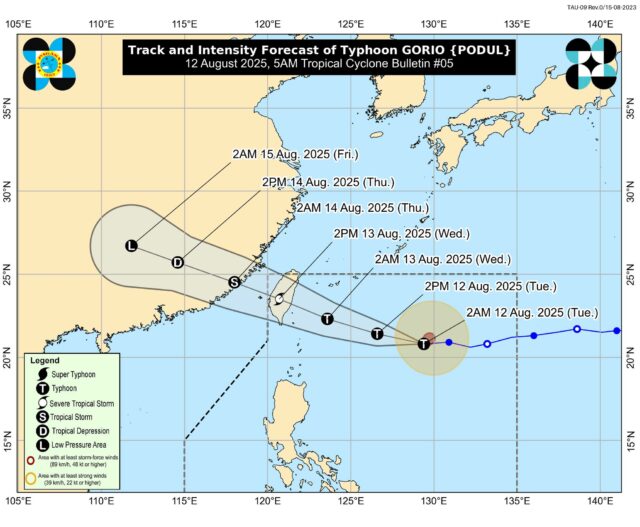
Gorio (international name: Podul) has intensified from a severe tropical storm into a typhoon, but no tropical cyclone wind signals have been raised in the country yet, according to the Philippine Atmospheric, Geophysical and Astronomical Services Administration (PAGASA) on Tuesday. 

In PAGASA’s latest press briefing released at 5:00 am, Gorio has strengthened into a typhoon with maximum sustained winds of 120 km/h and gustiness reaching 150 km/h.  

Typhoon Gorio was spotted at 745 km East of Itbayat, Batanes, moving westward at 25km/h, and is likely to head for Taiwan.  

PAGASA’s weather specialist Obet Badrina said that despite Gorio having intensified into a typhoon, its effects are not yet directly felt in the country, and it has not yet affected the existing southwest monsoon during the forecast period. 

“At present, there are no tropical cyclone wind signals raised in our country, and you can see that Typhoon Gorio still has no direct impact on any part of the islands,” Mr. Badrina said in both mixed English and Filipino during the press briefing.  

Typhoon Gorio is forecast to make landfall in Taiwan on Wednesday afternoon, eventually exiting the Philippine Area of Responsibility (PAR) on that evening.  

However, if the typhoon further intensifies and its movement goes slightly downward, a tropical cyclone wind signal may be raised in extreme northern Luzon, likely Batanes, Mr. Badrina said.  

Rain showers may still occur in most parts of the country, especially in the Western portion, due to the southwest monsoon and localized thunderstorms. Edg Adrian A. Eva

SM Group hosts its biggest Job Fair of the Year at SM City Fairview

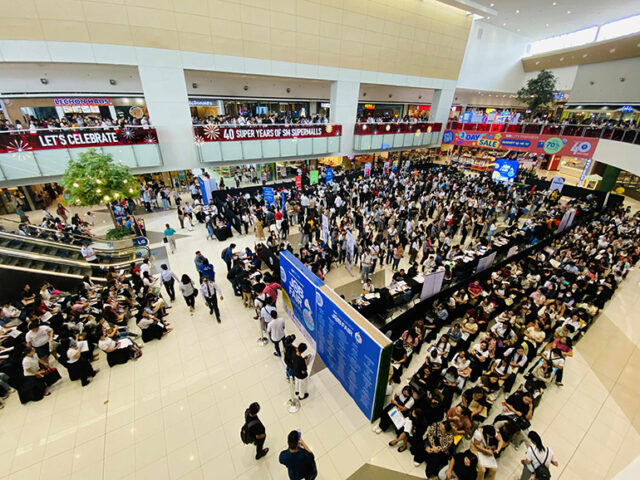
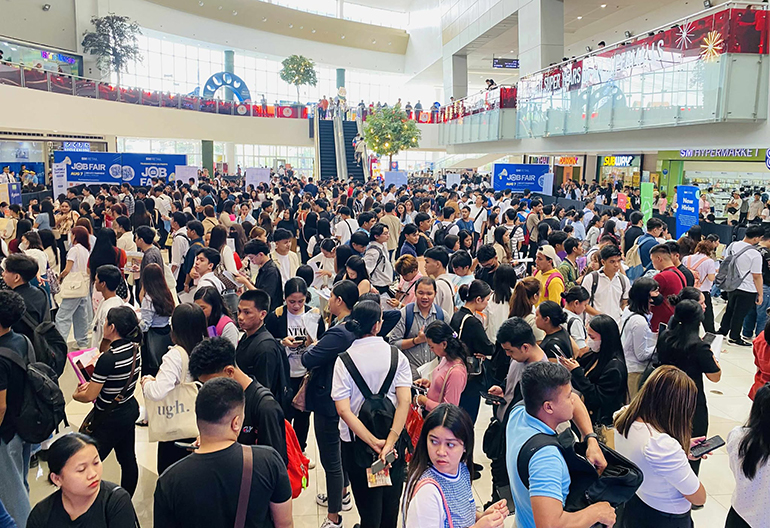
At the SM Job Fair, you don’t just apply — you get interviews, career guidance, and access to partner agencies all in one go. See you at the next one!

Thousands of job seekers take a step closer to employment

On Aug. 7, the SM Group of Companies, led by SM Retail, brought together job hopefuls and career makers under one roof at SM City Fairview, staging the largest SM Group-exclusive job fair of 2025 to date. The event gathered top companies from within the SM ecosystem — including retail, logistics, and banking — and offered a diverse range of opportunities for both entry-level applicants and seasoned professionals. Open positions included Accounting Assistants, Cashiers, Merchandising Managers, Pharmacy Assistants, Sales Associates, Customer Relations Representatives, and Company Nurses.

On-the-Spot Interviews — Applicants take part in initial interviews during the SM Group’s Biggest Job Fair of the Year, making the job search faster and more accessible.

Renowned for its accessibility and all-in-one convenience, the SM Job Fair is more than just a hiring event — it’s a career destination. By bringing a curated lineup of trusted employers to one venue, SM removes the common barriers to job hunting. Here, applicants can explore multiple options, submit applications, undergo interviews, and even receive job offers on the spot — without ever leaving the mall. For many, it’s career-building made convenient and approachable, whether they are coming from school, home, or a current workplace.

With a strong commitment to empowering the Filipino workforce, the event welcomed over 2,000 job seekers and proudly reported 240 hired on the spot — a 12% HOTS rate. Those not immediately matched are still being considered, as HR teams from participating companies continue to conduct virtual interviews with qualified applicants after the event.

The Aug.t 7 SM Group Job Fair also marked the start of a month-long series of job fairs in SM Supermalls nationwide, reinforcing SM’s role as a bridge between employers and future changemakers.

August Job Fair Schedule:

  • Aug. 14 — SM City Caloocan, SM City Tuguegarao, SM Center San Pedro
  • Aug. 20 — SM City Cabanatuan
  • Aug. 21 — SM City North EDSA at Skydome
  • Aug. 22 — SM City Trece Martires
  • Aug. 27-28 — Union Christian College Gymnasium (Opening of SM City La Union)
  • Aug. 29 — SM City Legazpi

At the SM Job Fair, you don’t just apply — you get interviews, career guidance, and access to partner agencies all in one go. See you at the next one!

More Job Fairs Coming Your Way This August!

Aug. 14 — SM City Caloocan, SM City Tuguegarao, SM Center San Pedro

SM City Caloocan will host another SM Job Fair in partnership with Caloocan PESO and TESDA, bringing job openings from leading brands in retail, logistics, and finance to the northern metro. In Tuguegarao, the fair will be held in collaboration with the local government and PESO as part of the Pavvurulun Afi Festival, adding employment opportunities to the celebration of the city’s cultural heritage. Meanwhile, SM Center San Pedro will also conduct a job fair with PESO and the local government to serve job seekers in the south.

Aug. 21  HIMAP Career Summit at SM City North EDSA — Skydome

Targeting digital and tech-driven career paths, this summit will feature top employers from the IT-BPM Healthcare Information Management industry. It is the go-to event for professionals looking to enter or advance within the fast-growing HIM sector.

Aug. 27-28 Union Christian College Gymnasium, La Union

In preparation for the grand opening of SM City La Union, a two-day job fair will connect locals to employment opportunities — particularly within the SM Group — right in their home province.

At the heart of every SM Job Fair is the goal to make employment accessible and aspirational. By hosting these events in malls — central, familiar, and easy to reach — SM Supermalls ensures that job seekers can participate in meaningful opportunities without the burden of costly transportation, agency fees, or complicated application processes. It’s all about bringing jobs closer to the people — literally and figuratively.

Whether you’re looking to level up your career, shift industries, or take your first step into the workforce, SM Job Fairs are designed to meet you where you are — conveniently, inclusively, and with real opportunities that matter.

About SM Supermalls Job Fairs

Celebrating 40 Super Years of Evolving With Every You, SM Supermalls — one of Southeast Asia’s largest mall developers — remains a steadfast partner in nation-building by growing its most valuable resource: its people. Through job fairs hosted in its 88 malls nationwide, SM builds social capital by bridging job seekers and employers, opening doors to livelihood, and empowering Filipinos through inclusive partnerships that foster workforce development and long-term economic growth.


Spotlight is BusinessWorld’s sponsored section that allows advertisers to amplify their brand and connect with BusinessWorld’s audience by publishing their stories on the BusinessWorld Web site. For more information, send an email to online@bworldonline.com.

Join us on Viber at https://bit.ly/3hv6bLA to get more updates and subscribe to BusinessWorld’s titles and get exclusive content through www.bworld-x.com.