Home Blog Page 737

Egypt’s Enany set to lead UNESCO despite criticism of heritage record at home
UNESCO.ORG

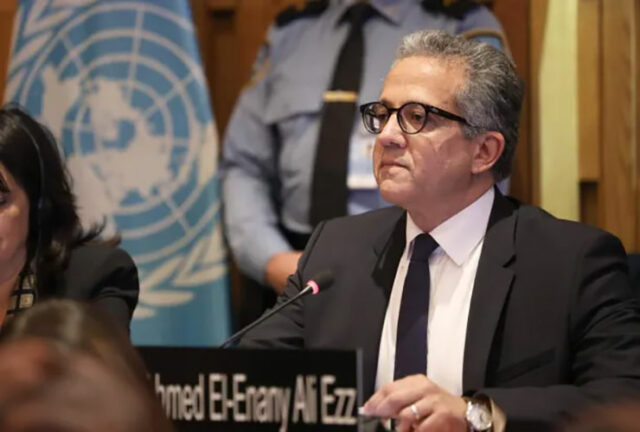
CAIRO — Egypt’s former tourism and antiquities minister Khaled El-Enany is set to be confirmed as head of United Nations Educational, Scientific and Cultural Organization (UNESCO) on Thursday, despite criticism from heritage groups that he had failed to protect cultural treasures at home such as Cairo’s “City of the Dead.”

Mr. Enany, 54, was elected last month by UNESCO’s 58-member Executive Board with 55 votes, beating Edouard Firmin Matoko of Congo-Brazzaville. His appointment as the first Arab director-general of the UN cultural and education agency will be put to a formal confirmation vote of all 194 member states at the agency’s general conference in Samarkand, Uzbekistan.

PARTS OF HISTORIC SITE DEMOLISHED
The Berlin-based NGO World Heritage Watch last week urged countries to reconsider the appointment, arguing that Mr. Enany’s record as minister raised questions about his commitment to preserving cultural sites.

In a letter signed by more than 50 organizations and experts, it cited the demolition of parts of Cairo’s historic necropolis, the “City of the Dead,” and the expansion of tourism works near St. Catherine’s Monastery in Sinai, both UNESCO World Heritage sites.

“It is irresponsible to entrust someone with such a past with the top job at the organization responsible for preserving world heritage,” the group said.

Reuters was unable to reach Mr. Enany directly for comment. Before last month’s executive board vote, his campaign said he was too busy to respond to questions sent by Reuters about criticism of his record. The campaign added in a statement that “the unfortunate mega-project that the government decided to carry out in the St. Catherine’s area is currently halted.”

Following his election, the campaign declined to comment further and referred the questions to the UNESCO Secretariat, which did not immediately respond to a Reuters request for comment.

‘ERASING EGYPT’S HISTORY’
An Egyptologist and former museum director, Mr. Enany served as minister from 2016 to 2022. UNESCO documents describe Mr. Enany’s former ministry as the “official entity responsible” for UNESCO World Heritage property in Cairo’s historic area.

Conservationists argue that gave the ministry a duty to map and register assets, set site boundaries, press for impact assessments before launching projects and object when those projects threatened what UNESCO dubs areas of outstanding universal value.

Instead, they say, highway and bridge projects that accelerated from 2020 cut through swathes of unregistered mausoleums in the “City of the Dead,” a 10 sq km (3.9 sq miles) necropolis fringing eastern Cairo.

Many families still bury their dead in the area, amid ornate tombs of Mamluk sultans, nationalist leaders and Islamic scholars such as Imam al-Shafi’i.

“What happened in the cemeteries is erasing a huge part of Egypt’s history,” said heritage advocate Sally Soliman, who has filed lawsuits to stop demolitions.

Egypt’s government has defended the developments, saying registered monuments were spared and that infrastructure work was essential to revitalize tourism and modernize Cairo.

In South Sinai, critics say the “Great Transfiguration” project that began in 2021 around St. Catherine’s Monastery replaced a small visitor center with large domed buildings that clashed with the ancient site’s design and setting.

UNESCO’s World Heritage Committee earlier this year requested an expert mission to assess the site.

DIPLOMATIC MOMENTUM
Despite the controversy, Mr. Enany’s bid has drawn strong support from Arab and African nations, which have long sought greater representation at the helm of the organization.

“Egypt’s candidature is overdue representation,” Foreign Minister Badr Abdelatty said in Paris last month. “We have to lift this historical injustice to Egypt, to the Arabs, to the Muslims, and to the Africans.”

Mr. Enany has pledged to “build a UNESCO for the people,” streamline decision-making and diversify funding as the agency braces for the withdrawal of US financial contributions at the end of 2026.

A UNESCO spokesperson said the election of the director-general was “a sovereign decision of member states.”

If confirmed, Mr. Enany will take office in mid-November, succeeding France’s Audrey Azoulay, who has completed two four-year terms. — Reuters

Louvre museum will need years to fix security issues, state auditor finds

A TIARA adorned with pearls worn by French Empress Eugenie, which was among the items stolen by thieves during a heist at Paris’ Louvre Museum on Oct. 19, on display in this undated still frame from a video. — LOUVRE MUSEUM/HANDOUT VIA REUTERS

PARIS — France’s Louvre Museum began a security audit a decade ago but the recommended upgrades will not be completed until 2032, the state auditor said in a report on Thursday compiled before a spectacular heist there last month.

The Louvre’s credibility in safeguarding its countless works was tarnished by the daylight robbery, in which four robbers made off with jewels worth $102 million, sparking debate around the shortcomings of the world’s most-visited museum. Officials have admitted security was not up to scratch.

While investigators have charged four suspects for involvement in the raid, the treasures have yet to be recovered.

Excerpts from the report, which was published on Thursday by the national audit office, known as the Cour des Comptes, had already leaked in the media days after the raid.

Only 39% of the museum’s rooms had cameras as of 2024, the report said, and a security audit begun in 2015, which found the museum was not sufficiently monitored or prepared for a crisis, only led to a tender for security works at the end of last year.

“It will take several years to complete the project, which, according to the museum, is not expected to be finished until 2032,” the report said.

It also highlighted excessive spending to buy artwork and post-pandemic relaunch projects, as well as missed revenues from inefficiencies and ticketing fraud, as contributing to the museum’s inability to fix its outdated infrastructure.

Even the development initiatives it announced this year were not based on feasibility studies, whether technical or financial, and did not consider staffing needs, the report said.

The report provided 10 recommendations including a drop in the number of acquisitions by the museum, an increase in its ticket prices and a refurbishment of its digital infrastructure and governance.

In the face of a “chronic under-investment in information systems”, the auditor said, “the museum must strengthen its internal control function, which remains underdeveloped for an institution the size of the Louvre”.

The theft only reinforces some of the considerations made in the report, the auditor’s head Pierre Moscovici told journalists on Thursday, calling the robbery a “deafening” alarm.

After the robbery, French officials said the Louvre would introduce extra security, including anti-intrusion devices and anti-vehicle ramming barriers on nearby public roads, by the end of the year.

In January, amid growing complaints about disarray at the museum, France launched an ambitious development project involving a new space dedicated to Leonardo’s Mona Lisa, the world’s most famous painting, and new security steps to protect its visitors and precious exhibits.

In written remarks published by the audit office, Culture Minister Rachida Dati said she agreed on the urgency of the technical work and reiterated calls for swift corrective measures.

Louvre director Laurence des Cars said in the same document she supported most of the auditor’s recommendations but insisted the museum’s long-term transformation plan is essential to address its structural challenges. — Reuters

Groping of Mexico’s president puts violence against women in spotlight

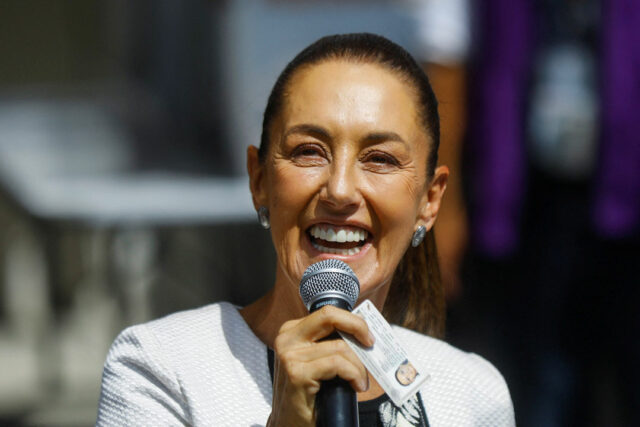
Mexico President Claudia Sheinbaum — REUTERS

MEXICO CITY — Mexican President Claudia Sheinbaum said on Wednesday she filed a complaint against a man who groped her and tried to kiss her as she walked between meetings in the capital city, a day after a video of the incident went viral.

“If this happens to the president, where does that leave all the young women in our country,” said Ms. Sheinbaum, Mexico’s first female president. “No man has the right to abuse women’s personal space.”

Video of the incident quickly ricocheted across the internet before being taken down by some accounts, underscoring for many in Mexico the insecurity women face in a country steeped in machismo and gender-based violence.

It has also raised questions about Ms. Sheinbaum’s security detail. Like her predecessor, Andres Manuel Lopez Obrador, Ms. Sheinbaum travels with minimal security and makes herself widely available to the public, including wading into crowds of people.

She said on Wednesday that she did not plan to change that practice, saying “we have to be close to the people.”

The incident happened on Tuesday in the capital’s historic center as Ms. Sheinbaum was greeting members of the public while making the short walk from Mexico’s national palace to the Ministry of Education.

The video shows a middle-aged man putting his arm around Ms. Sheinbaum, touching her chest and attempting to kiss her. She moves his hands away before a member of her staff steps between them. The president’s security detail did not appear to be near her in the moment.

Ms. Sheinbaum said the man appeared to be drunk.

RE-VICTIMIZATION
She also blasted Mexican newspaper Reforma for publishing images of the man groping her, saying she considered it a “re-victimization” and that it crossed an ethical line.

“The use of the image is also a crime,” Sheinbaum said, pointing to legislation against digital violence. “I am waiting for an apology from the newspaper.”

The federal government’s Women’s Ministry, created under Ms. Sheinbaum, issued a statement on Tuesday encouraging women to report violence against them, but asking media outlets “not to reproduce content that violates the integrity of women.”

Still, feminist activists have sharply criticized Ms. Sheinbaum in the past for not doing enough to address violence against women. Among other things, they point to lackluster prosecutions and investigations of femicides – the killing of a woman because of her gender.

In 2024, Mexico recorded 821 femicides, according to government data. There have been 501 femicides recorded through September of this year, and many advocates say the numbers are likely far underestimated.

CRIMINALIZING HARASSMENT
Ana Yeli Perez of the National Citizen Observatory on Femicide said the groping of Ms. Sheinbaum puts the issue of violence against women on the national agenda again.

“It’s reprehensible, it must be denounced, it must be named, because it’s an act of violence, but it’s also a significant event and symbolic of what women experience every day,” she said.

Ms. Sheinbaum said sexual harassment should be a “criminal offense, punishable by law,” adding that she has asked Mexico’s Women’s Ministry to conduct a review of the legal codes in each state.

Sexual harassment is a crime in about half of Mexican states, as well as the capital Mexico City.

Local media identified the man who assaulted Ms. Sheinbaum as Uriel Rivera and a state security filing showed he was arrested at 9 p.m. on Tuesday night. — Reuters

DepEd pushes unified national class suspension protocol 

Education officials at a meeting on class suspension. — DEPARTMENT OF EDUCATION

The Department of Education said it is working to establish a uniform national class suspension protocol to curb learning loss amid national disasters.   

“Just like what President Ferdinand R. Marcos Jr. said, we need to face and prepare for the challenges that disasters bring to education,” Education Secretary Juan Edgardo “Sonny” M. Angara said in Filipino in a news release.   

“We cannot stop the storm, but we can prepare better so that decisions are swift, clear, and well-coordinated when the safety and future of our children are at stake,” he added.   

To address the worsening impact of the climate crisis, the Education department, together with other government agencies, aims to develop a Department of the Interior and Local Government (DILG) advisory template to help local governments issue a “timely and consistent” suspension announcement.  

The agencies also agreed to require regional and division offices to report the frequency and impact of class suspensions and publish official data on lost school days.   

Meanwhile, the make-up class policy and Alternative Delivery Modes (ADM) will be strengthened to keep learners engaged when in-person classes are cancelled.  

“While modular and online learning options have helped sustain instruction during disruptions, DepEd noted that these cannot fully replace face-to-face learning, especially for younger students who still depend on close teacher guidance,” the department said.   

Under DepEd Order 22, Series of 2024, local executives, school division superintendents, and school heads have the authority to suspend classes based on advisories from the Philippine Institute of Volcanology and Seismology (PHIVOLCS), field conditions, and readiness to resume learning.   

Citing the 2019 Trends in International Mathematics and Science Study (TIMSS), the DepEd said that every additional day of school closure decreases a Grade 4 student’s achievement by up to 12.4 points in mathematics and 13.9 points in science.  

The study added that 10 class suspensions can lower a child’s science score from 500 to below 380.   

In the Second Congressional Commission on Education (EDCOM II) report for School Year 2023-2024, more than 20 school days were lost due to climate-related events, impacting over 11 million learners, or about 42% of the public school population.   

“We understand that safety must always come first,” Mr. Angara said. “But we also need to be ready to help students recover from lost time. Our goal is to make every day of learning count, rain or shine.” — Almira Louise S. Martinez

Nvidia’s Jensen Huang: ‘China is going to win the AI race,’ FT reports

Nvidia CEO Jensen Huang. — NVIDIA NEWSROOM

NVIDIA CEO Jensen Huang has warned that China will beat the United States in the artificial intelligence race, the Financial Times reported on Wednesday.

“China is going to win the AI race,” Mr. Huang told the newspaper on the sidelines of the Financial Times’ Future of AI Summit.

“As I have long said, China is nanoseconds behind America in AI,” Nvidia CEO Jensen Huang said in a statement posted on X late on Wednesday.

“It’s vital that America wins by racing ahead and winning developers worldwide,” he added.

The artificial intelligence chip leader’s chief in October said that the US can win the AI battle if the world, including China’s massive developer base, runs on Nvidia systems. He, however, lamented that the Chinese government has shut it out of its market.

China’s access to advanced AI chips, particularly those produced by Nvidia — the world’s most valuable company by market capitalization — remains a flashpoint in its tech rivalry with the United States, as both nations vie for supremacy in cutting-edge computing and artificial intelligence.

“We want America to win this AI race. No doubt about that,” Mr. Huang said in the Nvidia developers’ conference held in Washington last month.

“We want the world to be built on American tech stack. Absolutely the case. But we also need to be in China to win their developers. A policy that causes America to lose half of the world’s AI developers is not beneficial in the long term, it hurts us more,” he added.

US President Donald Trump said in an interview aired on Sunday that Nvidia’s most advanced Blackwell chips should be reserved exclusively for American customers.

Nvidia has not applied for US export licenses to sell the chips in China, citing Beijing’s stance toward the company, Mr. Huang previously said.

Mr. Trump added that Washington would allow China to engage with Nvidia, but “not in terms of the most advanced” semiconductors.— Reuters

Philippines declares national calamity as typhoon kills over 100

DEBRIS from damage caused by Typhoon Kalmaegi, locally called Tino, covers the ground in Talisay, Cebu. — REUTERS/ELOISA LOPEZ

The Philippines declared a state of national calamity after Typhoon Kalmaegi (locally known as Tino) left more than 100 people dead and widespread destruction across the Visayas and Mindanao, with another powerful storm expected to hit within days.

President Ferdinand R. Marcos, Jr. said the measure would fast-track the release of emergency funds and ease procurement rules to speed up aid delivery.

“Several regions — almost 10 to 12 — have been or will be affected,” he said at a situation briefing in Quezon City. “With that scale and scope, it’s clear that this is a national calamity.”

The National Disaster Risk Reduction and Management Council recommended the declaration as Typhoon Tino unleashed torrential rains and strong winds that triggered landslides, floods and power failures, displacing thousands of families.

Authorities are now bracing for Typhoon Uwan, forecast to intensify into a super typhoon by Friday, threatening areas still reeling from Tino’s destruction.

Government data showed at least 114 people have died, while dozens remained missing. The state of calamity will allow quicker fund access for relief, rehabilitation and price control measures in affected areas. — Chloe Mari A. Hufana

Agriculture output growth slows to 2.8% as livestock, fisheries drag

Agricultural output growth slowed to 2.8% year-on-year by value in the third quarter, with strong crop production helping offset significant drops in livestock and fisheries production, the Philippine Statistics Authority (PSA) reported.

The PSA said the value of agriculture and fisheries production rose 2.8% in the three months to September to P408.94 billion, following a contraction of 3.6% contraction in the same period last year. Compared to the second quarter, growth slowed from 5.7%/

“This growth was driven by the increases in the value of crop and poultry production. However, the value of livestock and fisheries production contracted during the period,” the PSA said.

Analysts and farm groups earlier projected a decline or slowdown in output growth driven by a decrease in fisheries and livestock outputs due to weather disturbances and the threat of African Swine Fever (ASF).

Crop output, which accounted for 53.3% of the total value of agricultural production, grew 3.0% to P218 billion in the third quarter.

Palay (unmilled rice) production rose 12.6%, while corn and coconut registered declines of 2.9% and 2.1%, respectively.

Crops that posted double-digit increases by value included onion (77.3%), potato (47.8%), sugarcane (42.0%), coffee (25.9%), monggo (16.9%), tobacco (15.7%), and cabbage (13.3%).

On the other hand, the value of production contracted for abaca (15.4%) and sweet potato (11.4%).

The PSA reported that poultry grew 10.6% year-on-year to P75.96 billion in the third quarter, accounting for 18.6% of total farm production.

Chicken production posted a gain of 12.4% by value, while chicken eggs and duck posted 7.7% and 0.6% growth, respectively.

Duck eggs, on the other hand, declined 4.3% during the quarter.

Livestock, fisheries outputs slip

Meanwhile, the value of livestock production posted a year-on-year decline of 1.9% in the third quarter. The subsector accounted for P60.51 billion or 14.8% of the total value of agricultural production.

Dairy was the lone bright spot in livestock, posting a 34.7% improvement.

Carabao and goat recorded the biggest decrease in production value at 9.0% and 7.7%, respectively.

Cattle and hog production slumped in the third quarter by 2.7% and 1.4%, respectively.

Meanwhile, fisheries production fell 2.7% to P54.47 billion in the third quarter, accounting for 13.3% of total output.

Double-digit declines were seen for cavalla (talakitok, 20.3%), Bali sardinella (tamban, 13.3%), tiger prawn (sugpo, 11.6%), and P. Vannamei (10.8%).

The value of seaweed production dropped 15.7% in the third quarter.

Meanwhile, double-digit growth was posted by bigeye tuna (tambakol/bariles, 52.8%), squid (22.6%), and skipjack (gulyasan, 15.9%). — Vonn Andrei Villamiel

Typhoon Kalmaegi death toll hits 114 in the Philippines; storm rebuilds strength as it heads to Vietnam

Philippine Coast Guard (PCG) personnel evacuating people in Cebu province on Nov. 4, 2025. — COAST GUARD DISTRICT CENTRAL VISAYAS FB PAGE

CEBU, Philippines — The death toll in the Philippines from Typhoon Kalmaegi rose to 114 with another 127 people still missing, the disaster agency said on Thursday, as the storm that devastated the country’s central regions regained strength as it headed towards Vietnam.

In Vietnam’s Gia Lai province, some 350,000 people were expected to have been evacuated by the middle of the day as authorities warned of heavy rains and damaging winds that could cause flooding in low-lying areas and disrupt agricultural activity.

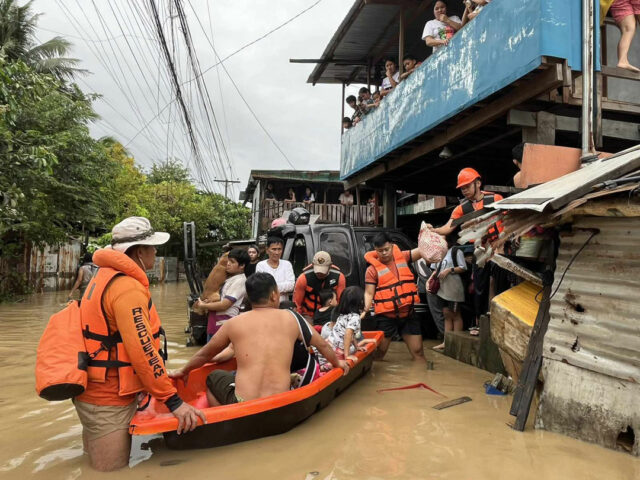
In the Philippines’ hardest-hit province of Cebu, the scale of the destruction became clearer as floodwaters receded to reveal flattened homes, overturned vehicles and streets choked with debris.

More than 200,000 people were evacuated in the Philippines ahead of Kalmaegi hitting on Tuesday. Some have returned to find their homes destroyed, while others have begun the arduous cleanup, scraping mud from their houses and streets.

“The challenge now is debris clearing… These need to be cleared immediately, not only to account for the missing who may be among the debris or may have reached safe areas but also to allow relief operations to move forward,” Raffy Alejandro, a senior civil defense official, told DZBB radio.

NEW STORM DEVELOPING
Even as Typhoon Kalmaegi, locally named Tino, exited the Philippine monitoring zone, weather forecasters were tracking a brewing storm east of Mindanao that could strengthen into a typhoon, raising concerns for potential impacts early next week.

The devastation from Kalmaegi, the 20th storm to hit the Philippines this year, comes just over a month after a magnitude 6.9 earthquake struck northern Cebu, killing dozens and displacing thousands.

As Kalmaegi moved over the South China Sea ahead of its landfall in Vietnam, it was regaining strength. It is forecast to impact several central provinces, including key coffee-growing areas, where the harvest season is currently underway.

Authorities were mobilizing thousands of soldiers to assist with potential evacuations, rescue operations, and recovery efforts.

Vietnam’s aviation authorities said operations at eight airports, including the international airport in Da Nang, are likely to be affected. Airlines and local authorities have been urged to closely monitor the storm’s progress to ensure passenger safety.— Reuters

Philippine jobless rate creeps up as disasters hit hiring

Commuters wait for public transportation along Ortigas Extension in Cainta, Rizal, Sept. 14, 2022. — PHILIPPINE STAR/ WALTER BOLLOZOS

The Philippines’ unemployment rate rose to 3.8% in September from a year earlier, signaling a fragile labor recovery as natural disasters disrupted hiring ahead of the holiday season, data from the Philippine Statistics Authority (PSA) showed on Thursday.

About 1.96 million Filipinos were jobless during the month, up from 1.89 million a year earlier, when the jobless rate was 3.7%, National Statistician Claire Dennis S. Mapa told a news briefing, citing the impact of typhoons and earthquakes on employment.

The latest reading improved from August’s 4%, when 2.03 million were out of work. Employment stood at 49.6 million, slightly below September 2024’s 49.87 million.

Job quality strengthened year on year as the underemployment rate — the share of workers seeking more hours or jobs — eased to 11.1% from 11.9%, though it worsened from 10.7% in August due to slower activity in construction.

The labor force participation rate slipped to 64.5% from 65.7% a year earlier, translating to 208,000 fewer people in the workforce, the statistics agency said. Roughly 572,000 workers also left the labor force month on month. — Chloe Mari A. Hufana

Brazil launches plan to scale climate finance to $1.3 trillion a year

REUTERS

BELEM, Brazil — After a year of talks, COP30 host Brazil on Wednesday laid out a plan to scale climate finance to $1.3 trillion a year and faced several early signs of the testing political backdrop as the Amazonian city of Belem prepares to welcome world leaders.

The near 100-page document, dubbed the Baku to Belem Roadmap, follows months of talks with stakeholders since the close of last year’s event in Azerbaijan.

Providing more finance is central to maintaining trust in multilateral climate efforts as emissions continue to rise, leaving some of the poorest countries at more risk of extreme weather events.

Yet the push to rein in emissions took a fresh knock overnight as the European Union agreed a final-hour deal to cut emissions by 90% by 2040 but only by baking in flexibility that weakens it.

“The EU has made a perilous choice today,” said Jeroen Gerlag, director of the European office at Climate Group. “It’s a disappointing signal of leadership as we go into COP30 next week.”

While the site of the talks remains under construction, the area set aside for the leaders’ speeches was almost ready, with construction crews making last-minute repairs and putting plants and furniture in place.

In another test for Brazil, Britain said it would not commit money at the event to a plan to protect the world’s rainforests, the Tropical Forests Forever Facility – seen as a flagship goal of the hosts that aims to raise $125 billion.

The decision disappointed Brazilian President Luiz Inacio Lula da Silva, sources told Reuters, particularly given Britain had helped create it and Mr. Lula had personally written to Prime Minister Keir Starmer last Friday to request an investment.

Separately, Mr. Lula met with the President of the European Commission Ursula von der Leyen, President of Finland Alexander Stubb, and Ding Xuexiang, vice premier of the State Council of China, to ask for contributions, according to sources who asked to remain anonymous to be able to speak freely.

A GLOBAL BLUEPRINT FOR COOPERATION
As global development aid is slashed, the authors of the Roadmap called it a “blueprint for cooperation and tangible results”.

Mukhtar Babayev, the President of COP29, who helped oversee the Roadmap, cautioned at a press conference that it was important to acknowledge the scale of the challenge.

“We are trying to intervene in the normal functioning of the world economy, we are attempting to direct the forces of global finance. This is an immense task.”

“Success will require great political will. It will need sustained focus, and it will demand relentless action from all of us. Countries simply cannot cut emissions or adapt to rising temperatures if they cannot count on capital,” he added.

Ideas to scale finance include giving more in the form of grants and making it easier for developing countries to access private capital, the report said, while multilateral banks should help ease the debt burden of developing countries and take on more risk themselves.

“The resources exist, the science is clear, and the moral imperative is undeniable. What remains is the resolve to act – to turn the unimaginable into the inevitable, and to make this decade of accelerated implementation the one in which humanity’s response finally matches the scale of its responsibility,” the report said.

Rob Moore, associate director, Public Banks & Development at think tank E3G, said the document “lays down the gauntlet” and set out clearly what was needed.

“For it to have the impact it is capable of, we now need to see governments in wealthy countries and international financial institutions respond and be accountable for delivery. We need to leave COP30 with a plan for turning these words into reality.”— Reuters

Tino to still bring rains to Palawan, Mindoro, other areas even after exiting PAR

DOST-PAGASA FB PAGE

Typhoon Kalmaegi (local name: Tino) is likely to continue bringing rain to Palawan, Mindoro, and other areas even after exiting the Philippine Area of Responsibility (PAR) early Thursday morning, according to the Philippine Atmospheric, Geophysical and Astronomical Services Administration (PAGASA).

“Due to the trough or extension of Typhoon Tino, scattered rain showers are still possible over Palawan and Occidental Mindoro,” PAGASA weather specialist Chenel Dominguez said during a 5:00 a.m. advisory.

The same weather condition is also expected in areas of Aurora and Quezon Province due to the typhoon’s trough.

A trough of a typhoon is an extended band of clouds and winds that stretches outward from the storm’s center, causing rain and thunderstorms in affected areas.

Kalmaegi has maintained its typhoon strength even after multiple landfalls, packing sustained winds of 155 kilometers per hour (kph) and gusts of up to 190 kph, PAGASA said in its 5:00 a.m. bulletin.

It was last spotted 265 kilometers north-northwest of Pagasa Island, Kalayaan, Palawan, moving west-northwest at 35 kph.

PAGASA has lifted almost all Tropical Cyclone Wind Signals hoisted in more than a dozen areas, except Signal No. 1, which remains in effect over the Kalayaan Islands where minimal to minor wind impacts are expected.

Kalmaegi is expected to move farther away from the country and make landfall in Vietnam by early Friday morning. — Edg Adrian A. Eva