Home Blog Page 7365

Why pinakbet should be a staple in every meal plan

Pinakbet, a dish originating from the northern regions of the country, is packed with nutritious ingredients. While there are many variations of the dish – from cooking it with fish sauce or shrimp paste to using tomato sauce – it is the number of vegetables used in it is the secret of its goodness.

At least seven types of vegetables can be found in every serving of pinakbet. These are usually ampalaya (bitter melon), talong (eggplant), okra, green beans, chili peppers, tomatoes, sweet potato, and squash – all of which are good sources of different vitamins and minerals.

Ampalaya contains many antioxidants and studies found that it has medicinal properties that help reduce blood sugar. Eggplant supports the reduction of causes of heart disease. Green beans help to keep the digestive system healthy and running smoothly. Squash is high in beta-carotene, which the body turns into vitamin A that can strengthen the immune system and promote healthy eyesight. Thes are just some of the benefits from its various ingredients.

Eating pinakbet on a regular basis would mean that Filipino families can take advantage of all the nutritional benefits from its vegetables.

One important point is that the key ingredients in pinakbet are all easily accessible. Another plus is that cooking pinakbet is easy — once all the chopping and preparation of the vegetables is done, it takes just 10 to 15 minutes to cook.

First, sauté onion, garlic, and ginger in a pot with hot cooking oil. Then add pork or shrimp for flavor depending on preference. Add a touch of fish sauce or shrimp paste and continue to stir, then add some water, and add in the vegetables. Cook until all ingredients are tender but make sure to not overcook the vegetables to retain their nutrients.

There are other ways of cooking pinakbet — or pakbet as some call it. As the late food writer Doreen G. Fernandez wrote in her book Tikim: Essays on Philippine Food and Culture, “Even pinakbet, the traditional Ilokano vegetables stew with bagoong, has known changes in its time. The original has tiny native ampalaya, talong and okra tossed in a pot with fish bagoong [fermented fish paste] and tomatoes. No oil, no frying. The Tagalogs have sauteed it in oil. Some Ilokanos add bagnet (the Ilokano lechon kawali [skillet or oven-roasted pork]) to it. Others add chicharron. Gene Gonzales cooks it in olive oil.” But the essence is the vegetables and the simplicity of the dish.

With vegetables as main ingredients, pinakbet is a dish that supports Filipino farmers. When consumers purchase vegetables, they are not only providing their households with a healthy meal but are also helping and supporting the livelihood of Filipino farmers working hard to produce good quality vegetable crops. this is why global vegetable seed company East-West Seed Philippines (EWS) is promoting pinakbet as a dish that should be a staple in the meal plan of every Filipino family.

Backed by research and innovation experiences for close to four decades, EWS has been developing improved vegetable seed varieties that help farmers improve their yields, reduce pesticide and water usage, and earn more from their work. The vegetable seeds they offer were developed and bred here in the Philippines to ensure that they will thrive in local growing conditions. Their seeds can also be grown in anyone’s backyard or home garden.

To learn more about the programs and initiatives of EWS visit https://ph.eastwestseed.com and the Oh My Gulay! Campaign of the East-West Seed Foundation at https://www.facebook.com/OhMyGulay.OMG.


Ethical hackers expected to help address Philippine cybersecurity gaps

TRUSTPAIR.COM

WHITE hats or ethical hackers can help create a digitally secure Philippines as their skills can address the country’s cybersecurity gaps, according to the convenors of ROOTCON, an annual hacking conference.

In an Oct. 7 press launch for this year’s ROOTCON, Digital Pilipinas convenor Amor L. Maclang shared an anecdote of a company that called its lawyer to sue a white hat who informed them of their system’s vulnerabilities.

“If a doctor tells you that you’re sick, are you going to sue that doctor?” she asked.

The term “hacker” may bring negative connotations, but “not all are bad. Some are bound by an ethical code,” added Dhonel P. Martinicio, universal content creator of GeiserMaclang Marketing Communications, Inc.

White hats, for instance, find flaws in a system so an organization can fix them and prevent others from exploiting these vulnerabilities for personal gain.

The country has to stay ahead of cybersecurity threats, with the local fintech scene growing steadily due to the central bank’s initiatives to boost online payments, the convenors said.

The Financial Action Task Force, a Paris-based ‘dirty money’ watchdog, said the Philippines is among those jurisdictions “with serious anti-money laundering/counter-financing of terrorism deficiencies [that] may expose the local financial system to significant risks.”

A full disclosure policy needs to be prioritized for the country to survive cybersecurity threats, said Dax “semprix” L. Labrador, ROOTCON founder. This involves the immediate publication of a vulnerability without any delay.

The tendency is for cybersecurity professionals to keep the vulnerabilities they find to themselves due to the fear of being sanctioned, Mr. Labrador noted.

“If full disclosure is available in our country, everything should follow,” he said. “Companies will secure their systems, and researchers will start reporting vulnerabilities.”

Apart from policy, culture is also an important part of the equation.

“The government should have qualitative measures [for measuring] its security posture ratings (or overall cybersecurity readiness),” said Jallain S. Manrique, KPMG Philippines head of technology consulting and cybersecurity. “How do you create a culture across all the agencies where everyone is conscious about security?”

Eman0n, a white hat hacker who has helped the likes of telecommunication firms like Comcast and Globe Telecom, Inc., encouraged leaders to connect with the 4,000-strong white hat community in the Philippines.

“Due to the move of traditional businesses to a more digital space… white hackers are now essential to have in your business or institution,” he said.

ROOTCON is supported by Digital Pilipinas – World FinTech Festival, a movement aimed at influencing change through technology and innovation.

ROOTCON 15 runs from Oct. 12-15, 2021. More details on the hybrid conference can be found at www.rootcon.org. The code RCXDIGIPINAS can be used for discounts. — Patricia B. Mirasol

Marubeni unit subscribes to more shares in Ingrid Power

AXIA Power Holdings Philippines Corp. has subscribed to P114.6-million worth of preferred shares in Ingrid Power Holdings Inc., a unit of listed power firm AC Energy Corp.

The deal was forged to retain Axia Power’s interest in the shares and economic rights of Ingrid Power, the special purpose vehicle of the 150-megawatt (MW) diesel power plant project located in Pililla, Rizal.

Axia Power is a subsidiary of the Japan-based Marubeni Corp.

“On Oct. 12, Ingrid and Axia executed a Subscription Agreement for the subscription by Axia to an additional 112,000 Redeemable Preferred F Shares with a par value of P100.00 per share and 1,034,000 Redeemable Preferred G Shares with a par value of P100.00 per share to be issued out of the unissued authorized capital stock of [Ingrid],” AC Energy told the local bourse on Wednesday.

This marks the second subscription agreement between the two entities in line with a previous deal made last year.

In 2020, Axia Power signed a shareholder’s agreement with AC Energy and ACE Endevor, Inc. which allowed the Marubeni unit to acquire 50% of the shares and 50% of the economic rights in Ingrid Power.

Under the deal, AC Energy will hold 50% shares and 45% of the economic rights, with ACE Endevor controlling 5% of the economic rights in Ingrid Power.

The total investment for Ingrid Power’s project, the 150-MW diesel-run plant in Rizal, reached P1.9 billion.

A week ago, the new diesel facility began commercial operations, marking AC Energy’s third power plant which has gone online this year.

The Ingrid power plant intends to boost energy capacity and provide reserves to the Luzon grid.

Prior to the Ingrid facility, the Ayala-led firm switched on this year its 120-MW GigaSol Alaminos in Laguna and 63-MW GigaSol Palauig in Zambales.

Shares of AC Energy at the local bourse shed 6.19% or 80 centavos to finish at P12.12 apiece on Wednesday. — Angelica Y. Yang

Tablet makers get boost from suspended face-to-face learning

TRUSTPAIR.COM

TABLET manufacturers continue to benefit from the Philippines’ suspension of face-to-face classes, with the International Data Corp. (IDC) reporting an increase in their market shares in the second quarter.

The Philippine tablet market “almost doubled” in the second quarter compared to last year, growing by 97.9%, IDC said in an e-mailed statement on Tuesday.

South Korean company Samsung’s share in the Philippine tablet market increased to 45.4% in the second quarter from 18.8% in the same period a year ago.

China’s Lenovo followed with a 16.4% market share, up from 11.4% in the second quarter of 2020.

Meanwhile, Philippine-based Cherry Mobile’s share went down to 9.1% from 14.3%.

China’s Huawei also saw its market share drop to 6.5% from 19.4%.

“The tablet market’s performance for the rest of the year will still be driven mainly by the education segment due to procurements from other LGUs (local government units), as face-to-face classes have remained suspended until further notice due to the resurgence of COVID-19 (coronavirus disease 2019) cases,” said Angela Jenny V. Medez, client devices market analyst at IDC Philippines.

“However, we do not expect the same momentum compared to the previous year, as some local government units prioritize the rollout of vaccinations. New procurements will be from other cities outside of Metro Manila,” she added.

President Rodrigo R. Duterte has approved a pilot test of limited in-person classes in areas with a low number of COVID-19 cases.

Only 100 public schools and 20 private institutions were authorized to participate in the pilot test, according to Education Secretary Leonor M. Briones.

The pilot test will be conducted with a combination of face-to-face classes in school and distance learning for two months.

In-person classes will be conducted half-day every other week. — Arjay L. Balinbin

Robinsons Land’s GBF Towers aim to be LEED-certified

ROBINSONS Land Corp. (RLC) is setting its eyes on getting LEED (Leadership in Energy and Environmental Design) GOLD certifications upon the completion of its GBF Towers, the company said in an e-mailed statement on Tuesday.

“GBF Towers 1 and 2 will be landmark structures along the C5 IT corridor. The buildings will feature technology that make use of renewable energy as well as substantially lower the consumption of water and electricity throughout the day and even at night,” said RLC President Frederick D. Go.

RLC said the first GBF Tower is slated for completion “in late 2022,” while the company aims to complete the second tower by the second semester of 2023.

LEED-certified buildings would highlight how a company focuses on sustainability through the design, materials, and operations of the building structure, among others.

GBF Towers will have a building management system (BMS) with automatic power and water metering systems to monitor the use of said resources.

RLC said both towers will feature a full curtain wall façade, which will have a double-glazed glass reducing the heat coming in from outside to allow lower cooling requirement, which will then lead to reduced electric consumption.

These towers will be using LED lights as well as VRF (variable refrigerant flow) air conditioning systems.

Over in the towers’ parking floors, charging stations will be available for electric vehicles, while bikers will have space allotted for bike racks and shower rooms.

Meanwhile, solar panels will be installed in select areas of Tower 2, which will be used to power some of the common areas of the building.

GBF Towers will also have a rainwater collection system to be used to water the plants and for general cleaning purposes. Its toilets will also have “water-efficient fixtures.”

“GBF Tower 1 and GBF Tower 2 are premium offices equipped with the latest energy-efficient green building features, and fault-tolerant building systems,” RLC said.

“It’s perfectly suited to meet the demands of both Fortune 100 and IT-BPM (information technology and business process management) companies,” it added.

On Wednesday, shares of RLC declined by 1.35% or 22 centavos to close at P16.08 apiece. — Keren Concepcion G. Valmonte

Amy Winehouse possessions hit the auction block

NEW YORK    Nearly 800 of Amy Winehouse’s belongings, including the short dress the late British singer wore in her final concert, are up for auction.

The green-and-black dress, and a heart-shaped Moschino purse the Grammy Award winner was frequently photographed with, are each expected to fetch $15,000 to $20,000.

Ms. Winehouse’s parents had decided it was the right time to let go of her personal and professional items, said Martin Nolan, executive director of Julien’s Auctions. The singer died of alcohol poisoning at age 27 in July 2011. Her last show was in Belgrade a month earlier.

“It’s been a cathartic experience for them, but also a very emotional rollercoaster for parents to give up their daughter’s possessions,” Nolan said.

“But they know that these items were going to go to fans and collectors and museums and investors all over the world that will continue to appreciate them, enjoy them, showcase them.”

The family wants to make sure all her fans have a chance to buy something, said Nolan, who has worked for two years to curate the sale.

Most of Ms. Winehouse’s dresses are conservatively priced at $2,000-$4,000. Opening bids for belts, perfume, shoes, ballet slippers, guitars, and drum kits start as low as $50-$100.

Winehouse became a breakout artist worldwide with her unique look, her headline grabbing behavior, and jazz-infused music. She released two studio albums, Frank and Back to Black.

She often spoke of battling alcohol and drug addiction.

Part of the proceeds will fund the Amy Winehouse Foundation which aims “to inspire children and young people to build their self-esteem and resilience, so they can flourish.”

The sale will take place in Beverly Hills on Nov. 6-7 in person and online. — Reuters

Term deposit yields end mixed

BW FILE PHOTO

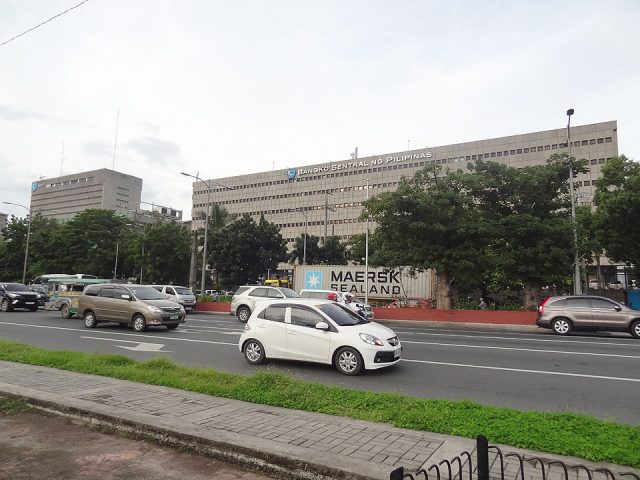
YIELDS ON THE central bank’s term deposits ended mixed on Wednesday due to excess liquidity in the financial system and mounting inflation concerns amid higher oil prices.

Demand for the term deposit facility (TDF) of the Bangko Sentral ng Pilipinas (BSP) amounted to P521.718 billion on Wednesday, higher than the P450 billion on the auction block but below the P532.24 billion seen a week earlier.

Broken down, bids for the one-week deposits reached P175.644 billion, surpassing the P150-billion offering but failing to beat the P195.377 billion seen in the previous auction.

Accepted rates for the tenor ranged from 1.7% to 1.83%, narrower than the 1.69% to 1.875% band logged a week ago. With this, the average rate of the seven-day papers inched up by 0.59 basis point (bp) to 1.7318% from 1.7259% last week.

Meanwhile, demand for the 14-day papers reached P346.074 billion, surpassing the P300-billion auctioned off by the BSP and the P336.863 billion in tenders seen during last week’s offering.

Banks asked for yields ranging from 1.72% to 1.825%, slimmer than the 1.715% to 2.1% band recorded last week. This caused the average rate of the two-week papers to decrease by 1.83 bps to 1.7702% from the 1.7885% quoted in the previous auction.

The BSP has not offered 28-day term deposits for more than a year to give way to its weekly offerings of bills with the same tenor.

The term deposits and the 28-day bills are tools used by the BSP to gather excess liquidity in the financial system and to better guide market rates.

The term deposits fetched mixed yields on Wednesday amid inflation concerns following the increase in oil prices in recent weeks, Rizal Commercial Banking Corp. Chief Economist Michael L. Ricafort said.

Global oil prices have mostly increased in the past weeks amid rising demand in advanced economies, while major oil exporting countries have not reached an agreement to increase production.

On Wednesday, however, fuel prices slipped amid concerns that oil demand growth will fall as major economies suffer through inflation and supply chain issues.

Big economies including China, Europe, and India also confront coal and natural gas shortages that have caused higher prices for the electric generation fuels, Reuters reported on Wednesday.

Meanwhile, back home, data from the Department of Energy showed prices of gasoline (P17.85 per liter), diesel (P16.50 per liter), and kerosene (P14.19 per liter) have cumulatively increased year to date as of Oct. 5.

Mr. Ricafort added that term deposit yields were mixed on Wednesday as there continues to be excess liquidity in the financial system.

BSP Governor Benjamin E. Diokno said on Tuesday that their easing measures amid the pandemic freed up liquidity of P2.3 trillion, which is equivalent to 12.7% of the country’s gross domestic product in 2020. — L.W.T. Noble with Reuters

Person-to-merchant payments launched

DAVID DVORACEK/UNSPLASH
THE CENTRAL BANK has launched person-to-merchant payments to help accelerate the country’s shift to a cash-lite economy. — DAVID DVORACEK/UNSPLASH

THE CENTRAL BANK has launched person-to-merchant (P2M) payments under the QR PH, which is expected to help in making the country a cash-lite economy.

Merchant payments made up 70% of monthly retail transactions in the Philippines. This shows that the P2M can boost the use of digital payments in the country, Bangko Sentral ng Pilipinas (BSP) Governor Benjamin E. Diokno said.

“P2M has consistently been among the key drivers for growing digital payments usage in the country. We are prioritizing merchant payments given its huge potential to further advance digital payments adoption in the country,” Mr. Diokno said at the virtual launch of the QR PH P2M use case on Tuesday.

This will also benefit micro-, small-, and medium-sized enterprises, which make up over 98% of the country’s businesses, Mr. Diokno said.

“We will not only drive digital payments usage, but we will also empower micro and small businesses to realize greater opportunities for growth which, in turn, could positively impact our country’s overall economic growth,” he said.

Clients of AllBank, Inc. Asia United Bank Corp. (AUB), Cebuana Lhuillier Rural Bank, China Banking Corp. Land Bank of the Philippines, Rizal Commercial Banking Corp. (RCBC), StarPay Corp., UnionBank of the Philippines, Inc. and USSC Money Services, Inc. will be able to use the P2M feature of the QR PH.

They can make payments to participating merchants that have accounts with AllBank, AUB, BDO Unibank, Inc., Cebuana Lhuillier Rural Bank, Metropolitan Bank & Trust Co., PayMaya Philippines, RCBC, StarPay, UnionBank, and USSC Money Services, Inc.

“Indeed, the use of QR codes for payments has been gaining traction as an alternative to the traditional debit and credit card payments, given the ease, convenience and speed of merely scanning the code compared to having to bring a card, tapping, dipping or swiping it, and signing a charge slip in many cases,” Mr. Diokno said.

For merchants, the P2M payment mode can help smaller players as it requires less expensive infrastructure to facilitate digital transactions, with businesses only needing a smartphone and internet to receive payments.

Mr. Diokno said the QR P2M payments will allow merchants, such as department stores, pharmacies, supermarkets, hardware stores, and restaurants, to accept e-payments with ease.

Person-to-person payments under the QR PH was launched in November 2019 and participants have grown to 23 as of August from the six participants at its launch.

Last year, 20% of the volume of monthly transactions were done online, up from 14% in 2019. By value, these payments made up 26.8% of the total from 24%.

The central bank wants 50% of the volume and value of payments done online by 2023. — L.W.T. Noble

Google Cloud unveils carbon footprint tracker, open satellite imagery suite

TRUSTPAIR.COM

APLHABET, Inc.’s Google will tell its cloud customers the carbon emissions of their cloud usage and open satellite imagery to them for the first time for environmental analysis, as part of a push to help companies track and cut carbon budgets.

The new features were among announcements Google Cloud made on Tuesday to kick off its annual customer conference, which is being held virtually this year due to the pandemic.

The leading Western cloud vendors Google, Microsoft Corp. and Amazon.com, Inc. have been competing on sustainability offerings for years. They aim to serve companies that are under pressure from stakeholders to rethink operations in light of climate change.

Google’s new carbon footprint reporting tool, similar to one Microsoft already provides, shows the emissions associated with the electricity that was used to store and process a customer’s data. In addition, Google will now warn customers when they are wasting energy on inactive cloud services.

The new mapping offering, Google Earth Engine, had been used by tens of thousands of researchers, governments and advocacy groups since 2009. But Google now is letting businesses in on the service, which includes many huge geospatial datasets such as Landsat and the software needed to analyze them. Amazon has a similar initiative.

“This is something we have now realized is applicable to a lot of these commercial opportunities,” said Jen Bennett, a technical director at Google Cloud.

Earth Engine could help ensure supply chains are sustainable and predict operation challenges from extreme weather, according to Google. Unilever Plc, which tested the technology for the past 12 months, scrutinized its palm oil sources in Indonesia, though it could not be learned whether that led to any shifts in practices. — Reuters

SM to open its first mall in Camarines Norte

COMPANY HANDOUT

SM Prime Holdings, Inc. will be launching its first mall in the Camarines Norte province on Friday, which will also be its third mall in the Bicol Region.

SM City Daet will add 47,000 square meters (sq.m.) of gross floor area in SM Prime’s mall portfolio.

“We hope that the opening of this mall, with safety protocols in place, will provide convenience, comfort and entertainment to our fellow Bicolanos in Camarines Norte,” Jeffrey C. Lim, president of SM Prime, said in a statement on Wednesday.

SM Prime’s newest mall is located along Vinzons Avenue in Barangay Lag-on.

The mall will have three levels, featuring over 70% of space-lease awarded. It will be home to local and international brands, as well as SM staples such as The SM Store, SM Supermarket, SM Appliance, Miniso, Sports Central, Watsons, Surplus, Ace Hardware, and BDO.

SM City Daet will also have its own SM Foodcourt, Cyberzone and other shops focused on wellness, specialty stores, sports, and hobbies shops. Parking space is allotted for shoppers.

The company said it will open SM City Daet’s SM Cinema and its other amusement centers once the government’s pandemic task force allows its operations.

“The opening of SM City Daet marks another milestone for SM Prime as we continue to weather the impact of the COVID-19 (coronavirus disease 2019) pandemic,” said Mr. Lim.

On Wednesday, shares of SM Prime Holdings at the stock exchange rose by 1.27% or 45 centavos to close at P35.80 apiece. — Keren Concepcion G. Valmonte

South Korea’s Squid Game is Netflix’s biggest original show debut

Squid Game

SEOUL — Hit South Korean show Squid Game has officially become Netflix’s biggest original series launch, the streaming service said on Wednesday.

The nine-part thriller, in which cash-strapped contestants play childhood games with deadly consequences in a bid to win 45.6 billion won ($38 million), has become a worldwide sensation for Netflix since its launch less than a month ago.

The dystopian drama has inspired countless memes, Halloween costumes of the ubiquitious green tracksuits worn by contestants, and real world recreations of the various games. It has also sparked a debate within South Korea about toxic competitive societies and prompted new interest in the country’s culture and language around the world.

Squid Game has officially reached 111 million fans — making it our biggest series launch ever!” Netflix posted on Twitter.

The series reached that total in just 27 days, since its release on Sept. 17, easily outpacing UK costume drama Bridgerton, which was streamed by 82 million accounts in its first 28 days.

Netflix gives limited information on viewing figures for its platform and cuts the data it does provide in various ways. The 28-day debut figures it released for Bridgerton and other shows included any account that watched an episode for at least two minutes.

Netflix co-CEO and Chief Content Officer Ted Sarandos told a tech conference in California last month said the streaming service was surprised by how popular Squid Game has become.

“We did not see that coming, in terms of its global popularity,” he said.

The series was so popular that South Korean Internet service provider SK Broadband sued Netflix to pay for costs from increased network traffic and maintenance work because of the surge in viewers.

And a South Korean woman was in talks with the US firm about compensation after she was deluged with thousands of prank calls and text messages when her phone number was inadvertently highlighted as a key plot point in the series.

Netflix has it would spend more than $500 million on content produced in South Korea this year.

‘BEASTLY’ SOCIETY
Even isolated North Korea has taken notice of the show. A North Korean propaganda website said on Tuesday that Squid Game exposes the reality of South Korean capitalist culture where “corruption and immoral scoundrels are commonplace.”

North Korea’s Arirang Meari site cited unnamed South Korean film critics as saying that the TV series shows an “unequal society where moneyless people are treated like chess pieces for the rich.”

“It is said that it makes people realize the sad reality of the beastly South Korean society in which human beings are driven into extreme competition and their humanity is being wiped out,” the article said.

North Korea has been imposing stiff fines or prison for anyone caught enjoying South Korean entertainment or copying the way South Koreans speak as leader Kim Jong Un steps up a war on outside influences and calls for better homegrown entertainment.

A sweeping new “anti-reactionary thought” law was imposed late last year, including up to 15 years in a prison camp for those caught with media from South Korea, according to summaries of the rules obtained by Daily NK, a Seoul-based website that reports from sources inside North Korea.

South Korean culture is routinely criticized in North Korea. In March, the Arirang Meari website said K-pop stars were treated like “slaves” by large companies and lived a “miserable life” in the South.

In Feb. 2020, a pro-North Korea newspaper based in Japan praised Academy Awards best picture-winning South Korean movie Parasite, calling it a masterpiece that “starkly exposed the reality” of the rich-poor gap in South Korea. — Reuters

Plentina looking to double PHL user base

ONLINE loan platform Plentina plans to double its user base in the Philippines over the next six months as it expands its partnerships to more marketplaces and an airline.

The platform has breached 100,000 downloads and serves “tens of thousands of borrowers” as it links with Agoda, National Book Store, and Lazada.

The financial technology startup offers financing options for “buy now, pay later” store credit. Run by US-based Filipinos, the company announced a $2.2-million seed funding round led by Silicon Valley and local investors in April.

Co-founders Kevin N. Gabayan and Earl Martin S. Valencia said at a virtual interview last week that they plan to double the company’s customer reach over the next six months.

“We plan to launch with maybe two or three merchants a month,” Mr. Valencia said.

Founded in 2019, the company launched its Philippine operations in October last year. Plentina uses machine learning to assess credit worthiness.

The company is also working on a pilot credit program with Philippine Airlines for domestic travel.

Plentina may give travelers the option of paying a fixed down payment of around 25-30% for domestic round-trip tickets, while the rest of the fee can be paid within 60 days.

“Right now, we’re just optimizing the configuration of those offers,” Mr. Gabayan said. “This is something that we can look forward to seeing in the coming quarter.”

Plentina is also looking to expand outside the Philippines in a year or less. Mr. Valencia said the company is looking at Vietnam and Thailand or similar emerging economies in Southeast Asia.

“All of these markets have different regulatory frameworks, so we just wanted to study that a little more,” he said. — Jenina P. Ibañez

ADVERTISEMENT
ADVERTISEMENT