Home Blog Page 7305

Gov’t partially awards reissued seven-year bonds

BW FILE PHOTO
THE BUREAU of the Treasury partially awarded the reissued bonds it auctioned off on Tuesday. — BW FILE PHOTO

THE GOVERNMENT partially awarded the reissued Treasury bonds (T-bonds) it offered on Tuesday as the tenor’s rate increased on concerns over inflationary pressures resulting from rising oil prices.

The Bureau of the Treasury (BTr) raised just P19.315 billion via the reissued seven-year T-bonds it auctioned off on Tuesday, less than the programmed P35 billion, even as the tenor attracted P57.215 billion in bids.

The notes, which have a remaining life of six years and nine months, fetched an average rate of 4.468%, 26.1 basis points higher than the 4.207% quoted when the series was last offered on Oct. 5.

Still, the average yield fetched for the seven-year papers on Tuesday was lower than the 4.519% quoted for the tenor at the secondary market prior to the auction, based on the PHP Bloomberg Valuation Service Reference Rates published on the Philippine Dealing System’s website.

Had the Treasury made a full award of its offer on Tuesday, the reissued bonds would have fetched an average rate of 4.584%.

National Treasurer Rosalia V. de Leon said in a Viber message to reporters after the auction that the government decided on a partial award of the papers to keep its yield aligned with rates at the secondary market.

Ms. De Leon said despite the partial award, the government has sufficient financing buffers as it took advantage of the low rates seen previously.

Improving revenue collections and additional official development assistance inflows will also support the government’s cash position, she added.

A bond trader said in a Viber message that the seven-year papers fetched a higher yield amid concerns over rising oil prices and its impact on inflation, as well as expectations of monetary policy tightening in other economies.

“Rising oil prices continue to contribute to inflationary pressures. High oil prices may also be a sign that economies abroad are recovering implied by the demand for oil. In turn, if recovery is evidenced by good economic data abroad then foreign central banks may decide to raise rates,” the trader said.

Global oil prices on Tuesday were driven up by strong demand in the United States, Reuters reported. Brent crude went up 13 cents or 0.2% to $86.12 a barrel, while US oil rose 5 cents or 0.1% to $83.81 a barrel.

The BTr is looking to raise P200 billion from the local market this month: P60 billion from weekly offers of Treasury bills and P140 billion from weekly auctions of T-bonds.

The government wants to borrow P3 trillion from domestic and external sources this year to help fund a budget deficit seen to hit 9.3% of gross domestic product. — Jenina P. Ibañez

Broadway’s Phantom of the Opera plots a cautious return to the stage

CAST members stand on the stage after performing on the re-opening night of Phantom of the Opera at the Majestic Theater in New York City, New York, US, Oct. 22. — REUTERS/CAITLIN OCHS

NEW YORK —  Meghan Picerno was back at work after 18 months of pandemic limbo, overjoyed to be singing and dancing again with her Phantom of the Opera castmates as they rehearsed for the return of Broadway’s longest-running show.

As the musical’s late October reopening neared, sometimes all Ms. Picerno could think about was making it to the first curtain call unscathed by the breakthrough coronavirus disease 2019 (COVID-19) cases that had sidelined vaccinated actors at other shows.

Outside long days in a chilly mirror-lined rehearsal studio near New York City’s Times Square, Ms. Picerno had put herself back on what she called lockdown.

“I’m a full-on monk now,” she said during a rushed lunch break between back-to-back run throughs.

She knew her job came with risks of exposure. Playing the show’s heroine Christine required Ms. Picerno to kiss two co-stars daily and to sing full-throated love songs with them unmasked and at close range.

“Hopefully, none of us have it, because if one of us have it, we all have it,” she said.

The crowded Broadway theaters, vital to the city’s tourism industry, were the first places closed by the New York government as the coronavirus began to ravage the state. Word of the abrupt shuttering came during a Phantom matinee at the Majestic Theater on March 12, 2020, as some cast and crew themselves were falling sick.

Now, after an unprecedented shutdown, the theaters are among the last workplaces to reopen. Their return this fall is viewed as a test of the city’s efforts to restore some new sense of normalcy.

Reuters watched as the Phantom company prepared for its return. The pandemic left unmistakable marks.

Within a few weeks of the show going dark, COVID-19 had claimed the life of a beloved dresser, Jennifer Arnold, who had been with the show for more than three decades.

After protests filled US streets last year in outrage at the killing of George Floyd, a Black man, by a white police officer, newly unemployed Broadway workers pushed the industry to make overdue changes to increase racial diversity in theater companies.

In August, Phantom producers announced they had cast the first-ever Black actor to play Christine since the show opened on Broadway in 1988. The actor, Emilie Kouatchou, would make her Broadway debut as an alternate for Ms. Picerno.

For the returning cast, there were tweaks to lyrics and staging to learn, making it more straightforward to cast non-white actors in principal roles. The entire company was required to be vaccinated and twice a week went to get their noses swabbed at a nearby theater lobby repurposed as a temporary coronavirus testing site.

Ms. Picerno said she was happy to embrace whatever was needed to get back on stage.

In the dark days of 2020, living back in North Carolina with her parents and claiming unemployment benefits, she said she “almost felt like a failure.” She sang her part every day to keep it fresh in her mind until the singing made her too sad and she stopped.

Emotion again overcame her on the first day reunited with her castmates in late September. Composer Andrew Lloyd Webber had swung by the studio to deliver a pep talk to the cast before they sang through the familiar score.

Ms. Picerno’s singing dissolved in tears during the love duet “All I Ask of You.”

“Sing along! Help her!” the conductor urged the masked chorus, whose voices carried Ms. Picerno until she regained her composure.

‘THINK OF ME’
A few days later, the cast practiced dance steps in a mix of street clothes and the bulkier parts of their 19th-century-style costumes.

Ms. Picerno drew a scarf through her fingers as she danced and sang “Think of Me” in her bell-like soprano. Off in a corner of the studio, Ms. Kouatchou silently mirrored Ms. Picerno’s every move.

Ms. Kouatchou, the daughter of immigrants from Cameroon, grew up in the Chicago suburbs. Phantom was the first Broadway show she ever saw, on a trip to New York with her high school. She remembers being transfixed by Christine.

“I could sing that role in my sleep,” she recalled thinking.

Still, she worried about stereotyping, that some would see a mismatch in her voice, an operatic soprano, and her appearance, which was not the sort of “petite white girl” who seemed to always get cast as a show’s ingénue or heroine.

“I didn’t feel like I had a place in musical theater because I didn’t see anyone who looked like me who sung like me,” she said.

COVID-19 had both upended live theater and made space for progress.

“The pandemic was terrible,” Ms. Kouatchou said. “But we wouldn’t be able to have conversations like this and change things like this if it hadn’t been for the pandemic.”

Now, as the Phantom begins making his terrifying presence known in Act One, a frightened ballet dancer turns to the heroine and sings: “Christine, are you alright?”

Before the pandemic and Ms. Kouatchou’s casting, the lyric had always been: “Your face, Christine, it’s white!”

The old, creepy Christine doll that stood in the Phantom’s lair, her features unmistakably white, also was out. A new doll, designed to be racially ambiguous, would debut on reopening night.

Later that week, Ms. Kouatchou got her first glimpse of one of the new Christine wigs designed to match her hair texture.

“It’s curlier and frizzier and I love it,” Ms. Kouatchou said.

‘THE POINT OF NO RETURN’
On the first full day of stage rehearsals at the Majestic Theater, members of the company waited to show vaccination proof in an alleyway lined with trash cans leading to the stage door.

Backstage, masked dressers who help actors quickly change costumes in the darkness of the wings were testing alternatives to the bitelights they had gripped in their teeth pre-pandemic. They experimented with little lamps strapped to their foreheads or on gloves, hoping they wouldn’t confuse audiences by shooting out beams of light across the stage mid-show.

From the orchestra seats, John Riddle, who plays the show’s hero Raoul, marveled at one of the dazzling spotlights high up in the proscenium. Its beam used to illuminate a “constant cloud of dust,” he said.

“The fact that it’s clear now means something to me,” he said. “They say it’s the cleanest a Broadway theater has ever been.”

Even so, there was worrying news from shows nearby. The Disney musical Aladdin was forced to close for two weeks soon after its September reopening because too many actors tested positive for the coronavirus.

Maree Johnson, who plays the black-clad ballet mistress Madame Giry, said she was resigned to the likelihood that Phantom also would record breakthrough coronavirus cases.

“It’s going to happen sooner or later,” she said.

Nine days later, on Friday afternoon, Ms. Picerno was in her dressing room when she opened the e-mail with results of her final coronavirus test ahead of reopening night. Relief washed over her. It was negative.

That night, audience members dressed in evening gowns, bow ties, and the occasional Phantom-style costume crowded the theater doors, fishing out proofs of vaccination.

“Welcome back to Broadway!” chirped the newly hired COVID safety monitors who waved large signs saying “MASKS UP” at the audience inside.

Backstage at the top of a staircase, a few members of the company had placed a vase of flowers and a photograph of Arnold, the dresser lost to COVID-19. Some of the cast and crew paused by the memorial before resuming the final minutes’ rush in nearby dressing rooms.

The house lights dimmed, and the familiar descending chromatic chords of the Phantom theme surged from the orchestra pit. Picerno danced across the stage as Ms. Kouatchou watched from the audience, sometimes mimicking her hand gestures. The new Christine doll lurked in the Phantom’s lair, her face now silver.

At the final curtain call, the audience roared with delight. Ms. Picerno ran to the front of the stage to take her bow, her face crumpled and shining with tears. — Reuters

DoH launches public health information website

HEALTHY PILIPINAS WEBSITE

THE Department of Health (DoH) launched on Monday Healthy Pilipinas, a website that fights the spread of mis- and disinformation by providing accurate and easy-to-understand health information to the general public.  

“Our job is to make sure that Filipinos have enough information about health,” said Beverly Lorraine C. Ho, director of the DoH’s Health Promotion Bureau. “We’re launching the website to provide accurate information, especially now when misinformation is rampant online.”  

The website contains a list of various diseases, their symptoms and treatments, and healthy habits that can combat them. It also has updates on the coronavirus disease 2019 (COVID-19) and its vaccines.  

In contrast to the DoH’s main website — which, based on public feedback, is “too serious and scientific” — Healthy Pilipinas provides health information in plain language.   

“The COVID-19 pandemic has renewed the desire of our people to get more information about this health threat,” said Teodoro B. Padilla, executive director of the Pharmaceutical and Healthcare Association of the Philippines (PHAP). “Thanks to the technology that we have today, people are able to receive and retrieve information and be part of the discourse at an unprecedented time.”  

Aside from PHAP, Healthy Pilipinas is supported by the United States Agency for International Development and the rest of the public health community, which includes specialty societies, medical institutions, and civil society organizations.  

DoH is calling for more of these groups to contribute information on diseases, symptoms, treatments, and medicines.  

The website also contains educational resources, tools, and playbooks on managing healthy environments, for the use of schools, workplaces, local government units, and other establishments in the various industries and sectors.   

‘INFODEMIC,’ A SERIOUS THREAT
Defined as the rapid spread of both accurate and inaccurate information, the ongoing “infodemic” is a real danger to the general public, according to Mr. Padilla.  

“While the spread of factual information can save lives, the proliferation of false and/or inaccurate information is a serious threat to people’s lives and to public health,” he said. “This is why we’ve joined DoH in its campaign to promote the use of verified medical facts to empower people to make health decisions based on accurate information.”  

Medical anthropologist Dr. Paul Gideon D. Lasco added that the campaign puts importance on two-way communication by getting feedback on what people need and understanding their health-seeking behaviors.  

“We have to be critical of the info spreading online and also listen to know what people search for,” he explained. “For example, Filipinos tend to search things they’re hesitant to talk about, like STDs [sexually transmitted diseases] and pregnancy.”  

The health experts at the launch also assured that Healthy Pilipinas will provide offline materials that mirror the contents of the website, so that health information will also reach Filipinos that have no internet access.   

In addition to English and Tagalog, the site will soon be available in Cebuano as well. — Brontë H. Lacsamana 

DFNN unit InPlay.ph reports 61% growth in gross gaming revenue

INPLAY.PH/

DFNN, Inc. subsidiary InPlay.ph reported a 60.84% growth to P64.3 million in third-quarter gross gaming revenue (GGR), higher than the previous quarter’s P40 million as the online gaming industry continues to grow.

“Online gaming is one pursuit that undoubtedly flourished as a form of entertainment and InPlay.ph has definitely captured a respectable share of this market since launching in November 2020,” DFNN said in a disclosure to the exchange on Tuesday.

DFNN said InPlay.ph’s revenue “has consistently shown an upward trajectory” since launching.

For the nine-month period ending September, the company’s consolidated GGR totaled P269.3 million.

Meanwhile, InPlay.ph also saw its gross bets surge by 64.56% to P1.43 billion in the third quarter, up from the second quarter’s P1.43 billion. Gross bets for the nine-month period stood at P6 billion, DFNN said.

DFNN noted that InPlay.ph’s performance is expected to “surpass that of the traditional gaming outlets, which [have] suffered due to the lockdowns imposed because of the pandemic.”

“However, as lockdown measures ease and more gaming outlets reopen, it is projected that revenue from these outlets will start to improve and thus consolidated revenue figures at yearend are seen to be on the positive for the first time since March 2020,” DFNN said.

Shares of DFNN at the stock exchange went down by 2.97% or 10 centavos on Tuesday, closing at P3.27 each. — Keren Concepcion G. Valmonte

BSP’s policy stance appropriate — AMRO

BW FILE PHOTO
THE BANGKO Sentral ng Pilipinas has kept rates at record lows since November 2020. — BW FILE PHOTO

THE BANGKO SENTRAL ng Pilipinas (BSP) is expected to keep an accommodative stance to help boost credit growth while banks and borrowers remain cautious, the ASEAN+3 Macroeconomic Research Office (AMRO) said.

Dr. Zhiwen Jiao, AMRO’s country economist for the Philippines, noted that credit growth has remained muted despite ample liquidity in the financial system, showing more needs to be done to encourage lending.

“The most recent survey on the issue shows that lending standards remain tight, so policy measures that temper the banks’ aversion to risk should help boost credit growth and support economic recovery,” Dr. Jiao said.

The latest Senior Bank Loan Officers’ Survey showed majority of banks kept their overall loan standards, with net tightening of lending rules seen for both businesses and retail borrowers in the third quarter.

Bank lending in August increased 1.3%, ending eight consecutive months of decline.

The BSP has released some P2.2 trillion in liquidity through the financial system through various policy measures, which is equivalent to about 12.1% of gross domestic product.

Central bank officials have stressed the need to keep monetary policy supportive of growth to boost recovery efforts while demand remains muted.

“This stance is appropriate, given the country’s still large output gap and notwithstanding the high headline inflation which will likely decline to within the government target inflation range,” Dr. Jiao said, noting they expect inflation to go back to within the central bank’s 2-4% target by 2022.

Inflation stood at 4.8% in September, easing from 4.9% in August.

BSP Governor Benjamin E. Diokno has said rates will likely stay unchanged until the end of the year as they want to continue supporting the economy, even as other central banks have started tightening due to higher inflation.

The Monetary Board in September kept benchmark rates at record lows, even as it raised its inflation forecast. Two more policy-setting meetings are left this year, which are scheduled on Nov. 18 and Dec. 16. — L.W.T. Noble

Remote-sensing reveals details of ancient Olmec site in Mexico

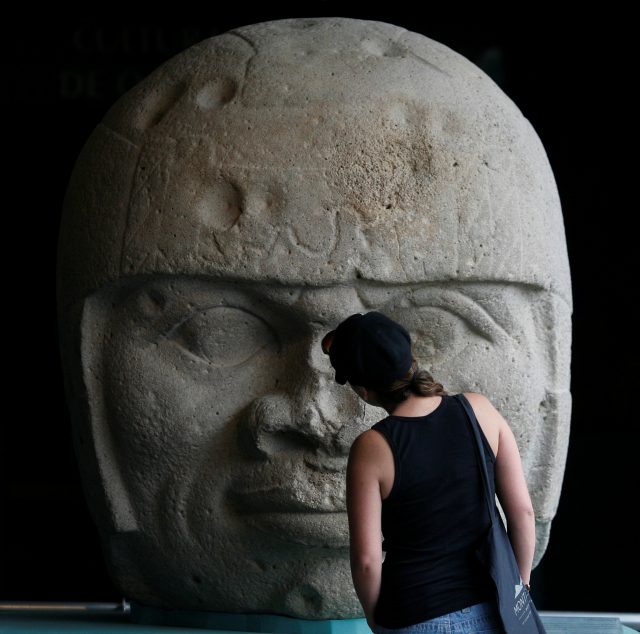
A VISITOR looks at an Olmec colossal head during the preview of ‘Colossal masterworks of the Olmec world’ exhibition at the Anthropology Museum in Mexico City July 20, 2011. — REUTERS

AERIAL remote-sensing of a large region of Mexico has revealed hundreds of ancient Mesoamerican ceremonial centers, including a large one at an important site for the ancient Olmec culture that is known for its colossal stone heads.

The remote-sensing method, called lidar, pinpointed 478 ceremonial centers in areas that were home to the ancient Olmec and Maya cultures dating to roughly 1100-400 BC, researchers said on Monday. The study was the largest such survey involving ancient Mesoamerica, covering all of the state of Tabasco, southern Veracruz and bits of Chiapas, Campeche and Oaxaca.

Lidar, short for Light Detection and Ranging, uses a pulsed laser and other data obtained while flying over a site to generate three-dimensional information about the shape of surface characteristics. It penetrates vegetation and pinpoints structures that otherwise might not be seen from the air or the ground.

A large ceremonial center was spotted at the early Olmec site called San Lorenzo, which is located in Veracruz in the lowlands near the Gulf of Mexico and was at its peak from roughly 1400-1000 BC. The Olmecs represented the oldest-known major Mesoamerican civilization and are thought to have influenced later cultures, including the Maya.

University of Arizona archaeologist Takeshi Inomata, who led the study published in the journal Nature Human Behaviour, said lidar spotted a large and previously unknown rectangular earthen ceremonial space at San Lorenzo.

It measures about 3,300 feet by 900 feet (1,000 meters by 275 meters), with 20 platforms around the edge slightly elevated above it. Its purpose remains unclear but it may have been a plaza where large numbers of people gathered for some type of ceremonies, while the platforms surrounding the plaza may have had residences, Mr. Inomata said.

The Olmec heads, each fashioned from a single basalt boulder, are among the most evocative pieces of art from ancient Mesoamerica. The naturalistic facial features are carved in such a way that experts suspect they are representations of actual ancient Olmec rulers.

Ten of the heads have been discovered at San Lorenzo. Mr. Inomata said there may be more of them undiscovered at related sites.

Many of the hundreds of ceremonial complexes identified in the study share common layouts like the one at San Lorenzo. Many appear to have been built with orientations aligned with the direction of sunrise on specific key ceremonial dates.

“These centers were probably the earliest material expressions of basic concepts of Mesoamerican calendars,” Mr. Inomata said, noting that such calendars were based on a unit of 20 days — matching the number of platforms around the San Lorenzo ceremonial center. An even larger ceremonial center, described by Mr. Inomata and his colleagues last year, was found at a site in the Maya region called Aguada Fenix in Tabasco near the Guatemalan border. Dating to slightly later than the one at San Lorenzo, it and others found in the study suggest that Olmecs and other peoples in the region exchanged ideas.

Lidar has proven increasingly useful for archaeologists.

“The advantage of lidar is that it provides a three-dimensional, birds-eye view of the landscape and modifications to it made by humans — ancient and modern — in the form of building, transportation, agricultural and water control infrastructure,” said lidar engineer and study co-author Juan Carlos Fernandez-Diaz of the University of Houston’s National Center of Airborne Laser Mapping.

“Lidar also allows us to ‘see’ the landscape and infrastructure that in many parts of the world is hidden under forest cover,” Mr. Fernandez-Diaz added. — Reuters

Ethical recruitment to address healthcare staffing gaps 

By Patricia B. Mirasol  

THE HEALTHCARE staffing shortage can be addressed through ethical and sustainable recruitment practices, according to Connie B. Dela Cruz, co-founder and chairman of Health Carousel Philippines, a POEA (Philippine Overseas Employment Administration)-licensed staffing firm.  

Ethical recruitment refers to the hiring of workers in a way that protects the rights of each stakeholder in the recruitment process. Sustainable staffing, meanwhile, refers to how both the home country and the country of work benefit from the talent exchange.   

“For us, ethical recruitment means that we reinvest in the sustainability of the nursing profession in our source countries,” she told BusinessWorld in an e-mail interview. “We do this in a variety of ways, including faculty educational programs, nursing scholarships, and local hospital recruitment partnerships.”  

Health Carousel Philippines assists in the nurse upskilling efforts of its partner hospitals, like Southwestern University Medical Center and De Los Santos Medical Center, by sharing its knowledge on nursing best practices.  

It also partners with nursing schools, such as University of Santo Tomas and Trinity University of Asia, and provides skills training to their nursing faculty. The staffing firm also ensures that nurses referred to it by partner hospitals are retained by the latter for at least a year for proper manpower management.  

Filipino healthcare professionals are deployed to the US by the staffing firm through PassportUSA, a POEA-accredited, international staffing program partner. PassportUSA is operated by Health Carousel, LLC, a healthcare staffing company in the US.  

MANPOWER EXPORT
The Philippines is the second largest exporter of human labor in the world, according to a 2017 Human Resources for Health study, and healthcare professionals are one of its biggest groups of migrant labor. Professional development, a higher living standard, and economic need are the reasons often cited behind the decision to migrate.   

This June, Malacañang issued a memorandum increasing the salary of nurses to P36,628 from P33,575

In comparison, registered nurses in the US receive a mean annual wage of $80,010 (or P4,065,548.13, at an exchange rate of $1: P50.813), per the US Bureau of Labor Statistics (BLS)’ 2020 Occupational Employment Statistics Report.  

The US BLS predicts that 11 million additional nurses are needed in the country to avoid further labor shortage. Employment opportunities for nurses in the US are also expected to grow at a faster rate than all other occupations from 2016 to 2026.  

NUANCED CONVERSATION
The World Health Organization projected in 2016 that by 2030, there will be a shortfall of 18 million healthcare workers in low- to middle-income countries. 

Because upper middle-income countries cannot supply the healthcare workers they need from within their country, they will exert a demand pressure on the supply of healthcare workers from low- to middle-income countries, thus challenging these countries that cannot afford to compete financially to retain their healthcare workers.  

The conversation on nursing shortage is quite nuanced, said Ms. Dela Cruz. The settings in which nurses choose to work in the Philippines also influences the available workforce at the bedside, she added.   

“The pandemic arguably magnified the problem of maldistribution, where many Filipino healthcare workers choose to work in different industries instead of hospitals due to the higher wages offered in those settings — such as BPOs, banks, hotels, and resorts,” Ms. Dela Cruz said.  

The solution, according to Ms. Dela Cruz, is working toward win-win practices that benefit all the parties involved, from the recruitment process to the professionals’ deployment in their country of work.  

GLOBAL SHORTAGE 
On a global level, the High-Level Commission on Health Employment and Economic Growth recommends the following priority actions to address the healthcare worker shortage are the following:  

  • In low-income and some lower middle-income countries, investments in healthcare worker education should be accompanied by an expansion of the fiscal space to fund positions in the health sector.  
  • A shared financing model between countries to finance all these new jobs is likely required if low- and low-middle income countries are not able to pay for the healthcare workers they need — even with moderate domestic fiscal space growth.  

The said commission acknowledged that changing the status quo also requires political will and tough negotiations. Why would high-income countries address their shortfalls in domestic supply, it asked in a 2018 Human Resources for Health paper, if the recruitment of international healthcare workers is cheaper?   

MINDFUL RECRUITMENT
From Health Carousel Philippines’ perspective, a mindful recruitment model is a step in the right direction. Ms. Dela Cruz said her staffing firm created a framework with its aforementioned partner hospitals that helps manage the demand and supply of healthcare staff.  

“Through this program, we help the hospitals retain their nurses for at least two years while their US application is in process,” she added. “We also provide opportunities for nurses to engage in a two-year employment program to gain the local hospital experience required [for their overseas applications, which then] sets them on a course to a brighter future in a premium healthcare facility in the United States.”  

She hopes that an expansion of such practices will eventually stabilize the demand and supply of all the countries involved in the talent exchange.  

That more Filipino healthcare workers opt to work abroad to advance their careers and build a brighter future for their families is understandable, Ms. Dela Cruz said, as the country is rooted in a family-oriented culture.  

“I like to believe that, given the choice, most healthcare professionals would prefer to practice their profession in the Philippines if their career will give them the opportunity to have a comfortable and meaningful life,” she added.  

NEA secures funding for solar projects in public schools

ANDREAS GÜCKLHORN /UNSPLASH

PUBLIC schools in four provinces are expected to post savings by sourcing part of their power needs from solar projects led by the National Electrification Administration (NEA).

In a statement on Tuesday, NEA said it had secured the projects’ P120-million funding after President Rodrigo R. Duterte cleared the release of the funds.

Of the P120 million, P20 million is allotted for 11 public schools in Ilocos Norte, Cebu, and Nueva Ecija, while P100 million is for 33 public schools in Lipa City, Batangas.

With the installation of the solar panels in the 44 schools, NEA said it aims to “generate savings by sourcing a portion of the schools’ electricity demand from solar rooftops and to mitigate climate change through the utilization of indigenous renewable energy sources.”

The approved funds are contained in the 2021 General Appropriations Act or Republic Act No. 11518 wherein NEA was allotted P1.628 billion for its sitio electrification program, and P750 million for the electric cooperatives emergency and resiliency fund.

NEA earlier said that P1.827 billion had been allocated to support the continued implementation of rural electrification projects in the proposed budget for fiscal year 2022.

However, the approved budget is way lower than the P18-billion funding proposed by NEA to energize all households nationwide by June 2022.

The agency previously explained that it would need to connect 12,000 more sitios, which will need funding of P1.5 million per sitio, in order to make energy available to all parts of the country.

For the first half of 2021, NEA Administrator Edgardo R. Masongsong said during a virtual news conference in July that “the NEA has completed the energization of 590 sitios… 77 are located in Luzon, 187 in the Visayas, and 326 in Mindanao.” — Bianca Angelica D. Añago

Metrobank recognized as strongest Philippine lender

BW FILE PHOTO

METROPOLITAN BANK & Trust Co. (Metrobank) was recognized as the strongest bank in the Philippines for 2021, with The Asian Banker citing its relatively strong capitalization and liquidity compared with its peers.

The Strongest Banks ranking of The Asian Banker is based on indicators such as scalability, balance sheet growth, risk profile, profitability, asset quality, and liquidity. Metrobank’s financial strength stood out for its asset quality and liquidity during the crisis.

“Compared to its peers in the Philippines, the winning bank showed stronger performance in capitalization and liquidity,” The Asian Banker was quoted as saying in a filing by Metrobank with the Philippine Stock Exchange.

“Its capital adequacy ratio improved further from 17.5% in 2019 to 20.2% in 2020, while its liquid assets to total deposits and borrowings ratio rose to 54.5% from 31.5%,” it noted.

The bank had the highest loss reserves to nonperforming loans ratio in the industry, and also had the second-lowest gross non-performing loan ratio at 2.4%, it added. Metrobank set aside P40.8 billion in provisions in 2020.

Metrobank President Fabian S. Dee said their proactive strategy helped the bank amid the pandemic.

“We knew we had to be prudent and practical during these uncertain times, so we took steps to ensure strong capital levels and to keep a healthy balance sheet with best-in-class asset quality,” Mr. Dee was quoted as saying.

The Ty-led lender was also recently recognized as the Best Domestic Bank in the Philippines at the Asiamoney Best Bank Awards 2021, where its “sheer resilience during tough times” was mentioned as its defining trait.

“On behalf of all Metrobankers, especially those who are at the frontlines, ensuring that the flow of financial activity remains uninterrupted at the height of a global pandemic, we would like to thank our valued clients for their trust and confidence throughout our almost six decades of service,” Mr. Dee said.

Metrobank’s net profit increased 29.9% year on year to P3.9 billion in the second quarter on improved fee-based income and lower operational costs.

This brought its net income in the first semester to P11.687 billion, 28% higher year on year.

Metrobank’s shares went up by 50 centavos or 1.02% to close at P49.50 apiece on Tuesday. — Luz Wendy T. Noble

There is no health without mental health

UNSPLASH

For the second consecutive year, we celebrated World Mental Health Day on Oct. 10 and Mental Health Week from Oct. 11 to 17 in the shadow of the coronavirus disease 2019 (COVID-19) pandemic. Our continuing struggle to cope with the pandemic makes the preservation of our mental health that much more important.   

“More than the absence of mental disorders, mental health is an integral part of health; indeed, there is no health without mental health,” according to the World Health Organization (WHO).  

The WHO defines mental health as a state of well-being in which an individual realizes their own abilities, can cope with the normal stresses of life, can work productively, and is able to make a contribution to his or her community.   

It is normal and understandable to experience fear, worry, and stress during these challenging times. Aside from dealing with the fear of getting infected with the novel coronavirus, all of us have had to cope with unprecedented and significant changes in our lives brought about by the pandemic.   

Dr. Hans Kluge, WHO regional director for Europe, recognized that many have made huge sacrifices to contain COVID-19. “It [the pandemic] has come at an extraordinary cost, which has exhausted all of us, regardless of where we live, or what we do. In such circumstances it is easy and natural to feel apathetic and demotivated, to experience fatigue.”   

Some people have even experienced pandemic fatigue which refers to feeling overwhelmed with still having to maintain a state of constant vigilance, and a weariness to abide by restrictions, the GAVI Alliance explained.   

Some common signs of pandemic fatigue include lack of motivation, changes in eating or sleeping habits, irritability, stress over tasks that would normally be handled well, difficulty concentrating, and feelings of hopelessness among others, said an article on How to Beat Pandemic Fatigue.   

The WHO shared tips to help the people cope with the pandemic and care for one’s mental health.  One approach is to minimize watching, reading, or listening to news about COVID-19 that causes you to feel anxious or distressed. In this age where information is just a click away, it is important to seek trusted sources that will enable us to take practical steps to protect ourselves and loved ones from getting sick.   

The WHO added that facts gathered from credible sources can help minimize fears. Instead of dwelling on negative stories, one may look for and amplify inspiring narratives such as people who have recovered from COVID-19 or those who have helped others during the pandemic.   

The US Centers for Disease Control and Prevention (CDC) also recommended that a person may connect with the people he trusts to talk about any concerns. The CDC explained that during periods of isolation, conversation is a powerful coping tool to relieve stress and promote resilience. It provided tips for having a meaningful conversation, which can be done over the phone, online or in person while observing physical distancing and health protocols.  

Meanwhile, UNICEF sounded the alarm that the impact of the pandemic on children is significant and just a tip of the iceberg. “As COVID-19 heads into its third year, the impact on children and young people’s mental health and well-being continues to weigh heavily,” it said.   

According to UNICEF, at least 1 in 7 children has been directly affected by lockdowns, while more than 1.6 billion children have suffered some loss of education. These disruptions “are leaving many young people feeling afraid, angry, and concerned for their future.”   

The CDC enumerated some things to watch out for among children or teens who may be under stress in this time of the pandemic.   

These common signs are excessive crying or irritation in younger children; returning to behaviors they have outgrown; excessive worrying or sadness; unhealthy eating or sleeping habits; irritability, “acting out” behaviors in teens; and unexplained headaches or body pain among others.  

The WHO is encouraging parents to help children find positive or creative ways to express feelings such as fear and sadness. These could be through good communication, playing or drawing, or sharing activities together. Parents may also maintain old routines or create new ones.   

Beyond the support at home, UNICEF is calling for immediate investment in child and adolescent mental health across sectors to support a whole-of-society approach to prevention, promotion and care.  

With no clear end yet for the pandemic in sight, it is important to continue staying vigilant to protect one’s self. This can only be sustained if mental well-being is taken seriously, remembering that mental health is fundamental to physical health.   


Teodoro B. Padilla is the executive director of Pharmaceutical and Healthcare Association of the Philippines (PHAP), which represents the biopharmaceutical medicines and vaccines industry in the country. Its members are at the forefront of research and development efforts for COVID-19 and other diseases that affect Filipinos. 

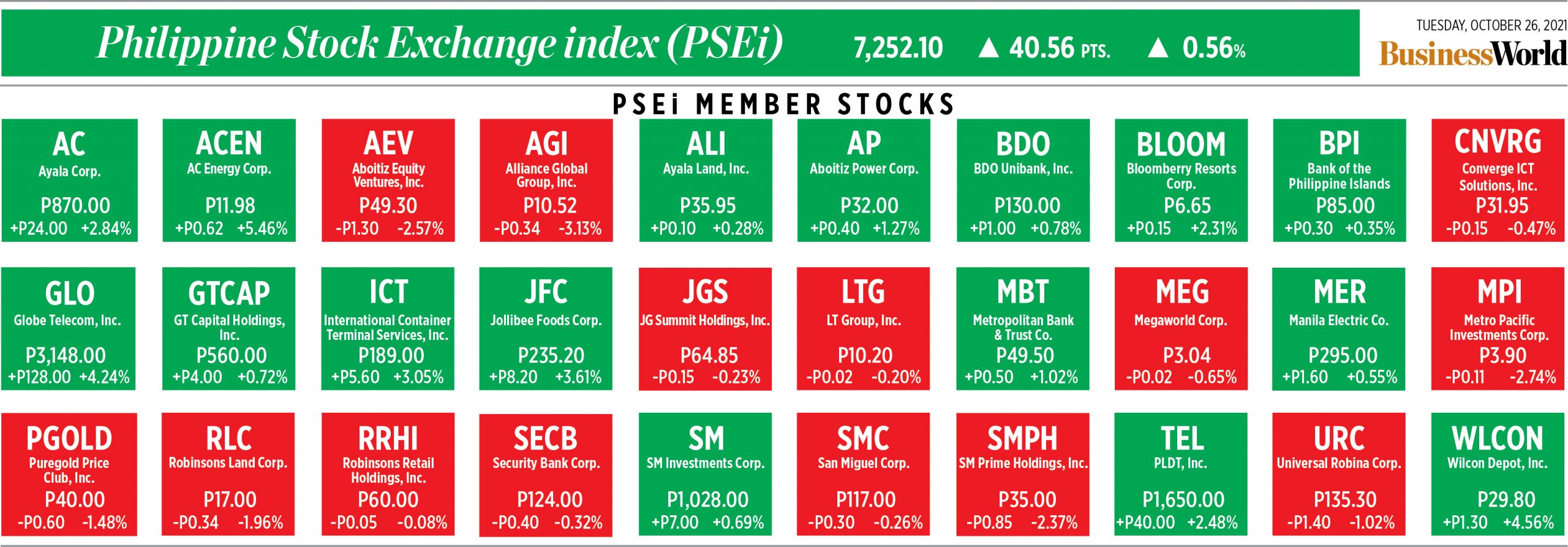
How PSEi member stocks performed — October 26, 2021

Here’s a quick glance at how PSEi stocks fared on Tuesday, October 26, 2021.


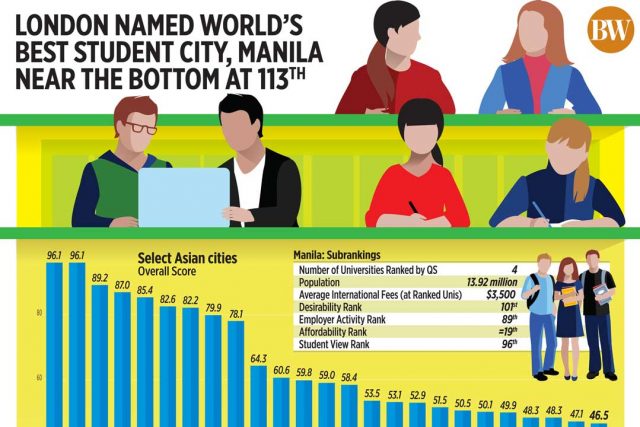
London named world’s best student city, Manila near the bottom at 113th

London named world’s best student city, Manila near the bottom at 113<sup>th</sup>

ADVERTISEMENT
ADVERTISEMENT