Home Blog Page 7242

Squid Game director predicts second season of megahit TV show

Squid Game — IMDB.COM

LOS ANGELES —  The director of Squid Game, the dystopic South Korean TV series on Netflix, expressed confidence that the wildly popular show will return for a second season.

“We are in the talks for Season Two,” writer-director Hwang Dong-hyuk said in an interview on Monday. “It’s all in my head. I have the basic storyline, the broad plan, so we’re in the brainstorming stages.

“I’m going to go ahead and say there will be a second season, but as for when, I cannot tell you now,” Hwang added.

“He will come back, he will come back and do something about this world,” the director said, referring to protagonist Seong Gi-hun, played by actor Lee Jung-Jae.

Hwang, Lee and others involved in the show, one of Netflix’s biggest hits ever, attended a special Hollywood screening on Monday to celebrate its success.

Squid Game, in which debt-ridden people compete in a deadly game for a fortune, has inspired Halloween costumes and themed protests at the United Nations global climate summit in Glasgow, Scotland, among other things.

The series’ success echoes that of 2020 Oscar winner Parasite, which also showed the gap between rich and poor in South Korea. Actor Park Hae-soo, who plays a contestant named Cho Sang-woo, said, “Everybody actually has that rage, but I think the Koreans are really able to express that honestly.” — Reuters


Telehealth to remain in demand even after COVID-19 pandemic

917VENTURES’ telemedicine provider KonsultaMD expects the high demand for subscription-based telehealth services to continue post-pandemic.

“Telehealth is definitely here to stay. COVID-19 (coronavirus disease 2019) has certainly accelerated adoption for it, but it’s not going to disappear post-COVID,” KonsultaMD Chief Executive Officer Cholo A. Tagaysay said during a virtual briefing on Wednesday.

He added that even when coronavirus cases subside, usage of KonsultaMD remains high.

917Ventures, which serves as the corporate venture builder of Globe Telecom, Inc., expects KonsultaMD to follow the footsteps of its sister company Globe Fintech Innovations, Inc. (Mynt), the operator of GCash, in the coming years.

“We’ve had high hopes for KonsultaMD even before the pandemic. We saw it as a way to address the pain points in Philippine healthcare, which was suffering from a lack of healthcare professionals, inadequate health infrastructure, and limited accessibility, not to mention the high cost of medical consultation,” 917Ventures Managing Director Vince T. Yamat said.

“People were wary of using the service before as they are used to traditional face-to-face consultations, but with the pandemic, things have changed. Telehealth has become an important innovation that will stay and evolve,” he added.

According to KonsultaMD, medical consultations on its app have “skyrocketed to 1,549% versus pre-pandemic.” Mr. Tagaysay said he could not disclose the exact figures, but said the service has reached “over one million members who enjoy 24/7 unlimited access to licensed doctors via voice or video call for as low as P60 a month.” 

“Our situation has taken away the reluctance of many Filipinos to try telehealth services. People are looking for ways to stay safe from the virus while our hospitals are overwhelmed with patients. KonsultaMD has become a platform that connects Filipinos to much-needed medical consults for non-emergency cases,” he said.

KonsultaMD app users can consult with doctors specializing in different fields — from general medicine, family medicine, obstetrics and gynecology, pediatrics, rehabilitation medicine, mental health support, psychiatry, dermatology, ophthalmology, dentistry, ENT, and surgery.

KonsultaMD said it also provides digital management of health consultation records and issuance of medical documents such as e-prescriptions, e-laboratory requests, e-referrals, and e-medical certificates. — Arjay L. Balinbin

Term deposit yields inch down on slower inflation, Fed move

BW FILE PHOTO

YIELDS on the central bank’s term deposits inched down on Wednesday following slower inflation and the US Federal Reserve’s commitment to stay accommodative.

Demand for the term deposit facility (TDF) of the Bangko Sentral ng Pilipinas (BSP) was at P560.497 billion on Wednesday, surpassing the P520-billion offering but failing to beat the P641.782 billion in bids a week earlier.

Broken down, the seven-day deposits fetched bids amounting to P204.327 billion, higher than the P180 billion on the auction block but lower than the P247.573 billion worth of tenders logged the previous week.

Accepted rates for the tenor ranged from 1.7% to 1.76%, a tad narrower than the 1.7% to 1.7716% band logged in last week’s auction. This caused the average rate of the paper to drop by 1 basis point (bp) to 1.7421% from 1.7521% previously.

Meanwhile, the 14-day papers saw bids amounting to P356.17 billion, surpassing the P340-billion offer but less than the P394.209 billion logged a week ago.

Banks asked for yields ranging from 1.74% to 1.85%, wider than the 1.75% to 1.7875% margin seen on Nov. 3. With this, the average rate of the two-week term deposits slipped by 0.6 bp to 1.7636% from 1.7696% a week ago.

The central bank has not offered 28-day term deposits for more than a year to give way to its weekly auctions of bills with the same tenor.

Yields on the term deposits declined on Wednesday after inflation eased in October, Rizal Commercial Banking Corp. Chief Economist Michael L. Ricafort said.

Headline inflation in October was at a three-month low at 4.6%, easing from the 4.8% in September. It was also slower than the 4.9% median estimate of 21 analysts in a BusinessWorld poll.

However, inflation remains beyond the 2-4% target set by the BSP. The October consumer price index outturn brought year-to-date inflation to 4.5%, also quicker than the 4.4% estimate of the BSP for the year.

The Philippine Statistics Authority said slower increase in food prices caused the slight easing in inflation last month.

BSP Governor Benjamin E. Diokno has said they are ready to keep an accommodative stance to support economic recovery as long as inflation remains manageable.

Meanwhile, Mr. Ricafort said the market also took into account the Fed’s policy announcements.

The Fed last week announced it will start reducing its monthly purchase of Treasury assets, but kept the policy rates near zero. Fed Chairman Jerome H. Powell said they will stay patient to support recovery while the labor market remains weak. — Luz Wendy T. Noble

Facebook to expand climate science center in the country

FREEPIK

FACEBOOK on Tuesday announced the expansion of its climate science center to the Philippines, with the goal of connecting Filipinos with “factual resources” as part of its efforts to fight climate change.

“Facebook is committed to reducing our environmental footprint and elevating the latest climate science to our community while minimizing climate misinformation,” the social media platform said in an e-mailed statement.

The social media company said the climate science center will be expanded to more than 100 countries, including the Philippines.

“Through the climate science center, Facebook plays its part by helping people find accurate, science-led information, while also tackling misinformation,” it noted.

The center aims to connect Filipinos “with factual resources from the world’s leading climate organizations and actionable steps they can take in their everyday lives to combat climate change.”

Citing its recent survey with the Yale Program on Climate Change Communication, Facebook said 78% of the Filipino respondents considered climate change as an “extremely” or “very important” issue.

“More than eight in 10 Filipinos [said] they were ‘somewhat worried’ or ‘very worried’ about climate change,” it noted. Meanwhile, nearly nine in 10 wanted more information about climate change.

More than seven in 10 Filipinos said that climate change should be a “high” or “very high priority” for the government, while more than six in 10 said it should do more to address the problem.

At the same time, more than seven in 10 said the Philippines should use more renewable sources of energy.

“Seventy-six percent of Filipinos also think that action to reduce climate change will improve economic growth and provide new jobs,” Facebook noted.

At the 26th United Nations Climate Change Conference in Glasgow last week, Finance Secretary Carlos G. Dominguez III said financing from multilateral institutions is crucial to encourage private sector capital in clean energy transition projects in the country.

Mr. Dominguez has been pushing for more climate financing from wealthy economies that have not offered enough to help developing nations reduce their carbon footprint.

Such countries bear the most responsibility for their historic emissions, he said.

The Philippines has committed to reduce greenhouse gas emissions by 75% from 2020 to 2030.

Of the 75% target, just 2.71% can be achieved with internal resources, while the remaining 72.29% rests on international assistance.

The Finance department said extreme weather events have caused P506.1 billion in losses and damage to the Philippines over the past decade, highlighting the country’s vulnerability to the climate crisis even though it accounts for only 0.3% of the world’s total greenhouse gas emissions. — Arjay L. Balinbin

Puregold net profit rises 13.6% even as sales drop

PUREGOLD Price Club, Inc. saw a 13.6% growth in its consolidated net income to P5.73 billion in the January-to-September period, higher than the P5.05 billion logged a year ago even as its sales went down as it kept its costs low.

In a disclosure to the exchange on Wednesday, the company said its consolidated net sales went down by 4.9% to P115.24 billion in the first nine months.

Majority or 72% of the company’s revenues is attributed to its Puregold Stores network, while its S&R Membership warehouse clubs and S&R New York Pizza Style stores account for 28%.

Meanwhile, Puregold’s consolidated income from operations grew 6.7% to P9.06 billion from last year’s P8.5 billion on the back of better gross margins and “strategic cost controls.”

As of end-September, Puregold has launched 19 new organic stores out of its targeted 30 new stores. S&R also launched two new warehouse clubs.

The Puregold group currently has 489 stores across the country, comprising 422 Puregold stores, 45 S&R New York Style QSRs (quick service restaurants), and 22 S&R membership shopping warehouses.

The company said it plans to continue its investments in e-commerce, logistics network for its last-mile delivery process, as well as investments for its marketing strategies.

“We continue to be optimistic that the Philippine economic recovery will improve going into the last quarter of 2021 as COVID-19 (coronavirus disease 2019) cases continue to decline, quarantine restrictions are relaxed, and mobility of Filipinos increases as more people get vaccinated,” Puregold President Ferdinand Vincent P. Co said.

Puregold shares closed unchanged at P42.80 each on Wednesday. — Keren Concepcion G. Valmonte

Paul Rudd jokes about being named ‘sexiest man alive’ by People magazine

PAUL Rudd, the affable actor best known for playing Ant-Man, was named People magazine’s sexiest man alive on Wednesday, joining the likes of Idris Elba, George Clooney, and Bradley Cooper.

Mr. Rudd, 52, seemed taken aback at the honor, as was his wife. “I do have an awareness, enough to know that when people hear that I’d be picked for this, they would say, ‘What?’” he told People in a cover story for the magazine.

“She was stupefied,” he said of the reaction of Julie, his wife of 18 years. “After some giggling and shock, she said, ‘Oh, they got it right.’ And that was very sweet.”

Mr. Rudd’s career stretches back 30 years. He played the kind boyfriend of Lisa Kudrow’s wacky Phoebe on TV comedy Friends and later took larger roles in comedies like Knocked Up before playing Ant-Man in the Marvel superhero movie Captain America: Civil War and later seeing his character get his own film.

Mr. Rudd, who has two children, will next appear in Ghostbusters: Afterlife and in the TV series The Shrink Next Door.

Actor Michael B. Jordan was last year’s sexiest man alive pick, following John Legend and Idris Elba in 2019 and 2018.

Mr. Rudd joked that he expects his life to change radically now he has been awarded the annual title.

“I’m hoping now that I’ll finally be invited to some of those sexy dinners with Clooney and Pitt and B Jordan. And I figure I’ll be on a lot more yachts,” he said.

The special double issue of People magazine hits US newsstands on Friday. — Reuters

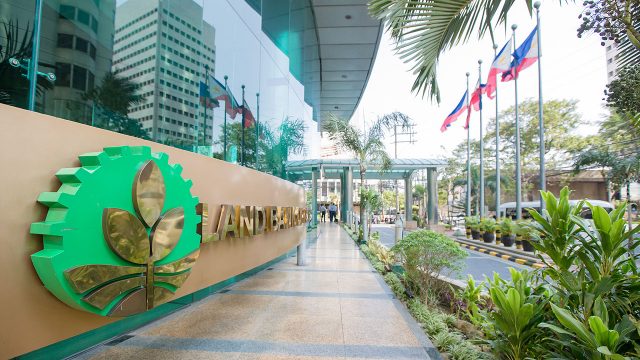
LANDBANK net income up 21.2% in first nine months

LAND BANK of the Philippines (LANDBANK) posted a 21.2% growth in its net income in the first nine months of the year on the back of the lower cost of funds.

LANDBANK said in a statement on Wednesday that its net income rose to P16.72 billion at end-September from P13.8 billion in the same period last year, putting it on track to meet its P19.68-billion profit target by yearend.

The earnings growth can be attributed to the lower cost of funds and provisions for losses, the bank said.

“LANDBANK has shown remarkable resilience against the economic shocks of the pandemic,” LANDBANK President and Chief Executive Officer Cecilia C. Borromeo said.

“As we continue to exceed our year-end targets in total assets and deposits, we are optimistic that the bank’s overall financial performance will keep in step with the country’s continuing recovery.”

The state-run bank’s net income at end-September translated to a return on equity of 10.74%, higher than the 6.48% industry average, it said.

LANDBANK’s capital increased by 25.77% to P208.17 billion in the nine-month period from P165.52 billion a year ago. The increase was due to the P27.5-billion equity infusion from the National Government in February and the net income from the year, the bank said.

Republic Act No. 11494 or the Bayanihan to Recover as One Act (Bayanihan II) mandated the government to provide supplemental funding to LANDBANK and other key state-run financial institutions to help sectors recover from the pandemic.

The bank’s total outstanding loans to the agriculture sector reached P228.21 billion, while the total number of farmers and fishers assisted stood at 2.97 million. The year-end assistance target is three million.

Its assets rose by 13.6% to P2.564 trillion at the end of September from P2.257 trillion in the same period last year.

Deposits with the bank expanded by 14.68% to P2.267 trillion.

LANDBANK’s net income last year dropped by 7.57% to P17.1 billion amid the economic downturn caused by the coronavirus pandemic. — Jenina P. Ibañez

Southeast Asia internet economy to surge to $363 billion by 2025

TRUSTPAIR.COM

SOUTHEAST ASIA’s booming internet economy is set to double to $363 billion by 2025, eclipsing the previous forecast of $300 billion, research from Google, Temasek Holdings Pte and Bain & Co. shows.

E-commerce, travel, media, transport and food are driving the region’s digital growth, with online spending rising 49% in 2021 to $174 billion, the companies said in their latest annual report. The region added 60 million new internet users since the start of the pandemic, led by Thailand and the Philippines.

Southeast Asia, home to Alibaba Group Holding Ltd.’s Lazada and Tencent Holdings Ltd.-backed Sea Ltd., will see a 62% increase in e-commerce gross merchandise value (GMV) this year as homebound consumers pick up groceries and essentials from the likes of Lazada’s RedMart and Sea’s Shopee. Online shopping is now forecast to hit $234 billion in 2025 versus a previous $172-billion estimate, making up 64% of the region’s total estimated digital GMV of $363 billion, the research shows.

“Continued shifts in consumer and merchant behavior, matched with strong investor confidence, have ushered Southeast Asia to its ‘digital decade’ — and the region is on its way towards $1-trillion GMV by 2030,” Google and its partners said in the report.

Deals for internet companies in Southeast Asia totaled $11.5 billion in the first half of this year, putting the region on track to surpass the $11.6-billion investment in all of 2020. Some of the region’s most valuable tech startups including Grab Holdings, Inc. and GoTo are preparing to go public to raise capital or allow early investors to monetize their holdings.

Indonesia is the region’s largest digital economy where online spending will probably double to $146 billion by 2025. Venture capital deals in the country in the first half of 2021 surpassed the full-year totals of each of the past four years, the report showed. Vietnam is expected to grow at the fastest rate among the six countries tracked by the study, nearly tripling in online GMV over the next four years. — Bloomberg

D&L earnings rebound in Q3

D&L INDUSTRIES, Inc. said it saw earnings “recover strongly” after its net income in the third quarter and in the first nine months of 2021 surpassed their pre-pandemic levels.

The company booked a net income of P768 million in the third quarter, 25% higher than the P617-million profit logged in 2019. Meanwhile, it gained 34% compared to its P573-million net income in the same period last year.

“We could end up with fourth quarter being very strong and even exceeding third quarter [results], it is possible,” Alvin D. Lao, president and chief executive officer of D&L, said in a media briefing on Wednesday.

Sales in the third quarter amounted to P7.63 billion, 33% higher from a year ago and 38% more than its pre-pandemic or 2019 sales.

For the first nine months, D&L posted a P2.16-billion profit, jumping 57% year on year from P1.37 billion and up by 7% from P2.03 billion in 2019.

The company said the Corporate Recovery and Tax Incentives for Enterprises (CREATE) law “had a +4% impact” on its year-to-date net income.

“The nine months 2021 net income is now 83% of the full-year 2019 net income… We are on track to exceed the 2019 net income,” Mr. Lao said. D&L’s full-year income in 2019 amounted to P2.62 billion.

The company’s topline for the nine-month period totaled P21.53 billion, up by 35% from P15.92 billion a year ago and 30% more than the P16.56-billion sales seen in 2019.

D&L said “exports now account for 32%” of its nine-month revenues. The company aims to have its export sales make up for half of its total sales in the long term. D&L’s Batangas plant expansion will be “instrumental to its future growth” as it further develops coconut-based products and as the company targets new international markets.

“For the first nine months of the year, most business segments continued to post significant growth compared to 2020,” D&L said.

Net income for its food business surged by 105%, with volumes and sales improving by 4% and 39%, respectively. For its oleochemicals segment, Chemrez Technologies, Inc.’s profits grew 33% in the first nine months as its volume grew by 13%.

Meanwhile, its specialty plastics saw a year-on-year 46% income growth “driven by higher volume for both engineered polymers and colorants and additives.” D&L’s income from its consumer ODM products inched up to P206 million as total volume grew 30%.

D&L said it “remains optimistic” as holiday-induced spending, upcoming national elections and the country’s vaccination program are seen to aid its near to medium-term recovery.

D&L shares rose 1.18% or 10 centavos to close at P8.59 apiece on Wednesday. — Keren Concepcion G. Valmonte

Lady Gaga’s ‘9-month romance’ to bring Gucci tragedy to big screen

LONDON —  Lady Gaga brought her star power to London on Tuesday for the premiere of drama House of Gucci, her second major film role for which she said she stayed in character for nine months to play the wife of a murdered heir to the Italian fashion dynasty.

Directed by Ridley Scott, the movie, based on the book of the same name, features an all-star cast, including Adam Driver, Al Pacino, Jared Leto, Salma Hayek, and Jeremy Irons, in a retelling of the notorious murder case which shocked Italy and its fashion industry in the 1990s.

Donning an Italian accent, Gaga plays Patrizia Reggiani who married into the Gucci family in 1972 when she wed heir Maurizio Gucci. They divorced in 1994. A year later Maurizio was shot dead by a hit man outside his Milan office. Reggiani spent 18 years in jail for orchestrating his murder and was released in 2016.

Asked about reports she had stayed in character for 18 months, Gaga said on the red carpet: “I really feel in some ways that my process has been sensationalized into something but I don’t like to lie about my work and my process. So, what I will say is this: I’m a romantic when it comes to art.

“I had a romantic relationship with my character, Patrizia. I had a romantic relationship with the script and I dove headfirst into this world because she’s nothing like me… I don’t know where 18 months came from. Nine months, yes, but double that, I do’t know.”

The role follows Gaga’s critically-acclaimed performance in A Star is Born, for which she won an Oscar for best original song “Shallow” and a best actress nomination.

House of Gucci begins its cinema rollout on Nov. 24. — Reuters

Rediscount window untapped in Oct.

BW FILE PHOTO

LENDERS left the central bank’s rediscount facility untouched in October as credit growth remained muted and as there continued to be ample liquidity in the financial system.

“For the period Jan. 1 to Oct. 31, total availments of banks against their rediscounting lines remain unchanged at P6.12 million for loans under the peso rediscount facility,” the Bangko Sentral ng Pilipinas (BSP) said in a statement on Wednesday.

The Exporters’ Dollar and Yen Rediscount Facility (EDYRF) was likewise untouched, it added.

The BSP’s rediscount window gives banks access to additional money supply by posting their collectibles from clients as collateral.

In turn, banks may use the cash — denominated in peso, dollar or yen — to extend more loans to their corporate or retail clients and service unexpected withdrawals.

Banks only tapped the central bank’s rediscount facility in June, July, and September this year.

In 2020, rediscount loans plummeted by 77.7% to P26.9 billion from 2019, with lenders only tapping the window in March, April, August and September, while the EDYRF was also left untouched.

Lenders likely saw reduced need for rediscount loans last month as credit growth remained subdued and as they had enough liquidity, Rizal Commercial Banking Corp. Chief Economist Michael L. Ricafort said.

“Regulatory relief measures that include alternative compliance for reserve requirements such as allowing new loans to MSMEs (micro-, small-, and medium-sized enterprises) in the computation for reserve requirements, lower risk weights for MSME loans, among others, also partly reduced the need for banks to tap the BSP’s rediscounting facilities,” Mr. Ricafort added.

Bank lending returned to growth in August after eight months of contraction.

Latest BSP data showed bank lending expanded for the second straight month by 2.7% year on year in September.

Meanwhile, M3 or the broadest measure of cash in an economy rose by 8.2% in September, faster than the 6.9% growth in August.

BSP Governor Benjamin E. Diokno last week said their policy measures amid the coronavirus crisis has infused about P2.23 trillion in liquidity into the financial system, equivalent to 12.5% of the country’s 2020 gross domestic product.

NOVEMBER RATES
For this month, the BSP said peso rediscount loans are priced at 2.5%, regardless of maturity.

Meanwhile, the rates for loans under the dollar and yen rediscounting lines, regardless of maturity, are set at 2.13225% and 1.917%. — Luz Wendy T. Noble

How Philippine MSMEs can leverage cloud-based services to remain competitive

TRUSTPAIR.COM

MICRO, small and medium-sized enterprises (MSMEs) comprise 99.51% of Philippine businesses, forming the backbone of the country’s economy. However, the pandemic forced 73.1% to shut down, underlining the need for them to adapt to survive — especially through digitalization. Recognizing the importance of cloud adoption to business digital transformation, the Philippine government updated its “cloud-first” policies first introduced in 2017, paving the way for MSMEs to take the digital leap to become more competitive and resilient.

This effort is paying off. Some 51% of Philippine enterprises are adopting more cloud-based solutions, with national cloud spending projected to reach $2.6 billion by 2024. MSMEs who have yet to embrace the cloud risk being left behind; however, with governmental support and an increasingly cloud-conducive business environment, it is an opportune time for MSMEs to explore enhancing their businesses through cloud services.

Cloud benefits in cost savings, work efficiencies, and security.

With optimizing costs a foremost concern of Philippine MSMEs, the cloud can help by minimizing waste through its “pay as you use” model. By paying for only what is needed, MSMEs can scale their usage quickly as operations grow. The cloud also provides further savings opportunities by eliminating the need to purchase and maintain on-premises IT infrastructure, while programs and software are automatically and remotely updated so MSMEs always enjoy cutting-edge technology and protection.

The immense computing power of the cloud also enables large quantities of data to be processed at much higher speeds, greatly boosting operational efficiency and reducing manpower dependency. Acting as a central repository for critical applications and solutions, it delivers low-latency connectivity (which 26% of MSMEs consider a digitalization priority) to those resources. Management teams can streamline daily operations while maintaining oversight and control, while employees can stay productive even with more flexible, remote work arrangements.

With 57% of Philippine MSMEs suffering cyberattacks last year costing P50 million, the cloud’s enhanced cybersecurity is another key advantage. Large service providers can provide robust security at cost-effective prices due to economies of scale, and cloud computing solutions can offer security encryption protocols to protect transactions, prevent distributed denial-of-service (DDoS) attacks, and maintain compliance with local and international security regulations for future growth. Additionally, critical applications and data on the cloud are immune to natural disasters as no physical servers are involved.

CLOUD ADOPTION IS A LONG-TERM GROWTH STRATEGY
The potential of cloud adoption to boost Philippine gross domestic product by $28 billion by 2024 is a significant economic catalyst at both a micro and macro level. MSMEs can accelerate adoption by thoroughly evaluating business systems, then identifying and leveraging cloud services to plug these gaps.

Despite an undeniable learning curve, it is in the best interests of MSMEs to start the cloud adoption process early. Once it becomes the new business standard, MSMEs can unlock a whole new world of opportunity, growth, and resilience to benefit not just themselves, but all Filipinos.


Robert Flavius Dulce is the vice-president for sales at Cloud4C Services.

ADVERTISEMENT
ADVERTISEMENT