A man rides a bike on a street in Shanghai, China, Oct. 13, 2022. — REUTERS
BEIJING — China is willing to resume exchanges with Canada and cooperate in various fields, its foreign minister said to his Canadian counterpart without specifying the sectors, the official Xinhua news agency reported on Tuesday.
Foreign Minister Wang Yi said China is willing to strengthen communication with Canada, adding that the diplomatic, commercial and other departments of both countries could enhance coordination and properly address their respective concerns.
Mr. Wang made the remarks to Canada’s Anita Anand over a phone call, following a meeting between Chinese President Xi Jinping and Canadian Prime Minister Mark Carney on the sidelines of the Asia-Pacific Economic Cooperation (APEC) forum in South Korea last month. Both leaders discussed trade issues including agriculture and electric vehicles.
Mr. Wang also said the leaders’ meeting marked the return of bilateral ties to the right track after years of turbulence. — Reuters
BELEM, Brazil — Ethiopia is set to be confirmed on Tuesday as host of the Conference of the Parties (COP32) climate summit in 2027, the president of this year’s COP30 gathering told Reuters.
The choice of host for next year’s COP31 remains a point of contention, however, with both Australia and Turkey vying for the 2026 event. Australia made its COP31 bid in partnership with the Pacific Islands, which are considered to be among the world’s most vulnerable places to climate change.
Participating countries agreed in principle to hold the 2027 conference in Ethiopia’s capital, Addis Ababa, during the first day of Brazil’s COP30 on Monday, COP30 President André Corrêa do Lago said.
The choice still needs to be formally adopted, which is expected to occur on Tuesday. A delegate from an industrialized country told Reuters they could not imagine why there would be a problem.
Ethiopia launched its bid in September, competing with Nigeria. But the Bureau of African Countries unanimously resolved to advance Ethiopia as the host candidate, sources told Reuters.
COP summits rotate around the world’s regions. This year’s conference is being held in the Amazonian city of Belem. Next year’s hosting choice within the “Western Europe and Others” group has been hung up for months, with neither Turkey nor Australia backing down.
Mr. Corrêa do Lago urged countries in the Western European group on Monday to resolve their impasse as soon as possible. If it cannot be resolved, the conference would be held in Bonn, Germany, where the United Nations climate agency is based. — Reuters
With more than 4,000 driver- and rider-partners in attendance, Health & Wheelness 2025 highlighted Grab and MOVE IT’s dedication to the physical, mental, and financial health of their communities.
Grab has officially introduced Buhay Asenso Cash Loan, a financing program for Grab driver-, delivery-partners, and MOVE IT rider-partners that pairs seamless financing with rotating monthly perks delivered in-app.
As the latest iteration of the Grab Finance loan for driver-partners, Buhay Asenso Cash Loan is geared to be a practical safety net, offering quick access to funds and monthly add-on benefits that help keep partners on the road. These span vehicle-maintenance discounts and basic health consultations for drivers and their families. The Buhay Asenso Cash Loan makes credit accessible through a mobile-first application and crediting process right in the driver apps used daily by Grab and MOVE IT partners.
Buhay Asenso Cash Loan was officially launched recently at Grab and MOVE IT’s largest wellness gathering, the Health & Wheelness 2025 Expo. The event promotes financial, physical, dental, mental, and vehicle wellness for GrabCar driver-partners, GrabFood delivery-partners, and MOVE IT rider-partners.
Free general checkups, pediatric consultations, OB-GYN, dental, and eye exams anchored the expo, complemented by SSS, Pag-IBIG, and PhilHealth booths for easier access to social protection. The event added interactive areas on financial literacy, mental health, and vehicle care, drawing over 4,000 partners and family members.
Financial-literacy sessions and one-on-one loan consultations were conducted by Grab Financial Group at the Buhay Asenso Cash Loan booth.
Buhay Asenso Cash Loan groups monthly perks into three tracks delivered via rotating monthly in-app offers: (1) Pangkabuhayan: Discounts on car maintenance and oil changes through partners Rapide and SeaOil; (2) Pampamilya: Everyday savings via GrabMart vouchers and tuition-fee discounts under NBS College’s own program; (3) Pangkalusugan: Free consultations at any Healthway clinic.
Grab Philippines Vice-President for Cities and Grab Financial Group Country Head CJ Lacsican shares, “Accessible financing is central to a thriving gig economy. Gig workers, such as our driver-, rider-, and delivery-partners, deserve reliable lifelines for urgent needs and long-term goals — from healthcare expenses and tuition to small-business ventures. When financing is within reach and responsibly delivered, partners become more financially resilient and are empowered to invest in their future.”
The annual Health & Wheelness expo underscores that partner well-being extends beyond mental and physical health to the state of their vehicles. Complementing the event was an online education push titled “Brake Ka Muna.” The weekly posts shared practical tips and basic know-how on financial readiness, physical health, mental well-being, and vehicle care. The series engaged driver- and delivery-partners nationwide — especially those who couldn’t attend in person — and offered bite-size actions to build self-care into daily breaks.
Spotlight is BusinessWorld’s sponsored section that allows advertisers to amplify their brand and connect with BusinessWorld’s audience by publishing their stories on the BusinessWorld Web site. For more information, send an email to online@bworldonline.com.
Join us on Viber at https://bit.ly/3hv6bLA to get more updates and subscribe to BusinessWorld’s titles and get exclusive content through www.bworld-x.com.
THE Iranian flag flutters outside the IAEA headquarters in Vienna, Austria, June 9, 2025. — REUTERS/LISA LEUTNER
ABU DHABI — Iran wants to reach a “peaceful” nuclear agreement with the United States to resolve a decades-long dispute, but will not compromise its national security, the deputy foreign minister, Saeed Khatibzadeh, said on Tuesday.
The United States, its European allies and Israel accuse Tehran of using its nuclear program as a veil for efforts to try to develop the capability to produce weapons. Iran says its nuclear program is for peaceful purposes only.
In October, President Donald Trump said the United States was prepared to make a deal with Iran when Tehran was ready to do so, adding, “The hand of friendship and cooperation (with Iran) is open.”
WASHINGTON ACCUSED OF SENDING CONTRADICTORY MESSAGES Speaking at the 12th Abu Dhabi Strategic Debate, Mr. Khatibzadeh said Washington was sending Tehran contradictory messages about nuclear talks through third countries.
The two nations held five rounds of nuclear talks prior to a 12-day war between Iran and Israel in June, which Washington joined by striking key Iranian nuclear sites.
Repeating Tehran’s view, Mr. Khatibzadeh accused Washington of “betraying diplomacy” and the nuclear talks have stopped since the June war.
Major gaps remain between the two sides such as the issue of uranium enrichment on Iranian soil, which the United States wants to cut to zero to minimize any risk of weaponization, a plan Tehran has rejected.
SUPREME LEADER RULED OUT NEGOTIATIONS Last week, Iran’s Supreme Leader Ayatollah Ali Khamenei, who has the last say on key state matters, such as foreign policy and Iran’s nuclear program, ruled out negotiations with the United States under threat.
“Tehran is not seeking nuclear bombs and … is prepared to assure the world about it. We are very proud of our home-grown nuclear program,” Mr. Khatibzadeh said. — Reuters
From L-R: Commission on Filipino Overseas Usec Ma. Arlene Borja, RCBC President and CEO Reggie Cariaso, Meridian CEO Will Haering, DICT Secretary Henry Aguda, RCBC EVP and Chief Innovations and Inclusion Officer Lito Villanueva, Meridian President Bradley Riss, and US Embassy Senior Commercial Officer Paul Taylor. —ED G. GERONIA
Rizal Commercial Banking Corporation (RCBC) has partnered with Meridian, a global based payments networking provider, to launch its newest digital banking product, the RCBC Pulz App US Virtual Account. Using the app, customers can open and manage a US dollar virtual account even without a US address, residency, and social security number.
At the launch event held at the Y Space Museum in RCBC Plaza in Makati last November 7, RCBC President and CEO Reggie Cariaso said that “We are enabling every Filipino, whether a freelancer or an entrepreneur, to connect directly to the US economy. This is financial inclusion made real.”
Through the Pulz App, users can have access to their US account in their own name so they can receive domestic payments from any US-based bank. As a cross-border payment solution, the Pulz App US Virtual account simplifies the process of accepting payments and reduces costly transaction fees.
Also present at the launch was Department of Information and Communications Technology (DICT) Secretary Henry Aguda who expressed support for the app. “This initiative makes global financial inclusion fully within the reach of every Filipino wherever they may be,” he said. Speaking in a mix of English and Filipino, Mr. Aguda also mentioned that there are almost five million OFWs in the US who don’t have credit history and may not have a bank account even if they remit money. Through the app, they now have financial inclusion in their host country.
In his speech, RCBC Executive Vice President and Chief Innovation and Inclusion Officer, Lito Villanueva also said, “We’re not just digitizing existing services, we’re redesigning how money moves across borders. The RCBC Pulz App US Virtual Account embodies our commitment to building a more inclusive, tech-driven, and borderless financial ecosystem.”
Beginning November 11, RCBC Pulz App users can create a US virtual account so they can receive payments and earnings in US dollars which can be easily converted into Philippine pesos (PHP). The virtual account has a monthly aggregate limit of $10,000 per month. — EGG
Billionaire businessman and former lawmaker Deputy Speaker Michael “Mikee” L. Romero, PhD, has been honored with the 2025 Philippine Choice Award for Outstanding Humanitarian and Community Service for nearly a decade of outreach efforts bringing healthcare, education, and relief to marginalized Filipino communities.
Known as a “people’s lawmaker,” Mr. Romero has led nationwide programs from Batanes to Tawi-Tawi, offering medical and dental missions, free medicines, and equipment donations to remote areas including Zamboanga, Sarangani, Dinagat, and Tawi-Tawi’s frontier islands. His initiatives also reached the Visayas, benefiting thousands through health services in Cebu, Tacloban, Iloilo, and Bohol.
A strong advocate of education, Mr. Romero rebuilt fire-hit schools in Batanes, rehabilitated classrooms in North Cotabato, and provided scholarships and school supplies to underprivileged students. On Pag-asa Island, he delivered food packs, toys, and learning kits to children and fisherfolk families.
During disasters, Mr. Romero’s teams responded swiftly — aiding fire victims in Cavite and Laguna, and flood-stricken families in Bulacan and Pampanga.
Though his congressional term ended in 2025, Mr. Romero continues his humanitarian work with hospitals, schools, and local governments.
“Service to the poor and forgotten is the highest honor anyone can have,” Mr. Romero said.
His award affirms his enduring commitment to compassionate, inclusive leadership that reaches even the nation’s farthest communities.
Spotlight is BusinessWorld’s sponsored section that allows advertisers to amplify their brand and connect with BusinessWorld’s audience by publishing their stories on the BusinessWorld Web site. For more information, send an email to online@bworldonline.com.
Join us on Viber at https://bit.ly/3hv6bLA to get more updates and subscribe to BusinessWorld’s titles and get exclusive content through www.bworld-x.com.
KISARAZU, Japan — At a farmer’s market not far from Tokyo, more than 100 shoppers queued for a chance to get a kilo or so of Japanese rice for 500 yen ($3.32) by carefully heaping as much of the grain into a small wooden box as possible.
The weekend event was largely a gimmick, but as inflation continues to outpace wage growth it was a chance for some to secure the staple food for about 40% less than average retail prices.
“When I go shopping I’m shocked at the expenditure,” said Tasuku Uchida, a 28-year-old shopper who took part in the event.
“So I look back at the receipt and when I realise that I haven’t bought anything extra, it dawns on me just how far prices have risen. I want the government to hurry up and tackle inflation.”
It is déjà vu in Japan as near-record rice prices eat into consumers’ wallets – despite government efforts since spring to alleviate the pain – presenting a major challenge for newly elected Prime Minister Sanae Takaichi, who took office on October 21.
Takaichi, with early opinion polls showing her approval rating above 60%, is preparing to lay out her gameplan for tackling the issue with an economic package to be compiled by the end of the month. Her new farm minister Norikazu Suzuki has mentioned rice coupons for certain households as one idea.
Inflation, led by food items, has outpaced wage growth nearly every month for more than three years.
RICE PRICES NEAR RECORD HIGH Rice prices first began to surge in the middle of last year amid supply shortages, but eased this summer after the government’s unprecedented release of emergency stockpiled rice into the market at cut-rate prices.The government also sought to talk down prices with reassurances of plentiful supply, but the impact has proven short-lived.
Former Prime Minister Shigeru Ishiba had said prices of the staple should be well under 4,000 yen.
In the week to October 27, supermarket rice prices averaged 4,235 yen for a 5-kg bag, up 23% from a year ago, double 2023 levels and near May’s record high of 4,285 yen.
Average wholesale prices for September, which reflect the new harvest, hit a record 36,895 yen per 60 kg, up 36% from the previous month.
The reason: fearing a repeat of last year’s shortage, which was fuelled by factors including extreme heat and a miscalculation of demand, dealers have ignored the government’s assurances over supply and set about procuring rice at any cost, pushing transaction prices higher.
“We are traumatised by last year’s rice shortage turmoil,” one rice wholesaler said, declining to be identified because of the sensitivity of the issue. “Our top priority is to stably supply rice to customers. So it can’t be helped if rice prices are high as we have to secure it.”
Shunsuke Orikasa, chief researcher at the Distribution Economics Institute of Japan, said he did not expect retail prices to fall meaningfully in the months until March, unless the market confirmed a significant surplus.
Expensive domestic rice is a worry for the nation’s food security, Takaichi has said, as businesses and some consumers flock to cheaper, imported rice. Even with Japan’s steep tariffs on imported rice, imports by private companies grew nearly 160-fold in September from the previous year, data by the finance ministry showed.
Japan imposes A levy of 341 yen per kilo on rice imports by private firms, but imported grain is still cheaper than homegrown rice.
Despite the surge in the price of the local grain, the new government may move away from previous consumer-facing rice policies back towards farmers and distributors, some say. After a planned rise in production to 7.48 million tonnes this crop year, the new administration has announced a target of 7.11 million tonnes for 2026, hoping to closely match supply with demand.
“Policies appear to have shifted to ones that take producers and distributors into consideration,” said Takahide Kiuchi, executive economist at Nomura Research Institute and a former Bank of Japan board member. “It doesn’t look like there will be any policies that would bring rice prices down from around 4,000 yen, which will be a big disappointment for consumers.”
Even farmers say current levels are exceptionally high.
“It’s too expensive — this is something the market has inflated,” said Yasuji Oshima, a farmer in Ibaraki prefecture, northeast of Tokyo.
He stressed, though, that a return to pre-2024 levels amid higher labour, equipment and other costs would squeeze profits so much that rice farming would become even less attractive to the younger generation.
“I hope the new government will implement policies that will ensure sustainable agriculture in Japan for the next 10 and 50 years.” — Reuters
Kaya Founders, a Philippines-based venture capital firm, today announced the successful final close of its US$25 million fund, marking a major milestone in Kaya’s mission to back the next generation of Filipino and regional founders building technology-driven solutions for the Philippines and Southeast Asia. Helmed by operators-turned-angel investors Paulo Campos (ex-CEO, Zalora Philippines), Lisa Gokongwei-Cheng (CEO, Summit Media), and Ray Alimurung (ex-CEO, Lazada Philippines), Kaya Founders is the Philippines’ most active early-stage VC fund in the Philippines today.
Its second fund follows a stapled fund structure and includes the firm’s “Zero to One” Pre-seed Fund and its “One to Ten” Seed to Series A Fund. This two-pronged structure is designed to support founders from idea stage to growth scale. Investors into the fund include a diverse and strong mix of local and international partners such as Singapore-based Pavilion Capital, Gabriel and Geraldine Sunshine of Boston-based hedge fund Bracebridge Capital, Chicago-based Concentric Equity Partners, alongside leading local family offices and technology operators. Kaya previously announced its partnership with local technology solutions provider AMTI in April 2023, which serves as an anchor investor in the fund.
Founded in 2021, Kaya Founders has built a portfolio of over 40 startups across multiple sectors including e-commerce, fintech, education, healthcare, software-as-a-service, agriculture and more. Notable investments include e-commerce enabler Etaily, cloud logistics platform Locad, banking-as-a-service provider Netbank, and PayMongo, one of the leading payments providers in the country backed by US fintech Stripe. With this second fund, Kaya Founders aims to back 10 to 20 additional startups across the Philippines and Southeast Asia over the next three years.
In line with its continued focus on innovation for financial inclusion and sustainability, Kaya Founders has made new investments this past year in Datung, ProTech, LenderLink, and SunFund. These companies represent a growing wave of innovators advancing financial access, digital inclusion, and clean energy.
Kaya Founders’ announcement of its final close coincides with the signing of a Memorandum of Understanding (MOU) with the Startup Venture Fund of the National Development Company (NDC), an investment arm of the Philippine government. The partnership builds on Kaya’s appointment as an official co-investment partner of the SVF and reflects the government’s continued commitment to deepen collaboration with the private sector. The strategic partnership aims to expand capital access for Filipino startups, igniting innovation, job creation, and inclusive economic growth.
The firm sees a strong opportunity for disciplined early stage investing as the regional funding environment normalizes and the Philippines start-up ecosystem continues to mature. With operational expertise and deep conviction in the local market, Kaya is well positioned to offer its investors differentiated access to the next generation of high growth companies and an attractive entry point into one of the region’s fastest growing tech ecosystems. The firm believes that these areas will define the region’s next wave of category leaders and offer its LPs one of the most compelling avenues for returns in the decade ahead.
“At Kaya, we’ve always believed in building the future we want to see. This fund close is more than a milestone—it’s a vote of confidence in that vision. At a time when investor sentiment in Southeast Asia’s tech ecosystem is being tested, we’re doubling down on the Philippines. We see an exciting market brimming with talent, ambition, and untapped opportunities for company-building. This moment brings us one step closer to realizing the future we’re committed to creating,” says Founding Managing General Partner Paulo Campos.
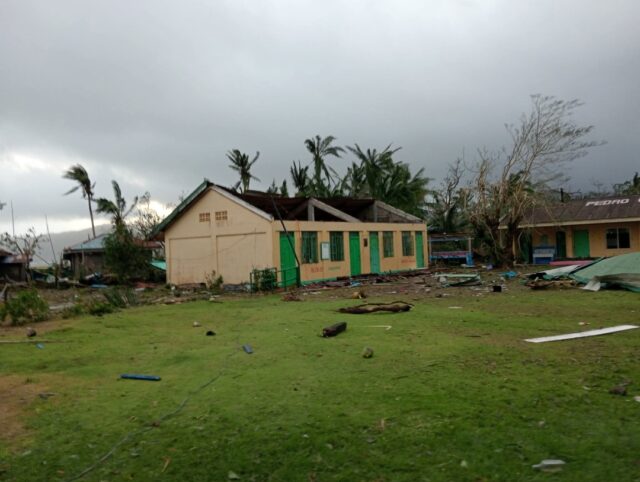
Damaged classrooms at the Pedro Orata Elementary School in SDO Aurora caused by Super Typhoon Uwan.— DEPARTMENT OF EDUCATION
The Department of Education (DepEd) on Monday said that at least 312 public schools sustained infrastructure damage following the onslaught of Super Typhoon Uwan.
“Our teachers, parents, and learners have gone through a difficult time during the Typhoons Uwan and Tino,” DepEd Secretary Juan Edgardo “Sonny” M. Angara said in Filipino in a press release.
“We extend our sympathies to our fellow citizens, and we assure you that DepEd stands with you at every step of recovery—helping rebuild hope in every classroom,” he added.
The regions with the highest number of damaged classrooms are Bicol, Calabarzon, and Cordillera Administrative Region (CAR).
Initial figures from the DepEd Disaster Risk Reduction and Management Services (DRRMS) reported that 1,182 classrooms suffered minor damage, 366 classrooms were severely damaged, and 261 classrooms were destroyed.
Meanwhile, 5,572 classrooms in 1,072 schools across 11 regions are being used as evacuation centers for affected families.
To sustain learning continuity, Alternative Delivery Modes (ADM) are also being implemented in schools that remain closed due to the recent typhoons and calamities.
The DepEd revealed that a P20.2 million funding requirement for cleanup and clearing operations, and a P57.9 million requirement for minor repairs are needed to cover the education sector’s recovery needs.
Typhoon Fung-wong, locally named Uwan, is the Philippines’ 21st tropical cyclone of the year. It made its landfall on Nov. 9, Sunday evening, at Dinalungan, Aurora, and was downgraded to a typhoon early Monday, Nov. 10.
In a report by the National Disaster Risk Reduction and Management Council (NDRRMC) on Tuesday, 13 people were reported injured, while the death toll has increased to six. Of which, three fatalities are from the Cagayan Valley, and one each in Bicol, Western Visayas, and Eastern Visayas.
NDRRMC added that 2,358,476 people or 652,632 families are affected in Ilocos Region, Cagayan Valley, CAR, Central Luzon, Metro Manila, Calabarzon, Mimaropa, Bicol, Western Visayas, Negros Island Region, Eastern Visayas, Zamboanga Peninsula, Northern Mindanao, Caraga, and Bangsamoro Autonomous Region in Muslim Mindanao (BARMM).
Bicol has the most affected individuals at 1,163,473, followed by Negros Island Region with 198,120 and Eastern Visayas with 186,532. — Almira Louise S. Martinez
For centuries, Philippine streets have been dominated by sari-sari stores. Traced back to pre-colonial barter trade, it has evolved into the neighborhood tindahan we know today: a lifeline to Filipino families and a source of everyday needs.
But more than selling household goods, sari-sari stores have come to play a key role in Filipino communities: they are social hubs where everyone could meet and hang out, ask for directions, or just simply unwind.
Puregold, the country’s leading supermarket chain, is saying “thank you” to these sari-sari stores through a four-part video series that honors their crucial role as neighborhood hubs and economic driver.
“As a long-time supporter of Filipino MSMEs, we want to highlight the importance of sari-sari stores in our communities. We want to share these videos that capture the many ways that sari-sari stores have become a vital part of our daily lives and serve as pillars in our communities,” said Vincent Co, Puregold’s president.
The first episode of the four-part series will premiere this November, with succeeding episodes to follow in the coming months. Each installment captures the everyday realities and enduring charm of neighborhood sari-sari stores, telling stories that evoke both nostalgia and pride in Filipino enterprise.
The series will also feature special appearances from well-loved personalities, celebrating the vital role these community stores play in connecting people across generations.
For nearly three decades, Puregold has grown from a supplier of consumer goods for sari-sari stores into a trusted retail partner and business enabler. Beyond providing affordable and high-quality products, the company continues to support micro-entrepreneurs through training programs, exclusive incentives, and creative initiatives such as concerts, films, and digital series. This commitment reinforces Puregold’s position as the country’s most progressive retail ally.
Spotlight is BusinessWorld’s sponsored section that allows advertisers to amplify their brand and connect with BusinessWorld’s audience by publishing their stories on the BusinessWorld Web site. For more information, send an email to online@bworldonline.com.
Join us on Viber at https://bit.ly/3hv6bLA to get more updates and subscribe to BusinessWorld’s titles and get exclusive content through www.bworld-x.com.
A weakened severe tropical storm, Fung-wong, locally known Uwan, has exited the Philippine Area of Responsibility (PAR) but may re-enter again on Wednesday, according to the Philippine Atmospheric, Geophysical and Astronomical Services Administration (PAGASA).
Fung-wong, packing sustained winds of 110 kilometers per hour (kph) and gusts of up to 135 kph, was last located 365 kilometers west of Calayan, Cagayan, moving north-northwestward at 10 kph, PAGASA said in its 8:00 a.m. advisory.
In an earlier advisory, PAGASA said the cyclone is expected to re-enter PAR on Wednesday as it moves toward the southwestern coast of Taiwan, where it is likely to make landfall and further weaken.
While traversing Taiwan, PAGASA said that areas in the northern part of Luzon are expected to experience gusty winds due to the typhoon’s broad circulation, particularly over Batanes and the Babuyan Islands. However, most parts of the country are no longer expected to be affected.
Fung-wong is then expected to emerge over the waters near the Ryukyu Islands, located northeast of Taiwan, and further weaken into a low-pressure area by Friday.—Edg Adrian A. Eva
Government agencies, researchers, civil society leaders, and global partners met last Oct. 14, 2025, at Seda Manila Bay for the SHAPE Asia Policy Lab, a landmark gathering focused on transforming how food is sold and marketed in the Philippines.
Hosted by SHAPE Asia (Shaping Healthy Asian Food Systems and Policy Environments), the high-level policy dialogue, entitled “Shaping Food Environments: Policy Dialogues on Food Retail and Marketing in the Philippines,” brought together key actors to chart a path toward healthier food environments, especially in the face of rising obesity, undernutrition, and diet-related diseases in the country.
Moving Beyond Talk to Targeted Action
“This is a rare opportunity for a direct, solutions-focused dialogue between researchers, government agencies, and advocates,” said Dr. Elaine Borazon, SHAPE Asia project lead. “We want to shift the conversation toward meaningful policy change.”
Dr. Borazon emphasized that SHAPE Asia’s mission is to amplify and support the ongoing work of Philippine agencies, especially in food retail and marketing policy. “Our focus for the first two years is to collaborate with the local government and stakeholders on evidence-based solutions that can be scaled nationally,” she added.
The Policy Lab featured representatives from the Department of Health (DoH), National Nutrition Council (NNC), FNRI-DoST, UNICEF, Philippine Commission on Women (PCW), Pasay and Quezon City Local Government Units, the Nutritionist-Dietitian Association of the Philippines, PhilRice, UN-World Food Programme, and other stakeholders.
Dr. Elaine Borazon in discussion with key participants
Shared Vision Across Agencies
The participants rallied around a shared goal: creating a healthy, well-nourished nation. The DoH highlighted its work on improving health outcomes through enabling environments and technical assistance to local government units. FNRI-DoST shared updates on tools like the Philippine Dietary Guidelines, which are aligned with SHAPE Asia’s vision.
One key takeaway from Quezon City’s presentation was their openness to policy expansion: “We are integrating nutrition standards with local farmer support. We are open to more regulation of food retail,” said Jai Sideco from the Quezon City Health Department. “We need research on how food marketing affects consumption, especially among children.”
Gender and Equity in the Food Environment
The Philippine Commission on Women (PCW) raised concerns about the gendered impact of healthy food policies. “The impact of making food healthier affects women. In the retail industry, most vendors are women. Based on the Philippine Statistics Authority, 60% of new business name registrations are in women’s names,” a PCW representative stated. They urged policymakers to ensure that reforms support women-led small businesses.
Lessons from Across the Region
International insights were provided by Madiha Ahmed, Senior Program Specialist at Canada’s International Development Research Centre (IDRC). “The challenges you’re discussing today echo what we’re hearing across Southeast Asia, South Asia, even Africa and Latin America,” she noted. “It’s both a little worrying and a little reassuring that we’re facing many of the same obstacles, but at the same time, we know from our experience in other regions, change is possible when we come together.”
Ms. Ahmed commended the diversity of voices in the room from barangay nutrition scholars and city councils to researchers and development partners, saying this range of perspectives is crucial for meaningful and lasting policy change.
Concrete Commitments and Next Steps
Participants also discussed ongoing and planned initiatives: direct procurement agreements with farmers, nutrition education in schools, and embedding dietitians in LGU programs.
One proposal that drew support was the harmonization of existing policies across departments to make them more accessible to implementers on the ground. “We don’t necessarily need to create new policies,” one participant said. “We need to disseminate, consolidate, and monitor the ones we already have.”
SHAPE Asia is committed to following up with partner agencies and local government units for pilot projects in 2026, including collaborative research, technical support, and advocacy campaigns.
A Platform for Shared Progress
SHAPE Asia, led by Dr. Elaine Borazon, a faculty member of the National Sun Yat-sen University in Taiwan, is active in Indonesia, Malaysia, Thailand, Sri Lanka, and the Philippines. It promotes double-duty actions, policies that address both undernutrition and non-communicable diseases through better food systems and smarter governance.
“Our role is to be a platform and amplifier,” said Dr. Borazon in closing. “We want to harmonize and support what each of you is already doing. We can build food environments that are equitable, sustainable, and healthy for all Filipinos together.”
Spotlight is BusinessWorld’s sponsored section that allows advertisers to amplify their brand and connect with BusinessWorld’s audience by publishing their stories on the BusinessWorld Web site. For more information, send an email to online@bworldonline.com.
Join us on Viber at https://bit.ly/3hv6bLA to get more updates and subscribe to BusinessWorld’s titles and get exclusive content through www.bworld-x.com.











 The first episode of the four-part series will premiere this November, with succeeding episodes to follow in the coming months. Each installment captures the everyday realities and enduring charm of neighborhood sari-sari stores, telling stories that evoke both nostalgia and pride in Filipino enterprise.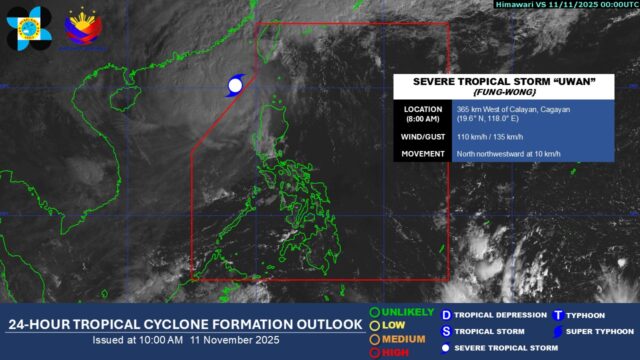


 International insights were provided by Madiha Ahmed, Senior Program Specialist at Canada’s International Development Research Centre (IDRC). “The challenges you’re discussing today echo what we’re hearing across Southeast Asia, South Asia, even Africa and Latin America,” she noted. “It’s both a little worrying and a little reassuring that we’re facing many of the same obstacles, but at the same time, we know from our experience in other regions, change is possible when we come together.”