Home Blog Page 7195

Nature-pact goal to protect 30% of land and ocean hangs in balance
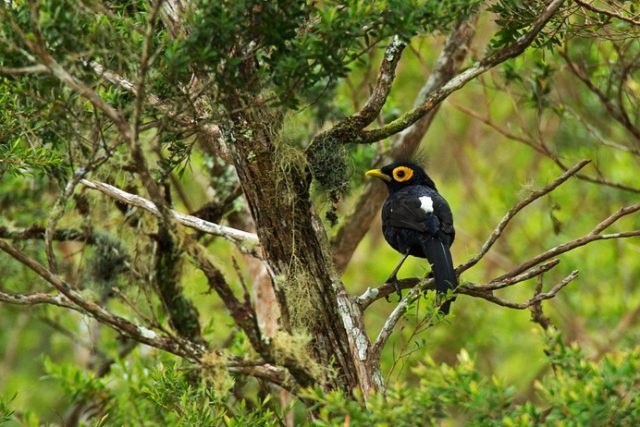
Apo Myna – Neon Rosell

KUALA LUMPUR — The central pledge of a planned new global nature pact — to protect 30% of the planet’s land and seas — is in doubt, with some biodiversity-rich nations refusing to commit because of jitters over funding and implementation, officials have warned.  

A coalition of about 70 countries — including G7 wealthy governments — have already promised to conserve at least 30% of their land and oceans by 2030, a pledge known as 30×30, to help curb climate change and the loss of plant and animal species.  

The 30×30 goal is part of a draft global treaty to safeguard plants, animals and ecosystems, due to be finalized next May at the COP15 nature summit in the Chinese city of Kunming, according to the UN Convention on Biological Diversity (CBD).  

“Many countries are supporting it — but also many countries are not supporting it,” said Elizabeth Maruma Mrema, the CBD’s executive secretary.  

“It is still very much for debate,” she told the Thomson Reuters Foundation, adding that effective management of a 30×30 goal would be key.  

Improving protection of natural areas, such as parks, oceans, forests and wildernesses, is seen as vital to maintaining the ecosystems on which humans depend, and to limiting global warming to internationally agreed targets.  

Dozens of nations pledged to do more to conserve nature and make farming greener at the COP26 UN climate talks this month.  

Brian O’Donnell, director of the US-based Campaign for Nature, which is urging leaders to back the 30×30 pledge, said it was “perhaps the most supported target in the negotiations.”  

There is broad scientific consensus that protecting or conserving at least 30% of land and oceans is the minimum needed to curb biodiversity loss and to reach climate goals, he added.  

But the inclusion of the pledge in the final COP15 accord is far from certain, with improvements needed, said green groups.  

“Like it or not, 30×30 will be one of the defining issues for COP15,” said Li Shuo, a policy advisor at Greenpeace China.  

“The Kunming biodiversity summit will not be a success only with this target — but it will certainly not be seen as a triumph if without [it],” he added.  

WAIT AND SEE  

Southeast Asia covers just 3% of the Earth’s surface but is home to three of the world’s 17 “mega-diverse” countries — Indonesia, Malaysia, and the Philippines.  

It is also the only region where a significant number of countries have yet to back the 30×30 goal, with only Cambodia signing up so far, said Mr. O’Donnell.  

South Africa, meanwhile, has called for a much lower target of 20%, he added, while others like Argentina have questioned the science behind the flagship pledge.  

On a more positive note, India is the latest country to commit to 30×30.  

And at the first part of the COP15 talks, held online last month, host nation China announced a new national parks project that would bring 230,000 square km (88,800 square miles) of land under stronger state protection.  

While China has yet to endorse the 30×30 pledge, the signs are that it may be getting ready to do so at the Kunming summit, said Linda Krueger, director of biodiversity at The Nature Conservancy.  

Opposition to the 30×30 goal is largely linked to the challenges of putting it into practice, such as financing for developing nations, high population density, low levels of biodiversity and lack of domestic laws, environmentalists said.  

But Ms. Krueger said she had only heard Brazil speak out against it clearly. “Many countries seem to be on the fence, and the support of others is conditioned on adequate financing being made available,” she added.  

Some political leaders have yet to grasp the economic benefits of conservation, with many still relying on exploitation of natural resources to lift people out of poverty, green groups said.  

Others are home to a large proportion of the planet’s biodiversity and want a protection target higher than 30%.  

Despite these hurdles, there is significant momentum to land the 30×30 goal in the deal, said Susan Lieberman, vice president of international policy at the Wildlife Conservation Society.  

Some countries are still studying how it would play out in their own contexts, she added.  

“Many governments do not realize this is a global target and each country will contribute to achievement of the targets in different ways,” Ms. Lieberman said.  

“Governments need to look not only at area-based conservation within their own territories, but at what their ‘footprint’ is globally,” she said, pointing to procurement of commodities like timber and fish.  

NO PANACEA  

There are also concerns the 30×30 target will threaten the rights of indigenous and local communities — and that new protected areas could dispossess those groups, said Guido Broekhoven, head of policy research and development at WWF International.  

These are the very people who for generations have done the most to sustain, defend and restore biodiversity, he said.  

The 30×30 pledge will be far more effective in halting and reversing biodiversity loss if protected areas are sited in the most important parts of the planet for biodiversity and ecosystem services, he noted.  

That means achieving the target should be “a collective, global effort,” he added, calling for more financing.  

Countries with relatively few suitable areas should contribute as far as they can to conservation efforts in other biodiversity-rich nations, Mr. Broekhoven said.  

But 30×30 is not “a panacea,” he emphasized, adding that the goal will need to be complemented by reforms to ecologically harmful investment, agriculture and consumption.  

“On its own, it will be insufficient to reverse the loss of nature,” he said. — Michael Taylor/Thomson Reuters Foundation 


Only 1.2% of world’s top firms make substantial climate disclosures — Arabesque

REUTERS

LONDON — Little more than one percent of 5,000 big companies globally are making substantial disclosures of their climate risks, while more than half are not reporting them at all, according to data from ESG research and investment manager Arabesque.  

Only 1.2% of the companies analyzed by Arabesque — most of them large listed firms — reported on all 11 recommendations of the Task Force on Climate-Related Financial Disclosures (TCFD) in 2019.  

Fifty-four percent of the top firms made no disclosures, it added.  

The TCFD was set up by the Financial Stability Board, which groups regulators, central banks and treasury officials from G20 countries, and set out recommendations in 2017 on how companies could voluntarily disclose the risks and opportunities from climate change.  

Investors are increasingly focusing on companies’ exposure to climate change, as UN climate talks ended on Saturday with a deal that for the first time targeted fossil fuels as the key driver of global warming.  

“We need to put action to the promises,” said Arabesque president Daniel Klier.  

“TCFD is the framework everyone is looking at … the quality of disclosure has to improve quite significantly.”  

Health and technology services companies were the worst offenders, with more than 70% making no disclosures, Arabesque’s analysis showed, while energy companies were among those giving the most information.  

“Industries facing most investor scrutiny are industries that are trying to do a better job,” Mr. Klier said.  

Regulators in markets such as Britain, the European Union, Brazil, Hong Kong, Japan, New Zealand, Singapore, and Switzerland have begun using the TCFD recommendations as a basis for mandatory disclosures.  

The TCFD also said last month only about half of companies disclosed climate-related risks and opportunities in some form, on average covering around a third of the 11 recommended disclosures.  

The TCFD’s 2021 review covered more than 1,600 companies around the world.  

A lack of analytical tools to quantify the exposure of assets to physical climate risks is contributing to “chronic underinvestment” in climate resilience by the private sector, according to a report this week by the Coalition for Climate Resilient Investment group of institutional investors and governments with over $20 trillion in assets. — Reuters 

Live long and prosper

https://www.imdb.com/

MOVIE REVIEW
The Eternals
Directed by Chloe Zhao

I saw The Eternals and lemme put it this way: it is the best MCU movie in recent years, and the worst Chloe Zhao film to date.

Which, as I like to put, it is not saying much but is saying something.

“Has he finally gone nuts?” you might say; sometimes I wonder.

I enjoyed the movie. Don’t mean that sarcastically; I had a fine time.

Didn’t think I would; the picture opens with a long title crawl explaining context and history that I kept wishing would crawl faster (I blame George Lucas) and we dive straight into battle, with the heroic Eternals fighting the evil Deviants (you want to ask: Deviants? Puritanical much? But the comic is the creation of Jack Kirby, hardly known for subtlety or tact — you appreciate Kirby for the dynamic dramatic art and grand worldbuilding more than the writing).

Zhao shoots in a series of swirling shots, the camera weaving in and out of the battle between handsome actors striking power poses and CGI monsters being ripped limb from limb (bloodlessly of course, to keep the PG 13 rating) and you realize: she doesn’t know how to direct fight sequences. Or rather, she does (there’s a brief boxing match in Songs My Brothers Taught Me that’s bruisingly shot and edited) but can’t do the house MCU style of heavily CGI’d fighting, not in the way fanboys would approve. Not much pain involved (the Eternals hardly even flinch) and what brutality is on show is rendered toothless by the fact that the Deviants look and move like the kind of expensive oversized toys kids like to walk up to and knock down.

That’s arguably quite an achievement and not in a good way: frenetically staged and shot long-take action sequences where you don’t quite know — or much care — what’s going on. I remember seeing them, possibly for the first time, in Sam Raimi’s Spiderman movies, only Raimi’s had this marked difference: the fights often tossed out the occasional visual gag, and you realize there is structure to his fights, they build up and pay off as propulsive comedy routines a la Jackie Chan or Buster Keaton.

Arguably there’s a rationale for opening with this unmemorable display of superpower: we get to see the Eternals at their mightiest, later at their most vulnerable. Zhao in effect doesn’t shy away from setting herself up, adopt the more challenging narrative route.

Or perhaps Zhao doesn’t really give a shit and wants to move on to what really interests her.

The next hour or so seems interminable; the picture skipping pebble-in-a-pond forward and backward in time, showing us the various Eternals as sent by the Celestial Arishem (voiced by David Kaye) to Earth to live through and react to various periods of human development (some 7,000 years, a mere eyeblink in human evolution and barely a blip in geological history) and we get to know them a little along the way: we learn that Ikari (Richard Madden) and Sersi (Gemma Chan) used to have a thing, a spark between them that flares up every time they come in close proximity; that Druig (Barry Keoghan) can control minds and is itching to control the destiny of these fool mortals; that Don Lee’s Gilgamesh has taken on the task of caring for Angelina Jolie’s increasingly senile Thena (well, not quite senility but that’s a whole other footnote) and cooking Martin Picard-sized savory pies and table-length feasts for 11 on the side; that Kingo (Kumail Nanjiani) is now a charmingly self-centered Bollywood star complete with video-recording acolyte (Harish Patel); that Phastos (Brian Tyree Henry) leads a quiet life with his lovely loving family.

I’m reminded of Alfred Bester’s The Computer Connection, about a group of formerly famous immortals living out their lives in relative anonymity (they even have a deadly disease they fear, in Bester’s case lepcer (a combination of leprosy and cancer) where in Thena’s case it’s the crushing weight of memories from past lives) — not Bester’s best work though it sparked along nicely thanks to his wit and Joycean wordplay.

“But,” fanboys cry, “what does any of this have to do with the story? The Expanded Universe?” Nothing, and I like that about the film; it’s stubbornly perverse about its priorities. Maybe my biggest problem with the picture is that Zhao doesn’t go far enough, do something that’ll really make me sit my rear up in my seat — like 150 minutes of story without action or digital effects; or Phastos enjoying lyrical sex with husband Ben (Haaz Sleiman); or Sersi leaping on the back of a Deviant and riding it to a standstill; or the entire cast bursting into a rousing rendition of “I Say a Little Prayer” with a horde of Deviants as backup chorus and pause the number for Arishem’s guitar solo.

Not as if Zhao has never struck out for unknown territory before: she was born in Beijing, studied in the United Kingdom and the United States, shot her first film — Songs My Brothers Taught Me — in a Lakota reservation in South Dakota, arguably the last place in the world one would expect a Chinese-American filmmaker to land. Critics compare her to Terence Malick in terms of natural landscapes and largely improvised performances (also traces of early Chen Kaige, particularly Yellow Earth) but there’s an edge to this and her second feature The Rider that I miss in Malick: the disaffected Lakota youths smolder and fume and chafe against the invisible barriers erected between them and the rest of American society. That edge largely vanished by the time of Nomadland (2020), replaced by an elegiac despair (Amazon’s treatment of its seasonal workers goes by unremarked) but even without, Zhao’s film had its moments of piercing sadness and transcendent serenity.

None of which belong in the loud and thundering expanded universe of Marvel, but the fact that Zhao shoehorns attempts here and there to the utter joy of practically nobody makes this a unique — if uniquely ungainly — Marvel movie.

And that ending (skip the rest of this paragraph if you plan to see the picture)! Most folks will hoot and holler and stamp their feet; I quietly applauded. Thought Gemma Chan intriguingly beautiful if rather hollow in Crazy Rich Asians; thought Madden yet another pretty face, though his thick brows helped give him a faint brooding Brando vibe; when they finally confront each other in the film’s unlikely finale they do with the past hundred plus minutes of patiently building their performances with detail here detail there, with Chan playing with children or braiding a young girl’s hair, and Madden looking admiringly from the side (presumably thinking she’d look good playing with or braiding their children’s hair). Shamelessly sentimental? Can’t believe Zhao dared? Madden, to his credit, looks persuasive being carried away by Chan’s quiet presence — again those darkly pronounced brows help — but Zhao does dare and I mostly bought it. Faces, music, a montage of moments throughout the film; visual storytelling at its most basic, and I think it works.

With this picture put out the question that interests me now is: quo vadis, Chloe? You have taken on a multi-million-dollar production from the mightiest. most mendaciously malevolent (posing as a source of family entertainment when it’s really churning out mediocre pap) studio in the world — your most intimidating bronco to date, whispering it down from a tempestuous gallop to a recognizably distinct if awkward canter. Most filmmakers get hooked once they have a taste; can you let go, strike out in yet another direction? One holds one’s breath in anticipation.

Chinese envoy likens Australia to ‘saber wielder’ over submarine deal — The Guardian

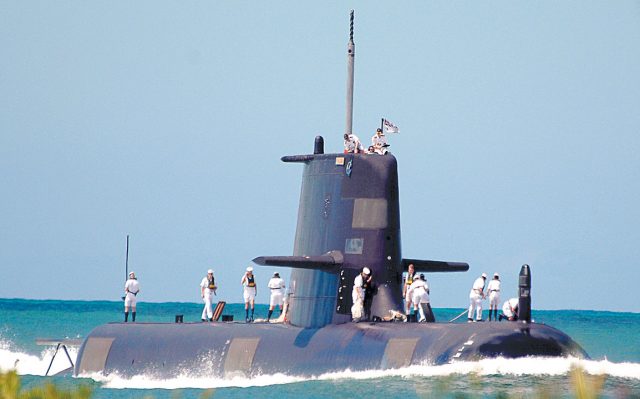
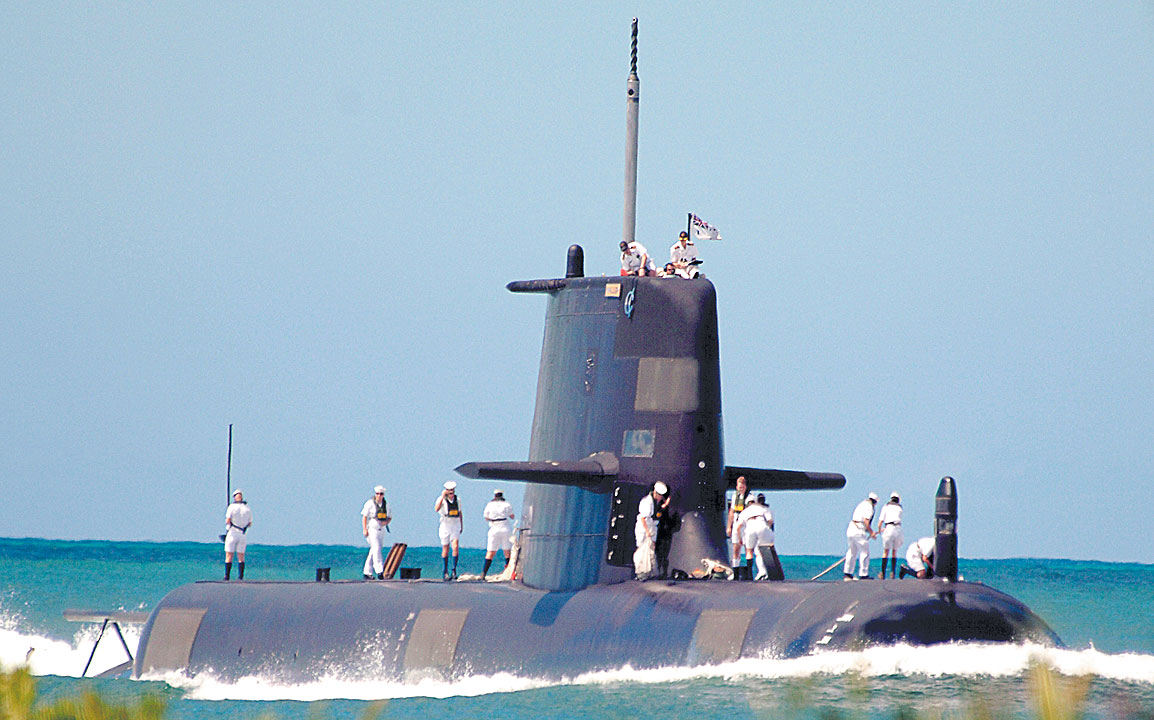
THE Collins-class submarine HMAS Waller. Australia plans to replace the Collins class submarine with a new fleet of nuclear attack submarines with assistance from the UK and US.

SYDNEY — Australia has become a “saber wielder” rather than a defender of peace because of its plans to build at least eight nuclear-powered submarines with US and British technology, China’s top envoy in the country told The Guardian 

Australia in September entered into the trilateral security partnership, cancelling a submarine deal with France in a move that enraged Paris. It also riled China, the major rising power in the Indo-Pacific region.  

China’s acting ambassador, Wang Xining, said in an interview with the newspaper published on Friday that the nuclear submarine deal jeopardized Australia’s “peace-loving reputation.”  

Mr. Wang said people of his age in China saw Australia as a peace-loving country, “but nowadays people know that a nuclear-powered submarine is designed to launch long-range attack against a target far away.”  

“So who are you going to attack? You are no longer a peace lover, a peace defender, you become a saber wielder in certain form,” he said of Australia.  

Canberra has defended the trilateral deal, with Prime Minister Scott Morrison saying he did not regret the decision “to put Australia’s national interest first.”  

Mr. Wang in the Guardian interview urged Australian politicians to “refrain from doing anything that is destructive” to the relationship between the two countries.  

Australian Defence Minister Peter Dutton said last week it would be “inconceivable” for Australia not to join the United States should Washington take action to defend Taiwan, the democratically governed island claimed by Beijing.  

The acting ambassador signaled Beijing would not take the initiative to end the freeze on calls between the two countries, saying speculation about engagement in a military conflict was “not a conducive environment” for high-level talks.  

Australia’s relationship with China, its largest trading partner, soured after it banned Huawei Technologies Co Ltd from its 5G broadband network in 2018 and called for an independent investigation into the origins of COVID-19. Beijing responded by imposing tariffs on several Australian commodities. — Reuters

During COP26, Facebook served ads with climate falsehoods, skepticism

REUTERS

Facebook advertisers promoted false and misleading claims about climate change on the platform in recent weeks, just as the COP26 conference was getting under way.  

Days after Facebook’s vice president of global affairs, Nick Clegg, touted the company’s efforts to combat climate misinformation in a blog as the Glasgow summit began, conservative media network Newsmax ran an ad on Facebook that called man-made global warming a “hoax.”  

The ad, which had multiple versions, garnered more than 200,000 views. In another, conservative commentator Candace Owens said, “apparently we’re just supposed to trust our new authoritarian government” on climate science, while a US libertarian think-tank ran an ad on how “modern doomsayers” had been wrongly predicting climate crises for decades.  

Newsmax, Ms. Owens, and the Daily Wire, which paid for the ad from Ms. Owens’s page, did not respond to requests for comment.  

Facebook, which recently changed its name to Meta, does not have a specific policy on climate misinformation in ads or unpaid posts. Alphabet’s Google said last month it would no longer allow ads that contradict scientific consensus on climate change on YouTube and its other services, though it would allow content that discusses false claims.  

Facebook generally does not remove misinformation in posts unless it determines they pose imminent real-world harm, as it did for falsehoods around coronavirus disease 2019 (COVID-19). The company says it demotes posts ranked as false by its third-party fact-checkers (of which Reuters is one) and prohibits ads with these debunked claims. It says advertisers that repeatedly post false information may face restrictions on their ability to advertise on Facebook. It exempts politicians’ ads from fact-checks.  

Asked about ads pushing climate misinformation, a company spokesperson said in a statement: “While ads like these run across many platforms, Facebook offers an extra layer of transparency by requiring them to be available to the public in our Ad Library for up to seven years after publication.”  

UK-based think-tank InfluenceMap, which identified misleading Facebook ads run from several media outlets and think-tanks around COP26, also found fossil fuel companies and lobbying groups spent $574,000 on political and social issue Facebook ads during the summit, resulting in more than 22 million impressions and including content that promoted their environmental efforts in what InfluenceMap described as “greenwashing.”  

One ad paid for by the American Petroleum Institute (API) panned over a natural landscape as it touted its efforts to tackle climate change, while BP America ran an ad detailing its support for climate-friendly policies in neon green writing.  

“Our social media posts represent a small fraction compared to the robust investments our companies make every day into breakthrough technologies aimed at capturing methane, advancing hydrogen and accelerating carbon capture,” the API said in a statement, saying the natural gas and oil industry was committed to lowering emissions. BP said in a statement that it was “actively advocating for policies that support net zero, including carbon pricing, through a range of transparent channels, including social media advertising.”  

Oil and gas companies have placed ads across a broad range of other media properties ahead of and during the COP26 summit, including on podcasts, newsletters and through TV commercials. In Europe, Greenpeace and other environmental groups called last month for a ban on adverts and sponsorships by oil and gas firms.  

Facebook has started adding informational labels to posts about climate change to direct users to its Climate Science Center, a new hub with facts and quizzes which it says is visited by more than 100,000 people a day.  

Asked in an interview aired this week at the Reuters Responsible Business USA 2021 event where he thought Facebook still fell short on climate issues, Chief Technology Officer Mike Schroepfer said, “Obviously, there’s been concern about people sharing misinformation about climate on Facebook.”  

“I’m not going to say we have it right at any moment in time,” he said. “We continually reevaluate what the state of the world is and what is our role, which starts with trying to allow people free expression, and then intervening when there are harms happening that we can prevent.”  

He did not directly answer why Facebook had not banned all climate misinformation ads but said it “didn’t want people to profit over misinformation.”  

EMPLOYEES QUESTION POLICY  

The company’s approaches to climate misinformation and skepticism have caused employee debate. Discussions on its internal message board show staff sparring over how it should handle climate misinformation and flagging instances of it on the platform, such as in a January post where an employee said they found “prominent results of apparent misinformation” when they searched for climate change in its video “Watch” section.  

The documents were among a cache of disclosures made to the US Securities and Exchange Commission and Congress by whistleblower Frances Haugen, a former Facebook product manager who left in May. Reuters was among a group of news organizations able to view the documents.  

In the comments on an April post highlighting Facebook’s commitment to reducing its own environmental impact, including by reaching net zero emissions for its global operations last year, one staff member asked if the company could start classifying and removing climate misinformation and hoaxes from its platforms.  

Two external researchers working with Facebook on its climate change efforts told Reuters they would like to see the company approach climate misinformation with the same proactiveness it has for COVID-19, which Facebook cracked down on during the pandemic.  

“It does need to be addressed with the same level of urgency,” said John Cook, a postdoctoral research fellow at the Climate Change Communication Research Hub at Monash University who is advising Facebook on its climate misinformation work. “It is arguably more dangerous.” — Elizabeth Culliford/Reuters 

Crime at crypto ‘DeFi’ sites hits $10.5B in 2021, research shows

UNSPLASH

LONDON — Fraud and theft at decentralized finance (DeFi) platforms has totaled $10.5 billion so far this year, research showed on Thursday, laying bare the risks in the fast-growing but still mostly unregulated area of cryptocurrencies.  

So-called DeFi platforms allow users to lend, borrow, and save — usually in cryptocurrencies — while bypassing traditional gatekeepers of finance such as banks. Backers say the technology offers cheaper and more efficient access to financial services.  

Cash has poured into DeFi sites this year, mirroring the explosion of interest in cryptocurrencies as a whole. Many investors, facing historically low or sub-zero interest rates, are drawn to DeFi by the promise of high returns on savings.  

Yet crime is also booming in the mostly unregulated sector, according to London-based blockchain analytics firm Elliptic. Users have suffered over $12 billion in losses through crime at DeFi apps, lending platforms and exchanges since 2020, with the majority of losses coming in 2021 alone, it found.  

Bugs in code and design flaws allow criminals to target DeFi sites, Elliptic found, with deep pools of liquidity also allowing criminals to launder proceeds of crime while leaving few traces. Scams are also common, it added.  

“Decentralized apps are designed to be trustless in that they eliminate any third-party control of users’ funds,” said Elliptic’s Tom Robinson. “But you must still trust that the creators of the protocol have not made a coding or design mistake that could lead to a loss of funds.”  

Major DeFi platforms say they take a variety of measures to bolster security, from hiring external firms to audit code for vulnerabilities to maintaining keys and passwords needed to access user wallets in secure environments.  

Cryptocurrency worth some $86 billion is currently stored on DeFi platforms, versus $12 billion a year ago, according to sector tracker DeFi Pulse.  

Major investors have also bet heavily on the growth of the sector, with Canadian pension fund Caisse de Dépôt et Placement du Québec last month taking part in a $400 million investment in major lending platform Celsius Network.  

DeFi site Poly Network was in August rocked by a $610 million crypto theft, one of the biggest ever — though the hacker later returned nearly all the loot. — Tom Wilson/Reuters

Globe reaps two golds and a silver at the 2021 Stevie Awards for Great Employers

Globe received a Gold Stevie for Employer of the Year, in the Telecommunications division, at the 2021 Stevie Awards for Great Employers. A company known for treating its people right, Globe truly stepped up during the pandemic, ensuring its employees safety and extending invaluable support amidst a difficult time.

Among some of Globe’s award-winning programs were the Globe Labs, its own PCR testing facility, Thursdays By The Desk, which discouraged meetings every Thursday to give way to productive, uninterrupted work, and HopeChat, which connects employees to mental health experts via Messenger.

“Ultimately, by caring for our employees, we can achieve great business results and create products that connect families, help businesses flourish, and make the nation admired — not only during this difficult time, but for many years to come,” said Ato Jiao, Globe Chief Human Resource Officer.

Meanwhile, in recognition of its best practices in employee engagement, Globe also received a Gold Stevie for Achievement in Employee Engagement. Despite the challenges of the pandemic, Globe’s engagement score in the 2020 iSpeak Employee Engagement Survey from Willis Towers Watson was at 93% – the highest in five years. A true feat, at a time when most organizations are struggling to sustain employee engagement and business continuity. Globe is also the only Filipino Company to be part of the WTW High Performing Organizations.

To honor the numerous initiatives to provide employee care during the pandemic, Globe also won a Silver Stevie for Most Valuable HR Team.

Globe aligns its actions with the United Nations Sustainable Development Goals No. 3 on good health and well-being, UN SDG No. 8 on decent work and economic growth and UN SDG No. 9 on industry, innovation, and infrastructure.

To know more about Globe, visit www.globe.com.ph.


Spotlight is BusinessWorld’s sponsored section that allows advertisers to amplify their brand and connect with BusinessWorld’s audience by enabling them to publish their stories directly on the BusinessWorld Web site. For more information, send an email to online@bworldonline.com.

Join us on Viber to get more updates from BusinessWorld: https://bit.ly/3hv6bLA.

Safeguard continues hand hygiene effort as pilot face-to-face learning begins

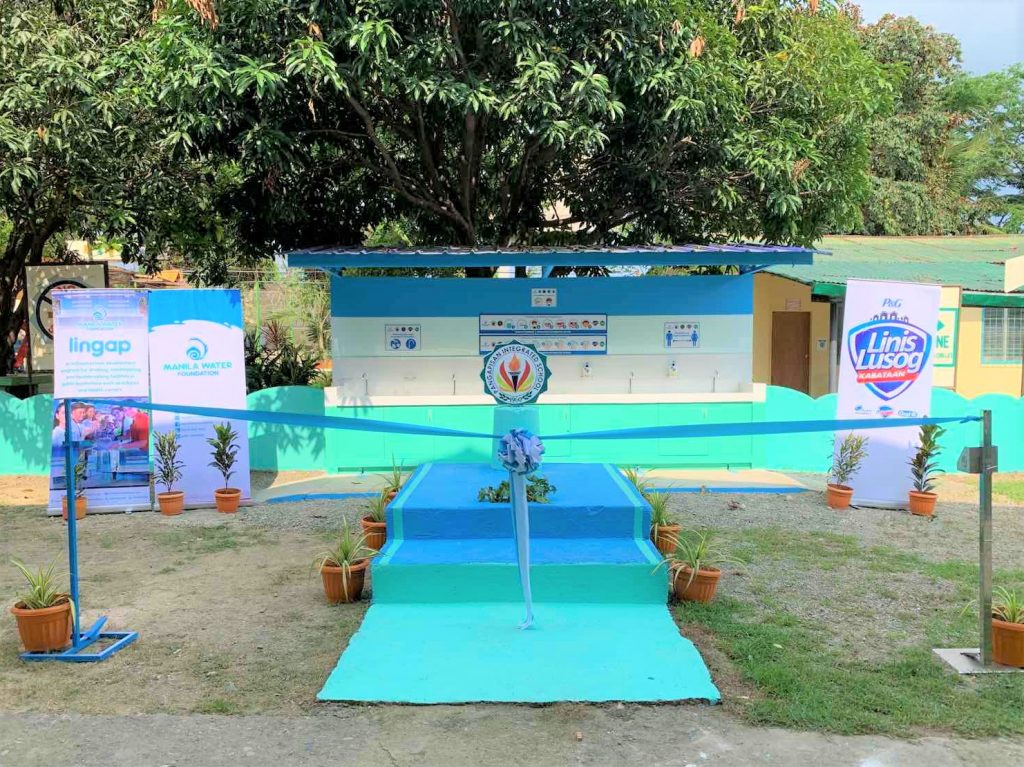
Lucao Elementary School

Handwashing has been an integral habit to protect our health from the threats of germs and bacteria transmitted by touch, even before the pandemic. As the country continues to lift strict protocols, resume face-to-face classes, and slowly ease in reopening, ‘di pa rin pwede, ang pwede na! The demotivation caused by pandemic fatigue has caused Filipinos to settle with “pwede na” hand hygiene, even at time when it’s vital to maintain proper handwashing.

Procter & Gamble’s Safeguard reinforced the importance of proper handwashing with the SafeWash Movement last 2020. Now, the brand continues to ensure that Filipino families are safeguarded from the threats of germs and bacteria with every handwash.

Safeguarding Filipinos, One Safe Wash at a Time

Earlier this year, Safeguard has donated ₱70 million worth of multi-faucet hand wash facilities in 280+ public schools nationwide, and in public spaces across Metro Manila. The aim is for schools to increase their ratings higher in WinS (Wash in Schools), so that no school is left behind and all students, educators, and parents are SAFE, especially for key COVID-19 areas. Construction of said facilities will commence in January 2022.

Safeguard is also donating ₱2.5 million worth of Safeguard Liquid Hand Soap to 30+ of the public and private schools that will lead the pilot testing of face-to-face classes. The donation of handwashing facilities and hand soaps helps to ensure that Filipinos, even in far flung areas, are kept safe against the threats of germs and bacteria that could cause illnesses, manage COVID-19 community outbreaks, and strengthen proper hand hygiene education to students and educators.

Pangasinan Integrated School

After almost 2 years of remote learning, 30 public schools all over the Philippines and a few nominated private schools have commenced with the pilot testing of face-to-face classes, including schools in Northern Mindanao, Bicol Region, Western Visayas, Central Visayas, and SOCCSKSARGEN.

Safeguard continues their mission to promote proper hand hygiene education including through the celebration of the Global Handwashing Day last October 15, 2021. With the participation of the Department of Education, Department of Health, Manila Water Foundation, and UNICEF, Safeguard aims to help change the ineffective hand hygiene practices of Filipinos and make every wash a SafeWash.

The Global Handwashing Day was celebrated through an informative and fun livestream hosted by the Manila Water Foundation Facebook page, with leading experts in health including David Khoo, Principal Scientist of P&G Singapore Innovation Center.

As the country continues to lift strict protocols, resume face-to-face classes, and slowly ease in reopening, ‘di pa rin pwede, ang pwede na! The brand is also continuing its support towards vaccine hubs and hospitals nationwide to further aid frontliners in the fight against COVID-19 by providing these facilities with Safeguard products. Together with masks, practice of proper social distancing, and strengthened hand hygiene with Safeguard, everyone can stay protected from the threats of germs and viruses.

Be part of Safeguard’s continuous #SafeWash efforts by shopping your Safeguard essentials in leading supermarkets, drugstores, Shopee, or Lazada, and we can all look forward to a safe Philippines.


Spotlight is BusinessWorld’s sponsored section that allows advertisers to amplify their brand and connect with BusinessWorld’s audience by enabling them to publish their stories directly on the BusinessWorld Web site. For more information, send an email to online@bworldonline.com.

Join us on Viber to get more updates from BusinessWorld: https://bit.ly/3hv6bLA.

Duterte says cocaine user among presidential election candidates

PCOO

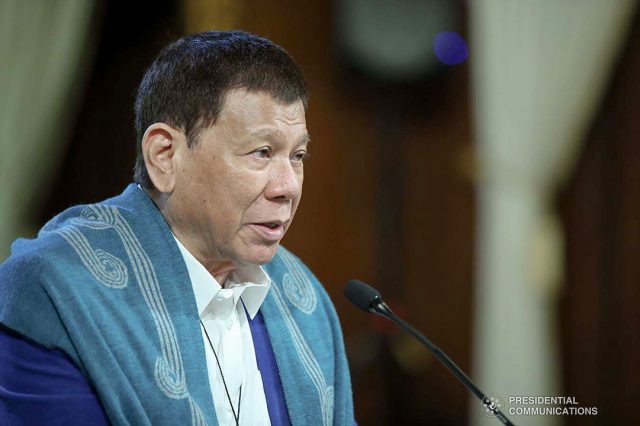
MANILA – Philippines leader Rodrigo Duterte declared on Thursday in a televised speech that an unnamed candidate for next year’s presidential election was a cocaine user.Duterte, who waged a war on drugs that killed thousands of users and peddlers, did not name the candidate, nor provide evidence to support his allegation, but said he was “a very weak leader”.Dozens of people have registered to run for president in next year’s polls. Duterte, 76, is not eligible for re-election due to the constitution’s one-term limit.“We have a candidate using cocaine,” Duterte said in a speech in the province of Oriental Mindoro.“That is why I am wondering, ‘What has this person done? What contribution has he made for the Philippines?”“Why are the Filipinos crazy supporting … I am just asking,” said Duterte, who will run for a seat in the senate next year.Reuters asked Duterte’s acting spokesperson, Karlo Nograles, who the president was referring to and for more details, but received no immediate response.“He is a very weak leader,” the outspoken Duterte said of the unnamed candidate. “He might win hands down. If that is what the Filipino wants, go ahead,” he said in the speech, confirmed by a transcript provided by his office.“I am not making intrigues. It is up to you. Find out who.”In the same speech he praised his chosen successor and longtime aide, Christopher “Bong” Go, a senator who is seeking the presidency.Other prominent presidential candidates include senator and retired boxing icon Manny Pacquiao, Vice President Leni Robredo, Manila mayor Francisco Domagoso, senator and former police chief Panfilio Lacson, and Ferdinand Marcos Jr, son and namesake of the late Philippines dictator, whose running mate is Duterte’s daughter, Sara Duterte-Carpio. — Reuters

US announces sex-trafficking charges against Duterte ally

U.S. prosecutors on Thursday announced sex-trafficking charges alleging that girls and young women were coerced to have sex with the founder of a Philippines-based church who is a friend and adviser to Filipino President Rodrigo Duterte.A 74-page indictment charges Apollo Carreon Quiboloy, founder of a church called Kingdom of Jesus Christ, The Name Above Every Name (KOJC) and other church officials, including two U.S.-based church administrators, with running a sex-trafficking operation that threatened victims as young as 12 with “eternal damnation” and physical abuse.Federal prosecutors in Los Angeles said the new indictment expanded on allegations made last year against three church administrators based in the city. It charges nine defendants with participating in a scheme in which church members were brought to the United States using fraudulently obtained visas and forced to solicit donations to a bogus children’s charity.Prosecutors said the donations were used to pay for “lavish lifestyles” of the church leaders.The latest indictment adds Quiboloy and five other new defendants to an existing indictment filed in 2020. Prosecutors said U.S. authorities arrested three of the new defendants on Thursday, but three others, including Quiboloy, were believed to be in the Philippines.Lawyers for the new defendants could not immediately be identified and the Philippines embassy did not immediately respond to a request for comment.The indictment alleges that Quiboloy and two other defendants recruited females aged 12 to 25 as personal assistants, or “pastorals.” It said they were required to prepare Quiboloy’s meals, clean his residences, give him massages and have sex with him during what they called “night duty.”Quiboloy, a self-proclaimed “Owner of the Universe” and “Appointed Son of God”, is a longtime friend and spiritual adviser of Duterte. The influential evangelist is followed by millions of Filipinos.In September, Filipino boxer Manny Pacquiao, a candidate for next year’s presidential election who has frequently clashed with Duterte, sued Quiboloy for libel after he accused the multiple world champion of embezzling funds intended for a sports complex.Church leaders are highly influential in Philippine elections.Duterte is prevented by the constitution from running for a second term as president. He has reacted negatively in the past to attacks on allies and last year vowed to terminate a key military pact with the United States after a Philippine senator who was an ally was denied a U.S. visa. — Reuters

Natural Gas: The necessary step to a decarbonized future

The United Nations calls climate change “the defining issue of our time.” In worst-case scenarios, the consequences of climate change range from shifting weather patterns that would decimate global food production, to rising sea levels that would increase the risk of catastrophic flooding that would literally reshape the world we live in.

Without coordinated drastic action, adapting to these impacts in the future will be both difficult and costly. Scientific research from the UN Intergovernmental Panel on Climate Change (IPCC) concluded that limiting global warming to 1.5°C would require “rapid and far-reaching” transitions in land, energy, industry, buildings, transport, and cities.

Essentially, the net human-caused emissions of carbon dioxide (CO2) would need to fall by about 45% from 2010 levels by 2030, reaching ‘net zero’ around 2050. This is why we need to reduce the carbon intensity of emissions, which is a process known as decarbonization.

Yet, as more developing countries grow, the demand for energy will keep rising. The question is, how can countries like the Philippines continue to prosper without also increasing their reliance on emissions-heavy energy sources like coal and oil? While many will be quick to mention a swift transition to renewable energy (RE), the reality is far more complicated.

“The energy transition is critical to achieving carbon neutrality by 2050 as indicated in the Paris Agreement. According to the Global Carbon Budget report in 2020, our carbon budget to limit temperature increase to less than 1.5 degree Celsius can be used up in less than 10 years,” Francis Giles B. Puno, president and chief operating officer of First Gen Corporation, one of the country’s leading providers of clean and renewable power, said.

“If we go too fast in transition, we will be saddled by unreliable and expensive electricity, which will do untold damage to the economy. If we go too slow, we will be unable to mitigate effectively the effects of climate change, and the damage to the economy will also be devastating as we have seen with the calamities due to extreme weather conditions that have hit the Philippines more frequently in recent years. It is critical that we get this transition right,” he added.

The Philippines is fortunate to have great potential for RE, being rich in geothermal, hydro, and solar energy sources. Yet, to best optimize their use, there remain significant steps that need to be made in order to transition from being powered by fossil fuels to RE.

“There are a lot of factors that need to be considered for the energy transition. This may take time due to the intermittency of renewable energy sources and early stages of development of storage technologies. Recent developments show that we are going in the right direction. The implementation of the coal moratorium, ongoing efforts to craft legislation for natural gas, electric vehicles, green energy auctions, among others will help accelerate the transition,” Mr. Puno said.

While the technology for renewable energy continues to develop, there is a need for a transitory solution that would help wean the country from traditional fuels towards solutions with lower carbon emissions. Natural gas will make that transition smoother.

“Natural gas is a bridge fuel that can provide power when intermittent RE sources, like solar and wind, become unavailable. Because natural gas is flexible, it can quickly provide power at night, or on a cloudy day, or when wind speed is not sufficient, as natural gas plants can start up and provide power in as fast as 15 minutes or even less. At a time when storage technologies are still very expensive and scarce, natural gas fills the crucial role of providing affordable complementary power to these intermittent sources,” Mr. Puno said.

“Moreover, natural gas is clean — unlike alternatives like coal — which would also be hard pressed to be able to provide the same function. In short, natural gas will ensure that we keep the lights on while we undergo this transition,” he added.

First Gen Corporation owns and operates 30 power projects across the country with 3,495.2 MW of installed capacity, as of 2020. Its portfolio consists of renewable energy sources such as geothermal, hydroelectric, wind, solar. These renewables are complemented with flexible natural gas, forming a reliable and clean energy portfolio. In 2020, First Gen’s natural gas plants generated over 11,500 gigawatt hours (GWh) of electricity, which helped avoid almost 7 million tons of carbon dioxide emissions, equivalent to removing about 1.5 million vehicles off the road.

The company has four natural gas-fired plants, which are in the First Gen Clean Energy Complex (FGCEC) in Batangas City, with a combined installed capacity of over 2,000 MW.

Moreover, First Gen Corporation ensures that its natural gas assets are operated responsibly and efficiently, with insignificant amounts of fugitive emissions released into the atmosphere. First Gen employs significant efforts to monitor and minimize emissions of harmful substances to way below than allowable levels.

With the urgency of the issue of climate change, there is a pressing need to take action and move the country towards a decarbonized and regenerative energy system. The benefits of natural gas make it the clear next step towards achieving this goal, and First Gen is committed to leading this transformation by meeting the needs of the energy market with competitive, efficient, and environment-friendly energy and power generation assets with the least impact to the environment.

“Natural gas will serve as a transition fuel to the installation of more renewable energy. The fast ramp-up capability of natural gas plants can address the intermittency of renewables and increase their share in total power generation. Natural gas provides a way to increase the share of renewables without having to worry about losing electricity supply when the sun or wind are not available. Equally important, it enables consumers to have an affordable and clean source of complementary power to solar, wind, and other intermittent RE,” Mr. Puno said.

“It is undeniable that the future will be dominated by RE and other non-carbon power technologies, in fact we support the ambition that eventually the Philippines will be totally dependent on zero-carbon power sources. Similar to the rest of the world, we see that natural gas will play a critical role — as we also continue to find options of decarbonizing this fuel source — towards a truly decarbonized and regenerative future,” he added.

First Gen Corporation is the leader in clean and low-carbon power in the Philippines. It has the largest portfolio of clean energy, making it well-positioned to lead the country towards a decarbonized energy future. Learn more about First Gen’s services by visiting www.firstgen.com.ph.


Spotlight is BusinessWorld’s sponsored section that allows advertisers to amplify their brand and connect with BusinessWorld’s audience by enabling them to publish their stories directly on the BusinessWorld Web site. For more information, send an email to online@bworldonline.com.

Join us on Viber to get more updates from BusinessWorld: https://bit.ly/3hv6bLA.

BSP keeps rates to boost recovery

By Luz Wendy T. Noble, Reporter

THE PHILIPPINE central bank on Thursday kept policy rates unchanged as expected, saying an accommodative stance is key to economic growth that has gained solid traction.

Monetary officials also warned about risks to inflation next year, including typhoons and fare increases.

The Bangko Sentral ng Pilipinas (BSP) left the key rate steady at 2%, as predicted by all 20 economists in a BusinessWorld poll last week. It also kept the overnight deposit and lending rates at historic lows of 1.5% and 2.5%.

“The Monetary Board maintains that keeping a patient hand on the BSP’s policy levers, along with appropriate fiscal and health interventions, will keep the economic recovery more sustainable over the next few quarters,” central bank Governor Benjamin E. Diokno told a news briefing on Boracay Island in central Philippines.

This was the first time journalists were allowed to cover the BSP briefing on the policy meeting physically since the main island of Luzon was locked down in mid-March last year to contain a coronavirus pandemic.

“Economic growth appears to be gaining solid traction, driven by improved mobility and sentiment amid the calibrated relaxation of quarantine protocols and continued progress in the government’s vaccination program,” Mr. Di-okno said.

“Nevertheless, the Monetary Board noted that sustained measures to safeguard public health and welfare remain crucial to facilitate the recovery in investment and employment,” he added.

Aside from typhoons and fare increases, the central bank chief also cited the price risks from a prolonged recovery of domestic pork supply.

The central bank’s decision comes a week after the government released data that showed the economy grew by 7.1% in July to September from a year earlier. Economic growth was 3.8% quarter on quarter.

Economic output shrank by 9.6% last year, one of the worst in Asia and the Philippines’ deepest recession since World War II.

“It’s necessary that you continue policy support and not withdraw this fully until there is very strong evidence of aggregate demand being sufficient,” central bank Deputy Governor Francisco G. Dakila, Jr. told the same briefing.

He added that the BSP has been coordinating with fiscal authorities about monetary policy eventually normalizing because it could affect the government’s pandemic response.

The Philippine economy remains far from its pre-pandemic level, said Alex Holmes, an economist at Capital Economics. He added that last quarter’s growth had come from a low base.

“While growth for the year will probably now eclipse the government’s earlier estimate of 4-5%, the economy will still enter 2022 with huge amounts of spare capacity,” he said in a note. He expects the central bank to keep rates steady for the rest of the year.

Mr. Dakila said the BSP had lowered its average inflation forecast for the year to 4.3% from 4.4% at the previous policy review. Inflation in the first 10 months of 2021 was 4.5%.

Consumer prices are expected to rise by 3.3% and 3.2% in 2022 and 2023, unchanged from the previous forecast.

Mr. Dakila said their updated estimates had considered rising global oil prices and strong third-quarter GDP data.

These had been tempered by slower inflation in September and October, he said, adding that it was possible for November inflation to be within the target.

Headline inflation last month slowed to 4.6% from 4.9% in September amid a slower increase in food prices. Inflation was still above the central bank’s 2-4% target.

Slower inflation in the past months had given the BSP “some breathing room” to keep an accommodative stance in the meantime, ING Bank N.V. Manila Senior Economist Nicholas Antonio T. Mapa said.

“However, a surprise pickup in economic growth opens the door for possible adjustments down the road,” he said in a note. The BSP’s first rate increase could happen by the second quarter of next year, he added.

The Monetary Board will hold its final policy rate review this year on Dec. 16. Mr. Diokno earlier hinted that he did not see the need to adjust policy settings for the rest of the year.

ADVERTISEMENT
ADVERTISEMENT