Home Blog Page 7182

Moving people safely
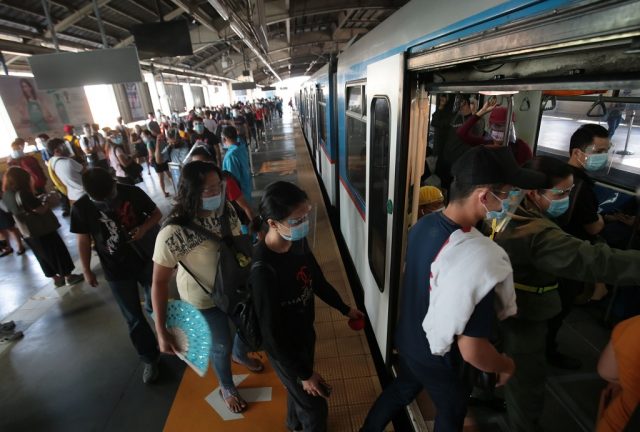
MRT-3 COMMUTERS at Cubao station observe the physical distancing protocol by the Department of Transportation. (Photo by Michael Varcas)

As we continue to open up the economy, and further remove restrictions on movement of people, more businesses are starting to require employees to report for work at the office. In this line, we should also start making adjustments particularly in public transportation. State-funded free-ride programs are about to end, and company-funded shuttle services may soon go.

Workers, soon enough, will again be left to provide for their own way to work. Public transportation options, and capacity, are something that we should have planned on. For many, private transportation has also become more expensive considering higher fuel prices. And cycling is an option only for those who can afford it, financially and physically.

And then there are public health considerations. As more people are allowed to move around, and are crammed into jeepneys, buses, and trains, another COVID-19 surge may just be a matter of time. Businesses are starting to operate at higher capacities, and some schools have resumed limited face-to-face classes. And with vaccine efficacy waning over time, the possibility of a surge is a valid concern.

Europe, for one, is now again battling an upsurge in the pandemic, Agence France-Presse (AFP) reported, noting that Austria is returning to lockdown this week while Germany and the Netherlands are poised to announce new restrictions. A further 700,000 people in the 53 countries that comprise the WHO’s European region could die by March 1, AFP quoted WHO (the World Health Organization) as reporting. Among the causes cited were the easing of restrictions and that vaccine-induced protection against infection and mild disease was declining.

We are doing better locally, but nobody knows for how long. Based on current trends, new daily COVID-19 infections in Metro Manila in particular may drop to fewer than 100 cases a day by Christmas, the OCTA Research Group said in a recent report. The Philippine Star reported, quoting Octa, that the seven-day average in the NCR (National Capital Region) from Nov. 16 to 22 dropped to 293 cases, with a positivity rate — the percentage of people who test positive for COVID out of those tested -— of two percent.

“The last time the seven-day average in the National Capital Region (NCR) was below 300 was from Jan. 2 to 8, 2021,” Star quoted OCTA fellow Guido David. He noted that “based on current trends,” the seven-day average in the NCR could drop to fewer than 200 by the first week of December and to fewer than 100 around Christmas.

But, for this to happen, David said, “we must continue to adhere to minimum public health standards to sustain the trends.” And this, in my opinion, is where the problem lies. The Christmas season has obviously started in the Philippines, and more people are now out of their homes, even as the pandemic and the national medical emergency are far from over. As people gather or congregate, it become more difficult to ensure adherence to “minimum public health standards.”

Ensuring public safety is even more difficult when it comes to public transportation. And this is where creativity and ingenuity will count a lot. Last March, a pilot project was started in the City of Manila to run electric buses that can safely accommodate passengers following physical distancing restrictions. Electric vehicle firm GET Philippines, the Manila City LGU, and the Aboitiz Group partnered for the project.

I mention electric buses because of what I understand of GET Philippines’ fleet management system, it has been designed to tackle COVID and to meet minimum public health standards. Its COMET electric mini-buses are fully electric and fast charging; have GPS tracking and fleet management; are equipped with Wi-Fi; and have been designed with app-based contactless ticketing to limit the handling of cash and interaction between driver and passenger. If I am not mistaken, there is also an option for automatic app-based contact tracing.

More important, the same electric buses have been designed to ferry persons with disabilities (PWDs), senior citizens, and other people with mobility limitations. Add to this the fact that these mini-buses are electric, thus mitigating the impact of high fuel prices. They are also smaller than regular buses, and can easier navigate Metro Manila’s narrow streets.

“Our goal is to turn electric vehicles from expensive products for the few to life-changing solutions for the many,” GET President Freddie Tinga said in a statement. “Our COMET electric mini-bus uses Formula E engineering from Spain and combines that with Silicon Valley analytics on our mobile app. The result is a more efficient, cost-effective, zero-emission transport system and a better and healthier experience for passengers and pedestrians alike.”

I have read reports of COMET bus trials in Davao City, and then in Manila. The Cebu Daily News reported that at least 30 of the same electric buses will be plying Metro Cebu routes by January 2022, to address traffic congestion and air pollution. Electric buses can run the same number of hours as any diesel bus, GET said, but minus the emission.

Also, GET’s fleet management system can track the buses and the passengers, who will need to download on a mobile phone the GET Pass app. The app will allow them to gain access to the vehicles and pay fares, among others. The bus service can also be used through a subscription by businesses for their workers, including PWDs, with rates similar to existing fare for public transportation.

As the electric vehicle industry matures in the Philippines, along with new technologies for fleet management, public transportation will start shifting to more cost-efficient, and more environment- and commuter-friendly alternatives. Electric trains are a long-term goal. But electric minibuses and jeepneys are low-hanging fruits that are quicker to deploy.

GET Philippines’ COMET electric mini-buses and its “subscription” service is just one of the emerging options to date. I am sure more options will become available soon enough. What matters now is that available options should be evolved to address commuting needs in a COVID world. It is not enough that public transport just enables people’s movement. We should move people in the safest and most secured ways possible. Public health is still the priority.


MARVIN TORT is a former managing editor of BusinessWorld, and a former chairman of the Philippine Press Council
matort@yahoo.com


Memory games

VECTORJUICE-FREEPIK

It happens with old people. In the middle of a conversation, some subject comes up and the characters involved become vague and fleeting. There is a scramble to remember details: there was a girl always in high heels, what was her name — it’s at the tip of my tongue.

Such confusions are dismissed as “senior moments.”

When slowed down by a memory lapse, we resort to speech tics like “hmmm” or “you know” as we vainly search for the continuation or ending to a story we begun. Call center operators who are trained to sound like natives of Nebraska are provided gap-fillers like “let me see,” or “I’ll have it for you in a sec.” These are preferred to “teka teka” which gives away the nationality of the disembodied voice as somewhere farther East of Hawaii.

The amnesiac gives out clues to capture the fugitive data, like previous claims to fame of the missing name (she was a bold star who fell on hard times, and now takes tricycles to visit friends) or past affinities (ex of a congressman from the Visayas). Somehow, bits of peripheral information cling to the memory.

The conversational quiz show has the listener feeding possible answers which are batted away like pesky mosquitoes (no, that one was married to a basketball player) until the correct name pops up — yes, that one. At this point, the narrator has already lost track of his story.

Memory lapses come with age, fleeting butterflies escaping the mind’s net. Forgetfulness (or the convenience of not having to remember) is brought about by the availability of “external memory storage” just a Google search away. Phone numbers don’t need to be memorized as these can be called up from a directory and dialed with the push of a button.

Telling jokes always requires a proper punch line. A forgetful comedian needs to be accompanied by a finisher to supply the right ending, especially after a painstaking build-up. This is probably why old comedy routines required two persons with the straight man providing the push to move on and get to the finish line. With the now more common solo stand-up format, it is just one person who must make sure no blanks are unfilled and the flow of the narrative is uninterrupted, except by laughter and applause.

Even a social situation can turn into a quiz show. A faintly familiar looking stranger accosts us and seems to know the details of our life. (Are you still in advertising?) Seeing our blank stare, the brazen acquaintance invites us to struggle with an identity crisis — You don’t remember me? This social encounter puts the pressure of proving familiarity on the one who has little recollection of it.

One way to end this impasse is to brazen it out. Of course, I remember you. Wow, you lost so much weight. It’s her turn to swim for dry land — you’re not still working for that werewolf, are you? If she offers no clues to jog your memory, just mention the first name that comes to you — Hey, I really thought you were Lavinia. You look so much like her, ha, ha, ha — you are Lav? What did I say?

It is a sign of familiarity when two people can finish each other’s dangling sentences with appropriate endings. Either the person is truly a soul mate who thinks on the same wavelength, or someone who has heard your story so many times with the same blanks that need to be filled. This is what happy marriages are about.

It is a sign of growing dementia when one is routinely challenged by blanked out memories. Names of people, dates of appointments, and even favors received are simply gaps that one can fall into. A narrator’s vacant stare and shortness of breath are all the clues the partner needs to come to the rescue. (She’s a new nurse.)

Somehow, memory failure exempts distant events. The color of the curtains in one’s childhood bedroom or the height of trees one used to climb when curiosity and agility conspired to make us reckless are all too vivid.

What happened 50 years ago next year is still fresh in our minds. Is it ancient history? Not to those who lived through it… and still remember.


TONY SAMSON is chairman and CEO of TOUCH xda
ar.samson@yahoo.com

Only 7 countries proved to be pandemic MVPs

FOR A YEAR NOW, Bloomberg’s COVID Resilience Ranking has tracked the best and worst places to be during the pandemic, combining data ranging from outbreak control to death tolls, vaccination campaigns to progress toward restarting travel.

Twelve months of the Ranking have made one thing clear: past performance is no guarantee of future success — or failure. Countries have been stymied again and again by the vagaries of the biggest health crisis in a generation, but some have also found ways to turn devastating situations around, whether through science, social cohesion or simply learning from the past.

Since it debuted last November, the Ranking’s best and worst performers each month have fluctuated, with the onset of vaccines, the emergence of the delta variant and the more recent reopening push key moments in the pandemic journey.

Initially, the top performers among the 53 economies ranked were those which deployed tough containment strategies, including quarantines and border curbs. Then, places that were able to roll out shots the fastest came to the fore, with those that have been able to combine high vaccination levels with a normalization of social and economic activity now scoring highest.

As more potential turning points loom — lockdowns are returning in some places and the advent of COVID-19 pills could neutralize the virus long term — we scored a year’s worth of COVID resilience, zeroing in on the most con-sistent performers, who’s done best on reverting to normal life and the ultimate indicator: Where deaths have been most effectively avoided.

MOST CONSISTENT

The pandemic’s volatile arc meant that no top performer sustained their success all year. New Zealand and Singapore, once No. 1 for walling out the virus and maintaining a level of pre-pandemic normalcy for most of 2020, saw their fortunes plunge as Delta infiltrated their COVID Zero fortresses, triggering renewed lockdowns and restrictions. The US — fleetingly No. 1 in June — and Israel, the fastest at rolling out shots and lifting curbs in the early months of 2021, were caught out when the virus flared again over the summer, particularly among the unvaccinated.

The Ranking’s lower rungs fluctuated too: Countries like Mexico and Brazil were ranked lowest through early 2021 as the virus slammed their populations, but Latin America has avoided the worst of delta thanks to vaccination and a high level of natural immunity. Southeast Asian countries took over as the worst places to be in the second half of the year as their inoculation rollouts lagged, with resurgent outbreaks leaving their export-dependent econ-omies reeling.

Amid the flux, a handful of places proved the most consistent. Most of them never reached No. 1 of the 53 economies ranked, but they never fell below 26th place, either. These seven countries — Norway, Denmark, Finland, the United Arab Emirates, Canada, South Korea and Switzerland — are the closest the pandemic has to season MVPs: whether rolling out vaccination, fighting Delta or reopening the economy, they always scored above average.

Strong healthcare safety nets and societal cohesion are common denominators among the seven, qualities that advantaged them at every stage of the pandemic. A faith in government and people’s willingness to follow rules helped with containing the virus, while these countries’ relative wealth meant they had the buying power to snap up the first supplies of vaccines.

At the other end, nine countries — Argentina, Iran, Mexico, Brazil, Peru, Poland, Nigeria, Pakistan and South Africa — have never risen above the Ranking’s mid-point the past year. These places have been the most devastated by the pandemic, infections-wise, and many still struggle with limited access to vaccines.

PROGRESS

In June, as vaccines proliferated in developed economies and governments started to lift restrictions, the Ranking added two new data indicators to the original 10 to reflect the progress toward reopening and normalizing econo-mies: Vaccinated Travel Routes and Flight Capacity.

The rollout of shots has allowed many countries to resume aspects of pre-pandemic life, with fatality rates largely decoupling from infection curves and Europe, North America and some parts of the Asia-Pacific now looking to live with the virus.

Places that accept COVID is endemic, like influenza, are less likely to lock down or see people avoid public activities. Over the past year, Community Mobility — a stalwart indicator of the Ranking which tracks levels of movement to offices and retail spaces compared to a pre-pandemic baseline — has remained relatively steady in Greece, the US, the UK and Germany, with all four avoiding weekly activity drops of more than 10% since the end of last year.

Similarly, their flight capacity has steadily recovered and the stringency of restrictions, particularly in the US and the UK, is at a low level.

EXITING THE PANDEMIC

While all of these places continue to see waves of infection and some, like the US, are still seeing significant fatalities, the data shows that in these countries people are no longer willing to endure disruption to their everyday lives and have largely lost their fear of the virus. For these economies, the pandemic is receding into the rear view — though winter will pose a test.

At the other end of the spectrum, mobility levels in places like Pakistan, South Korea, Japan, Chile and Israel have all dropped by 10% or more over the past four months, as virus resurgences triggered restrictions on people’s movements. New Zealand has seen six such activity drops in the past 12 months, reflecting a stop-start cycle of curbs that’s exacting a growing toll.

While ongoing lockdowns have been associated with the “COVID Zero” approach that aims to eliminate the virus’s spread, Mainland China and Hong Kong — the only places in the world still adhering to the strategy — have not seen domestic activity levels drop by more than 10% since early 2021. This doesn’t capture international travel, which has been strictly curbed in both places, and in the case of China reflects its vast scale: lockdowns in some part of the country to wipe out delta flareups only occasionally rise to the point where activity nationally is impacted.

COVID-19’s lasting legacy is the more than 5 million lives that have been lost over the course of the pandemic, a toll that’s widely viewed as likely under-counted. The blow has been unevenly distributed across the world, and has been largely tied to the effectiveness of containment strategies in the first year of the pandemic before vaccines became available.

Limited fatalities have been the standout success story of the COVID Zero approach, although the flip side has been a far slower reopening, particularly when it comes to travel. On a per capita basis, China has the lowest COVID mortality of the 53 places ranked, with just three deaths per million people. New Zealand — which still has a closed border, though it is moving toward opening — is second, with just eight fatalities per million. Other places that successfully eliminated and kept out COVID in the first year such as Taiwan, South Korea and Australia have seen less than 100 deaths for every 1 million people.

At the other end, Peru has the worst death toll, with 6,093 dying from COVID per million people. The US — which was particularly unsuccessful at containment — and European nations have seen fatalities of around 2,000 peo-ple for every million.

SCARS

The northern-hemisphere winter may again reshuffle the ranking leader board as countries confront the first cold season with both vaccines and the more transmissible Delta. Already, European nations like Austria, Germany, the Netherlands and Denmark are seeing fresh waves and some have imposed new lockdowns to slow the virus’s spread. We’ll see how that’s impacted the region’s Ranking performance in the November edition — out next week.

Right now, many developed countries are racing to get booster shots in arms and to inoculate children, the last big group to be vaccinated. Will these actions be enough to sustain the world’s slow exit from the pandemic? Or do we see a reversion to restrictions as new waves — and, the doomsday scenario: more virulent variants — force a reversal? Keep tracking Bloomberg’s COVID Resilience Ranking to find out. — Bloomberg

Little known cult is new S.Korea COVID-19 outbreak

SEOUL — Little known sect led by a pastor who pokes eyes to heal is at the center of a coronavirus disease 2019 (COVID-19) outbreak in South Korea, as the country reported a new daily record of 4,116 cases for Tuesday and bat-tles a spike in serious cases straining hospitals.

In a tiny rural church in a town of 427 residents in Cheonan city, south of Seoul, at least 241 people linked to the religious community had tested positive for coronavirus, a city official told Reuters on Wednesday.

Many of the congregation were elderly in their 60s and above and were unvaccinated, the official said. Just 17 out of the 241 confirmed cases had been vaccinated.

“I believe it’s the church’s anti-government beliefs that refrained the believers to get the vaccine,” the official said, adding that the town was put under a lockdown.

The church opened in the early 1990s and has ever since become larger with communal living facilities of its own.

The religion is not officially registered as a sect, however the ritual act the pastor performs is known as the so called “imposition of hands-on eyes,” a practice of poking two eyes to rid of secular desire, Jung youn-seok, a head of cult information resources think tank told Reuters.

“Such act is extremely dangerous and nonbiblical. It is an outright ban in Korean Christianity,” Jung said, adding that the pastor’s mother was a powerful figure and was ousted from Christian community in the 1990s for practic-ing identical rituals. Calls to the church from Reuters went unanswered.

The outbreak is a small portion of the national total, but is an example of a cluster with a high concentration of cases.

Shincheonji outside China early 2020, with at least 5,227 people linked to its 310,000 followers infected after attending a service in the city of Daegu.

EMERGENCY PLAN IMMINENT

South Korea this month switched to a “living with COVID-19” plan aimed at lifting rigid distancing rules and ultimately reopening after reaching vaccination goals last month.

Looking at the metropolitan Seoul area alone, the situation is critical enough to impose an emergency plan at any time, Prime Minister Kim Boo-kyum told a COVID-19 response meeting on Wednesday. He called on health au-thorities to classify the patients accordingly based on the severity of the symptoms and make use of self-treatment options for mild or asymptomatic cases.

Less than 20% were treating themselves at home last week, Mr. Kim said.

The Korea Disease Control and Prevention Agency (KDCA) had said the emergency plan may be imposed if and when the nationwide ICU bed capacity surpasses 75% or depending on the risk assessment that reviews medi-cal response shortfalls, surge in number of elderly patients and uptake in booster shots.

Hospitals were treating 586 severe COVID-19 patients as of Tuesday midnight, rapidly filling up limited hospital beds for serious and critical cases. More than 85% of them were aged 60 or above, KDCA data showed.

71% of the ICU beds were filled up nationwide and 83.7% in capital Seoul and neighboring areas alone, Son Young-rae, a senior health ministry official, told a briefing, stressing ministry efforts to secure more beds with adminis-trative order.

Hundreds were still awaiting for their beds.

Despite the increase in hospitalization rate, the country’s mortality rate remains relatively low at 0.79%.

South Korea was one of the first countries to record novel coronavirus cases after it emerged in China in late 2019. It has since had 425,065 infections, with 3,363 deaths.

The country has fully vaccinated 79.1% of its 52 million people, while just 4.1% have been given a booster dose. — Reuters

Globe launches Sustainability Academy through LinkedIn Learning, encourages employees to embrace sustainable practices

Globe launched its first-ever Sustainability Academy to give its over 8,000 employees the know-how and insights to incorporate sustainability practices at work and at home.

Through its learning and development arm, Globe University, the company leveraged on the LinkedIn Learning platform to curate 37 micro learning videos that made up Sustainability 101 and 102 courses for the teams. These courses include topics such as: The Employee’s Guide to Sustainability, Climate Change Mitigation, and Sustainability as a business priority to learning about online safety, internet addiction, cyber bullying, internet trolls, among many others.

“Within the first 30 days after the launch of our Sustainability Learning Campaign, there have been approximately 1,800 Globe employees who were able to complete the Sustainability 101 and 102 courses. This translates to about 3,700 hours invested by our Globe employees learning about Sustainability. This strong initial take up indicates our employees’ interest and commitment to our Company’s Sustainability Goals,” Berns Bernardo, Head of Globe University shared.

Understanding the Basics of Sustainability, Sustainable Development Goals, Sustainability Principles in the Workplace and at Home, and Harnessing the Internet to Make a Difference are among the many topics to be tackled in Globe’s Sustainability Academy.

“The Globe Sustainability Academy accelerates our journey towards creating a Globe of Good that preserves the planet, ensures the well-being of many, and leverages technology to build green communities and businesses. We see it as a catalyst to spread sustainability one person at a time,” said Ernest Cu, President and Chief Executive Officer.

The Sustainability Academy is delivered through a collaboration with LinkedIn. With more than 774 million members, LinkedIn is the largest professional network in the world and a popular choice among professionals looking to advance their careers.

Globe became the first Philippine company listed by the Science Based Target initiative (SBTi) committed to set science-based targets by 2030 and reach net zero emissions by 2050, in line with the Information and Communications Technology (ICT) Sector Pathway by SBTi. Targets will be submitted by June 2023 and are subject for review and approval, in conjunction with the 1.5°C global warming scenario of the Paris Agreement and the #RacetoZero Campaign.

Employees are also encouraged to participate in E-Waste Zero which promotes a sustainable, safe, and responsible disposal of electronic devices. Since 2014, Globe has collected more than 1.4 million kilograms of old and non-working electronic devices from its corporate offices and key facilities, customers, and partners.

In addition to this, the company delivers its #MakeITSafePH campaign which is part of Globe’s broader mission to keep customers safe from risks and dangers of the online world. Under the campaign, it has partnered with international organizations such as the Internet Watch Foundation and the Canadian Center For Child Protection to help the government in its fight against online sexual abuse and exploitation of children (OSAEC). Globe also joined the UNICEF-led SaferKidsPH initiative to help raise awareness on the issue. Earlier, Globe also invested in a content-filtering system, costing the company USD 2.7 million.

“Sustainability can have many interpretations, but for Globe, it is understanding that caring for people, community, and environment are intrinsic to our business and cannot be addressed separately. Being a part of the Globe family is having all of us doing our share as custodians of the only planet we call home, even as we go about our business and continue creating economic value. The Globe Sustainability Academy is a big leap in the right direction,” Cu added.

Globe is committed to upholding the United Nations Global Compact Principles and contributing to 10 United Nations Sustainable Development Goals.

Learn more about our sustainability journey by visiting https://www.globe.com.ph/about-us/sustainability.html.


Spotlight is BusinessWorld’s sponsored section that allows advertisers to amplify their brand and connect with BusinessWorld’s audience by enabling them to publish their stories directly on the BusinessWorld Web site. For more information, send an email to online@bworldonline.com.

Join us on Viber to get more updates from BusinessWorld: https://bit.ly/3hv6bLA.

Women writers of the past offer insights on women’s roles in society

By Patricia Mirasol

Contemporary women writers are better off than their marginalized counterparts in the past century, yet the latter were still able to negotiate their societal roles through their lives and their works.

This was the takeaway from a Nov. 22 webinar on the works of two women writers, Grazia Deledda and Magdalena G. Jalandoni, by the Embassy of Italy in the Philippines, the Philippine Italian Association (PIA), the National Library of the Philippines (NLP), the Ateneo de Manila University, and the Italian Chamber of Commerce in the Philippines.

Women writers have greater chances of being published nowadays, said Alice Tan Gonzalez, a fictionist and faculty member of the University of the Philippines Visayas.

“We have the internet, more access to libraries… These are obviously different times,” she told the webinar audience. In terms of themes and materials, “women writers are very much exposed to the world.”

The problem, according to Stefania Lucamante, professor of Italian Contemporary Literature at the University of Cagliari in Italy, is that with post-feminism, a lot of women don’t understand how much they have achieved.

“They take too many things for granted in the western world,” she said. “They no longer have the urgency to keep moving forward with feminist issues. We can’t generalize, though.”

FICTION AS NEGOTIATION

Both Deledda and Jalandoni were identified as “writers in the margins” in the aforementioned webinar. The former was marginalized because of her lack of formal education, her gender, and her being Sardinian (a resident of a geographically isolated Italian province with a distinct culture). The latter was marginalized because of her gender, her location (the southern city of Iloilo, far from the country’s capital), and her use of a regional language (Hiligaynon).

The fact that not many of Jalandoni’s works have been translated from Hiligaynon was perhaps why she was disadvantaged as a National Artist for Literature nominee several years back, said Ms. Gonzalez.

“Jalandoni had few cards to deal with,” Ms. Gonzalez told the webinar audience. “She was kept at home and didn’t travel.”

That said, the prolific Hiligaynon poet, playwright, and novelist was still able to negotiate her subject-position throughout her life. When her mother pulled her out of Iloilo High School in the early 1900s because the school was rowdy and merged boys and girls in classes, Jalandoni negotiated her place by continuing to write, eventually publishing her first novel at 16.

Her novel’s happy endings were the author’s negotiation with her real world, which at the time relegated a woman’s primary role to domestic functions such as embroidery and cooking.

“The mores observed by the characters in her novels are those of that [colonial] period… but the negotiations and compromises that these women characters take intimate the position on gender that women readers of a later generation would [also] take,” Ms. Gonzales said.

FEAR OF LABELS

In Deledda’s novels, meanwhile, Sardinia is presented both as a backdrop and a metaphor for the challenges in her characters’ lives. Ms. Lucamante told the webinar audience that Deledda, who won the 1926 Nobel Prize for Literature, made her readers understand how Italian society was marked by rules that predated Christianity. Sardinian women, in particular, were depicted in her works as brave individuals who did not hesitate to ride horses or use guns when need be.

“Deledda is proud of showing — alongside figures of goodness and modesty — figures of resilience, force, and bravery,” she said, adding that these depictions were based on the early life experiences the author herself witnessed.

Women writers tend to innovate more in their private lives than in their professional ones because of their fear of being labeled, according to Ms. Lucamante.

“Their writing needs to be legitimized, whereas their personal life is their own matter,” she added.

Google launches digital responsibility curriculum in the Philippines

By Bronte H. Lacsamana 

Be Internet Awesome, Google’s free program designed to teach children the fundamentals of digital citizenship and online safety, was launched in the Philippines in an online event on Tuesday. 

“As students increase (their) reliance on (the) internet, we have to educate them about digital responsibility inside and outside classroom,” said Leonor M. Briones, secretary of the Department of Education (DepEd), at the launch. 

The curriculum focuses on five pillars: being smart, alert, strong, kind, and brave online. These serve as the basis for teaching materials and resources that Google developed to help teachers and parents convey digital literacy concepts more easily to children. 

The DepEd’s role was to localize these to the Filipino setting. In August, the program was piloted in over 20 schools in Antipolo, Makati, Mandaluyong, Pasig, and Nueva Ecija.  

Around 2,014 students in grades 4 to 8 praised the curriculum, rating it 90-94% and saying it helped them learn internet safety tips that are useful in the digital age 

“Coming from the success of the pilot run, I believe this program holds great potential to educate more children,” Ms. Briones said. “In the future, we can integrate [it] into the national curriculum so it can be taught in the classroom.” 

Bernadette Nacario, country director of Google Philippines, added that the internet being a crucial part of people’s everyday lives meant it could cause harm if people are not careful. 

“We are launching this to help raise the next generation of netizens who are smart, alert, strong, kind, and brave on the internet,” she said. 

CYBER RISKS 

Citing a 2020 study by the Digital Intelligence (DQ) Institute, Google Philippines’ marketing head Gabriel “Gabby” Roxas pointed out that the Philippines is one of the most challenged countries when it comes to child online safety, with the country ranking 4th to last out of 30 countries in terms of safety from cyber risks for kids. 

“Because of hybrid classes, children are forced to spend more time online,” he explained. “Filipino kids are coming online much earlier because of the pandemic. In 2020, even six-year-old kids are coming online for the first time.” 

With Be Internet Awesome, children ages 8 to 12 can learn to become confident explorers of the online world, whether it’s from educators’ slides and localized lesson plans or from family reminders instituted by parents at home, he added.  

For parents in particular, the key to online safety is being approachable, according to psychologist and guidance counselor Dr. Michelle S. Alignay. 

“We should be the ‘askable’ digital parents because we are the adults. If there’s any threat or risk, we should be available to them,” she said, on the level of involvement needed. “We should also be evolved parents. We need to grow digitally with them.” 

Google’s curriculum is one way to be updated with the trends and risks that children could be exposed to on the internet, but another is to just talk to them and find out what they consume and do online in their free time outside of online classes, added Dr. Alignay. 

Mr. Roxas agreed, specifying behaviors to teach that reflect the five pillars: refraining from oversharing (smart), determining what is fake and real (alert), creating and securing good passwords (strong), spreading positivity and blocking inappropriate behavior (kind), and speaking up when they notice something wrong (brave). 

“More and more, the internet is going to be an essential part of kids’ education. It matters that it’s being taught in school but hopefully it’s something that can really be discussed at home,” he said. 

Be Internet Awesome’s website in the Philippines is also available in Filipino.

Suntrust moves forward to its 24th year

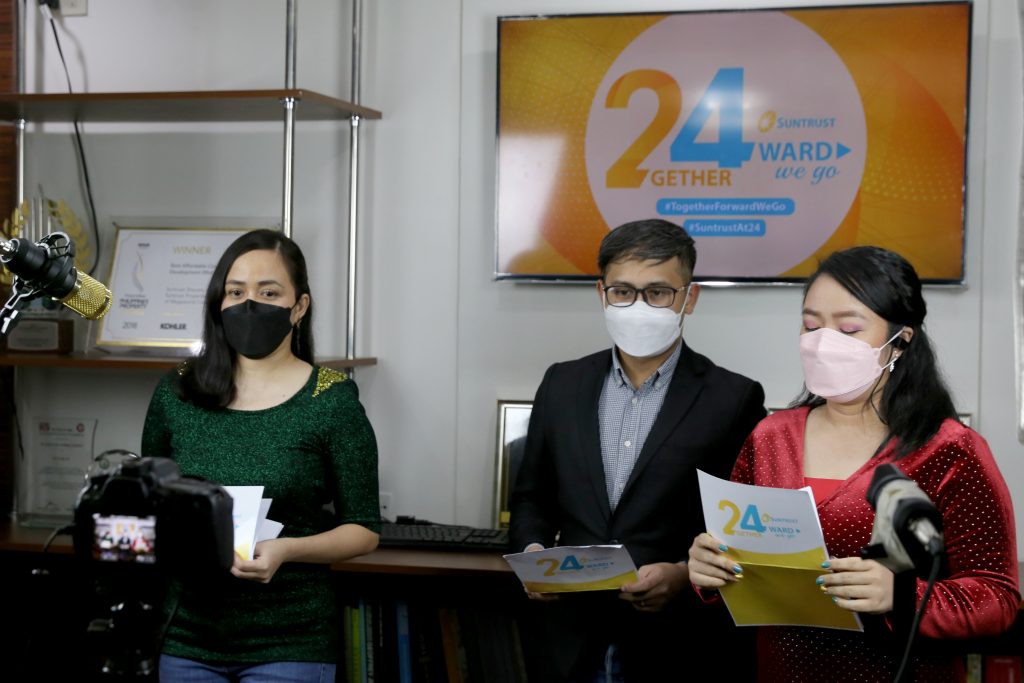
While the pandemic crisis brought several obstacles along the way, Suntrust Properties, Inc. nonetheless moved forward and marked milestones as it expanded its affordable, quality homes in the country. Such progress, for Suntrust, is attributable to its value for togetherness in working and accomplishing a shared objective — a value that the company further highlighted in celebrating its 24th year.

With its anniversary theme “2gether, 4ward we go,” Suntrust recognizes the significance of unity among its people whose crucial role and synergy can push the company towards its growth and success.

“’2gether, 4ward we go’ is a call for employees and salespeople to work together towards a common goal and that is to turn more dreams into reality,” Suntrust President Atty. Harry Paltongan said in his speech during the company’s virtual anniversary program held on November 15.

“The theme serves as a reminder for the whole group to recognize the importance of our actions being correlated and coordinated with each other. Because the strength of the company relies not on our hard work alone but on our ability to work together and ensure that others are doing the same,” he expressed.

Prior to the main celebration, the people of Suntrust organized pre-anniversary activities.

A week before the celebration, the company set up the Anniversary Wall, its modern take of the traditional freedom wall where employees could share their hopes and dreams through love notes addressed to their future selves.

Also displayed was a Tapestry wall art for employees to reveal their source of strength amid the pandemic. The wall served as a way to answer the questions “What keeps the company together during the pandemic?” and “What do you look forward to next year?,” both of which employees responded with words that resonated with them the most.

Suntrust also conducted the Trees of Hope on its pre-anniversary celebration in Porac, Pampanga. Through Stateland, Inc., a Suntrust company, the tree-planting activity sowed 100 fruit-bearing seedlings inside The Arcadia. The initiative can help improve the air quality, mitigate stormwater, provide shade, and enhance the beauty of Suntrust’s flagship project.

On the actual anniversary celebration, Suntrust started the main event with a virtual thanksgiving mass officiated by Rev. Fr. Gabriel Paraan, director of Cardinal Sin Welcome Home, Archdiocese of Manila.

Following the virtual mass were the company’s E-Sports Virtual Awarding Ceremony and SPI Online Bingo.

Suntrust’s traditionally-held annual sportsfest TagiSuntrust was once again postponed due to the pandemic restrictions. Nonetheless, with the help of technology, the company continued instead its virtual version of TagiSuntrust, the E-Sports Edition. Games included Pictionary, word factory, and chess, among others, which employees played during lunch breaks last month. The awarding ceremony announced the winners for each game, who received medals, trophies, and cash prizes.

The company also staged its SPI Got Talent, a virtual talent video contest, to showcase the creative abilities of its employees.

During its anniversary celebration, Suntrust also opened its corporate wall. The company has a creed, an embodiment of its values and principles, which they recite and look to embrace wholeheartedly. For its anniversary, the company ensured that the creed was read by everyone.

The walls also presented Suntrust’s history to remind its people of the company’s humble beginnings and milestones since its inception in 1997. It encouraged the people to reflect on this journey as the company looks forward to its 25th anniversary next year.

Suntrust was formed amid the 1997 Asian financial crisis, and it thrived as one of today’s biggest real estate developers in the Philippines. Throughout its 24 years, the company has built more than 30 projects nationwide; and despite the ongoing health and economic crisis, it has made milestones with its properties.

This year, Suntrust has launched two residential properties, the SuntrustAscentia condominium to rise in Sta. Ana, Manila and the new inventories for its Cybervilleproject in Cavite. Its model houses in The Arcadia, a 22.6-hectare residential community in Pampanga, were also blessed. It also held the topping-off ceremony of The Mist Residences, its condominium project in Baguio City. These milestones signified that despite the pandemic, the company was still moving in the right direction.

Suntrust commits to helping address the housing backlog by building affordable homes, andit assures its homebuyers that it listens and works harder to attend to their needs.


Spotlight is BusinessWorld’s sponsored section that allows advertisers to amplify their brand and connect with BusinessWorld’s audience by enabling them to publish their stories directly on the BusinessWorld Web site. For more information, send an email to online@bworldonline.com.

Join us on Viber to get more updates from BusinessWorld: https://bit.ly/3hv6bLA.

Senate may pass budget next week

PHILIPPINE STAR/EDD GUMBAN

By Alyssa Nicole O. Tan

THE SENATE is targeting to approve the 2022 General Appropriations Bill on third and final reading early next week after delays caused by a coronavirus scare.

Debates were expected to end on Tuesday night, Senator Juan Edgardo M. Angara, who heads the Senate Finance Committee, told reporters in a Viber message group on Tuesday.

“We hope to finish the period of interpellations today since there are a handful of agencies left,” he said. “Many senators have already submitted amendments, and we hope to incorporate them by early next week before the second and third reading of the General Appropriations Bill.”

Congress is under pressure to pass the budget bill by yearend to avoid a reenacted budget, which could delay government projects and expansion plans for some key services and programs amid the coronavirus pandemic.

Debates could extend until Thursday because of the budgets of major agencies.

The budgets of the Social Welfare, Public Works, and Trade departments, as well as those of the Climate Change Commission, Commission on Higher Education, Philippine Sports Commission (PSC), and Presidential Communications Operations Office (PCOO) will be up for debates.

“We suggested to submit amendments to Senator Angara, and he can just read them so that it will be faster,” Senate President Vicente C. Sotto III told Radyo 5 in mixed English and Filipino. Other senators will then have to vote on the revisions.

He said that the initial target to halt deliberations was Thursday last week, but work was halted after chamber visitor Defense Secretary Delfin N. Lorenzana tested positive for the coronavirus disease 2019 (COVID-19) — which turned out to be a false positive.

The budget of the PCOO which was scheduled for debate on Monday was deferred after the general manager of the Asian Productivity Organization Production Unit, a government-owned and -controlled corporation attached to the PCOO, drank alcohol during the session. Senators, angered by the “total disrespect,” pushed its budget to last.

“May I remind the PCOO team to conduct proper virtual etiquette because we can see Mr. Dominic Tajon moving around, and we saw some inappropriate pictures of individuals not clothed properly,” Senator Sherwin T. Gatchalian said during the plenary session.

“Unbelievable,” said Majority Leader Juan Miguel F. Zubiri in a Viber message late Monday. “No one attended here in the session hall that are heads of their agencies when all other departments came here in the Senate and waited the whole day to pass their budget.”

Meanwhile, Senator Pilar Juliana S. Cayetano on Monday evening recalled the budget of the PSC which had earlier been submitted. This was due to its “hands-off approach” to the issue regarding pole vaulter Ernest John Obiena, who was accused by the Philippine Athletics Track and Field Association (Patafa) of failing to pay his coach.

“They said: ‘Work it out.’ How can you do that to your national athlete?” she questioned. “Give importance to our national athlete who was accused just like that, and it was without basis because no less than the coach said that he has been paid.”

Meanwhile, Mr. Sotto said that a provision will be made in the GAB to ensure that the parking of funds under the Procurement Service of the Department of Budget and Management (PS-DBM) and the Philippine International Trading Corp. (PITC) will no longer continue.

Senate President Pro Tempore Ralph G. Recto earlier said that at least P63.1 billion have been dumped into these two agencies, with PITC, an attached agency of the Trade department, accounting for P31.54 billion and the PS-DBM for P31.56 billion.  

He added that in 2020, PITC booked an income of P199.8 million, of which P137 million came from outsourced procurement, while PS-DBM’s revenue reached P1.02 billion, with sales accounting for P877 million and service fees as procuring agent contributing P21.6 million.

However, the Senate Chief pointed out that the remaining departments and agencies were “heavy,” so it might be that debates will extend until Thursday, hopefully not Friday.

Technology to spur GDP growth of 4.9% this year — Citi

PHILSTAR FILE PHOTO

By Luz Wendy T. Noble and Revin Mikhael D. Ochave, Reporters

THE PHILIPPINE ECONOMY is expected to bounce back with a 4.9% growth this year, backed by sectors that have benefited from technology-enabled businesses, according to Citigroup, Inc.

“For gross domestic product (GDP), we are looking at around 5% for 2021,” Fernando Fleury, Citi Philippine Head of Banking, Capital Markets and Advisory, told an online news briefing on Tuesday.

Based on a report shared by Citi after the briefing, the bank’s growth forecast for the Philippines this year is 4.9%.

The estimate matches the upper end of the government’s 4-5% growth target for the year and will be a turnaround from the 9.6% record contraction last year.

“It’s actually meaningfully higher as most of the developed world, so we’re very bullish and positive on the Philippines,” Jan Metzger, Citi Asia-Pacific Head of Banking, Capital Markets and Advisory said.

Citi expects the economy to grow by 6.8% next year, still below the state’s 7-9% target.

“You will see a lot of ongoing tech disruption,” Mr. Metzger said “The healthcare and consumer [industries] will also be extraordinarily active.”

Another emerging industry that would probably experience a boom is digital infrastructure including towers, data centers and fiber networks, Mr. Fleury said, adding that growth prospects were looking good for 2022 and 2023.

“Until this moment, these businesses have been primarily owned by the telcos,” he said. “But more and more, we’re seeing like an increasing interest from our multinational clients, and from the local corporates as well, into developing that business.”

Mr. Fleury said they expect banks to boost their lending next year, allowing more economic activities to flourish.

“We should see all Filipino banks extremely liquid,” he said, adding that credit growth involving companies could be faster.

Bank lending, which fuels capital formation, rose by 2.7% year on year in September, the second straight month of growth after shrinking for eight consecutive months since December 2020. Borrowings for productive activities rose by 4.4% but consumer loans continued to fall by 7.8%.

The Philippine economy expanded by 7.1% last quarter, bringing year-to-date growth to 4.9%.

Meanwhile, the Philippine electronics industry has raised its growth forecast for the sector to 10% from 7% this year amid stronger global demand.

“Given the global and local trends and conditions, the board of trustees evaluated the condition of the semiconductors and electronics industry in our last board meeting, and made an overall growth forecast of 10% for 2021,” Glenn Everett, chairman of the Semiconductor and Electronics Industries in the Philippines Foundation, Inc. (SEIPI) said at the group’s general membership meeting on Tuesday.

He said global semiconductor sales increased by 27.6% to $48.3 billion in September, which suggests a strong global demand for chips. “There is little sign that this demand is slowing,” he said at the virtual meeting that was open to media.

Mr. Everett said the growth of the country’s electronics industry next year would depend on improvements in logistics and efforts to reopen the Philippine economy amid the coronavirus pandemic.

In August, SEIPI kept its 7% growth forecast for 2021 amid lockdowns spurred by a fresh surge in coronavirus infections tied to a more contagious Delta variant.

Lockdowns in Metro Manila have since been eased after a continued decline in COVID-19 cases, allowing more businesses to boost their operating capacities.

SEIPI President Danilo C. Lachica said the semiconductor and electronics industry had experienced growth during the pandemic.

He said the country’s electronic exports as of September had risen by 17.3% to $34.12 billion, accounting for 61.3% of total Philippine commodity exports worth $55.68 billion.

“At this rate, we may exceed $45 billion, which is actually higher than the $43.3 billion recorded during pre-pandemic times,” Mr. Lachica told the group’s meeting.

He said Philippine electronic imports as of September had reached $23.22 billion, accounting for 27% of the country’s total imports worth $84.87 billion.

He also said SEIPI was lobbying for the refund of fines and penalties imposed after copper limits were adjusted under wastewater standards.

“It is still an uphill battle,” he said, adding that they have sought the help of the Anti-Red Tape Authority to get the refund from the Environment department.

SEIPI in September said the agency had adjusted the limit to 1 milligram per liter of total copper from the previous 0.04 milligram per liter limit.

Alabang and Bay Area emptied as offshore gaming operators flee

By Keren Concepcion G. Valmonte, Reporter

OFFICE SPACES in Alabang, Muntinlupa, and the Bay Area in Pasay City have experienced high vacancy rates after offshore gaming operators who are mostly from China decided not to renew their leases amid higher taxes next year.

The office vacancy rate in the Bay Area worsened to 18.5% in the third quarter from 8.2% a quarter earlier, properly consultant KMC Savills, Inc. said in a report released on Tuesday. The vacancy in Alabang worsened to 18.9% from 17%.

“The lasting effects of COVID-19, China’s online gambling crackdown, and the new tax requirement for Philippine Offshore Gaming Operators (POGOs) continue to drive the sector away,” it said.

Licensed offshore gaming operators will be taxed 5% on their gross gaming revenue starting next year. The law also requires foreigners working at offline gaming operators or their service provider to pay a 25% withholding tax on gross income.  

In the Bay Area, empty commercial spaces outnumbered occupied ones by 63,800 square meters (sq.m.), the biggest decline in a single quarter, KMC Savills said. POGOs not renewing their leases accounted for the majority of the vacancies.

In Alabang, 10,100 sq.m. of office space were given up in July to September, “with the majority of the tenants coming from the POGO sector and business process outsourcing companies that were downsizing their office portfolios.”

“Given the adoption of flexible work models, organizations are cautiously evaluating future real estate needs,” KMC Savills said.

Overall, Metro Manila’s vacancy rate went up in the third quarter to 15.5%, more than double the rate a year earlier.

KMC Savills said the region had an accumulated supply spanning 525,000 sq.m. that was not taken up due to clouded market sentiment amid Delta coronavirus variant concerns, pre-terminations and nonrenewals. It said only Bonifacio Global City had “bucked the trend” as its vacancy rate declined to 9.8%.

“Movement mainly came from pre-leasing activities in anticipation of new supply,” it said.

Ortigas Center had the highest vacancy rate by the end of the third quarter at 20.2% even if it had more occupied spaces.

“The improving stock [in Ortigas], complemented by its affordability has been attracting potential occupiers — having closed large e-commerce players such as Shopee and Grab during the first nine months of the year,” KMC Savills said.

Meanwhile, Quezon City had an 18.6% office vacancy rate by the end of the quarter with sluggish transactions and tenant departures. KMC Savills said the decline in office take-up was also due to the BPO sector trimming its office footprint amid remote work policies.

Makati City’s vacancy rate worsened by more than four times from a quarter earlier, it said. Vacancies stood at 15.3% after tenants left 21,600 sq.m. of office spaces, coupled with the completion of the Alveo Financial Tower and Ayala Triangle Tower 2.

The firm expects vacancies to worsen further, with available office spaces outweighing demand, as more than a million sq.m. of office supply will be added next year.

“With remote work becoming mainstream, organizations continue to decentralize their workforce,” the property consultant said. “This challenges traditional administrative processes and portfolio planning.”

China joint venture qualifies for P142-B PNR railway project

BW FILE PHOTO

By Arjay L. Balinbin, Senior Reporter

A CHINESE joint venture has qualified for a P141.79-billion contract for the design and construction of a 380-kilometer railway in the Bicol Region in central Philippines, according to the Transportation department.

Only the joint venture of China Railway Group Ltd., China Railway Number 3 Engineering Co. Ltd., and China Railway Engineering Consulting Group Consortium Ltd. qualified out of three bidders, Transportation Assistant Secretary Goddes Hope O. Libiran said in a text message on Tuesday.

“Three bidders submitted bids but only one qualified,” she said. The contract is expected to be awarded this month and construction will start next quarter.

The contract covers the first package of the Philippine National Railways (PNR) South Long-Haul Project, or the PNR Bicol, from the village of Banlic in Calamba, Laguna to Daraga town in Albay province.

The entire PNR Bicol project is a 560-kilometer long-haul rail line connecting Metro Manila to provinces in Southern Luzon. 

PNR Bicol is expected to cut travel time between Manila and Legazpi City from as long as 18 hours to just six hours with regular commuter trains and 4.5 hours with express trains, the Transportation department says on its website.

Bid documents posted on the agency’s website showed that the first package of the project involves the construction of 23 stations and a depot.

The partial operability segment of the project is from San Pablo, Laguna to Pagbilao, Quezon. It is expected to start operations in the second quarter of next year. The project is expected to fully operate by 2025.

Ms. Libiran said the two Chinese entities that did not qualify for the Banlic-Daraga contract were China Road and Bridge Corp. and Power Construction Corp. of China Ltd.

The other railway projects funded by China’s official development assistance are the P81.69-billion Mindanao Railway Project Phase 1 and the P50.03-billion Subic Clark Railway.

ADVERTISEMENT
ADVERTISEMENT