Home Blog Page 7172

Bar association calls for cancellation of Udenna’s Malampaya acquisitions

BW FILE PHOTO

THE Integrated Bar of the Philippines (IBP) said Wednesday that the Department of Energy (DoE) must cancel the sale of a 45% stake in the Malampaya project to Udenna Energy Corp. and delay final approval of another 45% sale this year.

“While the Senate investigation is ongoing, (we) call on the DoE to rescind its approval of (Chevron Malampaya LLC’s) transfer of its 45% interest in Malampaya to Udenna subsidiary UC Malampaya (Pte Ltd.), and to hold in abeyance its approval of Shell Philippines Exploration BV’s (SPEx) transfer of its 45% to another Udenna subsidiary, Malampaya Energy XP,” the IBP said in a statement.

It cited the possibility of a buyer with limited technical expertise inviting foreign parties with interests that are hostile to the Philippines to participate in the Malampaya project.

“… a buyer who is not technically and financially capable of operating Malampaya may tap companies from foreign countries having adverse interests in the West Philippine Sea dispute,” the IBP said, adding that such a move will be a threat to the Philippines’ strategic energy resources.

The Senate Committee on Energy is currently reviewing Udenna’s Malampaya deals. The DoE has said that such investigations are delaying the timelines of consortiums participating in developing Philippine energy resources.

Senator Ana Theresia N. Hontiveros filed a resolution Friday urging the Senate Blue Ribbon Committee to investigate the acquisition of the stakes in Service Contract 38 (SC 38), the resource block that includes the Malampaya gas field.

The DoE told BusinessWorld Tuesday that Ms. Hontiveros’s resolution is “speculative.”

In October, a criminal complaint was filed before the Ombudsman against officials of the DoE, Udenna, Chevron Malampaya LLC, SPEx, and the Philippine National Oil Co.-Exploration Corp. (PNOC-EC), which owns 10% of the Malampaya project.

The complaint was filed by concerned citizens alleging that Udenna subsidiaries are financially and technically unqualified to operate Malampaya.

The DoE and PNOC-EC were also alleged to have neglected the option to match the Udenna offer in the buyout of the Chevron Malampaya stake.

The IBP then urged the Office of the Ombudsman to “expeditiously resolve” the criminal complaint, citing the urgency of the matter as the Malampaya field approaches commercial depletion.

BusinessWorld asked Udenna Energy Corp. to comment, but it had not replied at the deadline. The DoE declined to comment.

Malampaya natural gas, which is piped from Palawan to Batangas, fuels power plants servicing 30% of Luzon’s energy needs. The Philippines is expected to rely on imports when the field runs out of gas.

In 2019, Dennis A. Uy’s Udenna Corp. through its subsidiary UC Malampaya acquired Chevron Malampaya LLC’s share in the project for nearly P28.6 billion. In April, the DoE approved the deal.

In May, another Udenna unit, Malampaya Energy XP, bought out SPEx, which had held a 45% operating interest in the Malampaya gas field, for P23.2 billion. — Marielle C. Lucenio
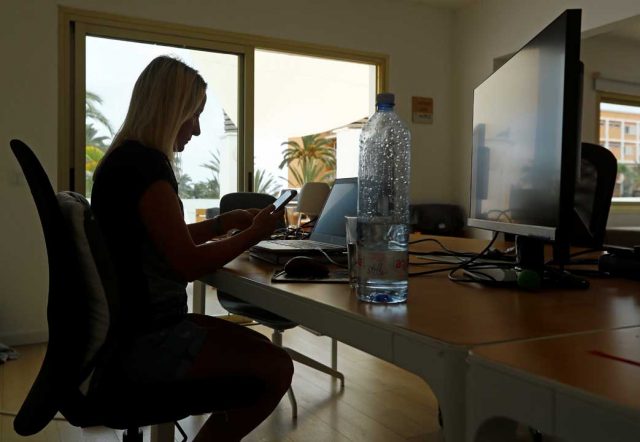

Hybrid of leisure travel, remote work seen aiding in industry’s recovery

Reuters

REMOTE WORK in combination with leisure travel is viewed as a possible new market that will help in the recovery of the travel and hospitality industries, a senior business consultant said.

The work-from-anywhere setup has given rise to a new type of travel during the pandemic, according to Anthony Oundjian, managing director and senior partner at Boston Consulting Group.

“This is opening a new value pool, I would say, for the industry,” he said at the BusinessWorld Virtual Economic Forum 2021 on Wednesday.

“I was recently in Siargao working with some of my team members, and it was interesting to observe like during the day… that with all of these (video platforms) and the internet connection, we had all people working,” he added.

AIM Research Manager Eylla Laire M. Gutierrez told BusinessWorld recently that the so-called “workcation” model is expected to persist as more employees become engaged in this new setup.

As more destinations reopen with the rise in vaccination levels, the Tourism department is hoping to see more travelers in the coming months.

“Boracay experienced a dramatic increase of tourist arrivals in the last two months, with a total of 32,452 visitors in October,” the department said on Nov. 12.

“We hope to see even more visitors, given this positive development, and ensure everyone’s safety altogether now that Boracay’s fully vaxxed tourism workers are at 94%, while its entire eligible population is 70% vaccinated,” it added.

Mr. Oundjian said that domestic travel came to the fore during the pandemic as many countries closed their borders to international visitors to contain the spread of the coronavirus.

“But this may not last because when we ask consumers, they are willing to travel overseas, to go far, so I think for the Philippines, for Thailand, we should expect to have a very meaningful inflow of Koreans, Europeans, and US citizens as soon as they can,” he added.

In its 2022 outlook report, Fitch Ratings said passenger demand for leisure and other personal travel is expected to recover faster than for corporate travel, with domestic travel bouncing back the fastest.

“The ramping-up of vaccinations and availability of booster shots are paving the way for a gradual return to normality for many Asian countries,” it said. — Arjay L. Balinbin

Low rate of plastic recycling seen as a missed opportunity

BW FILE PHOTO

THE PROPORTION of plastics that are recycled in the Philippines is about 30%, with the unrecycled materials that go to waste or downcycled valued at around $1 billion, the International Finance Corp. (IFC) said.

IFC Country Manager Jean-Marc Arbogast said deterrents to recycling include high power costs and cheap landfill disposal fees.

“We estimate that to be around $1 billion every year of value that goes to waste,” he said at the BusinessWorld Virtual Economic Forum Wednesday.

He said more global brands have voluntarily committed to using recycled resins in their products, increasing demand.

But in the Philippines, recycled material suppliers are small- and medium-sized businesses that cannot scale up their operations to meet the needs of global companies, pushing the brands to choose virgin plastic made from crude oil or natural gas.

“The decision here also becomes economic. You have competition from virgin materials, virgin plastic. So if the oil price is low, for example, the decision is very quick, unfortunately. You’ll go with the lower cost,” Mr. Arbogast said.

Landfill tipping fees, or waste disposal charges, are also cheap in the Philippines compared to other Asian countries, which means there is little incentive for local government units or private companies to promote recycling or other circular economy approaches.

“The fees are so low, it’s very hard to come in and make (recycling) profitable,” he said.

“Electricity costs are very high in the Philippines, among the highest in the region. So if you’re running a facility, whether it’s a mechanical recycling facility or chemical recycling facility, it’s very expensive.”

Over 60% of products sold in the Philippines, he added, use packaging that is hard to recycle.

“If we’re able to put in place some regulation or standard that would mandate companies to look at those packaging in a different way, I think it would help a lot.”

He said the government should require companies to have a percentage of recycled material in their packaging and products. Packaging can also be made easier to recycle by limiting the coloring and types of resin, he added.

“In the end, if we really want to make a change, it has to come from the consumers. If the consumers are not there, it won’t happen. If the consumers all together want something, the market’s going to respond to it.”

The House of Representatives in July approved on final reading House Bill No. 9147 or the Single-Use Plastic Products Regulation Act, which would stop the production and sale of single-use plastics. The counterpart measure is still pending at the Senate.

Coca-Cola Philippines in September announced it would phase out its sachet production by next year. — Jenina P. Ibañez

SPNEC prices IPO at P1 each

By Keren Concepcion G. Valmonte, Reporter

SOLAR Philippines Nueva Ecija Corp. (SPNEC) has set the final offer price of its initial public offering (IPO) to one peso per share, which means the company can raise up to P2.7 billion to fund the first part of its 500-megawatt (MW) solar plant.

SPNEC, a wholly owned subsidiary of Leviste-led Solar Philippines Power Project Holdings, Inc. (SPPHI), will be offering to the public 2.7 billion common shares.

“The IPO price has been finalized at P1.00, which was also the initial maximum offer price guidance announced in the preliminary terms of the offer,” Timson Securities, Inc. Trader Darren Blaine T. Pangan said in a Viber message.

“One thing that may have been considered was the improving market conditions in the country, as the index has lingered mostly above the 7,200 area during the past few weeks — brought about by the improving COVID-19 (cooronavirus disease 2019) situation in the country,” he added.

The bellwether Philippine Stock Exchange index (PSEi) rose 17.94 points or 0.24% on Wednesday, closing at 7,419.10.

Rizal Commercial Banking Corp. (RCBC) Chief Economist Michael L. Ricafort said the pricing “could signal improved market sentiment recently as the economy further reopens with granular lockdowns or alert level system already adopted nationwide.”

“Renewable energy has also become more attractive for investors worldwide amid the need to comply with ESG (environmental, social, and governance) standards as already required by some regulators globally in recent years,” Mr. Ricafort said in a separate Viber message.

The company may net up to P2.59 billion from its IPO, which will be used to fund the first 50-megawatt-direct current (MWdc) for “Phase 1A” of its solar project.

Diversified Securities, Inc. Equity Trader Aniceto K. Pangan said solar power is currently in high demand “due to the harmful effects of climate change which is attributed to carbon-related or fossil fuels.”

“At [its IPO price], valuation is high considering [it] only [has] a par value of 10 centavos per common share without commercial operations and incurring losses. But if it could achieve its Phase 1A goal of commissioning 225 MW for commercial operations by next year then price is justifiable,” Mr. Pangan said in a text message.

SPNEC is the first company to receive approval to list under the Philippine Stock Exchange’s (PSE) Supplemental Listing and Disclosure Requirements for Renewable Energy (RE) Companies approved in 2011, which allows devel-opment-stage project companies to list, subject to certain requirements.

The company previously said the IPO proceeds would be enough to kickstart its 500-MW project as it would secure debt to complete it.

According to its preliminary prospectus dated Nov. 12, the company plans to allocate P1.003 billion of its net proceeds to fund the development of Phase 1A and P200 million will be allotted for the construction of the transmis-sion line of the project.

Meanwhile, P23 million will be for lease expenses over project lands and for the right of way leases and P33 million will be spent for general corporate purposes. SPNEC said “any amount in excess of P1.332 billion will be used for land acquisition for its future expansion.”

“If we do raise the amount of over P1.3 [billion], then we will be able to use those proceeds so accretive in our view that the value of the shareholders’ investment will actually increase more… because we’ll have more to invest for the expansion,” Solar Philippines Founder Leandro L. Leviste told BusinessWorld in a virtual call last week.

The company looks to hold the offer period from Dec. 1 to 7, while its tentative listing date on the main board of the PSE is on Dec. 17 under stock symbol “SPNEC.”

The Nueva Ecija project is said to be the largest among the first 1-gigawatt (GW) projects of Solar Philippines, which is targeted to be operating by 2022.

“We can always go back to the market if we only raise less than the max amount after we construct the first phase of the plant to expand it beyond the initial capacity,” Mr. Leviste said.

“Because this is the company’s first time to tap the capital markets, we really want to show that we can do a lot of good with the proceeds that we raised,” he added.

Solar Philippines’ other projects include an operational 63-MW plant in Batangas in partnership with Korea Electric Power Corp., one in Tarlac with Razon-led Prime Infrastructure Holdings Corp. that is being expanded up to 200 MW, and two more in Batangas and Cavite with a combined capacity of 140 MW expected to be fully operational by 2022.

SPNEC tapped Abacus Capital and Investment Corp. as the issue manager and lead underwriter for the offer, while Investment Capital Corp. of the Philippines is a participating underwriter.

Jollibee looks to launch more stores in China

HONG ZHUANG YUAN opened its first ever in-mall store on September 9. With the restaurant’s new location in Xiyue Sky Street, customers lined up on its opening day to get a taste of Hong Zhuang Yuan’s affordable signature dishes.

JOLLIBEE Foods Corp. (JFC) is planning to launch at least 33 more stores in mainland China by December through its Tim Ho Wan, Yonghe King, and Hong Zhuang Yuan brands.

In a statement on Wednesday, the company said it is expecting revenue growth driven by its expansion efforts in the country. It has so far opened 80 stores under the three brands this year.

“The expansion efforts of these brands will play a huge and important role in generating revenue and strengthening the Jollibee Group’s growth, especially since China is one of the company’s four pillar markets,” JFC President and Chief Executive Officer Ernesto Tanmantiong said.

The company earmarked a record P12.2 billion for its capital expenditures this year. It had planned to concentrate its expansion in Asian countries such as China, as JFC works on its goal to be one of the top five restaurant firms in the world.

Tim Ho Wan now has six stores across Shanghai after launching its first branch in China in September last year. Its stores are located in popular commercial centers, including in MixC Shopping Mall in Minghang District, Sun Palace in Hongkou District, and Cifi Tower in Putuo District.

JFC aims to “aggressively grow.” Tim Ho Wan in mainland China from six to 100 restaurant outlets in the next five years.

Meanwhile, Yonghe King launched 62 new stores in 2021, bringing its store count to 383 across China. It aims to have 1,000 stores in the next five years.

Yonghe King recently launched its first two stores in the Shaanxi Province via Xi’an City. It is also slated to launch its first store in the Hainan province, while 23 more Yoonghe King stores are expected to open by December.

Hong Zhuang Yuan now has 44 stores in Beijing after launching its first mall-based store in Xiyue Sky Street in Southwest Beijing.

JFC said Hong Zhuan Yuan is now looking to launch stores in Beijing’s top 10 shopping malls as well as in other malls outside the city, in an attempt to have 60 stores by the end of this year.

Jollibee shares went up by 1.39% or P3.40 on Monday to close at P248 apiece. — Keren Concepcion G. Valmonte

Airport investment to remain strong next year

BW FILE PHOTO

FITCH RATINGS expects capital investment in airports in the Asia-Pacific region to remain strong in the coming year, owing to the “long-term horizon” for airport business plans that will extend beyond the pandemic.

Airports in the region took decisive steps to maintain financial flexibility by cutting costs during the global health crisis, it said.

“Many airports across major and fast-developing aviation markets such as Australia, China, Japan, Philippines, South Korea, Thailand and Vietnam are continuing with their capex (capital expenditure) plans, given the long-term horizon that goes well beyond the potential duration of the crisis,” the ratings agency said in its 2022 outlook for the industry released Tuesday.

Passenger traffic at Philippine airports increased to 4.02 million in the second quarter of the year, up from 747,999 a year earlier. Traffic remained significantly lower than the pre-pandemic level of 41.95 million, according to data from the Transportation department.

Fitch Ratings has an “improving” outlook on airports in the Asia-Pacific, owing to the resumption of international travel while domestic traffic “rebounds strongly.”

On Nov. 11, the Transportation department said it completed 233 airport projects, including Terminal 2 of Clark International Airport, the Bohol-Panglao International Airport, the second terminal of the Mactan-Cebu International Airport, Bicol International Airport, and airport projects in Calbayog, Kalibo, Tuguegarao, Catarman, and San Vicente, Palawan.

It said 84 more airport projects are being implemented.

San Miguel Corp. is building a P740-billion airport in Bulacan province.

A new consortium recently submitted an unsolicited proposal to develop the Sangley International Airport. The group is composed of Cavitex Holdings, Inc., the Yuchengco Group of Companies, MacroAsia Corp., Samsung C&T, Munich Airport International GmbH, and Arup Group.

“Travel restrictions have been easing, and a few countries have reopened or been set for reopening, which will rejuvenate tourism,” Fitch Ratings said.

The ratings agency expects the overall air traffic in the region to recover further in 2022, as countries achieve high vaccination rates and reopen borders.

“We expect overall air traffic will continue to recover in 2022, although not to reach pre-pandemic levels until 2024,” Fitch Ratings said.

“We believe passenger demand for leisure and other personal travel to bounce back faster than for corporate travel, with domestic travel recovering the fastest,” it added.

Some countries might adopt a “more cautious approach,” delaying the recovery of international traffic. — Arjay L. Balinbin

Business groups, foreign chambers push for ratification of electric vehicle bill

REUTERS

INDUSTRY ASSOCIATIONS called on legislators to expedite the ratification of a bill promoting the adoption of electric vehicles (EVs) and laying out how they are to be regulated to pave the way for the Philippines to become a regional hub for the industry.

They said in a joint statement issued on Nov. 22 that they are confident that the measure will be sent to Malacañang before Congress goes on a one-month recess on Dec. 15.

“Passage of the bill will enable the Philippines to participate in what is becoming an enormous new supply chain of the EV industry, particularly components, batteries, and charging stations,” they said.

The ratification of House Bill 10213 and Senate Bill 1382 would also help the Philippines keep up with other countries in EV development, with the US a potential market after EVs and charging stations featured prominently in a recently-signed infrastructure bill.

A bicameral conference committee in Congress was due to meet to harmonize the two bills on Nov. 23, but the meeting was cancelled.

Pampanga Rep. Juan Miguel M. Arroyo, chairman of the House Committee on Energy, said in a Viber message that the Senate asked to reschedule the session. — Russell Louis C. Ku

Senators are currently busy tackling the 2022 national budget.

The bill will require establishments with 20 or more designated parking slots to dedicate 5% of their space for the use of EVs and provide charging points.

The bill, if passed, also establishes tax incentives for EV manufacturers, entities maintaining charging stations, and research and development centers.

Electric vehicles, charging stations, and materials for their assembly will also be exempt from customs duties and value-added tax for five years from the effectivity of the proposed law.

The bill will establish an Electric Vehicles Advisory Board composed of officials from various government agencies, including the Department of Energy and Department of Transportation, to formulate policy encouraging the de-velopment and commercialization of EVs.

The Comprehensive Roadmap on Electric Vehicles (CREV) will become the national plan to help boost the electric vehicle industry. CREV will be integrated with the Philippine Energy Plan and the National Transport Policy.

The statement was supported by foreign business chambers based in the Philippines, including the American, Australian-New Zealand, Canadian, European, Japanese, and South Korean business councils.

Other groups that backed the statement were the Electric Vehicle Association of the Philippines, the IT and Business Process Association of the Philippines, the Management Association of the Philippines, the Philippine Associa-tion of Multinational Companies Regional Headquarters, Inc., the Philippine Parts Makers Association, Inc., and the Semiconductor and Electronics Industries in the Philippines Foundation, Inc. — Russell Louis C. Ku

Cooking and pairing with booze

With restrictions on gatherings slowly lifting, it seems that holidays with our friends and family during this pandemic might be forthcoming. A pairing menu by San Miguel Foods Culinary Center (SMFCC), coupled with drinks from San Miguel Brewery (SMB), Wine Brothers’ Philippines, and Ginebra San Miguel, Inc. (GSMI), just might hit the spot.

The menu was shown off via a Zoom dinner last week by San Miguel. Crostini with a cheese and pimiento spread (made with Magnolia Milky White Cheezee Spread), topped with cubes of Magnolia Milky White Cheese and sliced green olives marinated in olive oil and Ginebra San Miguel Premium Gin served as the first course; this was followed by crostini with Roasted Garlic Butter (Magnolia Gold), and Purefoods Chorizo Bilbao style and onions, stewed in San Miguel Premium All-Malt Beer. Both of these were paired with San Miguel Super Dry, which gave gravitas to their flavors with the crisp notes of the beer.

Pintxos with San Miguel Super Dry

Ring-shaped dumplings ala tortellini came next, filled with cream cheese and spinach on top of an emulsified butter sauce. The sauce was made with Magnolia Gold Butter, Magnolia Full Cream Milk, red onion, beetroot and Ginebra San Miguel Premium Gin. During the webinar, it was suggested to pair this with a Sweet Lemony Martini made with Ginebra San Miguel Premium Gin (demonstrated by GSMI’s mixologist Tabitha Rice) but we found that the gin alone does the job, its sharp, citrusy notes cutting through the rich cream cheese.

The third course was a Magnolia Free Range Chicken marinated for 24 hours in Ginebra’s 1834 Premium Distilled Gin and a blend of herbs and spices, slow-cooked in olive oil, and seared until crispy and golden brown. This was served on top of mashed squash-potato and a pea puree and drizzled with a balsamic reduction. This was paired with Woomera’s Sauvignon Blanc, which gave a liveliness to the dish.

The heaviest course was the Mini Beef Wellington, made with baked Monterey Beef Tenderloin covered in a layer of Purefoods Honeycured Bacon and mushroom duxelles wrapped in a golden puff pastry. This was served with a rich beer gravy made of San Miguel Super Dry. This was paired with 1834 Premium Distilled Gin, with notes of calamansi and sampaguita flowers. The clean-tasting gin, with some palate-cleansing properties and a smooth mouthfeel, cut through the strong and quite salty flavors of this dish, preventing it from being too overpowering.

Finally, a Moist Chocolate Cake in Sweet Red Dark Ganache made with Magnolia’s Devil’s Food Cake Mix (and infused with Woomera’s Sweet Red Wine) was paired with Cerveza Negra — a match made in chocolate heaven. The Cerveza Negra’s coffee and cocoa notes made the pairing seamless.

PAIRED WITH PALE PILSEN

As San Miguel Pale Pilsen is already a fixture of Filipino life, we asked SMB Brewmaster Alan Sienes what could go with it. It’s simple fare: peanuts, cheese found in the fridge, and barbecue.

Meanwhile, SMFCC Corporate Chef Victor “Viboy” Miranda said it goes with “Anything na pang-pulutan na plain na food natin (Anything you can eat while drinking that’s plain).” From their stable of products, he chose their corned beef and bacon.

“Entertaining this holiday season at home does not need to be difficult,” said Leena Tan Arcenas, Culinary Services Manager for SMFCC. “All you need are great quality beverages matched with ‘Madalicious’ recipes,” she said, pointing to the YouTube channel of SMFCC, Home Foodie, which shows recipes made with San Miguel products with a “Madalicious” (a combination of the word “madali” or “easy” in Filipino, and “delicious”) tag.

Those interested in trying out the dishes, most of the recipes can be found here: https://homefoodie.com.ph/recipes. Joseph L. Garcia

Effectivity of Manila Water, Maynilad revised contracts pushed back

MANILA WATER Co., Inc. and Maynilad Water Services, Inc. have been given an extension of up to Dec. 18 on the period for the start of their revised concession agreements (RCAs).

In a stock exchange disclosure on Wednesday, Manila Water said it had signed a second amendment of the RCA with the Metropolitan Waterworks and Sewerage System (MWSS) to further extend the period on the start of the agreement’s effectivity up to Dec. 18.

“This is to allow the parties additional time to complete the remaining conditions to the effectivity of the RCA,” Manila Water said.

This marks another extension for Manila Water, as it previously agreed with the MWSS to extend the start of the effectivity of its RCA to “no later than Nov. 18” versus the original date of Sept. 30.

The prior adjustment was approved in a bid to synchronize the effectivity dates of the two water concessionaires’ revised concession agreements.

In a separate mobile phone message, MWSS Administrator Leonor C. Cleofas confirmed that Maynilad had also been granted an extension in the effectivity of its revised concession agreement to Dec. 18.

“Yes, effectivity (of Maynilad revised concession agreement) is Dec. 18. The effectivity both for Manila Water and Maynilad is Dec. 18,” Ms. Cleofas said.

Maynilad was originally given a deadline of Nov. 18 for the effectivity date of its revised concession agreement.

According to Ms. Cleofas, the reason for Maynilad’s extension is also to give additional time to complete the remaining conditions.

Some of the salient features of the two water concessionaires’ RCAs include the removal of the foreign currency differential adjustment and imposition of a tariff freeze until Dec. 31, 2022.

Manila Water delivers water and wastewater services in the eastern part of Metro Manila, which includes Marikina, Pasig, Taguig, Makati, San Juan, Mandaluyong, portions of Quezon City and Manila, and Rizal province.

Maynilad provides water to customers in Caloocan, Pasay, Parañaque, Las Piñas, Muntinlupa, Valenzuela, Navotas, Malabon, Manila, Makati, and Quezon City, as well as parts of Cavite province including Bacoor, Imus, Kawit, Noveleta, and Rosario.

Metro Pacific Investments Corp., which has a majority stake in Maynilad, is one of three Philippine units of Hong Kong-based First Pacific Co. Ltd., the others being Philex Mining Corp. and PLDT, Inc.

Hastings Holdings, Inc., a unit of PLDT Beneficial Trust Fund subsidiary MediaQuest Holdings, Inc., has an interest in BusinessWorld through the Philippine Star Group, which it controls. — Revin Mikhael D. Ochave

Talks on heritage cuisine kick off CCA anniversary

facebook.com/ccamanila

The Center for Culinary Arts (CCA) is kicking off its 25th anniversary with a series of talks about Filipino heritage cuisine, a celebration of their alumni, and a cooking competition.

The celebration begins on Nov. 25 with the talk “Pagkaing Atin, Ihain Natin,” where CCA Manila invited known food leaders who will share their experiences on how they can promote Filipino culture and history around the globe. “Entree Pinays,” on the same day, presents a collective of entrepreneurial Filipinas introducing Filipino cuisine and culture to the hearts and minds of Australians and representation of Filipino cuisine on the Australian stage. In another talk, John Buenaventura, named Executive Chef at the newly opened Hilton Abu Dhabi Yas Island, will share how he has been spending his time re-discovering Filipino heritage dishes and promoting them globally; while chef Gelo Guizon will highlight the power of social media, specifically TikTok, and how he uses this platform to advocate Filipino cuisine to today’s generation. These talks will all be held on Nov. 25 from 10 a.m. onwards.

To recognize the excellence of CCA’s “ambassadors,” on Dec. 1, 2 p.m., there will be a demonstration of both modern and traditional Filipino dishes by CCA Alumni. This event is a cook-off between graduates of CCA Manila who are well-known in the food industry. They include chefs Allan Briones (Chef de Cuisine at The Peninsula Manila),  Migo Razon (Executive Chef of Sheraton Melbourne), and Sonny Mariano (Corporate Pastry Chef of Tasteless Food Group), and Pauline Sarmiento (owner of a bakeshop and home-cooked foods restaurant). On Dec. 2, 2 p.m., CCA presents the “Clash of the Clans: Culinary Competition.” Groups of CCA Manila students will compete among themselves in a face-to-face Filipino cuisine competition in these categories — meat, plant-based, seafood appetizer, and a cheese-based dessert.

CCA Manila was founded in 1996, less than a decade after Annie Guerrero opened Cravings, a restaurant and catering business in 1988. Her daughter, present Cravings Group CEO Badjie Guerrero-Trinidad, saw a dearth of skilled chefs in kitchens across the country and partnered with a culinary school in Canada to set up CCA.

According to their website, it started with a tour with visitors from the Northern Alberta Institute of Technology, one of whom asked, “Where do Filipinos learn how to cook?” The mother and daughter team sought the help of Dr. John Knapp, project coordinator of that institution and the College of Home Economics in UP Diliman to build a curriculum. The school is currently recognized by the American Culinary Federation Education Foundation as a Quality Program, and has a partnership with the Institut Culinaire Disciples Escoffier, which enables students to earn a French National Diploma in culinary studies.

Veritas Luna, Chancellor for Education for CCA Manila, said during a press conference streamed last week on Facebook Live, “We have to thank God. We are able to provide nurturing and holistic student, faculty, and staff development programs. We have industry-approved facilities and we have current culinary technologies available for learning, and we are able to maintain a robust networking program for our students and alumni.”

For more information on the event lineup and conference tickets, contact Jessical Cristobal at j.cristobal@cca-manila.edu.ph, talktous@cca-manila.edu.ph, 0955-143-8890, Facebook.com/ccamanila, or Instagram.com/ccamanila. One can also register through: http://tinyurl.com/ccamanilasilveranniversary. —  J.L. Garcia

House committee approves bill banning raw black sand exports

A COMMITTEE in the House of Representatives approved a bill Wednesday that would prohibit the export of raw black sand, in a bid to capture value-added from processing it before export.

The House Committee on Natural Resources approved an unnumbered substitute bill to House Bill 6321 or the proposed Black Sand Processing Act, filed by Probinsyano Ako Party-list Rep. Jose C. Singson, Jr.

The measure permits only the export of black sand that has been processed, and proposes to require miners companies to build, or lease advanced processing plants to extract magnetite in the province or region where the sand was mined.

Violators could be liable for at least six years’ imprisonment and a fine of at least P5 million.

Mr. Singson said that the Philippines is losing billions of dollars from importing processed black sand, which could be instrumental in building up its infrastructure.

“Imports of these processed products (are) very costly, while the raw materials used… were exported from our country at a very cheap price,” he said in the bill’s explanatory note. — Russell Louis C. Ku

Chronicling the PHL blockchain story

WITH digital transformation becoming imperative for institutions and businesses to thrive, three colleagues from the finance industry worked together to write a book on blockchain technology.

The idea of writing a book came over coffee.

“One day, we were having coffee and we struck a conversation on what would be good in terms of pushing adoption and awareness of an important topic,” co-author Henry R. Aguda, chief technology and operations officer of UnionBank of the Philippines, Inc., said during the online book launch on Nov. 11. “That small idea resulted in two years of work that we three collaborated on.”

With the goal of offering a deeper understanding of blockchain and its role in the future of the country, co-authors and work colleagues Mr. Aguda, Catherine Bautista-Casas, and Nathan J. Marasigan wrote Opening the Archipelago: The Sto-ry of Blockchain.

Published by Bookshelf PH, the book focuses on blockchain in the Philippine context and is divided into three parts which discuss the basic concepts of blockchain, a showcase of the different blockchain use cases and initiatives in the Philippines, and concludes with a discussion about the need for progressive regulation and how this can shape blockchain innovation and the future of this country.

A blockchain is a distributed database that stores information electronically in digital format. It is mostly known for its crucial role in maintaining a secure and decentralized record of transactions in cryptocurrency systems. It assures the fidelity and security of data records and allows digital information to be recorded and distributed, but not altered, deleted, or destroyed.

“I hope that this book may serve as a jumping-off point for a broader discussion of the role of blockchain technology in the Philippines. I invite other business leaders, entrepreneurs, community organizers, investors, media, and other stakeholders to join in, as it’ll take the entire business community to maximize its full potential to change Filipino society,” Mr. Aguda said in a statement.

A press release said the book is recommended for “anyone who wants to innovate with blockchain or partner with those already doing so in the space, including startup founders, corporate executives, government regulators, community organizers, institutional investors, and other like-minded leaders.”

“We try to document the most innovative and interesting use cases that could play a big role in changing or solving the important pain points in the Philippines,” Mr. Marasigan said at the online book launch.

Ms. Bautista-Casas, who has over two decades of experience in the banking and finance industry, said much like the use of Microsoft products today, “blockchain will be the necessity.”

“Everything in the future will be programmable,” she said.

Opening the Archipelago: The Story of Blockchain in the Philippines is priced at P1,000. For more information, visit https://bookshelf.com.ph/pages/opening-the-archipelago-1. — Michelle Anne P. Solima

ADVERTISEMENT
ADVERTISEMENT