Home Blog Page 7133

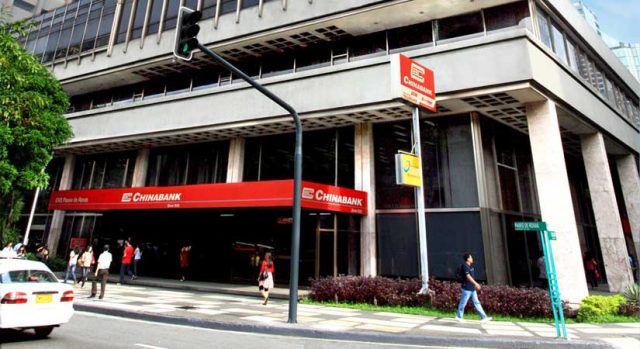
Moody’s affirms China Bank rating with stable outlook

Moody’s Investors Service affirmed its credit rating for China Banking Corp. at Baa2, citing the bank’s stable capital and profitability.

The outlook on the rating remained at stable, signifying little change expected in the next 12 to 18 months.

“The bank’s capital and profitability have improved significantly. Capital will remain stable over the next 12-18 months, with upside potential, as balance sheet growth will be muted,” Moody’s said in a note Friday.

The Moody’s said China Bank’s Common Equity Tier 1 ratio rose to 14.4% at the end of September from 12.8% at the end of 2021.

Another sign of improved profitability was core operating profit, which accounted for 2% of assets at the end of September, as against 1.4% in 2019, Moody’s said. The net interest margin rose to 4.2% from 3.4%.

“Higher core profitability will allow the bank to absorb elevated credit costs over the next 12-18 months,” Moody’s said.

It added that China Bank’s funding also improved, with the share of low-cost current account and savings deposits constituting 62% of total deposits at the end of September from 53% at the end of 2019.

Moody’s noted however that China Bank’s asset quality has deteriorated, as reflected in the non-performing loan ratio, which hit 3.4% at the end of September from 2.3% at the end of 2020.

“The bank’s high loan concentration in the corporate segment poses risks to asset quality,” Moody’s said.

China Bank’s net profit rose 29% year-on-year to P3.9 billion as core business performance improved and costs were kept in check.

China Bank closed at P25.30 Friday, up 30 centavos. – Luz Wendy T. Noble

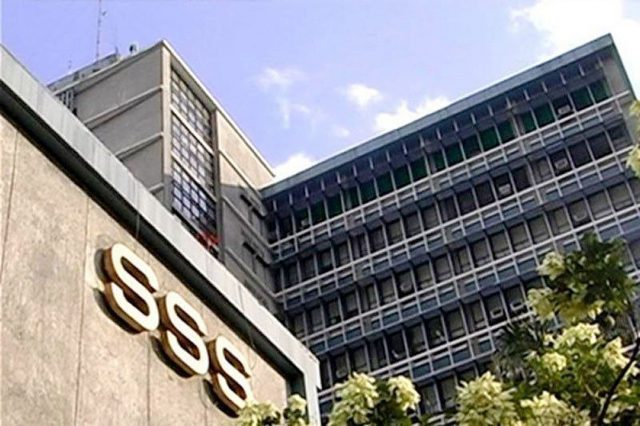
SSS, GSIS, PhilHealth ordered to adopt PFRS 4 accounting norms on reserves

Finance Secretary Carlos G. Dominguez, III has ordered the government-run pension funds and health insurance agency to adopt the Philippine Financial Reporting Standards 4 (PFRS 4) accounting standard, particularly with regard to estimating their potential liabilities.

The Social Security System, the Government Service Insurance System (GSIS), and Philippine Health Insurance Corp. (PhilHealth) were instructed to estimate their social benefit liabilities in accordance with the standard by Mr. Dominguez, who is also the concurrent Chairman of the Social Security Commission.

In a speech Friday, Mr. Dominguez said social benefit liabilities represent the three institutions’ net legal obligation to pay specific, guaranteed amounts of money or benefits to their policyholders, which include both actual claims and the required reserve for future claims.

“The implementation of this directive will start with the 2020 financial reports of the SSS, the GSIS, and PhilHealth, which will show a combined total liability of P9.94 trillion after full compliance with PFRS 4,” the DoF said in a statement.

PFRS 4 is the current and interim accounting standard imposed on insurance entities in the Philippines. It is based on International Financial Reporting Standards (IFRS).

Under PFRS 4, when an insurance entity receives money from its clients and enters into a contract with them to provide benefits when certain events occur, it must set aside a reserve to cover its liabilities.

In this case, premiums, fees, and contributions that the institutions receive must be reported both as income and liability, the DoF said.

Mr. Dominguez said all three institutions “are still financially sound and can meet their obligations to their respective members.” — Luz Wendy T. Noble

Peso strengthens on stock market gains, vaccine optimism

BW FILE PHOTO

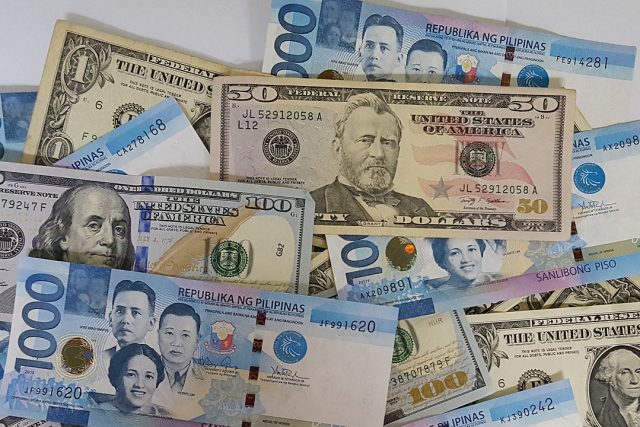
The peso rebounded against the dollar Friday, with sentiment boosted by the gains on the stock market and optimism about the impact of the vaccination drive on the economy.

The peso ended trading at P50.36 Friday, against its P50.40 Thursday close. On the week, the currency appreciated from P50.43 on the preceding Friday.

The peso at P50.42, with the low at P50.48 and the high at P50.33.

Dollar trading volume was $959.85 million Friday from $880.25 million the day before.

The peso appreciated after the second straight day of gains on the stock market, Rizal Commercial Banking Corp. Chief Economist Michael L. Ricafort said in a Viber message.

The benchmark Philippine Stock Exchange index closed at 7,055.19 Friday, up 22.65 points or 0.32%.

The All-Shares index rose 17.70 points or 0.47% to 3,790.

Mr. Ricafort said investors were also bullish on the impact of the national vaccination campaign on the economy.

The three-day national vaccination drive, a special effort to boost the inoculation rate, was extended until Friday. The government had fully vaccinated 37.334 million people as of Thursday, according to the Department of Health (DoH).

The government is aiming to fully vaccinate 54 million people by the end of the year. — Luz Wendy T. Noble 

Local shares up as Wall Street brings optimism

COURTESY OF PHILIPPINE STOCK EXCHANGE, INC.

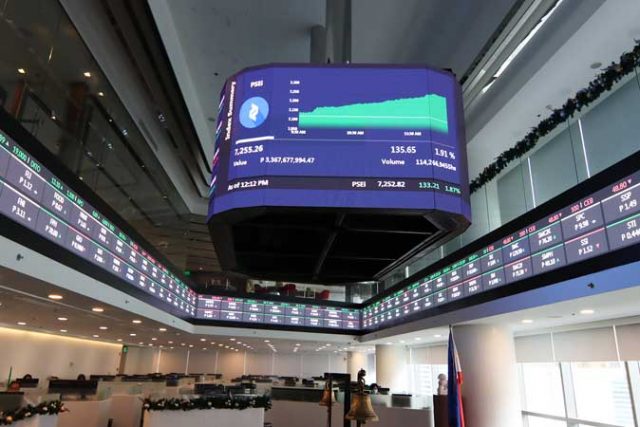
Philippine shares posted some gains on Friday as investors turned a bit optimistic after Wall Street’s rally, but trading remained sluggish amid lingering concerns over the pandemic, analysts said.

The bellwether Philippine Stock Exchange index (PSEi) rose 22.65 points or 0.32% on Friday to close at 7,055.19, while the broader all shares index went up by 17.7 points or 0.46% to at 3,790.2.

“A broad rally on Wall Street pushed stocks pushed sentiment across the region in the green including the Philippines, as the PSEi market continued [to] recoup some of its losses after several days of volatile trading,” Regina Capital Development Corp. Head of Sales Luis A. Limlingan said in a Viber message.

Wall Street closed sharply higher on Thursday, recovering ground lost over recent sessions as market participants snapped up bargains while digesting the implications of a shifting pandemic, Reuters reported.

MSCI’s all-country world index closed up 0.75% as Wall Street rallied. The Dow Jones Industrial Average rose 1.82, the S&P 500 added 1.42% and the Nasdaq Composite advanced 0.83%.

“Trading was lethargic, however, with net value turnover posting P6.16 billion, below the year-to-date average of P7.47 billion. This shows that many investors have stayed out of the market due to the lingering COVID-19 uncertainties caused by the Omicron variant,” Philstocks Financial, Inc. Senior Research and Engagement Supervisor Japhet Louis O. Tantiangco said in a Viber message.

The World Health Organization on Friday warned Asia-Pacific countries to boost healthcare capacity and fully vaccinate their people to prepare for a surge in the coronavirus disease (COVID-19) cases as the Omicron variant spreads globally despite travel curbs, Reuters reported.

The National Task Force against COVID-19 enforced an entry ban on international travelers from South Africa, Botswana, Namibia, Zimbabwe, Lesotho, Eswatini, Mozambique, Austria, the Czech Republic, Hungary, the Netherlands, Switzerland,

Belgium, and Italy from Nov. 28 until Dec. 15.

Meanwhile, sectoral indices in the local bourse were mixed. Property rose 72.77 points or 2.31% to close 3,216.71; financials climbed 20.51 points or 1.33% to 1,558.49; and services grew 8.42 points or 0.43% to 1,938.52.

On the other hand, mining and oil fell 106.80 points or 1.12% to 9,362.03; holding firms tumbled 45.80 points of 0.66% to 6,796.39; and industrials slid 54.87 points or 0.53% to 10,307.05.

Value turnover decreased to P6.97 billion with 1.30 million issues switching hands on the last trading day of the week, down from the P9.04 billion with 844.79 million shares traded on Thursday.

Advancers topped decliners, 131 versus 65, while 38 names closed unchanged.

Net foreign selling dropped to P181.60 million, lower than the P1.02 billion logged in net outflows on Thursday.

Darren Blaine T. Pangan, trader at Timson Securities, Inc., expects the PSEi’s support to remain at the 6,800 level, while seeing 7,454.50 as the nearest resistance level. — M. C. Lucenio

US steps up fight against Omicron as variant marches across globe

Image via Flickr/US Navy

WASHINGTON/BERLIN — President Joseph R. Biden, Jr., on Thursday laid out his strategy to fight the coronavirus as the highly contagious Omicron spread across the globe with winter coming and hours after the first known US case of community transmission of the variant was reported.  

With authorities around the world scrambling to contain Omicron, Mr. Biden warned in no uncertain terms that infections will rise this winter.  

“We’re going to fight this variant with science and speed, not chaos and confusion,” he said, speaking at the National Institutes of Health medical research facility in Maryland.  

New York has found five cases of the Omicron coronavirus variant, its governor said, becoming the fourth US state to detect the variant and bringing the total number of infections in the country to eight.  

New York Governor Kathy Hochul told a news conference that one of the cases involved a 67-year-old Long Island woman with mild symptoms who had recently returned from South Africa.  

The woman had some vaccination history but it was not yet known how many doses she had received. Further information was not yet available on the other four people, all New York City residents, Ms. Hochul said.  

The other US states that have found Omicron cases are California, Colorado and Minnesota, one in each state. In all three cases, the patients were fully vaccinated and developed mild symptoms.  

In California and Colorado, the patients had recently returned from trips to southern Africa and had not gotten booster doses. The case in Minnesota is the first known community transmission within the United States.  

The patient in Minnesota had recently travelled to New York City for an anime convention, prompting the city to launch contact tracing to try to contain the spread.  

“We are aware of a case of the Omicron variant identified in Minnesota that is associated with travel to a conference in New York City, and we should assume there is community spread of the variant in our city,” New York City Mayor Bill de Blasio said ahead of Ms. Hochul’s announcement.  

Much remains unknown about Omicron, which was first detected in southern Africa last month and has been reported in at least two dozen countries, just as parts of Europe were already grappling with a wave of infections of the Delta variant.  

Under Mr. Biden’s plan, the United States will require inbound international passengers to be tested for coronavirus disease 2019 (COVID-19) within one day of departure, regardless of vaccination status. Mask requirements on airplanes, trains, and public transportation vehicles will be extended to March 18.  

The US government will require private health insurers to reimburse their 150 million customers for 100% of the cost of over-the-counter, at-home COVID-19 tests, administration officials said, and make 50 million more tests available free through rural clinics and health centers for the uninsured.  

Less than 60% of the US population, or 196 million people, have been fully vaccinated, one of the lowest rates among wealthy nations.  

THE ECONOMY  

Fears about the Omicron variant have pounded financial markets and created doubts about the speed of the global economic recovery as the pandemic rages on. Shares fell on Thursday, and crude oil futures extended losses.  

The variant could slow global economic growth by exacerbating supply chain problems and depressing demand, US Treasury Secretary Janet Yellen told the Reuters Next conference on Thursday.  

“There’s a lot of uncertainty, but it could cause significant problems. We’re still evaluating that,” she said.  

Eager to avoid derailing a fragile recovery of Europe’s biggest economy, Germany had kept businesses open to the almost 69% of the population that is fully vaccinated as well as those with proof of having recovered from the virus.  

But on Thursday, the country announced it would bar the unvaccinated from all but essential businesses such as grocery stores and pharmacies, while legislation to make vaccination mandatory will be drafted for early next year.  

“We have understood that the situation is very serious,” Chancellor Angela Merkel told a news conference.  

A nationwide vaccination mandate could take effect from February 2022 after it is debated in the Bundestag and after guidance from Germany’s Ethics Council, she said.  

HIGH TRANSMISSION  

The European Union’s public health agency said the variant could be responsible for more than half of all COVID infections in Europe within a few months.  

A group of South African health bodies said on Thursday their latest findings indicated the variant posed a threefold higher risk of reinfection than the currently dominant Delta variant and the Beta strain.  

The country also said it was seeing an increase in COVID-19 reinfections in patients contracting Omicron — with people who have already had the illness getting infected again — in a way that it did not see with other variants.  

Global travel curbs accelerated on Thursday in response to the threat from Omicron.  

In the Netherlands, health authorities called for pre-flight COVID-19 tests for all travel from outside the European Union, after it turned out that most of the passengers who tested positive after arriving on two flights from South Africa on Nov. 26 had been vaccinated.  

Russia has imposed a two-week quarantine for travellers from some African countries including South Africa, the Interfax news agency said, quoting a senior official. Hong Kong extended a travel ban to more countries and Norway, among others, re-introduced travel restrictions.  

Amid all the new restrictions, Europe’s largest budget airline, Ryanair, said it expected a challenging time at Christmas, although it was still optimistic about summer demand. — Jeff Mason and Joseph Nasr/Reuters 

Gigacover offers employment benefits to Filipino freelancers

PIXABAY

Gigacover, a Singapore-based fintech company that provides gig workers with access to employment benefits, announced Dec. 3 that it is expanding to the Philippines, which has a 1.5 million-strong informal workforce. 

It offers freelancers incentives associated with regular employment. 

“Benefits and insurance are the two main areas where Gigacover is looking to create and add value to Filipinos who are without them,” said Amerson Lin, Gigacover co-founder and chief executive officer, in an e-mail to BusinessWorld. “The team is also exploring financial products that would allow these workers to gain access to capital — to get the tools they need for their work, or to access their earnings faster.”   

The Philippines has one of the youngest and biggest casual workforces in Southeast Asia (SEA), according to Mr. Lin. 

The gig economy refers to temporary technology-based work with independent contractors or freelancers. This type of project-based work includes computer programming, social media management, graphic design, virtual assistance, and ride sharing.  

Based on the World Bank’s 2019 estimates, SEA’s informal workforce has seen a consistent 30% annual growth — which was further accelerated in 2020 by the pandemic.  

SAFETY NET 

Mr. Lin, who used to be an information-technology freelancer, founded Gigacover after realizing that he couldn’t even get a credit card application approved due to the nature of his work.  

Gigacover operates by partnering with gig marketplaces and other companies that intend to sponsor benefits and insurance for their gig workforce. In keeping with the nature of gig work, it co-creates benefits and insurance programs that allow for flexibility — like breaking down annual insurance plans into monthly issuances.   

Gig workers who want to upsize or extend their company-sponsored coverage may also do so through the platform.  

Its first clients in the Philippines are the Filipina Homebased Moms, an entrepreneurship and freelancing group for Filipina mothers; and Gogo Xpress, a cargo and freight company.   

“[Individual] workers will only be able to sign up [for our products] if their marketplaces or companies partner with Gigacover,” Mr. Lin said. “The team is working hard to open up direct channels for workers to self-purchase soon.”  

Among Gigacover’s partners are Etiqa, a Malaysian insurance firm, and Aventus, a medical services provider.   

The fintech company, whose Philippine country manager was a previous Uber and Grab driver in Singapore himself, aims to cover 100,000 gig workers in the country by the second quarter of 2022. — Patricia B. Mirasol 

Enjoy the holidays and end the year with a bang with vivo Y76 5G, Rush of Luck promo

vivo ends 2021 with Rush of Luck promo and the launch of the new Y76 5G device.

vivo gives the gift of capturing real moments and meaningful connections this holiday 2021 with new Y76 5G

The year might almost be over but leading smartphone brand vivo is ending the year with a bang with its last hurrah for 2021–the launch of the new Y76 5G, available in stores starting December 11.

The slimmest 5G smartphone to hit the market so far, the Y76 5G is only 7.79 mm thick but don’t let it fool you as this device packs quite a punch with its 8+4GB Extended RAM and 128GB ROM making it perfect for heavy multitasking and hardcore mobile gaming.

It’s the perfect holiday companion as the vivo Y76 5G gives the gift of capturing real moments and forging meaningful connections with its smart camera features like the AI editor, dual view video, and EIS ultra stable video.

vivoY76 5G in action

Catch the vivo Y76 5G in action and in all its glory in 2022 as vivo holds a series of exciting matches in partnership with Montoon, the developer of the mega-popular mobile multiplayer online battle arena Mobile Legends.

Watch NexplayEsportsand ECHO Philippines go head-to-head against each other and against your favorite celebrities and discover why Y76 5G is the perfect gaming phone and see which teams will get to take home the P100,000 grand prize, Y76 5G phones, and other exciting prizes. 

Rush of Luck holiday promo

And to make sure that its customers–both loyal and new–get to experience the beauty of the season, vivo is holding the Rush of Luck promo until January 16, 2022.

Every purchase of eligible vivo devices gives customers a chance to become one of the 40,000 people to win exciting prizes and exclusive merchandise.

The vivo devices eligible for the promo are Y1s, Y15s, Y20i, Y33s, Y15A, X70, V21, V21e, and the new Y76 5G. The devices must be purchased in select vivo physical stores or via vivo’s official e-commerce platforms.

To join the promotion, purchase any of the eligible vivo phones from November 19 to January 16, 2022. Scan the promo QR code visit www.vivoph-rushofluck.com to register. After validation, accepted entries will be sent a digital scratch card that will reveal if they are one of the 40,000 winners.

Upon scratching the cards, those who have three identical icons will win an instant prize while those who don’t will get a raffle entry to the grand prize draw.

Winners can email vivodigital@ph.vivo.com for further instructions on how to claim their prizes.

For more information about the vivo Y76 5G, the Rush of Luck promo, visit www.vivoglobal.ph and vivo’s official Facebook, Twitter, and Instagram pages.


Spotlight is BusinessWorld’s sponsored section that allows advertisers to amplify their brand and connect with BusinessWorld’s audience by enabling them to publish their stories directly on the BusinessWorld Web site. For more information, send an email to online@bworldonline.com.

Join us on Viber to get more updates from BusinessWorld: https://bit.ly/3hv6bLA.

Work and play in space? NASA awards $415.6 million for new space hubs

Image via Blue Origin

SEATTLE — NASA announced on Thursday it has awarded $415.6 million to billionaire Jeff Bezos’ Blue Origin, stalwart contractor Northrop Grumman Corp. and venture-backed Nanoracks to develop privately-owned and operated commercial space stations.  

The trio of awards are emblematic of the US space agency’s efforts to tap private companies to enable an American-led commercial economy in low-Earth orbit (LEO) as the iconic International Space Station potentially retires at the end of the decade.  

NASA awarded $130 million to Blue Origin to help develop its Orbital Reef space station, unveiled some five weeks ago, in partnership with Sierra Space and Boeing Co. Blue aims to launch the spacecraft in the second half of this decade.  

Blue Origin sees Orbital Reef as a hub for commercial industries such as manufacturing, entertainment, sports, gaming and adventure travel. It’s also aimed to be a home for crewed and cargo missions by Boeing’s Starliner capsule and Sierra Space’s Dream Chaser spaceplane.  

“No one knows how commercial LEO markets will develop, but we intend to find out,” Brent Sherwood, senior vice president of advanced development programs for Blue Origin, said in a statement.  

Houston-based Nanoracks won the largest award, at $160 million, for the Starlab space station it is building with Lockheed Martin Corp and Voyager Space. With operations set to begin in 2027, Starlab will feature a large inflatable habitat, a metallic docking node, a robotic arm for cargo and payloads and a research laboratory.  

“This opportunity opens far-reaching possibilities for critical research and commercial industrial activity in LEO,” Nanoracks Chief Executive Amela Wilson said.  

NASA also awarded $125.6 million to defense and space contractor Northrop Grumman Corporation.  

“Our station will enable … sustainable commercial-based missions where NASA does not bear all the costs, but serves as one of many customers,” said Northrop Grumman vice president for civil and commercial space Steve Krein. —  Eric M. Johnson/Reuters 

PHL tops SEA market for secondhand goods; Zara, BMW are sought-after brands — Carousell

PIXABAY

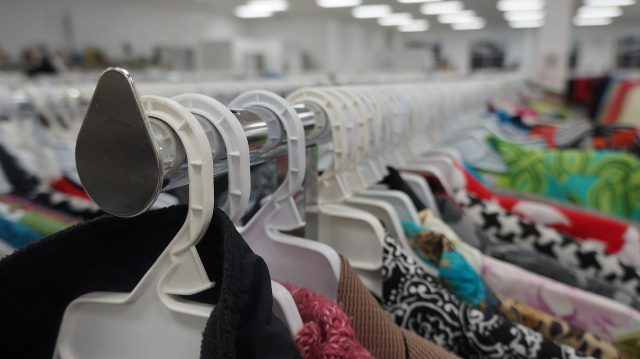
The Philippines is the most receptive market for secondhand goods in Southeast Asia, according to a report released this December by Carousell, an online recommerce platform. 

Recommerce refers to the selling and buying of previously owned products, both new and used.  

According to the inaugural Carousell Recommerce Index, 92% of consumers in the Philippines have bought secondhand items from casual everyday sellers — the highest among all markets of the Carousell Group, a classifieds group in Southeast Asia.  

Secondhand apparel is the category Filipinos are most comfortable with, whether in terms of buying (58%) or selling (75%). 

Women’s fashion was the top category for secondhand items in Carousell Philippines, the report found, with Zara being the most searched for brand. Rounding the top three on the supply side were men’s fashion, followed by hobbies and toys.  

Fashion ruled the demand side as well. However, over the pandemic, interest in buying secondhand cars increased by 37% — pushing used cars into third place, with BMW being the most popular search term. 

“Recommerce offers the second-best sustainable option by extending the life cycle of each garment and material, keeping it out of landfills, replacing the need to produce new items, and limiting consumption,” said Ralph M. Garcia, country marketing head of Carousell Philippines, in a press statement.   

The index, he added, was compiled to determine how the pandemic changed consumer behavior, as well as how consumers can be encouraged to buy secondhand as a sustainable lifestyle choice.   

BUYER MOTIVATION  

Seventy-two percent of Carousell Group users have made secondhand purchases before; 3 in 10 buy secondhand whenever possible. In this segment, the primary reason for buying secondhand was value for money (82% in Hong Kong; 78% in Malaysia; 74% in Singapore and the Philippines). The second top reason was environmental concern (45% in Hong Kong; 30% in Taiwan and Singapore).  

An authentication and warranty on products will make the respondents who have never bought secondhand before consider doing so (72% in the Philippines; 56% in Singapore; 39% in Malaysia).  

Carousell Group’s 2021 report surveyed 3,029 buyers and sellers in June across its eight markets: Hong Kong, Indonesia, Malaysia, Myanmar, the Philippines, Singapore, Taiwan, and Vietnam. — Patricia B. Mirasol 

Toyota turns to Chinese tech to reach its electric holy grail

Image via Toyota

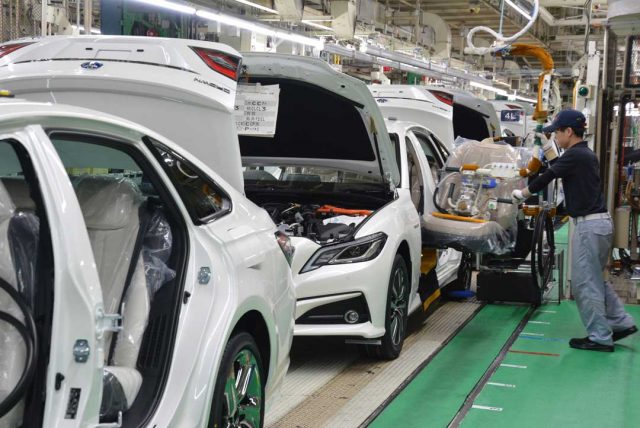
BEIJING — Toyota Motor Corp. will launch an all-electric small sedan in China late next year, having turned to local partner BYD for key technology to finally make an affordable yet roomy runaround, four sources told Reuters.  

Two of the four people with knowledge of the matter described the car as an electric holy grail for Toyota which has struggled for years to come up with a small EV that is both competitive on cost in China and doesn’t compromise on comfort.  

The sources said the breakthrough was chiefly down to BYD’s less bulky lithium-iron-phosphate (LFP) Blade batteries and its lower-cost engineering know-how — a turning of the tables for a Chinese company whose popular F3 saloon was inspired by Toyota’s Corolla back in 2005.  

Little known outside China at the time, BYD, or “Build Your Dreams,” hit the headlines in 2008 when Warren Buffett bought a 10% stake and it has since become one of the biggest manufacturers of so-called new energy vehicles in the world.  

Toyota’s new EV will be slightly bigger than its compact Corolla, the world’s best-selling car of all time. One source said to think of it as “a Corolla with bigger back-seat section”.  

It will be unveiled as a concept car at the Beijing auto show in April and will then most likely be launched as the second model in Toyota’s new bZ series of all-electric cars, even though it will only be on sale in China for now.  

“The car was enabled by BYD battery technology,” one of the sources told Reuters. “It has more or less helped us resolve challenges we had faced in coming up with an affordable small electric sedan with a roomy interior.”  

It will be pitched below premium EVs such as Tesla’s Model Y or the Nio ES6 but above the ultra-cheap Hong Guang Mini EV, which starts at just $4,500 and is now China’s best-selling electric vehicle.  

Two of the four sources, all of whom declined to be named because they are not authorized to speak to the media, said the new Toyota would be priced competitively.  

One said it would likely sell for under 200,000 yuan ($30,000), aiming for a segment of the Chinese market Tesla is expected to target with a small car within the next two years.  

“We don’t comment on future products,” a Toyota spokesperson said. “Toyota considers battery electric vehicles as one path to help us get to carbon neutrality and is engaged in the development of all types of electrified vehicle solutions.”  

A BYD spokesperson declined to comment.  

‘ALL KINDA FLOORED’  

The fact Toyota has been compelled to turn to BYD to solve its low-cost EV conundrum shows how far the competitive balance of the global auto industry has tipped in the past decade.  

When the quality of Chinese vehicles was considered below par, global automakers were not too concerned that they couldn’t compete on price and left Chinese companies to control the domestic market for cheap, no-frills cars.  

But times have changed.  

Toyota executives started to worry back in 2015 when BYD launched its Tang plug-in hybrid, with significant improvements in styling, quality and performance. Most worrying was that fact it was still about 30% cheaper than comparable Toyota models.  

There was a critical turn of events in 2017 when Toyota’s top engineering leaders, including then-executive vice president Shigeki Terashi, drove several BYD cars such as the Tang at its proving ground in Toyota City near its headquarters in Japan.  

Terashi subsequently visited BYD’s headquarters in Shenzhen and drove a prototype of its Han electric car.  

“Their long-term quality is still a question mark, but the design and quality of these cars showed levels of maturity, yet they were much cheaper than comparable Toyota models,” said one of the four sources, who participated in the test drives.  

“We were all kinda floored by that.”  

Two of the sources said the BYD evaluations pushed Toyota to create its research and development (R&D) joint venture with BYD last year. Toyota now has two dozen engineers in Shenzhen working side-by-side with about 100 BYD counterparts.  

BLADE WINNER  

Toyota’s new EV comes at a time it is under fire from environmental groups that maintain it is not committed to zero emissions. They say Toyota is more interested in prolonging the commercial usefulness of its successful hybrid technology.  

Toyota executives say they’re not against battery electric vehicles (BEVs) but argue that until renewable energy becomes more widely available, they won’t be a silver bullet for slashing carbon emissions.  

Nevertheless, Toyota has set up a division in Japan dedicated to zero-emissions cars called ZEV Factory and it is developing safer and lower-cost battery technologies, including solid-state lithium-ion cells which would significantly boost an EV’s range.  

While Toyota has long advocated a runaround that doesn’t compromise on comfort as the best way to popularize BEVs, it has struggled to produce such a car.  

One problem stems from the need to stack bulky, heavy batteries under the floor, as they eat up the interior unless the roof is raised too — which is why many smaller EVs are SUVs.  

In 2018, Toyota briefly explored the idea of a battery venture with BYD. That and subsequent interactions led Toyota’s engineers to come across BYD’s LFP Blade battery. They described it as a game-changer as it was both cheaper and freed up space.  

“It’s a ‘scales fell from my eyes’ kind of technology we initially dismissed because its design is so radically simple,” one of the four sources said.  

BYD officially launched its Blade battery in 2020.  

LFP batteries have a lower energy density than most other lithium-ion cells but are cheaper, have a longer shelf-life, are less prone to overheating and don’t use cobalt or nickel. Tesla already uses LFP batteries in its Model 3 and Model Y in China.  

One of the sources said a typical Blade pack is about 10 cm (3.9 inches) thick when the modules are laid flat on the floor, roughly 5 cm to 10 cm thinner than other lithium-ion packs.  

A BYD spokesperson said that was possible, depending on how an automaker packages the Blade pack in a car.  

CUTTING CORNERS?  

While Toyota has not fully solved the puzzle as to how BYD keeps coming in low on costs, two of the sources said one factor may be its abbreviated and flexible design and quality assurance process — which some Toyota engineers see as cutting corners.  

Toyota’s planning process is much more rigid and thorough, the sources said. Once it has decided on the technologies, components and systems at the outset of a car’s three-to-four-year development process, it rarely changes designs.  

During the process, Toyota typically does three design prototypes and three manufacturing prototypes. Some are driven about 150,000 km (93,000 miles) to bullet-proof quality and reliability when testing for emissions or bad-road durability.  

At BYD, engineers do far less prototyping — there are typically just two – and designs can be changed as late as two years into the process, which is a definite no-no at Toyota, one source said. A BYD spokesperson declined to comment.  

But as a result of those last-minute changes, the technology in a BYD car is much more up to date than in a Toyota when it hits the market, and is often cheaper.  

The four sources believe that further advances in simulation and virtual engineering know-how, as well as the fact that BYD produces a wide array of its own components, have helped it close potential gaps in quality and reliability that could stem from such last-minute design changes.  

“Our challenge at Toyota is whether we dismiss BYD’s way of engineering as being loosey-goosey and too risky, or whether we can learn from it,” one of the sources said. — Norihiko Shirouzu/Reuters 

Villar Group gears up for revenge shopping at the 3rd Villar Group Convention; retail and mall industry leaders to talk about latest trends

Villar Group Convention: Retail Innovation Shopping Expo

Bargain hunters will surely have the best time of their lives as they go on virtual shopping during the Villar Group Convention: Retail Innovation Shopping Expo (ViCon: RISE) on Dec. 3.

Villar Group Chairman Manny Villar will lead the launch of The ViCon: RISE.

Apart from a whole day of shopping experience, participants can also learn about new trends in retail and mall during the talks by international thinktanks, including Globaldata’s APAC Retail and Consumer Head Deepak Nautiyal, NielsenIQ’s Oana Matei and Leechiu Property Consultants’ Chief Executive Officer David Leechiu.

Nautiyal and Leechiu will also join plenary discussions on the future of retail and malls in the Philippines.

ViCon RISE’s virtual halls will also be filled with interactive booths from AllValue brands and Vista Mall, where attendees can interact and shop.

AllValue brands such as AllDay Supermarket and AllHome will feature their respective innovations, both in-store and online.   The country’s fastest growing coffee chain, Coffee Project, and other food and retail brands will also showcase their specialties during the one-day affair.

TV host-turned-social media influencer Mariel Padilla leads the roster of celebrities who will be gracing the event. Padilla is back with online favorite chefs Marky, Sheila and Anton, who also joined her in the AllDay Supermarket’s Mystery Box Challenge.   The chefs are ready to, once again, impress with their cooking skills. At the AllDay exhibit booth, they will be doing cooking demonstrations, while Issa Reyes of Neat Obsessions will be holding audience for her popular home organizing methods.

The Villar Group Convention’s celebrity speakers continue to attract more interesting influencers, with KiwiPino Vlogger and recording artist Kimpoy Feliciano and Homebuddies’ Mayora Frances joining the fun.

Networking in the new age

A unique feature at the retail edition of ViCon is its Business Matching Hall, which allows for ViCon RISE’s industry attendees, as well as MSMEs, to network and explore business and employment opportunities, potential partnerships and a general catch-up on retail trends and insights.

AllValue and Mall business teams—Merchandising, Purchasing, Leasing, Recruitment and Corporate Sales will all be on-hand to e-meet industry players and explore any and all partnerships.

For interested parties, register at https://thevicon.ph/registration.


Spotlight is BusinessWorld’s sponsored section that allows advertisers to amplify their brand and connect with BusinessWorld’s audience by enabling them to publish their stories directly on the BusinessWorld Web site. For more information, send an email to online@bworldonline.com.

Join us on Viber to get more updates from BusinessWorld: https://bit.ly/3hv6bLA.

PHL commits to coastal conservation, sustainability

DENR

The Philippines was one of 11 East Asian countries that pledged to advance the United Nations’ Sustainable Development Goals (SDGs) in the 7th East Asian Seas Ministerial Forum 

With the signing of the Preah Sihanouk Ministerial Declaration, the member countries endorsed the Partnerships in Environmental Management for the Seas of East Asia (PEMSEA) Roadmap to 2030 as the region’s strategic guide, in alignment with each country’s green recovery plans and international environmental commitments.  

The Philippines is promoting policy coherence through a proposed integrated coastal management act, said Environment Secretary Roy A. Cimatu, noting the government’s rehabilitation of Manila Bay and Boracay. 

The act, he said, will support the country’s achievement of sustainable coastal ecosystems and thus reduce their vulnerability to climate change impacts.  

“We need to enhance strategic partnerships through the mechanism PEMSEA provides,” Mr. Cimatu said in the forum. “PEMSEA offers a pathway for establishing meaningful partnerships and exclusive sharing across stakeholders and countries.”  

The forum was hosted by the Royal Government of Cambodia and co-organized with PEMSEA. Government officials from Cambodia, China, North Korea, Indonesia, Japan, Laos, the Philippines, South Korea, Singapore, Timor-Leste, and Vietnam delivered their respective country statements.  

In its 2021 report, the Intergovernmental Panel on Climate Change said that Southeast Asia is one of the planet’s most vulnerable regions to climate change.  

The aforementioned declaration outlines these commitments:  

  • Reaffirm and build on the region’s previous commitments in support of the Sustainable Development Strategy for the Seas of East Asia (SDS-SEA) implementation and key international agreements;  
  • Recognize the impact and opportunities of the global pandemic;  
  • Highlight the region’s progress through the PEMSEA partnership and PEMSEA’s key competencies;  
  • Recognize the persistent and emerging challenges in the region and need for continuing regional cooperation and action;  
  • Endorse the development of the PEMSEA Roadmap to 2030 and SDS-SEA Implementation Plan 2023–2027; and   
  • Issue a call for action to build back better from the impacts of the global pandemic.  

“We will be operationalizing the roadmap through a five-year cycle plan,” said Aimee T. Gonzales, PEMSEA executive director, at a press conference Dec. 2. “We are about to finish our implementation plan in 2022 and then commence the next five-year cycle.”  

The key components of the roadmap, she said, includes effective governance through the improvement of policies to mainstream integrated coastal management, and engagement of local communities as effective stewards through the co-design of the programs on the ground.   

 “There’s an element of institution building, policy strengthening, and technical capacity building, particularly at the coastal communities who are the frontliners,” Ms. Gonzalez added. — Patricia B. Mirasol 

ADVERTISEMENT
ADVERTISEMENT