Home Blog Page 7129

Germany beats Britain to reach Davis Cup semifinals

INNSBRUCK, Austria — Germany duo Kevin Krawietz and Tim Puetz sent their country into the Davis Cup semifinals as they beat British pair Joe Salisbury and Neal Skupski in a tense doubles decider to earn a 2-1 victory on Tuesday.

Their 7-6(10), 7-6(5) win in Innsbruck sealed a remarkable comeback for the Germans, who avenged their defeat at the same stage of the competition by Britain in 2019.

Dan Evans had given Britain the lead by thrashing Peter Gojowczyk (6-2, 6-1) in the first singles.

But Jen-Lennard Struff then kept Germany alive in the last-eight clash with an inspired performance to defeat world number 12 Cameron Norrie.

Struff won 7-6(6), 3-6, 6-2 to send the tie into the deciding doubles rubber which proved a nerve-jangling affair.

The German pair saved four set points on their way to winning the first set in a remarkable tie-break in which they claimed it on their fourth set point.

They were then 5-0 down in the second tie-break of the match but reeled off seven consecutive points to seal the win and set up a semifinal against either Russia or Sweden in Madrid.

Germany only needed one match point with Puetz firing an unstoppable return down the line to spark celebrations among the players and support staff even if there were no fans inside the Olympiahalle because of Austria’s coronavirus disease 2019 (COVID-19) lockdown.

“It’s great, it’s an unbelievable feeling,” Germany captain Michael Kohlmann said. “We had super team chemistry.”

Krawietz, twice a French Open doubles champion, said: “I am super happy that we’re going to Madrid.

“The box was unbelievably loud — it pushed us a lot and super happy to make it to the semifinals.”

While Krawietz and Puetz took the plaudits, it was Struff’s performance that proved crucial.

The powerful world number 51 came out firing against the wall-like Norrie and used his huge groundstrokes and booming serve to move into a 4-1 ahead.

But Norrie, who made his debut at the Association of Tennis Professionals (ATP) Finals after a remarkable year, ground his way back into the match and won five of the next six games to serve for the first set.

Struff broke back though and then saved two set points in the tie-break from 4-6 down before edging a tense opener with a backhand winner on a set point of his own.

Norrie quickly regrouped to level the match and set up a deciding set. It looked as though Struff was tiring as he was forced to battle to hold serve early in the decider but he broke Norrie’s serve for a 4-2 lead and then held his own with an ace.

He then made it four games in a row to break Norrie’s serve again and seal victory.

While the second singles was a ferocious scrap, the first had been all too easy for Evans who won in 55 minutes.

The Evans win proved the high point of the day for 2015 champions Britain who will wonder how they let the tie slip.

“They played well at the end of the second-set tie-break, but we didn’t,” Salisbury, twice a doubles Grand Slam champion, told reporters. “I mean, we’re 5-0 up, we should win the tie-break, simple as that. We lost seven points in a row.

“There is no team in the world that we play that we should do that. Obviously, we are gutted how it turned out, but also just very disappointed at the level, especially myself.”

Serbia takes on Kazakhstan on Wednesday with Russia versus Sweden on Thursday. The final is in Madrid on Sunday. — Reuters


Suns set down Warriors, tie team record with 17th straight win

JAE Crowder hit a pair of jumpers, including a 3-pointer, after the Golden State Warriors had closed within one point in the fourth quarter and the host Phoenix Suns went on to win the Pacific Division showdown 104-96 for a franchise-record-tying 17th consecutive victory on Tuesday night.

Deandre Ayton (24 points, 11 rebounds) and Chris Paul (15 points, 11 assists) recorded double-doubles for the Suns, who won despite losing Devin Booker to a strained left hamstring in the second quarter.

The Suns’ winning streak matches the 17 straight won by the 2006-07 team, bridging December 2006 and January 2007, and also completed the NBA’s first 16-0 calendar month since the Warriors accomplished the feat in November 2015 as part of their record-setting 24-0 start.

Booker’s injury occurred on a drive to the hoop midway through the second quarter. He was taken to the locker room, and the Suns announced he would not return.

Coming off a four-game trip on which he had three 30-point nights, Booker had 10 points in his first 15 minutes on Tuesday.

Even without their leading scorer, the Suns retained a slim lead throughout most of the second half — a margin that was just 92-91 when Otto Porter, Jr. hit a short jumper with 5:19 to play.

But Crowder countered with 21 and 26-footers; and, when Paul added a short jumper and Landry Shamet a 3-pointer with 56.1 seconds left, the Suns had a 102-92 advantage.

Crowder and Cam Johnson scored 14 for the Suns, who moved into a tie with the Warriors atop the Pacific and Western Conference standings at 18-3.

The clubs will meet in a rematch on Friday night in San Francisco.

Jordan Poole had a game-high 28 points and Porter 16 for the Warriors, whose star, Stephen Curry, was limited to 12 points on four-for-21 shooting.

The Warriors shot just 41.9%, well off the Suns’ 49.4%, and hurt themselves with 22 turnovers.

Battling a sore back, Andrew Wiggins chipped in with 10 points for the Warriors, while Draymond Green had 11 rebounds to go with eight points and five assists.

Neither team led by more than nine points in a first half that ended with Phoenix up 56-54.

Poole exploded for 16 first-quarter points, 12 coming on 3-pointers, as Golden State put up 35 points in the first 12 minutes and led by four. — Reuters

Peso strengthens vs dollar on strong manufacturing data, remittances

BW FILE PHOTO

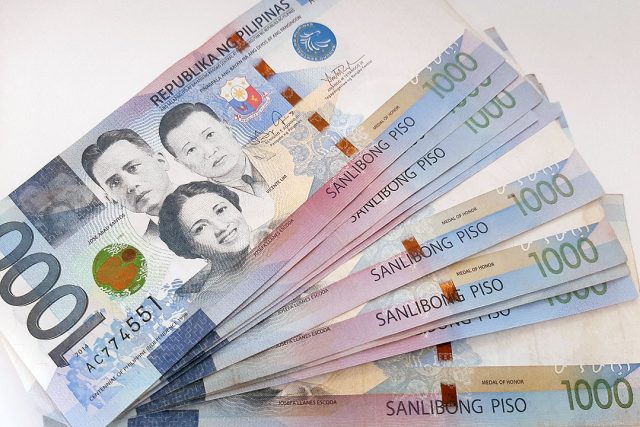
THE PESO strengthened versus the greenback on Wednesday amid seasonal remittance flows and strong manufacturing data.   

The local unit ended trading at P50.34 per dollar on Wednesday, appreciating by five centavos from its P50.39 close on Monday, based on data from the Bankers Association of the Philippines.

The market was closed on Tuesday in observance of Bonifacio Day.

The peso opened Wednesday’s session stronger at P50.36 per dollar. Its weakest showing was at P50.46, while its intraday best was at P50.32 against the greenback.

Dollars exchanged increased to $1.032 billion on Wednesday from $819.3 million on Monday.   

The peso strengthened on the back of the seasonal increase in remittances from overseas Filipino workers as Christmas nears, Rizal Commercial Banking Corp. Chief Economist Michael L. Ricafort said in a Viber message.

Upbeat manufacturing data also helped boost the peso, he added.

The Philippine manufacturing purchasing managers’ index (PMI) was at 51.7 in November from 51 in October, IHS Markit reported on Wednesday. This is its best reading since the 52.2 in March.

A reading above 50 indicates improving conditions for the manufacturing sector versus the previous month, and below the threshold means deterioration.

Meanwhile, a trader in an e-mail said the peso also appreciated as “future prospects for local dollar demand wane due to concerns over the coronavirus disease 2019 (COVID-19) Omicron variant.”

More countries have started to tighten their border controls amid the threat of the new variant, which was first detected in South Africa. The World Health Organization called Omicron a “variant of concern” and warned about its high transmissibility.

For its part, the Philippines has suspended the implementation of its planned two-week reopening to selected foreign tourists from countries that were deemed low risk from the virus due to the new variant. The country has also imposed border restrictions on South African countries and other areas where the variant has already been detected.

Against the backdrop of Omicron uncertainty and rising COVID-19 cases in Europe, the end of crisis-level interest rates in the United States looms even larger following hawkish comments from Federal Reserve Chair Jerome H. Powell overnight, Reuters reported.

The dollar index already logged its biggest monthly rise since June in November on the thinking that inflation could drive rates US higher sooner rather than later.

For Thursday, Mr. Ricafort gave a forecast range of P50.24 to P50.45, while the trader expects the local unit to move within P50.25 to P50.45 per dollar. — L.W.T. Noble with Reuters

PSEi plunges to 6,900 level on Omicron worries

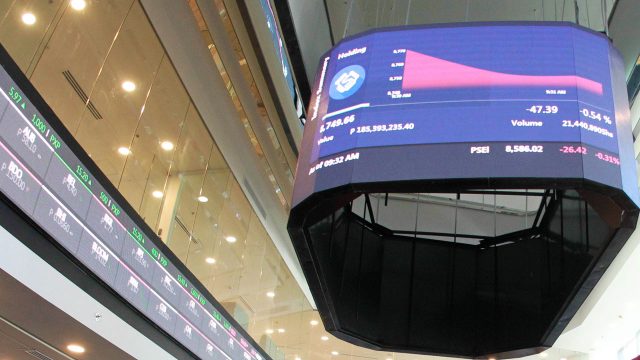
THE MAIN INDEX plunged on Wednesday on worries over the effectivity of vaccines against the new coronavirus disease 2019 (COVID-19) variant and the government’s pandemic response.

The benchmark Philippine Stock Exchange index (PSEi) fell 253.82 points or 3.52% on Wednesday to close at 6,947.06, while the broader all shares index went up by dropped 103.75 points or 2.70% to 3,734.38.

“The PSEi declined amid lingering concerns over the Omicron coronavirus variant, especially as much has yet to be known about it and if the existing vaccines and pills are still effective about it, thereby a source of uncertainty for the market,” Rizal Commercial Banking Corp. (RCBC) Chief Economist Michael L. Ricafort said in a Viber message.

Moderna, Inc. Chief Executive Stéphane Bancel on Tuesday said the current vaccines may not be effective against Omicron, the new COVID-19 variant, Reuters reported.

“Adding to the concerns is Bloomberg’s COVID Resilience Index in which the Philippines remained at the bottom,” Philstocks Financial, Inc. Senior Research and Engagement Supervisor Japhet Louis O. Tantiangco said in a Viber message.

The Philippines remained to be the worst place to be during the pandemic for the third straight month in the latest Bloomberg COVID-19 Resilience Ranking released on Tuesday, followed by neighbors Indonesia, Vietnam, and Malaysia.

“On top of this, investors also reacted to US Federal Reserve Chair Jerome Powell’s latest remarks before the Senate Banking Committee, wherein [he] said the central bank could speed up its tapering process to end sooner than previously telegraphed in the face of rising inflationary pressures,” Regina Capital Development Corp. Head of Sales Luis A. Limlingan said in a Viber message.

High inflation, stalled work force growth, and strong economy is expected to last until mid-2022 as US central bankers will discuss in December whether to end their bond purchases earlier than anticipated, Reuters reported.

All sectoral indices went down on Wednesday. Property plunged 165.26% or 5.01% to close at 3,131,87; services tumbled 73.71 points or 3.71% to 1,912.77; holding firms decreased 226.17 points or 3.26% to 6,706.67; industrials lost 246.72 points or 2.36% to 10,193.03; financials dropped 37.12 points or 2.36% to 1,525.73; and mining and oil declined by 185.19 points or 1.96% to end at 9,255.37.

Value turnover decreased to P14.43 billion with 1.37 billion shares traded on Wednesday from the P28.02 billion with 2 billion issues that switched hands on Monday.

Decliners beat advancers, 165 against 40, while 42 names closed unchanged.

Foreigners turned sellers anew, recording P1.25 billion in net outflows on Wednesday, a reversal of the P651.50 million in net purchases on Monday.

“Next important support at 6,730-6,870 levels to help keep intact the underlying upward trend over the past four months,” RCBC’s Mr. Ricafort said. — M.C. Lucenio with Reuters

Countries scramble to quell Omicron threat

REUTERS

WASHINGTON/TOKYO — Air travelers to the United States will face tougher coronavirus disease 2019 (COVID-19) testing rules, as several countries moved to seal-off their borders amid heightened uncertainty around the virulence of the Omicron variant and its ability to dodge existing vaccines.

In Asia-Pacific, Japan and Hong Kong said they would expand travel curbs, while Australia braced for more cases of the coronavirus variant after at least two people visited several locations in its biggest city while likely infectious.

In an attempt to stave off hasty border curbs, the World Health Organization (WHO) urged countries to apply “an evidence-informed and risk-based approach” to travel measures, saying “blanket travel bans will not prevent the international spread, and they place a heavy burden on lives and livelihoods.”

Investors remained on edge on Wednesday, even as financial markets came off lows plumbed a day earlier following remarks by the CEO of Moderna that raised questions about the efficacy of COVID-19 vaccines against Omicron.

Global health officials have since offered reassurances and reiterated calls for people to get vaccinated.

“Even if the new variant becomes more widespread, the vaccines we have will continue to provide protection,” European Medicines Agency Executive Director Emer Cooke said.

Laboratory analyses should indicate over the next two weeks whether the blood of vaccinated people has sufficient antibodies to neutralize the new variant, Cooke said, echoing remarks by vaccine maker BioNTech and scientists.

BioNTech’s CEO said the vaccine it makes in a partnership with Pfizer would likely offer strong protection against severe disease from Omicron.

Britain and the United States have both pushed their booster programs in response to the new variant.

First reported in southern Africa a week ago, Omicron has triggered global alarm, roiled markets, led to travel bans, and highlighted the disparity between massive vaccination pushes in rich nations and sparse inoculation in the developing world.

Some 56 countries were reportedly implementing travel measures to guard against Omicron as of Nov. 28, the WHO said.

“I well understand the concern of all countries to protect their citizens against a variant that we don’t yet fully understand,” WHO head Tedros Adhanom Ghebreyesus said.

“But I am equally concerned that several member states are introducing blunt, blanket measures that are not evidence-based or effective on their own, and which will only worsen inequities,” Mr. Ghebreyesus added.

BORDER CONTROLS

The United States is moving to require that all air travelers entering the country show a negative COVID-19 test performed within one day of departure, the Centers for Disease Control and Prevention (CDC) said late on Tuesday.

Currently, vaccinated international travelers can present a negative result obtained within three days from their point of departure. The new one-day testing requirement would apply to US citizens as well as foreign nationals.

The administration is also considering whether to require air travelers to get another test within three to five days after arrival, officials said.

While the CDC did not confirm that, it noted it continues to recommend all “travelers should get a COVID-19 viral test 3-5 days after arrival” and “post-travel quarantine for any unvaccinated travelers.”

The CDC lists about 80 foreign destinations as having “Level Four,” its highest level of COVID-19 transmission, and discourages Americans from traveling to those destinations.

In Asia, Japan, which had already shut its borders to all newly entering foreigners, said it would expand its ban to foreigners with resident status from 10 African countries including South Africa.

Hong Kong will expand its entry ban for non-residents to three more countries, Japan, Portugal and Sweden, from Friday.

South Korean Interior and Safety Minister Jeon Hae-cheol called for tighter virus prevention measures to head off Omicron, after suspected cases entered from Nigeria.

The country, which reported a daily record of over 5,000 COVID-19 cases, has not detected any confirmed cases of the Omicron variant so far.

Global airlines are preparing for fresh volatility, analysts said, as Omicron could force them to adjust schedules and destinations at short notice.

“It feels a little bit like we are back to where we were a year ago and that’s not a great prospect for the industry and beyond,” Deidre Fulton, a partner at consultancy MIDAS Aviation, said at an industry webinar. — Reuters

Tel Aviv is now the most expensive city in the world

REUTERS

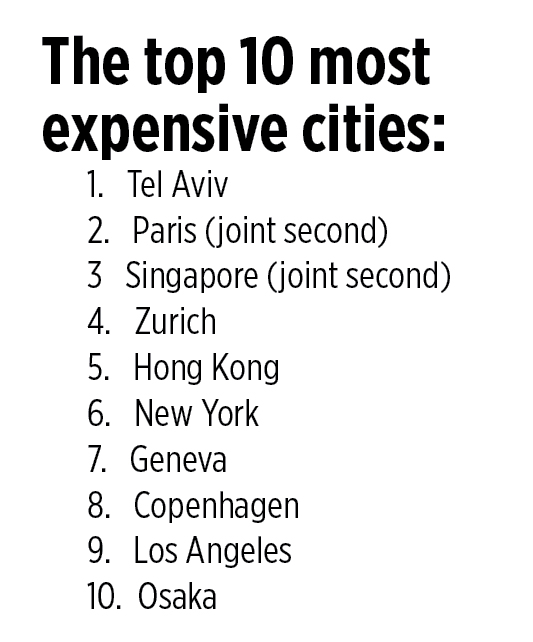
ISRAEL’s Tel Aviv has leapfrogged Hong Kong and Singapore to become the world’s most expensive city to live in, according to the Economist Intelligence Unit (EIU).

The Israeli city climbed from fifth place last year to top the Worldwide Cost of Living 2021 report for the first time, pushing Paris down to joint second place with Singapore. Zurich and Hong Kong rounded out the top five.

The soaring shekel and price increases for goods including groceries and transport were the main factors in Tel Aviv taking the top spot, according to the EIU.

It said prices for goods and services studied across cities had risen 3.5% year-on-year in local currency terms, compared with 1.9% last year. The inflation rate was the fastest recorded for the past five years. Cost increases were biggest for transport as higher oil prices boosted the price of unleaded petrol by 21%.

Other key findings in the study include:

• Rome saw the biggest drop in the ranking from 32nd to 48th place

• Tehran leaped from 79th to 29th place after the reimposition of US sanctions on Iran

• Hong Kong had the most expensive petrol prices, at $2.50 per liter

• Branded cigarette prices went up 6.7% on average

• The Syrian capital of Damascus remains the world’s cheapest city

Upasana Dutt, head of worldwide cost of living at EIU, said in a statement: “Although most economies across the world are now recovering as COVID-19 vaccines are rolled out, many major cities are still seeing spikes in cases, leading to social restrictions. These have disrupted the supply of goods, leading to shortages and higher prices.

“Over the coming year, we expect to see the cost of living rise further in many cities as wages increase in many sectors. However, we are also expecting central banks to raise interest rates, cautiously, to stem inflation. So the price increases should start to moderate from this year’s level.”

The Worldwide Cost of Living is a twice-yearly survey conducted by EIU that compares more than 400 individual prices across 200 products and services in 173 cities. — Bloomberg

Ex-Japan PM Abe warns China a Taiwan invasion would be ‘economic suicide’

REUTERS

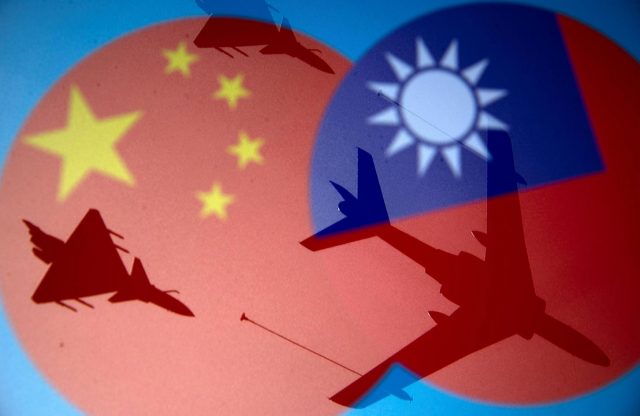
FORMER Japanese Prime Minister Shinzo Abe said China should be aware that any crisis with Taiwan would pull in Japan and its ally the US, warning of a dire situation if Beijing takes military action against Taipei.

Delivering a speech by video to an audience in Taiwan on Wednesday, Mr. Abe said actions of an increasingly powerful China toward Japan and Taiwan were likely to become more complex, blurring the line between war and peace. The comments were some of the most pointed by a prominent Tokyo politician on tensions in the Taiwan Strait.

“A military adventure would be the path to economic suicide,” Mr. Abe said. “We must keep reiterating that peaceful ties between China and Taiwan are the only option.”

The remarks by Mr. Abe, who stepped down as premier last year citing ill health, come after China sent a fresh sortie of warplanes toward Taiwan on Sunday in response to a visit by a group of US lawmakers. China’s Communist Party sees the island as part of its territory despite never having ruled it and seeks to block any official interactions with other countries.

Taiwan’s ruling Democratic Progressive Party asserts the island is a de facto sovereign nation awaiting wider international recognition and not part of Chinese territory.

“Any armed invasion of Taiwan would present a serious threat to Japan,” Mr. Abe said. “A Taiwan crisis would be a Japan crisis and therefore a crisis for the Japan-US alliance,” he added, saying that Chinese President Xi Jinping should not fail to understand the situation.

Democratic peoples should continually remind Mr. Xi and Chinese Communist Party officials not to take the wrong path, Mr. Abe said. While China is large, its links with the rest of the world mean that any aggression on its part would hurt its own economy, he said.

Spooked by Beijing’s clampdown in Hong Kong, senior Japanese lawmakers have been increasingly speaking out about the importance of Taiwan to Japan’s security, sparking irritation from Beijing.

Current Prime Minister Fumio Kishida has said the Taiwan Strait may be the next major diplomatic problem facing Tokyo, and Japan should seek to cooperate with Taiwan and countries that share its values of freedom, democracy and the rule of law.

Mr. Abe also called for Taiwan to have a greater voice on the world stage, including at the World Health Organization, and said he supported Taipei’s bid to join the Trans-Pacific Partnership regional trade agreement. China is also seeking to join the partnership, and Japan’s current leaders haven’t given a clear opinion on how the competing applications should be handled. — Bloomberg

High-tech food supply chains to foster sustainable growth in SEA 

PEXELS-ICONCOM

By Bronte H. Lacsamana 

The best bet to ensure food security and growth in Southeast Asia is to invest in technology which can provide solutions to food wastage and supply chain disruptions, according to business leaders at a virtual roundtable on building resilient and sustainable food supply chains, held by enterprise application software group SAP. 

“Turning produce into food requires efficiency and a seamless, holistic journey,” said Verena Siow, president and managing director of SAP Southeast Asia, at the event in November. “Today, digital technology not only has enormous impacts on food production, but its benefits also extend across the whole value chain.” 

Citing the Food and Agriculture Organization of the United Nations (FAO), she added that around 1.3 billion tons, or one-third of all food produced, is lost or wasted yearly — whether it’s on the part of agriculture, manufacturing, distribution, or logistics. 

Dole Asia Holdings, a leader in the production and marketing of packaged fruit and healthy snacks, is one corporation currently trying to address the issue of wastage. 

“Technology in agriculture or ag-tech is vital in shaping our progressive and proactive waste reduction agenda,” said Leonardo Rabelo, chief financial officer of Dole Asia Holdings, at the roundtable. “The in-farm internet of things (IoTs), phase tracking, and end-to end digitalization will be the new superpowers in enabling us to improve our quality and overall product value like never before and remarkably reducing waste.” 

He mentioned that clean label and clean eating are part of Dole’s core values, with natural ingredients being the basis for all of their food products, including the processed ones. They also upcycle food waste into products like banana puree or frozen banana. 

“Dole has a commitment to take out all the processed sugar by 2025. That’s basically how we are channeling our efforts and making sure that we provide our contribution,” added Mr. Rabelo. 

Meanwhile, in 2020, Vietnamese manufacturer and supplier of agricultural products and services Loc Troi Group standardized all their processes to improve its planning and tracking capacity with the help of SAP S/4HANA. 

Efficiency is important in the bid to support farmers increase their yields and have more accurate data on crop health, especially in the Mekong Delta where climate change has taken its toll, said Nguyen Duy Thuan, Loc Troi Group’s chief executive officer. 

“Half of Vietnam’s total rice exports to the world come from more than 200,000 rice farmers in the Mekong Delta,” he explained at the virtual event. “It’s very challenging when we’re talking with farmers to adapt for the environment. With rice, we also face different requirements from different countries and markets.” 

To face these difficulties, they use technology like drones and mobile apps to help farmers monitor their rice and fruits. Currently, they are working on crop planting area codes and traceability through the use of QR codes. 

SAP Southeast Asia’ Ms. Siow lauded both groups’ efforts and expressed hope for more agri-businesses and corporations in the region to follow suit. 

“In this pandemic, we all had to learn to operate virtually in many ways. We have also further expedited and accelerated the development and adoption of technology,” she said. “While tech can be deployed in many ways, what’s important is we put it all together and audit data and bring insights for decision-making — to ensure that processes are not just streamlined, but optimized.”

Edukasyon.ph revamps platform to support career development of Gen Zs  

By Patricia Mirasol  

Edukasyon.ph, an education technology (edtech) company, has redesigned its homepage to cater to its key market: students and young professionals. Inspired by user insight on self-discovery, the latest iteration features personality and aspiration quizzes, lessons presented as gamified quests, and a career guide with sections on internship, career, and job listings.  

This redesign, the company said, increased engagement and helped expand its registered user base to over 800,000 students, up from half a million over a year ago. The change likewise reflected the value parents bring as they navigate the site and play an active role in their child’s education and development.  

Also featured in its homepage are events that guide Gen Zs on possible career paths, such as its second Future Fest campaign that focused on careers under the Science, Technology Engineering, and Mathematics strand.  

“This new campaign will help achieve our commitment of allowing two million Filipino youth to have a successful and fulfilling career by 2025,” said company founder Henry Motte-Muñoz of the Nov. 26-27 event in a press release. The two-day program was designed with the help of Harrison Assessments, a firm that provides predictive analytics for developing and engaging employees, and Career Development Association of the Philippines, an organization that creates career development programs.  

Other recent partnerships include a literacy promotion initiative with Globe Telecom, upskilling courses with Cream Silk, and a school modernization program with Asus.  

The edtech platform was founded in 2015 with the aim of empowering Filipino Gen Zs to make good education decisions that lead to a fulfilling career and life.  

In a June 2020 interview with BusinessWorld, Mr. Muñoz said, “Only 20% of students are able to complete their journey from enriching education to gainful employment. The odds can be improved.” 

Human beings can choose what is good says new Ramon Magsaysay awardee

By Patricia Mirasol  

Five awardees were honored at the 63rd Ramon Magsaysay Award Foundation presentation ceremonies on Nov. 30. The awardees are Roberto “Ka Dodoy” A. Ballon, a fisherman and community environmentalist from the Philippines; Steven Muncy, a humanitarian and peace builder working all over Southeast Asia; Muhammad Amjad Saqib, a poverty alleviation visionary from Pakistan; Firdausi Qadri, an affordable vaccine champion from Bangladesh; and WatchDoc, media truth crusaders from Indonesia.  

“Human beings, while capable of the worst, are also capable of rising above themselves, choosing again what is good, and making a new start…,” said Mr. Ballon in his acceptance speech, citing Pope Francis in his 2015 encyclical Laudato Si. This, he said, exemplifies the choices he makes as a fisherman.  

The 53-year-old awardee, whose father was also a fisherman, saw how fish harvests in his hometown of Kalabasan, Zamboanga Sibugay dwindled as the mangrove forests along Sibuguey Bay were cleared to make way for aquaculture farms. Mangroves serve as breeding grounds and nurseries for fish.  

In 1986, he founded Kapunungan sa Gamay ng Mangingisda sa Concepcion (or the Association of Small Fishermen of Concepcion) with 36 other small-scale fishermen to preserve the coastal environment and restore fish breeding grounds. The association now has tenurial rights to 500 hectares of mangrove forest, yielding an improvement in the quality of life of fishermen.  

A Sept. 2 press statement from the Senate of the Philippines noted that fish catch in the area has improved from 1.5 kilograms in an eight-hour fishing trip to seven kilograms after three to five hours of fishing.  

“As a simple fisherman, I only have one desire for the community that makes me do what I have been doing,” Mr. Ballon continued in his acceptance speech. “To offer myself to provide a better environment, sustainable livelihood, and an empowered community, and to realize our vision and mission in life: to have 3, 8 [or 3 Eat, referring to three meals a day].”  

His association’s aspiration, he added, is a harmonious life — one that is propelled by a sustainable and equitable co-existence in the coastal communities of Zamboanga Sibugay. 

The Ramon Magsaysay Award is Asia’s equivalent to the Nobel Prize.  

“We have realities we need to face — sickness, lockdowns, death, and more uncertainty. But we want to do our share by focusing on stories of courage and hope,” Susan B. Afan, president of the Ramon Magsaysay Award Foundation, said in a press statement. 

Singapore tests out ‘smart bandage’ for remote recovery

SINGAPORE – Researchers in Singapore have developed a smart bandage to enable patients to have chronic wounds monitored remotely via an app on a mobile device, potentially saving them visits to the doctor.

A research team at the National University of Singapore has created a wearable sensor attached to a transparent bandage to track progress in healing, using information like temperature, bacteria type, and levels of pH and inflammation.

“Traditionally when someone has a wound or ulcer, if it’s infected, the only way to examine it is through looking at the wound itself, through visual inspection,” said Chwee Teck Lim, lead researcher at the university’s department of biomedical engineering.

“If the clinician wants to have further information then they will obtain the wound fluid and send to the lab for further testing,” he said.

“So what we’re trying to do is use our smart bandage to cut the number of hours or days to just a few minutes.”

The “VeCare” technology will enable patients to convalesce more at home and visit a doctor only if necessary.

The bandage is being tested on patients with chronic venous ulcers, or leg ulcers caused by circulation problems in veins.

Data collection by researchers on the wounds has so far been effective, according to Lim, who said the smart bandage could potentially be used for other wounds, like diabetic foot ulcers. – Reuters

Suncity shuts VIP gaming rooms in Macau after CEO’s arrest -sources

HONG KONG – Embattled gambling group Suncity Group Holdings has closed all of its VIP gaming rooms in Macau, the world’s largest gambling hub, after the company’s CEO was arrested, two sources with direct knowledge of the situation told Reuters.

The shutting of the company’s VIP rooms will result in a cut of around a third of its Macau headcount, according to one of the sources, a senior casino executive who declined to be identified as the closure has not been publicly announced.

Suncity Group, whose shares were suspended from trade on Wednesday, did not immediately respond to a request for comment.

The news comes amid a broader investigation into Suncity, which has sent Macau-listed casino stocks tumbling for a third day in a row. Shares in Wynn Macau Ltd, which analysts say is the casino operator most reliant on Suncity‘s gaming rooms, slid 7% on Wednesday, bringing this week’s losses to 18%.

Alvin Chau, the CEO of the company as well as the founder of Macau‘s biggest junket operator which brings in high rollers to play at casinos, was arrested on Sunday over alleged links to cross-border gambling.

Macau authorities have accused Chau and 10 others of using the former Portuguese colony as a base for an illegal “live web betting platform” in the Philippines that attracted mainland Chinese.

A warrant for his arrest was also issued on Friday by the mainland Chinese city of Wenzhou.

“The writing was on the wall already. But nothing was done in Macau until the Wenzhou police talked about it,” the executive said.

While Chau’s junket operations, also called Suncity, are not part of the listed Suncity Group, they have previously been singled out by mainland China’s state-run media, which said they harmed China’s social order.

A 2019 article by the Economic Information Daily, a unit of China’s state news agency Xinhua, alleged that the annual amount of online betting on websites run by Suncity was more than 1 trillion yuan ($155 billion). Suncity has also not responded to a request for comment on that estimate.

One of the casino executives told Reuters that Suncity operated VIP rooms in properties owned by all six of Macau‘s licensed casino operators – Wynn Macau, Sands China, MGM China, SJM Holdings, Melco Resorts and Galaxy Entertainment.

In 2019, Suncity operated up to 17 VIP clubs in Macau and accounted for nearly half of the gambling hub’s VIP market, the executive added.

The six licensed casino operators have not responded to Reuters requests for comment.

Suncity Group said this week that Chau, who is both CEO and chairman, intended to resign. Reuters efforts to contact Chau or his lawyer have been unsuccessful.

Suncity Group‘s stock plunged 48% on Tuesday to a record low after being suspended from trade a day earlier, valuing it at HK$880 million ($113 million). Suncity has also said its operations would not be impacted in the event that it ceased to have Chau’s support. – Reuters