Home Blog Page 7064

Vitarich reaches deal to acquire Barbatos
VITARICH CORPORATION FB PAGE

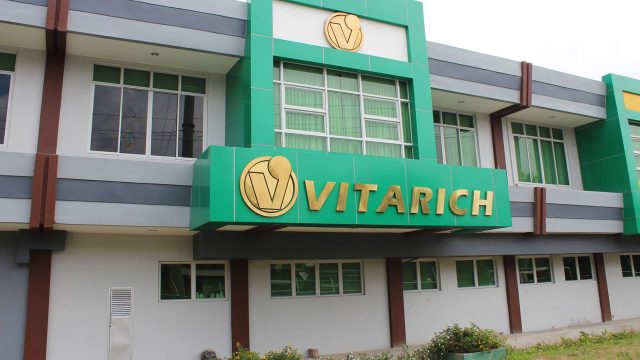
Vitarich Corp. has reached an agreement to acquire Barbatos Ventures Corp. (BVC) from Luzon Agriventure Inc. as part of what the listed company called its “vertical integration strategy.”

In a stock exchange disclosure on Friday, Vitarich said the acquisition of 100% of the outstanding stock of BVC was for a price of P1.00, with the board of directors of the transacting parties approving the deal.

“The core of our strategy is to create value through further integration,” said Vitarich President and Chief Executive Officer Ricardo Manuel M. Sarmiento, adding that BVC is the company’s dressing plant partner since 2019.

“This acquisition allows us to provide our customers with end-to-end processes, ensuring tighter control and traceability of operations which most hotel, restaurants, and institutional (HRI) customers value highly. It also delivers operational and financial synergies, including cost efficiencies,” he said.

Vitarich said by 2025, BVC will bring revenues of around P375 million, with its addition capturing cost synergies of P91 million. In the first two years after the acquisition, it expects a contribution of P46 million to net income or P0.02 to earnings per share.

BVC provides services such as packing, cutting, and the storage of dressed chicken. The company has dressing plant facilities located in Marilao, Bulacan and Tugbok, Davao.

Capital expenditures are expected to be P150 million in total, comprised of P93 million spent in 2021 and P57 million in 2022 for expanding the facilities in Marilao.

Once BVC is acquired, Vitarich will have additional cost savings by the restructuring of their lease and toll arrangement into a contract growing agreement.

The acquisition is expected to be finalized and executed by year-end.

By January 2022, BVC will operate as a wholly owned subsidiary that integrates dressing operations and contract growing.

Vitarich shares were unchanged at 70 centavos each on Friday. — Luisa Maria Jacinta C. Jocson

DITO CME prices stock rights offer P4.88

DITO CME Holdings Corp. has set its P8-billion stock rights offer at P4.88 per share, the listed company disclosed on Friday.

The proceeds will be used to invest in the country’s third telco player, DITO Telecommunity Corp, “to support a successful commercial-roll-out and for general corporate purposes,” the company said in a disclosure to the stock exchange.

DITO CME said the offer price was determined based on the volume-weighted average price (VWAP).

“As of Dec. 16, 2021, the offer price is a 16.6% discount from the closing price and a 17.5% discount from the 30-day VWAP for each of the 30 consecutive trading days immediately prior to (and including) Dec. 16, 2021 of the company’s common shares on the PSE (Philippine Stock Exhange),” it noted.

It added that as of Dec.16, the closing price and 30-day VWAP for this period are P5.85 and P5.92, respectively.

The rights offer period will begin at 9:00 a.m. on Dec. 27 and conclude at 12:00 p.m. on Jan. 18.

“The rights shares may be subscribed to by the shareholders of record of the company as of the record date on Dec. 23… on a pre-emptive rights basis,” DITO CME also said.

“The latest date that anyone can purchase common shares on the PSE in order to be considered an eligible shareholder and subscribe to rights shares is on Dec. 17,” it added.

DITO CME, which owns 54% of DITO Telecommunity, handles the investments of Dennis A. Uy’s Udenna Corp. in media, communications, entertainment, and information technology.

“Udenna will not participate in the mandatory first round of the rights offer or the second round of the rights offer to provide maximum availability of rights shares

to minority eligible shareholders,” DITO CME said.

“Nonetheless, Udenna has provided an undertaking to the sole underwriter, pursuant to which Udenna shall subscribe to all offer shares that remain unsubscribed after the institutional offer to ensure that the offer shares are fully subscribed under the same applicable terms and conditions in the rights offer, subject to the right of the company to scale down Udenna’s subscription if it will result in a violation by the company of the minimum public ownership requirement,” it added.

DITO CME has three digital companies: Unalytics, which provides managed analytics services; Acuity Global, which curates media properties across platforms and provides media planning and buying; and Luna Academy, an online education platform aimed at equipping users with future-ready skills, credentials, and certificates.

For the January-September period, DITO CME reported P327.27 million in revenues, which generated a gross profit of P287.15 million.

Operating expenses rose to P1.75 billion from P3.68 million in the same period last year, resulting in an operating loss of P1.46 billion from a loss of P3.68 million previously.

DITO CME closed 5.81% lower at P5.51 apiece on Friday. — Arjay L. Balinbin

Century Properties board clears P6-B debt program

Century Properties Group, Inc. has approved a P6-billion debt securities program, of which half of the amount will make up the first tranche including an oversubscription option.

The property developer and manager told the stock exchange on Friday that the initial tranche of its debt program would be a a five-year fixed rate of retail bonds with a principal amount of P2 billion and an oversubscription option of up to P1 billion.

Century Properties also announced the passage of other resolutions, including its application for the registration and licensing of bonds with the Securities and Exchange Commission (SEC), and the listing of the bonds with the Philippine Dealing & Exchange Corp.

It also announced a ratification on disclosures in the registration statement and prospectus, to be filed by the corporation with the SEC, in connection with the registration of the unsecured bonds to be offered to the public.

The corporate resolutions were passed during the company’s special board meeting on Friday. Its shares closed unchanged on that day at 40 centavos each. — Luisa Maria Jacinta C. Jocson
AboitizPower to issue P10-B retail bonds

Aboitiz Power Corp. announced on Friday that it would issue P10 billion out of its P30-billion shelf-registered bonds in the first quarter of next year, subject to market conditions.

In a stock exchange disclosure, it said the third tranche of its debt program is comprised of fixed-rate retail bonds including oversubscription.

“Proceeds of the [bonds] will be used for refinancing and/or future renewable projects,” it said.

The first tranche of the company’s shelf-registered bonds was completed on March 16, while the second one was done on Dec. 2.

“Subject to market conditions, the Third Tranche Bonds is expected to be offered to the general public in the first quarter of 2022 and shall be listed with the Philippine Dealing and Exchange Corporation (PDEx) as and when issued,” the company said.

The energy company operates hydro, solar and geothermal power plants as part of its clean energy portfolio in the Philippines, while also working on coal and oil-fired plants.

In March, AboitizPower announced that it targets a portfolio made up of 50% renewables and 50% thermal energy by 2030, through investing in more renewable energy projects in the country and abroad.

AboitizPower shares climbed 0.32% or 10 centavos to finish at P31.80 apiece on Friday. — Marielle C. Lucenio

Villavicencio is Basic Energy’s new chairman

The board of directors of Basic Energy Corp. has chosen Ramon F. Villavicencio as its new chairman during a regular meeting on Dec. 15, the company told the stock exchange on Friday.

The company described Mr. Villavicencio as “an astute businessman, established leader, and industry pillar, [who] will bring his long years of experience to help steer [the company] into new heights.”

“His trailblazing and pioneering spirit is evident in his accomplishments; some of note are in the fields of oil recycling, hydro fuel technology and blended biodiesel,” it added.

Mr. Villavicencio, who is also a director in San Miguel Corp. and Bioenergy 8 Corp., graduated from De La Salle University with a degree in Bachelor of Science in Commerce and a Masters in Business Administration.

In October, Basic Energy’s former chairman Oscar C. de Venecia Sr. passed away at the age of 89.

The company said Mr. Villavicencio is also the chairman of the board of directors of Insular Oil Corp., the Independent Philippine Petroleum Companies Association, and had served as president of the Philippine Venezuelan Economic Council from 2011 to 2012.

Basic Energy added that his experience will push the company nearer to its goals of reviving its interest in the downstream oil industry.

The company also announced in October its plan to acquire 60% of Filoil Energy Co. Inc.

On Dec. 7, the parties executed a subscription agreement ahead of the investment in Filoil. The deal was consummated and payment was made by Basic Energy to Filoil on Dec. 10.

On Friday, shares in Basic Energy finished higher by two centavos or 2.99% to close at P0.69 apiece. — Marielle C. Lucenio

Stocks maintain rise as BSP holds rates

COURTESY OF PHILIPPINE STOCK EXCHANGE, INC.

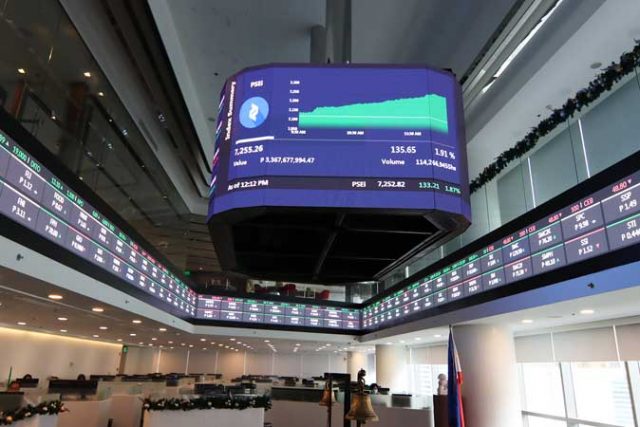
Philippine shares sustained their gains on Friday after the central bank decided to maintain record-lows interest rates and due to the stock exchange’s plan to require companies to have stabilization funds.

The Philippine Stock Exchange index (PSEi) rose 64.4 points or 0.89% on Friday to close at 7,297.66, while the broader all shares index went up by 15.48 points or 0.40% to 3,851.59.

“Positive market action today is spillover effect of yesterday’s BSP (Bangko Sentral ng Pilipinas) steady policy rate that tended to temper the sudden hawkish market messaging of the US Federal Reserve on its policy tack going forward,” said Cristina S. Ulang, First Metro Investment Corp. Head of Research in a Viber message.

The BSP on Thursday decided to keep borrowing costs at record lows to continue supporting the economy even as inflation risks lean toward the upside.

Meanwhile, the US central bank has signaled three rate hikes in the cards next year.

The Fed would end its pandemic-era bond purchases in March and pave the way for three quarter-percentage-point interest rate hikes by the end of 2022 as the economy nears full employment and the US central bank copes with a surge of inflation, Reuters reported.

Rizal Commercial Banking Corp. Chief Economist Michael L. Ricafort noted that the market sentiment was supported by the Philippine Stocks Exchange’s (PSE) proposal to require a stabilization fund for initial public offerings (IPO).

PSE President and Chief Executive Officer Ramon S. Monzon said on Thursday that the exchange was considering to require firms to have a stability fund worth between 10% to 15% of the base offer of their IPO or follow-on offering.

This is after the issue with Medilines Distributors, Inc., whose shares dropped 30% when it debuted on the PSE’s main board last week, despite its offer being 2.5

times oversubscribed, due to its lack of stabilization fund.

Meanwhile, most sectoral indices increased on the last trading day of the week, except for mining and oil, which dropped 52.62 points or 0.57% to 9,114.93; and industrials, which slid 1.81 points or 0.01% 10,387.57.

On the other hand, holding firms climbed 102.71 points or 1.46% to 7,130.89; property increased 27.77 points or 0.86% to 3,229.64; services gained 16.29 points or 0.81% to 2,018.75; and financials advanced 1.62 points or 0.10% to 1,621.92.

Value turnover plunged to P14.47 billion with 3.08 billion issues switching hands on Friday, from the P87.52 billion with 2.92 billion shares traded the previous trading day.

Decliners beat advancers, 92 against 89, while 47 names closed unchanged. Net foreign buying was at P333.22 million, down from the P79.44 billion recorded on Thursday.

Diversified Securities, Inc. Equity Trader Aniceto K. Pangan pegged the PSEi’s next resistance level at 7,475. — Marielle C. Lucenio

BSP may start hiking cycle next year

By Jenina P. Ibañez, Senior Reporter 

INVESTOR pressures would likely challenge the Philippine central bank’s accommodative stance next year amid monetary tightening by its counterparts across the globe, Fitch Solutions Country Risk & Research said. 

In a report, Fitch Solutions on Friday said it expects the US Federal Reserve to raise key interest rates by 50 basis points next year, potentially putting pressure on the Philippines to follow suit. 

“This will put upward pressure on market expectations for hikes in emerging markets, particularly amongst those which have yet to begin their hiking cycle, such as the Philippines,” it said. 

The research body kept its forecast that the Bangko Sentral ng Pilipinas (BSP) would start monetary tightening next year. It expects the policy rate to rise to 2.75% by the end of 2022. 

The BSP kept it key rates at record lows on Thursday. 

Central bank Governor Benjamin E. Diokno cited manageable inflation and noted risks to the country’s economy after the emergence of the Omicron coronavirus variant. He said keeping monetary support would help sustain the economic momentum in the next quarters. 

“The Monetary Board continued to flag upside risks to the near-term inflation outlook due to supply-side price pressures, namely bottlenecks and high commodity prices,” Fitch Solutions said. “However, the board also noted downside risks to the economy given the emergence of the Omicron variant.” 

“The board struck an accommodative tone, reiterating its desire to support the economic recovery, while also watching for potential inflationary surprises over the coming quarters,” it added. 

It expects economic recovery and growing market pressure to prompt the start of a hiking cycle gradually through 2022. 

“The market-implied policy rate path for the Philippines suggests 100bps in hikes over the next six months and 160bps within a year, significantly more hawkish than Bloomberg consensus expectations for the policy rate to stand around 2.3% by end-2022,” according to the report. 

“Our forecast for 75bps stands somewhat midway and reflects our view that the BSP will seek to normalize monetary conditions as economic activity normalizes,” it added. 

The accommodative position would come under investor pressure if the central bank falls behind the curve on monetary tightening, it said. 

Consumers gloomier in Q4 — BSP

Consumers were more pessimistic this quarter amid a high jobless rate and rising prices, the Philippine central bank said on Friday. 

The overall confidence index fell to -24% from -19.3% in the third quarter, the Bangko Sentral ng Pilipinas (BSP) said in a statement. 

In contrast, businesses turned more optimistic as the confidence index returned to positive territory at 39.7%, its highest since the start of the coronavirus pandemic in March last year. This was a reversal from -5.6% seen in the third quarter. 

Consumers said the weaker outlook was brought about by the unemployment rate, low income, restrictions to curb the coronavirus pandemic, faster increase in prices and fewer working family members, the BSP said. 

“Consistent with the national trend, consumer confidence across income groups also weakened,” it added. 

The central bank said consumer confidence among the high-income group waned amid concerns about job security. Buying sentiment for big-ticket items in the fourth quarter was steady at 13.4%. 

The percentage of households that considered the next 12 months as a favorable time to buy big-ticket items rose to 5.1% from 4.1% in the past quarter. 

BSP Assistant Governor Iluminada T. Sicat said the consumer confidence index might have been affected by the timing of the survey, which was held when Metro Manila was under a stricter lockdown or Alert Level 4. 

“This may have affected the views of the consumer respondents,” she told a news briefing. “That’s why there was a deterioration relative to quarter ago.” 

In contrast, businessmen were more optimistic this quarter as COVID-19 lockdowns eased amid the vaccine rollout and as their sales improved. 

Seasonal factors such as the uptick in demand during the holidays and the start of mining and milling seasons also backed business optimism. 

“All types of trading firms are optimistic in Q4 2021 and are more confident for the near term,” the BSP said. 

Importers and domestic-oriented companies turned optimistic, while exporters and dual-activity companies became even more confident. 

The consumer report surveyed 5,665 households from Oct. 1 to 13, while the business survey interviewed 1,511 companies from Oct. 8 to Nov. 18. — Jenina P. Ibañez 

BSP expands FCDU players

FREEPIK

THE PHILIPPINE central bank on Friday said it would expand the coverage of entities allowed to engage in foreign currency deposit units (FCDU) to include Islamic and digital banks. 

The central bank would also streamline licensing rules on expanded FCDUs as part of changes to FCDU rules that seek to help banks manage risks, Bangko Sentral ng Pilipinas (BSP) Governor Benjamin E. Diokno told an online news briefing. 

The Monetary Board approved the changes under the second phase of the Foreign Currency Deposit Unit (FDCU) regulations. 

“The amendments aim to promote effective risk management in banks by recalibrating the requirements for FCDU transactions in line with the current business norms and risk management practices,” he said. 

“Moreover, the stringent conditions on lending to regular banking unit by expanded FCDUs will be amended to provide banks with the opportunity to perform efficient and flexible liquidity and cash management practices on their FX funds,” he said. 

The BSP plans to issue a circular on the new foreign currency deposit rules. 

The Monetary Board in May last year approved the first phase of reforms for the foreign currency deposit system. 

The circular aimed to ease the asset cover standards of banks to improve flexibility in managing foreign currency deposit exposure. This allowed a two-week compliance period to bring the coverage back to 100%. 

The two-week compliance period allows for more flexibility to manage foreign currency exposure as banks are required to keep 100% asset cover at all times on expanded FCDUs. — Jenina P. Ibañez 

3.87M more Filipinos become poor

WIKIMEDIA COMMONS

By Ana Olivia A. Tirona, Researcher  

MORE FILIPINOS were driven into poverty in the first half, according to the local statistics agency. 

The proportion of Filipinos whose income fell below the per capita poverty threshold rose to 23.7% from a revised 21.1% three years earlier, the Philippine Statistics Authority (PSA) told an online news briefing on Friday. 

This meant the number of poor people rose by 3.87 million to 26.14 million in the first half, it said. 

The subsidence incidence among Filipinos — the proportion of those whose income fell below the monthly food threshold — rose to 9.9% from 8.5% three years earlier. 

The poverty incidence among Filipino families — the proportion of those whose income fell below the poverty threshold — went up to 18% from 16.2%. 

Socioeconomic Planning Secretary Karl Kendrick T. Chua said the coronavirus had halted government efforts to ease poverty, even if its medium-term goal of lifting 6 million Filipinos out of poverty by 2022 was met four years ahead of schedule in 2018. 

“Regions with stricter quarantines tended to see larger increases in poverty compared with regions under less stringent quarantines,” he said in a statement. 

The poverty incidence in Central Luzon, Calabarzon and Central Visayas increased by more than 4 percentage points, while the rate for the National Capital Region increased by 1.2 points, he said. 

On the other hand, five regions with fewer restrictions recorded lower poverty. These were the Bangsamoro Autonomous Region in Muslim Mindanao, Eastern Visayas, Northern Mindanao, Davao Region and the Cordillera Administrative Region. 

The Bangsamoro region’s poverty incidence fell by 17.4 points, reflecting the progress made in peace efforts, Mr. Chua said. 

Ser Percival Peña-Reyes, associate director at the Ateneo de Manila University Center for Economic Research and Development, cited the effects of increased poverty on productivity. He also cited worsening hunger and the widening financial and digital exclusion that could worsen income and wealth inequality. 

The subsistence incidence among families — the proportion of those in extreme poverty — worsened to 7.1% from 6.2%.  

The per capita poverty threshold in the first half was P14,498 a month compared with P12,638 three years earlier. 

Meanwhile, the monthly poverty threshold for a family of five was P12,082 versus P10,532 in the first half of 2018. 

The per capita food threshold was P10,071 a month in the first half compared with P8,849 three years earlier. For a family of five, the monthly food threshold in the first half was P8,393 versus P7,374. 

Uncertainties brought by the pandemic and economic scarring make it challenging for the government to cut the poverty rate, which had improved before the coronavirus hit, said Robert Dan J. Roces, chief economist at Security Bank Corp. 

“We expect a slow and gradual improvement in the poverty stats in the meantime with the shift to looser curbs,” he said in a Viber message. “In the long-run, stability in growth leading to job creation may be the catalyst for a substantial and meaningful improvement in the poverty rate.” 

Mr. Reyes said the government “really needs to stick to their game plan,” noting that it is “going in the right direction but it needs more magnitude.” 

“Investments should be put in resources we can muster,” he said. “The good thing about our debt, as it should be really, is that it is being channeled to our vaccination rollout.” 

The gradual economic reopening would be boosted by election spending and could help lift economic activity that should improve poverty statistics, he added. 

Mr. Chua said the government in its final months would “vigorously pursue the economy’s full recovery to restore jobs and bring more people out of poverty.” 

WESM suspended due to power oversupply during typhoon

The Energy Regulatory Commission (ERC) suspended the Wholesale Electricity Spot Market (WESM) late Thursday after oversupply conditions on the grid during typhoon Odette (Intenational name: Rai).

The Independent Electricity Market Operator of the Philippines (IEMOP) said in a briefing hosted by the Energy department on Friday, that the suspension was warranted by section 1.B of Article II of ERC Resolution No. 12, series of 2018.

The resolution authorizes the ERC to consider such suspensions during extreme weather disturbances and natural calamities.

“There is no power exchange between Luzon and Visayas through the high-voltage direct current (HVDC) transmission system as of 9:40 PM of Dec. 16. Normally, the Visayas are exporting power to Luzon of up to 420 megawatts (MW),” IEMOP Spokesperson Andrea Mae T. Caguete said during the briefing.

Ms. Caguete added that peak demand recorded at midday Friday was only 395 MW. The typical peak demand level is 1,900 MW.

The administered price will also be in force for suspended intervals, or P5.27 per kilowatt hour (kWh).

The Department of Energy (DoE) has instructed cooperative administrators and grid operators to prioritize electricity restoration in places affected by the typhoon where vaccination is ongoing.

At the briefing, Energy Undersecretary Felix William B. Fuentebella ordered the National Electrification Administration (NEA), the National Grid Corp. of the Philippines (NGCP), and the National Power Corp. (NAPOCOR) to verify which hard-hit areas are conducting vaccinations and restore electricity to those places as soon as possible.

Typhoon Odette first made landfall in Siargao Island, Surigao del Norte, at 1:30 pm Thursday.

It gained strength with sustained winds of 195 kilometers per hour (kph) near the center and gusts of up to 270 kph, at which point it was classified a super typhoon, according to the government weather service, which is known as PAGASA. – Marielle C. Lucenio 

Duterte orders lower property taxes for IPPs, penalty condonation

philstar

PRESIDENT RODRIGO R. Duterte on Friday signed an executive order (EO) lowering the real property tax (RPT), interest, and penalties on the property, machinery, and equipment of Independent Power Producers (IPP) operating under a Build-Operate-Transfer (BOT) agreement.

The order was justified as a means of protecting the finances of the National Power Corp. (NPC) or the Power Sector Assets and Liabilities Management Corp. (PSALM) and insulating the government from any spillover impact if the two companies become financially unstable if IPPs are unable to operate.

EO 157 orders that the RPT liabilities of IPPs in 2021 be reckoned based on 15% of property’s fair market value, with machinery and equipment valuations depreciated at a rate of 2% a year.

All interest and penalties on deficiency RPT liabilities, as written, will be condoned, according to the EO.

The EO also allows RPT payments made by IPPs over and above the reduced amount to be applied to RPT liabilities for the succeeding years.

Mr. Duterte noted that various local government units (LGUs) have taken the position that IPPs operating within their territories are not entitled to exemptions and privileges of government-owned or -controlled corporations with respect to RPT on property, machinery, and equipment used in the generation and distribution of electric power.

LGUs, he added, have also threatened enforcement action against IPPs, including the levy and sale at public auction of the affected properties.

LGUs were eventually persuaded to assess RPT on the machinery and equipment of various IPPs, at the maximum assessment level of 80%, based on Section 218 of Republic Act 7160 or the Local Government Code.

“The collection of the subject real property taxes at the maximum level assessed by LGUs will trigger massive direct liabilities on the part of the NPC (National Power Corp.) or PSALM (Power Sector Assets and Liabilities Management Corporation),” according to the EO, “thereby threatening their financial stability, the government’s fiscal consolidation efforts, the stability of energy prices, and may even trigger further cross-defaults and significant economic losses across all sectors.”

“The closure or non-operation of these IPPs will entail substantial losses to the government and force resort to more costly electric power source alternatives or the implementation of rotating power outages,” it added. — Alyssa Nicole O. Tan

ADVERTISEMENT
ADVERTISEMENT