Home Blog Page 7038

DENR dispute resolution mechanism for land to be rolled out more broadly

TWITTER.COM/DENROFFICIAL

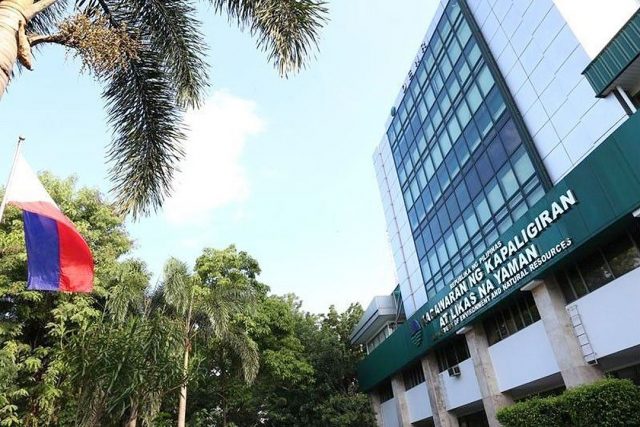
AN Alternative Dispute Resolution (ADRs) mechanism will be rolled out more widely after it was piloted in land disputes, the Department of Environment and Natural Resources (DENR) said in a statement.

“Although all the cases subjected to ADR pertain to land sector only, the ADR Officer’s expertise is DENR-wide and not in land alone. That’s why in 2022 we aim to roll out the ADR mechanism to other sectors,” LMB Director Emelyne V. Talabis said.

Ms. Talabis said that matters dealing with ADR are not focused on land alone, even though the agency most practiced in dealing with ADRs is the Land Management Bureau (LMB).

In 2016, guidelines on the adoption of the ADR mechanism were issued covering land management and disposition, where they were implemented by 2018.

Since then, 1,020 cases were referred to ADR, with some 281 cases under proceedings.

A total of 739 ADR cases were mediated, with 321 disputes or 43% to the total being settled. The remaining 418 failed to reach a settlement.

“43% is quite an accomplishment and a big leap from the almost zero settlements we had before the adoption of the ADR mechanism in LMB,” Ms. Talabis said.

The proposal is pursuant to the Alternative Dispute Resolution Act of 2004 and DENR Administrative Order 2005-18, which calls for the adoption of the ADR procedures in the resolution of conflict.

The DENR legal affairs office said it does not encourage litigation when dealing with land disputes, as it is often costly and tedious.

“We leverage the environment and natural resources to foster sustained peace instead of litigiousness among stakeholders,” DENR Assistant Secretary Michelle D. Go said. “Sustained peace will hasten the attainment of the development objectives of the department which will definitely have a ripple effect on the societal goals of inclusive growth and poverty reduction.”

DENR Regional Offices in Regions II, V, VI, X, and the Cordillera Administrative Region were among the first to institutionalize the ADR mechanism in their jurisdictions.

The comprehensive ADR accreditation training program has continued through online platforms over the course of the COVID-19 pandemic. — Luisa Maria Jacinta C. Jocson

Fight for Canadian nickel miner appears over as BHP bows out

REUTERS

A FIGHT for a Canadian nickel miner between BHP Group and Australian mining magnate Andrew Forrest may finally be ending.

BHP said it won’t match a proposal from Forrest’s Wyloo Metals Pty Ltd. for Noront Resources Ltd., a miner with access to high-grade Canadian nickel deposits in an untapped region of northern Ontario dubbed the Ring of Fire.

Mining heavyweights are racing to control more supplies of raw materials that are key to transitioning to low-carbon energy sources. Nickel is one of the main metals used in lithium-ion batteries for electric vehicles.

Wyloo reignited a bidding war with BHP for Noront after the two parties engaged in talks to resolve the battle last month. The latest proposal of 1.10 Canadian dollars ($0.85) per share from Wyloo, already a majority shareholder in the Canadian company, trumped BHP’s bid of C$0.75, and is nearly 60% above the C$0.70 bid that Wyloo made back in August.

“While the Eagle’s Nest deposit is a promising resource, we do not see adequate long-term value for BHP shareholders to support an increase in BHP’s offer,” BHP Chief Development Officer Johan van Jaarsveld said in a statement.

Shares of Noront  have risen nearly sixfold over the past year. — Bloomberg

Surpluses on the horizon expected to douse fire under copper prices

REUTERS

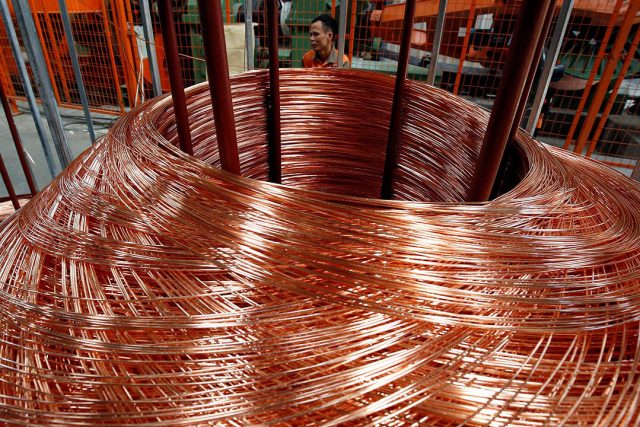
LONDON — Higher supplies and softer demand are expected to cool copper prices next year after a dizzying climb to record highs this year, but the metal’s central role in the energy transition will keep sentiment positive.

As top consumer China staged an economic rebound and exchange inventories fell to multi-year lows, benchmark prices on the London Metal Exchange shot to an all-time high of $10,747.50 a ton in May.

Prices have since fallen back to around $9,600.

Expectations of slower demand growth in China and rising supplies from operations such as Anglo American’s Quellaveco mine in Peru are likely to keep prices subdued next year.

“Long-term prospects for copper remain bullish, but the market looks set to be on pause next year compared to this year,” said Karen Norton, senior base metals analyst at Refinitiv, which expects a modest copper surplus next year.

Others such as Goldman Sachs see fears of China’s property slowdown as overblown, saying gains from electric vehicles or EVs, renewables and electrical network investment outweigh the policy-moderated drag from property and machinery.

Mine supply is expected to rise 3.9% to nearly 22 million tons next year, according to the International Copper Study Group, which expects a surplus of 328,000 tons in the refined market.

Mine supply will be supplemented by scrap, which typically accounts for about one-third of global refined metal supplies, keeping prices subdued.

Bank of America expects demand to hold firm next year and only sees a surplus in 2023. It forecasts prices to average $9,813 a ton next year and $8,375 a ton in 2023.

Demand for copper from efforts to decarbonize will intensify, with JPMorgan forecasting it will account for more than 40% of overall demand growth next year in the 25-million-ton market.

Copper is a material for the green revolution which includes electric vehicles and charging stations and renewable energy sources such as wind and solar.

JPMorgan forecasts total copper demand from energy transition rising from 1.8 million tons this year, to more than 3 million tons by 2025.

However, mining companies have not invested in enough copper production capacity to meet demand, analysts say, ushering in a period of deficits in the longer term.

“Miners can’t just flip a switch overnight and start production, it takes time. Both electric vehicles and wind power are quite copper-intensive,” said Wood Mackenzie analyst Jonathan Barnes. — Reuters

The digitalization of corporate compliance

Second of two parts

The first part of this article talked about the digital transformation and technology modernization roadmap of the Securities and Exchange Commission (SEC), which included the launch of various digitalization projects aimed at promoting ease of doing business and efficiently delivering government services amid the pandemic and in preparation for the transition to the so-called new normal economy.

Aside from company registration discussed in the first part, there are other already rolled-out initiatives and soon-to-be-launched systems on contactless applications and compliance.

ONLINE REPORTS SUBMISSION
On March 15, the SEC launched the Online Submission Tool (OST) that allows companies to submit certain reports online in lieu of its physical lodging. The OST has since been renamed the Electronic Filing and Submission System (eFAST), which permits companies to digitally submit their Audited Financial Statements (AFS), General Information Sheet, Sworn Statement for Foundations, and General Form for Financial Statements, among other reportorial requirements.

Corporate filings under eFAST are optional in 2021 but will be made mandatory in 2022 according to the SEC. When eFAST was launched this year, it also experienced some birth pains, such as system errors, downtime, and other online bugs that have affected its optimal use. Because of these, the SEC continued to accept manual filings by registrants who have encountered errors or have not yet applied for its use.

We should note that an application to use eFAST needs, among others, the approval of the board of directors. Lodging is also online and the company may designate a primary filer and alternate filers who can access the system. However, there can only be one assigned filer at any given time although designation may be changed at need.

With online filing, electronic signatures may be affixed on the documents, like the Independent Auditor’s Report and the Statement of Management Responsibility (SMR) required to be signed by the Chairman, Chief Executive Officer, and Chief Finance Officer, or their equivalent, and attached to the AFS. However, there are exceptions. For instance, the SMR of public or listed corporation must be signed under oath. A Notary Public will still require wet signatures on documents for notarization.

The SEC also clarified that although e-signatures may be used, corporations must keep originally signed documents in their files for presentation to the Commission, if required.

Previously, the SEC adopted the AFS filing schedule depending on the last digit of a company’s SEC registration number as a means of managing the deluge of filers on the deadline. This system is now supplemented by the eFAST, which helps to further manage any health risks that may arise from congestion at the Commission’s main or satellite offices. The online filing system also significantly reduces use of paper and other resources, including the administrative cost of physically filing the documents with the SEC.

While the eFAST system is still undergoing continuous improvement, the SEC envisions that eventually all types of corporate filings can be accepted by the system.

APPLICATIONS AND REQUESTS
All types of applications can now be filed online through electronic mail. There are designated email addresses depending on the type of application lodged with different SEC offices, such as corporate reorganization, quasi-reorganization, and equity restructuring with the Financial Analysis and Audit Division; amendment of the Articles of Incorporation or By-Laws to include increase or decrease in the authorized capital stock with the Company Registration and Monitoring Department; and registration of securities with the Securities Registration Division. The Corporate and Partnership Registration Division also accepts petitions for revocation of corporate licenses and other complaints.

Requests for monitoring clearances may likewise be requested via email. Given the expected volume of requests, the SEC typically replies within a few days or, based on recent requests, more than a week at the latest. All forms to be accomplished are emailed and clear instructions, including the payment process, are provided.

The filing itself is convenient but for certain types of applications, the processing time is still largely dependent on the handling SEC officer assigned to act on the submissions. Since the SEC continues to adopt alternative work arrangements, registrants have to rely on emails from assigned processors on the results of their review, including any request for additional documents. Due to the various restrictions imposed over the past months, securing appointments to follow up pending applications continues to be a challenge for registrants. This no-contact policy, coupled with the workload of SEC reviewers, may contribute to possible delays in the approval of applications and requests.

COMPLIANCE REQUIREMENTS
The SEC has also adopted stricter monitoring of corporations, its stockholders, and officers to ensure compliance with Republic Act 9160 or the Anti-Money Laundering Act, as amended. It has likewise done so through the use of technology.

In March 2021, the SEC required the online submission of the Beneficial Ownership Declaration (BOTD) Form, which is a mode of disclosure by nominee directors, officers, or shareholders. Under the new transparency rules laid down in Memorandum Circular No. 1, Series of 2021, these nominees must report to the SEC their principals, or the persons for whom they hold the nominal shares.

The Commission has imposed penalties for any late disclosure. Interestingly, while tech-savvy stockholders found the procedure of filling up and uploading the forms and the supporting documents relatively easy to follow, foreign shareholders noted the use of only one email platform, Google Mail, to comply with the reportorial requirement.

PAYMENTS
As payment for applications and penalties is a necessary part of their transactions, the Commission also introduced the Electronic System for Payments to SEC (ePAYSEC) to facilitate the settlement of registration charges, penalties, and other transaction fees. The platform allows the use of debit and credit cards, digital wallets, and other cashless payment options.

While traditional payment facilities are still available, such as payment through the SEC cashier or through Landbank of the Philippines (LANDBANK), more corporations now prefer these more convenient and arguably smarter contactless settlement options.

Still, proof of payment must be provided the SEC, which will trigger the processing and release of the requested documents. Similar to the eFAST system, the payment system is undergoing continuous enhancement with some enhancements already rolled out or scheduled for deployment soon.

While it is certainly encouraging to see the strides the SEC has made in the digital transformation in these vital functions, it is also interesting to note that there are numerous other enhancements rolled out or scheduled for deployment soon.

Among these are a central database and processing software for all the data the SEC will receive from monitored entities. In addition, an accreditation registry system for external auditors and auditing firms will soon be in place. The SEC also wants to establish an integrated complaints management system to keep its registered entities in check. New SEC units have likewise been created, including the PhilFintech Innovation Office to support financial technology innovations while strengthening consumer protection.

Alan Brown in his book, Digitalizing Government: Understanding and Implementing the New Digital Business Model, could not have put it more succinctly when he said: “Digital transformation therefore requires redesign and re-engineering on every level — people, process, technology and governance.”

The SEC is certainly moving in the right direction.

This article is for general information only and is not a substitute for professional advice where the facts and circumstances warrant. The views and opinion expressed above are those of the author and do not necessarily represent the views of EY or SGV & Co.


Cecille S. Visto is a Tax Senior Director and Senior Lead Manager of the Entity Compliance and Governance Services of SGV & Co.

Spike in COVID cases seen post holidays, typhoon

BRP ANG PANGULO

By Kyle Aristophere T. Atienza, Reporter

DAILY coronavirus infections in Manila, the capital, and nearby areas might increase after the holiday season, a group of researchers said on Sunday, as the country faces more public health challenges brought about by one of the world’s strongest typhoons of the year.

Metro Manila might post 300 coronavirus cases daily in the coming days, OCTA Research Fellow Fredegusto P. David said in a Facebook Messenger chat. “Right now we are not seeing it yet, but it is possible.”

The potential uptick in cases in Metro Manila becomes more evident after the infection rate increased recently, he said.

“The holiday uptick seems real because of the increase in positivity rate,” Mr. David said. “The uptick may be due to an increased number of gatherings during the holiday.”

The positivity rate refers to the percentage of people who are positive for coronavirus disease 2019 (COVID-19) out of the total number of people tested during a certain period. It measures the spread of the infectious disease in a given area.

A positivity rate below 5% indicates that virus transmission is under control, according to the World Health Organization.

On Friday, Mr. David said the capital region’s positivity rate increased to 0.77 from Dec. 16 to Dec. 22, higher than the 0.62 infection rate from Dec. 12 to Dec. 18.

“The National Capital Region (NCR) remains at very low risk at this time but we will continue to monitor if trends will change,” Mr. David told BusinessWorld on Sunday.

He said hospitals were at low capacity. “The system will be able to absorb a surge at this time up to a certain level.”

In its latest monitoring report, OCTA said the reproduction number in the capital region increased to 0.70 last week from 0.42 in mid-December.

The 0.70 figure is also up from the 0.35 rate recorded from Nov. 29 to Dec. 5.

Still, the figure is well below the critical level of 1.4.

“If we compare this with last year, the reproduction number also spiked before the holidays, followed by a dip during the holidays (and) then an uptick by the first week of Jan. 2021,”  Mr. David said in a report released on Sunday.

“The holiday uptick may explain the increasing reproduction number and positivity rate,” he added. “On the other hand, a continued increase in the reproduction number during the holidays would indicate a pattern not observed in Dec. 2020.”

NATIONWIDE
A potential spike in cases nationwide is expected by January, Ranjit S. Rye, another OCTA fellow, said in a Facebook Messenger chat. He did not elaborate.

Meanwhile, Mr. David told BusinessWorld that daily infections in areas affected by typhoon Odette, internationally known as Rai, might also increase.

“This happened last year, there was an uptick in Region 2 and Bicol region because of flooding.”

An estimated 550,000 people have been displaced by the typhoon, including those in evacuation centers or have sought shelter with relatives and friends.

The Department of Health has already warned the public of a possible outbreak of waterborne and food-borne illnesses in Odette-hit areas.

In the island province of Siargao, where the typhoon made its first of nine landfalls, a diarrhea outbreak has already been declared by local authorities.

Health and local authorities must continue ramping up efforts in other health programs “while COVID-19 cases are relatively lower than before and vaccination rollout seems stable,” Joey Francis Hernandez, treasurer of the Philippine Society of Public Health Physicians, said in a Facebook Messenger chat.

The national government and local units should mobilize emergency funds and reallocate health staff for infectious disease surveillance and disaster response, he said.

“By this time, we can already safely redistribute resources which have been lowered in the priority list due to COVID-19.”

Mr. Hernandez said arresting a potential outbreak of diarrheal diseases, influenza-like diseases, leptospirosis, and dengue would reduce the burden on the country’s health system, which he said is already strained due to the coronavirus.

“Such refocusing now would prepare us in case another COVID-19 surge happens after the holidays.”

The public health expert, meanwhile, said local government units must ensure that strategies to mitigate the risks of infectious diseases during calamities are integrated in their health plans.

The government aims to fully vaccinate at least 54 million Filipinos by yearend, as it seeks to prevent an outbreak of the highly contagious Omicron variant.

Kezia Lorraine Rosario of the government’s vaccine operations center earlier said the heavily mutated Omicron variant might still spread locally despite the decreasing number of cases in the country.

Health authorities have already shortened the interval for booster shots against the coronavirus.

About 47.12 million Filipinos have been fully vaccinated against the coronavirus as of Dec. 25, data from the Health agency showed. The government has already injected 1.37 million booster or additional doses, it added.

COVID TALLY
The Health department reported 433 new coronavirus infections on Sunday, bringing the total to 2.84 million.

The death toll from the coronavirus hit 51,200 after 13 more patients died, while recoveries increased by 283 to 2.78 million, it said in a bulletin.

There were 9,522 active cases, 458 of which did not show symptoms, 3,574 were mild, 3,339 were moderate, 1,777 were severe, and 374 were critical.

The agency said 91% of the reported cases occurred from Dec. 13 to 26. The top regions with cases in the recent two weeks were Metro Manila with 192, Calabarzon with 45, and Central Luzon with 33.

It said 38% of the reported deaths occurred in December, 23% in October, 15% in September, 8% in July, and 15% in March.

The Health department said 17% of intensive care units in the Philippines were occupied. The rate for Metro Manila was also 17%.

The agency said five duplicates were removed from the tally, all logged in as recoveries, while nine recoveries were relisted as deaths.

It said 169 patients had tested negative and were removed from the tally. “These 169 are recoveries.”

Two laboratories did not operate on Dec. 24, while six laboratories did not submit data.

“Based on data in the last 14 days, the 8 non-reporting labs contribute, on average, 0.7% of samples tested and 0.9% of positive individuals.”


Typhoon deaths hit 378; UN OCHA to raise $107M in aid

PHILIPPINE NAVY

REPORTED deaths from typhoon Rai, locally named Odette, reached 378 while 60 were missing, the national disaster management agency reported on Sunday.

Out of the total deaths, now higher than the 375 recorded by the police a week ago, only 54 have been confirmed while the rest are still up for validation. Of those missing, 50 have yet to be confirmed.

Total reported injured stood at 742, based on the National Disaster Risk Reduction and Management Council’s (NDRRMC) Dec. 26 update on the aftermath of Odette.

Almost four million people across six regions in the central and southern parts of the Philippines were affected by the strongest typhoon to hit the country this year, according to the NDRRMC, including about 550,000 who were displaced.

The United Nations Office for the Coordination of Humanitarian Affairs (OCHA) estimates that about 2.4 million survivors are in need of assistance.

OCHA, together with over 50 partner countries and organizations, are aiming to raise $107.2 million (P5.36 billion) to help a targeted population over the next six months.

“Provided enough funding is available and in line with the (Philippine) Government’s invitation to scale up collective efforts of in-country capacities, the Humanitarian Country Team plans to support life-saving assistance to at least 530,000 people. Most Activities benefit people in the worst affected areas of CARAGA and Region VIII (Eastern Visayas) from Dec. 2021 to June 2022,” said Humanitarian Coordinator Gustavo Gonzalez in a Dec. 24 report on needs and priorities.

The $107.2-million amount is based on the initial assessment of the government, Humanitarian Country Team, Joint Analysis for Disaster Exposure, World Food Programme, and OCHA.

Almost 480,000 houses were damaged by the typhoon’s strong winds, rain, and storm surges, including 148,695 that were totally destroyed, based on the NDRRMC report.

Typhoon Odette made nine landfalls on Dec. 16 and 17, with the first in Siargao in the southeastern part of the Philippines and the last in Palawan in the central-west. State weather agency PAGASA recorded winds of up to 175 kilometers per hour (km/h) and gustiness of up to 235 km/h.

Damage to public infrastructure, meanwhile, has climbed to P16.58 billion, mostly covering roads and bridges.

The Caraga Region — which includes the hard-hit areas of Siargao, Dinagat Islands, and Surigao City — had the highest infrastructure toll at P12.81 billion. Damage to other regions were: Central Visayas, P2.15 billion; Mimaropa (Mindoro, Marinduque, Romblon, Palawan), P1.27 billion; Eastern Visayas, P173,400; and Northern Mindanao, P165,824,500.

Damage to the agricultural sector climbed to almost P4 billion from Friday’s P3.6-billion assessment.

Mr. Gonzalez said a “collective effort” is also necessary to plan and prepare for future climate hazards after the current emergency response operations are concluded.   

“I am mindful that we need to do more to align humanitarian and development action to ensure a sustainable future… In the coming months, scientists will debate the attribution of Typhoon Rai to the impact of climate change. For now, the unusual storm formation at the end of the year and its sheer intensity require our collective effort to address the ever-increasing vulnerability of the region to climate hazards.” 

ALL ASSETS
President Rodrigo R. Duterte has ordered all government assets to be utilized for the relief and recovery operations.

“The military and the police must come into the picture… My plan is to — all assets of the government must be utilized,” the President said, based on a transcript released by the Palace, during a command conference with local government units (LGUs) and military officers in Cebu on Dec. 23.

“The money will be distributed by the military. Si General Año will supervise the… areas like here, highly urbanized, all direct… And from the military, it would go to the LGUs (in more remote areas),” Mr. Duterte said in mixed English and Filipino.

He was referring to retired Philippine Army general Eduardo M.  Año, currently secretary of the Department of Interior and Local Government.

The President’s spokesperson said last week that the government is allocating at least P10 billion for the emergency response.

National police chief Dionardo B. Carlos on Sunday said they are ready to assist in the cash aid distribution, taking into consideration the difficulties in the ongoing relief operations.

“We noted challenges such as the absence of electric supply and the desire of people to get their aid first before anyone else. These may somehow delay the distribution because we want to make sure that there is peace and order,” Mr. Carlos said in a statement.

“The PNP (Philippine National Police) will always be ready to serve in any way we can. We are awaiting specific instructions and we will just wait for any mandate,” he said. — Marifi S. Jara

Aid for boat repairs urgent need for Leyte fisherfolk   

BFAR-REGION 8

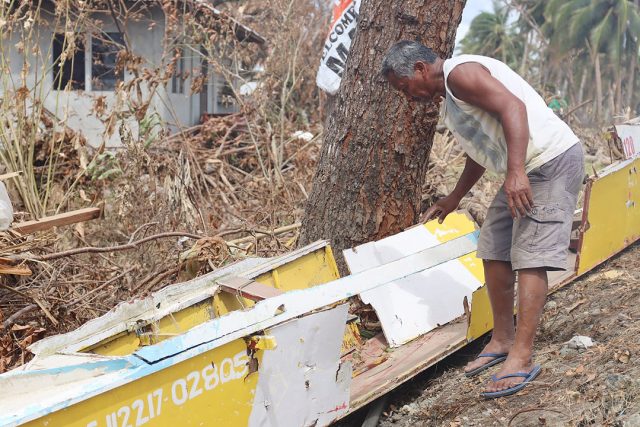
FISHERFOLK in Leyte’s coastal communities are in need of aid to repair their boats battered by typhoon Odette so they can immediately resume livelihood activities, the fisheries bureau’s regional office said following on-site damage assessment that started Dec. 21.    

“Who and where do we turn to for help? A little help will still be a great help for us to go back fishing. We will be truly grateful to whoever can provide assistance to us,” 58-year old fisherman Jojo Leña told teams from the Bureau of Fisheries and Aquatic Resources-Eastern Visayas (BFAR-8).   

Mr. Leña’s three bancas, or dugout canoes used for small-scale fishing, were damaged by the strong winds and rain brought by typhoon Odette, with international name Rai.   

BFAR-8, in a press release on Friday, said several of the fishermen have temporarily turned to construction work for damaged houses as an alternative income source.   

“To date, materials for boat repair and construction are being transported by the multi-mission offshore civilian patrol vessels of the BFAR to provide temporary assistance to several fisherfolk communities,” the regional office said.   

Additional materials and other fishery-related interventions will be prepared after the damage assessment report is completed by end-December.   

“This on the ground assessment will provide the Bureau with the quantitative information on the overall value of the destroyed assets of the fisherfolk communities in the said covered areas, which will then enable the Office to determine the appropriate, immediate and practical short-term and long-term disaster financing necessities and assistance for the typhoon victims,” it said.   

The Eastern Visayas economy contracted in 2020, with gross regional domestic product at -7.6% from a growth rate of 5.6% in 2019.   

The region, which was the worst hit by super typhoon Yolanda (international name: Haiyan) in 2013, has been posting positive growth rates since 2014.  

National Economic and Development Authority Regional Director Bonifacio G. Uy, in his statement during the economic performance report in April, said the coronavirus pandemic disrupted the “growth momentum,” with most sectors posting a decline.   

“The agriculture, forestry, and fishing grew but at a slower pace of 0.9 percent from 2.1 percent a year ago as significant cuts on the production value of commercial fisheries and aquaculture were noted,” he said.  

“Weather disturbances, coupled with the intensified law enforcement activities, have led to this downturn. Moreover, the partial and at least two months of almost total closure of operations in the restaurants, hotels, and other food and food-processing establishments removed a key market for farmers and fishers, which dampened agri-fishery production,” he said.   

BFAR-8, which set up eight emergency operations sites across the region for the assessment teams, is also accepting donations of food, drinking water, clothes, and hygiene kits for the coastal communities. The office may be contacted through mobile numbers 09704508876 or 09263677328. — Marifi S. Jara 

Relief goods from Taiwan arrive at Cebu airport over the weekend 

TECO

TWO C-130 cargo planes carrying relief goods from Taiwan arrived at the Mactan-Cebu International Airport over the weekend, the Taipei Economic and Cultural Office in the Philippines (TECO) announced on Sunday.  

The items intended for distribution in various areas affected by typhoon Odette (international name: Rai) were worth US$50,000, including bottled water, food rations, tents, and water filters.  

TECO said the Taiwanese government also donated $500,000 to the Philippine government’s relief and recovery operations. The Taiwan Association, Inc. Philippines and Love From Koten Foundation also gave P2.7 million and P2 million, respectively, for disaster relief assistance. 

Agri alliance backs Robredo’s presidential candidacy 

AN ALLIANCE of agriculture and fisheries sector groups has endorsed the presidential candidacy of Vice President Maria Leonor “Leni” G. Robredo.   

In a press release e-mailed by Ms. Robredo’s office on Sunday, Alyansa Agrikultura said it decided to “divert” from its non-partisan stand for the past 18 years and back the vice president’s bid for the country’s top post “with the current agriculture crisis” in the country.   

“We believe Leni Robredo, with her commitment to participatory governance and proven performance track record, is the best candidate for president,” Arsenio Tanchuling, the alliance’s president, said.   

“She will give agriculture, as well as the neglected and exploited farmers and fisherfolk, the necessary bright future it has been denied for so long and now fully deserves.”  

Ms. Robredo, who held the second spot in a latest presidential poll conducted by Pulse Asia, Inc., welcomed the group’s endorsement in the same media release.   

The vice president earlier committed to double the annual budget of the agriculture sector, vowing to give it at least P116 billion in the first year of her presidency.  

She also vowed to review the country’s agriculture budget, focus on resilient sub-sectors, and invest in climate-resilient crops. — Kyle Aristophere T. Atienza 

Floating hospital

BRP ANG PANGULO FB PAGE

A MEDICAL team attends to an infant patient inside the BRP Ang Pangulo vessel, which has been converted into a floating hospital and deployed to Siargao, one of the worst hit areas by typhoon Odette.

Supply side economics

VECTORJUICE-FREEPIK

Supply side economics postulates that tax cuts and deregulation will lead to increased investment and economic growth. Supply side economics was popularized under US President Ronald Reagan and became the basis of the “trickle down theory,” which is that economic gains by the wealthy will “trickle down” to the poor. It was epitomized in pop culture by the famous Laffer Curve, formulated by supply side economist Arthur Laffer, showing that high tax rates purportedly discourage savings and investment, while lower tax rates do the opposite.

The title of this column doesn’t refer to this type of supply side economics, which has been shown to be “voodoo economics,” in the words of former US President George Bush. Wealth didn’t “trickle down.” Rather inequality and fiscal deficits widened.

By supply side economics, I mean the study of the supply side: what constrains production and increased capacity in order to well, increase supply. The reason we have to do this kind of supply side economics is the imbalance we are now seeing with the global economy starting to recover from the pandemic. Prices are rising because supply can’t meet demand.

A number of factors are causing these supply issues: shortages in labor in developed markets; limited supply of critical components like computer chips; energy shortage in China, a major global manufacturer; and problems along the supply chain, from shipping to trucking.

Supply side economics had never been a real focus of economics before, especially in the West. This is because the principal problem, before the pandemic, that Western economies were facing was lack of effective demand, rather than lack of supply.

The main pre-pandemic economic issue for developed economies was “secular stagnation,” a theory of economist Alvin Hansen proposed in the 1930s but resurrected by Harvard University economist and former Treasury Secretary Larry Summers. It’s about savings exceeding demand, but monetary policy, or low interest rates, unable to bridge that gap. Economies, therefore, face persistently low investment demand, and therefore, low growth, according to Summers.

In the US, a robust fiscal policy and aggressive monetary policy in response to the pandemic has caused inflation to spike, and there’s real fear that the stagflation of the 1970s will recur.

However, Larry Summers himself says that the phenomenon of demand exceeding supply may just be temporary as long-term interest rates are very low or negative. In other words, the markets are predicting that secular stagnation will persist. The Japanization of the global economy, meaning a scenario of low growth, low inflation, and declining GDP growth per capita, will remain the main problem of the global economy. The structural problems depressing demand — the demographic decline, the growing income inequality, the exhaustion of globalization, and the fall in total factor productivity — haven’t been swept away by the pandemic and will return.

On the other hand, lack of capacity and supply remains our problem and it would be well for us to focus on supply side economics. Our growing trade deficit (we increasingly rely on imports to solve our domestic supply problem), our inability to export and our low investment to GDP ratio show that capacity and supply remain our problem.

Moreover, unlike much of the world, we have a young and growing population that can be a source of sustained demand. Also, our population’s average low-income levels result in high propensity to consume. Say’s law: supply creates its own demand, still applies to us.

We should therefore ask ourselves — what are the factors constraining capacity and supply? We should do an industry-by-industry analysis to pinpoint specific industry constraints, but I will venture on a few hypotheses that apply across the board.

One is self-imposed capacity limits. I’m referring to quantitative restrictions on agricultural products. The quantitative restrictions on corn imports, for example, affect the supply of feeds to the livestock industry. Therefore, by maintaining quantitative restrictions on corn imports, ostensibly to protect our local corn farmers, we are imposing a capacity constraint on our livestock industry.

Another self-imposed capacity limit is that imposed by the agrarian reform law, which caps the land retention limit to five hectares. What this tells successful farmers is that they aren’t allowed to expand beyond five hectares. That’s strange because if you are a successful farmer producing P5 million on your five hectares of land and your neighbor is producing only P500,000, government says you shouldn’t buy him out and make the adjacent land as productive as yours.

With these self-imposed capacity limits, is it any wonder that the country has the worst balance of agricultural trade in Asia? We keep decrying food imports, yet do everything we can to limit our production potential.

Another policy that constrains supply is price controls. For example, the government, wanting to appear populist, recently issued price caps on medicines, specifically 34 drug molecules or 71 drug formulas through  Executive Order (EO) 155. With these price caps, expect pharmaceutical companies to limit supply not only of these medicines, but also new and innovative medicines, lest government impose price caps on them too. Moreover, expect the generic distributors to sell at or near the price cap.

Price controls are never good. A price cap on peak power rates, for example, disincentivizes investment in peaking plants, and therefore limits our energy supply and our ability to satisfy energy demand in cases of sudden supply shortage.

Three is blanket bans. The government has issued a mining permit ban and an open pit mining ban, which has not been lifted. Instead of smart risk-adjusted policies to counter environmental damage, the government has been quick to issue blanket bans. This is a very dumb and lazy way to manage risks. However, the overall result is that the entire industry suffers and capacity is capped.

Fourth is property rights uncertainty. Do you know that the government has issued 26 log bans of varying degrees since 1975? If you are a tree farmer, will you invest, not knowing if you can harvest after the long maturity cycle of trees from 10 to 20 years?

Property rights uncertainty is happening with PPP projects. Can the government hope to attract investments for projects if it unilaterally changes contracts and refuses to abide by decisions of international courts? Instead, what the government will attract are politically connected bidders who believe that their political connections (payoffs) will provide them some form of insurance.

Uncompetitive industry structures — the Philippines being the most concentrated economy in Asia — also cause capacity limits. Without fear of new entrants, monopolies will not invest in additional capacity that may lower prices, but rather optimize its monopoly rents. Pro-competition and anti-trust policy is therefore necessary to expand supply.

Another uncertainty that is capping investment and supply is energy insecurity. Successive governments have failed to bring new energy sources online. In the past summer, the energy outlook went on yellow alert since the reserves were quite thin and the country’s aging power plants could break down at any time.

Now, what rational investor will expand his factory capacity if he believes, given the government’s failure, that his plant will become idle or frequently shut down by power blackouts? Energy intensive industries like cement and steel are particularly sensitive to energy supply.

Again, while the BBB will perk up the demand for cement and steel, imports will fill the demand because the government hasn’t given investors energy security.

Finally, a lot of our laws, particularly our Constitution, signal to investors that they aren’t welcome here to invest and expand the nation’s capacity. The Filipino First and Filipino Only provisions in the Constitution signal to foreign investors they aren’t welcome here to increase capacity and provide consumers better and more affordable choices.

Let’s be clear-headed: the issues facing Western economies are different from the issues facing us. They have a demand problem, which is very much harder to solve. How, for example, can you reverse demographic decline? Instead, we face supply and capacity problems, which are within our powers to solve. We just need to do supply side economics.


Calixto V. Chikiamco is a member of the board of IDEA (Institute for Development and Econometric Analysis).

totivchiki@yahoo.com

The relevance of Rizal’s Indolence of the Filipino

STARLINE-FREEPIK

On Jose Rizal’s death anniversary on Dec. 30, it’s worth returning to his essay, The Indolence of the Filipino (1890). It continues to illuminate more than 130 years since its publication.

In Indolence, Rizal showed keen economic sense, particularly in examining economics and geography, and economics and institutions.

In this essay, Rizal studied the Filipinos’ predisposition to indolence “thoroughly, without superciliousness or sensitiveness.” Instead of dismissing Filipino indolence outright, Rizal wrote, “we believe that indolence does exist there. The Filipinos, who can measure up with the most active peoples in the world, will doubtless not repudiate this admission, for it is true that there one works and struggles against the climate, against nature and against men.”

To be sure, the hot climate in a tropical land does not favor working long hours. Typhoons and earthquakes, year in and year out, disrupt productivity.

Said Rizal: “The fact is that in tropical countries violent work is not a good thing as it is in cold countries, there it is death, destruction, annihilation.”

In the same vein, to compensate for this burden, he said: “Nature… has therefore made the earth more fertile, more productive.” Nonetheless, the fertile and productive land didn’t (and doesn’t) benefit the ordinary people, for they had (have) to struggle against the rules created by a few men.

Rizal criticized those who exaggerated the role of indolence.  “The evil is not that indolence exists more or less latently but that it is fostered and magnified.” Moreover, he emphasized that indolence was a manifestation, not a cause, of Philippine backwardness.

He discussed the causes of such indolence:

• The wars, piracy and internal disorders, resulting in the “frightful diminution of inhabitants” and the abandonment of agriculture, industry and commerce.

• The tributaries or abusive taxes and forced labor.

• The maldistribution of the gains from the galleon trade and the iniquity of the encomienda system.

• The failure to provide essential public goods like justice and peace and order.

• The bureaucratic corruption and inefficiency.

• The toleration, even encouragement, of vice (e.g., gambling), profligacy, and obscurantism.

• The discrimination of the indios and the denial of individual liberty.

Rizal said that these causes can be reduced to two classes, namely “defects of training and lack of national sentiment.”

Rizal asked: “How is it that the Filipino people, so fond of its customs as to border on routine, has given up its ancient habits of work, of trade, of navigation, etc., even to the extent of completely forgetting its past?”

The same question resonates today. How come many Pinoys have become discouraged and pin their deliverance on a duplicitous candidate who promises gold and windmills? How come Pinoys let this duplicitous candidate erase the terrible memories associated with his father’s plunder and dictatorship?

But Rizal was likewise empathic that the Filipinos, not being masters of their liberty, were not responsible either for their misfortunes. The actions of rulers and the institutions they put up account for our tragedies.

We have been battered by the pandemic and typhoons like the killer Odette. We have to brace for a new COVID-19 surge with the ascendancy of a new mutation that is Omicron. In truth, these calamities, though causing much hardship, are surmountable. What we need are good institutions and good government, which can harness our collective action to prevail.

Sadly, we as a society are weak. Rizal used a sick patient as a metaphor to describe Philippine society. The doctor (in this case, the government) only sees the symptoms and thus confines his interventions to bloodletting, putting a plaster on the patient’s body, or giving the patient a sedative. But “a trifling reform,” in a situation where the patient (or society) is terribly sick, won’t work.

What Rizal prescribed then is blood transfusion “Yes, transfusion of blood, transfusion of blood! New life, new vitality!”

Further, he implored: “While the patient breathes, we must not lose hope, and however late we be, a judicious examination is never superfluous.”

Today, we heed Rizal. We must not lose hope. Rizal shows us the way. The key is to inform and educate our fellow Filipinos in the midst of lies that despots propagate. We need to energize the national sentiment or consciousness that will defeat ignorance, duplicity, and greed.


Filomeno S. Sta. Ana III coordinates the Action for Economic Reforms.

www.aer.ph

ADVERTISEMENT
ADVERTISEMENT