Home Blog Page 7006

Group seeks power failure probe

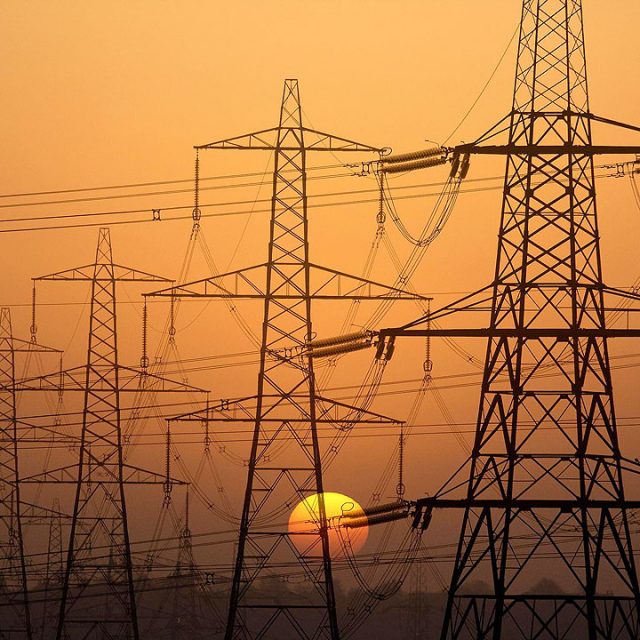
A group of electricity consumers wants the government to investigate the National Grid Corp. of the Philippines’ allegedly repeated failure to provide enough power in areas affected by typhoons. 

The private company in charge of operating the country’s state-owned power grid had failed to provide sufficient power during Typhoon Haiyan (Yolanda) in 2013, Typhoon Hagupit (Ruby) in 2014 and the 2017 earthquake, the National Association of Electricity Consumers for Reforms, Inc. said in a statement on Friday. 

The consumer group said it had written Energy Secretary Alfonso G. Cusi on Dec. 21 to complain about the company’s “inadequate, weak and grossly unreliable transmission system.” 

It also said it had sought an audit of the grid operator’s transmission system so the Energy department could determine the needed upgrades to make the country’s transmission system more resilient to natural disasters. 

“Similarly, we urge the Energy Regulatory Commission to conduct a regulatory audit of the funds it provided NGCP meant specifically for capital expenditures which cover the rehabilitation and upgrading of the nationwide transmission system,” group President Petronilo L. Ilagan said. 

Mr. Ilagan also said the Energy department should review the National Grid’s concession agreement with the National Transmission Co. He likewise urged the Joint Congressional Energy Commission (JCEC) to probe the National Grid’s franchise. 

Energy Undersecretary Felix William B. Fuentebella and National Grid spokesman Gregory L. Yu did not immediately reply to a text message and call, respectively seeking comment. 

Typhoon Rai, locally named Odette, toppled almost a hundred transmission lines and 800 power poles of the National Grid in the Visayas and Mindanao region, company officials told a news briefing on Dec. 29. The company had restored 81 transmission lines. — Marielle C. Lucenio 

‘Serious’ talk between Biden and Putin sets stage for diplomacy

US PRESIDENT Joseph R. Biden and Russia’s President Vladimir Putin — REUTERS

WILMINGTON, Del./MOSCOW — US President Joseph R. Biden, Jr., and Russian President Vladimir Putin on Thursday exchanged warnings over Ukraine but conveyed some optimism that diplomatic talks in January could ease spiraling tensions.  

In a 50-minute call, their second conversation this month, Mr. Biden said he needed to see Russia decrease its military build-up near Ukraine, while Putin said sanctions threatened by Washington and allies could lead to a rupture in ties. The call was requested by Mr. Putin.  

“President Biden reiterated that substantive progress in these dialogues can occur only in an environment of de-escalation rather than escalation,” said White House press secretary Jen Psaki.  

Kremlin aide Yuri Ushakov said the call created a “good backdrop” for future talks.  

The leaders’ exchange set the stage for lower-level engagement between the countries, including a Jan. 9-10 US-Russia security meeting, followed by a Russia-NATO session on Jan. 12, and a broader conference including Moscow, Washington and other European countries slated for Jan. 13.  

Despite the talk of diplomacy, the tone of the call was described by officials on both sides as “serious.” And neither country detailed significant progress towards a resolution or the outlines of any deal.  

In Kyiv, leaders worry about the 60,000 to 90,000 Russian troops that have gathered to its north, east and south. The North Atlantic Treaty Organization security alliance has been making its own preparations from the west.  

Washington has not been convinced by a report over the weekend that Russia would be pulling back about 10,000 troops, with officials saying they’ve seen little evidence of a drawdown. The United States deployed its JSTARS military plane in Ukrainian airspace for the first time earlier this week, though different types of surveillance aircraft are common in the region.  

For his part, Biden reiterated his threat of unprecedented sanctions if Russia chose to invade Ukraine.  

“Biden laid out two paths,” including diplomacy and deterrence, including “serious costs and consequences,” said a senior administration official.  

“Both leaders acknowledged that there were likely to be areas where we could make the meaningful progress as well as areas where agreements may be impossible, and that the upcoming talks would determine more precisely the contours of each of those categories.”  

Aides have said the possibilities include measures that would effectively disconnect Russia from the global financial system, while further arming NATO.  

Mr. Ushakov said Mr. Putin “immediately responded” that any sanctions now or later “could lead to a complete breakdown in ties between our countries.” He added: “Our president also mentioned that it would be a mistake that our descendants would see as a huge error.”  

Moscow’s troop deployments over the past two months alarmed the West, following its seizure of Ukraine’s Crimea peninsula in 2014 and its backing of separatists fighting in eastern Ukraine.  

Russia denies planning to attack Ukraine and says it has the right to move its troops on its own soil as it likes.  

Moscow, worried by what it says is the West’s re-arming of Ukraine, has said it wants legally-binding guarantees the 30-member NATO alliance will not expand further eastwards, and that certain offensive weapons will not be deployed to Ukraine or other neighboring countries.  

The Kremlin said Mr. Biden appeared to agree with Mr. Putin’s contention that Moscow needed some security guarantees from the West and also that he said the United States did not intend to deploy offensive weapons in Ukraine.  

A White House spokesperson did not immediately respond to a request for comment on the Kremlin’s characterization of Biden’s remarks.  

Mr. Putin has compared the current tensions to the Cold War-era Cuban Missile Crisis in 1962. Washington regards many of his demands, including restrictions on NATO expansion, as Non-starters. — Jarrett Renshaw and Vladimir Soldatkin/Reuters  

DPWH to bid out 3 Marikina River bridges in first half of 2022

PHILSTAR

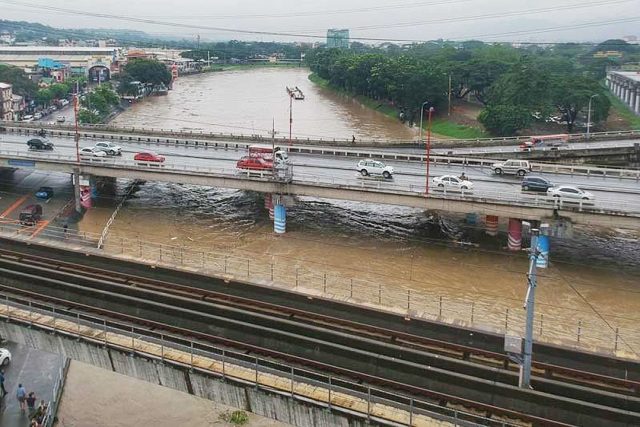
THE Department of Public Works and Highways (DPWH) plans to conduct auctions for the contract to build three Marikina River bridges with a combined project cost of P6.428 billion in the first half of 2022.

Public Works and Highways Secretary Roger G. Mercado said in a statement Friday that the procurement exercise for civil works on the bridges, part of the Metro Manila Bridges Project, are targeted for the first half of next year, with construction on all three due to start by the second half.

Undersecretary Emil K. Sadain said the Unified Project Management Office (UPMO) Bridges Management Cluster has been directed to start early procurement activities in 2022 for the bridges, which have a total span of 3,023.60 meters. They are the Marcos Highway-St. Mary Avenue Bridge, Homeowner’s Drive-A. Bonifacio Bridge and the Kabayani Street-Matandang Balara Bridge.

The Marcos Highway-St. Mary Avenue Bridge will span 1,606.30 meters and cost P1.690 billion; the Homeowner’s Drive-A. Bonifacio Bridge 691 meters and P2.097 billion; and Kabayani Street-Matandang Balara Bridge 726.30 meters and P2.641 billion.

“Given the upcoming May 2022 national election and with the ban on procurement activities coinciding with the 45-day campaign period between March 25 and May 8, 2022, we are pushing for the immediate review/checking and approval of the bidding documents to accelerate the procurement activity timelines,” Mr. Sadain said.

According to the DPWH, funding for the construction of the three bridges will come from a loan of P8.8 billion, the agreement for which was signed on Dec. 16 with the Asian Development Bank.

“The draft bidding documents were prepared by DPWH UPMO Bridges Management Cluster in partnership with the detailed engineering design consultant Dasan Consultant Co., Ltd. in a joint venture with Dongsung Engineering Co., Ltd. and Kunhwa Engineering & Consulting Co., Ltd., in association with DCCD Engineering Corp.,” the DPWH said.  – Revin Mikhael D. Ochave

Romulo-Puyat warns of tourism job losses if hotels flout quarantine rules

Philstar

THE Department of Tourism (DoT) said tourism jobs are placed at risk when travelers and hotels disregard quarantine regulations.

Tourism Secretary Bernadette Romulo-Puyat said in a radio interview Friday that “No one should be exempted since if one does not follow, it will… result in the loss of their jobs.”

Ms. Romulo-Puyat had issued a show-cause order to Berjaya Makati Hotel after it allegedly allowed a quarantining guest to leave the premises.

“Kapag kausap ko yung ating mga stakeholders na in close to two years wala silang trabaho, umiiyak na sila. Wala na silang income. Tapos hindi pa nakatulong na natamaan most of our tourist destinations ng Typhoon Odette. (“I speak regularly to stakeholders who have had no work for close to two years… They have no income. It does not help either that many of our tourist destinations were hit by Typhoon Odette.)” Ms. Romulo-Puyat said.

“Please, five-day quarantine lang yan. Tiisin niyo na. (Please, it’s only a five-day quarantine. Endure it.) This is for the economy and the livelihood of every Filipino,” she added.

Ms. Romulo-Puyat said her department is working with the Department of the Interior and Local Government (DILG), Philippine National Police (PNP), and Criminal Investigation and Detection Group to detect quarantine violations by hotels, noting that she has a list of suspects that she hopes to “catch in the act so they can be closed.”

Interior and Local Government Secretary Eduardo M. Año said in a radio interview Thursday that the guest who allegedly skipped quarantine after returning from the US may have infected around 15 people with coronavirus disease 2019 (COVID-19). The guest also tested positive for COVID-19.

Mr. Año said the investigation is ongoing, but closed-circuit television recordings indicate that the guest left the hotel.  – Revin Mikhael D. Ochave 

Manila Mayor says hotels that violate quarantine rules face closure

Berjaya Hotel

Hotels in the city of Manila will be forced to shut down if they do not comply with quarantine rules, Manila Mayor Francisco M. Domagoso said Friday at the opening of the city’s COVID field hospital for returning Overseas Filipino Workers (OFW).

Accepting bribes to allow a person to evade quarantine endangers public health, he added. The mayor, who is a candidate for President, was referring to a guest of Berjaya Hotel Makati who had tested positive for COVID-19 on Dec 29 after allegedly leaving the premises to attend a party.

“I just want to remind you, there are laws in this country that you can be held liable (for), criminally,” Mr. Domagoso said. “Lawyers may tell you that it is just the National Task Force against COVID-19 (NTF) or just the Inter-Agency Task Force for the Management of Emerging Infectious Diseases Resolutions (IATF), but under existing laws…you can be held accountable.”

“I hope no Manilans will do that, because we will not take it lightly,” he added.

The launch of the COVID field hospital at Rizal Park was attended by Health Secretary Francisco T. Duque III, vaccine czar Carlito G. Galvez, Jr. and Taguig Mayor Lino Edgardo S. Cayetano.

“About 104 of them (OFWs) will arrive and be accommodated in this first-class facility,” Mr. Duque said.

Mr. Cayetano said Mr. Domagoso proposed at midweek last week that their cities help the Department of Transportation (DoTr) and the national government by allowing arriving OFWs who are COVID positive to use their isolation facilities.

He added that Taguig will follow Manila’s lead and also open up its own quarantine facility for OFWs.

Meanwhile, Mr. Galvez said that in an emergency meeting with the National Capital Region (NCR) mayors, the local officials were warned not to take the Omicron variant of the coronavirus lightly given the US infection numbers and after a rise in Philippine infections to 1,481 COVID-19 cases on Christmas day.

“We can see that in the US, there is an uptick at record levels,” Mr. Galvez said. “We can also that our cases are doubling.”

The unvaccinated will be the focus of health authorities to keep the healthcare system from being overwhelmed, he said. As for booster shots, he said healthcare workers will have priority.

Our World in Data’s tracker estimates that 44.4% of the Philippine population is fully vaccinated, equivalent to 48.6 million people,

Mr. Galvez said that the arrival of more Pfizer vaccines for children aged 5-11 is expected by the second week of January. Mr. Galvez added that the Philippines currently has 210 million vaccines. – Jaspearl Emerald G. Tan

Insurance industry premium income up 28.71% in Q3

BW FILE PHOTO

Gross premiums collected by insurance firms and mutual benefit associations (MBAs) rose 28.71% year-on-year in the third quarter, according to the Insurance Commission (IC).

Premiums totaled P278.66 billion in the three months to September.

The life insurance sector had net premiums of P230.61 billion, up 33% from a year earlier.

“Variable and Traditional life premiums grew by 40.41% and 11.87%, respectively. The increase can be attributed to the good performance showed by the single premiums of variable life insurance that reported a significant increase of 126.83%,” Insurance Commissioner Dennis B. Funa said in a statement.

MBA premiums amounted to P9.9 billion in the three months to September, up 35% from a year earlier.

Non-life premiums increased 7.57% year-on-year to P38.15 billion.

The combined net profit of insurers and MBAs rose 31.04% to P37.5 billion in the third quarter.

Aggregate investment rose 14% to P1.78 trillion.

The results were based on data submitted by 128 out of 135 licensed insurers and MBAs during the quarter, the IC said. — Luz Wendy T. Noble

RCBC to issue P3-B worth of fixed-rate bonds to refinance maturing debt

Rizal Commercial Banking Corp. (RCBC) said it plans to issue at least P3 billion conventional or sustainability fixed-rate bonds to support the bank’s plan to grow its assets and refinance maturing liabilities.

RCBC said in a disclosure Friday that the issue was part of a P100 billion bond program approved by its board on July 29, 2019.

The timing of the proposed issue will depend on RCBC’s requirements and market conditions.

In the third quarter, RCBC’s net profit rose 125% to P2.01 billion.

RCBC shares were unchanged Friday at P20.00. – Luisa Maria Jacinta C. Jocson

Peso closes weaker at end of 2021 as Fed acts vs. inflation

PHILIPPINE STAR/ MIGUEL DE GUZMAN

The peso closed 6.2% weaker year-on-year on the last trading day of 2021, as the Federal Reserve adopted a more hawkish stance in order to deal with inflation.

The peso closed at P50.999 to the dollar Friday, little changed from its P51 finish Wednesday, according to the Bankers Association of the Philippines.

The market was closed Thursday for the Rizal Day holiday.

Week-on-week, the peso also declined from its P50.04 finish on Dec. 24.

The peso’s Friday finish was weaker by 6.2% from its P48.023 close on Dec. 29, 2020.

“The currency was considerably weaker than the previous year’s close as the Federal Reserve turned more hawkish in its policy stance amid the lingering risk of entrenched elevated inflation in the US,” a trader said in an email.

Fed officials this year accelerated their timetable to taper off the US central bank’s asset purchases. In the Fed’s policy review earlier this month, officials said they expect up to three rate hikes by 2023.

US inflation rose 6.8% in November, the highest since 1982, Reuters reported.

The peso opened at P50.995. The low was P51, while the high was P50.92.

Dollar trading volume dropped to $586.35 million Friday against $1.342 billion Wednesday.

“The peso was nearly unchanged (from its previous finish) due to thin trading volumes and as market participants remained on the sidelines for the holiday season,” the trader said.

Rizal Commercial Banking Corp. Chief Economist Michael L. Ricafort said the peso remained relatively weak as new coronavirus infections rose in recent days.

Active cases rose by 2,961 Friday, bringing the total to 14,233, according to the Department of Health. — Luz Wendy T. Noble

Local stocks sink as new virus cases climb

Philippine Stock Exchange index

A surge in new cases of coronavirus disease 2019 (COVID-19) sent Philippines shares tumbling on the last trading day of the year, analysts said on Friday when the market also took in news that existing mobility restrictions will be unchanged until mid-January.

The Philippine Stock Exchange index (PSEi) plunged 211.93 points or 2.88% to close the week at 7,122.63, while the broader all shares index fell by 65.26 points or 1.68% to 3,818.12.

“The local bourse declined on the last trading day of the year due to the surge in COVID-19 daily cases with a positivity rate of 6.6%, higher than the World Health Organization’s benchmark of below 5%,” Philstocks Financial, Inc. Senior Research and Engagement Officer Claire T. Alviar said in a Viber message.

On Thursday, the Philippines recorded 1,623 new COVID-19 cases, the highest since Nov. 21. On the same day, the government announced that the whole country will remain in Alert Level 2 or the second most relaxed quarantine category.

The Health department has so far announced four confirmed patients positive of Omicron, the latest coronavirus variant.

Ms. Alviar also noted that the net market value turnover was lower than the year-to-date average of P7.4 billion.

Value turnover inched up P5.38 billion with 623.43 million issues traded, from the P5.23 billion recorded on Wednesday with 1.75 billion shares switching hands.

“The PSEi also lowered as the country’s Alert Level 2 [is] maintained until mid-January 2022 as a matter of prudence to better deal with the threat of the Omicron variant, thereby making Alert Level 1 not possible for now,” Rizal Commercial Banking Corp. (RCBC) Chief Economist Michael. L. Ricafort said in a Viber message.

Mr. Ricafort said that had it not been for the Omicron variant, the alert level would have been eased.

Meanwhile, all sectoral indices declined on the last trading day of the year led by holding firms, which dove down 250.08 points or 3.54% to 6,807.27.

Financials declined by 54.74 points or 3.29% to 1,606.17; services retreated 47.14 points or 2.31% to 1,986.37; industrial lost 158.82 points or 1.50% to 10,404.09; property decreased 39.83 points or 1.22% to 3,219.68; and mining and oil dropped 31.61 points or 0.32% to 9,601.70.

Foreigners turned sellers with P413.64 million in net outflows, a reversal of the P568.3 million logged in net purchases on Wednesday. Trading was closed on Thursday in observance of Rizal Day, a national holiday.

The market closed earlier on Friday as Filipinos prepare for New Year’s Eve celebrations.

Decliners outnumbered advancers, 111 against 73, while 49 names were unchanged.

Diversified Securities, Inc. Equity Trader Aniceto K. Pangan said that with the anticipated surge in COVID-19 cases in the country, negative sentiment will prevail in the market and may break the 7,000 level. — Marielle C. Lucenio

Air quality in Manila worsens over holidays, returns to pre-pandemic levels

PHILIPPINE STAR/ MIGUEL DE GUZMAN

By Patricia B. Mirasol 

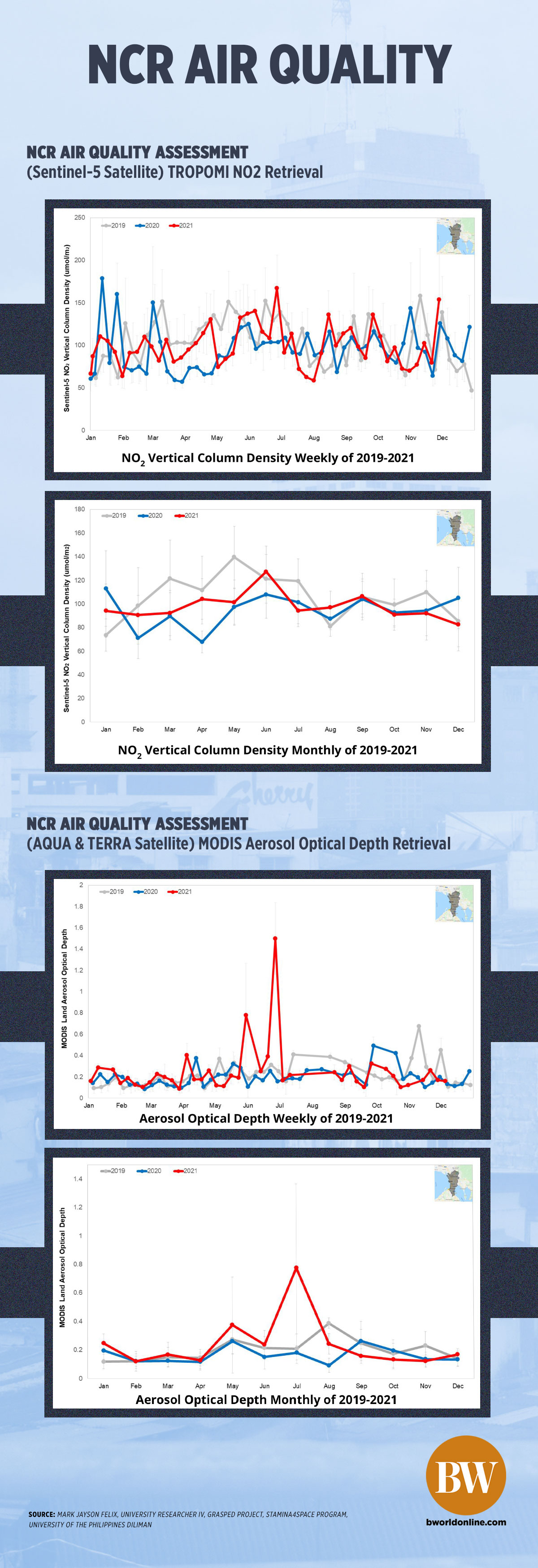
Satellite data suggests that the air quality in the capital worsened this Christmas season, reverting to pre-pandemic levels.   

According to STAMINA4Space, a Philippine space research program, emission of NO2, a gaseous pollutant from cars that burn fossil fuels, and aerosol optical depth (AOD) are back to 2019 levels. Aerosols refer to particles suspended in the atmosphere. It includes volcanic ash, urban haze, and factory pollution.  

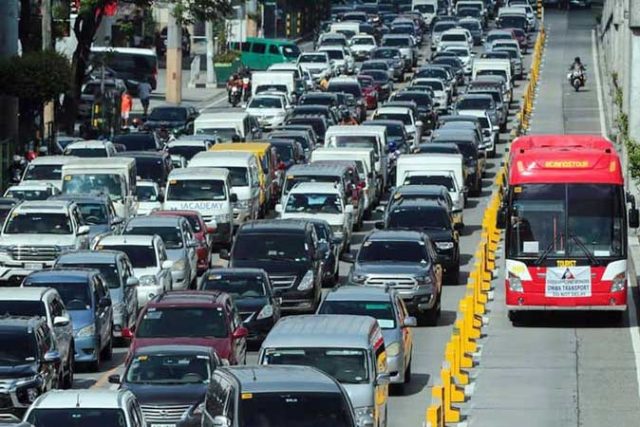
The increase in these pollutants, which began to climb in June, coincides with the loosening of restrictions in the capital and the volume of vehicular traffic in Metro Manila returning to pre-COVID days. 

It also comes at a time when mobility restrictions have been eased, spurring economic managers to raise the country’s GDP growth projection to 5.5%, up from 4% in August.  

“The really nice thing is that the market has stabilized even with the short-term sell-off that showed up in the tail end of November, so hopefully we can continue at this pace,” said Lawrence C. Lee, president and chief executive officer of global trading firm CTS Global Equity Group. 

“I believe that 2022 is our bounce back year. Hospitals are empty with regards to COVID-19 cases and, if we continue in this trajectory, businesses will also follow suit,” Mr. Lee told BusinessWorld in a Dec. 27 e-mail, prior to the holiday surge of coronavirus cases. 

AIR QUALITY MANAGEMENT  

The local governments of Parañaque and Pasig have been partnering with Clean Air Asia since 2019 to improve the air quality management in their cities.  

The non-governmental organization, in collaboration with global logistics company United Parcel Service (UPS), conducted learning sessions for Parañaque’s government employees, barangay representatives, and college students to build their capacity in implementing different components of air quality management.   

“The balance between clear skies and the effect of economic activity is a tough challenge for businesses and every Filipino who is concerned about the environment,” said Christopher Buono, managing director of UPS Philippines in an e-mail to BusinessWorld. 

Businesses can continue to thrive by putting sustainability practices such as waste segregation and the use of biodegradable materials into practice in the workplace, he added. 

“I have friends and know of UPS employees who recycle their packages delivered from online shops and have ventured into urban gardening,” he said. “Management must walk the talk on sustainability and lead by example. … Everyone is hopeful that the economy will improve, and I am confident that business leaders will take more action that support eco-friendly activities.”  

THREAT TO HUMAN HEALTH

Clean Air Asia is also developing a Clean Air Action Plan with Pasig City’s government in order to identify air pollution sources and mobilize resources to address them. Pasig, too, has an office that develops sustainable forms of transportation like a bike-sharing system. Emissions from mobile sources (including motor vehicles) is a major contributor to air pollution in the Philippines.

According to a landmark study released this year by the World Health Organization, “air pollution is now recognized as the single biggest environmental threat to human health.” It added that “air quality has … generally deteriorated in most low- and middle-income countries, in step with large-scale urbanization and economic development.”

The World Economic Forum in 2018 said that conservation and development are not an either-or proposition. Striking this balance, however, requires mutual cooperation and fast action.

Thai farmers fear loss of land to mega industrial zone

UNSPLASH

BAN PHO, Thailand — Ubon Chansoi has lived in a modest wooden home in rural Thailand for about 60 years, farming and rearing fish for a living that is now threatened by an ambitious plan to turn agricultural land in her village in Chachoengsao province into an industrial zone.  

Chachoengsao is one of three provinces covered by the Eastern Economic Corridor (EEC) project that includes several industries, a high-speed railway line, an airport and upgrades to two deep-sea ports in an area of about 1.3 million hectares.  

The $45 billion EEC project is a centerpiece of the Thai government’s efforts to boost economic growth and encourage investment with speedier approvals, tax breaks, and special visas for investors, as well as land leases for up to 99 years.  

But for tens of thousands of villagers who have lived in the three EEC provinces of Chachoengsao, Chon Buri and Rayong for generations, there are few benefits, and many will lose their land and homes, activists warn.  

“The government only cares about business — it is giving away our land to big companies,” said Ms. Ubon, 73, gesturing to the trees and the ponds teeming with tilapia and catfish.  

“For us, this is our life and our livelihood, and it will be very difficult to adjust to a new place and a new life if we have to leave,” she told the Thomson Reuters Foundation.  

Thailand’s tourism-reliant economy, Southeast Asia’s second largest, suffered its deepest slump in over two decades last year due to the impact of the coronavirus pandemic, and authorities are keen to lure back local and foreign investors.  

The EEC is a key part of the plan, with authorities expecting at least $10 billion in investments this year.  

But residents say authorities did not consult with them on the plans, and that the project will damage the environment and livelihoods that rely largely on farming and fishing.  

“There were some public hearings, but many were held far away, or were online, or we were not informed. Some had a lot of police, making it difficult for us to voice our concerns,” said Sarayut Sonraksa, 40, a farmer in Ban Pho village in Chachoengsao.  

“We are already seeing more flooding, more coastal erosion, and waste being dumped, and we are worried it will get worse and affect the land and water even more,” said Mr. Sarayut, who has taken the lead in campaigning against the EEC in his village.  

More than 40 public hearings were held to seek residents’ opinions, said Tasanee Kiatpatraporn, a deputy secretary general in the Eastern Economic Corridor Policy Committee (EECPC), a state agency.  

Further, forested areas and “good agricultural land” are being maintained, and the EEC promotes industries engaged in “activities which employ advanced and modern technologies, innovations, and are environmentally friendly,” she added.  

‘SECOND-CLASS CITIZENS’  

Across Asia, governments have embraced so-called special economic zones (SEZs) to spur growth and generate jobs. These are generally governed by special laws related to land use and environmental clearances, and offer tax incentives.  

Many SEZs have, however, fallen short of targets on investment, revenue and jobs, and have instead caused mass displacements, as well as social and environmental impacts, according to researchers.  

Thai SEZs date back to the 1970s, and the country has more than 50 large industrial estates, with a majority located in the eastern region, including local and foreign auto manufacturers, petrochemical and electronic companies.  

The military-led government that took charge after a coup in 2014 has made SEZs key to its economic policy, even as protests over evictions from farms and forests have risen.  

The Eastern Economic Corridor bill was passed in 2018, with provisions to allow industrial development on agricultural land, and with less rigorous environmental-impact assessments and waste management rules, according to activists.  

“The project has a top-down approach that minimized public participation and engagement of local people, who do not get any benefits from the project,” said Somnuck Jongmeewasin, research director at EEC Watch, an advocacy group.  

“EEC projects are being developed without respect for community rights and are leaving local communities, especially poor people, behind,” he said, adding that people who live in the EEC zone are “downgraded to being second-class citizens, alienated in their own homeland.”  

An administrative court last year ordered officials to follow local town planning and zoning regulations.  

But authorities have continued to ignore public participation requirements in meetings on town planning and re-zoning, Mr. Somnuck said.  

YOUNGER GENERATION  

In the three provinces of the EEC, land prices have surged as agricultural land is designated for industry, and the project is promoted as a key part of the Belt and Road Initiative, China’s massive global infrastructure push.  

Some residents have sold their land and moved away as it becomes harder to farm and rear fish. Villagers on leased land risk becoming landless and being left without any compensation.  

Ms. Ubon, who has leased her land for several decades, says her landlord is supportive of her, but she cannot be sure for how long. Her daughter has set up a small business making traditional Thai sweets as a backup plan.  

“I’m already old; I won’t live very long. But what about the younger generation — where will they go if we lose our land?” said Ms. Ubon.  

Ms. Ubon and others are encouraged by a victory earlier this month for campaigners against an industrial zone in Thailand’s southern province of Songkhla.  

Authorities agreed to put the project on hold to do a strategic environmental assessment, and set up a new panel to look into concerns after protests.  

“What they have achieved is remarkable — the entire community came together, and never gave up. We have a lot to learn from them,” said Mr. Sarayut.  

Mr. Sarayut has received death threats for his opposition, and a village headman was killed some years ago. A lawsuit against the EEC is being heard in court.  

“It is our last option,” said Mr. Sarayut.  

“It’s not that we don’t want development, but we want it to be done in a way that does not hurt us or the environment.” — Rina Chandran/Thomson Reuters Foundation

Experts, governors warn of US Omicron ‘blizzard’ in weeks ahead

A woman takes a coronavirus disease test at a pop-up testing site as the Omicron coronavirus variant continues to spread in Manhattan, New York City, U.S., Dec. 27, 2021. — REUTERS

WASHINGTON — US health experts on Thursday urged Americans to prepare for severe disruptions in coming weeks as the rising wave of coronavirus disease 2019 (COVID-19) cases led by the Omicron variant threatened hospitals, schools, and other sectors impacting their daily lives.  

The warning came as the United States reached a record high in COVID-19 cases, while federal officials issued more travel warnings and reportedly prepared to authorize booster shots for 12 to 15-year-olds next week.  

For the second day in a row, the United States had a record number of new reported cases based on the seven-day average, with more than 290,000 new infections reported each day, a Reuters tally showed.  

At least 18 states and Puerto Rico have set pandemic records for new cases, according to the tally. Maryland, Ohio and Washington, DC, also saw record hospitalizations as overall US COVID-19 hospitalizations rose 27%.  

The surge comes amid increased holiday travel, with New Year’s celebrations still to come, and as schools grapple with students’ return to classrooms following winter breaks.  

“We are going to see the number of cases in this country rise so dramatically, we are going to have a hard time keeping everyday life operating,” Dr. Michael Osterholm, an infectious disease expert at the University of Minnesota, told MSNBC.  

“The next month is going to be a viral blizzard,” he said. “All of society is going to be pressured by this.”  

Dr. Anthony Fauci, the nation’s top infectious disease official, on Wednesday said cases will likely rise throughout January, a warning echoed by the governor of Louisiana, where hospitalizations have more than tripled in the past two weeks.  

“We are still at the very beginning of this current surge,” John Bel Edwards told a news conference on Thursday. “January is going to be very, very challenging.”  

US health officials have said early data show Omicron appears less severe but have continued to push vaccinations, masks and physical distancing. The Centers for Disease Control and Prevention (CDC) has also issued new guidelines shortening isolation and quarantine periods, which have been criticized by some disease experts and health care workers.  

US health regulators plan to approve a third vaccine dose for 12 to 15-year-olds next week, according to media reports. Boosters are already approved for those 16 and older.  

With testing shortages and breakthrough cases, experts warn the surge would stress hospitals and businesses, although some state and city leaders said on Thursday they would keep schools open for children returning from winter break next week.  

“We are committed in Arkansas to in-class instruction,” Arkansas Governor Asa Hutchinson said. “It’s so important to our future, to our students, to their mental health.”  

Rising hospitalizations as healthcare workers are sidelined with their own COVID-19 infections is also concerning, as are fewer effective therapeutics, Dr. Peter Hotez, an infectious disease expert at Baylor College of Medicine, told CNN.  

A rise in hospitalization of children across the United States has also fueled concerns.  

Already, 825,663 people have died in the United States from COVID-19 since early 2020, data showed, with the latest wave of hospitalizations driven by those not vaccinated.  

President Joseph R. Biden, Jr., this month announced new plans to combat Omicron, but some experts have criticized the measures as arriving too late.  

‘HUNKER DOWN’  

Cruise operators took a hit on Thursday after the CDC warned people to avoid cruises regardless of their vaccination status due to onboard outbreaks, a potential drag on an economy that otherwise appears to be holding up.  

While airline travel has been widely disrupted, holiday sales were strong, new claims for state unemployment benefits fell last week to their lowest level of the pandemic, and US stocks hit record highs on Thursday.  

How schools handle the surge is also key, especially for working parents. US Education Secretary Miguel Cardona told MSNBC that schools should stay open and that federal funds were available for staffing and testing to help make that happen.  

“We can’t shut down our city again,” New York City Mayor-elect Eric Adams said while unveiling his plan on Thursday to fight COVID-19 while keeping the country’s most populous city —  including its schools — open for business.  

Conditions should improve after January, as testing shortages ease and recently approved medicines become more widely available, experts said.  

“We do have light at the end of the tunnel,” said University of Minnesota’s Mr. Osterholm. “But for right now, you’re going to have to hunker down.”  

In Arkansas, which on Thursday reported a record high of 4,978 new cases, Mr. Hutchinson said the state would make 1.5 million at-home tests available to residents, a move he hoped would free up health care workers to staff hospitals.  

West Virginia Governor Jim Justice urged the relatively high proportion of unvaccinated people in his state to get inoculated but said he was against mandates.  

If the situation worsens “and a bunch more people die, you’ll have a run on the bank as far as people running to get vaccinated or to get their booster shots,” Mr. Justice said. —  Susan Heavey/Reuters