Home Blog Page 6985

Chelsea dominates Hotspurs in 2-0 league cup semifinal win

LONDON — Chelsea seized control of their league cup semifinal against Tottenham Hotspur, beating their London rival 2-0 in the first leg on Wednesday thanks to an early strike by Kai Havertz and an own goal by Spurs defender Ben Davies.

The Blues, who had enough chances to put the tie beyond doubt, swamped the visitors from the start as they sought to book their place in their third final under coach Thomas Tuchel who has yet to mark his first anniversary at Stamford Bridge.

After a mix-up in the Spurs defense in the fifth minute, Havertz fired an angled shot that was goal-bound before it went in off the foot of Davinson Sanchez.

Half an hour later, the dominant hosts got their second goal, albeit with a slice of luck, when Japhet Tanganga headed away a Hakim Ziyech free kick, only for the ball to rebound into the Spurs net off Davies’ shoulder.

The win, while not as thumping as it could have been, dented the hopes of Spurs, under former Chelsea coach Antonio Conte, of winning a first trophy since lifting the league cup in 2008. In that time, Chelsea has won 12 major trophies including three Premier League and two Champions League titles.

Tuchel restored record signing Romelu Lukaku to the team having dropped him for Sunday’s 2-2 draw with Liverpool as punishment for the Belgian saying in an interview that he was unhappy with his role at Stamford Bridge.

Lukaku went close with a first-half header, created a great chance for Ziyech after the break which the Moroccan wasted and hit an injury-time shot straight at Hugo Lloris. — Reuters

NFL says Los Angeles Super Bowl is a go despite COVID-19 surge

LOS ANGELES — The National Football League (NFL) on Wednesday said it has no plans to move next month’s Super Bowl from Los Angeles due to a spike in coronavirus disease 2019 (COVID-19) cases, and said its discussions with alternative sites is part of normal contingency planning.

The Feb. 13 championship game at SoFi Stadium comes as officials have been weighing whether to cap attendance at large events to stem the spread of the highly contagious omicron variant.

Los Angeles County has in the past instituted some of the strictest public health policies in the nation to combat the pandemic. Last January, this prompted college football’s Rose Bowl to be moved from Pasadena to Arlington, Texas, although this year’s Rose Bowl was in Pasadena as usual.

“We plan on playing Super Bowl LVI as scheduled at SoFi Stadium in Los Angeles on Sunday, February 13,” NFL spokesman Brian McCarthy told Reuters.

“As part of our standard contingency planning process that we conduct for all regular and postseason games, we have contacted several clubs to inquire about stadium availability in the event we cannot play the Super Bowl as scheduled due to weather-related issues or unforeseen circumstances,” he said.

“Our planning process for the Super Bowl in Los Angeles is ahead of schedule and we look forward to hosting the Super Bowl there to culminate another fantastic NFL season for our fans and clubs.”

McCarthy noted that Sunday will mark the 20th game at the stadium this season with no attendance limits. — Reuters

Outcry as Australia bars Djokovic over vaccination status

MELBOURNE — World number one tennis player Novak Djokovic was denied entry into Australia on Thursday amid a storm of protest about a decision to grant him a medical exemption from coronavirus disease 2019 (COVID-19) vaccination requirements to play in the Australian Open.

The tennis star was transported to a quarantine hotel in Melbourne after being held at the city’s airport overnight and was told he would be removed from the country later on Thursday, a source close to the tournament told Reuters.

Australia’s Border Force confirmed Djokovic’s visa had been revoked, while the source said the player’s lawyers planned to file an injunction to prevent his removal.

Djokovic’s injunction request against the visa cancellation was listed for hearing at 4 pm (0500 GMT) in the Federal Circuit and Family Court, according to court documents.

The saga, fueled by domestic political point-scoring about the country’s handling of a record surge in new COVID-19 infections, has created an international incident with the Serbian president claiming harassment of its star player.

“There are no special cases, rules are rules,” Australian Prime Minister Scott Morrison said at a televised media briefing.

“We will continue to make the right decisions when it comes to securing Australian borders in relation to this pandemic,” Morrison said.

Djokovic, who has consistently refused to disclose his vaccination status while publicly criticizing mandatory vaccines, kicked off the furor when he said on Instagram that he had received a medical exemption to pursue a record-breaking 21st Grand Slam win at the Open starting Jan. 17.

The announcement prompted outcry in Australia, particularly in tournament host city of Melbourne, which has endured the world’s longest cumulative lockdown to ward off the coronavirus.

Australia’s adult vaccination rate of about 91% is high by international standards and there is little public sympathy for those who refuse to be inoculated, as the Omicron variant sends case numbers to record levels.

However, the move by the Australian government to block his entry caused ructions between Canberra and Belgrade.

Serbian President Aleksandar Vučić said he had spoken with Djokovic to reassure the player “that the whole of Serbia is with him and that our bodies are doing everything to see that the harassment of the world’s best tennis player is brought to an end immediately.”

“In line with all norms of international law, Serbia will fight for Novak, truth and justice,” Vučić said on Twitter.

Morrison said he was aware that “representations have been made” by the Serbian embassy in Canberra and denied the claims of harassment.

“Australia has sovereign borders and clear rules that are non-discriminatory,” Morrison said.

Serbian media reported that Vučić had summoned the Australian ambassador in Belgrade and demanded Djokovic be released and allowed to play.

POLICE GUARD
In a dramatic series of events, Djokovic’s father told media in Serbia that his son was ushered into an isolation room under police guard when he touched down at Melbourne’s Tullamarine airport at about 11:30 p.m. (1230 GMT) on Wednesday after a 14-hour flight from Dubai.

His fate was the focus of a political fight in Australia, characterised by fingerpointing between Morrison’s conservative administration and the left-leaning Victorian government led by Premier Dan Andrews.

Under Australia’s federal system, states and territories can issue exemptions from vaccination requirements to enter their jurisdictions. However, the federal government controls international borders and can challenge any exemptions granted by states.

Djokovic travelled to Australia after receiving an exemption from the Victorian government, granted after a process that included a panel of health officials. That exemption — the reasons for which are not known — supported his federal government-issued visa to play at the Australian Open.

On arrival, however, Federal Border Force officials at the airport said Djokovic was unable to justify the grounds for his exemption.

The Australian task force that sets the exemption parameters lists the risk of serious cardiac illness from inoculation and a COVID-19 infection within the past six months as qualifiers. However, Morrison said on Thursday that Tennis Australia had been advised several months ago that a recent infection did not meet the criteria for exemption.

The squabbling overshadowed the fact that Australia’s daily COVID-19 infections hit a record high for the fourth consecutive day, with new cases exceeding 72,000, overwhelming hospitals and causing labor shortages.

Tennis Australia and government officials said Djokovic received no preferential treatment, adding he was among “a handful” of the 26 people who applied who were approved in an anonymous and independent process.

With just 11 days to go until the Open starts, a legal challenge could go all the way to the High Court.

ANGRY AUSSIES
The Serbian has won nine titles at Melbourne Park including the last three, but his anti-vaccination stance means he faces a tough crowd to take his tenth in Victoria.

Australian tennis great Rod Laver, after whom the main showcourt is named, warned that Djokovic would likely face hostility.

“I think it might get ugly,” Laver told News Corp. “I’d think the Victorian people would be thinking ‘Yes, I’d love to see him play and compete, but at the same time there’s a right way and a wrong way.’”

Paul McNamee, former Australian Open tournament director and tennis professional, said Djokovic had followed the required steps to obtain a visa and should be allowed to play.

“So he deserves his day on court, not in court, in my opinion,” McNamee told ABC TV. — Reuters

Irving returns

Kyrie Irving wasn’t expected to hit the ground running. After eight months away from the court, he couldn’t have possible picked up from where he left off prior to being injured in Game Four of the 2021 Eastern Conference Semifinals. And, true enough, he looked extremely rusty in the first quarter of the Nets’ set-to against the Pacers yesterday. He burned rubber from opening tip, but could do no better than go zero of three along with two turnovers in his first nine minutes of play.

Still, it was clear from the get-go that Irving relished being back in uniform. His continued refusal to get vaccinated prevented him from making the Nets’ active roster at the start of the 2021-22 season, but the increased number of infections and continued roster turnover compelled the front office to do a 180-degree turn and tap him for action. And from the second quarter onward, he proved that he still possesses the All-Star skills that enable him to rub elbows with the best of the best.

When the final buzzer sounded, Irving’s numbers were a modest 22 (on nine-of-17 shooting from the field), three, four, three, and one. Nonetheless, all and sundry knew that his presence made the difference for the Nets. Durant may have gone for 39, eight, seven, and one, but they would not have been able to climb back from a double-digit first-half deficit without his exertions. Not for nothing did he finish the contest with a game-high plus-16 rating in 32 minutes on the court.

Irving was pleased, if unassuming, in the aftermath. “Whatever the team [requires], I’ll do,” he contended. Of that there is no doubt, and it’s fair to assume that he — and, by extension, the Nets — will get better once he gets his sea legs. And the effect of his absence in home outings (and in visits to New York and Toronto given safety protocols in these cities) is more than offset by his positive impact in all other contests. In this regard, head coach Steve Nash is right; he’s better (make that much, much better) than any other part-time player they’d be able to sign.

Whether Irving deserves to mingle with other players given his unvaccinated status is the subject of another discussion in another time. Bottom line, he’s not breaking any rules in so doing. And, based on talent alone, he’s definitely a plus. He improves the National Basketball Association’s principal product, and he elevates the Nets’ capacity to bring home the hardware.


Anthony L. Cuaycong has been writing Courtside since BusinessWorld introduced a Sports section in 1994. He is a consultant on strategic planning, operations and Human Resources management, corporate communications, and business development.

Peso weakens vs dollar as Fed mulls earlier rate hikes to fight inflation

BW FILE PHOTO

THE PESO retreated anew versus the greenback on Thursday as the US Federal Reserve signaled earlier rate hikes to combat elevated inflation.

The local unit finished trading at P51.18 per dollar on Thursday, shedding 22 centavos from its P50.96 close on Wednesday, based on data from the Bankers Association of the Philippines.

The peso opened Thursday’s session weaker at P51.03 versus the dollar. Its worst showing was at P51.23, while its intraday best was at P50.99 against the greenback.

Dollars traded declined to $1.151 billion on Thursday from $1.209 billion on Wednesday.

The peso weakened following the release of the minutes of the Fed’s latest policy review, which showed officials discussing a possible need for earlier rate hikes amid elevated price increases, Rizal Commercial Banking Corp. Chief Economist Michael L. Ricafort said in a Viber message.

Both elevated inflation and the “very tight” labor market were considered by Fed officials to support their view to raise interest rates sooner rather than later, Reuters reported.

“Participants generally noted that, given their individual outlooks for the economy, the labor market, and inflation, it may become warranted to increase the federal funds rate sooner or at a faster pace than participants had earlier anticipated,” the minutes of the Dec. 14-15 meeting of the Federal Open Market Committee showed.

Meanwhile, a trader said the surge in local cases also weighed on the peso.

Active infections rose by 17,220 to 56,561 on Thursday, based on data from the Department of Health. This is higher than the 10,775 new cases tallied on Wednesday. The positivity rate also surged to 36.9% for the 59,847 tests reported.

For Friday, Mr. Ricafort gave a forecast range of P51.05 to P51.25 per dollar, while the trader expects the local unit to move within P49.95 to P51.20. — LWTN with Reuters

PSEi slips as coronavirus cases continue to rise

PHILIPPINE STAR/KRIZ JOHN ROSALES

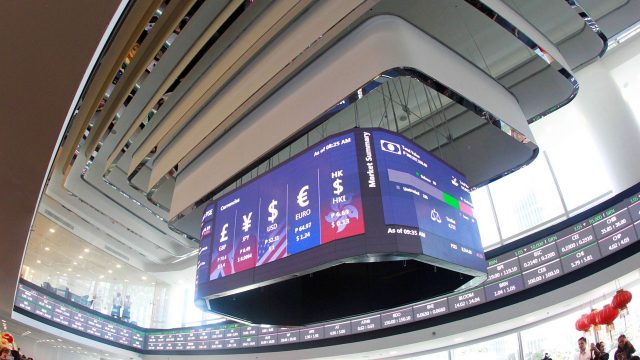
STOCKS ended lower on Thursday after trading stayed in the red for most of the session on concerns over rising coronavirus cases despite decreased selling following the central bank’s hints of continued accommodative policy.

The 30-member Philippine Stock Exchange index (PSEi) lost 5.88 points or 0.08% to end at 7,085.52, while the broader all shares index dropped 16.59 points or 0.43% to close at 3,777.58 on Thursday.

“The sell-down has eased given the Bangko Sentral ng Pilipinas (BSP) governor’s assurance of continued monetary support for the domestic economy amid high Omicron risks and even with the earlier-than-expected US Federal Reserve taper,” First Metro Investment Corp. Head of Research Cristina S. Ulang said in a Viber message.

BSP Governor Benjamin E. Diokno said in a press conference on Tuesday that the central bank’s priority is the sustainability of recovery and preventing the long-term scarring of the pandemic to the economy.

“We chose to kept patient hand. Exit strategies will depend on liquidity and credit dynamics, financial sector risks, public health, and evolving global developments, and potential spillovers,” he said.

“[Local] stocks weakened as fueled likely by the highly transmissible coronavirus disease 2019 (COVID-19) Omicron variant. Daily case count in the capital is seen to reach a record high this Thursday as positivity rate leaped to 45%,” Papa Securities Corp. Equities Strategist Manny P. Cruz said in a Viber message.

The Health Department on Thursday reported 17,220 additional COVID-19 cases. There were also 29 more confirmed Omicron infections.

Mr. Cruz added that Thursday’s value turnover also remained light at P5.21 billion with 771.81 million issues traded. This was lower than the P6.94 billion with 973.94 million shares that switched hands on Wednesday.

Regina Capital Development Corp. Head of Sales Luis A. Limlingan said other investors also considered the minutes from the US central bank’s latest policy meeting.

The minutes from the Fed’s Dec. 14-15 policy meeting offered more details on the central bank’s shift last month toward a tighter monetary policy to curb inflation, Reuters reported. Policy makers earlier said that the US labor market was “very tight.”

All sectoral indices fell except for holding firms, which climbed 63.38 points or 0.92% to 6,911.01.

Meanwhile, services retreated by 27.06 points or 1.36% to 1,955.79; mining and oil declined 99.69 points or 1.01% to 9,689.78; industrials dropped 93.78 points or 0.90% to 10,219.67; financials gave up 11.25 points or 0.70% to 1,588.60; and property lost 1.35 points or 0.04% to end at 3,123.59.

Decliners beat advancers, 114 against 57, while 59 names closed unchanged.

Foreigners turned sellers with P103.55 million in net outflows versus the P276.15 million in net purchases seen on Wednesday. — M.C. Lucenio with Reuters

Biden to call out Trump’s ‘singular responsibility’ for Jan. 6 attacks

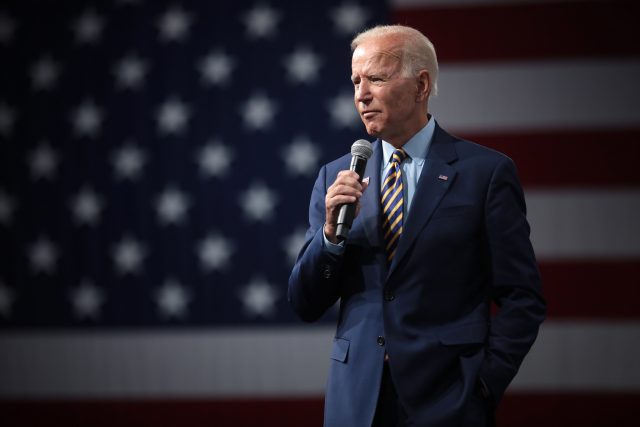
US PRESIDENT JOSEPH R. BIDEN, JR. — IMAGE VIA GAGE SKIDMORE/CC BY-SA 2.0/FLICKR

WASHINGTON – President Joe Biden will tell Americans that his predecessor, Donald Trump, carries “singular responsibility” for the deadly Jan. 6 attack on the Capitol when he marks the first anniversary of the assault on Thursday, the White House said. Biden and Vice President Kamala Harris, both Democrats, will speak on Thursday morning at the U.S. Capitol, one year after a mob loyal to Trump raided the complex in a failed attempt to stop the certification of Electoral College votes that officially delivered Biden‘s election victory.

Biden and his top aides have been reluctant to talk directly about Trump since the former senator took office last January, even as the Republican former president continued to spread lies about his election loss, and Democrats, historians and civil rights activists have grown increasingly concerned about the future of the nearly 250-year-old representative democracy.

Thursday’s speech comes after Biden spent months encouraging Americans to unite against the COVID-19 pandemic and rebuild together after weather disasters.

On Thursday, Biden will “lay out the significance of what happened in the Capitol and the singular responsibility President Trump has for the chaos and carnage that we saw and he will forcibly push back on the lies spread by the former president in an attempt to mislead the American people and his own supporters as well as distract from his role in what happened,” White House Press Secretary Jen Psaki said.

Trump canceled a news conference at his Mar-a-Lago estate in Florida that had been scheduled for Thursday evening, blaming what he called the “bias and dishonesty” of the House of Representatives probe of the attacks and the news media, a favorite target.

Taylor Budowich, a Trump spokesperson, said it was “unsurprising” that Biden would spend Jan. 6th “trying to further divide our nation, adding “division is the only thing Democrats know how to do.”

Four people died on the day of the riot, and one Capitol police officer died the day after defending Congress. Dozens of police were injured during the multi-hour onslaught by Trump supporters, and four officers have since taken their own lives https://www.reuters.com/world/us/officer-who-responded-us-capitol-attack-is-third-die-by-suicide-2021-08-02.

The White House said Biden would push back against Trump’s false claims, adopted by many of his followers, that his election defeat was the result of widespread fraud, and attempts to downplay the worst assault on the Capitol since the War of 1812.

Biden has been “clear eyed about the threat the former president represents to our democracy,” Psaki said, “and how the former president constantly works to constantly undermine basic American values and rule of law.”

She added that the president sees the deadly attacks as a “tragic culmination of what those four years under President Trump did to our country.”

Harris will use her remarks to “outline that the American experiment is being tested, and that we must work to secure voting rights, ensure free and fair elections and safeguard our democracy for generations to come,” an administration official said. – Reuters

Cebu Pacific offers flexible domestic flight options until Jan. 31 

CEBUPACIFICAIR.COM

Customers of budget carrier Cebu Pacific (CEB) who are travelling domestically from Jan. 5-31, and who wish to postpone their flight, have up to two hours before departure time to choose between the rebook or travel fund options. 

The rebook option is for travel within 60 days at no additional cost, and with the fare difference waived. The travel fund option allows for the amount of a passenger’s booking to be stored in a virtual CEB wallet, and is valid for two years.

Both options are available through the Manage Booking portal at bit.ly/CEBmanageflight

CEB also announced on Jan. 6 that is reviewing its network schedule and monitoring manpower levels considering quarantined employees. It is cancelling a number of domestic flights from Jan. 7 to 10, with passengers to be transferred to other available flights on the same day. 

The affected flights are listed at bit.ly/CEBAdvisory_Jan2022Flights

Meanwhile, the CEB Terminal 3 ticket office is closed until further notice.

To curb the post-holiday spike in COVID-19 cases, the Philippines’ Inter-Agency Task Force for the Management of Emerging Infectious Diseases (IATF-EID) raised Metro Manila to Alert Level 3 Status from Jan. 3-15.

The growth of COVID-19 cases in the capital increased from -51% from Nov. 21 to Dec. 18, to +501% from Dec. 5 to Jan. 1, according to Metro Manila Development Authority chairman Benjamin de Castro Abalos, Jr. in a Jan. 5 town hall discussion.

Omicron, the latest COVID-19 variant of concern, could hamper the recovery of the tourism industry.

“[The Omicron] surge will be driven by the irresponsibility and selfishness of individuals who breach protocols instituted to ensure everyone’s safety,” said Asian Institute of Management economist John Paolo R. Rivera in a Jan. 4 BusinessWorld article. — P. Mirasol 

N.Korea launches second hypersonic missile in fiery test

SEOUL – North Korea fired a “hypersonic missile” this week that successfully hit a target, state news agency KCNA reported on Thursday, its second such test as the country pursues new military capabilities amid stalled denuclearisation talks.

The launch on Wednesday was the first by North Korea since October and was detected by several militaries in the region, drawing criticism from governments in the United States, South Korea, and Japan.

North Korea first tested a hypersonic missile in September, joining a race headed by major military powers to deploy the advanced weapons system.

Hypersonic weapons usually fly towards targets at lower altitudes than ballistic missiles and can achieve more than five times the speed of sound – or about 6,200 km per hour (3,850 mph).

Despite their name, analysts say the main feature of hypersonic weapons is not speed – which can sometimes be matched or exceeded by traditional ballistic missile warheads – but their manoeuvrability.

In Wednesday’s test, the “hypersonic gliding warhead” detached from its rocket booster and manoeuvred 120 km (75 miles) laterally before it “precisely hit” a target 700 km (430 miles) away, KCNA reported.

The missile demonstrated its ability to combine “multi-step glide jump flight and strong lateral manoeuvring,” KCNA said.

The test also confirmed components such as flight control and its ability to operate in the winter, KCNA added.

“The successive successes in the test launches in the hypersonic missile sector have strategic significance in that they hasten a task for modernizing strategic armed force of the state,” the KCNA report said.

While it has not tested nuclear bombs or long-range intercontinental ballistic missiles (ICBMs) since 2017, in recent years North Korea has developed and launched a range of more manoeuvrable missiles and warheads likely aimed at being able to overcome missile defences like those wielded by South Korea and the United States, analysts have said.

“My impression is that the North Koreans have identified hypersonic gliders as a potentially useful qualitative means to cope with missile defence,” said Ankit Panda, a senior fellow at the U.S.-based Carnegie Endowment for International Peace.


NEW MISSILE

Hypersonic weapons are considered the next generation of arms that aim to rob adversaries of reaction time and traditional defeat mechanisms.

Last month the United States completed construction of a massive, $1.5 billion long-range radar for a homeland missile defence system in Alaska that it says can track ballistic missiles as well as hypersonic weapons from countries such as North Korea.

Photos of the missile used in Wednesday’s test show what analysts said is a liquid-fueled ballistic missile with a conical-shaped Manoeuvrable Reentry Vehicle (MaRV) blasting off from a wheeled launch vehicle in a cloud of flame and smoke.

It is a different version than the weapon tested last year, and was first unveiled at a defence exhibition in Pyongyang in October, Panda said.

“They likely set up at least two separate development programmes,” he added. “One of these was the Hwasong-8, which was tested in September. This missile, which shares a few features in common with the Hwasong-8, is another.”

In a call with Japanese Foreign Minister Yoshimasa Hayashi on Thursday, U.S. Secretary of State Antony Blinken condemned the North Korea missile launch and discussed cooperation to achieve complete denuclearization and lasting peace on the Korean Peninsula, the U.S. State Department said in a statement.

Talks aimed at persuading North Korea to surrender its nuclear weapons and ballistic missile arsenal have been stalled since a series of summits between leader Kim Jong Un and then-U.S. President Donald Trump broke down with no agreement.

U.S. President Joe Biden’s administration has said it is open to talking to North Korea, but Pyongyang has said American overtures are empty rhetoric without more substantive changes to “hostile policies” such as military drills and sanctions.

The latest test came just hours before South Korean President Moon Jae-in attended a groundbreaking ceremony for a rail line he hopes will eventually connect the divided Korean peninsula, casting doubts over his hopes for an eleventh-hour diplomatic breakthrough with North Korea before his five-year term ends in May. – Reuters

Globe receives higher B rating for climate action initiatives

Globe received a higher B rating in 2021 from the CDP (formerly Carbon Disclosure Project), as it continues to intensify efforts to address climate change. The digital solutions platform discloses its environmental impact through CDP, a global non-profit that runs the world’s leading environmental disclosure platform for investors, companies, cities, states, and regions, to show its commitment to environmental transparency.

CDP issues a score from A to F, depending on the organization’s environmental performance. Globe’s current score was a notch higher than the B- rating it received in 2020. It is also higher than the Asia regional average of B-, and at par with the media, telecommunications, and data center sector average of B. ESG ratings have become a standard assessment tool used by investors to measure a company’s sustainability performance, on top of its financial performance.

Disclosures are standard forecasts demanded by capital markets and customers. With its international standing, reporting through CDP brings tangible business benefits, from brand value to risk management and getting ahead of regulation.

“Globe annually discloses its climate action activities, practices, and programs with the CDP to continuously check our progress in creating a more sustainable ecosystem for our customers and stakeholders. We are happy to receive a slightly higher rating for 2021. This means we are on track in our climate change agenda,” said Yoly Crisanto, Globe Chief Sustainability Officer and SVP for Corporate Communications.

To qualify for the CDP rating, a company must score over a threshold percentage of the available awareness points, showing that they have assessed a broad range of environmental issues and have determined how these intersect with its business. Management points are awarded for answers that provide evidence of actions associated with good environmental management. Scoring for this relies on companies’ disclosure of processes and procedures more than judging the effectiveness of its actions. CDP scores are widely used to drive investment and procurement decisions towards a zero-carbon, sustainable and resilient economy.

CDP is fully aligned with the globally-recognized Task Force on Climate-Related Financial Disclosure (TCFD) and is a founding member of the Science-Based Targets initiative (SBTi).

Globe has also expressed its support to the TCFD to increase transparency on climate-related risks and opportunities within financial markets. It is also the first and only publicly-listed Philippine company listed by SBTi to commit to Business Ambition for 1.5 and officially join Race to Zero.

To operationalize its climate strategy, a total of 13 Globe key facilities, including its headquarters, have transitioned to 100% renewable energy through Power Purchase Agreements (PPA) with Retail Electricity Suppliers (RES). The partner RES provides Globe with Verified Emission Reduction (VER) certificates to document its carbon emission offsets.

Furthermore, Globe has deployed over 7,400 green network solutions. Nationwide, it has deployed 203 fuel cell systems, 6,467 lithium-ion batteries, 212 direct current generators, 60 DC-Hybrid Generators, and 538 free cooling systems. These green solutions require fewer fuel consumption and provide a more energy-efficient cooling system.

Globe strongly supports the United Nations Sustainable Development Goals, particularly UN SDG No. 13, which is to take urgent action to combat climate change and its impact. Globe is committed to upholding the UN Global Compact principles and contributing to 10 UN SDGs.

To learn more about Globe’s sustainability efforts, visit https://www.globe.com.ph/about-us/sustainability.html.


Spotlight is BusinessWorld’s sponsored section that allows advertisers to amplify their brand and connect with BusinessWorld’s audience by enabling them to publish their stories directly on the BusinessWorld Web site. For more information, send an email to online@bworldonline.com.

Join us on Viber to get more updates from BusinessWorld: https://bit.ly/3hv6bLA.

Pfizer expects updated COVID-19 vaccine data for kids under 5 by April

NEW YORK – Pfizer Inc expects the latest results from a clinical trial for kids under the age of 5 of the COVID19 vaccine it developed with Germany’s BioNTech SE by April, a top company scientist said on Wednesday.

“The study has been amended to give a third dose to everybody who’s less than five at least eight weeks after their last vaccination,” Dr. Alejandra Gurtman, a Pfizer vaccine researcher said at a meeting of the U.S. Centers for Disease Control and Prevention’s Advisory Committee on Immunization Practices (ACIP). She said the company aims to have data for the age group by the end of March or the beginning of April.

In December, Pfizer said it was changing the design of the trial because children between the ages of 2 and 4 who were given two 3-microgram doses of the vaccine did not have the same immune response that a larger dose of the vaccine generated in older children.

Gurtman also said the company was studying a third dose of its vaccine in children ages 5 to 11, six months after their second dose.

The Pfizer-BioNTech vaccine is authorized in the United States for people age 5 and older. On Wednesday, ACIP backed booster shots of the vaccine for ages 12 to 15. – Reuters

Coal-dependent Indonesia starts tapping huge solar power potential

AMERICAN PUBLIC POWER ASSOCIATION-UNSPLASH

JAKARTA – Aji Tri Atmojo lives in a traditional Javanese house with wooden walls on the outskirts of the Indonesian capital of Jakarta, but his rustic home got a modern touch after he installed a row of solar panels on his roof.

Since putting them up in 2020 at a cost of 10 million rupiah ($702.25), he has halved his monthly electricity bill and within five years the investment should break even.

With a patchy track record on renewables, Indonesia‘s energy mix is still heavily dependent on coal but if early signs of a jump in the take up of solar are sustained, it could have a transformative impact on Southeast Asia’s biggest economy.

“Because nearly all electricity generation in Indonesia … comes from coal. This way (my family) can reduce greenhouse gas emissions,” Aji told Reuters. Indonesia aims to wean itself off coal and become carbon neutral by 2060 or sooner.

Despite being a tropical archipelago of 17,000 islands blessed with year-round sunshine, Indonesia ranks last for solar power capacity among the G20 nations.

But demand is starting to pick up in the world’s fourth-most populous country, driven by policy changes, a steep fall in the prices of Chinese-made photovoltaic cells (PV) and environmentally conscious middle-class consumers such as Aji, an engineer at a dairy company.

From the end of 2018 to November 2021, the number of private rooftop solar panel users has risen more than sevenfold to about 4,500, with an installed capacity of 44 megawatts (MW), up from just 1.5 MW, according to state-owned power utility Perusahaan Listrik Negara (PLN).


RISING ELECTRICITY NEEDS

The Indonesia Solar Energy Association (ISEA) predicts installed capacity for rooftop solar panels could top 1,000 MW next year and rise by between 3,000 MW and 5,000 MW per year starting in 2025.

“People are becoming more aware about the importance of renewable energy,” said Amarangga Lubis, co-founder of engineering, procurement, and construction (EPC) firm SolarKita. “Since the pandemic, the work from home culture has been established and electricity needs at home are rising.”

Lubis predicts massive growth in solar power installations over the next five years. “People will be more picky and they will invest in things that are more beneficial” for the environment, he said.

To be sure, solar remains a minor energy source in Indonesia, the world’s biggest exporter of the thermal coal used in power plants.

Coal powers about 60% of Indonesia‘s 73,000 MW of electric generation capacity, compared with solar‘s 180 MW, which includes solar farms and private rooftop PV cells.

But, Indonesia has the potential for 400,000 MW of solar power, its energy ministry has forecast.

Falling prices for Chinese PV cells has driven the rise in private installations since the solar power produced from the panels is cheaper than power sold from PLN.

The systems from western countries that were the only ones previously available were also 10 times more expensive, said Ilham Rizky, founder of solar installer Batara Energi.

New financing methods, such as solar panel leasing for commercial users, have also helped businesses invest in solar, said Solarkita’s Lubis.


CARBON MARKET

Regulatory changes have also spurred growth, with PLN reducing its minimum energy charges in late 2019, which lowers the amount of time for solar users to recoup their installation costs.

Commercial solar users can also fully export their excess power to PLN as of August, up from only 65% previously, and they can participate in an Indonesian carbon market due to launch in 2025.

These changes, as well as agreements by multinational companies to curb carbon emissions, mean higher solar demand from companies, factories and commercial buildings in coming years, said Fabby Tumiwa, the ISEA executive director.

In addition to the commercial demand, Tumiwa also expects at least 2% of PLN’s 77 million household customers to put up solar PV cells in the next three to five years. – Reuters

ADVERTISEMENT
ADVERTISEMENT