Home Blog Page 6935

Philippines must flatten COVID-19 curve or risk ‘superspreader’ election – expert

PHILIPPINE STAR/ MICHAEL VARCAS

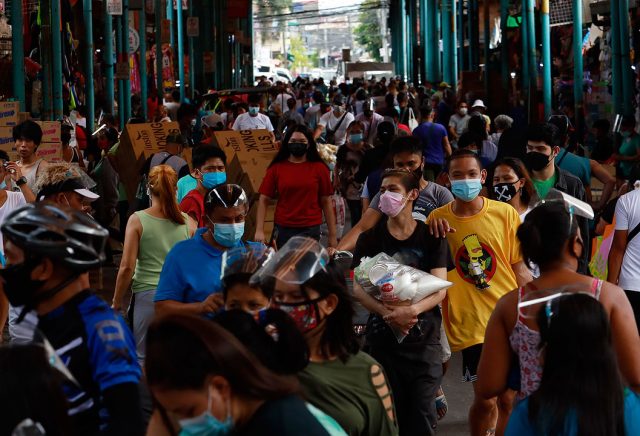
MANILA – The Philippines must bring down COVID-19 cases, hovering at record highs, by April to ensure this year’s presidential election will not become a “superspreader” event, a top government adviser said on Monday.The country of 110 million people, which is battling one of Asia’s worst coronavirus outbreaks, is holding an election in May for thousands of positions, from president down to hundreds of lawmakers, mayors and governors.Roughly 67.5 million Filipinos, including 1.7 million overseas, are registered to vote in the elections, which historically have a high turnout.“We need to push the virus cases down in April so when we have elections in May, people will be safe,” Dr. Teodoro Herbosa, medical adviser to the COVID-19 task force, told Reuters.“(It is) very important that we are able to tame this virus before May 9.”Herbosa recommends the election commission expand the use of absentee balloting to include the elderly and people with health conditions.Plans to extend the voting period to two days were shelved due to budget constraints.The 2016 election saw a record voter turnout with 82%, with about 44.5 million people casting ballots, government data showed.Daily coronavirus infections have hit records several times this month, driven by the highly contagious Omicron variant, prompting a tightening of mobility curbs. On Monday, the Philippines started a ban on unvaccinated people from public transport.The country has recorded more than 3.24 million cases and nearly 53,000 deaths overall.It has so far fully inoculated about half of its population, but many areas outside the capital region are lagging behind. — Reuters

FDIs may pick up after May elections

REUTERS
A picture illustration of US dollar, Swiss Franc, British pound and Euro bank notes taken in Warsaw, Jan. 26, 2011. — REUTERS/KACPER PEMPEL/FILE PHOTO

By Luz Wendy T. Noble, Reporter

FOREIGN DIRECT investments (FDI) to the Philippines could get a boost after national and local elections in May, as the policy directions of the new administration become clearer, analysts said.

“Maybe FDI begins to pick up after the election… It’s been fairly subdued in terms of interest from foreigners, the way that I see it through the data,” Paul Mackel, Global Head for Foreign Exchange Research at the Hongkong and Shanghai Banking Corp. (HSBC) Global Banking and Markets, said at a virtual briefing on Monday.

Latest data from the Bangko Sentral ng Pilipinas (BSP) showed FDI inflows surged by 98.9% year on year to $855 million in October as the lockdown restrictions eased in the Philippine capital.

This brought the year-to-date total to $8.1 billion, up by 48.1% from the $5.5 billion in the same period of 2020. It already surpassed the $7.647 billion in net inflows seen in 2019, prior to the pandemic, as well as the central bank’s $8-billion full-year projection.

Investors usually adopt a wait-and-see approach from investors prior to the polls was a usual case in previous national elections in the Philippines.

Former BSP Deputy Governor Diwa C. Guinigundo said FDI will definitely be sensitive to the possible results of the upcoming elections, noting “it has been that way ever since.”

“Investors would like to get familiar with the candidates for the presidency and their respective platforms of government. They would also like to check the people around them because that would be material to the kind of leadership they could expect in the next six years,” Mr. Guinigundo said in a Viber message.

He noted foreign investors expect “market-friendly” policies from presidential candidates.

“These are business policies that enable FDIs to invest in more and more sectors of the economy with appropriate incentives in terms of good infrastructure, consistent public policies, and an efficient bureaucracy,” Mr. Guinigundo said.

“It’s a big turnoff for FDIs to deal with corruption and bad governance. Respect for property rights is fundamental.”

Asian Institute of Management economist John Paolo R. Rivera said investors will be waiting to see if the new administration can create a conducive environment for doing business.

“Not until they [candidates] discuss the specifics and operational aspects of their conceptual platforms, it would be too early to judge. But what is sure is the results of the upcoming elections will play a role in driving investor confidence,” Mr. Rivera said in a Viber message.

Foreign investors will also be keeping an eye on economic indicators like inflation trends, economic output, fiscal deficit, debt level, and dollar buffers, as well as election survey results, Mr. Guinigundo said.

Meanwhile, Andre de Silva, Head of Global Emerging Markets Rates Research at HSBC, said investment flows may also improve if the Philippines becomes part of key emerging market indices.

“There has been some discussion that there might be a prospect of index inclusion in some emerging market key indices for Serbia and others like the Philippines. If we had that, then that could add something, we are waiting if that would materialize, but nothing anytime soon,” Mr. De Silva said.

For this year, the BSP expects FDI inflows to reach $8.5 billion.

Regulators support bill to boost financial consumer protection

PIXABAY

REGULATORS are backing a measure that seeks to enhance financial consumer protection amid a rise in cybercrime incidents as more Filipinos used digital financial services during the pandemic.

This as the Bangko Sentral ng Pilipinas (BSP) reported the declared amount in consumer complaints reached P2 billion from 2019 to 2021.

The proposed Financial Consumer Protection Act (FCPA) will provide government agencies and financial regulators with the legal authority to enforce prudent, responsible, and customer-centric standards of business conduct, said BSP Governor Benjamin E. Diokno during a Senate Committee on Banks, Financial Institutions and Currencies hearing on Monday.

The measure will provide consumers with more efficient avenues for redress by granting regulators, including the BSP and the Securities and Exchange Commission (SEC), with adjudicatory authority to conduct hearings on consumer complaints.

“Consumer complaints can be escalated and resolved at the level of the financial regulators, ensuring quick resolutions, hence de-clogging court dockets,” Mr. Diokno said.

Mr. Diokno said 42,456 complaints were elevated to the BSP Consumer Assistance Mechanism in 2020 and 2021. “A majority of these cases have been deemed closed, but the process was long and arduous and for many complaints, the resolutions were unfavorable to the consumer,” he said.

SEC Commissioner Ephyro Luis B. Amatong said the regulator issued 241 advisories, 20 cease-and-desist orders, and 14 orders of revocation of certificates or registration against firms during the pandemic.

“Among the serious challenges encountered in the prosecution of criminal cases against these scammers is the lack or absence of complainants who are willing to stand as witnesses in these cases,” he said during the same hearing.

“Unlike in the US (United States) where the SEC which has the express authority to compel the return of funds obtained by violators of securities laws as part of their enforcement action, our Securities Regulation Code does not provide for a similar authority for our commission.”

Mr. Amatong said this means that victims of investment scams have to file estafa cases on their own to recover their money.

Under the proposed FCPA, the SEC can file cases to recover the funds for and on behalf of the victims of investment scams, and issue an order directing scammers to return the investments of their victims.

The measure also proposes to give the SEC the authority to supervise and regulate investment advisers.

Mr. Amatong called this an “additional layer of investor protection” as it ensures only qualified and licensed persons may provide investment advisory services for a fee or for compensation thus “eliminating the observed modus of scammers posing as so-called investment gurus.”

“Without doubt, if properly and swiftly implemented, this act will reinforce the trust and confidence of the public in the financial system, and in the government’s ability to uphold consumer welfare,” said Mr. Diokno.

Senator Mary Grace Natividad S. Poe-Llamanzares, chairman of the Committee on Banks, Financial Institutions and Currencies, is seeking to sponsor the proposed measure at the plenary next week.

Ms. Poe-Llamanzares authored Senate Bill 1739 or the proposed FCPA, which will cover all financial products or services developed or marketed by financial service providers, such as savings, credit, insurance, and remittances. — Alyssa Nicole O. Tan

Haus Talk shares rise on market debut

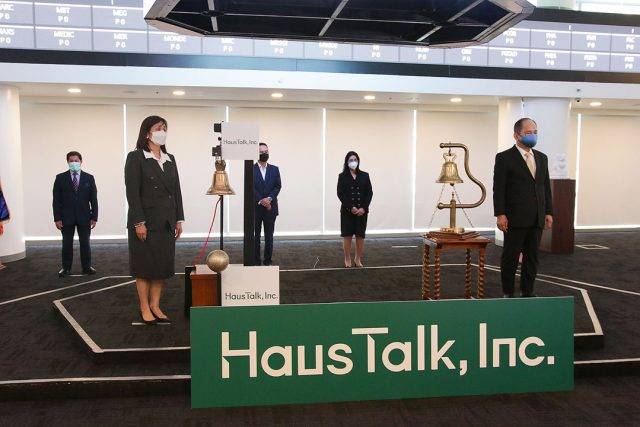
Haus Talk, Inc. listed its initial public offering shares at Philippine Stock Exchange’s Small, Medium and Emerging Board on Jan. 17. COMPANY HANDOUT

HAUS TALK, Inc. became the first company to debut at the Philippine Stock Exchange (PSE) this year, with its shares rising 6.67% on Monday as investors bet on the Pampanga-based housing developer’s long-term prospects.

The company, which listed at the small, medium, and emerging (SME) board, had raised P750 million from its initial public offering (IPO).

“We want to grow further and by doing this IPO and going public, we can grow exponentially,” said Haus Talk President Maria Rachel D. Madlambayan at a press conference.

Shares in Haus Talk opened at P1.49 each from its offer price of P1.50 during Monday’s session. It closed 6.67% higher at P1.60, after hitting an intraday high of P1.73.

“This may reflect investor optimism over the company and the niche market segment that they cater to. Moving forward, participants may be excited to observe how the firm’s growth will unfold in the coming months,” stock analyst and Timson Securities, Inc. Trader Darren T. Pangan said in a Viber message.

Haus Talk shares were snapped up by mostly local small investors, but some were from overseas, Investment and Capital Corporation of the Philippines (ICCP) Managing Director Manny P. Ocampo said. ICCP was the underwriter for the IPO.

“There were small investors, but not only in the Philippines. There was wide participation among trading participants, like in overseas Filipino workers (OFWs) residing in the Middle East and Southeast Asia who purchased shares,” Mr. Ocampo said during the press conference. “The foreign houses were maybe below their radar, being an SME. Foreign houses would look at IPOs with bigger camps.”

Trade Secretary Ramon M. Lopez expressed hope the Haus Talk IPO would inspire more micro, small and medium enterprises to scale up their operations.

“We enjoin you (Haus Talk) to do your own ‘Build, Build, Build’ expansion plans as these economic activities not only contribute to increasing access to housing, but these construction activities will surely generate a multiplier effect in terms of job generation,” Mr. Lopez said during the listing ceremony.

HOUSING DEMAND
Despite the Omicron-driven surge in coronavirus cases, Haus Talk pushed through with its IPO, betting on the continued demand for middle-income and low-income housing.

“It’s not an easy feat to go public after almost three decades and during a pandemic at that. But we’ve always seen challenges as an opportunity to show strength. We may change our strategy, but our vision remains the same,” Ms. Madlambayan said during the press conference.

“There is also still a housing backlog of 6.7 million, which only demonstrates the need for more affordable housing solutions such as HTI’s,” she added.

Haus Talk Chair and Vice-President of Business Development Terence D. Madlambayan said in a statement that the company has seen an “ever-growing clamor for quality yet affordable housing options in preferred locations among Filipinos, who are budget-conscious, even during a pandemic.”

Established in the 1980s by the Madlambayan family from Pampanga, Haus Talk currently has existing properties in Antipolo, Laguna, Marikina, and Metro Manila.

“[HausTalk] doesn’t go for the big developments, they will look at five-to-10-hectare projects, bite-size,” said ICCP’s Mr. Ocampo. “They’re very easy to manage as a project. They are able to execute the lots easier and faster.”

HausTalk said it will be allocating P25.1 million for capital expenditures and P10 million for the acquisition of new technologies.

“That will include the acquisition of a new ERP (enterprise resource planning) system. We are also investing into construction equipment to make our production more efficient,” the company said via e-mail.

Haus Talk was one of the companies in PSE’s handholding program for potential IPO listing applicants, which aimed to encourage more firms to go public. — Luisa Maria Jacinta C. Jocson

Philex considers life for Padcal mine beyond 2024

PHILEX MINING Corp. said it is considering prolonging further the operation of its underground Padcal mine in Tuba, Benguet province beyond its original retirement of 2024.

In its statement on Monday, the copper and gold producer said the extension depends on a variety of factors.

“The extension of Padcal’s operation will be dependent on the study of the remaining mineable reserve, favorable price of copper and gold, as well as cost of producing the metals moving forward and obtaining the required government permits. If prices hold on to the levels where they are now, which we consider high, then there is a possibility of extension,” said Philex President and Chief Executive Officer Eulalio B. Austin, Jr.

The Padcal mine has been in operation since 1958 and was scheduled to cease operation by the end of 2024.

If the extension is approved, it will potentially overlap with the 2025 start of commercial production of Philex’s Silangan copper-gold project in Surigao del Norte.

“[Silangan] will start commercial operation by early 2025, limiting any major impact to Philex’s income flow even if Padcal ceases operation as scheduled in 2024,” the company said in a statement. “An overlap in Padcal and Silangan’s operation could further bolster Philex income stream.”

The Silangan mine will need an initial investment of $224 million. It is expected produce around 2,000 metric tons (MT) of ore per day. By the twelfth year, this will be ramped up to 12,000 MT a day or 4 million MT a year.

Over its 28-year mine life, the mine’s estimated total investment will reach $1.5 billion.

“It is expected to generate thousands of jobs, particularly in Surigao del Norte towns of Placer, Tubod, Tagana-an, and Sison, and contribute billions of pesos in taxes to both the LGUs and the national government,” Philex added.

Last week, Philex said the first-phase deposit in its Silangan project could yield close to $7 billion in sales of metallic mineral over 28 years.

“The numbers for the Silangan Project are very compelling, pushing us to pursue the mine development even without a strategic partner or major investors as we originally envisioned,” said Philex Chief Finance Officer Romeo B. Bachoco said in a stock exchange disclosure last Thursday.

As of the third quarter of last year, Philex’s net income more than doubled to P1.88 billion from P918.26 million in the same period in 2020.

On Monday, Philex shares rose by two centavos or 0.37% to P5.45 per share.

Philex is one of three Philippine units of Hong Kong-based First Pacific Co. Ltd., the others being Metro Pacific Investments Corp. and PLDT, Inc.

Hastings Holdings, Inc., a unit of PLDT Beneficial Trust Fund subsidiary MediaQuest Holdings, Inc., has interest in BusinessWorld through the Philippine Star Group, which it controls. — Luisa Maria Jacinta C. Jocson

Putting superstitions aside, Denzel Washington takes on Macbeth

DENZEL Washington in The Tragedy of Macbeth (2021) — IMDB.COM

LOS ANGELES —  Denzel Washington portrays one of William Shakespeare’s most famous characters in The Tragedy of Macbeth, a new adaptation of the 400-year-old play the Oscar winning actor says he had never seen staged before.

The Hollywood star plays the titular role in Joel Coen’s black and white film version of the tragedy about a Scottish general who, spurred on by his wife, commits murder to access the throne.

Fellow Oscar winner Frances McDormand plays Lady Macbeth in the stage-like movie.

“It just so happens as fate would have it I’ve never seen it. I wasn’t avoiding it. I just hadn’t seen it,” Mr. Washington told Reuters in an interview.

“I was fortunate in that Joel and Fran and myself got together close to a year out from shooting and we started reading scenes together. We got to get into the material and ask questions and bounce off of each other and act a little bit and see how we all work together.”

From Peter O’Toole and Ian McKellen to James McAvoy and Michael Fassbender, a long list of actors have played the lead in Macbeth, which is believed to have been first performed in the early 1600s.

“That’s pressure, huh? Can you imagine that — someone walks up (and says) ‘Look, it’s been a great play for 400 years. Don’t mess it up. Good luck,” Mr. Washington, who previously starred in a production of Shakespeare’s Othello, joked.

“I didn’t feel that pressure. It was going to be a good play, whether I messed it up or not. It’ll continue to be and it’s open to interpretation. That’s the great thing about Shakespeare … it’s been done every which way you can. So this was Joel’s idea.”

Known as “The Scottish Play,” Macbeth is surrounded by superstition, something Mr. Washington said he “didn’t pay much attention to.

“The list is too long … Every day there’s another thing you’re not supposed to do or something,” he said.

The Tragedy of Macbeth, which has won rave reviews from critics, is available on Apple TV+. —  Reuters

Manila Water signs bulk water supply project for Pangasinan

MANILA Water Co., Inc. and its wholly owned subsidiary Manila Water Philippine Ventures, Inc. signed a concession agreement with the provincial government of Pangasinan for a bulk water supply project to help meet the water requirements of the province.

In a disclosure on Monday, Manila Water said the project has an estimated capital expenditure of P8 billion over a 25-year contract period. It is estimated to deliver a billed volume of 200 million liters per day by the final year.

It will provide water to approximately 1.4 million residents across 14 cities and municipalities in Pangasinan, including Villasis, Urdaneta, Malasiqui, Dagupan, Mangaldan, Sta. Barbara, Calasiao, Mapandan, Manaoag, San Carlos, Binmaley, Lingayen, San Jacinto, and San Fabian.

The project will create an infrastructure that will source water from Agno River using the riverbank filtration technology to increase water supply in the province.

It is also the first bulk water supply project in the province and in the region.

“This is an investment for the more than 3 million Pangasinenses and that apart from water supply, it will generate jobs and more economic avenues for the province,” said Pangasinan Governor Amado I. Espino III in a statement.

Manila Water brings water and wastewater services to the east zone of Metro Manila and Rizal province. Its subsidiary Manila Water Philippine Ventures serves key metropolitan areas in Batangas, Laguna, Bulacan, Pampanga, Boracay, Iloilo, and Samar.

On Monday, Manila Water shares increased by 1.17% or 30 centavos to close at P25.90 apiece. — Luisa Maria Jacinta C. Jocson

What made Bob Saget’s Danny Tanner so different from other sitcom dads

BOB SAGET as Danny Tanner on the sitcom Full House — IMDB.COM

BOB SAGET, who died on Jan. 9, is probably best remembered for his role as Danny Tanner on the popular sitcom Full House, which aired from 1987 to 1995.

I think fans of the show have such fond memories of this character because Danny exemplified what it meant to “be there” as a parent. A single dad whose wife had passed away, he was eager to lend an ear to daughters D.J., Stephanie, and Michelle, offering them support and reassurance through the twists and turns of childhood and adolescence.

Why heap so much praise on a sitcom dad? It’s easy to disregard TV as mere mindless entertainment. But entertainment media can both reflect and reshape culture — including how fathers interact with their children. They can influence how viewers think about fathers, regardless of the accuracy of those portrayals.

As someone who studies stereotypes of fathers, I view Danny as an avatar of the changing expectations of fatherhood that began in the late 1970s.

Danny Tanner was a 30-something widower when Full House premiered. That wasn’t a common situation for his demographic — less than 1% in his bracket shared it — and it allowed viewers to watch Danny parent his three daughters with the help of his brother-in-law and his best friend.

Nonetheless, in nearly every episode, viewers saw Danny “being there” for his family. “Being there” is a concept that describes being physically and emotionally involved with your children. This term took on particular significance for fathers in the late 20th century. “Being there” allowed dads to be seen as more than just financial providers and recognized that fathers interact with their children in varied and important ways.

In the earlier part of the 20th century, fathers were assumed to be breadwinners and not much else, a stereotype reflected in the era’s popular media. For example, sitcom fathers on Father Knows Best, which aired from 1954 to 1960, and The Donna Reed Show, which ended its run in 1966, bore little responsibility for actual child care beyond a pat on the head and some occasional discipline.

Beginning in the 1970s, psychologist Michael Lamb encouraged a change in how we thought about fathers and broadened the definition of what he called “father involvement.”

Lamb proposed three dimensions of father involvement: engagement, availability, and responsibility. The last of these, responsibility — which involved financial support and parental guidance — could be spotted in some form in the preceding sitcoms. But engagement and availability, which tend to involve day-to-day emotional support, were almost entirely foreign.

Danny Tanner’s approach to fatherhood, by contrast, demonstrated perhaps the fullest realization of these changing expectations.

One episode, “Back to School Blues,” featured oldest daughter D.J. starting junior high. Spoiler alert: It doesn’t go well. She’s teased by older girls, wears the same outfit as one of the teachers, and spends lunch alone. (I was a year younger than D.J., and this episode made me nervous about my own entry into junior high.)

When Danny doesn’t approve of D.J.‘s attempts to look older to fit in and make friends, she storms off to her room saying she wants to be left alone. Danny says he can’t do that, and then listens as she explains everything that went wrong at school.

In this short scene, he reinforced family rules and provided emotional support, while showing that he would “be there” for D.J. whenever she needed.

Though Danny represented a departure from the typical sitcom father, he didn’t exactly spearhead a new trend.

Immature and irresponsible fathers — the kind seen in popular shows like The Simpsons, Home Improvement, and Married … With Children — were more commonplace. To this day, the stereotype of the bumbling dad persists on TV.

In my research, I found that single sitcom dads with full child care responsibilities were shown interacting with their children more often than married sitcom dads. Compared to their married counterparts on the tube, they were more likely to offer kindness, care, love, support, and guidance. Along with Danny, these characters included Mr. Drummond on Diff’rent Strokes, Tony Micelli in Who’s the Boss?, and Maxwell Sheffield on The Nanny.

On the other hand, married sitcom father-child interactions were more likely to involve criticism and sarcastic humor. In fact, married sitcom fathers often made jokes at their children’s expense.

Why does this discrepancy exist?

My research has found that in real life, married fathers are thought to be loving and kind but with room for improvement as parents. They’re seen as the right-hand man to mothers, who have taken the lead in parenting. Because of this, people expect more bumbling and less skill.

Single dads, however, tend to be viewed as selfless and dedicated, because the assumption is that they’ve put their children above all else.

Danny Tanner isn’t the novelty today that he was in the early 1990s. But if his character is instructive in any way, it’s that dads shouldn’t have to lose their wives to be the best parent they can be.


Jessica Troilo is an Associate Professor of Child Development and Family Studies, West Virginia University.


CentralHub completes 6.2-hectare industrial warehouse in Tarlac

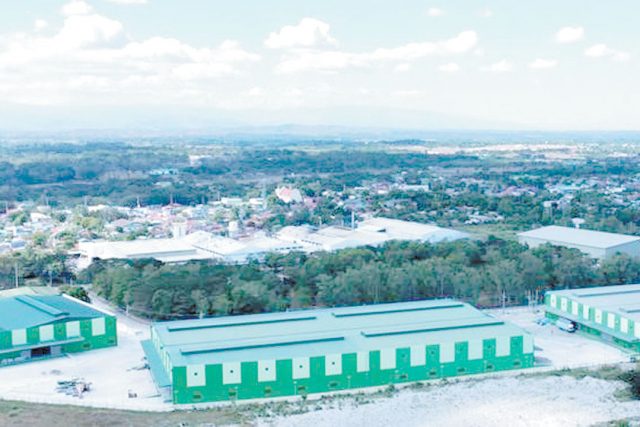
COMPLETED CentralHub in Tarlac

CENTRALHUB Industrial Centers, Inc., the joint venture between DoubleDragon Corp. and Jollibee Foods Corp., has expanded its industrial warehouse portfolio with the completion of its 6.2-hectare industrial warehouse complex in Tarlac.

“We are currently ramping up the simultaneous construction of various CentralHub industrial complexes across the country as the demand for modern industrial warehouses continues to grow,” DoubleDragon Chairman and Chief Executive Officer Edgar “Injap” J. Sia II said in a statement on Monday.

“We aim to establish a strong foothold in this sunrise property sector as we aim to make DoubleDragon become one of the largest landlords of industrial warehouse space in the Philippines,” he added.

DoubleDragon said CentralHub has to date 43.8 hectares of industrial assets, and that it continues to ramp up construction of its industrial warehouse portfolio after it recently completed its equity joint venture with Jollibee.

The joint venture, which is aimed to be the country’s first industrial real estate investment trust (REIT), is worth P24.8 billion of industrial leasing portfolio and is geared for its initial public offering in the second half of 2022.

CentralHub’s industrial warehouse complexes are fit for use as a warehouse, commissary, cold storage facility, and logistics distribution center.

The completed CentralHub assets are in Capiz, Tarlac, Pasig, and Laguna, while three more hubs are expected to rise in Iloilo, Davao, and Cebu.

Mr. Sia said the pandemic ”will put property companies in a situation where it is not the current size of the company’s current leasable square meter portfolio that will be important, but the composition of the portfolio that will matter the most going forward.”

DoubleDragon said it had “significantly strengthened” its debt-to-equity ratio during the pandemic to become one of the “lowest and healthiest” ratios among listed companies in the Philippines.

On Monday, shares in DoubleDragon dipped by 0.28% or two centavos to close at P7.18 each at the stock exchange. — Marielle C. Lucenio

Film festival focuses on ‘delicious’ films

NOW on its 7th year, the Crosscut Asia film festival returns with a special two-part online version featuring “delicious” films from Asia, and “encore screenings” of films from its past editions.

Crosscut Asia was launched in 2014 as a section of the Tokyo International Film Festival (TIFF). The section’s aim was to showcase and promote the diverse Asian films with a focus on specific Asian countries/regions, directors, or themes.
This year, the Japan Foundation Asia Center and TIFF are jointly presenting the Crosscut Asia Delicious! Online Film Festival. It will have two programs: the Crosscut Asia special edition featuring “delicious” films from Asia, and Encore! Crosscut Asia. (Several of the films cannot be accessed in the Philippines.)

The Crosscut Asia Delicious! Online Film Festival will run from Jan. 21 to Feb. 3, and can be accessed for free at the festival’s website: https://crosscutonline.jfac.jp/english/.

Two Filipino films are among the seven participating films in the “delicious” section. These are Paul Sta. Ana’s Balut Country (2015) introduces balut, the popular Filipino treat which is a boiled fertilized duck egg; and Jay Abello’s romantic comedy Namets! (Yummy!) (2008), which showcases the cuisine of the Philippine island of Negros. Balut will not be accessible in the Philippines but it will be screened outside the country. Meanwhile, Namets! will be having its Japan premiere in this section.
The five other films from Southeast Asia and Japan in this section are:

  • Aruna & Her Palate (2018), an Indonesian food-themed road movie by Edwin, the director who won the Golden Leopard at the 2021 Locarno International Film Festival;
  • Kampai! Sake Sisters (2019), directed by Konishi Mirai, which looks into the sake industry in Japan. The film will not be available in the Philippines, but it will be shown outside the country;
  • My Love is Soup (2020), directed by Kriangkrai Monwichit, a comedy with culinary images from Thailand’s deep south;
  • A River Changes Course (2013), directed by Kalyanee Mam, which won the World Cinema Grand Jury Prize for documentaries at the 2013 Sundance Film Festival; and,
  • Wanton Mee (2015), made by Singaporean director Eric Khoo, whose films are screened regularly at international film festivals.

Two more Filipino films are part of the Encore! program. The films in this program were chosen from those which attracted great acclaim during their screenings in past editions of Crosscut Asia at TIFF.
The two award-winning Filipino films are: Lawrence Fajardo’s Imbisibol (2015) which tells the story of four Filipino migrant workers in Japan, and Brillante Ma. Mendoza’s Taklub (2015), which provides a cinematic take on the horrendous aftermath of Super Typhoon Haiyan.
Four other films from Southeast Asia are included in this program:

  • Don’t Think I’ve Forgotten: Cambodia’s Lost Rock & Roll (2014), directed by John Pirozzi, which examines and unravels Cambodia’s recent tragic past;
  • Pete Teo Special (2008-2013), directed by Ho Yuhang, Yasmin Ahmad and others, which consists of 15 short films made by Malaysian filmmakers;
  • Tang Wong (2013), directed Kongdej Jaturanrasmee, a comedic Thai drama that centers around four high school boys; and,
  • Three Sassy Sisters (2016), an Indonesian musical film.

Meanwhile, the Japan Foundation, Manila will also screen another film in a side event in time for the festival: Suzuki Daisuke: Diary of an Ambassador’s Chef. Directed by award-winning filmmaker Martika Ramirez Escobar, the documentary tells the story of food and cultural diplomacy through a day in the life of chef Suzuki Daisuke, who works at the Japanese Ambassador’s residence. On his fifth year of being based in Manila, he has concocted and devised innovative and surprising dishes fusing the best of Filipino and Japanese cuisine.

The film showing will be hosted by chef Reggie Aspiras, and will feature an interview with Japanese Ambassador Koshikawa Kazuhiko. Suzuki Daisuke: Diary of an Ambassador’s Chef will stream online on Jan. 21 concurrently with Crosscut Asia on the Japan Foundation, Manila’s YouTube Channel and Facebook page.

Italpinas launches green building project in Cagayan de Oro

ITALPINAS Development Corp. (IDC) announced a joint venture agreement with a landowner to develop a low-rise property project in Cagayan de Oro City.

The new project will consist of walk-up, four-story green buildings for both residential and commercial use, according its disclosure on Monday. The agreement was executed on Jan. 14, 2021.

The site is a 11,327-square meter property in the uptown area of the city. It is near IDC’s existing developments, Primavera Residences and Primavera City, enabling the company to “leverage its well-established knowledge of the local area and its dynamic market conditions.”

The joint venture partner under the agreement is a landowner of the project site.

“The chosen format will accentuate the precinct’s community-centered character, while simultaneously delivering contemporary Italian Design, open spaces, and modern conveniences,” the disclosure read.

“The architectural design will be in keeping with the Italian-Filipino company’s philosophy of bringing cutting-edge, sustainable design to dynamic, emerging Philippine cities,” it added.

In the stock exchange on Monday, IDC shares dropped by 1.75% or two centavos to finish at P1.12 each. — Luisa Maria Jacinta C. Jocson

W Group aims to ramp up expansion this year

W FIFTH Avenue is one of W Group’s office buildings in Bonifacio Global City. — COMPANY HANDOUT

By Keren Concepcion G. Valmonte, Reporter

W FIFTH Avenue is one of W Group’s office buildings in Bonifacio Global City. — COMPANY HANDOUT

W GROUP, Inc., through its property management and real estate development business W Landmark, Inc., plans to expand its leasable area as its warehousing and industrial business seeks to attract more e-commerce companies.

“We’re looking to be able to double our gross leasable area (GLA) in five years’ time. The same strategy we did in office, we’re trying to do now in warehouses, in industrial space,” W Group and W Landmark Chief Executive Officer (CEO) Francis Augustus L. Wee told BusinessWorld in a virtual call on Dec. 20.

The company is eyeing loans to fund the five-year expansion plan.

“The banks are excellent partners, they are very supportive and they have seen what we have done with the [offices],” W Group and W Landmark President Norman Vincent L. Wee said, adding that they are also looking at other options for funding.

It is planning to further expand its office spaces in Bonifacio Global City (BGC) and other business districts such as Makati and Ortigas. Its portfolio currently includes five office buildings with a combined 177,103 square meters (sq.m.) in GLA.

For its logistics business, W Group is consulting its multinational clients on key locations.

“For logistics, it’s nationwide so we’re working with big multinationals to ask them where their preferred locations are,” W Group President Mr. Wee said.

The W Group said it is also looking to expand its landbank in areas such as Pampanga, Tarlac, and in Batangas. The company currently has around 100 hectares in its landbank, with properties in BGC, Clark in Pampanga, Batangas, Laguna, Tarlac, and Bataan.

W Group wants to eventually have 1 million sq.m. of GLA by expanding its office and logistics business.

The company’s office buildings, W Fifth Avenue (36,026 sq.m.), W City Center (59,032 sq.m.), Citi Plaza (49,163 sq.m.), W Global Center (9,592 sq.m.), W High Street (11,632 sq.m.), and W Tower (11,658 sq.m.) are all located in BGC.

The company said most of their tenants renewed their lease contracts despite the pandemic.

“[Our] renewal rates are higher. We renewed them at a higher rate even with the pandemic,” said W Group President Mr. Wee, adding that the company has received a lot of inquiries on renewals and expansion in the past few months.

W Group said “most, if not all” of its multinational clients such as Citi Bank, Google, and Globe Telecom, Inc. use the spaces as their headquarters.

“We’ve learned over the years what they’re looking for [like] high-ceiling, big floor plate, energy-efficient buildings, so I think those are the things that we’ve factored in as a standard when we design office buildings,” W Group CEO Mr. Wee said.

The company also said it continued to improve its buildings during the lockdowns.

“We took this opportunity to be able to improve [our maintenance] because there are lesser people during the pandemic so we were able to improve a few things that we couldn’t do when the building is packed,” W Group CEO Mr. Wee said.

W Group said it is also considering to issue a real estate investment trust (REIT).

“I think it’s always an option for us when we started [our] real estate business,” W Group CEO Mr. Wee said. “REIT is a good avenue for individual shareholders to participate in the growth and stability of that rental income, especially that we’re in BGC.”

ADVERTISEMENT
ADVERTISEMENT