Home Blog Page 6908

Appellate court declares Mandaluyong ban on male motorcycle back-riding unconstitutional 

PHILSTAR FILE PHOTO

THE COURT of Appeals has declared as unconstitutional Mandaluyong City’s ordinances banning male back-riders on motorcycles.    

Local authorities are prevented from enforcing and implementing Mandaluyong City’s riding-in-tandem ordinances, the appellate court’s fifth division said in a decision penned by Associate Justice Raymond Reynold Lauigan.  

The constitutionality of the three ordinances were challenged by lawyer Dino De Leon before a Mandaluyong regional trial court after he was sued for violating the rules in March 2019.   

The regional court dismissed the petition in July last year, citing lack of merit.  

Mr. De Leon brought the case before the Court of Appeals, which ruled that the ordinances were discriminatory and oppressive.  

Mr. De Leon, who was riding on the back of a motorcycle taxi when he was apprehended, told the appellate court that the Mandaluyong City government abused its police power with the issuance of the ordinances.  

Under the said ordinances, male back riders who are not relatives of the driver are prohibited. The local laws, however, allowed motorcycle riding-in-tandem where the back rider is a female, a spouse or a relative, or a child between 7-10 years old.  

Members of the Philippine National Police Tactical and Mobile Unit assigned in Mandaluyong were also exempted from the local laws. — Kyle Aristophere T. Atienza 

Pacquiao not open to tandem with Marcos  

SENATOR Emmanuel “Manny” D. Pacquiao, Sr., who is running for president in the May 22 elections, has rejected the possibility of stepping down as vice president in tandem with the late dictator’s son, Ferdinand “Bongbong” R. Marcos Jr., after the latter’s sister hinted their interest on Wednesday.  

During an interview with DZMM Teleradyo, Senator Maria Imelda Josefa “Imee” R. Marcos said that if Mr. Pacquiao is willing to slide down, they would like to have him as their vice-presidential candidate as he is “super popular” in Mindanao and someone they consider a friend.  

She added that their family did not take recent political attacks from the former boxer personally. “We are not thin-skinned, we know it’s because of the elections, it’s okay.”  

Mr. Pacquiao, however, said the only role he is considering is the top seat, together with his running mate, House Deputy Speaker Jose L. Atienza, Jr.  

“While I’m flattered by various camps seeking me to be their VP, it requires the Presidency to fulfill my promises to the poor and those striving from hardships,” he said in English and Filipino via Viber on Wednesday.   

“My fight as president will continue for change and to suppress the worsening corruption in the country.” 

He added that he believes that this is their moment, noting the increasing number of supporters joining his camp.  

Ms. Marcos said their goal is to garner votes both in the north and the south of the country. The Marcos’s bailiwick is Ilocos in the northern part of the country.   

“Our preference is very obvious, we have the so-called ‘Solid North’. We’re strong in the north. Bongbong is also strong in the National Capital Region in one way or another as well as Region 8 (Eastern Visayas in central Philippines),” she said in English and Filipino.  

“But we are a bit scared when it comes to Mindanao, we’re a little blind there,” she added, “so naturally we’re tending towards the Mindanao and VisMin candidates.” — Alyssa Nicole O. Tan

NEDA’s Chua says next gov’t can afford infrastructure spending

Workers are seen mixing cement at a construction site in Quezon City, May 19, 2020. — PHILIPPINE STAR/ MICHAEL VARCAS

THE NATIONAL Economic and Development Authority (NEDA) expects infrastructure spending to be sustained in the next administration, after tax reform enhanced its ability to finance projects.

“It is sustainable. We have implemented a series of tax reforms before the pandemic and during the pandemic,” Socioeconomic Planning Secretary Karl Kendrick T. Chua said Wednesday.

“I still see the medium-term infrastructure budget to be around 5% (of gross domestic product or GDP). There is still a big infrastructure gap, and as we grow to become an upper middle-income country, we will realize that we need to upgrade some of our infrastructure to be smarter, more technologically aligned with the developments, and more innovative.”

Government spending on infrastructure grew 44.6% to P570.4 billion in the first eight months of the year, according to the Department of Budget and Management.

The government set a P1.02-trillion infrastructure budget for 2021, equivalent to 5.1% of GDP.

The Development Budget Coordination Committee raised the spending cap on the infrastructure program to P1.29 trillion or 5.8% of GDP for 2022.

Noting that the infrastructure program has so far focused on road and transport, Mr. Chua identified digital and information technology as priority infrastructure for the next administration.

“We have an enabler for this, the national ID,” he said, adding that 37-40 million have been registered. — Jenina P. Ibañez

NGCP ordered to procure ‘sufficient’ ancillary services

THE DEPARTMENT of Energy (DoE) has ordered the National Grid Corp. of the Philippines (NGCP) to procure ancillary services that are “sufficient” to ensure adequate supply during shortages. 

The DoE formalized the order through a department circular issued Tuesday, though it had advised the NGCP to do so in June in the wake of several yellow alerts, in which the grid’s supply margins thinned, resulting in outages.

Ancillary services are on call to be tapped to supplement the power supply, and are typically higher-cost than baseload supply. The NGCP has warned that raising the level of ancillary coverage will result in higher power costs.

The NGCP was ordered to open up a competitive selection process to qualified companies.

The DoE said NGCP must “ensure sufficient and least-cost provision of the (ancillary services)” in order to protect the public interest.

The NGCP will be held responsible for ensuring that the procurement is carried out in a timely manner, “particularly the capability-testing of generating facilities” and that key documents are promptly issued.

The DoE also required the NGCP to submit an Ancillary Service Agreement Procurement Plan (ASAPP) which contains the grid operator’s projected ancillary service requirements for the next 10 years and a plan for the acquisition of such services on or before March 31 every year.

The outcome of the DoE’s review of the ASAPP will be posted on the NGCP’s website not later than the end of April every year.

The DoE said the auctions must take place six months after the circular takes effect. The contract period for suppliers of ancillary services is capped at five years.

The order will take effect on Friday, 15 days after it was published in two general-circulation newspapers on Oct. 14.

The DoE has recommended the return of control over power grid operations to the government after power outages in Luzon in June, allegedly due to NGCP’s non-compliance with ancillary services coverage standards.

NGCP is privately owned by holding company Synergy Grid and Development Philippines, Inc., which has a 60% stake. The remaining 40% is owned by the State Grid Corp. of China. — Bianca Angelica D. Añago

DoE’s Cusi sees oil prices falling in next few months

REUTERS

ENERGY SECRETARY Alfonso G. Cusi said he expects oil prices to fall in the next few months with global oil prices slowly normalizing. 

“In the coming months, oil prices may not be as high as what we have now as the prices (are correcting) in the world market,” Mr. Cusi said in a televised interview with Daily Tribune Wednesday.

“(The price of) diesel has stabilized, and for gas, only very little adjustments are needed,” he added.

Oil benchmark prices have breached $80 per barrel, the highest levels since October 2018, when prices were a little less than $90.

In the Philippines, the prices of petroleum products have risen for nine straight weeks.

In separate advisories Tuesday, fuel companies such as Petron Corp., Pilipinas Shell Petroleum Corp., and Seaoil Philippines, Inc. raised the prices of their gasoline by P1.15, diesel by P0.45, and kerosene by P0.55 per liter. 

To deal with higher prices, Mr. Cusi said during the interview that President Rodrigo R. Duterte has approved a P1-billion fuel subsidy for drivers of public utility vehicles.

The Department of Transportation said Tuesday that the subsidy will benefit around 178,000 drivers and will be distributed via cash cards issued by the Land Bank of the Philippines. 

Mr. Cusi added that Shell and Petron have agreed to provide discounts for trucks that transport food and other basic goods to head off higher consumer prices.

“Oil companies were also tapped to give discounts to fishermen,” he added. — Bianca Angelica D. Añago

P10-B fishery project backed by WB nearing implementation

PHILSTAR

A WORLD BANK (WB)-supported fisheries program with funding of $200 million (P10 billion) is close to being approved for implementation, the Department of Agriculture (DA) said.

In a statement Wednesday, the DA said the seven-year project, known as the Fisheries and Coastal Resiliency (FishCoRe) initiative, is expected to launch early next year. It is expected to benefit 500,000 fisherfolk and other stakeholders in the fisheries and aquaculture sector.

The project will be implemented by the Bureau of Fisheries and Aquatic Resources (BFAR).

“It aims to support the scaling-up and modernization of the Philippine capture fisheries and aquaculture industry, through the provision of technical support and innovation, access to modern and resilient fisheries infrastructure and post-harvest facilities, and promotion of efficient connectivity and product value addition, among other initiatives,” the DA said.

It said the project has been set targets that include a 3% increase in household income and value-added for fishery commodities, a 5% reduction in postharvest losses, and a 1% to 5% reduction in illegal, unreported, and unregulated fishing incidences.

Agriculture Secretary William D. Dar said the project will be implemented in Fisheries Management Areas (FMA) 6 and 9, which covers 11 regions and 24 provinces spanning 32 million hectares of coastal and marine waters.

FMA 6 consists of the coastal waters that include Pagudpud Bay, Subic Bay, and Manila Bay while FMA 9 covers the Bohol Sea, Panguil Bay, Iligan Bay, Gingoog Bay, Butuan Bay, and Sogod Bay. 

“We are optimistic that the FishCoRe Project will establish examples of good governance mechanisms, leading to better management of the ‘blue resources’ and aquaculture development in two FMAs,” Mr. Dar said.

The BFAR has divided the country into 12 FMAs.

The DA said the World Bank has been supportive since the negotiations for the project started in 2020.

“We fully support the goals of the FishCoRe Project to sustainably improve incomes of Filipino fisherfolk, and support resilient coastal communities through enhanced ecosystem management, productivity-enhancing technologies, aquaculture, reduced post-harvest losses, value-chain infrastructure, and related activities,” World Bank Country Director Achim Fock said in a previous letter to Mr. Dar. — Revin Mikhael D. Ochave

House bill extending PSALM corporate life approved in committee

A HOUSE COMMITTEE approved Wednesday a bill that proposes to extend the corporate life of the Power Sector Assets and Liabilities Management Corp. (PSALM), giving it more time to dispose of assets to settle the obligations of the industry before it was largely privatized.

The House Committee on Energy passed an unnumbered substitute bill and committee report to House Bill 10006 that was written by Pampanga Rep. Juan Miguel M. Arroyo.

The measure, if signed into law, would amend Republic Act 9136 or the Electric Power Industry Reform Act (EPIRA) by extending PSALM’s corporate life by 30 years until June 26, 2056.

Mr. Arroyo said the extension of PSALM’s corporate life will help reduce the public sector deficit and help the agency securing longer-term financing for power projects.

He said projects such as the Agus-Pulangi hydropower complex that is awaiting rehabilitation before privatization will require PSALM to be around long-term to enhance confidence among financing entities.

PSALM was created under EPIRA to lead the privatization of generation and transmission assets of the National Power Corp. and the National Transmission Corp.

PSALM manages financial obligations involving power projects such as capital lease payments to Independent Power Producers as well as obligations of electric cooperatives to the National Electrification Administration.

PSALM’s corporate life was originally due to expire on June 26, 2026 or 25 years after the effectivity of EPIRA. Should PSALM be dissolved, all of its assets and liabilities will reverted to the National Government. — Russell Louis C. Ku

Experts back local-level financing, insurance to address climate risks

PHILSTAR FILE PHOTO

THE newly appointed technical experts on climate change have proposed a local government climate and disaster-risk financing and insurance pilot program to help communities prepare for climate-related disasters.

The national panel of technical experts advising the Climate Change Commission said action plans to mitigate climate risk should include green and disaster-risk financing access for local government units (LGUs), the Department of Finance (DoF) said in a statement Wednesday.

The Climate Change Commission recently replaced its panel with 16 new members as it transitioned towards project implementation.

The panel met for the first time with Finance Secretary Carlos G. Dominguez III, the chairman-designate of the commission, to identify the priority climate risks that need to be addressed.

Top risks include rising sea levels, coastal erosion, flooding, frequent and severe tropical cyclones, and extreme drought. Rising temperatures, extreme rainfall, climate-influenced diseases, wind patterns, and biodiversity loss were also identified as top concerns.

Climate risks harm food security and water sources, worsen malnutrition, and endanger coastal communities, panel member Doracie Zoleta Nantes said. These risks also threaten marine resources, lead to shoreline erosion and trigger pest and disease outbreaks, she added.

“She pointed out that rising sea levels could not only threaten the country’s food security and water sources, but could force the displacement of small island communities, particularly in the Visayas, and has already led to a 1- to 2-meter increase in seawater levels that affect Metro Manila, Cavite, Pampanga, and Bulacan,” the DoF said.

The panel recommended that the government conduct climate and health impact assessments for all provinces and cities, and examine climate finance plans in local government investment proposals.

“The panel underscored, moreover, the need to align local climate action with the sustainable fund frameworks of banks to make LGUs eligible for financing, and capacitate these local governments to enable them to revive the municipal bond market for green bond floats,” the DoF said.

The panel said climate indicators must be used to evaluate government projects and localized data should be provided to vulnerable LGUs.

The DoF said that Mr. Dominguez formally adopted the panel’s action plans and instructed the Finance department to set up a timetable to implement the plans.

“He also instructed the Commission to integrate these in the upcoming updating of the National Climate Change Action Plan to help local governments craft action-oriented local climate change adaptation plans,” DoF added.

The Philippines is sending a 19-member delegation led by Mr. Dominguez to the 26th United Nations Climate Change Conference, known as COP26, in Glasgow, Scotland next week. — Jenina P. Ibañez

Philippine Energy Plan seen inadequate for meeting climate pledges

SENATOR Sherwin T. Gatchalian, who chairs his chamber’s energy committee, said the updated Philippine Energy Plan (PEP) is not sufficient to meet the Philippines’ nationally determined contributions (NDCs) for keeping climate change i n check.

“It’s unfortunate that PEP is not harmonized with NDCs. We’re flagging both the CCC (Climate Change Commission) and the DoE (Department of Energy) to put that harmonization together so that the (allocation of) resources and (future) generation mix are linked to how we will reduce our GHG (greenhouse gases) as per our commitments to the Paris Agreement,” he said in a virtual briefing Wednesday.

NDCs are a feature of the Paris Agreement on Climate Change, a legally-binding treaty which aims to limit the global temperature rise to less than 1.5 degrees Celsius.

According to Mr. Gatchalian, there is a need to integrate the climate commitments into the PEP in order for greenhouse gas emission targets to be coherent.

The PEP, which was recently published by the Energy department, said it aims to reduce greenhouse gas emissions by at least 12% by 2040 in order to meet the NDCs under a clean-energy scenario.

In another webinar Wednesday, World Wide Fund for Nature Philippines Head of Climate Change and Energy Angela Consuelo S. Ibay said that the PEP should have set firm targets.

The plan has set an “aspirational” target of a 35% renewable energy share in the power generation mix by 2030 and more than 50% share by 2040.

“They just mentioned an aspirational target. It should be hard-coded instead,” Ms. Ibay said.

The updated PEP covers the 2020 to 2040 period.

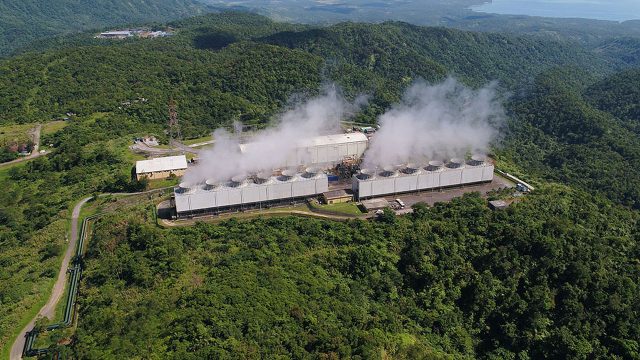
GEOTHERMAL POWER
“Personally, I’m quite bullish with geothermal because any way of minimizing imports of coal and potential natural gas in the future should be pursued,” Mr. Gatchalian said Wednesday.

He was one of the speakers at the 2nd Philippine International Geothermal Conference.

Mr. Gatchalian noted that geothermal development requires significant outlays for exploration, which can discourage potential investors.

“We know that exploring… is quite risky and the risk involved there is actually a disincentive for proponents for further explore potential areas,” he said.

As a result, he is studying the possibility of setting up a geothermal fund which will allow the public and private sectors to share the risk of developing such projects.

“(This geothermal fund) encourages the private sector to explore more and to look (in) different areas,” he said.

Citing DoF data, Mr. Gatchalian said that the Philippines is projected to supplement its geothermal capacity by more than 800 megawatts, according to renewable energy contracts issued by the government as of May 2020.

Last year, geothermal power plants accounted for around 11% of aggregate electricity output. — Angelica Y. Yang

Well-milled rice prices fall in nine regional trading centers 

NEDA

NINE REGIONAL trading centers posted lower average retail prices for well-milled rice in early October, according to the Philippine Statistics Authority (PSA).

The PSA said in a report that the retail prices cover a period that it calls the first phase of October (Oct. 1-5), and were compared with the second phase of September (Sept. 15-17).

The average price of well-milled rice declined in Butuan by P2.91 to P39.69 per kilogram.

The average price of well-milled rice declined in San Fernando City by P1.19 to P37.83, in Kidapawan City by 98 centavos to P42.21, in Batangas City by 75 centavos to P44.40, and in Baguio City by 43 centavos to P37.83.

Lower prices were also reported in the National Capital Region (NCR), where they fell 25 centavos to P42.85, in Calapan City by 17 centavos to P43.60, in Tuguegarao City by 13 centavos to P35.38, and in Iloilo City by eight centavos to P38.58.

The PSA said the average price of bone-in pork rose in five trading centers during the period.

Kidapawan City prices rose P20 to P230/kg, in Butuan City by P14.91 to P259.91, in Cebu City by P10.83 to P205.83, in San Fernando City by P5 to P300, and in Legazpi City by P3.38 to P343.74.

The PSA said prices fell in Calapan City by P27.63 to P257.84, in Tuguegarao City by P20 to P290, in the NCR by P18.49 to P269.85, and in Iloilo City by P14 to P226.

The PSA said the average price of round scad (galunggong) declined in Baguio City by P34 to P170/kg, in San Fernando City by P10 to P180, in Butuan City by P9.35 to P158.91, in Pagadian City by P8.75 to P96.25, and in the NCR by P5.59 to P226.75.

Price increases were recorded in Digos City by P40 to P155, in Tuguegarao City by P10 to P200, and in Iloilo City by P4.16 to P162.08. — Revin Mikhael D. Ochave 

Meat processors question wider distribution of pork imports 

PHILSTAR FILE PHOTO

MEAT PROCESSORS said they oppose plans to more widely distribute pork imports to areas where prices are high, saying the measure will not significantly address high prices.

In a statement, the Philippine Association of Meat Processors, Inc. (PAMPI) said Memorandum Circular No. 23 issued by the Department of Agriculture (DA) on Oct. 25 “is an exercise in futility and will not address the unabated high prices of pork.”

In a memorandum circular, the department cleared the distribution of pork imports to include areas with “relatively high” prices of pork outside the current coverage area known as the National Capital Region Plus (NCR Plus), which consists of Metro Manila, Bulacan, Rizal, Laguna, and Cavite.

Initially, the DA had allowed the sale of pork imports in wet markets, supermarkets, and Kadiwa outlets within the NCR Plus.

The memorandum circular also allowed the selling of pork imports under MAV plus to processors and institutional buyers.

According to PAMPI, the government increased the volume of pork imports and reduced tariffs without addressing the constraints on selling imported pork, which is frozen, in wet markets without freezers.

“Stall owners in wet markets do not have freezers. They barely have enough capital to pay for daily deliveries of fresh pork. So how can they sell imported pork even if they are priced cheaper?” PAMPI said.

“On the other hand, importers and traders who fell for the reduced tariff incentive cannot move their imported pork to the wet markets. As a result, imported pork products are tied up in cold storage,” it added.

As of Oct. 11, the National Meat Inspection Service (NMIS) estimated that frozen pork in accredited cold storage facilities at 73,294.01 metric tons (MT), up 60.2% from a year earlier.

Rolando E. Tambago, Pork Producers Federation of the Philippines, Inc. president, said in a mobile phone interview with BusinessWorld that the recent memorandum circular of the DA is “ridiculously unreasonable.”

“The DA should offer tangible solutions to help hog producers and make sure that the surplus supply from the Visayas and Mindanao is reallocated to other major market areas,” Mr. Tambago said.

“In fact, there are regions in the Visayas and Mindanao that are experiencing massive surpluses of pork,” he added.

Samahang Industriya ng Agrikultura Executive Director Jayson H. Cainglet said in a statement that there is no mechanism for distinguishing pork imports within the Minimum Access Volume (MAV) quota, which are covered by the order, from those exceeding the MAV quota once the products exit the port of first entry.

“Since there is no first border quarantine inspection, we would not even know if these pork imports are tainted with African Swine Fever (ASF) or not,” Mr. Cainglet said.

On May 10, President Rodrigo R. Duterte issued EO 133, which expanded the MAV quota for pork to 254,210 MT from the previous 54,210 MT, referred to as the so-called MAV plus, in order to increase supply and stabilize prices in the wake of the African Swine Fever outbreak.

The additional 200,000 MT worth of pork imports were divided into two tranches, with 140,000 MT scheduled to arrive between July and October and the remaining 60,000 MT landing between November and January. — Revin Mikhael D. Ochave 

PHL may tap Hungarian expertise in digitization, transport  

PHILSTAR

THE PHILIPPINES expects to collaborate with Hungary in areas like digitalization and transportation, according to the Department of Trade and Industry (DTI).

In a statement Wednesday, the DTI said it met with Hungarian representatives on Oct. 18 and 19 for the third meeting of the two countries’ Joint Commission on Economic Cooperation.

The DTI said discussions on transport cooperation are expected to begin soon with a draft memorandum of understanding (MOU) already tabled for consideration.

It added that the two sides also clarified their plans to cooperate on the environment.

“The meeting also paved the way for discussions on Technical and Vocational Education and Training (TVET) cooperation and science, technology and innovation through MoUs being finalized by relevant agencies with their Hungarian counterparts,” the DTI said.

Agreements announced include a material transfer agreement between the Hungarian University of Agriculture and Life Sciences and the Bureau of Plant and Industry for a project in Barangay Don Bosco, Parañaque City. The agreement involves vegetable seed for testing and experimentation.

Another agreement was a partnership agreement between Startup Campus Inkubator Plc., Hungary and QBO Innovation Hub.

“(The agreement) aims to capitalize on the rapidly growing startup ecosystems with government support in high-growth services such as artificial intelligence, big data, and financial technology, among others,” the DTI said.

The DTI said discussions are continuing on finalizing a loan package to implement projects of the Laguna Lake Development Authority and the National Disaster Risk Reduction and Management Council.

“The projects include an online water quality monitoring system in Laguna de Bay and its tributaries and the purchase of compact water treatment units for use during disasters and other emergencies,” the DTI said. — Revin Mikhael D. Ochave