Home Blog Page 6890

Nissan takes next electric steps
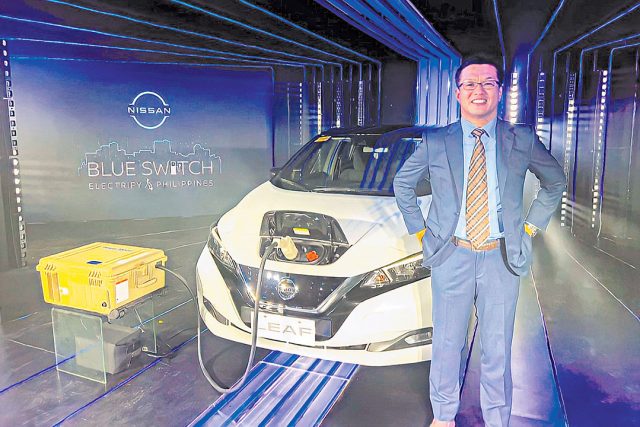
Nissan Philippines President and Managing Director Atsushi Najima poses with the all-electric Leaf. — PHOTO FROM NISSAN PHILIPPINES

The Blue Switch Initiative seeks to fill in the EV gaps

I’VE BEEN part of Nissan’s Philippine contingent to the biennial Tokyo Motor Show held in Japan over the last three times the event materialized. It was during these times that we had extremely immersive experiences that had everything to do with Nissan’s innovative Intelligent Mobility, electric and e-power vehicles, and other upcoming products. I remember asking myself when the right time might come when many of these modern technologies could finally — even just gradually — be adopted in the Philippine context. Fast-forward to two (going on three) years into the pandemic, I am actually pleased to see some baby steps towards the electric mobility route in our country, strongly led by the efforts of Nissan Philippines. Yay!

And so in yet another one of its strategic moves in the country, Nissan Philippines recently launched what it calls its “Blue Switch Initiative.” This marks the next phase of Nissan’s massive electrification plans which are, in turn, built on the premise of “Nissan Ambition 2030.”

The concept of Nissan Ambition 2030 was officially launched in Yokohama, Japan sometime late last year — as an important response to critical environmental, societal, and customer needs. And the core ambition of this project is to further transform Nissan into a sustainable company that drives toward a cleaner, safer, and more inclusive world.

Those are really large concepts to grasp — larger than life, to be honest. But if you will care to indulge the company, it says that the goal is to go carbon-neutral across the life cycle of its product offerings by fiscal year 2050. While doing so, it seeks to empower society in order to enable it to build a smart ecosystem with integrated mobility. For that, we’d need electric vehicles. So, the introduction and popularization of such in the Philippines is where we’re at.

Indeed, Nissan has democratized mass-market electric vehicles with its long-time introduction of the Leaf EV, which is now also available in the Philippines as of its local launch last year. And since vehicle electrification appears to now be at the core of the company’s long-term strategy, the company has already pledged investments of two trillion yen over the next five years in order to accelerate the development of its EV lineup and other tech innovations.

Nissan Chief Operating Officer Ashwani Gupta shares, “With our new ambition, we continue to take the lead in accelerating the natural shift to EVs by creating customer pull through an attractive proposition by driving excitement, enabling adoption and creating a cleaner world.”

Thus, the activation of Nissan’s Blue Switch Initiative in the Philippines is a major local milestone in achieving such an end. In Japan, the initiative zoned in on partnering with the government and private stakeholders to encourage the use of EVs for addressing issues such as energy management, eco-tourism and disaster response. Here in the Philippines, Nissan already managed to demonstrate the Leaf’s strengths when it comes to disaster response. The company used the Leaf EV alongside power mover units to help feed electrical power into some affected parts of Cebu, after the destructive effects of Typhoon Odette. If you will remember, Nissan’s vehicle-to-load (V2L) technology enables the energy stored in an electric vehicle’s battery (in this case, the Nissan Leaf’s) to be transferred into a grid. This technology may be used either to simply lower the cost of electricity of a certain household (if peak rates are applied by the electricity provider), or to power places that are completely without electricity due to natural calamities.

The Nissan Leaf was also toured in our precious Boracay Island, as part of the Nissan Philippines “Safe Trips” campaign and also to advocate for eco-tourism in this highly visited location. It is clear that the beautiful island has much to benefit from the use of EVs as people’s main mode of transportation — starting with the obvious: less noise pollution and cleaner air.

Nissan Philippines President and Managing Director Atsushi Najima explains that, “When we integrate EV technology into society, we can unify people, systems, and our goals as a nation. EVs can boost tourism, protect the environment, help us respond to emergencies faster, and help enrich the lives of many people. We are looking to turn this dream into reality this 2022, and we can do this by working together.”

I can’t wait to witness all the other innovations I’ve seen from Nissan’s Intelligent Mobility suite to trickle down as practical applications in our country. With ever more support from the national government, what promising heights we can achieve!

Cebu Carbon Market phase 1 ‘substantially completed’

By Arjay L. Balinbin, Senior Reporter

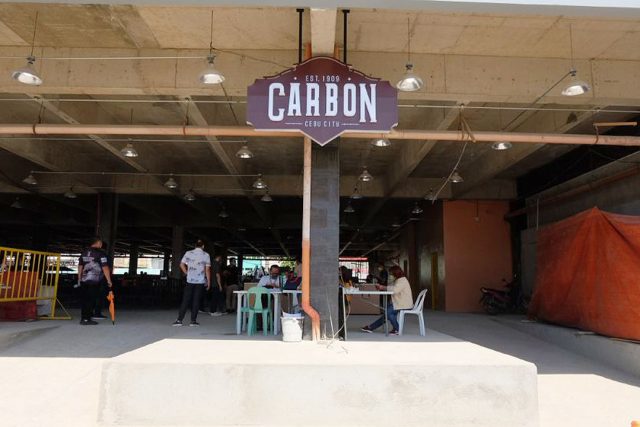
MEGAWIDE Construction Corp. said its subsidiary, Cebu2World Development, Inc. (C2W), has “substantially completed” the first phase of the P5.5-billion Carbon Market Redevelopment project in Cebu City and is on track for the official launch in April.

“[It] is on time despite the challenges brought by the pandemic and, more recently, Typhoon Odette,” Megawide Executive Director for Infrastructure Development Manuel Louie B. Ferrer said in a statement to BusinessWorld last week. He also serves as chairman of C2W.

“The official launch for phase 1 is scheduled in April 2022. Upcoming in Q3 (third quarter) will be the Puso Village, which is an F&B (food and beverage) and retail concept that will highlight Cebuano brands and feature well-loved international options as well,” he added.

The project is a 50-year joint venture with the Cebu City government. It covers the modernization of the 100-year-old Carbon public market as well as the infrastructure development of the entire district.

Under the contract, Cebu City will receive an annual guaranteed payment of P50 million with 10% escalation every five years.

The second phase of the project will be a mixed-use development.

Mr. Ferrer said C2W has completed portions of the ambulant vendor area, now called Carbon “Bagsakan.”

It “opened in Q4 (fourth quarter) last year. Although a temporary facility (to be used for two years until completion of the permanent market building), Bagsakan provides ambulant vendors — vendors with no permanent stall spaces and usually sell on the street — with proper facilities such as roofing, stall allocations, and other amenities,” he noted.

“Ambulant vendors and their products are no longer susceptible to flooding or heavy rains. Eventually, Bagsakan will have its own free toilets and a police outpost. Once completed, it will accommodate more than 540 vendors.

Construction and move-in of vendors being done in phases so as not to disrupt selling,” he added.

According to the company, the Carbon Interim Building is 95% complete as of Feb. 1, with only finishing work remaining.

“This is also a temporary facility which will be used for two years. The building has a total GFA (gross floor area) of about 10,000 sq.m., more than enough for the close to 800 vendors (regular stall holders and ambulant) that it will accommodate,” Mr. Ferrer said.

He also said the building will operate 24/7 and will have proper stall spaces, individual stall connections to water and electricity, “which vendors did not have in their previous location.”

It will also have “proper loading and unloading areas and new amenities such as Wi-Fi, free clean bathrooms, etc. This will also have offices and a media lounge. Vendors will transfer in batches this February,” he noted.

Another site that has been substantially completed is the Senior Citizen’s Park and Chapel with a 30-foot statue of the Sto. Niño.

“The park has an area of more than 3,700 sq.m. and the chapel interior can accommodate at least 150 parishioners. Chapel seating can be extended as required. The form of the chapel is inspired by the crown of the Señor Sto. Niño. The chapel and park will open by end-February,” Mr. Ferrer said.

“Finally, the company has also substantially completed site development works around the area, such as drainage improvements to prevent flooding, sidewalk improvement, road clearing, among other works,” he added.

He also noted that the new Philippine National Police outposts within the district have also been constructed by the company to address issues in security and petty crime.

“These new facilities and improvements will address the concerns of the Cebuano public on cleanliness, security, and convenience, which are among the top reasons why so many of them stopped going to Carbon regularly and instead choose supermarkets despite our low prices.”

Sadowski-Synnott snatches NZ’s first Winter Games gold

ZOI Sadowski-Synnott of New Zealand reacts after competing. — REUTERS

ZHANGJIAKOU, China — Zoi Sadowski-Synnott of New Zealand said she was a “proud Kiwi” after winning gold in the women’s slopestyle event at the Beijing Olympics on Sunday, snagging the nation’s first-ever Winter Games gold medal.

Rival snowboarders said the 20-year old’s final run pushed the women’s field to the next level and called it a giant leap for the sport.

Sadowski-Synnott scored 92.88 on her final run, landing back-to-back 1080s on a challenging course resembling the Great Wall of China.

Asked how she felt about making history as the island nation’s first Winter Games gold medalist, she said it made her a “proud Kiwi.”

“I hope I made them happy and they will celebrate for me,” she said.

Her coach, Sean Thompson, said “everyone was going to go crazy” back home over the win.

“She’s amazing and deserves every bit of it,” he said.

The New Zealander won over a tough field of competitors, including the reigning twice-gold medalist Jamie Anderson, who missed the podium after she said she “blew it” during Sunday’s contest.

Julia Marino of the United States, who took silver, said Sadowski-Synnott was elevating the women’s slopestyle competition, putting down tricks previously only ever successfully performed by men.

“She stomped that to the last line,” Marino said, adding she was “overcome with happiness” for all the winners.

“I just think it’s insanely huge for the progression of the sport,” she said.

After Sadowski-Synnott landed her final trick, her supporters erupted in cheers, waving her home country’s flag as well as another flag displaying the black and white silver fern.

Aussie Tess Coady, who won bronze, jumped on top of the Kiwi at the finish and Marino also piled in.

The skies were sunny but hard snow and the extremely low temperatures made the event demanding for boarders as air temperatures fell to -19.6 degrees Celsius at Genting Snow Park in Zhangjiakou.

Snowboarders described the course, which even includes a replica of an ancient watch tower on the Great Wall, more challenging than others they’ve tried.

Anderson, who lost her title and came in ninth in the finals, paused after an interview and turned towards the awards ceremony, watching in silence as the winners were crowned. — Reuters

Singapore’s SpaceDC eyes $700-M investment for PHL data center

SpaceDC

SINGAPORE-BASED SpaceDC said it is looking to invest more than $700 million in its planned 72-megawatt (MW) hyperscale data center serving Greater Manila, which is expected to open this year.

“We are looking to invest over $700 million into the campus,” SpaceDC Chief Executive Officer Darren Hawkins told BusinessWorld in an e-mailed reply to questions on Friday last week.

SpaceDC, a data center provider, recently announced that it is working with global real estate services firm JLL to build a data center called MNL1, which will be situated in Cainta, Rizal.

“The Philippines ranks second in terms of data center growth in Southeast Asia. With only 47 MW of available capacity in the country, it is a dramatically underserved market. We are excited to be a first mover in a new market where we see our customers are investing heavily in,” Mr. Hawkins said.

The data center, which will run on renewable energy, is slated to open this year, he noted.

“The average rack density and configuration of our facility means we can accommodate both colocation and hyperscale customers. Our design provides flexibility and efficiency that equips our customers with the capacity to grow.”

Data analytics and consulting company GlobalData has said that global hyperscalers, or the massive international companies that dominate the cloud service sector, may be needed to open facilities in the country because “local hosting” is a “key requirement” to address the “strong demand” for cloud services.

More Philippine enterprises plan to migrate workloads to the cloud, propelling the country’s cloud market to $2.8 billion by 2025 from $1.8 billion in 2020, making it an ideal destination for global hyperscalers, GlobalData also said.

On why SpaceDC chose to build its facility in Cainta, Mr. Hawkins said: “We assessed all the local risk conditions throughout Greater Manila such as flooding, volcanoes and earthquakes. We determined Cainta was well placed to avoid any of these types of natural disasters.”

“Our site is designed to be resilient and strategically placed on elevated ground that is well serviced by a high voltage terminal station that supplies dual 110KV (kilovolt) feeds and in close proximity to the main fiber exchanges,” he also noted.

On the company’s future plans, he said: “We have developed an expansion plan for the Philippines that we look forward to announcing.”

“SpaceDC is also looking to expand throughout Broader Asia, we expect to announce further expansion as far as India, Japan and Australia.” — Arjay L. Balinbin

Rates of Treasury bills, bonds to move sideways on inflation data

BW FILE PHOTO

RATES of government securities may move sideways this week after inflation eased in January.

The Bureau of the Treasury will offer P15 billion in Treasury bills (T-bills) on Monday, or P5 billion each in 91-, 182- and 364-day securities.

On Tuesday, it will auction off P35 billion in reissued 10-year Treasury bonds (T-bonds) with a remaining life of nine years and 11 months.

A trader said T-bill yields may move sideways while the 10-year notes could range from 4.95% to 5.1%.

“While inflation clocked in lower, the expectation remains that the economic data will continue to evidence recovery,” the trader said in a Viber message.

“Also, the Fed (US Federal Reserve) is widely expected to hike rates in March and that local rate hikes may come in the second half of 2022.”

Rizal Commercial Banking Corp. Chief Economist Michael L. Ricafort said T-bill yields could either be steady or slightly lower this week after inflation decelerated.

“The maturity of more than P170 billion in Treasury bonds since the latter part of January 2022 added to the liquidity in the financial system,” he added.

Inflation slowed to 3% in January, the fifth straight month of deceleration, as housing and utilities prices eased, preliminary data from the Philippine Statistics Authority showed. This was slower than both the 3.2% in December and the 3.7% in January last year.

The Bangko Sentral ng Pilipinas (BSP) Monetary Board will meet to review its policy settings on Feb. 17. It has kept borrowing costs at record lows since November 2020.

BSP Governor Benjamin E. Diokno has said the central bank is unlikely to hike benchmark rates in the first half of this year as it waits for the economic recovery to become entrenched and unemployment to fall.

Meanwhile, the Fed earlier said it is likely to raise borrowing costs starting March to quell rising inflation. Markets expect the US central bank to fire off at least three rate hikes this year.

At the secondary market on Friday, the 91- 182- and 364-day T-bills were quoted at 0.7497%, 1.1249%, and 1.4394%, respectively, based on the PHP Bloomberg Valuation Reference Rates published on the Philippine Dealing System’s website.

On the other hand, the 10-year bond fetched a yield of 4.8805%.

The government raised P15 billion as planned via the T-bills it auctioned off last week.

Broken down, the Treasury raised P5 billion as programmed via the 91-day securities from P17.2 billion in bids. The average rate of the three-month debt papers went down by 0.2 basis point (bp) to 0.691% from 0.693% the previous week.

The government also borrowed P5 billion as planned through the 182-day instruments from P24 billion in tenders. The six-month T-bill’s average rate fell by 5.4 bps to 1.023% from 1.077% previously.

Lastly, the BTr made a full P5-billion award of the 364-day papers as bids reached P18.57 billion. The average yield on the one-year papers stood at 1.408%, down by 0.2 bp from 1.41% a week earlier.

Meanwhile, the last time the government offered the 10-year T-bonds to be auctioned off on Tuesday was on Jan. 18, where it raised P35 billion as planned as total tenders reached P72.24 billion. The debt papers fetched a coupon rate of 4.875%.

The Treasury plans to raise P200 billion from the domestic market in February, or P60 billion via T-bills and P140 billion from T-bonds.

The government borrows from local and external sources to help fund a budget deficit capped at 7.7% of gross domestic product this year. — Jenina P. Ibañez

Entry level gets a Raize

PHOTO FROM TOYOTA MOTOR PHILIPPINES

Toyota expects to sell 1,000 units a month of this crossover

THE CROSSOVER war is far from over.

Toyota Motor Philippines (TMP) finally, officially, raised the drapes on what I had previously called in this column its “worst-kept secret.” That’s no knock on the country’s leading auto brand (we’re waiting for official word but let’s already congratulate TMP for an incredible 20-year run as “Triple Crown” winner — leading the country in passenger car, commercial vehicle, and total sales), but rather, a testament to how huge this release potentially is. We just couldn’t help ourselves from sniffing and digging around about the Raize. It now becomes the most affordable SUV (yes, SUV) in the Toyota stable, and finally allows TMP access to this lucrative segment. And now that we’ve heard of the lofty expectations (1,000 units a month, thank you very much), yes, it’s Death Star huge. While we’re talking Star Wars, the present players in the entry-level crossover segment which Toyota will be invading via the Raize must be feeling like Ewoks right now, gazing up at that bully in the sky, wondering when they’ll be scuttled.

During the online launch of the Raize, TMP officials were obviously bullish about prospects, underscoring that the commercial vehicle (CV) segment has been on the up and up since 2019. By the company’s reckoning, 2021 saw an average of around 16,000 CVs sold per month. Digging deeper, TMP Group Head of Brand Management JC Gaon said that entry-level SUVs accounted for 49% of SUV sales last year. Compare that to just 16% in 2017.

TMP Chairman Alfred Ty, who earlier said that the company’s 46.3% share is the strongest in the ASEAN region, declared that, well, even better days should be coming — buoyed by “significant, sustainable gains” in the economy and a ramp-up in vaccinations, leading to a rise in economic activities. Mr. Ty also made reference to the recent announcement by Toyota Motor Corp. President Akio Toyoda on the company’s battery electric vehicle plans toward an ultimately sustainable, green lineup.

“I’m very excited for what lies ahead,” declared Mr. Ty.

Meanwhile, TMP President Atsuhiro Okamoto revealed that Toyota is donating P5 million on behalf of the motoring media — with the funds turned over to dealerships to be funneled to the affected in the “hardest-hit areas” of the recent Typhoon Odette and, presumably, other natural calamities of the sort. One can surmise with confidence that success still lies ahead for TMP’s business as well even as it dispenses hope.

Back to the Raize, Mr. Gaon showed a slide revealing that more auto buyers are looking at lower-cost, seven-seater examples (like the Toyota Rush), but right behind it is the sweet spot of interest for the Raize and its price stablemates.

Who is the average buyer TMP seeks to appeal to with the Raize? Well, the primary customer is the one seeking an “SUV with basic, functional specs.” This motorist wants a daily driver to work, is 35 to 40 years old, married, and male. He might be a young professional or a middle manager. The secondary customer, according to TMP, might be looking for an additional automobile for the household — maybe that so-called “coding car” or even a weekender. This may be comprised of a younger set (23 to 30 years old) who is single or newly married. TMP is expanding this circle to include young professionals or college students.

The cost of admission, as we earlier discussed in this column, marks the lowest the company has ever gotten with an SUV. The most affordable Raize is priced at P746,000 for the E MT grade. Powering the Raize is a pretty basic, but TMP says capable, 1.0-liter three-cylinder, inline, 12-valve DOHC with VVT-i engine for the Turbo CVT variant, and dual VVT-i for the G CVT, E CVT, and E MT variants. The latter engine breathes naturally and has a swept volume of 1.2 liters. The turbocharged variant conscripts the Wigo’s power plant and adds a nifty turbocharger for added pep. Toyota reassures that the Raize’s “platform and powertrain unit have been newly developed, with the goal of realizing outstanding levels of driving performance, safety, and peace of mind.”

Despite the price points, the Raize boasts good stuff that add further value and attractiveness. The 1.0 Turbo CVT and 1.2 G CVT variants get split-type LED headlamps with line guide; the 1.2 E CVT and 1.2 E MT trims receive halogen headlamps. And, surprise, daytime running lights are standard across variants. Depending on the trim level, motorists can enjoy keyless entry with either push start or rotary type ignition function.

The tiller can get leather and silver embellishments (1.0 Turbo CVT and 1.2 G CVT) or urethane and silver accents (1.2. E CVT and 1.0 E MT). Positioned as a five-seater (perhaps this one is size-dependent), the compact crossover receives a stowable tonneau cover just so you can keep your things out of sight in the cargo hold. And perhaps as a nod to its younger target buyers, the Toyota Raize is Apple CarPlay- and Android Auto-capable. You can view your content via an eight- or nine-inch screen that finds expression in up to six speakers (if you get Turbo or G variant). For your mobile devices, there are two USB charging ports and a 12V accessory outlet.

There’s no scrimping on safety as well. All variants come with vehicle stability control and hill start assist, plus back sonar. The 1.0 Turbo CVT boasts a blind spot monitor and rear cross traffic alert, additional front side and curtain air bags, and front clearance sonar. Toyota equips both the Turbo CVT and G CVT variants with a reversing monitor.

The Toyota Raize comes in Gray Metallic and Silver Metallic, with red available exclusively for the 1.2 G CVT variant. The now fashionable two-tone combination is available for the Turbo CVT variant — White Pearl and black, Turquoise Mica Metallic and black, and yellow and black.

We asked TMP for the estimated preventive maintenance service schedule and expenses one can expect to shell out per visit. VP for Customer Service Operations Jeff Matsuo said to “Velocity” that the Raize visits to the dealership should be spaced out by 5,000 kilometers. Expect to pay P3,000 to P4,000 per visit; higher mileage sessions will go up to P8,000.

Overall, the Toyota Raize appears to be the crossover the competition was worried about, and the one you need to be putting in your consideration set.

Long may the crossover war last.

Just because Valentine’s Day is a Monday does not mean it can’t sparkle

DAMIANI AMETHYST

BECAUSE Valentine’s Day will be landing on a Monday this year, things can get a little blah. Add some sparkle to next Monday with some jewelry, scent, an ultra-luxurious hotel stay, and even a treat for the household’s favorite (hint: it’s the dog).

PANDORA’S HEARTS ON A WRIST
At Pandora, one can get a limited-edition cosmetic pouch with a minimum purchase of P10,000 from Feb. 4 to 14. To spend that P10,000, we can start off with the brand’s Domed Golden Heart Clasp Snake Chain Bracelet (P8,450), then add a few charms to it. Hand-finished in sterling silver, this design features a heart-shaped clasp with a slightly domed 14k gold heart center. The clasp has a plain polished look for a subtle effect. Featuring the brand’s popular snake chain, this bracelet includes threaders and stoppers to keep the charms in place. Especially for Valentine’s Day, consider the Sparkling Entwined Hearts Charm (P4,550), featuring intertwining polished 14k gold-plated hearts and sparkling stone-embellished hearts on the front and back. There’s also the Heart Padlock Double Dangle Charm (P3,950), featuring the silhouette of a heart in 14k rose gold plating that outlines a sterling silver heart pavé-set with brilliant-cut cubic zirconia. The sterling silver padlock is finished with the engraving “Together always.” Shop for hearts and more designs at pandora.lucerneluxe.com.

SMELLING SOMETHING SWEET FROM TIFFANY & CO.
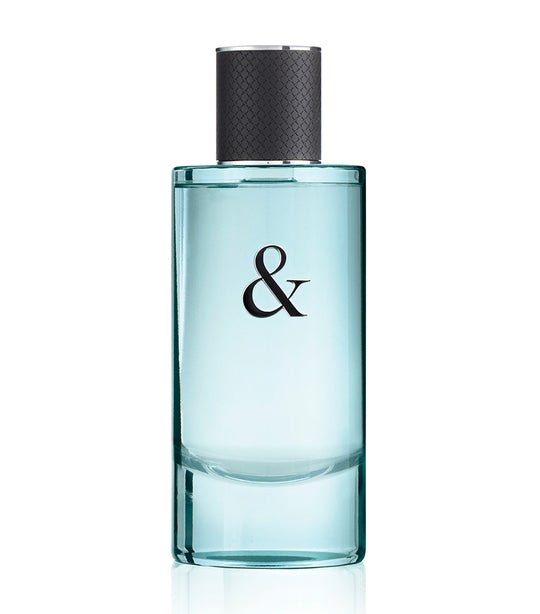
We’d usually suggest the Return to Tiffany line, featuring hearts on chains, but this year, why not give something a little more personal — something only you two can enjoy on each other? Tiffany & Co.’s Tiffany & Love fragrance line features His and Hers scents. The line’s For Her Eau de Parfum has top notes of blue basil, blackcurrant, and grapefruit, and heart notes of Neroli, jasmine, tuberose flower. Vetiver and sequoia round out the base notes, sharing it with blue sequoia, which unites it with the base notes of the For Him Eau de Toilette. Other base notes in the masculine formula are sandalwood and vetiver. The For Him formulation contains top notes of Cardamom, ginger, and mandarin, and heart notes of juniper-cypress, geranium, lavender. Tiffany & Love For Him costs P6,598, while For Her costs P9,498.

SAYING ‘I DO’ WITH DAMIANI
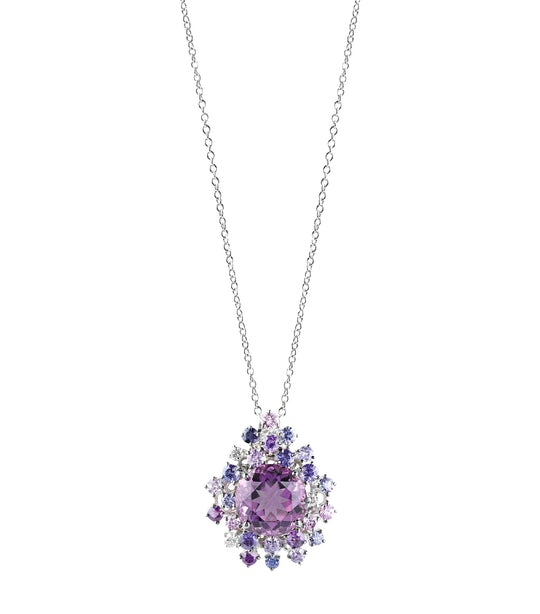
With amethyst as the birthstone for February, Italian jewelry label Damiani is offering the stunning Anima White Gold Pendant with Amethyst and Violet Sapphires. The purple and blue stones mix with diamonds surrounding a large round-cut amethyst set in white gold (P141,750). One can also choose to make Valentine’s Day really special with a proposal: think an engagement, capped off with Damiani’s Minou Solitaire Engagement Ring in White Gold (P739,750). This engagement ring features a 1ct F-colored round-cut diamond on a basket setting on white gold.

Both Tiffany & Co. and Damiani are available at Rustan’s.

MAKING PROMISES WITH SWAROVSKI
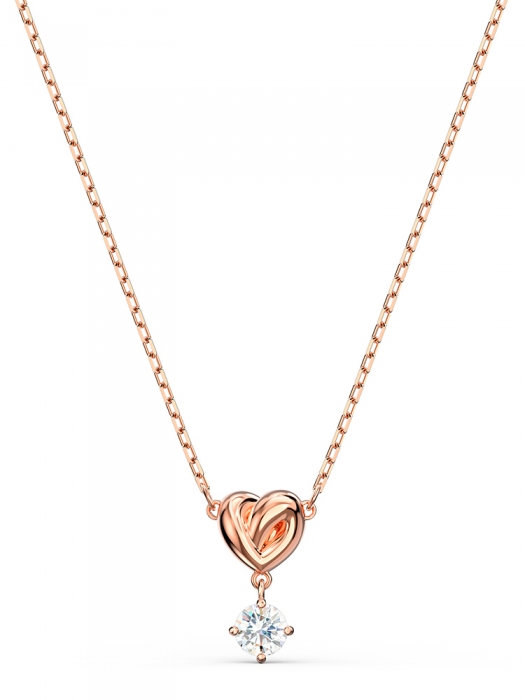
Perhaps you can wear it as a charm or a promise. Swarovski’s Lifelong Line features hearts and knots in several finishes, from rose gold to white gold and mixed-metal. Each piece is plated in gold and features the brand’s signature crystals. The Lifelong Heart Pendant in rose gold starts at P7,950, while the Lifelong Bangle in the same color costs P12,500. Swarovski is available through Trunc.ph.

HEART AT TRUNC
Also at Trunc, Valentine’s Day birthday girl Heart Evangelista (who was trotting off in Paris for Fashion Week), is collaborating with Trunc.ph’s social media channels for February. Tune in to her Instagram account to catch her V-Day OOTD featuring her top fashion picks from Trunc, SSI’s online platform. In another Instagram video, catch her This or That highlighting her personal picks from Trunc Show, featuring labels like Saint Laurent, Loewe, Burberry, Tod’s, Hogan, and more. The actress and socialite will also be showcasing her Trunc at Home picks, as well as accepting a challenge for PowderRoom (Trunc’s beauty department), where she makes herself up with only four products. Trunc shoppers can get 10% off using the voucher code LOVETRUNC from Feb. 1 to March 31. The promo can be used multiple times with no minimum spend required.

PUPPY LOVE AT PEACHY PET
Get the puppies some love for Valentine’s Day too. Peachy Pet’s collars and leashes are made from upcycled leather scraps sourced from the workshops of local craftsmen, made with vegetable-tanned leather. Fifteen percent of the profits from every purchase is dedicated to rehabilitating rescue animals at Lara’s Ark. Shop Peachy Pet products at peachypet.co.

FOOLPROOF VALENTINE’S AT THE PEN
Enjoy an epic and romantic luxe escape with The Peninsula Manila’s Foolproof Valentine room package. At P10,000, the room package includes a romantic overnight stay in a Deluxe Room, an intimate four-course prix fixe dinner for two at The Lobby, and a set breakfast for two the following morning also at The Lobby. In addition, the hotel is offering a lavish “Foolproof Your Valentine A la Carte Gift Menu” that offers a selection of indulgent treats — guests can choose to purchase a box of 24 handmade Peninsula chocolates and a dozen Ecuadorian roses for P7,250, or a bottle of Peninsula Champagne at P12,825. Throw in a set of 10 Natalya Lagdameo “Giniling” gold-plated bangles for P4,500, a Serie Nuit silk polyblend His or Hers loungewear set for P5,990, Jewelmer’s men’s Pearl of Wisdom braided leather cord bracelet which retails for P33,000, or a Janina Dizon “Tatjana” clutch for P45,000. (All items on the “Foolproof Valentine Day A la Carte Gift Menu” are on personal account, and should be pre-ordered and prepaid.) Rates start at P10,000 for a Deluxe Room, inclusive of taxes. The complete package can be had for P118,565 along with a romantic night in a Deluxe Room at The Peninsula Manila. For inquiries or further information on the room package, call 8887 2888 (trunk line), extension 6630 (Room Reservations), e-mail reservationpmn@peninsula.com, visit the website peninsula.com, or through PenChat, The Peninsula Manila’s 24-hour e-concierge by using this link: https://bit.ly/PenChatFacebook.

POC official amazed by Beijing COVID-19 response

PHILIPPINE Olympic Committee (POC) President Abraham Tolentino has nothing but high praises for Beijing Winter Olympics organizers for their strict but effective COVID-19 response.

“I’m really impressed with the closed loop system, it’s very effective,” said Mr. Tolentino, who was in Beijing overseeing Fil-Am alpine skier Asa Miller’s preparation for the giant slalom and slalom events set on Feb. 13 and 16 at the National Alpine Skiing Center.

“You break the loop, you get penalized,” he added.

The congressman from Tagaytay described the closed loop system as a point-to-point arrangement where athletes, officials and Games staff move around through a bus route format that is practically impregnable from outside and in.

“China is implementing a zero-tolerance policy against COVID-19 and the implementation is very superb,” said Mr. Tolentino. “When we were in Tokyo, we can go out [of the village or hotel] and buy a coffee at Starbucks. But here, you can’t do it. Everything is in the hotel or inside the three Olympic Villages. You can buy it there.”

The PhilCycling chief said there’s a big scanner in every entrance where it can detect via facial recognition if a delegate is coronavirus disease 2019 (COVID-19) free or not.

As for the volunteers and Winter Olympics officials numbering around 27,000, they were quartered in hotels for two months and weren’t allowed to go home until the Games have concluded.

The Winter Games involve around 60,000 individuals — athletes, officials, local work force, volunteers and journalists, all tested everyday.

The Beijing organizers reported that there were 353 positive tests so far since operations turned full bloom last Jan. 23.

In the Tokyo Olympics, there 430 confirmed cases — 32 of which were from the Olympic Village — from July 1 up to the closing ceremony on Aug. 4, 2021.

In Beijing, Chinese sports officials are hoping to have lesser incidents. — Joey Villar

SN Aboitiz Power enters deals to supply Ifugao, Cagayan electric groups

SN ABOITIZ Power-Magat, Inc. has renewed its power supply agreement (PSA) with long-time distribution utility partner Ifugao Electric Cooperative, Inc. (Ifelco).

In a media release e-mailed over the weekend, SN Aboitiz Power (SNAP) Group, a joint venture of Aboitiz Power Corp. and Oslo-based renewable energy (RE) company Scatec, said it signed a nine-year PSA with Ifelco through a virtual signing ceremony on Jan. 20.

SNAP and Ifelco have been in partnership since 2007. The new contract is for a capacity of 7.5 megawatts (MW).

SNAP President and Chief Executive Joseph S. Yu said in the statement that Ifelco “has been one of our longest distribution utility partners, and this agreement represents both our organizations’ commitment to sustainability.”

The agreed terms will then be submitted to the Energy Regulatory Commission (ERC) for approval.

In their previous joint application for approval, Ifelco and SNAP said 96.05% of the power distributor’s supply was sourced from SNAP-Magat until 2017, while the remaining 3.95% is being sourced from Ambangal mini-hydro power plant via a PSA that will end on Dec. 10, 2039.

In the same application, the companies said SNAP has a generation rate of P4.1812 per kilowatt-hour (kWh) covering 79.87% load factor in 2018 to 2020.

Meanwhile on Jan. 26, SNAP-Magat also began supplying 10-MW base-load capacity to Cagayan II Electric Cooperative, Inc. or Cagelco II.

Mr. Yu said that with the “new partnership” with Cagelco, “we hope to enable more customers make the switch to renewables, in support of the government’s RE programs.”

The government in its renewable energy plan said it seeks to increase power sourced from renewable sources to 55.8% of the country’s power mix by 2040. As of 2020, RE share was at 33.1%, according to data from Energy department.

SNAP-Magat’s hydroelectric power plant has a capacity of 360 MW and is connected to the 230-kilovolt grid system of the National Grid Corp. of the Philippines. SNAP also owns and operates the 105-MW Ambuklao and 140-MW Binga hydroelectric power plants in Benguet. — Marielle C. Lucenio

BSP tells banks to tighten guard vs terrorism financing

BW FILE PHOTO

THE BANGKO SENTRAL ng Pilipinas (BSP) reminded banks to implement targeted financial sanctions (TFS) like asset freezing to combat the financing of terrorism and proliferation of weapons of mass destruction.

BSP Deputy Governor Chuchi G. Fonacier through Memorandum No. M-2022-007 told its supervised financial institutions to implement TFS-related policies that are “consistent and proportionate to their risk profile.”

The memorandum was issued as the country is aiming to report to the Financial Action Task Force this May that it has boosted TFS for terrorism financing and proliferation financing following its gray-listing in June 2021.

TFS are measures like asset freezing and limiting the availability of funds that will benefit designated persons or entities, which can in turn be used for terrorism financing, proliferation of weapons of mass destruction, and proliferation financing.

The BSP said banks are expected to conduct assessment, regular audit or review of screening systems to ensure that their systems and processes on TFS are working as intended.

“The methodology should be tailored fit according to the risk and context of the BSP-supervised financial institutions. The simpler the products, services and operations of the institution, the simpler the approach that can be used,” the central bank said.

At minimum, they are expected to practice sanction screening by verifying the names and country of residences of account holders and other persons acting on behalf of account owners.

Information on wire transfers and trade transactions should also be screened. This should be conducted upon account opening, periodically, and whenever there are updates to a client’s account information including ultimate beneficial ownership, authorized signatories, or change in the names of clients.

Banks also need to conduct a periodic screening of all customers whenever there are changes to the sanctions list and designated persons, the BSP said.

Corporate accounts that involve one or more signatories of a designated person will also be subjected to TFS, the central bank said.

“Even if a corporation is not listed/designated, but there is a reasonable ground or probable cause to believe that the corporation is under the control of a designated person, then the sanctions will also apply,” the BSP said.

Banks are expected to confirm with the Anti-Money Laundering Council within 24 hours a target match or an account that bears all identifier information designated in the sanctions database, even if there is no amount to be frozen in an account.

The sanctions database of financial institutions includes identified terror groups by the United Nations Security Council, among others.

The BSP said banks have the option to include in their sanctions database other persons or groups that have been designated by other jurisdictions including Office of Foreign Assets Control of the US Department of the Treasury and the European Union. — Luz Wendy T. Noble

Restyled and re-teched: Mercedes-Benz E-Class, P5.39M

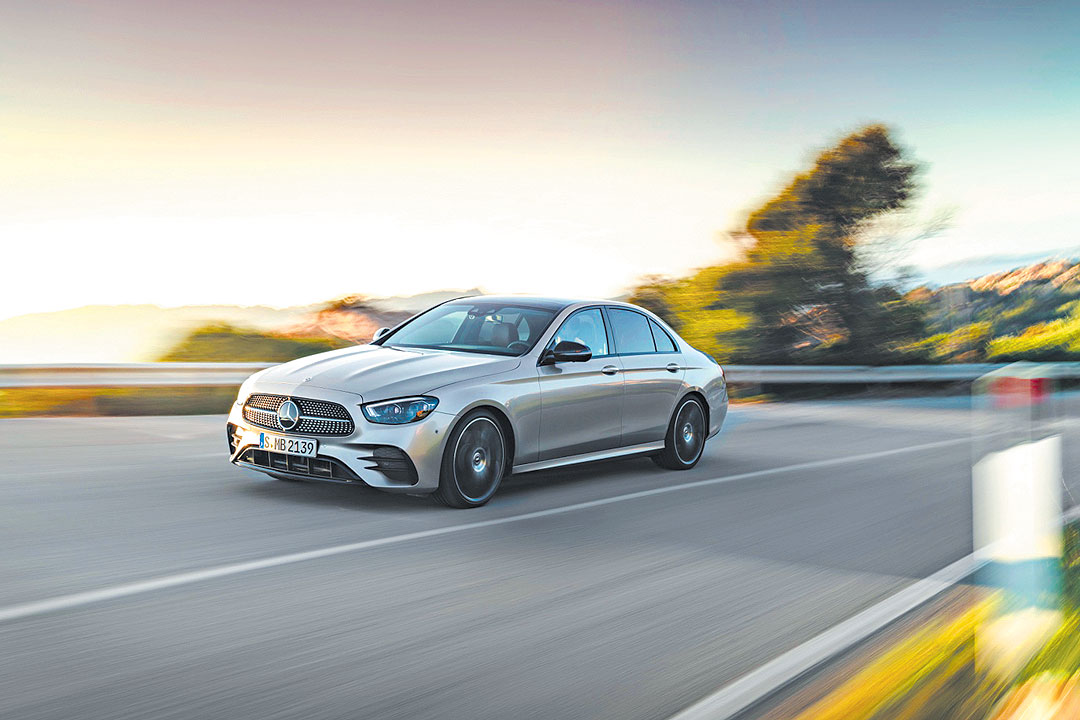
The 10th-generation Mercedes-Benz E-Class gets a significant refresh with more aggressive styling and new tech toys. — PHOTO FROM AUTO NATION GROUP

WITH 14 MILLION units sold globally since the release of its perceived first ancestor in 1946, there is much expectation in the market for the latest iteration of the Mercedes-Benz E-Class — the Stuttgart premium car maker’s best-selling model series. By all accounts, the E-Class has been warmly received a moneyed automobile set in the Philippines, so the brand’s local importer and distributor, the Auto Nation Group (ANG), recently enthusiastically presented the 10th generation’s significantly refreshed version via a digital launch.

This “new take on an automotive icon,” according to ANG President Felix Ang, comes, for now, in a lone E 200 AMG Line guise (sourced straight from Sindelfingen, Germany) with a price tag of P5.39 million. Locally, “almost 2,000” units of the E-Class have been sold in the country since the model was first offered here in 2005, revealed ANG Chief Operating Officer Francis Jonathan “Frankie” Ang, who added that he expects the newest version to be “competitive” here. “You can talk to it, and it makes every drive safer, smoother, and more satisfying,” he added.

Even if it is still part of the 10th-generation E-Class set first launched in 2016, the newest iteration is said to boast significant, sweeping changes inside and out. Perhaps this particularly rings true in the E 200 AMG Line here, which earns its “AMG” appendage through sporty, stylistic touches and such.

It starts with 19-inch AMG five-twin-spoke light-alloy wheels painted in Tantalite Gray with a high-sheen finish. The front end gets a reworking with a more muscular stance — through so-called power domes on the hood, and an attractive grille set off by diamond-shaped pins in chrome. The updated version of the brand’s high-performance LED lamps make their appearance in the E-Class as well.

The rear of the latest E-Class features two-piece LED taillamps which “wrap horizontally around the body to make the E-Class appear wider and stronger.” The previous “crystalline optic” of the previous version are supplanted with geometrically designed LEDs. The Philippine-spec E-Class also receives an AMG-specific apron at the back. Its boot can swallow 540 liters of cargo.

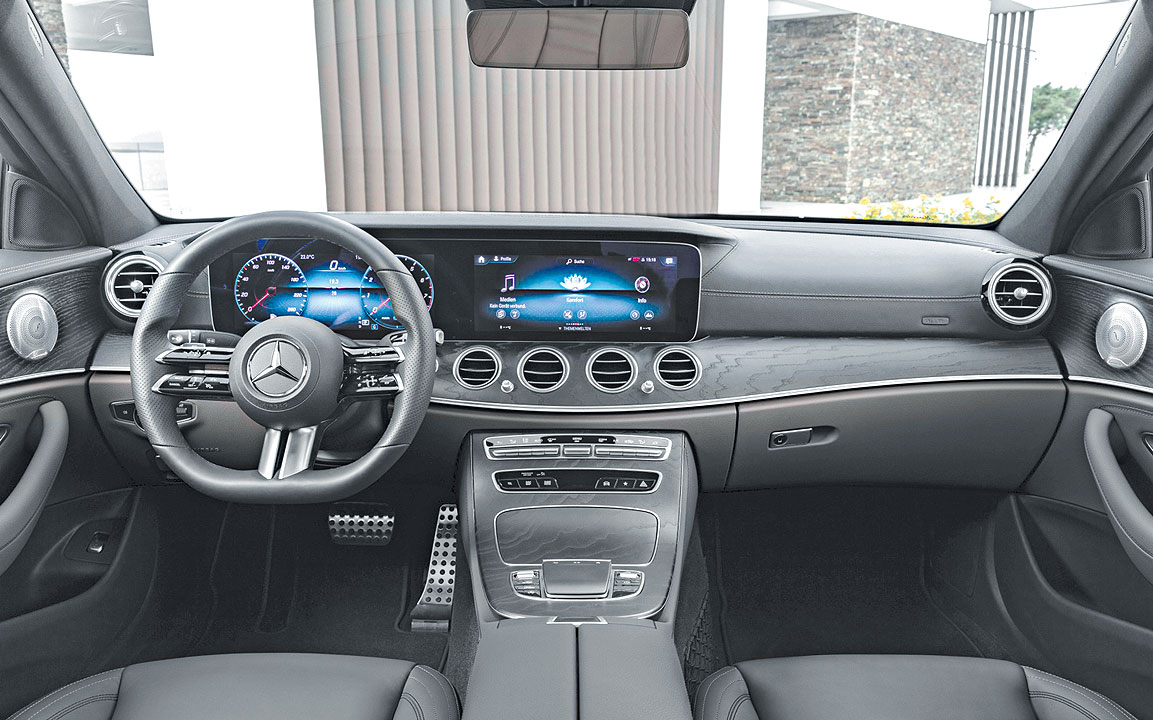
In the cabin, the luxurious accoutrements and touches help to underpin a heightened experience. Mercedes-Benz points to the use of “fine materials and class-leading innovation,” such as huge 12.3-inch digital screens positioned together for a wider appearance and enhanced visibility. Complementing this is the latest version of the MBUX multimedia system which accommodates voice commands and infotainment functions such as destination input, phone call, music selection, climate control, and ambient lighting. The E-Class boasts a multifunction steering wheel wrapped in Nappa leather, while the infotainment system has Apple CarPlay and Android Auto connectivity.

In the area of safety, the new E-Class, reported Mercedes-Benz, is “loaded with safety features and driver assistance technologies that keep both driver and passengers safe while on the road.” The suite that comprises a shell of safety includes the company’s proprietary Pre-Safe system, along with Attention Assist and Active Brake Assist. Meanwhile, Urban Guard is comprised of an anti-theft alarm system plus tow-away protection that enables the owner to remotely detect changes in the location of the vehicle. It is also equipped with Active Parking Assist with an advance reversing camera to provide support to the driver.

Powering the E-Class is a 2.0-liter, inline, four-cylinder petrol engine, mated with a 9G-Tronic nine-speed automatic transmission. The system submits an output of 197hp and 320Nm, and is said to be able to change gears even at low engine revs — leading to fuel efficiency and manageable noise levels.

Mercedes-Benz Philippines Senior Product Manager Benjie Bautista described the model’s Filipino buyers as “loyal,” saying that “80% of E-Class buyers would buy another E-Class,” according to the company’s survey. He added that additional highlights of the new E-Class are definitely its premium Burmester surround sound system with 13 speakers, 64-hue ambient color capability, and wireless mobile device charger.

When asked by “Velocity” if there’s a chance Filipino buyers could get a crack at owning the more powerful Mercedes-AMG E53 — powered by a turbocharged and supercharged 3.0-liter inline-six-cylinder engine that makes 429 horsepower — Mr. Bautista replied, “We’d like to have this here, so we’re hoping for allocation.” He spoke briefly on what he called a “bottleneck issue” in the production of Mercedes-Benz units brought about by the challenges of the pandemic, and the well-known global semiconductor shortage. Meanwhile, ANG AVP for Sales and Marketing Rhomel Franco said that E-Class buyers get two years limited mileage warranty — stretchable to three years.

“This is one of the best cars you’ll get to drive in your life,” declared Mr. Bautista. “There’s safety, performance, and comfort.” — Kap Maceda Aguila

Wordle is the Word: A logophile’s paean

SCREEN SHOT FROM THE POWERLANGUAGE.CO.UK

By Andreas Kluth

“IN the beginning was the Word.” John was exaggerating in his Gospel — there had been rather a lot going on even before words. But he was on to something. Whenever humanity took a leap, words weren’t far.

They first became the Next Big Thing during the Stone Age. Once we started enunciating and understanding words — rather than just grunting or howling at one another — we had a clear edge over the neighbors.

In the Bronze Age, we took it up a notch, with written words. Admittedly, the user interface of the beta versions — from hieroglyphics to cuneiform — left much to be desired. But once the Phoenicians launched Alphabet 2.0, they set the rest of us on a trajectory that remains as impressive as the arc of Moore’s Law in another context.

Notable innovators included the likes of Johannes Gutenberg. The Chinese had dabbled in movable type, but it was the German goldsmith who got us properly into printing words — and thus into mass-producing as well as mass-consuming them.

Sometimes, innovation went retro, by giving us new ways of hearing words. Around the time we discovered distance writing (that is, the telegraph), we also figured out how to hear distant voices (through telephones). In our own WhatsApp era, all these word forms — spoken, written, hieroglyphic in the form of emoticons — are in flux. Where that mash-up leads, FWIW, remains unclear.

Which brings us to the bigger point about words. They can be the most beautiful things in the world, but also the ugliest. For every beacon of logophilia (love of words), there have always been countless victims of logophobia (fear of words, although that’s not actually a word) or logorrhea (think of diarrhea).

For the logophiles — from Shakespeare to Webster, Tolkien or Seuss — English is a particular treasure chest, because it’s just got so darn tootin’ many words. There are the punchy, short Germanic ones from the Anglo-Saxons, and also the longer, fancy French ones from the Normans. And then all the rest, from Arabic (as in algebra) to Persian and Urdu (khaki).

But make this ammo available to the armies of logophobia and logorrhea, and the result becomes unspeakable and unreadable. Politicians and PR types use words to produce evasive Orwellian gibberish. Snowflakes and the Woke treat words — starting, but not ending, with pronouns — as pitchforks for revolution. Their foes on the opposite side escalate by corrupting words into dog whistles of prejudice. On it goes, down it goes, into the gutter.

Atrocities against the Word don’t even have to be political. A horrible meta-ideology has crept into linguistics that I’ll call anything-goes. It’s the syntactical equivalent of anarchy, where there’s no difference between me and I, who and whom, as and like, lie/lay/lain and lay/laid/laid. I’ll bet these preachers of laissez-faire would rediscover such nuance quickly if they had to decide between being hung and hanged.

Language changes, they say. Yes, it does. There was a time when, if you were sick, you’d go to a leech (doctor); and if you prayed a lot, you were silly (pious). But change must be gradual, organic, and digestible — evolutionary, not revolutionary. During transitions, rules still matter, like decorum.

What I’m really saying is that words deserve more respect. We fight about them because we care about them, because they matter. We need our words to be fully human. That also means we need them to play.

Oh, I like my occasional Sudoku and Ken Ken, like the rest of you. But numbers don’t have the soul of words. So give me my Scrabble, Boggle, and Bananagrams. Give me a punny crossword. Or, like the New York Times, invent delights like Spelling Bee. It’s a digital hive of seven letters, out of which you make as many words as possible. If you’re good, they call you genius; if you’re great, they make you Queen Bee. Everyone in my family wants to be that.

So it was great to add another addiction recently. In October, a software engineer in Brooklyn launched a new word game. His name is Josh Wardle, so it was inevitably named Wordle. You get six tries to guess a five-letter word, with a few colorized hints.

Like a true logophile, Mr. Wardle made the game for “an audience of 1,” as he puts it. It’s now played by millions every day, including me. There’s even a Chinese version, getting around the problem with characters by using pinyin (see: problems with hieroglyphics and cuneiform, above).

Wordle has everything modern humans crave. First: simplicity. The rules take seconds to learn. Second: depth. The intuition takes lifetimes to master. Third: deniability. My editor thinks I’m working while I’m at it. And finally, the clincher: words.

This week, Josh Wardle sold Wordle to the New York Times. They were rather coy about the amount, but it seems to be a packet. Good for you both. You deserve it. Everyone from the Phoenicians to Gutenberg to John the Evangelist is green with envy. Maybe the word was not the beginning. But — teleologically — it just may be the end. — Bloomberg