Home Blog Page 6868

How to help your child get the most protection out of their face mask    

PIXABAY

With many children around the country required to wear masks in classrooms, including those as young as eight in Victoria, Australia, parents are wondering how they can support their kids’ mask use. 

Schools are a breeding ground for respiratory viruses. When a large number of people are gathered together for extended periods of time within indoor areas, it’s a perfect recipe for aerosol transmission.  

Along with proper ventilation, physical distancing and good hygiene, face masks can help reduce the spread of coronavirus disease 2019 (COVID-19).  

So what masks are best for kids? And how can children increase the likelihood their mask will protect them from COVID?  

The dominant route for COVID transmission is through the inhalation of infectious aerosols. When someone with COVID coughs, sneezes, talks or even breathes, they are exhaling scores of tiny virus-laden particles into the air that others around them can breathe in.  

Evidence from the United States shows wearing masks in classrooms may reduce the chance of children contracting COVID from their classmates. Regions with school mask mandates have roughly half the rates of COVID infection among children than those without.  

While randomized clinical studies focusing on mask use in schools are not available, data from larger community mask use trials support their ability to reduce the number of symptomatic COVID cases in the community.  

The World Health Organization recommends mask use in students 12 years or older, and in students from six to 11 years old under appropriate supervision.  

Masks don’t impact the air exchange in children or their ability to breathe, so they’re safe to use. However, masking students with specific needs should be evaluated on a case-by-case basis.  

Mask use in children aged five and younger is not recommended, in part because facial expressions are important for social and emotional learning.  

When selecting a mask, pay close attention to the fit; a mask will lose much of its effectiveness if it’s not worn appropriately. There shouldn’t be any gaps around the nose or along the sides of the face.  

While many masks are capable of preventing the release of large droplets in those who are infected, a tighter fit will improve the filtration of the smaller aerosol particles.  

Of the available mask varieties, N95 or P2 types have the best filtration efficiency, capturing more than 95% of particles. Though they need to be tested to ensure a proper fit to be most effective, and they may prove uncomfortable when worn for long periods.  

Surgical masks (the disposable kind you can buy at supermarkets and pharmacies) are the next best at filtration, with efficiencies from 50–75%.  

Surgical mask efficiency can be improved if a tighter fit is created around the face, such as by wearing the surgical mask underneath a cloth mask, or through the “knot & tuck” method.  

While useful for older students, N95s and most surgical masks may not be as effective in protecting young children, as many of these masks were designed for adults.  

Cloth varieties, on the other hand, usually fit children much better. Being able to use fun prints and colors can help kids feel more comfortable with mask-wearing.  

However, single-layer cloth masks are typically not recommended due to their low filtration efficiency. Well-fitting triple-layered masks are much better, and they are as effective as surgical varieties.  

The recommendations for children’s mask use mirror those for adults, so:  

  • try to avoid touching the outside of the mask. This means using the ear loops to put on and remove the mask. If the mask is doing its job effectively, there could be virus particles on the outside of the mask. Always wash or sanitise hands after touching the mask  
  • use a separate bag for storage. It’s important that a mask does not contaminate or be contaminated by other items  
  • ensure the mask covers both the mouth and nose  
  • wash cloth masks after every use. It may help to have several cloth masks so a fresh one can be used daily  
  • throw out surgical and N95 masks after each use  
  • don’t use a mask with valves. These won’t prevent an infected person spreading the virus.  

While the advice might feel relatively complicated, research shows that even children in the first two years of school are very compliant with mask guidelines, using them appropriately for 77% of the school day, on average.  

For best results, instructions on mask use and safety are needed alongside the rollout of masks in schools.  

The use of masks is less important during outside recess and breaks, because outdoor areas are generally well-ventilated.  

In indoor areas where masks can’t be used, such as during lunch, physical distancing is encouraged. — The Conversation 


This article is republished from The Conversation. Read the original article.

Lighting solutions to consider for every commercial space

Lighting is one of the most essential elements when decorating a business space. It can help set the tone and mood that will beautifully radiate within the whole area and achieve every business owner’s interior design goals. Whether it be formal lighting for offices or rustic-looking for restaurants and other smaller businesses, the right lighting can go a long way in providing you the visual appeal as well as the functionality you’d want to get. So, here are the types of lighting solutions from Alphalux that you can consider for different kinds of commercial spaces:

  1. Hanging lights for outdoor dining area

Hanging lights offer a subtle yet creative way to add value to your outdoor dining spaces. It can give off a homer and an interesting feel that can uplift the whole ambiance of the place. Aside from its timeless aesthetic, hanging lights also offer additional safety within the area especially during nighttime.

  1. Chandeliers for hotel lobbies

Lobbies are an essential part of any hotel. It is a multi-functional space where they receive guests and also where people can relax and chat. Install a flashy and majestic chandelier at the center of the lobby to set an opulent tone for the rest of the space. This will help achieve an inviting ambiance where guests can feel safe and welcomed.

  1. Table lamps and sconces at hotel rooms

Just like any other room, hotel rooms need to have a sense of comfort where guests can get the rest that they need. Place table lamps or sconces on each side of the bed to incorporate a warm and homier vibe around the rooms. These types of lighting can also provide a sufficient source of light for guests who prefer to sleep with the lights on without causing eye irritation.

  1. Pendant lamps for coffee shops

Pendant lights are a must-have decorative piece in coffee shops. They provide a fancy yet versatile option that can be styled alone or layered in different heights. This type of lighting comes in a variety of designs, shapes, and finishes that allow you to create a unique design that suits your taste and needs.

  1. A resort’s post lamps

Post lamps bring out a dramatic take in lighting fixtures. It helps intensify and add visual value to a landscape making it a great lighting option for resorts. Post lamps are also made to withstand rough weather conditions while sophisticatedly illuminating pathways and open spaces.

  1. Recessed downlights in office spaces

Recessed downlights offer equal amounts of illumination and give off a wider-looking space, perfect for office areas. It is also a space-saving lighting option with a minimally elegant design. If you have a low ceiling office space, recessed lighting is a top-notch choice.

  1. Ceiling lamps in banquet halls

Wide and open spaces like banquet halls require an adequate amount of lighting to brighten the whole space. Opt for ceiling lamps that offer sufficient brightness while also having polished-looking designs. Ceiling lamps provide a quick aesthetic upgrade perfect for spaces used for formal events.

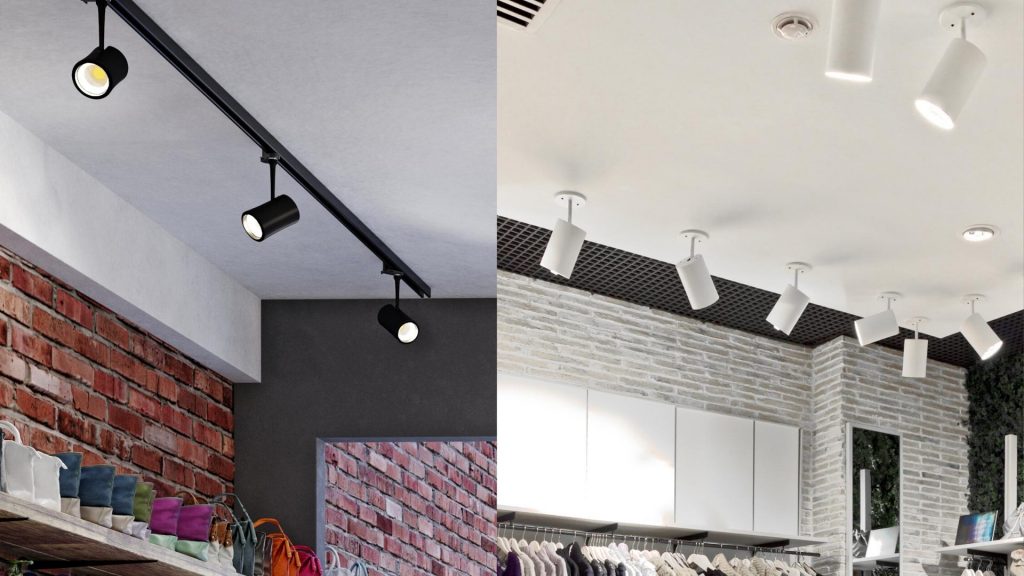
  1. Spotlight for mini boutiques

If you have limited space in your business area like boutiques, spotlights make an excellent lighting option. These are adjustable, neat-looking, and offer focused lighting perfect for a more dramatic feel around your boutique. Spotlights can also serve as an accent light for items you want to highlight.

Choose the right lighting fixture and brighten up your business space with Alphalux, exclusively from Wilcon Depot.  Visit any of their 71 Wilcon stores nationwide or shop online at Wilcon Online Store by visiting shop.wilcon.com.ph.

Explore the limitless product selections that Wilcon offers, ranging from Tiles, Sanitarywares, Plumbing, Furniture, Home Interior, Houseware, Outdoor Living, Building Materials, Hardware, Electrical, Appliances, Tools, Automotives, Paints & Sundries, and other DIY items.

To ensure a safe and convenient shopping environment in all Wilcon stores, the company continuously implements safety protocols for the health and well-being of both employees and valued customers.

You can also shop through your Personal Shopper with the Browse, Call, and Collect/Deliver service. For the list of participating stores with their pick-up and delivery contact details, click this link: www.wilcon.com.ph/content/328-bcc-branches.

Another shopping alternative is the Wilcon Virtual Tour. An online shopping option wherein customers can contact the nearest Wilcon store via Facebook Messenger App. Customers can contact the nearest stores, and the Wilcon team will take you on a virtual tour where you can explore the available products inside their physical stores.

Wilcon also provides contactless payment options to its customers like bank transfers, GCash, PayMaya, InstaPay, PesoNet, WeChat, and Alipay for customers’ convenience.

For more information about Wilcon, you can log on to www.wilcon.com.ph or follow their social media accounts on Facebook and Instagram. Subscribe and connect with them on Viber Community, LinkedIn, and YouTube.


Spotlight is BusinessWorld’s sponsored section that allows advertisers to amplify their brand and connect with BusinessWorld’s audience by enabling them to publish their stories directly on the BusinessWorld Web site. For more information, send an email to online@bworldonline.com.

Join us on Viber to get more updates from BusinessWorld: https://bit.ly/3hv6bLA.

FDI net inflows up 20% in August

REUTERS
FOREIGN DIRECT INVESTMENTS (FDI) jumped by 20% in August, even as tighter lockdown restrictions were imposed during the month. — REUTERS

FOREIGN DIRECT investments (FDI) jumped by 20% in August, although investors remained cautious as seen in the lower reinvestment of earnings and higher equity capital withdrawals.

Data released by the Bangko Sentral ng Pilipinas (BSP) showed net inflows of FDI rose by 19.8% year on year to $812 million from $677 million in the same month in 2020.

However, FDI dropped by 35% from the $1.263 billion inflow seen in July.

The annual growth in August reflects investor sentiment on the government’s handling of the pandemic, Asian Institute of Management economist John Paulo R. Rivera said.

“FDI increased because of recent developments which are more definite and clear than before. Vaccination rate has also been significantly increasing which increased investor confidence on our economy,” Mr. Rivera said in a Viber message.

Metro Manila and some high-risk areas were placed under the strictest lockdown for two weeks in August to curb the Delta-driven surge in coronavirus infections.

By segment, foreign investments in debt instruments rose by 38% to $636 million in August from $461 million a year ago.

Investments in equity and investment fund shares dropped by 18.8% to $176 million in August, while reinvestment of earnings fell by 24.7% to $99 million.

FDIs in equity capital likewise fell by 9.7% year on year to $77 million in August from $85 million. This as placements went up by 7.3% to $126 million, while withdrawals significantly rose by 51.2% to $50 million.

Placements in August mainly came from Japan, the Netherlands, and the United States. These were invested into manufacturing, information and communication, and real estate industries.

While overall FDIs rose in August, the details show cautious sentiment remains among foreign investors, UnionBank of the Philippines, Inc. Chief Economist Carlo O. Asuncion said.

“Contraction of reinvestment of earnings is also [a] relevant [detail] considering this signifies confidence (or non-confidence) by investors in a certain country or economy,” he said in a Viber message.

For the first eight months, FDI net inflows increased by 39.7% to $6.373 billion from $4.562 billion a year earlier.

“The cumulative FDI net inflows rose on the back of the 71.6% growth in non-residents’ net investments in debt instruments to $4.5 billion from $2.6 billion. Likewise, reinvestment of earnings rose by 11% to $776 million from the $699 million registered last year,” the BSP said.

Non-residents’ net investments in equity capital slumped by 12.2% to $1.1 billion in the eight-month period.

Mr. Asuncion said he welcomes the bigger FDI flows year to date and in August, but added the details relating to the inflows show the country has not reached its “pre-pandemic level and attractiveness to investors yet.”

“This, we know, because August was a month of the renewed restrictions due to the COVID-19 infections surge, and overall, there is still lingering uncertainty on the pace of economic recovery,” he said.

The better-than-expected third-quarter economic growth could help boost the country’s attractiveness to foreign investors, Mr. Asuncion said.

In the July to September period, the economy grew by 7.1% year on year and by 3.8% quarter on quarter, the Philippine Statistics Authority reported on Tuesday.

The BSP in September said it projects FDI net inflows to reach $7 billion this year. — L.W.T.Noble

Fitch Solutions raises PHL GDP forecast for 2021

PHILIPPINE STAR/ MICHAEL VARCAS
A family has a picnic at the Quezon City Memorial Circle after mobility curbs were further loosened in Metro Manila. — PHILIPPINE STAR/ MICHAEL VARCAS

THE PHILIPPINE economy is now expected to grow by 4.5% this year, as looser lockdown restrictions support a rebound in consumer spending, according to Fitch Solutions Country Risk and Industry Research.

The think tank in a note on Wednesday raised its 2021 gross domestic product (GDP) growth projection to 4.5%, from 4.2% previously. This is within the government’s 4-5% target.

The Philippine economy grew by a faster-than-expected 7.1% in the third quarter. Year to date, GDP growth is at 4.9%.

“A gradual relaxing of domestic mobility restrictions and continued support measures from policy makers helped propel activity, bringing the economy closer to its pre-pandemic output levels,” Fitch Solutions said.

It noted signs of a continued recovery can be seen in the early part of the fourth quarter, as more businesses were allowed to resume operations when Metro Manila was placed under Alert Level 2 on Nov. 5.

The Philippine capital has also seen higher rates of vaccination against the coronavirus disease 2019 (COVID), but only 32.5% of the country’s population have been fully vaccinated according to Johns Hopkins University.

“Nevertheless, the Philippines still remains vulnerable to COVID-19 outbreaks given disparities between regional vaccination rollouts and the lower efficacy rates of the vaccines administered,” Fitch Solutions said, adding there may be a “greater” need to administer booster shots.

New daily COVID-19 cases have declined since the peak of over 26,000 on Sept. 11. The Health department reported 2,646 new infections on Wednesday, bringing the total active caseload to 29,138.

With the easing of restrictions, Fitch Solutions said private consumption will likely grow by 3.7% this year, higher than the previous 3.5% forecast.

“Google mobility data are already reflecting a strong rebound in domestic activity, with data for retail and recreation, and grocery and pharmacy mobility signaling the highest level of activity since the onset of the pandemic in Q2 2020. This tallies with the recovery in the retail index, which in October rose to its highest level since July,” it said.

Private spending is then expected to rebound to a 5% growth next year, spurred by remittances boosting household incomes.

But unemployment and inflationary pressures could stifle real wages, which would then cap consumption growth, the note said.

Gross fixed capital formation could grow 11% in 2021, revised from the 9% seen previously.

Fitch Solutions said growth will be supported by favorable base effects that could diminish by next year. The think tank projects 15% growth in 2022, lower than the 18% in the previous forecast.

“Looking to 2022, the continued spare capacity in the economy will act as a cap investment appetite and we highlight declines in house prices through the pandemic as potentially dampening real estate construction activity,” Fitch Solutions said.

“That said, rebounding business optimism and manufacturing activity will support capital goods investment.”

Government spending is expected to rise by 8.5% this year (from 5% previously estimated) and 4.5% next year (from 2%) as the country’s public debt goes up.

“We expect policy makers to begin to focus on consolidating debt levels over the coming quarters, which could lead to greater scrutiny of fiscal expenditure plans. Indeed, while the proposed 2022 budget plans an 11.5% increase in expenditure, we do expect revenue boosting measures to also be undertaken to narrow the budget deficit,” Fitch Solutions said.

The think tank also trimmed its Philippine GDP forecast for 2022 to 6.5%, from 6.8%, previously.

“While we expect economic growth to increase further in 2022, remaining challenges will stop the Philippine economy returning to its pre-pandemic growth trajectory.” — J.P.Ibañez

China’s AIIB assesses new loan for PHL

REUTERS

CHINA’S ASIAN Infrastructure Investment Bank (AIIB) is assessing a proposed $250-million loan to support Philippine coronavirus disease 2019 (COVID-19) vaccine procurement.

In a document released on Wednesday, AIIB said the Philippines’ project to procure more vaccines will be under the COVID-19 Crisis Recovery Facility.

The total project cost of $553.66 million is expected to be co-financed by the Asian Development Bank (ADB), with its own $250-million loan. The Philippine government covers the rest of the funds.

Led by the ADB, the project would be under the bank’s Asia Pacific Vaccine Access Facility program.

“The project will provide critically needed vaccines to assist the Government of the Philippines in mitigating adverse health, social, and economic impacts caused by the COVID-19 pandemic,” AIIB said.

The appraisal decision will be done this month, while the estimated date for approval of financing is in the fourth quarter.

Meanwhile, the World Bank is also assessing $300 million in additional financing for the Philippines’ COVID-19 response, with a board decision seen in December.

The World Bank said the fund would support the Philippine government in expanding COVID-19 vaccine coverage and provide additional doses to vulnerable groups.

The bank initially approved a $100-million COVID-19 healthcare response fund last year, then an additional $500 million in March 2021 for vaccine procurement.

COVID-19 vaccine booster shots could be available next year as the Finance department aims to secure the supply under a loan financing program before the end of the year.

Finance Undersecretary Mark Dennis Y.C. Joven last month said that the government is set to buy this year the COVID-19 booster doses that will be distributed in 2022.

A total of 32.5% of the Philippine population has been fully vaccinated, the Johns Hopkins University tracker showed.

The government plans to give out as many as 1.5 million vaccine doses daily starting Nov. 20. It plans to inoculate at least half of the country’s adult population by yearend.

Healthcare workers and other priority groups may be able to get booster shots this year, the Health department said last month. — Jenina P. Ibañez

PHL is the fastest-growing internet economy in Southeast Asia — report

THE PHILIPPINES is the fastest-growing internet economy in Southeast Asia fueled by e-commerce and food delivery services, according to a report by Google, Temasek, and Bain & Co.

The e-Conomy Southeast Asia Report released on Wednesday showed the Philippines’ overall internet economy in terms of gross merchandise value (GMV) will likely reach $40 billion in value by 2025 (Read related story).

“Overall, the Philippines was the fastest- growing market in the region, driven by strict lockdowns as well as a tipping point on the adoption of certain digital services,” the report read.

The Philippines’ GMV is estimated to reach $17 billion this year, an increase of 93% from a year ago, due to government initiatives and mass digital adoption. This strong growth has also been fueled by double-digit growth in sectors such as food delivery services.

The Philippines also added 12 million new digital consumers since the pandemic started in March 2020. Of this, 63% are from non-metro areas. Majority also said they plan to continue using these services even after the pandemic.

“Pre-pandemic users — those who used the services before the pandemic — have consumed an average of 4.3 more services since the pandemic began and 95% of pandemic consumers are still consumers today. Despite rapid growth in the last 18 months, there remains significant headroom since the Philippines has the lowest digital consumer penetration in the region, with only 68% of internet users consuming online services,” the report said.

The report showed that 39% of digital merchants in the Philippines said they would not have survived the pandemic, if not for digital platforms.

“The digital adoption we’ve seen in the Philippines since last year has contributed to the accelerated growth of the country’s internet economy, magnifying its vast potential,” Google Philippines Country Director Bernadette Nacario said in a statement. — Revin Mikhael D. Ochave

Farming, fisheries groups exempted from income tax — BIR

PHILIPPINE STAR/EDD GUMBAN

THE Bureau of Internal Revenue (BIR) said all accredited farming and fisheries groups may be exempted from income taxes as long as they are registered as barangay micro-businesses.

The BIR released Revenue Regulation No. 19-2021 which implements the tax incentive provisions of Republic Act No. 11321 or the Farmers and Fisherfolk Enterprise Development Program, also known as Sagip Saka Act.

Under the regulation, accredited farmers and fisherfolk enterprises may be exempted from income tax directly from their operations if they are registered as barangay micro-business enterprises.

Groups covered by the regulation include producer groups, fisherfolk organizations and cooperatives, and clusters of growers and fishers.

These enterprises have products that are in the priority commodity value chains and can increase their marketable surplus through enterprise development, the BIR regulation said.

To avail of the income tax exemption, the cooperative or enterprise must be registered as a barangay micro-business enterprise and have total assets that do not exceed P3 million, including assets from loans but excluding the land on which the office or plant is based.

Donations of real and personal properties to such farmers and fisherfolk enterprises are also exempt from donor’s taxes.

The donation must be aligned with the development program’s goals of supporting farmers and fisherfolks in achieving “sustainable modern agriculture and food security.”

Meanwhile, the recipient must be certified by the Department of Agriculture and a beneficiary of the development program. — J.P.Ibañez

MPIC keen on Shell assets, other businesses as it eyes expansion

By Arjay L. Balinbin, Senior Reporter

METRO PACIFIC Investments Corp. (MPIC) on Wednesday said it is exploring new opportunities as it expects 2022 to be a better year for the company amid prospects of economic recovery.

“We are interested in expansion,” MPIC President and Chief Executive Officer Jose Ma. K. Lim said at a virtual briefing, referring to the expansion of the company’s fuel storage business.

“We are preparing to bid for Shell facilities,” he noted, adding that its role in such facilities will be “very much like what we are doing in the Philippine Coastal (Storage and Pipeline Corp.),” which stores and moves liquid fuels.

The company is working to diversify its existing portfolio into unregulated businesses.

“We continue to look at logistics despite the fact that we are getting out of warehousing. We are looking at e-commerce and how we can position ourselves in that space, and we are looking at some agribusiness ventures and related infrastructure businesses in food deliveries and food storage,” Mr. Lim said.

Manila Electric Co. (Meralco) President and Chief Executive Officer Ray C. Espinosa said they are forming a wholly-owned subsidiary of Meralco Industrial Engineering Services Corp. (MIESCOR), which will be called Miescor Infrastructure Development Corp.

Miescor Infrastructure Development will house Meralco’s tower business, Mr. Espinosa said. “That would be the vehicle for any potential investors.”

“We should be a very strong player in the common tower space given the experience and expertise of MIESCOR as an EPC (engineering, procurement and construction) contractor. Meralco, by the way, also owns and operates 200 telecom towers for its own telecommunications requirements,” Mr. Espinosa said.

“Our target is basically to have 30% of that market,” he added.

Mr. Lim said the MPIC will also “most likely” take a look at the remaining assets of real estate developer Landco Pacific Corp.

“They are experiencing very strong sales, actually their best financial results ever. [T]his is very encouraging for the board to hear…, [so] most likely we will take a look at its remaining assets and selectively decide which ones to pursue,” he noted.

In March, MPIC said it was in talks with the owners of Discovery World Corp., which is engaged in the hotel and resort business, for a “potential investment.”

MPIC used to invest in the real estate business. It exited in 2014 after it divested from Landco Pacific, the developer of the Peninsula de Punta Fuego, an exclusive seaside residential resort in Nasugbu, Batangas.

In a statement on Wednesday, the listed infrastructure conglomerate said its attributable net income for the first nine months of the year surged 147.6% to P12.38 billion from P5 billion in the same period a year ago.

Its operating revenues for the period grew 6.2% to P32.18 billion from P30.30 billion previously.

MPIC also reported a consolidated core net income of P9.5 billion for the first nine months, up 23% from P7.7 billion in the same period last year.

Its core net income for the third quarter climbed 44% to P3.5 billion compared with the same period in 2020.

The company has yet to release its full quarterly report.

The “acceleration of growth reflects an improvement in performance notwithstanding the continued imposition of varying levels of quarantine across the country to contain the [coronavirus] pandemic and was partially augmented by the impact of the Corporate Recovery and Tax Incentives for Enterprises (CREATE) Law, which lowered corporate income tax rates from 30% to 25%,” it said.

“As we look forward to 2022, we draw our attention to other essential priorities, foremost of which are innovation and digital transformation,” MPIC Chairman Manuel V. Pangilinan said.

“We intend to further explore opportunities in the digital space especially those that will make our operations and facilities even more efficient,” he added.

MPIC shares closed unchanged at P4.02 apiece on Wednesday.

MPIC is one of three key Philippine units of First Pacific, the others being Philex Mining Corp. and PLDT, Inc. Hastings Holdings, Inc., a unit of PLDT Beneficial Trust Fund subsidiary MediaQuest Holdings, Inc., has a majority stake in BusinessWorld through the Philippine Star Group, which it controls.

SMIC nets P27.2 billion in first nine months as units show ‘resilience’ in Q3

By Keren Concepcion G. Valmonte, Reporter

SM INVESTMENTS Corp.’s (SMIC) consolidated net income in the first nine months surged by 79% to P27.2 billion from P15.2 billion a year ago, the company said, as its business units showed resilience in the third quarter.

“Our third quarter results reflect the resilience of all our businesses and early signs of the economy opening up,” SMIC President and Chief Executive Officer Frederic C. DyBuncio said in a statement on Wednesday.

“With improved vaccination rates across the country and lower COVID-19 (coronavirus disease 2019) cases, we are optimistic about conditions for the fourth quarter, but continue to be vigilant about risks,” he added.

SMIC’s nine-month consolidated revenues amounted to P289.4 billion, inching up by 5% from P276.4 billion year on year.

Its banking units accounted for over half or 60% of the company’s net earnings from core businesses, while property made up for 27% and its retail business contributed 13%.

BDO Unibank, Inc. generated a P32.4-billion net income in the first nine months, surging by 95.7% from P16.6 billion in the same period last year due to its “resilient business franchise” and normalized provisions.

Meanwhile, China Banking Corp.’s consolidated net income improved by 35% to P11.2 billion, owing to its sustained core business growth and effective cost management.

The consolidated net income of its listed property firm, SM Prime Holdings, Inc., inched up by 9% year on year to P15.6 billion from P14.4 billion despite lower revenues. SM Prime’s consolidated revenues declined by 6% to P56.8 billion from P60.7 billion from a year ago.

SM Prime aims to source over 50% of its businesses’ electricity consumption from renewable resources by the end of next year. The company said it is their commitment to support the country’s goal of having a 35% renewable energy supply by 2030. 

In the third quarter, both the SMIC and SM Prime became signatories to support the Task Force on Climate-related Financial Disclosures, “demonstrating their commitment to safeguarding against climate risk through better disclosures.”

Meanwhile, SM Retail booked a retail net income of P4.8 billion, up by 118.18% from the P2.2 billion logged in the previous period as sales of SM STORE and its specialty stores continue to grow coupled with its continued cost management efforts.

Retail revenues of SM Retail amounted to P204.9 billion, inching down from the P206.1 billion recorded due to pantry loading.

SMIC shares declined by 0.91% or P9 to close at P975 apiece on Wednesday.

Megaworld’s attributable income up 57% on strong real estate sales

MEGAWORLD Corp. recorded a 57% increase in its attributable net income to end the third quarter with P3.2 billion from last year’s P2 billion on the back of a 102% climb in real estate sales.

In a statement on Wednesday, the company said it posted a net income growth of 46% to P3.3 billion from P2.2 billion in the same period last year, while its consolidated revenues went up by 50% to P14.5 billion from P9.6 billion.

For the first nine months of 2021, Megaworld’s attributable net income totaled P8.6 billion, 10% higher than the P8.1 billion booked in the same period last year. Consolidated revenues also rose 10% to P36.9 billion from P33.4 billion.

Megaworld’s sales from its real estate business “led the recovery,” surging by 102% to P9.6 billion in the third quarter from P4.7 billion. Reservation sales improved by 35% year on year to P17.1 billion. 

The company said its improved real estate sales reflected its expanded construction activities in the third quarter. Megaworld also launched 462-hectare Paragua Coastown in Palawan, its first eco-tourism township.

Real estate sales in the first nine months also climbed 21% to P23.1 billion from last year’s P19.1 billion.

Meanwhile, Megaworld Hotels & Resorts’ profits surged 121% to P552 million in the third quarter. Megaworld said the “consistent performance” of its in-city hotels was supported by the opening of its Kingsford Hotel in the company’s Westside City township. 

Revenues from its hotels and resorts business went up by 9% in the first nine months to P1.3 billion from last year’s P1.2 billion.

Megaworld Premier Offices recorded an “almost flat” rental income for the quarter at P2.9 billion, while its revenues for the nine-month period amounted to P8.1 billion.

On the other hand, Megaworld Lifestyle Malls logged a 16% year-on-year growth in rental income to P469 million in the third quarter despite providing concessions to its retail partners.

“The recovery momentum has started to pick up and we hope that the lowering of the alert levels especially in Metro Manila will continue until the yearend. As more people safely go out and enjoy the normal life, the better for business and our economy as a whole,” said Kevin Andrew L. Tan, chief strategy officer of Megaworld.

Megaworld has developed 28 integrated townships, integrated lifestyle communities, and lifestyle estates across the country.

On Wednesday, Megaworld shares declined 2.66% or nine centavos to close at P3.29 each. — Keren Concepcion G. Valmonte

A Filipino feast celebrates the good times ahead (hopefully)

HALIYA’s Adobo

By Joseph L. Garcia, Reporter

FOR those of us who have been making do with our own subpar home cooking and food deliveries which never quite arrive at the right temperature during this pandemic, a rare dinner invitation is always welcome (provided that it’s safe).

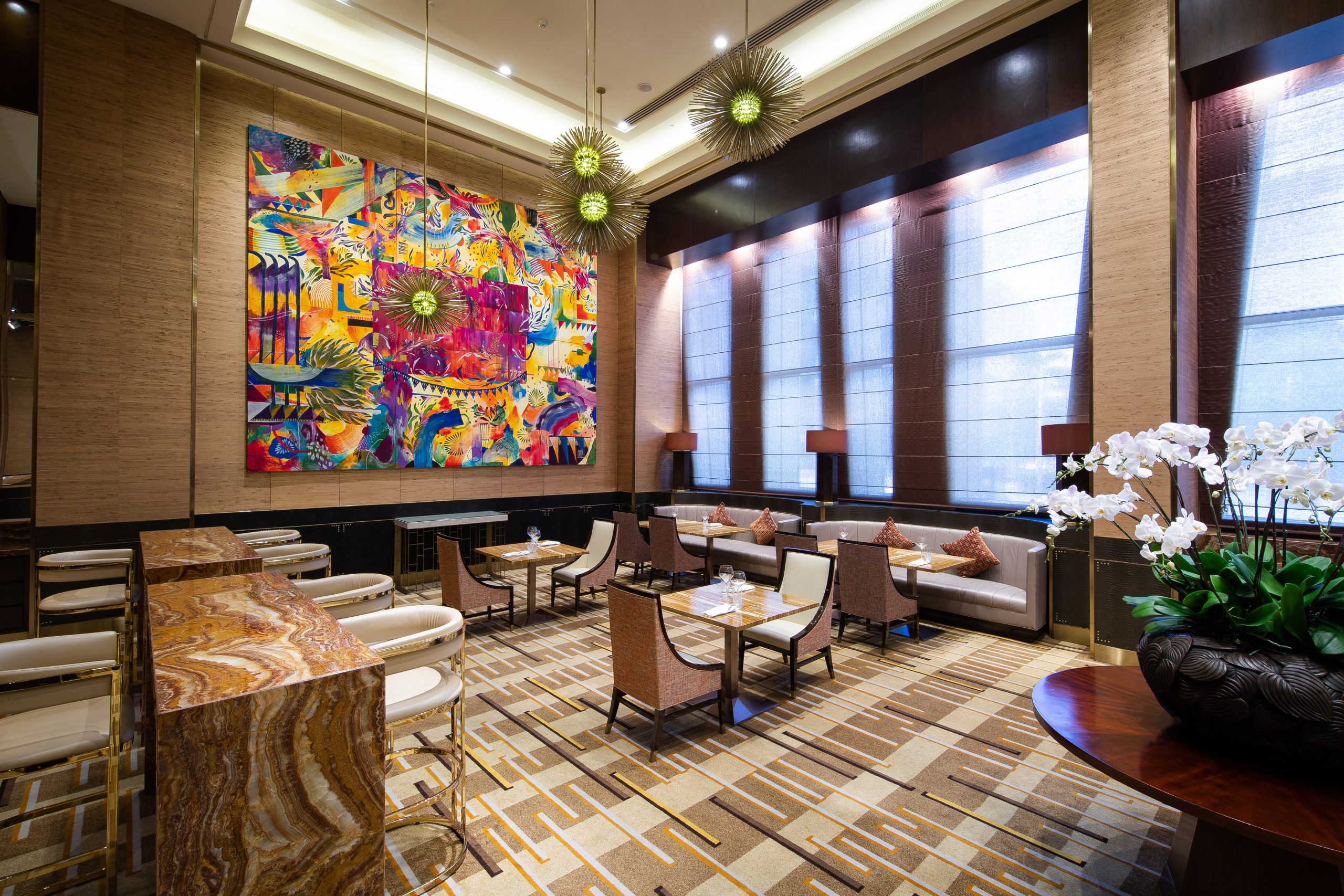
Last week, BusinessWorld was invited for dinner at Haliya, a new Filipino restaurant by Nüwa at the City of Dreams. The restaurant’s name is of a good omen: Haliya is a pre-colonial moon goddess, with a face so beautiful it had to be covered with a mask of gold. In legend, she wages war on the Bakunawa, a sea serpent that consumed her brother, the moon god Bulan. When every day is a battle, it’s nice to have a goddess backing you up.

When asked why they opened a new restaurant during the pandemic, Charisse Chuidian, Vice-President of Public Relations for City of Dreams said, “If it was a gamble, it was a very good gamble. I think it paid off.” Appropriate words from the property, whose casino now operates at about 50% capacity. The indoor restaurants, meanwhile, such as Haliya, operate at 40% capacity. “We went by customer feedback, and it seemed that there’s a high percentage wanting a dedicated Filipino restaurant,” she said, adding that they would also open a Korean, Japanese, and a Singaporean seafood restaurant in the near future.

The inconveniences that defined our lives before the pandemic have slowly been trickling back since the loosening of restrictions due to the decline of COVID-19, such as the traffic along EDSA. This is peppered with the minor sacrifices the pandemic taxes from us: for example, tinted face shields are not allowed at the City of Dreams, but what is elegance but the elimination of inconvenience? They had clear, clean, brand-new face shields at the door. Sanitizers were at every entrance (though not at every table), and masks were kept mostly on by other diners (who have to present vaccination cards upon entry to the restaurant). The staff kept their whole kit on: masks and face shields, and were very attentive throughout the evening.

NOW, FOR THE FOOD
Chef de Cuisine Edmundo San Jose worked in the Middle East until 2016. Used to the intensity of world cuisine, this restaurant (which used to be the Crystal Lounge, a very fine bar) reflects his journey home. “Doon ko na-realize na talagang mas gusto ko siyang kainin (That’s where I realized that that’s what I wanted to eat),” he said, speaking of the tastes of home. “Pag nag-day-off ako talaga ako, iyon na mismo ang ginagawa ko (On my days off, that’s what I really do).”

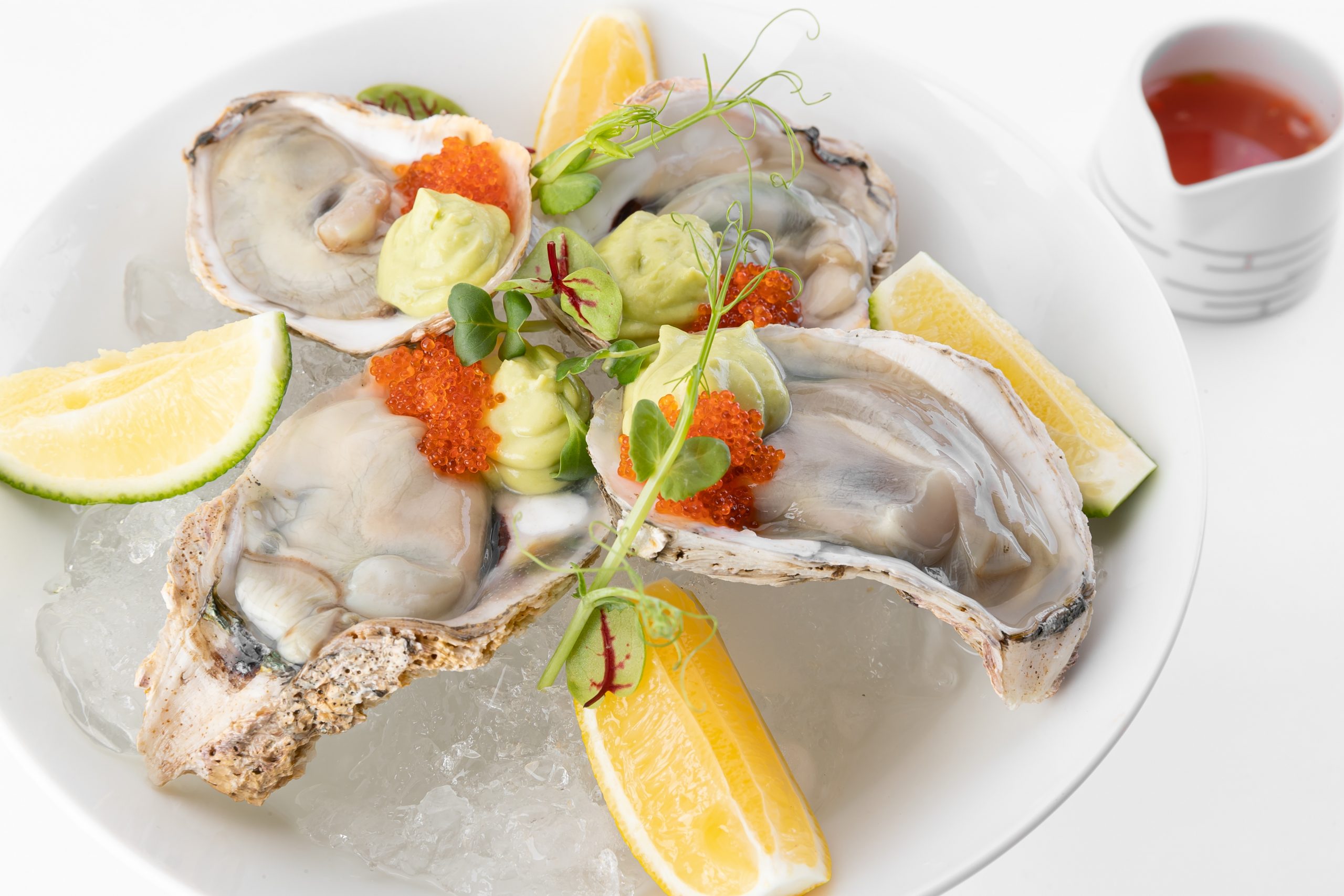
The chef infuses his foreign experiences into Filipino cuisine, presenting something new and familiar at the same time. For example, he takes a seafood lumpia (spring roll; P980) and presents it in the shape of a tart. It’s filled with lobster and crab, with a crystallized malunggay (moringa) chip, and dipped in calamansi aioli-aligue (local citrus and crab fat) dip. The freshness of the seafood made me think of vacations spent by some of our nation’s better shores. An accompanying dish of oysters (P500), served raw with finger limes and avocado crema, had an aggressive taste of the sea, and the oysters felt as if they were still bursting with seawater.

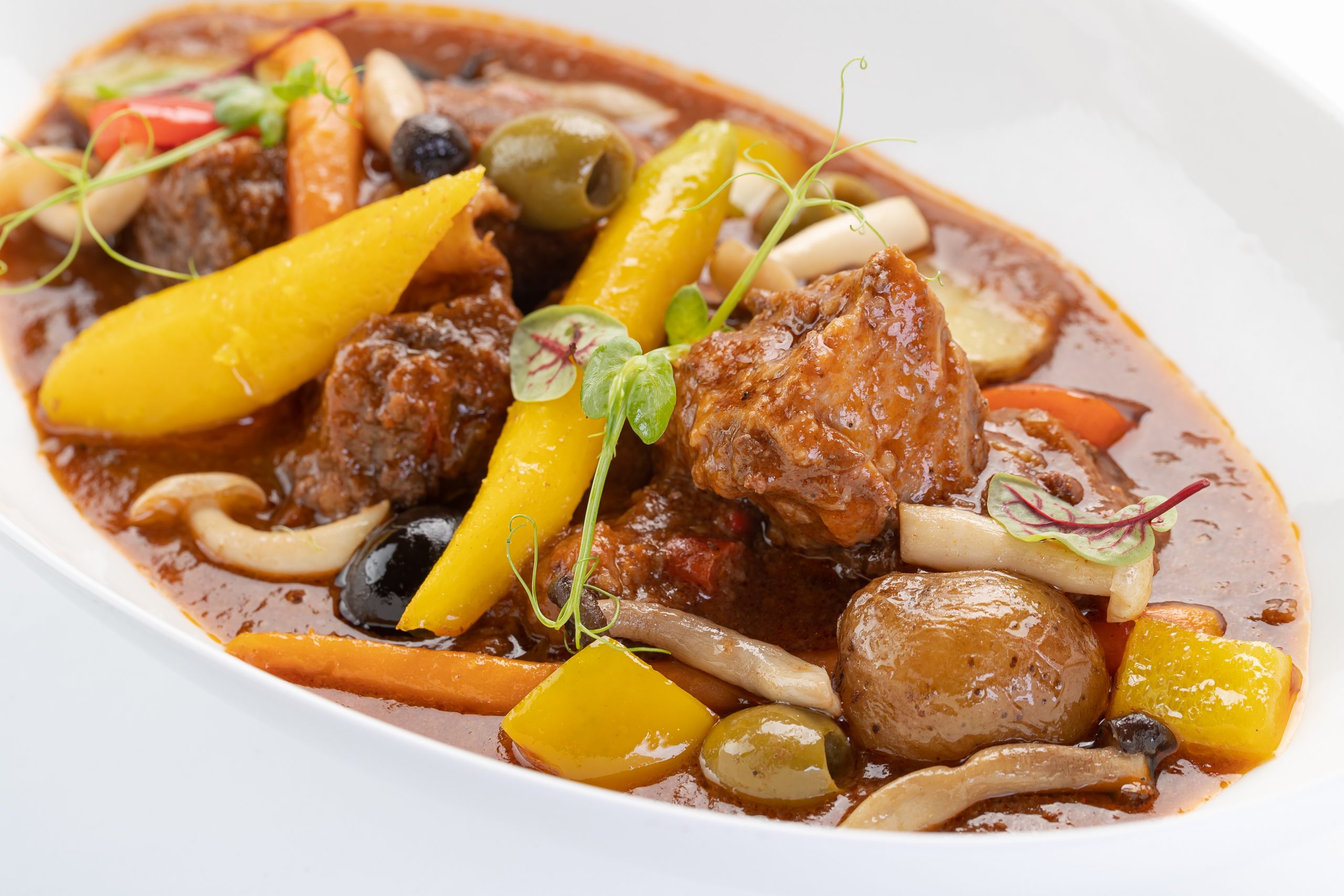
A pea and malunggay soup (P300) reminds one comfortably of local mongo guisado (mung bean soup), what with bits of lechon (roast pig) skin in it (much like you’d add chicharon  cracklings — to your own mongo). Everybody looked in awe at an adobo (a vinegar braised protein, P1,250) — for it had been served with just-right foie gras. The foie gras, just very slightly flavored with the thick, caramelized adobo sauce, instructs one to savor it as an experience, thus guiding your tongue to appreciate the careful braising that led to a rich sauce and very tender chicken.

Another dish, a kare-kare (a peanut-based stew; P980) was made with 24-hour slow cooked US Angus beef brisket, asparagus, baby Baguio petchay (Chinese cabbage), crispy fried baby eggplants, roasted and crushed peanuts, and bagoong (shrimp paste). A knife cut through the beef like butter, while the silky sauce, despite its cosmopolitan companions, tastes like something made with love by one of your own beloved relatives. All this and more, of course, was served with generous servings of rice (it was a Filipino feast, after all).

Dessert included a Chichingka, a cheesecake and bingingka (rice cake) hybrid, made with salted eggs and toasted coconut, served on a tiny little ceramic stove that gave a puff of smoke when attendants dripped a little vanilla scent into it. It tasted rich and creamy, and was much too heavy for all of us at the table, stuffed to the gills as we were.

FRESH FROM THE SOURCE
Mr. San Jose sources most of his ingredients locally: his oysters, for example, were sourced from Caticlan. His most challenging dish, for him is the paksiw (fish braised in vinegar), carefully poached and sitting on a bed of adlai grains.

Speaking of his many seafood selections, he said, “Talagang mga Pilipino kasi, normally, more tayo sa seafood eh. Mas madali syang i-source (Filipinos really are more into seafood, and it’s easier to source).”

He also added that he’s taking advantage of the location’s proximity to the sea, therefore allowing for fresher seafood. Despite access to some of the world’s best, all the time, he says, “As a Filipino (restaurant), kailangan local rin ang gamitin natin (we still need to use local ingredients).”

For most of us who have been reacquainted with our stoves during the pandemic, the prospect of Filipino food might have seemed banal. The magic of Haliya, however, was to take familiar elements of what we already have and transform it into something luxurious and yet somehow still familiar. The sensation would be akin to the stepsisters meeting Cinderella at the ball, after they had just seen her face in their kitchen.

Speaking of people rushing home before midnight, we ended the dinner by 11 p.m. (the end of the metropolis’ curfews took effect that midnight). These had been the people who had known dinners that went on into the wee hours of the morning. Our stomachs had shrunk — perhaps because the months in isolation had removed the reason for and the memory of feasting. It seems almost fitting, then, for this restaurant, in one of the city’s most luxurious properties, to serve Filipino food in this luxurious manner: it’s an invitation to a promise of lost abundance; a faith and pride in who we are, and what we can still do.

Haliya is open daily for dinner from 5 p.m. to 11 p.m. Reservations are encouraged due to limited seating and restricted capacities for indoor dining. For inquiries and reservations, call 8800-8080 or e-mail guestservices@cod-manila.com or visit www.cityofdreamsmanila.com.

Peach pizza, anyone?

YO FERNANDO PIZZA

A NEW Quezon City restaurant is set to shake things up. We’ve heard that before, but then, you’ve never had peaches on a pizza, have you?

Diner 55 in Quezon City is a passion project of Jean Dumago-Descallar, who named her restaurant after her own age, in homage to her own pursuit of her dreams.

“When I was young, my family could not afford delicious food especially those served by restos because we weren’t fortunate enough. Growing up poor, it was heaven for me every time my parents treated me in a carinderia (street-side eatery) that served affordable local delicious and comfort food. Until now, I still eat there every time I visit my hometown in Mindanao,” she said.

During the Oct. 29 press conference, she said that she got the idea from a restaurant in the US that she really liked. She remembered telling herself, “Soon, I’ll be having my own restaurant.”

To achiever her dream, she sought the help of RJ Ungco, President and CEO of Ungco Restaurant Management Consultancy, who helped her conceptualized the menu (55 dishes in total). Mr. Ungco has had experience working in Le Souffle, Prince Albert, The Cravings Group, Peri-Peri Charcoal Chicken, and Shrimp Bucket; being in the industry for over 20 years. “[The number] 55 also represents two hands ready to serve and help,” said Ms. Dumago-Descallar, citing their own initiatives to provide employment for the less fortunate.

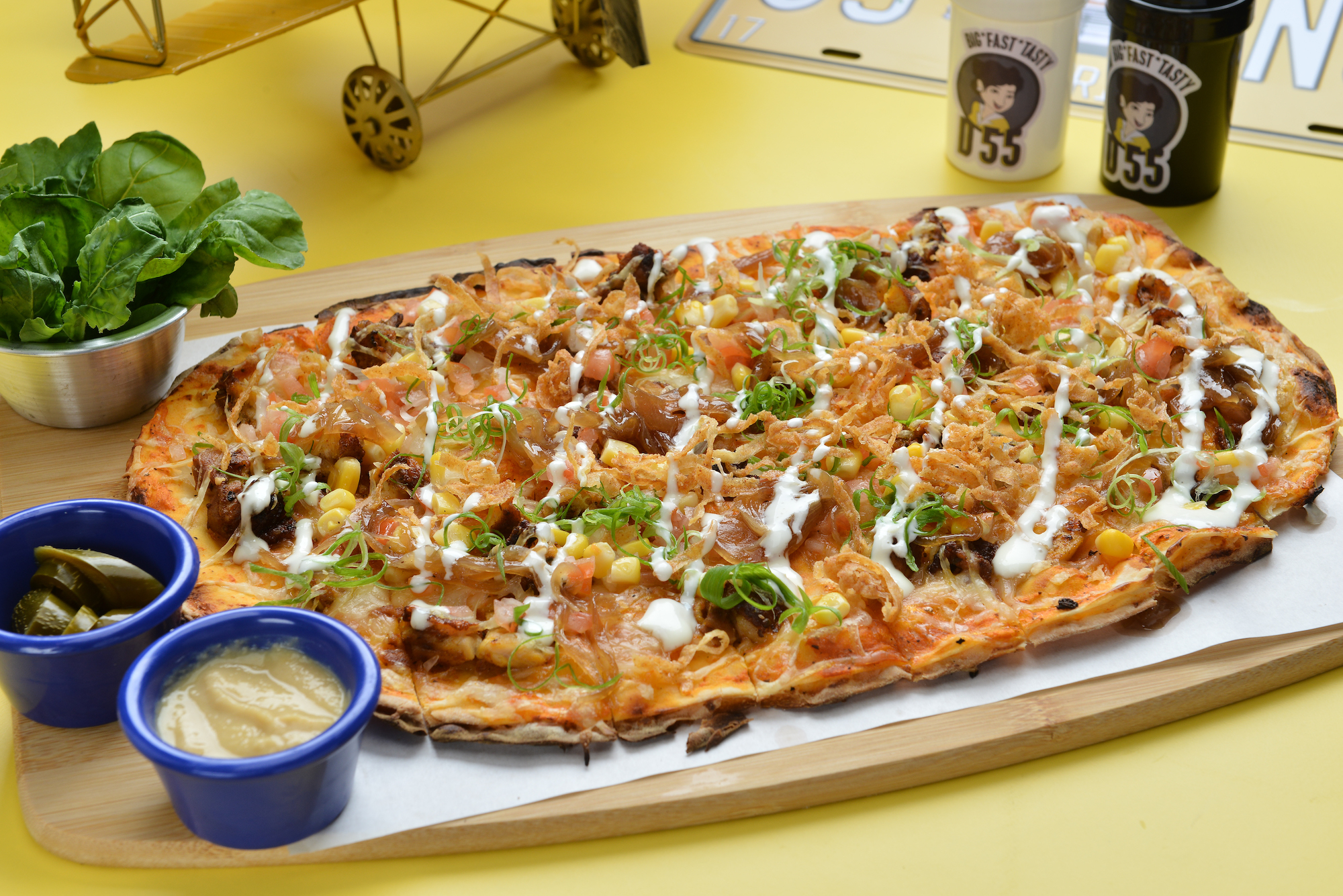
BusinessWorld got to taste two out of the 55 dishes: the Hey Jean and Yo Fernando pizzas (named after Ms. Dumago-Descallar and her husband). The Hey Jean is designed to be rolled up with arugula, and is topped with peri-peri chicken, caramelized onions, chickpea and corn hummus, and jalapeños. It’s pleasantly tangy sweet, and tasty, even with the novel toppings.

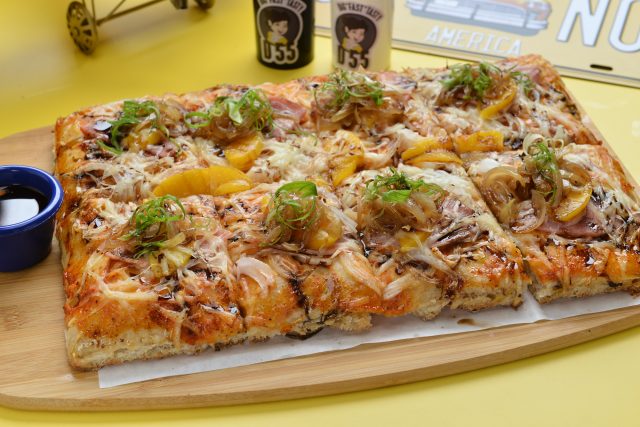
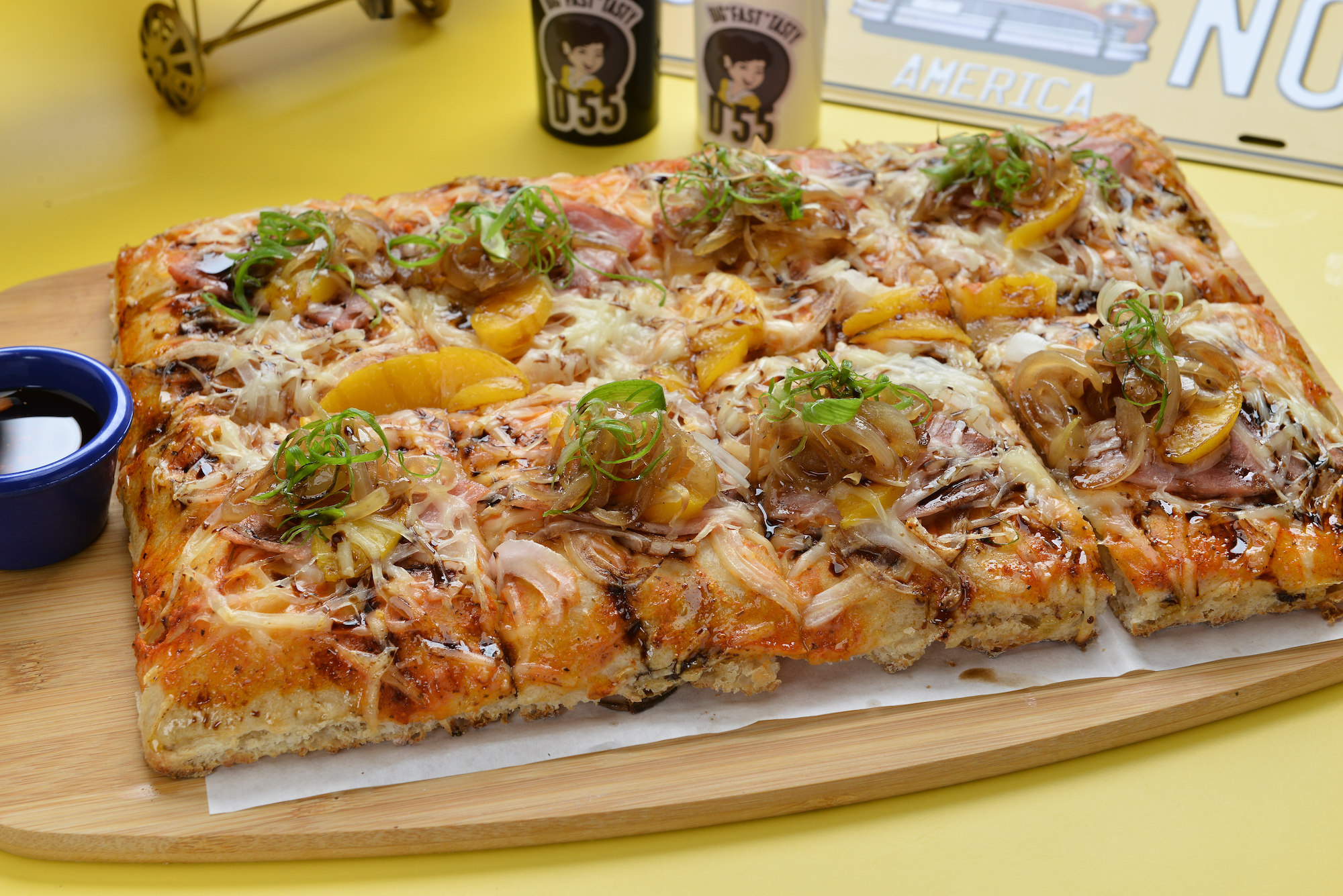
The Yo Fernando pizza has a pleasantly chewy crust, double-smoked ham, mozzarella cheese, and a balsamic reduction on tomato sauce. Oh, yes, and peaches. Mr. Ungco said that despite his experience working in Italy, his favorite pizza happens to the Hawaiian — making the Yo Fernando a riff from the pineapple-topped pizza. It’s really quite good, and tastes like biting into a hefty burger — the peaches aren’t noticeable, and steers into the way of sweet onions or peppers. Other menu items include cereal milk panna cotta, Chicken and waffles (with a bit of ube or purple yam), and a variety of burgers and rice bowls.

If we judge by the two pizzas alone, we’re going to give points to Diner 55 by starting a conversation on what goes into a pizza, but, more importantly, serving food with quality and a now-foreign sense of food tasting earnest and honest. It feels like someone innocently put all of the things they like on a pizza and expected someone else to like it, with that gamble unexpectedly paying off.

Speaking of payoffs and gambling, we asked Ms. Dumago-Descallar why she put up a restaurant in the middle of the pandemic. It’s quite a huge investment in more ways than one: it has 550 sqm. of space spread across three levels, and a dining capacity of 200 seats — though health-related restrictions only allow them to seat about 64 for now. No matter, since an –al fresco area sits about 10 people. Ms. Dumago-Descallar is optimistic. “I believe that the situation is not permanent,” she said. “By 2022, this will become okay already.” — Joseph L. Garcia

Diner 55 is at 1-i Dr. Garcia Street cor. Mother Ignacia Ave., Brgy Paligsahan, Quezon City or call 7256-4345 to place orders for pickup or delivery. The new diner is open daily from 11 a.m. until 8 p.m.