Home Blog Page 6845

COVID infections below 10,000 for 7th straight day

PHILIPPINE STAR/ MICHAEL VARCAS

PHILIPPINES posted 6,835 coronavirus infections on Monday, the seventh straight day the tally remained below the 10,000 mark.

This brought the total to 3.6 million, the Department of Health (DoH) said in a bulletin. The death toll hit 54,538 after 12 more patients died, while recoveries rose by 16,330 to 3.45 million.

The agency said 19.1% of 36,773 samples tested positive for the coronavirus on Feb. 5, way above the 5% threshold set by the World Health Organization (WHO).

There were 116,720 active cases, 7,806 of which did not show symptoms, 103,900 were mild, 3,184 were moderate, 1,495 were severe and 335 were critical.

DoH said 98% of the latest cases occurred on Jan. 25 to Feb. 7. The top regions with new cases in the past two weeks were Metro Manila with 949, Western Visayas with 822 and Central Visayas with 624 infections. All of the deaths occurred in January.

The Health department said 16 duplicates had been removed from the tally, four of which were reclassified as recoveries, while 12 recoveries were relisted as deaths. Two laboratories failed to submit data on Feb. 5.

It added that 41% of intensive care unit beds in the country had been used, while the rate for Metro Manila was 33%.

Daily coronavirus infections in the Philippines might drop to 4,000 by mid-February and to as low as 1,000 by the end of the month, the OCTA Research Group from the University of the Philippines said at the weekend.

Daily infections in Manila, the capital and nearby cities might return to the pre-Omicron surge level by the end of February if the decline continues, OCTA fellow Fredegusto P. David tweeted.

The national average daily cases fell further to 8,442 on Feb. 1 to 5, from 17,025 a week earlier and from 28,666 two weeks earlier.

The Philippines and other countries have started easing lockdowns amid hopes that the highly mutated Omicron variant, which was first detected in South Africa, might have peaked.

The country is set to allow the entry of fully vaccinated nationals of non-visa countries starting Feb. 10, almost two months after it suspended a plan to welcome back foreign tourists due to the threat of the Omicron variant.

Mr. David said a potential influx of foreign travelers might lead to another spike. “Spikes in cases could happen but this is dependent mostly on a new variant,” he said in a Facebook Messenger chat. 

The World Health Organization has said some countries with high immunity rates, strong healthcare systems and decreasing coronavirus infections and deaths could now consider easing restrictions, according to a report by the Los Angeles Times.

The Philippines is scrambling to vaccinate more people as it reopens the economy. It had fully vaccinated 59.81 million people as of Feb. 4, while almost 60.66 million have received their first dose, data from the Health department showed. More than eight million booster shots have been given out.

Senators slam gov’t plan to vaccinate kids without consent

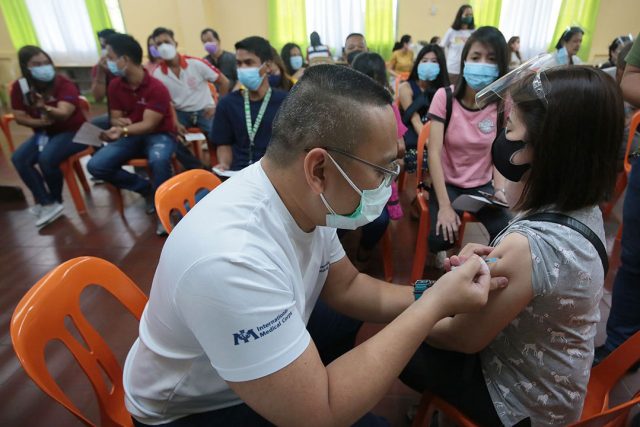
THE GOVERNMENT has started vaccinating children aged 5 to 11 years. — PHILIPPINE STAR/MICHAEL VARCAS

A SENATOR on Monday opposed a government plan to vaccinate children without their parents’ consent.

“If the parent is not agreeable to it, it should be respected,” Senator Ana Theresia “Risa” N. Hontiveros-Baraquel told reporters at a news briefing in Filipino, adding that the state should use information campaigns to fight vaccine hesitancy.

The Health department earlier issued a memo allowing willing children to get vaccinated without their parents’ consent.

Under the memo, the state may act as the legal protector of citizens unable to protect themselves.

The government started vaccinating children aged 5 to 11 against the coronavirus on Monday. It was supposed to start on Feb. 4 but was pushed back after the first batch of vaccine delivery got delayed.

Almost 800,000 doses of the vaccine made by Pfizer, Inc. finally arrived on Friday night.

The Pfizer vaccine is the only shot approved for emergency use by kids aged 5 to 11 years. The vaccine has a lower dosage and concentration compared with the one given to the 12 to 17 age bracket.

The Philippines started vaccinating minors 12 to 17 years in October. The vaccination of children aged 5 to 11 years started in six sites in the capital region.

Vaccination sites included the Philippine Heart Center, Philippine Children’s Medical Center, National Children’s Hospital, Manila Zoo, SM North Edsa and Fil Oil Gym in San Juan City. It will be expanded to Central Luzon and the Calabarzon region on Feb. 8.

“Even in the midst of a pandemic and recession, parents want confidence when it comes to the health of their children as we are also returning to work and employment,” Ms. Hontiveros said.

“This issue also needs to be settled properly,” she said, adding that hopefully, it doesn’t have to reach the courts.

In a separate statement, Senator María Imelda Josefa “Imee” R. Marcos said the government cannot usurp parental authority. “Parents have the right to decide on the health and safety of their children.”

“I hope this push to vaccinate kids is really for their sake and not for the sake of vaccine purchases already made,” she added.

Health Undersecretary Myrna C. Cabotaje, who heads the Philippines’ National Vaccine Operations Center, had said the government seeks to inoculate 15.5 million children aged 5 to 11 years.

“Let’s prioritize the elderly and not lose sight of fully vaccinating the most vulnerable groups before rushing to vaccinate healthy kids,” Ms. Marcos said.

She cited the World Health Organization’s call for governments to first achieve a high level of vaccination among high-risk groups before vaccinating minors.

As of Friday, 59.8 million have been fully vaccinated against the coronavirus, while 60.7 million have received their first dose. About 8 million people have received booster shots.

The Health department on Friday said more than two-thirds of coronavirus cases among the pediatric group in January were children aged 11 years and younger.

More children got infected with the coronavirus during the recent surge spurred by the highly mutated Omicron variant, it said.

Kids aged 11 years and younger accounted for 56% of the total pediatric cases in September, when the Delta variant spurred a spike in infections. — Alyssa Nicole O. Tan

MAP seeks real-time tracking of election spending this year

THE GOVERNMENT should track the spending of candidates at this year’s elections, according to the Management Association of the Philippines (MAP). 

Campaign donations should be tracked in real time to ensure politicians don’t hide these, MAP President Alfredo E. Pascual told the ABS-CBN News Channel on Monday. The winning presidential candidate should also be monitored “with respect to dealing with his or her donors.”   

“This has to be done on a real-time basis using artificial intelligence-driven technology,” he said. It can be done now rather than wait at the end of the election.”

Under the law, candidates must submit a list of all contributions and election spending within 30 days after elections.

“We want to track on a real time basis so we know that there is no ‘doctoring’ that happens,” he said. He added that some candidates run to make money from excess campaign funds even if they don’t have a chance of winning. — R.M.D. Ochave

Philippines set for border reopening to foreign tourists on Feb. 10

PANGLAO MUNICIPAL TOURISM OFFICE

FULLY-VACCINATED foreign nationals from 157 countries included in the Philippine’s visa-free list will again be allowed entry starting Feb. 10 as local coronavirus cases decline and the government eases restrictions to pump up the economy.

Immigration Commissioner Jamie H. Morente reiterated that inbound foreigners have to present proof of vaccination and other documentary requirements set by the Inter-Agency Task Force for the Management of Emerging Infectious Diseases (IATF). 

Mr. Morente noted that unvaccinated foreigners, regardless of visa type, will not be allowed entry.

“Following the direction of the IATF, unvaccinated and partially vaccinated aliens will not be allowed entry, only those who are fully vaccinated maybe admitted,” he said in a statement on Monday.

Among the other requirements are a negative RT-PCR test result 48 hours prior to departure from their country of origin, passport valid for at least six months, outbound ticket, and travel insurance that includes coronavirus with a minimum coverage of $35,000.

Tourism is one of the sectors hit hardest by the pandemic, with its contribution to the national economy dropping to 5.4% in 2020 from 12.8% in 2019, based on Philippine Statistics Authority data. 

Tourism revenues in 2020 plunged by 83% to P81.4 billion after the country closed its borders and implemented mobility restrictions. 

The Department of Tourism said over a million industry workers were affected. — John Victor D. Ordoñez

2 gov’t agencies partner for COVID-waste management in public transport

PHILSTAR

THE NATIONAL Solid Waste Management Commission (NSWMC) is partnering with the Department of Transportation to manage medical waste such as face masks in all public transport vehicles in the country.

“We need to properly segregate and dispose of these potentially contaminated masks, whether these are from our households or these were used while commuting, to prevent the further spread of COVID-19 (coronavirus disease 2019),” Environment Secretary Roy A. Cimatu, who chairs the NSWMC, said in a statement.

Under NSWMC Resolution No. 1469, the Transport department is tasked to install yellow bins and bags in all transport vehicles in the aviation, maritime, and railways sectors for the proper storage of waste generated amid the pandemic.

The Environment department also directed the strict monitoring of health care waste from international aircraft and cruise ships.

“Personal protective equipment such as face masks will never go away in the near future,” Environment Undersecretary Benny D. Antiporda said. 

“We need to do something about the growing number of these household health care wastes so it doesn’t contaminate waterways at main thoroughfares,” he added. 

In December, the Department of Environment and Natural Resources proposed a P181.6-million budget for the establishment of a preliminary treatment and storage facility for COVID-related medical waste. — Luisa Maria Jacinta C. Jocson

VP Robredo strengthens bailiwick support with Kusog Bicolandia endorsement

OVP PHOTO

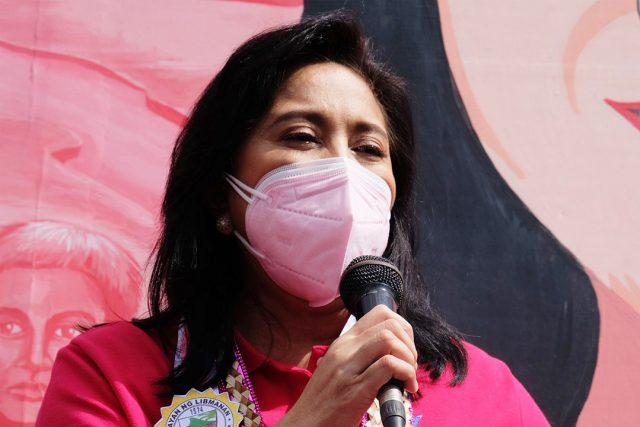
PARTY-LIST Kusog Bicolandia on Monday endorsed the presidential candidacy of Vice President Maria Leonor “Leni” G. Robredo and launched the BikoLeni movement in support of their standard-bearer.

Ms. Robredo, who hails from Bicol Region, and her running mate Senator Francisco “Kiko” N. Pangilinan will hold their proclamation rally in the Bicol province of Camariñes Sur on Feb. 8, the start of the official campaign period for national candidates in the May 9 elections. 

In a speech on Monday in Naga City, the commercial hub of Bicol, she encouraged her supporters to participate in a stationary motorcade to save on fuel costs and prevent traffic. 

“We will try to pass through the whole area.” 

Ms. Robredo’s camp has also adopted a rose symbol for its three-month campaign which her spokesman, lawyer Barry M. Gutierrez, said stood for the core of their campaign — “love, hope, and a better life.” 

PACQUIAO
Meanwhile, Senator Emmanuel “Manny” D. Pacquiao, Sr., who is also running for the top seat, was formally named on Monday as “Ambassador for the Homeless and Vulnerable” by international philanthropic organization Spring Rain Global Consultancy, Inc. for his efforts in housing and consistent donations to those in need.

If elected, the former world boxing champion said he plans to build at least 10 million houses that will be distributed for free to informal settlers and more than nine million families who do not own a house.

Mr. Pacquiao will have his proclamation rally at 3 p.m. on Tuesday in his hometown General Santos City. — Alyssa Nicole O. Tan 

Moreno-Ong tandem to back fisheries department, more foreign investments

PHILSTAR

PRESIDENTIAL candidate and Manila Mayor Francisco “Isko” M. Domagoso vowed full support to the creation of a fisheries department separate from the Department of Agriculture if he wins in the May elections.

Mr. Domagoso, the standard-bearer of Aksyon Demokratiko, said in a statement on Monday that he will certify as urgent bills that will upgrade the Bureau of Fisheries and Aquatic Resources into a department-level agency to “help fishermen earn more.”

Several related bills were filed in the current Congress, but all have remained pending at the committee level.

He also said that he will order the establishment of cold storage facilities in agricultural regions and provinces where the main source of income is fishing. 

Meanwhile, Mr. Domagoso’s running mate, Willie T. Ong, said the Philippines should attract more foreign investments to help boost the economy.

“If we are more open to foreign direct investments, we can be assured that more foreign investors will go here. Because if there are more foreign investors, they will be paying tax and creating more jobs, especially for people in the provinces,” he said in Filipino in a radio interview on Monday. 

Mr. Ong also said that they will push for growth outside the capital.

“Our development is too focused on the NCR (National Capital Region). We also need to develop the regions in Visayas and Mindanao by building more houses and roads so that somehow, there will be more jobs and our economy will be more balanced.”

He also said that digitalizing government processes is one way of fighting corruption.

“I have worked in the Department of Health for five years. That’s when I saw that the computerization in the Philippine Health Insurance Corp. was crucial, because of some wrong reports,” Mr. Ong, a medical doctor, said. “Of course, if the process is done manually, it is easy to make false reports.” 

He also said that the government needs to strengthen information campaigns about COVID-19 vaccines.

Mr. Ong gives medical advice on his Facebook page and his Youtube channel, which has 9.4 million subscribers. — Jaspearl Emerald G. Tan

International group to monitor May 9 polls for rights violations

A GLOBAL human rights coalition has launched an initiative to monitor election-related violence during this year’s national and local elections. 

The International Coalition for Human Rights in the Philippines (ICHRP) announced on Monday that it will have an International Observer Mission (IOM), which aims to provide independent monitoring of the May 9 polls to inform the international community about the election situation in the country.

The electoral watchdog campaign will start this month until the confirmation of elected candidates in June.

The mission was a recommendation by INVESTIGATE PH’s report on cheating and violence in past Philippine elections, ICHRP Global Council Chairperson Peter Murphy said during the live-streamed launch. 

The IOM will be composed of non-Filipino observers in all regions of the country who will present findings every two weeks to the media, he said. 

“The good thing about being in partnership with the international community is having cross border comparisons to share ideas and new perspectives on possible solutions to the problems we face,” Kontra Daya Convenor Danilo A. Arao said. 

The initiative will have participation from academics around the world and a former senator from Australia. 

“People’s lives literally depend on this election to be safely conducted based on the culture of violence from previous elections that may spill over to this year’s elections,” IOM Commissioner Lee Rhiannon, a former senator of Australia, said. 

Mr. Arao said the initiative is independent and not required to register with the Commission on Elections (Comelec). 

The campaign period starts Feb. 8 for national positions and March 25 for local post, both ending on May 7. 

E-RALLIES
Meanwhile, Comelec will start broadcasting e-rallies of national candidates on their Facebook page starting Tuesday night. 

Each presidential, vice presidential, senatorial, and party-list candidate will be covered in the live-streamed rallies.

The first night will feature presidential bets Norberto B. Gonzales, Emmanuel “Manny” D. Pacquiao, Sr., and Faisal M. Mangondato, Comelec Spokesman James B. Jimenez said in a tweet on Monday.

Comelec has released rules for in-person campaigning, which include limited physical contact to comply with public health protocols. — John Victor D. Ordoñez

Taiwan to allow Filipino workers in by Feb. 15

FILIPINO workers will again be allowed to enter Taiwan starting Feb. 15, the Manila Economic and Cultural Office (MECO) announced on Monday.

In a statement, MECO said the Taiwan Economic and Cultural Office in Manila confirmed the border reopening to Resident Representative Wilfredo B. Fernandez.

“We want to thank the Taiwan officials, as well as their business leaders, for their continuing trust and confidence in the world-class, competence, and work ethics of Filipino workers,” Mr. Fernandez said in a statement on Monday.

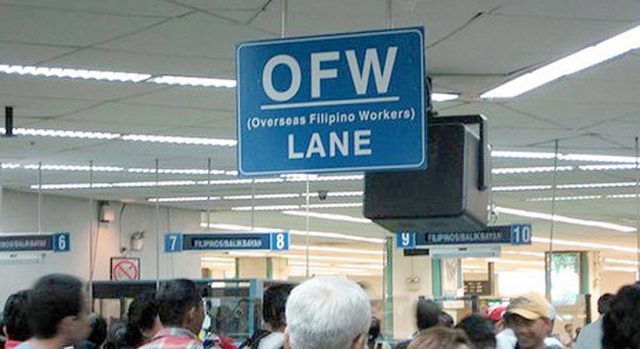
He also reminded recruitment agencies and overseas Filipino workers (OFWs) to submit genuine and complete documents in line with regulations set by the government of Taiwan. 

Philippine Labor Attaché Cesar Chavez, Jr. earlier said that Taiwan authorities previously found fake vaccination cards submitted by migrant workers from another country.

Last month, Mr. Fernandez met with Taiwan’s labor officials where the Philippines was cited as an important contributing partner to Taiwan’s economy.

At least 35,000 OFWs are awaiting lucrative postings in Taiwan with roughly 11,000 new hires and 24,000 replacements, according to MECO. — John Victor D. Ordoñez

Reconstituting the SEC as primary agency to evolve the CG reform in private corporate sector

RAWPIXEL.COM-FREEPIK

When we consider that the old Corporation Code operated under the universally accepted principle of “Maximization of Shareholder Value,” it was not surprising that the Security and Exchange Commission (SEC) undertook to pursue corporation governance (CG) reforms under the “no-sanction approach” in the original CG Code, since it was introducing what was then the minority school of thought, “Stakeholder Theory,” and invoking the “State’s policy to actively promote corporate governance reforms aimed to raise investor confidence, develop capital market and help achieve high sustained growth for the corporate sector and the economy.” CG reforms under the old Corporation Code were really an experiment to adjunct the stakeholder theory into the well-established maximization of shareholder value doctrine statutorily embedded in the old Corporation Code.

The Revised Corporation Code embraced many of the CG reforms undertaken by the SEC through its various CG codes and issuances, and constituted the SEC as the primary agency to evolve the reform movement in the private corporate sector, particularly for publicly-held corporations and other corporations the businesses of which are vested with public interests.

Like its counterpart in the public corporate sector, i.e., the GOCC Governance Commission (GCG), the SEC under the Revised Corporation Code has been re-constituted as the “primary regulatory, monitoring and oversight agency, with authority to formulate, implement and coordinate policies to ensure good corporate governance for the private corporate sector,” through the following sections:

(a) SECTION 22: Grants the SEC powers to:

(i) Classify corporations as vested with public interests, after taking into account relevant factors which are germane to the objective and purpose of requiring the election of an independent director, such as the extent of minority ownership, type of financial products or securities issued or offered to investors, public interests involved in the nature of business operations, and other analogous factors; and,

(ii) Issue rules and regulations governing the qualification, disqualifications, voting requirements, duration of term and term limits, maximum number of board memberships of independent directors, and other requirements that SEC will prescribe “to strengthen their independence and align with international best practices”;

(b) SECTION 26: Expressly recognizes the power of the SEC to provide for further qualifications or other disqualifications for directors, trustees and officers under the aegis that the SEC is the “primary regulatory agency” in the promotion of good CG or as a sanction in its administrative proceedings;

(c) SECTION 49: Expressly recognizes the power of the SEC to require other items to be reported by the Board of Directors to stockholders or members at the regular meeting “in the interest of good corporate governance and the protection of minority stockholders;”

(d) SECTIONS 154 TO 156: Grant the SEC investigation and prosecution powers for alleged violation of the RCCP, or of a rule, regulation, or order of the SEC itself, with full authority to administer oaths, issue subpoena of witnesses and documents, as well as issue cease and desist orders;

(e) SECTION 157: Grants the SEC the power to hold, after due notice and hearing, in contempt and impose administrative fines against any person who, without justifiable cause, fails or refuses to comply with any lawful order, decision, or subpoena issued by the SEC;

(f) SECTION 158: Grants to the SEC the power to impose, after due notice and hearing, any of the following administrative sanctions, for violation of any provision of the RCCP, rules or regulations, or any of the SEC’s orders, thus:

(i) Impose a fine ranging from P5,000 to P2 million and not more than P1,000 for each day of continuing violation, but in no case to exceed P2 million;

(ii) Issue a permanent cease and desist order;

(iii) Suspension or revocation of the Certificate of Incorporation; and

(iv) Dissolution of the corporation and forfeiture of its assets under the conditions in Title XIV of the RCCP;

(g) SECTION 178: Grants the SEC “visitorial powers over all corporations,” which powers include the examination and inspection of records, regulation and supervision of activities, enforcement of compliance, and imposition of sanctions in accordance with the Code;

(h) SECTION 179: Includes the following among the powers, functions and jurisdiction of the SEC under the Revised Corporation Code, thus:

(i) Impose sanctions for the violation of the RCCP, its implementing rules and orders of the SEC;

(ii) Promote CG and the protection of minority investors, through, among others, the issuance of rules and regulations consistent with international best practices;

(iii) Prescribe the number of independent directors and the minimum criteria in determining the independence of a director;

(iv) Impose or recommend new modes by which a shareholder, member, director, or trustee may attend meetings or cast their votes, as technology may allow, taking into account the company’s scale, number of shareholders or members, structure, and other factors consistent with the basic right of corporate suffrage; and,

(v) Formulate and enforce standards, guidelines, policies, rules and regulations to carry out the provisions of the RCCP.

In addition, the SEC is granted adjudicative or quasi-judicial powers to summarily rule on the following CG issues, most of which were not found in the old Corporation Code, thus:

(a) SECTION 17: When the corporation fails to comply with SEC’s order to cease and desist from using an unauthorized name, the SEC may hold the corporation and its responsible directors or officers in contempt and/or hold them administratively, civilly and/or criminally liable under the RCCP and other applicable laws, and/or revoke the registration of the corporation.

(b) SECTION 25: In relation to the election of directors or trustees and officers, grants to the SEC the power to:

(i) Summarily order that an election be held if there has been a failure to elect directors or trustees on the schedule or reschedule dates for election;

(ii) Issue such orders as may be appropriate, including orders directing the issuance of a notice stating the time and place of the election, designated presiding officer, and the record date or dates for the determination of shareholders or members entitled to vote.

(c) SECTION 27: In relation to a disqualified director or trustees, granting the SEC —

(i) The power to, motu proprio or upon verified complaint, and after due notice and hearing, order the removal of a director or trustee elected despite the disqualification, or whose disqualification arose or is discovered subsequent to an election;

(ii) Removal of a disqualified director shall be without prejudice to other sanctions that the SEC may impose on the members of the Board of Directors who, with knowledge of the disqualification, failed to remove such director or trustee;

(d) SECTION 73: Within five days from receipt of the report from an aggrieved party who has been denied his right of inspection and/or reproduction, the SEC shall conduct a summary investigation and issue an order directing the inspection or reproduction of the requested records.

The SEC has certainly been granted “awesome powers” to promote good CG. The propensity by which the SEC invokes its awesome regulatory, quasi-legislative and quasi-judicial powers under the Revised Corporation Code vis-à-vis the “comply or explain approach” championed in its 2015 CG Blueprint, will certainly have a great impact on the course of pursuing the CG reform in the private corporate sector of the Philippines.

Preliminarily, it may be noted that under the aegis of the Revised Corporation Code, the SEC, under Chairman Emilio B. Aquino, issued in November 2019, the CG Code for Public Companies and Public Issuers, which retained the same framework as the CG Code for PLCs, including its “comply or explain approach.”

This article reflects the personal opinion of the author and does not reflect the official stand of the Management Association of the Philippines or the MAP.


Atty. Cesar L. Villanueva is co-chair for Governance the MAP Committee on ESG, chair of Institute of Corporate Directors (ICD), the first chair of Governance Commission for GOCCs (GCG), former dean of the Ateneo Law School, and founding partner of Villanueva Gabionza & Dy Law Offices.

map@map.org.ph

cvillanueva@vgslaw.com

Protecting the Overseas Filipino right to vote

RAWPIXEL.COM-FREEPIK

National elections for Filipino voters based in the Philippines is set for Monday, May 9. Currently, campaigns are in full swing, with both candidates and voters navigating the online and/or socially distanced environment which is a huge departure from the usual big crowds, handshakes, and door to door visits. In other parts of the world, Overseas Filipinos prepare for the same vote (minus the vote for local positions) in a voting period that begins on April 10 and ends on May 9, which allows for many of our more mobile kababayans (countrymen) to get to an embassy or consulate to vote or receive and mail in their ballot when this is possible.

The longer voting period and the option for postal voting may not necessarily mean an easier time at the polls. The pandemic context varies greatly across the territories where our Overseas Filipinos live and work. Some may be hindered not just by additional COVID related measures but also by cultural and geographic limitations.

Of course, the larger question is what the overseas voter might be looking for in terms of better governance for Filipinos based overseas. In 2016, the Center for Migrant Advocacy and the Working Group on Migration of the Political Science Department of Ateneo de Manila University produced a migrant agenda — the OFWS Agenda for the 2016 presidential elections. The migrant agenda was borne out of a series of consultations with OFWs (overseas Filipino workers) and aimed to inform and guide the voters in general and the OF (Overseas Filipino) voters, as well as the candidates, particularly for national positions, of the aspirations and concrete recommendations to improve the rights and welfare of OFs, OFWs as well as their families in the country and abroad.

In 2016, it revolves around four themes with an accompanying situationer and rationale as well as desired improvements and specific proposals:

O: Overseas Foreign Service posts become “institutions of care”

F: Families of OFWs are provided social and psychological safety nets

W: Workers’ rights are treated as human rights

S: Sustainable jobs are created back home

Late last year, the same group (with support from FES) revisited its OFWS agenda with migrant workers groups and reflected on what an OFW agenda might need, in addition to the issues raised in 2016. A more nuanced understanding of the OFWS agenda arose out of these discussions with stakeholders noting that:

• Philippine government, members, regardless of focus and location must have knowledge of the plight of Filipinos abroad

• Mechanisms for monitoring of the wellbeing of families of OFWs are very much needed, especially in the context of this pandemic

• Pre-departure information, as well as timely information abroad, when done well, can be an integral part of protection of overseas workers’ rights

• More pathways towards return reintegration should be created and sustained

When it comes to choosing candidates who truly support the OFWS agenda, these candidates must be knowledgeable about the facts and realities of the life of the Filipino overseas to truly care about their plight. Good policy and good institutions begin with a clear understanding of these realities. A closer look at publicly available debates and pronouncements by national candidates will bring to light which of them are truly present and truly equipped to respond to the needs of Overseas Filipinos.

Finally, we must continue to watch the electoral process, including the requirements to run the OFW vote. This means fully capacitating the government agencies with the proper budget to run the almost one-month OFW voting period, and all the requirements (including postal voting) that go with it. To illustrate, for this election, COMELEC requested P510 million for implementation of overseas voting; they were given only P111,192,000 (only 21.8%) even though COMELEC spending was on track in 2019. In contrast to the budget allotted for the right of Overseas Filipinos to vote, Overseas Filipino personal remittances reached record highs in 2019 at $33.5 billion and despite the pandemic was at $31.59 billion in late 2021.

Without this first step done right, we run the risk of disenfranchising the OFW sector, which has contributed much through continued remittances even during the most difficult times in the pandemic.


Dr. Maria Elissa Jayme Lao is an assistant professor of the Ateneo Department of Political Science with a Masters in International Studies (MIS) from the University of the Philippines-Diliman. She earned her doctor of Public Administration from the National College of Public Administration and Governance, UP Diliman. Her research interests are in International Relations, Electoral Politics, Political Parties, Philippine Foreign Policy, and Migration.

Electrifying profit and penalties, the case of NGCP, DUs, and ERC

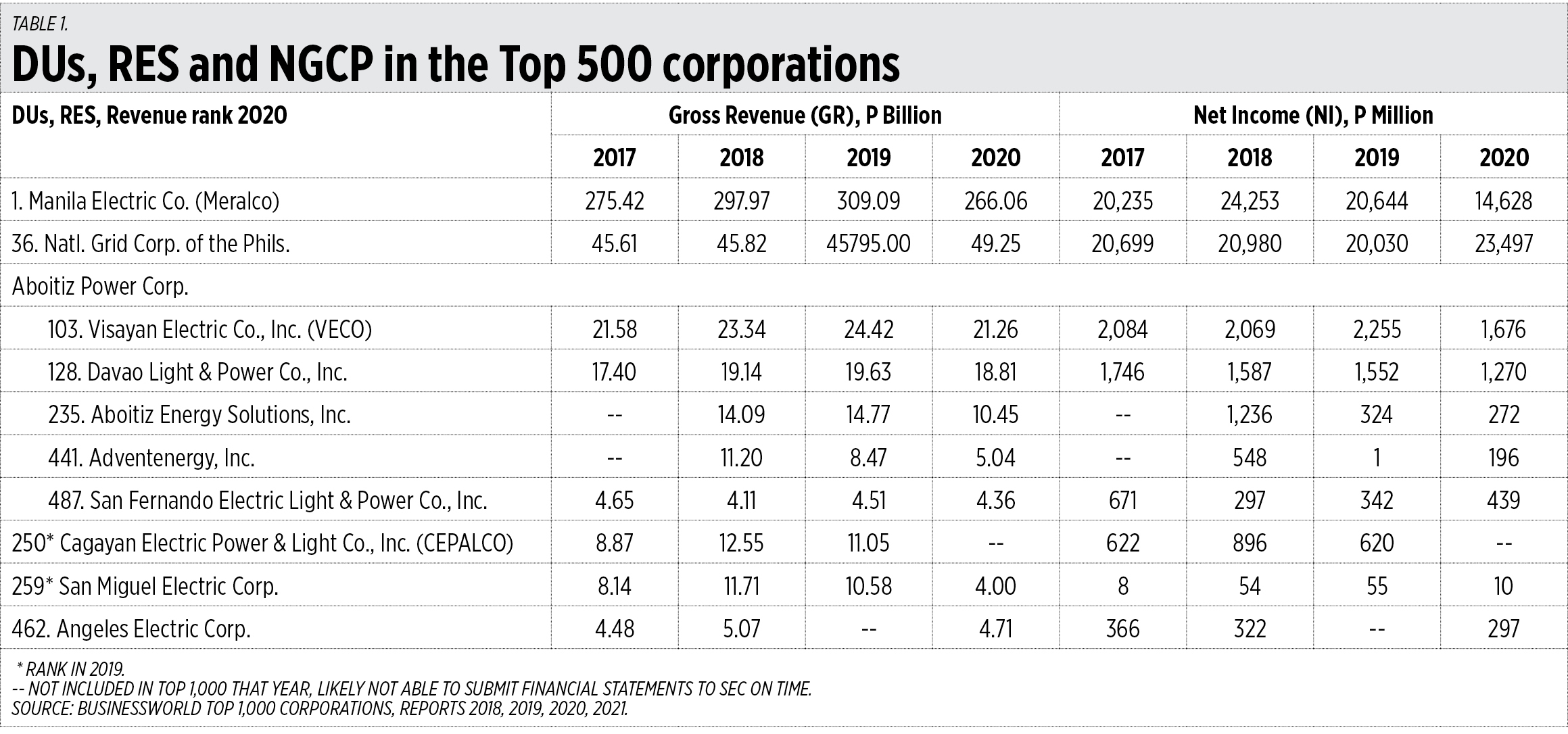
The severe COVID-19 lockdown has pulled down the Philippines’ overall GDP and sales of the big companies in 2020. For instance, the gross revenue (GR) of the top 1,000 corporations was P10.8 trillion in 2020, down from P12.4 trillion in 2019.

We reviewed the financial performance of the major distribution utilities (DUs), retail electricity suppliers (RES), and NGCP. This is a follow up to this column’s piece on Jan. 24 on the financial performance of major power generation companies (gencos) in the Philippines, https://www.bworldonline.com/major-power-companies-the-indonesia-coal-export-ban-and-the-pcci-election/.

NGCP’S HIGH PROFITABILITY DESPITE LOCKDOWN
In 2016, Manila Electric Co.’s (Meralco) GR was P250.71 billion, its net income (NI) was P20.57 billion; the National Grid Corporation of the Philippines’ (NGCP) GR was P45.54 billion, its NI was P21.24 billion.

The gross profit margin (gross profit over gross revenue) of the NGCP was 66% in 2019 and 68% in 2020, which was huge. Over the same period, Meralco’s profit margin was 17% and decreased to 16%.

What explains the huge profitability of the NGCP? And how do some DUs spend some of their profit? See these recent news reports in BusinessWorld:

1. “NGCP needs about 1,800 MW in firm contracts for full coverage” (Jan. 26),

2. “NGCP invites electricity generators to supply power reserves” (Jan. 28),

3. “Bringing light beyond its franchise: Meralco extends help to typhoon-hit areas” (Jan. 19),

4. “San Miguel unit offers best rate for Meralco’s 170-MW requirement” (Feb. 3),

5. “ERC approves increased subsidized rates for SPUG suppliers” (Feb. 2),

6. “ERC fines generation companies P15.5M for unplanned outages” (Feb. 4).

So, the NGCP is not getting enough firm contracts to provide sufficient reserve requirements to avoid those pesky yellow- and red-alerts that occur yearly. It just accumulates a huge profit, which is good news for its investors (40% State Grid Corp. of China/SGCC, 30% Monte Oro Grid, 30% Calaca High).

MERALCO INCOME AND SERVICES
Meralco is also earning well, but it uses part of its profit on doing more community services. When Typhoon Rai (local name “Odette”) hit the country last December and destroyed many structures in the Visayas, Meralco sent 140+ linemen and engineers with 33 vehicles and cranes to help restore electricity quickly in Cebu and Bohol.

The BusinessWorld report noted Meralco’s help, “In Cebu, over 80 engineers and linemen, and 21 vehicles have been deployed to help the Visayan Electric Co. (VECO) and Mactan Electric Co. (MECO) restore electricity service in several parts of the province. In Bohol… close to 60 personnel, along with 13 vehicles.”

The yellow- and red-alerts continued even until last January. With high power demand expected due to the campaign period starting this February and the elections this coming May, Meralco cannot rely on stable supply and price from the Wholesale Electricity Spot Market (WESM) so it has to get its own short-term contract for 170 MW from Feb. 26 to July 25.

ERC’S GOOD AND UGLY POLICIES
The Energy Regulatory Commission (ERC) has made one good policy, protecting consumers in on-grid islands via lowering the cost of the universal charge for missionary electrification (UC-ME), a regular subsidy to consumers in off-grid islands and areas because they rely on gensets running on diesel which can never be cheap.

But the ERC is back to penalizing gencos. It has also penalized a number of DUs and electric cooperatives (ECs). But it seems there were few or no instances where it penalized the NGCP. Like the damage to NGCP’s Negros-Cebu submarine cable last July, caused by a Department of Public Works and Highways (DPWH) project. Instead of the NGCP going after the DPWH for the huge cost of congestion, the cost was passed on to the Negros ECs, which in turn passed this on to the consumers.

TRANSMISSION CONGESTION
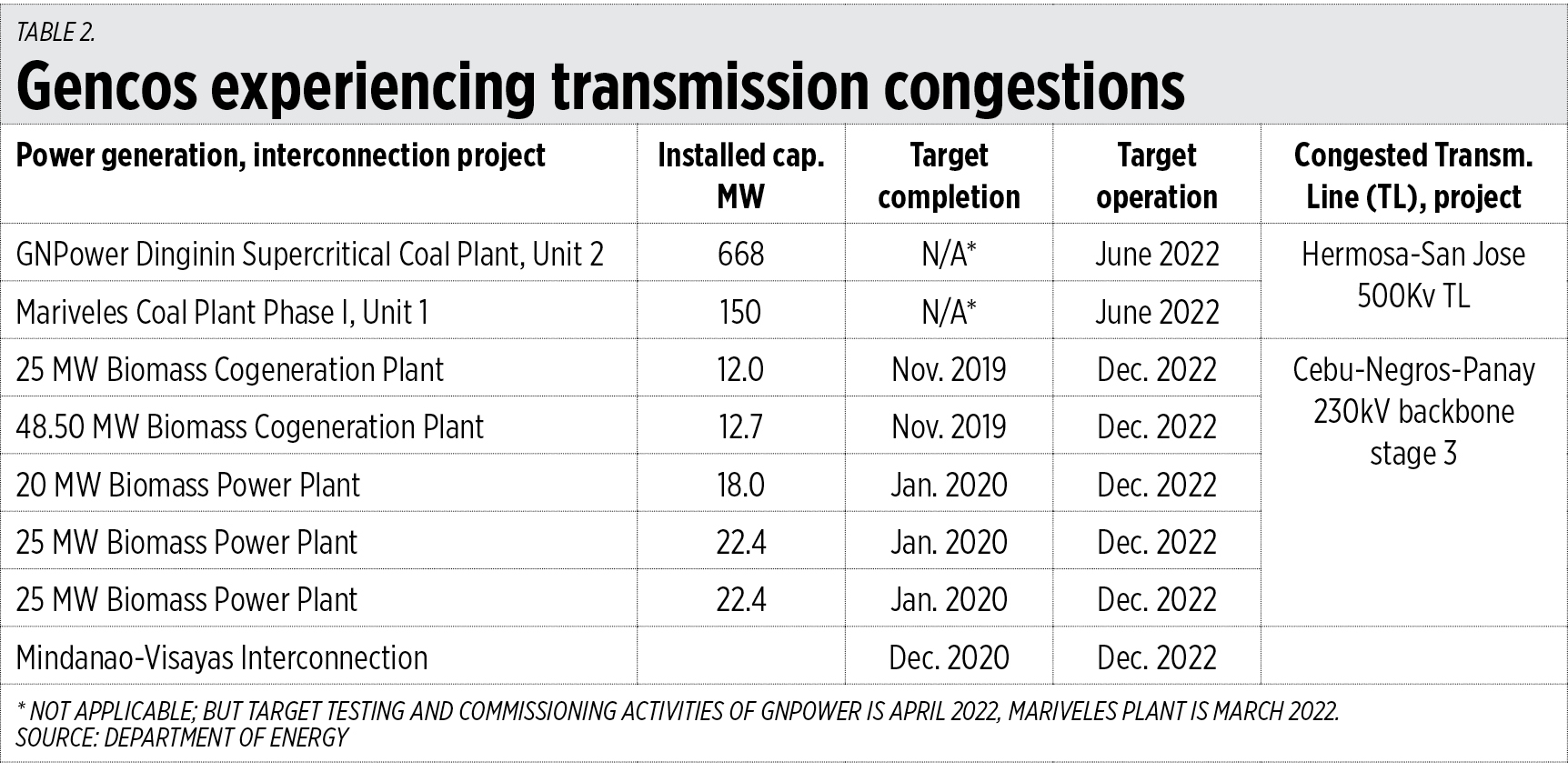
And speaking of congestion, there are a few power plants that are affected until now. Meaning, the NGCP seems not to be investing enough to quickly upgrade the transmission system (Table 2).

So, for the seven projects in Table 2, the additional capacity in Luzon, if congestion is resolved earlier, is 818 MW (668+150). For the Visayas, additional capacity would have been 177 MW. There are also delays in their plant construction but the transmission is more delayed. Then there is the never-ending Mindanao-Visayas interconnection project.

During the Independent Electricity Market Operator of the Philippines (IEMOP) media briefing on Jan. 28, they reported these additional capacities in the Luzon-Visayas grids from January-June 2022: coal 818 MW, solar 125 MW, oil-based 22 MW, geothermal 4 MW, and battery energy storage system (BESS) 180 MW. Note that BESS are not power generators, they are only storage batteries for excess supply on certain hours or days by intermittent wind and solar. I asked the IEMOP if the 180 MW BESS are mainly from SMC, they said “Yes.”

There will be very little additional capacity in Mindanao from January-June 2022 — only 3.6 MW from geothermal; zero from coal, oil-based, solar or wind, but there will be 140 MW from BESS.

POWER GENERATION IN ASEAN-5
In 2020, the Philippines’ power generation was 101.8 terawatt-hours (TWH). This was equivalent to Vietnam’s power generation of 101.5 TWH in 2011, in 2020 Vietnam’s power generation was 234.5 TWH. Malaysia was generating 98.8 TWH in 2005 and 159.6 TWH in 2020. Thailand was generating 101.0 TWH in 2001, and 176.4 TWH in 2020. Indonesia was generating 101.7 TWH in 2001, and 275.2 TWH in 2020.

So, the Philippines’ total power generation of 102 TWH in 2020 was what Vietnam generated in 2011, Malaysia in 2005, and Thailand and Indonesia in 2001. We are so behind in power generation compared to our four neighbors in the ASEAN. We need to do two things to catch up with our neighbors, and serve more households and companies especially now that we have liberalized the Public Service Act, a good job by Congress.

One, we need more stable, reliable, and dispatchable power sources and less intermittent sources. Since the Department of Energy was pressured by the climate activists and ESG (environmental, social, and governance) corporate lobbyists to discontinue new coal plants, we must consider nuclear power. At least the small modular reactors (SMRs).

Two, the transmission system must continue fast upgrades. It will cost big money, but the NGCP is earning big money anyway. The ERC and Congress must push the NGCP to do its job as contained in its legislative franchise. New big power plants must be quickly connected to the grid, and to the consumers.


Bienvenido S. Oplas, Jr. is the president of Minimal Government Thinkers.

minimalgovernment@gmail.com

ADVERTISEMENT
ADVERTISEMENT