Home Blog Page 6820

SPC, affiliate buy STEAG’s 51% stake in power firm

SPC Power Corp. on Friday said it had executed along with an affiliate an agreement to buy the 51% stake of German power firm STEAG GmbH in a company that owns a 210-megawatt coal-fired power plant in Misamis Oriental.

“This acquisition is in line with the objective of SPC to support growth and address the country’s need for reliable, affordable and sustainable power supply,” SPC said.

The deal prompted the Philippine Stock Exchange to suspend the trading of SPC shares ahead of the company’s submission of a comprehensive disclosure report as called for by disclosure rules.

Before the suspension, SPC disclosed that it had agreed to buy 40.5% of STEAG State Power Inc.’s outstanding capital stock held by STEAG GmbH’s, while the remaining 10.5% will be bought by its affiliate Intrepid Holdings, Inc.

Their share sale and purchase agreement was executed on Feb. 10, the listed Cebu-based power company said.

STEAG State Power’s plant was built through a build-operate-transfer scheme with the National Power Corp. as the other party to a 25-year power purchase agreement.

The deal will be closed subject to the following considerations for the transfer of ownership rights over the shares: around $33.89 million for the common shares; around $18.11 million for the redeemable shares; and accrued interest on the said common shares and redeemable shares at the locked box interest rate.

The locked box interest rate, the company said, is an amount equal to the interest accrued on a daily basis, at 4% yearly from Jan. 1, 2021 until and including sale completion or March 31, 2022, whichever is earlier.

“The closing of the sale shall be subject to conditions precedent,” SPC said.

The trading suspension on SPC took effect at 11:11 a.m. on Friday until further notice. The PSE said after a review of SPC’s disclosure, it deemed the deal as covered by the exchange’s “Substantial Acquisition Rule.”

STEAG GmbH operates 11 hard coal-fired power plants, of which eight are located in Germany, and one each in Turkey, Colombia, and the Philippines.

SPC has five subsidiaries: SPC Island Power Corp., Cebu Naga Power Corp., SPC Malaya Power Corp., Bohol Light Co., Inc., and SPC Light Co., Inc.

It also has two associates: KEPCO SPC Power Corp., and Mactan Electric Co., Inc. SPC Power holds 40% ownership in each company. — Marielle C. Lucenio

Cemex unit starts building $235-M facility in Rizal

Cemex Holdings Philippines, Inc. on Friday said that its subsidiary Solid Cement Corp. is building a new integrated cement production line in Rizal worth at least $235 million.

In a disclosure to the exchange, Cemex said Solid Cement is working with Atlantic Gulf & Pacific Company of Manila, Inc. and Betonbau Phil, Inc. as the principal constructors and installers of the project.

Once completed, the project is expected to produce 1.5 metric tons of cement yearly. It will stand on Solid’s cement plant in Antipolo City,

The new production line is projected to be completed by March 2024, and start operating in April 2024.

“The estimated total project cost is revised from $235 million to $323 million, while the estimated total interest capitalization for the project is adjusted to $33 million,” the company said.

Cemex said that the additional fund requirement may be sourced from the following: free cash flow, debt from any subsidiary of CEMEX, S.A.B. de C.V., the Philippine company’s ultimate parent firm, and/or debt from one or more financial institutions.

In a press release on Friday, Cemex reported a P276-million income in 2021, around 26% lower than the P985 million reported in 2020.

The parent company’s consolidated net sales increased by 6% in 2021 to P20.9 billion due to higher sales volume.

The company has yet to disclose its detailed financial statements for the period.

At the local bourse, Cemex shares fell five centavos or 4.59% to end at P1.04 apiece on Friday. — Marielle C. Lucenio

SEC clears registration of Century Properties’ P6-B debt

https://www.sec.gov.ph/

The Securities and Exchange Commission (SEC) approved Century Properties Group, Inc.’s shelf registration of its P6-billion debt securities, the property developer said in a disclosure on Friday.

The first tranche of the fixed rate retail bonds will be P2 billion with an oversubscription option of up to P1 billion five-year fixed rate retail bonds. The bonds will be due 2027 and will be listed and traded through the Philippine Dealing & Exchange Corp.

The debt securities are planned to be offered within three years, or a period allowed by the SEC, at an issue price of 100% of face value.

Century Properties is primarily engaged in the development, marketing, and sale of mid- and high-rise condominiums and single detached homes, leasing of retail and office space, and property management.

In the third quarter of 2021, the company’s net income attributable to parent went down 30.6% to P259.20 million from P373.36 million year on year.

From January to September 2021, attributable net income grew to P845.08 million or 1.6% from P831.49 million in the similar period in 2020.

On Friday, Century Properties shares dropped 1.18% or P0.005 to close at P0.42 each at the stock exchange. — Luisa Maria Jacinta C. Jocson

Smart says 5G roaming now in 45 countries

PLDT Inc.’s wireless arm Smart Communications, Inc. announced on Friday that its fifth-generation (5G) roaming service now covers 45 countries.

“Customers in Malta, Croatia, Indonesia, Greece, Czech Republic, Slovenia, Cyprus, Portugal, Poland, Guam, and France can now enjoy live 5G roaming services with their 5G-capable SIMs and devices through Smart’s partnerships with global telco operators in these countries,” Smart said in an e-mailed statement.

Smart also said that it expanded its 5G roaming coverage with 68 partners across five continents.

It has new partners in Canada, Turkey, South Korea, Singapore, Hong Kong, and Bulgaria.

The service is also available in Taiwan, Bahrain, United Arab Emirates, Saudi Arabia, Kuwait, Israel, China, Australia, Switzerland, Japan, Thailand, Denmark, Vietnam, Qatar, Ireland, Oman, Germany, Luxembourg, Italy, Austria, Romania, Finland, Norway, Sweden, Belgium, South Africa, the United Kingdom, and the United States.

According to the telco, as of the end of December 2021, it already has 75,500 base stations nationwide supporting the growing mobile data traffic.

“This includes around 7,200 5G base stations. Supporting Smart’s mobile network is PLDT’s extensive fiber footprint, which was at 743,700 kilometers as of end-2021,” it added.

Hastings Holdings, Inc., a unit of PLDT Beneficial Trust Fund subsidiary MediaQuest Holdings, Inc., has a majority stake in BusinessWorld through the Philippine Star Group, which it controls. — Arjay L. Balinbin

Tax court denies P12-M refund of Regus

The Court of Tax Appeals (CTA) has denied the P12.3-million refund of input value-added tax of the regional operating headquarters of Regus Service Centre, Philippines B.V. due to lack of merit.

In its decision promulgated Feb. 9, the CTA reiterated that “an applicant for a claim for tax refund or tax credit must not only prove entitlement to the claim but also compliance with all the documentary and evidentiary requirements.”

The tax court said in its statement that the management enterprise failed to present evidence for its claim to a tax refund.

The company is the regional office of a corporation based in the Netherlands. It is primarily engaged in the general administration and management of affiliate companies and is licensed by the Securities and Exchange Commission.

The claim for refund of P12,295,005.64 attributable to the company’s export sales for 2017 was not supported by proper documents, the court added.

The respondent, Commissioner of Internal Revenue, has the authority to decide on applications for a tax credit of excess payments.

“Petitioner failed to demonstrate that the tax, which is the subject of this case, was erroneously or illegally collected,” the CTA said in its decision. “

The case is a Petition For Review as an official of the Bureau of Internal Revenue had previously denied the company’s application for the VAT refund.

Testimonial and documentary evidence was presented by the petitioners, but the tax court found that the testimonies failed to corroborate with the documents presented.

The tax court added that regional operating headquarters are required to establish proof that they are seeking a refund of input VAT only to the extent of sales of services to foreign clients doing business outside the Philippines. — John Victor D. Ordoñez

Aboitiz InfraCapital moves to boost water security

Aboitiz InfraCapital, Inc. said it is working on water resource management projects to promote water security and sustainable water solutions.

“With a growing population that is placing greater stress on already scarce water resources, innovation in water supply management is required,” said Anna M. Lu, Aboitiz InfraCapital vice president for water business and Apo Agua Infrastructure, Inc. president, at a virtual webinar.

“At Aboitiz InfraCapital, we are at the forefront of implementing sustainable solutions to ensure access to safe and reliable water,” she added.

Through Apo Agua, the company is working on the Davao City bulk water supply project to introduce the water-energy nexus concept to the country.

“Tapping the Tamugan river as its surface water source, the project’s water treatment facility will be powered by renewable energy sourced from a 2-megawatt run-of-river hydroelectric power plant. The raw water will first pass through the turbines to generate energy, which in turn will be used to power the water treatment facility and produce treated water. Water will be fed through the project’s 65-kilometer pipeline purely by gravity,” Ms. Lu said.

The project is expected to supply over 300 million liters of safe water per day to more than one million residents in Davao.

Aboitiz InfraCapital’s wholly owned subsidiary, Lima Water Corp. (LWC), said it is also working on a “smart water network,” where water facilities are turned into interconnected and intelligent systems.

In a media release, Aboitiz InfraCapital said through smart water network, “LWC’s water facilities are able to communicate with each other and automatically adjust its operating setup depending on the requirements.”

This ability is done by integrating SCADA (supervisory control and data acquisition) systems and its corresponding digital output instruments such as water meters and sensors.

The smart water network is projected to improve efficiency and savings in terms of deep well operations, auto adjustment of transfer pumps, and non-revenue water management. — Luisa Maria Jacinta C. Jocson

ECCP says clear poll victory for next President to improve investor confidence  

European Chamber of Commerce of the Philippines Logo
ECCP.COM

THE European Chamber of Commerce of the Philippines (ECCP) said a landslide victory for the next President will help improve investor confidence by avoiding disputes over the incoming chief executive’s mandate.

ECCP President Lars Wittig said at a virtual forum Friday that European investors will consider a clear mandate a positive for the Philippines, citing the large plurality victory of President Rodrigo R. Duterte in 2016.

“From a business point of view, what was really good about Mr. Duterte being elected was (that) he won by a landslide. That gives certainty and predictability and that is something that gives us businesspeople (a good) feeling where we are willing to invest more money,” Mr. Wittig said.

Mr. Duterte won in 2016 after receiving 16.60 million votes. The second-place candidate was Manuel A. Roxas II with 9.98 million votes.

“It is a big help for us businesspeople that whoever wins, it doesn’t matter necessarily who it is, but that the person wins by a landslide,” Mr. Wittig said.

ECCP Executive Director Florian Gottein said that the next administration should focus on infrastructure and increasing investment.

“We want the next administration to continue improving infrastructure. We definitely want to see also a more ambitious fight against corruption, as well as opening further some areas such as foreign investments in renewable energy,” Mr. Gottein said.

Maurizio Cellini, First Counsellor and Head of Trade and Economic Affairs of the Delegation of the European Union (EU) to the Philippines, said Philippine utilization of its Generalized Scheme of Preferences Plus (GSP+) trade privilege in 2021 might be close to 2020 levels.

The Department of Trade and Industry (DTI) has said that the Philippines’ GSP+ utilization rate was 75% in 2020.

“We suppose that the (utilization rate) should be close to (the) 2020 level. We will have the data about the utilization rate for the GSP+ (in 2021) by the end of February or the beginning of March,” Mr. Cellini said.

GSP+ offers zero-tariff entry to 6,274 Philippine products on condition that the country complies with a number of international conventions.

Mr. Cellini said the GSP+ privilege, which is set to expire by the end of 2023, is subject to some adjustment.

“What we can say at this stage is that the spirit of the system will remain the same. I don’t think that there will be huge changes compared to the current one. But definitely, there will be some adjustments,” Mr. Cellini said.

“For instance, the GSP+ system is connected to the list of international conventions. So probably, there will be some update in the number or type of conventions that will be necessary to be eligible for the GSP+,” he added.

At the same forum, the ECCP also launched a Doing Business in the Philippines guide in partnership with KPMG Philippines.

“This comprehensive booklet aims to arm potential investors with knowledge on the Philippine business environment, as well as relevant laws and procedures in the country,” the ECCP said.

“As a guide for those interested in exploring various economic opportunities in the country, this booklet seeks to empower businesses to make informed investment decisions,” it added. — Revin Mikhael D. Ochave

Tourism boost expected within weeks after easing of border restrictions 

REUTERS

THE Department of Tourism (DoT) is expecting a steady increase in tourist arrivals in the next few weeks in response to the Philippines’ decision to open its borders further.

Tourism Secretary Bernadette Romulo-Puyat said in a statement that the DoT said the impact will start to be reflected in the visitor numbers after a lag to put together travel plans in response to the opening.

“We at the DoT are glad that we are gradually reopening our borders to foreign visitors. But this enthusiasm is tempered by the constant reminder that the virus is still very much a threat and that we must always be vigilant so as not to negate the efforts we have made over the past two years to contain the virus,” Ms. Puyat said.

The government removed the requirement to quarantine in designated facilities for fully-vaccinated returning Filipinos and foreigners. Individuals are now required to present only a negative reverse transcription polymerase chain reaction (RT-PCR) test taken within 48 hours prior to the date and time of departure from the country of origin.

Under the new quarantine rules, the Philippines began accepting fully-vaccinated foreigners holding nationality of countries that are not required to obtain visas to enter the Philippines on Feb. 10. Fully-vaccinated returning Filipinos were allowed entry under quarantine-free conditions since Feb. 1.

Ms. Puyat urged the travel industry to follow health and safety protocols when handling guests.

“As we welcome our fully-vaccinated visitors to our country, we need to be assured that proper health and safety protocols are strictly enforced in our airports in order to provide a hassle-free entry for travelers,” Ms. Puyat said. – Revin Mikhael D. Ochave 

Cebu plan to admit unvaccinated foreigners seen aiding tourism recovery

Cebu’s plan to allowing the entry of unvaccinated foreigners is expected to help the tourism industry’s recovery, Senators said.

Sen. Maria Lourdes Nancy S. Binay-Angeles said unvaccinated foreign visitors should be allowed entry in selected locations.

“The bottom line is to live with the virus and gradually embrace the new normal. Maybe in selected destinations at first, but there should be medical safeguards in place,” she said in a statement.

Ms. Binay-Angeles said that the Philippines should get past its “trial-and-error phase” in dealing with the pandemic and needs to focus on drafting schemes for reopening the borders, noting that unpredictable policy will “have an impact on public health, aside from being economically disruptive.”

Sen. Francis N. Tolentino said he agrees with Cebu’s policy, though most international airlines ask for vaccine cards.

“Our tourism industry has been dead for two years. I think it’s time we revive it again so that our economy can recover,” he added in a statement.

Cebu Governor Gwendolyn F. Garcia on Wednesday signed an executive order that would let foreign nationals into the province regardless of vaccination status.

The executive order requires unvaccinated foreign travelers to show a negative RT-PCR test taken 48 hours before leaving their country of origin.

Such entrants face swab tests upon arrival and be sent to a quarantine facility where they must await another negative RT-PCR test result on the fifth day of quarantine. Those who test positive will be brought to an isolation facility. – Jaspearl Emerald G. Tan

Negros sugar producers seek scaled-back import plan of 50,000 MT

NEGROS Occidental planter group Asociacion de Agricultores de La Carlota y Pontevedra, Inc. (AALCPI) said that the government’s plan to import 200,000 metric tons (MT) of sugar should be scaled back to 50,000 MT, the volume previously agreed with the government during consultations.

“Right now, we have enough supply, milling is ongoing so what balancing act between supply and demand is Mr. Serafica talking about. An initial order of 50,000 MT as suggested by industry stakeholders would suffice,” AALCPI President Roberto J. Cuenca said, referring to sugar administrator Hermenegildo R. Serafica.

Mr. Cuenca said that during consultations with the Sugar Regulatory Administration (SRA), producers agreed to imports in tranches of 50,000 MT towards the close of the milling season.

AALCPI added that 200,000 MT is “too big and definitely should not have been granted at this time.”

“(This) will have a disastrous effect in the sugar industry, particularly among the small sugar producers. We were never informed and yet Mr. Serafica knows we are the biggest group in so far as membership is concerned, and mostly of small sugar farmers,” it added.

Signed on Feb. 2, Sugar Order No. 3 authorizes imports of 200,000 MT of sugar to stabilize rising prices and augment supply in typhoon-hit areas.

“Mr. Serafica also knows we are in the midst of milling season and any importation order now will have a ripple effect,” Mr. Cuenca said.

“He should take time to consult small farmers so he can personally hear their appeals as many cannot afford to even replant for the next crop year if this situation continues,” he added. – Luisa Maria Jacinta C. Jocson

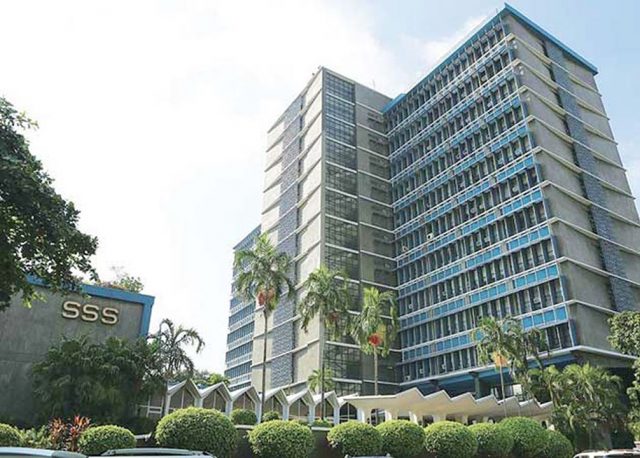
SSS refunding P105 million in pension loan payments as Bayanihan II relief measure

The Social Security System (SSS) has started refunding loan payments made by pensioners and expects to return P105 million in compliance with the Bayanihan to Recover as One Act (Bayanihan II).

The pension fund is giving back between one and two months’ worth of collected loan payments to borrowers that took out pensions in 2020, it said in a statement Friday.

SSS President and Chief Executive Officer Aurora C. Ignacio said the refunds will be granted to more than 25,000 borrowers.

The refunds are in accordance with Circular No. 2022-002 which was issued in compliance with Bayanihan II, also known as Republic Act 11494.

The law directed financial institutions to grant a 30-day grace period for borrowers’ loan payments without penalty or interest. The provision covered loan payments falling due between Sept. 15 and Dec. 31, 2020.

“We understand the predicament faced by our borrowers which is why they opted to seek loans from SSS to further finance their medical and immediate financial concerns,” Ms. Ignacio said.

Launched in 2018, the pension loan program gives access to short-term credit for retirees at an annual interest rate of 10%. These borrowings are payable in six, 12 or 24 months.

Pensioners that were making payments as of the implementation date as well as those that started payments in October 2020 will be eligible for the refund. They will receive refunds on loan payments made for October and November 2020.

Those who only started making loan payments in December 2020 are entitled to a one-month refund for that month.

Qualified pensioners will automatically get the refund credited to their respective accounts, in line with the refund procedure observed in Bayanihan I.

“SSS would also extend the pensioner’s loan payment term by one or two months without any additional interest or penalty. Suppose a pensioner’s loan payment term is until September 2021 and received a two-month refund; their payment terms will be until November 2021 without any interest or penalty,” the SSS said.

In 2021, the SSS extended P3.09 billion in loans to more than 69,000 pensioners. – Luz Wendy T. Noble

BSP wants banks’ green lending to follow sustainable framework

Philippine banks have been asked to conform to the government’s Sustainable Finance Roadmap in their lending to “green” projects.

Bangko Sentral ng Pilipinas Governor Benjamin E. Diokno said in Circular Letter No. CL-2022-011 that strategies outlined in the roadmap, which was issued in October, will help take sustainable finance into the mainstream.

“All banks are encouraged to explore and consider, where applicable, the strategies, priorities, and principles outlined in the roadmap and guiding principles in developing their approach or actions towards adopting sustainable finance,” Mr. Diokno said.

The roadmap listed activities that are considered sustainable and environment-friendly, lending to which may qualify the institution for incentives.

Eligible climate change mitigation and adaptation projects include loans made to carbon sequestration measures, particularly the use of organic fertilizer; refrigeration projects that do not worsen global warming; renewable projects that that will help the Philippines hit its target of 15,000 megawatts in new capacity by 2030, and the strengthening of energy infrastructure.

Eligible in the sustainable-cities category are solid waste projects and the expansion of sewerage and septage treatment facilities.

The sustainable infrastructure component lists as eligible rail projects under the Build Build Build Program, and the bus rapid transit projects in Cebu and Metro Manila’s Quezon Avenue.

The resilient food systems category allows incentivized lending to develop pest-resistant crops or biocontrol agents.

Mr. Diokno has said that such incentives could include preferential rediscount rates. He said the exact nature of the incentives is still being considered.

In November, the BSP launched the second phase of its sustainable finance framework, with the focus on directing banks to monitor environmental and social risks in their credit exposure and business operations. The BSP expects banks to fully implement the framework by 2023. — Luz Wendy T. Noble

ADVERTISEMENT
ADVERTISEMENT