Home Blog Page 6803

CLI sparks hope for homebuyers through its ‘Homefest’ online fair

CLI’s P3 billion Mandtra Residences located in Manduaue City, Cebu offers units from 21.04 sqm to 41.52 sqm. The three-tower development is on a landscaped 12,405 sqm property with a lush tropical theme. A retail podium, a sky garden, clubhouse with adult and kiddie pools, jogging paths, fitness gym and chapel have been designed to provide homeowners a multi-faceted urban sanctuary.

With the number of COVID-19 cases going down, restrictions are easing up and borders are now opening – businesses, professionals, and families have a renewed hope that things will soon be better.

This new sense of optimism brings opportunity for families to consider more investments, such as investing in housing.

This February, Cebu Landmasters, Inc. (CLI), the leading developer in Visayas and Mindanao, sets its sights on realizing the aspirations of homebuyers here and abroad as it launches the third edition of the CLI Homefest, the company’s biggest online sales event.

Carrying the theme “New Home, New Hope,” this year’s virtual event helps homebuyers find their new home that would bring new hope to them and their families, especially during these changing times.
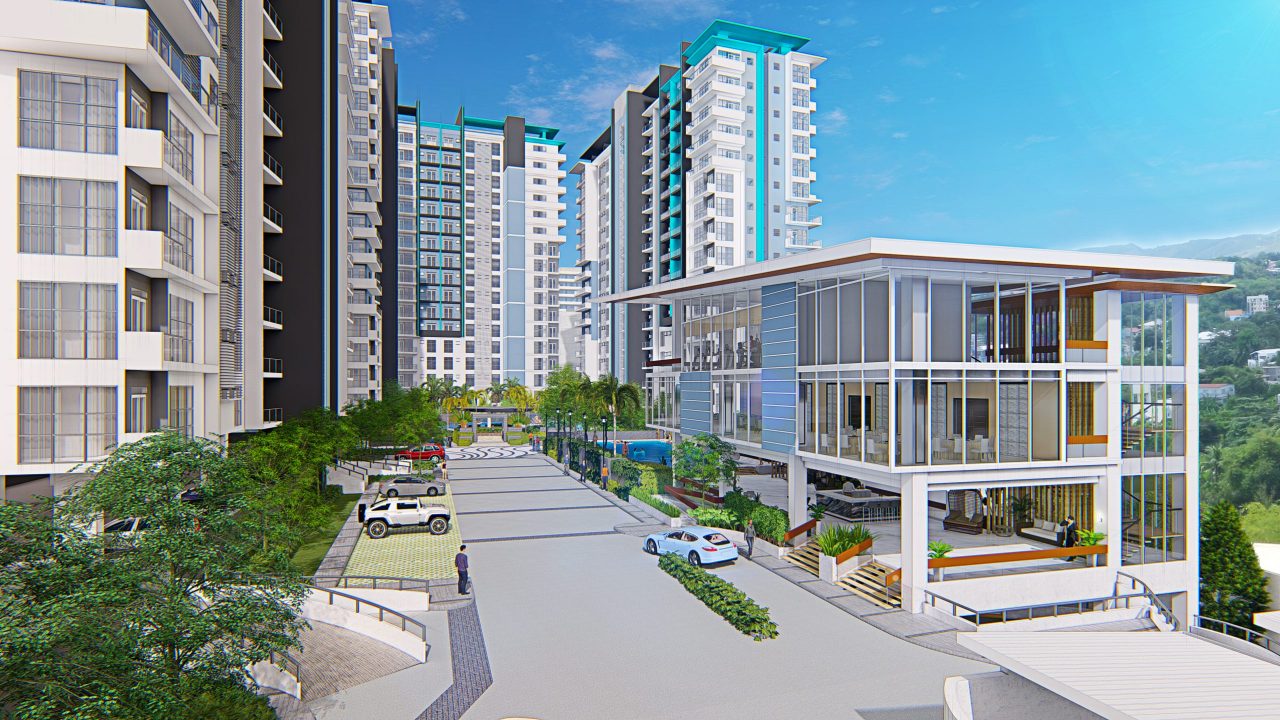
Cebu Landmasters’ four-tower Mivela Garden Residences is the third of CLI’s Garden Series residential projects in Cebu and its sixth in the VisMin area. The development features a total of 1,536 units, catering to mostly individuals and starter families with its mix of studio and one-bedroom units. Mivela Garden Residences is envisioned as a modern garden residential community that will level up city living. Greenery and open spaces will be complemented by amenities focused on a multi-level clubhouse with swimming pool.

CLI Homefest 2022 showcases Cebu Landmasters’ residential homes that cater to economic, mid-market, and high-end buyers. Discounted prices on selected projects, easy all-in downpayments, and flexible payment terms are available during the virtual home fair from February 15 to March 31.

Close to 30 CLI communities (condominiums and subdivisions) will be highlighted throughout the online fair. These homes are built with livable spaces, generous amenities, property management that ensures 24/7 security, and easy access to essentials. The following residential segments being highlighted in CLI Homefest are: Casa Mira, Garden Series, Premier Masters, and the brand new Costa Mira Beachtown.

Casa Mira is CLI’s line of value-for-money housing communities, catering to the common aspiration of every Filipino family to own a home. Casa Mira has condominium towers sprawled across Cebu, Iloilo, Davao, and Cagayan De Oro, while subdivisions are situated at Bacolod, Dumaguete, Ormoc, Iloilo, Cebu, and Naga cities. With beautifully designed units built in strategic locations, Casa Mira communities are perfect for families dreaming to live in a beautiful community while getting the best value for their money.

For those dreaming of a home filled with nature in a progressive urban setting, CLI’s best-selling Garden Series promises open spaces, great views, and well-designed residences. These condominiums include Mivela Garden Residences and Mivesa Garden Residences in Cebu City; MesaVirre Garden Residences in Bacolod City; MesaVerte Residences in CDO; MesaTierra Garden Residences in Davao City; and Velmiro Plains Bacolod in Bacolod City.

Cebu Landmasters’ Casa Mira brand that gives more value to the Filipino Family offers generous amenities such as a clubhouse with swimming pool, chapel, basketball or tennis court and children’s playground. The photo above is an architect’s perspective of Casa Mira Homes Ormoc.

Situated in prime urban locations, CLI’s Premier Masters offer premium lifestyles and world-class living – perfect for those who want to enjoy more of life. Under this high-end line of homes include Mandtra Residences, 38 Park Avenue, One Astra Place, Base Line HQ, Base Line Premier, and Base Line Prestige, all located in Cebu. Citadines Paragon Davao and One Paragon Place units are all available in Davao and Terranza Residences units, in Iloilo.

A newly introduced beach town community in Mactan, Costa Mira Beachtown Mactan is the first of CLI’s series of integrated beachtown resort communities that are designed to bring to life the comforts of home in a tropical paradise environment.

More than showcasing these impressive properties where buyers can own their new home, CLI Homefest 2022 gives them a great opportunity to own a new home for themselves or for their loved ones as exciting discounts are up for grabs on selected properties, as well as affordable payment terms. Easy all-in downpayments are also offered during the entire virtual event.

Buyers can start entering CLI Homefest 2022 by visiting https://homefest-cebulandmasters.com as early as Feb. 15.


Spotlight is BusinessWorld’s sponsored section that allows advertisers to amplify their brand and connect with BusinessWorld’s audience by enabling them to publish their stories directly on the BusinessWorld Web site. For more information, send an email to online@bworldonline.com.

Join us on Viber to get more updates from BusinessWorld: https://bit.ly/3hv6bLA.
A serene oasis for auction

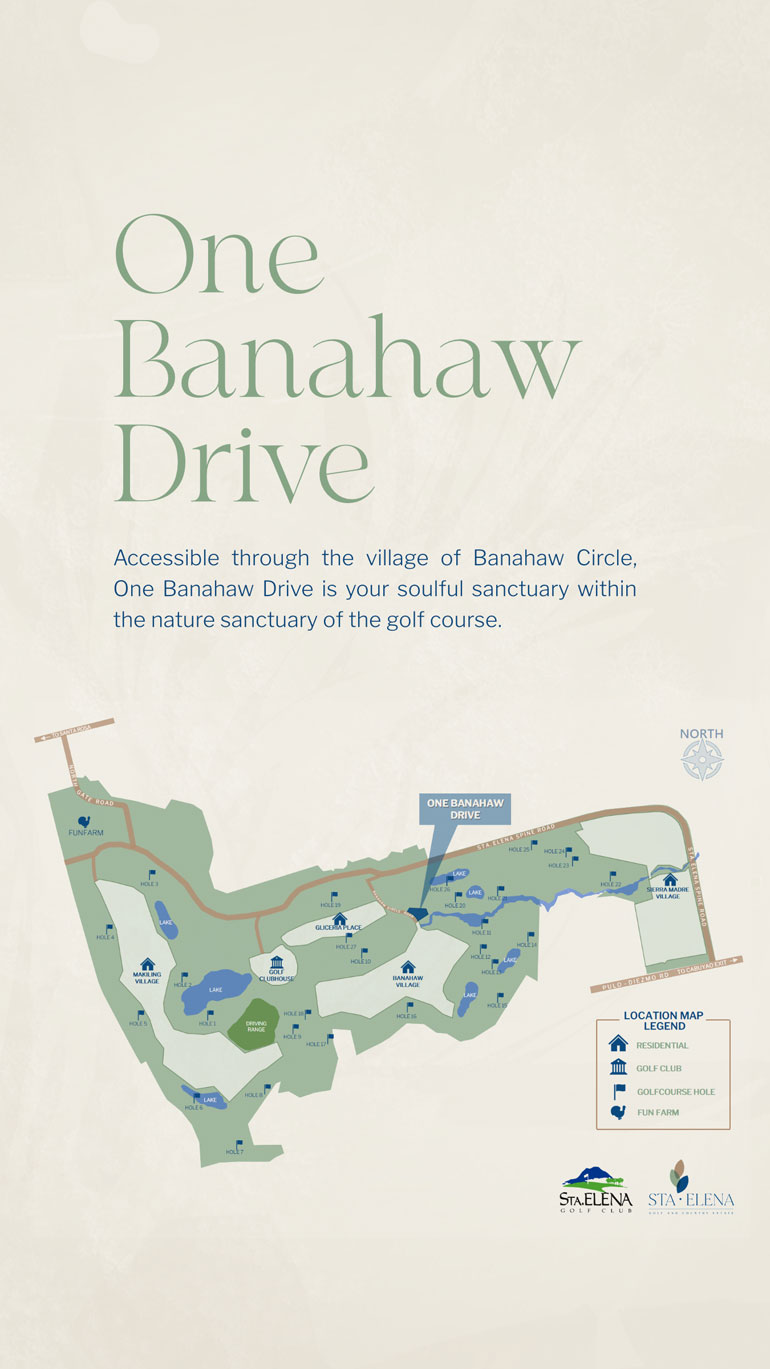
The Sta. Elena Golf Club unveils its prestigious One Banahaw Drive property

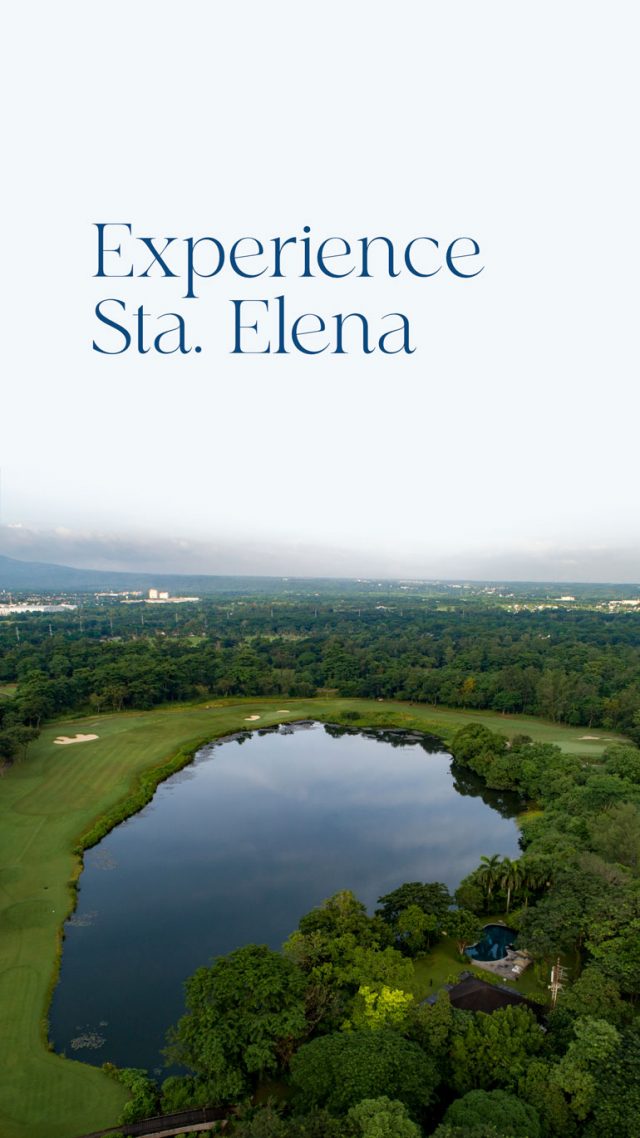
Feb. 2, 2022 marked the unveiling of the Sta. Elena Golf Club’s exclusive, One Banahaw Drive property. Situated inside the Sta. Elena Golf Club’s course, within the development of the Sta. Elena Golf & Country Estate, the prestigious 2,701 sq.m. lot is truly one-of-a kind. It boasts magnificent views of the golf course from all sides — a serene oasis within a nature sanctuary.

This is the first time that the Sta. Elena is offering a property of its kind. Currently, One Banahaw Drive is being auctioned on an “as-is-where-is” basis. It is the latest addition to the property developer’s growing portfolio of premium residences and leisure facilities, which are nestled in the heart of its world-renowned golf course.

From golf course to nature residences

Sta. Elena Golf and Country Estate began with a dream to create a nature escape just a stone’s throw away from the city. Founders Bienvenido “Rico” Tantoco, Jr. and Jose Alberto “Bebo” Quiros partnered together to convert the sugar lands on Quiros’ Canlubang estate into a green development that would enhance the property’s breathtaking, natural beauty.

This idea first manifested as a luxurious, all-weather, 27-hole golf course by internationally acclaimed designer Robert Trent Jones, Jr. Sprawled over hectares of pristine fairway, it was recognized on Golf Digest’s list of top 100 courses outside of the USA.

This vision evolved to include five, scenic residential villages surrounding the golf course. Banahaw Circle, Sierra Madre, and Makiling Reserve were each named after Laguna valley’s iconic mountains, while Gliceria Place and Marina Grove pay homage to Rico Tantoco’s mother and wife.

“The development was created with a greater sense of privacy and space in mind,” Rico explains, “where one experiences the outdoors while simultaneously enjoying the comforts and convenience of urban living.”

With its ecosystem of hardwood trees, lagoons, and open green spaces, Sta. Elena Golf and Country Estate stands out as a unique development. As a certified Cooperative Sanctuary by Audubon International, the estate has always been devoted to the conservation of the environment.

Joyful living away from the city

In light of today’s challenges, households have drastically evolved. With the rise of e-commerce and remote work, people have been spending more time at home than ever. Understandably, city dwellers are opting to escape their congested urban spaces in favor of more generous lot cuts in the suburbs.

Sta. Elena Golf and Country Estate offers a prestigious address in the south at an opportune moment. A 35-minute commute from the city, it is a community where residents can lead a soulful, nature-infused lifestyle.

For more information on One Banahaw Drive, please contact the Sta. Elena Golf Club for property inquiries:

sales@staelena
+639088628873
www.staelena.com

Schedule in advance to view the property.

#StaElenaOneBanahawDrive


Spotlight is BusinessWorld’s sponsored section that allows advertisers to amplify their brand and connect with BusinessWorld’s audience by enabling them to publish their stories directly on the BusinessWorld Web site. For more information, send an email to online@bworldonline.com.

Join us on Viber to get more updates from BusinessWorld: https://bit.ly/3hv6bLA.

BTr raises P121B from RTB auction

REUTERS

By Jenina P. Ibañez, Senior Reporter

THE PHILIPPINE government on Tuesday raised an initial P120.764 billion in an auction of five-year retail Treasury bonds (RTBs) as it continues to seek funding for its pandemic recovery efforts.

Tenders at the rate-setting auction reached P183.44 billion, or more than six times the P30 billion on offer at the Treasury’s first retail bond offer for 2022.

The retail Treasury bonds fetched a coupon rate of 4.875%, higher than the 4.625% set for the five-and-a-half year RTBs in November last year.

The RTBs’ coupon rate is also higher than the five-year debt papers quoted at 4.4732% in the secondary market, based on the PHP Bloomberg Valuation Reference Rates published on the Philippine Dealing System’s website.

National Treasurer Rosalia V. de Leon said the auction showed strong interest in RTBs.

“Coupon penciled in rate liftoff and emerging higher inflation risk (in the United States),” she said via Viber.

US Federal Reserve officials have been providing forward guidance about a possible rate hike by March, and quicker inflation bolsters the case for a more aggressive policy tightening.

The US consumer price index increased by 7.5% year on year in January, the quickest in four decades. It was faster than the 7.3% median estimate in a Reuters poll and the 7% in December.

The RTBs target small investors who want low-risk, higher-yielding savings instruments backed by the National Government.

“Characteristic of an RTB offering, the auction was well-received by investors as evidenced on the total bids submitted by the market,” a trader said in a Viber message.

“Having this issuance has reciprocal benefits for both the issuer and the investor as the market is still awash with liquidity that is in need of further cash outlets for diversification. The coupon rate set by the BTr (Bureau of the Treasury) was well-within market expectations.”

The five-year bonds are being sold in denominations of at least P5,000, and in multiples of P5,000 thereafter.

The BTr also said holders of fixed-rate Treasury notes maturing on March 14 and July 4 can swap their holdings for the RTBs. The minimum exchange offer is P5,000.

The offer period for the peso-denominated debt is from Feb. 15 to 28, while settlement is on March 4.

The RTBs’ maturity date is on March 4, 2027.

In November 2021, the government raised P360 billion from its offering of five-and-a-half year RTBs. Of the total amount, P330.5 billion raised was fresh funds, while the remaining P29.5 billion was from the bond exchange program.

It was Treasury’s second RTB offering of 2021 after it raised P463.3 billion from three-year retail papers in February.

Issue managers for the latest RTBs include the Land Bank of the Philippines (LANDBANK), Development Bank of the Philippines (DBP), BDO Capital and Investment Corp., BPI Capital Corp., China Bank Capital Corp., First Metro Investment Corp. (FMIC), SB Capital Investment Corp., and UnionBank of the Philippines, Inc. (UnionBank).

Authorized selling agents for the bonds are Asia United Bank, BDO Unibank, Inc., BDO Capital, BPI Capital, China Banking Corp., Citibank N.A., DBP, East West Banking Corp., FMIC, ING Bank, LANDBANK, Metropolitan Bank & Trust Co., Philippine Bank of Communications, Philippine National Bank, Rizal Commercial Banking Corp., Robinsons Bank Corp., Security Bank Corp., Standard Chartered Bank, and UnionBank.

Cash remittances hit record high in 2021

REUTERS

CASH REMITTANCES sent home by overseas Filipino workers (OFWs) hit a new high in 2021, reflecting the improvement in the global economy amid the coronavirus disease 2019 (COVID-19) pandemic.

Data released by the Bangko Sentral ng Pilipinas (BSP) on Tuesday showed cash remittances coursed through banks rose by 5.1% to $31.418 billion in 2021 from $29.903 billion in 2020.

Last year’s remittance growth is a turnaround from the 0.8% drop in 2020 but still slower than the 6% expansion estimated by the central bank.

Cash remittance inflows in 2021 exceeded the previous record of $30.133 billion in 2019 before the pandemic.

Remittances from the Filipinos in the Americas (7.1%), Europe (5.5%), Asia (4.5%), and the Middle East (0.7%) increased in 2021, even as the pandemic continued to affect economies, the BSP said.

The United States (40%) was the biggest source of remittances in 2021, followed by Singapore, Saudi Arabia, Japan, the UK, the United Arab Emirates, Canada, Taiwan, Qatar, and South Korea. These countries altogether account for more than three-fourths (78.9%) of cash remittances during the year.

For December alone, remittances jumped 3.3% year on year to $2.987 million, marking the 11th straight month of annual growth. This is the biggest monthly inflow in 12 months or since the $2.89 billion in the same month of 2020.

Remittances usually surge in December as OFWs send more money back home during the holidays.

“Remittance inflows bounced back despite the impact of the pandemic because OFWs were able to secure posts in essential sectors such as health, construction, and shared services,” Asian Institute of Management (AIM) economist John Paolo R. Rivera said in a Viber message.

The recovery in remittances also showed how countries have improved their pandemic management, Security Bank Corp. Chief Economist Robert Dan J. Roces said.

Meanwhile, personal remittances that include inflows in kind grew 2.9% to $3.298 billion in 2021 from $3.205 billion in the year prior. This brought the full-year figure 5.1% higher to a record $34.884 billion.

“The growth in personal remittances reflected a pickup in OFW deployment, strong demand for OFWs amid the reopening of host economies to foreign workers, and the continued shift to digital support that facilitated inward transfer of remittances,” the BSP said.

Personal remittances in 2021 were equivalent to 8.9% of the country’s gross domestic product and 8.5% of the gross national income, it added.

AIM’s Mr. Rivera is hopeful that Filipino workers will be in demand again as the global economy reopens.

Germany, Canada, and Guam are among economies that have signaled a need for migrant workers in healthcare, services, and skill-specific industries.

“As the economy opens, both altruistic and investment motives will trigger remittances to increase until a new normal is reached,” Mr. Rivera said.

Security Bank’s Mr. Roces expects remittances to continue fueling the growth of household consumption.

“We have to expect some growth slowdown globally as mentioned by the International Monetary Fund, so that is factored-in, and there is that risk of an escalation of the Russia-Ukraine [spat], as well as the possibility of new variants emerging,” he said.

The BSP expects cash remittances to grow by 4% this year.  Luz Wendy T. Noble

Approved foreign investment pledges bounce back in 2021

PHILIPPINE STAR/ MIGUEL DE GUZMAN

By Ana Olivia A. Tirona, Researcher

FOREIGN INVESTMENT pledges soared by 71% in 2021, thanks to a surge in commitments in the fourth quarter as the economy gradually reopened, preliminary data from the Philippine Statistics Authority (PSA) showed on Tuesday. 

Total approved foreign investments stood at P192.34 billion last year, beating the P112.12 billion seen in 2020 but still less than half of the P390.11 billion recorded in 2019.

UnionBank of the Philippines, Inc. Chief Economist Ruben Carlo O. Asuncion attributed the higher foreign investment commitments to the looser mobility curbs and increased economic activity in the last three months of the year.

“It was entirely because the economic and movement restrictions were easing and easing fast in fourth quarter 2021,” Mr. Asuncion said in an e-mail interview.

In November last year, the government relaxed the restrictions for Metro Manila and other locations to Alert Level 2.

Foreign investments surged almost fourfold year on year to P133.47 billion in the October to December period, from the P36.49 billion recorded in the same period in 2020. This was also the highest in nine quarters or since the P182.44 billion recorded in the third quarter of 2019.

Foreign investors may have started to position themselves as the country began reopening the economy in the fourth quarter, Mr. Asuncion said.

“They may have also continued original plans initially thwarted by the pandemic,” Mr. Asuncion said.

Singapore was the top source of approved foreign investment pledges last year with P80.17 billion, eight times more than the P9.10 billion in 2020. Investment commitments from Singapore accounted for 41.7% of the total.

For Mr. Asuncion, Singapore’s investments were “definitely noticeable,” despite its own struggles.

“Even though the Philippines is not at par in terms of the pandemic control and management, Singapore still managed to go after the Philippines for its investments,” he said.

The PSA data compiles the investment pledges from the government’s seven investment promotion agencies — the Authority of the Freeport Area of Bataan (AFAB), Board of Investments (BoI), BoI-Bangsamoro Autonomous Region in Muslim Mindanao (BoI-BARMM), Clark Development Corp. (CDC), Cagayan Economic Zone Authority (CEZA), Philippine Economic Zone Authority (PEZA) and Subic Bay Metropolitan Authority (SBMA).

This differs from the actual foreign direct investments tracked by the Bangko Sentral ng Pilipinas for balance of payments purposes.

The BoI contributed the biggest chunk of the foreign investment pledges with P151.80 billion, or 78.9% of last year’s total.

PEZA was second with P35.83 billion, accounting for 18.6% of the total, followed by CDC with P3.68 billion, AFAB with P548.4 million, SBMA with P395.4 million, CEZA with P74.1 million, and BoI-BARMM with P20 million.

In the fourth quarter alone, the information and communication industry received approved foreign investment pledges worth P127.17 billion, accounting for 95.3%. This was followed by manufacturing with commitments worth P2.13 billion, as well as administrative and support service activities with P2.08 billion.

Around P1.90 billion of the investment commitments will go to projects in the Cavite-Laguna-Batangas-Rizal-Quezon Region, south of Metro Manila. Central Luzon and the National Capital Region followed with P1.46 billion and P1.17 billion, respectively.

Meanwhile, investment pledges from Filipino nationals grew annually by 16.3% to P273.50 billion in the fourth quarter. It accounted for 67.2% of the combined local and foreign pledges worth P406.96 billion, which was also up by 49.8%.

Assuming the projects materialize, foreign and local investments pledged during the period are expected to generate 19,447 jobs across industries. This was 20% less than the 24,279 projected jobs a year ago.

Mr. Asuncion expects foreign investments to improve in the first quarter of 2022, despite the Omicron-driven surge in January.

“Although mobility trends point to more people staying home because of the new variant, the impact on people movement has been short-lived and people are now beginning to move and carry out economic activities more and more compared to the previous January weeks,” he said.

“The shift to a lesser restricted state or the shift to Alert Level 2 in the NCR of late may bode well for better approved foreign investments.”

Philippine economic freedom continues to fall

PHILIPPINE STAR/ MICHAEL VARCAS
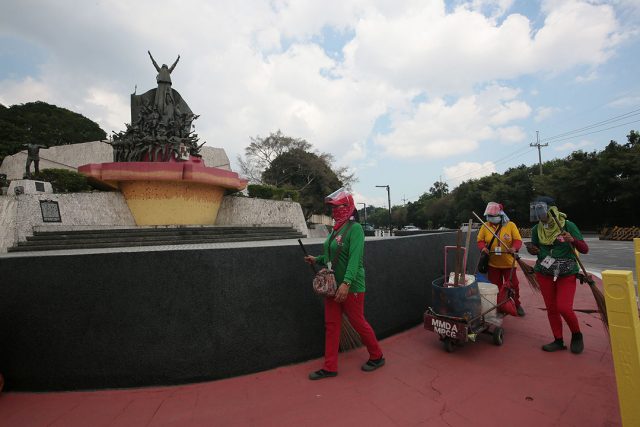
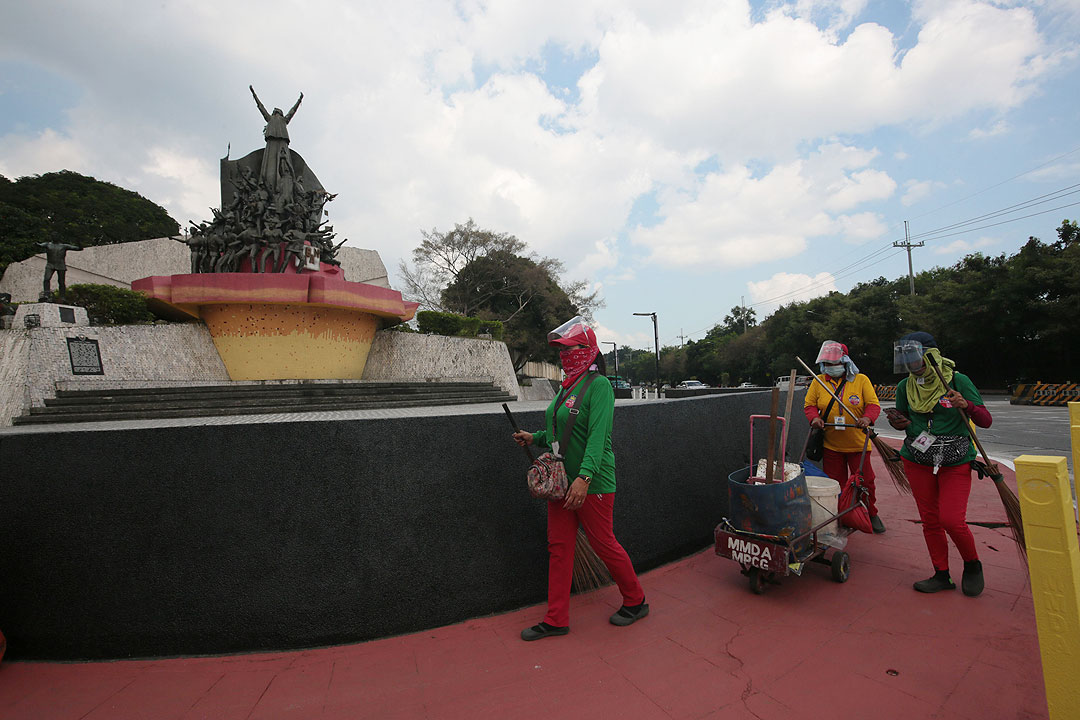
A street sweeper takes photo of the People Power monument along EDSA, Feb. 24, 2021. — PHILIPPINE STAR/ MICHAEL VARCAS

By Revin Mikhael D. Ochave, Reporter

THE PHILIPPINES continued to see a decline in economic freedom, falling seven spots to 80th out of 177 economies in the 2022 global index released by US think tank The Heritage Foundation.

The Philippines recorded a score of 61.1 in The Heritage Foundation’s 2022 Index of Economic Freedom, lower than its score of 64.1 in the previous year’s index. This score is above the Asia-Pacific average of 58.5 and the global average of 60.

The country ranked 73rd out of 178 economies in the previous year’s index.

Philippines drops anew in 2022 economic freedom list

The Philippines’ economic freedom is considered “moderately free” based on its score and ranking.

“Dragged down by decreased scores for fiscal health and monetary freedom, the Philippines has recorded a 4.5-point overall loss of economic freedom since 2017 and has fallen to the bottom ranks of the ‘Moderately Free’ countries,” The Heritage Foundation said.

“The tax burden is not heavy, and trade freedom is a bright spot, but judicial effectiveness and government integrity exhibit weaknesses.”

The Philippines ranked 15th among 39 Asia-Pacific countries included in the report which assesses rule of law, government size, regulatory efficiency, and open markets.

Singapore was the world’s freest economy, followed by Switzerland, Ireland, New Zealand, and Luxembourg. On the other hand, North Korea was the least-free nation.

The Heritage Foundation said the index examined economic policies and conditions from July 1, 2020 to June 30, 2021.

Overall, the index showed a decline in economic freedom around the world, which the report attributed to the “unwise policies” to address the coronavirus disease 2019 (COVID-19) pandemic.

“Most every economy included in the 2022 index experienced negative growth in 2020, which is not surprising given that so many of the actions that governments have taken in the name of protecting public health have also reduced economic freedom. These restrictions have exacted a cost in terms of human well-being that must be added to the enormous cost of the death toll from the disease itself,” The Heritage Foundation said in a statement.

While trade freedom is a “bright spot,” the Philippines’ score slipped by 0.4 to 73.8. Investment and financial freedom scores were unchanged at 60.

“Foreign investment is generally welcome, and the investment code treats foreign investors the same as it treats domestic investors… However, investment in several sectors remains restricted. The financial sector, dominated by banking, is relatively stable. Capital markets are underdeveloped,” the think tank said.

The Philippines’ business freedom score stood at 61.5, higher by 3.3 points from last year’s 58.2. Labor and monetary freedom scores likewise improved.

The Heritage Foundation flagged the country’s “weak infrastructure, unaffordable power costs, shabby broadband, and inconsistent regulations” as challenges to businesses. It also noted that minimum wage standards, bonuses, and social security contributions are often not complied with.

The Philippines saw lower scores for judicial effectiveness, government integrity, and property rights.

“Courts are inefficient, biased, corrupt, slow, and hampered by low pay, intimidation, and complex procedures… Corruption and cronyism are pervasive. There is little accountability for powerful politicians, big companies, or wealthy families,” The Heritage Foundation said.

The country also recorded a drop in its scores for government spending and fiscal health, while the tax burden score remained at 76.8.

“To improve the degree and quality of economic freedom in the country, it is clear that the next administration should manage our resources for economic and social development more efficiently,” University of Asia and the Pacific Senior Economist Cid L. Terosa said in an e-mail interview.

He noted key tax reforms should be sustained and implemented to ensure the country’s fiscal health would be restored.

“Economic freedom is positively correlated with economic growth. It facilitates economic recovery,” Mr. Terosa said.

Calixto V. Chikiamco, Foundation for Economic Freedom president, said in a mobile phone message that the country is likely to see a higher economic freedom ranking next year, following the passage of reform measures such as the amendments to the Retail Trade Liberalization Act.

Mr. Chikiamco added that the participation of the Philippines in the Regional Comprehensive Economic Partnership will also help improve economic freedom.

“To improve the country’s ranking the next administration can abolish quantitative restrictions on agricultural commodities, such as corn, fish, and pork and establish low tariffs for them instead. It can open up the renewable energy sector to foreign investments and it can combat corruption by passing the Freedom of Information Act,” Mr. Chikiamco said. 

Makati Business Club Executive Director Francisco “Coco” Alcuaz, Jr. said in a mobile phone message that a new administration that has “credibility” can boost economic freedom.

“While government spending and fiscal health contributed to the drop during the pandemic, the ‘unforced errors’ were in government integrity, judicial effectiveness, and property rights. These can be dramatically and then steadily improved by a new administration with the vision that believes in these values and has the credibility and backbone to deliver them,” Mr. Alcuaz said.

Bacolod’s Art District welcomes The OPENSPACE

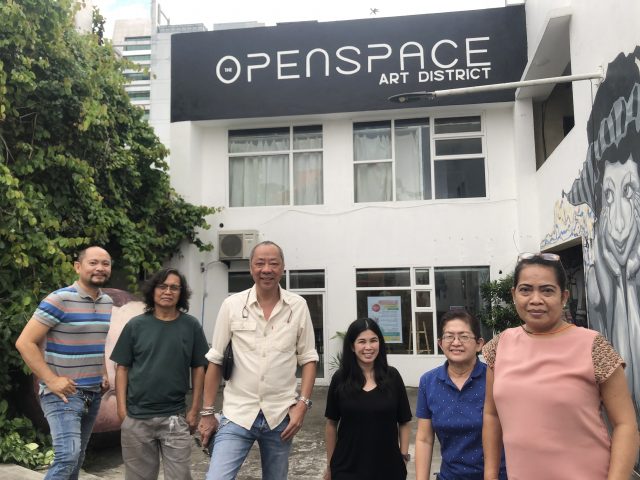
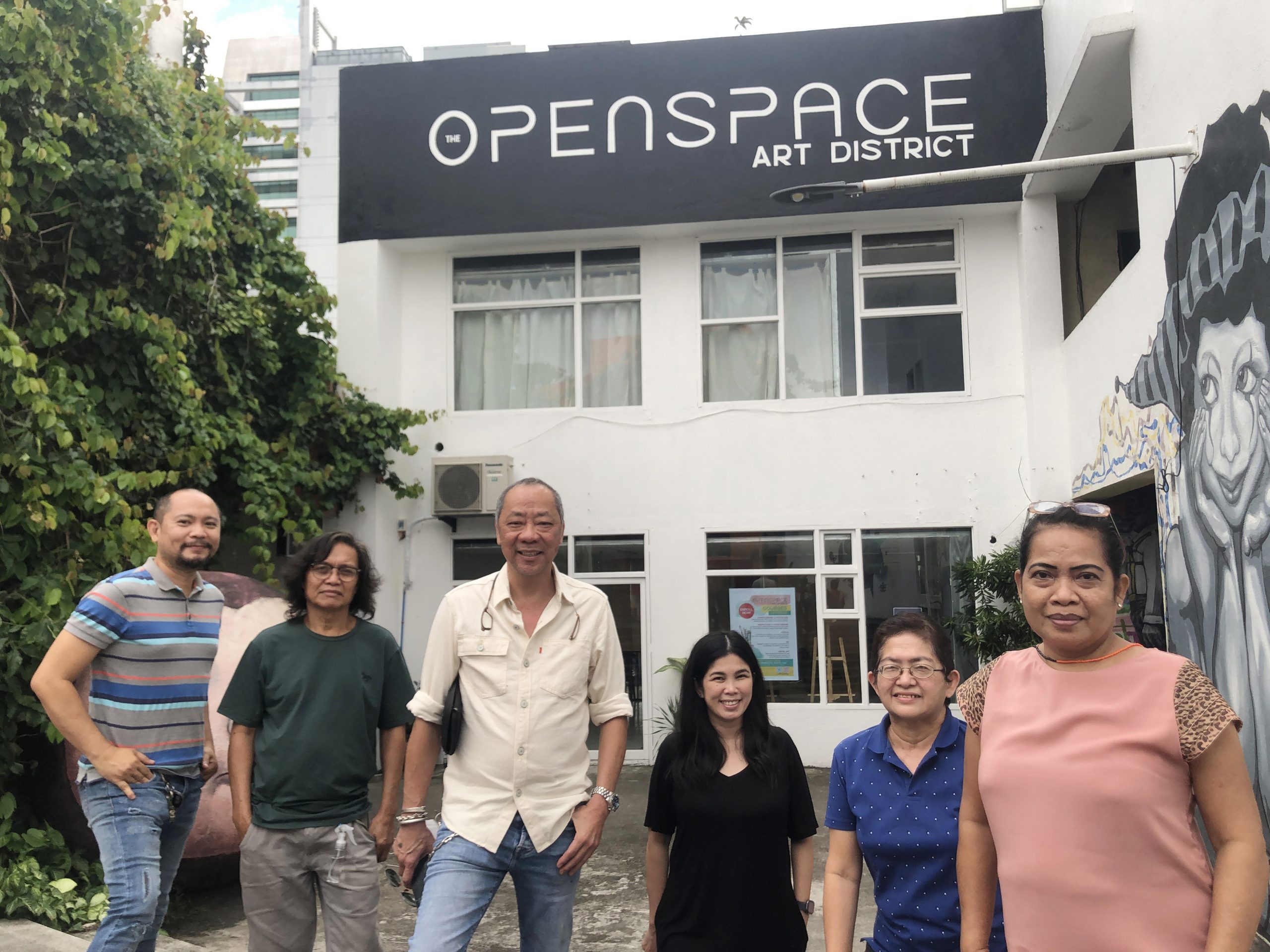
THE PARTICIPATING artists (L-R) Dennis Valenciano, Fred Orig, Charlie Co, Leizel Lacsao-Dator, Leah Divino-Samson, and Carmel Hibaler

TWO years ago, a group of artists’ busy schedules slowed down. The time in lockdown gave them the opportunity to focus on helping their fellow artists fuel their creativity in their small community in Bacolod’s Art District.

In January, the Orange Project co-founder Charlie Co and his fellow local artists launched The OPENSPACE — Art District, an alternative art learning center in the 8,000-square-meter Art District.

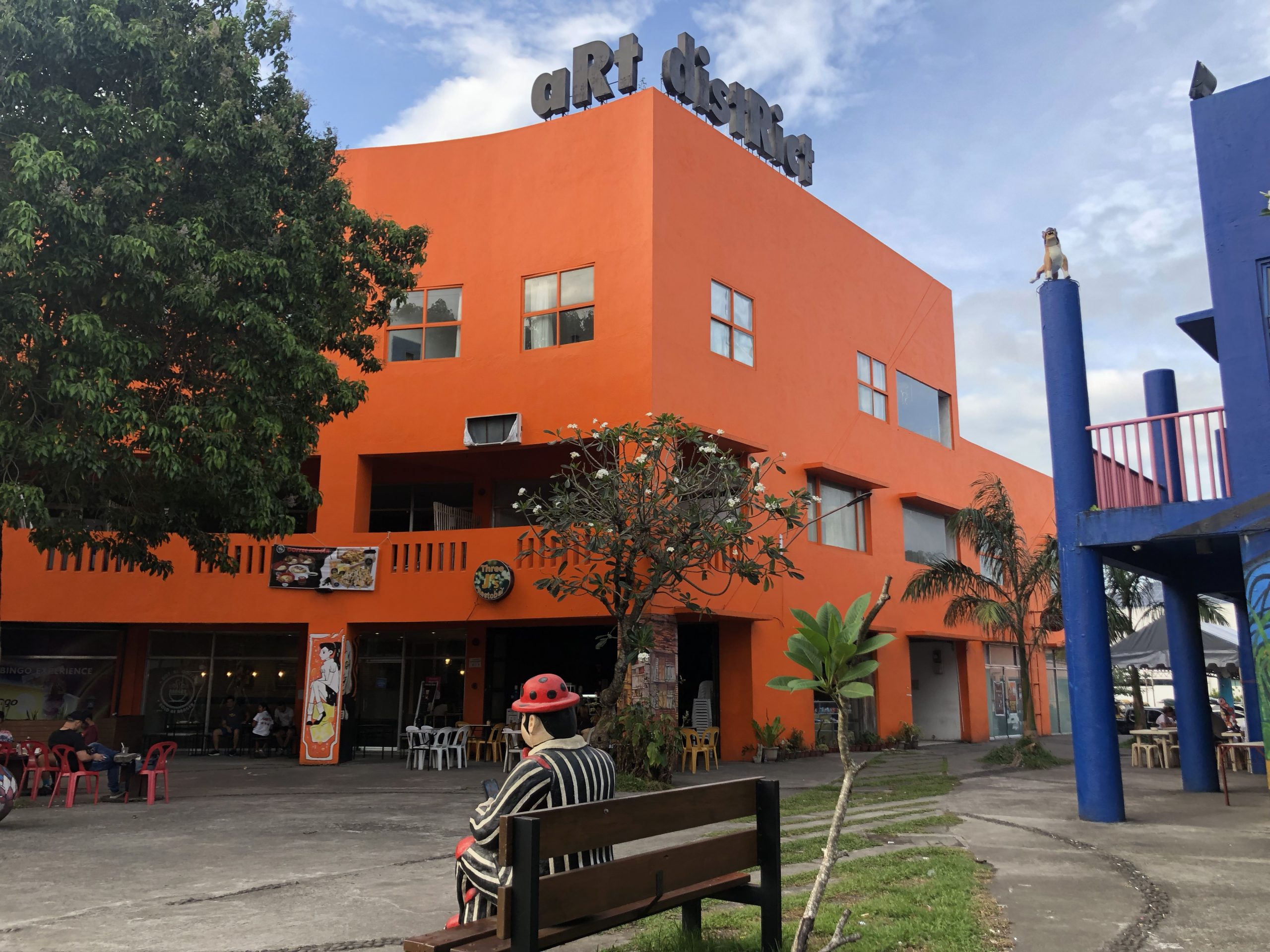
OPENSPACE adds to the 12 existing art spaces in the area, including the galleries Orange Project, AAB Gallery+Cafe, Greyroom, Block17, and LM Gallery.

Mr. Co, who is also The OPENSPACE — Art District’s founder, had the idea of opening a new gallery with a vision of helping local artists and discovering talented individuals in visual arts.

“I’ve been dreaming of a space where you can teach, share your ideas about your practice,” Mr. Co told BusinessWorld in a Zoom interview.

“It’s open to not only painting or drawing but hopefully we can have that space for many forms of art,” he said, explaining the gallery’s name.

He added that the new gallery can also be used for printmaking workshops, and serve as a space for discussions in art criticism and art history.

“During the (COVID-19) pandemic, we didn’t use the white flag. We were fighting it in every way… We confronted it by teaching and sharing art in our community,” Mr. Co said. “This cannot happen without the community of artists supporting the idea.”

The gallery is mainly run by local artists Dennis Valenciano, Fred Orig, Leah Divino-Samson, and Leizel Lacsao-Dator.

“We’ve been planning to have this kind of space even before the pandemic, but we were busy with other projects. When the pandemic came, we had the chance to brainstorm,” Ms. Divino-Samson said in the same Zoom interview.

What had been a co-working space in the area was slowly transformed into a gallery in Sept. 2021. The OPENSPACE has a white-painted façade surrounded by sculptures and murals. It is an air-conditioned two-story building which alternately functions as a gallery and studio. It was officially launched on Jan. 12 with an inaugural art exhibition.

PROGRAMS AND COMMUNITY BUILDING
In line with the celebration of Arts Month this February, The OPENSPACE — Art District is holding weekly activities including nude/figure sketching and painting sessions, still-life drawings sessions, and art talks.

The artists have returned to the traditional route with the live sketching workshops.

“We want to encourage, na mas maganda ’yung live sketching (the live sketching is better) and then teach them also about anatomy. Nowadays, they think na if it’s nude, it’s bastos (indecent),” Ms. Divino-Samson said. “We want to teach the artists, especially the young ones, that you have to respect the human form.”

“We [want to] push more live sketching [sessions] instead of basing on prints from Google that the students copy,” Mr. Valenciano said.

The OPENSPACE also provides three months of comprehensive programs on figure drawing and portraiture, watercolor and coffee painting, acrylic painting, oil painting, and digital arts. One-month workshops and one-on-one tutorials for basic acrylic and watercolor are also offered. Apart from learning the techniques in the various mediums, the courses also cover how-to’s on material preparation, exhibition mapping, and work pricing.

The workshops culminate in an exhibit and the students can continue their practice by contributing to the community in the Art District.

“We are trying our best to reach out to young artists [and teach them] the value of art, in our culture, in our society. We’ve [already] been doing that, but we’ve intensified it during pandemic,” Mr. Co said.

“We’ve been collaborating as our way in helping the community cope with the pandemic. Now, the role of the artist becomes important,” he said.

The OPENSPACE — Art District is located at Lopue’s Mandalagan, Lacson St., Negros Occidental. For more information, visit https://www.facebook.com/TheOpenSpaceAD/, and Instagram @theopenspace_ad. — Michelle Anne P. Soliman

DoubleDragon prepares first hotel project abroad

By Keren Concepcion G. Valmonte, Reporter

DOUBLEDRAGON Corp.’s Hotel 101 Worldwide Private Ltd. is preparing to launch its first hotel project outside the Philippines by the second half this year.

In a disclosure to the exchange on Tuesday, DoubleDragon said Hotel 101 Worldwide has amended its principal and secondary activities via Singapore’s Accounting and Corporate Regulatory Authority (ACRA).

Following the amendments, Hotel 101 Worldwide is now allowed to acquire, invest, and develop real estate properties and ventures outside the Philippines. It also allows Hotel 101 Worldwide to sell, market, and conduct operations and manage projects abroad.

“We have observed that the US has Holiday Inn, Europe has Novotel, China has Jinjiang Inn, Malaysia has Shangri-La, Thailand has Dusit, Japan has Nikko, Singapore has Raffles, but the Philippines has none,” DoubleDragon Chief Executive Officer Edgar J. Sia II said in a statement dated Feb. 14.

“We have also observed that in other countries, many have a strong mindset of gearing their businesses for export. Pursuing business ventures, brands, and concepts that are geared to be exported to the 195 countries globally is truly admirable,” he added.

DoubleDragon’s Hotel 101 brand may now expand either through the company’s own initiatives or through partnerships and joint ventures with other property developers abroad.

The company has filed a concept patent of Hotel 101’s condotel concept. Hotel 101’s units are all identical to allow unit owners “to have an equal share in the revenues of the Hotel 101 property.”

DoubleDragon said it records revenue and income twice through Hotel 101. The company first earns through the pre-selling of the condotel’s units, called the “Happy Rooms,” and then through the recurring revenue of hotel operations.

“We are grateful to the DoubleDragon team who have, over the years, been able to put together, polish, and test the unique and pioneering Hotel 101 hybrid condotel concept and most especially put to life an exportable concept for the world. We are also glad to have been able to file the Hotel 101 concept patent early on,” Mr. Sia said.

Aside from the concept patent, the company said Hotel 101’s trademark and domains have also been secured in other countries.

DoubleDragon will acquire its first property for development by the second quarter of this year. Without disclosing a specific country, the company said the property would be located in Asia and it will be launched by the second half of this year.

The company also said it has identified sites where the hotel brand is “expected to be patronized” both by local and foreign travelers.

“The development and completion of these new Hotel 101 projects will be perfectly timed with the full recovery and anticipated rebound in the tourism industry,” DoubleDragon Chief Investment Officer Hannah H. Yulo-Luccini said.

“We believe in a couple of years, all this pent-up demand for tourism will cause an unseen surge in demand for hotel rooms across the globe,” she added.

The company has 6,165 hotel rooms nationwide, which include those that are operational and projects that are under construction or are in the pipeline for launching for its Hotel 101 brand, Jinjiang Inn Philippines, and the Ascott DD Meridian Park.

DoubleDragon has businesses in hotels; provincial retail leasing through its CityMalls chain; and office leasing through DD Meridian Park complex in Pasay City, a 42-story Jollibee Tower in the Ortigas central business district and The Skysuites Corporate Tower in Quezon City.

The company also has an industrial warehouse leasing business through its CentralHub warehouse complexes, which is a joint venture with Jollibee Foods Corp. It plans to launch an industrial real estate investment trust (REIT) through CentralHub by the second half of this year.

DoubleDragon’s leasable space also includes Robinsons DoubleDragon Square Office Towers in Libis, Quezon City. The space is a joint venture with Robinsons Land Corp.

“The aspiration to expand Hotel 101 outside the Philippines has been there since before, but was further delayed by the COVID-19 (coronavirus disease 2019) pandemic,” Mr. Sia said.

“Now that the borders have opened up and the COVID-19 pandemic looks bound to end, we believe the elements are already there to finally put forward this aspiration of DoubleDragon to create a global Filipino hotel brand that every Filipino can be proud of, just like the pride that we feel when we see a Jollibee store in other parts of the world,” he added.

DoubleDragon shares at the stock exchange declined 13.45% or P1.38 on Tuesday, closing P8.88 apiece.

Marketplace suspends most NFT sales, citing ‘rampant’ fakes and plagiarism

FREEPIK

LONDON The platform which sold an NFT (non-fungible token) of Jack Dorsey’s first tweet for $2.9 million has halted most transactions because people were selling tokens of content that did not belong to them, its founder said, calling this a “fundamental problem” in the fast-growing digital assets market.

Sales of NFTs, or non-fungible tokens, soared to around $25 billion in 2021 leaving many baffled as to why so much money is being spent on items that do not physically exist and which anyone can view online for free.

NFTs are crypto assets that record the ownership of a digital file such as an image, video, or text. Anyone can create, or “mint,” an NFT, and ownership of the token does not usually confer ownership of the underlying item.

Reports of scams, counterfeits and “wash trading” have become commonplace.

The US-based Cent executed one of the first known million-dollar NFT sales when it sold the former Twitter CEO’s tweet as an NFT last March. But as of Feb. 6, it has stopped allowing buying and selling, CEO and co-founder Cameron Hejazi told Reuters.

“There’s a spectrum of activity that is happening that basically shouldn’t be happening – like, legally,” Mr. Hejazi said.

While the Cent marketplace, beta.cent.co, has paused NFT sales, the part specifically for selling NFTs of tweets, which is called “Valuables,” is still active.

Mr. Hejazi highlighted three main problems: people selling unauthorized copies of other NFTs, people making NFTs of content which does not belong to them, and people selling sets of NFTs which resemble a security.

He said these issues were “rampant,” with users “minting and minting and minting counterfeit digital assets.”

“It kept happening. We would ban offending accounts but it was like we’re playing a game of whack-a-mole… Every time we would ban one, another one would come up, or three more would come up.”

‘MONEY CHASING MONEY’
Such problems may come into greater focus as major brands join the rush towards the so-called “metaverse,” or Web3. Coca-Cola and luxury brand Gucci are among companies to have sold NFTs, while YouTube said it will explore NFT features.

While Cent, with 150,000 users and revenue “in the millions,” is a relatively small NFT platform, Mr. Hejazi said the issue of fake and illegal content exists across the industry.

“I think this is a pretty fundamental problem with Web3,” he said.

The biggest NFT marketplace, OpenSea, valued at $13.3 billion after its latest round of venture funding, said last month more than 80% of the NFTs minted for free on its platform were “plagiarized works, fake collections and spam.”

OpenSea tried limiting the number of NFTs a user could mint for free, but then reversed this decision following a backlash from users, the company said in a Twitter thread, adding that it was “working through a number of solutions” to deter “bad actors” while supporting creators.

“It is against our policy to sell NFTs using plagiarized content,” an OpenSea spokesperson said.

“We are working around the clock to ship products, add features, and refine our processes to meet the moment.”

To many NFT-enthusiasts, the decentralized nature of blockchain technology is appealing, allowing users to create and trade digital assets without a central authority controlling the activity.

But Mr. Hejazi said his company was keen on protecting content-creators, and may introduce centralized controls as a short-term measure in order to re-open the marketplace, before exploring decentralized solutions.

It was after the Dorsey NFT sale that Cent started to get a sense of what was going on in NFT markets.

“We realized that a lot of it is just money chasing money.” Reuters

World Athletics’ Coe: Obiena and PATAFA conflict is an internal affair

WORLD ATHLETICS PRESIDENT SEBASTIAN COE — FB

WORLD ATHLETICS, the governing body of the sport, has stated the strife between Olympian pole-vaulter Ernest John “EJ” Obiena and the Philippine Athletics Track and Field Association (PATAFA) is an internal affair and can only be solved using the latter’s by-laws.

“As previously stated, we consider this as an internal matter, and in line with the approach taken, we encourage all internal disputes of a member federation to be resolved in accordance with stated processes and procedures for resolving disputes in a member federation’s constitution or applicable (and) relevant rules and regulations and that these are run fairly for all concerned,” said World Athletics President Sebastian Coe in a two-page letter to PATAFA chief Philip Ella Juico on Thursday.

Mr. Coe, a two-time middle distance Olympic gold medalist and holder of three world records, also affirmed their recognition of PATAFA as the country’s official ruling body of the centerpiece event.

Apart from electing or appointing its own set of officers, Mr. Coe said PATAFA’s other responsibilities are administering, promoting and developing the sport in the country in accordance with the purposes of World Athletics.

“The PATAFA is a member of World Athletics and as such is the sole governing body of athletics in the Philippines,” said Mr. Coe.

World Athletics has also lauded Mr. Juico for his contribution in promoting the sport worldwide.

“Dr. Philip Juico was also a member of the World Athletics governance and integrity reform working group and values commission and provided valuable input to support the implementation and promotion of these critical areas of work, which are fundamental to underpin our sport and the growth of athletics,” said Mr. Coe.

PATAFA has accused Mr. Obiena of allegedly falsifying liquidations concerning payments to Ukrainian coach Vitaly Petrov that the World No. 5 and Asian record-holder repeatedly denied.

Last week, Mr. Obiena and the PATAFA agreed to sit down and resolve the issue and, as a sign of good faith, the latter deferred from implementing its plan of expelling the former from the national team and filing an estafa case.

PATAFA chair Rufus Rodriguez and board member Felix Tiukinhoy, Jr. thanked Mr. Coe for the support.

“We thank Lord Sebastian Coe who was once a Member of the British Parliament, for his succinct grasp of the issues and his very clear response regarding the work of PATAFA in upholding the values of World Athletics. This statement defines our working relationship with other sports stakeholders. We should be guided by it and work in harmony,” said Mr. Rodriguez.

“This statement should settle with finality the metes and bounds of all sports stakeholders especially with respect to the role of PATAFA. This statement should put a stop to overreaching and serve as an inspiration to other NSAs who look with concern at the actuations of sports leaders,” said Mr. Tiukinhoy. — Joey Villar

SEC issues halt order versus illegal online lenders

THE Securities and Exchange Commission (SEC) has issued another cease-and-desist order against seven more online lending entities conducting businesses without the necessary license from the commission.

The Commission En Banc issued a halt order dated Feb. 8 against PesoBee, Peso T-Safe Online Cash, RushLoan, SkyMart, SpendCash, Tapa, and WithU.

None of the entities have registered with the SEC. They also lack the Certificate of Authority to Operate as a Lending/Financing Company.

Under Republic Act No. 9474 or the Lending Company Regulation Act of 2007, or LCRA, individuals or entities that operate as lending companies are required to register as corporations and secure authority from the SEC in order to operate.

“[T]he Commission finds that the continued operation of the Online Lending Operators constitutes a clear violation of, and should be penalized pursuant to the [LCRA] because it engages in or carries out a lending business without the required license form the Commission,” the Commission En Banc was quoted saying.

The SEC found that the seven unregistered and unauthorized online lending operators have been imposing onerous and unreasonable terms against debtors and charging them high interest rates. These entities have also been using abusive and libelous language when dealing with debtors.

Until they are able to register and secure authorization from the SEC, the seven entities are not allowed to operate and promote their lending or financing businesses.

The cease-and-desist order also applies to the agents, representatives, promoters and the owners and operators of the hosting sites of PesoBee, Peso T-Safe Online Cash, RushLoan, SkyMart, SpendCash, Tapa, and WithU.

The commission has ordered 73 online lending applications to stop operating for not having the authority to operate as a lending or financing company.

As of Feb. 15, the SEC said it has canceled the licenses of 36 financing or lending firms due to violations of applicable rules and regulations.

Meanwhile, the SEC also revoked the certificate of registration of 2,081 lending companies for not securing the required certificate of authority. — Keren Concepcion G. Valmonte


Note: The story was updated on Feb. 16, 2022 to remove Cashwill from the list of illegal online lending operations based on a correction from the Securities and Exchange Commission. Only  PesoBee, Peso T-Safe Online Cash, RushLoan, SkyMart, SpendCash, Tapa, and WithU were included in the commission’s cease-and-desist order.

Belgian art show conveys scourge of sexual harassment

BRUSSELS — A team of artists in Belgium aims to teach men how it feels to be a woman subjected to harassment in the street, through an immersive project which plunges visitors into a darkened tunnel full of leering holograms.

The installation, called Masculine Poetry, is preparing to open to the public later this year. A preview in a hangar in Brussels has attracted the attention of lawmakers, campaigners and those working with victims of harassment and abuse.

“It was hell. But also, there are no surprises. It feels like what we’re used to,” said Louise Van Brande, a social worker who attended the project on Friday.

The installation’s walls are lined with images of men who make comments at passing visitors, activated through sensors in the walls. The cacophony ends with a female voice shouting “I am your mum, I am your sister, I am your girlfriend.”

“I feel like I’ve just lived through a week, months of harassment in the street walking in the shoes of a woman who’s constantly being watched,” said Jonathan Vard, another social worker.

Artists Nathalie Erin, Frederic Durieu, and Gilles de Boncourt are behind the project. Erin and Durieu, who are married, said it was inspired by their daughter’s experiences growing up in France.

“We made this project for men, and we realized that it had an enormous impact on women too,” Mr. Durieu said, adding that it had prompted some female attendees to talk to their partners about past experiences for the first time.

Priscillia Vercaigne, a policewoman who works with victims of domestic violence in Comines-Warneton, a Belgian city on the French border, she said she hoped to bring the project to her town.

“There’s lots of work to be done,” she said. — Reuters

ADVERTISEMENT
ADVERTISEMENT