Home Blog Page 6800

The four secrets of how to be a bad boss

MASTER1305-FREEPIK

THE OTHER DAY I was sorting my bookshelves while listening to yet another news broadcast about Boris Johnson’s imploding premiership when I came across a slim volume on How to Be a Bad Emperor, a selection of Suetonius’s Lives of the Caesars repurposed by Princeton University Press as a self-help book — or, rather, as an anti-self-help book.

Suetonius was the best chronicler of Roman leaders from Caesar to Domitian because he dispensed with conventional hagiography and instead provided warts-and-all portraits that focused more on the warts than the all. As an Eton- and Oxford-educated classical scholar, Johnson will be familiar with his writings. The Princeton edition cleverly reproduces the choicest bits of Suetonius’s writings — and they are very choice indeed — under several anti-self-help headings. Ignore bad omens … and your wife. (Julius Caesar scoffed at the warning to “beware the Ides of March” as well as ignoring his wife’s advice.) Spend all your time at your resort. (Tiberius indulged himself in his holiday resort in Capri in ways that would make Silvio Berlusconi blush.) Make your horse a consul (Caligula). Fiddle while Rome burns (Nero).

Reading Suetonius, I was struck not only by the differences between the Ancient World and the Modern one but also by the remarkable similarities. Democracy has imposed constraints on the powerful: Donald Trump’s drive to subordinate the Republican Party in his image didn’t extend to stabling a horse in the Senate. But at the same time technology has liberated leaders to dream of colonizing Mars and creating a virtual universe. The elementary flaws in human nature — narcissism, and naiveté, greed and selfishness — find ways of expressing themselves however much the world thinks that it is progressing.

What would a modern version of How to Be a Bad Emperor look like? Here are four rules on how to be a bad boss in today’s political and corporate world:

RUN YOUR ORGANIZATION LIKE A COURT. Asked what he wanted to do when he grew up, the five-year-old Boris Johnson declared that he wanted to be “king of the world.” His current problems all stem from his predilection to run Downing Street like a court rather than an executive office. He appoints favorites to important jobs, plays factions off against each other, and frequently defers to his wife, who is informally known as “Carrie Antoinette.” The various “Partygate” photographs display a king humoring his courtiers and the courtiers flattering the king.

This pattern will be wearily familiar to Americans who saw Donald Trump bring the same style to American government. Oddly enough, a political revolution made in the name of the people against the elite has produced quasi-monarchical leaders on both sides of the Atlantic. And it is causing the same long-term problems in Britain that it did in the US: inappropriate behavior; faction-fighting; a decline in the quality of personnel; a poor record of delivery; and a mounting cycle of scandals.

UNTETHER YOURSELF FROM REALITY. The more successful businesspeople become, the more they abandon “the reality-based community” for a parallel world of their own making. They surround themselves with toadies and “yes men,” socialize exclusively with people like themselves and succumb to weird fantasies and obsessions. Brad Stone, the author of a book on Jeff Bezos, put it nicely in an interview with the New York Times: The world’s richest man “doesn’t really live among us anymore.”

Despite Bezos’s best efforts, the best example of untethering is still provided by Henry Ford, who was arguably both the greatest businessman of the 20th century and the worst boss. Ford owed his success to his focus on the needs of regular Americans: the people he hung around with as equals in the first 40 years of his life before he founded the Ford Motor Company. Then success divorced him not only from the common man but from common sense. His refusal to acknowledge that cars were consumer goods as well as devices for getting you from “A” to “B” opened the door to General Motors. He pontificated on every subject under the sun, from the abhorrent (Hitler’s Mein Kampf singled out Ford’s anti-Semitism for special praise) to the merely cranky such as reincarnation. For any of his underlings who dared to criticize him he had the same answer: “You’re fired.”

The most common form of untethering, though, is not megalomania but ideological groupthink. Today’s corporate captains, at least in the West, all sing from the same hymn sheet about sustainability, diversity, equity, globalization, and social responsibility, as if all these things are not only obvious goods, but also cost-free goods (“win-wins” as the cliché has it). Yet these bland phrases jar with the world that an enormous number of people inhabit, one in which energy prices are surging, nationalism is strengthening, and ethnic groups are fighting over the fruits of a stagnant economy.

SUCCUMB TO THE LATEST MANAGEMENT FAD. The 1990s was the high-water mark of management fads when great fad factories, from business schools to consultancies to business publishers, produced a never-ending cycle of fads that told companies first that they had to focus on quality (TQM) and then that they had to sack half their workers (re-engineering).

But even if the velocity of fad-circulation has declined, the problem can still be serious, if not terminal. The most conspicuous example of the dangers of faddism is Unilever Plc. During his long reign as CEO (2009-19), Paul Polman tried to inject faddish ideas about “purpose” and “social responsibility” into the heart of everything that the consumer products giant did. Though Polman boasts that Unilever delivered a 300% shareholder return during his time, his claims about doing well by doing good are hard to reconcile, first, with the better performance by Procter & Gamble Co. and Nestlé SA during those years and, second, with the trouble that the company currently faces.

Alan Jope, his chosen successor and co-devotee of the cult of purpose, is on the ropes. The fund manager Terry Smith has mocked the idea that Hellmann’s mayonnaise has to have a purpose other than garnishing salad. The activist investor Nelson Peltz is building a stake in the company. In the wake of its ill-conceived bid for GlaxoSmithKline Plc’s consumer-health division, the company obliged 1,500 employees to seek their purpose elsewhere by sacking them. “It would make an interesting bet,” one leading banker told The Times, “who will go first, Jope or Boris Johnson.”

DRINK THE SILICON VALLEY KOOL-AID. Jim Jones’s Peoples Temple cult was based in San Francisco before its devotees moved to Guyana and committed collective suicide by drinking poisoned Kool-Aid in 1978. Today San Francisco and its environs are the center of a new cult, of the deliberately obnoxious boss — less fatal to be sure, but troubling if not dangerous.

There is the jerk boss. Steve Jobs mistreated everyone around him but nevertheless changed the world. There is the crazy genius. Elon Musk spent half the earnings from his first startup on a race car — and when he crashed it with Peter Thiel in the passenger seat, his response was to laugh maniacally about his failure to insure it. There is the twerp boss. Mark Zuckerberg posted an Instagram of himself hydro-foiling while waving an American flag and listening to John Denver’s “Take Me Home, Country Roads” (!). There is the bro boss: Travis Kalanick was famous for his wild partying when he ran Uber and Shervin Pishevar, one of Uber’s leading investors, was accused of sexual harassment. There is the fabulist boss: WeWork, Inc. was in the rather humdrum business of selling short-term office space in cities but Adam Neumann, the 6’ 5”-inch former Israeli naval officer who ran it, managed to persuade investors, notably Masayoshi Son, that he was really selling “the future or work,” or a “physical social network” or even a “capitalist kibbutz,” as if such a thing might be desirable.

The antics of the tech titans and their imitators are sometimes so outrageous that they seem as if they come straight from the pages of Suetonius. Indeed, Zuckerberg is so infatuated with the Emperor Augustus that he spent his honeymoon in Rome (“all the photos are of different statues of Augustus”) and named his second daughter August. “Through a really harsh approach,” he told the New Yorker, “he established 200 years of world peace.” Zuckerberg loved Latin at school (“very much like coding or math”). His sister, Donna, earned a Ph.D. in classics from Princeton, and wrote a book on how misogynistic “alt-right” groups on the internet invoke classical history. A braver project would be an account of the lives of the tech emperors.

I have no doubt that these tech emperors have done more good than harm: You can’t change the world without being a bit odd. But the trouble is that too many people think that all you need to do is to imitate the peccadilloes of the successful — act the jerk like Steve Jobs or grow a Rasputin-style beard like Jack Dorsey — and you will be a business genius. Innumerable metrics suggest that the problem of bad bosses is a big one. A Gallup survey in 2019 showed that half of US workers had left their job in order to escape from a bad boss. (The Great Resignation would not have been so great if bosses had been better.) Numerous studies show that having a bad boss increases your chances of having a heart attack by 50%. The last thing we need is for more managers to make the problem worse by modelling themselves on Zack or Elon or Jack. In 99 cases out of 100, a jerk is just a jerk and a prat is just a prat.

BLOOMBERG OPINION
Issues with the Certificate Authorizing Registration in Tax-Free Exchanges

PCH.VECTOR-FREEPIK

Many businesses resorted to corporate reorganizations due to the COVID-19 pandemic. Corporations typically reorganize their corporate structure to increase efficiency in their operations, to increase revenue, and to attract more investors. These reorganizations usually involve acquisition of property in exchange for shares of stock which may be considered as tax-free exchanges (TFE).

TFEs shall not be subject to VAT (value-added tax) and DST (documentary stamp tax) while any gain or loss shall be deferred and recognized only when the properties or the shares are subsequently transferred. For original issuance of shares, a minimal tax shall be imposed. A Bureau of Internal Revenue (BIR) confirmation or tax ruling shall not be required for purposes of availing of the tax exemption of TFEs.

Corporations pursuing reorganizations must still apply for the issuance of a Certificate Authorizing Registration (CAR) of the properties subject of the TFE to effect the transfer of the properties in the names of their respective transferees.

Recently, the BIR issued Revenue Memorandum Circular 19-2022 (RMC 19-22) providing clarifications and guidelines for TFE transactions. RMC 19-22 reiterated existing rules on TFEs and provided the process and documentary requirements in applying for issuance of a CAR.

However, RMC 19-22 added several issues which require further clarification.

First, RMC 19-22 now mandates that the application for CARs of transactions involving multiple transfer of properties and share of stocks covered by different Revenue District Offices (RDO) shall be processed with the RDO having jurisdiction over the place where the transferee corporation is located. The use of the word “shall” indicates the mandatory character of the provision.

While this provision aims to simplify the process by mandating the application to be filed in one RDO, it appears to have created confusion as problems may arise since some of the documentary requirements will be secured from regions far from the RDO of the transferee corporation which will cause a delay in the processing of the application.

Second, in relation to the first item, RMC 19-22 did not address whether the applications for CARs to be filed in the RDO of the transferee corporation may be split to be filed per property or by batch, or if all properties must be included in a single application.

This is a problem when the transferee corporation has numerous real properties in different regions of the Philippines. This is typical in reorganization of conglomerates, banks, holding companies, or property developers.

The parties may encounter problems in securing requirements from the LGUs and registry of deeds (RD) where real properties subject of the TFE are located.

If the BIR will require the filing of a single CAR application for all the properties to be received by the transferee corporation, documentary requirements for some of the properties may be delayed which may affect the application and issuance of the CAR for properties which already have complete requirements.

Third, RMC 19-22 requires the submission to the RDO of the new TCT/CCT (Transfer Certificate of Title/Condominium Certificate of Title) of real properties subject of the TFE, within 90 days from the date of receipt of the CAR. Otherwise, the RDO shall refer the docket to the Legal Division for appropriate action.

Due to voluminous applications, enforcement of reduced workforce, closure of offices due to lockdowns, and other issues, the RDs might encounter delays in the issuance of the new TCT/CCT with the required annotation which may prevent the parties to the reorganization in complying with the 90-day requirement in RMC 19-22. The BIR might consider entering into a joint agreement with the Land Registration Authority (LRA) to further streamline the process.

While the BIR is commendable for finally issuing RMC 19-22, this author hopes that it will further clarify and improve the processes for the application and issuance of CAR for qualified TFE transactions as these corporate reorganizations are vital in the recovery of businesses, as well as our economy, from the effects of the pandemic.

This article is for general informational and educational purposes only and not offered as and does not constitute legal advice or legal opinion.


Rufino Gerard G. Moreno is an associate of the Tax Department of the Angara Abello Concepcion Regala & Cruz Law Offices (ACCRALAW).

ggmoreno@accralaw.com

(632) 8830-8000

Sea’s $16-B wipeout portends trouble beyond India shutout

SEA LTD. lost more than $16 billion of value in its biggest daily market drop after India abruptly banned its most popular mobile gaming title. Investors are growing concerned the ban may just be the start of the company’s troubles.

Singapore-based Sea went public in 2017 and quickly became the most valuable company in Southeast Asia, based on its potential to expand its offering of gaming, e-commerce and financial services beyond its home turf. New Delhi’s decision to ban Free Fire — a lucrative title for the company — highlighted Sea’s challenges from geopolitical tensions as well as mounting competition from rivals like Alibaba Group Holding Ltd.’s Lazada.

India has banned hundreds of Chinese apps over the past two years, but the expansion of that policy to Sea took management and investors by surprise. The startup was founded by Forrest Li, who was born in China but is now a Singaporean citizen. Its biggest shareholder is Tencent Holdings Ltd., the Chinese social media giant.

Investors worry that India could potentially also ban Shopee, the second pillar of Sea’s business, where it had about 300 employees and 20,000 local sellers as of December. On Monday, Mr. Li reassured shareholders at its annual general meeting that the company had a grip on the situation. He didn’t comment on the Free Fire ban in India.

The markets didn’t buy it. Sea’s New York stock plunged more than 18% overnight as analysts scrambled to parse India’s reasoning and reassess Sea’s growth prospects. Shares have lost almost two-thirds of their value since October.

“Sea is a Singaporean company and we aim to partner in India’s digital economy mission,” the company said in a statement in response to queries from Bloomberg News. “We are committed to protecting the privacy and security of our users in India and globally, we comply with Indian laws and regulations, and we do not transfer to or store any data of our Indian users in China.”

The Free Fire game was the highest grossing mobile game in India in the third quarter of 2021, according to industry tracker App Annie. JPMorgan analyst Ranjan Sharma slashed his price target by about 40% to $250, citing heightened nervousness around Sea’s gaming franchise.

Sea remains one of Southeast Asia’s biggest success stories, an online retail and entertainment empire that generates almost $10 billion of annual revenue. Some 32 of 33 analysts still maintain buy or overweight ratings on the stock. Its stable of global backers include Cathie Wood’s Ark Investment Management. The superstar fund manager bought more than 145,000 shares on Monday, according to Ark data compiled by Bloomberg.

The most immediate question is whether Sea can appeal India’s decision and reverse it — or, if it fails, whether that ban will extend to its other businesses in the world’s fastest-growing internet economy.

On the face of it, Delhi has little justification for going after the company. Sea is officially a Singaporean enterprise — it’s registered there and most of its workforce, including Mr. Li and his lieutenants, operate out of the city state. Executives have openly championed programs to aid employment and education in Singapore, among other things.

But its links to the world’s No. 2 economy remain strong. Founded in 2009 by Li, Gang Ye and David Chen, a majority of its senior executives either hail from or have strong links with China.

Tencent, Sea’s long-time backer, is undergoing a national security review in the US. Last month, the internet giant divulged plans to sell $3 billion of Sea stock to reduce its holding to 18.7% from more than 20%, while eventually taking its voting interest down to less than a tenth.

Some analysts viewed that move as an effort to clear up questions about Sea’s origins and who calls the shots at the company. But apart from any attempt to assuage those concerns, Tencent’s gradual retreat is in itself a potentially significant blow to the company.

While Tencent is Sea’s largest shareholder, it’s adopted much the same hands-off approach it takes with other investees in China. But its backing was instrumental in Sea’s ascendancy especially in past years, when it ranked among the world’s best-performing stocks.

Leveraging Tencent’s enormous global distribution platform and business model, Free Fire rapidly garnered more than a billion downloads on Google Play, ranking it among the most popular titles in the world. Li has been candid about relying on Tencent’s expertise, particularly in Sea’s early days, and his attempt to emulate its business practices.

It’s unclear how Tencent’s sell-down would affect that relationship. Both sides have affirmed they will continue to work together. But Tencent itself is now embarking on an overseas expansion after Chinese regulators launched a crackdown on the gaming sector at home — meaning it will inevitably vie with Sea for some of the same gaming audiences — just not in India. — Bloomberg

Bird flu spreads to Kentucky, Virginia after discovery last week

BW FILE PHOTO

A STRAIN of influenza deadly to chickens and other fowl has spread to poultry flocks in Kentucky and Virginia, less than a week after an outbreak in Indiana prompted some countries to limit shipments from the state.

Mexico is among countries that have banned or limited poultry imports from Indiana after the virus was detected there, and the wider spread raises the possibility of additional curbs.

The US Agriculture Department’s Animal and Plant Health Inspection Service said in a statement Monday that tests show the virus present in a flock of commercial broiler chickens in Fulton County, Kentucky, and a backyard flock of mixed species birds in Fauquier County, Virginia.

Birds in the two flocks have been quarantined and will be killed, APHIS said in the statement. No human cases of the virus have been detected in the US, the agency said. According to the US Centers for Disease Control and Prevention, these avian influenza detections do not present an immediate public health concern, the USDA said.

The Kentucky farm is one of the thousands that raise chickens for Tyson Foods Inc., the company said in a statement.

While the situation is not expected to impact its overall chicken production levels, Tyson Foods is taking steps to prevent the spread of the virus, including boosting biosecurity measures at other farms in the region, placing additional restrictions on visitors and continuing to test all flocks before birds leave the farms, it said.

“Tyson Foods’ chicken products remain safe: the USDA confirms that avian influenza does not pose a food safety risk to consumers in poultry that is properly prepared and cooked,” according to the statement.

The US said last week it’s expanding surveillance of avian influenza to all four of its major bird flyways after the Indiana outbreak resulted in the death of thousands of turkeys.

A highly pathogenic strain was first discovered in January in the US in a wild American wigeon in South Carolina and then detected in wild birds in North Carolina before being found last week in a commercial turkey farm in Dubois County, Indiana, where 29,000 turkeys were culled.

A serious US outbreak of bird flu in 2014-2015 led to the death of more than 50 million chickens and turkeys and cost the US economy about $3.3 billion in losses, according to a USDA assessment. Eighteen countries — including China, Russia, and South Korea — banned trade of poultry and poultry products from the US Consumers paid higher prices for eggs, with wholesale egg prices at one point doubling from the prior three-year average. — Bloomberg

Taiwan says Chinese plane flew close to remote island

REUTERS

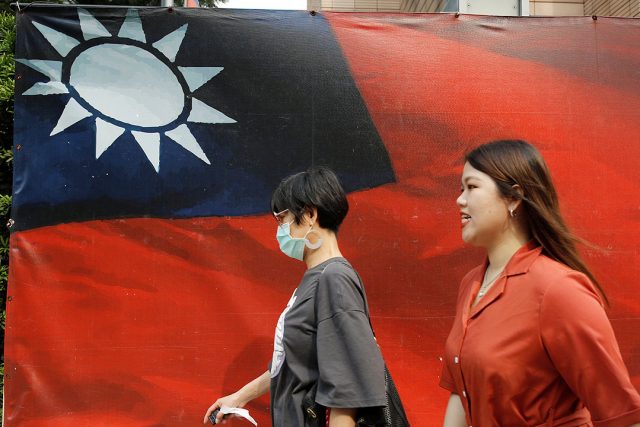
TAIPEI  — A small Chinese civilian aircraft flew very close to a remote Taiwanese-controlled island next to China’s coast earlier this month, Taiwan’s defense ministry said on Tuesday, adding China may be trying a new strategy to test its reactions.

Taiwan has complained for the last two years of repeated Chinese military activity near it, mostly China’s air force flying into Taiwan’s air defense zone off its southwestern and southern coasts though relatively far away from Taiwan itself.

Taiwan, which China claims as its own territory and on which it has upped pressure to accept its sovereignty, has termed this “grey zone warfare” designed to wear out the island’s air force and test its abilities.

The ministry said the aircraft flew very near to Dongyin, part of the Matsu archipelago off the coast of China’s Fujian province, on Feb. 5.

Having previously not identified the aircraft, the ministry said they had confirmed it was a Chinese civilian Y-12, a light twin-engine aircraft.

“On the Dongyin incident, of course we have made a preliminary judgment, and we cannot rule out that they are using civilian aircraft to test the responses of our military,” ministry spokesman Shih Shun-wen told reporters.

“The military will definitely take corresponding actions, but it will take various contingency actions without there being a minor incident which sets off a war.”

The ministry said the aircraft entered its “defense reaction zone” but did not enter its territory in Matsu, which Taiwan defines as waters and air space extending six km (about 4 miles) out from the coastline. China does not officially recognize any claims of sovereignty by Taiwan.

Shih declined to give details on how Taiwan’s forces reacted to the incident, citing military confidentiality.

China’s defense ministry did not immediately respond to a request for comment.

Taiwanese media have carried footage of the aircraft flying right next to Dongyin, and said residents could see and hear it clearly.

The Matsu islands have been controlled by Taiwan since the defeated Republic of China government fled to Taipei in 1949 after losing a civil war with the Communists.

The Matsu islands are not as heavily defended as they were until the late 1970s when China often shelled them, but Taiwan still maintains military forces there.

Taiwan also controls the much larger Kinmen island and a few close by islets further down the Fujian coast across from China’s Xiamen city, and the Pratas Islands at the northern end of the South China Sea.

Shih denied Taiwanese media reports that Chinese military aircraft last week entered Pratas airspace. China could be trying to “create chaos” by circulating false information online, he said. — Reuters

Snowboarding: Gasser wins Big Air gold, Sadowski-Synnott takes silver

BEIJING — Anna Gasser knew she needed something special on her last run to win the Beijing Games Big Air event on Tuesday and the Austrian did just that, landing one of the hardest tricks in women’s snowboarding to pip New Zealand’s Zoi Sadowski-Synnott for gold.

It was a case of déjà vu for Gasser, who also had to pull something big out of the bag in Pyeongchang four years ago to win the event on its Olympic debut.

On Tuesday, her perfect cab double cork 1260 brought her 95.50, the day’s highest single score, and her 185.50 total from her two best runs lifted her to the top of the podium.

Sadowski-Synnott, who won New Zealand’s first Winter Olympics gold medal in slopestyle in Beijing, missed her landing in her last 1260 trick as she lost control due to her speed.

Her combined score of 177.00 was good enough for silver ahead of Japan’s Kokomo Murase, who scored a combined 171.50 to take bronze in her first Olympics.

Gasser said she had initially planned to perform the cab double cork 1260 in her opening jump but had to change her plans due to wind conditions.

The defending champion said her win as a “surprise.”

“In Pyeongchang, I felt myself that I was the big favorite, I won Big Air leading up and I had tricks no one else had,” she added.

“This time, I was like, it’s going to be hard to get on the podium. This one feels way more unexpected for me.”

Sadowski-Synnott had nothing but praise for the gold medalist.

“Seeing Anna do the cab 12 and defend her medal was a great moment and we’re all stoked for each other,” she said.

Murase, who rushed to hug the other competitors after they attempted the hardest tricks, said there was great spirit among the snowboarders.

“They are not rivals. We’re competing with each other, it’s friendly,” she added. — Reuters

Brazil vs Argentina World Cup qualifier to be replayed after São Paulo farce

THE World Cup qualifier between Brazil and Argentina in September that was suspended after health officials ran onto the pitch will be replayed, world governing body International Federation of Association Football (FIFA) said on Monday.

The match at the NeoQuimica Arena in São Paulo was halted in farcical fashion just five minutes after kickoff when Brazilian health officials entered the pitch to stop Argentina’s England-based players from playing.

The officials claimed the Argentines had breached Brazil’s rules stating travelers who had been in the UK, South Africa or India during the previous two weeks were forbidden from entering the country unless they were Brazilian citizens or had permanent residency.

FIFA also banned Argentine players Emiliano Buendia, Emiliano Martinez, Giovani Lo Celso and Cristian Romero for two matches. The health officials had alleged that the players had misled border officials by declaring they had not been in a red list country during the 14 days before the game.

“After a thorough investigation of the various factual elements and in light of the applicable regulations, the FIFA Disciplinary Committee has decided that the match should be replayed on a date and at a location to be decided by FIFA,” it said in a statement.

“In addition, the FIFA Disciplinary Committee has concluded that the abandonment of the match stemmed from several deficiencies of the parties involved.”

FIFA, based in Switzerland, fined the Brazilian and Argentine football associations 500,000 Swiss francs ($540,000) and 200,000 Swiss francs, respectively, for their failure to ensure “order and safety.” — Reuters

DeMar DeRozan stays hot, leads Bulls over Spurs

DEMAR DeRozan poured in 40 points and continued his historic scoring run as the Chicago Bulls outlasted the visiting San Antonio Spurs 120-109 on Monday to win their fourth straight game.

The Bulls trailed by six points entering the fourth quarter but then DeRozan took charge, scoring 13 of Chicago’s next 15 points to give the Bulls the lead. The Bulls never trailed again, as DeRozan and Nikola Vučević dominated down the stretch.

San Antonio had two huge turnovers on successive possessions down by four points in the final 1:53 to hamper its comeback attempt.

DeRozan has scored 30 or more points in seven consecutive games (improving on a career-high) and established a franchise record with his sixth straight game of at least 35 points, supplanting the mark set by Michael Jordan in the 1996-97 campaign.

Vučević added 25 points and 16 rebounds, with Coby White scoring 24 points and Ayo Dosunmu hitting for 12. Chicago got just 12 points from its bench but shot 52.3% from the floor and earned a 53-33 edge on the boards.

Lonnie Walker IV led San Antonio with 21 points off the bench. Doug McDermott and Dejounte Murray added 19 points each — Murray also had 11 assists — and Keldon Johnson and Jakob Poeltl scored 13 apiece for the Spurs.

The Bulls led 29-27 after a back-and-forth first period as Vučević (12 points) and White (11) combined for all but six of Chicago’s points.

San Antonio swept to the front at 34-29 by scoring the first five points of the second period, after which there were nine lead changes and five tied scores before DeRozan’s two free throws with 48.1 seconds left in the quarter gave the Bulls a 59-57 advantage at the break.

White led all scorers with 16 points in the half with DeRozan and Vučević adding 15 each for Chicago over the first 24 minutes. McDermott paced the Spurs with 14 points while Walker IV had 11 and Murray scored 10 for San Antonio.

The Spurs retook the lead with a 9-2 run in the middle of the third quarter. Chicago tied the game at 79 on a jumper by DeRozan with 4:26 to play and again on a hook shot by Vučević on its ensuing possession but San Antonio rode nine points by Walker and a layup and a dunk by Keita Bates-Diop to end the period up 89-83. — Reuters

Djokovic: Not against vaccination, but won’t be forced to take COVID jab

NOVAK Djokovic said he was not against vaccination but would skip Grand Slam tournaments if he was forced to take the jab against coronavirus disease 2019 (COVID-19).

Djokovic, who is unvaccinated, was deported from Australia after an 11-day roller-coaster experience involving two visa cancelations, two court challenges and five nights in two stints at an immigration detention hotel where asylum seekers are held.

“Yes, that is the price that I’m willing to pay,” the 34-year-old Serbian told the BBC, adding that he was aware that he would not be able to travel to most tournaments in the world currently because of his unvaccinated status.

The 20-times major champion is set to return to competitive action at an ATP tournament in Dubai next week for the first time since he was deported ahead of the Australian Open, the year’s first tennis Grand Slam.

Another win at Melbourne Park, where Djokovic has won nine titles, could have taken him to a men’s record 21 major titles, but instead it was his long-time rival Rafa Nadal who nudged ahead by lifting the trophy last month.

Djokovic said he was ready to sacrifice his shot at the milestone over the “freedom of choice” but he was keeping an open mind about taking the jab in the future.

“I was never against vaccination,” he said, adding that he took vaccines as a child. “But I’ve always supported the freedom to choose what you put in your body.

“I understand that globally, everyone is trying to put a big effort into handling this virus and seeing, hopefully, an end soon to this virus.” — Reuters

Simmons for Harden

The trade that everybody and his mother knew was coming finally pushed through before last Friday’s deadline, and it should prove beneficial to all parties. The Sixers very much wanted to show Ben Simmons the door as soon as it became clear he had already checked out; they stayed put for so long only because of their keen desire not to get pennies to the dollar for him. Meanwhile, the Nets had grown tired of James Harden’s passive-aggressive posturing; even as he didn’t want to ask for a trade outright given the potential public backlash, he made sure to send the same message in other ways. And so a swap of the two All-Stars was made — the same swap that would have likely been in store after the 2021-22 season.

Certainly, there was cause not to delay the inevitable. Mere presence had both players casting a pall on franchises deemed among those with legitimate chances to contend for the hardware — and so there was addition by subtraction to the arrangement as well. Meanwhile, the development bolsters the respective title bids of the division rivals. On paper, the additions fit the playing styles and predilections of the Sixers’ and Nets’ resident stars. At this point, even casual observers are salivating at the prospect of pick-and-roll play after pick-and-roll play between Most Valuable Player award frontrunner Joel Embiid and Harden. Ditto the projected two-man action sets between all-time-great Kevin Durant and Simmons.

There is, of course, the possibility that things will not turn out as hoped. The National Basketball Association landscape is littered with examples of strange turns of events in which potential far from translates to practice. At the same time, there was nothing else the Sixers and Nets could do heading into the trade deadline; maintaining the status quo was a no-no, and they were at the point where change — any change — was better. And for all the excess baggage carried by Harden and Simmons, their output (when they are, to be sure, at their best) reflects their otherworldly talent.

Considering that Harden needs to recover from a hamstring strain and Simmons will have to get back to shape after a lengthy sidelining, the All-Star break figures to serve them in good stead. The Sixers and Nets need them, warts and all. And as they ramp up their return to the court, they leave behind a trail of What Ifs that show the challenges of aiming for the Larry O’Brien Trophy. Everything is in flux, and nothing is etched in stone.


Anthony L. Cuaycong has been writing Courtside since BusinessWorld introduced a Sports section in 1994. He is a consultant on strategic planning, operations and Human Resources management, corporate communications, and business development.

Peso weakens on hawkish Fed

BW FILE PHOTO

THE PESO weakened versus the greenback on Tuesday as market participants were cautious due to hawkish signals from US Federal Reserve officials and tensions between Russia and Ukraine.

The local unit closed at P51.382 per dollar on Tuesday, depreciating by 1.2 centavos from its P51.37 finish on Monday, based on Bankers Association of the Philippines data.

The peso opened Tuesday’s session slightly stronger at P51.36 versus the dollar. Its weakest showing was at P51.42, while its intraday best was at P51.33 against the greenback.

Dollars exchanged dropped to $560.28 million on Tuesday from $627 million on Monday.

The peso was slightly weaker after hawkish statements from Fed officials, Rizal Commercial Banking Corp. Chief Economist Michael L. Ricafort said in a Viber message.

Reuters on Monday reported that St. Louis Federal Reserve President James Bullard supported calls for a faster pace of Fed interest rate hikes. He said a more aggressive action is more apt amid the four strong inflation reports in a row.

In a separate interview, Richmond Fed President Thomas Barkin said starting to hike rates is timely but its specifics will still be dependent on inflation trajectory in the next months.

Meanwhile, a trader in an e-mail said safe-haven demand made the dollar stronger amid geopolitical concerns due to the Russia-Ukraine conflict.

The US government on Monday ordered its embassy in Kyiv to relocate to the Western part of Ukraine amid the rapid acceleration of Russian forces on the borders.

Mr. Ricafort gave a forecast range of P51.28 to P51.43 per dollar, while the trader expects the local unit to move within P51.30 to P51.55. — LWTN with Reuters

PSEi sinks on geopolitical tensions, Fed hike bets

PHILIPPINE SHARES declined on Tuesday amid growing tensions between Russia and the Ukraine and fears of potentially aggressive US Federal Reserve rate hikes.

The bellwether Philippine Stock Exchange index (PSEi) slid 51.21 points or 0.69% to close at 7,309.94, while the broader all shares index dropped 32.74 points or 0.84% to end at 3,860.20.

“With index rebalancing trades out of the way, we finally saw the PSEi react to the bad news happening abroad in a meaningful way. In particular, the Ukraine developments over the weekend and the hawkish comments from the US Fed last night were today’s big drivers,” AAA Southeast Equities, Inc. President William M. Cabangon said in a Viber message on Tuesday.

A Russian invasion of Ukraine is highly likely, could be imminent and would pose a threat to Europe’s wider stability that emboldens aggressors around the world, Britain’s Foreign Secretary Liz Truss said on Tuesday, Reuters reported.

Russia has more than 100,000 troops massed near the border of Ukraine. Russian political leaders deny Western accusations that it is planning to invade, but say it could take unspecified “military-technical” action unless a range of demands are met, including barring Kyiv from ever joining the NATO alliance.

Oil prices surged over 2% on Monday to their highest in more than seven years as Ukraine’s president declared a “day of unity” for Feb. 16, a date that some Western media have cited as a possible start of a Russian invasion.

Brent crude rose $2.04 or 2.2% to settle at $96.48 a barrel, after touching its highest since September 2014 at $96.78.

US West Texas Intermediate crude rose $2.36 or 2.5% to settle at $95.46 a barrel, after hitting $95.82, the loftiest since September 2014.

Away from geopolitics, Fed officials continuing to spar over how aggressively to begin upcoming interest rate increases at their March meeting.

Hawkish Fed official James Bullard, who last week broke ranks to call for a large 50-basis-point increase, reiterated calls for a faster pace of interest rate hikes on Monday, though other officials were more cautious in their public remarks.

First Metro Investment Corp. Head of Research Cristina S. Ulang said the market dropped amid increasingly risk-off sentiment.

Most sectoral indices ended in the red except for mining and oil, which jumped 251.74 points or 2.31% to 11,176.38, and holding firms, which climbed 52.71 points or 0.75% to 7,026.69.

Meanwhile, property fell 75.75 points or 2.21% to 3,351.30; industrials tumbled 139.29 points or 1.32% to 10,411.25; financials dropped 15.91 points or 0.91% to 1,725.92; and services went down 16.53 points or 0.86% to 1,904.72.

Value turnover dropped to P8.03 billion with 1.21 billion issues traded on Tuesday from the P14.19 billion with 1.19 billion shares that switched hands on Monday.

Decliners beat advancers, 106 versus 75, while 56 names closed unchanged.

Net foreign selling dropped to P263.59 million from the P2.42 billion recorded on Monday. — M.C. Lucenio with Reuters