Home Blog Page 678

Technologies must be smart, sustainable, and inclusive to all — Solidum

A huge turnout on the first day of the 2025 National Science, Technology, and Innovation Week, as students, teachers, and science advocates visited the interactive technology exhibits at the Ilocos Norte Centennial Arena and the Laoag City Hall Auditorium, Laoag City, Ilocos Norte, from Nov.18-21, 2025. DoST Secretary Renato U. Solidum, Jr., in his speech, emphasized that technologies should be developed with the well-being of people in mind. — Photo by Patrick Alfonso, DoST-STII

By Joy M. Lazcano, DoST-STII

“A community can be smart but not sustainable, sustainable but not smart — and both can be meaningless if they are not built for people.”

This is how Department of Science and Technology (DoST) Secretary Renato U. Solidum, Jr. described the importance of creating inclusive technologies for the people during the opening ceremony of the 2025 National Science, Technology, and Innovation Week (NSTW) celebration held on Nov. 18, 2025, at the Ilocos Norte Centennial Arena, Laoag City, Ilocos Norte.

In his speech, Solidum shared how the DoST intends to bridge the technological gap by turning smart plans into sustainable realities using science, technology, and innovation.

“When we say, ‘smart and sustainable, who is the Filipino in our mind?” Solidum asked. “If we cannot answer this question honestly, then our plans — no matter how advanced and impressive — will never reach their full impact,” explained Solidum.

He emphasized the DoST’s approach to ‘smart’ has always been inclusive, people-centered, and grounded in the everyday realities of Filipinos.

“We have reached communities, even those that were once considered too far or too difficult to serve. Ang mga lugar po na ito ay tinatawag nating Geographically Isolated and Disadvantaged Areas o GIDAs.”

Solidum explained that the DoST operates through the four strategic pillars that guide its programs and services nationwide, namely promoting human well-being, fostering wealth creation, reinforcing wealth protection, and institutionalizing sustainability.

In promoting human well-being, Solidum shared that the DoST’s work begins with people, with improving daily life and securing dignity through the programs focusing on nutritious and affordable food, clean water systems, accessible healthcare technologies, safe environments, trainings that nurture a deeper appreciation for science, and scholarships and human resource development for a future-ready S&T workforce.

“NSTW itself is anchored on this pillar,” Solidum said. “Because every exhibit, every demonstration, every innovation here is designed to empower and enrich Filipino lives.”

He added that smart and sustainable communities begin with people who are healthy, capable, and supported.

Moreover, Solidum shared that for decades, the country’s development has been focused on Manila. “But the Philippines is not Metro Manila. The Philippines is composed of 7,641 islands, each with distinct needs, cultures, and vulnerabilities. Smart and sustainable communities must be archipelagic.”

He added that this is also the reason why there are DoST offices in every region, including technical support to the Bangsamoro Administrative Region in Muslim Mindanao, and in every province.

He emphasized that smart and sustainable development should begin with understanding everyday struggles of Filipinos, such as the traffic that steals hours of family time, work productivity, study time, floods that destroy homes and livelihoods, earthquakes that threaten safety and business continuity, food insecurity that affects millions, digital divides that limit opportunities, and MSMEs that become vulnerable after disasters.

These struggles, according to Solidum, steal billions of pesos in the economy and therefore the DoST “designs solutions not for ‘ideal cities,’ but for real communities with real problems,” Solidum said.

Solidum also talked about data and its use. He shared that the DoST and its partners have generated vast amounts of geospatial data, covering disasters, environment, health, education, industries, and more. But the reality, he said, is that much of this data remains scattered and fragmented.

“It sits in silos, often difficult to access or integrate,” Solidum described. He said that many times, decision-makers spend more time looking for data than actually using it. “We can no longer afford this fragmentation. As the Department that advances innovation, DoST must lead in connecting information, institutions, and insights.” Solidum referred to geospatial intelligence as one of the strongest tools that the DoST possesses.

He explained that through tools such as Geospatial Analytics and Technology Solutions, or the GATES Program, PlanSmart, hazard maps, Smart and Sustainable Communities Program toolkits, and other GIS platforms, there is now a way to know with precision which communities are most at risk, the gaps in infrastructure, or where evacuation routes failed, where agriculture can thrive, or where resources should be placed first.

Apart from these, Solidum also mentioned the thriving economic potential in fostering wealth creation in a smart and sustainable community. He further explained that innovation must lead to income, stability, and a better life for Filipino families.

Programs such as the Small Enterprise Technology Upgrading Program or SETUP, Community Empowerment through Science and Technology or CEST, Niche Centers in the Regions for R&D (NICER), PROPEL, and PHI-TEST bring forth growth to local industries.

He said that the DoST also supports precision farming, disease diagnostics, improved crop varieties, Internet-based monitoring, and mechanization of community-based enterprise models.

“But beyond technology, we support the dignity and empowerment of farmers. Agriculture must not only be efficient — it must be profitable, resilient, and attractive to the next generation. We must treat agriculture as a business,” Solidum elaborated.

He also emphasized the need to have smart mobility. Projects such as SEERMO, an AI-driven platform that helps cities collect and analyze mobility data efficiently, supporting evidence-based decisions for reshaping transport systems and urban environments, and M/B Dalaray, an e-ferry developed by the University of the Philippines and funded by the DoST.

“This shows that clean mobility can be adopted even in urban areas,” Solidum underscored.

When it comes to reinforcing wealth protection, Solidum stressed that “wealth protection is not only about assets — it is about lives, land, heritage, and stability.” He added that the Department protects communities by building climate-smart solutions, strengthening disaster preparedness, supporting environmental protection, equipping LGUs with risk mitigation tools, and developing forecasting and monitoring technologies.

“Every disaster prevented is a livelihood saved. Every risk mitigated is a future protected. This is smart and sustainable governance at its core,” underscored Solidum.

Further, Solidum explained that institutionalizing sustainability as part of the DoST’s strategy is the long game as it demands strong partnerships with LGUs, collaboration with academe and industry, investments in R&D, talent mobility, long-term planning, continuity beyond political terms, and decision-support systems for sustained development.

He relayed that the DoST has partnered with 116 local government units (LGUs) in the country to help them craft their own smart and sustainable community roadmaps, adopt smart solutions in agriculture, governance, and transportation, among others, and work with stakeholders.

Solidum stressed that venturing into sustainable initiatives is not a one-year project — it is a national mindset that demands shared commitment across sectors. “After all the technologies, models, and systems, smart and sustainable communities return to one truth,” Solidum said. “They are built for people.”

The 2025 NSTW is the annual gathering of the country’s scientific community to share the benefits and importance of science and technology with the Filipinos. This year, NSTW banners the main theme “Siyensya, Teknolohiya, at Inobasyon: Kabalikat sa Matatag, Maginhawa, at Panatag na Kinabukasan” and with subtheme ‘Building Smart and Sustainable Communities’ to underscore the national call for sustainability.

NSTW is one of the many initiatives of the Department of Science and Technology (DoST) aimed at providing science-based, innovative, and inclusive solutions across four strategic pillars: human well-being, wealth creation, wealth protection, and sustainability. These pillars embody the mantra OneDOST4U: Solutions and Opportunities for All. For more information, visit www.dost.gov.ph.


Spotlight is BusinessWorld’s sponsored section that allows advertisers to amplify their brand and connect with BusinessWorld’s audience by publishing their stories on the BusinessWorld Web site. For more information, send an email to online@bworldonline.com.

Join us on Viber at https://bit.ly/3hv6bLA to get more updates and subscribe to BusinessWorld’s titles and get exclusive content through www.bworld-x.com.
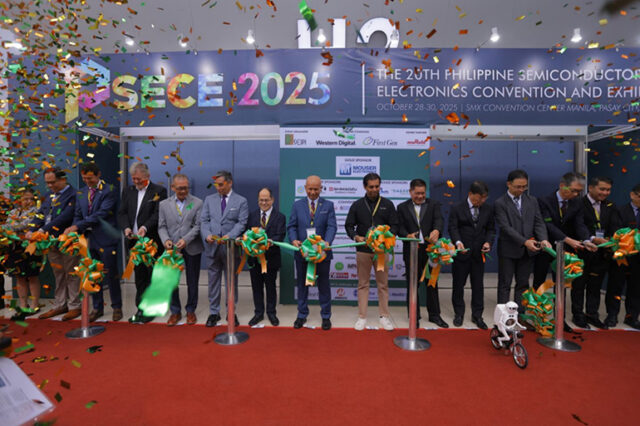
SEIPI highlights industry innovation and partnership at PSECE 2025

The Semiconductor and Electronics Industries in the Philippines Foundation, Inc. (SEIPI) concluded the 20th Philippine Semiconductor and Electronics Convention and Exhibition (PSECE) from Oct. 28-30, 2025, at the SMX Convention Center, Pasay City, featuring 178 exhibitors and 7,460 trade visitors.

Guided by the theme, “Unlocking Infinite Possibilities: Future-proofing the Philippine Semiconductor and Electronics Industry through Sustainable and Intelligent Manufacturing,” the three-day convention featured plenary sessions, technology exhibits, networking activities, and the ASEMEP National Technical Symposium (ANTS).

A Balancing Act: Murata Boy Brings Robotics to Life

Murata Boy

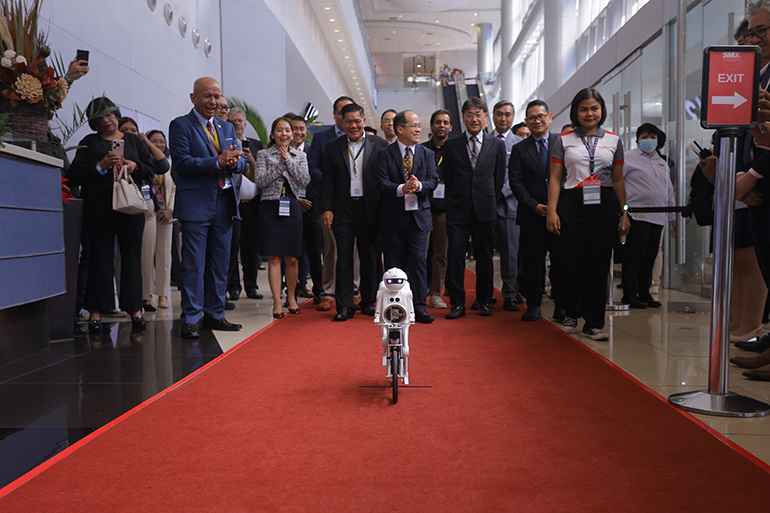
One of the highlights of the opening activities was the guided ribbon-cutting ceremony featuring “Murata Boy,” the signature self-balancing robot developed by the Philippine Manufacturing Co. of Murata, Inc. (PMM). PMM is the official exhibition partner of the event.

“Watching Murata Boy ride a bicycle isn’t just for entertainment; it brings into this the future of robots and sensor integrations that continue to inspire the next generation of STEM innovators,” Masayoshi Koda, president of Murata, says in his Message of Support.

“Visitors of our booth will experience the wonder of Murata Boy, a humanoid robot that demonstrates the perfect fusion of advanced gyroscopic sensors and autonomous control technology,” he added.

Industry Recognition Beyond the Nation

International diplomatic representatives delivered messages of support at the opening program. H.E. Ambassador Constance See of Singapore highlighted the sector’s vital role in global technology and employment, noting Singapore’s rise as a semiconductor hub and the Philippines’ strong contributions. She called for deeper Singapore-Philippines partnerships and urged ASEAN to strengthen its position as a trusted, competitive hub amid global challenges.

H.E. Ambassador Endo Kazuya of Japan praised the semiconductor and electronics industry for its role in innovation and daily life, emphasizing Japan’s long-standing collaboration with the Philippines. He noted that Japanese firms, including Murata, have helped transform the country into a key manufacturing hub, creating jobs and strengthening global value chains. Ambassador Kazuya also commended SEIPI for fostering industry connections and stressed the importance of sustainable, intelligent manufacturing for a resilient future.

H.E. Dr. Andreas Michael Pfaffernoschke, Ambassador of Germany, congratulated SEIPI on the 20th PSECE and highlighted the strong trade, technology, and sustainability partnership between Germany and the Philippines. He emphasized the complementarity of German engineering and Filipino manufacturing, noting the importance of combining competitiveness with sustainability through research, training, and innovation.

Together, the ambassadors’ messages underscored the Philippines’ growing significance in the global semiconductor and electronics industry. They reinforced a shared commitment to innovation, sustainability, and international collaboration for a smarter, greener, and more resilient future.

Partners in Leading the Charge for Green and Smart Growth

The session opened on an inspiring note as Arlene Sy Soriano, Assistant Vice-President and Head of Sales and Engagement at First Gen Corp., set the tone for the theme “Accelerating Green Growth.”

She emphasized that in today’s fast-changing industry, which is driven by competition, technology, and globalization, sustainable growth has become synonymous with leadership. Green growth, she explained, means rethinking how businesses expand by using energy that is reliable, cost-effective, and environmentally responsible.

Renewable energy, Ms. Sy Soriano noted, is no longer a buzzword but a business imperative. Investors and consumers alike are now looking beyond products to examine how they are made and how operations affect the environment. This shift puts energy decisions at the core of corporate strategy and highlights the “energy trilemma” of security, affordability, and environmental responsibility which is now essential to every forward-thinking company.

Power reliability, she added, remains critical for industries like semiconductors, where even brief power interruptions can lead to production and revenue losses. While the Philippines still sources nearly 60% of its energy from coal, Ms. Sy Soriano pointed to the growing momentum toward renewables, stressing that for the semiconductor sector, clean energy is not just about compliance but competitiveness.

First Gen, she said, has witnessed this transformation firsthand as more companies embrace renewable sources to power their operations. She concluded by reaffirming First Gen’s role in accelerating the country’s transition to renewable energy and empowering industries to align growth with sustainability.

Meanwhile, Dr. Chandramogan Anamirtham of Western Digital Storage Technologies Philippines Corporation expressed his gratitude to SEIPI for its continued partnership, noting that this marks the fourth year Western Digital has hosted the PSECE. He reiterated the company’s commitment to smart and green manufacturing, aligned with its vision, “Powering Data, Driving Potential.”

Dr. Anamirtham underscored the company’s central role in digital progress with the statement, “No hard drive, no AI.” He outlined Western Digital’s roadmap for integrating automation and digitalization in its Philippine facilities over the next three to five years, aiming to position the country as a hub for smart manufacturing and data innovation.

As an industry leader and the first in the Philippines recognized as a World Economic Forum Lighthouse, Western Digital continues to champion sustainability by reducing its environmental footprint, empowering communities, and embedding green practices across its operations.

Together, Western Digital and First Gen Corp. embody SEIPI’s vision for a smarter, greener, and globally competitive electronics industry. Their leadership at PSECE 2025 underscores a shared commitment to sustainability and innovation driving the Philippines toward a future where technology and responsibility move in harmony.

Keeping the Circuit Strong: Gov’t Leaders Rally Behind the Semiconductor Sector

DoST Secretary Dr. Renato U. Solidum, Jr., DTI Secretary Cristina “Cris” A. Roque, and Senator Loren Legarda emphasized that the semiconductor and electronics industry is crucial to sustaining the country’s progress and maintaining economic momentum during the recently concluded 20th Philippine Semiconductor and Electronics Convention and Exhibition (PSECE).

Senator Legarda pointed out that the industry is a cornerstone of the Philippine economy, accounting for over half of total commodity exports and employing millions of people nationwide. Beyond its economic value, she highlighted the transformative synergy of science, technology, and education in national development.

“The semiconductor and electronics industry is more than an economic powerhouse,” stated Senator Legarda in her message. “It symbolizes what our country can achieve when innovation, education, and opportunity converge. Our future as a competitive and resilient nation depends on how well we nurture and empower our people.”

She also reiterated her long-standing advocacy for innovation, citing her authorship of the Philippine Innovation Act (Republic Act No. 11293), which embeds innovation into the country’s development framework and promotes science and technology. The law aims to develop scientific talent, promote research, and enable Filipinos, especially women and the youth, to compete in emerging global industries.

In her speech as Chairperson of the Senate Committee on Higher, Technical, and Vocational Education, Senator Legarda underscored that education is at the core of creating a future-ready workforce. She called for the alignment of academic programs with industry needs, the modernization of training systems, and significantly intensified efforts to develop globally competitive talent.

For his part, Secretary Solidum echoed this vision and described the semiconductor and electronics sector as “the heartbeat of the Philippine economy.” He said the challenge now lies with stakeholders on how the Philippines can “future-proof this multi-trillion-peso industry” and position itself as a leader in global technology transformations.

He outlined the four strategic pillars of the DoST, human well-being, quality science and technology education, wealth production, and sustainability, and discussed ongoing initiatives to strengthen these. These include the upskilling of engineers through the Science and Technology Fellows Program, the BALIK Scientist Program, and DoST scholarships; expanded graduate programs in microelectronics, AI-enabled manufacturing, and semiconductor process engineering; enhanced TVET initiatives with TESDA; and the establishment of Centers of Excellence in Microelectronics, Materials Science, and Green Manufacturing. He also cited the launch of UP Diliman’s Center for Integrated Circuit and Device Research, which he said will further advance homegrown IC design and innovation.

Meanwhile, Secretary Roque congratulated the industry for two decades of innovation, collaboration, and sustained growth, attributing the sector’s resilience to strong partnerships between government and the industry. She reiterated the government’s commitment to continued support through programs focused on SME development, talent pipeline strengthening, and streamlining business processes to attract more investments.

She further highlighted A.O. No. 31, issued by President Ferdinand Marcos, Jr., which created an Advisory Council to guide the continued development and competitiveness of the industry. Secretary Roque emphasized the need to go “beyond traditional manufacturing” and invest in higher value-added activities such as IC design, R&D, and innovation-driven capabilities. “Green and sustainable manufacturing,” she added, “is no longer optional; it is essential.”

All three government officials called for unity in building a smarter, more sustainable, and more inclusive future, and they celebrated PSECE’s milestone as a shared achievement for the Philippine semiconductor and electronics industry.

From Manila to ASEAN: Powering the Region’s Future at PSECE 2026

As the Philippines gears up for its ASEAN Chairmanship next year, the nation will showcase its leadership in innovation and regional collaboration through the Philippine Semiconductor and Electronics Convention and Exhibition (PSECE) 2026, to be held on Oct. 26-28, 2026, at the SMX Convention Center Manila. Hosted by SEIPI, PSECE 2026 aims to advance a shared ASEAN aspiration: a connected, competitive, and innovation-driven region powering the future of global technology.


Spotlight is BusinessWorld’s sponsored section that allows advertisers to amplify their brand and connect with BusinessWorld’s audience by publishing their stories on the BusinessWorld Web site. For more information, send an email to online@bworldonline.com.

Join us on Viber at https://bit.ly/3hv6bLA to get more updates and subscribe to BusinessWorld’s titles and get exclusive content through www.bworld-x.com.
Grand Hyatt Manila clinches multiple prestigious honors in 2025

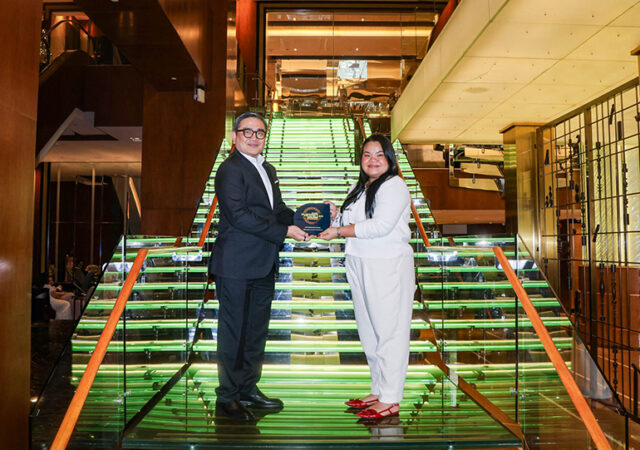
Grand Hyatt Manila Director of Sales and Marketing Eugene Tamesis receives the Best Business Hotel — Manila Award from Business Traveller Asia Pacific Partnership Lead Keh An Famatiga.

Grand Hyatt Manila proudly celebrates a landmark year of recognition, having been named Best Business Hotel — Manila at the Business Traveller Asia Pacific Awards, and Best Hotel — Manila at the TTG Travel Awards, while also earning a coveted spot in the 2025 MICHELIN Guide Hotel Selection, ranking among the Top 3 Best City Hotels in the Philippines at the Travel + Leisure Luxury Awards Asia Pacific, and securing the Top 2 Best Hotel in the Philippines at DestinAsian’s Readers’ Choice Awards.

These accolades affirm Grand Hyatt Manila’s position as a premier destination for discerning business and leisure travelers, setting the benchmark for luxury hospitality in the region.

The Business Traveller Asia Pacific Awards, held on Oct. 21, 2025 at The Westin, Singapore, celebrates the very best in airlines, hotels, and travel services across the region, spotlighting excellence in comfort, innovation, and loyalty. The prestigious ceremony brings together industry leaders and travelers to honor standout performers in the competitive Asia-Pacific market.

The TTG Travel Awards, established in 1989, are among the most prestigious honors in the Asia-Pacific travel industry. Grand Hyatt Manila’s win under the Travel Supplier category was determined solely by votes from travel consultants, tour operators, and destination management companies. The official awarding ceremony was held on Sept. 25, 2025 at Centara Grand at CentralWorld in Bangkok, Thailand.

Roger Habermacher, general manager of Grand Hyatt Manila, proudly holds the TTG Travel Awards trophy with the accolade for Best Hotel — Manila. The ceremony was held in September at Bangkok, Thailand.

In August, Grand Hyatt Manila was included in the 2025 MICHELIN Guide Hotel Selection, a prestigious recognition that upholds the hotel’s commitment to excellence in luxury hospitality. As one of only 20 hotels in the Philippines selected by MICHELIN’s anonymous inspectors, Grand Hyatt Manila has been honored for its outstanding architecture, distinctive personality, and consistently high standards of service.

The Guide describes the property as “a high-rise hospitality on an impressive scale. Its rooms and suites feature large windows, marble bathrooms, and warm wood finishes, along with expansive city views. Dining is a highlight, from a theatrical 3D dinner at The Peak to dim sum and dry-aged steaks across the property. With a club lounge, spa, and one of the city’s largest pools, Grand Hyatt Manila offers a nuanced stay for both work trips and weekend escapes.”

Further cementing its reputation, Grand Hyatt Manila was recognized by Travel + Leisure Luxury Awards Asia Pacific, a trusted authority in global travel and lifestyle, which celebrates excellence across hotels, resorts, airlines, and destinations. The hotel ranked among the Top 3 Best City Hotels in the Philippines, reflecting its appeal to sophisticated urban travelers.

Additionally, DestinAsian, a leading travel and lifestyle magazine for the Asia-Pacific region, honored Grand Hyatt Manila with the Top 2 Best Hotel in the Philippines in its 2025 Readers’ Choice Awards, a distinction voted by its discerning readership who value quality, service, and unforgettable experiences.

“To be recognized by Business Traveller Asia Pacific, TTG Asia, MICHELIN Guide, Travel + Leisure, and DestinAsian in a single year is a profound honor,” said Roger Habermacher, General Manager of Grand Hyatt Manila. “Each accolade reflects the trust and admiration of our guests, industry peers, and global experts. These milestones are a testament to our team’s unwavering commitment to excellence, and they inspire us to continue redefining luxury hospitality in the Philippines and beyond.”

Located in the heart of Bonifacio Global City, Grand Hyatt Manila continues to elevate the guest experience with expansive event spaces, refined accommodations, and world-class dining. These recent distinctions underscore the hotel’s pursuit of excellence and its growing influence in the global hospitality landscape.

For more information on the hotel, visit www.grandhyattmanila.com. For updates on the latest promotions, follow Grand Hyatt Manila on Instagram at www.instagram.com/grandhyattmanila and Facebook at www.facebook.com/GrandHyattManilaPh.


Spotlight is BusinessWorld’s sponsored section that allows advertisers to amplify their brand and connect with BusinessWorld’s audience by publishing their stories on the BusinessWorld Web site. For more information, send an email to online@bworldonline.com.

Join us on Viber at https://bit.ly/3hv6bLA to get more updates and subscribe to BusinessWorld’s titles and get exclusive content through www.bworld-x.com.

Philippines still seeking lower US tariff 

REUTERS/DADO RUVIC/ILLUSTRATION

GLOBAL TRADE has “responded well” to Washington’s broader relaxation of tariffs, though uncertainty still hangs over the outlook as Manila continues to negotiate the lowering of the 19% reciprocal duty on its exports, the Department of Economy, Planning, and Development (DEPDev) said.

“I think that the global trade in many countries has responded well to the improvement,” DEPDev Secretary Arsenio M. Balisacan told reporters on the sidelines of a Senate hearing on Nov. 18.

“But still, it does not mean that uncertainty has disappeared. It’s still out there.”

The Philippines continues to press for a lower reciprocal tariff even after most of its agricultural exports were exempted under US President Donald J. Trump’s latest executive order, Mr. Balisacan said.

Other goods from the Philippines are still slapped with a 19% reciprocal tariff when they enter the US. However, Mr. Trump’s latest executive order exempted hundreds of agricultural products from the reciprocal tariffs starting Nov. 13.

The Department of Trade and Industry earlier said the latest order meant that over $1 billion worth of Philippine agricultural exports are now exempted from the 19% US reciprocal tariff.

Key agricultural exports exempted from the reciprocal tariff include coconut (copra) oil, both crude and other than crude; fruit juices; processed pineapples; desiccated coconuts; prepared or preserved coconuts; bananas, other than pulp; dried guavas, mangoes, and mangosteens; frozen tuna fillets; rice wafer products; and confectionery products.

Mr. Balisacan said the tariff exemption will boost productivity of coconut farmers, as well as strengthen their export capacity. 

Executive Secretary and former Finance chief Ralph G. Recto said the tariff exemptions mark a positive step for Philippine exports and agriculture, adding they could help drive economic growth.

“It’s positive for us. I think President Trump realized that imposing tariffs on agriculture is inflationary, so he removed them. That’s good for us,” he said on the sidelines of a Senate hearing on Nov. 18.

‘EXPORT MORE’
Meanwhile, the Department of Agriculture (DA) is ready to support Philippine farmers in expanding their exports to the US.

“The path is clear. Now people can plan, invest, and expand. So, that’s good. As far as the DA is concerned, we have to start planting more… so that we can export more to the US,” Agriculture Secretary Francisco P. Tiu Laurel, Jr. told reporters on the sidelines of the 3rd Philippine Hydro Summit on Wednesday.

Mr. Laurel said the US order has helped calm the anxiety of Philippine exporters of coconuts, bananas and pineapples.

The Agriculture chief said that the 19% US reciprocal tariff, which was implemented starting August, had earlier created uncertainty for the industry.

“But now, everything is clear… The President’s directive was to support all of our export products. And that will be our banner programs for next year,” Mr. Laurel said.

The Philippine Exporters Confederation, Inc. (Philexport) said the exemption of Philippine exports such as coconuts, pineapples, bananas, and mangoes from the 19% US reciprocal tariffs is expected to “improve demand, stabilize prices, and directly benefit exporters, farmers, and rural communities across the Philippines.”

“This is a positive outcome of our sustained collaboration and engagements with key stakeholders and partners to convey the need for certain exemptions and maintain the competitiveness of Philippine exports, especially those products not locally produced in the US,” Sergio R. Ortiz-Luis, Jr., Philexport president and chief executive officer, said.

Philippine Chamber of Commerce and Industry President Enunina V. Mangio said the exemptions provide “much-needed relief to exporters, help safeguard jobs, and strengthen the competitiveness of Philippine products.”

For his part, University of Asia and the Pacific Associate Professor George N. Manzano said the Philippines should continue negotiations with the US for a lower reciprocal tariff.

“However, we are still not better off compared to the period before President Trump introduced those reciprocal tariffs. So, the Philippines should continue negotiating for a reduction of the 19% reciprocal tariff,” he said in a Viber message.

Mr. Manzano noted that the removal of reciprocal tariff does not mean Philippine exports are duty-free, as the original Most Favored Nation tariff will still be applied.

If the US extends the tariff rollback to all trading partners, the Philippines’ relative competitiveness would remain unchanged, he added.

“This US tariff exemption is a game-changer for Philippine exporters. Over $1 billion worth of goods — led by coconuts, coffee, cocoa, and processed fruits  —will now enter the US duty-free,” Jonathan L. Ravelas, a senior adviser at Reyes Tacandong & Co., said in a Viber message to BusinessWorld on Wednesday.

He also said the tariff break may offer a chance to scale up value‑added products of farmers and agri‑businesses.

“My advice? Move fast, ensure quality, and lock in supply reliability — this window won’t stay open forever,” he said.

For his part, Foundation for Economic Freedom President Calixto V. Chikiamco said the exemption is “self‑serving,” and would favor the US more than the Philippines.

“It’s meant to lower food prices in the US since affordability has become a hot political issue,” he said in a Viber message on Wednesday.

Meanwhile, Ivan Tan, director and lead analyst for Southeast Asia at S&P Global Ratings, said while the tariff exemption is “good,” the Philippines will unlikely see a significant impact as goods remain a small component of the country’s exports.

“I think the impact will be quite mild,” he said in a webinar on Wednesday. “To start with, the dependence of the Philippines’ economy on export… is low. It’s quite small.”

S&P Global has said the US tariff policies could pose downside risks to economies and financial markets in the Asia-Pacific region.

“There is a high degree of unpredictability around US policy implementation and possible responses — specifically about tariffs — and the potential effect on economies, supply chains, and credit conditions,” it said in its recent Global Banks Outlook 2026 report. — Aubrey Rose A. Inosante, Sheldeen Joy Talavera and Katherine K. Chan

Economy likely to grow below target as corruption issues drag on 

Buildings in Manila’s business district. — PHILIPPINE STAR/RYAN BALDEMOR

THE PHILIPPINE ECONOMY will likely grow below target this year and in 2026, as it continues to be weighed down by a global economic slowdown and corruption issues, an economist said.

University of Asia & the Pacific School of Economics Senior Economist Victor A. Abola said at a briefing that gross domestic product (GDP) is likely to grow by 5.1% this year, after a “little bump” in the fourth quarter due to base effects.

The Philippine economy grew by 4% in the third quarter, the slowest growth seen in over four years as a corruption scandal stalled public construction and dampened consumer and investor sentiment.

In the first nine months, GDP growth averaged 5%, well below the government’s 5.5-6.5% target for 2025.

Mr. Abola said fourth-quarter growth may be driven by the stable jobs market and low inflation.

“Well, I think that low inflation means more purchasing power for consumers. I did not emphasize employment, but it has been stable. I mean, over 50 million are employed. That’s a good threshold because the average last year was below that,” he said.

Mr. Abola projects inflation to average 1.7% in 2025 and 2.2% in 2026.

For 2026, Mr. Abola said that he expects 5.3% GDP growth if the government manages to sort out issues on corruption, and partly due to low base effects.

This would still be below the 6-7% growth target of the government.

“Besides that, I think you would have sorted out a lot of these issues on corruption so that spending will be resumed, particularly since we know that from the budget, they are moving some of the infrastructure spending to education and social welfare,” he said.

However, Mr. Abola said GDP could grow by 6% next year, if the country will let the peso further depreciate.

“If you aggressively let the peso depreciate, as in terms of policy, because for us specifically, weaker peso is faster growth,” he said.

He expects the peso to end at P58.5 per US dollar this year, and P61.75 per dollar next year.

On Wednesday, the peso closed at P58.935 against the US dollar, up by five centavos from its P58.985 finish on Tuesday, Bankers Association of the Philippines data showed.

NEGATIVE FORCES
Meanwhile, Mr. Abola said the corruption scandal is one of the “negative forces” affecting the economy, as the patience of the public is being tested.

“The question is how long will it last? Well, this is going to be a test of how patient we are… but I think everybody’s reading is that this situation cannot be tolerated,” he said.

“This is the bottom line: people want concrete criminal charges and jail terms already. I think that this will happen by the first quarter of this coming year,” he added.

The Philippine government is currently investigating a multibillion-peso public works scandal involving government officials, lawmakers and private contractors.

The Office of the Ombudsman on Tuesday formally filed criminal charges for graft and malversation against a former lawmaker and several Public Works officials before the Sandiganbayan, marking the first batch of cases brought to the court amid the flood control project scandal.

Mr. Abola said what makes the issue different now is that even low-income people are affected. “And it is not just in Metro Manila; I expect that the rallies will be across the country,” he added.

Mr. Abola said the government has to undertake serious reforms to curb corruption. “Hopefully, it is an opportunity for us to be able to do some serious reforms, particularly in safeguarding the spending, so that there will be less corruption. There’s always corruption, but we have to ensure that it’s minimized,” he added.

The Finance department estimated losses due to corruption related to the Department of Public Works and Highways flood control projects could have reached between P145.4 billion to P407 billion from 2023 to 2025. — Justine Irish D. Tabile

Customs not giving up on 2025 goal as imports fall

The Bureau of Customs (BOC) seized a tanker and several lorry trucks carrying smuggled fuel at the Subukin Port in San Juan, Batangas, Feb. 4. — PHILIPPINE STAR/EDD GUMBAN

By Aubrey Rose A. Inosante, Reporter

THE BUREAU of Customs (BoC) is holding the line on its P958.7-billion revenue goal for 2025 despite a sharp drop in imports and fewer working days in October that slowed collections, a stance that keeps pressure on the agency as the government grapples with weaker fiscal inflows.

Customs Commissioner Ariel F. Nepomuceno said the bureau is not giving up on the full-year target even after the total volume of imports fell by 3% or about P80 billion last month, denting duties and taxes.

“I don’t want to give up because we’re already at 98% efficiency,” he told reporters on the sidelines of a Senate plenary debate on the 2026 budget on Nov. 17. “We can still do it if we can in November [and] December.”

The BoC collects taxes and duties from all goods imported to the Philippines.

The Department of Finance earlier warned that Customs, one of the country’s revenue-generating agencies, may miss its full-year targets this year amid slower global trade due to US President Donald J. Trump’s tariff policies.

“We could have hit the target this October if there had been one more working day. Compared to last year, there were more working days… due to the storms,” he said.

The Philippines was battered by back‑to‑back storms, including typhoons Tino and Uwan, which shut businesses, ravaged cities and forced class suspensions in October.

The latest data from the Treasury showed that Customs revenue collection inched up by 1.59% to P701.7 billion in the first nine months, accounting for 73.12% of the full-year target.

Customs has yet to release a breakdown of its October collections.

Despite this, Mr. Nepomuceno said Customs is banking on petroleum imports to help offset weaker revenues as the extension of the rice import ban and slower trade weigh on collections.

“But we’re trying to check if there are other sources that can compensate (for the slower revenues). Like petroleum products, probably we can generate more revenues from that, given that the ban for rice importation has been extended,” he said.

Mr. Nepomuceno warned that foregone revenues from the rice import freeze, expected to last until mid-January, could reach over P6 billion.

He also noted that Customs seized P3.6 billion worth of smuggled goods between July and September.

“The new team accounted for about 50% of total apprehensions in just 90 days. So, there is a sense of hope that we can improve further until we fully digitalize,” he said.

Customs earlier reported the BoC is also looking to enter into a public and private partnership to fully digitalize its operations.

Rizal Commercial Banking Corp. Chief Economist Michael L. Ricafort said the BoC can still meet its P958.7‑billion revenue goal for 2025 if import volumes rebound.

“Imports could increase as more exporting countries diversify exports away from the US and more for countries like the Philippines amid Trump’s higher tariffs, trade wars, and protectionist policies,” he said in a Viber message.

Globe signs P7.6-B loan with Japan’s Mizuho to support capex

GLOBE.COM.PH

GLOBE TELECOM, INC. has signed a ¥20-billion (around P7.6 billion) term loan facility with Mizuho Bank, Ltd., a major Japanese commercial bank, to partially finance its capital expenditures (capex), debt refinancing, and other corporate requirements for the year.

In a stock exchange disclosure on Wednesday, the Ayala-led telco said it had invested approximately P31.4 billion in capex for the first nine months of 2025, down 23% from P41 billion in the same period last year.

The company said its full-year 2025 capex is expected to fall below $1 billion, reflecting a strategic shift toward targeted investments and reinvestment of proceeds from tower sales for the remainder of the year.

“By pursuing focused investments and innovation shaped around customer demand, Globe continues to empower more Filipinos to thrive in a digitally connected economy,” the company said.

Globe noted improvements in capital efficiency, saying its cash capex-to-revenue ratio improved to more sustainable levels at 26% from 33%, while the capex-to-earnings before interest, taxes, depreciation, and amortization (EBITDA) ratio narrowed to 49% from 63%.

“These improvements pave the way for targeted network initiatives for the remainder of the year and strengthen Globe’s positive free cash flow position,” the company added.

“Consistent with prior periods, approximately 89% of capex was allocated to data-related projects, reaffirming Globe’s commitment to advancing digital capacity and expanding connectivity nationwide,” it also said.

For Toby Allan C. Arce, head of sales trading at Globalinks Securities and Stocks, Inc., Globe’s reliance on debt financing is strategic, as it helps ease the immediate strain on the company’s internal cash flow while still funding critical network investments.

“Also, by refinancing existing liabilities, they may be optimizing their cost of capital, extending maturities, or reducing their interest burden, which is prudent in a capital-intensive business like telecom,” he said in a Viber message on Wednesday.

He also noted that borrowing carries risks, particularly given the volatility of local and foreign currencies, which could expose Globe to foreign exchange and interest rate risks.

“Overall, I view Globe’s approach as relatively balanced and disciplined. They are not over-leveraging; rather, they’re strategically layering in external funding to preserve liquidity, while using internal cash flow improvements to underpin their network investments,” he said.

For the three months ending September 2025, Globe reported a 12.79% drop in attributable net income to P5.25 billion from P6.02 billion a year ago, on slightly lower revenues of P44.36 billion, down 1.68% from P45.12 billion.

For the January-to-September period, attributable net income dropped 14.04% to P17.69 billion, while revenues fell 2.34% to P131.59 billion.

Earlier this year, Globe also signed P20 billion in loan facilities with local banks BDO Unibank, Inc. and Metropolitan Bank & Trust Co. to fund its 2025 capex and reduce debt.

At the local bourse on Wednesday, shares in Globe closed P4, or 0.25% higher, at P1,629 apiece. — Ashley Erika O. Jose

Good vibes with a good pig

MRCOCHINILLO.COM

WE’VE had quite a few good times dining in rather sleepy Marikina, but aside from the odd lugawan, two of our standout experiences were in private dining rooms: at 61 Orange for a birthday party, and, on a professional basis, Mr. Cochinillo.

Former photographer Tinee de Guzman originally invited just a team from another publication for dinner on Nov. 16. When the pair found out that they had to finish off one of Mr. De Guzman’s cochinillos by themselves — a whole suckling pig which is good for between six to eight diners — the invitation list just grew longer and longer (part of the draw for us was an outlet that sold traditional Ilokano fabric, inabel, next to Mr. Cochinillo; a story for another day). While cochinillo is often best enjoyed at home, Mr. De Guzman opened his own tasting room in Marikina, just in case.

It’s this element of surprise that shapes Mr. De Guzman’s approach. While he grew up around people who liked food, as a photographer he would also learn from chefs while he shot pictures of their food, on commission from magazines in the city. In his own photography studio, he built a brick oven to amuse and feed guests (saying he “threw anything” in there). When someone wanted to rent the studio for a party, wanting to get the account, Mr. De Guzman bluffed his way into catering it with recipes picked up from work. One of these was cochinillo — which, quite frankly, he had not made yet when this happened back in 2012.

At that time, it was hard to source a month-old pig. Now, they can be found in high-end supermarket shelves, and there’s a handful of roasters in the city making the same thing. Mr. De Guzman had to find a supplier of young pigs, so he could practice. “Napasubo ako (I had to do it),” he said.

He still sometimes uses that brick oven, though he has added more, and some other kinds. “The char, the smoke, and the distribution of the heat is different,” he said.

We can say that’s true: Mr. De Guzman (we’re tempted to just call him Mr. Cochinillo at this point; the business name and nickname coming from a previous interview where the reporter called him by that name) brought out his pride and joy, a one-month-old pig cooked long and slow for hours. The skin was crispy, the meat soft, demonstrated by him cracking the pig open with a plate. The flesh and the fat were mild and buttery. This was accompanied by an Iberian Chicken, surrounded by roast potatoes and garlic. Paella and Fabada (a Spanish bean stew) and Rabo de Toro (a similar stew, but made with oxtails) were also on the table, making for an overall hearty experience (it also helped that he had a well-stocked wine and liquor cabinet).

While his kitchen didn’t produce the dessert — a luxurious Sansrival, done the French way, but with the innovation of studding it with macadamia nuts instead of the traditional almonds — if you order the cochinillo (which ranges in price from P11,999 to P13,999; smaller 1/4 options start at P2,899), he’d be sure to tell you where to get it.

Mr. De Guzman has worn many hats: he’s helped out at the family business and had gone into photography, among other ventures. We place an emphasis on this because when we ask him questions about the cochinillo, he turns back time and answers using examples from one of his old lives.

For example, when asked how to tell what a good pig is, he told us a story about another former career, which involved balut (fertilized duck eggs). His source told him that you could tell the quality of the eggs the duck is about to lay from the way it walks.

Finally getting to the point about the pigs, he said he used to inspect faces and noses, but African Swine Flu (AFS) changed it all: “It’s gotten a bit difficult, and it’s stricter.”

Swine health issues aside, he boils (roasts?) it all down to single quality: “A happy pig.” Pigs that lived a good life and were killed swiftly yield good, soft, delicate flesh; stressed pigs who died slowly stiffen up and yield low-quality meat.

On another question about how his previous paths shaped the way he cooks now, he answers by mentioning two of his jobs.

“It’s things done the old way, and the long way,” he said — he recalled how it took him some time to get a digital camera and stuck to film long after it became unfashionable. “When you see them come… then you play something bad, and they leave, then they come back — ang sarap n’on (that feels good).” He wasn’t talking about cooking, he was talking about DJ-ing (though the principles are the same).

He summarized it all — cooking, photography, music, etc. — in one maxim: “Simple things done properly are sometimes more difficult to do consistently.”

One can order from the website mrcochinillo.com, and get in touch with them via Instagram (@mrcochinillo) to book the private dining room at No. 16 Major Dizon St., Marikina. — Joseph L. Garcia

Media companies face tempered Q4 prospects as ad spend normalizes

STOCK PHOTO | Image by DC Studio from Freepik

By Ashley Erika O. Jose, Reporter

LISTED media companies are heading into a challenging fourth quarter after weaker third-quarter earnings, as the post-election advertising boost dissipated and ad budgets normalized, analysts said, although a modest year-end recovery remains possible on seasonal holiday spending.

“The industry narrative for 2025 has been clear all year — election advertising gave a meaningful, concentrated boost in H1 (first half) across listed media houses, and Q3 was the natural correction month when those incremental ad budgets disappeared,” Globalinks Securities and Stocks, Inc. Head of Sales Trading Toby Allan C. Arce said in a Viber message on Tuesday.

During the third quarter, both GMA Network, Inc. and ABS-CBN Corp. posted lower attributable net income as revenues softened.

“Looking ahead, a recovery by Q4 or by yearend is possible but far from guaranteed; the most likely near-term uplift would come from seasonally stronger year-end advertising and any successful new content or digital monetization wins,” Mr. Arce added.

For the three months ending September, GMA Network’s gross revenue declined by 17.23% to P3.89 billion from P4.70 billion, weighed down partly by higher expenses.

Despite the weaker quarter, GMA Network’s attributable net income for the nine-month period climbed 46.81% to P2.07 billion from P1.41 billion a year ago. Revenues rose 11.92% to P13.99 billion from P12.50 billion, while gross expenses increased 6.06% to P11.37 billion from P10.72 billion.

By segment, advertising revenues increased to P12.77 billion, up 10.47% from P11.56 billion, while consumer sales grew to P1.22 billion from P942.24 million.

Meanwhile, ABS-CBN widened its attributable net loss for the third quarter to P1.28 billion from P389.87 million previously. The company posted combined revenues of P3.48 billion, 19.63% higher than P4.33 billion a year earlier, as total expenses fell 7.85% to P4.58 billion from P4.97 billion.

For the nine months to September, ABS-CBN trimmed its attributable net loss to P2 billion from P2.41 billion despite lower revenues. Gross revenue dipped 3.05% to P11.75 billion from P12.12 billion, while expenses dropped 10.99% to P13.52 billion from P15.19 billion a year earlier.

Advertising revenues rose 14.68% to P5.47 billion from P4.77 billion, while consumer revenues expanded 13.31% to P3.66 billion from P3.23 billion.

First Metro Investment Corp. Head of Research Cristina S. Ulang said: “Recovery is possible by Q4 given higher ads during holiday season.”

“Fourth quarter improvement is plausible and even likely in headline revenue terms because of seasonality, but meaningful earnings recovery to H1 levels will depend on durable ad reallocation,” Mr. Arce added.

At the stock exchange on Wednesday, shares in GMA slipped by three centavos, or 0.57%, to close at P5.22 each, while shares in ABS-CBN closed six centavos, or 1.73% lower, at P3.40 apiece.

Any excuse to come back

WAGYU WITH MAITAKE

After a very short stint at Red Lantern, visiting Singapore chef Zor Tan hopes to return

OOPS! We missed announcing that Zor Tan, with one Michelin star for his restaurant Born in Singapore, was in town from Nov. 14 to 16 at Solaire’s Red Lantern. Don’t worry, we’ll tell you all about the eight-course dinner he served us at a preview media luncheon on the 13th — besides, he’s always raring to come back here.

The meal opened cold with Kanpachi (greater amberjack), ginger, and pear snow (frozen puree); cold, cutting, and sharp, like a slap of winter air to the face. The fish was surprisingly the mildest ingredient here, and the cold was accentuated by the snap of ginger.

The second dish was a Bao with Wagyu and Oyster: indulgent and served with caviar on top. The bao itself is bouncy in both flavor and texture coupled with the tender beef, with a mild unthreatening flavor despite the caviar. The oyster was not to be found: it had been made into a creamy emulsion at the bottom.

Our favorite dish was the Jade Fungus and Poached Abalone with Chicken Fat, accompanied by a Szechuan pepper sauce. It had a very clean, clear flavor, and just a whisper of meaty flavor, then the rest of the heat came after.

Next was a King Crab Risotto with Fish Maw, flavored with a familiar ingredient: taba ng talangka (crab fat), an ingredient introduced to him by the late great chef Margarita Forés (we assume the pili nuts used in this dish were also her influence). The fish maw was braised in bak kut teh, a clear Malay pork bone soup, giving bite to the creamy but spicy risotto.

For the last of the savories, he served Wagyu with Maitake (dancing mushrooms), served with an onion-based soubise. We already had some expectations about how this should taste, but in the hands of a gifted chef, it exceeded all expectations. The beef was extremely tender, matching its mild taste; the mushrooms beside them give it a mere hint of a snap. The sauce, just lightly enveloping it, gave it a mere suggestion of onion. We skipped the dessert (sweet potato chips on sea salt and oolong tea ice cream) to get to another engagement.

Zor Tan started his career being mentored by Andre Chiang, who himself earned various Michelin stars, including in Taiwan’s Raw, which closed in 2024. “Born,” he said, “Is a new birth of me: to start my own journey, and my own venture.”

Speaking about his own awards, he said, “I always dreamt to get a star. I think I worked hard for it, and the team as well.” Hoping for another star next year, he said, “We need to get ready before we move up to the next level.”

We mentioned a previous relationship between Mr. Tan and a great Filipino chef, but it turned out these Philippine bonds run deep. During previous visits, he visited the country’s recent Michelin-star awardees: Helm (with two stars), and Toyo Eatery and Gallery by Chele (one each). Now that his previous haunts have stars, he said in a group interview, “It made me very busy, because there are so many restaurants I want to visit, but I don’t have much time.”

“It’s good to visit and learn from them as well,” he said. “Anyone who wants me to cook here, I will come,” adding, “I always want to find an excuse to come back.” — JLG

Peso edges up vs dollar ahead of US labor data

REUTERS

THE PHILIPPINE peso inched higher against the dollar on Wednesday as investors positioned ahead of September US labor data, which could influence expectations for another interest rate cut by the US Federal Reserve.

It closed at P58.935 a dollar, up five centavos from Tuesday’s P58.985, based on Bankers Association of the Philippines data posted on its website. It opened at P58.95, swinging between P58.82 and P58.955 during the session.

Dollar turnover reached $1.39 billion, slightly below Tuesday’s $1.46 billion.

“The peso continued to gain on expectations of continued weakness in the soon-to-be-released September US labor report,” a trader said in an e-mailed reply to questions.

Investors are closely watching the Fed as it begins receiving updated economic data from the recently reopened federal government.

Policymakers are seeking clarity for their debate on whether to cut rates at the December meeting, just over three weeks away. However, the timeline for the release of employment, inflation, retail spending and growth data remains uncertain.

The Bureau of Labor Statistics said the delayed September employment report would be published on Thursday, while some October data might be skipped entirely, and November reports could face delays after the mid-month government shutdown.

The Fed last month lowered borrowing costs by 25 basis points, bringing its policy rate to 3.75-4%, the second cut this year. Since its easing cycle began in September 2024, total reductions have reached 150 bps, fueling market bets on additional easing.

The peso also drew support from signals of intervention by the Bangko Sentral ng Pilipinas (BSP), Michael L. Ricafort, chief economist at Rizal Commercial Banking Corp., said in a Viber message.

BSP Governor Eli M. Remolona, Jr. said the central bank has been active in the foreign exchange market, but only to temper any prolonged depreciation that could affect inflation.

Looking ahead, the peso may face mixed pressures. A weak US jobs report could reinforce expectations of further Fed rate cuts, supporting the peso, while global volatility could offset some gains.

The trader expects the peso to trade from P58.80 to P59.05 a dollar on Thursday, a range echoed by Mr. Ricafort, reflecting continued caution amid uncertain US data and central bank interventions. — A.M.C. Sy

Deloitte sees continued potential in Philippine IPOs

BW FILE PHOTO

DESPITE only two local initial public offerings (IPOs) this year, the Philippine market raised substantial funds and remains poised for growth within Southeast Asia’s IPO landscape, according to global professional services firm Deloitte.

“The Philippine market has actually shown quite consistent performance,” Deloitte Southeast Asia Capital Markets Services Leader Tay Hwee Ling said during a briefing on Tuesday.

“Year in, year out, we do see faster growth from the Philippines. So, the Philippine market as well — we do see potential,” she added.

While only two firms have listed on the Philippine Stock Exchange this year — Maynilad Water Services, Inc., which made its market debut on Nov. 7, and Top Line Business Development Corp., a fuel distributor and retailer in Cebu — total funds raised surged.

Maynilad’s IPO, priced at P15 per share, raised P34.3 billion in gross proceeds, making it the largest domestic listing since Monde Nissin Corp.’s P48.6-billion offering in 2021.

“This year, for the amounts of funds basically, compared to let’s say Singapore, Malaysia, and Vietnam, the fund raised actually increased more than double compared to last year from the Philippine market. It’s fueled by the IPO blockbuster water company that raised a respectable amount of funds in water,” Ms. Hwee Ling said.

Deloitte’s report showed that IPO activity across Southeast Asia picked up during the first 10.5 months of 2025, with 102 IPOs on six exchanges raising about $5.6 billion.

Although the number of listings fell compared with 2024 (136 IPOs raising $3.7 billion) and 2023 (163 IPOs raising $5.8 billion), total IPO proceeds rose by 53%, largely due to bigger deals and strong market performance in Singapore, Vietnam, Malaysia, and Indonesia.

“The increase in total IPO proceeds in 2025 is mainly due to more high-value listings in the real estate, financial services, and consumer sectors,” the report said.

Average IPO size in the region rose from around $27 million in 2024 to $55 million in 2025, with four IPOs in Singapore, Vietnam, and the Philippines raising more than $500 million each, and several companies reaching market values above $1 billion.

“At the same time, if you recall, talking about cross-border listing into NASDAQ, there’s also Hotel 101, which is a Philippine-based business that successfully got listed in NASDAQ in July this year — raising this is by respect, which is also a sizable business as well,” Ms. Hwee Ling said.

On July 1, Hotel 101 became the first Filipino-owned company to be listed on NASDAQ, with a market capitalization of approximately $1.36 billion as of Nov. 11.

To date, DoubleDragon remains the first and only Filipino company with a subsidiary publicly listed on the NASDAQ.

“So, from a Philippine market perspective, while we don’t see a significant count, we always see consistent performance in the top IPO blockbuster across the nation,” Ms. Hwee Ling said.

Deloitte also noted that private equity-backed listings sustained capital inflows across the region and attracted strong investor interest.

“Looking ahead to the coming year, Deloitte anticipates that investor appetite will remain healthy, sustained by the continued emergence of new market opportunities,” the team said. — Alexandria Grace C. Magno

ADVERTISEMENT
ADVERTISEMENT