Home Blog Page 6711

PAL to increase Manila-Antique flights by end-March

ANTIQUE PIO

FLIGHTS between Manila and Antique, serviced by flag carrier Philippine Airlines (PAL), will be increased to thrice weekly starting March 27, the provincial governor announced Monday. 

“The three flights per week will take effect on March 27 onwards. Every Wednesday, Friday and Sunday, our passengers can look at additional information in the website,” said PAL Branch Manager Ricky Dela Cruz. 

He said the increase in flights for the Manila-Antique route is in response to higher market demand, especially during the summer months of April and May. 

Antique Gov. Rhodora J. Cadiao said with travel restrictions eased, they expect more people to visit their families in the province during the Holy Week from April 10-16. 

“For those who want to come home during Holy Week, more Antiqueños can be accommodated (with more flights),” she said. 

Ms. Cadiao said the additional flights will also help in the province’s economic recovery as there will be more options for investors and businesses. 

Antique, located on the western side of Panay Island, is a largely agricultural province. It is promoting its beaches, mountains and other eco-tourism sites as alternative destinations in Western Visayas. The province’s northern end is near Boracay while the south borders Iloilo City. — MSJ

Senators, presidential candidate assert excise tax suspension urgent to protect consumers

PHILIPPINE STAR/ MICHAEL VARCAS

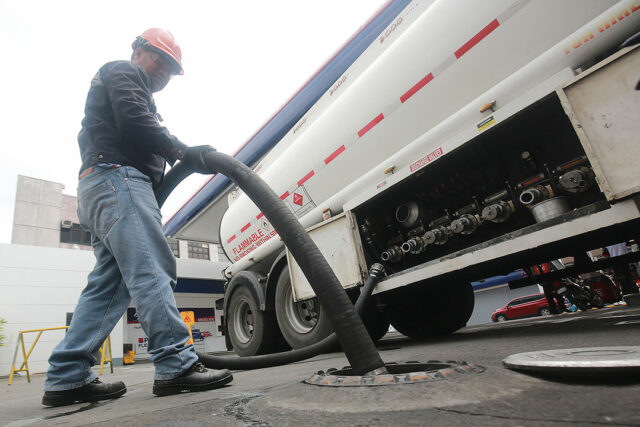
TWO SENATORS on Monday said lifting the excise tax imposed on oil products under the Tax Reform for Acceleration and Inclusion (TRAIN) law is urgently needed to mitigate the impact of price hikes on consumers. 

“We have long borne the burden of the excise tax imposed on petroleum products under the TRAIN Law,” Senator Ana Theresia “Risa” N. Hontiveros-Baraquel, who is running for reelection, said in Filipino in a statement. 

“From P2.50 excise tax per liter (/L) of gasoline in 2018 to P10/L beginning last year. With every increase in its current price, there is also a corresponding increase in the tax charged,” she said. 

Oil companies on Monday announced the following price hikes effective March 8: P5.85/L for diesel, P3.60/L for gasoline, and P4.10/L for kerosene.

“It will have a huge impact on our countrymen — on our drivers, fishermen, small businesses, and even our electricity consumers, especially on off-grid islands that use diesel for power plants,” Ms. Hontiveros said. 

She also called on the government to provide assistance to those affected by the price hike through fuel subsidy for drivers, farmers, and fishermen. 

Senator Emmanuel Joel J. Villanueva recommended temporarily removing or decreasing the excise tax on oil or increasing the fuel subsidy allocated to each beneficiary.

He also said the government should look into ways to decrease gasoline consumption. “Let us give a solution to Filipino workers so that they can work even with the presence of this crisis.” 

Manila Mayor and presidential aspirant Francisco “Isko” M. Domagoso said on Monday that if he wins in May, he will write to Congress to immediately approve bills that will reduce the taxes imposed on oil and electricity. 

“We can always, through a motion, suspend the rules in approving proposed laws or bills,” he said at a live-streamed interview held at the San Andres Sports Complex in Manila.

“So through some initiative and sensitivity of our lawmakers, and through the leadership of the President, the President may ask the Congress for that matter, to pass the law immediately because there is a sense of urgency and state of emergency.” 

Meanwhile, Mr. Domagoso’s party, Aksyon Demokratiko, has written to Bureau of Internal Revenue (BIR) Commissioner Caesar R. Dulay asking if the agency has sent a demand letter to the Marcos family regarding their unpaid estate taxes. 

“The BIR, which you now head, must renew written demands on the Marcos heirs to pay these tax liabilities once every five years, otherwise they prescribe and become uncollectable,” party chairperson Ernesto M. Ramel, Jr. said in the letter. 

“Past administrations under Presidents Ramos, Arroyo and Aquino have faithfully issued such written demands,” he said. 

“On behalf of all taxpayers and the citizens of the Philippines, I would like to seek a reply to the simple question: Did the BIR under your watch send a new written demand to the Marcos heirs regarding the P203 billion which they owe the Filipino people?” — Alyssa Nicole O. Tan and Jaspearl Emerald G. Tan

Philippines should go for renewable sources rather than nuclear energy — Diokno

PSALM.GOV.PH

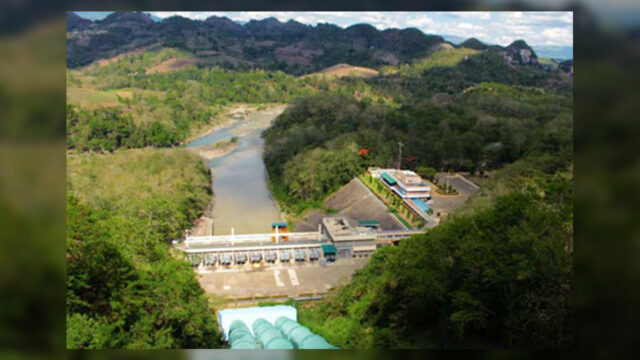
THE PHILIPPINES should develop renewable energy sources rather than nuclear energy since these are safer options for a country prone to natural disasters, a senatorial candidate said on Monday.

Human rights lawyer Jose Manuel “Chel” I. Diokno said in a statement that  “nuclear energy is not an option as it could put Filipinos in peril” given that the country is situated in earthquake and typhoon belts. 

President Rodrigo R. Duterte, who is stepping down by June 30, signed an executive order last week that includes nuclear power in the Philippines’ energy mix. 

“Look what happened to Japan. We cannot allow a disaster of such magnitude to happen here,” he said, referring to the 2011 Fukushima nuclear reactor accident. 

Mr. Diokno said the government should always prioritize the “safer, cleaner, and more affordable” option for Filipinos.

Citing the experience of developed economies, Mr. Duterte said nuclear power could be tapped as a viable alternative baseload source as the Philippines seeks to retire coal plants in line with its commitment to help limit climate change.

A sustainability think tank has said that the move is untimely as Russia’s invasion of Ukraine has shown the risks of relying on imported fuel as well as nuclear energy. 

“It’s not wise to turn our energy sector more vulnerable than it already is to global shocks when we have an abundant supply of renewable energy just waiting to be developed,” CEED Executive Director Gerry C. Arances said in a statement over the weekend. — Alyssa Nicole O. Tan 

Duterte spokesman appointed as CSC chair

PHILSTAR

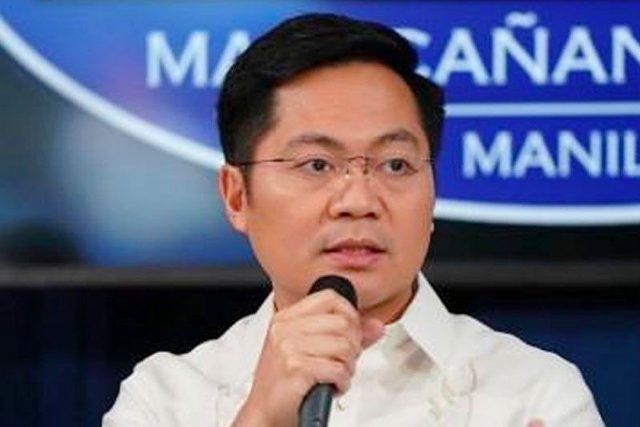
PRESIDENT RODRIGO R. Duterte has appointed Cabinet Secretary Karlo Alexei B. Nograles as chairman of the Civil Service Commission (CSC). 

CSC Commissioner Aileen Lourdes A. Lizada confirmed the appointment of Mr. Nograles, who is also the President’s spokesperson, in a Viber message to BusinessWorld. 

According to the appointment letter signed on March 4, Mr. Nograles has been named ad interim CSC chairman, which requires confirmation by legislators. 

Mr. Nograles replaced Alicia dela Rosa-Bala, who ended her seven-year term on Feb. 2. The Palace official’s term of service will end in Feb. 2029. 

Mr. Nograles was appointed as Cabinet Secretary in 2018. In November last year, he replaced a presidential spokesman who resigned to run for senator in the 2022 elections. 

Mr. Nograles also serves as co-chairperson of the government’s inter-agency pandemic task force. He is currently the executive vice president of the PDP-Laban party faction chaired by Mr. Duterte.

Before joining the Cabinet, Mr. Nograles was on his third and last term as the elected House representative for the 1st district of Davao City, Mr. Duterte’s hometown. — Kyle Aristophere T. Atienza

Palace approves P20-billion fertilizer subsidy

ATLASFERTILIZER.COM

PRESIDENT Rodrigo R. Duterte has approved a P20-billion fertilizer subsidy as part of a broader food security program, the Department of Agriculture (DA) said.

The overall food security program also provides for P1 billion in funding for urban and peri-urban agriculture, P1 billion to support local production of animal feed, P1 billion for aquaculture and mariculture, and P1 billion to “food mobilization.” The DA provided no further details to explain food mobilization.

Agriculture Secretary William D. Dar said the funds will be raised by realigning the DA’s 2022 budget, as well as additional financing through the Land Bank of the Philippines and Development Bank of the Philippines. The financing will take the form of concessional loans extended to provincial governments to procure palay (unmilled rice) from farmers within their jurisdiction, in order to create a buffer stock of the staple grain.

Other approved recommendations include the transfer of control over the National Irrigation Authority back to the DA, to facilitate better coordination with the agriculture sector.

Mr. Duterte also approved the distribution of a P500-million fuel subsidy to corn farmers and fisherfolk, as authorized by law.

Rice farmers were excluded because they are due to receive another P5,000 tranche from the Rice Farmers Financial Assistance program, which is funded from rice tariff collections in 2021 in excess of P10 billion. The excess funds amounted to P8.9 billion. — Luisa Maria Jacinta C. Jocson

Trade dep’t says not many requests to adjust SRP following Ukraine invasion

PHILIPPINE STAR/ MICHAEL VARCAS

THE Department of Trade and Industry (DTI) said it has not received many requests to raise prices of goods subject to the suggested retail price (SRP) scheme in the wake of the Russian invasion of Ukraine on Feb. 24.

Sa ngayon, because we have not received a lot of requests namanmay isa lang that we received after the Ukraine-Russia conflict, hindi pa natin nakikita na mag-a-adjust tayo ng presyo sa ngayon (We have received only one request to raise prices after the Ukraine-Russia conflict, so there is reason to adjust prices as yet). We’ll communicate also with the manufacturers na medyo hinay-hinay lang din sa pag-request dahil kailangan nating magtulong-tulong (We have also told manufacturers to ease of price increase requests because we need to help each other),” Trade Undersecretary Ruth B. Castelo said in a Laging Handa briefing on Monday.

“We calibrate talaga ’yung releases ng SRP bulletin kasi ’pag nag-publish tayo ng panibago, ibig sabihin i-increase ang presyo. Bihira ’yung nangyayari na nag-adjust tayo ng bulletin dahil binaba ng manufacturers ang presyo (We try to calibrate SRP bulletin releases because every time they come out, prices will rise. It almost never happens that price caps need to be adjusted because manufacturers are charging less)” she added.

Ms. Castelo said surging fuel prices should not affect the prices because much of the current goods inventories and fuel products were manufactured or ordered before the war broke out.

Hindi po ’yan immediate. Hindi pa ’yan sa ngayon. We’re looking at the next three months bago mag-epekto ’yung nangyayari sa Europe dito sa ating bansa. We have enough supply. Hindi kailangan mag-panic ng mga tao (Price reactions should not be immediate. We’re looking at the next three months before the impact of the war in Europe shows up here. We have enough supply. There is no need to panic),” she added.

On Jan. 27, the DTI released a new SRP list for basic and prime commodities. Under the new SRP list, 73 stock keeping units (SKUs) out of 216 SKUs recorded price increases. Some of the products whose SRPs rose were bottled water, processed canned meat and canned beef, instant noodles, salt, and canned sardines. According to the DTI, the increase was caused by the surge in the global prices of raw materials and packaging used for the products. — Revin Mikhael D. Ochave

Customs seizures as of Feb. 11 valued at nearly P770M

PHILSTAR FILE PHOTO

THE Bureau of Customs (BoC) seized nearly P770 million in illicit shipments of cars, illegal drugs, and tobacco products over the first six weeks of the year, the Department of Finance (DoF) said.

As of Feb. 11, the Bureau seized P420 million worth of vehicles and their accessories, while cigarette and other tobacco product seizures accounted for P221.4 million. Illegal drug seizures amounted to P46 million, the DoF said in a statement on Monday.

Customs Commissioner Rey Leonardo Guerrero said that the bureau also seized P44.8 million in currency, and confiscated over P30 million in personal protective equipment and medical supplies. He reported the apprehension of P6 million in agricultural products.

Other seized items including general merchandise, firearms, and wildlife worth P1.5 million.

The bureau over that period also filed 11 criminal cases against 30 respondents suspected of smuggling. It filed another three administrative cases against customs brokers before the Professional Regulation Commission.

“The BoC has also completed the inspection and investigation of Customs warehouses,” the DoF said.

Of 383 warehouses, 75 were issued closure orders.

The BoC in 2021 seized smuggled goods worth P28.43 billion, which included farm goods, general merchandise, vehicles, counterfeit goods and illegal drugs.

This was almost triple the P10.63 billion worth of goods seized in 2020.

The 2020 total was about half the P20.6 billion total in 2019 as the coronavirus pandemic disrupted operations.

Customs revenue collections in 2021 totaled P645.77 billion, up 20%. — Jenina P. Ibañez

BoI approves P9.6-M face mask production project in Caloocan

REUTERS

THE Board of Investments (BoI) said it approved for incentives a P9.6-million face mask production project run by Ipolymer Solutions Corp.

In a statement on Monday, the BoI said that the project is located in Caloocan City with annual capacity of 13.2 million KN95 face masks and 26.4 million surgical masks.

It added that the project will import 100% of the raw materials needed for production.

“The increasing production of medical-grade face masks entails additional imports of raw materials (non-woven fabric), which might help the National Government to promote investment in the production of these raw materials in the country,” the BoI said.

According to Trade Secretary Ramon M. Lopez, the project will help meet rising local demand for face masks due to the COVID-19 pandemic.

“During these difficult times — be it natural calamities or global health crises — the local capability to supply critical and strategic products such as medical-grade face masks is crucial and serves as a reminder of the importance of developing our domestic manufacturing industry,” he added.

The BoI said the project was approved under the “All Qualified Activities Relating to the Fight against the COVID-19 Pandemic – Essential Goods” category of the 2020 Investment Priorities Plan, which serves as the transitional Strategic Investment Priorities Plan. The plan covers personal protective equipment (PPE) as authorized by Republic Act No. 11534 or the Corporate Recovery and Tax Incentives for Enterprises Act (CREATE) law.

BoI Managing Head Ceferino S. Rodolfo urged mask-producing firms to invest in the Philippines.

This goes to show that we can make it happen in the Philippines, as the BoI has been the catalyst for a modern economy as we recover from the pandemic. Thus, we invite other mask-producing companies to invest here in the Philippines to further fill the gaps in providing more affordable critical PPE,” Mr. Rodolfo said.  

To date, the BoI said it has registered two projects in 2020 for face mask production: Sunwest Construction and Development Corp. in Marilao, Bulacan with an annual capacity of 15.6 million and Nagaland Development Corp. in Naga City, Camarines Sur, with a yearly capacity of 2.4 million. — Revin Mikhael D. Ochave

ARTA introduces electronic complaint management system 

THE Anti-Red Tape Authority (ARTA) said it has introduced a digital system that will field complaints to the public on needlessly complex government transactions.

At the soft launch of the system on Monday, ARTA Deputy Director General Eduardo V. Bringas said the eARTA Complaints Management System is intended to bring about a zero backlog in the handling of complaints about government services.

Mr. Bringas said that the system will fully automate the process of filing and handling complaints by the end of the first quarter.

“(This) will allow citizens to file a complaint in the comfort of their own homes and (achieve) zero backlog (at) ARTA,” Mr. Bringas said.

ARTA’s partner in developing the system is Multisys Technologies Corp.

“ARTA and its private partner have developed an electronic platform to be used by government agencies for a seamless and faster referral and handling of complaints,” Mr. Bringas said.

Mr. Bringas said the system supports electronic ticketing, paperless filing of complaints, a dashboard for real-time monitoring and updates, and short message service (SMS) notification.

Government agencies that are pre-registered for the system include the Bureau of Internal Revenue (BIR), the Department of Environment and Natural Resources (DENR), Bureau of Customs (BoC), the Department of Public Works and Highways (DPWH), and the Department of Agrarian Reform (DA).

Mr. Bringas said the public can still file complaints against government agencies that are not registered in the system, adding that ARTA will notify the agency of the complaint. — Revin Mikhael D. Ochave 

IPOPHL in tieup with LGUs to promote IP awareness

THE Intellectual Property Office of the Philippines (IPOPHL) said it has entered into a partnership with the Local Government Academy (LGA) to promote intellectual property (IP) rights at the local government unit (LGU) level.

In a statement on Monday, IPOPHL said it signed a memorandum of understanding with the LGA on Feb. 7 to pursue IP education, development, and training programs for LGUs.

The LGA is an agency of the Department of the Interior and Local Government (DILG).

The LGA “will craft its own IP policy and encourage LGUs to adopt IP-related innovations and best practices, ensuring their compliance with IP-related laws and policies,” IPOPHL said.

IPOPHL Deputy Director General Teodoro C. Pascua said the partnership will help increase awareness of IP system at grassroots level.

Nelson P. Laluces, IPOPHL director general, said the partnership will allow LGUs to increase their ranking in the Cities and Municipalities Competitive Index (CMCI) following the addition of IP protection in its metrics.

The CMCI measures LGUs’ economic dynamism, efficiency, infrastructure, resiliency, and innovation. — Revin Mikhael D. Ochave

Converge participating in Southeast Asia-HK cable link

CONVERGE ICT SOLUTIONS INC./YOUTUBE

LISTED fiber internet provider Converge ICT Solutions, Inc. said on Monday that it is taking part in a cable project that will carry traffic between Southeast Asia and Hong Kong.

“Converge is a party to a construction and maintenance agreement, effective March 4, for the Southeast Asia-Hainan-Hongkong Express Cable System (Project SEA-H2X),” Converge said in a disclosure to the stock exchange.

The parties to the project are Converge, CMCC Infrastructure 3 Ltd., PP Telecommunication Sdn. Bhd., and China United Network Communications Group Co. Ltd.

The project aims to “address the tremendous growth of the telecommunications traffic between Southeast Asia and Hong Kong by building and implementing a  state-of-the-art fiber-optic submarine cable system connecting Singapore, Thailand, Malaysia, Philippines, Hainan China and Hong Kong SAR,” it added.

On the official website of the Hong Kong Trade Development Council, the fiber-optic submarine cable system project will initially connect Singapore and Hong Kong, then Hainan, the Philippines, Thailand, and Malaysia.

There is also a proposal to link Cambodia and Indonesia.

Last year, Converge announced that it will invest more than $100 million in a new transpacific cable system aimed at increasing internet speeds and network diversity in the Philippines.

“Our investment in one full fiber pair, connecting us to Singapore and the west coast of North America, will allow us to independently activate at will up to 15Tbps (terabits per second) of capacity to either country using the latest technology,” Converge Chief Executive Officer and Co-Founder Dennis Anthony H. Uy said in a statement.

Converge ICT shares closed 2.11% lower at P25.50 Monday. — Arjay L. Balinbin

Amendments to the Foreign Investments and Retail Trade Liberalization laws

One of the most common inquiries we receive from foreign investors pertains to questions involving setting up subsidiaries in the Philippines and their concerns about minimum capital requirements relevant to the nature of their business or industry. The restrictions on foreign ownership to some industries surely affect the flow of foreign investment into the country, the Philippines being notably one of the strictest within the Asia-Pacific in terms of foreign investment policy. For some time now, the law easing these restrictions has been long anticipated to stimulate investment from foreign enterprises.

Last week, President Rodrigo Duterte signed into law Republic Act (RA) 11647, “An Act Promoting Foreign Investments, Thereby Amending Republic Act 7042 Otherwise Known as the Foreign Investments Act of 1991, as Amended and For Other Purposes.” This was signed by the President almost three months after signing RA 11595, a law which amended the Retail Trade Liberalization Act of 2000 (RTLA). Both laws aim to attract foreign investors to the Philippines to make its industries more competitive with those of the ASEAN neighbors.

SALIENT FEATURES OF THE AMENDED RTLA
The recently amended RTLA removed the categorization of enterprises and reduced the minimum paid-up capital of foreign retailers from $2.5 million to P25 million. For foreign retailers engaged in retail trade through more than one physical store, the minimum investment per store must be at least P10,000,000.

While the pre-qualification requirement with the Board of Investments (BoI) was removed as well, foreign retailers must maintain the required minimum paid-up capital. Compliance with this requirement will be subject to review by the Department of Trade and Industry (DTI), Securities and Exchange Commission (SEC), and National Economic and Development Authority (NEDA) every three years.

Another notable requirement under this law is the submission of a certificate from the Bangko Sentral ng Pilipinas (BSP) of the inward remittance of the capital investment. While the law also allows other proofs certifying that the foreign retailer’s capital investment is deposited and maintained in a bank in the Philippines, it is better to secure a Bangko Sentral Registration Document (BSRD) to facilitate the ease in repatriation of foreign investment.

The relaxation of the RTLA is expected to generate foreign investment to help the economy recuperate from the devastating effects of the COVID-19 pandemic. I have personally experienced the influx of inquiries from foreign retailers showing clear interest in setting up companies here.

SALIENT FEATURES OF THE AMENDED FIA
Relevant to the lowered minimum paid up capital under RTLA, Section 8 of the amended Foreign Investment Act (FIA) provides that, among others, micro and small domestic market enterprises with paid-in capital less than the equivalent of $200,000.00 are reserved to Philippine nationals. However, under certain conditions, foreign nationals are allowed a minimum paid-up capital of $100,000.00 provided that the enterprises: (1) utilize advanced technology as determined by the Department of Science and Technology (DoST); (2) are endorsed as startup or startup enablers by the lead host agencies in accordance with RA No. 11337 (Innovative Startup Act); or (3) are composed of a majority of Filipino employees, the number of which shall in no case be less than 15, a reduction from the previous requirement of at least 50 direct Filipino employees. Further, registered foreign enterprises employing foreign nationals and enjoying fiscal incentives are required to implement an understudy or skills development program to ensure the transfer of technology or skills to Filipinos.

The latest amendments to the FIA are expected to generate more foreign investment to boost the economy for the long term. RA 11647 recognizes that increased capital and technology benefits the Philippines, and that global and regional economies affect the Philippine economy. Fittingly, the law allows foreign investors to invest up to 100% in a domestic enterprise unless participation of foreigners is limited or prohibited to a smaller percentage. Similarly, foreign investment in export enterprises is allowed up to 100%, provided the products and services do not fall within the Foreign Investment Negative List (FINL). Notably, the law mandates that amendments to the FINL be made at least once every two years. But then, foreign export enterprises are required to register with the BoI and submit reports to ensure compliance with the BoI’s export requirements. Failure to comply with these requirements may result in a reduction of the entity’s sales to the domestic market to not more than 40% as may be ordered by the BoI or DTI.

To integrate all the promotion and facilitation efforts to encourage foreign investment, the Inter-Agency Investment Promotion Coordination Committee (IIPCC) was also created which will be chaired by the Secretary of Trade and Industry. The IIPCC was created mainly to establish both medium- and long-term Foreign Investment Promotion and Marketing Plans (FIPMP), among other functions.

Considering the increase in the national debt due to the pandemic and the government’s effort to stimulate economic growth, legislation easing the requirements and relaxing the limitations on foreign investors will help the Philippines recover and sustain economic development. We are one with the government in working towards attracting and welcoming productive foreign investment for economic growth to provide more opportunity to our fellow Filipinos.

Let’s Talk Tax is a weekly newspaper column of P&A Grant Thornton that aims to keep the public informed of various developments in taxation. This article is not intended to be a substitute for competent professional advice.


Gemmalu Molleno-Placido is a manager from the Tax Advisory & Compliance division of P&A Grant Thornton, the Philippine member firm of Grant Thornton International Ltd.

pagrantthornton@ph.gt.com

ADVERTISEMENT
ADVERTISEMENT