Home Blog Page 6705

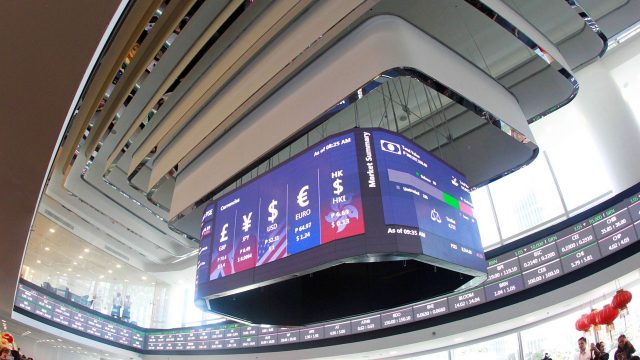
PSEi sinks to 6,900 level as Ukraine crisis rages on

PHILIPPINE STAR/KRIZ JOHN ROSALES

STOCKS sank on Tuesday as Russia’s invasion of Ukraine continued, causing oil prices to surge to record highs.

The benchmark Philippine Stock Exchange index (PSEi) fell by 310.34 points or 4.25% to close at 6,977.73 on Tuesday, while the broader all shares dropped by 127.46 points or 3.29% to close at 3,739.52.

“The PSEi was smashed down today after ongoing worries over the conflict in Ukraine and higher commodity prices took center stage… This put investors into a very defensive mood given the uncertainties of the war in Ukraine, which could yet bring about further turmoil,” COL Financial Group, Inc. Chief Technical Analyst Juanis G. Barredo said in a Viber message on Tuesday.

“Philippine stocks plunged yet again on worries that the rising energy prices caused by the Russia-Ukraine war would slow the economy and drive inflation hotter,” Regina Capital Development Corp. Head of Sales Luis A. Limlingan said in a Viber message.

“The local market fell further this Tuesday as investors continued to worry over the possible imposition of sanctions on Russia’s oil exports. The said move is expected to lead to a surge in oil prices which would cause inflationary pressures,” Philstocks Financial, Inc. Senior Research Analyst Japhet Louis O. Tantiangco said in a Viber message.

Russia’s offensive in Ukraine continued but at a significantly slower pace on Tuesday and a second senior Russian commander had been killed, Ukrainian military and intelligence said, as frightened residents fled bombed-out cities, Reuters reported.

Fears of an energy war between Russia and the West grew on Tuesday after the United States pushed its allies to ban Russian oil imports as punishment for Moscow’s invasion of Ukraine.

Oil prices seesawed near 14-year high on Tuesday with Brent crude futures up $1.06 or 0.9% at $124.27 a barrel at 0223 GMT, after trading as high as $125.19.

“Apart from monitoring the potential economic ramifications of disruptions in the global energy supply, investors also await the release of the February consumer price index report on Thursday,” Regina Capital’s Mr. Limlingan added.

Majority of sectoral indices ended in the red on Monday except for mining and oil, which climbed 514.39 points or 3.62% to 14,713.61.

Meanwhile, financials went down by 86.23 points or 5.16% to 1,584.22; holding firms declined by 296.35 points or 4.22% to 6,712.86; property lost 142.67 points or 4.08% to 3,350.94; industrials fell by 368.13 points or 3.74% to 9,462.71; and services decreased by 64.75 points or 3.31% to 1,890.37.

Value turnover increased to P12.16 billion with 2.35 billion shares changing hands from P8.73 billion or 2.35 billion issues on Monday.

Decliners outnumbered advancers, 178 versus 57, while 21 names closed unchanged.

Net foreign selling climbed to P850.32 million on Tuesday from P259.27 million seen the previous trading day. — L.M.J.C. Jocson with Reuters

Peso weakens further vs dollar

BW FILE PHOTO

THE PESO weakened further on Tuesday as the war in Eastern Europe continues, with Russia threatening retaliation for sanctions imposed by Western economies.

The local unit closed at P52.32 per dollar on Tuesday, sinking by 14 centavos from its P52.18 finish on Monday, based on Bankers Association of the Philippines data.

This is the peso’s worst finish in more than two years or since it ended at P52.231 per dollar on Aug. 28, 2019, Rizal Commercial Banking Corp. Chief Economist Michael L. Ricafort said in a Viber message.

The peso opened weaker at P52.25 per dollar. Its weakest showing was at P52.34, while its intraday best was at P52.01 against the greenback.

Dollars exchanged declined to $1.334 billion on Tuesday from $1.58 billion on Monday.

“The peso continues to weaken on safe-haven demand after Russia launched a drone attack in a Ukrainian airport,” a trader said in an e-mail.

Meanwhile, Mr. Ricafort said the local unit depreciated amid oil worries as Russia threatened to cut its supply of natural gas to Europe.

Reuters reported that a Russian official said a possible closure of the main Russia-Germany gas pipeline could severely affect energy supply and oil prices across the world.

“It is absolutely clear that a rejection of Russian oil would lead to catastrophic consequences for the global market,” Russian Deputy Prime Minister Alexander Novak said in a statement on state television.

“The surge in prices would be unpredictable. It would be $300 per barrel if not more,” he added.

Mr. Novak said Europe may need more than a year to find a new source for the volume of oil it receives from Russia, aside from paying a more costly price. He noted that Russia supplies 40% of Europe’s gas. Last month, Germany froze the certification of the Nord Stream 2 gas pipeline as a sanction for Russia’s invasion in Ukraine.

For Wednesday, Mr. Ricafort gave a forecast range of P52.10 to P52.40 per dollar, while the trader expects the local unit to move within P52.20 to P52.45. — L.W.T. Noble with Reuters

Solon tells LTFRB: Time to fully reopen all jeepney, bus routes

PHILIPPINE STAR/ MICHAEL VARCAS

ALBAY Rep. Jose Maria Clemente “Joey” S. Salceda, chair of the House Ways and Means committee, on Tuesday called on the land transport agency to fully reopen all jeepney routes as part of economic recovery measures from the coronavirus pandemic.

“PUJs (public utility jeepneys), as you know, are better ventilated than buses, making them safer, in that respect, from COVID-19,” Mr. Salceda said in a letter to Land Transportation Franchising and Regulatory Board (LTFRB) Chairperson Martin B. Delgra III.

“Public transport availability is also a critical component of the country’s strategy to mitigate the impacts of ongoing fuel price hikes,” he said, noting that the LTFRB committed to a full reopening of public transport routes during a committee hearing.

Mr. Salceda also pointed out that there no “plausible reason for the restrictions” on transport routes given the lifting of most pandemic-related rules.

“We already allow massive election rally crowds, face-to-face work and classes, and we have dropped contact tracing requirements. Jeepney drivers should not be left behind in our burgeoning economic recovery,” he said.

Mr. Salceda also asked LTFRB to provide guidelines on the reopening of city and provincial bus routes without pandemic restrictions. — Jaspearl Emerald G. Tan

Rights group calls for immediate court decision on 4 activists’ cases after 3 others dismissed

A HUMAN rights group on Tuesday called on courts to immediately resolve cases against four of seven activists arrested on International Human Rights Day in December 2020, following the dismissal of charges against the three others.

“We are glad that the (Quezon City) Regional Trial Court sided with the truth. But justice still hangs in suspended animation for the four other imprisoned activists,” said Fides Lim, spokesperson of Kapatid, a support group for families and friends of political prisoners in the Philippines.

“The prison doors must open for them too because their arrest likewise resulted from the same poisoned tree from which the search warrants were procured on Dec. 10, 2020,” she added.

A Quezon City RTC on Monday dismissed the charges of illegal possession of firearms and explosives against a labor activist, citing that the search warrant used was obtained illegally.

Two others of those arrested were also ordered released last year by a Mandaluyong City court based on similar grounds. — John Victor D. Ordoñez

SC disbars lawyer earlier banned in a US state

PHILSTAR FILE PHOTO

THE PHILIPPINE Supreme Court (SC) has disbarred a lawyer who had been stricken off the roll of lawyers by the SC of California in 2000.

In a statement on Tuesday, the high court said it has the authority to disbar or suspend a member of the court for violations committed in a foreign country based on the Revised Rules of Court Resolution.

According to the resolution, the recognition of foreign judgment only requires proof of that ruling in the foreign jurisdiction. In this particular case, a copy of the California court decision was obtained and was found to be sufficient proof.

The lawyer was banned from practicing law in the state of California for mishandling settlement funds amounting to $25,000 that he received on behalf of a client for a bodily injury case.

“The practice of law is not a vested right but a privilege that is clothed with public interest. To enjoy the privilege of practicing law as officers of the Court, lawyers must adhere to the rigid standards of mental fitness and maintain the highest degree of morality,” the SC said. — John Victor D. Ordoñez

Subway in progress

PHILIPPINE STAR/ MICHAEL VARCAS

Philippine government and Japanese embassy officials visited on March 8 some of the construction sites of the Metro Manila Subway Project, the first underground railway system in the country. The 17-station railway, funded through a loan from the Japanese government, is expected to be fully operational by 2025.

Plan to declare emergency still under study — Palace

PHILSTAR

THE PALACE is currently studying a proposal asking President Rodrigo R. Duterte to declare a state of economic emergency due to rising oil prices.

“This is carefully being studied by… the Office of the Executive Secretary,” the President’s spokesman, Jose Ruperto Martin M. Andanar said in a televised briefing.

Fuel prices have been rising sharply after the invasion of Ukraine, which triggered worries about an embargo on Russian oil, taking that country’s production off the market and restricting supply.

Senators said they stand ready to return from recess for a special session to facilitate legislation that may be needed to support such an emergency declaration, should President Rodrigo R. Duterte choose to summon many of them back from the campaign trail.

“It’s part of our work. If the President calls for a special session, it’s incumbent upon me to convene the Senate,” Senate President Vicente C. Sotto III, who is running for Vice-President, said in a Viber message.

The latest fuel price adjustments raised the price of diesel by P5.85 per liter (/L), gasoline P3.60/L, and kerosene P4.10/L. The risk premium for oil has risen significantly after the Russian invasion.

“I support the call for a special session to address rising prices, especially fuel and power, and to provide assistance to those who need it,” said Senate President Pro Tempore Ralph G. Recto in a Viber message.

Senator Panfilo M. Lacson, Sr., who is running for President, said he will return to the chamber if Mr. Duterte calls a special session. “Whether or not I will support a declaration of a state of economic emergency will depend on the proposal to be submitted by Malacañang.”

Majority Leader Juan Miguel F. Zubiri, who is seeking re-election, said the government should consider alternative fuels and e-vehicles as long-term solutions.

“We need to think long-term, to avoid coming to another situation like this in the future. So long as we are dependent on foreign oil, our prices will be (influenced by) the very volatile international arena as well,” he said in a Viber message on Tuesday.

“That is why we must strengthen our local alternative fuel sources, like biodiesel and bioethanol, which can be produced in the country,” he added.

Mr. Zubiri said he wrote a bill, the proposed Biofuels Act of 2006, which sought to create an alternative fuel program, but it did not receive government support. “We were hoping to follow Brazil, India, Thailand, and Malaysia, which have their own biofuels production as it is cheaper and more homegrown.”

“It is a pity that it was not promoted well and I was hoping it would help sugar and coconut farmers,” he said.

The majority leader also backed electric vehicles for daily transport to reduce reliance on gasoline and diesel.

Citing the proposed Electric Vehicles and Charging Stations Act, which was recently ratified by Congress, he urged the government to fully implement the measure in order to encourage the adoption of electric vehicles.

“As we’re seeing now, we cannot afford to be dependent on imported fuel. We have to cultivate our own fuel industries, and ensure that we have sustainable fuel sources that our people can depend on at all times,” he added.

As a short-term measure, Mr. Zubiri pushed for the suspension of the fuel excise tax.

“With these prices, we should consider the suspension of the fuel excise tax to give our people some welcome respite from the weekly increase in fuel prices,” he said, “especially PUV (public utility vehicle) operators and drivers, who are still trying to recover from the pandemic.”

Senate Minority Leader Franklin M. Drilon said in a statement that there is no legal obstacle preventing the Department of Finance (DoF) and the Bureau of Internal Revenue from suspending the collection of fuel excise taxes on their own authority, according to his reading of the Tax Reform for Acceleration and Inclusion (TRAIN) law.

“The provision of the TRAIN Law should be interpreted liberally, not just in light of suspending the increases in excise taxes but also its imposition,” he said. “It is a situation which calls for the liberal application of the law and for compassion.”

Should the price of Dubai crude, the benchmark for Asia, hit $120 per barrel, the Department of Energy (DoE) estimates that gasoline prices may rise to P78.33/L, while the price of diesel may rise to P68.97/L.

“We are not seeking an exemption from taxes here and therefore a strict construction of the law is misplaced. Filipinos are suffering. The burden should be borne by the government,” Mr. Drilon said.

The minority leader noted that the TRAIN law was made not to “tie the hands of the government” and slow its response to the detriment of consumers. “We cannot wait for the law to be amended before we act. The situation is changing rapidly by the day and we need to act fast.”

Under the TRAIN Law, Mr. Drilon said the DoF “may recommend the suspension of the excise tax on fuel” after an annual review.

Senator Sherwin T. Gatchalian, who chairs the chamber’s Energy committee said “the fundamental problem why we are experiencing high prices of oil is that we import close to 100% of our oil requirements, making our country very susceptible to global price shocks.”

The Philippines, he added, has no “shock-absorbing mechanisms,” but only has targeted programs like the Pantawid Pasada Fuel Program for PUV drivers to subsidize their fuel purchases.

He said the fuel subsidy given to drivers through the program and to farmers and fishermen should increase by 50%. He also said the Pantawid Pasada program should be extended to food transporters.

The DoE late Monday proposed to the President and other cabinet members that the Pantawid Pasada program be increased to P5 billion, and the P500-million fuel subsidy to farmers and fisherfolk be doubled to P1.1 billion.

Mr. Gatchalian said the suspension of excise taxes on fuel should be a last resort if fuel prices remain elevated over the next few months.

Energy Secretary Alfonso G. Cusi said at a Tuesday media briefing that it is not yet time to declare a state of economic emergency. “It is not necessary at this point.”

Energy Undersecretary Eduardo Gerardo G. Erguiza said the problem requires further study, particularly on the regulatory regime governing fuel pricing.

The department has been pushing for the amendment of the Oil Deregulation Law to give the government the power to intervene in times of crisis.

On the matter of tapping indigenous sources of fuel, Mr. Andanar said at his briefing that the Philippines needs the expertise of the private sector to exploit the resources thought to lie under Reed Bank, in the northeastern Spratly Islands.

“It’s going to need the cooperation of big private partners. You know when it comes to oil exploration, no one government can do this alone,” he said, following a question about Reed Bank, which the Philippines calls Recto Bank.

“We need the expertise of big business, the expertise of other countries, nations (with experience of) exploration,” he added.

The Recto Bank basin is estimated to hold 165 million barrels of oil and 3,486 billion cubic feet of gas, according to the DoE.

President Rodrigo R. Duterte said on Monday that the Philippines must honor its exploration agreement with China in the Recto Bank to avoid “potential trouble,” saying some companies are trying to interfere with these arrangements.

Mr. Duterte said he will uphold the deal until the end of his administration. “If we change our stance, it’s dangerous.”

In November 2018, the Philippine government signed a memorandum of understanding on cooperation in oil and gas development with China in the South China Sea, parts of which are claimed by the Philippines and other Southeast Asian countries.

In 2016, a United Nations-backed tribunal rejected China’s claim to more than 80% of the sea based on a 1940s map. — Kyle Aristophere T. Atienza, Alyssa Nicole O. Tan


Energy dep’t floats possible suspension of Biofuels Law

REUTERS

THE government could suspend the Biofuels Law to cushion the public from soaring fuel prices, the Energy department said, following proposals made to the Cabinet to raise the fuel subsidy for public transport drivers and to suspend the 7% tariff on thermal coal.

“(The suspension of the Biofuels Law) is a possibility if the problem escalates,” Energy Secretary Alfonso G. Cusi said in a virtual briefing on Tuesday.

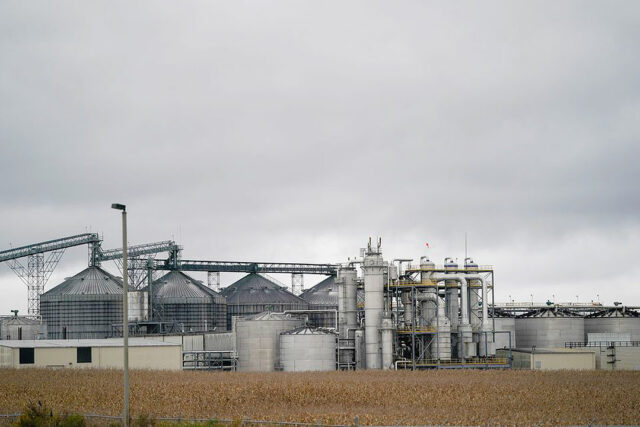
Republic Act 9637, or the Biofuels Act of 2006, requires fuel companies to offer biofuel blends, the proportions of which are currently set at 10% ethanol for gasoline and 5% biofuel for diesel. Ethanol is made from sugar while the feedstock for biodiesel is coconut oil.

During Typhoon Odette last year, the DoE suspended the biofuels law, specifically the biofuel blend requirement for gasoline and diesel in provinces hit by the typhoon, in order to ensure adequate supplies are delivered to the typhoon zone.

“The DoE is prepared, but there are other sectors that we need to look at in their entirety,” Mr. Cusi said.

Late Monday, the DoE proposed to President Rodrigo R. Duterte and the rest of the Cabinet an increase subsidy to the public transport sector, pending a resolution on proposals to suspend the excise tax on fuel.

According to Mr. Cusi, the DoE proposed that the Pantawid Pasada program, which will be directly given to public utility vehicle drivers, be increased to P5 billion, and the P500-million fuel subsidy to farmers and fisherfolk be doubled to P1.1 billion.

For coal, Mr. Cusi said he asked Mr. Duterte to suspend the 7% tariff under the ASEAN-India Free Trade Agreement to bring down the cost of coal, a major source of fuel for power plants.

“We’re asking for an executive order from the President so we can suspend that,” he said.

The DoE convened with the Philippine Independent Power Producers Association (PIPPA) last week in which the industry was advised to expect higher power rates in the upcoming months.

PIPPA members include SMC Global Power Holdings Corp.; Aboitiz Power Corp.; Semirara Mining and Power Corp.; First Gen Corp.; Quezon Power Philippines Ltd. Co.; AC Energy Corp.; TeaM Energy Corp.; Filinvest Development Corp.; and Meralco PowerGen Corp.

Fuel prices rose for a 10th executive week on Tuesday, in increments of P3.60 per liter for gasoline, P5.85 for diesel, and P4.10 for kerosene.

Since the start of the year gasoline, diesel, and kerosene prices have risen by P13.25, P17.50, and P14.40 per liter, respectively. — Marielle C. Lucenio

Corn farmers, fisherfolk granted P3,000 to apply to fuel purchases

PHILSTAR FILE PHOTO

CORN FARMERS and fisherfolk have been granted P3,000 to apply to their fuel purchases, subject to conditions, in order to cushion the impact of rising oil prices, the Department of Agriculture (DA) said.

“We are confronted with constant increase in prices of oil and oil products which affects agricultural and fishery operations,” the DA said in a memorandum circular.

The subsidy will be applicable to users of machinery for corn production, from land preparation to postharvest activities, as well as the motorized boats of fisherfolk. Rice farmers will be supported via another program involving cash grants.

A total of P500 million was allotted to the department’s fuel subsidy program, with P492.5 million to be used to pay oil companies and fuel retailers participating in the program, which will take the form of a 30% discount for holders of cash cards to be issued to eligible participants. The remaining P7.5 million will go towards operational or administrative expenses.

Fuel cards will be issued in partnership with the Development Bank of the Philippines and will be distributed via regional offices to farmers and fisherfolk on the DA registry.

The Department of Energy will nominate oil companies and fuel retailers participating in the program.

Eligible farmer recipients must be listed in the Registry System for Basic Sectors in Agriculture and must own and operate functioning farm or fishing machinery, including pumps, engines, tractors, combine harvesters, and corn shellers.

Fisherfolk must also be registered and use legal fishing equipment and motorized boats weighing three gross tons or less.

The lead agency for the program is the Bureau of Agricultural and Fisheries Engineering, with assistance from the National Corn Program and Bureau of Fisheries and Aquatic Resources. — Luisa Maria Jacinta C. Jocson

Live bird movements suspended in seven Luzon regions, Vis-Min

THE Department of Agriculture (DA) suspended the movement of domestic and captured wild birds and poultry products as a precaution against avian influenza or bird flu.

The DA said the H5N1 strain of the disease has been detected in duck and quail farms in Baliuag, Bulacan and Candaba, Pampanga, respectively.

Additional cases were also confirmed in Minalin, Pampanga; Victoria, Laguna; and Bula and Sipocot, Camarines Sur.

The DA suspended the transport and movement of all live birds, including day-old chicks, day-old pullets, hatching eggs, ready to lay pullets, ducks and quails from Regions I, II, III, IV-A, IV-B, V, the Cordillera Administrative Region, the Visayas and Mindanao for 30 days.

Other suspensions lasting thirty days include the transport and movement of pigeons and gamefowls within mainland Luzon, Mimaropa, Visayas and Mindanao.

The operation of live bird markets has also been suspended for 30 days in Bulacan, Pampanga, Laguna, and Camarines Sur.

The transport and movement of eggs will be allowed, provided that risk mitigation measures are followed, including cleaning and ultraviolet light disinfection.

Separately, the DA banned poultry imports from Italy and Canada following bird flu outbreaks there.

The ban applies to poultry products from all of Italy and Nova Scotia, Canada. It covers domestic and wild birds and their products, including poultry meat, day-old chicks, eggs and semen.

In a report to the World Organization for Animal Health on Feb. 4, an outbreak of the H5N1 strain of the highly pathogenic avian influenza was detected in Western Nova Scotia, Canada, affecting domestic birds.

In a separate report on Oct. 21, an outbreak of H5N1 was reported in Ronco all’Adige, Verona, Italy.

“Italy is not an accredited country to export poultry meat to the Philippines but there is a need to prevent the entry of other poultry related commodities originating from Italy that might enter the country through hand-carried products from international vessels or any other possible routes,” the DA said.

The department called for the immediate suspension of the processing, evaluation of the application and issuance of Sanitary and Phytosanitary import clearances for products originating from those territories.

However, shipments that are in transit, loaded, or accepted into the port before the official communication of the order will be allowed, provided the products were slaughtered or produced before Jan. 16 if from Nova Scotia or Oct. 4 if from Italy. — Luisa Maria Jacinta C. Jocson

Startup Village signs on to PCCI satellite internet project 

PHILIPPINE STAR/ MIGUEL DE GUZMAN

THE Philippine Chamber of Commerce and Industry (PCCI) said it agreed to collaborate with Startup Village on a satellite internet project intended to help businesses and other parts of the economy make the transition to digitalization.

The PCCI said in a recent statement that Startup Village will help with rolling out the project, first announced in February when the PCCI launched a partnership with the Department of Information and Communications Technology (DICT) to install satellite internet in six pilot locations.

“The partnership with DICT and Startup Village will certainly give more opportunities to micro, small, and medium enterprises (MSMEs) and students in remote areas that could not be reached by the internet,” PCCI Innovation Committee Director Ferdinand A. Ferrer said.

“We want mentors who will help MSMEs and students to transition into the digital world. MSMEs in the remote areas should be able to showcase their products nationally and then later on, globally,” he added.

Startup Village President Carlo C. Calimon said the support that will be provided to MSMEs will include mentorship in their digital transition, access to financing, and access to markets.

“We need to propel startups as MSMEs and startups cannot live without the other. While coronavirus disease 2019 (COVID-19) has pushed us towards digitalization, MSMEs are still apprehensive and we need to point them to the way forward,” Mr. Calimon said.

According to PCCI President George T. Barcelon, the six underserved pilot areas have yet to be selected.

“We are happy that the DICT has agreed to collaborate with us in pilot testing this satellite project. I am certain that this will help bridge the gap between the connected and unconnected Filipinos, especially those in the provinces where access to the internet remains a challenge,” Mr. Barcelon said. — Revin Mikhael D. Ochave

House probe sought on farmers being forced to sell crops at loss

BW FILE PHOTO

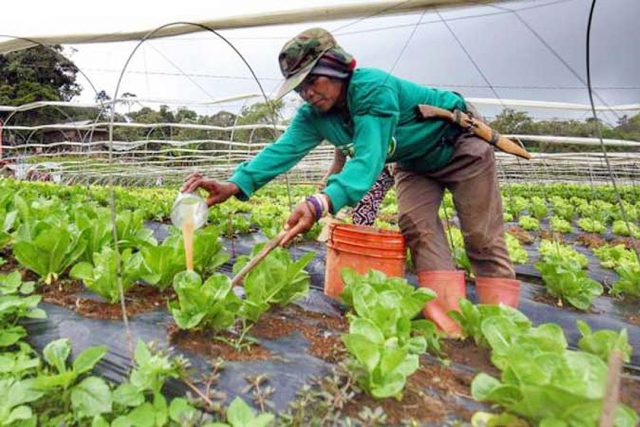
A RESOLUTION has been filed in the House of Representatives seeking an investigation into reports that farmers are being forced to sell their produce at steep discounts, amid stiff competition from smuggled vegetables.

House Resolution No. 2513 urged the House Committee on Agriculture and Food to investigate instances of farmers selling their harvests of onions, cabbage and celery at below cost. Aggregators are allegedly offering lower farmgate prices to make up for the rising price of fuel, while farmers themselves have had to pay more for fertilizer and other inputs.

According to the resolution, Fernando Bagyan of Apit Takto Kordilyera, a peasant alliance in the Cordillera region, told legislators that farmers were left with no recourse but to sell at low prices, or to leave their fields unharvested, with the rotting crops serving as fertilizer for the next planting.

House Minority Leader and Bayan Muna Representative Carlos Isagani T. Zarate said that smuggling of agricultural products has worsened due to the government policy of encouraging food imports. Mr. Zarate’s party-list filed the resolution.

“Smuggling is also exacerbated by the import policy of the Duterte administration, thereby further hurting farmers,” Mr. Zarate told BusinessWorld via Viber. “Farmers are forced to compete with the lower-priced imports” and sell low just to make a sale. 

Food security is at risk because of rising prices of fuel and fertilizer, he added, calling the government’s response to the Ukraine crisis “slow” and “reactive” measures in response to the Russia-Ukraine crisis. — Jaspearl Emerald G. Tan

ADVERTISEMENT
ADVERTISEMENT