Home Blog Page 6650

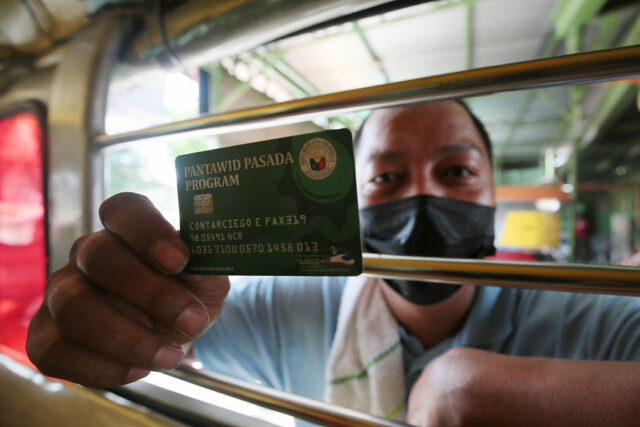
Over 107,000 fuel subsidy cards released — LTFRB

PHILIPPINE STAR/ MICHAEL VARCAS

A TOTAL of 107,926 fuel subsidy cards has been distributed to the public transport operators and drivers as of Friday, an official of the Land Transportation Franchising and Regulatory Board (LTFRB) said in a House committee hearing Monday.  

The released cards comprise less than half of the 264,443 target, which the agency aims to complete by the end of March.    

We just received the budget from DBM (Department of Budget) Friday March 11. On March 14 we were able to open from DoTr (Department of Transportation),LTFRB Regional Director Russet M. Tamayo said in Filipino in a live-streamed hearing.    

Each beneficiary for this new round of subsidy will get P6,500 worth of fuel, including jeepneys, buses, UV express, taxi, shuttle, tourist transport, app-based transport network vehicle service, motorcycle taxis, and delivery services.   

However, House Minority Leader and Bayan Muna Rep. Ferdinand R. Gaite along with transport organizations raised the need for LTFRB to update its records as some subsidy cards are still designated to previously registered owners of vehicles instead of the current one.   

Meanwhile, LFTRB Chairman Martin B. Delgra III said he will meet with House Minority Leader and Abang Lingkod Rep. Joseph Stephen S. Paduano, Bacolod Rep. Greg G. Gasataya and the agencys regional director to discuss the ongoing driversstrike in Bacolod City.   

After this, we will get in touch with the regional director in Region 6 (Western Visayas) to verify the report and also to get in touch with Congressman Gasataya on the way forward to address it,Mr. Delgra said. Jaspearl Emerald G. Tan

DHL Express PHL upgrades screening facility in Manila to quickly detect illegal items 

DHL.COM.PH

INTERNATIONAL express service provider DHL Express Philippines announced on Monday an upgrade to its screening technology aimed at ensuring that any attempt to ship illegal items and dangerous commodities across its network is quickly spotted. 

Thissupports the local Philippine Bureau of Customsmandate to strengthen border security,the company said in an e-mailed statement.  

It said the new equipment will be used at its Manila airport office to inspect incoming and outgoing palletized goods and cargo.  

The new equipment will provide better support to the companys operations and compliance teams in processing higher volumes of shipment because it can scan at a faster rate and with more precision.”  

Nigel Lockett, country manager at DHL Express Philippines, said: “We take our role in border security very seriously and ensure that we remain a secure and trusted network for our customers.”  

This advanced detection system is the first for the year, and we will continue upgrading our operational technology by adding six new equipment in Manila, Ortigas, and Cebu,he added. Arjay L. Balinbin 

43% of Filipinos consider themselves poor in Q4 2021 — SWS 

ABOUT 43% of Filipino families consider themselves poor, according to a Dec. 2021 poll conducted by Social Weather Stations (SWS).  

The SWS said in a statement on Monday that this translates to an estimated 10.7 million families, which is lower than the 11.4 million based on the September survey last year.  

SWS said the fourth quarter survey showed that 39% of families considered themselves borderline poor,while 19% felt they are not poor. 

The group said the percentage of families who rated themselves as poor fell in Mindanao to 43% from 58%, and in Metro Manila to 25% from 34%. On the other hand, there were slight increases in the Visayas and in Balance Luzon.  

SWS said about 6.9% or equivalent to 1.7 million of people who said they were poor rated themselves as non-poor a year to four years ago.  

The survey, which was conducted from Dec. 12 to 16, interviewed 1,440 adult Filipinos from across the country. The sampling error margins are ±2.6% for national percentages, and ±5.2% for Balance Luzon, Metro Manila, the Visayas, and Mindanao. Kyle Aristophere T. Atienza 

Food protection

DPWH

FARMLANDS along the San Juan River Basin in the Cordilleras in northern Philippines are protected by flood control structures. The Department of Public Works and Highways spent a total of P722 million in 2021 for 28 flood control projects in the region, including construction, repairs and maintenance.

Russia uses hypersonic weapons as war enters bloodier phase

AN UNEXPLODED short range hypersonic ballistic missile, according to Ukrainian authorities, from Iskander complex is seen amid Ukraine-Russia conflict in Kramatorsk, Ukraine, in this handout picture released March 9, 2022. PRESS SERVICE OF THE NATIONAL GUARD OF UKRAINE/HANDOUT VIA REUTERS

RUSSIA’s use of hypersonic missiles against Ukraine appears to mark a shift in strategy in response to its losses on the battlefield, one that may signal a new phase of the war while serving to show the world its abundant firepower.

Western military analysts point to President Vladimir Putin’s ground campaign getting bogged down, with Russian troops failing to achieve their initial objectives and underestimating the scale of Ukraine’s resistance.

They say the result is likely to be increased use of artillery bombardments, causing even more civilian casualties.

“Ukrainian forces have defeated the initial Russian campaign of this war,” the Institute for the Study of War said in its latest assessment, posted Saturday afternoon in Washington. It cited Russia’s original aim as seizing Kyiv, Kharkiv, Odesa, and other major cities to topple President Volodymyr Zelensky’s government.

But rather than making a cease-fire more likely, it said that satellite images showing Russia troops digging in around Kyiv and elsewhere suggest a stalemate that “will likely be very violent and bloody, especially if it protracts.”

The signs of a shifting military strategy come as President Joseph R. Biden prepares to travel to Europe to rally further support for Ukraine. The US agreed to supply Ukraine with drones, Stinger anti-aircraft missiles, anti-tank missiles, small arms and ammunition, adding to weapons that have already helped “inflict dramatic losses on Russian forces.”       

On Saturday, Russia’s Ministry of Defense said that its military had used hypersonic “Kinzhal,” or dagger, missiles the previous day to destroy an underground weapons cache in the southwest of Ukraine.

Then again on Sunday, Russia said that it fired the missiles to destroy a fuel depot in the Mykolaiv region. Authorities there issued an air-raid warning early Sunday for about an hour.

While neither strike was confirmed by Ukraine, a senior official said that Ukrainian cities were being targeted with more destructive artillery, including the Kinzhal missiles, “due to failures in the offensive.”   

The comment by Mykhailo Podolyak, a presidential adviser, was the first official response from Ukraine to Russia’s claims that it fired the missiles twice in three days. If verified, the strikes would mark the first use of the nuclear-capable advanced weapons system in the war.

“Russian operations have changed,” the UK’s Chief of Defence Intelligence, Lieutenant General Jim Hockenhull, told reporters on Friday. He cited “a strategy of attrition” that will involve “the reckless and indiscriminate use of firepower.”

“This will result in increased civilian casualties, destruction of Ukrainian infrastructure and intensify the humanitarian crisis,” he said.

Russia has repeatedly denied targeting civilians, and says that it is hitting military assets with high precision.

US Defense Secretary Lloyd Austin said that Mr. Putin may be deploying hypersonic missiles to regain momentum in the invasion of Ukraine.

“I would not see it as a game changer,” Mr. Austin said on CBS’s Face the Nation on Sunday. “I think the reason that he’s resorting to using these types of weapons is because he’s trying to reestablish some momentum.”

With the war now in its 25th day, the United Nations said that 10 million people have been uprooted, including those who have fled the country and others displaced within Ukraine. As casualties mount, Mr. Zelensky renewed his offer to negotiate with Mr. Putin, saying even the slightest chance of a negotiated settlement must be seized.

“I am ready for negotiations with him,” Mr. Zelensky told CNN correspondent Fareed Zakaria in an interview broadcast Sunday. “We have to use any format, any chance in order to have the possibility of negotiating, the possibility of talking to Mr. Putin. But if these attempts fail that would mean that this is a Third World War.”

The Kinzhal, which can carry conventional or nuclear warheads, flies 10 times faster than the speed of sound, or more than 2 miles per second, Mr. Putin said when he announced the system in an annual state-of-the-nation address in 2018. It was among several latest-generation strategic weapons that Mr. Putin said could overcome any US defenses.

Hypersonic missiles travel at lower trajectories than conventional ballistic missiles, making them harder to detect. They can also maneuver to evade missile defense systems.

A UK defense intelligence update said that as its forces bog down on the ground, Russia has increased “indiscriminate shelling of urban areas.”

“It is likely Russia will continue to use its heavy firepower to support assaults on urban areas as it looks to limit its own already considerable losses, at the cost of further civilian casualties,” the UK said. — Bloomberg


Hong Kong to loosen strict COVID measures in April

REUTERS

HONG KONG — Hong Kong plans to relax some anti-COVID-19 (coronavirus disease 2019) measures next month, lifting a ban on flights from nine countries, reducing quarantine time for arrivals from abroad and reopening schools.

The moves, announced on Monday by Chief Executive Carrie Lam, could dampen some criticism from residents who have become increasingly frustrated with the city’s stringent measures, some of which have been in place for over two years.

The flight ban would be lifted from April 1, while hotel quarantine for arrivals could be cut to seven days from 14 if residents tested negative, Lam told a news briefing. She had previously said measures would be in place until April 20.

Schools would resume face to face classes from April 19, after the Easter holidays while public venues including sports facilities would also reopen from April 21, she said. Hong Kong’s border has effectively been shut since 2020 with very few flights able to land and hardly any passengers allowed to transit, effectively isolating a city that had built a reputation as a global financial hub.

The ban had made it very difficult for residents to return to the Chinese ruled territory, with many spending time known as “washing out” in other countries for two weeks before being allowed to return.

The rules, together with constant mixed messaging from the government including whether a citywide lockdown and mass testing would take place, have triggered an exodus of residents in the past two months.

Net outflows show more than 54,000 people have left Hong Kong so far in March, against more than 71,000 in February and nearly 17,000 in December before the fifth wave of the pandemic hit, prompting fears for the city’s longer-term competitiveness.

Businesses and the city’s economy are reeling from widespread closures, while doctors say many of the city’s 7.4 million residents are grappling with rising mental health issues, particularly among low-income families.

A plan to carry out mass coronavirus testing would be put on hold, Ms. Lam said, citing experts who said it was not a suitable time.

While the former British colony has officially stuck to the “dynamic zero” coronavirus policy, similar to mainland China, which seeks to curb all outbreaks, it has been shifting to mitigation strategies as deaths skyrocketed.

Hong Kong has registered the most deaths per million people globally in recent weeks — more than 24 times that of rival Singapore — due to a large proportion of elderly who were unvaccinated as the highly transmissible Omicron variant ripped through care homes since February.

The densely packed city has recorded more than 1 million infections since the pandemic started and about 5,000 deaths — most of them in the past month.

As many as 4 million people could be infected according to estimates from health experts as many residents have contracted the virus and isolated at home without notifying authorities. — Reuters

Shanghai’s Disney resort shut amid virus surge

WOMEN wearing Mickey Mouse ears watch the opening ceremony at Shanghai Disney Resort in Shanghai, China, June 16, 2016. — REUTERS

SHANGHAI — China’s financial hub of Shanghai reported on Monday a record daily surge in local COVID-19 infections as authorities scrambled to test residents and rein in the Omicron variant, while closing its Disney resort until further notice.

Until recent weeks relatively unscathed by coronavirus, Shanghai reported 24 new domestically transmitted COVID cases with confirmed symptoms for Sunday and 734 local asymptomatic infections, official data showed on Monday.

It is the fourth consecutive day that Shanghai’s local asymptomatic infections have increased.

Although the tally of infections is tiny by global standards, Shanghai has quickly followed China’s “dynamic clearance” policies, shutting schools and testing residential compounds in the effort to limit the spread of the virus.

“When it comes to the entire situation of epidemic control and prevention that we are facing, it is very complex and serious, and it is also a very big test for us,” city health official Wu Jinglei told a news briefing.

Shanghai will stick with “dynamic clearance”, Mr. Wu added, saying he hoped for continued public support for the policy.

The city also shut the Shanghai Disney Resort from Monday until further notice.

But there were signs of frustration with the city’s ad hoc, district-by-district approach.

“Hong Kong, Shanghai and Shenzhen have had three different epidemic response models,” said a user of China’s Twitter-like Weibo network.

“Hong Kong is the worst but will be the first to open up,” the writer, going by the name zangyn, said in a widely shared post. “Shenzhen is the most effective, and Shanghai may be the most tiring, and even the most miserable.”

The severity of outbreak responses by Shanghai’s compounds and residential districts varied, with some opting for lockdowns as long as two weeks. Some people in other sealed-off districts said they were not told how long they would have to stay home.

Residents’ committees helping to organize testing programs also encountered challenges. One compound distributed tokens to foil outsiders’ attempts to take free tests.

Including Shanghai infections, mainland China reported a total of 1,947 new locally transmitted cases with confirmed symptoms on Sunday, data from the National Health Commission (NHC) showed, up from 1,656 a day earlier.

The top steelmaking city of Tangshan, with just 12 local infections since March. 19, is allowing only essential vehicles on roads smaller than expressways, while people with special needs who must use vehicles have to seek approval.

The southern manufacturing hub of Shenzhen has allowed work and production activities, as well as bus and subway services in most areas, to resume after daily local case numbers dropped following three rounds of city-wide testing.

Tight curbs remain in some places, however.

Shenzhen residents still need to show negative tests in order to use public transport from Monday until March 27, a period in which non-essential indoor services will stay closed, the city government has said.

Vaccine candidates to target Omicron specifically, or among variants of concern, are in studies prior to clinical trials, a national health official said on Saturday, without identifying the companies involved.

China’s new local asymptomatic cases, which it does not classify as confirmed cases, was 2,384, up from 2,177 a day earlier. The death toll was unchanged at 4,638, with no new deaths.

By Sunday, mainland China had reported 132,226 cases with confirmed symptoms, both among locals and arrivals from outside. — Reuters

China Eastern Airlines Boeing with 132 on board crashes

BEIJING —  A China Eastern Airlines aircraft with 132 people on board crashed in the mountains in south China on Monday while on a flight from the city of Kunming to Guangzhou, China’s Civil Aviation Administration of China (CAAC) said.

The jet involved in the accident was a Boeing 737 aircraft and the number of casualties was not immediately known, state broadcaster CCTV said. Rescue was on its way, it said.

There was no word on the cause of the crash of the plane, a 6-year-old 737-800 aircraft, according to Flightradar24.

The CAAC said the aircraft lost contact over the city of Wuzhou. It had 123 passengers and nine crew on board. State media said earlier there were 133 people on board.

“The CAAC has activated the emergency mechanism and sent a working group to the scene,” it said in a statement.

The flight departed the southwestern city of Kunming at 1:11 p.m. (0511 GMT), FlightRadar24 data showed. The flight tracking ended at 2:22 p.m. (0622 GMT) at an altitude of 3225 feet with a speed of 376 knots.

It had been due to land in Guangzhou, on the east coast, at 3:05 p.m. (0705 GMT).

The website of China Eastern Airlines was later presented in black and white, which airlines do in response to a crash as a sign of respect for the assumed victims.

The safety record of China’s airline industry has been among the best in the world over the past decade.

According to Aviation Safety Network, China’s last fatal jet accident was in 2010, when 44 of 96 people on board were killed when an Embraer E-190 regional jet flown by Henan Airlines crashed on approach to Yichun airport in low visibility.

In 1992, a China Southern 737-300 jet flying from Guangzhou to Guilin crashed on descent, killing all 141 people on board, according to Aviation Safety Network. — Reuters

TUCP seeks P430 wage hike in Central Visayas

PHILSTAR FILE PHOTO

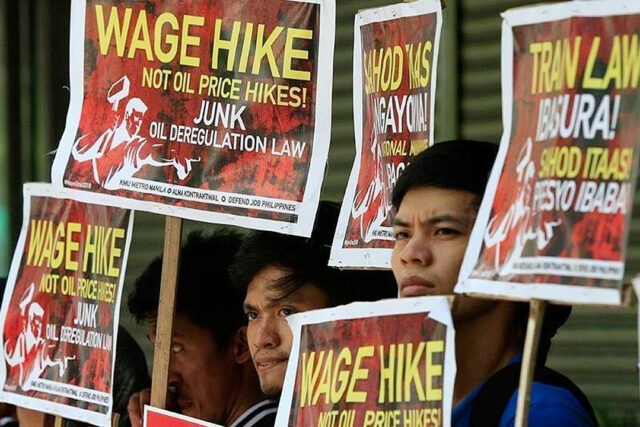
THE Philippines’ largest labor federation filed a petition on Monday seeking a P430 increase in the minimum wage in the Central Visayas, which would bring daily pay to workers there to P808.

In its petition filed before the Tripartite Wages and Productivity Board in the Central Visayas, the Trade Union Congress of the Philippines (TUCP) cited price hikes, malnutrition, hunger, and poverty in the region.

“Minimum wage earners and their families in Cebu, Bohol, Siquijor and other islands are barely surviving with their meager income,” it said in a statement, noting that the prices of basic goods and services in the region have risen substantially since 2018.

The TUCP said that the P18 increase in the daily minimum wage that the regional wage board granted in January 2020 has long been offset by rising prices.

“We are deeply concerned that with the looming price hikes in the basic commodities, including electricity and transport fares, our workers and their families could really go hungry this time and that is unacceptable to us,” it said. “We are filing our wage petition today to help our workers and their families in Cebu and in the entire Region VII to at least survive.”

TUCP said the current P15 allocated for the daily food expenses of every worker in the region is much lower than the P61.17/meal/person estimated by the Ateneo Policy Center using a state-designed food model.

“What kind of food can be bought for P15.00? Do our workers deserve just to eat nutritionally deficient foods while they continue breaking their backs to sustain and expand the economy?”

The labor group said the workers’ sacrifices must be recognized in helping the region achieve vibrant pre-pandemic growth. The region’s share of the national economy was estimated at 9.35% between 2016 and 2019.

“Central Visayas has been the consistent fourth-biggest contributor to the GDP, averaging 6.44% for the period 2016-2020,” it said. “And what do they get? Malnutrition, hunger, and poverty.”

The TUCP said that the current monthly minimum wage of P9,663.94 is far below the P16,295.00 a month poverty threshold for a family of five in the Central Visayas.

Citing rising fuel prices, the TUCP last week sought a P470 increase in the daily minimum wage of workers in the National Capital Region, which accounted for 32.3% of the Philippines’ economic output.

At the height of calls for a minimum wage increase, the government’s chief economic planner proposed a four-day workweek to help businesses cut costs and insulate workers from rising fuel prices.

President Rodrigo R. Duterte is set to announce his decision on the proposal soon.

Labor Undersecretary Benjo Santos M. Benavidez said the government “can only encourage, not obligate the private sector to adopt four-day workweeks.” — Kyle Aristophere T. Atienza

BSP expected to keep rates steady in March

BW FILE PHOTO

THE Bangko Sentral ng Pilipinas (BSP) is likely to retain its policy rate at its March meeting after inflation eased, although strong economic performance could lead to policy normalization sooner rather than later, Moody’s Analytics said.

In a note on Monday, Moody’s said the BSP still has leeway to keep rates on hold after inflation eased to 3% in February.

“The central bank is keeping a close watch on inflation expectations,” Moody’s said.

“Russia’s invasion of Ukraine has heightened upside risks from high global energy and food prices. Monetary policy is expected to start normalizing in the September quarter.”

The BSP is likely to keep rates steady at its March 24 meeting, according to 15 out of 17 analysts polled by BusinessWorld. The central bank is expected to maintain its support for the economic recovery despite inflationary pressures caused by the war.

Oil prices have been volatile since Russia, a top exporter of crude oil, invaded Ukraine in February.

Although the Asia-Pacific is not experiencing the same rate of price growth seen in North America and Europe due to the war, Moody’s Analytics in a separate note said the region can expect rising producer and consumer prices in the second quarter.

Noting strong economic performance in parts of the Asia-Pacific, Moody’s said central banks in the region could start policy normalization soon.

“Taiwan joins South Korea, Singapore and New Zealand on the road toward policy normalization,” the research firm said.

“The next may be the Philippines, where recent economic performance has been very strong.”

The BSP’s next policy review after Thursday is on May 19. — Jenina P. Ibañez

PCC orders Grab to disburse refund balance of P19.3M to users by April 22

THE Philippine Competition Commission (PCC) has ordered Grab Holdings, Inc. and MyTaxi.PH, Inc. to distribute the balance of P19.3 million in refunds to eligible users by April 22.

The refunds were ordered as part of the penalty for violating a price monitoring commitment.

In a statement on Monday, the competition regulator said that only P6.15 million of the P25.45 million penalty earmarked for return to Grab passengers has been claimed.

“After reviewing the compliance reports for previous penalties, the PCC found that only 24.1% of the total refund has been claimed from Grab by eligible passengers as of June 15, 2021, or P6.15 million out of the total P25.45 million penalty required by the PCC to be returned to Grab users. The ride-hailing app required additional steps for passengers to claim the refund, contributing to the low uptake,” the commission said.  

According to the PCC, Grab has until April 22 to distribute the full refund to users, adding that the money should be credited via GrabPay wallet without any action required to claim the refund.

“The penalties are in the form of a refund to remind Grab that every pricing or booking violation committed against passengers shall be paid back to passengers. Grab should immediately release the refunds and continue to adhere to its commitments,” PCC Chairman Arsenio M. Balisacan said.

Grab has incurred penalties from the PCC worth P63.7 million since 2018 due to violations of the company’s price and service quality commitments. In late 2019, the PCC penalized Grab and told the company to return a portion of its commissions to the passengers after violating the price monitoring commitment.  

“The PCC has since ordered Grab to issue refunds in the amounts of P5.05 million in November 2019, P14.15 million in December 2019, and P6.25 million in October 2020,” the commission said.

The PCC said Grab’s takeover of Uber’s Philippine operations in 2018 raised competition concerns, with Grab subsequently compelled to behave as if it had a rival in the market. Some of Grab’s voluntary commitments included an undertaking not to deviate substantially from its pricing practices before the acquisition.  

However, the PCC found during the monitoring period that Grab’s pricing had breached its commitments, resulting in penalties.

“Following its acquisition of Uber, Grab’s commitments were first issued in 2018, subject to a one-year monitoring period. The commitments were updated and monitoring was extended until 2023 due to the remaining competition concerns. PCC underscores that the penalty shall be paid by Grab and shall not be passed on to its drivers or passengers,” the commission said.  

Asked to comment, Grab Philippines said in a statement that it remains fully committed to adhering to the undertaking, adding that it is working with the PCC to ensure that the remaining fee is redeemed by all eligible passengers.

“Grab Philippines has complied with the disbursement order of the PCC, and has disbursed the full administrative fee in a manner consistent with the agreed mechanics with the PCC. Eligible passengers must redeem their portion of the fine through the GrabRewards Catalog within the Grab App,” the company said.  

“Since the first order directing Grab Philippines to disburse the administrative fees to eligible passengers last Nov. 14, 2019, Grab Philippines has been proactively monitoring the redemption. Immediately upon its receipt of the PCC Order, Grab Philippines has outlined to the PCC its suggested measures to address this situation and has been eagerly awaiting the PCC’s response,” it added.

Grab contends that customers need to complete the basic know-your-customer (KYC) process required by the Bangko Sentral ng Pilipinas (BSP) before getting the refund.

“Eligible passengers who have not yet completed their basic KYC are required to complete this BSP-mandated process prior to redemption. Grab cannot credit their GrabPay Wallet without completion of basic KYC as this is a regulatory requirement of the BSP,” Grab said.  

“Grab Philippines has yet to receive the final decision of the PCC on the recommendations for those eligible passengers lacking the mandatory KYC, but we would like to reassure our kababayans that we will continue to work with the competition commission to ensure that the remaining administrative fee amount is fully-redeemed — and focus our efforts in helping the Philippine economy recover,” it added.

The PCC’s Mr. Balisacan said the measures are in place to stop Grab from “exercising monopolistic behavior due to its unchallenged market power.”

“Through the years, the commitment measures are meant to be temporary in disciplining Grab while waiting for the market to mature with new major players. A more permanent pro-competition solution here is to open the market to more transport network companies that can truly rival Grab on the same level,” Mr. Balisacan said. — Revin Mikhael D. Ochave

New Bulacan service road enters service; Skyway reopens to public buses

NLEX

NLEX Corp. on Monday said the new Meycauayan-Marilao East Service Road, which is intended to serve as an alternative route going in and out of Meycauayan and Marilao, Bulacan, is now open to motorists.

The new two-lane road was constructed by the Department of Public Works and Highways.

“This new service road occupies a portion of the NLEX right of way (ROW) covering Barangay Lias in Marilao, Bulacan,” NLEX Corp. said in a statement.

“It is one of the government’s traffic decongestion projects aimed at improving the Bulacan road network, boosting the economic activities in the province, and enabling the public to experience travel convenience,” it added.

The opening of the road is expected to help ease the growing traffic volume at the Meycauayan-Marilao corridor as it bypasses the MacArthur Highway and other congested streets.

Motorists coming from Paso de Blas, Valenzuela City can access Lias, Marilao, Bulacan through the service road.

“Another benefit of this project is it will improve traffic flow at Meycauayan Interchange during peak hours and provide an alternate route for motorists especially those traveling between Iba, Libtong, Malhacan, and Pandayan in Meycauayan and Lias, Ibayo, Saog, and Lambakin in Marilao,” NLEX Corp. said.

Separately, San Miguel Corp. (SMC) announced that starting April 1, public utility buses and closed van delivery trucks will again be allowed to use the elevated Skyway system.

“All Class 2 vehicles, primarily buses and closed vans exceeding 7 feet in height and with valid Autosweep RFID (radio frequency identification) stickers, will be allowed on the entire elevated Skyway system, comprising Skyway 1, 2, and 3,” SMC said in a statement on Monday.

This means that buses can now enter and pass through the Skyway elevated sections spanning Alabang to Bicutan (Stage 2), Bicutan to Buendia (Stage 1), and Buendia to Balintawak (Stage 3).

“They can also access the new SLEX elevated extension, and NAIA Expressway,” SMC said.

This will “pave the way for faster, more efficient commutes and transport of goods between northern and southern Metro Manila,” it added.

Previously, Class 2 vehicles were temporarily restricted from using the Skyway system “for safety reasons.”

The construction of the South Luzon Expressway elevated extension in Muntinlupa “necessitated the use of a temporary steel access ramp at the Alabang viaduct,” the company noted. “The steel ramp, which was in use for around two years, was only intended for light vehicles.”

NLEX Corp. is an arm of MPTC, the tollways unit of Metro Pacific Investments Corp., one of three key Philippine units of Hong Kong-based First Pacific Co. Ltd., the others being Philex Mining Corp. and PLDT, Inc.

Hastings Holdings, Inc., a unit of PLDT Beneficial Trust Fund subsidiary MediaQuest Holdings, Inc., has a majority stake in BusinessWorld through the Philippine Star Group, which it controls. — Arjay L. Balinbin

ADVERTISEMENT
ADVERTISEMENT