


Peso strengthens as oil prices fall


THE PESO appreciated versus the greenback on Monday as oil prices declined and amid the growth in infrastructure spending.
The local unit closed at P52.13 per dollar on Monday, gaining two centavos from its P52.15 finish on Friday, based on Bankers Association of the Philippines data.
The peso opened Monday’s session at P52.18 versus the dollar. Its weakest showing was at P52.30, while its intraday best was at P52.08 against the greenback.
Dollars exchanged declined to $778.55 million on Monday from $1.105 billion on Friday.
The peso strengthened as global oil prices declined, a trader said.
Reuters reported that fuel prices dropped by more than $5 on Monday due to expectations of weaker fuel demand due to the lockdown in Shanghai as coronavirus infections there surged anew.
Brent crude futures fell to as low as $115.32 a barrel and declined by $5.15 or 4.3% at $115.50 at 0731 GMT. Meanwhile, the US West Texas Intermediate crude futures reached a low of $108.28 per barrel, and dropped by 4.7% or $5.30 at $108.60.
Meanwhile, Rizal Commercial Banking Corp. Chief Economist Michael L. Ricafort said in a Viber message that the market also priced in news of rising infrastructure spending as it is an import growth driver.
Data from the Department of Budget and Management showed infrastructure spending in 2021 jumped by nearly a third to P895.1 billion. It also surpassed the P761.2-billion target for the year.
The rise was attributed to the low base in 2020 as well as spending on roads, flood barriers, multipurpose buildings, railways and airports, the agency said.
For Tuesday, Mr. Ricafort gave a forecast range of P52.05 to P52.20 per dollar, while the trader expects the local unit to move within P52.00 to P52.30. — L.W.T. Noble with Reuters
Stocks rise on last-minute buying as risks remain

STOCKS climbed on Monday on last-minute buying as the market remained on edge amid inflation concerns.
The benchmark Philippine Stock Exchange index (PSEi) inched up by 9.52 points or 0.13% to close at 7,134.36 on Monday, while the broader all shares went up by 7.46 points or 0.19% to close at 3,782.05.
“Last-minute buying sent the local market higher this Monday. For the most part of the day, however, the local bourse was in the negative territory as investors booked gains from its preceding four-day rally,” Philstocks Financial, Inc. Senior Research Analyst Japhet Louis O. Tantiangco said in a Viber message.
“Inflation concerns also resurfaced amid the anticipated increase in local fuel prices by Tuesday. The lethargic trading shows that many are staying on the sidelines due to the lingering uncertainties,” Mr. Tantiangco added.
Oil companies announced they would raise the prices of gasoline, diesel, and kerosene products by P3.40 per liter, P8.65 per liter, and P9.40 per liter, respectively, effective on Tuesday.
The central bank last week said average inflation could breach the 2-4% target range this year at 4.3%, higher than the previous forecast of 3.7% while average inflation is expected to decline and settle at 3.6% in 2023.
“Philippine shares were bought up ahead of the quarter end and a series of key economic data releases while the street keeps a watchful eye on the Fed’s planned interest rate hikes,” Regina Capital Development Corp. Head of Sales Luis A. Limlingan said in a Viber message.
US Federal Reserve Chair Jerome H. Powell last week signaled at more aggressive rate hikes this year to fight surging inflation.
Majority of sectoral indices ended in the red except for industrials, which gained by 80.80 points or 0.84% to 9,648.35, and holding firms, which rose by 32.37 points or 0.47% to 6,816.36.
Meanwhile, mining and oil fell by 112.26 points or 0.87% to 12,769.23; services dropped by 8.69 points or 0.45% to 1,923.09; property went down by 8 points or 0.24% to 3,328.76; and financials declined by 1.92 points or 0.11% to 1,673.35.
On the other hand, the PSE MidCap Index ended at 1,195.49 up by 0.39 point or 0.03% while the PSE Dividend Yield Index went down by 0.56 point or 0.03% to 1,708. The two new thematic indices were launched on Monday to highlight mid-sized companies and firms that consistently give high-yielding dividends, as well as provide benchmarks for fund managers. (see related story on page S1/1)
Value turnover decreased to P5.19 billion with 768.14 million shares changing hands from P5.48 billion or 599.16 million issues seen on Friday.
Decliners outweighed advancers, 94 versus 77, while 55 names closed unchanged.
Foreigners turned buyers with P185.89 million in net purchases on Monday from P40.22 million in net outflows seen on the previous trading day. — L.M.J.C. Jocson with Reuters
Senate flags discrepancies in DA, Customs food import data
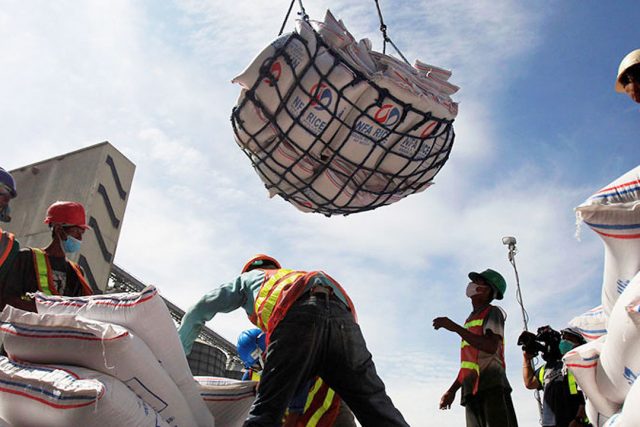
THE DATA on farm imports compiled by the Bureau of Customs (BoC) and the Department of Agriculture (DA) do not tally in the absence of an integrated data platform, officials told a Senate panel on Monday, though some Senators characterized this mismatch as “looking the other way” in a manner that facilitates smuggling.
At a Senate committee of the whole’s hearing on agricultural smuggling, representatives from the two agencies said their estimates are based on two separate data sets — the DA relies on import permit statistics to estimate the volume of commodities expected to arrive, while the BoC tallies data like volume of actual arrivals and taxes paid on entry.
BoC Assistant Commissioner Vincent Philip C. Maronilla said the DA’s import permits would be a more authoritative indicator on the actual volume of food imports entering the Philippines. However, Agriculture Assistant Secretary Federico E. Laciste, Jr. of the department’s Field Inspectorate, said there was no “real time” record of the volume of import arrivals, noting that “even if we have issued import permits, not the whole (amount) issued arrives.”
“This is because it (the process) is not yet automated,” he added. “The ideal is if it is automated, (then) in real time, we will be able to see everything.”
Senator Cynthia A. Villar, who chairs the Agriculture, Food, and Agrarian Reform committee, said at the hearing that the DA can always require importers to report on shipments as they arrive.
“You can enforce that because you are issuing import permits. If they don’t want to follow then don’t issue them the permits in the future,” she said. “It is not an excuse. It seems like you don’t want to know what has arrived and has not arrived.”
“If you do not know (the data) in real time, then you also do not know if the number of imports has already exceeded the permit volumes,” Senator Francis Pancratius N. Pangilinan said at the hearing.
He called for future permits to be denied if importers fail to disclose actual arrivals.
“They really don’t want to know what’s coming in because they need to look the other way while undocumented imported products keep coming in,” he added.
Senator Panfilo M. Lacson, Sr. noted the onerous process of being accredited with the BoC and complying with food safety rules, which has not curbed smuggling over decades.
“It is so hard for importers to comply with requirements, but it is so easy for smugglers to get past the authorities,” he said.
Mr. Pangilinan said some smugglers may have become “untouchable” over the years because of their influence on certain agencies.
“Just like other crimes and other groups… they evolve even if we guard against them and make plans, they will be creative and create more ways to get around,” Mr. Laciste said, reiterating the need for automation.
Mr. Maronilla said the BoC is currently working on full automation of its current processes.
“One of our recommendations is to have fully automated trade transactions and monitoring,” he said. “Once we have automation, not only in centralized databases but also in the import and export processes and requests for inspection, we will be able to monitor.”
He noted that major automation projects include the Philippine Customs Modernization Project funded by the World Bank.
“At this point, initial procurement of the initial stage of the Philippine Customs Modernization Project which is the procurement of the (quality assurance systems) or advisers is already on the way,” he said.
“Hopefully after that, we will be able to start with the procurement process of the customs processing system which will replace our current system and will modernize it to be on par with international standards,” he added.
“We hope and pray that it happens because your automation is already very delayed,” Senate President Vicente C. Sotto III said. “We should not let the smugglers keep up with any improvements “in the BoC’s systems, he added. — Alyssa Nicole O. Tan
MRT-3 free-ride program designed to restore public confidence after rehab

THE Metro Rail Transit Line 3 (MRT-3) launched a month-long free-ride offering on Monday with the goal of restoring confidence in the key commuter train line after an extensive overhaul.
“The deployment of trains with four cars each set helps augment the line’s capacity, as they can carry up to a total of 1,576 passengers per train set,” the Department of Transportation said in a statement.
“The 18-22 trains, including the four-car train sets, that the MRT-3 can now deploy during peak hours is a far cry from the previous 10-15 trains only that it could deploy before its massive rehabilitation,” it noted.
The department said the government wants to show off these developments to the commuting public by offering rides free of charge.
“The free-ride program of MRT-3 is launched with this objective of showcasing the improved services of the rail line, in order to gain back the public confidence in our mass transportation system,” it noted.
The program also aims to ease the financial burden on passengers amid rising prices of fuel and commodities, as well as the return to on-site work, the department added.
“The MRT-3 recorded the all-time lowest number of operational trains on May 24, 2015, when it was able to deploy only six running train sets on the main line due to poor maintenance of its previous provider,” it said.
“Today, passengers enjoy cooler, aside from faster, MRT-3 rides as all train cars have also been (equipped) with new and 100% functioning air conditioning units.” — Arjay L. Balinbin
GOCC dividends in 2021 exceed pre-pandemic levels

DIVIDENDS remitted to the Treasury by government-owned or -controlled corporations (GOCCs) totaled P57.55 billion in 2021, exceeding the pre-pandemic performance of P52.59 billion posted in 2019, the Department of Finance (DoF) said in a statement on Monday.
The 2021 dividends were however much lower than the 2020 performance of P135.08 billion, with the government leaning heavily on GOCCs to remit more of their profits to help fund the pandemic response.
The P135.08 billion in 2020 includes dividends the government chose to forego from the two major state-owned banks which needed to build up their capital, the DoF Corporate Affairs Group (CAG) said in its report to Finance Secretary Carlos G. Dominguez III.
Excluding the dividends that would have been paid by Land Bank of the Philippines and the Development Bank of the Philippines, GOCC remittances were P84.72 billion in 2021.
The Dividends Law, or Republic Act No. 7656, requires GOCCs to remit at least 50% of their net earnings to the National Government.
CAG projects further collections of P32 billion from GOCCs by the end of June, Assistant Secretary Soledad Emilia F. Cruz of CAG said.
“The CAG, headed by Finance Undersecretary Antonette C. Tionko, used the web-based GOCC Liabilities and Monitoring System (GLAMS) to check on the financial status of GOCCs,” the DoF said.
“Formerly known as the GOCC Debt Reporting and Monitoring System (GDRAMS), the GLAMS was transferred by the Governance Commission for GOCCs (GCG) to the DoF in July 2021, and relaunched with enhanced features in August 2021.”
Ms. Cruz said that the CAG in 2021 was successful in implementing globally accepted insurance accounting standards, the Philippine Financial Reporting Standards, at government insurance institutions, which include the Social Security System (SSS), the Government Service Insurance System (GSIS), and the Philippine Health Insurance Corp. (PhilHealth).
Mr. Dominguez called reforms pushed by CAG to be continued into the next administration.
“Continuity is the important thing in these programs that we all started to ensure that they are not just going to fall by the wayside, but will be institutionalized, because you guys have done a terrific job,” Mr. Dominguez said. — Tobias Jared Tomas
PPA sees 31 more port projects done before Duterte leaves

THE Philippine Ports Authority (PPA) said on Monday that it hopes to complete and inaugurate 31 more port projects before President Rodrigo R. Duterte’s term ends on June 30.
“Katulong ng Department of Transportation (DoTr), so far, since 2016, nakatapos na ang PPA at DoTr ng 585 port projects, malaki at maliit (With the aid of the DoTr, so far since 2016, we have completed 585 port projects, large and small),” PPA General Manager Jay Daniel R. Santiago said at a televised news briefing.
“Meron pa tayong hinahandang pasisinayaan at matatapos bago matapos ang termino ng ating Pangulo sa June 30 na nasa 31 port projects (We expect to complete and launch before the President ends his term on June 30, 31 more port projects),” he added.
These port projects, according to the agency, include Currimao Port in Ilocos Norte.
The Currimao Port is “more than ready to handle bigger, more sophisticated cruise ships,” the PPA said in a statement.
Another project to be inaugurated is Bulan Port in Sorsogon, which will provide an alternative jump-off point to Masbate and Cebu.
Also to be inaugurated before June 30 are Banago Port in Negros Occidental, the Ports of Baybay and Palompon in Leyte, and the completion of the passenger terminal buildings in Batangas and Calapan ports, “which will be… two of the biggest terminals in the country.”
“The projects that were completed also prepared the country to take in the shipping and logistical demand both from local and international players in the short- to mid-term as the world transitions to the (new) normal,” Mr. Santiago said.
Between 2016 and 2021, the PPA transferred P43.98 billion to the Treasury from taxes collected, paid and dividends remitted.
“The amount is P12.93 billion or 41.64% higher compared to the total contribution paid to the government from 2010 to 2015,” it said.
It said it incurred P19.87 billion in expenses to complete 240 port projects between 2016 and 2021. These 240 are part of the 585 port projects completed under the administration’s infrastructure program.
“We… increased the percentage of the dividend remittance from 57% in 2020 to 60% in 2021 to help the government in its (coronavirus) response,” Mr. Santiago said, adding that the ports were sufficiently flexible in delivering services as the recovery from the pandemic gained momentum, Mr. Santiago noted. — Arjay L. Balinbin
PSA liberalization seen stunting domestic firms

A GROUP of scientists said on Monday that the loosening of foreign investment restrictions resulting from the amendment of the Public Service Act (PSA) will hamper the development of some domestic industries and make the economy more reliant on imports.
In a statement, the Advocates of Science and Technology for the People (AGHAM) said Republic Act (RA) No. 11659, which amends the 85-year-old PSA, heralds “the incessant erosion of our economic and industrial capacities and will only deepen our dependence on an import-driven economy.”
AGHAM said the amendments are not expected to effect a sustainable economic recovery, noting that trade and investment liberalization have prevented the Philippines from developing its own industries.
AGHAM said manufacturing has not posted any significant growth since tariffs were lowered on imports to 5% from 70% starting in the 1980s. “This was also the case in the 1990s to 2000 with a slow pace of growth (of between) 2.5% to 3.5%.”
The agriculture sector’s contribution to the economy has dwindled from 21% in 1980 to 19% in 2000 due to the tariff reform program and other trade liberalization policies, it added.
RA No. 11647 excludes telecommunications, domestic shipping, railways and subways, airlines, expressways and tollways, and airports from the public utility category. This means they will no longer be subject to the 40% foreign ownership cap for public utilities under the Constitution.
The law also bars foreign nationals from owning more than 50% of public services engaged in the operation and management of critical infrastructure, unless the foreign nationals’ government accords reciprocal rights to Filipino nationals.
Foreign state-owned enterprises are also prohibited from investing in any public service classified as a public utility or critical infrastructure.
The government is hoping the measure will help the economy recover from the pandemic by attracting foreign direct investment that creates new jobs.
AGHAM said the Philippines has the capacity to spur its own economic growth because it has all the prerequisites for industrialization.
Citing data from the World Bank, AGHAM said the Philippines has productive agricultural land, which consisted of about 41.72% of the country’s total land area as of 2018.
“The country is also endowed with mineral resources, and according to the 2014 data of the Philippine Statistics Authority, the estimated metallic and non-metallic mineral reserves that we have are around 7 billion metric tons and 50 billion metric tons, respectively,” it said. “Copper, an important component in electrical wiring and industrial machinery, is the topmost metallic mineral resource followed by nickel.”
AGHAM added: “We have an expansive resource potential attributed to the 16 sedimentary basins that (are) more than 700,000 sq. km. This is in addition to the 4,777 million barrels of oil equivalent of oil and gas reserves.”
“We call on the government to prioritize the development of our own resources, allowing farmers to enhance our agricultural land through genuine agrarian reform, and providing a thriving environment for the establishment of Filipino-owned national industries,” AGHAM said. — Kyle Aristophere T. Atienza
E-commerce startup GrowSari raises $77.5 million in funding round

E-COMMERCE startup GrowSari said it raised $77.5 million in its latest funding round, in partnership with the International Finance Corp. (IFC).
The company, which hopes to supply tools that will help digitalize small businesses in the Philippines, said the total is the largest ever raised in the Philippines and Southeast Asia in the business-to-business and micro-, small-, and medium-sized enterprises (MSME) space.
“We are very grateful for the confidence shown by existing and new investors as we try to transform MSMEs in the Philippines,” GrowSari Chief Executive Officer Reymund Rollan said.
Other investors in the funding round were KKR and the Pavilion Capital unit of Singapore’s Temasek Group.
The startup was founded in 2016 to provide technical tools for managing mom-and-pop stores, small catering businesses, pharmacies, and market shops. It offers telco load and bill payment channels for stores and provides credit to ease working capital constraints.
GrowSari hopes to use the funds to expand nationally. To date, it serves more than 100,000 small retail stores in 220 municipalities across Luzon, a major expansion from the 1,000 stores in three cities in 2018.
“We have already launched in the Visayas, with Iloilo as the first city, and we will launch in Mindanao soon. We also have the largest B2B fulfillment network and will have 50-plus fulfillment centers nationwide,” said GrowSari Co-founder and Chief Technology Officer Siddhartha Kongara.
The IFC helped the startup develop a credit-scoring mode to help spur financial inclusion and promote gender inclusivity, after finding that more than 75% of store owners are female.
“Our investment will enable GrowSari to expand digital adoption and financial services for MSMEs, which is critical to keep them competitive, and for a resilient and inclusive recovery,” Stephanie von Friedeburg, IFC senior vice-president, operations.
MSMEs employ 63% of the Philippine workforce. However, the sector was among the hardest hit by the pandemic, and requires assistance in modernizing. — Luz Wendy T. Noble
BoI approves P61.8-M Pampanga hog breeding facility

THE Board of Investments (BoI) said on Monday that it approved the registration of a P61.8-million hog breeding facility in Pampanga, adding to the industry’s capacity and ensuring the steady flow of meat products into the market.
“The new plant was approved under the Agriculture, Fishery, and Forestry sector of the Investment Priorities Plan, functioning as the transitional Strategic Investment Priorities Plan of the Corporate Recovery and Tax Incentives for Enterprises (CREATE) Act or Republic Act No. 11534,” the BoI said in a statement.
Zashi Hog Farm, Inc. is located in San Ildefonso, Magalang, Pampanga.
“The new project is adjacent to its existing pork production project. The new one (operates with a) Hog Breeding Agreement (and features a) gestating building and farrowing facility specifically for the breeding, growing and raising of piglets with a standard weight of nine kilograms per head,” the BoI said.
BoI Managing Head Ceferino S. Rodolfo said the new facility supports the hog industry, which was severely hit by the African Swine Fever, or ASF.
“With its own in-house breeding facility, the company has ensured the safety of piglets and as they grow, they will ensure a steady supply to its partner’s grow-out farm,” he said.
According to the BoI, ASF was present in 13 regions, 51 provinces, 676 municipalities and 3,626 barangays as of the end of January.
“The country’s hog inventory dipped by about three million as of early 2021,” it noted, citing the Philippine Statistics Authority (PSA).
Citing data from both the Department of Agriculture and the PSA, the investment promotion agency said the hog industry is a P245-billion market, “accounting for 44% of the livestock and poultry sector.”
“As of 2020, the Philippines was the 14th largest pork producer in the world, and was the second largest producer in Southeast Asia, next only to Vietnam,” it added.
Executive Order (EO) No. 133 issued in May 2021 temporarily raised the pork import quota, known as the minimum access volume, to 254,210 metric tons from 54,210 to address increasing pork prices.
The hog and meat industry had opposed the proposed extension of the EO, asking the government to instead support domestic producers to improve supply. — Arjay L. Balinbin
JICA supplies P46M in lab gear to tropical medicine institute

THE Japan International Cooperation Agency (JICA) said it provided laboratory equipment worth P46 million to the Research Institute for Tropical Medicine (RITM), the Philippines’ primary coronavirus disease 2019 (COVID-19) testing site.
In a statement on Monday, JICA said the turnover of the equipment took place on March 24.
In attendance were Health Secretary Francisco T. Duque III, RITM Director Cecilia C. Carlos, the Japanese Ambassador to the Philippines Koshikawa Kazuhiko, and JICA Philippines Chief Representative Sakamoto Takema.
The equipment includes a pharmaceutical refrigerator, an automated immunoassay analyzer, and a deep freezer.
“This assistance complements our other support to Philippine COVID-19 recovery efforts including the grant finance and technical cooperation for cold chain storage and logistics as well as Rapid Antigen Test Kits to be distributed to the Department of Health in the coming weeks.” Mr. Sakamoto said. “JICA hopes to make a certain contribution to a resilient healthcare system in the Philippines.”
The National Capital Region and 47 other locations have been placed under the Alert Level 1 quarantine setting, in which businesses and government agencies are allowed to operate at 100% capacity.
“JICA’s assistance will further strengthen the laboratory capacity of the RITM, which is vital to the country’s COVID-19 response: the Prevent-Detect-Isolate-Treat-Reintegrate + Vaccine or the PDITR+V strategy,” Mr. Duque said.
The PDITR+V strategy focuses on early detection by actively seeking out cases, isolating them, and administering aid as needed, according to the Department of the Interior and Local Government.
In 2020, JICA lent P22 billion for the COVID-19 Response Emergency Support, and also provided a P22-billion Post-Disaster Standby Loan Phase 2, the statement said.
JICA’s 60 active programs in the Philippines were valued at P115 billion in 2020. — Tobias Jared Tomas
PEZA: Raise the white flag
The pressures companies have had to confront during the pandemic highlighted the importance of keeping the workforce happy and productive. When employees are trusted and engaged, yields rise. Conversely, when people feel unmotivated or undervalued, the company suffers. Studies show that employees deeply invested in their work commit fewer mistakes, do better, and are more eager to embrace change.
Keeping employees happy is hard work in light of the changes imposed on the workplace by COVID-19. Studies have found that up to 82% of respondents prefer working from home to onsite work, which managers must come to grips with as employees begin to trickle back to the office after two years of remote work.
On March 10, 2022, the Fiscal Incentives Review Board (FIRB) issued Memorandum Circular 2022- 018, denying a request by the Philippine Economic Zone Authority (PEZA) to extend the government’s authorization of remote work for Information Technology-Business Process Management (IT-BPM) companies. Incentives enjoyed by IT-BPM companies located in economic zones are conditional on a proportion of the workforce carrying out their duties onsite. These rules were relaxed for safety reasons during the pandemic, when companies were allowed to have up to 90% of staff on remote-work arrangements. However, the offsite-work amnesty will not be extended beyond March 31.
Economic managers and business leaders believe that more onsite work will help revive the economy by boosting the prospects of businesses that depend on foot traffic from office workers, though some IT-BPM workers have also cited the need to shield them from high fuel prices, which they will have to absorb if they must commute to work.
Failure to observe the new onsite work rules puts companies at risk of losing their tax perks, a consideration which must be balanced against the need to retain staff who have grown accustomed to working from home.
IN-SITU
PEZA-registered IT-BPM companies, also known as the business process outsourcing (BPO) industry, are required to revert to onsite work at the start of April. No further work-from-home (WFH) arrangements are authorized by PEZA, be they hybrid, staggered, or phased return-to-office); companies that defy the return-to-work rules run the risk of losing their tax breaks.
Moreover, no WFH arrangement in whatever form (hybrid, staggered, temporary or phased-in RTO) shall be authorized by PEZA pursuant to Section 30 of the Corporate Recovery and Tax Incentives for Enterprises (CREATE) Act.
REGISTERED ACTIVITIES
Section 309 of the CREATE Law regulates registered activities; it stipulates that a qualified project or activity registered with an Investment Promotion Agency (IPA) administering an economic zone or Freeport must be exclusively conducted or operated within the geographical boundaries of the zone or Freeport.
A registered business, however, may conduct or operate more than one qualified registered project or activity within the same zone or Freeport under the same IPA. However, any project or activity conducted or performed outside the geographical boundaries of the zone or Freeport is not entitled to tax incentives, unless the project or activity is registered with another IPA.
WHITE FLAG
High employee turnover is costly for any business. Sometimes, when employees choose to resign, their reasons for quitting stem from internal factors at work. Therefore, it is important for management to consider employee welfare in making any decision. After all, people are a company’s greatest asset. We can only hope that the government and PEZA-registered entities can untangle the WFH dilemma in a manner that is beneficial to both parties.
Legislators and the IT-BPM industry must work hand-in-hand to give due weight to each other’s views on how to bring about a recovery. The various measures required to revive the economy are not always obvious, but they certainly are connected.
Let’s Talk Tax is a weekly newspaper column of P&A Grant Thornton that aims to keep the public informed of various developments in taxation. This article is not intended to be a substitute for competent professional advice.
Grace L. Turqueza is an associate from the Tax Advisory & Compliance division of P&A Grant Thornton, the Philippine member firm of Grant Thornton International Ltd.