
How PSEi member stocks performed — April 12, 2022

Here’s a quick glance at how PSEi stocks fared on Tuesday, April 12, 2022.


Here’s a quick glance at how PSEi stocks fared on Tuesday, April 12, 2022.
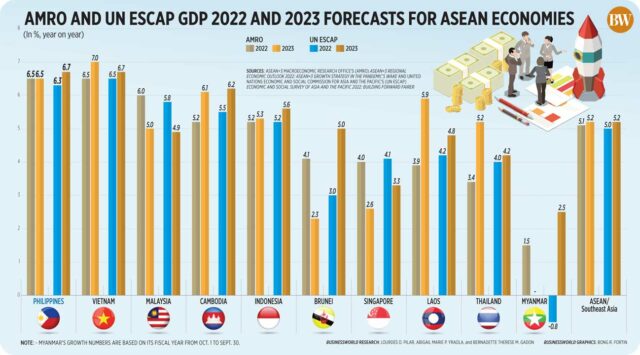
THE PHILIPPINE economy is expected to grow above 6% this year, according to revised estimates by the ASEAN+3 Macroeconomic Research Office (AMRO) and United Nations Economic and Social Commission for Asia and the Pacific (UN ESCAP) released on Tuesday. Read the full story.


SHARES continued to slide on Tuesday amid fears of Russia using chemical weapons in its war against Ukraine and aggressive tightening by the US Federal Reserve to fight rising inflation.
The benchmark Philippine Stock Exchange index (PSEi) sank by 92.93 points or 1.33% to close at 6,895.36 on Tuesday, while the broader all shares dropped 42.37 points or 1.13% to 3,685.84.
“Philippine shares were sold down again with the long weekend nearing. Further escalation in Ukraine as well as tight lockdowns in key areas in China, including Shanghai, have led to a broad sell-off across assets over the past week,” Regina Capital Development Corp. Head of Sales Luis A. Limlingan said in a Viber message.
Mercantile Securities Corp. Analyst Jeff Radley C. See said overall market sentiment continues to be bearish.
“Investors would rather have a cash position than park their funds in the market. Commodity prices continue to move upward. There are still no signs of peace talks in place between Ukraine and Russia,” Mr. See said in a Viber message.
Ukrainian leader Volodymyr Zelenskyy said in a televised address late on Monday that Russia could resort to chemical weapons as it amassed troops in the eastern Donbas region for a new assault on the port of Mariupol, where thousands are believed to have died under a near-seven-week siege, Reuters reported.
Regina Capital’s Mr. Limlingan said investors are also reluctant to make big bets on fears of aggressive tightening by the Fed and ahead of the March consumer price index report that was set to be released later on Tuesday.
“The Fed signaling a steep hiking cycle has also spurred recession fears across investors,” he said.
All sectoral indices ended in the red on Tuesday. Industrials fell by 206.95 points or 2.15% to 9,414.80; property declined by 59.35 points or 1.83% to 3,184.49; mining and oil lost 177.43 points or 1.43% to 12,172.43; services gave up 27.41 points or 1.42% to 1,903.45; financials retreated by 21.60 points or 1.29% to 1,646.21; and holding firms went down by 42.01 points or 0.64% to 6,501.21.
The MidCap index dropped by 25.21 points or 2.12% to close at 1,166.01 and the Dividend Yield index went down by 33.62 points or 1.99% to 1,658.99.
Value turnover increased to P5 billion with 1.51 billion shares changing hands from the P3.36 billion with 882.34 million issues seen on Monday.
Decliners overwhelmed advancers, 113 versus 50, while 60 names were unchanged.
Net foreign selling grew to P749.76 million on Tuesday from the P208.85 million seen the previous trading day.
Mercantile Securities’ Mr. See said the PSEi’s next possible support for the last trading day of the week is between 6,761 and 6,546.
Philippine financial markets are closed on April 14-15 in commemoration of Maundy Thursday and Good Friday. — Luisa Maria Jacinta C. Jocson with Reuters

THE PESO weakened versus the greenback on Tuesday due to expectations of faster US inflation and losses in the local stock market.
The local unit closed at P52.10 per dollar on Tuesday, losing five centavos from its P52.05, Bankers Association of the Philippines data showed.
The peso opened at P52.15 versus the dollar on Tuesday. Its weakest showing was at P52.29, while its intraday best was at P52.06 against the greenback.
Dollars exchanged declined to $1.416 billion on Tuesday from $1.635 billion on Monday.
“The peso weakened amid expectations of a higher US consumer inflation report for March,” a trader said in an email.
The March US consumer price index report was scheduled to be released overnight. US inflation in February stood at a 40-year high of 7.9%.
Last month, the Federal Reserve increased interest rates by a quarter percentage point to begin its tightening cycle in response to surging inflation.
Meanwhile, Rizal Commercial Banking Corp. Chief Economist Michael L. Ricafort said the peso depreciated following the decline in the local stock market.
The Philippine Stock Exchange index shed 92.93 points or 1.33% to close at 6,895.36, while the wider all shares index declined by 42.37 points or 1.14% to 3,685.84.
For Wednesday, Mr. Ricafort gave a forecast range of P51.95 to P52.15 per dollar, while the trader expects the local unit to move within P52 to P52.20. — L.W.T. Noble

NO major smuggling cases have been prosecuted successfully since 2016, Senators said at a committee hearing, which was told that more than 20 major smuggling operations are currently active.
Senator Cynthia A. Villar, author of Republic Act (RA) 10845, which classified large-scale smuggling of agricultural products as economic sabotage, said she is not aware of any important smugglers being imprisoned.
“No one has been jailed… but I have been seeing (the Bureau of Customs’) press releases on those captured,” she said, noting that seizures of up to P10 million are a “normal occurrence.”
Ms. Villar, who chairs the Senate Committee on Agriculture and Food, said the smuggling of vegetables and other agricultural products continues unabated.
RA 10845 permits no bail for the offense of smuggling agricultural products in their raw state, or those products that have undergone simple processing or preservation. The no-bail rule applies to shipments valued at P1 million for most farm items. For rice the threshold is P10 million.
“There’s something wrong with the implementation of the law,” Ms. Villar added.
The Bureau of Customs (BoC) reported at the hearing that it has filed 103 cases of agricultural smuggling between 2016 and March 2022, with the shipments valued at P1.35 billion.
Senior Assistant State Prosecutor Charlie L. Guhit of the Department of Justice’s (DoJ) National Prosecution Service said that DoJ has itself filed four smuggling cases and is awaiting court rulings.
“Insofar as imprisonment is concerned, the accused will be imprisoned if there is a determination by the court that the accused is guilty beyond reasonable doubt and based on our data, with respect to the four reported cases, some of which are still pending reinvestigation or arraignment,” he said, adding that “no incarcerations” have resulted from the prosecutions as yet.
“It’s very frustrating,” Senate President Vicente C. Sotto III said, that not a single smuggler or protector of smugglers has been convicted in six years.
National Intelligence Coordinating Agency Director Edsel T. Batalla confirmed the names of major smugglers Mr. Sotto had read out at the hearing, said to be operating at the Manila International Container Port Subic, Cagayan de Oro, and Batangas.
Mr. Batalla said the agency maintains a list of 20 major smugglers, including the names read out by Mr. Sotto. Mr. Batalla said at least five names on the list were government officials suspected of protecting smugglers.
Mr. Batalla called his information the preliminary finding of the Sub Task Group on Economic Intelligence which needed to be validated.
He said other names remain classified.
Trade Undersecretary Ruth B. Castelo said her department is seeking the assistance of the BoC in charging smugglers, as the department is not authorized to proceed with prosecutions. She reiterated the need for interagency cooperation.
“Since the inception of the Sub Task Group on Economic Intelligence (in) February of 2021, we have uncovered a total value of P121 million in misdeclared and undervalued rice,” she said.
“The total value of confiscated products under the operations of the Sub Task Group on Economic Intelligence is more than P600 million from February last year to date,” she added.
Former Party-list Representative Nicanor Briones of the Agricultural Sector Alliance of the Philippines also noted the lack of results from prosecutions.
“It’s easy to file cases, but if nothing comes out of it, it’s useless,” he added. “When there are no results, people from the agricultural sector lose hope and trust.” He said the average age of a Filipino farmer is 60, and smuggling is making it harder to attract younger people to take up farming. — Alyssa Nicole O. Tan

THE Board of Investments (BoI) said it recently conducted discussions with US infrastructure company Diode Ventures and engineering firm ENDECGROUP, Inc. regarding their interest in investing in Philippine projects.
Diode Ventures, a wholly owned subsidiary of Black & Veatch, develops facilities for the energy and data infrastructure industries.
Diode Ventures President Brad Hardin, together with ENDECGROUP Chairman and Chief Executive Officer William Johnson, met with BoI Managing Head and Undersecretary Ceferino S. Rodolfo and other key officials to express their “serious and very substantial” investment plans to develop hyperscale datacenter and renewable energy generation projects.
Diode Ventures is currently developing solar energy projects in Taiwan and Japan, and is establishing data centers in the US.
Diode Ventures and ENDECGROUP told the BoI they are finalizing their plans for entering the Philippine market.
In January, Diode Ventures announced on its website that it has successfully signed a joint venture agreement with South Korean energy investment advisory firm Energy Innovation Partners for developing renewable energy and data infrastructure projects in South Korea.
Meta, the parent company of Facebook, Instagram, and WhatsApp, recently selected Diode Ventures’ Golden Plains Technology Park in Kansas City to be the site of its $800-million hyperscale data center powered by 100% renewable energy. — Ram Christian S. Agustin
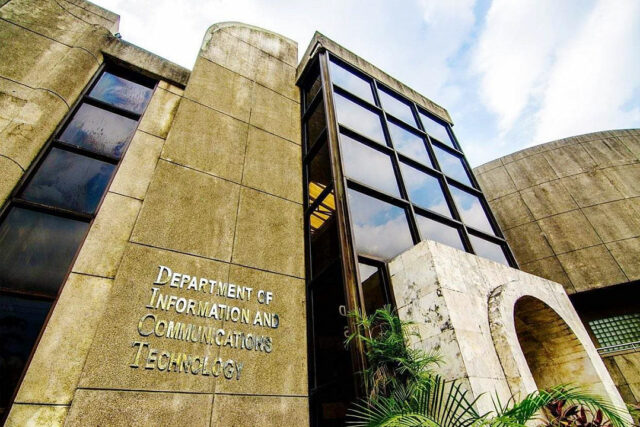
THE Department of Information and Communications Technology (DICT) said it is taking steps to expedite applications for new entrants for the express delivery or messengerial services industry.
“With specific regard to this industry, I have restructured the Postal Regulation Division (PRD) into the ICT Infrastructure and Services Enabling Division (IISED), to be under the direct control and supervision of the Office of the Undersecretary for Digital Philippines,” Acting DICT Secretary Emmanuel Rey R. Caintic told reporters after meeting with private express and messengerial delivery services operators.
Such entities use mobile applications or information and communications technology-aided tools for their delivery services. The DICT regulates the postal delivery services industry.
The PRD was previously under the DICT’s Legal Service. The department said delivery service providers will now be overseen by the Office of the Undersecretary for Digital Philippines, which is specialized in the development of such sectors.
“You may wonder why I have made such a decision and the answer is simple. Private messengerial and courier services are riding the growth brought about by e-commerce,” Mr. Caintic said.
“By 2024, the logistics market alone is set to (grow to) over P1 trillion. By improving the ease of doing business of companies that are entering this space, we are enabling companies that will bring thousands of jobs… providing numerous options to our online sellers, and improving the competitiveness of this sector,” he added.
Mr. Caintic recently signed Department Circular No. 001, Series of 2022 to rationalize the registration, accreditation, and monitoring of private express and/or messengerial delivery service providers.
The department circular also covers independent tower companies and satellite service providers and operators.
“This would achieve the instructions of President Rodrigo R. Duterte to remove red tape and unnecessary steps, costs, and procedures in governmental dealings, as well as conforms to Republic Act No. 11032 or the Ease of Doing Business and Efficient Government Service Delivery Act of 2018,” Mr. Caintic said.
Under the department circular, the Office of the Undersecretary for Digital Philippines will “lead in accelerating the promotion, liberalization, nationalization, and streamlining of the registration/accreditation, and regulation of ICT infrastructure and services.” — Arjay L. Balinbin

REGISTERED DEATHS rose by 39% year on year in 2021, while births declined by 14.3%, the Philippine Statistics Authority (PSA) said in a report.
Citing preliminary data from the PSA’s Vital Statistics report, deaths in the 12 months of 2021 totaled 853,074, with the Calabarzon region (Cavite, Laguna, Batangas, Rizal, Quezon) posting the most deaths at 135,333, or 15.9% of the total.
Metro Manila logged 101,064 deaths during the period, up 19.8%.
Registered births, meanwhile, declined by 14.3% to 1,309,601 last year, with Calabarzon accounting for 198,464, down from its year-earlier tally of 232,606. Births in the National Capital Region (NCR) totaled 1,309,601 last year, down from 1,528,684 in 2020.
Registered marriages amounted to 346,595 in 2021, up 43.9%, led by Calabarzon with 49,864. The NCR logged 39,916 marriages, up 22.1%.
The information in the Vital Statistics report was compiled from tallies generated by city or municipal Civil Registrars, consolidated by the PSA’s Provincial Statistical Offices and then submitted to the Office of the Civil Registrar General as of Feb. 28, 2022. — Abigail Marie P. Yraola
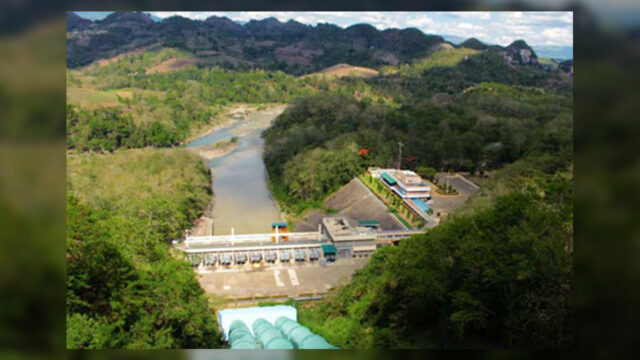
RENEWABLE ENERGY (RE) capacity in the Philippines grew 9% in 2021, roughly in line with the pace of global growth, the International Renewable Energy Agency (IRENA) said in a report.
IRENA estimated the Philippines’ RE capacity at 7,617 megawatts (MW) in 2021, up from 6,986 MW the previous year.
Global capacity growth was 9.1% to 3,064 gigawatts (GW), with hydropower accounting for 1,230 GW. Solar and wind RE projects accounted for 88% of new generating capacity.
Some 60% of the world’s new capacity came from Asian, with China adding 121 GW.
Philippine hydropower capacity increased by 5 MW to 3,785 MW, while solar energy was 1,370 MW, rising by 312 MW, according to the report.
In terms of relative growth, Bioenergy added proportionally the most new capacity of 314 MW to 827 MW. Wind energy capacity was unchanged at 443 MW, the third year of zero growth.
IRENA Director-General Francesco La Camera said the growth of the industry comes at a time when the world is rethinking its reliance on conventional energy sources.
“Our current energy crisis… adds to the evidence that the world can no longer rely on fossil fuels to meet its energy demand. Money directed to fossil fuel power plants yields unrewarding results, both for the survival of a nation and the planet. Renewable power should become the norm across the globe,” he said.
Earlier this year, the Department of Energy issued bid invitations for 2,000 MW worth of RE capacity, with 1,400 MW to be built in Luzon, 400 MW in the Visayas, and 200 MW in Mindanao. — Ram Christian S. Agustin
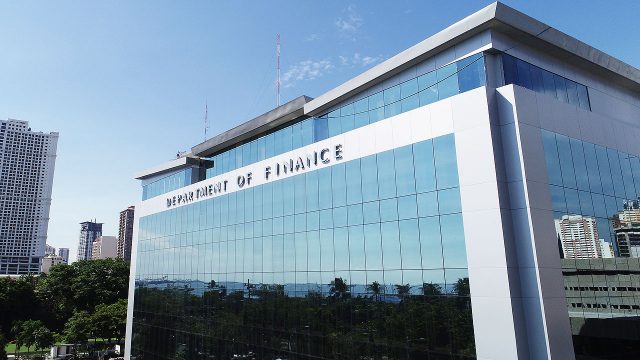
THE Department of Finance (DoF) said it fielded complaints and conducted lifestyle checks against 468 members of staff over the past five and a half years.
In a statement on Tuesday, the DoF said 58 cases were filed before various quasi-judicial bodies, including the Office of the Ombudsman and the Civil Service Commission, following investigations conducted by the department’s Revenue Integrity Protection Service (RIPS) between July 2016 and December 2021.
The employees involved were from the DoF, the Bureau of Customs (BoC), Bureau of Internal Revenue (BIR), Bureau of Local Government Finance (BLGF), the Bureau of the Treasury (BTr), and the Insurance Commission (IC), RIPS Executive Director Ray Gilberto J. Espinosa said in a report to Finance Secretary Carlos G. Dominguez III.
Some 55% of the employees investigated were from Customs, while 38% were from the BIR.
At the end of March 2022, the BoC issued 32 show-cause orders against members of staff, while the BoC’s Customs Intelligence and Investigation Service conducted 250 investigations. This led to the relief of 85 employees, nine transfers, two suspensions, and one reprimand.
Between July 2016 and February 2022, 16 were dismissed, 10 were convicted of criminal charges, 35 suspended, 9 reprimanded, and 7 had to pay fines, Mr. Espinosa said in his report. — Tobias Jared Tomas
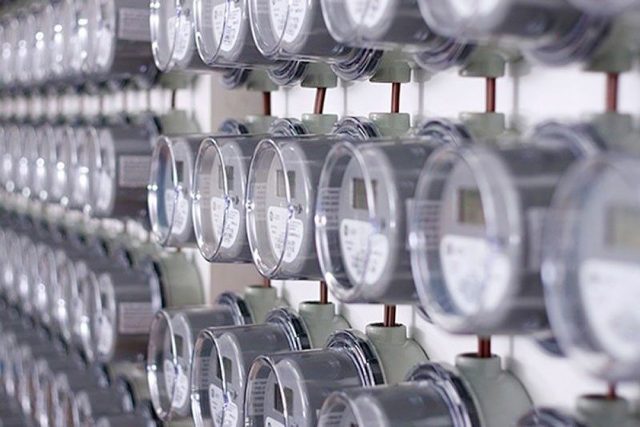
THE Department of Energy’s (DoE) Energy Utilization Management Bureau (EUMB) said it extended by a month the deadline for all Designated Establishments (DEs) to submit their energy consumption reports.
In a notice issued by the EUMB, all industrial, commercial and transport establishments required to submit energy consumption reports on or before April 15 can hand them in by May 15 without penalty.
April 15 is a public holiday.
According to Memorandum Circular No. 2020-05-0001, DEs with an annual energy consumption of at least 100,000 kilowatt-hours (kWh) are required to submit an Annual Energy Efficiency and Conservation Report (AECR), and an Annual Energy Utilization Report (AEUR).
These establishments are also required to report their Energy Management Systems (EnMS) concepts and practices, and have been encouraged by the department to have their EnMS systems certified.
A DE consuming 500,000 kWh to 4 million kWh is classified as Type 1 DE and must employ an Energy Conservation Officer (ECO), while Type 2 DEs reporting annual energy consumption higher than 4 million kWh must have an Energy Manager (EM).
Registered ECOs and EMs can either be employees or third-party service providers from an Energy Service Company (ESCO).
DEs that are complying for the first time can also submit consumption data from 2016- 2020 alongside their AECR and AEUR.
Last week, the EUMB conducted a spot check of the Albay provincial government for its compliance with Energy Efficiency and Conservation (EEC) best practices.
“As the government should be in the forefront of practicing EEC, I laud the province of Albay for exhibiting excellence in the implementation of sustainable energy systems,” Energy Secretary Alfonso C. Cusi said.
The provincial government showcased solar-powered streetlights, the use of light-emitting diodes (LEDs), and scheduled fan mode for air-conditioning units during the visit.
“The DoE is actively pushing all the government instrumentalities in realizing the dream of EEC as our way of life,” Mr. Cusi said. — Ram Christian S. Agustin

VICE-PRESIDENT Maria Leonor “Leni” G. Robredo on Tuesday got endorsed by another political group that was formed in 2021 to push the presidential bid of Manila City’s mayor.
Former Metro Manila Development Authority chief Thomas “Tim” M. Orbos told a news briefing Ikaw Muna (IM) Pilipinas had withdrawn its support for Manila Mayor Francisco “Isko” M. Domagoso, who he said does not stand a chance of winning in the May election.
Some group members said they would use their resources to boost the vice-president’s presidential bid and prevent the return to the presidential office of the family of the late dictator Ferdinand E. Marcos.
The strongman’s only son and namesake, Bongbong, is leading in most presidential opinion polls. Ms. Robredo is a distant second though her ratings have gone up.
“The Vice President has consistently been in second place in the past months and has been on a steady rise with the biggest increase as shown in the latest survey,” Mr. Orbos said. “She is now in the best position to win this for us.”
He said he did not have a grudge against Mr. Domagoso. “In a different time, in a different place, he could have been a good leader. The future is open for him.”
“Let’s give it to someone who has a chance,” said Mr. Orbos, who coordinated the volunteer movement for Mr. Domagoso’s presidential ambition.
He also asked other candidates to throw their support behind Ms. Robredo to prevent another Marcos presidency.
IM Pilipinas, which changed its name to IM Leni, had been campaigning for Mr. Domagoso, a former matinee idol whose rags to riches story has captivated some Filipinos.
“I wish them all the best,” the mayor said in a video posted on Facebook. “This separates the men from the boys.”
Before the press briefing, the group’s chapters in central and southern Philippines announced their support for Ms. Robredo.
Meanwhile, One Cebu Party, an influential political group in central Philippines, endorsed Mr. Marcos for president.
The group is led by the family of Cebu Governor Gwendolyn F. Garcia, whose brother Pablo resigned as party secretary-general to continue supporting Mr. Domagoso.
“I respect One Cebu and its decision, just as I hope that the party I helped found, and have only the deepest affection for, would respect my choice and direction,” Mr. Garcia said in a statement.
At the weekend, a key official of Aksyon Demokratiko, Mr. Domagoso’s political party, left his post to endorse Ms. Robredo for president.
Ms. Robredo’s office welcomed the endorsement of IM, saying it expects more groups to back her candidacy.
“We trust that in the remaining 27 days, even more will join the people’s campaign, united by their dreams and hopes for a better Philippines,” her spokesman Ibarra M. Gutierrez III said in a statement.
Ms. Robredo on Tuesday visited La Union province, where she lost by more than 318,000 votes to Mr. Marcos in the 2016 vice-presidential race.
La Union is considered part of the regional bloc in northern Philippines known for supporting the family of the late dictator.
On Saturday, she drew more than 200,000 supporters — the biggest crowd in her presidential campaign so far — at a rally in Pampanga province north of the Philippines.
The opposition candidate urged her supporters in the province — the bailiwick of former President Gloria Macapagal Arroyo, who has endorsed Marcos, Jr. — to step up their house-to-house initiatives to convince more undecided voters to vote for her.
Mr. Marcos kept his lead in Pulse Asia Research, Inc.’s presidential opinion poll last month, with 56% of Filipinos likely to vote for him. His rating fell by 4 percentage points.
Still in second place was Mr. Robredo, whose rating rose by nine points to 24%.
Pulse Asia conducted the poll on March 17-21, after the first official presidential debate that Mr. Marcos failed to join. — Kyle Aristophere T. Atienza
