Home Blog Page 6563

Tiger return at Augusta National has Masters buzzing

AUGUSTA, GA. — The Masters is always something special but add in a Tiger Woods comeback and the end of coronavirus disease 2019 (COVID-19) restrictions and the year’s first major is poised to be turned into a golfing celebration.

After COVID-19 limited the number of spectators allowed onto the grounds over the last two years, the galleries are back in full force and so is the unmistakable Augusta National buzz amplified by the presence of Woods on the manicured fairways.

Everyone entering stately Augusta National can sense the difference.

The Azaleas seem to smell a little sweeter, the Pimento cheese sandwiches a little tastier and the traffic a lot busier.

“You can feel it,” said Spain’s Jon Rahm, the world number two and betting favourite to walk away with the coveted Green Jacket on Sunday. “A lot of it is Tiger.

“I was playing with Tony Finau on the front nine yesterday.

“We were on seven, and they (Woods group) were walking down on two, and I’ve never seen a mass (of spectators) this big, even on a Sunday in contention, on those two holes.

“There’s a lot more electricity in the air in that sense, and you have Tiger being there, yeah. Monday felt like a Saturday in a regular event.”

TIGERMANIA RETURNS
The first day of official practice on Monday offered a glimpse of what to expect from the week ahead.

Tigermania is set to return after Woods confirmed on Tuesday he will play the Masters 14 months after a car crash that nearly resulted in doctors amputating his right leg, setting the stage for what could go down as one of sport’s greatest comebacks.

“It was unbelievable,” said Justin Thomas, who joined Woods on his Monday practice round along with Fred Couples.

“I had a couple of buddies send me some pictures last night, and that’s probably more people than have ever watched me play a round at Augusta National and they weren’t there to watch me.”

If returning from a devastating injury was not enough Woods upped the ante by putting himself in an even bigger spotlight, saying not only is he ready to play but capable of winning a sixth Green Jacket.

Not even his fellow golfers are betting against him.

“I wouldn’t be surprised,” said Rory McIlroy, who will be hunting a first Masters title that would see him complete the career Grand Slam of all four majors. “He’s hitting it well. He’s chipping well. He’s sharp.

“It’s just the physical demand of getting around 72 holes here this week.

“So would I be surprised? No, I’m not surprised at anything he does anymore.”

GREAT THEATER
Woods has not competed on the PGA Tour since the November 2020 Masters, his decision to return this week ensuring great theatre to bring the curtain up on the majors season.

Certainly the 15-time major winner could pick no better place for a coomeback than Augusta National.

Woods has made 23 Masters appearances and has a locker packed with Green Jackets, the last coming in 2019 when after years of surgery and personal problems against all odds he managed to end an 11-year majors drought.

“Delighted to hear Tiger is going to give it a go at the Masters,” tweeted Jack Nicklaus. “While he’s in a different place in his life, Tiger wouldn’t tee it up if he didn’t think he could compete and win.

“Tiger knows this golf course like the back of his hand and, in 2019, once in position, he remembered how to win.

“If his body holds up, could he do it again?” — Reuters

Vintage cars

PEXELS-GEORGE SULTAN

Should vintage cars, or those at least 40 years old from the date of manufacture, still be allowed on Philippine roads just like any other motor vehicle? The Senate seems to think so, thus its decision to pass in early February its Senate Bill 2493, or the proposed law regulating the use of vintage, historical, classic, and collector motor vehicles.

It remains uncertain whether the approved bill will soon be enacted. However, there doesn’t seem to be any strong opposition to it from lawmakers, regulators, Malacañang, or even the motor vehicle industry itself. Numerous hearings on the bill were held, and most issues raised early on appear to have been already resolved.

I, for one, support the bill, being the owner of a 1975 model car. And while I don’t fully agree with all the provisions of SB 2493, I deem it a fair regulation in encouraging the “preservation, maintenance, occasional use, and registration” of vintage vehicles — “a motor vehicle, whether powered by an internal combustion engine, electricity, a combination of both, or other means, that is at least 40 years old reckoned from the date of manufacture, whose chassis, engine, steering assembly, and suspension assembly are either original or authentic and whose body has not been altered in general appearance…”

The more significant provisions of the bill, in my opinion, cover vehicle registration and allowable use, as well as exemptions from certain standards. While the latter may not sit well particularly with environmental groups, who may legally question the exemption as possibly contrary to the Clean Air Act, I still believe the bill’s compromise is a fair and realistic approach to regulation.

Section 5 of SB 2493 states that, “in recognition of their small number, their expected limited use, and the historical fact that the technology available at the time of their manufacture will not permit them to meet modern standards, vintage vehicles registered under this Act shall not be required to meet clean-air, anti-pollution, safety, road-use, and other standards that were not in force at the time of their manufacture, either as a condition for their registration and use on public roads or otherwise, the provisions of the Clean Air Act (RA 8749) and any other law or regulation notwithstanding.”

Section 5, however, also states that “vintage vehicles manufactured after Dec. 31, 1967 must be fitted with safety belts as mandated by Republic Act No. 8750 or the Seat Belts Use Act of 1999.” Meantime, the registration of vintage vehicles is proposed to be valid for at least three years. Such vehicles will also be issued special plates that indicate the vehicle’s year, model or date of manufacture.

But the bill also states that vintage vehicles are still “subject to inspection… in compliance with the minimum safety and roadworthiness guidelines established by the Land Transportation Office (LTO) in consultation with stakeholders. In no event shall the standards for safety inspection for vintage vehicles registered under this Act exceed or be more stringent than those that were in force at the year the vehicle was manufactured.” The LTO can also “random inspection of registered vintage vehicles on public roads and highways.”

Personally, I would have preferred that vintage vehicles are still made to comply with current emission, anti-pollution, and safety standards and conditions. However, recognizing as well that many vehicles aged 40 years or older are unlikely to meet or strictly comply with such standards, then a blanket exemption may be a better approach.

Anyway, the exemption is conditioned on “limited use” of such vehicles on roads. After all, for most owners of vintage cars, their special vehicles are collectibles and not daily drivers. As such, given the value of their vehicles, particularly those fully restored, and considering that these are generally not insurable, then these vehicles actually spend more time in the garage than on the road.

Registration of a motor vehicle as vintage, and thus exempt from certain standards, is subject to certain conditions. For one, “a vintage vehicle registered or otherwise benefitting under this Act shall be preserved and maintained in a historically correct condition, which… shall mean that its chassis, engine, steering, and suspension shall not have been replaced or modified except with original or authentic components, and its body has not been changed in general appearance.”

Also, a vintage vehicle that is “imported after the effectivity of this Act, or is registered under this Act, or otherwise benefits from any exemption or privilege under this Act shall be used only for personal purposes and/or leisure driving. A vintage vehicle shall in no event be used for commercial purposes, except only for motion pictures, advertisements, pictorials, weddings, and motorcades.”

I believe SB 2493 is a practical legislation in recognizing the “limited use” of vintage vehicles as a matter of circumstance, rather than having to actually legislate limitations on their use. After all, a well-maintained and well-running vehicle, despite being vintage in age, may in fact be more roadworthy than a newer but poorly maintained vehicle.

In the case of India, for instance, a new law on vintage cars approved last year requires a vintage vehicle to be at least 50 years old, counting from the day of its original registration. Moreover, vintage vehicles are allowed only limited use of public roads, for the purpose of exhibition, refueling, maintenance, and participation in vintage rallies.

At the end of the day, however, the proof of the pudding is in the eating. Thus, while SB 2493 covers the broad strokes, the proposed law’s implementing rules and regulations will spell out and detail the actual terms and conditions for the registration and use of vehicles aged 40 years and older. One can only hope such rules will be just as practical, realistic, and fair as their enabling law.


Marvin Tort is a former managing editor of BusinessWorld, and a former chairman of the Philippine Press Council

matort@yahoo.com

Changing healthcare through the treatment of children with cleft conditions

WWW.OPERATIONSMILE.ORG

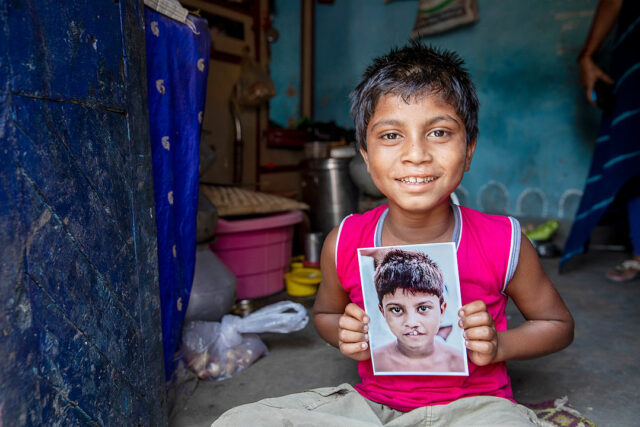
FORTY YEARS after its beginnings in the Philippines, Operation Smile aims to treat 1,200 children with cleft conditions in 2022.

In 1982, Dr. Bill Magee, a plastic surgeon, and his wife Kathy, a nurse and clinical social worker, traveled to the Philippines for a medical mission to repair children’s cleft lips and cleft palates. However, an overwhelming response awaited them upon their arrival in Naga City. Hundreds of families came, hoping their children would receive surgery, way more than the team could treat at the time.

As the mission prepared to leave, the Magees promised to return to help more children. They gathered equipment, raised funds, and put together a team of volunteer healthcare professionals for their own medical mission to the Philippines. That was when Operation Smile was born.

Our country holds a special place in the history and future of Operation Smile. It was here where eyes were opened not only to the realities of cleft conditions in the country, but also to larger issues surrounding Philippine healthcare. In a World Health Organization (WHO) study conducted on the state of the country’s health system, said that while significant improvements have been made, with infrastructure and human resources concentrated around Metro Manila and other key cities, certain roadblocks to access remain — especially for communities residing in far-flung areas.

The regional and socioeconomic disparities that impede access to quality healthcare impact the quality of life enjoyed by many of our countrymen, the effects of which manifest in different ways. In one out of every 1,000 live births, a patient with a cleft condition is born. Without access to surgery, cleft patients may struggle to eat, breathe, and speak. On top of all that, they may have to shoulder the weight of low self-esteem brought about by fears of embarrassment or social stigma due to their condition. If surgery was made available to every child born with cleft conditions, how many lives could be changed for the better?

Together, we strive for a world where no parent has to tell their child that there is no hope for them to live happier, healthier lives — especially when it’s possible for them to do so. This belief has guided our work at Operation Smile Philippines, rallying to provide reconstructive surgery and comprehensive care for children and young adults lacking access to health, speech, and developmental services.

Now building on 40 years of success, Operation Smile is entering a new era as a global network driving access to high-quality healthcare. The problems we seek to solve go beyond treating cleft conditions. By doing so, we take steps towards achieving large-scale change in the way surgeries are delivered and made accessible across the country.

This is made possible by creating programs designed to address longstanding healthcare issues through collaboration. Through partnerships with government units, hospitals, and other nongovernment organizations, local health systems are strengthened — empowering local medical professionals with training and education to provide quality care for the communities they serve.

The activation of stakeholders is one of key vision of Operation Smile Philippines. Alongside the development of online Zoom therapy sessions and innovative approaches to care in response to the pandemic, efforts continue to erase the backlog of children with cleft conditions in the country. With a goal to successfully treat around 1,200 patients in 2022, Operation Smile Philippines works towards achieving zero cleft palate patients in the country. The operation will be a mix of Weekly Surgical Programs in our Centers in Manila, Pampanga, Davao, and more.

They say that it takes a village to raise a child, and to this day, that saying rings true. Entire communities have a hand in creating an environment where children can grow up safe and healthy. From our surgeons, partners, and volunteers, Operation Smile helps transform the lives of children for the better — giving more Filipinos across the country another reason to smile.


Donald Lim is the president of the Board of Trustees of Operation Smile Philippines, a nonprofit, volunteer service organization that provides free reconstructive facial surgery for children with cleft lips. Mr. Lim is also DITO CME’s chief operating officer and concurrently chief innovation officer of its parent company, Udenna Corporation.

How will Elon Musk change Twitter?

S7AKTI-PIXABAY

JUST A DAY after it was revealed that Elon Musk had bought $3 billion of Twitter, Inc.’s stock, making him its single largest shareholder, the company’s chief executive officer took to Twitter to announce how the world’s richest man had decided to exercise his leverage.

“I’m excited to share that we’re appointing @elonmusk to our board!” tweeted CEO Parag Agrawal on Tuesday. “Through conversations with Elon in recent weeks, it became clear to us that he would bring great value to our Board.”

Wait a minute. What’s this “conversations with Elon in recent weeks” stuff? Musk disclosed on Monday that his investment in Twitter was “passive,” meaning he had only stopped by to invest in the company and not to do any of the things “active” stakeholders do — such as taking a board seat or offering significant corporate guidance that other shareholders have to vote on. Now Musk has a board seat and Agrawal, who succeeded Jack Dorsey only last November, has let everyone know that the two men had been chatting for weeks.

That all sounds suspiciously active, despite Musk clothing his maneuver in passivity. Add it to the list of issues for the Securities and Exchange Commission (SEC) to sort out, along with the other potential conflicts raised by Musk’s investment in Twitter. I have written that Musk, who fashions himself as a defender of free speech but has a history of stifling his critics, might pose a danger to how Twitter approaches free speech. Now that he’s officially on the board, it’s worth weighing some of the possible pluses and minuses of his presence.

Agrawal himself synopsized the virtues of having Musk on board: “He’s both a passionate believer and intense critic of the service which is exactly what we need on @Twitter, and in the boardroom, to make us stronger in the long-term. Welcome Elon!”

Musk, the steward of Tesla, Inc. and founder of Space Exploration Technologies Corp., is a bona fide visionary and innovator. He’ll bring that mojo to Twitter, a company born from innovation but short on vision. Twitter, founded in 2006, has never been particularly well managed, and Dorsey’s departure from the company was long overdue. Agrawal, who is 37, is a career technologist with no previous experience running a company. Musk could offer insight about how to cultivate and empower talent at Twitter.

Musk could also help Twitter stretch. The platform is a favorite haunt for journalists, celebrities, political leaders, and influencers, but not a lot of regular folks use it, and it has never outgrown its early role as a forum for debate, analysis, promotion and self-expression. There’s a case to be made that it doesn’t need to — but even so, Musk could lay out alternative missions and possible partnerships for Twitter that would allow it to become more popular and influential.

Twitter’s functionality has always been kludgy. Search, editing, and sharing tools, for example, have improved at a painfully slow pace. That hasn’t served the company’s users or investors well. Twitter still hasn’t fully figured out how to manage advertising and marketing on the platform, either. Musk could bring fresh thinking to these problems.

Perhaps Musk’s most valuable contribution would be to change Twitter’s metabolism and culture — forcing it to move faster and take bolder risks. That could be exciting for everyone working there and would be fun to watch.

Now for the downsides.

For one, it’s still not clear how serious Musk is about bringing authentic institutional change to Twitter. He could just be trying to rattle Twitter’s cage and air his grievances that the company inhibits free speech — despite the fact that he has been able to wander across the platform, unconstrained, as a world-class troll.

The SEC had to order Tesla and Musk to appoint someone at the electric car company as a Twitter babysitter, empowered to monitor Musk’s irresponsible, questionable, and market-moving tweets about Tesla’s operations. Musk reveled in thumbing his nose at the SEC, the SEC filed contempt charges against him, and it was all so unseemly and frequent that it led my colleague Liam Denning to ask why Musk didn’t just stay off Twitter.

It’s a good question, even as it’s also clear that Musk is on Twitter because he likes the spotlight. Whatever his motivation for publicly airing inside information — some of it inaccurate or misleading — his tweets help erode the expectation that executives of public companies should be judicious and law-abiding.

Now Musk is a shareholder and director of a public company (Twitter) with a platform he has used in the past to promote his own company (Tesla) and his financial holdings (cryptocurrencies). Will he be live-tweeting Twitter’s board meetings or sharing non-public information about its finances? That’s likely. Will Agrawal be Musk’s sock puppet instead of his protégé? Also likely. In that context, Agrawal’s tweets about Musk’s arrival smack of Stockholm syndrome.

And how does Musk want to shape Twitter’s overall voice? He’s used the platform to wage vendettas against his critics and enemies, and his rants about speech being curtailed on Twitter seem to be more informed by his libertarian leanings than reality. Despite a stated preference for a hands-off approach to free speech, does he actually see himself as Twitter’s gatekeeper?

No one familiar with Musk’s track record expected him to be a passive presence at Twitter. It only took a day to reveal how active he intends to be. It will take a little longer to find out whether his involvement in Twitter is for the better — or for the worse.

BLOOMBERG OPINION

The most controversial World Cup of Football

0FJD125GK87-PIXABAY

The 2022 FIFA World Cup in Doha, Qatar, is probably the most controversial world cup in the history of modern sport, or of, at the very least, soccer history.

The tournament has drawn attention to the tiny Arab country which is about 25 times smaller than the Philippines. Qatar has a land area of about 11,486 square kilometers while the Philippines’ land area is about 300,000 square kilometers. Issues of corruption, culture, human and labor rights, the status of Qatar as a football power, weather, laws and political system have surrounded the award and the actual hosting of the tournament.

Controversy erupted as soon as FIFA (Federation Internationale de Football Association, the sole governing body of football) awarded the 2018 and 2022 World Cup hosting rights to Moscow and Doha, respectively, particularly with respect to the Arab country.

The announcement was met with undisguised surprise since the other bidders for the 2022 world championship were Australia-New Zealand and the United States, among others. As early as December 2010, writers like Kevin Hough stated that the “choice seems bewildering on a number of levels.”

Critics of the choice of Qatar point out that the country had never qualified for a World Cup. They have never made it past the quarter finals of the Asian Cup.

In the summer months of July to August — the traditional months that the FIFA World Cup is held — temperatures in Qatar may hit 112° Fahrenheit or about 44° Celsius. The Qataris however promised that all World Cup venues would be air conditioned. We had a chance to go to the Aspire sports complex in Doha in 2019 and the spectators’ area at the outdoor track and field oval was air-conditioned. This, of course, does not solve the oppressive heat to which athletes are exposed. There are, however, so-called rules for hot days on a soccer field based on heat index: a heat index of 85°-89° calls for mandatory two-minute water breaks per half with running time. As a final solution, the World Cup was moved to the months of November to December, with the opening day scheduled for Nov. 21. The tournament ends on Dec. 18.

Hough also takes issue with Qatar’s small population, about 2.7 million. He says that with that small population, equal to Quezon City’s, he wonders how Qatar will be able to dedicate enough indigenous support to make an event like the World Cup as atmospheric as it should be. Hough says that “attendance would surely be at an all-time low and cast serious aspersions on the tournament as a whole.”

Laws and political beliefs also serve as a damper toward the full enjoyment by the crowd of the games, Hough points out. Qatar’s rules include restrictions on the sale of alcohol which means that “fans expecting the traditional party atmosphere at the 2022 World Cup are unlikely to be enamored.”

With about eight months to the opening of the biggest soccer festival in the world, what is the present situation in Doha and the soccer world?

To begin with, investigations were continuing as late as June 2021, into how a small country with no football pedigree, as pointed out by Simone Foxman, managed to win a secret vote to become host. To be fair however to Qatar, it is ranked 51 while, for purposes of comparison, the Philippines is at number 111, as of March 31.

Human rights groups continue to decry the treatment of foreign workers which include Filipinos, while Qatar insists that the event is a catalyst for learning best practices or for improving labor laws.

The issues on human rights abuses were detailed in a Guardian expose in 2013. These abuses were related to the extreme heat and workplace accidents that led to deaths.

The Guardian report revealed that 6,500 migrant workers from India, Pakistan, Nepal, Sri Lanka, and Bangladesh have died since the Persian Gulf country was awarded the World Cup and embarked on construction projects. The total death toll is significantly higher according to the Guardian Report, as these figures do not include deaths from a number of countries which send a large number of workers, including the Philippines and Kenya.

Deaths that occurred in the final months of 2020 are also not included.

In 2019, the United Nations assailed Qatar for racial discrimination, saying a worker’s nationality plays an “overwhelming role” in how he or she is treated.

Other controversies include policies on homosexuality and Qatar’s position on LGBTQ rights.

Since 2010, Qatar has launched an unprecedented building program, largely in preparation for the 2022 tournament. The Report states that in addition to seven new stadiums (which could create the unintended second-generation problem of congestion), dozens of major projects have been completed or are underway.

Going back to the investigations, Foxman, in her June 21, 2021 article, states that “ever since FIFA, soccer’s ruling body awarded in 2010 to Russia and Qatar the rights to each host a World Cup, allegations of vote-buying have swirled. (Two members of the 24-man FIFA executive committee cast votes for World Cup hosts were suspended before the 2010 ballot after being filmed offering votes for cash). While a FIFA probe into their bids cleared Russia and Qatar of wrongdoing, investigations continue in Switzerland and France, and a 2020 US indictment accused three FIFA executive members of receiving payments to back Qatar’s bid. Qatar denies allegations of vote buying. FIFA said awarding the event to the emirate was based on the organization’s strategy of “expanding soccer into new regions.”

What is driving Qatar to host the World Cup (and other sporting events)?

According to Foxman, Bloomberg Intelligence reports that Qatar is on course to complete $300 billion in infrastructure projects to support the world’s most-watched television event. Russia reportedly spent $11 billion on the 2018 tournament which attracted 3.6 billion television and online viewers. Qatar, on the other hand, expects the World Cup to add $20 billion to the economy, equivalent to about 11% of the country’s gross domestic product in 2019.

What about Qatar’s position on the Russian invasion of Ukraine? Qatar has publicly made the “obligatory call for a peaceful settlement” but in reality sees the conflict in business terms as the conflict means increasing gas sales for the oil rich emirate.


Philip Ella Juico’s areas of interest include the protection and promotion of democracy, free markets, sustainable development, social responsibility and sports as a tool for social development. He obtained his doctorate in business at De La Salle University. Dr. Juico served as secretary of Agrarian Reform during the Corazon C. Aquino administration.

Change of management

PEXELS-ANDREA PIACQUADIO

THE BOARD of the Businessman’s Lunch Restaurant (BLR) is still evaluating a short list of candidates for CEO. The incumbent is retiring without leaving a clear succession plan or giving any clear endorsement of his preference.

The list of possibilities has been trimmed down to two, including the incumbent COO.

The outgoing chief was obsessed with ridding the place of rats as it became almost a single-minded strategy… until the food poisoning scandal kept the patrons away for a long time. They’re starting to come back after the drop in cases made the whole issue moot. Finally, “heard” immunity to rumors has taken hold.

The board is due to make its decision on a new CEO soon.

The newcomer, who is the son of a former chef in the restaurant, has declared through his agent that he will not subject himself to any face-to-face job interview. His CV is enough, including his college credentials. Enough for him to lay down his strategy of unity and accepting all types of cuisine, with a big nod to Cantonese fare. The restaurant next door offering this menu is already poaching customers from BLR — why not merge with or sell to the competition?

As to the old chef’s indiscretions and rumors of poaching beef stock and secretly acquiring the supply chain company? Those controversies have all been raised and come to an inconclusive judgment when the chef flew off to Honolulu to introduce pork rind and vegetables popular in his region. Does he still have unpaid taxes? The job applicant refuses to tackle that question—the culinary sins of the father should not be applied to the son.

Is his too-visible agent also applying for the job? Does he really speak for him on all points? Even these simple questions are shrugged off by the applicant. He can’t be bothered. One director asked why he is even looking for a job. (The other directors ignored this.)

And what of the survey of customers who still remember the old chef? They seem to put their trust in the son now. They claim that anyway he won’t be in the kitchen.

Is the COO too well known to the board already? Not really. The CEO made sure she was relegated to the warehouse and invisible to the patrons, and even to management. What did she do in the warehouse? The auditing group found no anomalies in requisitions and storage of supplies. The COO got high audit ratings, even if her role was marginal.

Insiders are supposed to have a clearer understanding of the situation. And the COO has some ideas on handling competition. She is not for accommodating the neighboring restaurant. The Restaurant Association of Manila (RAM) already ruled on the unethical practice of the Cantonese outfit, putting up tables and stalls infringing on the dotted line separating the two establishments. The COO wants to assert the spatial integrity of the sidewalk — this is our restaurant, and we will fight for its space — “No to Cantonese cuisine.” (Even if it has a bigger kitchen.)

There are patrons supporting the COO in food festivals that promote Filipino cuisine and highlighting its under-appreciated dessert offerings like macapuno cobbler and watermelon seeds dipped in mango sauce.

One stockholder voiced his concern over the selection process that allows one of the applicants to dodge interviews and answer questions. There are also tax issues that need to be addressed.

And do the patrons have a say on what kind of restaurant they want BLR to be? Of course, they can just switch restaurants and go for Maine lobsters and steak, or even kangaroo meat pie which is supposed to have small pockets, just as good as pork cracklings.

Where a CEO intends to bring a company is a matter of concern. The very survival of the enterprise and its continued ability to employ waiters, receptionists, chefs, and bookkeepers affects the whole street.

A change of management should highlight priorities and programs. As to the question of integrity and transparency of operations, who can argue with the importance of those? The fate of one restaurant seems to be a minor hiccup in the scheme of things.

What if this leadership issue involved a whole country?


Tony Samson is chairman and CEO of TOUCH xda

ar.samson@yahoo.com

Second booster shields elderly from COVID but protection wanes quickly

A FOURTH DOSE of the Pfizer/BioNTech vaccine lowered rates of coronavirus disease 2019 (COVID-19) among the elderly but the protection against infection appeared short-lived, a large study in Israel has found.

The second booster’s protection against infection dwindled after four weeks, Israeli researchers showed in their study published on Tuesday in the New England Journal of Medicine.

Protection against severe illness did not wane during the six weeks after the dose but more follow-up study was needed to evaluate its longer-term protection, the researchers said.

The study on 1.3 million people aged 60 and older looked at data from the Israeli Ministry of Health database between Jan. 10 and March 2, when the Omicron variant was predominant.

It comes ahead of a meeting by the US Food and Drug Administration on Wednesday to discuss the need for additional boosters, a week after the United States authorized a second booster shot for people aged 50 and older amid a spread of the Omicron sub-variant BA.2.

European health ministers have also urged the bloc’s governments to back a fourth dose for people over 60.

In Asia, South Korea started giving out fourth doses of COVID-19 vaccines in February and Singapore has said a second booster dose is planned for those aged 80 and older.

Another study from Israel showed last month that seniors who received a second booster of the Pfizer, Inc. /BioNTech SE COVID-19 vaccine had a 78% lower mortality rate than those who got just one.

Israel started offering a second booster in January. — Reuters

Obama, Biden reunite at White House to tout Obamacare, new provision

REUTERS
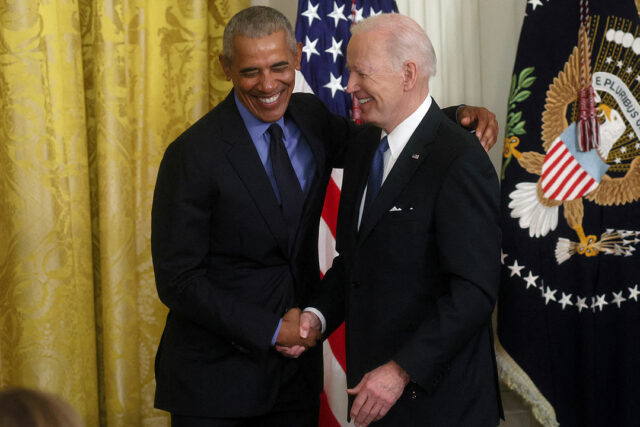
US PRESIDENT Joseph R. Biden and former US President Barack Obama embrace after they spoke about the Affordable Care Act and Medicaid at the White House in Washington, US, April 5. — REUTERS

WASHINGTON — Former President Barack Obama returned to the White House on Tuesday for the first time since leaving office in 2017 to tout the benefits of his signature healthcare law and bolster his friend and former governing partner, President Joseph R. Biden.

Mr. Obama arrived in the East Room to robust cheers from the assembled crowd of Congress members and administration staffers, and remarked on the changes that had been made in the White House since he was last there – notably the arrival of a feline.

“There’s a cat running around,” he said to laughter, “which I guarantee you Bo and Sunny would have been very unhappy about,” referring to his family’s dogs.

Mr. Obama jokingly referred to Mr. Biden as “vice president” before correcting himself, inspiring a salute from Mr. Biden, then offered broad praise of the Affordable Care Act, whose passage he described as a “high point” of his time in office.

“If you can get millions of people health coverage and better protection, it is, to quote a famous American, a pretty … big deal,” Mr. Obama said to hoots of laughter from the crowd, referencing an off-color Biden remark picked up by a hot mic when the law was signed.

Mr. Biden, who hosted Obama for lunch, joked that the two men did not know who should sit where when they dined, and lauded Mr. Obama for his leadership on the healthcare law.

“The Affordable Care Act has been called a lot of things but Obamacare is the most fitting,” Biden said.

While Mr. Obama remains a popular figure, Mr. Biden faces moribund public approval ratings thanks in part to high inflation and the lingering COVID-19 pandemic. As a result, Democrats risk losing control of at least one, if not both, chambers of Congress in November, which would bring Mr. Biden’s legislative agenda to a halt.

Mr. Biden unveiled a measure to fix an element of the healthcare law known as the “family glitch” that left family members of those with access to employer-provided health plans ineligible for certain subsidies, and he signed an executive order directing federal agencies to do all they could to expand healthcare coverage.

Before signing and as he finished his remarks, he quipped: “Barack, I’m going to remind you: it’s a hot mic.”

Focusing on healthcare has helped Democrats politically in the past. Obamacare was the former president’s top legislative accomplishment, and Republicans have repeatedly tried and failed to repeal it.

“But what the Affordable Care Act shows is that if you are driven by the core idea that, together, we can improve the lives of this generation and the next, and if you’re persistent … you can have an impact on millions of lives,” Mr. Obama said.

Mr. Obama and Mr. Biden became friends during Mr. Obama’s time in office, meeting for lunch weekly. Their families became close and Mr. Obama spoke at the funeral of Mr. Biden’s son, Beau.

White House spokesperson Jen Psaki said Mr. Obama and Mr. Biden had an expansive conversation and a walk. “They did go take a look at the Oval Office and take a walk around, and I know they enjoyed spending time together,” she said.

The White House said the proposed adjustment to the Affordable Care Act, put forward in a rule by the Treasury Department and the Internal Revenue Service that must be finalized, would save hundreds of dollars a month for hundreds of thousands of families.

It said the “family glitch” affects some 5 million people and “has made it impossible for many families to use the premium tax credit to purchase an affordable, high-quality Marketplace plan.” — Reuters

App for Filipino seafarers launches e-market with HMO, insurance, and loan products

MarCoPay, a fintech app targeting Filipino seafarers, has launched an e-market feature with HMO (health maintenance organization), insurance, and loan products.  

“Seafarers are an essential part of the global economy and supply chain… We are trying to solve [their] pain points,” said Toshiaki Fujioka, president and CEO ofBangko Sentral ng Pilipinas-licensed MarCoPay Inc. (MCP), at an April 6 press briefing.  

MarCoPay’s e-market has home and auto loan products through its partner, Bank of the Philippine Islands (BPI). It also has home and car insurance products through BPI MS Insurance (a joint venture of BPI and the Mitsui Sumitomo Insurance Co.), and prepaid HMO products through PhilCare.  

Within the app is a quote calculator for auto and home loans, and a premium calculator for home and family insurance. An application can be completed — and its status subsequently monitored — also within the app.  

Its other features include salary loans, e-money transfers, and foreign exchange converters.  

The company listened to over 3,000 seafarers, their dependents, as well as their manning agencies to help create the app’s features, said Izumi Yamashita, general manager of MCP Innovations, Inc.  

“This was created for seafarers with seafarers,” she said at the briefer. “We are on the ground, so we are confident that we provide the best solutions for [them].”  

One of the app’s over 7,00 registered users is chief mate Calenn F. Cabading, who has been seafaring since 2011. Sending money back home is a common challenge among seafarers, he said.  

“A crew member would save money onboard, and then wait for a crew change schedule before they are able to send money,” he told the audience of the April 6 event. “[Other times], they would need to trust someone else to send money [on their behalf].” 

Sending money in the past was akin to sending physical letters that take months to arrive, he added.  

“Now we have ease-of-use and secure transactions, whether on land or onboard,” said Mr. Cabiling.  

MarCoPay moreover offers free financial literacy webinars, Ms. Yamashita said. 

“We don’t want them to work all their lives, and then lose all they worked hard for when tragedy strikes,” she added. “We also [emphasize preparing for] their retirement and their children’s education.”  

In the pipeline for the app – which launched on August 2021 – is a prepaid Visa card for purchases, as well as an expansion of its target market. 

“We are focused on seafarers in the Philippines, but are planning to enhance our coverage to non-Filipino seafarers and also OFWs (overseas Filipino workers),” said Mr. Fujioka. – Patricia B. Mirasol

BW Insights: Growing Your Money and Finding the Best Insurance for You

Investment and insurance are considered great and time-tested ways to grow money and, more importantly, to financially secure one’s future.

With many instruments and products consumers can choose from, how do we find the investment plan or insurance policy that will help meet our financial goals and assist us in financially securing our future?

This April 6 (Wednesday) at 11:00 a.m., join BusinessWorld Insights, AIA Philippines, and financial experts in a discussion on how making your money work and finding the best plan for you.

Watch it LIVE and FREE on BusinessWorld’s and The Philippine STAR’s Facebook pages.

This session of #BUSINESSWORLDINSIGHTS is supported by the British Chamber of Commerce of the Philippines, Management Association of the Philippines, Philippine Chamber of Commerce and Industry and The Philippine STAR.

U.S., allies ready new Russian sanctions after Bucha killings

Army soldier figurines are displayed in front of the Ukrainian and Russian flag colors background in this illustration taken, Feb. 13, 2022. — REUTERS/DADO RUVIC/ILLUSTRATION

 – The United States and its allies on Wednesday prepared new sanctions on Moscow over civilian killings which President Volodymyr Zelenskiy described as “war crimes”, as heavy fighting and Russian airstrikes pounded the besieged port of Mariupol.

The southern city of Mariupol has been under attack by Russian forces and constantly bombarded since the early days of the invasion almost six weeks ago, trapping tens of thousands of residents without food, water or power.

“The humanitarian situation in the city is worsening,” British military intelligence said on Wednesday.

“Most of the 160,000 remaining residents have no light, communication, medicine, heat or water. Russian forces have prevented humanitarian access, likely to pressure defenders to surrender.” Reuters could not immediately verify the report.

Western sanctions over Russia’s Feb. 24 invasion of Ukraine, the biggest assault on a European nation since World War Two, gained new impetus this week after dead civilians shot at close range were discovered in the northern town of Bucha, seized back from Russian forces.

Moscow denied targeting civilians in Bucha and described evidence presented as a “monstrous forgery” staged by the West to discredit it. Read full story

New sanctions set to be unveiled Wednesday are in part a response to Bucha, the White House said.

The measures, coordinated between Washington, Group of Seven advanced economies and the European Union, will target Russian banks and officials and ban new investment in Russia, the White House said. Read full story

Proposed EU sanctions, which the bloc’s 27 member states must approve, would ban buying Russian coal and prevent Russian ships from entering EU ports.

EU executive Ursula von der Leyen said the bloc was working on banning oil imports, as well. Europe, which obtains about a third of its natural gas from Russia, has been wary of the economic impact a total ban on Russian energy would bring. Read full story

But signalling strengthening EU resolve, Germany’s foreign minister said the coal ban was the first step toward an embargo on all Russian fossil fuel imports. Ukraine says banning Russian gas is vital to securing a deal to end the war in peace talks.

After an impassioned address to the UN Security Council on Tuesday, Zelenskiy said new sanctions “against Russia must be commensurate with the gravity of the occupiers’ war crimes,” calling it a “crucial moment” for Western leaders.

New Zealand said on Wednesday it would impose a 35% tariff on all imports from Russia and extend export bans on industrial products connected to strategic Russian industries.

“The images and reports emerging of atrocities committed against civilians in Bucha and other regions of Ukraine is abhorrent and reprehensible, and New Zealand continues to respond to (Russian President Vladimir) Putin’s mindless acts of aggression,” Foreign Minister Nanaia Mahuta said in a statement.

The United States has agreed to provide an additional $100 million in assistance to Ukraine, including Javelin anti-armour systems, the Pentagon said on Tuesday.

U.S. chipmaker Intel Corp INTC.O said it had suspended business operations in Russia, joining a slew of companies to exit the country. Read full story

In the small Russian city of Kaluga thousands of auto workers have been furloughed and food prices are soaring as Western sanctions hit its flagship foreign carmakers. Read full story


BUCHA BURIAL

Ukrainian officials say between 150 and 300 bodies might be in a mass grave by a church in Bucha, north of the capital Kyiv.

Satellite images taken weeks ago show bodies of civilians on a street in the town, a private U.S. company said, undercutting Russia’s claims that Ukrainian forces caused the deaths or that the scene was staged. Read full story

Reuters reporters saw at least four victims shot through the head in Bucha, one with their hands tied behind their back.

Residents have recounted cases of several others slain, some shot through their eyes and one apparently beaten to death and mutilated.

On Tuesday, Ukrainian Serhii Lahovskyi buried the corpse of a childhood friend who had been shot through the mouth at very close range after disappearing when Russian troops occupied the town. Read full story

Lahovskyi and others grabbed shovels and dug a shallow grave on a grass verge. They used a carpet to carry the remains, placing him in a ditch before covering him with wooden boards and shovelling earth on top.

“Why did these animals shoot him so?” Lahovskyi said, sobbing. “This is not Russia, this is a monster.”

Reuters could not independently verify the details of Lahovskyi’s account or who was responsible for the killings in Bucha.

Since launching its invasion Russia has failed to capture a single major city in what it calls a “special military operation” aimed at demilitarizing and “denazifying” Ukraine.

The Kremlin’s position is rejected by Ukraine and the West as a pretext for an unprovoked invasion that has uprooted a quarter of the country’s population. – Reuters

U.S. approves $95-million boost to Taiwan’s air defence system

XANDREASWORK-UNSPLASH

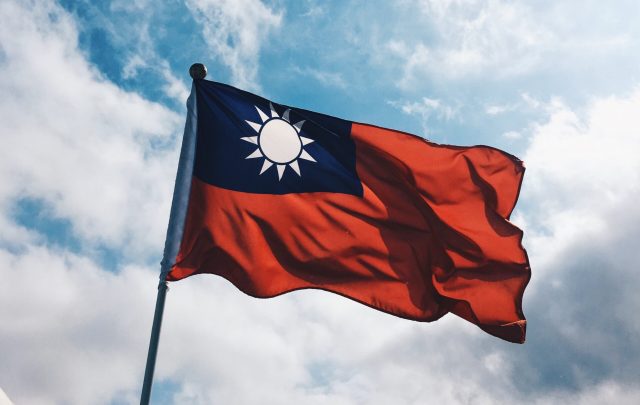
 – The U.S. State Department has approved the potential sale to Taiwan of equipment, training and other items to support the Patriot Air Defense System in a deal valued at up to $95 million, the Pentagon said on Tuesday.

Chinese-claimed Taiwan has complained of increased military pressure by Beijing to try and force the democratically ruled island to accept its sovereignty.

The package would include training, planning, fielding, deployment, operation, maintenance and sustainment of the Patriot Air Defense System and associated equipment, the Pentagon said, in a notification to Congress.

“This proposed sale serves U.S. national, economic, and security interests by supporting the recipient’s continuing efforts to modernize its armed forces and to maintain a credible defensive capability,” it said.

“The proposed sale will help to sustain the recipient’s missile density and ensure readiness for air operations. The recipient will use this capability as a deterrent to regional threats and to strengthen homeland defense.”

The United States is bound by law to provide Taiwan with the means to defend itself, despite the absence of formal diplomatic ties and the anger such weapons sales always generate in Beijing.

Taiwan’s presidential office noted this was the third arms sale announced since President Joe Biden took office, and showed the “rock solid” nature of their relationship.

“Taiwan will continue to demonstrate its determination to defend itself, and continue to deepen cooperative partnerships with the United States and other like-minded countries,” spokesperson Xavier Chang said in a statement.

Despite approval by the State Department, the notification does not indicate that a contract has been signed or that negotiations have concluded.

The Pentagon said Raytheon RTX.N was the prime contractor for the possible sale.

Taiwan’s Defense Ministry said it expected the deal to “become effective” within the month.

The United States is Taiwan’s main international arms supplier. – Reuters