Home Blog Page 654

Jetour holds 2nd Media Pet Day

Creamy and Chewie aboard a Jetour T2 — PHOTO FROM JETOUR AUTO PHILIPPINES

IN LINE with the International Dog Day last Aug. 26, Jetour Auto Philippines, Inc. (JAPI) held its second annual Media Pet Day recently. “The event reaffirmed a heartwarming tradition, bringing together media partners, their beloved furry friends, and the Jetour family for a memorable day dedicated to celebrating bonds and championing responsible pet ownership,” said JAPI in a release. The company maintained that this gathering has become a “cornerstone of JAPI’s community engagement, reflecting a deep understanding of the Filipino lifestyle where pets are cherished members of the family.”

Guests and their pets engaged in a series of activities, including exciting games, friendly contests, and interactive sessions designed to strengthen the bond between owners and their companions. The pet-friendly atmosphere of Barkhaus Eastwood provided “the perfect playground for pets to socialize and for their owners to unwind and connect with fellow animal lovers.”

JAPI Marketing Director Cherry May Moreno-De Los Santos said, “We’re so happy to see you all back and to see familiar human and furry faces, and also some new additions to the family,” she said. “We at JAPI are proud and joyful that this event has the makings of a beloved annual tradition. It speaks volumes about the community we are building together. Much like the lifelong relationship we humans have with our beloved animal companions, we aim for Jetour’s relationship with our customers to also be a lifelong, loving affair built on trust and loyalty.”

All Jetour dealerships are pet-friendly, “a welcoming space where families can shop for their next vehicle without leaving their beloved furry companions behind,” the company maintained.

Israel’s killing of journalists follows a pattern of silencing Palestinian media that stretches back to 1967

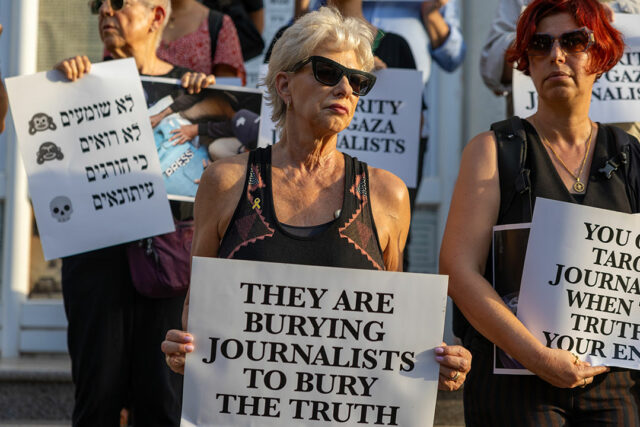
ISRAELI and international journalists demonstrate in solidarity with journalists from Gaza and against their targeted attacks by the Israeli army outside the “Journalist House” in Tel Aviv, Israel, on Aug. 13. — REUTERS/YAHEL GAZIT/NURPHOTO

Five journalists were among the 22 people killed on Aug. 25, 2025, in Israeli strikes on the Nasser Hospital in the Gaza Strip. Following global condemnation, the office of Israeli Prime Minister Benjamin Netanyahu issued a statement saying Israel “values the work of journalists.” But the numbers tell a different story.

Those deaths bring the total number of journalists killed in Gaza in almost two years of war to 197. The Committee to Protect Journalists, which collates that data, accuses Israel of “engaging in the deadliest and most deliberate effort to kill and silence journalists” that the US-based nonprofit has ever seen. “Palestinian journalists are being threatened, directly targeted and murdered by Israeli forces, and are arbitrarily detained and tortured in retaliation for their work,” the committee added.

As a scholar of modern Palestinian history, I see the current killing of reporters, photographers, and other media professionals in Gaza as part of a longer history of Israeli attempts to silence Palestinian journalists. This history stretches back to at least 1967, when Israel militarily occupied the Palestinian territories of the West Bank, East Jerusalem, and the Gaza Strip following the Six-Day War.

Beyond the humanitarian toll, what makes matters even more drastic now is that, with Israeli restrictions on foreign media entering Gaza, local Palestinian journalists are the only people who can bear witness to the death and destruction taking place – and report it to a wider world. Indeed, nearly all of the nearly 200 journalists killed since Oct. 7, 2023, have been Palestinian.

A DECADES-LONG PROCESS IN THE MAKING
From the first days of the occupation in 1967, Israel has tried to keep a tight grip on media reporting, building a legal and military architecture that aimed to control and censor Palestinian journalism.

In August 1967, the army issued Military Order 101, effectively criminalizing “political” assembly and “propagandistic” publications in the occupied territories.

Yet despite such restrictions, local journalism persisted and grew. By the early 1980s, Palestinians in the occupied territories were publishing three dailies, five weeklies, and four magazines. The most popular publications circulated up to 15,000 copies.

But all Palestinian publications were subject to Israeli military censorship. Every night, editors were forced to submit two copies of everything they planned to print to Israeli censors. That included articles, photos, ads, weather reports, and even crossword puzzles.

Anything the Israeli censor deemed to be “of political significance” had to be removed prior to publication. Editors who violated these terms, or who were accused of belonging to Palestinian political groups, could be detained or deported. These practices have echoes today with Israel often accusing the journalists it kills of being Hamas operatives.

CENSORSHIP REGIMES
Objecting to these and many other restrictions, Palestinians launched the first intifada, or uprising, against the Israeli occupation in December 1987. During the uprising’s first year, Israeli forces reportedly jailed 47 Palestinian reporters, temporarily banned eight local and regional newspapers, permanently revoked the licenses of two magazines, and closed four press service offices.

While intended to be a show of force, most Palestinians saw the restrictions as evidence that Israel was afraid of Palestinians reporting on their own conditions.

Many people hoped that the Oslo Accords — a series of negotiations between Israel and the Palestinian Liberation Organization that formally launched in 1993 — would lead to greater press freedoms. But it was not to be the case.

Israeli authorities continued to enforce military censorship on what they deemed to be “security topics.” They also revoked the press cards of reporters who did not stay in line and assaulted and harassed journalists reporting from the ground.

Meanwhile, the newly established Palestinian Authority, set up as part of the Oslo process to partially govern Palestinian territories on what was meant to be a temporary basis, built a censorship regime of its own. It, too, arrested, suspended and closed news outlets it deemed too critical of its actions.

SHOOTINGS AND IMPUNITY
By the 2000s, Israel’s attacks on journalists in the West Bank and Gaza Strip grew deadlier. Israeli forces fatally shot Palestinian photographer Imad Abu Zahra in Jenin in the West Bank in 2002, British filmmaker James Miller in Rafah in 2003, and Reuters cameraman Fadel Shana in Gaza in 2008.

Since 2008, as battles between Israeli forces and Palestinian militant groups have grown fiercer, journalists have worked under even deadlier conditions. Yet even during unarmed demonstrations, journalists have faced deadly Israeli force. In 2018, during the mass unarmed protests in Gaza known as the Great March of Return, Israeli forces shot and killed Palestinian journalists Yaser Murtaja and Ahmed Abu Hussein. Both were wearing “PRESS” vests when they were shot. In addition, at least 115 journalists were wounded while covering the protests, which lasted six months.

The deadly force has not been limited to Palestinians in Gaza. In May 2022, Palestinian American journalist Shireen Abu Akleh was killed in the Jenin refugee camp. One of the most famous Palestinian reporters at the time, Abu Akleh’s death drew hundreds of thousands of mourners, while Israeli police beat pallbearers at her funeral service.

LEGITIMATE MILITARY TARGETS?
International humanitarian law makes clear that journalists are civilians and therefore cannot be targeted during combat. That includes war correspondents who are covering war while under the protection of an armed group.

For their part, Israeli officials argue that they do not target journalists. They say that their strikes are aimed at legitimate military objectives, often asserting that Hamas embeds itself in civilian buildings or that some of the journalists killed were militants.

But such allegations are often made without independently verifiable evidence. Israel alleged that Murtaja, the journalist killed in Gaza in 2018, was a militant, but provided no proof.

In the case of Abu Akleh, Israeli officials initially claimed that she may have been killed by Palestinian militants. They eventually admitted there was a “high possibility” that Israeli forces killed Abu Akleh, but claimed that the killing was accidental and therefore the government would not press charges. A recent documentary refutes that claim and identifies the Israeli soldier alleged to have killed Abu Akleh intentionally.

CULTURE OF IMPUNITY
Even prior to the deadly Hamas-led attacks on Israel on Oct. 7, 2023, the picture emerging was that of impunity for Israeli forces who killed journalists — by accident or by design. A May 2023 report from the Committee to Protect Journalists concluded that Israel engaged in a “deadly pattern” of lethal force against journalists and failed to hold perpetrators accountable.

Since October 2023, journalists in Gaza have faced even deadlier conditions. Israel continues to ban international news agencies from reporting inside the Gaza Strip. As a result, local Palestinian journalists are often the only ones on the ground.

Aside from the deadly conditions, they contend with Israeli smears against their work and threats against their families.

Palestinian journalists there often run toward bombardments when others run away. As a result, they are sometimes killed in “double-tap” strikes, where Israeli air and drone strikes return to an area that has just been struck, killing rescue workers and the journalists covering them.

All this has led to an unbearable personal toll for those continuing to report from within Gaza. On Oct. 25, 2023, Al Jazeera’s Gaza bureau chief, Wael al-Dahdouh, was reporting live on air when he learned that an Israeli airstrike had killed his wife, two children, and grandson. He returned on air the next day.

And the killing has not eased up. On Aug. 10, 2025, Israeli forces killed Anas al-Sharif in Gaza City, another prominent Al Jazeera correspondent who had stayed on the streets through months of bombardment. Five of his fellow journalists were also killed in the same airstrike.

The Aug. 25 strike on Nasser Hospital is just the latest in this deadly pattern.

Among the five journalists killed in that attack were freelancers working for Reuters and The Associated Press — two international media outlets frustrated by Israel’s refusal to allow its journalists into Gaza to document the war.

Despite the danger, global newsrooms have repeatedly urged Israel to open Gaza to independent media, and a coalition of 27 countries recently pressed for access in Gaza.

Israel continues to refuse these requests. As such, Palestinian journalists remain the primary witnesses of Israel’s relentless assault on Gaza. And they are increasingly killed as they do so. The question remains whether the international community will hold Israel to account.


Maha Nassar is an associate professor in the School of Middle Eastern and North African Studies in the University of Arizona.


Peso may strengthen vs dollar as US data bolster Fed cut bets

BW FILE PHOTO

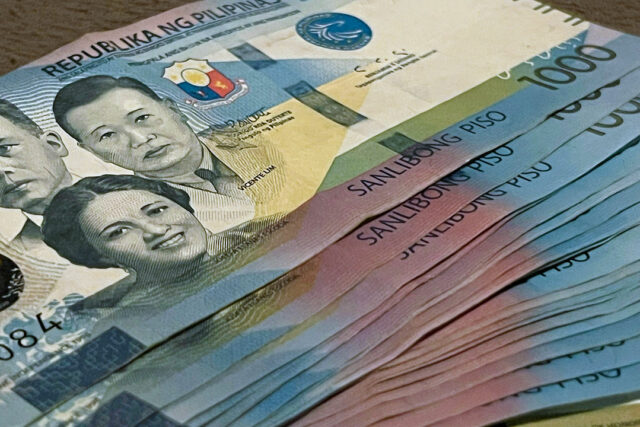
THE PESO could strengthen against the dollar this week as US data released on Friday bolstered expectations for a US Federal Reserve cut this month.

On Friday, the local unit closed at P57.13 per dollar, inching down by a centavo from its P57.12 finish on Thursday, data from the Bankers Association of the Philippines showed.

Week on week, the peso weakened by 18 centavos from its P56.95 close on Aug. 22.

“The market initially dropped amid a weaker dollar overnight due to increased dovish Fed bets. But caution ahead of the US personal consumption expenditures (PCE) data drove the pair up to close at P57.13,” a trader said in a phone interview on Friday.

The dollar weakened against the euro and Swiss franc on Friday, on course for a 2% decline in August against a basket of currencies, as traders prepared for a US interest rate cut by the Federal Reserve next month, Reuters reported.

The dollar, which initially firmed after US inflation data came in as expected, later gave up gains, failing to break a three-day losing streak.

The US Commerce department reported on Friday that its PCE price index rose 0.2% last month after an unrevised 0.3% rise in June.

In the 12 months through July, the PCE price index advanced 2.6%, matching the rise in June.

Stripping out food and energy components, the PCE price index increased 0.3% after a similar rise in June. In the 12 months through July, core PCE inflation advanced 2.9%. That was the largest rise since February and followed a 2.8% gain in June. The Fed tracks the PCE price measures for its 2% inflation target.

The data keeps the Fed on track for a widely expected rate cut at its upcoming meeting on Sept. 16-17. Money markets are pricing in an 87% chance of an easing, up from 63% a month earlier, CME’s FedWatch tool showed.

The dollar index, which measures the greenback against a basket of currencies, was down 0.09% at 97.803 in afternoon trading.

US President Donald J. Trump’s campaign to exert more influence over monetary policy, including last week’s attempt to fire Fed Governor Lisa Cook, has weighed on the dollar.

A federal judge said on Friday she would set an expedited briefing schedule in Ms. Cook’s bid to temporarily block Mr. Trump from firing her while she pursues a lawsuit that says he has no valid reason to remove her.

Mr. Trump is trying to reshape the Fed after repeatedly criticizing the central bank and its chair, Jerome H. Powell, for not cutting interest rates.

The peso was also supported by signals from the Bangko Sentral ng Pilipinas (BSP) chief that they are close to ending their current rate-cut cycle, Rizal Commercial Banking Corp. Chief Economist Michael L. Ricafort said in a Viber message.

On Thursday, the BSP cut its target reverse repurchase rate by 25 basis points (bps) to 5% for a third straight meeting, as expected by all 20 economists in a BusinessWorld poll.

It has now slashed borrowing costs by a cumulative 150 bps since it kicked of its rate-cut cycle in August 2024.

BSP Governor Eli M. Remolona, Jr. said the policy rate is now at the “sweet spot” in terms of inflation and output.

He added that they could consider further policy loosening if the economy weakens “considerably,” with one more cut still possible this year that could mark the end of its current easing cycle.

The trader said the peso will likely react to the US PCE data released on Friday to start this week’s trading, adding that the local unit could rise as the Fed’s key inflation gauge was within market expectations.

Both the trader and Mr. Ricafort see the peso moving between P56.90 and P56.40 per dollar this week. — A.M.C. Sy with Reuters

Developing barangay style

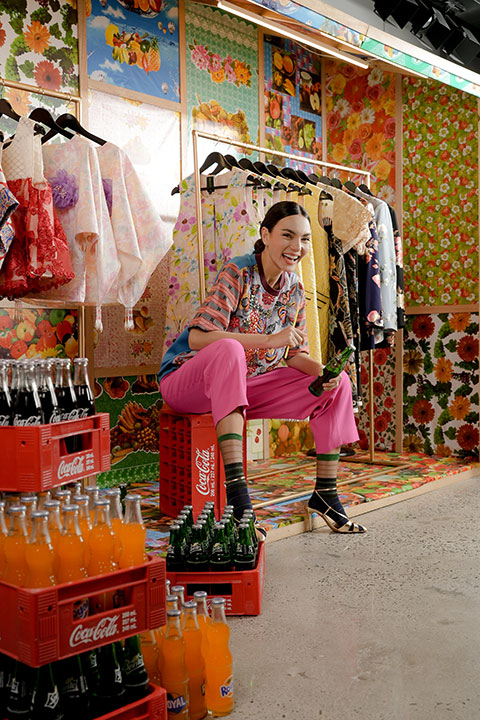
JOR-EL ESPINA and other designer friends opened a new store on Aug. 18, right beside Mr. Espina’s atelier in Makati.

The store, named BRGY (an abbreviation of barangay, as in the local government unit and the community) features shared space for designers Mr. Espina, Jun Escario, Jerome Lorico, and Viktor Jeans. There are also home and lifestyle finds like furniture from Jed Yabut, photographs by Doc Marlon Pecjo, home decor and stationery from Paperbound, and yarncraft by Reverie (by model Ria Bolivar).

“It’s been my dream to have a curated store,” said Mr. Espina during an interview at the store’s opening. “I have friends who are also willing to share the space with me… The similarity is (in) the vision. The concept of each is really different. Our aesthetic is totally different from each other, and we wanted to keep it that way,” he said.

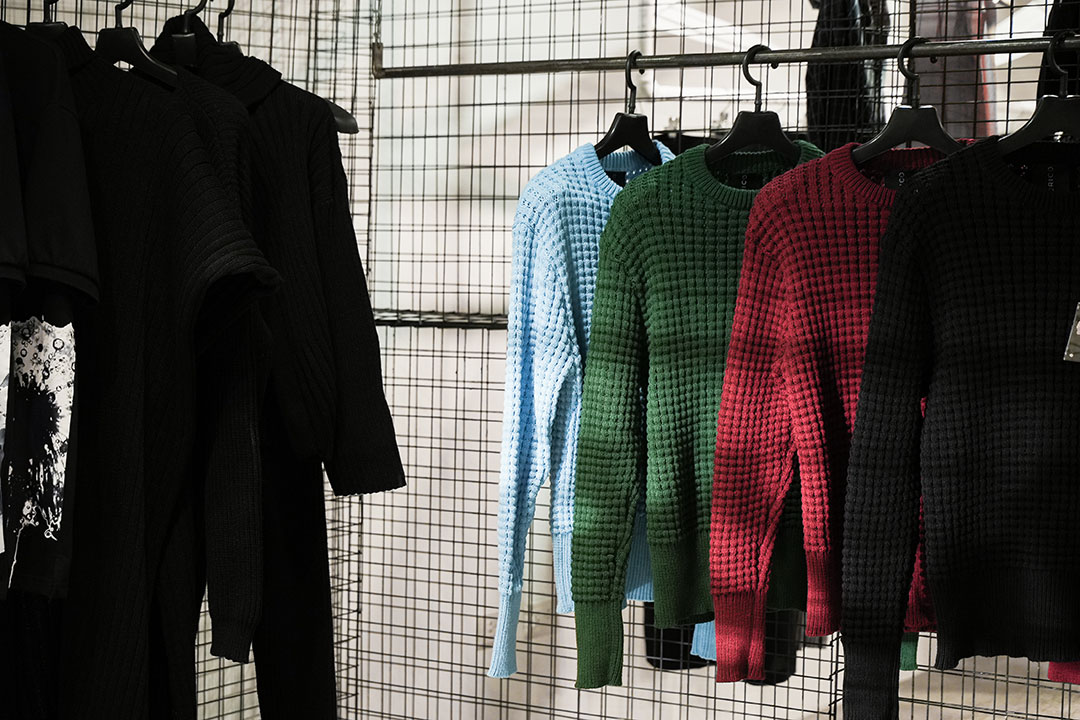
For example, his own collection derives from his previous work, along with new techniques he learned from previous collaborations (like the one he did recently with Filipiniana couturier Patis Tesoro). His own corner reflects the jumble of a sari-sari (sundry) store, so it’s seen in the mish-mash of modern Filipiniana pieces. Mr. Escario’s corner, meanwhile, shows sleek, knockout pieces designed for power women, while Mr. Lorico’s space reflects avant-garde values in sexy knitwear. Streetwear and urban grit is covered by Viktor Jeans, with a collection of motoring-inspired pieces.

“We want it to be global,” said Mr. Espina, pointing to the fact that the store’s concept is derived from London’s Dover Street Market, which itself has expanded to other countries. “I wanted a small community of creatives,” said Mr. Espina.

“The collections we featured in BRGY are exclusive to the concept store and are done in small batches. The pieces I have here, for example, are totally different from the ones you will see at the atelier or pop-ups,” he said. “Later on, we can rotate, or we can invite new brands to participate,” he said. Every three to six months, new brands and collections will be introduced.

“We endeavor to continuously showcase new creative discoveries and ideas — mostly fashion, but we are always open to anything design-centric,” he said.

BRGY is located at Unit 704, One Corporate Center, Arnaiz Ave., Makati City. Store hours are from 10 a.m. to 7 p.m. — Joseph L. Garcia

Agri trade deficit in July widens to 4.9%

REUTERS

THE deficit in the agricultural goods trade in July rose 4.9% year on year to $929.78 million, according to the Philippine Statistics Authority (PSA).

Agricultural exports in July rose 17.5% to $779.32 million, the PSA said in a report.

It said agricultural exports accounted for 31.3% of two-way agricultural trade, valued at $2.49 billion in July. Farm goods accounted for 10.6% of total exports.

Agricultural imports rose 10.3% year on year in July to $1.71 billion. Farm goods accounted for 15% of Philippine imports overall last month.

The $2.49 billion in agriculture trade in July was up 12.4% year on year. In June and July 2024, trade had risen 13.1% and 6.6%, respectively.

The PSA said exports of edible fruit and nuts, peel of citrus fruit or melons were valued at $246.19 million, accounting for 31.6% of agricultural exports.

Agricultural shipments to members of the Association of Southeast Asian Nations (ASEAN) in July hit $63.72 million, with Malaysia accounting for $23.17 million or 36.4% of the total.

The Netherlands accounted for $119.59 million or 57.8% of Philippine agricultural exports to the European Union (EU). EU purchases totaled $206.88 million.

The PSA said cereals accounted for $319.67 million or 18.7% of all agricultural imports in July.

Indonesia accounted for $195.57 million or 30.0% of Philippine agricultural imports from ASEAN.

Within the EU, Spain was the Philippines’ top supplier of agricultural commodities, with imports valued at $39.34 million.

The top agricultural commodities imported from the EU were meat and edible meat offal, dairy produce, birds’ eggs, natural honey, edible products of animal origin, residues and waste from the food industries, and prepared animal fodder. — Kyle Aristophere T. Atienza

AirAsia Philippines expands Cebu operations with new services

PHILIPPINES STAR/WALTER BOLLOZOS

AIRASIA PHILIPPINES is set to operate five new services from Cebu to further expand its hub and capture demand during the peak holiday season, the low-cost carrier said.

Starting Nov. 15, AirAsia Philippines will operate flights from Cebu to Iloilo, Caticlan, and Davao, while also offering services between Cebu and Kuala Lumpur and Macau.

“We recognize the value of this very important route, connecting via Cebu to key domestic and international leisure markets. We look forward to further broadening opportunities in the tourism sector, helping generate jobs and ultimately contributing to inclusive economic growth,” AirAsia Philippines President and Chief Executive Officer Suresh Bangah said in a media release on Sunday.

The reopening of the Cebu hub is part of its preparations for the expected holiday season demand, AirAsia said, noting that customers may book flights on these new routes as early as Sept. 3.

For this year, AirAsia Philippines is aiming to reach its target of more than seven million passengers by the end of the year, after carrying over three million passengers in the first half.

From January to June, the low-cost carrier recorded more than three million passengers.

AirAsia Philippines said its strongest domestic routes are Cebu, Caticlan, and Cagayan, while its highest-volume international routes are Japan, Korea, and Taipei. — Ashley Erika O. Jose

Volvo Cars Philippines to raffle off ‘ultimate European holiday’

IMAGE FROM VOLVO CARS PHILIPPINES

HARIPHIL ASIA RESOURCES, INC. (HARI), the official distributor of Volvo cars in the Philippines, invites customers to “experience the brand at its most authentic — at the very heart of Sweden.”

Volvo Cars Philippines announced an exclusive opportunity for its customers to experience the “ultimate European getaway” via a “Volvo Euro Trip Raffle Promo.” New Volvo buyers will have the chance to win a 14-day trip for two across Europe, celebrating the brand’s heritage of world-class quality and design.

The promotion, which runs from Aug. 13, 2025 to Oct. 31, 2025, is open to customers who purchase a new Volvo XC90 Plug-in Hybrid, Volvo XC60 Plug-in Hybrid, or the fully electric Volvo EX30 (Ultra or Core variants). Each purchase of these eligible models will grant the customer one raffle entry for the grand prize. The prize package includes round-trip airfare, luxurious hotel accommodations, a comprehensive tour package, travel insurance, and full-board meals, ensuring “a seamless and memorable journey.”

“We believe that owning a Volvo is more than just a purchase; it’s an entry into a world of premium experiences and a lifestyle centered on safety, sustainability, and personal freedom,” said HARI Vice-Chair, President, and CEO Maria Fe Perez-Agudo. “This promotion is our way of thanking our valued customers by giving them a chance to immerse themselves in the rich culture and stunning landscapes of Europe, the continent where the Volvo story began. It’s an adventure that reflects the very spirit of our brand.”

To participate, customers must fill out a raffle coupon provided by their sales consultant upon vehicle turnover and drop it in the designated box at the Volvo Makati showroom. The deadline for the submission of entries is Nov. 7, 2025.

The grand raffle draw is scheduled for Nov. 12, 2025, at 1 p.m. at the Volvo Makati Sales Admin Office, and will be conducted in the presence of a Department of Trade and Industry (DTI) representative. The lucky winner will be notified via registered mail, email, and phone call, with the announcement also being posted on the official social media pages of Volvo Cars Philippines.

For complete promo mechanics and vehicle inquiries, customers are invited to visit the Volvo showroom in Makati, or follow the brand on Facebook at www.facebook.com/volvocarsph.

Yields on BSP securities go down following latest cut in benchmark rates

BW FILE PHOTO

YIELDS on the Bangko Sentral ng Pilipinas’ (BSP) short-term securities ended lower on Friday after it delivered its third straight rate cut.

The BSP bills fetched bids amounting to P83.946 billion on Friday, well below the P120-billion offer as both tenors were undersubscribed. However, this was higher than the P59.557 billion in tenders for the P100 billion auctioned off the week prior.

The central bank accepted all the submitted bids for the one-month and two-month securities.

Broken down, tenders for the 28-day BSP bills reached P39.812 billion, below the P50-billion placed on the auction block but above the P17.921 billion in bids seen for the P40 billion offered the prior week.

Accepted yields were from 5.16% to 5.41%, a wider and lower range compared to the 5.34% to 5.42% margin seen a week prior. With this, the weighted average accepted rate of the one-month securities fell by 4.56 basis points (bps) to 5.3328% from 5.3784% previously.

Meanwhile, bids for the 56-day securities amounted to P44.134 billion, lower than the P70-billion offer but higher than the P41.636 billion in tenders for the P60 billion offered in the previous week’s auction.

Banks asked for rates ranging from 5.19% to 5.42%, widening from the 5.358% to 5.4% spread seen a week earlier. This caused the average rate of the two-month securities to decline by 4.67 bps to 5.3382% from 5.3849% logged a week prior.

“Weighted average interest rates fell following the policy rate cut announced the day prior,” the BSP said in a statement on Friday.

This also came even as both tenors went undersubscribe after the central bank increased the total volume on offer.

On Thursday, the Monetary Board reduced its target reverse repurchase rate by 25 bps for a third straight meeting to 5%, as expected by all 20 analysts in a BusinessWorld poll.

The BSP has so far slashed borrowing costs by a cumulative 150 bps since it began its easing cycle in August 2024.

BSP Governor Eli M. Remolona, Jr. said they could deliver one more 25-bp cut this year to support the economy if needed, which could mark the end of their current easing cycle.

The Monetary Board has two remaining meetings this year to be held in October and December.

The central bank uses the BSP securities and its term deposit facility to mop up excess liquidity in the financial system and to better guide short-term market rates towards its policy rate.

The BSP bills also contribute to improved price discovery for debt instruments while supporting monetary policy transmission, the central bank said.

The central bank securities were calibrated to not overlap with the Treasury bill and term deposit tenors also being offered weekly.

Data from the central bank showed that around 50% of its market operations are done through its short-term securities.

The BSP bills are considered high-quality liquid assets for the computation of banks’ liquidity coverage ratio, net stable funding ratio, and minimum liquidity ratio. They can also be traded on the secondary market. — Katherine K. Chan

Muji offers exclusive drink at newly opened 9th store

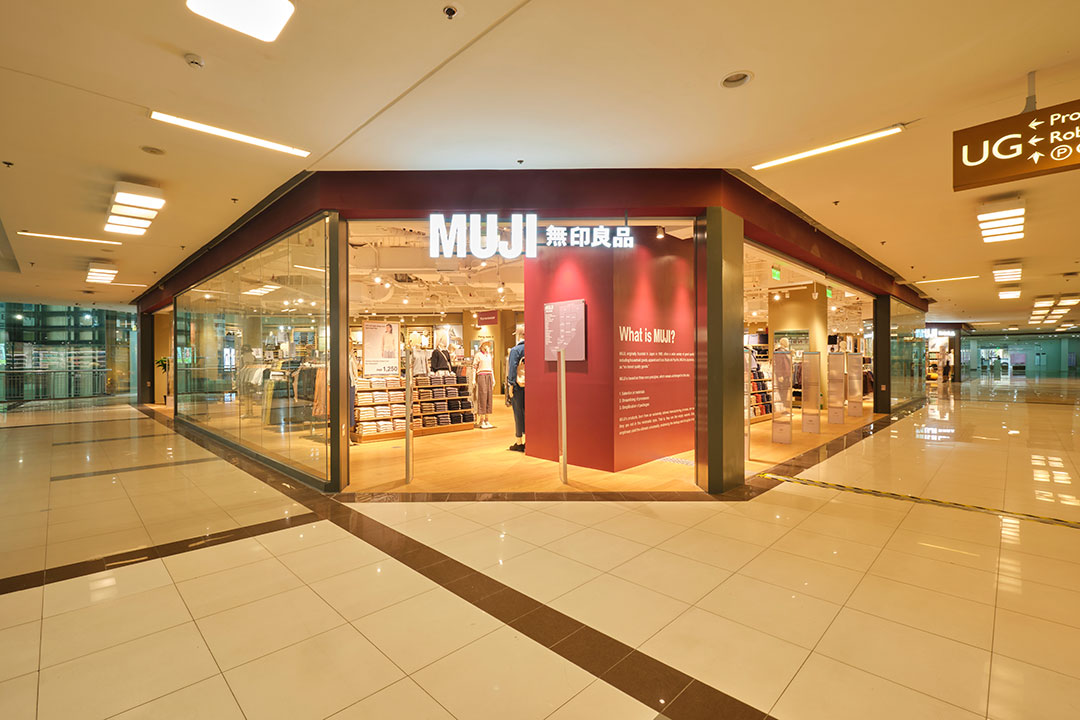
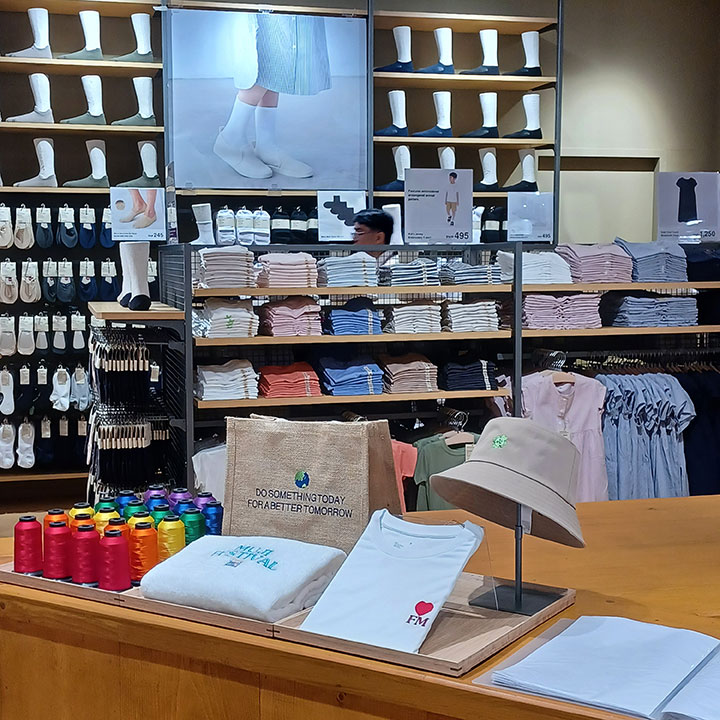
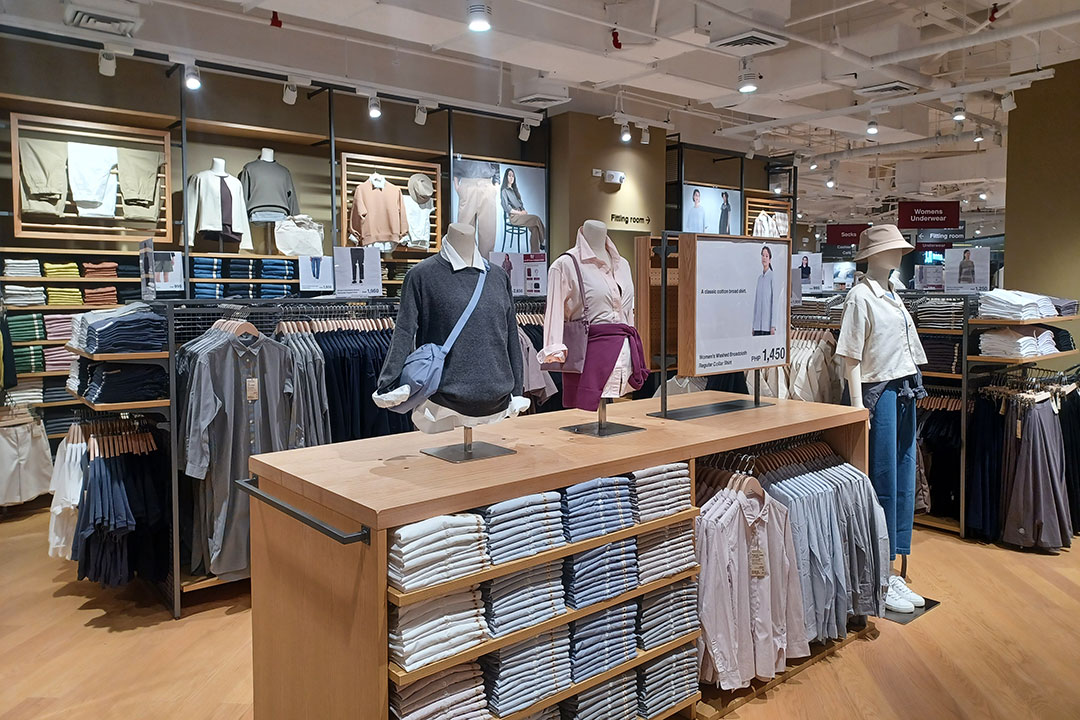
THERE is a full range of household items, clothing, stationery, and food to be found at Muji, the Japanese minimalist lifestyle brand that now has nine stores in the Philippines.

Last week, Muji opened its newest branch — its 9th — in Festival Mall in Alabang, Muntinlupa, which is also its first in the south part of Metro Manila. Four months ago, it opened its flagship store at Glorietta 3 in Makati.

The Aug. 28 launch saw guests browse through the expansive selection of items. Though not as large as the Makati store, the Alabang branch offers a good variety of lifestyle essentials, along with special services like spare parts replacement, in-house alterations, embroidery, and a coffee counter.

Most notably, the new store has an exclusive drink that can’t be found in any of the other eight branches — the Macadamia Latte, which can be served hot or iced.

“Metro Manila is a very big city. The people here know about trends, fashion, and sustainability,” Takeshi Akiyoshi, president of Muji Philippines, told BusinessWorld at the Alabang branch opening. “We really have to deliver.”

The 1,649-square-meter store has interiors made of local materials like Philippine reclaimed wood. It carries a careful selection of 3,000 items from the 7,000 items offered by the Muji brand.

“The Philippines has no winter. We choose the ASEAN-friendly products, so spring and summer products. Short-sleeved shirts, sleeveless shirts, hats, and water-resistant products — we choose these for the Philippine market,” Mr. Akiyoshi said.

The latest collection of clothing at Muji stores features linen as the main material, which is optimal for tropical climates.

EXPANSION
Muji Philippines’ Marketing Manager Christina Dagdag explained that opening the Alabang store is because they have a big market south of Metro Manila, which includes provinces like Laguna and Batangas.

“We get lots of orders in the south from our online catalog, which is why we’re really looking at more locations in the south,” she said.

Within the next few months, expansion will mainly be within Metro Manila. The 10th and 11th branches are set to open in Greenhills in September and Estancia Mall in October.

Mr. Akiyoshi added that they are still searching for good locations down south, as well as in major cities in the rest of the archipelago, like Cebu and Davao.

“For now, we are concentrating on advancing our brand awareness in Metro Manila,” he said.

THE COFFEE COUNTER
Muji’s Coffee Counter — which opens at 9 a.m. daily regardless of mall hours — is designed for relaxation, work, and study. It offers coffee, tea, and matcha-based beverages as well as sweet and savory breads.

“I recommend our matcha-based products, like our Ichigo Matcha Latte,” said Mr. Akiyoshi, when asked what Filipino customers should order. The drink combines the sweetness of matcha with some milk and a dash of strawberry flavor.

Since the Alabang store offers an exclusive drink, the Macadamia Latte, many guests tried this on opening day. It blends a shot of espresso, milk, and macadamia flavor, and is more refreshing than the usual coffee beverage. (A tip: substituting regular milk with oat milk brings out the rich, roasted notes of the macadamia.)

Dessert lovers can also try the soft serve ice cream, made from Hokkaido Holstein milk from northern Japan.

Muji Philippines Corp. is a joint venture between the SSI Group, Inc. and Japan’s Ryohin Keikaku Co., Ltd.

Aside from the Festival Mall branch in Alabang, Muji has stores at Glorietta 3, Greenbelt 3, and Power Plant Mall in Makati, Shangri-La Plaza in Mandaluyong, SM Mall of Asia in Pasay City, SM North EDSA in Quezon City, and Uptown Mall and Central Square in BGC, Taguig. — Brontë H. Lacsamana

Thailand-Cambodia Conflict: Open-ending the truce is better than full-scale war

STOCK PHOTO | Images by Aranjuezmedina from Freepik

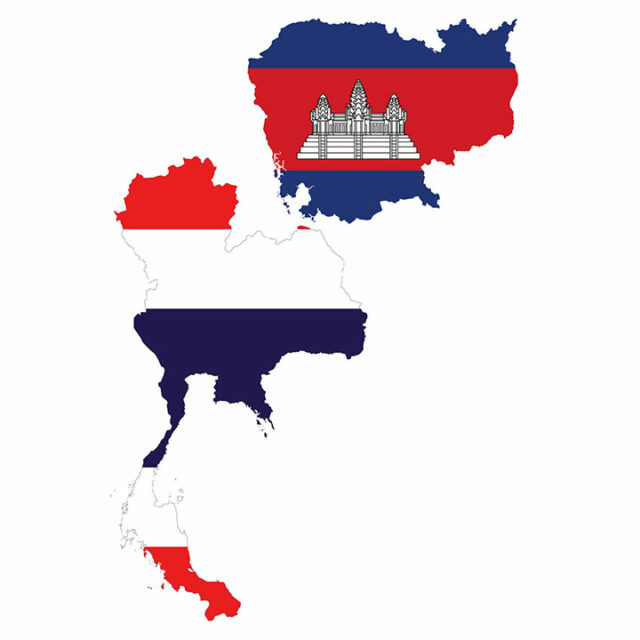
The Thailand-Cambodia truce which began July 29 is fragile but holding. It gives hope that conflict parties use the agreement as an opportunity to negotiate a long-term solution to the border conflict.

While guns are silent, conditions are susceptible to the resurgence of violence. Military units on both sides maintain positions without a third-party peacekeeping force to act as a buffer. The Thai army vows no retreat from 11 border positions. Cambodia also reinforced its military presence in border zones a day after the truce was agreed upon.

Between the two frontline forces are issues of un-retrieved corpses of Cambodian soldiers, other Cambodian soldiers held by Thai forces as prisoners-of-war, and landmines that date back to the Cambodian civil war and Vietnamese invasion against the Khmer Rouge. Meanwhile, displaced communities have lost opportunities for cross-border economic exchanges.

The points of contention are the Preah Vihear and Ta Muem Thom temples, ancient temples dedicated to the Lord Shiva. The majority of Thais and Cambodians are Theravada Buddhists who do not worship the Hindu deity. The border conflict has nothing to do with religion. It is about claims of sovereignty over cultural heritage and the pieces of territory around the temples etched in colonial cartography. These are competing claims that can go on for a long time, as it had been, without use of force and mainly through international arbitration of the International Court of Justice.

The July 24 escalation of violence was not driven by renewed desire for territorial conquest. It was triggered by internal struggles of power and rule. In Thailand, it was an opportunity for the Thai military, royalists, and the Yellow Shirt movement to dislodge the Shinawatra political dynasty.

In Cambodia, it was an opportunity for Hun Sen to secure indispensability and further solidify clan-based political succession with nationalism as a banner. His son, Hun Manet, is the Prime Minister and Commander-in-Chief of the Royal Cambodian Armed Forces. His other son, Hun Manith, is Head of Military Intelligence at the Defense Ministry. The youngest son, Hun Many, is Deputy Prime Minister and Minister of Civil Service as well as President of the Union of Youth Federation of Cambodia. Hun Sen himself is in charge of the Cambodian People’s Party and Head of the Senate with authority to sign bills into law and act as head of state if the King is out of the country.

National political stakes do not necessarily represent the interests of the local people living near and around the temples and other zones along the 817-kilometer border. Communities on both sides use the border not as a barrier but as a bridge for social and economic exchanges. According to the International Organization for Migration, 251,312 Cambodians crossed over to Thailand while another 199,950 crossed back to Cambodia in May 2019.

This number pertains only to official movement based on records of border passes and passports. In July 2019, in two border posts alone (Ou Anlouk and O Rumdoul), 40,774 Cambodians crossed the border on foot (71.5%), by motorbike (16.5%), and the rest by car or by bicycle. The more than 260,000 people displaced on both sides of the border are eager to return to their homes and resume social and economic exchanges.

Neither Cambodia nor Thailand is prepared to engage in costly wars of conquest. No ASEAN member-country has waged war on another since the association was formed in 1967. (The 1978-1989 Vietnam-Cambodia war occurred when both countries were not yet members of the ASEAN.) There are larger stakes beyond internal struggles of power. Both countries can inform decisions based on broader national economic interests and welfare of citizens.

A full-scale war could propel the conflict into the orbit of US-China geo-political contests in Southeast Asia beyond the control of ASEAN. Thailand is one of only two countries in Southeast Asia (the other being the Philippines) with a bilateral security agreement with the United States. The military assistance agreement signed on Oct. 17, 1950 is reinforced by the Thanat-Rusk communiqué in March 1962 wherein the United States promised to come to Thailand’s aid if there is aggression by neighboring nations. The 1966 US-Thai Treaty of Amity and Economic Relations also gives special rights and benefits to American citizens and companies who wish to establish their businesses in Thailand.

China has big interests to protect in Cambodia even as it maintains economic relations with Thailand. It is Cambodia’s largest investor and trade partner. China’s investments in Cambodia averaged $466.75 million annually from 2003, reaching a total of $1.37 billion in 2023. Between January and November 2024, trade between the two countries reached nearly $14 billion. Cambodia also benefits from China’s Belt and Road Initiative (BRI) such as Chinese investments in the Sinahoukville Special Economic Zone, Phnom Penh-Sihanoukville Expressway, the Siem Reap Angkor International Airport, and the $1.7-billion Funan Techo Canal that connects Phnom Penh to deep water ports along Cambodia’s coastline, including the Sihanoukville Port, which is also funded by China.

China has bound Cambodia to a basket of agreements: the 2022 Regional Comprehensive Economic Partnership (RCEP), the China-Cambodia Free Trade Agreement (CCFTA), and the 2024 China-Cambodia “Diamond Hexagon” cooperation framework to deepen cooperation in various sectors. With the CCFTA, China has eliminated tariffs on 97.53% of Cambodian exports, while Cambodia has removed tariffs on 90% of Chinese imports.

Thailand and Cambodia need to protect economic gains not by war. The Cambodian economy is now worth $46.35 billion, more than 40 times bigger than it was at the fall of the Khmer Rouge regime in 1979. The GDP per capita as of 2024 was $2,183. Remittances from Cambodian workers overseas rose from $1.15 billion in 2021 to $1.25 billion in 2022 comprising 4.4% of GDP. This has since risen to $2.6 billion in 2022, accounting for 9.2% of GDP, further rising to $2.95 billion in 2024.

Thailand is undoubtedly a bigger economy with a GDP of $526.41 billion and GDP per capita of $6,573 (as of 2024) but it needs migrant workers to ease labor shortages.

Migrant work in fishing, agriculture, construction, domestic work, and other services contributed 4.3% to 6.6% of Thailand’s GDP in 2010. As of 2013, there were 899,658 Cambodian migrant workers in Thailand out of a total of 3.6 million. This number has since grown to over a million in 2017. In 2018, Cambodian migrants comprised 32.12% of the total number of registered migrant workers in Thailand. As of 2021 it had an estimated 1.2 million Cambodian migrant workers.

Internal logics for waging war remain but there are weightier collective reasons for peaceful co-existence.


Ed Quitoriano specializes in peace and conflict studies. He works as senior advisor of the Council for Climate and Conflict Action Asia and principal consultant of Visus Consulting.

Trump demand for Japan to buy more US rice stalled trade talks — report

STOCK PHOTO | Image by Vinn Koonyosying from Unsplash

TOKYO — A Trump administration request that Japan buy more US rice caused this week’s snag in bilateral trade talks as Tokyo “strongly objected” to the condition, the Nikkei newspaper reported.

Japan’s top tariff negotiator abruptly canceled a US trip on Thursday over unspecified “points that need to be discussed at the administrative level,” a government spokesperson said, as the two sides try to hammer out details of a July agreement on a reduced 15% tariff on US imports from Japan.

The Nikkei, citing Japanese government officials it did not identify, said a revised order from President Donald Trump included a commitment for Japan to buy more American rice.

One official criticized the proposal as an “interference in domestic affairs,” the business daily said.

The office of negotiator Ryosei Akazawa, Japan’s minister for economic policy, and the agriculture and foreign ministries, as well as the US embassy could not be reached for comment on the report outside business hours.

The Nikkei said the new demand contradicted an agreement that Japan would not need to lower its tariffs on agricultural imports.

In the July deal, the White House said Japan would boost US rice purchases by 75%. Prime Minister Shigeru Ishiba said the share of US rice imports might increase under an existing tariff-free framework but that the agreement did “not sacrifice” Japanese agriculture.

Mr. Akazawa’s trip was meant to finalize Japan’s agreement to a $550-billion package of US-bound investment through government-backed loans and guarantees, the contents of which remain obscure.

Japanese officials have repeatedly said they want an amended presidential executive order — removing overlapping tariffs on Japanese goods — before releasing a joint document on the investment details.

Opposition leader Yuichiro Tamaki on Saturday questioned the government’s competence and transparency on the trade deal, posting on X that the confusion highlights the danger of operating without a formal text of the deal.

“Because there is no written agreement, we cannot confirm what the problem is,” said Mr. Tamaki, head of the Democratic Party for the People.

Citing “heightened uncertainty” for Japan’s auto industry and its workers, he urged Mr. Ishiba to swiftly convene parliament and provide a full explanation, saying any new agricultural concessions would require legislative approval. — Reuters

PHL businesses need structured data, clear governance policies to adopt AI — Hitachi Vantara

AYALALAND.COM.PH

PHILIPPINE enterprises need to reduce unnecessary data and strengthen their artificial intelligence (AI) governance policies to generate significant value from their AI-related investments, according to data management and storage firm Hitachi Vantara.

“Companies in Asia are already hiring AI-relevant talent at higher-than-global rates and engaging external experts to accelerate outcomes. For Philippine enterprises, focusing on these fundamentals such as clean data, clear governance, and the right partners — shortens time to value,” Octavian Tanase, chief product officer at Hitachi Vantara, said in an e-mail.

However, most companies in the region still struggle with scattered data, making it harder to utilize AI at scale, Mr. Tanase said.

In Asia, only 30% of enterprise data is structured, with models delivering accurate outputs only 32% of the time, according to Hitachi Vantara’s latest State of Data Infrastructure Survey.

Philippine companies must invest in data preparation to reduce ROT (redundant, obsolete, trivial) data and close the digital skills gap through targeted hiring and trusted partners.

Mr. Tanase also cited the importance of reskilling and upskilling to ensure that employees apply the best use cases of AI.

“Enterprises that combine better data practices with proactive workforce development will be better positioned to adopt AI responsibly and at scale,” he said.

A report by Boston Consulting Group showed that AI and generative AI are expected to contribute around $120 billion to the gross domestic product of six ASEAN (Association of Southeast Asian Nations) countries by 2027, namely Indonesia, Malaysia, the Philippines, Singapore, Thailand, and Vietnam.

“The enterprises that succeed in structuring and governing their data will be the ones to capture the lion’s share of this value, because organized data directly translates into more accurate, revenue-generating AI models,” Mr. Tanase said.

The growing adoption of AI is also driving the expansion of Southeast Asia’s data center market. ASEAN is projected to triple its data center capacity by 2027, with an expected addition of 2,100 megawatts in the next few years.

“The rise in regional data center investment is encouraging but readiness isn’t just about numbers. The best outcomes come from data centers that emphasize interoperability, governability, sustainability, and performance,” Mr. Tanase said. — Beatriz Marie D. Cruz