Home Blog Page 6521

Cirtek gets PRS A rating from PhilRatings
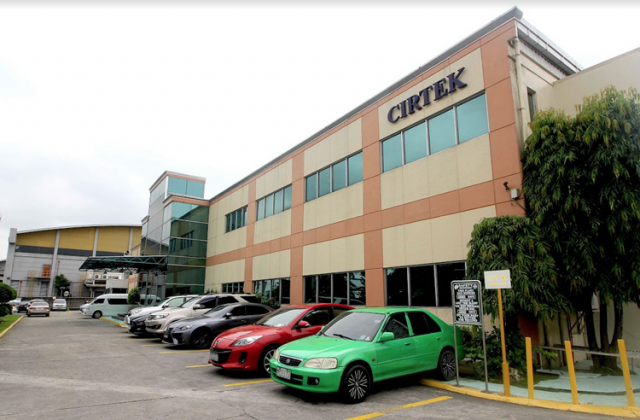
CIRTEK

Cirtek Holdings Philippines Corp. (CHPC) has received a PRS A (corp.) rating with a stable outlook from the Philippine Rating Services Corp. (PhilRatings), as the company plans to continue issuing up to P2 billion in commercial papers. 

According to PhilRatings, a PRS A (corp.) rating means the company has “an above average financial capacity” to meet their commitments relative to other Philippine firms. However, it may be “more susceptible” to adverse changes in economic circumstances than those who received higher ratings.  

In a statement, PhilRatings said it assigned the PRS A rating to CHPC taking into account the improvement in leverage levels, and its track record. 

It cited CHPC’s strong customer base which includes well-established global companies in different regions and industries, as well as the improvement in profits in the first nine months of 2021. 

CHPC reported a 6% increase in consolidated revenues to $62.8 million in the nine-month period in 2021, driven by higher demand for the semiconductor and antenna manufacturing businesses.  

Net income more than doubled to $8.1 million in the January to September period, from $3.6 million in the same period in 2020. CHPC’s net profit margin rose to 13% during the first nine months of 2021, from 6% in the year prior. 

“Although the outlook is positive at present, the industry is highly competitive, cyclical, and is susceptible to adverse changes in various economies, and is characterized by the presence of larger international players,” PhilRatings said. 

The tech company, which focuses mainly on wireless communication, is the parent of Cirtek Electronics Corporation, Cirtek Advanced Technologies and Solutions, Inc. and Quintel USA, Inc. 

“On a positive note, the telecommunications (telecom) sector, which comprises a huge portion of Quintel’s customers, currently has a positive industry outlook which serves as an opportunity for the company,” it added.  

CHPC offers products and services to customers in the U.S., Asia and Europe, which account for 46%, 33% and 21% of its revenues.  

“Such exposes CHPC to diversified risks relating to the performance of the economies where these customers are based, particularly with the impact on economies brought about by the COVID-19 pandemic,” PhilRatings said.  

A stable outlook means the rating is likely to remain unchanged in the next 12 months.  
Revenue effort short of estimate due to pandemic

DOF.GOV.PH

THE GOVERNMENT’S revenue effort over the last five years fell short of its estimate after it lost P1.7 trillion in potential taxes amid the economic downturn caused by the pandemic, the Department of Finance (DoF). 

The DoF in a statement on Friday said the revenue effort, which measures the share of government collections in the country’s gross domestic product (GDP), was at 15.6% from 2017 to 2021. 

“Without the pandemic, the revenue effort of the administration of President Rodrigo Duterte between 2017 and 2021 would have reached an estimated 16.2%,” the DoF said, quoting Finance Assistant Secretary Valery A. Brion. 

This was a result of P785.6 billion in estimated tax revenue losses in 2020, and P929.9 billion in 2021. 

Despite this, the DoF said the revenue effort was still “the highest in over two decades.” 

DoF data showed the average tax effort, or the share of tax collections in the GDP, was 14% from 2017 to 2021, which it said would have been 14.8% if not for the pandemic. 

The average tax effort was 14.3% from 2011 to 2016. 

“The measures are used to determine how effective the government is in collecting revenues to fund its priorities,” the DoF said. 

Finance Secretary Carlos G. Dominguez III on Thursday said revenue collections went up 9% year on year in 2021. 

Latest Treasury data showed that government revenue went up nearly 6% year on year to P2.7 trillion in the first 11 months of 2021. 

In full-year 2020, revenues declined by almost 9% to P2.8 trillion due to the pandemic. — Jenina P. Ibañez 

Price growth of NCR building materials eases in December — PSA

PHILIPPINE STAR/ MICHAEL VARCAS

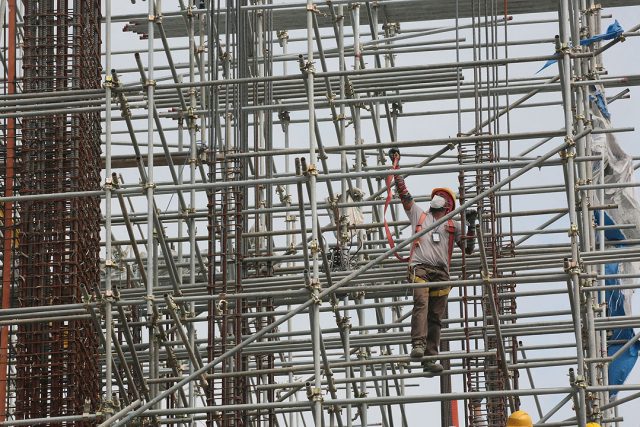
WHOLESALE price growth of construction materials in Metro Manila slowed down in December last year as mobility restrictions were relaxed, the Philippine Statistics Authority (PSA) data showed. 

The Construction Materials Wholesale Price Index (CMWPI) for the National Capital Region (NCR) eased to 5.2% annually in December 2021, compared to the 5.4% print in November and 1% in December 2020. 

This brought building materials’ price growth in Metro Manila to an average of 3.2% last year, higher than the 1.2% in 2020. This was the highest since the 4.7% growth in 2018. 

The December growth was mainly due to the slower increase in prices of fuels and lubricants (to 26.6% year on year from November’s 38.3%); sand and gravel (0.9% from 3%); G.I. Sheet (11.3% from 11.5%); electrical works (7.1% from 7.2%); and PVC pipes (3.4% from 3.8%). 

On the other hand, prices in the commodity groups of the following accelerated: painting (to 3.8% in December from 3.1% in November); hardware (3.1% from 2.6%); plywood (2.7% from 2.6%); and plumbing fixtures and accessories/waterworks (2.7% from 1.8%). 

Meanwhile, prices in the following commodity groups retained their growth: glass and glass products (14.4%); reinforcing and structural steel (8.8%); concrete products and cement (3%); lumber (2.8%); doors, jambs, and steel casement (2.5%); and tileworks (-1.8%). 

“I think the easing of quarantine restrictions and the easing of global supply chain channels have contributed significantly with the easing of bulk prices of building materials in Metro Manila,” UnionBank of the Philippines, Inc. Chief Economist Ruben Carlo O. Asuncion said in an e-mail interview. 

“A lot of the firms and suppliers have bulked up their inventories during the last quarter, and this was obvious in fourth-quarter 2021 gross domestic product (GDP) growth print,” Mr. Asuncion added. 

Metro Manila was placed under a more relaxed Alert Level 2 from November to December, as the number of coronavirus disease 2019 (COVID-19) cases declined. 

Meanwhile, preliminary data released by the PSA showed that GDP in the fourth quarter of 2021 accelerated by 7.7%. The GDP print was higher than the revised 6.9% in the third quarter last year and a turnaround from the 8.3% contraction in the final three months of 2020. 

This brought last year’s full-year growth to 5.6%, reversing the record 9.6% decline in 2020. 

Mr. Asuncion sees building materials prices in Metro Manila to ease in the near term amid the surge of the Omicron variant. 

“I do expect prices to continue to ease with the recoil of restrictions in the economy due to the Omicron surge. Barring any more new variant surprises, wholesale prices of construction materials should continue to normalize throughout 2022,” he said.   

The CMWPI index indicates large purchases by major construction companies and property developers and serves as a leading indicator for future activity by those industries. — Abigail Marie P. Yraola 

ERC fines generation companies P15.5M for unplanned outages

THE Energy Regulatory Commission (ERC) imposed fines worth P15.5 million on power generation companies that breached the maximum allowable unplanned outage days in 2021. 

“We are constantly monitoring and reviewing the weekly reports being submitted by the GenCos in compliance with our directive pertaining to the Reliability Performance Indices and Equivalent Outage Days Per Year of Generating Units. This is one of the mechanisms devised by the Commission to ensure that GenCos do not unnecessarily go on an unplanned outage, especially during the summer months when there is surge in power demand and reserves get used up,” ERC Chairperson and CEO Agnes VST Devanadera said in a media release on Friday. 

Earlier this week, ERC said it fined Sem-Calaca Power Corp. (SCPC) P4.31 million after it ruled that the power plant’s units allegedly breached the maximum allowed unplanned outages. 

It said SCPC was fined P337,200 for allegedly exceeding the number of allowed unplanned outages by 5.24 days for its power plant’s first unit and P3,975,600 for going over the number of allowed unplanned outages by 96.2 days for the second unit. 

In Article 5 of ERC’s Resolution No. 10, Series of 2020, 16.8 days is the allowed duration of unplanned outages for a pulverized coal-fired power plant per generation unit per year. 

SCPC said it will appeal the commission’s decision. — MCL 

PEZA signs tourism and trade partnership with Japan

THE Philippine Economic Zone Authority (PEZA) signed a memorandum of understanding (MoU) with the Association of Southeast Asian Nations (ASEAN)-Japan Centre (AJC) to promote tourism and trade between the Philippines and Japan.  

“This partnership is in line with PEZA’s initiatives to strengthen the promotion of investments in the Philippines while at the same time bolstering its trade and economic partnership with Japan and the other ASEAN countries,” said PEZA Director General Charito B. Plaza in a statement.  

“Clearly, our MoU will allow us to better cope with the demands of our stakeholders by providing them with the necessary resources that would enable them to make timely and [wise] investment decisions,” AJC Secretary General Kunihiko Hirabayashi said. 

Under the agreement, both parties will collaborate through seminars, roundtable discussions, information exchanges, and other activities. 

“This partnership is vital as we continue to encourage existing enterprises to expand their businesses and further explore investment opportunities in our country,” said Mr. Plaza. 

PEZA said the partnership will help fully industrialize the country by addressing efficiency issues. 

“In line with PEZA’s Transformation Road Map, we aim partner with various agencies like AJC to create a pool of experts and specialists on investment promotions and ecozone development to assist the public and private sector and the LGUs in putting up ecozones and to address the skills needed by our registered companies,” Mr. Plaza said. 

Meanwhile, AJC said it hopes to facilitate the flow of investments to the ASEAN to boost the livelihood of marginalized sectors of society, including women and the disabled. 

“I’m certain that AJC’s partnership with PEZA will create a synergy that will carry us through this new phase of economic development,” Mr. Hirabayashi said. 

To date, there are 962 Japanese companies registered with PEZA contributing P727.68 billion in investments and $11.07 billion in exports. — Luisa Maria Jacinta C. Jocson 

Pork, galunggong prices up in early Jan.

PHILIPPINE STAR/ MICHAEL VARCAS

THE Philippine Statistics Authority said the average retail price of bone-in pork increased in nine trading centers between Jan. 1 and Jan. 5. 

Prices were up by P10 to P35 per kilogram in nine trading centers, compared with Dec. 15-17. It fell P10 to P20 in three trading centers. 

In Cabanatuan City, pork prices increased P35 to P325, Digos City P35 to P260, Pagadian City P30 to P265, Calapan City P27 to P339.5, Tacloban City P25 to P237, Baguio City P20 to P345, Cebu City P20 to P255, Butuan City P10 to P221.35, and the National Capital Region (NCR) P9.10 to P317.63. 

Prices fell in San Fernando City by P20 to P330, Legazpi City P12.50 to P317, and Tuguegarao City P10 to P290. 

Galunggong (round scad) prices picked up in eight regional centers: P100 to P250 per kilogram in Pagadian City, P50 to P180 in Digos City, P40 to P200 in San Fernando City, P20 to P230 in Kidapawan City, P20 to P210 in Cagayan de Oro City, P30 to P212.50 in Legazpi City, P10 to P200 in Cabanatuan City, and P1.75 to P238.69 in NCR. 

Prices fell by P25 to P195 in Tuguegarao City. 

Meanwhile, prices of well-milled rice were up P0.50 to P1.50 per kilogram in four trading centers, while it dropped P0.15 to P3 in another four trading centers. 

Prices rose P1.50 to P35.25 in Tuguegarao City, P1 to P45 in Digos City, P0.54 to P42.17 in Legazpi City, and P0.50 to P38.50 in Pagadian City. 

It went down P3 to P39 in Cabanatuan City, P1 to P47 in Tacloban City, P0.58 to P43.92 in Calapan City, and P0.15 to P42.65 in NCR. — Luisa Maria Jacinta C. Jocson 

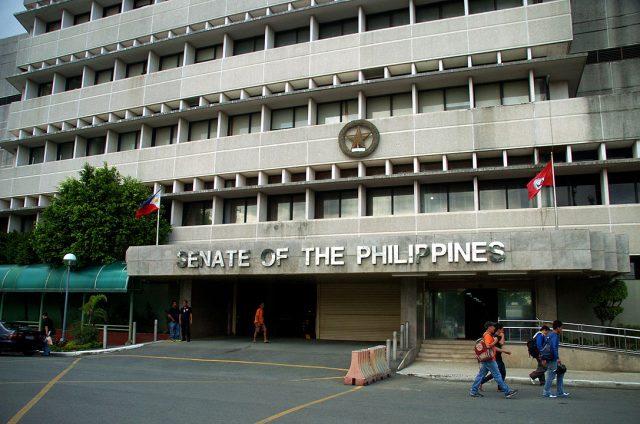
Senate passes bill amending Agri-Agra Law

BW FILE PHOTO

A BILL looking to boost lending to the agriculture, fisheries and agrarian reform sectors was passed on third and final reading by the Senate. 

Senate Bill (SB) 2494 or the Agriculture, Fisheries, and Rural Development Financing Enhancement Act of 2022, certified as urgent by President Rodrigo R. Duterte, seeks to amend Republic Act (RA) 10000 or the Agri-Agra Reform Credit Act of 2009. 

All banking institutions, except newly-established banks, for five years since the start of their operations must set aside at least 25% of their total loanable funds for agricultural and fisheries related sectors. 

RA 10000 specifies credit quotas of 15% for agriculture and 10% for agrarian reform beneficiaries. 

The central bank has said lenders have paid an average of P2 billion in penalties yearly due to their failure to meet these credit quotas. It has said banks prefer to pay penalties rather than lend to these sectors as they are considered risky. 

Under SB 2494, banks are expected to design and offer financial products and services that suit the specific requirements of agricultural clients, noting their cash flows and production cycles. 

The bill also includes special lending arrangements for agribusiness enterprises with qualified agricultural borrowers and agricultural value chain financing, which cover production, distribution, manufacturing, and processing of agricultural products. 

Banks can comply with the credit quota by lending to rural community beneficiaries to finance agricultural and fishery-related activities, as well as by investing in securities with proceeds meant to finance these kinds of activities. 

Other modes of compliance include opening deposits accounts with or investing in fixed-term deposit products of rural financial institutions (RFI), investing directly in RFIs, lending for the construction and upgrade of agriculture infrastructure, extending credit to agri-businesses that have commodity supply-chain arrangements with rural community beneficiaries, as well as engaging in sustainable finance.  

The Bangko Sentral ng Pilipinas (BSP) may also identify other activities that will qualify as part of the quota and is mandated to monitor and provide reports on the banks’ compliance with the measure. 

Administrative sanctions and other penalties will be computed at one-half percent or at rates prescribed by the BSP Monetary Board, with 10% of the penalties collected will be retained by the BSP to cover administrative expenses and 25% to be remitted to the General Fund. 

Under RA 10000, 90% of the penalties collected must be allocated according to the needs of the agri-agra sector, and the remaining 10% is given to the BSP to cover administrative expenses. — ANOT 

BSP fully awards 28-day bills

THE BANGKO SENTRAL ng Pilipinas (BSP) fully awarded the short-term securities it auctioned off on Friday as the average rate declined on easing inflation. 

The central bank raised P120 billion as planned from its offer of 28-day bills that drew P190.2 billion in tenders, higher than the P137.4 billion in bids last week. 

Accepted rates for the one-month securities ranged from 1.63% to 1.69%, narrower than the 1.6% to 1.71% band seen a week ago. This brought the tenor’s average yield to 1.6723%, lower than 1.6809% previously. 

The central bank uses its short-term securities and term deposit facility to mop up excess liquidity in the financial system and guide market rates. 

Rizal Commercial Banking Corp. Chief Economist Michael L. Ricafort said the average yield on the 28-day bill continued to ease as inflation slowed in January. 

The rate also declined on a stronger peso and hawkish signals from the US Federal Reserve, he said in a Viber message. 

“The more hawkish Fed signals recently on possible rate hike every FOMC (Federal Open Market Committee) meeting and possible reduction of the Fed’s balance sheet or bond holdings led to some fund shifts to short-term tenors,” he said. 

Inflation slowed to 3% year on year in January from 3.6% in December, the fifth straight month of deceleration, as housing and utilities prices eased, preliminary data showed. 

Meanwhile, Fed Chairman Jerome H. Powell has said the central bank may raise interest rates starting in March, although the pace of later hikes is yet to be decided, Reuters reported. — J.P. Ibañez with Reuters 

PBCom gets universal bank license

THE CENTRAL BANK has approved the universal banking license of Philippine Bank of Communications (PBCom). 

PBCom on Friday said the Bangko Sentral ng Pilipinas’ Monetary Board has approved the upgrade of its license to a universal bank from a commercial bank. 

The bank will now be able to function as an investment house and put money in non-allied enterprises. The new license will also allow the bank to expand its product and service offerings, PBCom said in a press release. 

“Our steady growth the past years beginning with the entry of the Lucio Co Group has been noteworthy,” PBCom Chairman Eric O. Recto said. 

“We now have a solid capital base from which we can expand our banking services in order to serve the needs of our valued customers.” 

Retail industry businessman Lucio L. Co bought a stake in PBCom for nearly P6 billion in 2014. 

PBCom’s net income in the third quarter last year fell 35% to P361.12 million year on year as its operating income slipped due to net trading losses. 

The bank’s net earnings in the first nine months of 2021 dropped by 25.6% to P1.125 billion compared to the same period in 2020. — J.P. Ibañez 

BAP, DoJ launch anti-cybercrime partnership

THE Bankers Association of the Philippines (BAP) and the Department of Justice (DoJ) launched an anti-cybercrime partnership as losses from bank fraud during the pandemic hit P1 billion. 

The public-private agreement signed at an event on Friday will involve cybersecurity information sharing and training between the two groups. 

“Banking fraud damage during the pandemic had reached P1 billion in terms of unauthorized withdrawals in illegal transfers,” Justice Secretary Menardo I. Guevarra said, quoting data from the BAP cybersecurity committee. 

“Through this memorandum of understanding, both parties are assured to be kept abreast of the latest developments in cybersecurity to better protect the banking industry and the general public from fraudulent activities in cyberspace.” 

Ramon L. Jocson, the cybersecurity committee vice chair of the BAP, said information sharing between the private and public sectors would help identify methods used by cybercriminals and improve prosecution. 

“By providing (the government) with information, this can be the basis for future legislation,” he added. 

He said the Cybercrime Prevention Act, which was signed in 2012, mostly covers crimes done at the time, such as automated teller machine (ATM) and bank card hacking. 

“When you look at the definitions, it’s primarily about stolen cards, credentials based on artifacts that are concrete, not abstract. Not like accounts, electronic accounts and so on. No mention of social engineering methods like phishing.” 

Noting the small number of cybersecurity experts in the Philippines, he said information sharing should be done so that the Department of Justice can recognize the different methods used by criminals to exploit technology. 

The National Bureau of Investigation last month said they caught five people involved in the hacking of more than 700 BDO Unibank, Inc. accounts in December. 

The bureau is also investigating the alleged phishing scam that stole funds from the Land Bank of the Philippines accounts of several teachers. — Jenina P. Ibañez 

Peso weakens on rate bets

BW FILE PHOTO

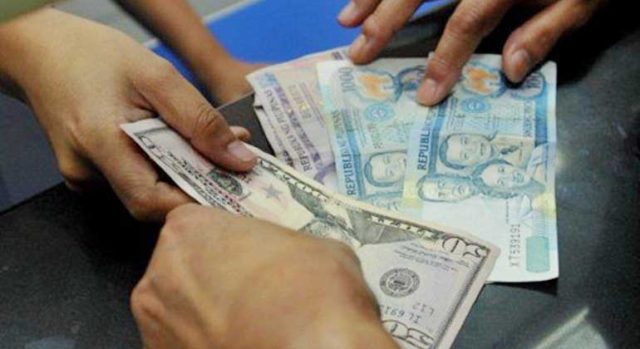
THE PESO weakened against the dollar on Friday due to slower January inflation, which caused investors to make bets on the central bank’s policy move. 

The local currency closed at P51.14 per dollar on Friday, down nine centavos from its P51.05 finish a day earlier, data from the Bankers Association of the Philippines’ website showed. 

The peso opened at P51 against the greenback. Its weakest showing was P51.14, while its intraday best was P50.95 versus the dollar. 

Dollars exchanged fell to $892.5 million on Friday from $1.05 billion on Thursday. 

Michael L. Ricafort, chief economist at Rizal Commercial Banking Corp., said the peso weakened on easing inflation, which he said could support a more accommodative monetary policy despite hawkish signals from the US Federal Reserve. 

Inflation slowed to 3% in January, the fifth straight month of deceleration, as housing and utilities prices eased, preliminary data showed. 

This was slower than both the 3.2% in December and the 3.7% in January last year. 

The central bank on Friday said the slower inflation seen in January is consistent with its expectation that the consumer price index would be within target this year and next. 

The Bangko Sentral ng Pilipinas’ Monetary Board will meet to review its policy settings on Feb. 17. It has kept borrowing costs at record lows since November 2020. 

Meanwhile, a trader in an email said the peso weakened as a result of some caution ahead of US employment data for January, which was set to be released later on Friday. — JPI 

PSEi ends higher as inflation eased in Jan.

COURTESY OF PHILIPPINE STOCK EXCHANGE, INC.

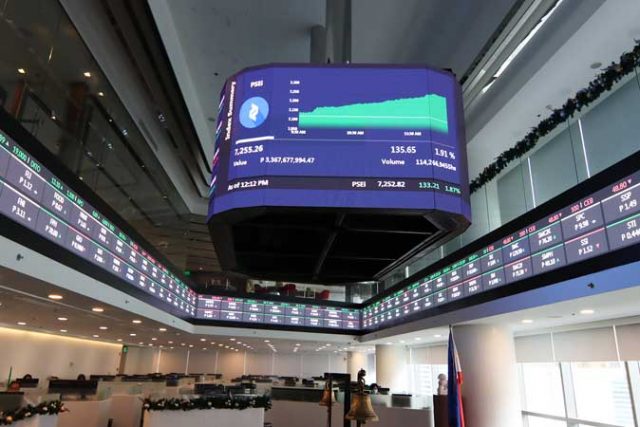
SHARES went up on Friday as inflation eased last month, which fuelled bets that the central bank would continue to keep borrowing costs low. 

The benchmark Philippine Stocks Exchange index (PSEi) rose 73.58 points or 0.99% to end 7,456.35, while the broader all shares index inched up 27.74 points or 0.71% to close 3,933.94 on Friday. 

“Market moved up today as inflation rate sustained its downward trajectory further. This gives the signal to Bangko Sentral ng Pilipinas (BSP) to maintain monetary policy rate at current low overnight rate so as to support economic activity,” Diversified Securities, Inc. Equity Trader Aniceto K. Pangan said in a Viber message on Friday. 

Headline inflation eased to its lowest level in 15 months in January as housing and utilities prices slowed. 

Under rebased 2018 prices, preliminary data from the Philippine Statistics Authority showed inflation slowed to 3% year on year in January from 3.2% in December and 3.7% print in the same month last year.  

It was the fifth consecutive month that headline inflation decelerated since the 4.4% peak seen in August last year.  

January’s print matched the pace logged in November 2020 and was the slowest in 15 months or since the 2.3% inflation rate recorded in October 2020.  

The headline figure also matched the 3% median estimate in a BusinessWorld poll conducted a week ago.  

The central bank on Friday said the slower inflation seen in January is consistent with its expectation that the consumer price index would be within target this year and next. 

The Bangko Sentral ng Pilipinas’ Monetary Board will meet to review its policy settings on Feb. 17. It has kept borrowing costs at record lows since November 2020. 

“Philippine shares were bought as inflation continued to cool down in the latest reading, while investors sought refuge from the sell-off last night in the US,” Regina Capital Development Corp. Head of Sales Luis A. Limlingan said in an email. 

Mr. Limlingan said US shares dropped after Meta Platforms’ earnings miss and due to the rise in 10-year US Treasury yields ahead of the release of the latest non-farm payrolls report. 

Wall Street snapped a four-session winning streak on Thursday, with all three benchmarks ending lower after Facebook owner Meta Platforms’ dour forecast sent its stock plummeting and halted a nascent recovery built on upbeat earnings from other big tech, Reuters reported. 

Meta shares sank 26.4%, wiping around more than $200 billion off its market value, according to Reuters calculations, as it blamed Apple’s privacy changes and increased competition from rivals such as TikTok for its disappointing outlook. 

The Dow Jones Industrial Average fell 518.17 points or 1.45% to 35,111.16; the S&P 500 lost 111.94 points or 2.44% to 4,477.44; and the Nasdaq Composite dropped 538.73 points or 3.74% to 13,878.82. 

Back home, most sectoral indices ended in the green except for financials, which went down 4.38 points or 0.35% to 1,373.12 and services, which slid 2.05 points or 0.10% to 1,962.02. 

Meanwhile, mining and oil climbed 206 points or 1.99% to 10,552.75; holding firms gained 117.08 points or 1.64% to 7,235.76; property advanced 53.21 points or 1.62% to 3,327.05; and industrials rose 62.84 points or 0.58% to 10,825.84. 

Value turnover jumped to P8.64 billion with 1.75 issues traded from the P6.75 billion with 1.69 shares that switched hands on Thursday. 

Advancers beat decliners, 110 versus 80, while 54 names remained unchanged. 

Net foreign selling was at P25.76 million on Friday versus the P162.06 million in net purchases logged the previous trading day. — MCL with Reuters