Home Blog Page 6520

Beyoncé for President: Popularity is not a free pass to the Presidency

PCH.VECTOR-FREEPIK

There are statements making social media rounds that view the qualifications of Ferdinand Marcos, Jr. — his eligibility to run for President — as a political question. The argument goes that a political question cannot be decided by the Commission on Elections, and ultimately by the Supreme Court. This is incorrect.

These statements also promote the view that a candidate (Marcos) who is leading in election surveys cannot be disqualified, ostensibly, because the people will be deprived of their choice for President. This is also incorrect.

Both views are supposedly grounded on the “political question doctrine.”

Political questions are those questions which, under the Constitution, are to be decided by the people in their sovereign capacity or in regard to which full discretionary authority has been delegated to the legislative or [to the] executive branch of the government (Mamba v. Lara, G.R. No. 165109, Dec. 14, 2009). These are questions that are left for the people themselves to decide or which are to be decided by the other branches of government.

Political questions are concerned with issues dependent upon the wisdom, not legality of a particular measure (Estrada v. Desierto, G.R. Nos. 146710-15 & 146738, March 2, 2001).

Where the controversy refers to the legality or validity of the contested act, that matter is definitely justiciable or non-political (Sanidad v. Commission on Elections, G.R. Nos. L-44640, L-44684 & L-44714, Oct. 12, 1976).

There is no Supreme Court decision saying that a candidate’s eligibility for public office is a political question.

An issue is not a political question simply because votes are cast by the electorate. In Miranda v. Aguirre (G.R. No. 133064, Sept. 16, 1999), the Supreme Court held that a plebiscite to approve Republic Act No. 8528 (downgrading the City of Santiago from an independent component city to a component city) is not a political question. The issue in that case was whether Republic Act No. 8528 complied with the requirements of the Constitution which is a question that the Supreme Court alone can decide.

A basic rule in political law is that a candidate for public office should have all the qualifications and none of the disqualifications for office.

A person who garners the highest number of votes in an election, if disqualified under election laws, cannot be declared the winner. The Supreme Court has been very clear on this.

In Maquiling v. Commission on Elections (G.R. No. 195649, April 16, 2013), the Supreme Court held:

The ballot cannot override the constitutional and statutory requirements for qualifications and disqualifications of candidates. When the law requires certain qualifications to be possessed or that certain disqualifications be not possessed by persons desiring to serve as elective public officials, those qualifications must be met before one even becomes a candidate. When a person who is not qualified is voted for and eventually garners the highest number of votes, even the will of the electorate expressed through the ballot cannot cure the defect in the qualifications of the candidate. To rule otherwise is to trample upon and rent asunder the very law that sets forth the qualifications and disqualifications of candidates. We might as well write off our election laws if the voice of the electorate is the sole determinant of who should be proclaimed worthy to occupy elective positions in our republic.

Then in Halili v. Commission on Elections (G.R. Nos. 231643 & 231657, Jan. 15, 2019) the Court held that:

Where a material COC (certificate of candidacy) misrepresentation under oath is made, thereby violating both our election and criminal laws, we are faced as well with an assault on the will of the people of the Philippines as expressed in our laws. In a choice between provisions on material qualifications of elected officials, on the one hand, and the will of the electorate in any given locality, on the other, we believe and so hold that we cannot choose the will of the electorate.

Maquiling also emphasized that the qualifications prescribed for elective office cannot be erased by the electorate alone. The danger of allowing the election results to erase election laws was spelled out in the same case:

What will stop an otherwise disqualified individual from filing a seemingly valid COC, concealing any disqualification, and employing every strategy to delay any disqualification case filed against him so he can submit himself to the electorate and win, if winning the election will guarantee a disregard of constitutional and statutory provisions on qualifications and disqualifications of candidates?

If this is the rule — if a candidate who garners the highest number of votes can be disqualified — it should also apply to a person whose claim to the popular mandate has not been tested in an election.

The idea that popularity in an election survey converts a legal issue into a political question is preposterous. If we adopt this view, Beyoncé can run for President of the Philippines because her popularity will trump the requirement that the President should be a natural-born citizen of the Philippines. Or American actress and singer Zendaya no longer has to meet citizenship, age, or residency requirements of the Constitution (Article VII, section 2 of the Constitution).

The pending disqualification cases against Mr. Marcos should be resolved by examining the allegations against him, and by determining with impartial minds, whether Mr. Marcos has all the qualifications and none of the disqualifications for holding public office. The popularity of a candidate, however measured, should never be a factor in settling these disputes.


Dante Gatmaytan is professor at the University of the Philippines, College of Law and a fellow of Action for Economic Reforms.

The Matrix: How conspiracy theorists hijacked the ‘red pill’ philosophy

The Matrix is among the most influential science fiction films of all time. Nearly 20 years since the third film in the series premiered, a fourth chapter, The Matrix Resurrections, was released in December to great excitement.

But one of The Matrix’s most enduring cultural contributions has been to conspiracy theories. Motifs from the film have been adopted by online groups to reinforce their messages, which are often hateful and violent. Incels, or involuntary celibates, are particularly engaged with Matrix-style “philosophy.” A mass shooter in the UK, for example, was found, after his death, to have been using Matrix imagery in online discussion forums before committing his crimes.

The problem is so widespread that the new Matrix film is being taken by some as a rejection of the trend. Ahead of the film’s release, two of its writers described themselves as approaching the movie with the intent of reclaiming the “red pill” trope from its hijackers.

The idea of the red pill is a key example. In the original Matrix, the protagonist is invited to choose between a red and blue pill. The red reveals the world for what it truly is; an artificial construct of machines which have enslaved humanity. The blue allows the protagonist to remain in a comfortable delusion; spared from facing the horrors beyond. This cultural motif is now a cornerstone of conspiratorial thinking.

Red pill conspiracy theories follow the same basic logic. A nefarious enemy is working behind the scenes, having concealed their harmful activities from the population. By “taking the red pill” believers “wake up” to this truth.

It is perhaps ironic that in the film the red pill reveals reality for what it truly is while in conspiracy theories it allows adherents to construct their own reality — one which tends to reinforce and rationalize their own preconceptions.

To demonstrate, take the online “manosphere,” a loosely affiliated network of misogynistic groups united by a shared red pill conspiracy theory. They see feminism as having corrupted socio-political institutions and established a society structured to the advantage of women and the detriment of men. Feminism, or the myth of female oppression in their eyes, is a means to trick men into accepting exploitation and ceding ever more power. In “taking the red pill” manosphere adherents believe they are awake to this inequitable world order. They see themselves as a resistance movement against it.

The danger of red pill narratives is the type of thinking it imparts. Within these narratives “truth” is presupposed rather than tested. Facts must conform to this truth to be legitimate, and all contrary evidence is dismissed. Inevitably such communities become insular, seeing the outside world as brainwashed and themselves as uniquely virtuous for having the strength of character to face reality.

Red pill narratives naturally encourage echo chambers, which are an ideal environment for radicalization. Shared narratives can quickly diverge from reality when left unchallenged. Eventually the positions and beliefs of the community only make sense in the worlds which adherents have constructed for themselves.

There are many other examples beyond incel culture, and they should strike a foreboding chord. In worlds corrupted by unseen forces, radical action is easily justified. Conspiracy theories paved the way for last year’s attack on the US Capitol, and continue to inflame tensions a year on. The idea of being duped by the mainstream is evident in much anti-vax thinking. In the often-competing worlds of conspiracy theorists, drinking urine or injecting bleach are variously presented as the real cures for COVID-19 rather than the vaccines developed by governments in a bid to control their populations.

But is The Matrix to blame for modern conspiratorial thinking? No. Narratives of malevolent hands pulling strings behind the scenes are far older, and deeply tied to antisemitism. In early-1900s conspiracy theories, which would later fuel the rise of Nazism, it was claimed a cabal of Jewish elders were infiltrating and corrupting social institutions in a plot for global dominion. Central to Nazi ideology was the theory of “Jewish-Bolshevism,” which held Jews invented communism as a means of world conquest. Hitler even believed the British people would become his staunch allies if only they destroyed the “Judaic forces” controlling them. Echoes of contemporary red pill narratives underpinned all these beliefs; for this type of thinking long predates the specific motif.

It would be more accurate to say The Matrix has popularized a superficially similar metaphor. It simplified, if not standardized, the way in which these theories could be communicated to modern audiences. These days, conspiracy theorists can simply point to The Matrix as a framework rather than explain their worldview in their own words. The red pill is essentially a way of saying “it’s just like The Matrix,” but the real enemy is [x]. This is of course an unintended consequence. But after 20 years, the genie is probably not going back in the bottle.


Charlie Tye is a PHD candidate, York Law School, University of York. He receives funding from the Morrell Centre for Legal and Political Philosophy.

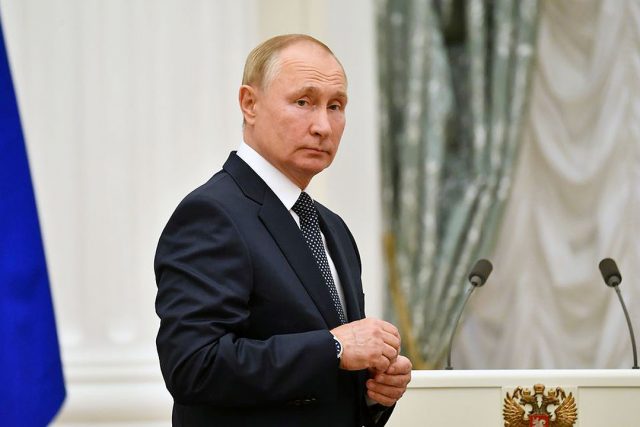
Could Putin de-escalate even if he wanted to?

AS I WRITE THESE LINES, talks between Moscow and the West appear to have stalled, and the world waits with bated breath whether Russian President Vladimir Putin will order the 100,000 troops he’s massed near Ukraine to attack that country. In this moment of peril, it’s worth dusting off three old concepts in international-relations theory to take stock of the strategic situation.

One concept is called “escalation dominance.” It was coined during the Cold War by a think-tanker named Herman Kahn, who inspired the title character in the black comedy Dr. Strangelove. The idea is that in any conflict, the side that’s in a better position to raise the stakes — because it knows it would win, could bear the costs more easily, or wants something more intensely — has a strategic advantage. Its adversary will come under ever greater pressure to pull out and settle.

Putin has so far clearly enjoyed escalation dominance in the conflicts over Ukraine and the wider region. He’s made clear that this former Soviet Republic — which he doesn’t consider a proper nation but a branch of a greater Russian realm — is worth more to him than it will ever be to the US, NATO, or the European Union. He would up the ante in blood — and the West wouldn’t match it.

As a former ambassador to Russia from New Zealand has observed, this means that Putin “can dial up and down the pressure as he sees fit.” The West will never be the first to climb another rung on the escalation ladder (to stick with Kahn’s metaphors); it merely follows where Putin goes. The West’s interest always lies in getting him to climb down.

So, Putin is in a pretty place up there on his ladder. He could use that strategic advantage to achieve his objectives, provided he’s clear about what those are. One frightening scenario is that he may not be. Some of the West’s negotiators, after the talks in Geneva, Brussels, and Vienna this week, got the impression that even his own emissaries don’t know whether Putin wants a compromise or merely a pretext for an invasion.

His overarching objective is to create a sphere of influence across the former territories of the Soviet Union and the adjoining buffer states in Eastern Europe, the Caucasus, and beyond. But he covets this zone less to deter a NATO attack on Russia (which he knows isn’t a risk) and more to prevent any neighboring country from becoming a vibrant, liberal, and pro-Western democracy.

Any success of that sort would only remind Russians what they’re missing and thereby undermine his own rule, which is the only thing he cares about. In effect, he needs to create a belt of failed states around Russia to stay in power.

In this light, his maximalist demands in two draft treaties with the US and NATO, published last month, do and don’t make sense. They do, because they ask for what would amount to that sphere of influence — he wants NATO never again to expand and even to withdraw from Eastern Europe. They don’t, because he knows that the West can never agree to any of this — NATO might as well tear up its charter and dissolve itself.

The question for me is whether Putin, in a lapse of tactical discipline, accidentally forfeited his escalation dominance. After all, he can dominate only as long as he’s the one deciding whether to climb up or down the ladder.

Owing to something called “audience costs,” Putin may have lost that freedom to choose. The audience he cares about is his own country’s domestic population. Even though Russians can’t choose their leader freely, they must fear and respect him enough for him to hold on to power indefinitely.

Now imagine Putin simply dropping his demands to freeze and shrink NATO and then withdrawing his huge invasion force from the Ukrainian border. The West would of course give him something to brag about — an agreement that both sides won’t maneuver in a certain geography, or something of that sort. But how could he explain to Russians such a huge climbdown from the ladder? He’d look like a loser. And that’s what he can’t afford.

So, there’s a real risk that Putin has become trapped in “path dependence.” This concept originally had nothing to do with international relations. It describes situations in which our decisions now are constrained by other decisions made in the past. For example, we have QWERTY keyboards (or software standards, railway gauges, welfare systems, you name it) not because they’re best suited for the task today, but because legacies led to dependencies.

My fear is that Putin, with his many acts of aggression — from cyberattacks to disinformation campaigns and more — has by now gone far enough down a path to make him depend on it. During the first rounds of escalation, he may have been dominant. Now he may feel that, because of what he’s already done, he has no option but to go all the way to war.

BLOOMBERG OPINION

FBI storms Texas synagogue to release hostages, gunman dead

COLLEYVILLE, Texas — An FBI Hostage Rescue Team stormed a synagogue in Colleyville, Texas on Saturday night to free three remaining hostages of a gunman who had disrupted a religious service and began a standoff with police more than 10 hours earlier.

All the hostages were safely released on Saturday night and the gunman was dead, Colleyville Police Chief Michael Miller said at a news conference.

The gunman had initially taken four people hostage, including the rabbi, at the Congregation Beth Israel, officials said. One hostage was released unharmed six hours later.

Local reporters said they heard the sound of explosions, possibly flashbangs, and the sound of gunfire shortly before Texas Governor Greg Abbott announced the crisis was over.

“Prayers answered. All hostages are out alive and safe,” Mr. Abbott said on Twitter. The FBI said they have confirmed the identity of the gunman but said they would not yet disclose it. The FBI declined to confirm the cause of his death, saying it was still under investigation.

The Colleyville Police Department said it first responded to the synagogue with SWAT teams in response to emergency calls beginning at about 10:41 a.m. during the Shabbat service, which was being broadcast online. FBI negotiators soon opened contact with the man, who said he wanted to speak to a woman held in a federal prison.

No injuries were reported among the hostages.

In the first few hours, the man could be heard having a one-sided conversation in what appeared to be a phone call during a Facebook livestream of the service of the Reform Jewish synagogue in Colleyville, which is about 16 miles (26 kms) northeast of Fort Worth. The livestream cut off around 3 p.m. EST (2000 GMT).

Before the livestream was ended, the man could be heard ranting and talking about religion and his sister, the Fort Worth Star-Telegram reported. The man could be heard repeatedly saying he didn’t want to see anyone hurt and that he believed he was going to die, the newspaper said.

President Joseph R. Biden was briefed on the crisis, and Israeli Prime Minister Naftali Bennett said on Twitter he was praying for the safety of the hostages.

Barry Klompus, a member of the congregation since it opened in 1999, said he tuned into the livestream.

“It was horrible listening and watching,” Mr. Klompus said in a telephone interview.

A US official briefed on the matter told ABC News the hostage-taker had claimed to be the brother of Pakistani neuroscientist Aafia Siddiqui, who is serving an 86-year US prison sentence for her 2010 conviction for shooting at soldiers and FBI agents, and that he is demanding she be freed.

Siddiqui is being held at a federal prison in the Fort Worth area. A lawyer representing Siddiqui, Marwa Elbially, told CNN in a statement the man was not Siddiqui’s brother. He implored the man to release the hostages, saying Siddiqui’s family condemned his “heinous” actions.

The Council on American-Islamic Relations (CAIR), a US Muslim advocacy group, condemned the man’s actions.

“This latest antisemitic attack on Jewish Americans worshipping at a synagogue is an act of pure evil,” CAIR said in a statement. — Reuters

Casualty reports awaited from tsunami-hit Tonga with comms mostly down

WELLINGTON — Tsunami-hit Tonga remained largely uncontactable on Sunday with telephone and internet links severed, leaving relatives in faraway New Zealand praying for their families on the Pacific islands as casualty reports had yet to come through.

An underwater volcano off Tonga erupted on Saturday, triggering warnings of 1.2-meter tsunami waves and evacuation orders on the shores of Tonga as well as several South Pacific islands, where footage on social media showed waves crashing into coastal homes.

Internet and phone lines went down at about 6.40 p.m. local time on Saturday, leaving the 105,000 residents on the islands virtually uncontactable.

There are no official reports of injuries or deaths in Tonga as yet although communications are limited and contact has not been established with coastal areas beyond the capital Nuku’alofa, Jacinda Ardern the Prime Minister of New Zealand told a news conference on Sunday.

Tonga, an island nation with around 105,000 residents, lies 2,383 kilometers (1,481 miles) northeast of New Zealand.

“Nuku’alofa is covered in thick plumes of volcanic dust but otherwise conditions are calm and stable,” Ms. Ardern said.

“We have not yet received news from other coastal areas,” she said.

Satellite images captured the volcanic eruption on Saturday as the explosion sent plumes of smoke into the air and about 12 miles above the sea level. The sky over Tonga was darkened by the ash.

Concerns were growing among the Tongan community in New Zealand, desperate to make contact with their families back home. Some churches organized community prayers in Auckland and other cities.

“We pray God will help our country at this sad moment. We hope everybody is safe,” Maikeli Atiola, the Secretary of the Wesleyan Church of Tonga in Auckland said, Radio New Zealand reported.

Ms. Ardern said the main undersea communications cable has been impacted, likely due to loss of power.

Power was being restored in some areas on the islands and local mobile phones were slowly starting to work, she added.

Official damage assessments were not yet available, she said. But Ms. Ardern said the New Zealand high commission in Nuku’alofa had said the tsunami has damaged boats, shops and other infrastructure.

Tonga’s cabinet held a crisis meeting on Sunday and was contacting development partners, a spokeswoman for Zed Seselja, Australia’s minister for international development and the Pacific told Reuters. She said Australia would sent a P8 surveillance aircraft to Tonga on Monday.

PACIFIC IMPACT
The Hunga-Tonga-Hunga-Ha’apai volcano has erupted regularly over the past few decades but Saturday’s eruption was so loud that residents parts of faraway Fiji and New Zealand said they heard it.

“My entire house was shaking,” said Sanya Ruggiero, a Consulting Communications Advisor based in Suva, the capital of Fiji, some 750 kms from Tonga.

“My doors, windows were all rattling like hell. And mine was not even as bad as others. Hundreds of people ran out of their homes,” said Ruggiero, who consults for several agencies including the United Nations.

Rumblings and eruptions from the volcano continued to be heard through the night, Ruggiero said. Hundreds of people were moved to evacuation centers in Suva. Fiji Airways had to cancel all its flights due to the ash clouds.

“This is the worst disaster Tonga has had in living memory and the recovery from this is going to take years,” Ruggiero said.

Experts said the ash fallout could contaminate drinking water and cause respiratory issues.

“Help will be needed to restore drinking water supplies. People of Tonga must also remain vigilant for further eruptions and especially tsunami with short notice and should avoid low lying areas,” said Shane Cronin, professor at the School of Environment, University of Auckland.

The eruptions triggered tsunami warnings across the Pacific, with the United States urging people on its Pacific coastline to stay away from the shores and Australia’s New South Wales region closing beaches.

Hundreds of thousands of Japanese citizens were advised to evacuate as waves of more than a meter hit coastal areas. — Reuters

Global vaccine-sharing program reaches milestone of 1B doses

COURTESY OF US EMBASSY IN THE PHILIPPINES

BRUSSELS — The COVID-19 Vaccines Global Access (COVAX) program has delivered 1 billion COVID-19 vaccine doses, one of the organizations which manages it said on Saturday.

Supplies to poorer nations have long been very limited because of lack of vaccines, as wealthier states secured most of the doses initially available from Dec. 2020.

But in the last quarter shipments have exponentially increased, allowing COVAX to reach the milestone of 1 billion doses shipped to 144 countries, said Gavi, which co-leads the program alongside the World Health Organization (WHO).

COVAX was launched in 2020 with the goal of delivering 2 billion doses by the end of 2021, but was slowed by wealthier states’ initial hoarding of limited shots, export restrictions and frequent changes within its organization.

The program began delivering vaccine doses in Feb. 2021. About one-third have been donated by rich nations, despite COVAX’s initial plans to supply only jabs procured directly by the program with a budget of over $10 billion in donors’ funds.

The change of strategy has led to delays, as donors have often requested to send doses to countries selected by them.

Despite the recent surge in deliveries, vaccine inequity remains high. The latest WHO data shows 67% of the population in richer nations have been fully vaccinated, compared with only 5% in poorer nations. Over 40% of the world’s population has not yet received a first dose.

Gavi, a vaccine alliance which co-manages COVAX, is seeking more funds to reach the WHO’s goal of vaccinating 70% of the population in poorer nations by July. — Reuters

Microsoft says it observed destructive malware in Ukraine government systems

MICROSOFT CORP. said in a blog post on Saturday it observed destructive malware in systems belonging to several Ukrainian government agencies and organizations that work closely with the Ukrainian government.

The victims of the malware include Ukrainian government agencies that provide critical executive branch or emergency response functions, Microsoft said.

Also affected was an information technology firm that manages websites for public and private sector clients, including government agencies whose websites were recently defaced. Microsoft did not identify the IT firm involved.

The US software giant, which first detected the malware on Thursday, said the malware attacks did not make use of any vulnerability in Microsoft products and services. 

A massive cyberattack splashed on government websites on Thursday night, warning Ukrainians to “be afraid and expect the worst” hit, leaving some websites inaccessible on Friday morning and prompting Ukraine to open an investigation.

Reuters reported on Saturday that Ukraine had suspected a hacker group linked to Belarus intelligence carried out a cyberattack, and that it used malware similar to that used by a group tied to Russian intelligence, according to a senior Ukrainian security official.

The malware, which is disguised as ransomware, would render the infected computer system inoperable if activated by the attacker, Microsoft said, adding the company will continue to work with the cybersecurity community to identify and assist targets and victims. — Reuters

Australian federal court upholds cancellation of Djokovic’s visa

SERBIAN tennis player Novak Djokovic departs from the Park Hotel government detention facility before attending a court hearing at his lawyer’s office in Melbourne on Sunday, Jan. 16. — REUTERS

World No. 1 Novak Djokovic facing deportation

SYDNEY — An Australian court upheld a government decision to cancel Novak Djokovic’s visa on Sunday, ending the unvaccinated tennis superstar’s hopes of winning the Australian Open and racking up a record-breaking 21 men’s Grand Slam titles.

Ruling on a case that has gripped Australia and the sporting world for more than a week, a three-judge bench of the Federal Court heard government lawyers arguments that Djokovic’s continued presence risked whipping up anti-vaccination sentiment during Australia’s worst outbreak of coronavirus disease 2019 (COVID-19) since the pandemic began.

A medical exemption that allowed the Serbian tennis world number one to enter the country without being vaccinated had sparked fury in Australia, and became a political issue for Prime Minister Scott Morrison, who has to call a federal election before May.

Novak Djokovic was set to be deported from Australia after a court on Sunday dismissed his appeal against the government’s cancelation of his Australian visa on the grounds that his decision not to be vaccinated posed a risk to the country.

Djokovic had appealed Immigration Minister Alex Hawke’s use of discretionary powers to cancel his visa on the grounds that he was a threat to public order because his presence would encourage anti-vaccination sentiment amidst Australia’s worst outbreak of the virus.

Chief Justice James Allsop said the Federal Court ruling was based on the lawfulness and legality of the minister’s decision in the context of the three grounds of appeal Djokovic’s team lodged.

“It is no part of the function of the court to decide upon the merits or wisdom of the decision,” Allsop said, adding the decision was unanimous among the three judges. Full reasoning behind the decision would be released in coming days, he said.

It was not immediately clear when the government would seek to remove Djokovic.

The verdict brings to a climax a rollercoaster 10 days during the world’s top tennis player was detained by immigration authorities, released and then detained again ahead of a tournament that starts on Monday.

The Serbian champion was escorted to his lawyers office by immigration officials to attend the virtual court hearing on Sunday morning, having spent Saturday night back in an immigration detention hotel.

Djokovic had been granted a visa to enter Australia, with a COVID-19 infection on Dec. 16 providing the basis a medical exemption from Australia’s vaccination requirements to play in the Open. The exemption was organized through Tennis Australia.

That exemption prompted widespread anger in Australia, which has undergone some the world’s toughest COVID-19 lockdowns and where more than 90% of adults are vaccinated, and the government said recent infection alone did not meet its standards for an exemption.

Dominating headlines globally for more than a week, the Djokovic visa saga has fueled the fierce debate over the rights of those who opt to remain unvaccinated as governments take stronger measures to protect their people from the pandemic. — Reuters

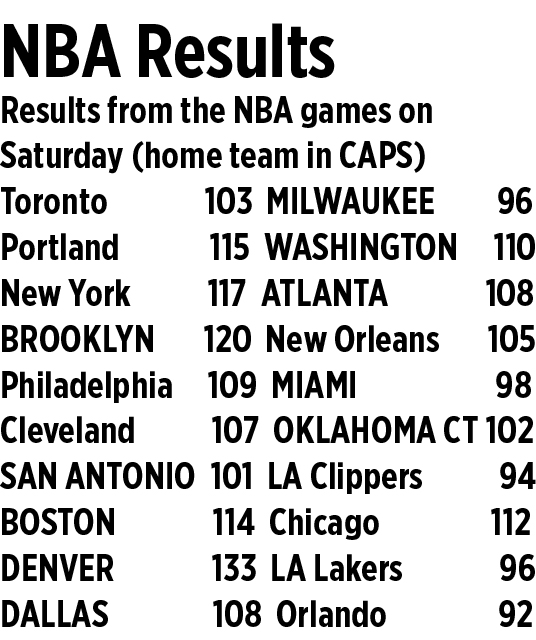
Robert Williams III free throws lift Celtics over undermanned Bulls

ROBERT Williams III scored six of his team’s final 10 points, including the game-winning free throws with 9.7 seconds remaining as the host Boston Celtics rallied past the shorthanded Chicago Bulls for a 114-112 win on Saturday night.

Chicago went up 108-101 with just over four minutes to play before Boston used an 11-4 run to tie it at 112 after a pair of Williams free throws with 31 seconds to play.

DeMar DeRozan missed a stepback jumper with 9.7 seconds left and Nikola Vučević committed a loose ball foul on the rebound. Williams made two more free throws to make it 114-112 and Vučević missed a 3-pointer and DeRozan misfired on an 11-footer to end the game.

Jayson Tatum had a team-high 23 points and 12 rebounds and Jaylen Brown added 19 points to lead the Celtics. Dennis Schröder added 16 points with eight assists, Al Horford had 15 with eight rebounds and Williams totaled 14 points, 13 boards and six assists.

Boston bounced back from a 111-99 loss at Philadelphia on Friday with its sixth win in nine games.

Vučević had a game-high 27 points, DeRozan had 23 with eight rebounds and seven assists as Ayo Dosunmu added career-highs of 21 points and 10 assists for the Bulls.

Coby White added 19 points for Chicago, which suffered its third straight defeat and fourth in its last five games.

Bulls All-Star guard Zach LaVine missed the game after suffering a left knee injury in Friday’s loss to the Golden State Warriors. An MRI exam on Saturday reportedly revealed no structural damage to LaVine’s knee.

Chicago guard Lonzo Ball was a game-time scratch with left knee soreness. The Bulls were also without Alex Caruso (foot), Derrick Jones (bone bruise in right knee), Javonte Green (right adductor strain), Tyler Cook (ankle) and Patrick Williams (wrist).

Celtics guard Marcus Smart missed his third straight game after entering the NBA’s coronavirus disease 2019 (COVID-19) health and safety protocol prior to Friday’s loss at Philadelphia. — Reuters

Leader Man City beats Chelsea; Coutinho scores on Villa debut

MANCHESTER, England — Runaway Premier League leader Manchester City took a step closer to a fourth title in five seasons with a 1-0 win over second-placed Chelsea on Saturday, opening up a 13-point lead over the London club at the top.

Philippe Coutinho enjoyed a dream debut for Aston Villa as he came off the bench to inspire a 2-2 comeback draw at home to Manchester United, scoring a late equalizer.

Rafa Benitez’s troubles at Everton continued as they suffered a 2-1 loss at Norwich City, who moved off the bottom of the table with their third win of the campaign.

Newcastle United conceded a late equalizer in a 1-1 draw at home to Watford, missing the chance to escape the drop zone.

City’s 12th win in a row, thanks to a 70th minute solo strike from Kevin De Bruyne, continues their charge towards a successful defense of their title but manager Pep Guardiola was quick to dismiss such talk.

Third-placed Liverpool is 14 points behind City but has two games in hand, including Sunday’s visit of Brentford.

“(The players) are going to listen to me that it is not true when people say it is over. In January, it is impossible it is over,” Guardiola said.

DE BRUYNE WINNER
After a first half which saw few clear chances, other than Jack Grealish being foiled by Chelsea keeper Kepa Arrizabalaga, Chelsea had an opportunity to take the lead after the break but Romelu Lukaku’s shot was well saved by Ederson.

City was well in control of the game for large spells and took the points after De Bruyne burst away from N’golo Kante and beat Kepa with a superb shot into the far corner.

Chelsea boss Thomas Tuchel was critical about the performance of his attack, in particular Lukaku, who recently had to apologize for an interview with Italian media in which he said he was unhappy with the German nL1N2TK1KT coach’s system.

Manchester United interim manager Ralf Rangnick described the opening 30 minutes at Villa as the best since he took charge, but he was left struggling to find positives after goals by Jacob Ramsey and Coutinho canceled out Bruno Fernandes’s double which had United 2-0 up with 20 minutes left. — Reuters

PSG beats Brest 2-0 to restore 11-point lead at the top

PARIS St.-Germain (PSG) recovered from a shaky start to regain an 11-point lead in Ligue 1 as goals by Kylian Mbappé and Thilo Kehrer gave them a 2-0 home victory against Stade Brestois on Saturday.

Mbappé and Kehrer found the back of the net either side of the interval to put the capital side on 50 points from 21 games a day after second-placed Nice beats Nantes 2-1.

The result left Brest in 13th place on 25 points.

Third-placed Olympique de Marseille will move level on 39 points with Nice if they beat champions Lille at the Stade Velodrome on Sunday.

RC Lens are fourth with 33 points after Seko Fofana’s stoppage-time goal earned the northerners a 2-1 comeback win at bottom side St.-Étienne earlier on Saturday.

At the Parc des Princes, PSG was missing Lionel Messi, who is still recovering from a coronavirus disease 2019 (COVID-19) infection, and had to cope with the last-minute absence of goalkeeper Keylor Navas, who tested positive for the novel coronavirus.

PSG had won their previous eight league games against Brest, but the visitors got off to a good start and it took a great save from Gianluigi Donnarumma to deny Irvin Cardona early on.

Brest, looking for their first top-flight win against PSG since 1985, had three shots on target in the opening 20 minutes.

It was Mbappé, however, who broke the deadlock in the 32nd with a clinical low shot from 16 meters for his 10th Ligue 1 goal of the season as PSG increased the pressure.

Marco Verratti came close to doubling the lead three minutes into the second half, but his angled shot hit the post.

PSG’s Germany defender Kehrer eventually made it 2-0 in the 53rd minute when he fired home from Nuno Mendes’s cutback.

Kehrer and Mbappé, who was booked for a scuffle with Hugo Magnetti in the first half, had other chances, but Mauricio Pochettino’s side had already wrapped a routine victory. — Reuters

Bengals defeat Raiders for first playoff win since 1991

JOE Burrow passed for 244 yards and two first-half touchdowns (TD) as the Cincinnati Bengals ended a 31-year postseason losing streak with a 26-19 victory over the visiting Las Vegas Raiders on Saturday afternoon.

Evan McPherson kicked four field goals (FG) for the Bengals.

Cincinnati advanced out of the opening round of the playoffs for the first time since the 1990 season.

“It’s a great win for us, for the city and the organization, but, you know, we expected this. So, it’s not gonna be a big celebration like it was when we won the division,” Burrow said. “We took care of business. Now it’s on to the next round.”

Cincinnati led by 10 points after McPherson’s fourth field goal, a 28-yarder, with 6:46 to play.

The Raiders pulled to within 26-19 on the ensuing drive on Daniel Carlson’s 28-yard FG — his fourth of the game as well — with 3:34 remaining. Las Vegas converted a huge fourth-and-5 from its own 44-yard line to keep alive the drive.

The Bengals could not run out the clock, giving Las Vegas the ball at its own 35 with 1:51 to play. The Raiders moved to the Cincinnati 9-yard line, but failed to get the tying score on four snaps, the final one ending with an interception by the Bengals’ Germaine Pratt with 12 seconds to play.

Derek Carr threw for 310 yards and a touchdown for Las Vegas, completing passes to seven different receivers. Josh Jacobs rushed for 83 yards on 13 carries.

The Raiders, making their first playoff appearance since 2016, have not recorded a postseason victory since the 2002 season.

“The Bengals beat us today — we came up short today,” Carr said. “Honestly, I’m just trying to hold back emotion because I didn’t plan on that happening. You know, I didn’t expect it to have to go that way. I just felt so confident in the game plan. So, it’s just hard right now. But looking at the season, you definitely have some pieces there. It’ll be interesting to see what happens.”

Las Vegas got on the board on its opening drive, moving 47 yards to Carlson’s 47-yard field goal with 9:23 to play in the first quarter. Cincinnati answered with Burrow’s 7-yard touchdown pass to C.J. Uzomah and a 7-3 lead with 4:31 left in the quarter.

On the ensuing possession, Carr fumbled while being sacked from behind by the Bengals’ Trey Hendrickson, with the loose ball picked up by Larry Ogunjobi and returned to the Las Vegas 15-yard line. Cincinnati settled for a 31-yard FG by McPherson that expanded its advantage to 10-3.

The teams traded field goals early in the second quarter, with McPherson hitting from 30 yards at the 10:20 mark and Carlson converting from 28 yards out with 7:55 to play until half time.

Burrow added to the Bengals’ lead with a scrambling, 10-yard TD pass to Tyler Boyd with 1:51 left in the half. That left plenty of time for Carr, who drove to a 14-yard scoring pass to Zay Jones to pull the Raiders to within 20-13 at the break.

The only scoring in the third quarter was a 43-yard field goal by McPherson on the Bengals’ opening drive of the half that pushed their lead to 23-13.

Carlson hit from 34 yards away on the second play of the fourth quarter to bring the Raiders within a touchdown, 23-16. — Reuters