Home Blog Page 6492

DTI signs agreement with platform promoting exports of Philippine-made goods

THE Department of Trade and Industry (DTI) said it has entered into an agreement with online service provider 1Export to facilitate the global distribution of products made in the Philippines.

The DTI said in a statement on Monday that its Go Lokal! Program is collaborating with 1Export’s Kalocal platform to launch a product known as the Go Lokal Surprise Box, a gift box containing Philippine products made by micro, small, and medium enterprises (MSMEs). The box will be initially available in the US and Canada.

“This promotional initiative will help MSMEs transition to cross-border trade as it provides the opportunity for the world to discover Filipino culture through artisanal handicrafts and delectable treats,” DTI said.

Go Lokal! seeks to help MSMEs make their products more accessible to new markets. It supports food and beverage, lifestyle, fashion, home decor, and health and wellness businesses.

“Since its inception in 2016, the Go Lokal! program has partnered with 24 retailers, rolled out 154 stores nationwide, and assisted 859 MSMEs of which 385 have become regular suppliers of partner retailers. To date, the program has generated sales amounting to P428 million,” the DTI said.

Kalocal, the 1Export platform, allows users to order products made in the Philippines at wholesale prices.

“Kalocal aims to help Filipino communities abroad who want to start their own business (by) importing and reselling products directly from local producers and manufacturers by offering competitive pricing for a wide variety of products — from heritage to novelty, from premium to popular and fast-moving brands,” the DTI said. — Revin Mikhael D. Ochave 

House committee seeking to highlight agricultural sectors eligible for CREATE perks

THE House of Representatives is working with the Department of Agriculture to come up with a list of agricultural sectors that will qualify for tax incentives, a legislator said on Monday.

Albay Rep. Jose Ma. Clemente “Joey” S. Salceda, who chairs the Ways and Means committee,  said that he is discussing the list with Agriculture Secretary William D. Dar.

The Corporate Recovery and Tax Incentives for Enterprises (CREATE) law overhauled the tax incentive system to make them more performance-based and time-bound.

“We will discuss (the list) in a committee hearing on Monday,” Mr. Salceda said in a statement.

The CREATE law is the second package of the Comprehensive Tax Reform Program that also reduces the corporate income tax to 20% from 30%.

Mr. Salceda added that food prices are a major component of the inflation basket, the Philippines needs to invest in agriculture.

“Food prices drive overall prices. Agriculture output drives food prices,” he said. “If we want to keep overall prices in control, we need to invest heavily in agriculture.”

He added that he expects the amended Agri-Agra law, which will be passed soon, to fund more agricultural activity.

He added that the law, which requires financial institutions to observe lending quotas for agricultural ventures but has met with uneven compliance, has been expanded to include investments like cold storage and agricultural infrastructure.

Mr. Salceda said that the government needs to invest in improving crop yields, reducing waste and improving marketing to encourage farmers to produce food.

“Farmer financial security and national food security are closely tied. If you want farmers to keep farming keep the farming business profitable,” he said. — Jaspearl Emerald G. Tan

ARTA to track ease of doing business progress using World Bank norms

THE Anti-Red Tape Authority (ARTA) will work with other government agencies to introduce an Ease of Doing Business (EoDB) tracking system to monitor how the Philippines stacks up against World Bank standards for streamlining red tape.

During the virtual signing on Monday, ARTA Director-General Jeremiah B. Belgica signed a joint memorandum circular with the Departments of Trade and Industry (DTI),  Interior and Local Government (DILG), Finance (DoF), Information and Communications Technology (DICT), Budget and Management (DBM), the Office of the Presidential Adviser on Streamlining of Government Processes, the Development Academy of the Philippines, and the National Economic and Development Authority.

ARTA Deputy Director General Ernesto V. Perez said the reporting system seeks to measure the quality of regulatory practices that affect EoDB and the business climate.

According to Mr. Perez, the EoDB tracking system will measure government process according to the norms set in the World Bank study.

“For its pilot implementation, the Philippine EoDB Reporting System will initially generate a baseline measurement based on ARTA’s estimates of the indicators measured by the Doing Business Report using the World Bank Doing Business scoring system, methodology and assumptions refocused to the Philippine setting,” Mr. Perez said.

Mr. Perez said the reporting system will be pilot-tested in Parañaque City, Pasig City, Pasay City, Valenzuela City, and other highly urbanized areas outside Metro Manila.

“It will affect our countrymen in a positive way. They will be assured that even with the suspension by the World Bank of its annual Doing Business report, the Philippines will continue it with the sole purpose of continuing not only the initiatives we started with the World Bank, but having our own localized version,” Mr. Perez said.

“It will assure our people as required by the EoDB law (Republic Act No. 11032) that when they deal with government agencies… they will be assured that the processes are streamlined at reduced number of documentary requirements and reduced number of steps for shorter processing time,” he added.

The Philippines ranked 95th out of 190 economies, according to the World Bank Doing Business Report 2020. The World Bank Group announced last year that it will discontinue the report as a result of irregularities in the 2018 and 2020 editions. — Revin Mikhael D. Ochave 

Request for BIR confirmation due in April

For most businesses in the Philippines, the first quarter of the year demands compliance: annual registration renewals, filing of tax returns, submission of financial statements, and payment of taxes. Corporate and tax practitioners have infamously tagged this period as the busy season in which they find themselves working round the clock, often fueled with multiple doses of caffeine.

Businesses operating on a calendar year basis are required to file their annual Income Tax Returns (ITR) on or before April 15. Apart from the usual filing of the ITR, taxpayers must also be reminded that there is another BIR Form that needs to be filed on or before the last day of April — the request for confirmation (RFC) on the propriety of the tax treaty rates applied by withholding agents covering the latter’s pertinent transactions during taxable year 2021. The RFC is to be filed with the Bureau of Internal Revenue — International Tax Affairs Division (BIR-ITAD).

When a Philippine taxpayer transacts with a nonresident foreign corporation or a nonresident alien not engaged in trade or business, the taxpayer acts as a withholding agent and is required to withhold taxes due on the income payments derived by the nonresident from all sources within the Philippines. The withholding agent is responsible for determining whether to apply the regular tax rates, tax exemptions, reduced rates, or the relevant provision of the applicable tax treaty when dealing with residents of a foreign country that has a double tax agreement with the Philippines.

In Revenue Memorandum Order (RMO) No. 14-2021, the BIR provided that if the withholding agent applied the tax treaty rates on the income earned by the nonresident, the withholding agent must file with ITAD a request for confirmation on the propriety of the withholding tax rates applied on that item of income. Thus, a request for confirmation applies to all income derived by nonresidents from Philippine sources that may be entitled to relief from double taxation under relevant tax treaties.

Revenue Memorandum Circular (RMC) No. 77-2021 highlighted that the RFC with complete documentary requirements is to be filed by the withholding agent depending on the type of income. For capital gains, the date of filing is at any time after the transaction but not later than the last day of the fourth month following the close of the taxable year when income is paid or when the transaction is consummated. If the taxpayer observes a calendar year, then the fourth month falls on April 2022 for 2021 transactions.

For other types of income, the date of filing is any time after the close of the taxable year but not later than the last day of the fourth month following the close of such taxable year. These other types of income include business profits, dividends, interest, royalties, and other income not expressly mentioned in the tax treaty. Consequently, if the taxpayer observes a calendar year, then the fourth month will fall in April 2022 for 2021 transactions.

In RMC 77-2021, the BIR declared that applications with incomplete documents will no longer be accepted. Accordingly, it is imperative upon the withholding agent to ensure that all documents in support of the RFC are complete. Hence, for 2021 transactions, withholding agents should already be preparing during this time for the upcoming April 2022 deadline.

It should be noted that documents issued, signed, and executed abroad are required to be authenticated. Considering that the Philippines is a party to the Hague Convention, a foreign public document will only need to be apostilled by the competent authority in the foreign state in order to be recognized and used in the Philippines. However, the apostille only applies if both the country where the public document was issued and the country where the public document is to be used are parties to the Convention. Otherwise, the document is required to be notarized abroad and further authenticated by the Philippine consul in the foreign country signing and affixing a red ribbon to the document. In addition, if the documents are in a foreign language, they are required to be translated in English by a certified translator.

Another documentary requirement which may take some time to secure is the Certificate of Non-Registration of the foreign company duly issued by the Securities and Exchange Commission (SEC). Since the SEC receives numerous requests, the certificate may be obtained weeks or even a month after request and payment of the certification fees.

The documents that the BIR-ITAD requires are important to prove the entitlement to the benefits of a tax treaty. Indeed, the procurement and authentication of documents may be challenging and may take extra effort and time. Thus, withholding agents should start collating the required documents as early as possible to ensure that complete documents are filed with the BIR on time.

The list of documents required to be prepared for the upcoming April 2022 deadline for RFCs is found in the annexes of RMC 77-2021. Failure to file the RFC within the prescribed deadline will result to penalties.

As we bustle our way into the tax season with tight deadlines in mind, let us be reminded that being prepared is half the battle.

Let’s Talk Tax is a weekly newspaper column of P&A Grant Thornton that aims to keep the public informed of various developments in taxation. This article is not intended to be a substitute for competent professional advice.


Azanith Ann B. Payad is an associate from the Tax Advisory & Compliance division of P&A Grant Thornton, the Philippine member firm of Grant Thornton International Ltd.

pagrantthornton@ph.gt.com

COVID infections below 10,000 for 7th straight day

PHILIPPINE STAR/ MICHAEL VARCAS

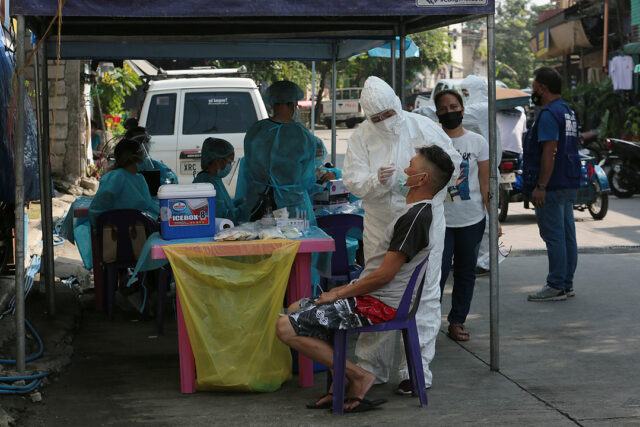
PHILIPPINES posted 6,835 coronavirus infections on Monday, the seventh straight day the tally remained below the 10,000 mark.

This brought the total to 3.6 million, the Department of Health (DoH) said in a bulletin. The death toll hit 54,538 after 12 more patients died, while recoveries rose by 16,330 to 3.45 million.

The agency said 19.1% of 36,773 samples tested positive for the coronavirus on Feb. 5, way above the 5% threshold set by the World Health Organization (WHO).

There were 116,720 active cases, 7,806 of which did not show symptoms, 103,900 were mild, 3,184 were moderate, 1,495 were severe and 335 were critical.

DoH said 98% of the latest cases occurred on Jan. 25 to Feb. 7. The top regions with new cases in the past two weeks were Metro Manila with 949, Western Visayas with 822 and Central Visayas with 624 infections. All of the deaths occurred in January.

The Health department said 16 duplicates had been removed from the tally, four of which were reclassified as recoveries, while 12 recoveries were relisted as deaths. Two laboratories failed to submit data on Feb. 5.

It added that 41% of intensive care unit beds in the country had been used, while the rate for Metro Manila was 33%.

Daily coronavirus infections in the Philippines might drop to 4,000 by mid-February and to as low as 1,000 by the end of the month, the OCTA Research Group from the University of the Philippines said at the weekend.

Daily infections in Manila, the capital and nearby cities might return to the pre-Omicron surge level by the end of February if the decline continues, OCTA fellow Fredegusto P. David tweeted.

The national average daily cases fell further to 8,442 on Feb. 1 to 5, from 17,025 a week earlier and from 28,666 two weeks earlier.

The Philippines and other countries have started easing lockdowns amid hopes that the highly mutated Omicron variant, which was first detected in South Africa, might have peaked.

The country is set to allow the entry of fully vaccinated nationals of non-visa countries starting Feb. 10, almost two months after it suspended a plan to welcome back foreign tourists due to the threat of the Omicron variant.

Mr. David said a potential influx of foreign travelers might lead to another spike. “Spikes in cases could happen but this is dependent mostly on a new variant,” he said in a Facebook Messenger chat. 

The World Health Organization has said some countries with high immunity rates, strong healthcare systems and decreasing coronavirus infections and deaths could now consider easing restrictions, according to a report by the Los Angeles Times.

The Philippines is scrambling to vaccinate more people as it reopens the economy. It had fully vaccinated 59.81 million people as of Feb. 4, while almost 60.66 million have received their first dose, data from the Health department showed. More than eight million booster shots have been given out.

Senators slam gov’t plan to vaccinate kids without consent

THE GOVERNMENT has started vaccinating children aged 5 to 11 years. — PHILIPPINE STAR/MICHAEL VARCAS

A SENATOR on Monday opposed a government plan to vaccinate children without their parents’ consent.

“If the parent is not agreeable to it, it should be respected,” Senator Ana Theresia “Risa” N. Hontiveros-Baraquel told reporters at a news briefing in Filipino, adding that the state should use information campaigns to fight vaccine hesitancy.

The Health department earlier issued a memo allowing willing children to get vaccinated without their parents’ consent.

Under the memo, the state may act as the legal protector of citizens unable to protect themselves.

The government started vaccinating children aged 5 to 11 against the coronavirus on Monday. It was supposed to start on Feb. 4 but was pushed back after the first batch of vaccine delivery got delayed.

Almost 800,000 doses of the vaccine made by Pfizer, Inc. finally arrived on Friday night.

The Pfizer vaccine is the only shot approved for emergency use by kids aged 5 to 11 years. The vaccine has a lower dosage and concentration compared with the one given to the 12 to 17 age bracket.

The Philippines started vaccinating minors 12 to 17 years in October. The vaccination of children aged 5 to 11 years started in six sites in the capital region.

Vaccination sites included the Philippine Heart Center, Philippine Children’s Medical Center, National Children’s Hospital, Manila Zoo, SM North Edsa and Fil Oil Gym in San Juan City. It will be expanded to Central Luzon and the Calabarzon region on Feb. 8.

“Even in the midst of a pandemic and recession, parents want confidence when it comes to the health of their children as we are also returning to work and employment,” Ms. Hontiveros said.

“This issue also needs to be settled properly,” she said, adding that hopefully, it doesn’t have to reach the courts.

In a separate statement, Senator María Imelda Josefa “Imee” R. Marcos said the government cannot usurp parental authority. “Parents have the right to decide on the health and safety of their children.”

“I hope this push to vaccinate kids is really for their sake and not for the sake of vaccine purchases already made,” she added.

Health Undersecretary Myrna C. Cabotaje, who heads the Philippines’ National Vaccine Operations Center, had said the government seeks to inoculate 15.5 million children aged 5 to 11 years.

“Let’s prioritize the elderly and not lose sight of fully vaccinating the most vulnerable groups before rushing to vaccinate healthy kids,” Ms. Marcos said.

She cited the World Health Organization’s call for governments to first achieve a high level of vaccination among high-risk groups before vaccinating minors.

As of Friday, 59.8 million have been fully vaccinated against the coronavirus, while 60.7 million have received their first dose. About 8 million people have received booster shots.

The Health department on Friday said more than two-thirds of coronavirus cases among the pediatric group in January were children aged 11 years and younger.

More children got infected with the coronavirus during the recent surge spurred by the highly mutated Omicron variant, it said.

Kids aged 11 years and younger accounted for 56% of the total pediatric cases in September, when the Delta variant spurred a spike in infections. — Alyssa Nicole O. Tan

MAP seeks real-time tracking of election spending this year

THE GOVERNMENT should track the spending of candidates at this year’s elections, according to the Management Association of the Philippines (MAP). 

Campaign donations should be tracked in real time to ensure politicians don’t hide these, MAP President Alfredo E. Pascual told the ABS-CBN News Channel on Monday. The winning presidential candidate should also be monitored “with respect to dealing with his or her donors.”   

“This has to be done on a real-time basis using artificial intelligence-driven technology,” he said. It can be done now rather than wait at the end of the election.”

Under the law, candidates must submit a list of all contributions and election spending within 30 days after elections.

“We want to track on a real time basis so we know that there is no ‘doctoring’ that happens,” he said. He added that some candidates run to make money from excess campaign funds even if they don’t have a chance of winning. — R.M.D. Ochave

Philippines set for border reopening to foreign tourists on Feb. 10

PANGLAO MUNICIPAL TOURISM OFFICE

FULLY-VACCINATED foreign nationals from 157 countries included in the Philippine’s visa-free list will again be allowed entry starting Feb. 10 as local coronavirus cases decline and the government eases restrictions to pump up the economy.

Immigration Commissioner Jamie H. Morente reiterated that inbound foreigners have to present proof of vaccination and other documentary requirements set by the Inter-Agency Task Force for the Management of Emerging Infectious Diseases (IATF). 

Mr. Morente noted that unvaccinated foreigners, regardless of visa type, will not be allowed entry.

“Following the direction of the IATF, unvaccinated and partially vaccinated aliens will not be allowed entry, only those who are fully vaccinated maybe admitted,” he said in a statement on Monday.

Among the other requirements are a negative RT-PCR test result 48 hours prior to departure from their country of origin, passport valid for at least six months, outbound ticket, and travel insurance that includes coronavirus with a minimum coverage of $35,000.

Tourism is one of the sectors hit hardest by the pandemic, with its contribution to the national economy dropping to 5.4% in 2020 from 12.8% in 2019, based on Philippine Statistics Authority data. 

Tourism revenues in 2020 plunged by 83% to P81.4 billion after the country closed its borders and implemented mobility restrictions. 

The Department of Tourism said over a million industry workers were affected. — John Victor D. Ordoñez

2 gov’t agencies partner for COVID-waste management in public transport

PHILSTAR

THE NATIONAL Solid Waste Management Commission (NSWMC) is partnering with the Department of Transportation to manage medical waste such as face masks in all public transport vehicles in the country.

“We need to properly segregate and dispose of these potentially contaminated masks, whether these are from our households or these were used while commuting, to prevent the further spread of COVID-19 (coronavirus disease 2019),” Environment Secretary Roy A. Cimatu, who chairs the NSWMC, said in a statement.

Under NSWMC Resolution No. 1469, the Transport department is tasked to install yellow bins and bags in all transport vehicles in the aviation, maritime, and railways sectors for the proper storage of waste generated amid the pandemic.

The Environment department also directed the strict monitoring of health care waste from international aircraft and cruise ships.

“Personal protective equipment such as face masks will never go away in the near future,” Environment Undersecretary Benny D. Antiporda said. 

“We need to do something about the growing number of these household health care wastes so it doesn’t contaminate waterways at main thoroughfares,” he added. 

In December, the Department of Environment and Natural Resources proposed a P181.6-million budget for the establishment of a preliminary treatment and storage facility for COVID-related medical waste. — Luisa Maria Jacinta C. Jocson

VP Robredo strengthens bailiwick support with Kusog Bicolandia endorsement

OVP PHOTO

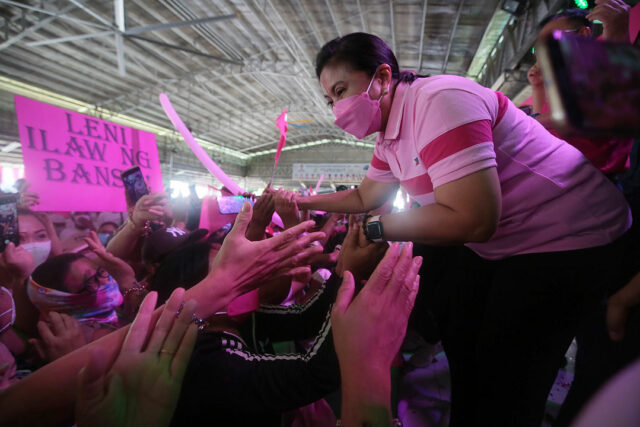
PARTY-LIST Kusog Bicolandia on Monday endorsed the presidential candidacy of Vice President Maria Leonor “Leni” G. Robredo and launched the BikoLeni movement in support of their standard-bearer.

Ms. Robredo, who hails from Bicol Region, and her running mate Senator Francisco “Kiko” N. Pangilinan will hold their proclamation rally in the Bicol province of Camariñes Sur on Feb. 8, the start of the official campaign period for national candidates in the May 9 elections. 

In a speech on Monday in Naga City, the commercial hub of Bicol, she encouraged her supporters to participate in a stationary motorcade to save on fuel costs and prevent traffic. 

“We will try to pass through the whole area.” 

Ms. Robredo’s camp has also adopted a rose symbol for its three-month campaign which her spokesman, lawyer Barry M. Gutierrez, said stood for the core of their campaign — “love, hope, and a better life.” 

PACQUIAO
Meanwhile, Senator Emmanuel “Manny” D. Pacquiao, Sr., who is also running for the top seat, was formally named on Monday as “Ambassador for the Homeless and Vulnerable” by international philanthropic organization Spring Rain Global Consultancy, Inc. for his efforts in housing and consistent donations to those in need.

If elected, the former world boxing champion said he plans to build at least 10 million houses that will be distributed for free to informal settlers and more than nine million families who do not own a house.

Mr. Pacquiao will have his proclamation rally at 3 p.m. on Tuesday in his hometown General Santos City. — Alyssa Nicole O. Tan 

Moreno-Ong tandem to back fisheries department, more foreign investments

PHILSTAR

PRESIDENTIAL candidate and Manila Mayor Francisco “Isko” M. Domagoso vowed full support to the creation of a fisheries department separate from the Department of Agriculture if he wins in the May elections.

Mr. Domagoso, the standard-bearer of Aksyon Demokratiko, said in a statement on Monday that he will certify as urgent bills that will upgrade the Bureau of Fisheries and Aquatic Resources into a department-level agency to “help fishermen earn more.”

Several related bills were filed in the current Congress, but all have remained pending at the committee level.

He also said that he will order the establishment of cold storage facilities in agricultural regions and provinces where the main source of income is fishing. 

Meanwhile, Mr. Domagoso’s running mate, Willie T. Ong, said the Philippines should attract more foreign investments to help boost the economy.

“If we are more open to foreign direct investments, we can be assured that more foreign investors will go here. Because if there are more foreign investors, they will be paying tax and creating more jobs, especially for people in the provinces,” he said in Filipino in a radio interview on Monday. 

Mr. Ong also said that they will push for growth outside the capital.

“Our development is too focused on the NCR (National Capital Region). We also need to develop the regions in Visayas and Mindanao by building more houses and roads so that somehow, there will be more jobs and our economy will be more balanced.”

He also said that digitalizing government processes is one way of fighting corruption.

“I have worked in the Department of Health for five years. That’s when I saw that the computerization in the Philippine Health Insurance Corp. was crucial, because of some wrong reports,” Mr. Ong, a medical doctor, said. “Of course, if the process is done manually, it is easy to make false reports.” 

He also said that the government needs to strengthen information campaigns about COVID-19 vaccines.

Mr. Ong gives medical advice on his Facebook page and his Youtube channel, which has 9.4 million subscribers. — Jaspearl Emerald G. Tan

International group to monitor May 9 polls for rights violations

A GLOBAL human rights coalition has launched an initiative to monitor election-related violence during this year’s national and local elections. 

The International Coalition for Human Rights in the Philippines (ICHRP) announced on Monday that it will have an International Observer Mission (IOM), which aims to provide independent monitoring of the May 9 polls to inform the international community about the election situation in the country.

The electoral watchdog campaign will start this month until the confirmation of elected candidates in June.

The mission was a recommendation by INVESTIGATE PH’s report on cheating and violence in past Philippine elections, ICHRP Global Council Chairperson Peter Murphy said during the live-streamed launch. 

The IOM will be composed of non-Filipino observers in all regions of the country who will present findings every two weeks to the media, he said. 

“The good thing about being in partnership with the international community is having cross border comparisons to share ideas and new perspectives on possible solutions to the problems we face,” Kontra Daya Convenor Danilo A. Arao said. 

The initiative will have participation from academics around the world and a former senator from Australia. 

“People’s lives literally depend on this election to be safely conducted based on the culture of violence from previous elections that may spill over to this year’s elections,” IOM Commissioner Lee Rhiannon, a former senator of Australia, said. 

Mr. Arao said the initiative is independent and not required to register with the Commission on Elections (Comelec). 

The campaign period starts Feb. 8 for national positions and March 25 for local post, both ending on May 7. 

E-RALLIES
Meanwhile, Comelec will start broadcasting e-rallies of national candidates on their Facebook page starting Tuesday night. 

Each presidential, vice presidential, senatorial, and party-list candidate will be covered in the live-streamed rallies.

The first night will feature presidential bets Norberto B. Gonzales, Emmanuel “Manny” D. Pacquiao, Sr., and Faisal M. Mangondato, Comelec Spokesman James B. Jimenez said in a tweet on Monday.

Comelec has released rules for in-person campaigning, which include limited physical contact to comply with public health protocols. — John Victor D. Ordoñez