Home Blog Page 647

Chelsea turns on the style to crush 10-man Barcelona, 3-0

LONDON — Chelsea rolled back the years with an imperious Champions League performance on Tuesday, sweeping aside a toothless Barcelona, 3-0, to take a hefty step towards securing an automatic qualifying place and leaving the Spaniards fighting to avoid a playoff.

After an early own goal and a red card for Barcelona’s captain Ronald Araujo at the end of the first half, teenager Estevao smashed in a fabulous second and Liam Delap got the third, and the Londoners also had three goals ruled out.

“It is a huge night for Estevao, a huge night for the whole club,” said Chelsea manager Enzo Maresca. “Winning the Club World Cup has been important for the players in terms of confidence, they realize they can win against any team. A winning mentality is the only way to build something important.

“If Barcelona don’t have the ball they don’t feel comfortable, so we tried to keep the ball.”

It was like the old days at Stamford Bridge, when taking on and beating the cream of Europe was the norm, as Chelsea made all the running, passing crisply and constantly probing down both flanks.

Not for Barcelona, though, who were the palest shadow of the sides who used to keep possession with such ease before relentlessly carving out opportunities. On Tuesday, they barely held the ball for three passes, let alone built any sustained pressure.

Their defense too looked ragged and they were saved only by the officials as Enzo Fernandez had a goal ruled out for handball after five minutes and another for offside. — Reuters

Create your future with smart choices

Success is not about luck. It is the result of smart, conscious decisions. And when it comes to your future, few choices matter more than the ones you make about money.

Every peso you will save, spend, or invest will shape your future. Any other choice that deviates from the smart ones can lead to debt and stress. The smart choices will open doors. Doors to your freedom, to more options, and to better peace of mind.

Think of decisions on money as building blocks. Each stack represents each of your goals — graduate from college, start a business, buy a house, travel to your heart’s delight, or even retire early. Choosing to save and spend wisely might seem simple and small now, but it is how success begins.

When it comes to money matters, you do not need to be a finance expert. You just need to be informed. Understanding the basics of money management gives you control and helps you see opportunities instead of missing them. The key is to gain smart money management habits early. Hence, start the habit now.

Start by setting clear goals by knowing and taking to heart what you are saving for. Ask questions and learn about your available options. Think before you spend by weighing your rewards, your options, and your priorities. Keep on learning by staying updated on financial information. When at a crossroad in making decisions, you can never go wrong when you always go back to your goals.

Saving in a bank is a solid first decision. Not only is it safe and secure. It is also protected, thanks to the Philippine Deposit Insurance Corporation (PDIC), the government instrumentality mandated to protect depositors and promote financial stability. Through the protection provided by the PDIC, bank deposits are insured up to ₱1 million per depositor, per bank. Not only will savings in a bank help you prepare for big moments from emergencies to other life goals, maintaining a bank deposit also helps build discipline — the discipline of making saving a habit. In short, keeping your money safe in the bank means keeping your goals safe, too.

American author, coach and motivational speaker Tony Robbins said it best: “It is in your moments of decision that your destiny is shaped.” So, start the learning process today, as we observe the Economic and Financial Literacy Week. Learn, save, and make smart choices that will support your goals. Because your goal, your future is not something that will just happen. It is something you need to create.


Spotlight is BusinessWorld’s sponsored section that allows advertisers to amplify their brand and connect with BusinessWorld’s audience by publishing their stories on the BusinessWorld Web site. For more information, send an email to online@bworldonline.com.

Join us on Viber at https://bit.ly/3hv6bLA to get more updates and subscribe to BusinessWorld’s titles and get exclusive content through www.bworld-x.com.

Marcos seeks charges vs 8 lawmakers in flood-control scandal

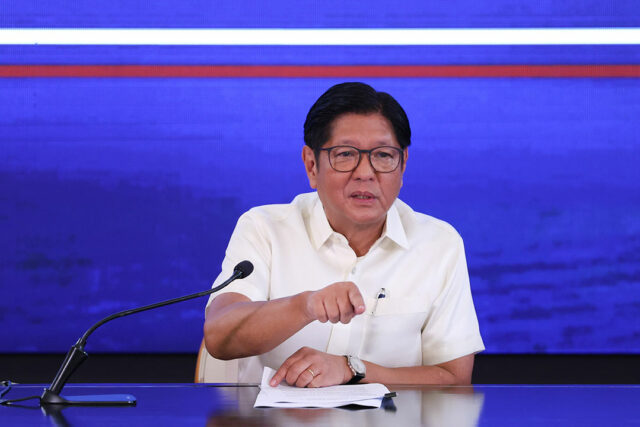
PRESIDENT FERDINAND R. MARCOS, JR. — PHILIPPINE STAR/KJ ROSALES

President Ferdinand R. Marcos, Jr. said the government would endorse to the Office of the Ombudsman plunder, graft, bribery and conflict-of-interest charges against eight lawmakers who allegedly own construction firms with government contracts — escalating his administration’s crackdown on the multibillion-peso flood-control scandal. 

The Independent Commission for Infrastructure (ICI) and Department of Public Works and Highways (DPWH) would submit evidence to the Office of the Ombudsman to bolster the charges, he said in a video message released on Wednesday. 

“This is only the beginning,” Mr. Marcos said, adding that more assets would be frozen as the government seeks to recover public funds. 

The statement came as the Anti-Money Laundering Council (AMLC) secured two more freeze orders, bringing the total value of assets locked in the controversy to about P12 billion. 

The freeze orders covered some P4 billion worth of air assets linked to former Party-list Rep. Elizaldy S. Co, as well as 3,566 bank accounts, 198 insurance policies, 247 motor vehicles, 178 real properties and 16 e-wallet accounts. 

Mr. Marcos separately accused Mr. Co’s camp of trying to blackmail the government into stopping the cancellation of his passport. 

He said a lawyer of the resigned congressman, who is overseas, had approached officials with an offer to withhold a planned video unless authorities reversed the move. 

“I do not negotiate with criminals,” he said in mixed English and Filipino. “Even if you release your video of lies to destabilize the government, your passport will still be canceled. You cannot escape justice.” 

Mr. Co has posted a series of videos accusing Mr. Marcos and senior officials of graft after the administration launched a sweeping probe into alleged anomalies in flood-control contracts. 

His accusations preceded the departure of former Executive Secretary Lucas P. Bersamin and former Budget Secretary Amenah F. Pangandaman. 

The Ombudsman is expected to assess the charges once the ICI and DPWH submit their findings, a step that would formally place the implicated lawmakers under the chief graft buster’s investigation. — Chloe Mari A. Hufana 

Filipino migrant fisher’s death shows industry abuses

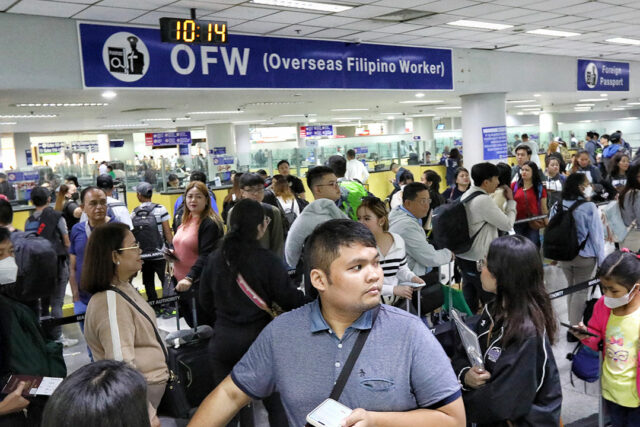
Overseas Filipino workers (OFWs) are seen at the Ninoy Aquino International Airport Terminal 3. — PHILIPPINE STAR/WALTER BOLLOZOS

TUKA, Philippines/MANILA — When the body of 25-year-old Filipino fisherman Sam Dela Cruz was returned to his shipmates after his sudden death in Somalia, they placed his body in the ship’s freezer to take him home to his family.

Their mourning was cut short the next day when armed Somali officers took Dela Cruz’s remains to bury him in a public cemetery in the port city of Bosaso, where their Chinese-flagged fishing vessel, the Han Rong 355, was docked in 2018, according to Gilbert, another Filipino on the ship who used a pseudonym due to safety concerns.

Dela Cruz was one of the 66,000 or more Filipinos deployed on foreign fishing vessels over the past decade, according to the Philippines’ Department of Migrant Workers (DMW), part of a global business worth $140 billion.

Official data showed more than 40% of Filipino migrant fishers are repatriated by the government when their contracts expire or they are subject to ship abandonment or mistreatment.

But deaths like Dela Cruz’s are under-documented, and researchers said it is difficult to determine how many perish in an industry they call poorly regulated and rife with abuse.

SICK AT SEA
Seven years after this death, Dela Cruz’s parents are still waiting for his remains in the village of Tuka in Sultan Kudarat province in the Philippines.

“I really cannot sleep, and I feel like I’m going crazy. I can’t eat much, because my mind is still with Sam,” his mother Roselyn said.

Dela Cruz applied for overseas work in 2017 with the recruitment agency GMM Global Maritime Manila and, in early 2018, flew to Singapore, where ship-management services firm GMH Global Maritime Holding was based. He was quickly deployed onto the Han Rong 355.

Attempts to contact GMH Global Maritime were unsuccessful. A Singapore online business directory lists it as “struck off” the registry.

Medical records from 2013 to 2017 showed Dela Cruz was healthy and certified fit for sea duty. But after reaching Somalia in June, he began limping and complained of pain in his stomach and thigh.

A month later, he was rushed to the National Hospital Bosaso and died there on July 28, 2018, succumbing to cardiac arrest due to septic shock and multiple organ failure, hospital records showed.

A Han Rong 355 agent filed a burial request with a Somali court the day after Dela Cruz’s death, and he was buried the same day, according to documents analysed by the Thomson Reuters Foundation, which was unable to determine and contact the owner of the Han Rong 355.

GMM Manila took three days to report Dela Cruz’s death to the government, which may have delayed official efforts to claim the body.

“The repatriation of remains is a deeply humanitarian issue reflecting our shared respect for the deceased and their grieving family,” said Robert Ferrer Jr., assistant secretary of the Department of Foreign Affairs’ Office of Migrant Workers Affairs.

The Philippine Embassy in Nairobi in July revived negotiations with Somali authorities to bring Dela Cruz’s remains home after GMM Manila’s efforts ended in 2019.

GMM Manila did not respond to requests for comment.

But Marlon Martija, a former welfare officer at GMM Manila who handled Dela Cruz’s case, said the company understood the matter was resolved when the family signed a settlement agreement with compensation of about $35,000.

‘NEFARIOUS OPERATORS’
Dominic Thomson, deputy director and project manager for Southeast Asia with the Britain-based human rights group Environmental Justice Foundation (EJF), said burials on land or at sea are a practice by “nefarious operators.

“It’s almost up to the discretion of the captain whether they go back to port or take a detour from the fishing grounds to make sure that a fisher can get home or get to a hospital in time,” he said.

A Chinese fisher on the ship died about a month after Dela Cruz, Gilbert said. He was buried beside Dela Cruz’s grave in Somalia, documents showed.

Then Gilbert and other crew members on the Han Rong 355 began exhibiting symptoms after they were given “murky water” he said “tasted like metal.”

Nante Maglangit, 35, worked on board other vessels called Han Rong. Like Gilbert, he described an illness in which his legs swelled, coupled with vomiting.

Neither was diagnosed nor received medical attention. A doctor shown Dela Cruz’s hospital records was unable to determine what had caused his death.

GAPS IN PROTECTION
Maglangit fished on Chinese vessels for two years without adequate meals and water, nor full payment of his salary. He and his crewmates were abandoned at sea in 2021 when the COVID-19 pandemic prevented their boat from docking.

In 2022, a Philippine court ordered Maglangit’s recruiter and a China-based shipping company to pay him about $5,000 for contract violations.

Hussein Macarambom, national coordinator for the International Labour Organization’s (ILO) Ship to Shore Rights Southeast Asia project, said “a mix of patchy or overlapping jurisdictions” among countries in the fishing industry makes enforcing worker protections difficult.

The EJF, which has interviewed more than 200 Filipino migrant fishers, compared recruitment practices in the Philippines and Indonesia to a “black market.”

Four fishermen who worked on Chinese vessels told the Thomson Reuters Foundation that they were forced to work for up to 18 hours a day fishing, freezing and packing their catch that included squid, tuna and mackerel.

“It’s akin to human trafficking,” said Thomson. “It’s a completely unregulated industry in a lot of aspects.”

Labour activists have called on the Philippines to join the ILO’s Work in Fishing Convention that sets basic labour standards for the industry.

But Dela Cruz’s family just wants to bury their son.

“Our only wish is for Sam’s bones to come home,” his father Samson said. “So his mother can move on. She cannot have closure if her son isn’t here.” — Thomson Reuters Foundation


BDO raises $500 million from offshore bond offer

BDO UNIBANK, Inc. has raised $500 million from its sale of five-year dollar-denominated bonds that marked its return to the offshore debt market after over three years, it said on Wednesday.

The offering was more than 3.2 times oversubscribed, with tenders reaching $1.6 billion following a series of investor calls that started on Monday, the Sy-led bank said in a disclosure to the stock exchange.

The notes were priced at a coupon rate of 4.375%.

The transaction is scheduled to be settled on Dec. 3.

BDO’s attributable net income rose 6.1% year on year to P22.47 billion in the third quarter, bringing its nine-month profit to P63.09 billion, 4.07% higher than a year earlier. — Aaron Michael C. Sy

More assets of officials linked to flood control mess frozen

ASSETS worth billions that belong to public officials behind the flood control scandal have been frozen as the Court of Appeals issued two new freeze orders on Tuesday, the Anti-Money Laundering Council (AMLC) said.

The assets belong to an incumbent high-ranking official from an independent constitutional body and a former elected government official, the AMLC said, but did not identify the individuals.

These were frozen as they were determined to be linked to breaches of the Republic Act No. 3019 or the Anti-Graft and Corrupt Practices Act as well as the Malversation of Public Funds and Property under Article 217 of the Revised Penal Code, as amended.

The two recent orders froze 230 bank accounts and 15 insurance policies. It also covered two helicopters and one airplane valued at around P3.9 billion. 

This brought the total value of all frozen assets linked to the flood control mess to P11.7 billion, including 3,566 bank accounts, 198 insurance policies, 247 motor vehicles, 178 real properties and 16 e-wallet accounts.

The AMLC said the value will continue to rise following the issuance of the new freeze orders. 

“The issuance of the freeze orders will enable AMLC to pursue a more extensive financial investigation to uncover any possible money laundering scheme linked to the flood control projects,” AMLC Executive Director Matthew M. David said in a statement on Wednesday.

“The public can be assured that the AMLC will continue to pursue all possible legal remedies to ensure that those involved in the misuse of public funds are held accountable,” he added. — Katherine K. Chan

Camp of ex-Rep. Zaldy Co attempted to blackmail gov’t, Marcos says

PHOTO SHOWS President Ferdinand R. Marcos, Jr. holding a news briefing at the Presidential Palace last year on his government’s anti-corruption drive.. — PHILIPPINE STAR/NOEL B. PABALATE

President Ferdinand R. Marcos, Jr. on Wednesday accused the camp of former lawmaker Elizaldy S. Co of attempting to blackmail the government to stop the cancellation of his passport, saying he would not yield to intimidation amid a widening probe into the alleged multibillion-peso flood control scam.

In a video statement, Mr. Marcos said Mr. Co’s lawyer had approached officials with an offer to withhold a planned video unless authorities reversed the move to cancel his travel document.

“I do not negotiate with criminals,” the President said in mixed English and Filipino. “Even if you release your video of lies to destabilize the government, your passport will still be canceled. You cannot escape justice.”

Mr. Co’s legal counsel Ruy Albert S. Rondain denied the president’s accusation, saying it is “completely untrue.”

“I have not spoken with anyone from the government to negotiate the stoppage of the videos for the passport. As I have always maintained, I have no control over the release of the videos,” he said in a statement.

Mr. Marcos’ video statement followed Mr. Co’s accusation against presidential son, House Majority Leader and Ilocos Norte Rep. Ferdinand Alexander “Sandro” A. Marcos III, who allegedly slipped in billions of pesos to anomalous construction projects during the budget bill’s finalization at the bicameral conference committee level.

The president’s disclosure also came as the Anti-Money Laundering Council (AMLC) secured two additional freeze orders, bringing the total value of assets frozen in the controversy to about P12 billion.

The assets included about P4 billion in air assets linked to the former Ako Bicol Partylist representative, as well as 3,566 bank accounts, 198 insurance policies, 247 motor vehicles, 178 real properties and 16 e-wallet accounts.

Mr. Marcos said the Independent Commission for Infrastructure (ICI) and the Department of Public Works and Highways (DPWH) will also submit evidence to the Office of the Ombudsman recommending plunder, graft, bribery and conflict-of-interest charges against eight lawmakers who allegedly own construction firms with DPWH contracts.

“This is only the beginning,” the President said, adding that more assets would be frozen as the government moves to recover public funds. — Chloe Mari A. Hufana

Marcos to dissolve investment affairs office

President Ferdinand R. Marcos, Jr. answers questions from the media after his first Cabinet meeting at the Heroes Hall of the Malacañan Palace, July 5. — PHILIPPINE STAR/KRIZ JOHN ROSALES

Philippine President Ferdinand R. Marcos, Jr. will dissolve the Office of the Special Assistant to the President for Investment and Economic Affairs (OSAPIEA) following the appointment of Secretary Frederick D. Go to the Department of Finance (DoF), Malacañang said on Wednesday.

“Since Secretary Go came from the OSAPIEA and will now move to DoF, the collaboration remains intact,” Palace Press Officer Clarissa A. Castro told a briefing in Filipino, noting that no timeline has been set for the dissolution.

Asked if this move will affect trade negotiations, Ms. Castro quoted Mr. Go as saying there will be no operational disruptions on current negotiations as the Department of Trade and Industry (DTI) has long handled the technical and substantive work related to trade deals.

Mr. Marcos created the post for Mr. Go when he assumed the presidency in 2022.

Asked why the President created OSAPIEA in the first place, Ms. Castro said the office was established to enhance inter-agency coordination.

However, with Mr. Go’s transition to the DoF — an agency that already works closely with DTI and the Department of Economy, Planning, and Development in the Philippines (DEPDev)— Ms. Castro said maintaining a separate office is no longer practical.

Mr. Go replaced Ralph G. Recto as the head of the DoF. Mr. Recto, in turn, was appointed as Executive Secretary. — Chloe Mari A. Hufana

Japan opposition parties brace for possible early snap election, Yomiuri says

REUTERS

TOKYO — Japanese Prime Minister Sanae Takaichi’s high approval ratings are prodding opposition parties to ramp up preparations in case she calls an early election, the Yomiuri newspaper reported on Wednesday.

A snap election, which some analysts say could come as soon as January, would affect the administration’s economic policies including deliberations over Japan’s annual long-term fiscal blueprint, due around June next year.

Depending on when a vote might be called, it could also affect the timing and pace of interest rate hikes by the Bank of Japan, which typically avoids making big policy changes ahead of elections.

Jun Azumi, an executive of the Constitutional Democratic Party of Japan (CDPJ) – the country’s largest opposition party – signaled on Tuesday his party will work with other parties to win back seats from the ruling coalition, the Yomiuri said.

“There’s a good chance (the premier) could consider dissolving parliament at an early date,” Yoshihiko Noda, head of CDPJ, was quoted as saying by domestic media, including Yomiuri, earlier this month.

Ms. Takaichi has repeatedly said she has no time to consider a snap election, and instead would focus on implementing policies to cushion the economic blow from the rising cost of living.

Yuichiro Tamaki, head of a smaller opposition Democratic Party for the People, is touring regional areas aiming to have at least one candidate run in all prefectures, the Yomiuri said. The paper did not mention the possible timing of a snap election.

A hardline nationalist and a fiscal dove, Ms. Takaichi has enjoyed strong public approval ratings since taking office on October 21. A poll by television broadcaster FNN showed on Monday her administration’s approval rating stood at 75.2%.

Her 21.3-trillion-yen ($136 billion) stimulus package has driven up bond yields on concern over Japan’s finances, and raised calls for clarity on how the administration will get the country’s fiscal house in order.

Proponents of an early election hope Ms. Takaichi’s popularity can help the ruling Liberal Democratic Party (LDP) win enough seats to reclaim a majority in the powerful lower house.

Ms. Takaichi was elected prime minister after the LDP agreed to form a coalition with the right-wing Japan Innovation Party, known as Ishin. Together the parties are short of a majority in the lower house, forcing the administration to heed opposition demands in passing a budget and legislation through parliament. ($1 = 156.3200 yen). — Reuters

Future-proofing a company through core values and innovation

A leader in the food manufacturing industry talks about his most important role for future-proofing his family’s company.
Interview by Patricia Mirasol
Video editing by Jayson Mariñas

Ex-President Bolsonaro starts serving 27-year sentence for Brazil coup plot

EN.WIKIPEDIA.ORG

BRASILIA — Brazil’s Supreme Court on Tuesday ordered former far-right President Jair Bolsonaro to begin a 27-year prison sentence for a coup plot against his successor, a climax to years of political turmoil and legal battles over his contentious legacy in Brazilian democracy.

The top court formally concluded the case against Mr. Bolsonaro on Tuesday, making his conviction final, pending confirmation by a four-member Supreme Court panel in the evening. The panel already rejected his appeal this month.

Justice Alexandre de Moraes told Mr. Bolsonaro to start serving his sentence in the Federal Police Superintendency in Brasilia, where he has been detained since Saturday after he tampered with his ankle monitor while under house arrest in a separate case.

The decision was the latest setback for a politician who rose from the fringe far right to the presidency in 2019, reshaping national debates with a populist style, appeals to military nostalgia and polarizing stances that left the country deeply divided.

Since leaving office in 2022, Mr. Bolsonaro has now been convicted, barred from public office and abandoned by one-time ally US President Donald Trump, who has started reversing steep tariffs imposed to punish Mr. Bolsonaro’s prosecution.

“Today is a memorable day for Brazilian democracy,” congressman Lindbergh Farias said on X. “For the first time in our history, we are seeing a former president of the Republic and generals being arrested for a coup d’état.”

One of the ex-president’s lawyers, Celso Vilardi, said the court rushed to conclude the case and should have allowed more time for appeals. His attorneys said they will keep fighting to challenge the outcome.

Mr. Bolsonaro was sentenced in September to 27 years and three months in prison for plotting a coup after losing the 2022 presidential election to leftist current President Luiz Inacio Lula da Silva.

Mr. Bolsonaro also served more than 100 days under house arrest in Brasilia while facing charges he solicited Trump’s interference on his behalf.

‘EMOTIONALLY DESTROYED,’ SON SAYS
Congressman Eduardo Bolsonaro, the former president’s son, told Reuters in his first comments to the media on Tuesday that Mr. Bolsonaro’s prosecution was “psychological torture” and a “rigged game.”

Another Bolsonaro son, Carlos, said after visiting his father in custody on Tuesday: “He is emotionally destroyed.”

Although Mr. Bolsonaro insists he will run for president again next year, he and his family are also working to preserve influence within Brazil’s right‑wing politics and shape the choice of an alternative conservative candidate in 2026.

This has stirred impatience among allies who want to build an effective challenge in 2026 to Lula. He holds a lead in polls over all potential right-wing candidates and his approval ratings climbed again in a poll on Tuesday.

But Mr. Bolsonaro’s defense in his ankle-monitor tampering case – that he was impaired by prescription drugs – fueled doubts about his political viability. He said the medication led him to believe the ankle monitor concealed listening equipment.

“Until recently, Bolsonaro often boasted about being an athlete,” said Pedro Fassoni Arruda, a political science professor at the Pontifical Catholic University of Sao Paulo who noted declining public support for Mr. Bolsonaro in polls.

“Now he presents himself as someone frail and aging.”

In contrast to the mobs he spurred to storm Congress in 2023, only a handful of his supporters gathered outside the Federal Police building where Mr. Bolsonaro was being held on Tuesday.

Trump on Saturday said Mr. Bolsonaro’s detention was “too bad,” in a jarring change of tone after months of pressuring Brazilian courts to drop the case against the former president.

Still, Mr. Bolsonaro’s closest allies insist he remains potent.

“He is not politically weakened,” said right-wing Senator Damares Alves. “He is simply showing what we have long said: His health is not well.” — Reuters

Flood probe clouds growth outlook

PEDESTRIANS walk on a makeshift pathway along P. Burgos Street in Manila on Sept. 6. — PHILIPPINE STAR/NOEL B. PABALATE

By Katherine K. Chan

THE PHILIPPINES’ economic expansion is set to fall short of official targets through 2026 as a widening graft investigation into flood control projects weighs on public spending and investor confidence, according to Deutsche Bank Research.

“The graft probe has weighed on sentiment onshore and will likely drag growth below potential over the coming quarters as it continues to evolve,” Deutsche Bank economist Junjie Huang said in a Nov. 22 report.

Heightened caution among public officials could lead to uneven disbursements even as President Ferdinand R. Marcos, Jr. confirmed that unused infrastructure funds would be reallocated to priority sectors such as health and education, he added.

Deutsche Bank Research lowered its gross domestic product (GDP) growth forecast for next year to 5.1% from 5.7%, below the government’s 6-7% goal. “The Philippines is expected to see a modest growth recovery to 5.1%, as private demand makes up for softer public spending.”

It cut its 2025 projection to 4.7% from 5.4%, signaling a marked slowdown from last year’s 5.7% expansion.

In the third quarter, the Philippine economy grew 4%, the slowest in more than four years, as the widening corruption probe curtailed government spending and dampened household consumption.

The uncertainty surrounding fiscal policy has intensified as the government navigates the scandal. Deutsche Bank Research expects the budget deficit to settle at 5.4% of GDP in 2025 and 2026.

“With investigations into corruption still ongoing and the recent Cabinet reshuffle, spending plans could change over (November to December),” Mr. Huang said. The administration has reiterated that funds unspent on infrastructure would be redirected to sectors deemed critical, including health and education.

The subdued growth outlook coupled with low inflation may encourage further monetary easing.

Mr. Huang projects the Bangko Sentral ng Pilipinas (BSP) will cut the key policy rate by 25 basis points in December and again in February, bringing the benchmark to 4.25%, while leaving the door open for additional reductions if the output gap widens.

The BSP has trimmed rates by 175 bps since August 2024, with the most recent 25-bp cut in October lowering borrowing costs to 4.75% — the lowest in over three years. The central bank’s final rate-setting meeting for 2025 is scheduled for Dec. 11.

Government interventions in the rice market may also help stabilize inflation. Mr. Huang forecasts headline inflation at 1.7% this year, before rising to 2.9% next year, within the BSP’s 2-4% target.

Measures include a nationwide 60-day price freeze on essentials, adjustments to rice import tariffs linked to global prices and a suspension of regular rice imports until the end of the year. The administration plans an import window in January and a tariff scheme for 2026 with rates ranging from 15% to 35%.

Foreign direct investment (FDI) inflows are under pressure as the scandal sours sentiment. Fitch Solutions unit BMI said corruption concerns, combined with global trade uncertainty, are likely to constrain FDI next year.

FDI as a share of GDP fell to 1.3% in the second quarter, below the 2.5% pre-pandemic average. In August, net inflows dropped 40.5% year on year to $494 million, the lowest since June.

The peso has weakened alongside declining investor confidence. It closed at P58.91 a dollar on Tuesday, down four centavos from the previous session. BMI forecasts the peso at P59 by yearend, with a possible breach of P59.50 in 2026, reflecting expectations of further BSP rate cuts.

“The corruption scandal will dampen foreign direct investment inflows into 2026, adding to pressures from macroeconomic uncertainty and global trade tensions,” BMI said in a report dated Nov. 24.

“Further depreciatory pressures lie ahead as we expect Bangko Sentral ng Pilipinas to cut rates by 25 bps in its December meeting following slower growth in (the third quarter) — bringing the US-Philippine policy rate differential back to the narrowest at 50 bps,” it added.

Meanwhile, SUN Life Investment Management and Trust Corp. expects the Philippine economy to grow 4% to 5% next year as governance and corruption issues cloud the outlook.

“Our prediction is probably, we’ll have to ride this in the next three quarters before we can really see any significant movement or change in direction for the overall economy,” SunLife President Michael Gerard D. Enriquez told reporters late on Monday.

“Does this mean that investments will let go? Not necessarily, but I think it will just be slow and stagnant compared with what we usually expect,” he added.

Weak investor sentiment has also weighed on the local equity market, resulting in a weaker valuation on the company’s assets under management, Mr. Enriquez said.

Sunlife sees the Philippine Stock Exchange index (PSEi) ending the year at the 6,000 level.

The PSEi fell 0.75% or 45.42 points to close at 5,976.17, while the broader all-share index rose 1.12% or 39.64 points to 3,574.82.

Mr. Enriquez said their managed assets were revalued at P425 billion from P430 billion due to the PSEi’s losses.

“It would have been better but there’s a market revaluation on equities,” he said. “So, it went down because the equity market went down.” — with AMCS

ADVERTISEMENT
ADVERTISEMENT