Users of Xbox Cloud Gaming will now be able to play Fortnitefor free on devices powered by Google-owned Android and Apple’s iOS thanks to a partnership between Microsoft Corp. and Epic Games, the companies said on Thursday.
The hit battle-royal videogame has been out of the reach of mobile users since Apple Inc. and Google removed it from their app stores in 2020 over a tussle about in-app payment guidelines.
The Microsoft partnership would allow users including PC gamers to stream Fortniteon internet browsers on their devices just like Netflix irrespective of the hardware specifications.
The move is likely to help Microsoft attract more casual gamers as the software giant doubles down on efforts to bolster its presence in the videogaming market and take on rival Sony Corp. The company earlier this year unveiled a $68.7 billion takeover of Call of Duty maker Activision Blizzard .
Fortniteis the first free-to-play title to join the Xbox Cloud Gaming service. “It’s an important step to add a Free-to-Play title to the cloud gaming catalog as we continue our cloud journey,” Microsoft said in a blog post.
Since launching in 2020, more than 10 million people around the world have streamed games through Xbox Cloud Gaming. The service is available in 26 markets, including the United States.
Microsoft, as well as Epic Games and scores of other firms, have criticized Apple’s store practices, which require developers to pay commissions of up to 30% for purchases made in the store.
The Fortnitecreator has also been involved in a legal battle with Apple, but it largely lost a trial last year over whether Apple’s payment rules for apps were anticompetitive.
That decision found Apple had suitable reasons to force some app makers to use its payment system and take commissions of 15% to 30% on their sales. — Reuters
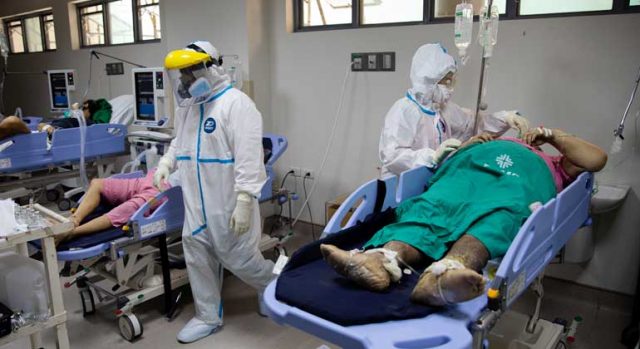
Almost three times as many people have died as a result of coronavirus disease 2019 (COVID-19) as official data show, according to a new World Health Organization (WHO) report, the most comprehensive look at the true global toll of the pandemic so far.
There were 14.9 million excess deaths associated with COVID-19 by the end of 2021, the UN body said on Thursday.
The official count of deaths directly attributable to COVID-19 and reported to WHO in that period, from January 2020 to the end of December 2021, is slightly more than 5.4 million.
The WHO’s excess mortality figures reflect people who died of COVID-19 as well as those who died as an indirect result of the outbreak, including people who could not access healthcare for other conditions when systems were overwhelmed during huge waves of infection.
It also accounts for deaths averted during the pandemic, for example because of the lower risk of traffic accidents during lockdowns.
But the numbers are also far higher than the official tally because of deaths that were missed in countries without adequate reporting. Even pre-pandemic, around six in 10 deaths around the world were not registered, WHO said.
The WHO report said that almost half of the deaths that until now had not been counted were in India. The report suggests that 4.7 million people died there as a result of the pandemic, mainly during a huge surge in May and June 2021.
The Indian government, however, puts its death toll for the January 2020–December 2021 period far lower: about 480,000.
WHO said it had not yet fully examined new data provided this week by India, which has pushed back against the WHO estimates and issued its own mortality figures for all causes of death in 2020 on Tuesday. WHO said it may add a disclaimer to the report highlighting the ongoing conversation with India.
In a statement issued after the numbers were published, the Indian government said WHO had released the report “without adequately addressing India’s concerns” over what it called “questionable” methods.
The WHO panel, made up of international experts who have been working on the data for months, used a combination of national and local information, as well as statistical models, to estimate totals where the data is incomplete — a methodology that India has criticized.
However, other independent assessments have also put the death toll in India far higher than the official government tally, including a report published in Science which suggested 3 million people may have died of COVID in the country.
Other models have also reached similar conclusions about the global death toll being far higher than the recorded statistics. For comparison, around 50 million people are thought to have died in the 1918 Spanish Flu pandemic, and 36 million have died of HIV since the epidemic began in the 1980s.
Samira Asma, WHO assistant director general for data, analytics and delivery for impact, who co-led the calculation process, said data was the “lifeblood of public health” needed to assess and learn from what happened during the pandemic.
She called for more support for countries to improve reporting. “Too much is unknown,” she told reporters in a press briefing. — Jennifer Rigby/Reuters
The country’s unemployment rate in March slowed to its lowest since the start of the pandemic, but job quality worsened to four-month high, the Philippine Statistics Authority (PSA) reported on Friday.
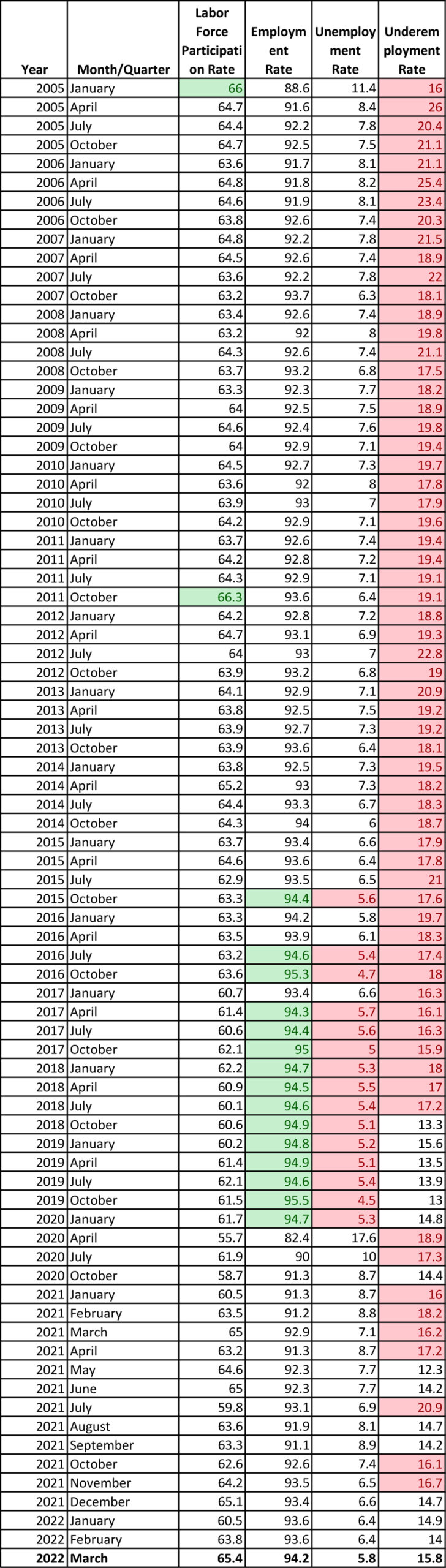
Preliminary results of the agency’s March round of the Labor Force Survey (LFS) showed the unemployment rate eased to 5.8% from 6.4% in February. However, it was also lower than the jobless rate of 7.1% a year ago.
The number of the unemployed Filipinos was reduced by 251,000 to 2.875 million in March from 3.126 million in February. This was lower by 566,000 from 3.441 million a year ago.
March’s jobless rate was the lowest since the 5.3% in January 2020, at the start of the coronavirus pandemic.
However, the quality of jobs slightly worsened in March. The underemployment rate — the share of those already working, but still looking for more work or longer working hours to total employed population — rose to 15.8% that month, an increase from 14% the previous month, but still lower than the 16.2% in the same period last year.
This translated to 7.422 million Filipinos looking for an additional job or longer working hours, an increase of 1.040 million from February’s 6.382 million and higher by 86,000 from 7.335 million a year ago.
Underemployment rate in March was the highest in four months or since the 16.7% recorded in November lasty year.
Meanwhile, the size of the labor force in March continued to pick up month on month by 1.244 million to 49.850 million. It was larger by 1.078 million from a year ago’s 48.772 million.
This translated to a labor force participation rate (LFPR) — the proportion of the total labor in the working-age population of 15 years old and over — of 65.4% in March, higher than the previous month’s 63.8% and last year’s 65%.
It was the highest LFPR since the 66.3% in October 2011.
The employment rate — the share of the employed to the total working force — was 94.2% in March, an increase from 93.6% in the previous month and 92.9% in March 2021.
This was equivalent to approximately 46.975 million employed Filipinos, higher by 1.495 million from 45.480 million in February. About 1.643 million Filipinos became employed from last year’s 45.332 million.
The PSA started reporting monthly jobs data in 2021. Prior to that, the agency published employment figures on a quarterly (January, April, July, and October) basis.
The March round of LFS was conducted from March 8 to 28. — M. I. U. Catilogo
THE COUNTRY’S trade-in-goods deficit widened to three-month high in March as merchandise import growth continued to outpace the growth in exports, the Philippine Statistics Authority (PSA) reported this morning.
Preliminary PSA data showed the value of merchandise exports grew by 5.9% to $7.171 billion in March, easing from 15.8% growth in February and 33.4% in March last year.
This was the lowest pickup in five months or since the 2% pace in October 2021.
Meanwhile, the country’s merchandise imports rose by 27.7% to $12.175 billion in March. This was slower than the 28.6% posted the previous month but faster than 22.1% a year ago.
This matched January’s pace and the lowest in five months or since the 25.2% growth in October last year.
This brought the trade-in-goods deficit to $5.004 billion in March, almost double the $2.759-billion gap a year ago. It was the widest trade gap since December last year’s $5.273-billion shortfall.
In the first quarter, the trade gap further yawned to a $13.892-billion deficit, wider than the $8.345-billion gap registered in the same period last year.
For the three-month period, exports rose by 9.8% year on year to $19.418 billion, above the 6% growth projected by the Development Budget and Coordination Committee this year.
Meanwhile, imports surpassed the 10% growth projection for 2022 with 28% increase during the first three months of the year to $33.309 billion. — B. T. M. Gadon
Notable of the early accounts of the Standard Chartered Bank’s long history in the Philippines is the note of national hero Dr. Jose Rizal who, while pursuing his advance studies in Paris, instructed his parents to send him money through Chartered Bank of India, Australia and China, former name of Standard Chartered Bank. The letter is taken from the Lopez Museum and Library Collection “One Hundred Letters of Jose Rizal to his Parents, Brothers, Sisters, Relatives,” by Jose Rizal, 1959, published by the Philippine National Historical Society.
More than facilitating transactions and regulating finances, long-standing banks are also witnesses to a nation’s history — from the struggles it faced to the progress it attained.
This can truly be said of Standard Chartered Bank (SCB), which has been supporting the Philippines in nation-building and, in turn, has gained the trust and confidence of the Philippine business community and the government through the years as the oldest international bank in the country. As it marks its 150th anniversary this year, SCB remains committed to be a leading financial institution that supports the Philippine economy — true to its promise of being “Here for good” — while moving forward towards sustainability and inclusivity.
SCB was first established in the country in 1872, taking the opportunities that opened in the nation’s capital, where significant trading business — coming from a number of British and American trading houses — was passing through.
With its first branch located in a modest lower story of a house in Binondo, Manila, then Chartered Bank’s early operations in the Philippines concentrated on financing machinery imports of the booming agricultural industries such as sugar, hemp, coconut, and shortly after copper, pig-iron, anchors, cordage, tobacco, coffee, and rice. The Manila operations, in particular, consisted chiefly of granting of accommodation secured upon export produce, imported merchandise, and promissory notes.
As worldwide demand for Philippine produce grew in the 1890s, the bank granted fixed loans to leading firms against sugar, hemp, copra, tobacco and coffee. It also financed shipments of sugar to China, Canada, and London; copra to Paris; and hemp to New York.
One of those who trusted the bank with his financial needs was the country’s national hero, Dr. Jose P. Rizal, who cited the Chartered Bank as a better choice for sending money in a letter he wrote to his parents in 1886.
“The day before yesterday, I received a draft of $200 which when collected in Francs gave me only 192, so 4% is lost. With more reason than ever, I repeat to you now what I have told you. If you are to send me money, do it by The Chartered Bank of India, Australia and China which is much better. Had you sent me those $200 through that House, they would have given me some 204 or 205 Francs,” the letter read.
The bank’s reputation further strengthened amid the passing of time — from American occupation of the country to World War II — as the bank continued gaining trust from clients like the government and keeping a strong presence in the country despite several historical challenges.
Later on, SCB Philippines brought significant contributions to development in the country as it has widely supported the commercial, industrial, and agricultural sectors and has helped greatly in the growth of some of the country’s exports.
Year 1969 was marked as a historic year when the two banks, The Chartered Bank of India, Australia and China, and The Standard Bank of British South Africa merged into what it is known today, Standard Chartered Bank.
Through the years, the bank has been instrumental in aiding the economic growth and development of the country, and actively progressed with its operations.
At present, SCB Philippines serves corporate and institutional clients, and solidifies its position as the bank of choice for cash management, corporate financing, loan syndication, and custody/securities services, among other services.
Having gained deep knowledge of the country, coupled with a strong global expertise network and pre-eminent cross border capability, SCB stands as a leading international bank in the country recognized for providing bespoke and innovative financial solutions for its clients. The bank is the leading Bookrunner for Philippine G3 bonds, having been actively involved in 75% of G3 currency issuances by Philippine issuers in 2021 (according to the 2021 Bloomberg league tables). The bank also holds the top Bookrunner spot for Philippine FIG PHP bonds which the bank has consistently held since 2018.
Testament to its leadership position is the host of awards the bank has received over the years. Recently, SCB Philippines was given the Top Corporate Issue Manager/Arranger Award (Bank Category) and Top Five Corporate Securities Market Maker by the Philippine Dealing System Holdings Corps and Subsidiaries (PDS Group); Best in Foreign Market Coverage Award by the Fund Managers Association of the Philippines; the Best Sub Custodian Bank by both the Global Custodian Awards and The Asset Triple A Servicing Awards; and the Best Bond Adviser (Global) by The Asset Triple A Country Awards.
As it moves forward beyond its historic past, SCB further commits to being a “Force for Good,” by promoting economic activity with positive social impact. One of the main ways SCB has been doing this is by supporting its clients in accelerating net-zero targets through sustainable finance. The bank has successfully assisted its clients with ESG issuances, in particular, acting as a Sustainability Structuring Advisor to the Republic of the Philippines’ (ROP) US$1-billion 25-year sustainability bond issuance and Sole Arranger to BDO Unibank’s PHP52.7-billion two-year ASEAN Sustainability bond offering earlier this year.
Alongside this effort, SCB is also promoting economic inclusion through its Futuremakers global initiative. Seeing how the pandemic made inequality worse, Futuremakers by Standard Chartered tackles inequality across SCB’s markets through fund raising and community programs that are anchored on the pillars of education, employability, and entrepreneurship.
It supports disadvantaged young people, to learn new skills and improve their chances of getting a job or starting their own business. In the Philippines, the bank works with local partners to provide capability trainings, seed funding and micro loans to lift economic participation of the youth, particularly women and girls. The bank’s community programs also promote digital adoption to align with the Bangko Sentral ng Pilipinas’ (BSP) digital payments push.
More than bearing witness to the Philippine development as the country’s longest-standing international bank, SCB Philippines remains steadfast and committed to play a significant role in boosting sustainable progress for the country.
A trailblazer in sustainable finance in the Philippines
Even as the world begins to pick up the pieces from a ravaging pandemic, it lies on the precipice of another great crisis: that which is brought about by climate change. The problem is far-reaching, intensifying with every passing year, and is severe enough to be dubbed “the biggest threat to modern humanity” today. Yet, the pandemic has proven that a global, united, collaborative effort can be a powerful force that can overcome any challenge. If individuals, enterprises, and organizations in both the public and private sectors can work together to find solutions to create a more inclusive, sustainable future, there is much reason to hope.
Green finance is one such solution. At its simplest, the World Economic Forum defines green finance as any structured financial activity — a product or service — that’s been created to ensure a better environmental outcome. It includes an array of loans, debt mechanisms and investments that are used to encourage the development of green projects or minimize the impact on the climate of more regular projects, or a combination of both.
In the Philippines, Standard Chartered Bank (SCB) is a leader in this space. The bank promotes sustainable finance to support economic growth, expanding renewables financing and investing in sustainable infrastructure where it is needed most.
The bank was mandated as a structural adviser of the Philippines Sustainable Finance Framework designed to support its sustainability commitments and set out how the country intends to raise green, social or sustainability bonds, loans, and other debt instruments in the international capital markets. The framework marks an important milestone for the country’s sustainability journey and the Philippine sustainable finance market more broadly, as it lays out the process that will be used to ensure transparency and disclosure of the use of proceeds, as well as the expected environmental and social impact of eligible green and social projects, in keeping with international best practices.
This is not the first time SCB has enabled sustainability-focused collaboration in the financial markets either. For over 150 years, it has aimed to provide banking services that help people and companies to succeed, creating wealth, jobs, and growth across some of the world’s most dynamic markets.
SCB led the Rizal Commercial Banking Corporation PHP17.87-billion ASEAN sustainability bond which won Best Sustainability Bond at the 2021 The Asset Country Awards. The bank acted as sole lead arranger and bookrunner in this first ASEAN sustainability bond issuance out of the Philippines in 2021.
Both RCBC and SCB have aligned their sustainable finance frameworks to prioritize capital raising and lending to sectors that benefit the environment and society. These range from renewable energy, green buildings, clean transportation, and pollution prevention and control — through to affordable housing, water provision, education and healthcare.
The bank is also Sole Arranger to BDO Unibank’s PHP52.7-billion two-year ASEAN Sustainability bond offering earlier this year. This landmark transaction represents the largest-ever Environmental, Social, and Governance (ESG) issuance out of the Philippines. Proceeds of the issue are intended to diversify the bank’s funding sources, and finance/refinance eligible assets under the bank’s Sustainable Finance Framework.
SCB also acted as a Sustainability Structuring Advisor to the Republic of the Philippines (RoP) US$1-billion 25-year sustainability bond issuance.
These issuances affirm the bank’s position as the leading ESG bond arranger in the country, having been part of approximately 42% of all Philippine USD and PHP denominated ESG bond offerings to date.
Collaboration within any industry is crucial towards creating long-term impact, and SCB believes that finance plays a key role in enabling such changes. Through multiple partnerships, the bank helps individuals to build a positive future for themselves and their families, businesses to thrive and grow, and governments to deliver economic prosperity for the wider community.
A leader in Philippine banking
Standard Chartered has come a long way as a strong partner to the country’s economic development and nation-building. Through the years, the bank has sought to live up to its brand promise — to be ‘Here for good,’ by supporting its clients while promoting a positive impact on the wider economy, and by accelerating net zero, lifting participation and resetting globalization.
SCB had long been a pillar of excellence for the Philippine financial industry. The bank has been recognized as a top-rated custody and fund administration service provider to leading foreign and domestic institutional clients, and has been recognized as Consistent Category Outperformer, Market Outperformer and Global Outperformer in industry surveys. The bank received back-to-back Best Sub-Custodian Bank awards at the Global Custodian Awards 2021 for three consecutive years and The Asset Triple A Asset Servicing Awards 2021.
The bank also continues to invest in its technology platforms, alliance, and networks to deliver quick and uninterrupted service to its valued clients. This is part of the bank’s efforts in accelerating its digital transformation and increasing collaboration with corporates, FinTech companies and developer communities. SCB Philippines is one of the few global banks to roll-out Instapay in its e-channels and an open loop payment gateway service through its Straight2Bank Pay solutions providing clients with access to online collections from various InstaPay, PESONet, and Real Time Gross Settlement (RTGS) participating institutions. The bank has also launched its Open Banking Application Programming Interface (API) services geared towards providing efficient services to its clients including their cash requirements, notifications, and real-time alerts.
Through its digitalization journey, the bank continues to enhance its capabilities allowing it to service the growing and complex needs of its clients in trade and commerce.
“We will continue to leverage on our extensive network, local expertise and global capabilities to provide innovative financial solutions to our clients,” country CEO Lynette Ortiz said.
“It is crucial that we ensure sustainable development through our business, operations and communities,” Ms. Ortiz added.
With the bank’s broad range of banking capabilities and on-the-ground expertise, Standard Chartered is helping businesses and society to navigate through the current crisis with an aim to build a more equitable and sustainable Philippines.”
Committed to being a ‘force for good’
SCB helps uplift Filipinos’ lives, backs education and inclusion
Standard Chartered Bank has been helping communities to tackle inequality through economic inclusion in markets. In the Philippines, it has been supporting disadvantaged women and young girls, young farmers and microentrepreneurs to earn, learn and grow.
Having been supporting the country through financial services and nation-building for 150 years now, Standard Chartered Bank (SCB) is indeed “here for good.” Still, for the international bank, being here for good is not good enough. SCB also aspires to be a “force for good.”
Merging its commitment to being a responsible and sustainable organization, SCB not merely seeks to create prosperous communities but also provide long-term value.
Globally, SCB has been preparing the next generation and empowering them to build their own future. Futuremakers by Standard Chartered is the bank’s global initiative to tackle inequality and promote greater economic inclusion for disadvantaged young people in our communities through education, employability, and entrepreneurship.
They would have the opportunity to learn new skills and have better chances to get a job or set up businesses.
In the Philippines, SCB partnered with SOS Children’s Villages to provide more than 1400 youth beneficiaries, particularly young women and people with disabilities, with decent employment and alternative sources of income through partnership development and various capacity-building interventions.
The bank’s initiative would pilot at least five business centers as venues for entrepreneurial training. It would also work with the government and private sector organizations for youth employability projects like youth mentoring, soft skills training, capacity building, organizational skills training, and reproductive health awareness. The project would also support the youth in their digital upskilling.
SCB also partnered with two microfinance institutions Tulay Sa Pag-Unlad, Inc. (TSPI) and the Alalay Sa Kaunlaran, Inc. (ASKI) to extend micro loans to women-led microenterprises to help them scale up their digital enterprises. The program also promotes digital adoption for microenterprises supporting the Bangko Sentral ng Pilipinas’ (BSP) digital payments push.
This year, SCB Philippines will launch a COVID-19 Economic Recovery program to provide more funding to small businesses gravely affected by the pandemic to boost community-based economic activities.
Through the years, SCB has demonstrated its commitment to the communities.
For the past five years, the SCB Livelihood and Education for Agri/Aquaculture Development (SCB LEAD), one of the bank’s flagship programs under Futuremakers, has been supporting the farm school Catbalogan City Agri-Industrial School (CCAIS) in Samar.
The program equipped its senior high school and graduate students with skills and knowledge to help them become professional farmers. It also offered them entrepreneurial opportunities through the set-up of agri-businesses.
This year, SCB has provided CCAIS with an additional model farm technology in poultry raising, and seed funding for its youth beneficiaries to help them start with their home-based agri enterprises.
In response to the COVID-19 pandemic, SCB launched a US$50-million charitable fund to support victims of the pandemic. The bank was cited by Leathwaite, an executive search and human capital specialist firm based in London, for leading in the global response to the COVID-19 pandemic.
From the US$50-million fund, the bank used the US$25 million for immediate relief efforts in the most vulnerable communities. The bank donated US$10 million to Red Cross and UNICEF, and US$15 million was allocated to local NGO partners across its markets. The remaining US$25 million was allocated for COVID-19 recovery programs supporting the youth and women through education, employability and entrepreneurship.
In the Philippines, SCB supported COVID-19 relief efforts in partnership with Philippine Business for Social Progress (PBSP).
The bank provided 10,000 family food packs to the most vulnerable communities in the National Capital Region and Region IV-A. Aside from the food packs, the bank also distributed more than 11,000 sets of reusable protective personal equipment (PPEs) to more than 40 hospitals and treatment centres nationwide.
Leader in diversity and inclusion
Standard Chartered is committed to promoting equality in the workplace and creating an inclusive culture where its employees can achieve their full potential. The bank continues to provide a collective voice to drive change. For years, the bank has embedded diversity and inclusion into its organizational DNA, celebrated female role models and allies to reaffirm its commitment to gender equality.
In 2021, Philippines CEO Lynette V. Ortiz was chosen as the UN Women Philippine WEPs Awards Champion in the Leadership Commitment Category. The WEPs Awards honour Asia-Pacific private businesses that champion gender equality in the workplace, marketplace and community in alignment with the Women’s Empowerment Principles (WEPs).
SCB ranked among the top 100 companies in Equileap’s 2022 Gender Equality Global Report and Ranking, and recognized on Bloomberg Gender Equality Index 2022 for the seventh year in a row. Financial Times also recognized StanChart as a diversity leader and signed a statement of support to the UN Women’s Empowerment Principles in 2018.
SCB offers its employees a differentiated workplace focusing on employee wellbeing, diversity and inclusion. Even before COVID-19 forced companies to adapt remote working, the bank has a flexible workplace policy already in place for years. At the onset of the pandemic in 2020, the bank immediately implemented flexible and split operations, safeguarding the health and safety of its employees by providing them with daily shuttle service and meals for two years.
The bank also formalized the implementation of its permanent hybrid working model. This data-led approach to work combines remote and office-based working with greater flexibility in working patterns and locations with the objective to redesign jobs, enable its workforce and prepare for the way forward.
Spotlight is BusinessWorld’s sponsored section that allows advertisers to amplify their brand and connect with BusinessWorld’s audience by enabling them to publish their stories directly on the BusinessWorld Web site. For more information, send an email to online@bworldonline.com.
Belonging to the advertising and communications industry that specializes in winning people’s hearts and minds, DDB Group Philippines has always seized opportunities to create positive impact on society through its work and its people.
For the upcoming May 9 elections, DDB Group came up with an “Election Day” information and advocacy campaign, which captures anew its commitment to help shape society by encouraging people to go out and vote.
This election, after all, is a rare opportunity to fully harness the power of democracy – that is, in choosing the leaders who will assume government positions – from the highest presidential post to that of a barangay councilor.
“Voting is the basic foundation of our democracy. It is a right that we Filipinos should not take for granted. It gives us the power to choose the kind of government, and yes, the kind of country we want to see in the near future,” said DDB Group Philippines Chairman and CEO Gil G. Chua.
Notably, to give the 65.7 million locally registered Filipino voters the chance to fully participate in the elections, Comelec has signed a resolution asking Malacañang to declare May 9 as a nationwide holiday.
“We encourage all registered voters within the DDB Group of companies to set aside their deadlines and job orders for the most important task on election day, that is, to cast their ballots. There is simply no reason not to go out there and vote. Every single vote matters!” said Chua.
Like their employees, DDB hopes that all Filipinos will prioritize voting on Monday as their participation in this election is the most valuable contribution they can give for the country’s future.
Spotlight is BusinessWorld’s sponsored section that allows advertisers to amplify their brand and connect with BusinessWorld’s audience by enabling them to publish their stories directly on the BusinessWorld Web site. For more information, send an email to online@bworldonline.com.
Israel shares best practices in cyber protection of the financial sector with the Bankers Association of the Philippines.
Israel shares best practices in cyber protection of the financial sector
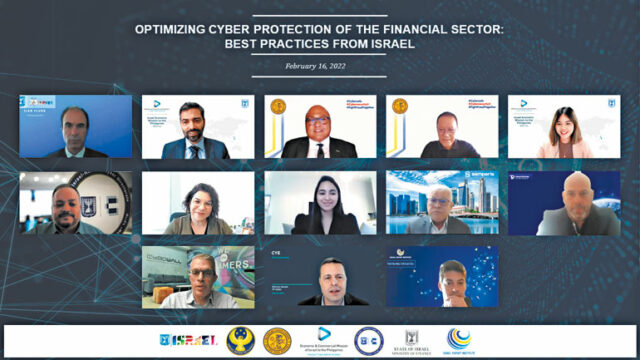
The Embassy of Israel in Manila and the Israel Economic & Commercial Mission to the Philippines, in cooperation with the Bankers Association of the Philippines (BAP), hosted a virtual event last Feb. 16 focusing on cybersecurity entitled “Optimizing Cyber Protection of the Financial Sector: Best Practices from Israel.”
The program was divided into two parts: introducing the unique model of protecting financial institutions in Israel, and pitching of Israeli leading companies with innovative cybersecurity technologies and solutions for the financial sector.
Tomer Heyvi, economic counsellor and head of the Mission, shared that the purpose of this event is to share the Israeli expertise and technologies in the cybersecurity field in light of the growing challenges and threats that financial institutions around the world, including the Philippines, are facing these days.
In his opening remarks, Israeli Ambassador to the Philippines H.E. Ilan Fluss shared, “My vision for the future of relations between Israel and the Philippines is to see growth in cooperation in innovation and technologies especially in these critical and sensitive areas. Israel has proven itself as a reliable and solid partner of the Philippines, therefore, I believe we should see more partnerships in the cybersecurity area.”
In the first session of the program, Governor Benjamin E. Diokno of the Bangko Sentral ng Pilipinas shared his insights on Philippines Cybersecurity ecosystem and challenges in the financial sector.
In his speech, Governor Diokno mentioned some key areas for collaboration such as threat intelligence platform and setting up a national CERT, given the industry-wide initiatives in the Philippines and the maturity and sophistications of Israel in terms of cybersecurity controls and management.
“I hope this session will strengthen ties and cooperation between Israel and the Philippines so that our respective financial services sectors remain safe, innovative and resilient in the digital economy,” Mr. Diokno added.
Additionally, Jose Arnulfo A. Veloso, BAP president, highlighted in his remarks that cybersecurity remains to be a top priority of the association. He shared a number of advocacies of the BAP to promote and intensify its cybersecurity framework in the Philippine banking and financial services sector. “Together with the partnership of the guests in this forum, we can take them [cyberthreats] head on,” he noted.
Doron Liberman, director of International Cooperation Development in the Israel National Cyber Directorate (INCD), in his remarks shared the Israeli national approach and strategy to the cybersecurity ecosystem as a whole in the civilian sphere. “The INCD looks at its constituencies in different layers: critical infrastructure, sectoral and general public,” he said.
Mr. Liberman further shared that the INCD is a national agency that provides national intelligence and active defense tools and methodologies, and awareness events where their assistance is needed.
Rahav Shalom-Revivo, head of Financial-Cyber Innovation and International Engagements from the Israel Ministry of Finance, shared the multinational financial cyber simulation that the Ministry executed with countries that Israel has financial cyber relations with. In that simulation, she highlighted that international collaboration is key and that there must be synchronization between finance and cyber decision makers. She added, “The collaborative understanding that only together we can overcome such dramatic attacks that at some point in time will happen in the future.”
A study case highlighting the power of collaboration was shared by Eden Cohen, security head of Security Operation Center of Bank Hapoalim, the largest commercial bank in Israel. In her presentation, she shared that in the last three years, there has been a significant rise in organized cyber crimes towards financial organizations by new and advanced tactics to penetrate the digital world. With this, she highlighted that the best way to handle the new generation-attackers is by collaboration as a necessity to protect ourselves and our customers. She added that collaboration between people, businesses, technology, intelligence, and enforcements is a key factor to be able to face cyber-attacks in a quick and thorough way.
The discussion was followed by a pitching session of four companies offering cybersecurity technologies: Semperis: “Protecting your Active Directory, the keys to your Kingdom”; Trustpeers: “Turn Chaos into a Controlled Event with the TrustPeers Cyber Crisis Management SaaS platform”; Cybowall: “AI Powered Cybersecurity”; and CYE: “Continuous Cyber Risk Visibility — Cyber Risk Quantification — Cyber Exposure Optimization.”
Benjamin Castillo, managing director of the BAP, shared in his closing remarks that the power of collaboration is very important in cybersecurity. He mentioned continuing discussions with INCD and the Israel Ministry of Finance as the BAP continues to explore its options in building a national CERT.
Israel is one of the leaders in cybersecurity expertise around the globe, and it has about 40% of the global cybersecurity investments. Israeli’s cybersecurity industry continued to grow in 2021 with a record of USD 8.8 billion in investments in 131 funding rounds — this was tripled compared to 2020 at US$2.9 billion. Further, 33% of the Cybersecurity unicorns in the world are Israeli.
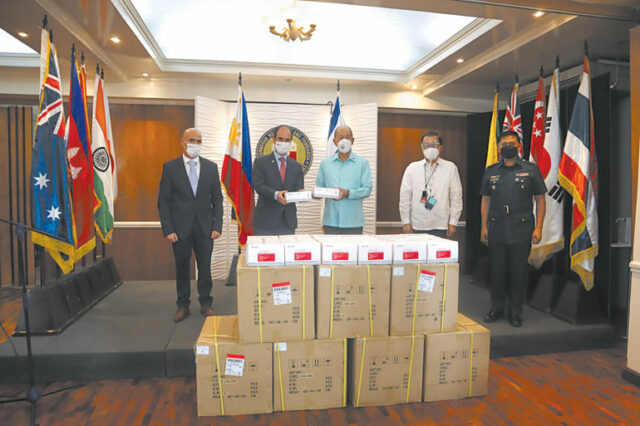
In photo (L-R): Israel’s Defense Attaché Raz Shabtay, Ambassador Ilan Fluss, Department of National Defense Secretary Delfin Lorenzana, Director Franklin Gali, and BGEN Edgar Cardiñoza
The Ministry of Defense of the State of Israel through the Israeli Embassy in Manila donated 16,000 units of antigen test kits to the Department of National Defense (DND) of the Philippines to help its fight against COVID-19.
Israeli diplomats Ambassador Ilan Fluss and Defense Attaché Raz Shabtay turned over the antigen test kits to Secretary of National Defense Delfin Lorenzana.
“Friends support each other in times of need. Israel is a friend of the Philippines and will continue to assist and share its expertise in various fields. I am proud to deliver this Israeli assistance today to support the Department of National Defense of the Philippines in keeping this country safe and secure,” Ambassador Fluss said.
“The relationship between Israel and the Philippines, particularly the relationship between both defense ministries, is never as strong as it is now,” Mr. Shabtay said. “We are delighted to be able to support once more, in the form of contributing 16,000 antigen test kits, to help the Defense Forces of the Philippines in fighting this current Global Pandemic,” he added.
Israel continues to assist the Philippines in combatting COVID-19. In 2021, the Israeli government turned over personal protective equipment to the Department of National Defense and the Philippine National Police, two Israeli delegations of medical experts assisted the country’s national vaccination campaign and shared Israel’s local clinical guidelines for COVID-19 infection control protocols and hospital management. Israel also continues to share its experience and knowledge in emergency and pandemic response with the Philippines through webinars, courses, and joint meetings.
The handover ceremony was held at the DND Headquarters in Quezon City on Feb. 9, 2022. In attendance were Asec. Jesus Rey Avilla, Usec. Ricardo Jalad, Director Franklin Gali, BGEN Edgar Cardiñoza, Usec. Raymundo de Vera Elefante, and staff members of the DND and the embassy.
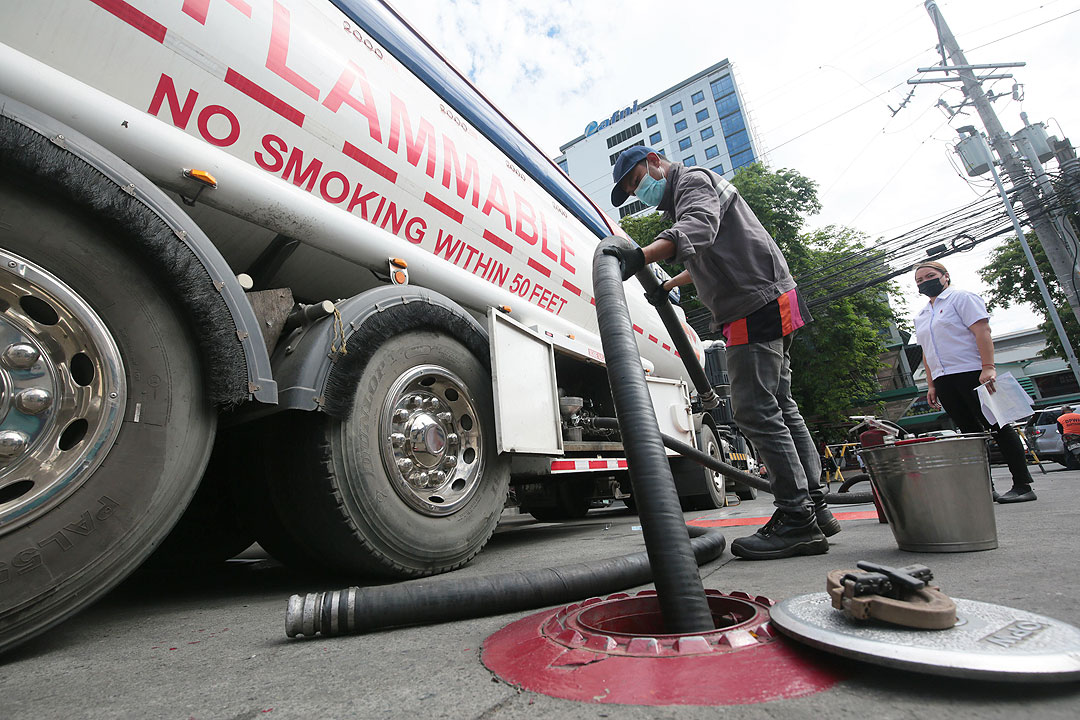
Gasoline and diesel prices have continued to climb amid volatility in global oil markets. — PHILIPPINE STAR/ WALTER BOLLOZOS
By Keisha B. Ta-asan
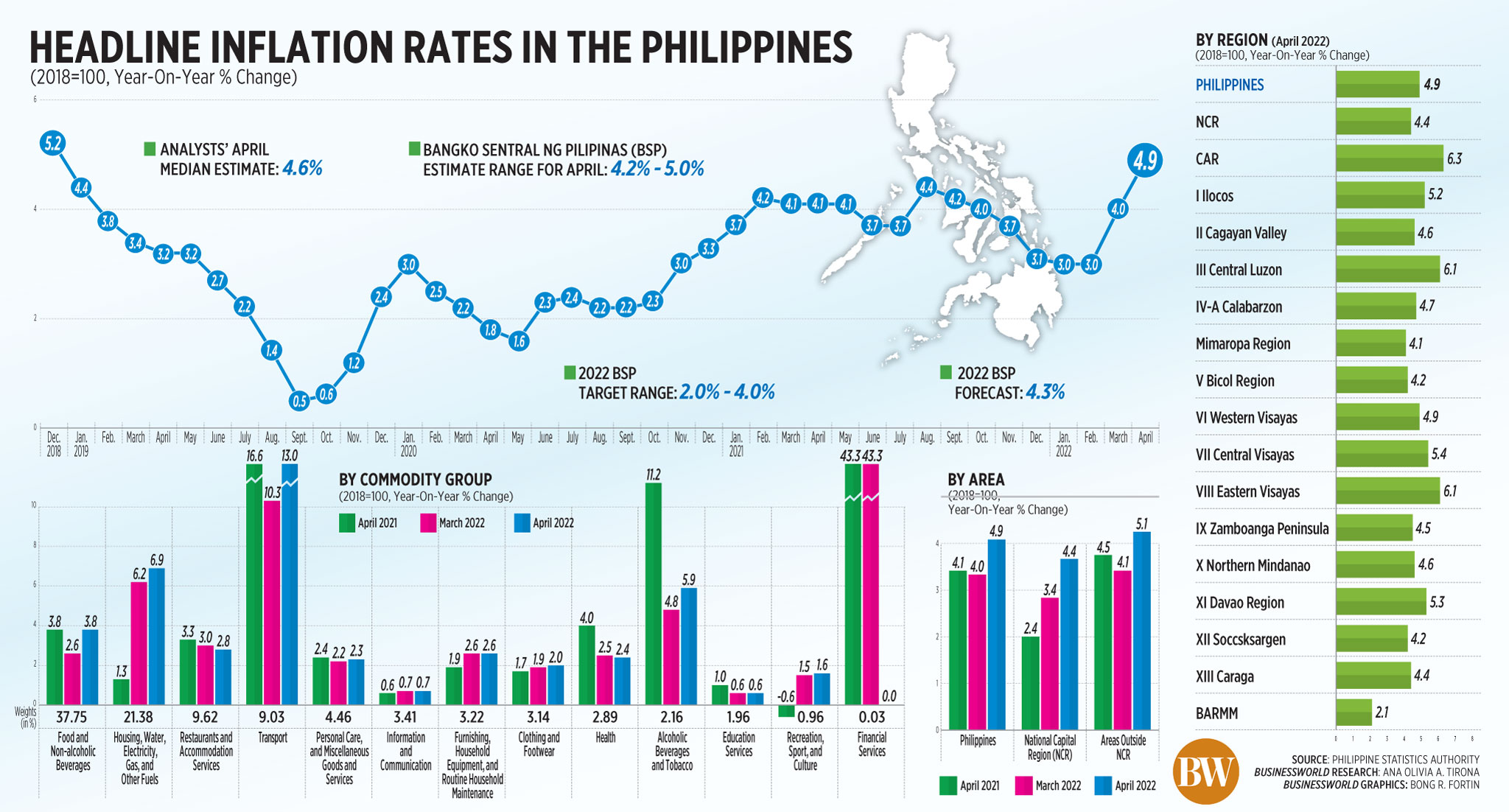
PHILIPPINE INFLATION surged to an annual 4.9% in April, the highest in more than three years as soaring food and energy prices continued to hurt consumers.
This could bolster the case for the Bangko Sentral ng Pilipinas (BSP) to tighten monetary policy earlier than expected.
Consumer prices rose to a 40-month high of 4.9% annually, from 4% in March and 4.1% in April a year ago, preliminary data from the Philippine Statistics Authority (PSA) showed.
It was the quickest pace since the 5.2% print in December 2018, and higher than the 4.6% median estimate in a BusinessWorld poll last week.
The headline figure also breached the central bank’s 2-4% target range for the year, and near the upper bound of its 4.2-5% forecast range for April.
The last time inflation went above the target was in September 2021 when it rose by 4.2%.
Month on month, inflation inched up by 0.8%. Stripping out the seasonality effects on prices, April’s inflation steadied at 1% month on month from March’s 1%.
Inflation averaged 3.7% in the four months to April, lower than 4.1% seen in the same period last year. However, it was still lower than the central bank’s 4.3% forecast for the year.
Prices of heavily weighted food and non-alcoholic beverages grew by 3.8% in April, accelerating from 2.6% in March. This matched the pace recorded in April 2021.
Housing, water, electricity, gas, and other fuels rose by 6.9% in April from 6.2% the prior month and higher than the 1.3% a year ago.
PSA data showed inflation in transport also picked up to 13% from 10.3% but eased from 16.6% last year.
The food-alone index also jumped by 4% in April from 2.8% the previous month. However, it slowed from 4.1% from a year ago.
Meanwhile, the April inflation rate for the bottom 30% of households, which still use the 2012-based prices, increased by 3.8% from 3.3% in March, but lower than the 4.9% in April 2021.
The PSA said the rebased 2018-based inflation for poor income households is scheduled to be released in December 2022.
“World commodity prices remain high as a consequence of the ongoing Russia-Ukraine war. The impact is felt domestically not just on food and basic goods but also on transport and utilities,” Socioeconomic Planning Secretary Karl Kendrick T. Chua said in a statement.
Global oil and commodity prices have become more volatile after Russia invaded Ukraine in late February.
As of April 26, prices of gasoline and diesel have increased by P18.45 and P31.45 per liter since the start of the year. This has prompted labor groups to file petitions for wage hikes, and transport groups to seek fare increases.
Meanwhile, the central bank said the domestic economic activity improved as restrictions eased but geopolitical tensions and emergence of new COVID-19 variants have clouded the outlook for global economic growth.
“Inflation will remain elevated over the near term due to the continued volatility in global oil and non-oil prices, reflecting largely the continued impact of the conflict in Ukraine on global commodities market,” BSP Governor Benjamin E. Diokno said in a Viber message to reporters.
Mr. Diokno said inflation could settle above the government’s target range this year before decelerating back to the target in 2023.
“While there are signs that inflation expectation is higher for 2022, it remains broadly anchored to the target in 2023,” he added.
University of Asia and the Pacific Senior Economist Cid L. Terosa, said the rising fuel and electricity prices exerted direct and indirect upward pressure on food prices.
“Also, the flurry of election-related activities added to the steep ascent of prices last month,” he said in an e-mail interview.
Bank of the Philippine Islands Lead Economist Emilio S. Neri, Jr. said in a press release that oil prices may continue to rise in the coming months if the European Union decides to implement an oil embargo against Russia.
Economists said the inflation target will be difficult to achieve this year coupled with a likely robust first-quarter gross domestic product (GDP) in the first quarter could prod the BSP to hike record-low key rates in the next coming months.
“We think that the government’s inflation target will be breached and that average 2022 inflation will settle at 4.7%,” UnionBank of the Philippines Chief Economist Ruben Carlo O. Asuncion said.
“My thinking is that a better-than-expected first-quarter 2022 GDP growth may merit a May hike. Nevertheless, the BSP may be willing to hold until June,” he said.
ING Bank N.V. Manila Branch Senior Economist Nicholas Antonio T. Mapa expects the central bank to raise the interest rates within the quarter as high inflation reading persists.
“However, with first-quarter GDP growth expected to be robust and confirming that growth momentum is intact, we expect BSP to finally move rates higher,” Mr. Mapa said.
“A GDP growth rate of over 6% on top of the above-target inflation rate should be enough to prod BSP to hike rates as early as the 19 May policy meeting,” he added.
Nomura maintained its average full-year inflation forecast at 4.6%, above the BSP’s 2-4% target.
“Our forecast pencils in a trajectory in which headline inflation rises further and averages above 5% over the next three months, still driven by similar factors (i.e., higher oil and food prices),” Nomura research analysts Euben Paracuelles and Rangga Cipta said in a note sent to reporters.
Asian Institute of Management economist John Paolo R. Rivera said combating high inflation can be addressed by appropriate fiscal and monetary policy.
“Together with the Monetary Board’s interpretation of Fed moves and possible actions, the Monetary Board will decide whether to raise monetary policy rates earlier than expected,” Mr. Terosa said via Viber.
The US Federal Reserve raised its key rates by 50 basis points to a range of 0.75% to 1% at the end of its May 3-4 meeting.
Last week, Mr. Diokno said the BSP was looking at raising interest rates two to three times to bring down inflation by next year, with the first hike to be considered in June.
The BSP has kept the key overnight reverse repurchase facility rate at a record low of 2% since November 2020 to help the economy weather the pandemic.
The PSA is scheduled to release the first-quarter GDP data on May 12, ahead of the Monetary Board meeting on May 19. — with inputs from Luz Wendy T. Noble and Reuters
Since 2020, the Philippines borrowed P1.3 trillion and received grants worth P2.7 billion to fund its pandemic response, including coronavirus vaccines. — PHILIPPINE STAR/ MICHAEL VARCAS
By Tobias Jared Tomas
THE NATIONAL GOVERNMENT’S (NG) outstanding debt rose to a record P12.68 trillion as of end-March, as domestic and offshore borrowings increased, the Bureau of the Treasury (BTr) said on Thursday.
Preliminary data from the BTr showed that outstanding debt jumped by 17.73% from P10.77 trillion a year ago, and by 4.8% from February.
In a statement, the BTr said the higher debt was “primarily due to the net issuance of government securities to both local and external lenders.”
Of the total, 70% of the debt portfolio were from domestic lenders, while the rest were from foreign sources.
Domestic debt stock stood at P8.87 trillion as of end-March, up by 14.5% year on year, and 5.4% month on month. The National Government raised P457.80 billion through the successful domestic retail Treasury bond (RTB) issuance and debt exchange during the month.
Of the total domestic debt stock, P8.57 trillion was from government securities, up by 18.9% year on year and by 5.6% month on month.
As of end-March, the outstanding domestic debt was 8.5% or P698.24 billion more than the end-December level.
Meanwhile, external debt grew by 25.8% year on year to P3.81 trillion as of end-March. It inched up by 3.6% from February.
The Treasury attributed the higher external debt to the net availment of external financing that reached P122.69 billion as of end-March. This included P117.33 billion ($2.25 billion) that was raised from the issuance of the triple tranche 5-year, 10.5-year and 25-year global bonds.
“Third-currency exchange rate fluctuation further lowered the peso value of external guarantees by P5.16 billion, offsetting the P2.31-billion effect of local currency depreciation against the (US dollar),” it said.
Rizal Commercial Banking Corp. Chief Economist Michael L. Ricafort said in a Viber message that the government issued RTBs and global bonds to raise funds for various projects ahead of the election ban on public works that began on March 25.
“[The] rising trend in interest rates, with long-term interest rates at new pre-pandemic highs recently could increase interest payments for new borrowings,” he said.
Mr. Ricafort noted the debt level may reach new record highs in the coming months as the government needs to borrow funds to address the widening budget deficit.
In April, the government raised $559 million from a Samurai bond issuance, and tapped a 30-billion yen ($230-million) loan from Japan.
ING Bank N.V. Manila Senior Economist Nicholas Antonio T. Mapa said in an e-mail that the country might be vulnerable to credit rating actions as the total debt hit roughly 60.6% of gross domestic product (GDP) as of end-March.
“Fitch had previously expressed some concern about the ability of the Philippines to substantially lower this ratio over time,” he added.
In 2021, the Philippines’ debt-to-GDP ratio hit a 16-year high of 60.5%. This is higher than the 60% threshold considered manageable by multilateral lenders for developing economies.
The high level of debt leaves the incoming administration with “very limited options,” Ateneo de Manila University Economics Professor Leonardo A. Lanzona said via Viber.
“Politicians who promise unrealistic programs such as lower rice prices should be avoided… The first item in the agenda of the next administration is to design an economic program that will produce enough growth to pay for our debt,” he said.
“This can mean even larger debt, but the program should be credible enough to assure the financial agencies that we can eventually pay our debts.”
For his part, Mr. Mapa said that the current administration inherited a fairly healthy fiscal position, a luxury the incoming president will not have.
The next president would have to be careful in their decisions in their first 100 days in office, as investors will be watching if fiscal consolidation is a top priority, he said.
“If spending and borrowing continue to bloat the debt levels in the near term, we believe the Philippines will receive a credit downgrade by the end of the year, forcing up our borrowing costs when the Philippines would need to source funding,” Mr. Mapa said.
Fitch Ratings earlier in February maintained the Philippines’ “BBB” credit rating, but with a “negative” outlook, meaning that Fitch could downgrade this rating within 12 to 18 months.
Meanwhile, Mr. Ricafort stressed the need for the next administration to sustain the economic and fiscal reform measures.
Last month, Finance Secretary Carlos G. Dominguez III said the economy needs to grow above 6% annually in the next five to six years to reduce debt.
“The next administration would have to design policies and stick to very strict fiscal discipline to grow out of this debt problem,” he said.
The national election will be held on May 9, with the new administration taking over in July.
Since 2020, the Philippines borrowed P1.3 trillion and received grants worth P2.7 billion to fund its pandemic response, including coronavirus vaccines.
The Department of Finance has said it would take 40 years to pay off these pandemic-related loans and grants.
US dollar banknotes are seen in this photo illustration taken Feb. 12, 2018. — REUTERS
By Luz Wendy T. Noble, Reporter
THE BANGKO Sentral ng Pilipinas (BSP) should be prepared to act as the US Federal Reserve is poised for more rate hikes this year and domestic inflation likely to remain elevated in the next few months.
The Fed’s 50-basis point hike rate that was paired with an eventual tapering of a $9-trillion asset portfolio reflects its “seriousness” in addressing the four-decade-high inflation in the United States, former BSP Deputy Governor Diwa C. Guinigundo said.
“For those investors and credit rating agencies monitoring interest rate differentials across countries, that US Fed move could encourage more capital flows to the US, away from some emerging markets with lower real interest rates,” Mr. Guinigundo said in a Viber message.
“While our local real interest rate is higher, other factors are also considered like growth prospects, currency movement and political prognosis,” he added.
Sophia Ng, an analyst at the Mitsubishi UFJ Bank Global Markets Research, also sees the possibility of capital flight, but says this could be more manageable for the Philippines.
“The saving grace for the Philippines in my view is the relatively low foreign participation in both equity and bond markets as compared to other emerging economies within Asia, which means that downward pressure on the peso from potential capital outflows is likely to be more modest than other AXJ (Asia except Japan) currencies that are more sensitive to portfolio outflows,” Ms. Ng said in an e-mail.
With central banks now also having to confront the inflation risks caused by the Russia-Ukraine war, the timing of when to start policy tightening has become more crucial, experts said.
“I don’t want to preempt future BSP moves but those decisive actions by the US Fed should make all other central banks think of the timing issue,” Mr. Guinigundo said.
“A slight, symbolic move can assure the market that monetary policy is aware of the situation and it is doing something about it,” he added.
Bank of the Philippine Islands Lead Economist Emilio S. Neri, Jr. said the latest Fed pronouncements strengthens the case for the BSP to stand ready given the Fed “appears to still be far behind the curve” in terms of policy tightening to battle inflation.
Mr. Neri said central banks, including the Fed, that initially deemed inflation risks to be “transitory” last year may now have to hike aggressively for the next six to 18 months due to rising import bill for oil, rising commodity prices.
“BSP may need to deliver a preemptive action, like an inter-meeting rate hike to avoid the consequences of getting more surprises from the US central bank,” Mr. Neri said in a Viber message.
He said an outflow of funds combined with faster inflation will affect the peso’s strength.
The local unit closed stronger by 11.5 centavos to P52.385 on Thursday from P52.50 on Wednesday, based on Bankers Association of the Philippines data. However, the pesoweakened by 2.7% from its end-2020 finish of P50.999.
The Fed’s tightening comes at a time of faster inflation in the Philippines, which should urge the central bank to prepare a monetary policy response, Security Bank Corp. Chief Economist Robert Dan J. Roces said.
Headline inflation quickened to a three-year high of 4.9% in April, as food, utility and transport costs continued to rise.
“With local inflation well-above target and poised to remain so, the buildup in price pressures will need a preemptive check from the monetary authorities,” Mr. Roces said in a Viber message.
He expects the BSP to start increasing rates by around 25 bps in the second quarter, followed by three more 25-bp increases in the third and fourth quarter of 2022.
The BSP expects inflation to surpass the 2-4% target at 4.3% for 2022.
The Monetary Board has kept its key rate at a record low of 2% since November 2020 to support theeconomy’s recovery.
BSP Governor Benjamin E. Diokno last month said they may consider a rate hike by June, when more data on economic growth and employment will be available to prove that recovery is more entrenched.
The Monetary Board will have its next policy review on May 19.
THE PHILIPPINE Economic Zone Authority (PEZA) reported a 68% decline in approved investments in the first quarter of 2022, as the Russia-Ukraine war hurt global economic prospects.
PEZA Director-General Charito B. Plaza said at a press conference on Thursday that the agency approved P8.141 billion in new investments during the first quarter, lower than the P25.382 billion during the same period in 2021.
“These (investments) came from 29 new and expansion projects with projected annual export sales of $232.454 million and expected job generation of 3,168 direct employment,” Ms. Plaza said.
She attributed the decline in approved investments to the Russia-Ukraine war, the ongoing pandemic and uncertainty ahead of the May 9 polls.
“Usually during election period, the investors would wait what is going to be the result of the election because they already anticipated that there will surely be new policies, laws, and rules that will be adopted by the new administration,” Ms. Plaza said.
The PEZA chief said more new investments are expected to come in after the May 9 polls.
“We expect that after the election, these investments will bounce back,” Ms. Plaza said.
In April, PEZA raised its investment approvals target for 2022 to 7-8% growth, from its original 6% goal.
Meanwhile, Ms. Plaza urged the next administration to immediately address the issue surrounding the work-from-home arrangement (WFH) for locators within PEZA’s economic zones, especially for registered information technology business process outsourcing (IT-BPO) firms and registered business enterprises (RBEs).
“We hope that the new administration will address this (WFH issue) immediately, so we can put a stop to the worries (and) the frustrations. Let us not make it a big issue because this is the appeal of the workers, not only the locators. In addition, the government is still earning despite the WFH arrangement,” Ms. Plaza said.
“Actually, the RBEs are frustrated with the Philippine government due to being unstable. We are not yet off the pandemic, (and) the effects of the Ukraine war. So let us be sensitive. Let us ask the new administration to address this immediately,” she added.
Currently, PEZA is allowing registered firms to conduct a 70% on-site and 30% WFH arrangement.
Ms. Plaza said that PEZA has currently issued 444 letters of authority (LOA) to registered IT-BPOs and RBEs that cannot immediately return to the office on April 1.
Under Fiscal Incentives Review Board (FIRB) Resolution 19-21, registered IT-BPM companies can implement a WFH arrangement for up to 90% of their workforce while still enjoying tax incentives as a result of the pandemic. The resolution expired on April 1, and employees were directed to return to the office.
FIRB also previously denied PEZA’s request to extend the WFH arrangement, citing the country’s improving vaccination rate.
Further, Ms. Plaza said the suggestion of the Department of Trade and Industry (DTI) that IT-BPO firms instead register with the Board of Investments (BoI) is “unfair” to PEZA.
“Asking the IT-BPOs to transfer to BoI, I think that is unfair because under Republic Act No. 11534 or the Corporate Recovery and Tax Incentives for Enterprises Act, we now have similar incentives,” she said. — R.M.D. Ochave