Home Blog Page 6432

SEC plans rules for sustainability, ESG-focused funds 

THE Securities and Exchange Commission (SEC) drafted guidelines for investment companies aiming to qualify as sustainable and responsible investment (SRI) funds or for any financing firms that consider environmental, social, and governance (ESG) factors for investments.

In a draft memorandum circular published on Jan. 19, the SEC said the rules aim to “provide guidance on the disclosures and reporting of investment companies classified as [SRI] funds and their fund managers.”

The regulator added that it also took note of other regulators’ initiatives to protect against greenwashing, which happens when investors or customers are misled to believe that products or services are more sustainable or environment-friendly.

To qualify as an SRI fund, investment companies as well as their sub-fund should state one or more “sustainability principles or considerations or ESG factors” in their registration statement. The fund’s ESG-related investments should also account for at least 70% of its net asset value (NAV) at all times.

The “sustainability considerations,” principles, or factors that may be considered by funds are: the United Nations (UN) Sustainable Development Goals, UN Global Compact Principles, Common Principles for Climate Mitigation Finance Tracking, Green Bond Principles of the International Capital Market Association, Climate Bonds Taxonomy of the Climate Bonds Initiative, and other “globally acceptable ESG or sustainability principles or criteria.”

SRI funds may also adopt one or multiple ESG strategies to achieve their ESG or sustainability-related investment objectives. This includes negative or exclusionary screening, best in class or positive screening, ESG integration, active ownership, thematic investment, impact investing, among others.

The SRI fund’s fund manager will be required to notify the SEC within five days if the 70% NAV investment threshold is breached or if the fund’s investments become inconsistent with its ESG focus.

The fund manager will also be given 30 business days to rectify the breach or the inconsistency since it was detected. The commission must also be notified within five days once everything has been resolved.

Meanwhile, the SEC also suggested guidelines on naming the SRI fund, which should have a name “proportionate” to its ESG features as stated in its overall investment objective. No other investment companies are allowed to use “ESG,” “sustainability,” and similar terms in their names and/or marketing posters aside from SRI funds, unless the commission allows it.

The SEC is proposing that SRI Funds must include the following in their prospectus or sub-fund supplement, and their product highlight sheet: name of fund, notification to the public on their qualification, key ESG investments or focus, ESG criteria and investment selection process, asset allocation, ESG strategy, ESG focus and strategy-related risks, investment policies and procedures that would be inconsistent with its ESG focus, among others.

The SRI fund and its fund manager will be required to check how the fund has been attaining its ESG focus. The fund manager will evaluate its investments to ensure that these meet its ESG focus and other requirements, while an independent oversight entity will ensure that the fund is compliant with regulatory requirements.

The memorandum also details an SRI fund’s reportorial requirements, which should be included in the fund’s annual or quarterly reports.

Meanwhile, the regulator is proposing that existing investment companies interested to qualify as an SRI fund should revise their registration statement or their main prospectus and sub-fund supplement to comply with the SRI fund guidelines.

“When a feeder fund seeks to qualify as an SRI Fund, the target fund must be aligned with the ESG focus of the SRI Fund, and the total ESG investments of the target fund should account for at least 70% of its NAV,” the commission said. Funds that already comply with this rule no longer need to re-apply as an SRI fund.

However, feeder funds with a new target fund must report to the commission within five business days upon the approval of its board of directors.

“The notification must explain the change in the target fund,” the regulator said. “Such information must also be provided on the SRI Fund’s website to inform the investing public within the same period.”

Investment companies that have ESG or sustainability-focused investments, but are not SRI funds, are subjected to additional disclosures on their registration statement as well as more information in their annual or quarterly reports.

The draft memorandum also includes penalties for investment companies and/or their fund managers should they violate rules set by the commission. — Keren Concepcion G. Valmonte
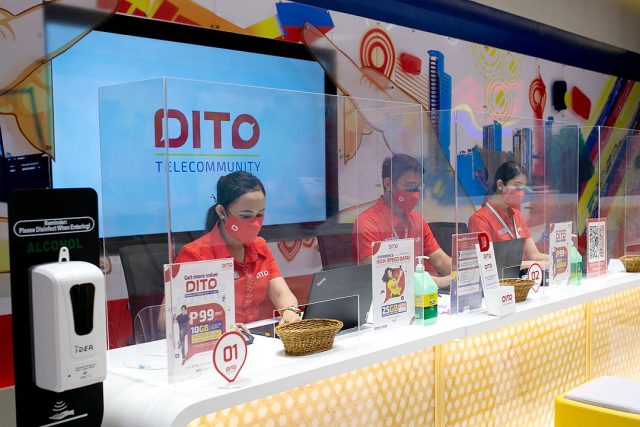

Telco DITO targets to increase subscribers to 12M this year

FACEBOOK.COM/DITOPHOFFICIAL

DITO Telecommunity Corp. is aiming to reach 12 million subscribers this year, according to the company’s chief administrative officer, Adel A. Tamano, noting that the new telco player easily hit five million subscribers in just nine months last year.

“In less than a year, about nine months, we got five million subscribers. We are hoping to get much more [this] year, and I think it’s still a conservative goal. We’re only aiming for about 12 million subscribers,” Mr. Tamano told CNN Philippines’ New Day on Tuesday.

“We are also going to be launching products that we hope will change the market,” he added.

In a recent disclosure to the stock exchange, listed DITO CME Holdings Corp. said that its telco unit intends to launch a fixed wireless product this year.

“We are currently undergoing a test broadcast to ensure the quality of the product that we will be launching sometime in the first quarter of 2022,” DITO CME Investor Relations Officer Leo D. Venezuela was quoted as saying.

DITO CME, which owns 54% of DITO Telecommunity, is raising P8 billion via a stock rights offering.

“Proceeds will be used to fund our telco services all over the country in fulfillment of the technical audit requirements, and to fulfill our own mission to be a compelling and a competitive alternative telco in service of the Filipino public,” DITO CME President Eric R. Alberto said.

The company previously received regulatory approval to extend its stock rights offer through Jan. 25, allowing more qualified investors to obtain additional shares at an “attractive discount.”

“The offer price is an 18.4% discount from the closing price as of Jan. 13, allowing eligible shareholders the chance to grow their investment in DITO CME as it sets its eyes on growing the telecom network of DITO Telecommunity and its other digital businesses,” the listed company said.

DITO Telecommunity had generated P2 billion in revenue as of Dec. 18, Mr. Tamano said at a virtual briefing in December.

DITO CME handles Udenna Corp.’s investments in media, communications, entertainment, and information technology.

It has three digital companies: Unalytics, which provides managed analytics services; Acuity Global, which curates media properties across platforms and provides media planning and buying; and Luna Academy, an online education platform aimed at equipping users with future-ready skills, credentials, and certificates.

DITO CME shares closed 3.90% lower at P5.18 apiece on Tuesday. — Arjay L. Balinbin

Recognizing the signs of heart failure

UNSPLASH

By Brontë H. Lacsamana

BREATHLESSNESS, easy fatigability, and swelling in the feet or ankles are symptoms of heart failure, or the inability of the heart to pump enough blood for the body’s needs, which may be fatal if left untreated.   

“It’s a progressive disease. If you want to prevent death from heart failure, get medications for your diabetes, control your blood pressure, eat right, stop smoking,” said Dr. Gilbert C. Vilela, president of the Philippine Heart Association (PHA), in the vernacular. “If you manage it today, it will be a lot better in the future.”  

Two of the major risk factors are diabetes and hypertension, which were among the leading causes of death in the country in the first ten months of 2021, according to the Philippine Statistics Authority (PSA).  

Ischemic heart disease itself was the top cause of death, accounting for 110,332 recorded deaths based on PSA’s data. This reflected a 16.9% increase from 86,164 deaths in the same period in 2020.  

“Many Filipinos don’t know they have heart failure because they attribute the fatigue and shortness of breath to asthma or exposure to the cold, or the swelling of feet to having eaten lots of salty food,” Dr. Vilela said in a video call with BusinessWorld.  

Educating Filipinos on these symptoms and risk factors is proving to be difficult in a country where the health system is easily strained and citizens struggle to afford basic needs, he added.  

In 2014, Dr. Bernadette A. Tumanan-Mendoza led a study on the burden of hospitalization for adult Filipinos with heart failure. The findings, which used data from the Philippine Health Insurance Corp. (PhilHealth), showed that there were 16 cases of heart failure for every 1,000 hospital admissions.  

The research estimated that the total economic burden of hospitalizations due to heart failure is roughly P851 million to P2 billion.  

Epidemiological data shows that 50% of those who have been hospitalized for heart failure will die in five years, added Dr. Vilela.  

“People should know this because it’s preventable,” he said.  

ORGANIZING A NETWORK
The National Heart Failure Network, a multisectoral network of medical groups and associations led by the PHA, aims to combat this cardiovascular threat by strengthening heart failure awareness campaigns, research efforts, and healthcare delivery.  

By establishing regional heart centers, the network ensures that the Philippine Heart Center (PHC) won’t be overrun with referrals from all over the country. Of the 17 centers, 12 have been completed and equipped with facilities and specialists.  

“If the pandemic didn’t happen, then we’d have already completed them,” said Dr. Vilela, who also manages the education, training, and research department of PHC, which leads the regional centers. The vision is for Filipinos everywhere to have access to treatment without having to travel to Manila.  

“The good news is, lines of communication are very open between the Department of Health [DoH] and national organizations like the Philippine Heart Association and the Philippine Society of Hypertension. The DoH comes to us and we work with them on their programs,” he added.  

For two years, the National Heart Failure Network has been planning and organizing for the execution of better education and healthcare delivery.  

It may take another year or so to set up the entire network, but there’s no need to be discouraged, according to Dr. Vilela. Quoting Lao Tzu, he assured: “The journey to a thousand miles starts with a single step.”

PAL to start serving Tel Aviv, Israel in April

An airplane is seen on the runway at the Ninoy Aquino International Airport (NAIA) in Manila, March 14, 2016. — REUTERS/ROMEO RANOCO/FILE PHOTO

FLAG carrier Philippine Airlines, Inc. (PAL) said flights between Manila and Tel Aviv, Israel will begin in April.

“Philippine Airlines will be serving Tel Aviv starting in April. We are working on final arrangements and look forward to making announcements on these developments soon,” PAL Spokesperson Cielo C. Villaluna told BusinessWorld in a phone message on Tuesday.

Last week, Secretary of Transportation Arthur P. Tugade met with Israeli Ambassador to the Philippines Ilan Fluss to discuss ways to push for PAL’s planned Manila-Tel Aviv-Manila flights.

In April last year, PAL announced that it was eyeing twice weekly nonstop flights to Tel Aviv’s Gurion international Airport using its Airbus A350 aircraft.

There are over 30,000 Filipinos in Israel, mostly of workers, some students, and diplomats, according to the Israel Embassy.

In December, Mr. Fluss visited Davao City, the first stop for his goal to strengthen the tourism partnership with the Philippines.

The ambassador expressed optimism for the restoration of over 20,000 Filipino arrivals in 2019 through the direct route.

Mr. Tugade said last week that he requested PAL to coordinate with the Manila International Airport Authority (MIAA) and the Civil Aviation Authority of the Philippines (CAAP) on the requirements for the plan.

The Department of Transportation (DoTr) chief had advised MIAA and CAAP “to provide the needed assistance to PAL for the seamless facilitation of the flight, within the timeline agreed amongst the DoTr, Embassy of Israel, and PAL,” the Transportation department said in a statement. — Arjay L. Balinbin

Rust never sleeps

PAG-IBIG at Biyaya by Lawton Ladao

Works in a fundraising exhibit for San Sebastian Church incorporate the corrosion which is damaging the structure

THE RUST from corroded sections of the 130-year-old Minor Basilica of San Sebastian has been repurposed and now adds detail to new artworks which will be sold to raise funds for heritage structure’s restoration. Rust from the famously all-steel church was mixed into pigments, suspended in resin, molded into a frame, and topped a finished image.

Better known as San Sebastian Church, it was founded in 1621 after Don Bernardino del Castillo donated the land on which the church stands today in Quiapo, Manila. Don Bernardino, who was a military commander at Fort Santiago, requested that the church be dedicated to San Sebastian, the patron saint of soldiers and athletes. A succession of churches of wood and brick were built on that lot, each of which was damaged or destroyed by a succession of fires and earthquakes. It was rebuilt four times. Designed to be resistant to fires and earthquakes, its current structure (the fifth) was made of steel.

The task of designing the church was given to Spanish architect Genaro Palacios who came up with a plan to use prefabricated steel sections manufactured in Belgium. Belgian engineers supervised the assembly of the church. The stained-glass windows were imported from Germany, while local artists were in charge of the paintings on the walls.

The all-steel church was declared a Minor Basilica by the Vatican in 1890, even before construction had started. The church was declared a National Heritage Landmark in 1973, and a National Cultural Treasure in 2011.

Today, the structure faces new challenges — corrosion from the salt air from the nearby Manila Bay and water infiltration.

In other words, rust.

Water has infiltrated the walls, accumulating inside the hollow columns supporting the roof, corroding the steel causing it to expand and further damaging the structure.

The San Sebastian Basilica Conservation and Development Foundation, Inc. (SSBCDFI) was established in 2012 and heads the church’s restoration program. Since then, the restoration program has been conducting fundraisers for its maintenance, emergency repairs, and restoration of the roofing system and the columns, the restoration of paintings and the stained-glass windows.

THE ONLINE EXHIBIT
This month, the foundation is hosting its second “Rust to Art” exhibit (the first was in 2018), titled “Para Sa Ina: Rust to Art” Exhibit. The digital fundraiser, which will be held on Jan. 28, will showcase 22 local artists.

Reredos, an informal group of artists specializing in religious art, had created works for the 2018 fundraiser. The group’s eight members — Juan Alcazaren, Vincent Balandra, Robert Besana, Jood Clarino, Lora Ledesma Domingo, Paolo Icasas, Michael Muñoz, and Pia Soriano —  are participating in this edition.

The foundation also invited new artists to join: Ding Royales, Lawrence Samson Castillo, Joe Datuin, Arlene de Castro Añonuevo, Julius Legaspi, Naning Estrella, Marius Black, Byaheng Lawton (Lawton Ladao), Derrick Macutay, Pol A. Medina, Jr., Al Perez, Danny Santiago, Bianca Tan, and Jun Vicaldo.

The exhibit is curated by Asst. Prof. Mary Ann Venturina-Bulanadi, PhD of the University of Sto. Tomas.

“While we were reviewing the initial list of the participating artists, I felt that we needed to invite more artists to enrich and diversify this year’s line-up,” Ms. Venturina-Bulanadi told BusinessWorld via Messenger chat. “It would be interesting to show how other artists would depict the theme of the exhibit and thereby further enhancing the purpose of the exhibit.”

“With the support of the Director of San Sebastian Basilica Conservation and Development Foundation, Inc., Marianne Claire Vitug, I opened the invitation to those artists that I had previously worked with, curating for them in group shows, or even their solo shows. I personally invited each one of them and discussed the cause,” Ms. Venturina-Bulanadi added.

The exhibit features 35 paintings, sculptures, and mixed media pieces that all incorporate rust collected from the church.

Artists experimented with various methods and materials to create works inspired by their reflections on the devotions to Nuestra Señora del Carmen de San Sebastian (Our Lady of Mt. Carmel of San Sebastian) and Nuestra Señora de la Salud (Our Lady of Health), and their history in the basilica.

The rust that the artists used has been collected by the basilica’s restoration team for years.

“[The restoration team] has been collecting rust since before 2018 because they would need to study it. Sometimes we’d send samples to labs to check on the type of metal,” Samantha Pacardo, the foundation’s Fundraising, and Communications Manager, told BusinessWorld in a Zoom interview.

Ms. Pacardo said that at one point in their investigation into the damage the church has suffered through the years, the team had “to cut through the metal and look inside the column” and “had people go inside the column to get samples.”

“It’s a mix of stuff that’s been collected before 2018 up until last year, and so that’s what we gave the artists,” she said.

Ms. Pacardo said the artists were invited to a talk with a chemist from the University of Santo Tomas to have a better idea of what to mix it with and experiment with it.

THE RESTORATION PROJECT
The online exhibition will be open until April, with all proceeds going to support the restoration team and the experts who continue to work on the restoration of the basilica.

“For this year, the proceeds of the ‘Rust to Art’ exhibit will be in support of hiring more people for the restoration,” Ms. Pacardo said, adding that work on the church continued despite the coronavirus disease 2019 (COVID-19) pandemic lockdowns of the past two years, all done in accordance with health protocols.

Ms. Pacardo said that the foundation is looking to raise more than P1 million from the exhibit for the restoration project.

“We’re going to be dividing the proceeds not just for the foundation, but also for the artists,” she said.

The restoration project is divided into three phases and is set to run until 2033. The priority for the current phase is looking into and designing repairs for leaks.

“Phase 1 focuses on the columns, paintings, windows and other elements within and nearby the dome that’s currently closed off. Phase 2 branches out to the other end of the church, and focuses on tower columns, windows and paintings at the choir loft. Phase 3 is focused at the main body of the church, so this would mean the nave and corner columns, windows along the sides of the church, and major paintings,” said Ms. Pacardo.

“Rather than separating it by research and design, what the team did is to separate [phases] by priority areas because we realize that you can stop doing the research altogether, and redesign,” Ms. Pacardo said. “And while it’s good that San Sebastian is so unique, there’s also that this disadvantage that nobody knows quite how to fix it.”

“What we realized is everything is happening continuously. Our experts who’ve been working with us for a long time see the way that the material is changing, different from how they saw it a few years back,” she said, adding that the condition of materials may change depending on the weather and temperature.

“So rather than limiting the things that are going to be done by actions, it’s more [focusing on] areas already,” Ms. Pacardo said. “It also gives the teams space for them to continually study it.”

All this repair work has to take into consideration that San Sebastian Church is not a static building but a working structure that caters to the spiritual needs of the community.

“At the end of all this, the goal is still to have a repaired roof system, columns, windows, paintings, etc. but we approach it by dividing the church into different areas so people can still use it for religious events and needs,” said Ms. Pacardo.

“Para sa Ina: Rust to Art” opens on Jan. 28 and will be available exclusively on the foundation’s website, www.sansebastianconservation.org. The artworks will be available for purchase through the foundation from the opening day until April.

For more information about the exhibit, contact the foundation at officialstore@savesansebastian.org or visit the official Facebook (www.facebook.com/savessbasilica) and Instagram (www.instagram.com/savessbasilica) accounts. — Michelle Anne P. Soliman

Sinovac regimen gets strong boost from Pfizer, AstraZeneca or J&J COVID shots — study

A THIRD booster dose of a coronavirus disease 2019 (COVID-19) vaccine made by AstraZeneca, Pfizer-BioNTech, or Johnson & Johnson increases antibody levels significantly in those who have previously received two doses of Sinovac’s CoronaVac shot, a study has found.  

The study found that CoronaVac received the strongest boost from a viral vector or RNA shot, including against the Delta and Omicron coronavirus variants, researchers from Brazil and Oxford University said on Monday.  

China-based Sinovac’s vaccine uses an inactivated version of a coronavirus strain that was isolated from a patient in China. It is currently approved in more than 50 countries including Brazil, China, Argentina, South Africa, Oman, Malaysia, Indonesia and Turkey.  

“This study provides important options for policymakers in the many countries where inactivated vaccines … have been used,” said Andrew Pollard, director of the Oxford Vaccine Group and study lead.  

However, another study in December found that Sinovac’s two-dose shot followed by a booster dose of Pfizer-BioNTech’s vaccine showed a lower immune response against the Omicron variant compared with other strains.  

Viral vector vaccines such as the ones developed by AstraZeneca-Oxford and J&J use a weakened version of another virus to deliver genetic instructions for making proteins from the virus against which protection is sought.  

Pfizer and BioNTech’s mRNA vaccines deliver a genetic transcript with instructions for making viral proteins to teach the body how to defend against infections.  

A third dose of CoronaVac also increased antibodies, but the results were better when a different vaccine was used, according to the latest study that included 1,240 volunteers from the Brazilian cities of Sao Paulo and Salvador.  

Antibody levels were low before the booster doses, with only 20.4% of adults aged 18-60 and 8.9% of adults aged over 60 having detectable levels of neutralizing antibodies. These were seen to significantly increase across every booster vaccine regimen, according to the study, which was published in the Lancet medical journal on Friday. — Reuters 

Converge, ABS-CBN’s Sky Cable top Netflix’s Dec. internet speed index in PHL

CONVERGE ICT Solutions, Inc. and ABS-CBN Corp.’s pay television and broadband arm Sky Cable Corp. are the fastest internet service providers (ISP) on Netflix, the media-streaming company’s December ISP Speed Index Leaderboard showed.

With a speed of 3.6 megabits per second (Mbps), Converge and Sky Cable have topped the list of major ISPs in the Philippines that provide the best Netflix streaming experience.

Netflix, an American subscription streaming service and production company, said that its ISP Speed Index is a “measure of prime-time Netflix performance on particular ISPs around the globe.”

“It is not a measure of overall performance for other services/data that may travel across the specific ISP network.”

Both Globe Telecom, Inc. and PLDT, Inc. ranked second with a speed of 3.4 Mbps for the month of December.

Cable and satellite company Royal Cable was third with 3.2 Mbps.

Converge, SKY Cable, Globe, and PLDT all registered an average speed of 3.4 Mbps in October and November, while Royal Cable recorded a speed of 3 Mbps in both months.

For standard definition quality, Netflix recommends a minimum internet download speed of 3 Mbps.

A minimum of 5 Mbps is recommended for high-definition quality.

“Video streaming is one of the most demanding applications on the Internet. It not only requires speed but high-quality connection as well, otherwise users experience buffering, pixelization and slow-loading times,” Converge Chief Operations Officer Jesus C. Romero said in an e-mailed statement on Tuesday.

“We have designed our network to have low-delay or latency, no congestion, no packet loss and minimal outages to ensure that our customers have an enjoyable and uninterrupted video viewing experience. We recognize our position in the Netflix ISP Speed Index Philippines as affirmation of the quality service we offer our customers,” he added.

Hastings Holdings, Inc., a unit of PLDT Beneficial Trust Fund subsidiary MediaQuest Holdings, Inc., has a majority stake in BusinessWorld through the Philippine Star Group, which it controls. — Arjay L. Balinbin

Gainsborough’s The Blue Boy back on show in London after 100 years

Thomas Gainsborough’s 18th century painting The Blue Boy — EN.WIKIPEDIA.ORG

LONDON — Thomas Gainsborough’s 18th century painting The Blue Boy goes on show at London’s National Gallery this week, 100 years after it was bought and shipped from Britain to the United States.

The portrait of a young boy dressed in blue is on display as part of an exhibition opening on Tuesday — 100 years to the day after it was last shown publicly in London.

The Blue Boy is not only one of the most famous pictures by Gainsborough, I think it’s one of the most famous pictures in British art altogether,” Gabriele Finaldi, the National Gallery’s director, told Reuters.

The painting had hung at the gallery for three weeks in the winter of 1922 before crossing the Atlantic Ocean after it was bought by US railroad magnate and art collector Henry E. Huntington from the Duke of Westminster.

“It is a remarkably beautiful picture, it’s striking, it’s moving, it’s beautifully painted, it’s enormously sort of romantic,” Finaldi said of Gainsborough’s 1770 work.

In order to show Gainsborough’s passion for Anthony Van Dyck, The Blue Boy is on display along with a couple of the Flemish artist’s works as well as two other paintings by Gainsborough.

“Van Dyck was very important for the consciousness of the history of Britain (and) also British painting… And so he (Gainsborough) dresses this anonymous young man, we’re not quite sure who he is — in Van Dyck costume,” Finaldi said.

The London exhibition marks the first time The Blue Boy has been loaned from the California-based Huntington Library, Art Museum, and Botanical Gardens. — Reuters

Medical groups reassert opposition to vape bill

REUTERS

MEDICAL GROUPS renewed their plea to President Rodrigo R. Duterte to veto entirely the proposed Senate Bill No. 2239 or Vaporized Nicotine Products Regulation Act, which was recently approved by the bicameral conference committee of both houses of Congress.  

Claims by lawmakers that the vape bill will save lives through the regulation of e-cigarettes and heated tobacco products are false, according to doctors from various medical societies in an online press conference held on Monday.   

“This vape bill will actually break the vow you made to Filipino people to fight addiction,” said Dr. Maricar B. Limpin, pulmonologist and president of the Philippine College of Physicians (PCP), one of over 55 medical groups decrying the bill and its supporters.   

In December, these groups, which include PCP, the Philippine Medical Association, the Philippine Pediatric Society, and the Department of Health, called out the misinformation being spread regarding the bill. They pointed out that vaping has always been available to smokers and that the bill will only expand its reach to non-smokers.  

“What will happen is it will increase addiction to cigarettes … Once passed, this bill will deregulate the nicotine industry and go directly against your promise,” said Dr. Limpin.  

Vaping has always been regulated by the Food and Drug Administration (FDA) through Republic Act 11467 and Executive Order 106, and the Vape Bill only loosens these regulations by transferring it to the jurisdiction of the Department of Trade and Industry, according to a statement from groups opposed to the bill.  

“These products have a pharmacological and physiological effect on one’s body. Thus, the regulatory body needs to be able to test the products for harmful substances, which only the FDA is capable of doing,” said Eric Domingo, FDA’s former director general.  

Dr. Maria Corazon M. Avanceña, a pediatric pulmonologist, added that the bill is also a hazard to the youth since it will remove the existing two-flavor restriction and lower the minimum age of those who can buy vape from 21 to 18 years old.  

“The real motive of the tobacco companies behind this bill is to expand their market by targeting the youth,” she said, zeroing in on the risk given that the Global Youth Tobacco Survey found 1 in 7 Filipino students aged 13 to 15 to be e-cigarette users.  

The bill is essentially a deregulatory measure, the various medical groups said. — Brontë H. Lacsamana

Obiena can still jump at SEAG

OLYMPIAN pole-vaulter Ernest John “EJ” Obiena will get to see action in the 31st Southeast Asian Games (SEAG) slated for May 12-23 even if he will not be endorsed by the Philippine Athletics Track and Field Association (PATAFA) and not funded by the Philippine Sports Commission (PSC).

Philippine Olympic Committee (POC) President Abraham Tolentino on Tuesday said during the online Philippine Sportswriters Association (PSA) Forum that Mr. Obiena was listed in the 80 athletes who will finance their own trip to the biennial event just in case the latter would be expelled from the national team.

“There is a provision in the IOC (International Olympic Committee) charter that emphasized the NOC’s (National Olympic Committee) sole authority to submit the delegation proposed by its NSAs (national sports associations) as the final list in all Olympic, regional, continental and world multi-sports events patronized by the IOC,” said Mr. Tolentino.

“It will not only be based from their performance of athletes but also from their ability to serve as an inspiration to others.

“Let him (Mr. Obiena) play,” he added.

Mr. Tolentino’s statements came just a day after Mr. Obiena formally declined the mediation proposed by the Philippine Sports Commission.

And the decision could pave the way for Mr. Obiena’s expulsion from the national squad as PATAFA’s moratorium on delaying the former’s national team removal and filing of estafa case has expired.

Without PATAFA’s endorsement, Mr. Obiena’s funding from the PSC could also be cut.

“That’s why we have a Group B. EJ is part of the 80. If he isn’t endorsed or given funding, the POC will help him and look for private funding,” said Mr. Tolentino.

PSC STATEMENT
Meanwhile, the Philippine Sports Commission has received communication from Mr. Obiena, sent through his lawyer via e-mail, that Mr. Obiena “will no longer participate in the mediation proceedings.”

As mediation requires for the voluntary agreement of both parties for the process to proceed, we inform you that mediation is temporarily on hold.

Despite this development, we maintain our stand that mediation is still the best option to resolve this matter.

Mr. Obiena has submitted his liquidation reports. The PSC’s accounting office and the Commission on Audit shall proceed with their normal post-audit process of checking and verification on submitted liquidation documents. — Joey Villar

Cemex says co-processing boosts climate initiatives

LISTED construction firm Cemex Holdings Philippines, Inc. achieved a six-time net waste reduction record through co-processing, which is in line with its climate change initiatives.

In a statement on Tuesday, Cemex said it now co-processes six kilograms of waste for every kilogram it generates. From 2016 to 2020, it was able to co-process 214,772 tons of waste compared to the waste generated by its cement facilities at 35,850 tons for the same period.

“Co-processing more than the waste we generate is proof-positive of our solid commitment in ensuring we are drivers of the circular economy, helping increase the use of waste as alternative fuels, reducing greenhouse gas emissions as these wastes provide replacement for fossil fuels,” Cemex President and Chief Executive Officer Ignacio Alejandro Mijares Elizondo said.

In a statement last year, Cemex said its co-processing procedure involves taking the plastic and rubber-based parts of waste materials, which will then undergo a pre-treatment process before being used to manufacture cement.

Meanwhile, the non-recyclable waste is converted into “usable heat to help power the cement kiln.”

“Co-processing helps divert these wastes which otherwise would end up in landfills and waterways,” Mr. Mijares said in the statement on Tuesday.

With the 214,772 tons of waste co-processed within the 2016 to 2020 period, the company said it was able to avoid 327,742 tons of CO2 emissions. That translates to cutting emissions produced by 71,278 passenger vehicles in a year or 362,248 tons of coal burned.

In 2020, global Cemex said 91% of its plants collectively co-processed 2.7 million tons of waste to alternative fuels, which is equivalent to a 25.3% substitution rate and 1.6 million tons of coal replaced.

“We take earnest steps in making sure that we maximize environmental opportunities in our operations, including [the] use of alternative fuels through co-processing,” Mr. Mijares said.

The company has a “Future in Action” agenda that focuses on addressing climate change via cutting down CO2 emissions by 35% and aims to reduce its emissions by 40% come 2030. The company hopes to invest $60 million every year for the program.

Cemex is also trying to improve its production efficiency as part of its climate action initiatives, such as investing in energy efficiency, using alternative fuels, expanding its use of renewable energy, and increasing its use of clinker substitution.

On Tuesday, shares of Cemex Holdings went up 0.93% or one centavo to close at P1.08 apiece. — Keren Concepcion G. Valmonte
Sony Music says it acquired Bob Dylan’s catalog of recorded music

Bob Dylan — ALBERTO CABELLO/ EN.WIKIPEDIA.ORG

SONY Music Entertainment said on Monday it has acquired Bob Dylan’s catalog of recorded music, including his performances of such popular songs as “Blowin’ in the Wind” and “Knockin’ on Heaven’s Door,” as well as the rights to future releases.

The deal is the latest in Sony Music’s six-decade relationship with the artist, and covers Mr. Dylan’s body of work since 1962. Variety cited sources who valued the deal at $150 million to $200 million.

Neither Sony nor Mr. Dylan’s representative would comment on deal terms.

Mr. Dylan, 80, sold his songwriting catalog to Universal Music Publishing Group in December for a reported $300 million. He was among a group of aging artists, including Neil Young, Stevie Nicks, and Paul Simon, who have sold the rights to their compositions to investors, who seek to capitalize on the opportunities created by music streaming.

Sony and Mr. Dylan said they will collaborate on future catalog reissues in the artist’s Bootleg Series, which began in 1991 and includes 14 releases through last year’s lauded Springtime In New York: The Bootleg Series Vol. 16 (1980-1985). — Reuters