Home Blog Page 6425

MacroAsia says 2022 revenues to be on upward trend

MACROASIA Corp. said it expects higher revenues this year due to increased airport traffic volumes as mobility continues to ease up.

“We foresee that 2022 revenues will be on an upward trend compared to 2021, as recent data shows that travel movements have now increased,” MacroAsia President and Chief Operating Officer Eduardo Luis T. Luy said during the company’s annual stockholders’ meeting on May 12.

The company managed to cut its attributable net loss for the first quarter of 2022 to P26.88 million from a loss of P235.18 million in the same period in 2021.

“While the core business segments of the group continue to be impacted by the downturn in air travel due to coronavirus-related quarantine and airport restrictions since the onset of the pandemic, 2022 volume developments now trend towards recovery in the airline industry,” the company said in its first-quarter report released last week.

“The number of flights and meals served are slowly improving as travel and safety protocol restriction measures are slowly eased,” it added.

The company’s total revenues for the period reached P710.27 million, up by 79% from P397.38 million in the same period in 2021.

It said that revenues from in-flight catering contributed 39% of the total revenues. “This is brought about by the increase in the number of meals served to airline and non-airline clients, from 577,663 in 2021 to 2,189,174 meals in 2022,” the company noted.

Meanwhile, revenues from ground-handling and aviation services increased by 42% to P307.90 million in the first three months of the year from P216.73 million in the same period a year earlier.

“Flights handled increased by a total of 6,921 flights (42%), from 16,345 in 2021 to 23,266 flights in the current year,” it said.

The Manila International Airport Authority (MIAA) has said domestic traffic at the Ninoy Aquino International Airport (NAIA) surged to 3.17 million in the first three months of the year as travel restrictions were dialed back.

Domestic passenger traffic — arrivals as well as departures — were significantly higher than the year-earlier total of more than one million passengers, according to an operations report posted on MIAA’s website.

Domestic traffic was still running well behind the total of 4.48 million posted in the first quarter of 2020, which included the two months before the declaration of the state of emergency.

International passenger traffic at NAIA increased to 1.03 million in the first quarter of 2022 from 503,331 a year earlier. In the first three months of 2020, international passengers at NAIA were at 4.35 million.

MacroAsia shares closed 0.21% lower at P4.70 apiece on Friday. — Arjay L. Balinbin

Kim Mangrobang rules duathlon a day after topping the triathlon

MANGROBANG (center) wins her third straigth triathlon and first duathlon crown — COACH MELVIN FAUSTO)| VIA LUISA MORALES, JUN MENDOZA

TUAN CHAU — Less than 24 hours after winning her third straight triathlon crown, Kim Mangrobang ruled the women’s duathlon on Sunday, becoming the first Filipino athlete in the Vietnam 31st Southeast Asian Games here to capture back-to-back gold medals.

In high spirits after pulling away to victory in the women’s triathlon last Sunday, Ms. Mangrobang, 30, of Sta. Rosa, Laguna, outlasted Malaysian Tahira Muhammad Zaid, winning her first duathlon title at the Tuan Chau Peninsula in 2:13.12 seconds.

“I prepared very well in two events, that’s why I’m really happy with the result. I focused on my recovery and my conditioning coach, Annie Brown, did a beautiful job,” said Ms. Mangrobang, who trained extensively with the national team in Portugal.

Ms. Tahira won the silver in 2:14.22, while Putri Bulan Aprilla of Indonesia settled for the bronze with a clocking of 2:14.49 in the competition participated in by 11 athletes from seven countries. 

Her double duty done for the country, Ms. Mangrobang will now focus on the duathlon race in the World Games in Alabama, USA on July 7. She is also competing in next year’s Asian Games and is eyeing a slot in the Paris 2024 Olympics.

She is set to return Monday to Laguna to rest her body after the grueling 1.5K swim, 40K bike and 10K run in the triathlon event last Saturday and the duathlon’s standard distance of 10K run, 40K bike and 5K run. Ms. Mangrobang stands to receive P600,000 in incentive from the Philippine Sports Commission, which is funding the campaign of the national team here.

“I still don’t know what to do, maybe I’ll put it in the bank first,” said Ms. Mangrobang, who also ruled the triathlon events in the 2017 and 2019 games.

The other Filipina entry in duathlon, Alexandra Ganzon, finished eighth with a time of 2:23 time. 

John Leerams Chicano, the men’s triathlon champion in 2019, came in fourth and Raymond Torio finished sixth in the men’s individual duathlon. Vietnam’s San Pham Tien topped the race while Indonesian Rudi Febriade and Jauhari Johan captured the silver.

Triathlon Association of the Philippines President Tom Carrasco was pleased with the performance of his wards, saying: “We got three golds out of the possible four. I thought we’re going to win only two but we got three. I am happy with what we got. Indonesia and Vietnam prepared very well against us, but our athletes responded well to the challenges.”

Aside from the three gold medals, the other one contributed by Fil-Spanish Fernando Casares in the men’s triathlon last Saturday, the Philippines also won two more medals, a silver from Andrew Kim Remolino and a bronze medal from Raven Faith Alcoseba in the triathlon.

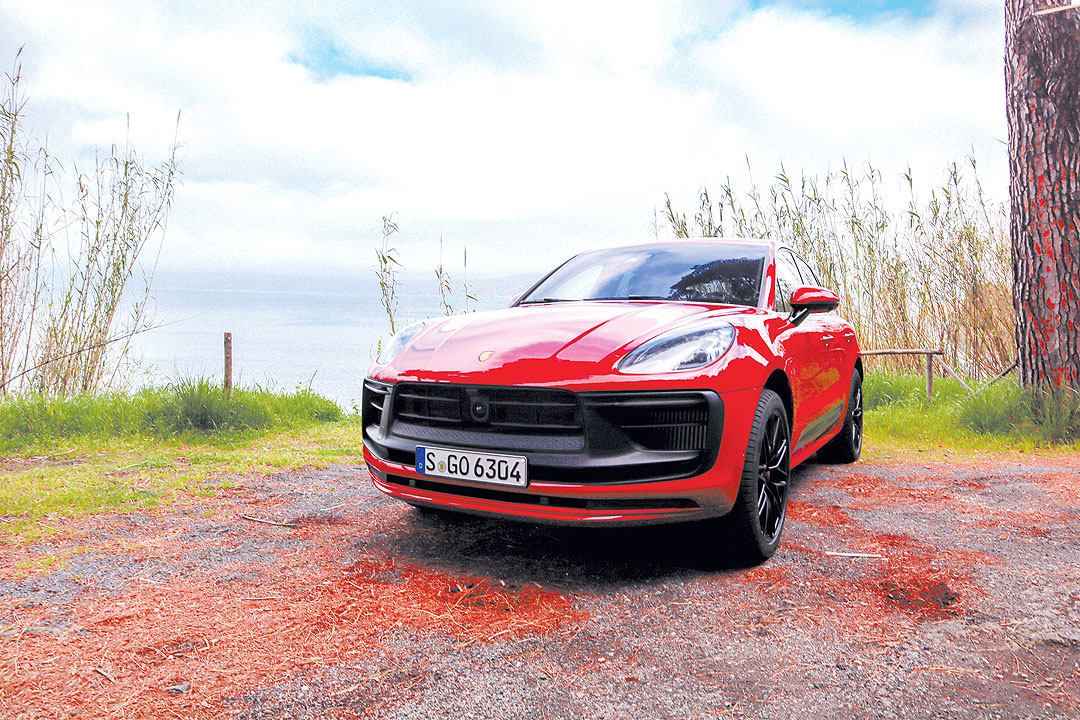
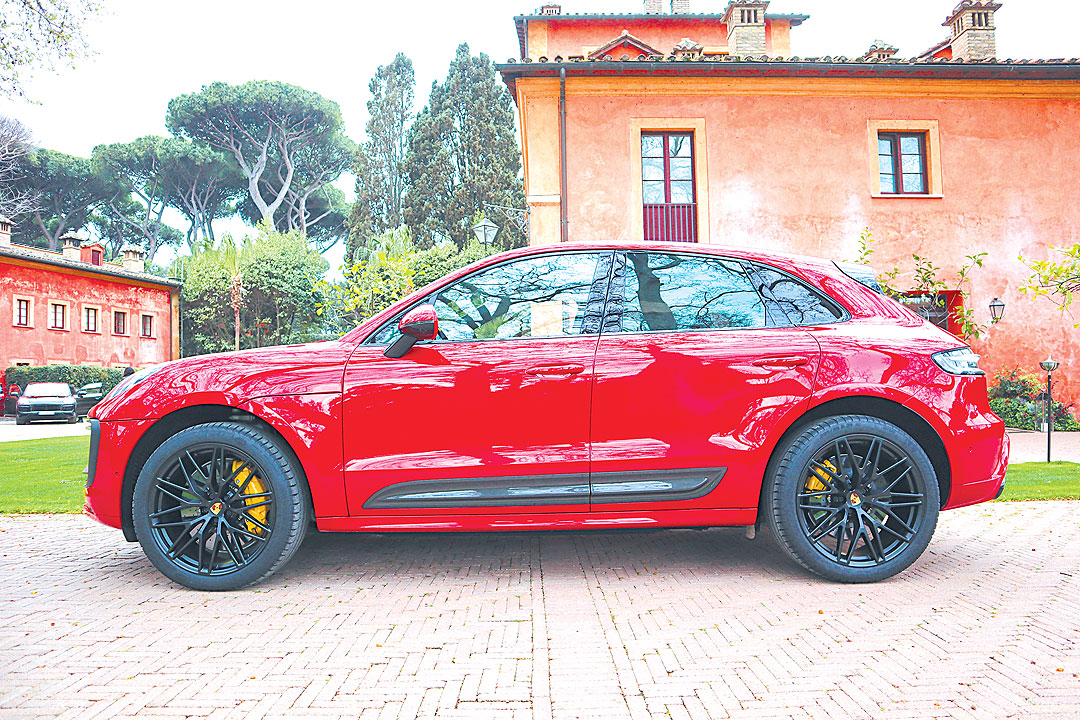
Porsche Macan GTS: This high-stepping sport ute sees red

PHOTO BY KAP MACEDA AGUILA

Gran Turismo Sport means business, and pleasure

ROME, ITALY: I won’t attempt to even fathom what the Porsche purists might have in their beating Stuttgart hearts, but I’d like to think that they’ve softened up by now about their favorite brand conjuring up sport utility vehicles (yes two, in fact). If you consider that these utes have basically saved the brand from the unforgiving abyss of bankruptcy, well, what’s not to like?

With the midsize Cayenne debuting in 2003 and the compact Macan in 2014, Porsche successfully executed a one-two punch in a popular category previously unthinkable for luxury and performance brands to frolic in. SUVs and their pragmatic, practical values were, after all, perceived to be intrinsically antithetical (traditionally, at least) to the concept of a limousine or a sports car. Nonetheless, it was a gamble that paid off handsomely. And, these Porsches are indeed that — handsome.

And the status quo at Porsche has since pretty much seen the SUV duo pacing the portfolio in sales. Porsche AG Executive Board Member for Sales and Marketing Detlev von Platen said that the company has “been working hard to enable more customers than ever before to fulfill their dream of owning a Porsche,” and the Macan in particular helps tick that off in one’s bucket list.

Indeed, last year, amid the ongoing global semiconductor shortage, Porsche models with the highest demand were again the brand’s SUVs, led by the Macan (88,362 units), followed closely by the Cayenne (83,071).

While being the entry point into the aspirational, much-admired German sports car brand, the Macan earns its hallowed badge through a solid build and similar execution with its more costly siblings. There’s no “settling” when one decides on the Macan. The SUV doesn’t only hold its own in its segment; its virtues are unique and clear.

That’s why when the prospect of a drive aboard a Porsche — any Porsche — that is still available at the fountain area of our spa lodge in a verdant patch of historic estate on the Roman coast, I set my eyes upon a redder-than-red Macan GTS. “Can I get that one?” I say to Porsche Asia Pacific Head of PR and Communications Brendan Mok. “Sure,” he says with a grin. “I suggest you throw your stuff in the back seat just so they know you’ve reserved it.” I comply immediately.

The route that will take us from our QC Termeroma lodgings to the Autodromo Vallelunga for our track day has been pre-programmed on the navi system of the vehicle. We follow a 71-kilometer route past sweeping vistas, undulations, and twists and turns that reveal how unflappable the Macan is at speed. Past the Tyrrhenian Sea on the left, I accelerate and get even closer to the water of Lago di Bracciano (Lake Bracciano). Mr. Mok and I make a quick stop for photos, a chance to stretch our legs, and to take in the spring chill and fresh air.

Unlike other Porsche models whose Turbo trims are the highest variant, the Macan GTS is the alpha of its line, and it flexes this fact through differentiators that serve to enhance both aesthetics and performance.

First off, the Macan GTS gets height-adjustable sport air suspension with the Porsche Active Suspension Management (PASM) adaptive damper control system. If you wish, you can lower the suspension by “a further 10 millimeters” versus the optional air suspension in the base Macan and Macan S. The sportiness is furthered by performance tires for better lateral grip. The springs have been stiffened, anti-roll bars have been enlarged, and the Macan gets specialized dampers to improve dynamic performance. Still, I appreciate the higher-than-normal (compared to sedans) driving position, plus the visibility — particularly since I’m enjoying the sights of driving in this Italian countryside.

Under the hood of the Macan GTS is the most potent motivator for the model line: a 2.9-liter V6 biturbo that blurts out 440ps and 550Nm. Notably, the power comes from 1,900 to 5,600rpm. Although I don’t try it out, Porsche says this allows the SUV to sprint from a standstill to 100kph in as little as 4.3 ticks with the optional Sport Chrono package or 4.3 seconds without it. The top rate for this Macan is an autobahn-worthy 272kph, the highest rate this model has ever mustered.

To rein in the power and speed, the vehicle gets “generously sized” gray cast-iron brakes with red-colored calipers. The Porsche Surface Coated Brake (PSCB) with 390×38 mm front discs and 356×28 mm rear discs features tungsten carbide coating. A Porsche Ceramic Composite Brake (PCCB) can be optioned.

All-wheel drive sees the Porsche Traction Management (PTM) center differential prioritizing the rear axle “whenever it can.” Porsche maintains that this rear-biased powertrain helps to increase and improve cornering speed because it keeps the front tires focused on steering the vehicle.

Your right foot will be rewarded by both tangible velocity and an audible (albeit reasonable) growl, the latter courtesy of a sports exhaust system (finished by extended black pipes) specific to the GTS flavor.

Speaking of black, Porsche endows the GTS line (including the Macan GTS, of course) with lots of black accents. Headlights are dark-tinted, and also feature the Porsche Dynamic Light System (PDLS); as do the three-dimensional rear lights with LED light strip. While the front and rear bumpers are painted in the vehicle color, the front trim gets a black finish along with the diffuser and the twin-wing roof spoiler.

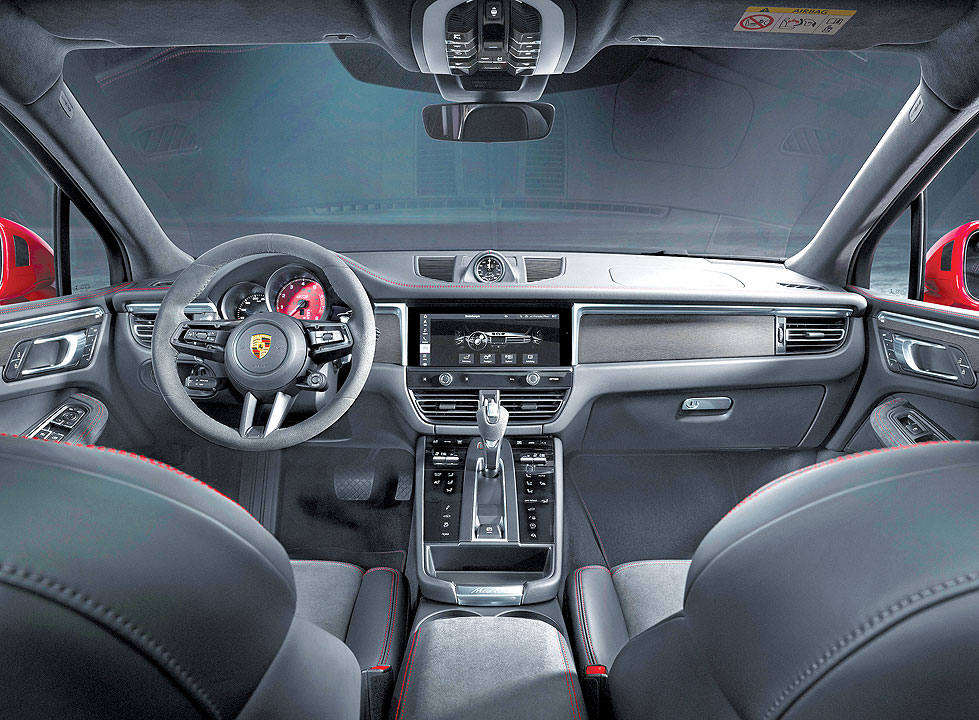
Inside the cabin, the Macan GTS is fitted with a black rev counter with a “GTS,” which also appears on the seats. Rich textures and premium materials are put to work: Race-Tex for the seat center, center armrest, and door panel; brushed aluminum in others; while leather wraps the multifunction steering wheel. The seats (with eight-way adjustment) are well-bolstered and comfortable for support even in the most dynamic of driving stints.

By the way, just like other GTS models, there are numerous ways to customize your own Macan GTS. One of these is to opt for a Bose surround sound system and a smartphone compartment with inductive charging. “The adaptive cruise control including Traffic Jam Assist, Park Assist with reversing camera and Surround View, a heated windscreen and ionizer are also available for extra safety and comfort,” reports Porsche.

When Vallelunga finally comes into view, I feel a tinge of sadness at disembarking from the sweet ride. But I take the chance to speak to Porsche 911 Model Line Simon Lohre about what the three letters are all about for the Stuttgart-headquartered supercar brand.

“The most important thing for the GTS,” explains Mr. Lohre, “is the everyday usability compared with a lot of emotion and performance. So it’s a combination of both of those worlds. So I guess this is the main target of the GTS strategy.”

When asked about business case for the line: “We have the S customer, as well as the Turbo customer, and some people are not quite sure whether an S or a Turbo model is the right decision. So for these people, we chose the GTS model line. It’s the best of both worlds and it’s always a good talking piece.”

The Macan GTS, set to arrive in the Philippines this year, certainly fits the bill — and more.

Treasury bills, bonds may fetch higher rates on faster inflation

BW FILE PHOTO
THE TREASURY bills and bonds to be auctioned off by the government this week may fetch higher rates due to faster April inflation and the increase in the state’s debt ratio. — BW FILE PHOTO

RATES of government securities to be auctioned off this week are expected to climb due to high April inflation and the increase in the government’s debt ratio in the first quarter and ahead of the central bank’s policy review.

The Bureau of the Treasury (BTr) will offer P15 billion in Treasury bills (T-bills) on Monday or P5 billion each in 91-, 182- and 364-day securities.

On Tuesday, it will auction off P35 billion in fresh seven-year Treasury bonds (T-bonds).

The first trader said that T-bill yields may go up by 15 to 20 basis points (bps), while the average yield of the fresh seven-year paper could range between 6.25% and 6.625%.

“[The] market is still concerned about inflation in the months ahead, while adding fuel to the fire is the country’s debt which is at 63.5% of GDP (gross domestic product) as of March,” the first trader said in a Viber message.

“The incoming administration should be able to address inflation and to bring down the debt-to-GDP ratio to avoid a credit rating downgrade from international debt watchers,” the trader added.

The first trader said the market remains cautious over further rate hikes from the US Federal Reserve, tightening by the Bangko Sentral ng Pilipinas (BSP) as early as its May 19 meeting, and as players “wait for more clarity as to the direction of the country’s fundamentals in the next few months.”

A second trader said debt yields may climb “as market remains defensive and some starting to believe that BSP can afford to start hiking rates on Thursday’s MB (Monetary Board) meeting” due to faster-than-expected GDP growth in the first quarter, which could cause inflation to spike further.

Rizal Commercial Banking Corp. Chief Economist Michael L. Ricafort said yields of T-bills on auction this week could go up and track secondary market rates.

“The latest increase in the [secondary market] yields largely due to stronger GDP data could support/justify possible hike in local policy rate,” Mr. Ricafort added.

Inflation surged to a 40-month high of 4.9% year on year in April due to rising food and utility prices.

It was faster than 4% the previous month and breached the central bank’s 2-4% target. It also settled near the upper limit of the 4.2-5% forecast range in April.

Meanwhile, economic growth in the first quarter accelerated by a higher-than-expected 8.3% annually on strong household spending as lockdowns were eased, the Philippine Statistics Authority reported last week.

It was a reversal from the 3.8% decline in the same period last year and faster than the 7.8% growth logged in the final three months of 2021.

The latest GDP print beat the 6.7% median estimate in a BusinessWorld poll and is within the 7-9% target growth band of the government.

It also marked the fourth consecutive quarter that the GDP stayed in the positive territory. The first quarter’s GDP growth was the highest since the 12.1% recorded in the second quarter last year.

In line with the economy’s growth, the National Government’s end-March debt of P12.68 trillion was equivalent to 63.5% of GDP, exceeding the 60% threshold considered manageable by multilateral lenders for developing economies.

The 63.5% level compares with 60.5% at the end of 2021 and the 65.7% posted at the end of 2005.

On the other hand, a BusinessWorld poll held last week showed 9 out of 17 analysts expect the central bank to keep its key rates at record lows, while eight see a possibility of a 25-bp rate hike at the BSP’s meeting on Thursday.

A slim majority of analysts said the BSP may choose to hold fire as it waits for more evidence that economic recovery is already entrenched, while some are pricing in a rate increase due to stronger-than-expected first-quarter growth that could further stoke inflation.

The central bank has not touched borrowing costs since slashing rates by a total of 200 bps in 2020.

At the secondary market on Friday, the 91- 182- and 364-day T-bills were quoted at 1.3744%, 1.6772%, and 1.9619%, respectively, based on the PHP BVAL Reference Rates published on the Philippine Dealing System’s website.

Meanwhile, the seven-year bond fetched a yield of 6.1384%.

The government partially awarded the T-bills it offered last week as yields continued to rise due to higher-than-expected inflation, which fueled expectations of an earlier rate hike from the BSP.

The BTr only awarded P5 billion in T-bills at its auction on Tuesday even as total tenders reached P19.984 billion, slightly over the P15-billion program.

Broken down, the government raised P5 billion as planned via the 91-day securities as bids reached P9.009 billion. The average rate of the tenor climbed by 25.9 bps to 1.531% from 1.272% at the last auction.

The BTr rejected all offers for 182-day T-bills even as tenders reached P6.4 billion versus the P5-billion program. Had the government made a full award, the average rate of the six-month paper would have soared by 53 bps to 2.165% from the 1.635% fetched at the previous auction.

The government also did not award any 364-day debt despite demand for the tenor reaching P8.602 billion against the P5-billion offer. If the BTr had made a full award, the average rate of the one-year T-bill would have climbed by 39.6 bps to 2.329% from the 1.933% quoted previously.

The BTr wants to raise P200 billion from the domestic market in May, or P60 billion via T-bills and P140 billion through T-bonds.

The government borrows from local and external sources to plug a budget deficit capped at 7.7% of GDP this year. — T.J. Tomas

Do these three popular anti-ageing skincare ingredients work? Here’s what the evidence says

SORA SHIMAZAKI/PEXELS

FOR people looking to press pause on ageing, it hasn’t always been as easy as it is today. Throughout history people have used all sorts of outlandish anti-ageing skincare techniques — such as bathing in donkey’s milk as Cleopatra supposedly did, or applying mercury directly to the skin, as the Elizabethans did.

While the modern era has certainly seen its fair share of bizarre anti-ageing skincare methods — such as placenta and vampire facials — the latest trend in anti-ageing skincare is using science.

But with ingredients such as peptides, antioxidants, and acids now commonplace in ingredients lists, it can be difficult for someone without a background in biology or chemistry to know if what they’re putting in their basket really is backed by science — or if it’s just clever marketing hype.

Here, we take a look at three of the most popular ingredients currently found in many anti-ageing products — and whether there’s any evidence they do what they claim.

VITAMIN C
Products containing Vitamin C often claim that it “brightens” the skin’s appearance and encourages collagen production. The middle layer of our skin (the dermis) produces both collagen and elastin, which work together to give the skin its stiffness and elasticity. But as we get older, the skin produces less collagen and elastin — which is why we develop wrinkles.

Vitamin C is a bit tricky to deliver to the skin. This is because the outermost layer of the skin, the epidermis, acts as a barrier to water. Since Vitamin C is water soluble, this can make it difficult to develop a product that is able to get Vitamin C into the skin.

But some research does suggest that concentrations above 5% of Vitamin C may work on the skin. For example, one study found that in 10 women aged 50-60, applying a cream containing 5% Vitamin C to the forearms daily for six months showed an increase in collagen production in the skin.

Other research also suggests that Vitamin C applied to the skin daily can noticeably reduce hyperpigmentation (patches of skin that are slightly darker) caused by sun damage. In multiple studies, creams with and without Vitamin C were applied to different areas of skin on each person. It was found that people who used Vitamin C creams for a total of 47 days saw a noticeable difference in the color of their skin after 12 days of use. However, there was little further change after the first 12 days.

However it’s unknown if the results persisted after the study was finished.

HYALURONIC ACID
Hyaluronic acid is a natural substance that our body makes. It’s usually found in the fluids in the eyes and between the joints and tissues. Many skin care products now include hyaluronic acid, claiming it’s a good skin moisturizer which may help reduce wrinkles.

A 2011 study, which looked at 76 women aged between 30 and 60, found that using creams containing 0.1% of hyaluronic acid twice daily for two months improved skin hydration and elasticity. But improvements to the appearance of wrinkles and skin roughness was only seen in creams where the hyaluronic acid molecules were smaller in size. This is because hyaluronic acid molecules that are larger can be more difficult for the skin to absorb.

But many high street skin creams containing hyaluronic acid don’t tell you the exact size of the molecules used in the product — making purchasing decisions difficult. It’s worth reading the label and taking note of the type and/or concentration of hyaluronic acid it contains.

Reassuringly, other studies have shown that many hyaluronic acid products (from creams and serums to injectables) can help increase skin hydration and reduce wrinkles — including a 2021 study, which showed a significant increase in skin hydration and reduction in fine lines in participants. But it’s worth noting that this study used a commercial product that contained a blend of niacinamide, ceramides, and hyaluronic acid applied twice a day, alongside daily sunscreen use. This makes it difficult to know if the results were solely because of hyaluronic acid.

RETINOL
Retinol-based products are popular these days, often promoted for their ability to reduce the effects of long-term sun damage to the skin (photoageing) — including hyperpigmentation and wrinkling.

Retinol is a derivative of vitamin A. It’s converted to retinoic acid once it’s absorbed into the skin. Once absorbed, it helps increase collagen production and increases cell turnover. All of these effects combined help plump out the appearance of wrinkles and decrease hyperpigmentation.

Studies in human cells, skin samples, and humans all suggest products containing retinol can have an effect on the skin’s appearance. For example, one study in humans showed using a product with at least 0.4% retinol three times a week for six months did decrease the appearance of wrinkles. Previous studies have shown even products containing 0.04% retinol can have this effect when used for at least 12 weeks.

While the effects will not be as pronounced when compared to other prescription-grade retinoid products, commercial products containing at least 0.04% retinol should be able to reduce the appearance of fine wrinkles with continued used over a period of months especially when combined with sun protection.

THINGS TO CONSIDER
If you’re considering buying an anti-ageing skincare product, there are a few things to think about.

First, consider whether you may be allergic to any of the ingredients in the product and whether it’s suitable for your skin type. For example, if you have dry, sensitive skin, retinol may not be suitable for you as it can increase your skin’s sensitivity to sunlight and irritate it further. You should also take note of the concentration of the active ingredient within the product and follow the recommended use advised by the manufacturer. This will be stated on the label.

Of course, you also need to remember the product you have bought is not a cure-all. It’s equally important to maintain a healthy lifestyle, eat a balanced diet and get adequate rest to maintain visibly healthy skin.

Szu Shen Wong is a Lecturer in Pharmaceutical Science, School of Pharmacy and Bioengineering, Keele University. She received funding from the Arts and Humanities Research Council to work on the “From natural resources to packaging, an interdisciplinary study of skincare products over time” project between March 2016 to Feb. 2018. She also acted as a paid consultant in the BBC Two documentary Make-up: A Glamorous History which was first broadcast in 2021.


Neil Grazier is a Technician in the School of Pharmacy and Bioengineering, Keele University. He assisted in the BBC Two documentary Make-up: A Glamorous History.

PSE approves Raslag planned IPO

THE Philippine Stock Exchange, Inc. (PSE) announced that it cleared the initial public offering (IPO) application of Raslag Corp.

The energy company will offer up to 350 million primary shares priced at up to P2.00 per share with an over-allotment option of up to 52.50 million. It expects to net P648.08 million from the offer, while the over-allotment could bring P105 million.

The final offer price will be determined on May 18 after the company’s book-building exercise. The IPO is scheduled from May 23 to 27.

“We welcome the IPO of Raslag as this will help grow the lineup of companies in the renewable energy (RE) space that are listed on the PSE. Providing RE firms an avenue to raise capital for its projects is one of the ways by which we can help address the threat of climate change as an Exchange,” PSE President and Chief Executive Ramon S. Monzon said in a statement.

Proceeds from the offer will be used to pay for the equity portion of its solar projects, including the development and construction of RASLAG-4, a 35.1-megawatt (MW) solar photovoltaic plant and the pre-development work for RASLAG-5’s around 60 MW capacity.

The company tapped China Bank Capital Corp. as sole issue manager, underwriter, and bookrunner for the offer.

Raslag is a domestic renewable energy developer founded by Peter G. Nepomuceno in Angeles City, Pampanga, and Conrado D. Pecjo, the business development manager of Angeles Power, Inc.

In 2021, the energy firm completed and commercially operated its 10.046-MW-peak RASLAG 1 project.

The embedded generator has 38,640 panels of polycrystalline panels to achieve an annual generation of 14.25 million kilowatt-hour (kWh) from January to December 2021.

The company said it aims to foster “competitive prices against conventional energy sources that are reliable, sustainable, economical and environmentally friendly.”

“Raslag envisions to become one of the front-runners in accelerating the world’s transition to better and greener alternatives centered in giving the power back in the hands of the people,” it added. — Luisa Maria Jacinta C. Jocson

Wong delivers Philippine’s lone gold in wushu taijijian

PHILIPPINE bet Agatha Wong just won the gold medal for women’s wushu Taijijian at Cua Giay Gymnasium in Hanoi, Vietnam. — PSC/NONOLION REYES

HANOI — Agatha Wong saved her best for last to rule wushu’s taijijian (taolu) event and give Team Philippines its first gold medal in the sport it used to dominate in the Southeast Asian Games.

Ms. Wong bagged the gold barely 24 hours after relinquishing her crown and settling for the silver in the taijiquan (taolu), the same event she won in the past two editions of the 11-nation event.

“I’m so thankful,” said Ms. Wong, who admitted coming here with very little expectations because the Filipinos only had two months to train under a bubble setup in Manila.

“We must remember na may pandemic. Kaya yung kahapon I was thankful naka-silver ako. Kahit bronze pa ‘yan I’d still be thankful,” said Ms. Wong, adding the she can’t wait to go home.

“I miss my family,” said Ms. Wong, in her black Team Philippines tracksuit, after fulfilling the post-event doping requirements.

The 23-year-old wushu artist made sure she’d keep the gold in taijijian.

Ms. Wong wowed the judges in the event that had the nine participants wielding a double-edged sword traditionally used in Chinese martial arts, and earned a score of 9.71 points.

Hometown bets Huyen Tran Thi and Trang Tran Thi tried hard to get the crowd going at the Cau Giay Gymnasium. But they couldn’t do any better than 9.70 and 9.69 for the silver and bronze, respectively.

Team Philippines, which won seven gold, two silver and two bronze medals in wushu in 2019, will go home with a gold, two silvers, the other one courtesy of Jones Inso in men’s taijiquan (taolu), and a bronze, also provided by Mr. Inso in taijijian.

Two more Filipinos were in action as of presstime yesterday — Thornton Quieney Sayan in men’s nangun and Johnzenth Rapada in men’s gunshu.

Ms. Wong was asked if she was looking forward to next year’s SEA Games in Cambodia. “Maybe. I don’t know. I’m not sure,” she said with her beautiful smile.

CAMPI, TMA report 41% sales growth in April

Vehicle sales are up in April, according to a joint report by the Chamber of Automotive Manufacturers of the Philippines, Inc. (CAMPI) and Truck Manufacturers Association (TMA). — PHOTO BY KAP MACEDA AGUILA

THE CHAMBER of Automotive Manufacturers of the Philippines, Inc. (CAMPI) and Truck Manufacturers Association (TMA) have shared a bit of good news. The two organizations revealed a consolidated sales total of 25,149 units — representing a 40.9% uptick versus the same month last year when 17,843 units in sales were recorded.

“The April sales performance reflects the continued containment of the pandemic underpinned by the improved consumer demand for big-ticket items compared with last year. This has enabled the industry to achieve a double-digit growth of nearly 41%, albeit lower by 15.3% on a month-on-month basis,” CAMPI President Atty. Rommel Gutierrez said in a statement.

Leading the charge in April is Toyota Motor Philippines Corp. (TMP) with 13,715 units moved. TMP cornered a hefty 54.53% of the market, notwithstanding a 9.2% decline in sales (from 15,110 units in March). The year-to-date total for the brand stands at 50,945 units (50.99% of industry total) — 22.1% more than the same period in 2021.

In second place is Mitsubishi Motors Philippines Corp. (MMPC), which recorded 2,924 units in sales last month — 24.8% less than the March figure (3,888), but still 53.2% more than April 2021’s total (1,908 vehicles). MMPC cornered 11.63% of total sales.

Third place for the month belongs to Suzuki Philippines, Inc. (SPH) with 1,738 units (6.91% market share) sold — 4.7% higher than the 1,660 vehicles sold in March. Nissan Philippines, Inc. (NPI) brings up fourth place with 1,700 units sold last month — accounting for 6.76% of total industry and lower by 27.6% month on month. Closing the top five in April is Ford Motor Company, Inc. with 1,391 units (5.53% market share) sold. Month on month, this total represents a decline of 28%.

“The government’s economic growth target of 7%-9% this year, driven by the overall improvement in employment and domestic demand (which) will play a critical role in the economy and the industry’s recovery alike,” Atty. Gutierrez added.

Year to date, CAMPI and TMA member companies have sold 99,903 units — growing by 13.3% versus the same period last year when a sales total of 88,155 was recorded. -— KMA

LANDBANK rolls out P50-B loan program for firms affected by crises

LAND BANK of the Philippines (LANDBANK) has launched a P50-billion loan program for businesses and enterprises adversely affected by economic disruptions, including natural calamities and geopolitical conflicts.

The bank’s loan program named LANDBANK National Assistance Towards Initiating Opportunities to Entities Amidst Social and Economic Reverses which Visibly Entails Shockwaves to Businesses or LANDBANK NATION SERVES aims to strengthen businesses by providing additional capital for them to expand their operations or stockpile inventory amid economic and geopolitical crises, the lender said in a statement on Sunday.

It also aims to minimize the impact of economic disruptions, including those caused by the war in Ukraine, civil wars, and other geopolitical disputes.

“LANDBANK aims to bolster the resiliency of key development industries by cushioning the negative impact of economic disruptions,” LANDBANK President and Chief Executive Officer Cecilia C. Borromeo said. “Through the NATION SERVES Lending Program, we will also contribute to preventing price surges on basic commodities as we continue serving the nation.”

The state-run bank said this loan program is a “proactive measure” to help key industries, including energy and renewable energy providers, manufacturing of metals, medicines, electronics, armaments, ship builders, agri-businesses, aviation hardware, among others.

“Under the program, customers may loan up to 85% of the actual need with an interest rate based on applicable Bloomberg Valuation Reference rate at the time of loan availment, plus spread of not more than 75% of the prescribed spread based on the borrower’s credit rating,” LANDBANK said.

The state-run bank’s net income in the first three months of the year soared by 141% year on year to P13.2 billion from P5.48 billion due to a one-time gain following its merger with United Coconut Planters Bank, as well as higher interest income from loans and investments. — T.J. Tomas

Cars and planes and watches, Oh my!

THE IWC Pilot’s Watch Chronograph 41 Edition

RACING, cars, and planes: all of these come with a whiff of the masculine, and a masterful new watch by IWC Schaffhausen places all these worlds into one watch.

IWC Schaffhausen and the Mercedes-AMG Petronas Formula One team have unveiled the first official team watch for its collaboration. The Pilot’s Watch Chronograph 41 Edition Mercedes-AMG Petronas Formula One Team features a black dial with printing and luminescence in the team’s signature Petronas green color. The chronograph comes with two straps in calfskin and rubber that can be exchanged quickly.

IWC Schaffhausen, the Swiss watchmaking company founded in 1868, has been the official engineering partner of the Mercedes-AMG Petronas Formula One Team since 2013. For the first time in their partnership, IWC has developed an official watch for the team. This watch will be worn by the team, including designers, aerodynamicists, race engineers, strategists and mechanics.

The new watch is crafted from lightweight and rigid grade-5 titanium. Offering the highest strength-to-density ratio of any metal, titanium is also widely used in automotive engineering to produce car parts subject to immense stresses, such as engine valves — thus solidifying the connection between the watch and its professional wearers. It is powered by the IWC-manufactured 69385 calibre, a chronograph movement in classic column-wheel design consisting of 231 individual parts. A sapphire glass back makes this movement visible. The watch measures 41.00 mm in diameter

“Both fine watchmaking and racing are all about precision, craftsmanship and performance engineering. But it’s the human factor — the passion, the love, and the dedication, that make all the difference between good and great. This notion perfectly describes our long-standing partnership with the Mercedes-AMG Petronas Formula One team and we are celebrating this partnership with the launch of the new team watch in Miami,” said Chris Grainger-Herr, CEO of IWC Schaffhausen in a statement. The watch was launched during the inaugural Miami Grand Prix, held earlier this month in Florida.

The team watch is available for purchase exclusively online on iwc.com. — JLG

Udenna says Malampaya gas project ‘remains business as usual’

THE Malampaya gas-to-power project “remains business as usual” and is still providing the government “hope for energy security in the medium and long term,” the head of Udenna Corp. said on Sunday.

“Udenna remains committed to the continued growth and development of Malampaya. We have a highly qualified team and have expended considerable time, expense, and resources to put ourselves in the position where we can step in to arrest the decline of Malampaya,” said Udenna President Raymundo Martin M. Escalona in a statement.

He issued the statement in response to what he said “misinformed comments and hasty conjectures from some quarters” about the Malampaya offshore gas project, of which a unit of Udenna is a consortium participant.

His statement came after Senator Sherwin T. Gatchalian earlier on Sunday expressed “grave concern” over the country’s power situation, citing reports that Udenna Chairman Dennis A. Uy is planning to sell “his controlling stakes” in the Malampaya project.

“With the expiration of Malampaya’s service contract in 2024, the depletion of the remaining reserves in the gas field by 2027, and now the possible sale of participating interests of Udenna in the country’s most important energy source — there’s so much uncertainty ahead of us insofar as our energy security is concerned. Are we looking at rotational brownouts again?” the lawmaker said.

Mr. Gatchalian, who heads the Senate energy panel, said he had proven himself right over what he called “apparent financial incapacity” of Udenna subsidiaries that acquired the 45% stake of Chevron Philippines, Ltd. and 45% stake of Shell Philippines Exploration B.V. (SPEx).

In December last year, state-led PNOC Exploration Corp., which owns the remaining 10% of the project, withheld its consent to the transaction between the project’s operator SPEx and Udenna unit Malampaya Energy XP Pte. Ltd. 

Mr. Escalona, in his statement, said the senator “has frustrated these attempts over the past year. As a result, today as we speak all development activity on Malampaya is on hold and the field continues to decline impacting energy security of the country.”

He also said that Mr. Gatchalian “has single handedly crippled all the planned development of Malampaya and should be held accountable to the public.”

Mr. Gatchalian described the Malampaya gas field as a “critical energy asset” as it “powers more than four and a half million homes and businesses in Mega Manila alone or six out of every 10 customers in Meralco (Manila Electric Co.) franchise area. It contributes almost 20% of the entire country’s power generation mix.”

“Malampaya has also provided significant income to the government, totaling P290.76 billion from January 2002 until June 30, 2021,” he added. — Victor V. Saulon

Gilas PHL opens title-retention campaign vs Thailand

GILAS Pilipinas practice game with Chot Reyes — JEROME G. ASCAÑO, PHOTOGRAPHER | SPIN.PH

HANOI — Gilas Pilipinas opens its gold medal bid in the 31st Southeast Asian Games as it goes up against Thailand at the Thanh Tri Gymnasium.

The Nationals battle the Thais at 3 p.m. (4 p.m. Manila time) to open their bid for a 19th SEA Games gold medal in men’s basketball.

Head coach Chot Reyes, however, said Gilas will be facing improved competition from the region and that includes their first opponent in Thailand.

Mr. Reyes revealed that Thailand’s 3×3 team that captured the SEA Games gold last Saturday in Moses Morgan, Frederick Lish, Antonio Price Soonthornchote, and Chanatip Jakwaran will also be seeing action in the 5-on-5.

“The kind of opposition that we have here is serious. They are a serious threat. We already saw what happened in the 3×3. Those are the guys. We know their level and that’s why it’s very important that we will be able to beat that challenge,” said Mr. Reyes.

Gilas also had last-minute changes to their roster with Kiefer Ravena being called-up after Robert Bolick and Dwight Ramos couldn’t make it here. Mr. Bolick had to attend to his ailing father in the United States while Mr. Ramos still has commitments with his ballclub in the Japan B.League Toyama Grouses.

Kevin Alas also begged off from Gilas to attend to his wife Selina, who was recently diagnosed with a rare cancer called Gestational Trophoblastic Neoplasia.

Mr. Ravena is eyeing his sixth SEA Games gold medal, and he has a chance to do so with his brother Thirdy, making his debut in the biennial meet after his second season with San-En Neophoenix in Japan.

Also in the squad are six-time PBA MVP June Mar Fajardo, Matthew Wright, Roger Pogoy, Troy Rosario, Mo Tautuaa, Kib Montalbo, Isaac Go, Will Navarro, and Lebron Lopez.

Gilas Pilipinas Women also begins its quest to defend the gold when they clash against Indonesia at 9 a.m. (10 a.m. Manila time).

The women’s team eyes a second straight title after winning the historic first gold in basketball in 2019 in Manila.

Two new players recently recruited in the United States in Gabi Bade and Stefanie Berberade will make their SEA Games debut. Ms. Bade, from Sacramento State, is the daughter of former PBA player Cris Bade, while Ms. Berberade is a former Player of the Year in National Association of Intercollegiate Athletics (NAIA) school Westmont.

“This time around, medyo malaki ang difference. Six veterans and six new ones, not to mention na meron tayong tatlong Fil-Ams. Siguro medyo maliit tayo ngayon pero we are faster,” said Mr. Aquino.

ADVERTISEMENT
ADVERTISEMENT