Home Blog Page 6416

Less than a fifth of Asia food companies have a sustainable sourcing policy for meat and other proteins

Although 72% of listed food companies in Asia have some form of sustainability reporting, only 16% have a responsible protein sourcing policy, including for meat, dairy, seafood, and eggs. 

These are some of the findings of a May 10 report by Asia Research and Engagement (ARE), an ESG (Environmental, Social, and Governance) risk and strategy consulting firm in Singapore. 

To align with global sustainability approaches, ARE recommends these five steps: assess all risks with protein sourcing; develop a company sustainability vision towards 2030; ensure the traceability of protein products to support responsible sourcing; seek best practice examples; and report on company performance in contrast to its targets. 

There are supply chain risks companies need to consider when sourcing products, explained Kate Blaszak, director of sustainable proteins of ARE. 

“Retailers, manufacturers, hotels, and the other sourcing categories are an important interface between consumers and food producers,” she said in an e-mail. “Consumers and investors increasingly want to be assured that their dietary and investment choices are more responsible and sustainable. This means that unsustainable, raw material production practices are not occurring in the production processes of the food products they buy.” 

Sustainability considerations include the carbon footprint of such food products, social impacts such as worker standards, public health risks such as antibiotic overuse, and environmental hazards such as deforestation. 

“These risks, if not identified through supply chain traceability or transparency, can potentially impact company reputations, investment, as well as bottom lines,” added Ms. Blaszak added. 

The ARE report, which provides a baseline benchmark from 158 Asia listed companies across 10 markets, also found the following: 

  • 13% acknowledged antimicrobial use or resistance risks in animal protein sourcing;
  • 11% acknowledged animal welfare risks in animal protein sourcing;
  • none acknowledged deforestation risks in animal protein sourcing; and,
  • 18% acknowledged sustainable seafood sourcing.

In the Philippines, an example of a company with a responsible protein sourcing is Century Pacific Food Inc., Ms. Blaszak told BusinessWorld. 

“At the time of review, their sourcing policy focused mainly on seafood, acknowledging sustainable seafood risks and some mitigation via certification of part of their sourcing,” she said. 

Other companies that the ARE report found to have protein sourcing policies are Japan-based AEON Co., Ltd, with its focus on seafood certification targets as well as deforestation risks with regard to palm oil, timber, and paper; South Korea-based Pulmuone, with its target to increase the ratio of products with animal welfare certification by 200%; and Hong Kong-based Café de Coral, with its raw meat and seafood derived from “high-welfare” suppliers and sustainably certified sources, respectively. 

“It is now up to companies to… help consumers in responsible and sustainable choices — by clear policies, standards, and disclosure,” said Ms. Blaszak. “Targets and progress on company websites are also clear signals that the company is moving in the right direction.” 

This is a challenge and a journey, she added, “but we encourage companies to acknowledge and prioritize all material risks related to animal proteins.”  — Patricia Mirasol 

Three takeaways from Tuesday’s US primary elections

STOCK PHOTO | Image by Ally Thomas from Pixabay

 – The match-ups for several high-profile U.S. congressional and gubernatorial races in November’s midterm elections began to take shape in Pennsylvania and North Carolina on Tuesday. Read full story

Here are three takeaways from the primary elections:


ABORTION ON THE BALLOT

Abortion rights will be a central issue in the open race for Pennsylvania’s governorship.

Democrat Josh Shapiro, the state’s attorney general, ran unopposed in the Democratic primary in his bid to replace Democratic Governor Tom Wolf and has vowed to protect abortion rights against a Republican-controlled General Assembly that has proposed a series of anti-abortion bills.

State Senator Doug Mastriano, who emerged the winner on Tuesday from a crowded Republican primary, has proposed a so-called heartbeat bill that would ban abortions after six weeks. He recently called abortion genocide and would not allow exceptions for rape, incest or the health of the mother.

Shapiro quickly blasted Mastriano on Twitter as “the most extreme gubernatorial candidate in the country.”

The state legislature has introduced a bill that would prevent the state Supreme Court from declaring abortion a right in the wake of a possible ruling from the U.S. Supreme Court that overturns the nationwide protections of its 1973 Roe v. Wade decision. That would send the issue of legalization back to the individual states.

Joseph Foster, chairman of the Democratic Party in Montgomery County, the state’s largest suburban county, said Democrats will spend considerable time reminding voters ahead of November’s elections that the only thing standing in the way of strict abortion laws is a Democrat in the governor’s mansion.

“If a Republican wins a governor seat, we are in deep trouble,” Foster said.


FETTERMAN FOLLOWS THROUGH

John Fetterman, the idiosyncratic, hoodie-wearing lieutenant governor of Pennsylvania, defeated U.S. Democratic Senate primary rival Conor Lamb in convincing fashion despite a health scare that took Fetterman off the campaign trail for the race’s final weekend.

Now the road gets even tougher.

No matter who wins the Republican U.S. Senate primary, expect a flurry of ads this summer labeling Fetterman a “socialist” and a “radical” in the mold of former presidential candidate Bernie Sanders.

Fetterman supported Sanders’ 2016 presidential bid but has since sought to broaden his appeal, said Mike Mikus, a Democratic strategist in Pittsburgh.

Analysts said Fetterman won on Tuesday with a populist persona that attracted both moderates and progressives, avoiding the kind of ideological mud-slinging that has plagued other Democratic primaries this year.

He has made a particular effort to reach out to working-class voters in counties that Republican presidential candidate Donald Trump won by 35 percentage points or more in the 2020 election.

With vote counting still under way, Fetterman’s most commanding leads were in rural counties where in many cases he led Lamb, a moderate congressman, by more than 50 points.

That rural appeal may allow him to siphon some votes away from his Republican opponent in those counties. But ultimately, Fetterman will have to win the way Democrats usually win in the state, by playing to suburban voters in Pittsburgh and Philadelphia, said Jacob Rubashkin, an elections analyst in Washington.

Fetterman first has to reassure voters about his health after suffering a stroke last week. His campaign said a procedure on Monday to implant a pacemaker was successful and that Fetterman was on track for a “full recovery.”


BIDEN’S BACKYARD

President Joe Biden quickly congratulated Fetterman, his fellow Democrat, on Twitter after his primary win. The role Biden takes in the coming campaign will bear some watching.

The president, born in Scranton, Pennsylvania, considers the state a second home, especially the Philadelphia region. Biden narrowly won the state in 2020 over Trump, after Trump won it four years earlier in a race against Hillary Clinton.

But Biden’s popularity in the state has waned, as it has in much of the country. A poll conducted by Franklin & Marshall College earlier this month found that only one in three voters in the state approved of Biden’s job performance, including just 61% of Democrats. Fetterman was more popular among Democrats at 67%.

Fetterman calls himself a “different kind of Democrat” and favors policies more in line with the progressive Sanders than the moderate Biden. Would an appearance by Biden on the trail clash with Fetterman’s anti-establishment image and do more harm than good? Or would Biden help Fetterman bring in the swing voters, Black voters and women he will need to prevail in the general election?

That will be one drama hanging over the race in the next several months. – Reuters

Bhutan looks to taxis to jump-start stalled electric vehicle push

STOCK IMAGE | Image by mohamed Hassan from Pixabay

– As night sets in, Dorji Wangchuk plugs his electric car into a charging station, then starts thumbing his rosary and mumbling prayers while he waits the half hour before he can continue driving his taxi around Bhutan‘s capital, Thimphu.

He swapped his petrol taxi for an electric vehicle (EV) last year through a project that aims to put 300 battery-powered cabs on the road by September as part of the tiny Himalayan kingdom’s commitment to keep down its already low carbon emissions.

After seven months of driving his new taxi, which he bought helped by a subsidy and a collateral-free bank loan, Wangchuk, 47, said he is already seeing the benefits, especially as Russia’s war in Ukraine has sent fuel prices soaring.

He used to earn up to 60,000 ngultrum ($775) a month driving his old taxi, he said. Now, with the savings he makes on fuel and maintenance – because electric cars have fewer moving parts – he brings home twice as much.

“Driving an EV is much better. I don’t have to worry about changing gears and the car is comfortable too,” he told the Thomson Reuters Foundation. “I am even getting good reviews from my passengers.”

After a bumpy start in 2019, with COVID-19 lockdowns delaying car imports from countries like China, Japan and India, Bhutan‘s electric taxi rollout is finally kicking into gear, said Sonam Tobgye, who manages the $3-million project.

Including the 129 electric taxis that have so far been bought through the program – a figure that has risen seven-fold since last November – there are about 260 electric cars either on order or already being driven around Bhutan, he said.

That makes up only about 0.2% of all vehicles in the country.

But Tobgye said the idea is to start small and gradually build up orders until the government reaches its goal of having electric cars make up 70% of all new car sales by 2035.

“The 300 taxis will be the ambassadors,” he said. “We expect them to showcase (the electric cars) and build a level of confidence and trust in EVs. Then we expect the rest to follow.”

This is not Bhutan‘s first attempt to get its citizens to ditch their gas guzzlers.

A fledgling electric vehicle program stalled soon after its 2014 launch due to a combination of high purchase costs, limited charging and servicing infrastructure, and low public trust in the technology.

Some industry experts and consumers warn those same challenges could once again slam the brakes on Bhutan‘s electric dreams.


HOW LOW CAN YOUR CARBON GO?

With about three-quarters of its land mass covered in trees and strong political will to limit planet-warming emissions, Bhutan already absorbs more carbon each year than it produces, making it one of the world’s few “carbon-negative” countries.

The electric-taxi initiative is one of a raft of measures the government is taking to meet its pledge to ensure its emissions stay at net zero for all time.

Under Bhutan‘s previous electric car campaign, an import tax exemption was not enough to convince people to swap to battery-powered vehicles, so this latest programme – co-financed by the U.N.-backed Global Environment Facility – offers taxi owners more incentives.

Eligible applicants get 20% of the cost of their new cab as a direct cash subsidy, along with a low-interest loan from the Bank of Bhutan for 70% of the purchase price, leaving the owner only 10% to pay upfront.

According to estimates by the organisers, the project could cut greenhouse gas emissions by 43,000 tonnes over nine years, the average lifespan of a fuel-run taxi.

Encouraging Bhutan‘s drivers to go electric will move the country a long way toward reaching its green goals, said Kinley Dorji, who heads the environmental management programme at Royal Thimphu College.

“Studies have shown that the EV taxis are very sustainable,” he said. “By replacing only 300 fossil fuel-based taxis with EVs, the impacts will be minimal. However, this is a very good start.”

With most of Bhutan‘s electricity generated by hydropower, considered a clean energy source, government data shows transport is the highest contributor to the country’s carbon emissions.

Cars, trucks and other vehicles are responsible for more than 45% of the energy-related greenhouse gases Bhutan produces, according to the information ministry.


CHARGING WORRIES

While electric cars save money in the long run, taxi drivers say most Bhutanese are still put off by how much they cost to buy.

Outside of the taxi pilot project, the price of conventional cars ranges from 600,000 to 800,000 ngultrum, while the electric versions cost three times as much.

“Because the whole EV thing is new in Bhutan, it has people worried,” said project manager Tobgye, adding that the government is running awareness campaigns to bust misconceptions about electric cars and promote their benefits.

The project is also tackling another concern that is holding back orders: Bhutan‘s limited charging infrastructure.

When the project launched, there were only five charging stations in two districts, Thimphu and Paro. Since then, the government has added another 28 across seven districts, with more on the way.

Private electric car dealers looking to meet their corporate social responsibility targets have also been placing charging points around the country, he added.

For now, all charging stations are free to use. Whether they stay that way “depends on the uptake of the EVs”, said Tobgye, noting that if the market grows fast, EV users will likely have to start paying for the power they use.

When Tshering Tashi bought his electric taxi through the project last year, he was motivated by the savings.

But the dearth of charging stations has him worried he may have made the switch too soon, before Bhutan was fully prepared for an electric car revolution.

“The charging stations available today are enough for the number of EVs that are on the road, but we don’t know what the situation will be if there are more EVs later on,” he said.

“We may lose customers to other taxis while we wait in line to charge our cars.” – Reuters

N.Korean leader Kim slams officials’ ‘immaturity’ in response to COVID outbreak

KCNA VIA REUTERS

 – North Korean leader Kim Jong Un slammed his country’s response to its first confirmed COVID-19 outbreak as immature, accusing government officials of inadequacies and inertia as fever cases swept the country, state media reported on Wednesday.

North Korea reported 232,880 more people with fever symptoms, and six more deaths after country revealed the COVID outbreak last week. It did not say how many people had tested positive for COVID-19. Read full story

Presiding over a politburo meeting of the ruling Workers’ Party on Tuesday, Kim said the “immaturity in the state capacity for coping with the crisis” increased the “complexity and hardships” in fighting the pandemic, according to KCNA.

Since its first acknowledgement of the COVID-19 outbreak, the North has reported 1.72 million patients with fever symptoms, including 62 deaths as of Tuesday evening.

Yet the North also said the country’s virus situation was taking a “favourable turn,” adding the party meeting discussed “maintaining the good chance in the overall epidemic prevention front.”

The report did not elaborate on what grounds the North came to such a positive assessment. The country has not started mass vaccinations and has limited testing capabilities, leaving many experts concerned it may be difficult to assess how widely and rapidly the disease is spreading. Read full story

According to KCNA, North Korea has been pushing to better handle “the collection, transport and test of specimen from those persons with fever, while installing additional quarantine facilities.”

KCNA also said health officials have developed a COVID-19 treatment guide aimed at preventing drug overdoses and other problems.

Officials and researchers have stepped up efforts to “massively develop and produce drugs effective in the treatment of the malignant virus infection and establish more rational diagnosis and treatment methods,” but KCNA did not give details on which drugs were involved.

In the face of an “explosive” COVID-19 outbreak, North Korea has mobilized its armed forces, including 3,000 military medical staff, for a 24-hour medicine delivery system, with 500 response groups to confirm and treat infected patients, state media said.

State television showed large numbers of troops gathered in a square to support anti-virus work.

A spokesperson for the U.N. human rights office said on Tuesday that measures taken by Pyongyang to fight COVID-19 could have “devastating” consequences for human rights in the country, as restrictions to curb the virus could limit people from getting enough food and meeting other basic needs. Read full story

South Korea has offered to send medical supplies, including vaccines, masks and test kits, as well as technical cooperation, to the North but Pyongyang has yet to respond. – Reuters

China Eastern crash probe eyes intentional action – sources

A PLANE is seen shortly after take-off at sunset, from Heathrow Airport, London, Britain, Dec. 11, 2020. — REUTERS

 – Investigators looking into the crash of a China Eastern Airlines 600115.SS jet are examining whether it was due to intentional action on the flight deck, with no evidence found of a technical malfunction, two people briefed on the matter said.

The Wall Street Journal reported on Tuesday that flight data from one of the Boeing 737-800’s black boxes indicated that someone in the cockpit intentionally crashed the plane, citing people familiar with the preliminary assessment of U.S. officials.

Boeing Co BA.N, the maker of the jet, and the U.S. National Transportation Safety Board (NTSB) declined to comment and referred questions to Chinese regulators.

The Civil Aviation Administration of China (CAAC), which is leading the investigation, did not respond immediately to a request for comment.

The Boeing 737-800, en route from Kunming to Guangzhou, crashed on March 21 in the mountains of the Guangxi region, after a sudden plunge from cruising altitude, killing all 123 passengers and nine crew members aboard.

It was mainland China‘s deadliest aviation disaster in 28 years. Read full story

The pilots did not respond to repeated calls from air traffic controllers and nearby planes during the rapid descent, authorities have said. One source told Reuters investigators were looking at whether the crash was a “voluntary” act.

Screenshots of the Wall Street Journal story appeared to be censored both on China‘s Weibo social media platform and the Wechat messaging app on Wednesday. The hashtag topics “China Eastern” and “China Eastern black boxes” are banned on Weibo, which cited a breach of laws, and users are unable to share posts on the incident in group chats on Wechat.

The CAAC said on April 11 in response to rumors on the internet of a deliberate crash that the speculation had “gravely misled the public” and “interfered with the accident investigation work”.

A woman who asked to be identified only by her surname, Wen, who lost her husband in the crash, told Reuters on Wednesday that she had not seen the Wall Street Journal report but hoped the results of the investigation would be released soon.

Wen said she and other victims’ family members had signed an agreement with China Eastern that included a point about compensation, but she declined to say how much had been offered.

China Eastern did not immediately respond to a request for comment. The Wall Street Journal said the airline had said in a statement that no evidence had emerged that could determine whether there were any problems with the aircraft.


NO TECHNICAL RECOMMENDATIONS

The 737-800 is a widely flown predecessor to Boeing’s 737 MAX but does not have the systems that have been linked to fatal 737-MAX crashes in 2018 and 2019, which led to a lengthy grounding of the MAX.

China Eastern grounded its entire fleet of 737-800 planes after the crash but resumed flights in mid-April, a decision widely seen at the time as ruling out any immediate new safety concerns over Boeing’s most widely used model.

In a summary of an unpublished preliminary crash report last month, Chinese investigators did not point to any technical recommendations for the 737-800, which has been in service since 1997 with a strong safety record, according to experts.

NTSB Chair Jennifer Homendy said in a May 10 Reuters interview that board investigators and Boeing had traveled to China to assist the Chinese investigation. She noted that the investigation had not found any safety issues that would require any urgent action.

Homendy said if the board had any safety concerns it would “issue urgent safety recommendations.”

The NTSB assisted Chinese investigators with the review of black boxes at its U.S. lab in Washington at China‘s request, despite political tensions between the countries.

CAAC said the NTSB confirmed that it did not release information about the China Eastern crash to media, the state-owned Global Times reported. Read full story

Shares of Boeing closed up 6.5%.

A final report into the causes could take two years or more to compile, Chinese officials have said. Analysts say most crashes are caused by a cocktail of human and technical factors.

Deliberate crashes are exceptionally rare globally. Experts noted the latest hypothesis left open whether the action stemmed from one pilot acting alone or the result of a struggle or intrusion but sources stressed nothing has been confirmed.

The cockpit voice recorder was damaged during the crash and it is unclear whether investigators have been able to retrieve any information from it.

In March 2015, a Germanwings co-pilot deliberately flew an Airbus A320 into a French mountainside, killing all 150 on board.

French investigators found the 27-year-old was suffering from a suspected “psychotic depressive episode,” concealed from his employer. They later called for better mental health guidelines and stronger peer support groups for pilots. – Reuters

Fears for Mariupol defenders after surrender to Russia

Courtesy of Doctors Without Borders (Médecins Sans Frontières or MSF)

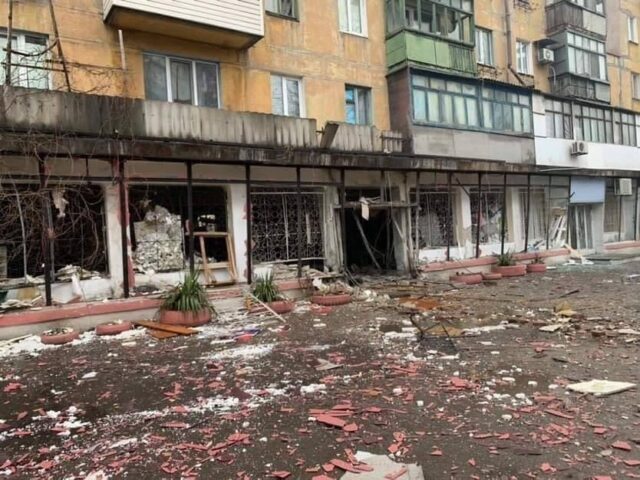
 – Concerns grew on Wednesday for the welfare of more than 250 Ukrainian fighters who surrendered to Russian forces at the Azovstal steelworks in Mariupol after weeks of desperate resistance.

The surrender brought an end to the most devastating siege of Russia‘s war in Ukraine and allowed President Vladimir Putin to claim a rare victory in his faltering campaign, which many military analysts say has stalled. Read full story

Buses left the steelworks late on Monday in a convoy escorted by Russian armored vehicles. Five arrived in the Russian-held town of Novoazovsk, where Moscow said wounded fighters would be treated.

Seven buses carrying Ukrainian fighters from the Azovstal garrison arrived at a newly reopened prison in the Russian-controlled town of Olenivka near Donetsk, a Reuters witness said.

Russia said at least 256 Ukrainian fighters had “laid down their arms and surrendered”, including 51 severely wounded. Ukraine said 264 soldiers, including 53 wounded, had left.

Russian defense ministry video showed fighters leaving the plant, some carried on stretchers, others with hands up to be searched by Russian troops.

There were some women aboard at least one of the buses in Olenivka, Reuters video showed.

While both sides spoke of a deal under which all Ukrainian troops would abandon the steelworks, many details were not yet public, including how many fighters still remained inside, and whether any form of prisoner swap had been agreed.

The Kremlin said Putin had personally guaranteed the prisoners would be treated according to international standards, and Ukrainian officials said they could be exchanged for Russian captives.

Ukrainian Deputy Prime Minister Iryna Vereshchuk said Kyiv aimed to arrange a prisoner swap for the wounded once their condition stabilized.

Russian Deputy Ambassador to the United Nations Dmitry Polyansky said there had been no deal, tweeting: “I didn’t know English has so many ways to express a single message: the #Azovnazis have unconditionally surrendered.”

TASS news agency reported a Russian committee planned to question the soldiers, many of them members of the Azov Battalion, as part of an investigation into what Moscow calls “Ukrainian regime crimes”.

High-profile Russian lawmakers spoke out against any prisoner swap. Vyacheslav Volodin, speaker of the State Duma, Russia‘s lower house, said: “Nazi criminals should not be exchanged.”

Lawmaker Leonid Slutsky, one of Russia‘s negotiators in talks with Ukraine, called the evacuated combatants “animals in human form” and said they should be executed.

Formed in 2014 as an extreme right-wing volunteer militia to fight Russian-backed separatists, the Azov Regiment denies being fascist or neo-Nazi. Ukraine says it has been reformed and integrated into the National Guard.

Natalia, the wife of a sailor among those holed up in the plant, told Reuters she hoped “there will be an honest exchange”. But she was still worried: “What Russia is doing now is inhumane.”


BATTLE FOR DONBAS

The denouement of the battle for Mariupol, which came to symbolize Ukrainian resistance, is Russia‘s biggest victory since it launched what it calls a “special military operation” to “denazify” the country on Feb. 24.

It gives Moscow control of the Azov Sea coast and an unbroken stretch of eastern and southern Ukraine. But the port lies in ruins, and Ukraine believes tens of thousands of people were killed under months of Russian bombardment.

On the diplomatic front, U.S. President Joe Biden will host the leaders of Sweden and Finland at the White House on Thursday to discuss their NATO applications, the White House said. The Nordic countries are optimistic they can overcome objections from Turkey over jointing the 30-nation alliance. Read full story

Russia‘s offensive in the east, meanwhile, appeared to be making little progress, although the Kremlin says all its objectives will be reached.

Around a third of the Donbas was held by Russia-backed separatists before the invasion. Moscow now controls around 90% of Luhansk region, but it has failed to make major inroads towards the key cities of Sloviansk and Kramatorsk in Donetsk in order to extend control over the entire Donbas.

Ukrainian forces have advanced at their fastest pace for more than a month, driving Russian forces out of the area around Kharkiv, Ukraine’s second-largest city.

Ukraine says its forces had reached the Russian border, 40 km (25 miles) north of Kharkiv. They have also pushed at least as far as the Siverskiy Donets river 40 km to the east, where they could threaten Russian supply lines.

Putin may have to decide whether to send more troops and hardware to replenish his weakened invasion force as an influx of Western weapons, including scores of U.S. and Canadian M777 howitzers that have longer range than their Russian equivalents, bolsters Ukraine’s combat power, analysts said.

“Time is definitely working against the Russians … The Ukrainians are getting stronger almost every day,” said Neil Melvin of the RUSI think-tank in London. – Reuters

Redefining business continuity in a post-COVID world

Photo from FREEPIK

Disruption has been the name of the game in business since the turn of the millennium. Years of disruption due to technology have culminated in the COVID-19 crisis, the biggest globally disruptive event in recent history.

In this extremely volatile landscape, good leadership has been essential. And yet as the world emerges into an unprecedented reality post-pandemic, business continuity grows ever more challenging. As such, industries need to reinvent themselves in new creative ways to ensure long-term sustainability and continued growth.

According to multinational professional services firm Deloitte, business continuity management covers infrastructure, cyber, employee, business, operational and communication risks, with the aim of managing an organization that has to face new challenges and risks and wants to ensure continuity of operations and production.

Typically, the firm explained in a report titled “Workforce Strategies for Post-COVID Recovery”, crises have three time frames in which companies can deal with: Respond, where current survival and continuity is most important; Recover, where lessons are learned and strategy changes are implemented; and Thrive, in which the company prepares for the future based on these changes.

As the world emerges from the impact of COVID-19, organizations now must shift their focus to the challenges of the recovery stage.

“It is important to realize that recovery won’t be static. It will not occur on a specific date,” Deloitte said in the report.

“Organizations must prepare for different outcomes of the pandemic — mild, harsh, or severe — and recognize that the recovery should be adaptable to different situations within different countries and industries worldwide.”

The report suggested that business leaders should think of the recovery process as a spectrum of options, wherein they must ask how they can integrate changes in their workforce, what services could be added or changed, or what other operations could be maintained in a remote capacity.

“The recovery process adopted by each organization will serve as a bridge between the response — how it dealt with the immediate demands of the crisis — and what its future will look like — in the new normal,” the report said.

Deloitte recommended workforce-related strategies in the recovery to be orchestrated through five critical actions: Reflect, Recommit, Re-engage, Rethink, and Reboot. These actions can help organizations bridge the crisis response to the new normal by laying the foundation to thrive in the aftermath of the crisis.

Only by internalizing the lessons learned from crises past can organizations lay the groundwork for future growth. Greg Kelly, senior partner at McKinsey and Company, expounded on this sentiment in the inaugural episode of global management consultancy’s new Future of America podcast, discussing how leading companies can use growth to drive sustainability and promote genuine inclusion.

“Our research shows that you’re more likely to grow better and faster if you pursue growth in multiple dimensions. Growth in your core, growth in adjacencies, growth in geographies, and to do so with multiple levers,” Mr. Kelly said.

He said that companies are much more likely to outperform if they have a well-defined core business, and growing in those categories, in their core market, because there are always new opportunities to be found, and moving to adjacent businesses can allow the company to apply their strengths in new ways.

“And then you’re also growing in additional geographies and doing that with a wider variety of capabilities with innovation and a focus on your core categories, your core customers, and then you’re finding even better ways to meet your customer needs,” he said.

“Frequently, that requires better innovation. Also, it can be connecting more digitally, connecting with better marketing. We talk about full-funnel marketing, which is the brand-building marketing as well as the performance marketing. So connecting with better capabilities and then also pursuing growth inorganically through mergers and acquisitions. We find that the growth outperformers use those multiple levers to drive growth. But again, it all starts with that growth mindset. The leaders with that growth mindset grow twice as high as those without it.”

Leaders who possess that mindset, and the drive to pursue such aspirations through multiple capabilities, are more likely to succeed in challenging environments, he added.

“Whether that’s improving their innovation capability, their digital connections, or what we call full-funnel marketing, which is both brand-building and performance-oriented marketing, and those that are thoughtful about how acquisitions can help accelerate their progress — those are the [companies] that outperform. So that second key is pursuing multiple levers. And third, holding themselves accountable for the ‘and,’ for driving inclusion and sustainability and growth.” — Bjorn Biel M. Beltran

A Gen-Z guide to improving financial health

Discover how good financial habits can boost your credit score — unlocking doors towards achieving long-term financial goals

The latest TransUnion Consumer Pulse Survey revealed that 96% of Gen Z (born 1995-2004) Filipinos believe that access to credit and lending products is important to achieve financial goals. However, only 29% of them reported having sufficient access to credit, and 50% of Gen Z Filipinos plan to apply for credit or refinance existing credit within the next year.

Access to credit is an important step in everyone’s financial journey. Effective access helps improve financial inclusion, where more people can utilize financial products and services that respond to various needs.

With more banks and financial institutions willing to lend funds, these organizations determine an individual’s eligibility and creditworthiness by using multiple inputs, including information given by the applicant as well as by accessing and assessing their credit score. By considering a person’s payment history, length of credit history, money owed, and mix of credit, a ‘good’ credit score could help secure a loan to serve as capital for a business, the funds to purchase a car or a house, or the means to get back on one’s feet after an emergency.

In the Philippines, consumer attitudes to credit are changing. The TransUnion survey also found that 40% of Filipinos believe in the importance of credit monitoring, and almost half (48%) think that their credit score would improve if businesses leveraged non-standard information as part of the assessment of their credit score.

As the first international private credit bureau in the country, TransUnion was established in the Philippines in 2011, leveraging alternative data assets where traditional financial data isn’t available to give a traditional credit score. Alongside products and services that harness the power of information, TransUnion believes enhancing consumer credit literacy and helping people develop good financial habits can help unlock more credit opportunities for Filipinos.

Here are some tips to help Gen Z Filipinos develop good credit scores and improve their financial health:

Build good credit habits early

With more Gen Z Filipinos entering the workforce, this creates more opportunities for them to participate in the formal financial system. Applying for a credit card is a good first step towards building one’s credit history.

Apply for different kinds of credit

Successfully paying off a variety of credit types can make a good impression with lenders. This is considered one of the fastest ways to build a credit score.

Avoid applying for multiple credit cards and loans at the same time

Applying for too many credit cards or loans at the same time can signal a problem and be seen as an indicator of financial stress. Multiple applications and refusals can even damage your credit score.

Manage your minimum payments

Regularly paying above the monthly minimum is a good indicator of sound credit management. Not only can credit balances be paid off faster but going above the minimum can help save money in interest payments as well.

Make payments on time

Credit commitments, including utilities such as telco bills, must be paid on time. As banks and financial institutions use credit history to help make their lending decisions, evidence of prompt payments can help increase your chances of securing a loan.

Credit is an important way to empower consumers to achieve their financial goals. However, credit and loans are big responsibilities, which is why good financial habits are needed to manage them effectively. As more Gen Z Filipinos enter the workforce, financial services must be made accessible for more Filipinos to pursue a better life. To learn more about your financial health, apply for a TransUnion Credit Report today.

PIA ARELLANO has over 25 years of industry experience across banking, payment solutions, telecommunications, and remittance services. She has been instrumental in establishing TransUnion as a risk management and data solutions and insights partner of banks and financial institutions in the Philippines.

Email questions to tuphcomms@transunion.com.


Spotlight is BusinessWorld’s sponsored section that allows advertisers to amplify their brand and connect with BusinessWorld’s audience by enabling them to publish their stories directly on the BusinessWorld Web site. For more information, send an email to online@bworldonline.com.

Join us on Viber to get more updates from BusinessWorld: https://bit.ly/3hv6bLA.

Demystifying BCMS and making it clear, practicable, rehearsable

By Enrique Victor D. Pampolina, Risk Advisory Partner — Deloitte Philippines

During the start of the pandemic, one of the many challenges for companies in activating their business continuity plans was the confusion around which particular plan was to be activated. Companies institutionalize various plans, such as building emergency and evacuation plan, people continuity plans, or an earthquake response plan. But who had the foresight to prepare for a full-blown global pandemic? On the other end, there are also companies that have no business continuity plans at all, except for the minimum required fire/building evacuation plans.

Another challenge for businesses is the way their departmental units’ BCMS work in silos within the organization. An IT department, for example, may have an IT Disaster Recovery Plan, but one that doesn’t utilize a full-blown business impact analysis exercise of their operations, or a Building Administrator’s own Building Resiliency Plan that is not linked to an HR department’s People Continuity Plan. While having these plans is essential, it is also important that they are integrated and developed together as an enterprise-wide initiative.

What exactly are these plans and how do they interact with each other? What are the key components of a robust Business Continuity Management Systems, or BCMS, and how do we simplify them to be less confusing?

A BCMS is composed of the distinct plans of Emergency (or Incident) Response, Crisis Management, IT Disaster Recovery, and Business Continuity. While each plan is distinct, each one actually flows and interacts with the other plans when triggered or activated. It is also possible that an emergency or a crisis can be properly addressed without the benefit of activating the business continuity plans (BCP). BCPs are only activated when the emergency or crisis has resulted in an impacted or disrupted organization, such as when your building is inaccessible, or your equipment or technology are unusable.

IT Disaster Recovery (DR) Plan is, by far, the most well-understood and developed of the plans, at least by the IT practitioners within companies. Often, however, it is developed and prepared by the IT Department with less involvement from the business community or operating departments. IT DR development should be subsumed under the broader BCMS since the IT systems and applications that need to be recovered must fulfill the same business processes that are deemed most critical and essential by the organization during its Business Impact Analysis workshops.

For years, the bias was for companies to institute scenario-based business continuity plans, such as the popular Big One earthquake emergency plan, when in fact, asset-based business continuity planning is more flexible and practical. While scenarios may change, your most critical activities as a company, the ones that you need to recover immediately, remain the same regardless of what crisis or emergency is happening. This is why companies that prepared their BCPs in keeping with asset-based planning were quickest to adapt to the pandemic, recover their assets, and continue their mission-critical activities.

At Deloitte Philippines, we are a big proponent of the asset-based business continuity planning, emphasizing the need for companies to identify their most critical operations while recovering their assets, which we label as BETH3 or Building, Equipment, Technology, HR (or People/Employees), and 3rd Parties for ease of recall.

Critical operations can usually be continued by recovering any or all of these BETH3 components. But let me point out that one pitfall of inadequately prepared BCPs is not treating third-party contractors as integral to your operations the same way your organic BETH assets are, be it your third-party IT service provider or your security, housekeeping, or even catering services. As the saying goes, you are only as strong as your weakest link, so any weakness in your third parties will impact you if you don’t include them in the BCMS development. This is why it is important that you demand from your third parties the same rigor in developing their BCMS as you do with your own operating departments.

Even as we emphasize asset-based BCMS, companies can still complement their BCMS with scenario-specific playbooks. Playbooks are two- to three-pager quick guide emergency, crisis, and business continuity plans that are skewed towards addressing a defined scenario, e.g., Big One earthquake hitting the Metro, Black Swan climate disaster such as Yolanda hitting the Metro, or political unrest marked by bombings or rallies. Said playbook would include, among others, key contact numbers (internal and external), step-by-step action items, and meeting frequencies of crisis management, emergency response, and business continuity teams.

But more than completing a well-documented and written BCMS, it is the actual cascade of the plans within the organization that is most critical, because this will allow each member of the organization (from the Crisis Management Team Commander down to the most junior employee) to know their role and participation in the said plans.

As I always emphasize to companies, the journey of developing, writing, cascading, testing, continuously improving, and rehearsing your BCMS is the destination. It is an ongoing activity with no end. Companies that commit to this non-stop process of improving their BCMS instill in their teams the needed risk imagination and readiness mentality that are the end goals of an effective BCMS.


Spotlight is BusinessWorld’s sponsored section that allows advertisers to amplify their brand and connect with BusinessWorld’s audience by enabling them to publish their stories directly on the BusinessWorld Web site. For more information, send an email to online@bworldonline.com.

Join us on Viber to get more updates from BusinessWorld: https://bit.ly/3hv6bLA.

Pivoting to a people-focused workplace

While executives have long recognized that employees’ well-being is important, the COVID-19 pandemic emphasized how significant it really is. Work, life, and health became inseparable to maintain productivity, engagement and safety in the workplace especially during crises.

In 2020, COVID-19 revealed how the governing workforce strategies using retrospective metrics and measurements to describe the employees’ current state severely limits an organization’s ability to survive disruptions. Hence, companies were prompted to prioritize workers’ physical and mental well-being as these turned out to be critical to operations.

To thrive in a post-pandemic world, some organizations took quick action to redirect sources towards keeping the workforce healthy: moving workers into remote work arrangements, implementing testing and contact tracing strategies for onsite workers, establishing new programs for emergency medical leave, providing employees’ children and senior care support, and boosting workers’ physical, mental, and financial health.

In a 2021 Global Human Capital Trends survey of Deloitte to its employees worldwide, the top three objectives of work transformation were identified: improving quality of work, increasing innovation at the workplace and building on the workers’ well-being.

Deloitte Global (DTTL) is a multinational professional services network headquartered in London with an office in Manila for risk and financial advisory and business process solutions. DTTL understands that it is paramount to shift from using workforce insights to improve old patterns of work as the world enters into a new normal.

To pivot and adapt, now, more than ever, a mentally healthy workplace matter. Thus, the global organization played an important role in overcoming fears around health, safety and job uncertainty leading to anxiety, frustration, and low morale among the employees. It kept all employees informed with accurate, timely, and appropriate operations and working policies during the lockdowns and implemented flexible, remote work options and the right to disconnect.

The company also puts efforts in keeping their workers’ kids engaged for a few hours while their parents work from home during community lockdowns, a new dimension introduced for keeping a “social” workplace even when employees are socially distanced.

In its 2021 Special Report, DTTL explores one set of possible answers to the central question: How might the worker-employer relationship evolve to meet the opportunities and challenges of the post–COVID-19 world?

According to the report, these pressures brought by crises yielded great benefits. Workers showed remarkable resilience and achieved innovative results that might have taken years to materialize. However, questions about whether organizations were doing enough to support and safeguard their workers also resurfaced.

The report highlights two key contexts to foster the worker-employer relationship in the future: the type, consistency, speed, and effectiveness of workplace government action and how talent availability influences how workers seek employment; and how organizations access and retain these talents amid crises. These two factors enabled DTTL to explore four potential futures of how the world of work could evolve and be prepared for it. — Allyana A. Almonte

Leadership in times of crisis

Photo from FREEPIK

The true test of leadership, as they say, is adversity.

When everything goes according to plan, or when profits come and grow and employees feel content in the company, playing the role of a leader may seem to run smoothly. However, when a significant crisis happened and plans went sideways for the organization, leaders are tested and need to review the roles they play.

Business leaders surely have experienced being put to the test during the COVID-19 pandemic, which plagued the world with health and economic crises. The new normal disrupted the business-as-usual as the workforce transitioned to a remote setup for safety reasons and urged organizations to reassess their plans and brace for the pandemic’s  potential impact.

The COVID-19 crisis, like other major adversities, pushed leaders to step up for their people and businesses.

A crisis of a similar extent like the pandemic affects the personal lives of employees aside from their work. According to management consulting firm McKinsey & Company, one’s own survival and other basic needs come first in people’s minds in a landscape-scale crisis. Hence, leaders must show their caring side toward their people.

This is what leaders in the “front-stage” role present, as called by Sameh Abadir, a professor of leadership and negotiation at IMD, in an article published in MIT Sloan Management Review — inspiring and assuring their teams as well as showing empathy and public commitment.

“A crisis is when it is most important for leaders to uphold a vital aspect of their role: making a positive difference in people’s lives,” McKinsey said in an article published on its website. “Doing this requires leaders to acknowledge the personal and professional challenges that employees and their loved ones experience during a crisis.”

McKinsey reminded leaders to understand that their people would have different experiences during a crisis. One of the instances brought about by the COVID-19 pandemic was school closures, which shifted students’ learning to be done at home. This required additional effort from working parents.

“Since each crisis will affect people in particular ways, leaders should pay careful attention to how people are struggling and take corresponding measures to support them,” the firm added.

But while leaders should inspire and deliver a message of hope to their people in facing the crisis, they should also be realistic and transparently communicate about the situation at hand.

In performing the “back-stage role,” as  also referred to by Mr. Abadir of IMD, leaders take “a blunt and realistic approach”  to the threats. “Behind the scenes, leaders gather information and expertise, share facts, and dive deeply into processes — whether financial, technological, or human — to adapt and follow through on their plans,” he explained.

McKinsey also remarked that leaders’ crisis communications usually hit the wrong note. Some leaders sound overconfident or upbeat, particularly early in a crisis. This may make stakeholders suspect what leaders really grasp about the situation and how well they deal with it. The firm also noted that the inclination to defer announcements for a long period of time to wait for more facts and decisions to be made may not also be reassuring.

“Thoughtful, frequent communication shows that leaders are following the situation and adjusting their responses as they learn more. This helps them reassure stakeholders that they are confronting the crisis,” McKinsey wrote.

Communications from leaders must not also stop even after the crisis, the firm added. “Offering an optimistic, realistic outlook can have a powerful effect on employees and other stakeholders, inspiring them to support the company’s recovery.”

Continuing role beyond the current crisis

Even though many business leaders might now know how to navigate the COVID-19 crisis and perhaps are already envisioning the post-pandemic world, some adversities could still impact their companies in the future. Deloitte’s 2021 Global Resilience Report found that 62% of the surveyed chief executive officers (CxOs) believed that occasional or regular disruptions of such magnitude could happen going forward.

However, only 30% of the surveyed expressed full confidence in the capacity of their organizations to quickly adapt and respond to possible threats. And only 34% of them feel ready to lead their organization through uncertainties that might come to pass. Nonetheless, these figures showed improvements among CxOs from its previous survey. Before 2020, only 21% deemed their organizations could swiftly respond to disruptive events, and 24% felt ready to lead amid such disruption.

According to Deloitte, the survey validated that “organizations that plan and invest in anticipation of disruptions… are better positioned to respond, recover, and thrive.” The report, which looked at how companies dealt with the turbulent events of 2020, also identified five attributes of a resilient organization. Such traits include being prepared, adaptable, collaborative, trustworthy, and responsible, which business leaders can foster to build a greater resiliency within their organizations.

“I think the pandemic has seriously affected the confidence of Filipino business leaders to respond and adapt to future threats,” Deloitte Philippines Risk Advisory Partner Jet Pampolina said in a statement. “But conversely, and perhaps unknowingly, this crisis has also equipped leaders with the mental toughness and agility needed to face the next big threat.” — Chelsey Keith P. Ignacio

Vivant Corp. set to hold annual stockholders’ meeting on June 16


Spotlight is BusinessWorld’s sponsored section that allows advertisers to amplify their brand and connect with BusinessWorld’s audience by enabling them to publish their stories directly on the BusinessWorld Web site. For more information, send an email to online@bworldonline.com.

Join us on Viber to get more updates from BusinessWorld: https://bit.ly/3hv6bLA.

ADVERTISEMENT
ADVERTISEMENT