Home Blog Page 6415

US accuses casino tycoon Wynn of acting as Chinese agent

Steve Wynn, former chairman and CEO of Wynn Resorts, speaks during the Milken Institute Global Conference in Beverly Hills, California, US, May 3, 2017. — REUTERS

WASHINGTON — The US Justice Department on Tuesday sued Steve Wynn, the former CEO of Wynn Resorts, to compel him to register as an agent of China and accused him of lobbying then-President Donald Trump at Beijing’s behest in 2017.

Mr. Wynn’s lawyers denied the allegations, saying he had never acted as an agent of the Chinese government and “had no obligation to register under the Foreign Agents Registration Act” (FARA).

From at least June through August 2017, Mr. Wynn contacted Mr. Trump and members of his administration to convey a Chinese request that Mr. Trump cancel the visa of a Chinese businessperson who had sought asylum in the United States, the department said.

The department’s civil suit alleges it had advised Mr. Wynn in 2018, 2021 and April 2022 to register as an agent of China under FARA but he declined to do so. Mr. Wynn stepped down as Wynn Resorts CEO in early 2018.

“Where a foreign government uses an American as its agent to influence policy decisions in the United States, FARA gives the American people a right to know,” said Matthew G. Olsen, assistant attorney general for the department’s national security division.

The suit was filed in the US District Court for the District of Columbia. It seeks a declaratory judgment that Mr. Wynn has an obligation to register under FARA.

Mr. Wynn’s lawyers, Reid Weingarten and Brian Heberlig, said they disagreed with the department’s legal interpretation of FARA and looked forward to proving their case in court.

In a statement, the Justice Department alleged that Mr. Wynn acted at Beijing’s request “out of a desire to protect his business interests in Macau,” where Wynn Resorts operates a luxury hotel and casino.

Mr. Wynn conveyed the requests to cancel the businessperson’s visa to the Trump administration on behalf of Sun Lijun, a former vice minister in China’s Ministry of Public Security, the statement said.

It did not name the Chinese businessperson in question, but said the individual left China in 2014 and was later charged with corruption by Beijing.

Mr. Wynn conveyed Beijing’s request to Trump over dinner and by phone, and had multiple discussions with senior White House and National Security Council officials about organizing a meeting with Sun and other Chinese officials, the department said. — Reuters

COVID-wracked N.Korea may greet Biden with a missile test

PHOTO FROM JOE BIDEN FACEBOOK PAGE

WASHINGTON/SEOUL — Despite battling a wave of suspected coronavirus disease 2019 (COVID-19) infections, North Korea appears to be preparing to test an intercontinental ballistic missile (ICBM) ahead of US President Joseph R. Biden’s first official trip to South Korea, a US official said.

The official, speaking on condition of anonymity, said that the latest intelligence showed North Korea could carry out an ICBM test as soon as Thursday or Friday.

Mr. Biden is expected to arrive in South Korea on Friday and hold talks with his South Korean counterparts over several days before visiting Japan. The White House said last week Mr. Biden was considering a trip to the Demilitarized Zone on the border with North Korea.

A weapons test could overshadow Mr. Biden’s broader focus on China, trade, and other regional issues, and underscore the lack of progress in denuclearization talks despite his administration’s vow to break the stalemate with practical approaches.

It could also complicate international efforts to offer Pyongyang aid as it battles its first confirmed COVID outbreak.

The trip is Mr. Biden’s first to the region as president, and will be the first summit with South Korean President Yoon Suk-yeol, who took office on May 10.

Mr. Yoon has vowed to take a harder line against North Korean “provocations,” and is expected to seek greater assurances from Mr. Biden that the United States will strengthen its “extended deterrence” against the North.

When asked about the US assessment on a missile launch, a spokesperson for Seoul’s ministry of defense said that South Korean and US intelligence authorities are monitoring such activities and closely coordinating, and that its military is maintaining a firm readiness posture.

US officials have warned that the North could also test a nuclear weapon around the visit, and the State Department said on Tuesday there is no expectation that the COVID outbreak would delay a resumption of nuclear testing, paused since 2017.

“Even as (North Korea) continues to refuse the donation of … apparently much-needed COVID vaccines, they continue to invest untold sums in ballistic missile and nuclear weapons programs that do nothing to alleviate the humanitarian plight of the North Korean people,” State Department spokesman Ned Price told a briefing.

A new report by the US-based Center for International and Strategic Studies (CSIS) said commercial satellite imagery shows work continuing at the nuclear site, whose underground testing tunnels were shuttered in 2018 after leader Kim Jong Un declared a moratorium on nuclear and ICBM tests.

He has since said that the country is no longer bound by that moratorium because of a lack of progress in talks with the United States. The North resumed testing ICBMs in March.

“Refurbishment work and preparations at Tunnel No. 3 has been proceeding over the past three months, and presumably will be nearing completion for the oft-speculated seventh nuclear test,” the CSIS report on the nuclear site said. “The timing of this test rests solely within the hands of Kim Jong Un.”

North Korea has also resumed construction at a long-dormant nuclear reactor that would increase its production of plutonium for nuclear weapons by a factor of 10, researchers at the US-based James Martin Center for Nonproliferation Studies (CNS) reported last week, citing satellite imagery.

Analysts say that even if North Korea tests a weapon, South Korea and the United States should offer unconditional COVID aid.

North Korea sent aircraft to China to pick up medical supplies days after it confirmed its first COVID-19 outbreak, media reported on Tuesday, but Pyongyang has yet to respond to offers of aid from South Korea. Washington says that it supports providing assistance to North Korea, but that there were no current plans to provide vaccines. — Reuters

Making the case against bad profits via shrinkflation and the case for customer love

FREEPIK

IN MANY PARTS of the world, inflation is climbing quickly, including in the US, where I live and where inflation is now north of 8%. But even that official number seems to understate the issue. Everywhere is evidence of “shrinkflation,” the practice of getting less for the same price. Sit down at a restaurant and order using the QR code so the harried waiter can cover twice the number of tables. Buying a new car? Chip shortages and supply chain bottlenecks mean you had better be flexible on color. Even Amazon, a company with an avowed desire to always put the customer first and a pretty strong track record of doing so, decided that Prime subscriptions would no longer include free Whole Foods delivery. Prime members still pay $139 a year, but now they also have to pay $9.95 any time they want something from Whole Foods at their doorstep.

As the New York Times’s “The Upshot” explained in a column titled “There Is Shadow Inflation Taking Place All Around Us,” this type of inflation is simply not captured in typical government data.

In much of Asia, inflation seems to be under control, largely due to steadier food prices, according to a recent article in the Economist. But even here, shrinkflation is a real thing. In Singapore and Japan, standard sizes of common products like chocolate, soda, and chips are growing steadily smaller.

Businesses face large challenges right now, from labor shortages to supply chain disruptions, but giving customers less for their money is the opposite of customer love. Leaders can make the best of a tough situation by doubling down on innovation and transparency.

One of the chapters in the book I recently wrote with Fred Reichheld and Maureen Burns, Winning on Purpose, is called “Be Remarkable: Not Merely Satisfactory.” Examples include former Discover CEO David Nelms’s customer-centric decision to risk $200 million of the credit card issuers late-fee revenues by sending customers an e-mail alert the day before the fee would be levied. Or consider the opportunities that mobility, delivery, and financial app Grab’s created for drivers during the pandemic by granting them access to customers. Many small- and medium-size enterprises report that their sales would have declined at the height of the pandemic if not for food delivery platforms, which also ensure they get real-time customer feedback after each order.

Companies with a strong Net Promoter Score regularly achieve the remarkable, but it takes effort. They work in systematic and ever-changing ways. Virtual medical insurance company Bowtie, launched in 2019, has scored strong reviews from customers by focusing on simple, easily understood products and offering helpful, empathetic guidance. The company has a dedicated concierge team focused on the buying experience, not on sales, and, as a new entrant, has built trust by having a physical presence. On the second floor above its café, Bow Coffee, is an in-person customer service center.

We need some surprise to wow us and inspire us to talk about an experience with friends and colleagues. Innovators are finding new ways to create that kind of enthusiasm by engaging customers and giving them a sense of fun. Apps like Strava and Duolingo employ gamification to make exercise and language study competitive, challenging, and more enjoyable. Bowtie’s decision to use pink in its logo, and name itself after something you don for a special moment in your life, show a sense of fun but also that they offer something different from traditional competitors. We wanted to create a brand that could really touch people, while being playful and innovative,” says cofounder and co-CEO Fred Ngan.

Innovations like these are important, but so is transparency. If you have to raise prices, be clear about why. Take the time to walk customers through the math. If labor costs have doubled, let them know that. You may find customers appreciate that you are taking care of your employees. And for those who just can’t afford the higher price, tiered pricing can help. For a service provider like a gym or a cleaning service, that might mean adding a lower-priced plan for people who use the service less frequently.

No one wants to pay more, but inflation doesn’t have to make your company any less remarkable.


Darci Darnell is the global head of Bain & Company’s Customer practice and is the co-author, along with Fred Reichheld and Maureen Burns, of Winning on Purpose: The Unbeatable Strategy of Loving Customers.

Elon Musk is acting like Henry Ford. Uh-Oh.

DANIEL OBERHAUS-FLICKER

AS ELON MUSK tries to add the social media giant Twitter to his expanding empire, he’s seeming a bit busy. When he’s not starting and buying complex companies, he’s sounding off about free speech, cryptocurrency, artificial intelligence, and, well, just about everything.

The electric-car magnate is developing an eerie resemblance to another automotive visionary: Henry Ford. That’s not meant as a compliment. If Musk keeps courting celebrity and pursuing side ventures, the risk is that Tesla, the company that made him a household name, will fall from its premier position just as Ford Motor Company did in the 1920s.

Henry Ford famously parlayed visionary ideas about assembly-line manufacturing into unimaginable wealth and global fame. His headline-grabbing initiatives — paying his workers the princely sum of $5 a day, for example — made him an American folk hero, someone whose quest for market share and profit nonetheless held out the promise of a better life for all.

This adulation drove a transformation in Ford’s personality. Like Musk, Ford was originally a shy, awkward man. But as his business ventures made him a celebrity in the years after 1910, he underwent a metamorphosis that foreshadowed Musk’s own transformation from tongue-tied savant to global guru.

Samuel Marquis, a friend of Ford’s, once recounted how the automaker “suddenly faced about, hired a publicity agent [and] jumped into the front page of every newspaper in the country.” Ford’s new philosophy, Marquis noted, boiled down to a belief that “it is a good thing to keep people talking about him, no matter what they say.”

There was plenty to say. In the 1920s, Ford’s ambitions attracted jaw-dropping awe. In a typical side project launched in 1921, Ford proposed to lease the government-owned Wilson Dam on the Tennessee River. A longstanding proponent of hydroelectric power, Ford hoped to turn a large swath of dirt-poor Alabama known as Muscle Shoals into a hydro-powered industrial metropolis the size of Detroit.

He proposed to underwrite the business with a new kind of techno-currency: the “energy dollar,” which would be backed by electricity generated by the river. By the time the plan fell apart, Ford was contemplating another modest project: a run for the US presidency.

His wife nixed that idea. But the “Sage of Dearborn,” as Ford became known, started plenty of other ventures. He moved into the manufacture of airplanes and launched the nation’s first commercial airline in 1925. He started educational initiatives, including the Henry Ford Trade School.

He also started a sprawling historical museum in his hometown of Dearborn, Michigan. By the time it finally opened in the Great Depression, Ford had sunk today’s equivalent of a billion dollars into what was little more than a warehouse bulging with things that reminded Ford of his childhood.

Other ventures weren’t so wholesome. He purchased a failing newspaper known as the Dearborn Independent, pumping money into it and turning it into a large-circulation national paper distributed through his dealerships. It featured columns that ghostwriters churned out under Ford’s name.

It also published a horrific series of anti-Semitic screeds later published as The International Jew. The addled conspiracy theories that appeared there attracted the admiration of Adolf Hitler.

Lost in all the celebrity and controversy was Ford’s iconic company. As he became increasingly distracted — and ever more convinced of his own infallibility — Ford drove away many of his most capable lieutenants and engineers, replacing them with sycophants. He even sidelined his own son, Edsel, who correctly anticipated many of the challenges facing the company.

Ford had become someone who “would rather be a maker of public opinion than the manufacturer of a million vehicles a year,” Marquis observed.

Ford’s dethroning began with the arrival of Alfred P. Sloan, an engineer trained at the Massachusetts Institute of Technology who by 1923 had gradually assumed control of a motley assortment of car companies known as General Motors.

Sloan was ruthless and calculating, using financial statistics to cut costs and foster efficiency. The language he used to describe everything, one management theorist later observed, was as “cold as the steel he caused to be bent to form cars: economizing, utility, facts, objectivity, systems, rationality, maximizing — that is the stuff of his vocabulary.” He looked the part, too.

Sloan had no interest in being a public figure. He simply wished to usurp Ford. He began by bringing order to his own corporate empire, segmenting the market into different brands. Instead of Ford’s singular Model T, General Motors had a “car for every purse and purpose,” as one advertisement put it. Sloan gave the executives in charge of different divisions — Chevrolet, Buick, Cadillac, and so forth — enough latitude to run their own ships, but otherwise centralized management.

The differences multiplied from there. In the 1920s, Ford pursued a strategy of vertical integration, buying mines and forests to give him a steady supply of raw materials. (Musk has embarked on similar ventures.) Sloan, by contrast, opted for a more flexible reliance on suppliers that freed up capital to pursue the investments behind the strategy of market segmentation and planned obsolescence.

While Ford spent a fortune building Fordlandia, a bizarre utopian city in the Brazilian rainforest designed to oversee rubber production in an area bigger than Connecticut, Sloan focused on building affordable and stylish cars. And while Ford kept expecting buyers to pay cash, Sloan pioneered consumer financing.

In 1929, General Motors became the world’s biggest car manufacturer. Though Henry Ford tried to stage a comeback with the Model A, it was too late: General Motors widened its lead during the Great Depression. Only when Ford’s grandson took over at the end of World War II and hired top managers did the company’s fortunes turn around.

In the case of Tesla, history is breathing down Musk’s neck. The automaker best positioned to overtake Tesla as the premier manufacturer of electric vehicles could be the Ford Motor Company, which is gearing up to beat Musk at his own game.

Today’s Ford executives don’t have tens of millions of Twitter followers. They’re not household names. They don’t have grand plans to transform the world or launch new ventures.

In other words, they’re not at all like Henry Ford. And that spells trouble for Ford’s modern-day incarnation, Elon Musk.

BLOOMBERG OPINION

Promises to keep

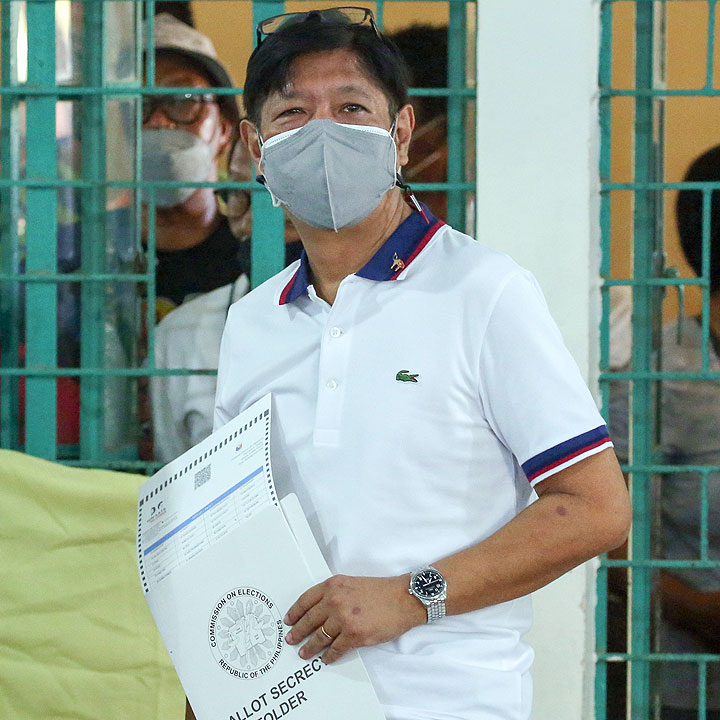
FERDINAND “BONGBONG” MARCOS, JR. — PHILIPPINE STAR/KRIZ JOHN ROSALES
FERDINAND “BONGBONG” MARCOS, JR. — PHILIPPINE STAR/ KRIZ JOHN ROSALES

Almost two weeks after the May 9 general elections, people, as expected, continue to do some so-called Monday-night quarterbacking. The more informed and those who believe they have a higher stake in the outcome of the elections, are, of course, trying to get a better understanding of the results of the last electoral exercise. Some therefore have a more complicated narrative of the whys and wherefores of the result and have even more intricate views of the web-like political and economic environment. Others who are more concerned with the more urgent matter of bringing food to the table for their families view the elections as just another struggle among different factions of the so-called ruling elite.

This is the same group, said to be lower C, D, and E, and parenthetically, the “angry group” as some commentators call it, that does not, generally look at ideological issues. Rather, this strata of society is heavily influenced by its unmet needs over the years, its static position, lack of real prospects for upward social and economic mobility, and dissatisfaction, in general. It is the group that quietly watches, listens, absorbs, and eventually believes the media, especially in this day and age of technology, social media. They listen to the promises of a better life and eventually believe, and later expect, the promise maker to deliver.

A case in point, probably a representative of the struggling common Filipino, is our electrician. This electrician could not afford a formal education in electrical courses. He did not go to college to take up electrical engineering and was therefore not exposed to other courses that make up what could have been a liberal education.

Whatever knowledge and talent this electrician has came as a result of exposure to actual electrical works and the ability to put “two and two together” by himself.

Our electrician quietly soldiers on and experiences the daily drudgery of waking up at four in the morning (after sleeping at 10 the night before because he could not catch a ride back home early enough) while his wife prepares breakfast for him and his children try to make do with whatever gadgets they have for online learning. Our electrician and his family watch YouTube and other platforms to catch up on news and commentaries and for entertainment.

Our electrician says he watched a YouTube feature which essentially states that in his last will and testament, Ferdinand Marcos, Sr. promised to give P1 million to each Filipino. Our electrician says that Marcos Jr. will make good the promise of his late father. He looks forward to that day after July 1, 2022, when Marcos Jr. takes his oath of office as the 17th president of the Philippines. Our electrician who, as you can see, comes from the school of hard knocks, believes, after his own analysis, that the Bataan Nuclear Power Plant is safe and should be activated. He says he listened to all the arguments on YouTube and found all the arguments in favor of the plant, technically sound. It was one of the great projects of Marcos Sr., he insists, and he has his electrical experience to back up his position.

Our hard-working electrician believes, like millions of Marcos Jr. supporters, that the big projects of Marcos Sr. will be replicated by Marcos Jr. He had watched over several years most of the YouTube, TikTok and other online presentations of the Marcos camp.

No doubt, such well-produced presentations which had crept online but were ignored and unchallenged by the opposition helped produce the Marcos Jr. votes. An added factor was the alleged inability of anti-Marcos Jr. groups to listen carefully to what some Marcos people and independent analysts insist the angry poor are saying against being left out of the mainstream of life. Ironically, this was the same sector — the people at the fringes or at the laylayan — that Vice-President Leni Robredo had been addressing long before she got into public service as a development lawyer defending farmers, battered women, and others who had no access to professional legal services. Perhaps, this fact was not communicated well enough, long enough, and was simply overwhelmed by the volume of Marcos material.

One also has to add the fact of the influence of the Duterte administration’s high approval ratings that rubbed off on Marcos Jr. simply because he had Mayor Sara Duterte as his running mate and even if there were online posts that had President Duterte very critical of Marcos Jr. These remarks, although critical of Marcos Jr., did not create traction and were probably dismissed by the voters as another instance of Duterte deliberately creating confusion and keeping people guessing. In short, they did not take him seriously, which is probably what he had really wanted.

At this point. It has become crystal clear, barring any miraculous development, Marcos Jr. is well on the way to assuming the presidency of the Philippines 36 years after the family was ousted from Malacañang. He has fulfilled the Marcos family’s, especially Imelda’s, obsession to go back to Malacañang. Because the family wanted, with dogged determination, to regain power, it is assumed that Marcos Jr. will soon unveil the long-delayed details of his Unity program. It is assumed he will have the political and moral will to confront the various conflicts-of-interest cases before him, such as the tax evasion case and other similar legal issues.

Internationally, Marcos Jr. has to figure out how to deal with the US where some legal challenges face him. President Joe Biden and the State Department, for their part have, in the meantime, figured out the most pragmatic route to take. Since the unofficial returns show a huge unassailable lead in favor of Marcos Jr., the White House congratulated him and expressed hopes to work with him. One could perhaps speculate that the US wanted to get ahead of China in expressing its readiness to work with the incoming Philippine administration. Word is in fact going around that if Chinese President Xi Jinping accepts the invitation of Marcos Jr. to attend the latter’s inaugural, Biden could accept a similar invite to the inaugural which was reportedly extended to the American President.


Philip Ella Juico’s areas of interest include the protection and promotion of democracy, free markets, sustainable development, social responsibility and sports as a tool for social development. He obtained his doctorate in business at De La Salle University. Dr. Juico served as secretary of Agrarian Reform during the Corazon C. Aquino administration.

Advice is not always solicited

MINDANDI-FREEPIK

A NEW MANAGEMENT is always presumed to need help to navigate unknown waters. There is the corporate culture to worry about (Sir, you must talk to the staff), unwritten protocols on seating arrangements, and even the appropriate type of reception for foreign investors.

Leaders, especially newly installed ones, are wary of being offered unsolicited advice from newly met strangers or self-proclaimed experts, even those that are referred by trusted aides. Pronouncements on being receptive to suggestions from all quarters need to be taken with a grain of salt. (My door is open to everyone.) Those taking this “open door” policy too literally are stopped by the secretary — Do you have an appointment?

A new leader tries to project an image of control.

The CEO does not want to look like a puppet whose strings are being pulled by self-proclaimed advisers, especially those who brag about the connection of their hand movements to the leader’s jiggling of shoulders and mouth. Always at a leader’s side, a pesky adviser can project his clout by often leaning to whisper — Sir, your fly is open.

Things that turn out well are claimed to have benefited from the adviser’s counsel. Disasters are explained as advice not heeded, being out of town when the decision was taken.

Leaders put bragging advisers off-balance by simply replacing them. (We have a new communications consultant on board.) Certain “whisperers” can be publicly ignored, just to make the point that they are not really part of the package. Too often, these false prophets claim to be behind any significant move by the leader, even if they only find out about this in the online news afterwards. (I told her to wear white for a change.)

It is important for an adviser to know his place. Here are some tips for the tippers.

When asked for an opinion, there is no need to give a quick reply. This can be viewed as not well thought out. Repeat the question, nod, and say something enigmatic — yes, migration patterns of swallows can be changed. If there is a group around the leader, the eager beaver is likely to jump in with a silly remark. With the debate raging, someone else is bound to give an idea worth stealing… or synthesizing.

In a one-on-one situation, idea poaching is not possible. Here, it is best to give anecdotes and try to see what idea strikes the leader as interesting and pick it up from there. There is seldom a need to give an immediate answer to a question posed, unless it is to ask for one’s e-mail address.

Do not limit yourself to one course of action like sacking somebody, even if it is a person at the top of your hate list. (Yes, ma’am, he is indeed a moron.) It is always good to present an analysis of the situation and the implications of certain options — Is he still part of our team?

What about a controversial suggestion your leader is going to be upset about, like casting suspicions on someone closely related to another adviser? It is best to test the waters by presenting the accusation as probably fake news, somebody else’s suggestion, or something that is ridiculously out of the question. Checking reactions to the offensive idea at least leads one to the right path, which is sometimes to change the topic.

Should one give unsolicited advice at all? No, but he can create the situation for it — I don’t really want to comment on those skipped interviews. This surfacing of a topic which is not on the radar can elicit a question — what are you talking about? This is the cue to bring in the touchy subject.

Never put advice on the record. E-mails and text messages are too easy to forward to the object of scorn — what do you say to this, Cassius? Also, e-mails can’t really be deleted. They reside in the cloud and can be fished out by cyber-detectives to nail you later.

Unsolicited advice can easily be confused as nagging and being a pain in the neck or somewhere farther south of the body. Of course, a cautious adviser may not even be heard… until it’s time for damage control.


Tony Samson is chairman and CEO of TOUCH xda

ar.samson@yahoo.com

Coursera finds more than half of PHL learners are female 

Over half of Filipino students on Coursera are female, according to online training service Coursera’s 2022 Campus Skills Report, which showed that women take up 52% of Filipino registrants to their university-level offering Coursera for Campus (C4C). 

Raghav Gupta, managing director of Coursera in Asia Pacific, said in a media roundtable that higher education leaders can use this trend to close the Philippines’ gender gap in STEM (science, technology, engineering, and mathematics).  

“A lot of women are coming onto the Coursera platform to learn. Quite a few are learning STEM subjects, which are the foundation of the digital jobs… presumably to make a career in the high-demand the digital jobs of the future,” he said on Tuesday.  

As of 2022, 1.5-million Filipinos have registered to Coursera.  

“This is a good sign as the access to equal online education leads to equal employment opportunities. We believe that the new norm of remote work and online learning is setting a solid foundation of a more inclusive recovery,” added Mr. Gupta.  

Of all the countries featured in the report, the Philippines has the highest percentage of female campus learners enrolled on Coursera. In contrast, India and Turkey saw women making up only 40% and 44% of learners respectively.  

Coursera also found that 34% of Filipino C4C learners use mobile, proof of both the limited connectivity as well as fast-paced lifestyle that Filipinos have.   

Mr. Gupta shared that Clips is one of the new offerings that the platform has which breaks down courses into short, easily digestible video clips.  

“We are excited about Clips because these easily searchable, bite-sized videos quickly enable employees to develop the role-based skills needed to do their job successfully in the fast-changing work environment,” he said.  

The company also optimized its interface to allow learners to download courses, synchronize progress, take notes, and calendar sync for low data consumption.    

Coursera said that 60 Philippine campus customers collaborated via C4C. — Bronte H. Lacsamana

Mountain of Philippine economic challenges awaits Marcos team

Presidential candidate Ferdinand "Bongbong" Marcos Jr. is seen at the miting de avance in Paranaque City, May 7. — PHILIPPINE STAR/KRIZ JOHN ROSALES

After his landslide presidential election win, the Philippines’ Ferdinand “Bongbong” Marcos Jr. now faces soaring inflation and limited revenue to achieve his ambitious infrastructure goals.

Several names have been floated as potential appointees to his economic team when the new administration takes power next month. The late dictator’s son is building his cabinet amid lingering questions on his family’s wealth and tax liabilities.

What’s certain is the gravity of economic challenges ahead, even in the wake of a better-than-expected first-quarter GDP surprise. While policymakers just weeks ago sounded a more confident tone on reining in price growth, inflation has worsened worldwide, the Philippines included. The central bank is set to decide on its benchmark interest rate Thursday, with a slim majority of analysts expecting a rate hike in line with global and regional trends.

Here’s a look at what’s top of the agenda to keep the Philippines’ post-COVID economic recovery on track:

INFLATION

Faster-than-expected inflation has been rattling central bankers globally. Philippine consumer price growth came in at 4.9% in April, the highest in more than three years and surging past the central bank’s 2%-4% target.

Bangko Sentral ng Pilipinas Governor Benjamin Diokno, whose term ends in mid-2023, said last week policymakers are “ready to adjust” monetary settings if there’s “material risk” of supply-driven price pressures spilling onto the demand side.

Higher borrowing costs and the pressure on both consumers and corporates should catch the eyes of officials looking to ease the burden via fiscal policy.

Marcos has pledged aid and loans to hog raisers to lower pork prices and increase supply. He also said he favors suspending the oil excise tax to tame fuel price hikes.

INFRASTRUCTURE

Marcos moves into the presidential palace on promises to shepherd along many of his predecessor’s initiatives, including an ambitious infrastructure program with more airports and railways outside the capital and a renewed focus on digital infrastructure.

To the extent that more shovels meet the ground under Marcos, the investments are a “key element of the country’s favorable medium-term growth prospects” supporting their BBB credit rating, Fitch Ratings analysts said in a May 12 report.

Fitch’s negative outlook on the Philippines rating as affirmed in February, however, underscores that the infrastructure ambitions will not be easy to fund.

“Investment efficiency is critical,” the analysts said in the report. “Poorly managed public infrastructure investment could also contribute to government debt rising faster than nominal GDP over the medium term, which would pressure the sovereign rating.”

If Marcos holds his promises on taxes, it’ll be difficult for the government to pay those heftier bills. He’s said he’s against new taxes that will impact consumers, as he doesn’t want to add to the burden of a populace still recovering from the pandemic.

CURRENT ACCOUNT DEFICIT

Long the bogeyman for investors, the current account deficit and budget pressure expose the peso to capital outflows and volatility.

The twin deficits and slimming external financing buffers mean the peso is “one of the region’s most at-risk currencies” in the event of an emerging-market rout, Makoto Tsuchiya, economist at Oxford Economics, said in a May 10 note.

So far this year the peso has slumped about 2.8% against the dollar, as of Tuesday.

Spiraling global energy costs pushed the central bank to raise this year’s current account deficit outlook by more than 60% in March to $16.3 billion. Additional weights on exports include Russia’s war in Ukraine, US policy normalization and China’s economic slowdown.

Marcos’s team will also find no quick fix for the budget shortfall. Officials estimate that GDP needs to grow at least 6% for the next five to six years to help bring down the tab.

CONSUMPTION, MOBILITY

Like many economies across Southeast Asia, the Philippines is seeing upside from the post-COVID reopening. A tourism recharge helped convince United Overseas Bank Ltd. analysts that the economy can grow by 6.5% this year, just short of the 7%-9% official target, they said in a May 12 report.

Mobility data from Google also show people returning to shops in a boost to business and the consumer-driven economy. But as private consumption led the way to favorable first-quarter growth numbers, it’ll be hard to sustain that pace as operations return to normal.

“Gains are unlikely to be as robust going forward, especially with inflation rising rapidly, the labor market still exhibiting sluggishness, and households needing to rebuild the savings lost over the past two years,” Miguel Chanco, chief emerging Asia economist at Pantheon Macroeconomics, said in a May 12 report. — Bloomberg

Less than a fifth of Asia food companies have a sustainable sourcing policy for meat and other proteins

Although 72% of listed food companies in Asia have some form of sustainability reporting, only 16% have a responsible protein sourcing policy, including for meat, dairy, seafood, and eggs. 

These are some of the findings of a May 10 report by Asia Research and Engagement (ARE), an ESG (Environmental, Social, and Governance) risk and strategy consulting firm in Singapore. 

To align with global sustainability approaches, ARE recommends these five steps: assess all risks with protein sourcing; develop a company sustainability vision towards 2030; ensure the traceability of protein products to support responsible sourcing; seek best practice examples; and report on company performance in contrast to its targets. 

There are supply chain risks companies need to consider when sourcing products, explained Kate Blaszak, director of sustainable proteins of ARE. 

“Retailers, manufacturers, hotels, and the other sourcing categories are an important interface between consumers and food producers,” she said in an e-mail. “Consumers and investors increasingly want to be assured that their dietary and investment choices are more responsible and sustainable. This means that unsustainable, raw material production practices are not occurring in the production processes of the food products they buy.” 

Sustainability considerations include the carbon footprint of such food products, social impacts such as worker standards, public health risks such as antibiotic overuse, and environmental hazards such as deforestation. 

“These risks, if not identified through supply chain traceability or transparency, can potentially impact company reputations, investment, as well as bottom lines,” added Ms. Blaszak added. 

The ARE report, which provides a baseline benchmark from 158 Asia listed companies across 10 markets, also found the following: 

  • 13% acknowledged antimicrobial use or resistance risks in animal protein sourcing;
  • 11% acknowledged animal welfare risks in animal protein sourcing;
  • none acknowledged deforestation risks in animal protein sourcing; and,
  • 18% acknowledged sustainable seafood sourcing.

In the Philippines, an example of a company with a responsible protein sourcing is Century Pacific Food Inc., Ms. Blaszak told BusinessWorld. 

“At the time of review, their sourcing policy focused mainly on seafood, acknowledging sustainable seafood risks and some mitigation via certification of part of their sourcing,” she said. 

Other companies that the ARE report found to have protein sourcing policies are Japan-based AEON Co., Ltd, with its focus on seafood certification targets as well as deforestation risks with regard to palm oil, timber, and paper; South Korea-based Pulmuone, with its target to increase the ratio of products with animal welfare certification by 200%; and Hong Kong-based Café de Coral, with its raw meat and seafood derived from “high-welfare” suppliers and sustainably certified sources, respectively. 

“It is now up to companies to… help consumers in responsible and sustainable choices — by clear policies, standards, and disclosure,” said Ms. Blaszak. “Targets and progress on company websites are also clear signals that the company is moving in the right direction.” 

This is a challenge and a journey, she added, “but we encourage companies to acknowledge and prioritize all material risks related to animal proteins.”  — Patricia Mirasol 

Three takeaways from Tuesday’s US primary elections

STOCK PHOTO | Image by Ally Thomas from Pixabay

 – The match-ups for several high-profile U.S. congressional and gubernatorial races in November’s midterm elections began to take shape in Pennsylvania and North Carolina on Tuesday. Read full story

Here are three takeaways from the primary elections:


ABORTION ON THE BALLOT

Abortion rights will be a central issue in the open race for Pennsylvania’s governorship.

Democrat Josh Shapiro, the state’s attorney general, ran unopposed in the Democratic primary in his bid to replace Democratic Governor Tom Wolf and has vowed to protect abortion rights against a Republican-controlled General Assembly that has proposed a series of anti-abortion bills.

State Senator Doug Mastriano, who emerged the winner on Tuesday from a crowded Republican primary, has proposed a so-called heartbeat bill that would ban abortions after six weeks. He recently called abortion genocide and would not allow exceptions for rape, incest or the health of the mother.

Shapiro quickly blasted Mastriano on Twitter as “the most extreme gubernatorial candidate in the country.”

The state legislature has introduced a bill that would prevent the state Supreme Court from declaring abortion a right in the wake of a possible ruling from the U.S. Supreme Court that overturns the nationwide protections of its 1973 Roe v. Wade decision. That would send the issue of legalization back to the individual states.

Joseph Foster, chairman of the Democratic Party in Montgomery County, the state’s largest suburban county, said Democrats will spend considerable time reminding voters ahead of November’s elections that the only thing standing in the way of strict abortion laws is a Democrat in the governor’s mansion.

“If a Republican wins a governor seat, we are in deep trouble,” Foster said.


FETTERMAN FOLLOWS THROUGH

John Fetterman, the idiosyncratic, hoodie-wearing lieutenant governor of Pennsylvania, defeated U.S. Democratic Senate primary rival Conor Lamb in convincing fashion despite a health scare that took Fetterman off the campaign trail for the race’s final weekend.

Now the road gets even tougher.

No matter who wins the Republican U.S. Senate primary, expect a flurry of ads this summer labeling Fetterman a “socialist” and a “radical” in the mold of former presidential candidate Bernie Sanders.

Fetterman supported Sanders’ 2016 presidential bid but has since sought to broaden his appeal, said Mike Mikus, a Democratic strategist in Pittsburgh.

Analysts said Fetterman won on Tuesday with a populist persona that attracted both moderates and progressives, avoiding the kind of ideological mud-slinging that has plagued other Democratic primaries this year.

He has made a particular effort to reach out to working-class voters in counties that Republican presidential candidate Donald Trump won by 35 percentage points or more in the 2020 election.

With vote counting still under way, Fetterman’s most commanding leads were in rural counties where in many cases he led Lamb, a moderate congressman, by more than 50 points.

That rural appeal may allow him to siphon some votes away from his Republican opponent in those counties. But ultimately, Fetterman will have to win the way Democrats usually win in the state, by playing to suburban voters in Pittsburgh and Philadelphia, said Jacob Rubashkin, an elections analyst in Washington.

Fetterman first has to reassure voters about his health after suffering a stroke last week. His campaign said a procedure on Monday to implant a pacemaker was successful and that Fetterman was on track for a “full recovery.”


BIDEN’S BACKYARD

President Joe Biden quickly congratulated Fetterman, his fellow Democrat, on Twitter after his primary win. The role Biden takes in the coming campaign will bear some watching.

The president, born in Scranton, Pennsylvania, considers the state a second home, especially the Philadelphia region. Biden narrowly won the state in 2020 over Trump, after Trump won it four years earlier in a race against Hillary Clinton.

But Biden’s popularity in the state has waned, as it has in much of the country. A poll conducted by Franklin & Marshall College earlier this month found that only one in three voters in the state approved of Biden’s job performance, including just 61% of Democrats. Fetterman was more popular among Democrats at 67%.

Fetterman calls himself a “different kind of Democrat” and favors policies more in line with the progressive Sanders than the moderate Biden. Would an appearance by Biden on the trail clash with Fetterman’s anti-establishment image and do more harm than good? Or would Biden help Fetterman bring in the swing voters, Black voters and women he will need to prevail in the general election?

That will be one drama hanging over the race in the next several months. – Reuters

Bhutan looks to taxis to jump-start stalled electric vehicle push

STOCK IMAGE | Image by mohamed Hassan from Pixabay

– As night sets in, Dorji Wangchuk plugs his electric car into a charging station, then starts thumbing his rosary and mumbling prayers while he waits the half hour before he can continue driving his taxi around Bhutan‘s capital, Thimphu.

He swapped his petrol taxi for an electric vehicle (EV) last year through a project that aims to put 300 battery-powered cabs on the road by September as part of the tiny Himalayan kingdom’s commitment to keep down its already low carbon emissions.

After seven months of driving his new taxi, which he bought helped by a subsidy and a collateral-free bank loan, Wangchuk, 47, said he is already seeing the benefits, especially as Russia’s war in Ukraine has sent fuel prices soaring.

He used to earn up to 60,000 ngultrum ($775) a month driving his old taxi, he said. Now, with the savings he makes on fuel and maintenance – because electric cars have fewer moving parts – he brings home twice as much.

“Driving an EV is much better. I don’t have to worry about changing gears and the car is comfortable too,” he told the Thomson Reuters Foundation. “I am even getting good reviews from my passengers.”

After a bumpy start in 2019, with COVID-19 lockdowns delaying car imports from countries like China, Japan and India, Bhutan‘s electric taxi rollout is finally kicking into gear, said Sonam Tobgye, who manages the $3-million project.

Including the 129 electric taxis that have so far been bought through the program – a figure that has risen seven-fold since last November – there are about 260 electric cars either on order or already being driven around Bhutan, he said.

That makes up only about 0.2% of all vehicles in the country.

But Tobgye said the idea is to start small and gradually build up orders until the government reaches its goal of having electric cars make up 70% of all new car sales by 2035.

“The 300 taxis will be the ambassadors,” he said. “We expect them to showcase (the electric cars) and build a level of confidence and trust in EVs. Then we expect the rest to follow.”

This is not Bhutan‘s first attempt to get its citizens to ditch their gas guzzlers.

A fledgling electric vehicle program stalled soon after its 2014 launch due to a combination of high purchase costs, limited charging and servicing infrastructure, and low public trust in the technology.

Some industry experts and consumers warn those same challenges could once again slam the brakes on Bhutan‘s electric dreams.


HOW LOW CAN YOUR CARBON GO?

With about three-quarters of its land mass covered in trees and strong political will to limit planet-warming emissions, Bhutan already absorbs more carbon each year than it produces, making it one of the world’s few “carbon-negative” countries.

The electric-taxi initiative is one of a raft of measures the government is taking to meet its pledge to ensure its emissions stay at net zero for all time.

Under Bhutan‘s previous electric car campaign, an import tax exemption was not enough to convince people to swap to battery-powered vehicles, so this latest programme – co-financed by the U.N.-backed Global Environment Facility – offers taxi owners more incentives.

Eligible applicants get 20% of the cost of their new cab as a direct cash subsidy, along with a low-interest loan from the Bank of Bhutan for 70% of the purchase price, leaving the owner only 10% to pay upfront.

According to estimates by the organisers, the project could cut greenhouse gas emissions by 43,000 tonnes over nine years, the average lifespan of a fuel-run taxi.

Encouraging Bhutan‘s drivers to go electric will move the country a long way toward reaching its green goals, said Kinley Dorji, who heads the environmental management programme at Royal Thimphu College.

“Studies have shown that the EV taxis are very sustainable,” he said. “By replacing only 300 fossil fuel-based taxis with EVs, the impacts will be minimal. However, this is a very good start.”

With most of Bhutan‘s electricity generated by hydropower, considered a clean energy source, government data shows transport is the highest contributor to the country’s carbon emissions.

Cars, trucks and other vehicles are responsible for more than 45% of the energy-related greenhouse gases Bhutan produces, according to the information ministry.


CHARGING WORRIES

While electric cars save money in the long run, taxi drivers say most Bhutanese are still put off by how much they cost to buy.

Outside of the taxi pilot project, the price of conventional cars ranges from 600,000 to 800,000 ngultrum, while the electric versions cost three times as much.

“Because the whole EV thing is new in Bhutan, it has people worried,” said project manager Tobgye, adding that the government is running awareness campaigns to bust misconceptions about electric cars and promote their benefits.

The project is also tackling another concern that is holding back orders: Bhutan‘s limited charging infrastructure.

When the project launched, there were only five charging stations in two districts, Thimphu and Paro. Since then, the government has added another 28 across seven districts, with more on the way.

Private electric car dealers looking to meet their corporate social responsibility targets have also been placing charging points around the country, he added.

For now, all charging stations are free to use. Whether they stay that way “depends on the uptake of the EVs”, said Tobgye, noting that if the market grows fast, EV users will likely have to start paying for the power they use.

When Tshering Tashi bought his electric taxi through the project last year, he was motivated by the savings.

But the dearth of charging stations has him worried he may have made the switch too soon, before Bhutan was fully prepared for an electric car revolution.

“The charging stations available today are enough for the number of EVs that are on the road, but we don’t know what the situation will be if there are more EVs later on,” he said.

“We may lose customers to other taxis while we wait in line to charge our cars.” – Reuters

N.Korean leader Kim slams officials’ ‘immaturity’ in response to COVID outbreak

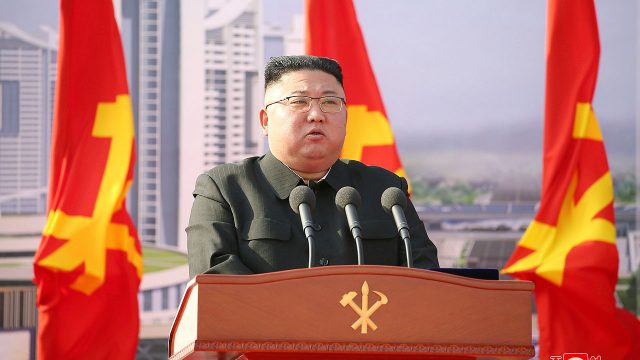
KCNA VIA REUTERS

 – North Korean leader Kim Jong Un slammed his country’s response to its first confirmed COVID-19 outbreak as immature, accusing government officials of inadequacies and inertia as fever cases swept the country, state media reported on Wednesday.

North Korea reported 232,880 more people with fever symptoms, and six more deaths after country revealed the COVID outbreak last week. It did not say how many people had tested positive for COVID-19. Read full story

Presiding over a politburo meeting of the ruling Workers’ Party on Tuesday, Kim said the “immaturity in the state capacity for coping with the crisis” increased the “complexity and hardships” in fighting the pandemic, according to KCNA.

Since its first acknowledgement of the COVID-19 outbreak, the North has reported 1.72 million patients with fever symptoms, including 62 deaths as of Tuesday evening.

Yet the North also said the country’s virus situation was taking a “favourable turn,” adding the party meeting discussed “maintaining the good chance in the overall epidemic prevention front.”

The report did not elaborate on what grounds the North came to such a positive assessment. The country has not started mass vaccinations and has limited testing capabilities, leaving many experts concerned it may be difficult to assess how widely and rapidly the disease is spreading. Read full story

According to KCNA, North Korea has been pushing to better handle “the collection, transport and test of specimen from those persons with fever, while installing additional quarantine facilities.”

KCNA also said health officials have developed a COVID-19 treatment guide aimed at preventing drug overdoses and other problems.

Officials and researchers have stepped up efforts to “massively develop and produce drugs effective in the treatment of the malignant virus infection and establish more rational diagnosis and treatment methods,” but KCNA did not give details on which drugs were involved.

In the face of an “explosive” COVID-19 outbreak, North Korea has mobilized its armed forces, including 3,000 military medical staff, for a 24-hour medicine delivery system, with 500 response groups to confirm and treat infected patients, state media said.

State television showed large numbers of troops gathered in a square to support anti-virus work.

A spokesperson for the U.N. human rights office said on Tuesday that measures taken by Pyongyang to fight COVID-19 could have “devastating” consequences for human rights in the country, as restrictions to curb the virus could limit people from getting enough food and meeting other basic needs. Read full story

South Korea has offered to send medical supplies, including vaccines, masks and test kits, as well as technical cooperation, to the North but Pyongyang has yet to respond. – Reuters

ADVERTISEMENT
ADVERTISEMENT