Home Blog Page 6402

Alpine Villas: Your gateway to premier Swiss living
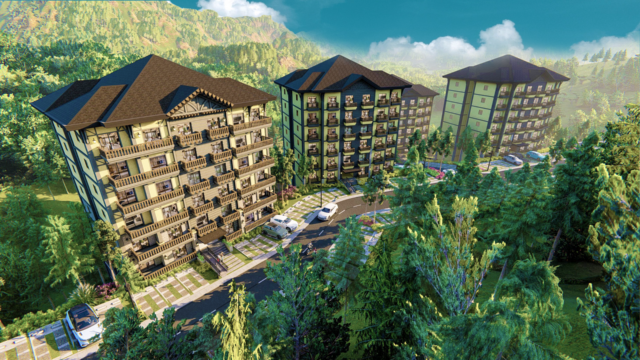
Alpine Villas is a charming enclave consisting of mid-rise towers in the style of Swiss chalets.

It brings you to nature’s embrace.

This picturesque 100-hectare Swiss-inspired luxury community in Tagaytay City, after all, does not only regale you with breathtaking views atop an elevation that lets you revel in the cool mountain climb. Crosswinds—which is being developed by Brittany Corp., the luxury residential arm of the country’s largest homebuilder Vista Land & Lifescapes Inc.—encloses on you with the quiet serenity of its lush pine forests amid a beautiful semblance of the famed Alpine region.
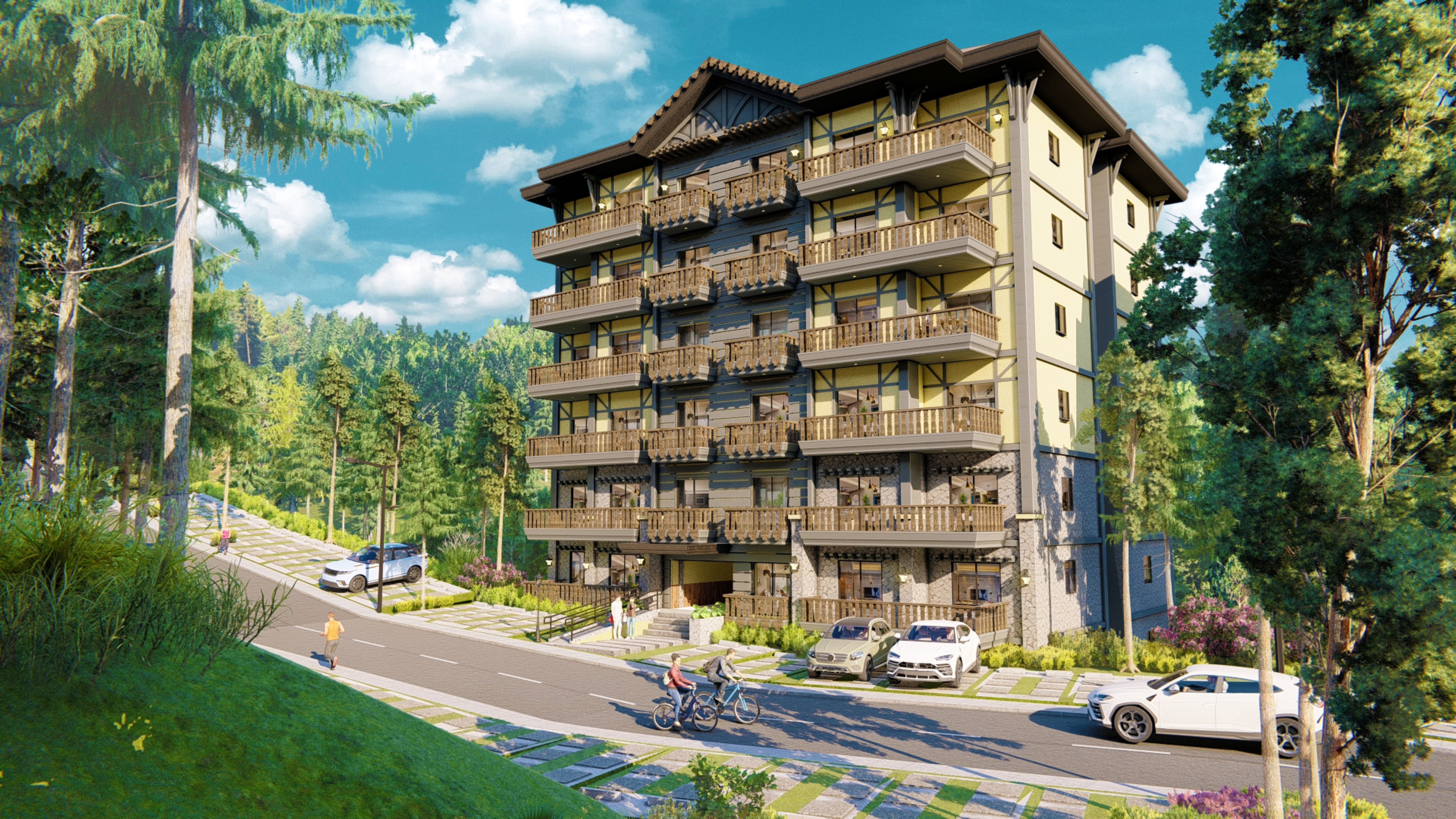
Alpine Villas’ newest tower, Biel, was named after a famous Swiss village and was inspired by the concept of bathing one’s senses in the forest atmosphere.

That it has become a favorite vacation spot, especially over the last two years amid the pandemic, isn’t at all surprising as it presents a charming iteration of the idyllic rural life but in a more sophisticated setting.

Some 35,000 towering pine trees are spread across this magnificent expanse of rich foliage, dotted by clusters of luxurious homes, hotels and mid-rise residential towers that are meanwhile built in the likeness of Swiss chalets. Open spaces—where you can take a breath of fresh, cool air and commune with nature—abound, yet right within this community are modern conveniences and sophisticated dining offerings to suit your discerning palates.

Crosswinds offers a slew of outdoor recreation, from cycling and jogging paths to beautiful running and hiking trails.

Premier oasis

Crosswinds, today, has truly become that premier Swiss oasis that can offer Filipinos exquisite communities reminiscent of the Alpine charm.

The latest village to bring this allure closer to home is the 2.8-hectare Alpine Villas, a charming enclave consisting of mid-rise towers in the style of Swiss chalets. The first four towers namely, Bernese, Blanc, Brienz and Biel are set to rise 582 meters above sea level, commanding an exceptional view of the Crosswinds’ exclusive community.

In Crosswinds, residents can experience total calmness walking through lush forest of pine trees while enjoying the panoramic views of nature.

Inspired by the concept of forest bathing, Alpine Villas is being built on the principles of sustainable design. Even prior to the pandemic, this development has already been conceptualized with environmental, health, and well-being considerations in mind.

Essentially, this quaint complex seeks to highlight how nature nurtures, heals and restores.

The 9-story Biel, for instance, is designed to reflect the beauty of nature, incorporating the elements of wood and other natural materials in its 58 units, consisting of one- and two-bedroom cuts. Some 30 percent of this development will also be dedicated to green open spaces.

Amid the bounty of open spaces, colorful blooms, and the fresh pine scented breeze, Alpine Villas inspires you to slow down, practice mindfulness, and reconnect with nature—a pursuit that has become even more meaningful since the pandemic started two years ago.

One good thing here is that there are a few remaining units left like those in Biel, which offers bigger unit sizes, more open spaces, upgraded features and the best views and vantage point.

It is indeed the ideal property for those who seek comfort, tranquility and mindfulness retreat away from the city.

Conducive for pursuits

You won’t be left wanting here though as Alpine Villas and Crosswinds, in particular, has created a community highly conducive for a myriad of pursuits, making it truly an ideal respite no matter the time of the year.

Nature-inspired activities beckon as Crosswinds allows for outdoor recreation with its cycling and jogging paths as well as running and hiking trails. A curated list of amenities, divided in passive and active spaces, will no doubt keep you busy—fitness facilities, private park, kids’ outdoor play area, pet park, function hall and tranquility garden.

Practical features will afford you that elusive peace of mind too—24/7 safety protocols, CCTVs in all common areas, Wi-Fi, and building systems. Units were also designed with versatility in mind, providing homeowners with the flexibility of designing their spaces.

What’s even better is that Alpine Villas is near a row of dining concepts that will let your palate travel the world—Windmill Lausanne, Cafe Yama, Dear Joe and Andersen’s Bakery. There’s also Ruined Project?, Napa, Cafe Voila and Coffee Project near the entrance of Crosswinds.

In Crosswinds, kids can stay outdoors, play in various green spaces and spend more time in nature.

Sound investment

A unit at Alpine Villas is notably a sound investment option that will benefit you in more ways than one. Besides giving you a home in a beautiful, peaceful community such as Crosswinds, it will also allow you to gain significantly via capital appreciation should you want to divest it sometime in the future—although I doubt that you would want to.

And even if you don’t intend to stay here all year round, your investment in Alpine Villas will be well worth it. Over the last five years and even in the midst of the pandemic, unit prices here have increased by an impressive 67 percent, with a compounded annual growth rate of 11 percent. Opportunities for passive income are possible.

Besides Crosswinds in Tagaytay, Brittany also offers a fine selection of home designs, high-end condominiums and lot-only properties in excellent locations such as Portofino in Alabang, La Posada in Sucat and Georgia Club in Sta. Rosa, Laguna.

For more information on Brittany Corporation’s collection of luxury properties, visit www.brittany.com.ph or follow them on Facebook, Instagram and YouTube.


Spotlight is BusinessWorld’s sponsored section that allows advertisers to amplify their brand and connect with BusinessWorld’s audience by enabling them to publish their stories directly on the BusinessWorld Web site. For more information, send an email to online@bworldonline.com.

Join us on Viber to get more updates from BusinessWorld: https://bit.ly/3hv6bLA.

Australian firms looking to invest in mining, logistics — ambassador

STOCK PHOTO | Image from Pixabay

Australian mining and logistics firms are interested in doing business in the Philippines according to Australian ambassador Steven J. Robinson, who cited policy reforms that have eased the barrier to entry.

“I think the future’s looking very, very good,” he said on May 20, the first day of the Philippines-Australia Friendship Festival in SM Megamall’s Fashion Hall.

Noting that ratings agencies predict that the Philippine economy will bounce back to pre-pandemic levels, Mr. Robinson said: “That’s a great reason for Australian firms to be here and invest.”

More than 300 Australian companies operate in the Philippines, employing over 44,000 Filipinos in business process outsourcing, infrastructure, financial services, ICT (information and communications technology), and energy sectors.

In 2020, Australia ranked 20th among the Philippines’ export markets; 15th among import suppliers; and 15th among trading partners. In the same year, total bilateral trade was valued at $1.13 billion and promotion agency investments from Australia amounted to $9.68 million.

The Philippines is Australia’s 10th largest market for dairy, as Australia accounts for 4% of total Philippine dairy imports, according to Bel S. Castro, a founding faculty member of Enderun Colleges. Australia also has over 500 wine labels available locally.

Coles Group Limited — an Australian retailer known for chocolate bars, milk, and honey — recently entered the country through a distribution agreement with SM Supermarkets.

The Philippines-Australia Friendship Festival runs until May 22 at the SM Megamall Fashion Hall.

There will be a free afternoon program on May 21, as well as pop-ups featuring wines, sustainable meat, healthy snacks, and beauty products from the Land Down Under. Booths with information on education opportunities in Australian universities will also be present. Two round trip tickets to Australia via Qantas will be raffled off. — Patricia B. Mirasol

Huawei eyes young workforce as key to green innovation

REUTERS

By Brontë H. Lacsamana, Reporter

CHINESE multinational technology company Huawei Technologies Co., Ltd., will continue investing in green innovation to support digital growth in the Asia Pacific. 

Ken Hu, Huawei’s rotating chairman, said at the May 19 opening of the Huawei APAC Digital Innovation Congress 2022 that the company invested 22% of $99.9 billion (its total revenue in 2021) in research and development for green technologies. 

“Moving forward, we will keep investing heavily in innovation to help our partners in the region meet their strategic development goals,” he said. 

In 2020, Huawei’s ecological acoustic monitoring system — called Guardian — was rolled out in Palawan, Philippines, where forest rangers were able to receive real-time alerts of rainforest destruction on a mobile app.  

“The possibilities are endless, and I am sure that each industry will be able to figure out where and how they can get help from digital technology to meet their specific needs,” Mr. Hu said.

He added that APAC’s young workforce can be tapped to accelerate green digital development. “Compared to other regions, this workforce will be relatively young. This is an important advantage, and we should invest more in the next generation of digital talent,” he said. 

Yang Mee Eng, executive director of the Association of Southeast Asian Nations (ASEAN) Foundation, said at the event that a strong information and communications technology (ICT) talent team can achieve an inclusive and resilient digital APAC. 

“Technological disruption greatly affected the ASEAN workforce,” she said. “We must train the workforce to be able to fully utilize digital tools.” 

Huawei, in partnership with ASEAN Foundation, announced in August 2021 that it would invest $100 million in the Spark startup ecosystem and provide digital training to 500,000 talents in the region within the next five years. 

In the Philippines, the company’s program Seeds for the Future benefited over 200 students over the last seven years while its ICT Academy has been rolled out in more than 60 partner universities in the Philippines, covering over 13,000 students.


China cuts borrowing rate more than expected to revive housing sector

REUTERS

SHANGHAI, May — China cut its benchmark reference rate for mortgages by an unexpectedly wide margin on Friday, its second reduction this year as Beijing seeks to revive the ailing housing sector to prop up the economy.

Senior officials have pledged further measures to fight a slowdown in the world’s second-biggest economy, hit by coronavirus disease 2019 (COVID-19) outbreaks that prompted stringent measures and mobility restrictions and causing huge disruptions to activity.

Many market participants believe Friday’s move was also a response to Chinese Premier Li Keqiang’s call to decisively step up policy adjustments and let the economy return to normal quickly.

“Today’s reduction to the five-year Loan Prime Rate (LPR) should help drive a revival in housing sales, which have gone from bad to worse recently,” Julian Evans-Pritchard at Capital Economics said in a note.

“But the lack of any reduction to the one-year LPR suggests that the PBOC (People’s Bank of China) is trying to keep easing targeted and that we shouldn’t expect large-scale stimulus of the kind that we saw in 2020.”

China, in a monthly fixing, lowered the five-year LPR by 15 basis points to 4.45%, the biggest reduction since China revamped the interest rate mechanism in 2019 and more than the five or 10 basis points tipped by most in a Reuters poll. The one-year LPR was unchanged at 3.70%.

The country’s benchmark stock index, Shanghai Composite Index, rose roughly 1% in early trading on the rate cut on Friday. The move failed to excite mainland-listed property shares, which were flat, although Hong Kong-listed developers inched up slightly.

Many private-sector economists expect China’s economy to shrink this quarter from a year earlier, compared with first quarter’s 4.8% growth. Indicators from credit lending, industrial output and retail sales showed COVID-related stringent measures and mobility restrictions have taken a heavy toll.

A key drag on growth has been the property sector, which policymakers are seeking to turn around. Property and related industries such as construction account for more than a quarter of the economy.

China’s property sales in April fell at their fastest pace in around 16 years, while new new-home prices declined for the first time month-on-month since December, hurt by weak demand amid wide COVID-19 lockdowns.

“Policymakers might have reached a consensus on whether to revive the property sector,” said Xing Zhaopeng, senior China strategist at ANZ, predicting further easing measures.

LIMITED ROOM FOR CUTS

The central bank has pledged to step up support for the slowing economy, but analysts say the room to ease policy could be limited by worries about capital outflows, as the Federal Reserve raises interest rates.

Capital Economics believes the lack of a one-year LPR cut suggests the central bank may be concerned about the potential impact on capital outflows and the yuan.

The LPR is a lending reference rate set monthly by 18 banks and announced by the People’s Bank of China. Banks use the five-year LPR to price mortgages, while most other loans are based on the one-year rate. Both rates were lowered in January to support the economy.

Friday’s cut suggests that “China’s economic growth was facing increasing resistance this year,” said Marco Sun, chief financial market analyst at MUFG Bank.

Eighteen of 28 traders and analysts in a Reuters poll had forecast a reduction in either rate, including 12 who expected a 5-basis-point cut for each tenor.

A campaign by the authorities to reduce high debt levels became a liquidity crisis last year among some major developers, resulting in bond defaults and shelved projects, shaking global financial markets.

Since the end of last year, Beijing has taken steps to help revive the property sector. Those include making it easier for large and state-owned developers to raise funds, relaxing rules on escrow accounts for pre-sale funds and allowing some local governments to cut mortgage rates and down-payment ratios.

This week, financial authorities cut the floor of mortgage rates for some home buyers. But that measure and Friday’s cut alone will not ease the financing stresses for developers, many of whom are struggling to refinance debt.

Goldman Sachs estimates that the first-home mortgage rate floor would be lowered further to 4.25% from 4.4% previously.

Property shares have rebounded recently, but the muted reaction to Friday’s cut suggests some investors think it may not be enough to revive the struggling sector. — Reuters

Yellen says G7 to give Ukraine funds it needs ‘to get through this’

REUTERS

KOENIGSWINTER, Germany — US Treasury Secretary Janet Yellen said the G7 finance leaders on Thursday agreed to provide Ukraine the financial resources it needs in its struggle against Russia’s invasion, and that policymakers are determined to meet their inflation targets.

Ms. Yellen, speaking to reporters after the first day of a G7 finance ministers and central bank governors’ meeting here, declined to confirm an $18.4 billion figure pledged in the group’s draft communique seen by Reuters.

The meeting wraps up on Friday.

Ms. Yellen said that funding pledges to Ukraine during the meeting exceeded the $15 billion that Kiev has estimated it needs over the next three months to make up for lost revenues as the war devastates its economy.

A $40 billion US aid package expected to be approved by the US Senate this week would include $7.5 billion in new economic aid, while the European Commission pledged 9 billion euros for Ukraine, Ms. Yellen said. Other countries, including Canada and Germany, pledged additional amounts.

“The message was, ‘We stand behind Ukraine. We’re going to pull together with the resources that they need to get through this,’” Ms. Yellen said.

She said that high global inflation was a significant topic, but none of the policymakers had said they were considering raising their targeted inflation rates.

“What was discussed was the critical importance of central banks taking the actions that are needed to show they are committed to the inflation targets that they’ve set,” Ms. Yellen said.

Ms. Yellen said the officials felt that economic conditions had not changed “so fundamentally, that it would be worth dislodging what we felt would become a stable anchored set of inflation expectations.”

She said that she still believed that the US Federal Reserve could achieve a “soft landing” of the economy without causing a recession, but how Fed officials achieve this is up to them though it “requires both skill and luck.”

Discussions about mechanisms to reduce Russia’s revenues from oil exports to Europe were limited on Thursday, Ms. Yellen said, adding that there is a lot of interest in the concept.

US officials have floated the idea of imposing tariffs on Russian oil to limit the amount of revenue that Moscow can collect while keeping Russian crude supplies on the market as EU officials pursue a phased embargo by year end.

Ms. Yellen said that a buyers’ cartel that would not buy oil above certain prices could be successful if it is large enough.

“Nothing is really crystallized as an obvious strategy,” she added. — Reuters

‘Retail apocalypse’: Wall Street shaken by inflation-induced earnings hits

CORPORATE.WALMART.COM

NEW YORK — Walmart, Target, and Kohl’s were among major retailers that reported earnings this week that missed Wall Street expectations by the widest margin in at least five years, underscoring the wallop four-decade-high inflation is bringing to US shoppers’ wallets and retailers’ bottom lines.

Among 145 retailers that have reported first-quarter earnings so far, 127 mentioned inflation and 138 flagged supply chain issues, according to Refinitiv data.

Higher staffing costs, bloated inventories and more expensive fuel took a toll on retailer profits, contributing to a market rout that saw Wall Street post its worst day since mid-2020 on Wednesday.

Department store chain Kohl’s Corp. on Thursday became the latest to cite soaring inflation in posting a 92% decline in adjusted profit.

Chief Executive Michelle Gass blamed higher freight and wage costs and lower clothing demand for adjusted earnings of 11 cents per share that was 59 cents short of analysts’ estimates, a gap of nearly 85%.

Walmart Inc., the nation’s largest retailer, posted a quarterly profit that fell 25%, marking its first miss in five quarters. The gap of 12.3% between Wall Street’s expectations and Walmart’s earnings per share figure was its widest since at least 2017.

For rival Target Corp., which saw its profits halve, that margin between expectation and reality was 29%, which was also its biggest in at least five years, according to Refinitiv.

“This is a little bit of a retail apocalypse. It was Walmart (on Tuesday) and everybody thought it was a one-off,” said Dennis Dick, a trader at Las Vegas-based Bright Trading LLC.

“Now that Target missed earnings (by) a lot more than Walmart even did, they’re scared that the consumer is not as strong as everybody thinks.”

While Wall Street brokerages were expecting profits to be pressured by soaring fuel costs, analysts said they were caught off guard by the rapid retrenchment among consumers and shifts toward buying lower-margin basics instead of more profitable general merchandise.

The extent of inventory buildup and heavy discounting by retailers was also a bit of a shock, they said.

“The biggest surprise was the inventory markdowns and rollbacks (in prices). I don’t think any analyst was expecting that,” CFRA analyst Arun Sundaram told Reuters.

AJ Bell Investment Director Russ Mould called the inventory figures “startling.”

Target’s inventories were up 43% in the first quarter, as unsold televisions and bulky kitchen appliances piled up, while Walmart’s rose 32% in the quarter.

In some ways, the retailers are victims of their own success after figuring out how to keep stores relatively well stocked in the midst of supply snarls, truck driver shortages and on-and-off lockdowns intended to curb the spread of COVID-19.

Mr. Sundaram said Target’s wider earnings miss was due partly to a greater emphasis on general merchandise sales compared to Walmart, which focuses more on selling groceries and other essentials.

Wall Street is also “angry” about the lack of warning from Walmart and Target, which gave upbeat outlooks for 2022 a little over two months ago, said Jane Hali, CEO of investment research firm Jane Hali & Associates.

The financial impacts of the war in Ukraine and prolonged COVID lockdowns in China likely played a part in the stark turnaround in companies’ predictions for the year, she added.

“Wall Street is panicked,” Ms. Hali said. “Target had an investment day not too long ago, where they made no mention of the issues they highlighted on Wednesday. So I can understand the Street being angry about that.” — Reuters

BSP sees reform continuity, solid growth this year

PHILIPPINE STAR/ MICHAEL VARCAS

The Philippine central bank chief said on Friday president-elect Ferdinand “Bongbong” R. Marcos, Jr., is better placed than his predecessor to face economic challenges and that he expects structural reforms and infrastructure build-up will continue under the new administration.

Bangko Sentral ng Pilipinas (BSP) Governor Benjamin E. Diokno, speaking at an Asian Development Bank Institute forum, said there are clear indications that key reforms will continue under Mr. Marcos, who takes office next month and will command a supermajority in Congress.

A smooth transition of power, and the newly-elected leader’s “overwhelming mandate” should help sustain economic growth and investor confidence, he said.

“They have also indicated that they are going to continue what’s being done by the current administration, which is strong on public infrastructure,” Mr. Diokno said, referring to Mr. Marcos and his political allies that include Vice President-elect Sara Duterte-Carpio, the incumbent leader’s daughter.

Mr. Diokno also said the next administration will inherit “a better state of infrastructure” and a “more robust economy”, putting this year’s growth on track to hit the 7%-9% target.

But like the rest of the world, he said the Philippines faces risks to its growth outlook, such as a deterioration in the coronavirus disease 2019 (COVID-19) situation and a prolonged Russia-Ukraine conflict.

The BSP has taken measures to sustain the growth momentum by addressing rising inflationary pressures, with a 25 basis points increase in interest rates effective Friday, its first hike since 2018.

Mr. Diokno said the BSP’s policy tightening cycle has begun, adding that its “exit strategy” after undertaking “extraordinary” measures to support the pandemic-hit economy will be rolled out in a gradual manner.

The BSP’s policy actions will be “well-communicated” and guided by the inflation and growth outlook over the medium term as well as the public health situation, he said. — Reuters

IMF’s Georgieva says finance leaders must prepare for more inflation shocks

KOENIGSWINTER, Germany — International Monetary Fund (IMF) Managing Director Kristalina Georgieva said on Thursday that global finance leaders may need to become more comfortable with fighting multiple bouts of inflationary pressures.

Ms. Georgieva told Reuters that it was getting harder for central banks to bring down inflation without causing recessions, due to mounting pressures on energy and food prices from Russia’s war in Ukraine, China’s zero-COVID (coronavirus disease 2019) policies that have slashed manufacturing with lockdowns, and the need to reorder supply chains to make them more resilient.

“I think what we need to start getting more comfortable with is, that may not be the last shock,” she said, noting that she stopped viewing inflation as a “transitory” one-time shock when the Omicron COVID-19 outbreak took hold late last year.

She said strong demand from the United States, supply chain disruptions and the Ukraine war effects all point to longer-lasting inflation. The COVID-19 pandemic is not over and there could be another crisis, she added on the sidelines of a Group of Seven (G7) finance ministers and central bank governors meeting in Germany.

China’s zero-COVID policy, which has led to widespread lockdown in major cities, is unworkable due to highly contagious variants, but officials in Beijing are “digging their heels” in to resist altering it, she said, adding that its effects would be discussed at the meeting.

She said she was “actually not too worried” about China’s economy because the Beijing government has fiscal and monetary policy space to support growth.

Ms. Georgieva said efforts by countries to shift their supply chains from maximum efficiency to increased resilience, will raise some costs, as there will need to be redundancy.

“So is this going to be a one-time price shock and then no more impact on inflation? Or will it be a kind of clipping our wings more,” she said. “We have to figure it out.”

Ms. Georgieva also said she hoped to talk about concerns she has raised about the global economy fragmenting into competing blocs led by the United States and other market-driven democracies on one side and China, Russia and other state-led economies on the other.

The IMF has said this would be a “disaster” with competing technology, regulatory stems and institutions. — Reuters

TikTok plans big push into gaming, conducting tests in Vietnam – sources

HONG KONG/HANOI — TikTok has been conducting tests so users can play games on its video-sharing app in Vietnam, part of plans for a major push into gaming, four people familiar with the matter said.

Featuring games on its platform would boost advertising revenue as well as the amount of time users spend on the app — one of the world’s most popular with more than 1 billion monthly active users. 

Boasting a tech-savvy population with 70% of its citizens under the age of 35, Vietnam is an attractive market for social media platforms such as TikTok, Meta Platforms Inc.’s Facebook and Alphabet Inc.’s YouTube and Google. 

TikTok, which is owned by China’s ByteDance, also plans to roll out gaming more widely in Southeast Asia, the people said. That move could come as early as the third quarter, said two of them. 

The sources declined to be identified as the information has yet to be publicly disclosed. 

A TikTok representative said the company has tested bringing HTML5 games, a common form of minigame, to its app through tie-ups with third-party game developers and studios such as Zynga Inc. But it declined to comment on its plans for Vietnam or its broader gaming ambitions. 

“We’re always looking at ways to enrich our platform and regularly test new features and integrations that bring value to our community,” the representative said in an emailed statement to Reuters. 

ByteDance did not respond to a request for comment. 

Reuters was not able to learn TikTok’s plans for rolling out gaming features in other markets. Although TikTok users can watch games being streamed, in most regions they are not able to play games within the TikTok app. 

In the United States, only a few games appear to have been launched including Zynga’s Disco Loco 3D, a music and dance challenge game and Garden of Good, where players grow vegetables to trigger donations by TikTok to the non-profit Feeding America. 

According to two sources, TikTok plans to draw primarily on ByteDance’s suite of games. 

While the company will start with minigames, which tend to have simple game play mechanisms and a short playing time, its gaming ambitions extend beyond that, said one of the people who had direct knowledge of the matter. 

TikTok will require a license to feature games on its platform in Vietnam where authorities restrict games depicting gambling, violence, and sexual content. The process is expected to go smoothly as the games planned are not controversial, the person said. 

Vietnam’s foreign and communications ministries did not respond to requests for comment. 

Users of ByteDance’s Douyin, the Chinese version of TikTok, have been able to play games on the platform since 2019. 

TikTok’s games are likely to carry advertisements from the start, with revenue split between ByteDance and game developers, a separate source said. 

TikTok’s foray into games mirrors similar efforts made by major tech firms seeking to retain users. Facebook launched Instant Games in 2016 and streaming firm Netflix also recently added games to its platform. 

It also marks the latest ByteDance effort to establish itself as a major contender in gaming. It acquired Shanghai-based gaming studio Moonton Technology last year, putting it in direct competition with Tencent, China’s biggest gaming firm. 

Even without gaming, TikTok has seen advertising revenue surge. Its advertising revenue is likely to triple this year to more than $11 billion, exceeding the combined sales of Twitter Inc. and Snap Inc., according to research firm Insider Intelligence. — Reuters


BoP swings to deficit in April

BW FILE PHOTO

By Luz Wendy T. Noble, Reporter

The country’s balance of payment (BoP) posted a deficit in April as the government continued to pay for its foreign debt obligations, and as the trade deficit widened due to the rising value of imports.

Data released by the Bangko Sentral ng Pilipinas late Thursday showed the BoP stood at a $415-million deficit, a reversal from the $2.614-billion surplus a year ago as well as the $754-million surfeit in March.

The deficit was the biggest since the $157-million gap in February.

“The BoP deficit in April 2022 reflected outflows mainly from the National Government’s (NG) foreign currency withdrawals from its deposits with the BSP as the NG settled its foreign currency debt obligations and paid for various expenditures,” the central bank said in a statement.

Latest data from the Bureau of the Treasury showed the March debt service bill fee declined 75% to P67.39 billion in March from a year earlier. Of the P11.84 billion for principal payments, 63.5% or P7.53 billion were for foreign obligations.

The BoP deficit also reflected the increasing trade gap due to the rising import bill, Rizal Commercial Banking Corp. Chief Economist Michael L. Ricafort said in a Viber message.

The trade deficit nearly doubled to $5 billion in March from a $2.759-billion gap a year earlier. This was driven by the 27.7% increase in imports to $12.175 billion, which outpaced the 5.9% growth in exports to $7.171 billion.

The BoP as of end-April reflects final gross international reserves (GIR) of $105.4 billion, down 1.77% from $107.31 billion a month prior.

Despite the decline, the dollar buffer is enough to service 9.3 months’ worth of imports of goods and payments of services and primary income.

The GIR can also cover up to 6.7 times the country’s short-term external debt based on original maturity and 4.5 times based on residual maturity.

The BoP depicts a picture of the country’s transaction with the global economy. A deficit means more funds left the country, while a surplus shows that more money came in.

For the January to April period, the BoP posted a $79-million surplus, a turnaround from the $231-million deficit in the same four months of 2021.

“Based on preliminary data, the cumulative BoP surplus reflected inflows that stemmed mainly from personal remittances, net foreign borrowings by the NG, and foreign direct investments,” the central bank said.

The ongoing Russia-Ukraine war remains a risk to the country’s BoP as it has caused the continued increase in global oil and commodity prices, Mr. Ricafort said. This is crucial as the Philippines is a net oil importing country.

“Russia’s war with Ukraine could further lead to wider trade deficits, thereby a challenge on the BoP data, going forward,” Mr. Ricafort said.

On the other hand, amendments to the Public Service Act, Foreign Investment Act, and the Retail Trade Liberalization Act could encourage more foreign investment inflows into the country.

The BoP is expected to post a $4.3-billion gap in 2022, based on BSP projections. This is equivalent to 1% of the gross domestic product.

Bespoke and boutique: A new kind of home for the elite

The Silhouette, MRDC’s first project that is soon to rise in San Juan City

Mosaic Realty and Development Corporation’s Jillian Sze talks about the top merits in investing in boutique developers

When Jardin Wong, Jillian Sze, and Miguel Tan approached WTA Architecture and Design Studio with their idea for their first project as real estate developers, they came with a story about independence. Seeking to cast a new shadow over the hyper-competitive Philippine property scene, and make a mark outside their respective family businesses, the three partners — who formed the leadership of Mosaic Realty and Development Corporation (MRDC) — proposed their idea for The Silhouette.

Working closely with William Ti, Jr., principal architect of WTA Architecture and Design Studio, MRDC’s first foray into turning their creative visions into reality is now set to rise at the heart of San Juan. The Silhouette is a distinct and exclusive 19-storey residential tower, housing only 12 units built with a strict one unit per floor philosophy. This design was intentional, as the company wanted to distinguish themselves from the mass-marketed condominiums that already dot Metro Manila’s cityscape.

“I don’t want people to misinterpret it as a polarizing thing, that we just want to be unique. No, we’re unique because we are in-depth and we understand the granularity of what exclusive and what premium means,” Jillian Sze, chief operating officer and co-founder of MRDC, told BusinessWorld.

“When you’ve been successful for quite some time, the pleasures in your life and your lifestyle choices would be different. Just think of clothes. You don’t want to wear the same clothes that are being sold in a thousand malls nationwide, right? You want to belong to a community that exudes the same values and lifestyle,” Ms. Sze shared.

Priding themselves as a ‘boutique’ property developer, Ms. Sze noted that their company is comprised of young, innovative talent that have been exposed to new information and new experiences that make them distinctly well-equipped to cater to a market that mirror their experiences and lifestyles. Yet, they are no less driven than their seasoned competitors.

Photo shows Mosaic Realty and Development Corporation founders (L-R) Jardin Wong, Jillian Sze and Miguel Tan.

The Silhouette is a result of their desire to cater to this exclusive market.

Boutique development firms are slowly gaining ground abroad as highly specialized real estate developers putting a premium on character and uniqueness through a focused interior design and bespoke architecture.

As opposed to corporate developers that prioritize larger projects catering to the broader market, boutique developers are more niche, intent to offer more customized, carefully curated properties for discerning buyers.

“A boutique developer at the end of the day goes for quality over quantity. For a property developer like us, there’s this certain lifestyle of exclusivity that sets our target audience apart,” Ms. Sze said.

She pointed out that people’s lifestyles have changed drastically over the years, not least because of the COVID-19 pandemic. The benefit of being a boutique developer is that they are far closer to the ground than their corporate counterparts, and as a result are more in-touch with these changes as they happen.

“At the end of the day, the philosophy of being a boutique firm is that you are nimbler. You are closer to the ground. Because you don’t have a steep vertical hierarchy in your organization, and that means you’re very in touch with what’s happening on the ground,” she said.

“Intently designing ourselves to be a boutique firm, volume is not our game. Mass marketing is not our game. We understand what makes our market tick, what makes them buy, what makes properties more exclusive and more premium. There are a lot of things we take into consideration, like the lifts or the flow of the rooms or even the amenities.”

Such amenities are to be found in The Silhouette, which boasts an impressive 270-degree view of San Juan on each of its spacious balconies, with floor-to-ceiling windows from the living area up to the bedrooms.

The residential tower is outfitted with a sophisticated grand lobby and all the first-rate facilities and services buyers would come to expect at other premium developments. Residents and guests can enjoy family-friendly recreational options with the swimming pool for adults and kids, a high ceiling fully- equipped gym, and open spaces with lush greeneries housing a barbeque area well-built for family weekend gatherings. For bigger celebrations, indoor and outdoor function areas are also available for residents and guests to use.

The development also integrates modern technology to keep residents safe and secure with its smart building features using facial recognition, QR code, card access, and fingerprint technology to provide residents and their guests exclusive access to the building and facilities kept exclusive within the property.

In addition, the Silhouette is accessible to major central shopping districts, premier schools, and top hospitals in the city.

With the Silhouette, MRDC aims to set a new trend in the property landscape of the country: one that eschews the traditional bigger-is-better approach that many real estate empires are built on.

“We made an intentional choice to win where it matters most: satisfying the customer experience,” Ms. Sze said.


Spotlight is BusinessWorld’s sponsored section that allows advertisers to amplify their brand and connect with BusinessWorld’s audience by enabling them to publish their stories directly on the BusinessWorld Web site. For more information, send an email to online@bworldonline.com.

Join us on Viber to get more updates from BusinessWorld: https://bit.ly/3hv6bLA.

BSP hikes rates for 1st time since 2018

PHILIPPINE STAR/ RUSSEL A. PALMA
A vendor arranges vegetables at a public market in Manila. — PHILIPPINE STAR/ RUSSEL A. PALMA

THE Bangko Sentral ng Pilipinas (BSP) raised its key interest rate for the first time since 2018 to tame rising inflation.

The Monetary Board on Thursday increased the benchmark rate by 25 basis points (bps) to 2.25%, as expected by eight out of 17 analysts in a BusinessWorld poll last week.

Interest rates on the overnight deposit and lending facilities were also hiked by 25 bps to 1.75% and 2.75%, respectively.

“The Monetary Board believes that a timely increase in the BSP’s policy interest rate will help arrest further second-round effects and temper the buildup in inflation expectations,” BSP Governor Benjamin E. Diokno said at a media briefing.

“Persistent inflationary pressures point to the need for prompt monetary action to anchor inflation expectations.”

Inflation climbed to 4.9% in April, the highest in more than three years, as oil and commodity prices soared amid the Russia-Ukraine war and supply chain disruptions.

“The Monetary Board also observed the emergence of second-round effects, including the higher-than-expected adjustment in minimum wages in some regions. Inflation expectations have likewise risen, highlighting the risk posed by sustained pressures on future wage and price outcomes,” he said. 

Mr. Diokno said the strong rebound in economic activity and jobs market in the first quarter “provide scope for the BSP to continue rolling back its pandemic-induced interventions.”

He said the National Government will fully settle on Friday the P300-billion zero-interest loan it secured from the BSP, ahead of the original maturity date on June 11.

The Monetary Board will also reset the BSP’s bond-buying window into a regular liquidity facility that will also ensure the sustainability of its balance sheet. Mr. Diokno said the BSP held around 40% of government bonds at the height of the pandemic, but has been significantly reduced to around 2-3%.

“As the economic recovery continues to gain traction, the BSP shall proceed with its plans for the continued gradual withdrawal of its extraordinary liquidity interventions and the start of the normalization of its monetary policy settings,” he said.

The BSP chief said the pace and timing of further monetary policy action will be “guided by data outcomes.”

The start of the BSP’s tightening cycle came a week after the release of data showing gross domestic product (GDP) expanded by a better-than-expected 8.3% in the first quarter.

RISING INFLATION
At the same time, the BSP upwardly revised its average inflation forecast for 2022 to 4.6% from the previous forecast of 4.3%, exceeding the 2%-4% target band. For 2023, the BSP’s inflation forecast was hiked to 3.9% from 3.6% previously.

BSP Department of Economic Research Managing Director Zeno Ronald R. Abenoja said the central bank’s new inflation projections factored in higher oil and non-oil prices caused by the Russia-Ukraine war.

The BSP now expects the price of Dubai crude to average about $100 per barrel this year from the $83-per-barrel projection given earlier.

Mr. Abenoja said the faster-than-expected growth, quicker inflation, the increase in the minimum wage in Metro Manila, and the impact of the policy tightening by the US Federal Reserve were also considered in the new inflation estimates.

“Inflation could likely exceed 5% in the next few months,” Mr. Diokno said, with the peak expected within the second quarter.

“However, barring any further adverse shocks, we also expect inflation to slow down heading closer eventually towards 2023 and revert to within the target band by the middle of that year as the effects of the global commodity price shocks dissipate,” he added.

Bank of the Philippine Islands Lead Economist Emilio S. Neri, Jr. said he now expects the BSP to raise rates by at least 100 bps this year, from 75 bps previously.

“Despite this, we believe the economy has enough cushion in case the BSP decides to hike its policy rate further. Even with a 100-bp rate hike this year, the policy rate will still be below historical and pre-pandemic levels. Furthermore, the impact of rate hikes is usually gradual and the economy has the capacity to absorb slightly higher interest rates especially now that demand is almost back to pre-pandemic level,” he said in a note.

However, the more significant risks to the economic outlook are inflation and the peso depreciation against the US dollar, Mr. Neri said.

For MUFG Bank analyst Sophia Ng, inflation may peak at 5.5% in June as inflation risks become more broad-based. She said the BSP may now be more “aggressive” in carrying out its exit strategy, noting how officials have become more hawkish in their statement.

“A total of 100 bps hikes in 2022 will still not be able to fully unwind the cumulative 200 bps cut done in 2020,” Ms. Ng said in a note.

The BSP will have its next policy review on June 23. — Luz Wendy T. Noble

ADVERTISEMENT
ADVERTISEMENT