Home Blog Page 6362

Why your business needs data resilience in an unsafe world

Data is the lifeblood of every business today. It’s not an exaggeration to say that data is now the most important asset on Earth. It’s more valuable than precious metals, oil, or gemstones for most corporations and individuals. In our digital world, the quantity and quality of data are ever-increasing, and so is our reliance on it.

That’s why data resilience is such a critical issue these days. If you lose access to data due to a cyberattack or natural disaster, you can’t power your business forward. However, a resilient organization has the proper backup and recovery processes in place, allowing it to quickly bounce back from any situation in which data is compromised.

Data resilience is not a single solution. It is a set of technologies and strategies that help maintain data availability and ensure it is always accessible, thus minimizing any disruptions or downtime that could lead to tangible—and intangible—losses to your business.

Some of these data resilience technologies include cluster storage, data replication, backup, and disaster recovery, which help minimize the damage caused by cyber threats, such as ransomware, and any disaster, like catastrophic climate events such as hurricanes and floods. Having these elements of data resilience in place can help ensure that companies get back on their feet as quickly as possible—with minimal data loss.

Indeed, the critical measure of data resilience is how fast you can spring back from a disruption to resume a normal state of operations and return to business as usual. Having the right technologies and mindset enables you to protect your data if and when disaster strikes. It includes having the right technologies, such as data backup and recovery solutions, and the right strategies, such as simulating a business disruption to assess your resiliency.

Another crucial part of data resilience is the capacity to do regular testing so you can resolve any issues before they occur. Sadly, many organizations don’t test their data resilience plan. Many don’t even have a plan in the first place. At a minimum, organizations should prioritize periodical testing of their data backup and recovery proficiency to ensure they can reliably restore their data in the event of a cyberattack or natural disaster.

Any solid data resilience strategy includes recovery point objectives (RPO) and recovery time objectives (RTO) and ways to achieve them. RPO is the critical metric you establish for the amount of data your organization can stand to lose in a disaster. Your RPO plays a vital role in helping to determine how often you need to back up your data and the infrastructure you need to support your backup plan. RPO is less about the actual execution of recovery and more about establishing the framework. When you do have to recover from a data loss, you’ll be able to get all the data you need to be restored and available.

By contrast, RTO is a metric you can use to understand how downtime can impact your organization. Once you have set up your RTO, you’ll be better positioned to make educated decisions about your data resilience plan. For example, suppose you determine that your business can only handle an hour or two of downtime. In that case, you should invest in a disaster-recovery solution that allows you to get back up and running within that timeframe.

The success of any data resilience initiative is defined by how well you plan and test your processes and tools, rather than waiting for something terrible to happen and then desperately trying to figure out how to get back on your feet. Planning is 90% of success.

Of course, companies should hope for the best but prepare for the worst. When it comes to data resilience, having a reliable and rock-solid plan in place can mean the difference between having a successful business—or having no business.

It is not an exaggeration. Recent studies have shown that corporations impacted by ransomware or other data-loss events have trouble winning back consumer trust. One survey found that 88% of customers wouldn’t use the services of or purchase products from an organization they distrust, while 39% said they had lost trust in a company due to a data breach or misuse of data. That can have devastating long-term effects on a business’s survival and growth. Data loss has forced some businesses to shut down completely.

Data is the new gold. When companies lose access to their data, they lose the ability to propel themselves forward. Data resilience, however, gives every organization the ability to quickly recover from a data-destructive event and flourish in the digital economy.

Find out more at www.arcserve.com, contact us at (+632) 8706 5592 or email sales@acw-group.com.ph.


Spotlight is BusinessWorld’s sponsored section that allows advertisers to amplify their brand and connect with BusinessWorld’s audience by enabling them to publish their stories directly on the BusinessWorld Web site. For more information, send an email to online@bworldonline.com.

Join us on Viber to get more updates from BusinessWorld: https://bit.ly/3hv6bLA.

National Reinsurance Corporation of the Philippines to hold annual stockholders’ meeting virtually on June 30

NOTICE OF ANNUAL MEETING OF STOCKHOLDERS
JUNE 30, 2022 / 3:00 P.M.

DEAR STOCKHOLDERS:

Please be advised that the Annual Meeting of Stockholders of NATIONAL REINSURANCE CORPORATION OF THE PHILIPPINES (the “Company”) will be held virtually on June 30, 2022, Thursday, at 3:00 P.M. The proceedings will be livestreamed and voting in absentia will be facilitated through the Company’s secure online voting facility.

Agenda

  1. Call to Order
  2. Proof of Notice of Meeting and Certification of Quorum
  3. Approval of Minutes of Previous Stockholders’ Meeting held on June 23, 2021
  4. Management Report for the Year Ended December 31, 2021
  5. Ratification of All Acts of the Board of Directors and Officers during the Preceding Year
  6. Appointment of Independent Auditors
  7. Amendment of the secondary purpose clause (Article ll) of the Amended Articles of Incorporation
  8. Increase in Directors’ Per Diem for attendance in committee meetings
  9. Election of Directors
  10. Re-election of Mr. Medel T. Nera as Independent Director
  11. Other Matters
  12. Adjournment

A brief explanation of each item in the agenda is hereto attached as Annex “A” for your reference and guidance.

Record date. Stockholders of record as of May 16, 2022 shall be entitled to notice of meeting and to participate in the meeting via remote communication and voting in absentia.

Registration. Stockholders who wish to participate in the meeting via remote communication and to exercise their right to vote in absentia must register through the link provided in the company’s website at https://www.nat-re.com/investor-relations/annual-stockholders-meeting/ starting June 01, 2022 but no later than June 22, 2022 and submit the required information listed there. All information submitted will be subject to verification and validation. 

Successfully registered stockholders can cast their votes in absentia through the Company’s secure online voting facility and will be provided access to the live streaming of the meeting.  For the detailed registration and voting procedures, please refer to our Guidelines and Procedures for Participating via Remote Communication and Voting in Absentia as set forth in the Definitive Information Statement and published in the Company’s website.

Voting. You may vote in absentia, or through proxy. Voting in absentia is thru the online voting facility, the respective link will be emailed after validating the registration of stockholders. Deadline for casting of votes thru online voting facility is on or before 5:00 p.m. of June 22, 2022.To vote by proxy, you may download, fill-up and sign the proxy form found in https://www.nat-re.com/investor-relations/annual-stockholders-meeting/ and send the scanned signed copy to asm@nat-re.com not later than June 20, 2022. For Corporate Stockholders, in addition to the proxy form signed by your authorized officer, please submit a copy of the related Secretary’s Certificate, a sample of which is enclosed. Validation of proxies shall be held on June 24, 2022 at 2:00 P.M. 

Electronic Copies of Relevant Documents. Copies of the Notice of the Meeting, Definitive Information Statement, and other related documents in connection with the annual meeting may be accessed through the company’s website and through the PSE Edge portal at https://edge.pse.com.ph.

For any concerns, please reach us through asm@nat-re.com.

For complete information on the Company’s annual meeting, please visitwww.nat-re.com/investor-relations/annual-stockholders-meeting.

May 20, 2022, Makati City, Metro Manila.

Access to Notice of Meeting, Agenda Items and Explanation of Agenda Items, Proxy Form, Sample Secretary Certificate, Definitive Information Statement, Management Report, Financial Statements, SEC Form 17A and Minutes of Stockholders’ Meeting dated June 23, 2021 can be downloaded by scanning the QR code provided herewith.

Likewise, you may also download it from the Company’s website by clicking this link https://www.nat-re.com/investor-relations/annual-stockholders-meeting/#files.

Electronic copies of the same documents are also available at the PSE Edge.

For the Board of Directors,

(Originally Signed)
Assistant Corporate Secretary

PXP Energy Corp.’s annual general stockholders’ meeting to be held on June 22


Spotlight is BusinessWorld’s sponsored section that allows advertisers to amplify their brand and connect with BusinessWorld’s audience by enabling them to publish their stories directly on the BusinessWorld Web site. For more information, send an email to online@bworldonline.com.

Join us on Viber to get more updates from BusinessWorld: https://bit.ly/3hv6bLA.

Diokno backs tax on digital services

REUTERS

INCOMING Finance Secretary Benjamin E. Diokno is eyeing the imposition of taxes on digital transactions and streaming services such as Netflix and Spotify.

Mr. Diokno, who is currently the governor of the Bangko Sentral ng Pilipinas (BSP), said in a GMA News interview that most digital transactions are not being taxed properly.

“Right now, if these [streaming services] can evade taxes, why not tax it?… And who can afford Netflix? It’s not the poor. So, they (consumers) can afford it,” he said.

“Many transactions are digital. Those can slip by, not paying the proper amount of taxes, compared to, for example, buying from a store. That’s unfair. And who can use those kinds of (digital) transactions more? Those with cellphones, the rich.”

A 12% value-added tax (VAT) on digital service providers is part of the tax reforms proposed by outgoing Finance Secretary Carlos G. Dominguez III as part of a fiscal consolidation plan. The VAT would be online advertisement services, digital services and supply of other electronic and online services.

The House of Representatives approved in September 2021 a bill seeking to impose a 12% VAT on digital sale of services such as online advertisements, subscription services, and supply of other electronic and online services that can be delivered through the internet such as mobile applications, online marketplaces, online licensing for software, and webcasts, among others.

However, the Senate has yet to approve the counterpart measure.

At that time, the Finance department estimated the proposed tax, if signed into law, could generate P10.66 billion in government revenues.

NO NEW TAXES
Mr. Diokno will head the Finance department after President-elect Ferdinand R. Marcos, Jr. assumes office on June 30. The incoming administration is facing the challenge of raising more revenues in order to repay the debt incurred during the pandemic.

“I will not immediately raise taxes,” Mr. Diokno said, adding that they will focus on tax administration and digitalization. “To me, the approach to tax collections, you have to use technology to improve tax collections.”

Outgoing Finance Secretary Carlos G. Dominguez III said the next administration should raise revenues with tax reform packages, improve tax administration and cut unnecessary spending with fiscal reforms.

The Bureau of the Treasury has estimated the government needs to raise P249 billion every year in incremental revenues to avoid resorting to borrowings to pay the P3.2-trillion additional debt incurred during the pandemic. As of end-March, the National Government debt stood at a record P12.68 trillion.

Mr. Diokno said he prefers to focus more on VAT or consumption tax collection.

“(VAT is) the most effective tax globally. It’s easy to collect. We should focus on these kinds of taxes,” he added.

Mr. Dominguez earlier said the VAT rate could be lowered to 10% from the current 12%, but the VAT base should be expanded.

Mr. Diokno also said that the use of technology can also be used to curb smuggling.

“I think the use of technology to collect more taxes, even use the satellites, you can track the movements of ships. There’s a lot of smuggling going on. You can track them.”

He also expressed no objection to a wealth tax if it is approved by Congress.

“My policy is like this, how much time and effort are you going to spend on a bill, for example, that you think wouldn’t even pass?” he said. “So, you should focus on big items, such as VAT.” — TJT

Supply chain shortages weigh on PHL restaurants’ operations

CUSTOMERS eat at a restaurant in a mall in Quezon City. — PHILIPPINE STAR/ MICHAEL VARCAS

By Revin Mikhael D. Ochave, Reporter

OPERATIONS of some local restaurants are being hampered by global supply chain disruptions, which have caused shortages of some food items and driven prices higher.

Eric Teng, president of the Restaurant Owners of the Philippines (RestoPH), said that food production here and abroad has been affected by supply chain disruptions worldwide.

“For example, there may be lower output in domestic rice production due to the lack of fertilizer today. The fertilizer, a lot of it also comes from Ukraine and Russia,” he said in a mobile phone reply to BusinessWorld questions.

Mr. Teng said some restaurant operators have seen costs double due to these supply chain problems.

“It is a very difficult and challenging situation now for a restaurant operator,” he added.   

Some restaurants are also facing delays in the delivery of raw materials and produce used in their operations, Mr. Teng said, in addition to the surging fuel costs.

As a result, he said some restaurants have already increased prices, while others are still trying to absorb some of the rising costs.   

“Inevitably, we have to pass on the price increase to the consumer. But restaurants don’t want to raise their prices too much because they don’t want to scare their guests,” Mr. Teng said.   

“It depends on the restaurant operator if they still have a stockpile and they can absorb some of the rising costs. But it is unfair to assume that those restaurants can maintain their low selling price for a long time given the increased costs that they have to suffer right now,” he added.   

For example, restaurant chain Mary Grace Café admitted there may be some difficulty in purchasing their signature ensaymada due to “supply issues” on some raw materials.

“Unfortunately, we’re experiencing some global supply issues on a few raw materials beyond our control. As we are committed to using only the best, high-quality ingredients, do know that we will never compromise on what goes into all our products and we’re hoping to resolve this issue soon,” Mary Grace Café said in a post on its Facebook page.

Newly opened donut chain Randy’s last week announced it was pausing operations as it awaits shipments of flour and other raw materials from the United States.

The Agriculture department last week said there was a global shortage of potatoes that are used for French fries, affecting the supply in some fastfood chains. Some fastfood chains have stopped selling large servings of French fries, and have offered other food items instead of fries.

RECOVERY ON TRACK
However, Mr. Teng said that the local restaurant industry can still manage, saying that some operators are trying to find solutions by offering alternative items on their menus.

“In some restaurants, if the cost increases are too much, they can just opt to not have that in the menu and serve other alternative items first that are locally grown or locally available,” he said.

With inflation rising to a three-year high in April, there are also concerns that consumers may cut back on restaurant spending.

“If customers typically order five or six items, right now they might order four or five items just so that if money or budget is an issue, they can always cut back on their purchases,” Mr. Teng said.   

Trade Secretary Ramon M. Lopez said the government has been making efforts to link local producers and restaurants to encourage more local input and farm-to-table value chain models, even before the pandemic.

“We should continue to do more of these, also the consolidation of produce to link with institutional users like restaurants and direct-to-consumer apps through online platforms,” Mr. Lopez said. “Moreover, ensure that whatever local produce is insufficient, there are less non-tariff barriers and allow easier access to these commodities by users and retailers.”

Despite some challenges, Mr. Teng is hopeful the local restaurant industry’s rebound from the coronavirus disease 2019 (COVID-19) pandemic is on track.

“The recovery of the industry will continue. We just have to manage the challenges,” Mr. Teng said. “We are not in the worst-case situation. We just need to be able to manage the problem. We were able to survive two years of COVID-19. We can survive this.”

Foundation for Economic Freedom (FEF) President Calixto V. Chikiamco said supply chain issues have been aggravated by the prolonged Russia-Ukraine war.

“The war has disrupted production and distribution. It could get worse because there’s a fertilizer shortage as well. With farmers planting with less fertilizer due to high prices and lack of supply, farm production will fall by harvest season,” Mr. Chikiamco said in a mobile phone message.

The war also affected the global supply of flour as Russia and Ukraine are two of the biggest wheat exporters in the world, he added.

Millions of tons of corn and grains are stuck in ports in the Black Sea. Grains and fertilizer exports from Russia have also been affected by the West’s sanctions.

“I’m afraid the (Philippine) government will be unable to help as the problem is global. These restaurants have to shift to rice-based dishes instead,” Mr. Chikiamco said.   

SUPERMARKET SUPPLY
Meanwhile, Steven T. Cua, Philippine Amalgamated Supermarkets Association president, said there is “relatively stable” supply of products in supermarkets.

“(The) problem is burgeoning inflation. Hope it doesn’t escalate into runaway inflation; not hyperinflation. Especially don’t let us sink into the quagmire called stagflation,” Mr. Cua said.   

“Smaller businesses may buy from a regular supplier for ingredients but may shift to other suppliers or source of supplies (other channels) when needed. In this sense, they are more flexible,” he added.   

Economic managers last week raised the assumption for this year’s inflation rate to 3.7-4.7%, “following the uptick in the price of food and energy as a result of ongoing geopolitical tensions from the Russia-Ukraine conflict and disrupted supply chains.” This is above the original 2-4% target range.

NTC expects more foreign satellite internet providers after Starlink’s approval

Elon Musk talks about his company’s Starlink project at the Mobile World Congress, Barcelona, Spain, June 30, 2021. — BRISA PALOMAR / PACIFIC PRESS/SIPA USA VIA REUTERS CONNECT

By Arjay L. Balinbin, Senior Reporter

THE NATIONAL Telecommunications Commission (NTC) expects more foreign satellite broadband providers to enter the Philippines after its approval of the registration of Starlink Internet Services Philippines, Inc., subsidiary of Elon Musk’s Space Exploration Technologies Corp. (SpaceX).

“It’s expected that the others will follow. First, the implementing rules for the amendments to the Public Service Act (PSA) are being prepared by the National Economic and Development Authority, so others are probably just waiting for the specific rules,” NTC Deputy Commissioner Edgardo V. Cabarios told BusinessWorld in a phone interview on May 27.

Republic Act (RA) No. 11659, which President Rodrigo R. Duterte signed in March, amends the 85-year-old Commonwealth Act No. 146, or the PSA Act. It eases the restrictions on full foreign ownership of businesses in key sectors such as telecommunications, shipping, airlines, railways, and subways.

Mr. Cabarios said the amended PSA led to the formation of Starlink Internet Services Philippines, which received its certificate of registration as a value-added service provider (VAS) from the NTC on May 26.

“Many foreign companies, telcos, have expressed interest to enter the Philippine market,” he said. “The Philippine market is a growing market, especially for broadband or internet access. Demand is huge. It is growing every day.”

The NTC said in a statement on Friday last week that Starlink Internet Services Philippines will offer “high-speed low latency satellite internet service with download speed between 100 Mbps to 200 Mbps” to Filipinos.

“We would like to thank the NTC for issuing Starlink’s VAS license 30 minutes after we submitted our application with complete requirements. This shows the government’s seriousness in addressing the connectivity needs of our countrymen in unserved and underserved areas. This will also prepare us in the event of natural disasters and calamities,” Bien Marquez of Quisumbing Torres, SpaceX’s counsel, was quoted as saying in the NTC statement.

Mr. Cabarios said other foreign satellite broadband operators can expect the same treatment from the NTC, as VAS is a deregulated service.

“Being a deregulated service, approvals should be fast,” he noted.

Starlink’s registration as a VAS provider allows it to directly access satellite systems, build and operate broadband facilities to offer internet services in the country. The company’s certificate of registration is valid until April 14, 2023.

“Starlink is expected to cover villages in urban and suburban areas and rural areas that remain unserved or underserved with internet access services. The service is expected to bring cost effective internet access in these areas,” the NTC said.

PHL sees investment opportunities as world turns greener

PHILIPPINE STAR/EDD GUMBAN

THE PHILIPPINES is counting on the world’s shift to green technology and the pandemic-induced demand for data centers to boost investments in its mining industry, a top official said.

The end of a ban on new mining permits also positions the sector to attract funds for a shift toward processing instead of simply exporting ores, said Trade Undersecretary Perry Rodolfo, who also heads the Board of Investments (BoI). The BoI separately aims to win about P1 trillion ($20 billion) in investment commitments from home and abroad this year, up by 50% from 2021.

“The Philippines is blessed when it comes to very critical minerals that are needed by everyone as we shift towards a more digitalized and greener world,” Mr. Rodolfo said in an interview on Friday, commenting on the demand for nickel, copper and cobalt. “The next key thing is to really make sure that they are processed here and we add value prior to exporting them.”

The Southeast Asian nation is the world’s second-biggest producer of nickel. The aim is to locally process ore into “precursors” for a wide array of products, including batteries used to power data centers and electric vehicles.

The plan fits well with the government’s move to promote investments in hyperscaler data centers that use big batteries. Economic managers recently ordered that the 40% foreign equity restrictions on solar, wind and tidal renewable energy projects be removed.

Companies planning to put up data centers “have to use renewable energy. Otherwise, they will just be competing with other sectors in the Philippines for power,” Mr. Rodolfo said.

President Rodrigo R. Duterte, whose six-year term ends on June 30, last week signed the 2022 strategic investment priority plan which lists activities like environment and climate-change related projects eligible for tax incentives.

Mr. Rodolfo is optimistic that investors will continue coming in when the new administration of President-elect Ferdinand R. Marcos, Jr. takes power. “Each administration builds on the reform efforts of the past administration,” he said. — Bloomberg

Going beyond buzzwords

Soap Refilling Station

The Fine Life Market promotes the sustainable and the local

A STORE in Kapitolyo ticks off all the buzzwords for a better planet, and makes sustainable living more accessible.

Martie Datu is entering another chapter in life, starting out first as a banker (in a family of creatives), then transitioning to art about 10 years ago. This year, the visual artist has transitioned into opening a home goods store —  The Fine Life Market —  an effort spurred by the pandemic.

“I just like making things,” she said, saying that she made about 200 bottles of Castile soap during one of the lockdowns in 2020.

“I was feeling sad and depressed for the less-fortunate. I was there in my own home, with my kids, lying on a bed… and then there are kids not as fortunate.”

She sold the 200 bottles of soap and donated all of the proceeds to Caritas Manila.

People actually did like the products, and demand started for more. Soon, via an online store, she released balms, bar soaps, then went on to selling things that she would use around the house.

“All these, it’s in our home,” said Ms. Datu of the items in her store. These include woven mats and rugs from Bicol, cotton inabel towels from Ilocos, capiz charger plates, and many more goods sourced from artisans around the Philippines.

“All the things you see here were made by hardworking people from different communities in the Philippines,” she said. “Filipino people are very, very talented. The work of their hands —  how intricate!”

She says that one of the people who make her woven food covers had written her a letter thanking her for the work given during the pandemic. She also professes that they price fairly: “They ask for it (the price), we give it.”

Lastly, a portion of their proceeds goes to the International Justice Mission (IJM), a global organization which aims to help local authorities protect 400 million people from everyday violence for 20 years. In the Philippines, they are focused on working with the Philippine justice system on the online sexual exploitation of children.

As for the soaps and other things, she has since consulted with chemists and aromatherapists for them. They’re also quite affordable: the soaps go for as little as P1 for each milliliter.

This writer actually tried the liquid castile soap (plant-based by principle, as it differs from normal soap by not using animal fat in its production), and it feels great on the skin, and the smell and the fresh feeling lasts for a whole work day.

The products and the way the store is set up reminds us of David Rose’s store, the Rose Apothecary, on the Canadian TV comedy Schitt’s Creek. David, a disgraced son of a formerly wealthy family, opened a store that sources artisanal products from local vendors and unites them all under one brand name —  much like what Ms. Datu is doing. Asked if she was familiar with the show (and that similar business model), she said, “Everybody’s telling me that!”

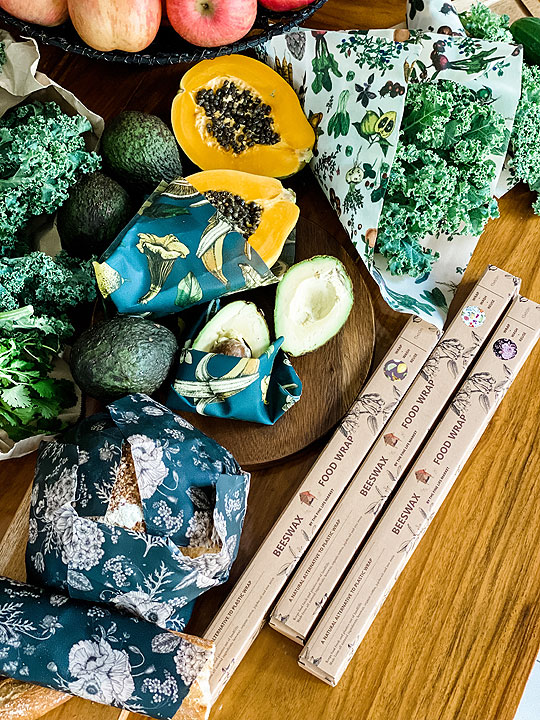
“We always use sustainable stuff in the house,” she said, gesturing to a display of compostable brushes and dish sponges. On the same rack, there are reusable paper towels and waxed cloth food wrappers.

“I’m not a guru on the environment. Little steps, a small act… it’s better than not doing anything.”

The items are locally produced and are made from sustainable materials, thus giving a high for those who might be more inclined to live greener lives than most. Opening the physical store, with bouquets of lavender and eucalyptus greeting one at the door, was an effort to make the lifestyle more appealing. “It’s hard to go all out… I just want to show people that it’s not that hard. If you care for your home, you have to care for your environment.

“We want them to experience and see and imagine that these are being used in their houses.”

Getting all the buzzwords to save the planet might seem like a new fashion, but for Ms. Datu, the mission is personal. “I want my children to have a future —  a good future.” This isn’t about handing them over an intact inheritance, but about handing them a better planet.

“We’re experiencing typhoons and climate change. It’s so real. We feel it already. What more after 10 years? My son is only four.

“I just want to be more mindful of the things that I buy, and the actions that I take now.”

The Fine Life Market is located at 3 Brixton St. Kapitolyo, Pasig 1603, Follow on IG: @thefinelifemarket, FB: The Fine Life Market, or order via website www.thefinelifemarket.com. — Joseph L. Garcia

Skechers opens largest Metro Manila store

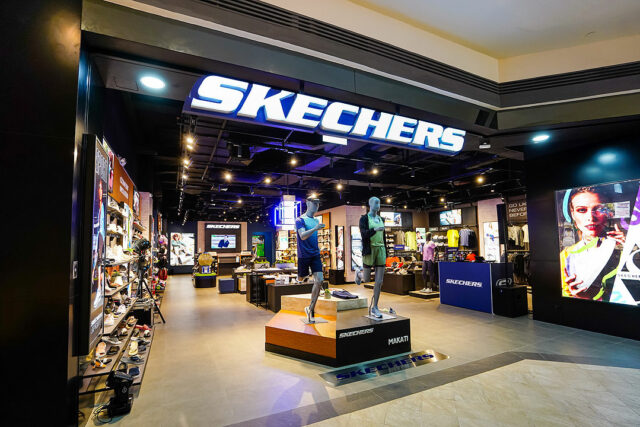
SKECHERS opened its largest store — 2,900 square feet — in Metro Manila on May 18, showing that their shoes fit people of any age.

We say this because of some seniors in the store —  located on the 2nd floor of the Powerplant Mall in Rockwell, Makati —  who gladly picked out their pairs. Asked about this demographic, Sue Pasustento, Country Manager for Skechers Philippines said, “No offense taken. We are a brand for every member of the family.” She also pointed out the various lines with comfort technology are designed to make walking easier at any age. “We have all this patented technology that we provide to consumers.” These include Skechers Arch Fit Technology, Skechers Max Cushioning Technology, Skechers Hyper Burst Technology, Skechers Air-Cooled Memory Foam, Skechers Relaxed Fit Technology, and Skechers Stretch Fit Technology.

“Footwear should be comfortable. Not just stylish,” said Ms. Pasustento.

The company is currently the third largest footwear brand in the world according to a statement by its CEO and founder Robert Greenberg, recording 4,300 Skechers stores around the world and $1.8 billion in sales in the first quarter of 2022. It shipped 200 million pairs in 2021.

“Our position as the third largest footwear brand in the world is the result of exceptional global partnerships and the strong consumer demand for our products,” said Mr. Greenberg.

There are numerous reasons for the company choosing to open a physical store in the waning days of the pandemic. “We know our numbers,” said Ms. Pasustento. “Skechers ranked number two in terms of brand share. During the pandemic, in the Philippines, it’s still in the top five.”

Their new online operations have not been launched (though they might open in online shopping platforms in time to launch the Fall Winter line). This is due to its transition from a distribution deal in the Philippines to its operations coming directly under the ownership and control of Skechers in the United States.

Expansion is aggressive for the company: later this month, it plans to open its biggest branch in the country in Cebu. It plans to open 26 more stores by the end of this year.

“The reason we came here and took over is to expand the capability to meet the demand of the consumer,” said Ms. Pasustento. —  Joseph L. Garcia

Should mobility be the ‘lease’ of your concerns?

The Toyota Corolla Cross is among the favorite vehicles for Kinto One subscribers. — PHOTO BY KAP MACEDA AGUILA

Kinto One challenges notion of vehicle ownership

WHO ELSE but the country’s leading brand has both bandwidth and temerity to, well, lead the way in other industry frontiers?

Toyota Motor Philippines Corp. (TMP), through Toyota Financial Services Philippines (TFSPH), is “offering Filipino customers accessible and flexible ways to acquire cars and enjoy the freedom of mobility, auto financing, and leasing services.”

Yes, that’s quite a mouthful, so let’s back up a bit.

For two decades now, TFSPH has been helping enable Filipinos get their Toyota of choice by offering financing services. The company’s president, Rommel Ocampo, shared that the company has a hand in nearly half (45%) of Toyotas sold.

Renting cars for a day or two (or even a week) is nothing unusual in this country, of course, but the concept of vehicle leasing is still admittedly a novel idea here. Let’s face it: “Leasing” as a concept is something we’re used to when dealing with real estate property.

The crux of the matter lies in ownership and our concept of it. Admittedly, there’s a sense of satisfaction and pride in traditional ownership of any kind. “This is my car,” sounds much sexier than “I’m leasing this car.” But if you really think about it, what does ownership entail? And in this era of ride-hailing platforms, is owning a car in the traditional sense still all that it’s cracked up to be? Come to think of it, studies have even shown that fewer of the younger generation are learning to drive. However, the COVID-19 pandemic was also the monkey wrench that served to undo confidence in taking public transportation altogether.

Back to our discussion on ownership and its evolving contemporary relevance, that perhaps encapsulates the kind of thinking behind Kinto One. TFSPH had rolled the product out in the throes of the COVID-19 pandemic, and the firm now wants to more deliberately talk about it amid an improved situation. The “full-service vehicle lease package for individual customers” posits the notion of vehicle subscription or “usership” that essentially swaps out the hassle for an all-inclusive monthly payment package.

TFSPH is hoping to shed some light and sense into the ownership conversation by comparing Kinto One “usership,” with the traditional acquisition process. Versus separately paid expenses related to periodic maintenance service (PMS), replacement of wear-and-tear parts, annual comprehensive insurance, and vehicle registration, Kinto One customers only need to pay a fixed monthly rate. And whereas traditional loans entail a down payment (usually a minimum 20% of the total vehicle cost) and chattel mortgage, TFSPH only asks for a security deposit (two months rental advance). After the three or four years of lease under Kinto One, the customer only needs to return the vehicle and then subscribe for another new one — compared to an expected lengthy process of documentation and requirements to resell a traditionally acquired car.

Meanwhile, Kinto One Business is a complete mobility solution for corporate customers. TFSPH Vice-President for Marketing Operations Department for Sales and Marketing Kaye Amores said that the product also offers “easy leasing, expert maintenance, and low monthly payment,” along with a fleet management service and fleet connected service to enable functions such as location tracing, geo-fencing, unplug detection, and feedback on driver performance. The bottom line, insisted the executive, is that the service allows a company to “spend less on the fleet,” and worry less as well.

Back to Kinto One for individuals, TFSPH is making available a number of Toyota models and variants such as the Vios, Corolla Altis, Fortuner, Innova, Rush, and Corolla Cross. Recently, the Camry and Alphard have been added, and the company is looking to include some Lexus models in the mix. Interestingly, hybrid models are also being pushed and, in some cases, being sought out by customers themselves. “It’s a good way for us to introduce Toyota’s hybrid vehicles,” said Mr. Ocampo over lunch with select members of the media.

He also observed that more people are open to leasing now, compared to when TFSPH first rolled out Kinto One in 2020. It’s a practical idea for expats, for instance, to just “subscribe and drive,” and is a much cheaper, bang-for-buck alternative to a straight rental.

Part of the allure in Kinto One is that the subscriber can basically just switch to a new car once the lease is up, and the fixed monthly payment insulates him or her from price increases. Tucked into the program as well is the Kinto Concierge Service, which, among other things, reminds the lessee when, say, the vehicle is due for a checkup or parts change.

This basically ushers in an era where convenience is king, especially in light of a still-raging pandemic, and a challenged public transportation system. Speaking of convenience, TFSPH is also introducing myToyota Wallet, a mobile payment solution that “allows customers to safely and easily transact for everything Toyota.” The app is available for Android and iOS devices, and “allows card tokenization for up to three debit or credit cards,” enabling cashless transactions at any Toyota dealership nationwide. The e-wallet also works seamlessly with the myToyota App so that the user can pay digitally for parts, accessories, service, and even insurance. Soon, customers can even pay for monthly amortization.

“The future looks bright for the industry. A recent automotive market study has revealed that demand for new vehicles is rising in the region, and that vehicle subscription is on the rise in Southeast Asia, as an alternative to ownership,” underscored Mr. Ocampo.

We say “yay” for whatever can get more people from here to there — surely the vision of TMP’s “mobility for all” mantra.

Triangle of Sadness wins Cannes Film Festival’s Palme d’Or

RUBEN OSTLUND poses with the Palm d’Or Award for Triangle of Sadness during the winner photocall during the 75th annual Cannes film festival at Palais des Festivals on May 28 in Cannes, France. — REUTERS/DAVID BOYER/ABACAPRESS.COM

PARIS —  Triangle of Sadness, a film by Swedish director Ruben Ostlund, won the Palme d’Or for Best Picture at the Cannes Film Festival on Saturday, the festival announced.

“When we started to make this film I think we had one goal —  to really, really try to make an exciting film for the audience and bring thought-provoking content,” Ostlund said.

“We wanted to entertain them, we wanted them to ask themselves questions, we wanted them to after the screening go out and have something to talk about,” he added.

Exploring notions of beauty and privilege, the film sends two models on a luxury cruise —  only to leave them stranded on a deserted island with a handful of the staff and billionaire guests. The toilet attendant – played by Filipina actress Dolly de Leon —  proves to have the best survival skills and social structures are upended.

“The thing about Ostlund is that he makes you laugh, but he also makes you think,” said Variety in its review of the film. “No matter what sphere he tackles, we’re bound to see the world differently.”

Ostlund won the Palme d’Or in 2017 for his film The Square, a satire about a prestigious art curator.

The festival awarded two films the Grand Prix: Close, a film by Belgian director Lukas Dhont about friendship and masculinity, and Stars at Noon, which is set in modern-day Nicaragua, by French auteur filmmaker Claire Denis.

The jury prize also went to two films, The Eight Mountains by Belgian directors Felix Van Groeningen and Charlotte Vandermeersch and EO, by Polish director Jerzy Skolimowski, which is told through the eyes of a donkey.

“Thank you, my donkeys,” said Skolimowski, in his acceptance speech.

South Korean star Song Kang-ho picked up the best actor award for his role in Broker while South Korean director Park Chan-wook won the best director prize for his romantic thriller Decision to Leave.

Iranian Zar Amir Ebrahimi, who won best actress for her role as a journalist tracking a serial killer in Holy Spider, was visibly moved.

“Maybe having me here tonight is just a message —  especially for women, Iranian women,” she told a press conference directly after the ceremony, when asked about an apparent outpouring of support of her on social media, which she said she hadn’t seen.

French actress Carole Bouquet announced a surprise 75th anniversary prize to mark the festival’s birthday. It went to Belgian directing brothers Jean-Pierre Dardenne and Luc Dardenne for Tori and Lokita.

For its 75th anniversary edition, the festival resumed its traditional calendar in May following two years of pandemic disruptions and marked the return of parties and kissing —  both of which were not permitted last year due to strict COVID protocols.

THE WORST ONES WINS CERTAIN REGARD
Meanwhile, a film set in the working class suburbs of the northern French city of Boulogne-sur-Mer won the top prize in the Un Certain Regard competition at the Cannes Film Festival on Friday.

The Worst Ones, directed by Lise Akoka and Romane Gueret, explores the challenges of street casting, telling the story of a community’s reaction to the arrival of a film crew.

“I hope that this film, beyond reviews, will be read as an homage to the creation of cinema because sometimes it allows us to give a voice to those who are not often heard,” Gueret said.

Deadline described the film, with events that are “thought provoking and sometimes darkly funny,” as “a fascinating look at the filming experience.”

Joyland, a film by Saim Sadiq that seeks to break gender stereotypes in Pakistan, the country’s first entry to the Cannes Film Festival, won the jury prize.

The film’s screening at Cannes felt like “a dream has come true,” one of its stars, Sarwat Gilani, told Reuters last week, adding that she felt that “the struggles that we face as artists in Pakistan, they’ve all come to be worth it.”

Un Certain Regard is a competition focused on art-house films that runs parallel to the main competition, the Palme d’Or, which will be announced on Saturday. — Reuters

BYS releases Disney Princess makeup collection

BYS PHILIPPINES has launched its newest makeup line —  its Disney Princess Collection. But there is nothing childish about it.

The brand —  established in 2004 in Australia, with BYS Philippines set up in 2012 —  has had previous makeup collections done in collaboration with Korean actors Hwang In Youp and Park Seo Joon, Filipino actresses and singers Regine Velasquez and Nadine Lustre, as well as American fashion doll brand Barbie.

The Disney Princess collaboration was an initiative of the Philippine BYS team.

The images of Disney’s princess characters Cinderella, Belle, and Ariel are found on the BYS Disney Princess products.

“It’s not just them (Disney) putting their logo on our products. These products went to a rigorous process of development and approvals,” said John Lozano, marketing and creative director of IFace, Inc., the distributor of BYS. “We had to make sure that the ingredients are safe for the skin and are true to what they claim,” he told BusinessWorld at the collection’s launch on May 18 at Sirens Studios Manila in Makati City.

The collection’s packaging comes in black and gold.

“We don’t want it to look childish. We really wanted to make it appeal to older and younger people,” Mr. Lozano explained.

For the Disney Princess Collection marketing campaign, BYS Philippines invited photographer BJ Pascual to create Disney Princess-inspired looks. He used real beauty queens to represent the three animated princesses: Miss Universe Philippines 2020 Rabiya Mateo who was styled as Ariel from The Little Mermaid, Miss Universe Philippines 2021 Bea Gomez as Belle from Beauty and the Beast, and Miss Universe Philippines 2022 Celeste Cortesi as Cinderella.

“I took a page from the Romantic Era when there was an artistic, literary, musical, and intellectual movement in Europe and weaved this in around the three heroines and how we define women’s roles in society now — taking the lead in adjusting to new realities and challenges. The old damsel-in-distress narrative is out and we hope to show that in the images,” Mr. Pascual said in a statement.

THE PRODUCTS
The collection is composed of hypoallergenic and paraben-free products: Longlasting Liquid Eyeliner in Black Beauty (P699); Plumping Mascara in Hero (P699), 3-in-1 Eyebrow Pencil in Dark Knight and Fairy Lights (P899); Sun Tint SPF 36 (P799); Flawless Primer (P799); Liquid Lipsticks in Dance in the Moonlight, Ever a Surprise, and Wanderin’ Free (P549 each); Lip and Cheek Tint in Pixie Dust (P599), and Serum Blush in Fantasy, Celestial, and Mermaid (P799 each).

Aside from makeup, the collection also includes skincare masks: the Clarifying Face Mask which is infused with Camellia japonica flower extract, Prunus serrulata (Japanese cherry) flower extract, and salicylic acid; the Smoothing Face Mask, formulated with Rubus coreanus (Korean blackberry) fruit extract, Euterpe oleracea (acai) fruit extract, and niacinamide; and the Hydrating Face Mask, which has Punica granatum (pomegranate) fruit extract, Aronia melanocarpa (black chokeberry) extract, and emulsified ester oil. All the masks cost P99 per sheet or P499 for a box of five.

“There was a time when makeup was all the rage. And then now because of the Korean invasion and the focus on skincare, the direction focused on skincare as well,” Mr. Lozano said.

“It’s always nice to add skincare in makeup. Maganda ka na, maganda pa ang skin mo (You are not only beautiful, but your skin looks good too),” Mr. Lozano said.

The vlog on the Disney Princess Collection campaign is on view at BJ Pascual’s YouTube channel. The BYS Disney Prince Collection is available at Watsons, The SM Store, and online on Amorfia, Watsons, and ShopSM. — Michelle Anne P. Soliman

ADVERTISEMENT
ADVERTISEMENT