Home Blog Page 636

Egyptian school administrator killed in Zamboanga gun attack

COTABATO CITY — A gunman killed an Egyptian national in an attack at the border of Barangays Lumbangan and Divisoria in Zamboanga City on Saturday night.

Local executives and officials of different police units in Zamboanga City, under Brig. Gen. Edwin A. Quilates, director of the Police Regional Office-9, told reporters on Sunday that Abdalrahman Elshawadfy Mohammed Elfaky died from multiple gunshot wounds sustained in the attack.

Civilian emergency responders and police investigators said the slain Mr. Elfaky was the administrator of the Asia Academic School in Barangay Tetuan in Zamboanga City.

He was driving his grey Toyota Innova when he was flagged down and shot repeatedly with a pistol by a lone attacker who immediately escaped using a getaway motorcycle, according to initial reports from barangay officials and investigators who responded to the incident.

Mr. Elfaky’s family resides in Matina Aplaya, a coastal area in Davao City in Region 11.

Co-workers of Mr. Elfaky in the school where he worked said he was on his way to Barangay Lumbangan when he was killed by an assailant, whose identity is being determined with the help of barangay and city officials. — John Felix M. Unson

Chinese brands seen indirectly competing with luxury cars

MERCEDES-BENZ.PH

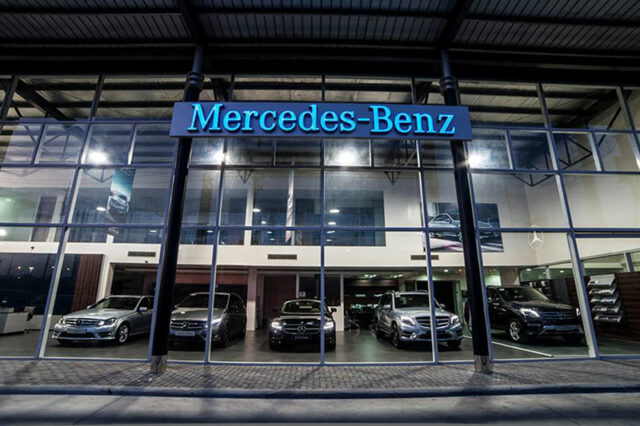
LUXURY CAR sales dropped 8% in October amid changing consumer preferences and increasing competition from Chinese brands, Mercedes-Benz Philippines said.

General Manager Maricar Parco said the luxury segment had sustained double-digit declines since the start of the year.

“In the last two months, the luxury segment has been very challenging,” she said on the sidelines of the launch of the Chamber of Automotive Manufacturers of the Philippines, Inc.’s (CAMPI) 30th Anniversary Coffee Table Book on Friday.

“I believe it is primarily (because) the market is changing. We have more choice. The competitive landscape is much, much wider now, so consumers also take a little bit of time to choose. Obviously, the Chinese brands have been disruptive because of the pricing,” she added.

She said that the luxury brands hope to see a recovery in the last two months of the year aided by aggressive promotions.

“We hope in the last two months we will be able to finish strong. We have to have very aggressive offers now for the entire industry to support this because the market is soft,” she said.

“I believe because of the current environment, spending on luxury items is not really a priority,” she added.

Asked if the demand has been impacted by the corruption scandal, she said, “Yes, but I would also like to say that the majority of our customers are respectable people.”

She also said that as some buyers register the cars under a company name, sellers do not have a clear-cut way to know who is buying the cars.

“Most of our customers are repeat customers, people that we have been serving for generations, actually,” she added.

The luxury segment includes brands like Mercedes-Benz, BMW, Lexus, Ferrari, Audi, Porsche, Jaguar, and Land Rover.

“We are very small; we are less than 1% now of the total industry,” she said.

Overall, CAMPI President Rommel R. Gutierrez said the industry is still on track to hit 500,000 units in sales by year’s end amid growing demand for electrified vehicles and stronger demand for vehicles during the Christmas season.

“We are confident,” he told reporters on Friday. “I think we can still reach 500,000.”

At the end of October, CAMPI and the Truck Manufacturers Association reported total industry sales of 383,424 units, 0.2% behind the year-earlier pace.

Passenger car sales fell 23.2% to 77,461 units in the first 10 months.

Meanwhile, sales of commercial vehicles, which account for almost 80% of the market by volume, grew 7.9% to 305,963 units in the first 10 months. — Justine Irish D. Tabile

PHL export prospects riding on tariff ruling by US Supreme Court

PHOTO COURTESY OF ICTSI

By Justine Irish D. Tabile, Reporter

A US Supreme Court ruling on the reciprocal tariffs will shape the Philippines’ trade prospects as the justices grapple with President Donald J. Trump’s radical overhaul of the trading system, analysts said.

Associate Professor of the University of Asia and the Pacific George N. Manzano said via Viber: “Because the US is our biggest export market, our prospects will depend on the ruling of the US Supreme Court on the authority of President Trump to impose reciprocal tariffs.”

The Philippine Statistics Authority (PSA) reported that exports to the US totaled $11.158 billion in the first ten months, or about 15.8% of total exports.

In the first 10 months, Philippine exports amounted to $70.43 billion, up 13.8% from a year earlier.

“The export increase looks consistent with peso depreciation, which makes Philippine exports more competitive internationally, and an increase in world demand for semiconductors, which is a significant chunk of Philippine exports,” he said.

Also, among the reasons for the rising semiconductor exports, he said, is the industry’s tariff-exempt status.

In the first 10 months, the Philippines exported $37.7 billion worth of electronic products, up 12.6% from a year earlier.

Of the electronic product exports, $28.27 billion consisted of semiconductors, up 11.6% year on year.

Semiconductor and Electronics Industries in the Philippines Foundation, Inc. (SEIPI) President Danilo C. Lachica said the industry’s export performance in the first ten months means the group’s growth projections remain on track.

“Most probably,” he said via Viber. “There are no changes in our top markets: Hong Kong, the US, and China.”

Last week, Mr. Lachica said SEIPI is expecting 5-7% growth in exports this year.

If realized, this will bring the total electronic product exports to at least $41 billion by year-end from $39.09 billion a year ago.

Moving forward, Mr. Manzano said that Mr. Trump’s executive order exempting some agricultural exports will help boost Philippine agricultural exports.

“The US remains the top export market despite the reciprocal tariffs for the Philippines because a sizable share of Philippine exports (semiconductors and electronics) are still exempt from reciprocal tariffs,” he said.

He said other factors include the gestation period to develop and diversify to other markets and the still-being-negotiated Philippines-European Union Free Trade Agreement.

Meanwhile, he said that the decline in imports in October reflected softer economic growth overall.

“Philippine imports, on the other hand, decreased, which may be consistent with soft gross domestic product growth leading to weaker import demand, particularly of capital goods, energy, and raw materials,” he said.

The PSA reported that imports declined 6.5% in October to $11.22 billion.

In the first 10 months, imports amounted to $111.75 billion, up 4.3%.

“The slower imports could still reflect lower global commodity prices. Being among the lowest in three to five years partly led to a lower import bill,” Rizal Commercial Banking Corp. Chief Economist Michael L. Ricafort said via Viber.

“The weaker peso also made imports into the Philippines more expensive, thereby dragging on demand,” he added.

However, he said that the weak peso “provided some boost for Philippine exports cheaper from the point of view of international buyers.”

Meanwhile, he said that as export markets diversify away from the US in response to the reciprocal tariffs, imports could eventually pick up.

“There may be some export-dependent countries that could diversify their exports and sell more to the Philippines, which could lead to import growth going forward,” he said.

“But the US tariff exemption on many agricultural exports would be a bright spot for overall Philippine exports, since these have yet to catch up compared to higher agricultural export amounts of other Association of Southeast Asian Nations (ASEAN) countries,” he added.

Red, white onion MSRP set at P120 per kilogram

PIXABAY

THE Department of Agriculture (DA) said it imposed a maximum suggested retail price (MSRP) of P120 per kilo for both red and white onions starting today, Dec. 1.

In a statement, Agriculture Secretary Francisco P. Tiu Laurel, Jr. said the limited supply caused by delayed import arrivals does not justify current market prices.

“There may be some tightness in supply, but that’s no excuse for runaway prices. At current market levels, it already smacks of profiteering,” he said.

The Agribusiness and Marketing Assistance Service (AMAS) found that retail prices are hitting P300 per kilo, nearly triple what the DA believes is a fair market price.

Mr. Laurel said that the landed cost of onions is around P60 per kilo, which means that a P120 ceiling still leaves room for reasonable margins. “At P120, everyone, from importers to logistics providers to retailers, still earns a decent profit,” he said.

AMAS Director Junibert E. de Sagun was quoted in a statement as saying that onion retailers were generally receptive to the proposed MSRP during an earlier consultation, provided that the cap be implemented only once new shipments arrive, to allow them to sell current inventories purchased at higher prices.

Last week, the DA said it ordered importers to explain the slow arrival of red onion shipments after a review revealed low utilization of import permits for red onion despite high demand.

According to the DA, all issued import permits must be used by Jan. 15, 2026, a deadline set to prevent importers from hoarding clearances to influence supply and prices.

The DA said the price ceiling imposed on domestically grown onions will remain subject to further consultation and adjustment should farmgate prices rise sharply. — Vonn Andrei E. Villamiel

Rice, galunggong prices up, meat steady in mid-Nov.

BFAR.DA.GOV.PH

PRICES of rice and galunggong (round scad) rose in mid-November, while pork and chicken prices were little changed, according to the Philippine Statistics Authority (PSA).

During the Nov. 15-17 period, which the PSA calls the second phase of November, the national average retail price of well-milled rice rose to P47.90 per kilo, against P47.63 during the first phase of the month (Nov. 5-7) and P47.37 a month earlier. The year-earlier price had been P55.06 per kilo.

The highest average retail price of well-milled rice in the second phase of November was recorded in the Central Visayas at P54.74 per kilo, against the P53.46 reported in the first phase of November.

The lowest retail price of well-milled rice in the second phase of  November was reported in the Cagayan Valley at P40.19 per kilo, which rose from the P39.88 recorded in the first phase of the month.

Galunggong prices rose to P247.86 per kilo in the second phase of November from P242.83 in the first phase and P233.77 a month earlier. A year earlier, the retail price for the staple fish had been P217.09 per kilo.

Retail prices of fresh pork (in bone-in form) averaged P316.05 per kilo, against P316.02 in the first phase of November and down from P320.98 a month earlier. A year earlier, pork prices had been P299.88 per kilo.

The retail price of dressed chicken averaged P208.42 per kilo, against P208.44 in the first phase of November and P210.03 a month earlier. Prices remained elevated compared to the year-earlier level of P202.60 per kilo.

Meanwhile, a slight decrease in retail prices in the second phase of November was recorded for beef (bone-in and pure meat) and bangus (milkfish).

On the other hand, vegetables, such as ampalaya (bitter gourd), cabbage, carrot, eggplant, Baguio beans, string beans, tomato and potato, posted retail price increases in the second phase of November.

Red onion prices surged to an average of P208.48 per kilo in the second phase of November, against P175.30 in the first phase. — Vonn Andrei E. Villamiel

RBEs to be served by dedicated BIR office

BW FILE PHOTO

THE Bureau of Internal Revenue (BIR) said it expects to roll out a dedicated office servicing registered business enterprises (RBEs) by December, promising simplified filing, payment, and other processes.

In a statement on Nov. 28, BIR Commissioner Charlito Martin R. Mendoza said the agency has internally discussed the establishment of the Registered Business Enterprise Taxpayer Service (RBETS).

“Currently, there are 5,907 Registered Business Enterprises. The BIR anticipates rolling out RBETS by December,” it said.

The BIR said RBETS will bring about a more efficient and streamlined experience for RBEs, who are typically economic zone locators enjoying tax incentives. Their primary regulators are Investment Promotion Agencies and operate under the tax regime set by laws like the Corporate Recovery and Tax Incentives for Enterprises to Maximize Opportunities for Reinvigorating the Economy (CREATE MORE) Act.

“Through RBETS, the BIR aims to formulate policies and guidelines that improve service delivery to RBEs, ultimately strengthening the overall tax administration system,” the BIR said.

In the first 10 months, BIR collections rose 7.45% to P3.47 trillion, equivalent to 82.35% of the agency’s P3.22-trillion full-year target. — Aubrey Rose A. Inosante

Retail infra considered missing piece as e-commerce wave builds

BW FILE PHOTO

By Justine Irish D. Tabile, Reporter

IMPROVEMENTS in infrastructure are needed to help Philippine retailers and merchants meet the rise in demand through e-commerce channels, according to web development and integration agency Dev Team.

Ollie Hunt, co-founder of Dev Team and board director at Magento Association, an organization that supports the Magento Open Source ecosystem, said the Philippines is close to being ready for online shopping.

“The demand is absolutely there; Filipino consumers are some of the most digitally engaged in Southeast Asia. What’s missing is the infrastructure that makes it genuinely easy for merchants to run an online store,” he told BusinessWorld.

In particular, he cited the need for simpler, more localized, and more accessible payment methods, shipping integration, and operations tools.

“That requires movement from the government, but also from tech platforms, solution providers, and agencies like us,” he said.

“If the ecosystem steps up to give businesses the right foundations, merchants of all sizes will be able to own their online presence rather than relying purely on marketplaces. And we are getting there,” he added.

The Philippines’ high internet usage, online-first social behavior, and increasing mobile adoption make it an important market for e-commerce.

“Marketplaces dominate today, but they’re incredibly saturated, which makes visibility hard for brands,” according to Mr. Hunt, citing smaller brands’ difficulty in standing out and getting repeat customers on known e-commerce platforms.

Chris Islan, co-founder of Dev Team, said the other challenges include lack of localized payment methods, rising operational costs due to inflation and unpredictable fees, limited industry forums, and siloed operational systems.

“But these are all solvable challenges; they just require some investment and the ecosystem to mature together,” he said.

To address these, Mr. Hunt said that global tech platforms, solutions providers, and agencies need to start taking the Philippines seriously.

“Right now, most small and medium enterprises don’t actually have viable options outside of marketplaces, as you need to be enterprise level to afford it,” he said.

“Shopify may be the dominant platform, but it doesn’t have a Philippine play. By that, I mean no local payment options, no native shipping integrations, and limited flexibility for growth,” he added.

As such, the Magento Association built Dev Team Accelerator, a ready-to-go Magento Open Source tech stack for the Philippine market.

“It gives retailers the flexibility and ownership of Magento, but without enterprise-level costs. It’s properly localized and built with the digital foundations merchants need to scale, operate omnichannel, and eventually expand beyond borders,” he said.

“For the market to grow, more tech players need to follow suit, building solutions for the Philippines rather than expecting merchants to fit into tools that weren’t designed for them,” he added.

ICT workers post top national average monthly wage

STOCK PHOTO | Image by DC Studio from Freepik

By Erika Mae P. Sinaking

THE Information and Communications Technology (ICT) industry posted the highest average monthly wage in 2024, according to the results of the Occupational Wages Survey reported by the Philippine Statistics Authority (PSA).

The PSA said the study defined wages as “the sum of basic pay and regular cash allowances.”

ICT basic pay averaged P40,931 with allowances of P2,745, resulting in an average wage of P43,676.

The professional, scientific, and technical activities occupations reported a total wage of P36,096, comprising basic pay of P32,553 and an allowance of P3,543.

Wages for the electricity, gas, steam, and air conditioning supply occupations had a wage of P35,188, with a basic pay of P31,062 as well as the highest monthly allowance of P4,127.

Geoffrey M. Ducanes, Director of the Ateneo de Manila Center for Economic Research and Development, said in an e-mail that the ICT wages reflect “stronger demand for ICT workers and other professionals relative to their supply.”

He cited the “implicit belief” among employers that ICT workers and other professionals will contribute value exceeding their compensation. He added that strong wages represent a “signal that should attract more people to get the training to go into these fields.”

Meanwhile, the agriculture, forestry, and fishing sector recorded the lowest wage at P14,615, with basic pay of P14,191 and the lowest allowance of P424.

Mr. Ducanes said agricultural jobs typically require less formal training, while ICT and professional positions demand more specialized qualifications, which accounts for the differences in wages.

“This does not mean that what ICT workers and professionals do is more important or more valuable…than what agricultural workers or other working class people do, the market just prices it higher because of relative scarcity,” he said.

The average monthly full-time wage in the Philippines for 2024 was P21,544 for formal establishments with 10 or more workers, comprising P20,309 in basic pay and P1,235 in allowances.

Wages were highest in the National Capital Region at P29,310, Calabarzon P19,711, and the Central Visayas P19,084, while the Bangsamoro Autonomous Region in Muslim Mindanao had the lowest average at P11,495.

The P21,544 national average wage, even with nominal and real increases over time, is insufficient to secure a comfortable life for a typical Filipino family, according to Christopher James R. Cabuay, associate professor at the De La Salle University School of Economics in Manila.

He said in a separate e-mail that these wages are “likely not going to lead to improvements in terms of comfort” and likely won’t be enough to retain skilled professionals, noting that the estimated monthly cost for a “decent basket” for a family of five — the lifestyle considered “middle income” — ranges from P61,000 to P99,000.

“Even if there are two income earners in the family, it will not be enough to help them reach the lower limit of our estimate,” he added.

Female workers nationwide earned an average of P22,236, exceeding the P21,009 pay of their male counterparts and resulting in a gender wage gap of 5.8% in favor of women.

The highest-paying jobs were aircraft pilots and air traffic safety electronics technicians, earning P137,999 and P131,536, respectively, compared with P13,506 for elementary occupations.

Despite high-paying roles in some sectors, Mr. Cabuay said that even skilled professionals can face “abysmally low” wages, as many firms are not engaged in high-skill activities and therefore cannot offer higher pay or fully utilize talent, leading professionals to emigrate to countries with significantly better pay and benefits.

“If our firms are not engaged in high-productivity activities, they will not be able to pay higher wages,” he said.

Fostering growth and tax policy innovation with RPVARA

IN BRIEF:

• At the SGV 4th Tax Symposium, Executive Director Consolacion Agcaoili emphasized the Bureau of Local Government Finance’s (BLGF) commitment to modernizing local fiscal management and enhancing transparency in property valuation through the implementation of the Real Property Valuation and Assessment Reform Act (RPVARA) by 2028.

• Pursuant to RPVARA, the BLGF is leading the development of a comprehensive digital roadmap, which will empower local government units (LGUs) to automate real property assessments, streamline tax collection processes, and allow electronic payments.

• The creation of a centralized property valuation system under RPVARA will grant government agencies immediate access to updated property records and market values. This innovation is expected to resolve persistent bottlenecks in infrastructure projects, especially those involving land acquisition, valuation, and compensation.

At the SGV 4th Tax Symposium, Executive Director (ED) Consolacion Q. Agcaoili of the Bureau of Local Government Finance (BLGF) highlighted the agency’s commitment to modernize local fiscal management and promote transparency in property valuation, aligning with the symposium’s theme “From Compliance to Confidence: Trust, Transformation, and Transparency.”

As Republic Act No. 12001 or the Real Property Valuation and Assessment Reform Act (RPVARA) moves toward full implementation by 2028, its twin features of digitalization and transparency are expected to bring about consistent property valuations nationwide and enable LGUs to generate accurate property valuations, which will boost their tax collection capacity and strengthen fiscal autonomy.

Prior to the law, real property valuation was done by referring to the BIR schedule of zonal values, or the schedule of fair market value of the LGUs. As a result, there are varying and sometimes even conflicting bases for determining real property valuation.

To address this issue, RPVARA established a standard basis of valuation through the Philippine Valuation Standards (PVS) and the Schedule of Market Values (SMVs).

Ms. Agcaoili said that, after extensive consultations, the BLGF is ready to launch the 2025 edition of the PVS, which will be the basis for LGUs preparing their SMVs.

The law requires that all SMVs be developed after due consultation, making the entire process transparent and open to scrutiny. Prior to the submission of the proposed SMV to the BLGF, LGUs must conduct at least two public consultations and hearings, with the proposed values being posted on official websites and in public spaces.

These measures ensure that property owners, businesses, and the broader community can understand and participate in the preparation of the SMVs. By embedding transparency into every stage — from policy formulation to implementation — RPVARA not only reduces opportunities for political intervention, but also fosters accountability and fairness in the valuation of real properties.

This inclusive process allows property owners to actively participate in determining the SMVs, which will serve as the official benchmark for adjusting assessment levels, setting property tax rates, calculating local and national taxes, and determining fair compensation for land acquisition and public land disposition.

This article explores the implications of RPVARA, its foundational principles, and the anticipated benefits for property owners and local governments alike.

DIGITALIZATION AND LOCAL INNOVATION
Ms. Agcaoili discussed the development of the Real Property Information System (RPIS) mandated by RPVARA, which is a nationwide electronic database that will consolidate all real property transactions, valuations, and related data. As part of BLGF’s digital roadmap, the RPIS will enable LGUs to automate property assessments, streamline tax collections, and allow electronic payments.

She also added that National Government agencies will have free access to the system. However, private sector users will need to pay a minimal fee, which will help cover system maintenance costs.

The RPIS is designed to be interoperable with the electronic data required to be shared by the Registers of Deeds, BIR, notaries public, officials issuing building permits and geodetic engineers conducting surveys within a locality. The Department of Information and Communications Technology (DICT) is tasked with providing the necessary infrastructure, equipment, and training, prioritizing lower-income LGUs to ensure nationwide compliance.

RPVARA has laid out safeguards against misuse, which include penalties for non-compliance, unauthorized data access, and improper valuation practices.

Another innovation under RPVARA is the grant of a real property tax amnesty within two years from the law’s effectivity or until July 5, 2026. The amnesty covers penalties, surcharges, and interest on all unpaid real property taxes — including the Special Education Fund, Idle Land Tax, and other special levies — incurred prior to July 5, 2024.

By waiving penalties and surcharges, the amnesty gives property owners a “fresh start,” encourages voluntary compliance, and more quickly boosts local government revenues. For property owners, the amnesty provision is expected to improve real property liquidity while providing LGUs with additional resources for development projects and public services.

ACCELERATING INFRASTRUCTURE, ECONOMIC DEVELOPMENT
RPVARA’s reforms directly address long-standing barriers to infrastructure development. By establishing uniform, regularly updated benchmarks for property valuation, the law streamlines land acquisition for public projects, ensuring fair compensation and reducing disputes. The digitalization of property records and the adoption of international standards accelerate project timelines, allowing government agencies to implement real property acquisition for critical infrastructure.

RPVARA represents a pivotal shift in the valuation of real property in the Philippines. By prioritizing transparency and digitalization, RPVARA not only enhances the accuracy of property valuations, but also fosters a more equitable system for property owners and local governments.

As the law moves toward full implementation, it is expected to create a more robust framework to enhance LGU’s capacity to generate revenues from real property, ensure transparency of valuation standards and promote the use of innovative digital technology in real property tax administration. The proactive engagement of stakeholders throughout this process will be crucial in ensuring that the benefits of RPVARA are realized across all levels of society, paving the way for a more sustainable and prosperous future for the Philippines.

This article is for general information only and is not a substitute for professional advice where the facts and circumstances warrant. The views and opinions expressed above are those of the author and do not necessarily represent the views of SGV & Co.


Juan Paulo C. Santos is a tax senior manager of SGV & Co.

Argentina, Colombia dispute semis spot at futsal World Cup

ARGENTINA VS FILIPINA5 — FACEBOOK.COM/PHIFOOTBALLFEDERATION

Matches on Monday
(PhilSports Arena)
6 p.m. – Argentina vs Colombia
8:30 p.m. – Spain vs Morocco

SOUTH AMERICAN titans Argentina and Colombia rekindle their rivalry as they dispute a ticket to the semifinals of the FIFA Futsal Women’s World Cup on Monday at the PhilSports Arena.

The world No. 6 Argentines go into the marquee quarterfinal duel at 6 p.m. with the momentum of a spotless three-game run in Group A capped by a 5-1 verdict over host Philippines.

The Albiceleste were among the first to clinch a Last-8 ticket early after victories over Morocco, 6-0, and Poland, 3-2.

On the other hand the No. 8 Colombians split their first two assignments in Group B then banked on a 4-1 win over Thailand to claim the second and last quarters slot.

“They’re a very good team, they finished first in their group. And it’s going to be a heated match, because we’re two very strong South American teams,” Colombia winger Nicole Mancilla said of the Argentines.

“It’s a final,” Colombia fixo Merlin Salcedo said in highlighting the enormity of this showdown. “It will be about who makes fewer mistakes, who shows the most heart. We’ll have to give it everything.”

Also seeking to advance to the semis of the inaugural showpiece for women’s futsal supported by the Philippine Sports Commission and Philippine Football Federation are Spain and Morocco.

The 8:30 p.m. pairing pits a traditional power in the No. 2 Spaniards, the Group B topnotcher, and a fast-rising side in the 31st Moroccans, Group A’s runner-up.

La Roja, a three-time Euro champion, breezed to the quarters with a 3-0 sweep of their group while the Atlas Lionesses, winner of this year’s Africa Cup of Nations, had to beat the Filipina5, 3-2, and Poland, 1-0, to catch the bus to quarters as Group A No. 2.

Meanwhile, the Last 8 continues on Tuesday with Group D ruler and world No. 1 Brazil taking on Group C No. 2 Japan and Group C supremo Portugal facing Group D No. 2 Italy.

The semifinal matches are set for Friday. — Olmin Leyba

Ateneo knocks off Adamson to reach next rung of UAAP women’s stepladder

ATENEO BLUE EAGLES VS ADAMSON LADY FALCONS — UAAP/STEVE MARION

Games on Wednesday
(Smart Araneta Coliseum)
8:30 a.m. – FEU-D vs UST (U16 Boys’ Stepladder Semis)
10:30 a.m. – ADMU vs NU (Women’s Stepladder Semis)
1:30 p.m. – NU* vs DLSU (Men’s Final Four)
4:30 p.m. – UP* vs UST (Men’s Final Four)
*Twice-to-beat

VENGEFUL ATENEO knocked off Adamson, 66-56, and climbed to the next step on the ladder of the UAAP Season 88 women’s basketball semifinals on Sunday at the Mall of Asia Arena.

The third-ranked Blue Eagles staged an 11-0 run to open the payoff period and never looked back for a revenge win on the No. 4 Lady Falcons, plus a shot at reigning champion and No. 2 seed National U (NU) Lady Bulldogs.

Ateneo and NU will figure in another knockout battle with the survivor meeting Santo Tomas in the best-of-three finals. The Tigresses clinched an outright finals berth by sweeping the two-round eliminations, 14-0.

The Blue Eagles made sure to stay in contention for a shot at the mighty Santo Tomas behind two-time Most Valuable Player Kacey Dela Rosa, who had a monstrous double-double of 17 points and 20 rebounds, plus three assists, two blocks and a steal.

Kailah Oani and Camille Malagar added 13 and 12 points, respectively, as Nigerian anchor Sarah Makanjuola scattered nine points, 16 rebounds, five assists, two steals and two blocks.

“Adamson made a run but our defense held up. That’s what we talked about. We really admire Adamson, we learn a lot of things from them. They’re a very tough and scrappy team. Today, with God’s help we were able to pull through,” head coach LA Mumar said as Ateneo finally secured a podium finish.

The Blue Eagles finished fourth in the last three seasons, including a 59-53 overtime defeat to the Lady Falcons in the first stage of the stepladder semis last season.

Ateneo nearly stumbled again with only a six-point lead after three quarters before pulling away with an 11-0 blast to erect a 65-48 lead heading home.

The Blue Eagles’ defense left the Lady Falcons without a field goal until the last four minutes, priming up for a duel against the reigning champ.

Gusto ko lang din mapatunayan sa NU na hindi lang sila ‘yung kaya makipagcompete sa ganoong level pero kami rin. We just prayed for that win,” Ms. Dela Rosa said.

Elaine Etang scored 18 points while Kemi Adeshina had 10 points and nine rebounds for Adamson, which still impressed under first-year mentor Jed Colonia, also a former Falcon.

In the U16 division, Elite Team members Dwyne Enriquez (29) and Prince Cariño (20) connived as the third-seeded Far Eastern U-Diliman eliminated No. 4 Adamson, 90-76.

The Baby Tamaraws will face the second-ranked Santo Tomas Tiger Cubs on the next step of the ladder for a shot at NU-Nazareth School Bullpups, who swept the elims, 14-0. — John Bryan Ulanday

The scores:

Ateneo 66 – Dela Rosa 17, Oani 13, Malagar 12, Makanjuola 9, Cancio 7, Lopez 3, Villacruz 2, De Luna 2, Batongbakal 1

AdU 56 – Etang 18, Adeshina 10, Apag 9, Limbago 5, Ornopia 4, Padilla 3, Bajo 3, Meniano 2, E. Alaba 2, Agojo 0, A. Alaba 0, Muñoz 0, Mazo 0

Quarterscores: 20-14, 32-31, 54-48, 66-56

Pistons nearly blow big lead, halt Miami Heat win streak

PISTONS VS HEAT — NBA.COM

CADE CUNNINGHAM had 29 points and eight assists as the visiting Detroit Pistons held off the Miami Heat, 138-135, on Saturday.

Tobias Harris supplied a season-high 26 points for the Pistons, who nearly squandered a 22-point lead in the fourth but snapped a two-game skid. Duncan Robinson, playing against his former team for the first time, tossed in 18 points while Paul Reed added 13 with 10 rebounds.

Andrew Wiggins led Miami, which saw its six-game winning streak snapped, with 31 points. Norman Powell had 28 points and Tyler Herro contributed 24. Bam Adebayo added a double-double with 15 points and 10 rebounds.

Detroit scored the last 13 points of the first quarter and led 71-59 at halftime. Cunningham had 19 points and Robinson contributed 11 as the Pistons shot 59.2% from the field in the opening half.

Wiggins led three Heat players in double digits with 13 points before intermission. Miami shot just 39.1% from the field over the first two quarters.

The Pistons maintained a double-digit lead in the third. An 8-0 spurt that included two baskets by Harris pushed the advantage to 88-69. Wiggins scored five straight points midway through the quarter to cut Detroit’s lead to 12.

A Powell layup after a Pistons turnover cut Detroit’s advantage to 99-89. The Pistons then turned up the defensive intensity, making a couple of steals during a 9-2 run to finish the quarter and carry a 108-91 lead into the fourth.

Harris opened the quarter with a 3-pointer to stretch the advantage to 20. He hit another to make it 118-99. Ronald Holland II’s three-point play with 8:09 left gave the Pistons a 22-point lead.

The Heat refused to give up. They kept chipping away, and when Herro knocked down a 3-pointer with 1:25 left, Detroit’s lead was down to five.

Following a Pistons turnover, Powell was fouled on a 3-point try and made all three free throws to make it 131-129. Daniss Jenkins answered with a layup. Adebayo and Cunningham then traded baskets. Jenkins hit three free throws in the closing seconds to clinch Detroit’s win. Reuters

ADVERTISEMENT
ADVERTISEMENT