Home Blog Page 6331

Emperador, Monde Nissin join 30-member PSEi

REUTERS

By Keren Concepcion G. Valmonte, Reporter  

Emperador, Inc. and Monde Nissin Corp. will be part of the 30-member Philippine Stock Exchange index (PSEi) beginning Feb. 14, replacing Bloomberry Resorts Corp. and Robinsons Retail Holdings, Inc. (RRHI).  

This is the result of the Philippine Stock Exchange’s (PSE) regular review of the benchmark index and sectoral indices, which covered trading activity from Jan. to Dec. 2021.  

“The index review allows us to maintain a roster of companies that best represents the entire market. The last two reviews saw the entry of newly listed companies in the PSEi as large issuances readily meet our criteria and are deemed qualified for inclusion by other index providers,” PSE President and CEO Ramon S. Monzon said in a statement.  

To qualify for inclusion in the PSEi, listed firms should be among the top companies in terms of liquidity and market capitalization. Companies also need to have a public float of at least 15%. The PSE also provides rules on the early inclusion of newly listed companies.  

Monde Nissin, which made its debut on the stock market in June last year after a record P48.6-billion public offering, qualified for early inclusion.   

Meanwhile, Emperador is rejoining the PSEi after it was removed in August last year.  

“Many analysts were expecting this already if you look at the metrics. There was speculation on other issues, but it has been [in] discussion for a month at least,” Regina Capital Development Corp. Head of Sales Luis A. Limlingan said in a Viber message.  

COL Financial Group, Inc. Chief Technical Analyst Juanis G. Barredo said the PSEi’s rebalancing “may cause some turbulence from the beginning of next week to its end.”  

Emperador and Monde Nissin’s inclusion in the bellwether index is seen as beneficial. However, it’s a different story for Bloomberry and RRHI as they exit from the PSEi. 

“We have seen some early exit motions into BLOOM (Bloomberry’s ticker symbol) and RRHI already recently, as many have been speculating on their removal already — so perhaps a good chunk of selling may have been factored in already,” Mr. Barredo said in a separate Viber message.  

All sectoral indices will have changes in their composition except for the Financials index.  

Monde Nissin joins EEI Corp. in the industrial index, taking the place of Alsons Consolidated Resources, Inc., SFA Semicon Philippines Corp.  

AREIT, Inc., Philippine Estates Corp., and Primex Corp. will be part of the Property index, while A Brown Co., Inc. will be removed.  

Meanwhile, the A and B shares of ATN Holdings, Inc. will be removed from the Holding firms index. The A and B shares of Metro Alliance Holdings & Equities Corp. will also be bumped off the Services index.   

Oriental Peninsula Resources Group, Inc. will no longer be part of the Mining and Oil index beginning Feb. 14.  

“The index review allows us to maintain a roster of companies that best represents the entire market,” Mr. Monzon said. 

8990 Holdings files for P27-billion follow-on offering

8990 Holdings Inc. on Friday said it filed documents for its P26.59 billion follow-on offering (FOO), which it described as a “re-IPO (initial public offering)” to introduce the company to more investors.  

In a disclosure, the company said the FOO consists of 1.25 billion common shares owned by its existing shareholders, along with an overallotment option of up to 150 million shares. 

The shares, which are owned by TPG Rafter Holdings, Ltd., Pasir Salak Investments Ltd, and iHoldings, Inc., will be sold for as much as P18.99 each.   

“The Company views the follow-on offering as a re-IPO to re-introduce 8990 and share its story to international and local investors, increasing the public float and trading liquidity of the stock in the process,” 8990 Holdings President & CEO Anthony Vincent S. Sotto said in a separate statement.   

According to its preliminary prospectus filed Jan. 28, “the company will not directly receive any proceeds from the offer.”    

TPG Rafter Holdings, Pasir Salak Investments, and iHoldings will receive proceeds from the FOO. However, 8990 Holdings will still receive proceeds through a top-up placement with iHoldings.   

“The offering includes a top-up component which is expected to generate fresh capital to contribute to the company’s growth,” Mr. Sotto said.   

Assuming the overallotment option is exercised, the company will issue iHoldings as much as 450 million new common shares from its unissued capital stock to match the number of shares iHoldings sold from the FOO for the same price. These shares will also be listed on the Philippine Stock Exchange.   

8990 Holdings mandated Merrill Lynch (Singapore) Pte. Ltd. or BofA Securities and J.P. Morgan Securities plc as the joint global coordinators and bookrunners of the offer. China Bank Capital Corp., and PNB Capital and Investment Corp. were tapped to be the joint domestic lead underwriters and bookrunners of the transaction.   

On Friday, 8990 Holdings shares at the stock exchange went up 2.59% or 30 centavos to close at P11.88 apiece. — Keren Concepcion G. Valmonte  

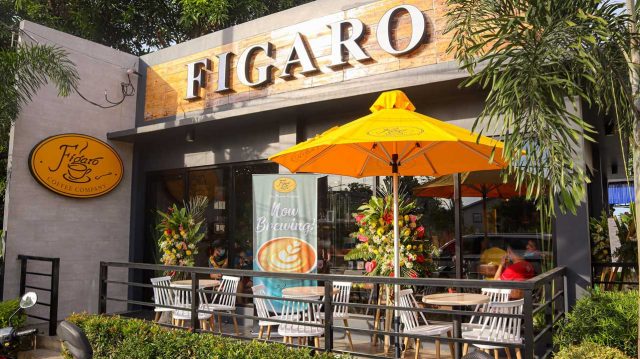
Figaro launches keto-friendly products, plans more pizza stores

BW FILE PHOTO

Figaro Coffee Group, Inc. (FCG) launched two new keto-friendly products and is planning to rollout five new pizza stores in the first quarter this year.  

FCG is a food holding company that owns and operates Figaro Coffee, Angel’s Pizza, Tien Ma’s Taiwanese cuisine, The Figaro Group Express, and Café Portofino.  

“In line with our focus on providing high-quality products at value-for-money prices, we also want to ensure our selection of pastries have something for everyone, even people who want to minimize carbohydrates or those who are diabetic,” Figaro Chairman and Director Justin T. Liu said in a statement on Friday.  

FCG’s Figaro Coffee launched Sugar-free Keto Brownies and Keto Coconut Tiramisu to cater to customers on a Keto (Ketogenic) diet, or those who prefer getting calories from protein and healthy fats instead of carbohydrates.  

“In creating these products, we ensured that we strictly followed the three main tenets of a keto diet,” Figaro Coffee’s Research and Development Chief Loren Salinas Lazar said.  

Mr. Lazar explained that the brownies and coconut tiramisu were made using ingredients with healthy fats and enough protein. The keto-friendly pastries were also made with monk fruit, stevia, and erythritol.  

Both products were already launched in Metro Manila Figaro Coffee stores earlier this year. FCG said these were met with positive responses from consumers.  

MORE PIZZA STORES 

Meanwhile, FCG is planning to open five Angel’s Pizza outlets in the first quarter this year. Mr. Liu earlier told BusinessWorld that Angel’s Pizza has been the company’s “growth driver.”  

The new Angel’s Pizza branches will be launched in Lipa, Batangas, Ortigas Center’s Hanston Building, Cebu City, Calamba in Laguna, and in Bonifacio Global City’s (BGC) Avida Towers Cityflex.   

“The opening of outlets in BGC and Ortigas Business District is part of our optimism that offices and the economy will come back,” Mr. Liu said in a separate statement on Friday.  

“We see continued growth and strength outside Metro Manila, hence our new stores in Lipa, Cebu, and Laguna. We will continue to grow our outlets to reach our beloved customers and meet them where they are,” he added.  

The company made its debut on the Philippine Stock Exchange (PSE) last week, raising P767 million after selling 1.023 billion common shares for 75 centavos per share.  

FCG plans to use a portion of the proceeds to launch 29 Angel’s Pizza stores, six The Figaro Group (TFG) Express multi-brand outlets, five Figaro Coffee shops, and one Tien Ma’s Taiwanese cuisine restaurant.   

As of Jan. 21, 2022, the company operates 109 stores through its different food brands. Figaro Coffee shops account for 56 of these, 39 are Angel’s Pizza stores, seven TFG Express outlets, six Tien Ma’s Taiwanese cuisine restaurants, and one Café Portofino outlet.  

FCG wants to have a total of 150 system-wide stores by the end of this year and is eyeing to have over 300 system-wide stores across the country by end-2029.  

Figaro shares at the stock exchange declined 6.59% or six centavos on Friday to close at 85 centavos apiece. — Keren Concepcion G. Valmonte 

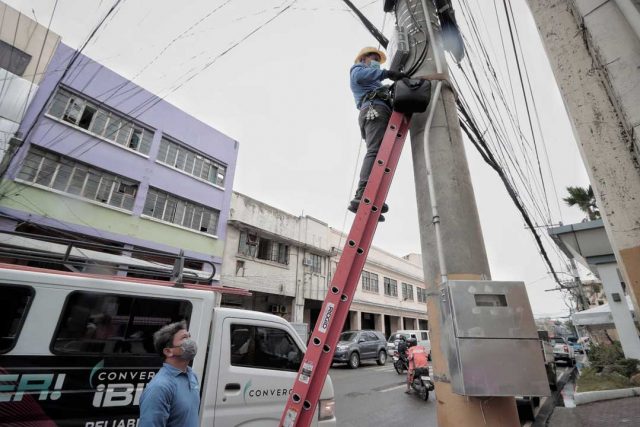
Converge plans underground cable network for stable connections

Converge ICT Solutions, Inc. is working to service its typhoon-affected clients in Cebu.

Converge ICT Solutions Inc. plans to expand the use of its micro-trenching technology, which puts its “key connectivity elements” underground, to avoid network interruptions during typhoon calamities.   

“In the face of increasing risks brought about by climate change, we will ensure that we establish resilient connectivity by using the latest technology to put our fiber infrastructure underground where it will not be exposed to various elements that can damage the network,” Converge Chief Executive Officer Dennis Anthony H. Uy said in a statement on Friday.  

The company is moving to “disaster-proofing” its network after seeing the aftermath of typhoon Odette. According to the national disaster management council, the typhoon damaged infrastructure worth P17.38 billion as of Feb. 3.  

Converge said it is still working to service its typhoon-affected clients in Cebu, encountering trouble with impassable streets. The company said its equipment is prepared to serve its clients, however, the infrastructure needed is still undergoing repairs.  

Converge aims to start work on its underground cable projects soon.  

“We look forward to working with local and national government agencies to ensure that we can roll out more underground cables at the soonest possible time,” Mr. Uy said.  

Converge shares at the stock market declined 5.41% or P1.60 on Friday to close at P28 per share.  — Keren Concepcion G. Valmonte  

Roxas Holdings cuts Q1 net loss

Roxas Holdings, Inc. (RHI) reduced its net loss to P195 million in its first quarter ending December, as revenues increased.   

The sugar and ethanol producer’s first quarter net loss attributable to equity holders of the parent was 18% lower than the P240 million loss in the October-December period in 2020. 

RHI Chairman Pedro O. Roxas said the company usually shows a loss in the first quarter due to the “very limited transactions” during this period. 

“While San Carlos Bioenergy, Inc.’s (SCBI) distillery operations started operating in the middle of October 2021, Central Azucarera Don Pedro, Inc. (CADPI) undertook its off-season repairs and maintenance activities in the first quarter. CADPI’s mill and refinery started operating in January 2022, aligned with the availability of sugarcanes in the region,” Mr. Roxas said. 

RHI revenues doubled to P715.6 million in the October to December period, from P352 million in the previous year. However, the cost of sales also surged to P705 million from P340 million in the prior year. 

RHI President and Chief Executive Officer Celso T. Dimarucut attributed the higher revenue to the sale of ethanol from the early start of SCBI’s operations, and remaining refined sugar inventory. 

“Despite the inherent challenges in the industry with the significant decrease in cane supply in Batangas and increased fuel costs over the years, the group managed to trim its first quarter net loss as a result of decreases in operating expenses brought about by the implementation of right sizing initiatives and completing the term-out of the group’s short-term debts after paying off the previous long-term debts,” Mr. Dimarucut said. 

Operating expenses dropped 28% to P125.46 million in the October to December period in 2021, from P173.822 million in the same period in 2020. 

RHI said operations are expected to improve in the next quarters as “cane deliveries increase and the boiler conversion project for CADPI’s refinery operations is fully implemented.” 

At the stock exchange Friday, RHI shares rose 8% or P0.08 to close at P1.08 apiece.  

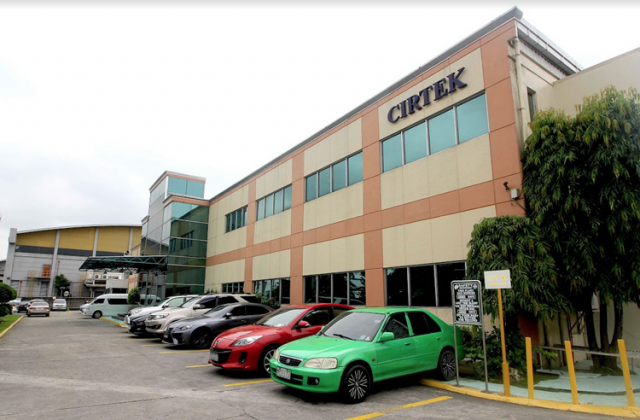
Cirtek gets PRS A rating from PhilRatings

CIRTEK

Cirtek Holdings Philippines Corp. (CHPC) has received a PRS A (corp.) rating with a stable outlook from the Philippine Rating Services Corp. (PhilRatings), as the company plans to continue issuing up to P2 billion in commercial papers. 

According to PhilRatings, a PRS A (corp.) rating means the company has “an above average financial capacity” to meet their commitments relative to other Philippine firms. However, it may be “more susceptible” to adverse changes in economic circumstances than those who received higher ratings.  

In a statement, PhilRatings said it assigned the PRS A rating to CHPC taking into account the improvement in leverage levels, and its track record. 

It cited CHPC’s strong customer base which includes well-established global companies in different regions and industries, as well as the improvement in profits in the first nine months of 2021. 

CHPC reported a 6% increase in consolidated revenues to $62.8 million in the nine-month period in 2021, driven by higher demand for the semiconductor and antenna manufacturing businesses.  

Net income more than doubled to $8.1 million in the January to September period, from $3.6 million in the same period in 2020. CHPC’s net profit margin rose to 13% during the first nine months of 2021, from 6% in the year prior. 

“Although the outlook is positive at present, the industry is highly competitive, cyclical, and is susceptible to adverse changes in various economies, and is characterized by the presence of larger international players,” PhilRatings said. 

The tech company, which focuses mainly on wireless communication, is the parent of Cirtek Electronics Corporation, Cirtek Advanced Technologies and Solutions, Inc. and Quintel USA, Inc. 

“On a positive note, the telecommunications (telecom) sector, which comprises a huge portion of Quintel’s customers, currently has a positive industry outlook which serves as an opportunity for the company,” it added.  

CHPC offers products and services to customers in the U.S., Asia and Europe, which account for 46%, 33% and 21% of its revenues.  

“Such exposes CHPC to diversified risks relating to the performance of the economies where these customers are based, particularly with the impact on economies brought about by the COVID-19 pandemic,” PhilRatings said.  

A stable outlook means the rating is likely to remain unchanged in the next 12 months.  

Revenue effort short of estimate due to pandemic

DOF.GOV.PH

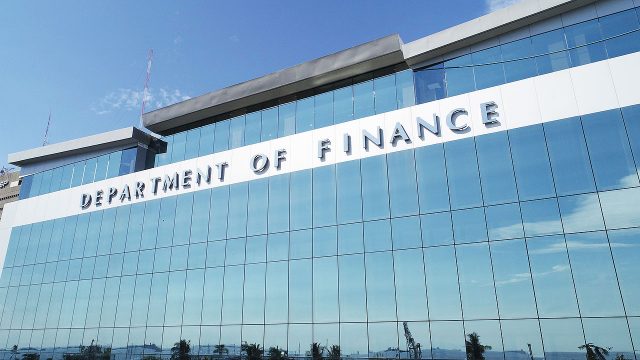
THE GOVERNMENT’S revenue effort over the last five years fell short of its estimate after it lost P1.7 trillion in potential taxes amid the economic downturn caused by the pandemic, the Department of Finance (DoF). 

The DoF in a statement on Friday said the revenue effort, which measures the share of government collections in the country’s gross domestic product (GDP), was at 15.6% from 2017 to 2021. 

“Without the pandemic, the revenue effort of the administration of President Rodrigo Duterte between 2017 and 2021 would have reached an estimated 16.2%,” the DoF said, quoting Finance Assistant Secretary Valery A. Brion. 

This was a result of P785.6 billion in estimated tax revenue losses in 2020, and P929.9 billion in 2021. 

Despite this, the DoF said the revenue effort was still “the highest in over two decades.” 

DoF data showed the average tax effort, or the share of tax collections in the GDP, was 14% from 2017 to 2021, which it said would have been 14.8% if not for the pandemic. 

The average tax effort was 14.3% from 2011 to 2016. 

“The measures are used to determine how effective the government is in collecting revenues to fund its priorities,” the DoF said. 

Finance Secretary Carlos G. Dominguez III on Thursday said revenue collections went up 9% year on year in 2021. 

Latest Treasury data showed that government revenue went up nearly 6% year on year to P2.7 trillion in the first 11 months of 2021. 

In full-year 2020, revenues declined by almost 9% to P2.8 trillion due to the pandemic. — Jenina P. Ibañez 

Price growth of NCR building materials eases in December — PSA

PHILIPPINE STAR/ MICHAEL VARCAS

WHOLESALE price growth of construction materials in Metro Manila slowed down in December last year as mobility restrictions were relaxed, the Philippine Statistics Authority (PSA) data showed. 

The Construction Materials Wholesale Price Index (CMWPI) for the National Capital Region (NCR) eased to 5.2% annually in December 2021, compared to the 5.4% print in November and 1% in December 2020. 

This brought building materials’ price growth in Metro Manila to an average of 3.2% last year, higher than the 1.2% in 2020. This was the highest since the 4.7% growth in 2018. 

The December growth was mainly due to the slower increase in prices of fuels and lubricants (to 26.6% year on year from November’s 38.3%); sand and gravel (0.9% from 3%); G.I. Sheet (11.3% from 11.5%); electrical works (7.1% from 7.2%); and PVC pipes (3.4% from 3.8%). 

On the other hand, prices in the commodity groups of the following accelerated: painting (to 3.8% in December from 3.1% in November); hardware (3.1% from 2.6%); plywood (2.7% from 2.6%); and plumbing fixtures and accessories/waterworks (2.7% from 1.8%). 

Meanwhile, prices in the following commodity groups retained their growth: glass and glass products (14.4%); reinforcing and structural steel (8.8%); concrete products and cement (3%); lumber (2.8%); doors, jambs, and steel casement (2.5%); and tileworks (-1.8%). 

“I think the easing of quarantine restrictions and the easing of global supply chain channels have contributed significantly with the easing of bulk prices of building materials in Metro Manila,” UnionBank of the Philippines, Inc. Chief Economist Ruben Carlo O. Asuncion said in an e-mail interview. 

“A lot of the firms and suppliers have bulked up their inventories during the last quarter, and this was obvious in fourth-quarter 2021 gross domestic product (GDP) growth print,” Mr. Asuncion added. 

Metro Manila was placed under a more relaxed Alert Level 2 from November to December, as the number of coronavirus disease 2019 (COVID-19) cases declined. 

Meanwhile, preliminary data released by the PSA showed that GDP in the fourth quarter of 2021 accelerated by 7.7%. The GDP print was higher than the revised 6.9% in the third quarter last year and a turnaround from the 8.3% contraction in the final three months of 2020. 

This brought last year’s full-year growth to 5.6%, reversing the record 9.6% decline in 2020. 

Mr. Asuncion sees building materials prices in Metro Manila to ease in the near term amid the surge of the Omicron variant. 

“I do expect prices to continue to ease with the recoil of restrictions in the economy due to the Omicron surge. Barring any more new variant surprises, wholesale prices of construction materials should continue to normalize throughout 2022,” he said.   

The CMWPI index indicates large purchases by major construction companies and property developers and serves as a leading indicator for future activity by those industries. — Abigail Marie P. Yraola 

ERC fines generation companies P15.5M for unplanned outages

THE Energy Regulatory Commission (ERC) imposed fines worth P15.5 million on power generation companies that breached the maximum allowable unplanned outage days in 2021. 

“We are constantly monitoring and reviewing the weekly reports being submitted by the GenCos in compliance with our directive pertaining to the Reliability Performance Indices and Equivalent Outage Days Per Year of Generating Units. This is one of the mechanisms devised by the Commission to ensure that GenCos do not unnecessarily go on an unplanned outage, especially during the summer months when there is surge in power demand and reserves get used up,” ERC Chairperson and CEO Agnes VST Devanadera said in a media release on Friday. 

Earlier this week, ERC said it fined Sem-Calaca Power Corp. (SCPC) P4.31 million after it ruled that the power plant’s units allegedly breached the maximum allowed unplanned outages. 

It said SCPC was fined P337,200 for allegedly exceeding the number of allowed unplanned outages by 5.24 days for its power plant’s first unit and P3,975,600 for going over the number of allowed unplanned outages by 96.2 days for the second unit. 

In Article 5 of ERC’s Resolution No. 10, Series of 2020, 16.8 days is the allowed duration of unplanned outages for a pulverized coal-fired power plant per generation unit per year. 

SCPC said it will appeal the commission’s decision. — MCL 

PEZA signs tourism and trade partnership with Japan

THE Philippine Economic Zone Authority (PEZA) signed a memorandum of understanding (MoU) with the Association of Southeast Asian Nations (ASEAN)-Japan Centre (AJC) to promote tourism and trade between the Philippines and Japan.  

“This partnership is in line with PEZA’s initiatives to strengthen the promotion of investments in the Philippines while at the same time bolstering its trade and economic partnership with Japan and the other ASEAN countries,” said PEZA Director General Charito B. Plaza in a statement.  

“Clearly, our MoU will allow us to better cope with the demands of our stakeholders by providing them with the necessary resources that would enable them to make timely and [wise] investment decisions,” AJC Secretary General Kunihiko Hirabayashi said. 

Under the agreement, both parties will collaborate through seminars, roundtable discussions, information exchanges, and other activities. 

“This partnership is vital as we continue to encourage existing enterprises to expand their businesses and further explore investment opportunities in our country,” said Mr. Plaza. 

PEZA said the partnership will help fully industrialize the country by addressing efficiency issues. 

“In line with PEZA’s Transformation Road Map, we aim partner with various agencies like AJC to create a pool of experts and specialists on investment promotions and ecozone development to assist the public and private sector and the LGUs in putting up ecozones and to address the skills needed by our registered companies,” Mr. Plaza said. 

Meanwhile, AJC said it hopes to facilitate the flow of investments to the ASEAN to boost the livelihood of marginalized sectors of society, including women and the disabled. 

“I’m certain that AJC’s partnership with PEZA will create a synergy that will carry us through this new phase of economic development,” Mr. Hirabayashi said. 

To date, there are 962 Japanese companies registered with PEZA contributing P727.68 billion in investments and $11.07 billion in exports. — Luisa Maria Jacinta C. Jocson 

Pork, galunggong prices up in early Jan.

PHILIPPINE STAR/ MICHAEL VARCAS

THE Philippine Statistics Authority said the average retail price of bone-in pork increased in nine trading centers between Jan. 1 and Jan. 5. 

Prices were up by P10 to P35 per kilogram in nine trading centers, compared with Dec. 15-17. It fell P10 to P20 in three trading centers. 

In Cabanatuan City, pork prices increased P35 to P325, Digos City P35 to P260, Pagadian City P30 to P265, Calapan City P27 to P339.5, Tacloban City P25 to P237, Baguio City P20 to P345, Cebu City P20 to P255, Butuan City P10 to P221.35, and the National Capital Region (NCR) P9.10 to P317.63. 

Prices fell in San Fernando City by P20 to P330, Legazpi City P12.50 to P317, and Tuguegarao City P10 to P290. 

Galunggong (round scad) prices picked up in eight regional centers: P100 to P250 per kilogram in Pagadian City, P50 to P180 in Digos City, P40 to P200 in San Fernando City, P20 to P230 in Kidapawan City, P20 to P210 in Cagayan de Oro City, P30 to P212.50 in Legazpi City, P10 to P200 in Cabanatuan City, and P1.75 to P238.69 in NCR. 

Prices fell by P25 to P195 in Tuguegarao City. 

Meanwhile, prices of well-milled rice were up P0.50 to P1.50 per kilogram in four trading centers, while it dropped P0.15 to P3 in another four trading centers. 

Prices rose P1.50 to P35.25 in Tuguegarao City, P1 to P45 in Digos City, P0.54 to P42.17 in Legazpi City, and P0.50 to P38.50 in Pagadian City. 

It went down P3 to P39 in Cabanatuan City, P1 to P47 in Tacloban City, P0.58 to P43.92 in Calapan City, and P0.15 to P42.65 in NCR. — Luisa Maria Jacinta C. Jocson 

Senate passes bill amending Agri-Agra Law

BW FILE PHOTO

A BILL looking to boost lending to the agriculture, fisheries and agrarian reform sectors was passed on third and final reading by the Senate. 

Senate Bill (SB) 2494 or the Agriculture, Fisheries, and Rural Development Financing Enhancement Act of 2022, certified as urgent by President Rodrigo R. Duterte, seeks to amend Republic Act (RA) 10000 or the Agri-Agra Reform Credit Act of 2009. 

All banking institutions, except newly-established banks, for five years since the start of their operations must set aside at least 25% of their total loanable funds for agricultural and fisheries related sectors. 

RA 10000 specifies credit quotas of 15% for agriculture and 10% for agrarian reform beneficiaries. 

The central bank has said lenders have paid an average of P2 billion in penalties yearly due to their failure to meet these credit quotas. It has said banks prefer to pay penalties rather than lend to these sectors as they are considered risky. 

Under SB 2494, banks are expected to design and offer financial products and services that suit the specific requirements of agricultural clients, noting their cash flows and production cycles. 

The bill also includes special lending arrangements for agribusiness enterprises with qualified agricultural borrowers and agricultural value chain financing, which cover production, distribution, manufacturing, and processing of agricultural products. 

Banks can comply with the credit quota by lending to rural community beneficiaries to finance agricultural and fishery-related activities, as well as by investing in securities with proceeds meant to finance these kinds of activities. 

Other modes of compliance include opening deposits accounts with or investing in fixed-term deposit products of rural financial institutions (RFI), investing directly in RFIs, lending for the construction and upgrade of agriculture infrastructure, extending credit to agri-businesses that have commodity supply-chain arrangements with rural community beneficiaries, as well as engaging in sustainable finance.  

The Bangko Sentral ng Pilipinas (BSP) may also identify other activities that will qualify as part of the quota and is mandated to monitor and provide reports on the banks’ compliance with the measure. 

Administrative sanctions and other penalties will be computed at one-half percent or at rates prescribed by the BSP Monetary Board, with 10% of the penalties collected will be retained by the BSP to cover administrative expenses and 25% to be remitted to the General Fund. 

Under RA 10000, 90% of the penalties collected must be allocated according to the needs of the agri-agra sector, and the remaining 10% is given to the BSP to cover administrative expenses. — ANOT