Home Blog Page 6327

Senator Marcos urges gov’t to diversify wheat sourcing, develop non-wheat flours

FILE PHOTO | Senator Imee Marcos

The government needs to diversify the Philippines’ sources of wheat and to explore using other raw materials for flour, to keep rising commodity prices from filtering into inflation, Senator Maria Imelda Josefa Remedios R. Marcos said Friday.  

“Bread and noodles prices will reflect the volatility of wheat prices caused by the war between Russia and Ukraine, the world’s main wheat exporters,” she said in a statement. “Since flour millers import all their wheat requirements, their production costs will swing with higher wheat prices and be passed on to bread producers and on to consumers.”

She said that US may be the Philippines’ main supplier of wheat but the banking and transport sanctions against Russia could reduce the international wheat supply and increase prices.  

“Add to that the high cost of LPG (liquefied petroleum gas) and you can expect the price of pan de sal made in community bakeries to go up. Snack time may have to go,” Ms. Marcos said. 

Ms. Marcos also proposed to turn to China as an alternative wheat source.  

“Let’s break bread with China and get a better deal on wheat prices, while maintaining reliable trade with the US and Australia,” she said. “Why do we still import non-wheat flour from Thailand and Vietnam when we can plant and harvest our own raw sources like rice, corn, camote (sweet potato), cassava, potato, and monggo (mung bean) in a similar climate?”  

She also said that non-wheat flour could be a solution both to hunger and the increasing price of flour.  

“Let’s rediscover non-wheat flour as a solution not only to the rising cost of regular flour but also to persistent hunger and malnutrition, with protein-rich peanut and malunggay (moringa) in the mix,” Ms. Marcos said. – Jaspearl Emerald G. Tan 
PEZA sees vaccination progress boosting investment this year

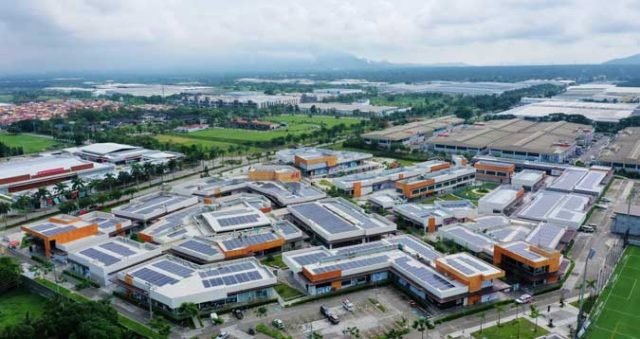
THE PHILIPPINE Economic Zone Authority (PEZA) expects progress in the vaccination drive to further open up the economy, with the Philippines poised to attract more investment this year. 

PEZA Director General Charito B. Plaza said in a statement: “With the countrywide vaccine and booster inoculation, (we are) confident that PEZA can secure more investment pledges and more registered ecozones for 2022 and beyond. PEZA has indeed come a long way but there is still more to be done and more to achieve.”   

She did not provide a specific estimate for investment growth. 

PEZA said up to the end of 2021, its economic zones have attracted P4.036 trillion worth of investment since its creation in 1995. The agency was established following the passage of Republic Act No. 7916, or the Special Economic Zone Act.   

It said exports since PEZA’s founding have amounted to $933.835 billion, with jobs created in registered economic zones totaling 1,782,913.  

PEZA has announced 2021 export totals of of $63.061 billion, up 14%. Employment at PEZA-registered ecozones was over 1.7 million jobs in 2021 compared to 1.5 million a year earlier.   

Currently, PEZA said there are 4,665 locator companies across 415 SEZs across the country.   

PEZA said new types of special economic zone are becoming available to suit the needs of entrepreneurs, industrialists, and technology companies, as well as those engaged in agriculture and fisheries, defense, and halal products. – Revin Mikhael D. Ochave  

BSP raises P100 billion via 28-day bills

BW FILE PHOTO

The central bank on Friday raised P100 billion as planned via an offering of short-term securities, with rates pushed higher due to geopolitical concerns arising from the Russian invasion of Ukraine. 

The 28-day bills of the Bangko Sentral ng Pilipinas (BSP) were oversubscribed, with demand hitting P148.75 billion.  

Tenders were also higher than the P135.4 billion in bids attracted in the Monday auction. The usual Friday auction for the bills was conducted Monday as Feb. 25 was a holiday. 

Accepted rates for the one-month papers ranged from 1.75% to 2.1%, narrowing from the 1.7% to 2.2475% range previously. This caused the average rate on the paper to increase by 2.81 basis points to 1.9492%. 

The 28-day bills together with the term deposit facility are used by the BSP to mop up excess liquidity in the financial system and to better guide market rates. 

Yields on the central bank’s one-month bills increased Friday as market participants remained worried about the impact of the Russian invasion of Ukraine on oil and commodity prices, Rizal Commercial Banking Corp. Chief Economist Michael L. Ricafort said in a Viber message. 

The United Nations estimates the number of refugees fleeing Ukraine at 1 million, Reuters reported. Thousands are estimated to have died or been wounded in the biggest attack on a European state since World War II. 

As a result, market worries have centered on the supply of oil once sanctions bite against Russia, a major producer. The futures contracts for Brent crude and West Texas Intermediate, the benchmark prices for Europe and the US, respectively, hit multi-year highs of $119.84 and $116.57 per barrel Thursday before easing back towards the end of the trading session. 

Since the start of the year Philippine pump prices of gasoline, diesel, and kerosene have jumped by P9.65, P11.65, and P10.30 per liter, respectively. 

Mr. Ricafort said signals from the US Federal Reserve regarding their impending interest rate increase also caused yields to rise on BSP bills. 

Fed Chairman Jerome H. Powell said he will back a quarter point increase in interest rates at the Federal Open Market Committee’s meeting between March 15 and 16, Reuters reported. 

He said the Fed expects the conflict between Russia and Ukraine to cause elevated commodity prices. Ukraine is a major supplier of wheat. 

“What we know so far is that commodity prices have moved up significantly, energy prices in particular. That is going to work its way through our US economy,” he said. – Luz Wendy T. Noble 

Security Bank net profit declines 7.2% on weaker interest income; provisions fall sharply

Security Bank Corp. said net profit declined 7.2% in 2021 to P6.9 billion as net interest income fell and expenses rose, while loan-loss provisions narrowed sharply. 

In a disclosure to the bourse Friday, the bank said fourth-quarter net profit was up 171% at P2.1 billion as the economy opened up.  

“Our fourth quarter results benefitted from the easing of mobility restrictions and the resulting uplift of the economy. We are optimistic about economic activity in 2022, despite the Omicron impact in January,” Security Bank President and Chief Executive Officer Sanjiv Vohra said.  

Net interest income declined 10% to P27.5 billion in 2021, with the net interest margin – the difference between what it earns in interest from loans and what it pays out to depositors – dropped 27 basis points to 4.43%. 

Non-interest income dropped 53% to P9.4 billion, with the bank adding that 2020 results benefited from “extraordinary securities trading gains.” In 2021, service charges, fees and commissions rose 25.4% to P4.5 billion, while trading gains increased 34% to P3.7 billion. 

Operating expenses rose 8% from a year earlier, as the bank upgraded technology and personnel. This brought the cost-to-income ratio to 57.8%. 

The bank set aside P1.2 billion in provisions for potential loan losses in the fourth quarter. This brought loan loss provisions to P5.3 billion in 2021, much lower than the P26.4 billion set aside in 2020. 

Security Bank’s gross loan portfolio rose 1% year-on-year to P467 billion at the end of 2021.  

Retail loans, which accounted for a quarter of the loan book, declined 9% in 2021. Wholesale loans rose 5%. 

At the end of 2021, the gross non-performing loan (NPL) ratio stood at 3.94%, while the NPL reserve cover was 93%. 

Total deposits rose 19% year-on-year to P524 billion. Low-cost savings and demand deposits, which accounted for 61% of the total, grew 19%. High-cost deposits rose 18%. 

Total assets grew 7% year-on-year to P700 billion, while shareholders’ capital rose 1% to P125 billion. 

The bank’s capital adequacy ratio was 19.8%, while common Equity Tier 1 ratio was 19.1%. Both are above minimum regulatory requirements. 

In 2021, the return on shareholders’ equity was 5.57%. 

Security Bank shares closed at P113 Friday, down 80 centavos or 0.7%. – Luz Wendy T. Noble 

BSP prescribes reporting standards for payments system operators

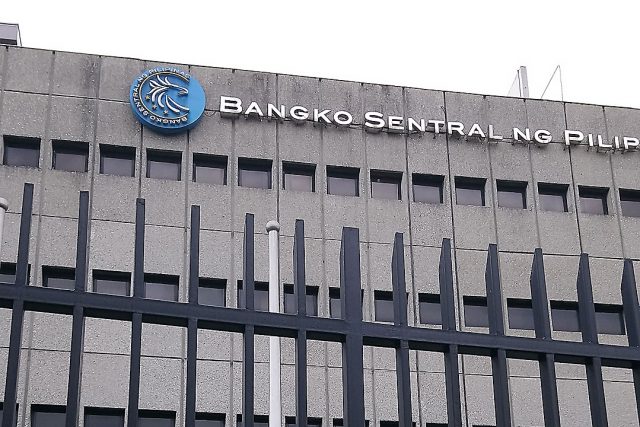
The Bangko Sentral ng Pilipinas (BSP) has issued standardized reporting requirements for operators of payment systems (OPS) and also required periodic independent reviews of such reports. 

Approved on March 1, Circular 1138 is authorized by the National Payment Systems Act, which allows the BSP to oversee and ensure the efficiency, safety, and reliability of the payments system, the central bank said. It also laid down penalties and sanctions for violations of the reporting standards. 

“This recent policy issuance is critical to the BSP’s determination of appropriate oversight interventions, formulation of responsive policies and regulations, as well as continuous development of the national payments system,” BSP Governor Benjamin E. Diokno said in a statement Friday. 

The mandatory reports relate to operations, including information needed by regulators for statistical, policy development, and supervisory purposes. 

OPS companies are also required to have a reporting system in place in times of emergency or weather disruptions that could affect the processing of transactions. 

The periodic independent review clause seeks to ensure reliability and effectiveness of the reporting, condicuted via either an internal auditor or an external party with expertise in information technology, data management, and regulatory compliance. 

“The appropriate frequency of such review shall mainly depend on the systemic importance, risk profile and business complexity of the OPS as well as the extent of recurrence of control weaknesses that cause reporting exception,” the BSP said.  

The BSP said OPS companies should retain their data and reports for at least five years. In cases where a financial institution becomes subject to investigation by the BSP for possible criminal, administrative or civil cases, relevant information will have to be preserved beyond five years until a final verdict has been reached. 

Penalties for erroneous, delayed, and unsubmitted primary reports can range from P300 to P3,000 depending on the type of financial institution. Meanwhile, violations committed in connection with secondary reports will draw fines of P60 to P600. 

“The penalties will accumulate until such time that the report has been determined compliant with the prescribed reporting standards,” the BSP said. 

Possible non-monetary sanctions including a first offense warning to top officials of the OPS company and a reprimand for the Chief Executive Officer (CEO) and the board for a second offense.  

For a third offense, the CEO may be issued a suspension order of between a month and a year depending on the gravity of the violation. The top official and members of the board may also be disqualified from the industry for further offenses and the Monetary Board will have the power to designate a manager to take over the operations.  

According to the BSP, 198 companies have obtained an OPS certificate of registration. – Luz Wendy T. Noble 

UCPB rating withdrawn by Moody’s after LANDBANK merger

Moody’s Investors Service said it is withdrawing the long-term deposit rating of United Coconut Planters’ Bank (UCPB) due to its merger with Land Bank of the Philippines (LANDBANK). 

UCPB exits Moody’s coverage with a rating upgrade to Baa2 to bring it in line with its acquirer, which is a much larger state-owned bank. The stable outlook was also maintained, Moody’s said in a statement Friday. 

“Subsequently, Moody’s will withdraw the baseline credit assessment and the deposit ratings assigned to UCPB,” Moody’s said, with LANDBANK emerging as the surviving entity.  

UCPB had total assets of P347.4 billion at the end of 2020, while LANDBANK’s assets were P2.4 trillion.  

“Moody’s estimates the combined entity will be the second-largest bank in the Philippines, with a market share in assets of approximately 15% as of the end of 2020,” it said. – Luz Wendy T. Noble 

Peso lower after PHL debt hits record levels, fire at Ukraine nuclear plant

The peso weakened against the dollar after the government reported record levels of debt, and as a nuclear plant in Ukraine caught fire while under attack from Russian forces.   

The peso closed at P51.74 to the dollar Friday, against a P51.50 close Thursday, the Bankers Association of the Philippines said. 

It also retreated from its P51.34 close on Thursday last week. Financial markets were closed for a holiday on Friday, Feb. 25. 

The peso opened Friday at P51.65. The low was P51.75, while the high was P51.60. 

Dollar volume rose to $793.22 million Friday from $789.38 million the day before. 

Currency traders responded negatively to the fire in the Ukrainian power plant, which came under attack from Russian forces, a trader said in an email. 

The Zaporizhzhia power plant is Europe’s largest nuclear facility.  

Earlier in the invasion, Russia captured the site of the defunct Chernobyl power plant north of Kiev, which is currently an exclusion zone due to unsafe levels of radiation.  

Rizal Commercial Banking Corp. Chief Economist Michael L. Ricafort said the market also absorbed news that the Philippines’ outstanding debt topped P12 trillion at the end of January. 

Preliminary data released by the Bureau of the Treasury indicated that outstanding debt hit P12.03 trillion, up 16.5% from a year earlier and up 2.6% month-on-month. 

The Treasury said the debt stock rose after another zero-interest loan from the central bank and an increase in borrowing from domestic creditors. 

As of end-2021, the debt to gross domestic product (GDP) ratio hit 60.5%, the highest since 2005. This also surpassed the 60% threshold considered as manageable by multilateral lenders for developing economies. – Luz Wendy T. Noble 

Comelec asked to decide on Marcos

PHILSTAR FILE PHOTO

Martial law victims have asked the Commission on Elections (Comelec) to resolve a a lawsuit that seeks to bar the son and namesake of the late dictator Ferdinand E. Marcos from running for president this year. 

Delaying the case could lead to complications, especially with the May 9 elections nearing, they said in a six-page motion. 

“The failure to resolve the instant petition would cause complications in that the votes cast for the respondent may be included in the counting and in the canvassing,” they said through lawyer Christian S. Monsod, a former Comelec chief and a constitutional framer. 

“Further, if the evidence of guilt is strong, as in this case, his proclamation shall be suspended notwithstanding the fact that he received the winning number of votes in such election,” they added. 

The plaintiffs also cited a Comelec order issued on Feb. 23, which says that upon the retirement of a commissioner, other members of the body must resolve pending cases within 45 days. 

The election body has reorganized its divisions after its former chairman and two commissioners retired last month. 

The plaintiffs earlier asked Comelec to bar ex-Senator Ferdiand “Bongbong” R. Marcos from the presidential race after he was convicted for tax evasion in the 1990s. 

The election body’s Second Division rejected a similar petition in January, as it ruled Mr. Marcos did not mislead the public when he said in his certificate of candidacy that he was eligible to run for president. The case is on appeal with the Comelec en banc. 

The First Division last month rejected three consolidated lawsuits seeking to disqualify Mr. Marcos from the presidential race, as it ruled that his failure to file his tax returns in the 1980s did not involve wicked, deviant behavior. The case is also on appeal with the en banc. 

The cases against Mr. Marcos that are on appeal before the en banc had been raffled off to a writer and would resolved before May 9, acting Comelec chief Socorro B. Inting said earlier. 

Meanwhile, Comelec has partnered with a nonpartisan group to educate the  Filipino youth and first-time voters before the May 9 elections. 

It signed a deal with Democracy Watch Philippines, which will offer virtual seminars and lectures to inform these voters on elections issues, according to a video of the event streamed live on Facebook. 

Different universities and non-government groups will participate in providing these lectures.John Victor D. Ordoñez 

COVID cases fewer than 1,000 for 3rd day

The Philippines posted 853 infections on Friday — the third straight day the tally fell below 1,000 — bringing the total to 3.67 million.  

The death toll hit 56,770 after 232 more patients died, while recoveries rose by 1,062 to 3.56 million, it said in a bulletin. 

It said 4.3% of 25,496 samples from March 2 tested positive for COVID-19, which is within the World Health Organization’s threshold. 

Coronavirus tests in February were lower than in January, when the heavily mutated Omicron variant spurred a spike in infections. 

Of 50,8230 active cases, 450 did not show symptoms, 45,300 were mild, 2,773 were moderate, 1,411 were severe and 296 were critical. 

DoH said 92% of new cases occurred on Feb. 19 to March 4. The top regions with cases in the past two weeks were Metro Manila with 170, Calabarzon with 128 and Central Visayas with 94 infections. It added that 2% of new deaths occurred in March and 7% in February. 

Eleven duplicates were removed from the tally, five of which were reclassified as recoveries, while 219 recoveries were relisted as deaths. Two laboratories failed to submit data on March 2. — Kyle Aristophere T. Atienza 

Pacquiao promises free housing

MANNY PACQUIAO OFFICIAL FACEBOOK PAGE

Senator and boxing champion Emmanuel “Manny” D. Pacquiao on Friday said he would give the poor free housing if he becomes president. 

“I want each Filipino to have their own house,” he said in a statement in Filipino. “That’s why I asked for your signatures, so you could be given a free house.” 

Meanwhile, Willie T. Ong, the running mate of presidential bet Francisco “Isko” M. Domagoso, said candidates participating in debates should undergo a lie detector test..

“Any question from A-Z is fine. If you know it, answer it. If you don’t, say you’ll look into it. No one is perfect,” he said in a statement in Filipino. “What’s important is that a candidate isn’t lying. Are they corrupt? If you want, we can use a lie detector.” — Jaspearl Emerald G. Tan

Three cops in drug war face murder charges

PHILIPPINE STAR FILE PHOTO

Government prosecutors have endorsed the indictment of three policemen for the killing of a Spanish national in a buy-bust operation. 

In a statement on Friday, the Office of the Prosecutor General said the cops would be charged with murder and planting evidence at a Surigao del Sur trial court. 

The cops claimed the  Spaniard drew a gun and shot them, which caused the three to fire back and kill him during a buy-bust operation on Jan. 8, 2020. 

Forensic data provided by the National Bureau of Investigation disproved the claim of a shootout during the incident, the Office of the Prosecutor General said in the statement.  

The incident is one of the 52 cases in which suspected drug pushers died in President Rodrigo R. Duterte’s war on drugs.  

Philippine prosecutors have filed charges in court against law enforcers in four of the cases and plan to investigate 250 more of what could have been wrongful deaths in the government’s anti-illegal drug campaign, Justice Secretary Menardo I. Guevarra told the United Nations Human Rights Council this week. 

“The Philippines will remain positively engaged with the international community and all human rights mechanisms on all issues concerning rule of law and institutions in the country,” he said. “But we will draw the line between parties that engage in good faith, and those that abuse and exploit these mechanisms to make demands of accountability with little or no factual basis.” — John Victor D. Ordoñez

D&L’s new plant moves start of operations to 2023

Food ingredients maker D&L Industries, Inc. is pushing back the start of commercial operations of a plant in Batangas to January 2023, citing recent events that caused disruptions.

The plant, under the company’s unit Natura Aeropack Corp. (NAC), was expected to begin commercial operations in May 2022, but was granted an extension by the board of the Philippine Economic Zone Authority (PEZA).

In a stock exchange disclosure on Friday, D&L said, “in consideration of the recent turn of events such as the Omicron-related surge in COVID-19 cases early this year, global port congestion and supply chain disruptions, as well as longer-than-expected processing of registration and licenses, PEZA has granted [an] extension to January 2023.”

NAC is one of the subsidiaries of D&L undertaking the expansion in Batangas, specifically for the manufacture of coconut oil fractions and coconut base surfactants, and downstream consumer products.

“While the pandemic has posed challenges to the completion of our Batangas plant, this expansion is coming at an opportune time given the strong demand for high value coconut-based products in the export market,” D&L President Alvin D. Lao said in a press release.

“This is evidenced by the resilient and robust growth in our export sales which grew 55% year-on-year in the first nine months of 2021. As the world moves beyond this pandemic, this plant will help us cater to emerging, relevant industries where we see opportunities for new growth. Our existing capacity is still sufficient to serve requirements in the near term, as such the extension in the SCO should have no material impact on current operations,” he added.

NAC and D&L Premium Foods Corp. (DLPF), another wholly owned subsidiary of D&L Industries in Batangas, will start commercial operations concurrently. DLPF will manufacture food ingredients to cater to a growing export business.

D&L’s expansion is on a 26-hectare property in First Industrial Township Special Economic Zone in Batangas.

The ongoing expansion, referred to as Phase 1, will occupy roughly half of the property and costs P6.2 billion, with remaining capital expenditures at P1.8 billion for the year.
In September, D&L executed its maiden bond offering, raising P5 billion to help fund the remaining capex for the expansion.

The new plant will develop high value-added coconut-based products and add the capability to manufacture downstream packaging.

“With near-term catalysts such as the continued economic reopening and the boost from election spending, the company sees room for further earnings growth,” the company said.

In the third quarter of 2021, D&L’s attributable net income rose 34% to P768 million from P572.6 million in 2020.

From January to September last year, attributable net income grew 57.4% to P2.16 billion from P1.37 billion in 2020.

At the stock exchange Friday, D&L shares closed unchanged at P8 each. — Luisa Maria Jacinta C. Jocson